UPSC Current Affairs

14 topicsGS-1: 4GS-2: 4GS-3: 6
0/14 done
GS-2Polity

1.Shiromani Gurdwara Parbandhak Committee Overview (Sikh Gurdwara Body)

New Indian Express

What & Where

SGPC – apex elected Sikh body managing 200+ historic gurdwaras, headquartered at Amritsar, Punjab.

Gurbani – divinely-revealed hymns compiled in Guru Granth Sahib, written mainly in Gurmukhi, sung in 31 Raags.

Central spiritual authority drawn from Sri Akal Takht Sahib inside Harmandir Sahib complex.

Quick Facts for MCQs

Historical Context

  • Movement events: Nankana Sahib Massacre 1921, Guru Ka Bagh Morcha, Jaito Morcha.
  • SGPC symbolised Sikh religious autonomy during colonial period.

Legal & Policy

  • Act grants autonomous gurdwara management; elections ensure pan-India Sikh representation.
  • SGPC now urges Centre to regulate AI platforms spreading Sikh-related misinformation.

Functions & Services

  • Operates schools, colleges, hospitals, presses; organises religious awareness & seva drives.
  • Acts against sacrilege, preserves Sikh cultural heritage.

Scriptural Features

  • Gurbani language mix: Sant Bhasha, Punjabi dialects; universal ethics of Naam Simran, seva, humility.
  • Declared living Guru by Guru Gobind Singh; text alteration strictly prohibited.

Key Data Points

FeatureData-Point
SGPC founding year1920
Legal recognitionSikh Gurdwaras Act, 1925
Sections governing gurdwara list85 & 87
Number of SGPC house seats191 elected members
Gurdwaras directly administered200 +
Key reform backdropGurdwara Reform Movement against Udasi mahants & British control
Highest Sikh temporal seatSri Akal Takht Sahib
Guru Granth Sahib contributors6 Sikh Gurus + 15 + Bhagats
Script of GurbaniGurmukhi
Musical modes used31 Raags

Related UPSC Prelims PYQs

CDS_GK 2021PYQ 1

The rules for congregational worship (Sangat) involving collective recitation were organized by

GS-3Economy

2.Revised UPI Operational Rules (UPI Regulations)

NDTV
Illustration for Revised UPI Operational Rules (UPI Regulations)

What & Where

Unified Payments Interface (UPI): real-time retail payment rail by NPCI, India.

Enables peer-to-peer & peer-merchant transfers via mobile-based virtual payment addresses.

Revised operational caps effective nationwide on all UPI apps from 1 Aug 2025.

Quick Facts for MCQs

Tech & Schemes

  • Caps: Balance, status, enquiry limits reduce superfluous API calls.
  • Scheduling: Auto-debit mandates processed only in prescribed non-peak slots.
  • Preview: Recipient bank name auto-displayed to minimise mis-routing.

Security Dimension

  • Limitation: Throttled status requests deter phishing & bot-based overloads.
  • Identification: Mandatory name preview strengthens user verification, reduces fraud.
  • Mandates: Staggered auto-debits curb simultaneous high-value exploit attempts.

Operational Load Management

  • Peak-hour: NPCI targets balance-check spamming, chief driver of congestion.
  • Daily caps: 50 balance checks, 25 link enquiries streamline server workload.
  • Implementation: All PSPs, banks must ensure tech-stack compliance by August 2025.

Key Data Points

FeatureData-Point
Implementing bodyNational Payments Corporation of India (NPCI)
Rule start date1 August 2025
Daily balance checksMax 50 per app
Linked-account enquiriesMax 25 per app per day
Status-check hits3 per transaction; ≥90 s gap
Auto-pay execution window<10 AM, 1–5 PM, >9:30 PM
Beneficiary previewBank-registered name shown before confirmation

Related UPSC Prelims PYQs

GS1 2017PYQ 1

Which of the following is a most likely consequence of implementing the ‘Unified Payments Interface (UPI)’?

GS-3Economy

3.Banking Laws Amendment Act 2025 (Banking Legislation Reform)

PIB

What & Where

Banking Laws (Amendment) Act 2025: omnibus statute upgrading India’s banking regulation, governance, audit and depositor safeguards

Revises five key laws: RBI 1934, Banking Regulation 1949, SBI 1955, Banking Companies Acts 1970 & 1980

Nationwide applicability, spanning commercial, public-sector and cooperative banks

Quick Facts for MCQs

Governance Reforms

  • Threshold revision curbs conflict-of-interest among bank directors by reflecting present capital values
  • Director tenure extension boosts policy continuity in cooperative institutions
  • Five-Act harmonisation delivers single compliance framework for varied bank categories

Depositor & Investor Protection

  • Transfer of dormant shares/bonds to IEPF aligns PSBs with Companies Act 2013 norms
  • Centralised fund improves tracing of entitlements, aiding small investors and heirs
  • Measure supplements existing DICGC cover, creating multi-layered depositor security

Audit & Transparency

  • PSBs allowed to negotiate and pay competitive auditor fees, attracting top-tier firms
  • Higher audit quality expected to enhance early fraud detection and disclosure standards
  • RBI retains oversight powers, ensuring independence despite bank-decided remuneration

Cooperative Banks

  • Tenure change mirrors cooperative autonomy goals under 97th Constitutional Amendment
  • Longer boards incentivise skill retention while still capping consecutive service
  • Act signals intent to integrate cooperative banks into mainstream prudential regime

Key Data Points

FeatureData-Point
Effective from02 Aug 2025
Total statutory amendments19
New “substantial interest” capRs 2 crore (earlier Rs 5 lakh, set 1968)
Cooperative bank director tenure10 years; chair & WTDs excluded
Unclaimed securities destinationInvestor Education & Protection Fund
PSBs newly empowered to setStatutory auditor remuneration
Constitution link cited97th CAA 2011 (Right to form cooperatives)

Related UPSC Prelims PYQs

GS1 2024PYQ 1

विदेशी बैंकों के साथ व्यवहार करते समय भारतीय रिज़र्व बैंक द्वारा अधिरोपित नियमों के संदर्भ में, निम्नलिखित कथनों पर विचार कीजिए:

GS1 2021PYQ 2

भारत में ‘शहरी सहकारी बैंकों’ के संबंध में, निम्नलिखित कथनों पर विचार कीजिए :

GS-1Environment

5.Slum Clusters in Floodplains (Floodplain Slum Risk)

The Hindu

What & Where

Slum cluster = ≥20 cramped, poorly built homes lacking water-sanitation (Pranab Sen Committee, 2010).

Major flood modes harming slums: riverine overflow, urban waterlogging, flash floods (75 % from extreme rain + saturated soil).

Prime hotspots: Ganga delta, Mumbai coast, Brahmaputra basin; global parallels Jakarta, coastal Rio, Rwanda.

Quick Facts for MCQs

Global Exposure

  • India leads, followed by Indonesia, Bangladesh, Pakistan in flood-risk slum numbers.
  • Slum dwellers globally 32 % likelier to occupy low-value floodplains.
  • One-third informal settlements in low-middle income nations already flood-exposed.

Indian Drivers

  • Urban encroachment makes India 3rd for 1985-2015 floodplain growth.
  • Extreme rainfall frequency doubled; monsoon volume up 56 %, overloading drains.
  • Plastic-clogged drains and outdated networks intensify Delhi, Mumbai, Bengaluru flooding.

Legal & Schemes

  • Slum Areas Act 1956 empowers improvement and tenant safeguards in UTs.
  • PMAY-U okayed 118.64 lakh houses, 29 lakh for slum families.
  • AMRUT, Smart Cities, SBM-U 2.0 upgrade water, drainage, waste systems.

Adaptive Measures

  • Zoning and SUDS promote permeable pavements, rain gardens under Smart Cities.
  • IFLOWS-Mumbai, CFLOWS-Chennai deliver satellite-aided real-time flood alerts.
  • Sponge City model trialled in Mumbai after Shanghai success for stormwater absorption.

Key Data Points

FeatureData-Point
Flood-prone slum residents (India)158 million
Indian slum dwellers in urban/suburban zones40 %
Extra likelihood of slum location in floodplain (global)+32 %
Informal settlements already flood-exposed (Global South)33 %
India rank for urban spread into floodplains (1985-2015)3rd
Flash floods 2020 → 2022132 → 184
Monsoon rainfall rise 1981-2020+56 %
Basin with most flash floodsBrahmaputra
Slum households, Census 20111.39 crore (17 % urban)
Identified slum pockets, NSSO 201233,510
PMAY-U houses sanctioned till Dec 2024118.64 lakh; 29 lakh slum
GS-1Mapping

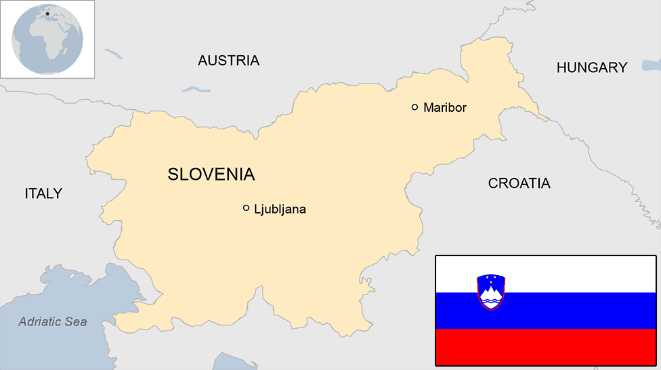
6.Slovenia Geographic Snapshot (European Geography)

TW
Illustration for Slovenia Geographic Snapshot (European Geography)

What & Where

Slovenia: Central-European republic, ex-Yugoslavia, EU & NATO member since 2004.

Borders: Austria, Hungary, Croatia, Italy and a 47-km Adriatic coastline.

Terrain mix: 40 % Alpine highlands, karst plateau, fertile Sub-Pannonian plains, short Littoral coast.

Quick Facts for MCQs

Security Dimension

  • First EU state to impose total arms embargo on Israel over Gaza conflict.
  • Reflects Ljubljana’s assertive human-rights–centric foreign policy stance.

Physical Geography

  • Alpine highlands dominate northwest; glacial valleys, tourism hubs.
  • Karst Plateau famed for caves, sinkholes, thin soils, sparse settlement.
  • Sub-Pannonian east holds fertile alluvium supporting cereal, vineyard agriculture.

Hydrology & Landforms

  • Majority rivers drain toward Danube basin, aiding Central-European connectivity.
  • Karstic underground rivers create extensive cave networks; Postojna Cave globally known.

Regional Integration

  • Euro adoption deepened economic ties; Schengen facilitations boost cross-border trade with Austria, Italy.

Key Data Points

FeatureData-Point
CapitalLjubljana
CurrencyEuro
EU–NATO entry2004
Highest peakMount Triglav – 2,864 m
Major mountain rangesJulian Alps, Karavanke, Kamnik–Savinja
Notable lakesBled, Bohinj
Coast length47 km on Gulf of Venice
Key portKoper
Main riversSava, Drava, Mura
Terrain shareAlpine highlands ≈ 40 % of land
GS-3Editorial

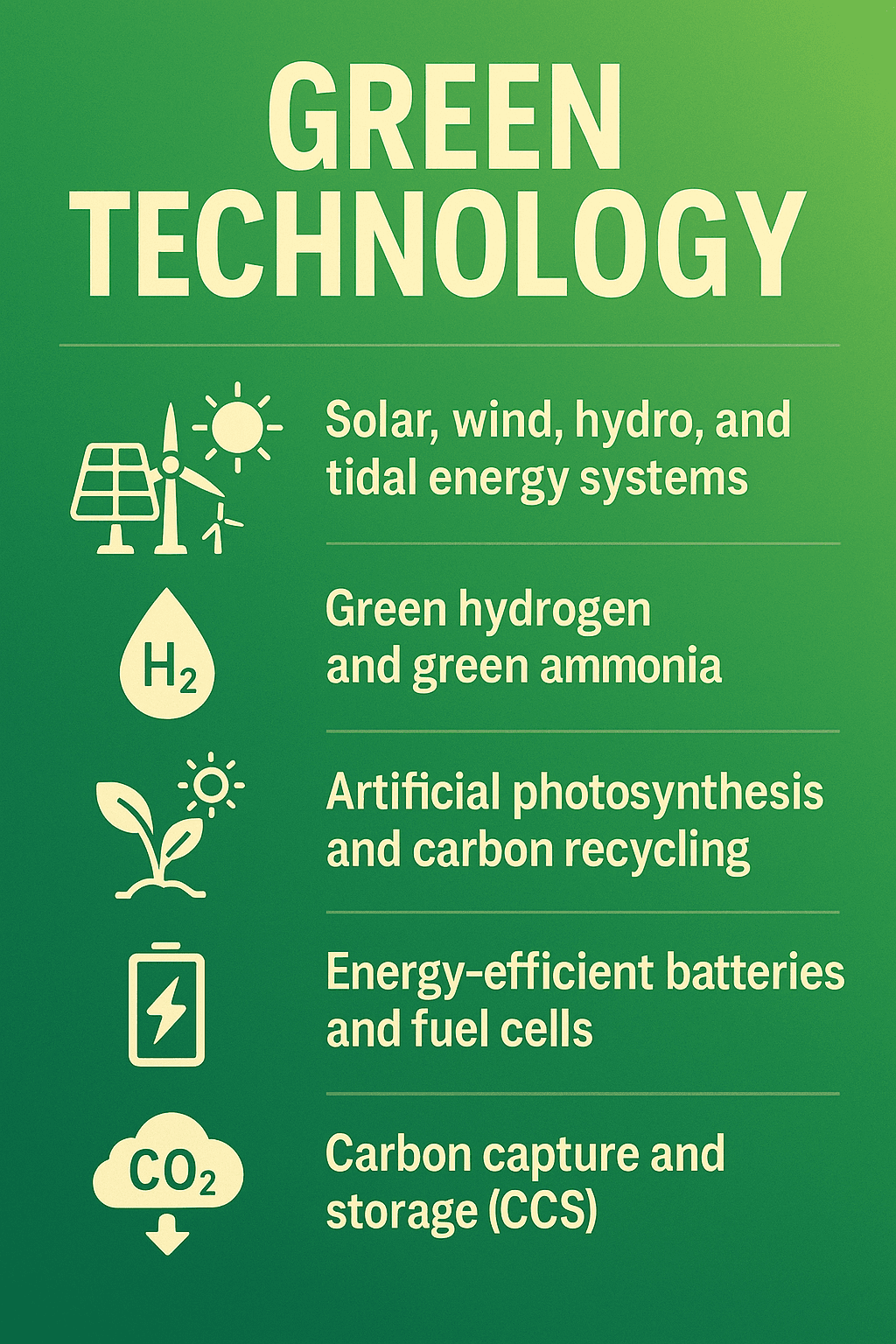
7.Need for Advanced Green Technologies (Green Technology)

The Hindu
Illustration for Need for Advanced Green Technologies (Green Technology)

What & Where

Green technologies: emission-cutting innovations; includes high-efficiency PV, artificial photosynthesis, RFNBO synthetic fuels

Key processes: gallium-arsenide multi-junction PV, water-CO₂ photoconversion, electrolysis for green hydrogen

Core geography: India self-reliance push; EU RFNBO mandate; Chinese-centric global solar supply chain

Quick Facts for MCQs

Efficiency & Land

  • Silicon dominance yet 15-18 % efficiency; advanced cells can almost treble output
  • Efficiency doubling cuts land, material, and module count roughly by half

Hydrogen Challenges

  • Electrolysis has negative net energy return, undermining “green” claim
  • Leakage, low density force compression or ammonia conversion, adding energy cost

Emission Trend

  • CO₂ rose ~20 % since 1990 despite exponential solar growth
  • Renewables not yet outpacing rising demand, revealing tech-efficiency gap

R&D & Policy

  • Gallium-arsenide, APS need high-cost, long-gestation R&D; private capital hesitant
  • Experts urge bigger climate-R&D budget, PPPs, and diversification beyond silicon

Key Data Points

FeatureData-Point
Silicon PV field efficiency15–18 %
Gallium-arsenide PV lab efficiency≈47 %
Global CO₂ concentration 1990350 ppm
Global CO₂ concentration 2025425 ppm
India silicon cell capacity6 GW
India’s solar input dependence on China>80 %

Related UPSC Prelims PYQs

GEO_GS, GS1 2026PYQ 1

Dholera and Sanand in Gujarat are in news for setting up

GEO_GS, GS1 2014PYQ 2

With reference to technologies for solar power production, consider the following statements: 1. 'Photovoltaics' is a technology that generates electricity by direct conversion of light into electricity, while 'Solar Thermal' is a technology that utilizes the Sun's rays to generate heat which is further used in electricity generation process. 2. Photovoltaics generates Alternating Current (AC), while Solar Thermal generates Direct Current (DC). 3. India has manufacturing base for Solar Thermal t

GS-3Environment

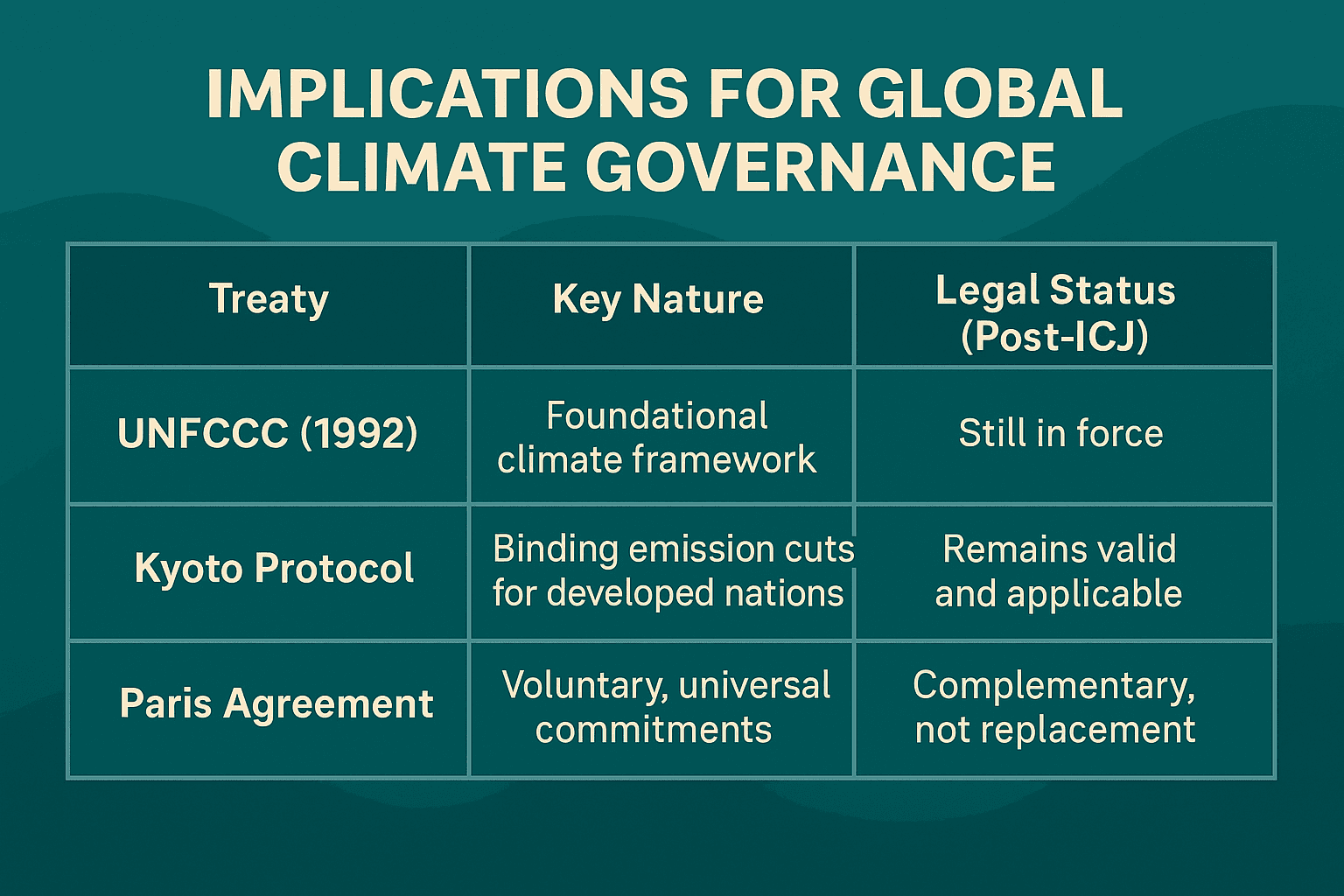
8.ICJ Upholds Kyoto Protocol Validity (Kyoto Protocol Status)

Indian Express
Illustration for ICJ Upholds Kyoto Protocol Validity (Kyoto Protocol Status)

What & Where

Kyoto Protocol; 1997 UNFCCC treaty imposing quantified emission cuts on Annex-I nations

International Court of Justice; Hague-based UN court issuing advisory opinion upholding Kyoto validity

Paris Agreement; 2015 global accord using voluntary Nationally Determined Contributions (NDCs)

Quick Facts for MCQs

Legal & Policy

  • Continuity; ICJ says lapse of commitments ≠ treaty termination
  • Coexistence; Kyoto and Paris legally parallel, not substitutive
  • CBDR revival; equity principle gains renewed normative force

Accountability Tools

  • Wrongful act; non-compliance may attract state responsibility claims
  • Retroactivity; past 2008-12 targets open to legal review
  • Litigation scope; advisory opinion empowers courts, civil society suits

Implementation Challenges

  • Weak enforcement; Kyoto lacked penalties for defaulting Annex-I parties
  • Exit trend; Canada, Japan, others withdrew or stopped complying
  • US stance; never ratified, undermining collective adherence

Governance Reforms

  • Monitoring; reinstate Kyoto-style reporting and verification for transparency
  • Hybrid model; combine binding duties with flexible NDC architecture
  • Equity focus; scale finance and technology transfer to developing nations

Key Data Points

FeatureData-Point
Adoption year (Kyoto)1997
Entry into force2005
Commitment periods2008-12; 2013-20
Guiding principleCBDR–RC
Core mechanismsClean Development Mechanism, Emissions Trading, Joint Implementation
ICJ advisory opinion year2024
Legal status post-ParisStill valid & binding
Major non-ratifierUnited States

Related UPSC Prelims PYQs

GEO_GS 2023PYQ 1

Which one of the following is the international convention agreement specifying the commitments of different countries to mitigate climate change?

GEO_GS 2025PYQ 2

Which one of the following Protocols was signed in the year 1987 to reduce the production and use of ozone-depleting substances?

GS-3Environment

9.Beetle–Fungus Threat to Rubber (Rubber Tree Pest)

The Hindu

What & Where

Ambrosia beetle (Euplatypus parallelus) carries Fusarium ambrosia / F. solani fungi into Kerala’s rubber (Hevea brasiliensis) plantations.

Fungi clog xylem, causing leaf fall, trunk drying, latex loss, eventual tree death.

Threat extends to >80 broad-leaf hosts across humid tropics—cashew, teak, coconut, coffee, etc.

Quick Facts for MCQs

Environmental Impact

  • Blocked xylem reduces transpiration; canopy desiccates, sap flow and carbon sequestration dip sharply.
  • Multi-host ability risks mixed-crop agroforestry losses and biodiversity decline.

Health Dimension

  • Fusarium opportunistic; inhaled spores threaten immunocompromised humans, livestock, companion animals.
  • Wider fungal associations could introduce more virulent, toxin-producing strains.

Tech & Schemes

  • Control toolkit: ethanol-baited beetle traps, infected-wood removal, systemic triazole fungicides.
  • Research focus: antagonistic fungi, microbial consortia biocontrol, transgenic rubber with antifungal peptides.

Key Data Points

FeatureData-Point
Vector insectAmbrosia beetle (Euplatypus parallelus)
Causal fungiFusarium ambrosia, Fusarium solani
Primary Indian hotspotKerala (~90 % of national rubber)
Second-largest stateTripura (~9 %)
Host range>80 dicot tree species
Optimal rubber temperature20 – 35 °C
Optimal annual rainfall>200 cm
Preferred soilDeep loam / laterite on slopes
India’s world rank (natural rubber production)3rd
India’s world rank (natural rubber consumption)4th
Spread avenuesBeetle boring, xylem sap, soil residues
GS-3Species

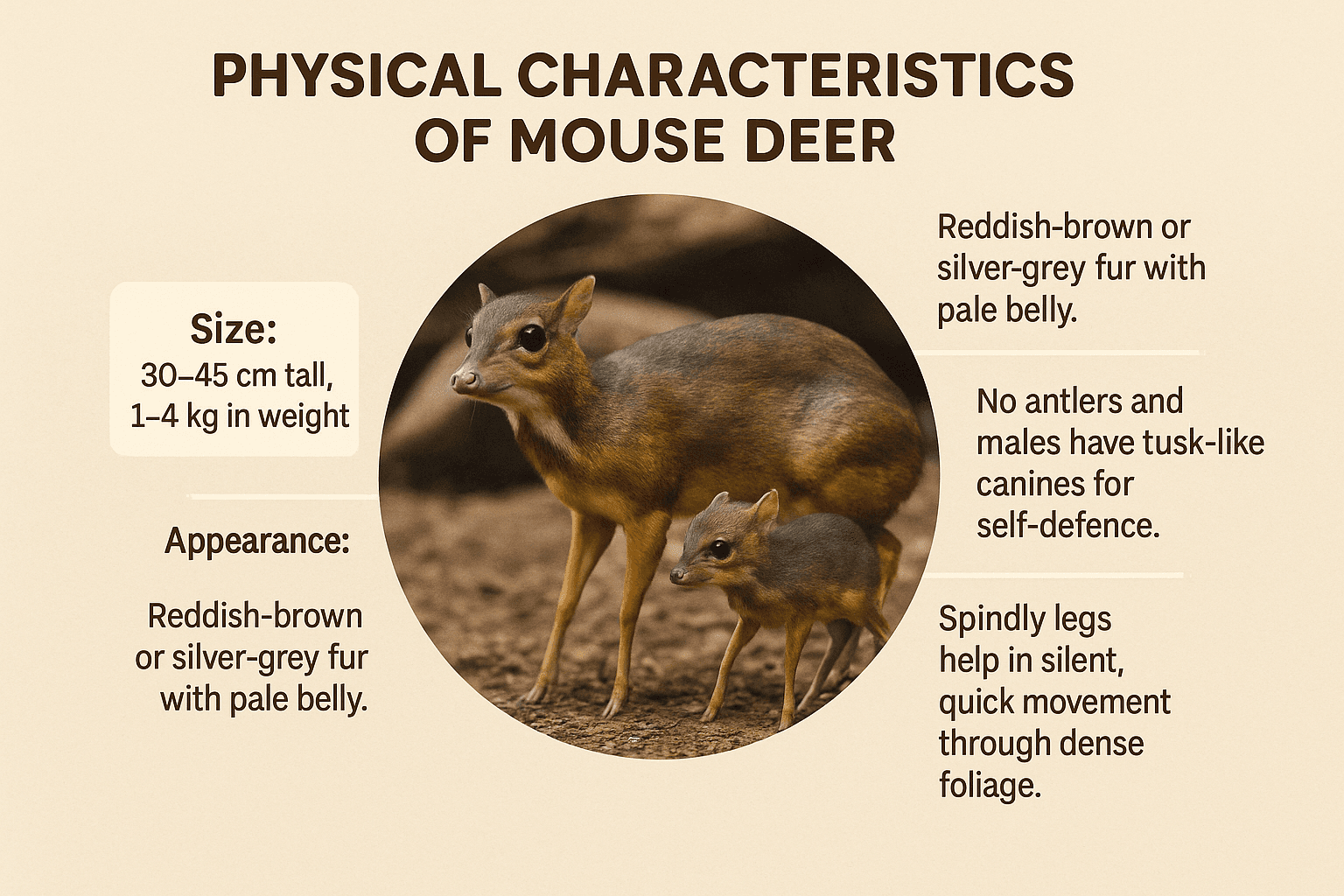
10.Mouse Deer Rediscovery (Chevrotain Species)

Times of India
Illustration for Mouse Deer Rediscovery (Chevrotain Species)

What & Where

Mouse deer / chevrotain: world’s smallest hoofed mammal, primitive ruminant, family Tragulidae.

Key Asian species: Lesser (T. kanchil), Greater (T. napu), Silver-backed (T. versicolor; just rediscovered).

Lives in dense tropical–subtropical forests of South & Southeast Asia; latest sighting in southern Vietnam.

Quick Facts for MCQs

Habitat & Distribution

  • Prefers thick leaf-litter, shaded forest floor; avoids open clearings.
  • Core Asian belt; African relative occupies West–Central rainforest.
  • Ground-dwelling, solitary territories restricted to ~20 ha.

Biology & Behaviour

  • Mostly herbivorous; African species shows rare carnivory among ruminants.
  • Solitary or mated pairs; males scent-mark boundaries.
  • One fawn per gestation; rapid maturation supports population resilience.

Adaptations

  • Hoof-drumming communicates distress, deters rivals.
  • Aquatic refuge behaviour enables multi-minute submergence from predators.
  • Diminutive size aids stealth within dense vegetation.

Key Data Points

FeatureData-Point
Rediscovered speciesSilver-backed Chevrotain
Scientific nameTragulus versicolor
Apparent absence> 30 years
Mammal size rankSmallest hoofed
FamilyTragulidae
Activity patternNocturnal, elusive
Typical habitatDense undergrowth, lowland rainforest
Asian rangeIndia, Sri Lanka, Thailand, Vietnam
African cousinHyemoschus aquaticus
Home-range13–24 ha
BirthsSingle offspring
Weaning age≈ 3 months
Sexual maturity5–10 months
Territorial markingChin & preputial glands
Predator evasionSubmerge > 5 min underwater
Alarm signalHoof-drumming rhythm
Diet (Asia)Fruits, leaves, soft plant parts
Diet (Africa)Adds insects, crabs, carrion
ThermoregulationLacks advanced artiodactyl mechanisms
GS-2Economy

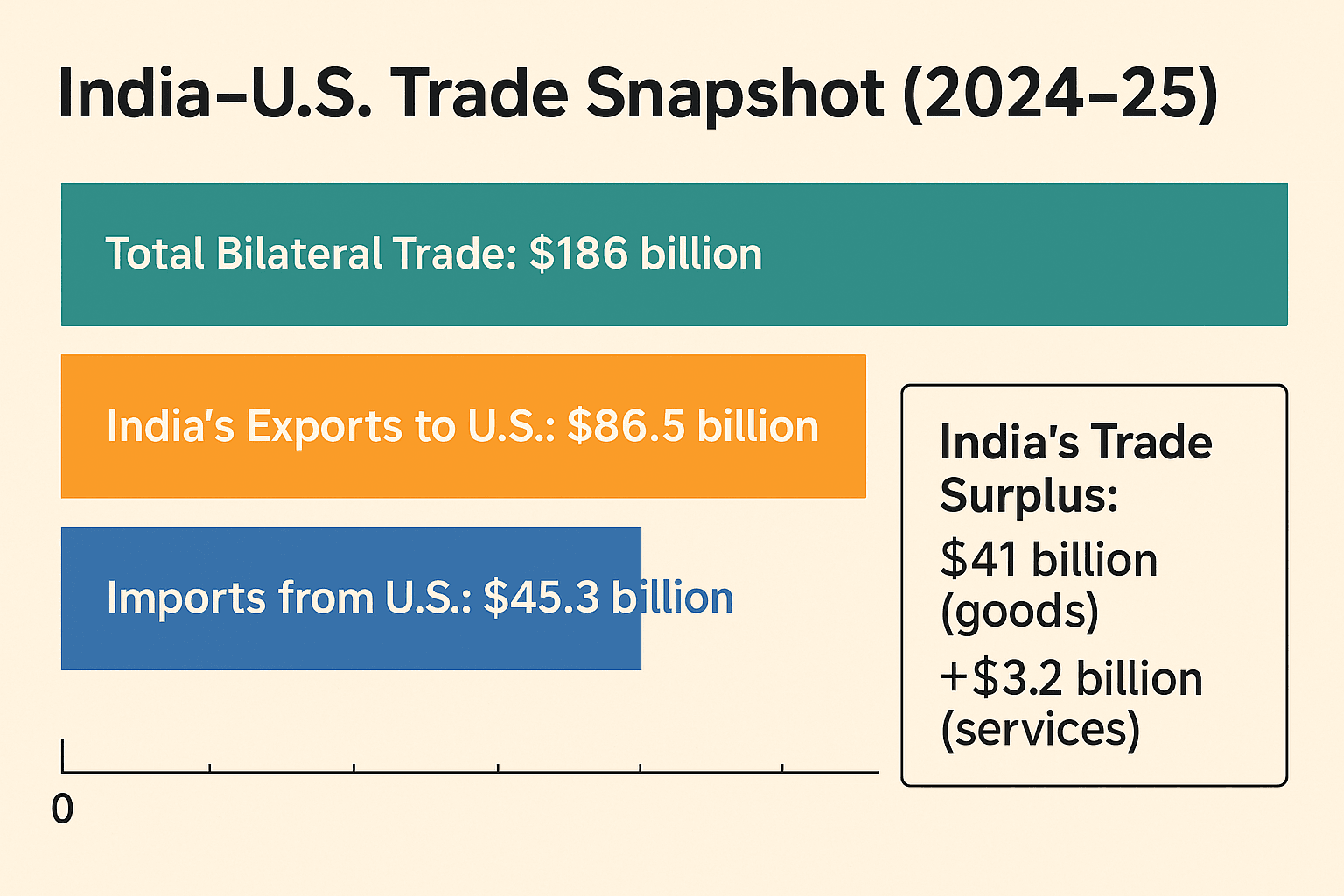
11.India–U.S. Tariff Dispute 2025 (India-US Tariffs)

The Hindu
Illustration for India–U.S. Tariff Dispute 2025 (India-US Tariffs)

What & Where

U.S. 2025 move: flat 25 % surcharge on select Indian imports entering American market

Tariffs justified as response to India’s defence & energy engagement with Russia (S-400, crude)

Action strains the India–U.S. “comprehensive global strategic partnership” spanning trade, defence, tech

Quick Facts for MCQs

Economic Angle

  • Export competitiveness: 25 % hike makes Indian textiles, gems costlier than Vietnamese or Bangladeshi rivals
  • MSME jobs: labour-intensive garments, footwear, handicrafts risk demand fall and wage cuts
  • Trade balance: shrinking surplus weakens India’s forex inflows and bargaining strength

Strategic Divergences

  • Russia factor: S-400 deliveries and discounted crude clash with U.S. alignment expectations
  • BRICS presence: Washington tags bloc “anti-U.S.”; India balances it with QUAD, I2U2 memberships
  • Pakistan angle: renewed U.S.–Pakistan security outreach revives Delhi’s trust deficit

Trade Policy

  • Transactionalism: tariffs signal U.S. pivot from values-driven to interest-first engagement
  • Sanction proxy: duty hike echoes CAATSA-style pressure minus formal sanctions label
  • Investment signal: heightened uncertainty may divert FDI from export-heavy Make-in-India sectors

Key Data Points

FeatureData-Point
Extra duty announced25 % on Indian goods
Key sectors hitTextiles, telecom, autos, gems, agri
India’s average applied tariff≈17 %
U.S. duty on Indian garments post-hike30–38 %
India’s official stanceRetains Russian defence & oil ties citing autonomy

Related UPSC Prelims PYQs

CDS_GK 2020PYQ 1

Since 2014-15, India has consistently run trade surplus with which one among the following countries?

CDS_GK 2024PYQ 2

If India enters into Free Trade Agreements (FTAs) with other nations, then the growth of exports of India would depend upon which of the following?

GS-2Scheme

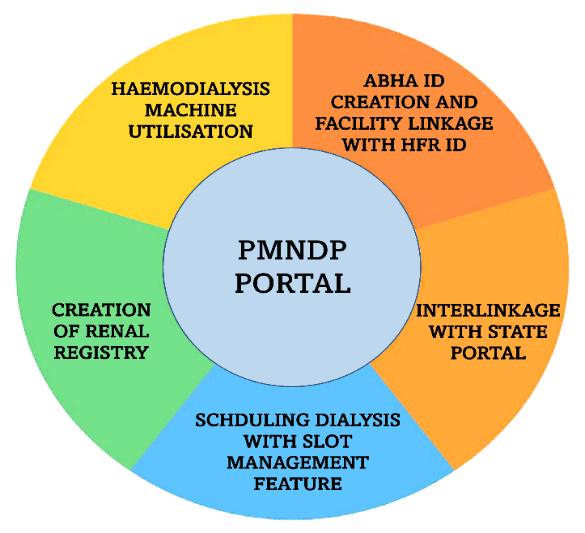
12.PM National Dialysis Programme Expansion (Dialysis Scheme)

PIB
Illustration for PM National Dialysis Programme Expansion (Dialysis Scheme)

What & Where

Flagship NHM scheme (2016) delivering free dialysis to economically vulnerable end-stage renal disease patients

Covers Haemodialysis & Peritoneal dialysis using PPP, in-house and hybrid service models

Operational in 751 districts of all 36 States/UTs; extended to CHCs in tribal/remote belts

Quick Facts for MCQs

Tech & Schemes

  • IT-Portal enables real-time slot booking, centre integration, portability across India
  • ABHA linkage allows instant patient identification and Personal Health Record access
  • Health Facility Registry provides searchable database of public & private dialysis facilities

Infrastructure Spread

  • Dialysis services now present in district hospitals plus select CHCs of remote/tribal areas
  • 1,700+ machines operational, strengthening renal-care capacity outside metros
  • Continuous expansion guided by NHM funding and CSR/PPP investments

Social Impact

  • Financial-risk protection for BPL households facing ₹3–4 lakh annual dialysis costs
  • Equitable renal-care access reduces urban-rural health disparity
  • Supports rising ESRD load due to diabetes, hypertension trends

Key Data Points

FeatureData-Point
LaunchUnion Budget 2016-17 (April 2016)
Implementing ministryMinistry of Health & Family Welfare
Functional districts751
Functional dialysis centres1,704 (30 Jun 2025)
States/UTs covered36
Service typesHaemodialysis, Peritoneal dialysis
PPP model adoption14 States/UTs
In-house model adoption16 States/UTs
Hybrid model adoption6 States/UTs
IT Portal launchMay 2022
Portability tag lineOne Nation–One Dialysis
ABHA digits14-digit unique number
Target groupPrimarily BPL ESRD patients

Related UPSC Prelims PYQs

CDS_GK, NDA_GAT 2022PYQ 1

भारत सरकार की प्रमुख टेलीमेडिसिन सेवा ‘ई-संजीवनी’ को हाल ही में किसके साथ एकीकृत किया गया?

CDS_GK, NDA_GAT 2023PYQ 2

निम्नलिखित में से कौन-सा/कौन-से, प्रधानमंत्री स्वास्थ्य सुरक्षा योजना (PMSSY) का/के उद्देश्य है/हैं?

GS-2Scheme

13.Apna Ghar Truckers Rest Initiative (Truckers Rest Houses)

DD News
Illustration for Apna Ghar Truckers Rest Initiative (Truckers Rest Houses)

What & Where

Scheme Apna Ghar: highway-side rest houses dedicated to long-haul truck drivers

Located at PSU OMC fuel retail outlets on national & state highways pan-India

Nodal oversight: Ministry of Petroleum & Natural Gas

Quick Facts for MCQs

Scheme Design

  • Coverage 368 rest houses, dormitories capped at 30 beds each
  • Amenities include clean sanitation, bathing Houdas, cooking space, dining, purified water
  • Built, operated, maintained by PSU OMCs at forecourts

Tech & Digital

  • Mobile app enables advance booking, feedback, occupancy tracking
  • Usage analytics feed into design upgrades and capacity planning
  • Digital interface fosters transparency and driver engagement

Social Impact

  • Fatigue mitigation expected to cut highway accident incidence among truckers
  • Provides dignified resting conditions for informal logistics workforce
  • Aligns with labour welfare, supply-chain resilience, SDG-8 targets

Key Data Points

FeatureData-Point
Launch year2025
Nodal ministryPetroleum & Natural Gas
Implementing agenciesPublic-sector OMCs
Current rest houses368 units
Total bed capacity4,611 beds
Dorm size10–30 beds
Key facilitiesToilets, Houdas, self-cooking zone, dhaba, RO water
Mobile applicationApna Ghar App
Primary objectiveReduce fatigue; raise road safety
SDG linkageSDG 8 – Decent Work
GS-1Polity

14.Five Years of NEP 2020 (National Education Policy)

PIB

What & Where

National Education Policy 2020 (NEP): pan-India overhaul of school-to-university system, based on Kasturirangan report.

Akhil Bharatiya Shiksha Samagam 2025: event marking 5-year NEP journey, inaugurated by Union Education Minister.

5 + 3 + 3 + 4 structure: NCF-SE shift to mother-tongue, experiential, competency-based learning across stages.

Quick Facts for MCQs

Policy Achievements

  • Multidisciplinary push: MERUs, Academic Bank of Credits, Multiple Entry-Exit flexibility operational.
  • Inclusivity gains: PRASHAST disability screening; Balvatika expansion; SEDG residential schools scaling.
  • Assessment reform: PARAKH national regulator; CUET emerging single UG gateway.

Digital & Tech

  • Platforms: DIKSHA, PM e-Vidya, Vidyanjali enhance content delivery; AI tools Katha Sakhi, Teacher Tara enable adaptive learning.
  • Ed-tech access: 72 % schools net-connected; remaining gap flagged for urgent ICT investment.
  • e-Jaadui Pitara: AI-powered play-based kit supporting foundational years.

Implementation Challenges

  • Federal discord: Tamil Nadu, West Bengal oppose three-language, CUET; uneven state rollout.
  • Resource shortfalls: teacher vacancies, weak Anganwadi preparedness, sub-6 % GDP funding.
  • Regulatory delays: HECI, NCF-Teacher Education still pending; monitoring data systems patchy.

Finance & Infrastructure

  • Budget mismatch: allocations not matching NEP ambition; infra upgrades lag rural areas.
  • Digital-divide: only 53.9 % schools possess internet per UDISE+, hindering e-content uptake.
  • Research need: investment in tech-pedagogy R&D urged for evidence-based scaling.

Key Data Points

FeatureData-Point
NEP launch year2020
Replaced policy1986 NEP
Anniversary event year2025
FLN reach (NIPUN Bharat + Vidya Pravesh)4.2 crore students, 8.9 lakh schools
Residential school enrolment1.15 lakh SEDG + 7.58 lakh girls
Teachers trained via NISHTHA4 lakh +
Schools with internet72 %
Functional computers in schools (UDISE+ 2023-24)57.2 %
Target public spending on education6 % of GDP
Common test introducedCUET (2022)

Related UPSC Prelims PYQs

CDS_GK, ESE_GS 2025PYQ 1

NEP 2020 के दिशा-निर्देश के अनुसार, 'पोषण और पढ़ाई पूर्व' (PPBP), निम्नलिखित में से किस कार्यक्रम के अंतर्गत प्रारंभ की गई है?

CDS_GK, ESE_GS 2021PYQ 2

Which one of the following statements is NOT correct regarding the National Education Policy 2020 in India ?

Ready to practice?

Test your knowledge with our UPSC test series.

Start Free Trial