UPSC Current Affairs

14 topicsGS-1: 4GS-2: 1GS-3: 9
0/14 done
GS-3Economy

1.Key Initiatives Boosting Agriculture (Agriculture Reforms)

PIB

What & Where

Flagship initiatives boosting Indian farm income via price assurance, credit, subsidies, tech adoption and export promotion.

Core tools include MSP hikes, DBT cash (PM-KISAN), KCC loans, e-NAM trading, AgriStack data, 10,000-FPO collectivisation.

Nationwide reach: 11.8 cr farmers, 1,400 mandis, 96.97 lakh ha under micro-irrigation.

Quick Facts for MCQs

Direct Subsidies

  • MSP enhancements cover cereals, pulses, oilseeds ensuring remunerative floor prices.
  • Fertiliser support absorbs ~70 % of agriculture budget, lowering input costs.
  • PM-KISAN delivers unconditional cash via 100 % central funding.

Credit & Finance

  • KCC offers concessional crop, fisheries, livestock loans; outstanding ₹9.81 lakh crore.
  • Agricultural Infrastructure Fund provides interest subvention, now open to community assets and solar projects.
  • Dedicated Credit Guarantee Fund backs FPO borrowings, spurring rural entrepreneurship.

Digital & Tech

  • AgriStack aggregates farmer, land, crop data enabling AI-based advisory, insurance, credit.
  • e-NAM creates transparent national e-market linking 1,400 APMCs.
  • Digital Agriculture Mission promotes geospatial mapping, weather analytics, vertical farming.

Infrastructure & Irrigation

  • Warehouses, cold chains, value-addition units financed under expanded AIF.
  • Per Drop More Crop covers 96.97 lakh ha; drip accounts for 46.37 lakh ha.
  • PM-KUSUM convergence pushes solar pumps, reducing diesel dependence.

Trade & Exports

  • FTAs with Australia, UAE, EFTA, UK open high-value markets for agri products.
  • Processed food share in exports rose to 23.4 % in FY24 indicating value addition.
  • Government eyes Rs 20 lakh crore export potential through quality, logistics upgrades.

Key Data Points

FeatureData-Point
MSP hike for pulses/oilseedsUp to 98 % since 2014
Soil Health Cards issued25 crore
Active KCC accounts7.75 crore
KCC outstanding credit₹9.81 lakh crore
PM-KISAN beneficiaries11.8 crore farmers
PM-KISAN annual support₹6,000 per family
e-NAM integrated mandis1,400
FY26 fertiliser subsidy₹1.67 lakh crore
Targeted Farmer Producer Organisations10,000
Farmers joined FPOs (Feb 2025)30 lakh (40 % women)
Micro-irrigation under PDMC96.97 lakh ha
FY24 agri-food exportsUS$46.44 billion

Related UPSC Prelims PYQs

CAPF_GAI, GS1 2025PYQ 1

Which one among the following schemes focuses on developing modern infrastructure and optimizing supply chain from farm to retail in Indian agriculture sector?

CAPF_GAI, GS1 2020PYQ 2

In India, which of the following can be considered as public investment in agriculture?
GS-1History

2.Maratha Military Fort Landscapes (UNESCO Heritage)

PIB
Illustration for Maratha Military Fort Landscapes (UNESCO Heritage)

What & Where

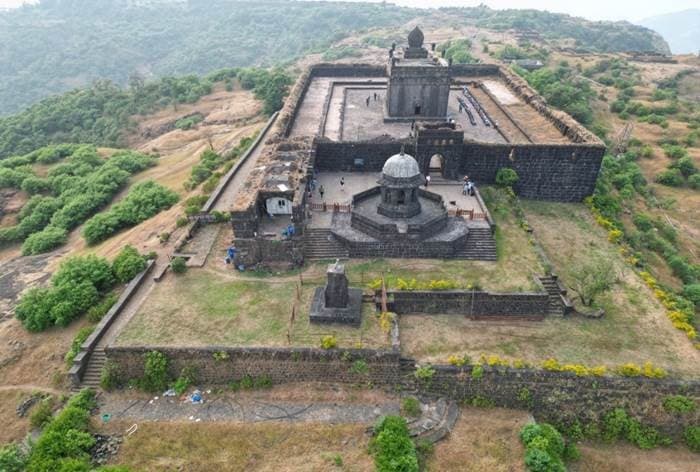
Maratha Military Landscapes of India: serial UNESCO cultural site of 12 Maratha forts, inscribed July 2025.

Geography: 11 forts Maharashtra, 1 fort Tamil Nadu (Gingee); span Sahyadri hills, Konkan coast, Deccan plateau.

Era & Purpose: built 17th–19th CE for decentralised, terrain-adaptive defence envisioned by Chhatrapati Shivaji Maharaj.

Quick Facts for MCQs

Historical Context

  • Rise: Fort chain consolidated Maratha control post-1640 amid Mughal, Bijapur threats.
  • Strategy: Lightning cavalry raids supported by secure hill-sea forts network.
  • Continuity: Some forts upgraded under Peshwas and British, retaining Maratha cores.

Fort Typology

  • Hill category integrates escarpments, zig-zag pathways, narrow passes deterring siege artillery.
  • Island forts exploit tidal moats, coral reefs, limited landing points.
  • Plateau/forest forts leverage wide ramparts, surrounding dense woods for concealment.

UNESCO Process

  • Nomination: ASI dossier backed by Maharashtra, Tamil Nadu governments, submitted 2023.
  • Evaluation: ICOMOS mission highlighted authenticity, intact water-management systems.
  • Protection: Site Management Plans require no-construction buffer and community-led monitoring.

Security Dimension

  • Coastal forts historically guarded Arabian Sea trade routes against European navies.
  • Inland forts served as command hubs, enabling quick troop mustering via ghats.
  • Modern tourism necessitates surveillance to curb vandalism and treasure hunting.

Key Data Points

FeatureData-Point
UNESCO session47th World Heritage Committee, Paris
Inscription criteria(iv) architectural ingenuity; (vi) cultural legacy
Serial components12 forts
Hill forts sampleShivneri, Raigad, Salher, Lohgad, Gingee
Island forts sampleSindhudurg, Suvarnadurg, Khanderi
Plateau/forest fortsPanhala, Pratapgad
India WH sites total44 (July 2025)
India global rank6th; 2nd Asia-Pacific after China
Indian tentative list62 sites
Nodal agencyArchaeological Survey of India
Committee membershipIndia 2021-25 term
Fort building materialLocally quarried laterite, basalt, lime mortar
Defensive traitsMultiple gateways, bastions, water cisterns, self-sustaining granaries

Related UPSC Prelims PYQs

CAPF_GAI, GS1 2005PYQ 1

Consider the following statements:

CAPF_GAI, GS1 2024PYQ 2

Which naval forts were erected by Shivaji?

GS-1Environment

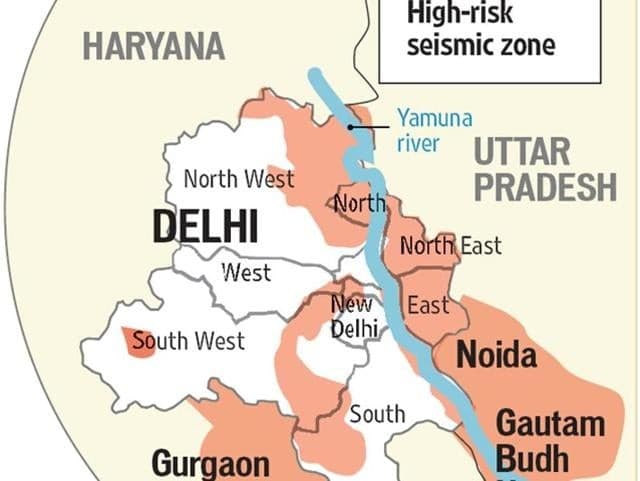
3.Delhi-NCR Seismic Vulnerability (Earthquake Risk)

Hindustan Times
Illustration for Delhi-NCR Seismic Vulnerability (Earthquake Risk)

What & Where

Delhi-NCR sits in BIS Seismic Zone IV, a high-damage risk belt of northern India.

Region lies ~250 km south of Himalayan Frontal Thrust where Indian-Eurasian plates collide.

Experiences frequent M 5–6 quakes; scientific models allow for ≥ 7 magnitude events.

Quick Facts for MCQs

Geophysical Drivers

  • Himalayan collision zone; deep stress migrates southward beneath NCR.
  • Multiple local faults trigger shallow-focus, high-frequency tremors.
  • River lineaments mark crustal weak zones enhancing ground shaking.

Urban Vulnerability

  • Dense population, unregulated construction magnify casualty and damage risk.
  • Widespread code non-compliance; few structures follow IS-1893 standards.
  • Aging bridges, utilities lack retrofitting, raising systemic failure probability.

Historical Seismicity

  • Five M 5.5–6.7 shocks documented 1720–2023, indicating recurring activity.
  • Approximate recurrence interval ~50–60 years for moderate events.
  • Past quakes felt across Gangetic plains, showing large impact footprint.

Institutional Inputs

  • BIS places only Zone V above Delhi’s current risk level.
  • NCS reports rising micro-quake count 2020-23, signalling active stress release.
  • NDMA urges mandatory structural audits, evacuation drills for NCR entities.

Key Data Points

FeatureData-Point
Seismic zoneIV (high damage risk)
Latest tremor magnitude4.4
Latest epicentreJhajjar, Haryana
Potential upper magnitude> 7
Moderate quake range5 – 6
Key active faultsDelhi-Haridwar Ridge, Delhi-Moradabad, Sohna, Mahendragarh-Dehradun
Subsurface weak lineamentsYamuna, Ganga river faults
Recorded ≥5.5 quakes since 17205 events
Seismic design codeIS-1893
Monitoring agencyNational Center for Seismology (NCS)

Related UPSC Prelims PYQs

CDS_GK, GS1 2021PYQ 1

Who amongst the following will be at more risk with respect to the earthquake hazard zone specified by the Geological Survey of India?

CDS_GK, GS1 2004PYQ 2

Consider the following geological phenomena:

GS-1Environment

4.Kashmir Valley Paleoclimate Findings (Palaeoclimate Study)

PIB

What & Where

Kashmir Valley (J&K) palaeoclimate reconstructed via fossil leaves from Karewa sediments (~4 Ma, Pliocene).

Evidence shows warm-humid subtropical forest replaced by today’s cool Mediterranean-type, alpine-conifer flora.

Shift driven by tectonic uplift of Pir Panjal Range, blocking Indian summer monsoon rainfall.

Quick Facts for MCQs

Tech & Methods

  • CLAMP analyses leaf size, shape, margin to estimate palaeo-temperature, rainfall.
  • Coexistence Approach matches fossil taxa with modern relatives to derive climate ranges.
  • Combined methods validate subtropical conditions for Kashmir circa 4 Ma.

Geophysical Change

  • Pir Panjal uplift altered valley topography, blocking moist monsoon winds.
  • Resultant rainfall decline drove transition to alpine-conifer vegetation.
  • Illustrates tectonic–climate coupling in Himalayan orogeny.

Policy & Conservation

  • Data aids high-resolution climate models for Himalayan glacier-melt and monsoon dynamics.
  • Informs biodiversity conservation in fragile mountain ecosystems.
  • Supports disaster-preparedness and sustainable development planning.

Key Data Points

FeatureData-Point
Lead instituteBirbal Sahni Institute of Palaeosciences, Lucknow
Institute founded1946; autonomous under DST since 1969
UNESCO support1951–53
Study materialHistoric fossil-leaf collection from Karewa formations
Fossil age≈4 million years (Early Pliocene)
Past climateWarm, humid subtropical
Present climateCool, Mediterranean-type temperate
Key analytical toolsCLAMP; Coexistence Approach
Uplift barrierPir Panjal Range (sub-Himalayan)
Monsoon impactBarrier curtailed Indian summer monsoon, reduced rainfall
GS-3Environment

5.Lotus Revival in Wular Lake (Wetland Restoration)

Indian Express

What & Where

Wular Lake – largest freshwater lake of India, 2nd in Asia; Bandipora-Sopore belt, J&K.

Tectonic-formed basin, fed by Jhelum & 25 streams; Ramsar wetland (1990).

Central island Zaina Lank; lotus (Nelumbo nucifera) resurging after 1992 flood-induced dormancy.

Quick Facts for MCQs

Conservation Efforts

  • WUCMA desilting exposed deep-buried lotus rhizomes, triggering bloom after 3 decades.
  • Targeted wetland restoration underscores role of sediment management in aquatic plant revival.
  • Community gains: revived nadru harvest bolsters local livelihoods.

Geology & Hydrology

  • Lake basin tectonically subsided; thought leftover of ancient Satisar lake.
  • Jhelum plus 25 tributaries maintain water balance; outlet also via Jhelum.
  • Foothill location: Haramuk Mountain, Kashmir Himalaya.

Biodiversity

  • Faunal richness: 56 birds, 39 fish, 20+ macrophytic plants recorded.
  • Key migrants include Baer’s Pochard (critically endangered, IUCN).
  • Lotus perennial, thrives in nutrient-rich murky water; rhizomes harvested as vegetable.

Key Data Points

FeatureData-Point
Managing bodyWular Conservation & Management Authority (WUCMA)
Flood year burying seeds1992
Lotus edible stem local nameNadru
Ramsar designation year1990
Main inflow riverJhelum
Small central islandZaina Lank
Geologic originTectonic activity; remnant of Satisar
Select migrant birdsWhite-bellied Heron, Pink-headed Duck, Baer’s Pochard
Total bird species56
National status of lotusNational flower of India

Related UPSC Prelims PYQs

CDS_GK, GEO_GS 2024PYQ 1

Which of the following Ramsar Wetland sites is not situated in any of the Union Territories of India?

CDS_GK, GEO_GS 2026PYQ 2

According to the Ramsar Convention, which one of the following lakes is protected as waterfowl habitat?

GS-3Species

6.Rhino Horn Structure and Threats (Rhino Conservation)

The Hindu

What & Where

RhoDIS: DNA Index System using genetic profiling of Indian rhino horns for conservation & crime forensics

Location: 2,573 seized/stored horns from Assam Forest Dept destroyed in 2021, analysis with Wildlife Institute of India

Species focus: Greater One-Horned Rhinoceros inhabiting NE India (Kaziranga, Jaldapara) and Nepal (Chitwan)

Quick Facts for MCQs

Tech & Schemes

  • RhoDIS enables individual horn genetic fingerprinting linking seizures to specific poaching incidents
  • Database mirrors South Africa’s rhino DNA model aiding prosecutions
  • Assam initiative first large-scale Indian contribution to system

Species Biology

  • Horn solid keratin layers; not bone, unlike antlers
  • External scraping, grazing sculpt conical shape unique per animal
  • Thick folded skin plates give armour-like appearance

Security Dimension

  • High illegal trade driven by false medicinal demand makes rhino top poaching target
  • Genetic evidence boosts conviction rates and deterrence
  • Collaboration integrates forensic science into routine wildlife enforcement

Key Data Points

FeatureData-Point
Stored horn samples2,573
Storage periodPre-2021 (destroyed Sept 2021)
Implementing bodiesAssam Forest Dept + WII
Horn materialKeratin (like nails, hair)
Annual horn growth≈ 2 cm
Horn core additivesMelanin & calcium
IUCN status (G.O.H.R.)Vulnerable
Largest population siteKaziranga NP, Assam
Nepal strongholdChitwan NP
Rhino scientific nameRhinoceros unicornis
Typical horn length8–25 inches
Key habitatRiverine grasslands & floodplains
Ecological roleKeystone grazer shaping wetlands
GS-3Editorial

7.GM Crops Opportunities and Challenges (Agribiotech Policy)

Financial Express
Illustration for GM Crops Opportunities and Challenges (Agribiotech Policy)

What & Where

Definition: Genetically Modified crops carry deliberately inserted genes conferring traits such as insect-kill, herbicide tolerance, nutrition boost

Types: Bt-toxin, herbicide-tolerant, biofortified, climate-resilient variants developed via recombinant DNA, cell hybridisation, new gene tech

Geography: Cultivated on 190 million ha in 29 nations (2019); India commercially allows only Bt cotton since 2002

Quick Facts for MCQs

Legal & Policy

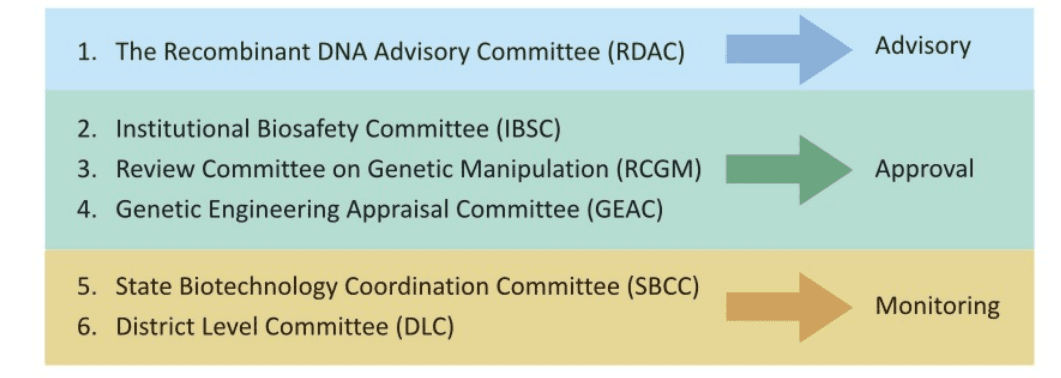
  • Regulation: Six-tier biosafety system; Genetic Engineering Appraisal Committee grants approvals
  • Moratorium: Political, civil-society pushback keeps Bt brinjal, GM mustard off fields
  • Disincentive: Cotton Seed Price Control Order 2015 curbs trait fees, discouraging private biotech R&D

Environmental Impact

  • Gene-flow: Herbicide genes may escape creating superweeds, threatening biodiversity
  • Non-target: Bt toxins can affect beneficial insects, monoculture reduces on-farm diversity
  • Resistance: Pink bollworm resurgence shows pests adapting to single-trait Bt cotton

Economic Angle

  • Export-rise: Bt cotton helped India become world’s No. 2 cotton exporter by 2011-12
  • Competitiveness-loss: Yield dip turned India net cotton importer in 2024-25
  • Cost-saving: Reduced pesticide spend was early financial driver for adopters

International Examples

  • Kenya: Drought-tolerant maize raises yields during dry spells
  • USA: StarLink corn 2000 contamination spurred stricter food-safety scrutiny
  • Oregon: 2013 GM wheat escape jeopardised export contracts, showing coexistence risks

Key Data Points

FeatureData-Point
First GM crop commercialisedFlavr Savr tomato, USA, 1994
Global GM farmers (2019)17 million
Indian regulatory anchorRules 1989 under EP Act 1986
Only Indian GM cropBt cotton
Bt cotton area India≈ 12 million ha, >90 % cotton acreage
Production jump with Bt cotton+193 % (2002-14)
Yield slide recent566 kg/ha (2013-14) → 436 kg/ha (2023-24)
Illegal HT-Bt cotton share15–25 % of acreage
Bt brinjal statusGEAC cleared 2009; moratorium continues
GM mustard DMH-11Environmental clearance 2022; court stay

Related UPSC Prelims PYQs

GS1 2018PYQ 1

भारत में विकसित आनुवंशिकतः संशोधित सरसों (जेनेटिकली मॉडिफाइड सरसों / GM सरसों) के सन्दर्भ में, निम्नलिखित कथनों पर विचार कीजिए:

GS1 2021PYQ 2

Bollgard I and Bollgard II technologies are mentioned in the context of

GS-3S&T

8.Astra Indigenous BVRAAM Missile (Air-to-Air Missiles)

New Indian Express
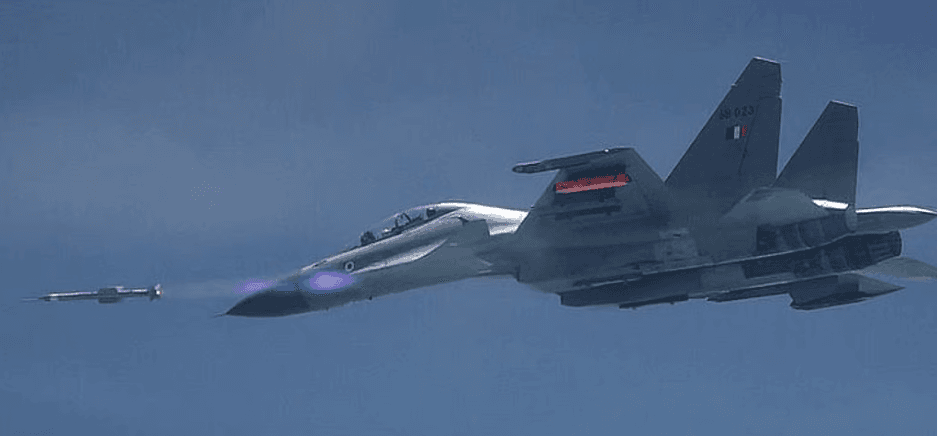
Illustration for Astra Indigenous BVRAAM Missile (Air-to-Air Missiles)

What & Where

Astra - India’s first indigenous Beyond Visual Range Air-to-Air Missile for out-of-sight aerial combat

Developed by DRDO with IAF & HAL; recent live-fire from Su-30MKI validated in-house Radio Frequency seeker

Operates in Indian airspace; planned fitment across multiple frontline fighter fleets

Quick Facts for MCQs

Tech & Schemes

  • Indigenous RF seeker boosts ECCM and reduces foreign tech dependence
  • Navigation plus mid-course updates deliver pinpoint end-game homing
  • Multi-platform integration simplifies fleet logistics and training

Economic Angle

  • Import substitution replaces Meteor/AMRAAM, conserving foreign exchange
  • Domestic production pipeline nurtures defence MSMEs under Make-II framework
  • Export potential aligns with Defence Production Policy 2020 revenue goals

Security Dimension

  • Force-multiplier for IAF to secure LAC and LOC airspace superiority
  • >100 km reach compels adversaries to engage from disadvantageous ranges
  • High-speed manoeuvrability neutralises agile fighters, UAVs and cruise threats

Key Data Points

FeatureData-Point
Missile classBVRAAM
Max strike range>100 km
Seeker typeIndigenous Radio Frequency
DeveloperDRDO + IAF + HAL
First test platformSu-30MKI
Planned platformsTejas, Mirage-2000, MiG-29
GuidanceInertial nav + mid-course data-link
ManoeuvrabilityDesigned for high-g agile targets
Strategic aimAtmanirbhar Bharat, import cut

Related UPSC Prelims PYQs

CDS_GK, GS1 2003PYQ 1

With reference to Indian defence, which one of the following statements is correct?

CDS_GK, GS1 2022PYQ 2

With reference to BrahMos missile, consider the following statements:

GS-3S&T

9.WHO AI Roadmap for Traditional Medicine (AI in Healthcare)

Times of India

What & Where

WHO’s first roadmap “Mapping AI in Traditional Medicine”; adopted under Global Initiative on AI for Health (GI-AI4H)

Guides safe, ethical AI deployment across Ayurveda, Siddha, Unani, global traditional systems

India, via Ministry of AYUSH, spearheaded proposal; WHO GCTM situated Jamnagar, Gujarat

Quick Facts for MCQs

Need Drivers

  • Personalization: AI aligns prakriti with genomics enabling customised Ayurveda therapies
  • Evidence: NLP mines classical texts; big data validates treatment outcomes
  • Access: Chatbots, mobile diagnostics deliver rural, low-cost traditional care

Challenges

  • Ethics: data bias, consent breaches, opaque predictions threaten patient safety
  • Regulation: no specific legal norms for AI in Ayurveda, Siddha, Unani
  • Trust: algorithmic advice may erode practitioner–patient confidence without explainability

Roadmap Provisions

  • Mapping: use-cases classified into diagnostics, clinical support, text digitisation, public health
  • Governance: transparency, safety, accountability, fairness mandated for all AI tools
  • Capacity: emphasises interoperable datasets, skilled workforce, harmonised regulations

Key Data Points

FeatureData-Point
Roadmap titleMapping the Application of AI in Traditional Medicine
Issuing bodyWorld Health Organization
Framework umbrellaGI-AI4H
Proposer countryIndia
Nodal ministryMinistry of AYUSH
Global users of traditional medicine>80 % population
Indian AYUSH practitioners>5 lakh
Projected market 2030> $200 billion
Key Indian databasesTKDL, Ayurgenomics
WHO centre in IndiaGCTM, Jamnagar
GS-3Security

10.Operation SHIVA Yatra Security (Amarnath Protection)

ITV
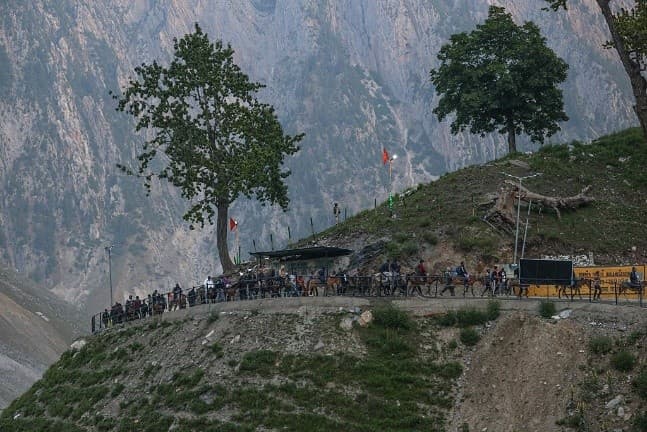
Illustration for Operation SHIVA Yatra Security (Amarnath Protection)

What & Where

Operation SHIVA 2025: annual high-altitude security mission safeguarding Shri Amarnath Yatra, Jammu & Kashmir Himalayas.

Led by Indian Army with CAPFs, civil administration, disaster-response units; integrates counter-terror and pilgrimage logistics.

Core corridors: Baltal (north) & Pahalgam (south) tracks to Amarnath cave shrine, altitude ≈ 3,880 m.

Quick Facts for MCQs

Security Dimension

  • Multilayer grid: infantry, RR units, CAPFs create concentric rings against Pakistan-backed terror threats.
  • Drone shield: C-UAS network counters weaponised quadcopters along valley ingress routes.
  • Live convoy tracking: GPS-enabled oversight from Jammu to cave ensures continuous situational awareness.

Logistics & Infrastructure

  • Engineer tasks: bridge repairs, track widening, landslide nets before Yatra commences.
  • Tent cities: prefabricated shelters, water stations, mobile toilets staged along both axes.
  • Emergency stock: food, fuel, medical stores cached at altitude for weather-induced cut-offs.

Tech & Surveillance

  • UAV patrols: day-night EO/IR feeds transmitted to integrated command post.
  • Electronic warfare: jammers disrupt hostile radio triggers near pilgrim columns.
  • PTZ cameras: high-zoom optics cover choke points, feeding analytics for threat flags.

Disaster Management

  • SDRF & Army medical teams deploy portable oxygen, trauma kits at 12,000 ft camps.
  • Helicopter winching: designated LZs mapped for landslide or cardiac evacuation.
  • Bulldozers and snow cutters stationed to reopen tracks after cloudburst or avalanche.

Key Data Points

FeatureData-Point
Launching forceIndian Army
Current edition2025
Total troops8,500 +
Main routesBaltal & Pahalgam
Counter-UAS systems50 +
Surveillance toolsPTZ cameras, UAV patrols, EW suites
Quick Reaction TeamsBomb disposal, signal, medical
Pre-positioned rationsFor 25,000 + pilgrims
Stand-by air assetsHelicopters for evacuation & lift
Key partnersCAPFs, J&K Police, SDRF, civil admin

Related UPSC Prelims PYQs

CAPF_GAI 2020PYQ 1

ऑपरेशन सद्भावना, किसकी पहल है ?

CAPF_GAI 2022PYQ 2

भारत की सुरक्षा के संदर्भ में, निम्नलिखित हेलीकॉप्टरों पर विचार कीजिए :

GS-3Security

11.Operation Fire Trail Anti-Smuggling Drive (Customs Enforcement)

PTI
Illustration for Operation Fire Trail Anti-Smuggling Drive (Customs Enforcement)

What & Where

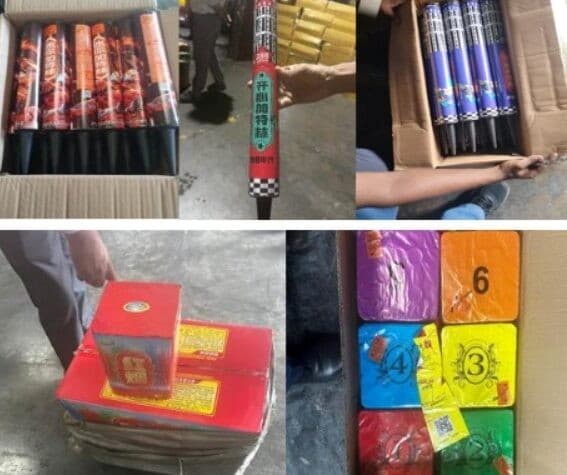
Operation Fire Trail – intelligence-led DRI crackdown at multiple Indian ports & SEZs

Focus: illicit Chinese fireworks camouflaged as decorative cargo entering Domestic Tariff Area

Hotspot detected: Kandla SEZ (KASEZ) diversion route

Quick Facts for MCQs

Legal & Policy

  • Restriction enforced via ITC(HS); non-licensed fireworks liable to confiscation & penalties under Customs Act
  • PESO certification compulsory for explosive imports; absence triggered seizure
  • SEZ diversion exposed gaps in IEC verification, prompting stricter scrutiny

Environmental Impact

  • Metals lithium, red lead, copper oxide amplify air-toxicity and particulate pollution
  • Unregulated stockpiles raise fire–explosion hazards at logistics hubs
  • Operation supports national efforts to curb hazardous cracker circulation

Security Dimension

  • Multi-port coordination shielded supply chain from disguised explosives
  • Prevention of potential port disasters enhances critical infrastructure safety
  • High-value seizure and arrest act as deterrent to organised smuggling networks

Key Data Points

FeatureData-Point
Lead agencyDirectorate of Revenue Intelligence (CBIC)
Seized quantity100 metric tonnes
Market value≈ ₹35 crore
Concealment labels“Mini Decorative Plants”, “Artificial Flowers”
Policy tag in ITC(HS)Restricted import item
Mandatory clearancesDGFT licence + PESO nod
Breached lawExplosives Rules 2008
Toxic contentsLithium, Red lead, Copper oxide
Smuggling methodSEZ misuse + fake IEC holders
Enforcement outcomePrime suspect in judicial custody

Related UPSC Prelims PYQs

CDS_GK 2025PYQ 1

किस फ़ायरवॉल को चालू करने के उपयोग निम्नलिखित में से कौन-से हैं?

GS-3Security

12.INS Nistar Diving Support Vessel (Naval Assets)

PIB
Illustration for INS Nistar Diving Support Vessel (Naval Assets)

What & Where

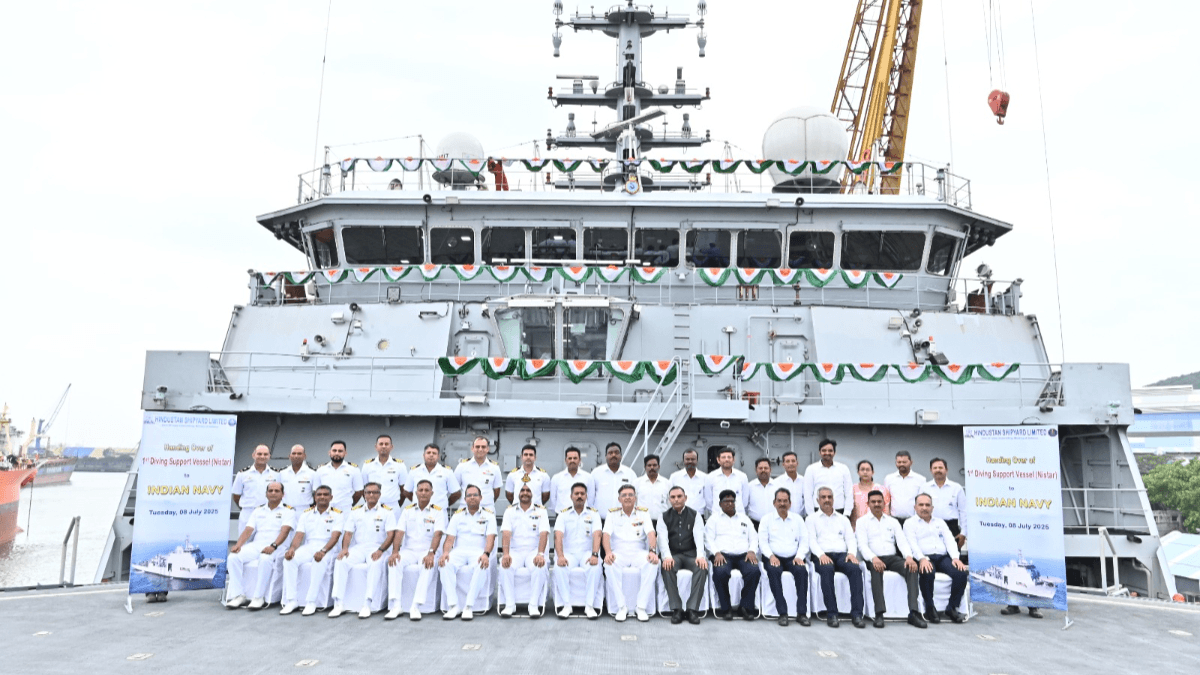
INS Nistar – first India-built Diving Support Vessel for underwater rescue and salvage

Constructed by Hindustan Shipyard, Visakhapatnam; to operate with Eastern Naval Command

Serves as mother ship to Deep Submergence Rescue Vessels for distressed submarines

Quick Facts for MCQs

Technical Specs

  • Endurance 60 days, helicopter operations, 15 t crane enable prolonged deep-sea recovery
  • 120 m length and 10,000 t displacement match destroyer scale
  • Dynamic Positioning and side-scan sonar allow precise station-keeping and seabed mapping

Operational Roles

  • Acts as mother ship for DSRVs ensuring quick submarine crew rescue
  • Facilitates diver deployment, search, recovery and salvage across Indian Ocean Region
  • Supports maritime HADR missions through medical facilities and heavy-lift gear

Strategic Significance

  • Provides indigenous submarine rescue autonomy reducing foreign dependence
  • Strengthens India as Net Security Provider under SAGAR vision in IOR
  • Revives 1969 Nistar legacy with fully home-built capability

Organisational Setup

  • Eastern Naval Command headquartered Visakhapatnam oversees Bay of Bengal theatre
  • Indian Navy structured into Western, Eastern, Southern commands for operational control
  • DSV addition boosts command’s under-sea warfare and disaster-response readiness

Key Data Points

FeatureData-Point
Ship typeDiving Support Vessel
BuilderHindustan Shipyard Ltd
Build locationVisakhapatnam
Length~120 m
Displacement~10,000 t
Sea endurance60 + days
Crane capacity15 t subsea
Helicopter deckPresent
Positioning aidDynamic Positioning System
Sonar fittedSide-Scan SONAR
Assigned commandEastern Naval Command
Legacy vesselUSSR-built INS Nistar (1969 – 1989)
Navy commandsWestern, Eastern, Southern
Doctrine supportedSAGAR initiative

Related UPSC Prelims PYQs

CAPF_GAI, CDS_GK 2024PYQ 1

Which one of the following statements about 'INS Tarmugli' is not correct?

CAPF_GAI, CDS_GK 2023PYQ 2

Which one of the following Indian Naval Ships has recently concluded a 17,000-nm trans-ocean intercontinental voyage?

GS-2Scheme

13.Sanchar Mitra Digital Literacy Scheme (Cyber Awareness)

Times of India

What & Where

Volunteer-based digital outreach scheme by DoT, Ministry of Communications; now scaled nationwide.

Uses university students titled “Sanchar Mitras” to spread telecom safety, cyber-fraud prevention, digital responsibility.

Piloted in Assam; expansion via IITs, IIITs, NITs across India.

Quick Facts for MCQs

Tech & Schemes

  • Leverages 5G-6G knowledge transfer to grassroots via trained students.
  • Complements existing DoT consumer initiatives like Sanchar Saathi portal.

Security Dimension

  • Targets rising phishing/SIM swap scams through preventive education.
  • Promotes EMF radiation safety awareness to counter health misinformation.

Social Concerns

  • Bridges digital divide by empowering semi-urban & rural citizens.
  • Harnesses demographic dividend; positions youth as local telecom ambassadors.

Key Data Points

FeatureData-Point
Parent ministryMinistry of Communications
Implementing dept.Department of Telecommunications (DoT)
Volunteer tag“Sanchar Mitra”
Eligible streamsTelecom, electronics, CSE, cybersecurity
Training hubNational Communications Academy–Technology (NCA-T) & DoT Media Wing
Tech topics covered5G, 6G, AI, cybersecurity, EMF safety
Outreach modesCampus drives, NGO tie-ups, community workshops
Recognition perksInternships, India Mobile Congress access, ITU forums
First state implementedAssam
Primary goalsDigital literacy, cyber hygiene, citizen-government telecom link

Related UPSC Prelims PYQs

CDS_GK, ESE_GS 2024PYQ 1

Which one of the following is an ‘end-to-end secure mobile ecosystem’ developed recently by the Indian Army?

CDS_GK, ESE_GS 2026PYQ 2

The Samriddh Gram Phygital Services Pilot Project was recently launched by which organization?

GS-1Editorial

14.India Gender Gap Challenges (Gender Disparities)

The Hindu

What & Where

Global Gender Gap Report (WEF): annual index benchmarking gender parity worldwide

Measures four dimensions: Economic Participation, Educational Attainment, Health & Survival, Political Empowerment

2025 edition covers 148 countries; India placed 131st

Quick Facts for MCQs

Economic Angle

  • FLFP below 25 %; wage gap leaves women earning under one-third of male income
  • McKinsey projects $770 bn GDP boost with parity
  • Exclusion wastes over 50 % productive human capital

Health Dimension

  • 57 % women anaemic; reflects nutrition and reproductive care neglect
  • Skewed sex ratio signals entrenched son preference
  • Poor health lowers learning and intergenerational outcomes

Policy Gaps

  • Gender budgeting and social protections remain fragmented and underfunded
  • Care infrastructure, maternity benefits, childcare largely informal and invisible in GDP
  • Limited female decision-makers weakens investment in safety and health

Social Concerns

  • Women perform 7× more unpaid domestic work; undervalued in national accounts
  • Boardrooms, judiciary, legislatures show persistent leadership deficit
  • Patriarchal norms sustain workplace bias and restrict mobility

International Example

  • Uruguay National Care System cited as model for formalising childcare and elderly care

Key Data Points

FeatureData-Point
PublisherWorld Economic Forum
Countries Covered (2025)148
Global Gap Closed68.8 %
Years to Full Parity123
India Overall Rank131
India Economic Rank143
Female Labour Force (India)< 25 %
Women’s Earnings vs Men< 33 %
Anaemia in Women 15-4957 % (NFHS-5)
Unpaid Care Work RatioWomen 7 : 1 Men
Projected GDP Gain$770 bn if gaps closed
Sex Ratio ConcernSon preference drives deficit

Related UPSC Prelims PYQs

CAPF_GAI, GEO_GS 2024PYQ 1

Consider the following statements with reference to a Report titled 'The Paths to Equal', published in 2023, prepared by 'UN Women' and 'UNDP' (United Nations Development Programme):

CAPF_GAI, GEO_GS 2023PYQ 2

निम्नलिखित में से भारत की G20 प्राथमिकताएँ क्या हैं?

Ready to practice?

Test your knowledge with our UPSC test series.

Start Free Trial