UPSC Current Affairs

16 topicsGS-1: 6GS-2: 3GS-3: 7
0/16 done
GS-2Polity

1.State Legislative Authority Affirmed by Supreme Court (Separation of Powers)

The Hindu

What & Where

Nandini Sundar vs State of Chhattisgarh (2011): SC stopped use of ill-trained SPOs in Maoist belt of Chhattisgarh

Chhattisgarh Auxiliary Armed Police Forces Act (2016): State law re-authorising auxiliary force akin to Salwa Judum, Koya Commandos

Geography: Salwa Judum operated chiefly in tribal Bastar division, south Chhattisgarh

Quick Facts for MCQs

Legal & Policy

  • Authority: State legislatures competent to legislate unless field is constitutionally barred
  • Limitation: Judicial review restricted to constitutional validity and legislative competence of statute
  • Retrospectivity: Legislatures can pass retrospective or validating Acts without directly overruling judgments

Security Dimension

  • Auxiliary force: Mirrors earlier SPO structure for anti-Naxalite operations
  • Concern: SPOs criticised for inadequate training, rights violations prompting 2011 restriction
  • Tribal recruitment: Koya youths central to both Salwa Judum and new auxiliary formations

Judicial Doctrine

  • Separation: Judiciary cannot prevent legislature from lawmaking but can test its constitutionality
  • Basis removal: Acceptable legislative tool to neutralise judgment’s legal foundation
  • Contempt scope: Non-existent when subsequent law duly alters earlier factual or legal premises

Key Data Points

FeatureData-Point
Apex verdict year2011
Constitution articles cited14 (equality), 21 (life & liberty)
SC 2011 directiveCease deployment of SPOs in anti-Maoist duties
Contempt plea outcome (2025)Rejected; state seen as compliant
Key doctrine reiteratedSeparation of Powers
Legislature mayEnact new law, remove basis of judgment, validate struck-down law
Similar precedentIndian Aluminium Co. vs State of Kerala 1996
Security programmesSalwa Judum (2005), Koya Commandos (tribal SPOs)
New state Act statusValid unless proven unconstitutional or ultra vires
Court-accepted compliance proofPeriodic status reports by Chhattisgarh govt

Related UPSC Prelims PYQs

CAPF_GAI 2021PYQ 1

मेनका गांधी बनाम भारत संघ केस, 1978 के सन्दर्भ में, निम्नलिखित में से कौन-सा कथन सही है?

CAPF_GAI 2023PYQ 2

The Judgment of the Supreme Court in Peoples’ Union for Civil Liberties v. Union of India 2004 is related to which of the following ?
GS-3Economy

2.RBI Variable Rate Reverse Repo Operations (Monetary Policy)

Economic Times

What & Where

Definition: Variable Rate Reverse Repo (VRRR) – RBI auction-based tool absorbing surplus bank liquidity for preset tenors.

Process: Banks bid to lend funds; RBI accepts bids at/above cut-off rate discovered in auction.

Geography: Operated by Reserve Bank of India across Indian money market.

Quick Facts for MCQs

Liquidity Management

  • Surplus: Peak ₹3.75 lakh cr prompted ₹1 lakh cr 7-day VRRR auction.
  • Flexibility: RBI varies size, tenor, frequency per daily liquidity assessment.
  • Corridor alignment: Tool keeps overnight rates within policy band.

Market Impact

  • Money market: Absorption hardens call money, TREPS, pushing them toward policy repo.
  • Bond yields: Higher VRRR cut-offs translate into steeper short-term government & corporate yields.

Banking Sector

  • Return: Banks earn auction-based rate, often above fixed reverse repo, boosting surplus-fund income.
  • Opportunity cost: Funds locked for tenor may temporarily limit lending capacity.

Key Data Points

FeatureData-Point
Announced byReserve Bank of India
ObjectiveAbsorb excess liquidity, fine-tune short-term rates
Tenor options7, 14, 28 days (recent: 7-day)
Rate discoveryCompetitive auction, variable—not fixed
Ceiling rateCannot exceed prevailing Repo Rate
Liquidity condition prerequisiteSystem surplus (e.g., ₹3.75 lakh cr)
Recent auction size₹1 lakh crore
Impact metricTightens call money & TREPS rates

Related UPSC Prelims PYQs

CDS_GK 2020PYQ 1

Which one of the following is not correct about Repo rate?

GS-3Economy

3.Aluminium Vision 2047 Roadmap (Aluminium Policy)

Economic Times

What & Where

Aluminium Vision Document 2024 – strategic roadmap to scale India into a global green-aluminium hub by 2047.

Released by Ministry of Coal & Mines at International Conference on Sustainable & Responsible Mining, Hyderabad.

Core geography: bauxite-rich belts of Odisha, Gujarat, Jharkhand; nationwide smelting & recycling expansion.

Quick Facts for MCQs

Policy & Governance

  • Reforms: streamlined mining approvals, faster environmental clearances, strengthened resource governance.
  • Incentives: fiscal support, duty tweaks, possible PLI-type push for downstream value-addition.
  • Alignment: dovetails with Atmanirbhar Bharat, National Mineral Policy for import substitution.

Tech & Schemes

  • Low-carbon: inert anode, carbon-capture, energy-efficient furnaces to cut smelting emissions.
  • Digitalisation: Industry 4.0, AI-driven process control across mine-to-metal chain.
  • Recycling: modern secondary smelters, 100 % scrap tracking to double recovery rate.

Environmental Impact

  • Decarbonisation: lightweight, recyclable aluminium enables solar, wind, EV components, reducing sectoral CO₂ footprint.
  • Circularity: higher recycling lessens bauxite mining pressure, land degradation, energy intensity.

Key Data Points

FeatureData-Point
Publishing ministryCoal & Mines
Launch venueHyderabad conference on Sustainable & Responsible Mining
Target year2047
Aluminium capacity goalSix-fold rise over present
Bauxite output target150 MTPA
Recycling ambitionDouble current rate
Critical mineral statusAluminium tagged vital for clean energy, EVs, defence
Tech focusLow-carbon, energy-efficient smelting

Related UPSC Prelims PYQs

CDS_GK, GS1 2025PYQ 1

As per the Annual Report 2023 – 24 of the Ministry of Mines, Government of India, which of the following are the major bauxite producing states in India?

CDS_GK, GS1 2002PYQ 2

HINDALCO, an aluminium factory located at Renukoot owes its site basically to

GS-3Economy

4.NITI Aayog Chemical Industry Roadmap 2040 (Chemical Industry GVC)

PIB

What & Where

Definition: NITI Aayog roadmap to lift Indian chemical sector into top-tier Global Value Chains by 2040

Key processes: Bulk petrochemicals, specialty derivatives, green/bio-based chemicals pivot

Core geography: Current clusters Gujarat, Maharashtra, Tamil Nadu; planned 8 port-proximate hubs

Quick Facts for MCQs

Economic Angle

  • Opportunity: Demand surge from agrochemicals, pharma, EV batteries, construction materials
  • Shift: Global clients diversifying away from China in dyes, pigments, surfactants
  • Incentive: OPEX subsidy to reward incremental output with import-substitution weightage

Policy Tools

  • Infrastructure: Empowered committee to fund shared utilities in world-class chemicals hubs
  • Trade: Secure FTAs with tariff quotas, duty-free critical feedstocks
  • Regulation: DPIIT-led fast-track environmental clearances auditing committee

Skill & Innovation

  • Capacity: Expand ITIs, launch niche courses in polymer science, process safety, green tech
  • Collaboration: DCPC R&D grants for industry–academia projects, encourage MNC tech transfer
  • Safety: Mandatory Process Safety Management audits, real-time monitoring in clusters

Key Data Points

FeatureData-Point
Global production rank6th
Share in manufacturing GDP7 %
Present GVC share3.5 %
Target GVC share 204012 %
Target output 2040USD 1 trn
Trade deficit 2023USD 31 bn
R&D spend share0.7 % of revenue
Global avg R&D spend2.3 %
Skilled labour gap30 %
Jobs expected by 20307 lakh
Benzene to simple derivatives (India)87 %
Same metric global25 %
API import dependence (China)60 %
PCPIR Paradip investmentUSD 8.84 bn
Jan Aushadhi kendras target25,000

Related UPSC Prelims PYQs

CAPF_GAI 2025PYQ 1

'राष्ट्रीय विनिर्माण मिशन' के संबंध में निम्नलिखित में से कौन-सा/कौन-से कथन सही है/हैं?

CAPF_GAI 2024PYQ 2

Which of the following statements with regard to National Logistics Policy (NLP) is NOT correct?

GS-3Economy

5.Call to Reform Sovereign Credit Ratings (Sovereign Credit Ratings)

Financial Express

What & Where

Sovereign Credit Rating: independent gauge of a nation’s debt-repayment capacity influencing bond yields and FDI flows

Big Three agencies: S&P, Moody’s, Fitch—all US-based; other players DBRS (Canada), JCR (Japan), Dagong (China)

Investment-grade band: AAA-to-BBB-/Baa3; India currently BBB-(S&P/Fitch) & Baa3 (Moody’s)

Quick Facts for MCQs

Bias & Critique

  • Bias: Developing economies kept near junk while slower, high-debt OECD states enjoy higher grades
  • Pro-cyclicality: Crisis-time downgrades escalate borrowing costs when liquidity essential
  • Conflict: Issuer-pays model, opaque methods, 2008 misratings dent credibility

Reform Proposals

  • Transparency: Publish metric weightages, enable third-party audits, include domestic-currency risk separation
  • Alternatives: Foster BRICS/G20-led CRAs; upgrade CRISIL, ICRA for global competition
  • Tech-integration: Use AI, GST collections, UPI volumes for near-real-time sovereign scoring

Indian Context

  • Growth: Rank jumped 12th → 5th in GDP but sovereign grade unchanged since 2004
  • Resilience: High domestic debt share cushions exchange-rate risk, unlike Italy or Japan
  • Reforms: GST rollout, Insolvency Code, digital public goods often underweighted in rating models

Key Data Points

FeatureData-Point
Base country of Big ThreeUnited States
India’s present rating bandBBB- / Baa3 / BBB-
India debt-to-GDP ratio≈ 80 % (mostly domestic)
Italy debt-to-GDP ratio≈ 118 % yet BBB (S&P)
India forex reserves (Apr 2025)USD 600 + billion
Covid-19 action by Moody’sCut India Baa2 → Baa3 in 2020
Indian CRA regulationSEBI (CRA) Regulations 1999
1st Indian CRA on global scaleCareEdge (CARE Ratings)

Related UPSC Prelims PYQs

GS1 2022PYQ 1

निम्नलिखित कथनों पर विचार कीजिए :

GS1 2021PYQ 2

भारत के संदर्भ में, निम्नलिखित कथनों पर विचार कीजिए :

GS-1History

6.Chautal Rhythmic Cycle in Dhrupad (Indian Classical Music)

ITV

What & Where

Tala: Chautal/Chowtal, 12-beat rhythmic cycle of North Indian dhrupad repertoire

Origin: Medieval North India; name denotes “four claps” reflecting internal vibhag pattern

Diaspora: Bhojpuri-style Chautal survives in Caribbean, eg. Trinidad & Tobago folk gatherings

Quick Facts for MCQs

Rhythmic Structure

  • Vibhag choice alters clapping vs wave sequence, aligning some schools with Ektāl logic
  • Absence of fixed theka grants expansive improvisation windows to percussionists
  • Stress points create symmetrical feel despite mixed 4-beat and 2-beat groupings

Performance Practice

  • Pakhāwaj usage permits long resonance, bol patterns, and dynamic modulation
  • Singers employ dhrupad alap-jor-jhala overlay before bandish set in Chautal cycle
  • Never rendered extremely fast; gravitas maintained for spiritual ambience

Diaspora Linkages

  • Bhojpuri indentured communities carried Chowtal songs to Caribbean in 19th century
  • Spring Phagwa (Holi) festivals in Trinidad, Guyana feature antiphonal Chowtal singing
  • Recent diplomatic showcases bolster cultural continuity and soft power outreach

Key Data Points

FeatureData-Point
Total beats (mātrā)12
Usual vibhag options4-4-2-2 or 2×6
Tempo rangeMadhya (medium); avoids ati-drut or ati-vilambit
Core genreDhrupad
Primary drumPakhāwaj
Theka statusOften absent; follows improvisatory “thāpi”
Name meaning“Four claps” (chār + tāl)
Playing characterPowerful, weighty strokes
Diaspora region citedTrinidad & Tobago (Port of Spain)
Govt highlightShared by Indian PM during 2023 visit
GS-1History

7.Alluri Sitarama Raju Freedom Struggle (Freedom Movement)

DC
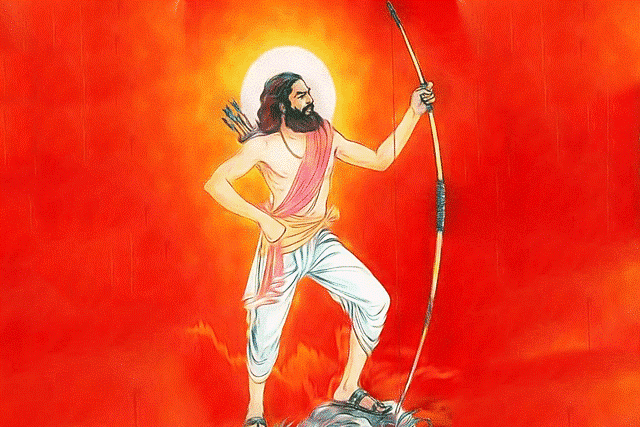
Illustration for Alluri Sitarama Raju Freedom Struggle (Freedom Movement)

What & Where

Revolutionary; led 1922-24 Rampa Rebellion against British in Eastern Ghats Agency, present Andhra Pradesh

Objective; defend tribal rights curtailed by Madras Forest Act 1882 and forced labour systems

Geography; operations spanned Godavari, Visakhapatnam, East-West Godavari forested hill tracts

Quick Facts for MCQs

Freedom Struggle Role

  • Leadership; mobilised tribal youth into armed bands using captured Lee-Enfield rifles from police stations
  • Strategy; swift guerrilla strikes disrupted colonial communications across Godavari Agency hills
  • Outcome; rebellion pressured British to review forest regulations despite brutal suppression

Tribal Rights & Grievances

  • Trigger; Forest Act barred Podu cultivation, seized shifting fields, criminalised minor forest produce collection
  • Exploitation; unpaid coolie labour demanded for road and rail works in hill tracts
  • Mobilisation; Raju urged boycott of courts, police stations, foreign cloth echoing Non-Cooperation ideals

Memory & Commemoration

  • Title; revered as Manyam Veerudu among Andhra tribal communities
  • State honour; Andhra Pradesh celebrates 4 July as Alluri Sitarama Raju Jayanti with rallies and tribal fairs
  • Cultural impact; statues, films, postage stamps sustain narrative of indigenous resistance

Security Dimension

  • Government goal; Union leadership targets Maoist insurgency elimination by August 2026 referencing Raju’s anti-colonial legacy
  • Approach; development projects plus specialised forces deployed in Left-Wing Extremism districts
  • Symbolism; invoking historic tribal uprisings to legitimise contemporary counter-insurgency narratives

Key Data Points

FeatureData-Point
Born4 July 1897
Birth villageMogallu, Bhimavaram, Andhra Pradesh
Rebellion period1922 – 1924
Opposed lawMadras Forest Act 1882
Cultivation restrictedPodu shifting agriculture
British bounty₹10,000
Death7 May 1924, near Chintapalle
Popular titleManyam Veerudu
State festival day4 July observed by Andhra Pradesh
Ideological influenceGandhi’s Non-Cooperation Movement

Related UPSC Prelims PYQs

CDS_GK 2023PYQ 1

निम्नलिखित में से किस विद्रोह में कोया और कोड़ा जनजाति के मुखिया ने एक सामन्त परिवार के स्वामी अधिपति (overlord) के विरुद्ध बगावत की?

GS-1S&T

8.C-FLOOD Real-Time Flood Forecast Platform (Flood Forecasting Tech)

PIB

What & Where

C-FLOOD – India’s first unified web-based real-time flood-inundation forecasting platform

Provides 48-hour advance village-level flood maps and water-level predictions via 2-D hydrodynamic modelling

Initially operational in Mahanadi, Godavari, Tapi basins across Odisha, Chhattisgarh, Andhra Pradesh, Telangana, Maharashtra, Gujarat

Quick Facts for MCQs

Tech & Schemes

  • High-performance computing enables rapid 2-D simulations for large catchments
  • Unified dashboard merges IMD, NCMRWF and state model forecasts in real time
  • Developed under National Supercomputing Mission and Digital India water-tech initiatives

Disaster Management

  • 48-hour alerts aid evacuation, crop harvesting and dam gate operations
  • Village-scale inundation layers feed district disaster management plans and SOPs
  • Aligns with Viksit Bharat@2047 climate-resilient infrastructure targets

Governance & Collaboration

  • Framework links Jal Shakti, MeitY, DST, ISRO and states for shared water data
  • Real-time validation through satellite SAR and ground gauges boosts forecast credibility
  • Sets template for rollout to remaining Himalayan, Ganga and other major basins

Key Data Points

FeatureData-Point
Full formCollaborative Flood Inundation Forecasting System
Launch date & authorityMay 2024; inaugurated by Union Jal Shakti Minister
Core developersC-DAC Pune & Central Water Commission
Supporting agenciesNRSC-ISRO, MeitY, DST
Forecast lead time2 days (48 hours)
Spatial resolutionGram panchayat / village level
Modelling engine2-D hydrodynamic simulation on HPC under National Supercomputing Mission
Present river basinsMahanadi, Godavari, Tapi
Decision-support linkIntegrates with National Disaster Management Emergency Response Portal (NDEM)
Key outputsReal-time inundation maps & water-level curves
GS-3Environment

10.Equine Disease-Free Compartment Recognition (Animal Health Biosecurity)

PIB

What & Where

Equine Disease-Free Compartment (EDFC): WOAH-recognised zone keeping horses free from listed equine diseases for trade & sport.

Location: Remount Veterinary Corps Centre & College, Meerut Cantonment, Uttar Pradesh.

Governance: Ministry of Fisheries, Animal Husbandry & Dairying; continuous veterinary surveillance as per WOAH code.

Quick Facts for MCQs

Tech & Schemes

  • SOP bundle covers hygiene, pest control, sanitation, waste disposal ensuring compartment integrity.
  • Continuous digital health surveillance enables real-time infection alerts and rapid containment.

Economic Angle

  • Disease-free tag opens premium international markets for Indian equines, boosting rural breeding income.
  • Poultry compartment model aims to lift export earnings by bypassing HPAI barriers.

Sports & Culture

  • Certification allows Indian horses and riders entry to Olympics, Asian Games, FEI circuits.
  • Encourages domestic breeding programmes for competitive sport horses.

International Dimension

  • WOAH recognition aligns India with EU-US equine export standards, enhancing credibility.
  • Demonstrates adherence to science-based global biosecurity norms, aiding future trade negotiations.

Key Data Points

FeatureData-Point
Global certifying bodyWorld Organisation for Animal Health (WOAH)
Indian ministryFisheries, Animal Husbandry & Dairying
Host establishmentRVC Centre & College, Meerut
Declared disease-free listEquine Influenza, Glanders, Surra, Piroplasmosis, Equine Infectious Anemia
African Horse Sickness statusIndia free since 2014
Core protocolCompartmentalisation, WOAH Terrestrial Animal Health Code
Biosecurity actionsHygiene, pest control, waste management SOPs
Surveillance pattern24×7 veterinary screening
Trade benefitExport of high-value Indian sport horses
Planned replicationHPAI-Free Compartments for poultry exports
GS-3Environment

11.Plastic Waste Microplastic Health Risks (Microplastic Pollution)

The Hindu

What & Where

Microplastics = plastic fragments < 5 mm; primary (microbeads, fibres) vs. secondary (weathered debris).

Endocrine-disrupting chemicals (EDCs) in plastics mimic/block hormones; common: BPA, phthalates, PFAS.

India ‑ world’s largest plastic polluter (9.3 mt/yr leakage & burning), high human tissue contamination.

Quick Facts for MCQs

Health Impacts

  • Microplastics: detected in blood, lungs, heart, placenta, semen; linked to sperm defects, poor egg quality, PCOS.
  • EDCs: DEHP, BPA classified probable carcinogens; contribute to obesity, diabetes, thyroid disorders.

Waste Management Gaps

  • Infrastructure: scarce sanitary landfills, weak segregation, limited advanced recycling; informal sector unregulated.
  • Data: under-reported collection skews planning, hinders Extended Producer Responsibility tracking.

Legal & Policy

  • Plastic Waste Management Rules 2024: mandates PIBO take-back, online tracking, microplastic & additive focus pending.
  • Need: classify harmful additives as toxic under Environment Protection Act; strengthen EPR with audits, plastic credits.

Key Data Points

FeatureData-Point
Microplastic size cut-off< 5 millimetres
India’s total plastic pollution, 20249.3 million tonnes / year
Open burning share5.8 mt
Environmental leakage share3.5 mt
Single-use plastic share in waste43 %
Per-capita plastic use, India0.12 kg / day
Projected packaging value lossUSD 133 billion by 2030
Genuine collection rate~81 % (official claim 95 %)

Related UPSC Prelims PYQs

GS1 2019PYQ 1

पर्यावरण में निष्क्रिय हो जाने वाली ‘सूक्ष्ममणिकाएँ’ (Micro-beads) के विषय में अत्यधिक चिंता क्यों है?

GS1 2019PYQ 2

In India, ‘extended producer responsibility’ was introduced as an important feature in which of the following?

GS-3Security

12.Chemical Weapons Convention and OPCW Overview (Chemical Disarmament)

The Hindu

What & Where

Chemical weapon = toxic chemical plus munitions/devices intended to inflict death or harm.

Chemical Weapons Convention (CWC) 1993; in force 1997; global ban & destruction timetable.

Organisation for the Prohibition of Chemical Weapons (OPCW), The Hague, verifies CWC compliance through inspections.

Quick Facts for MCQs

Legal & Policy

  • CWC forbids development, stockpile, transfer, use of chemical weapons; bans riot-control agents as warfare.
  • Basel, Rotterdam, Stockholm conventions target hazardous waste, restricted chemicals under Prior Informed Consent, and POPs.

Security Dimension

  • OPCW reported 17 confirmed/likely chemical-weapon uses by Syria to UN.
  • Parties must grant inspectors unrestricted access to declared chemical-weapon sites.

Institutional Mechanisms

  • OPCW conducts on-site inspections, environmental/victim sampling, and offers assistance to threatened States.
  • 2001 agreement routes OPCW inspection reports to UN Secretary-General.

Indian Framework

  • Chemical Weapons Convention Act 2000 gives domestic effect; violations punishable under Indian law.
  • National Authority for CWC (NACWC) in Cabinet Secretariat liaises with OPCW and oversees national compliance.

Key Data Points

FeatureData-Point
CWC draftedSept 1992
CWC opened for signatureJan 1993
CWC entry into force29 Apr 1997
State parties to CWC192
India signed CWCJan 1993
OPCW headquartersThe Hague, Netherlands
OPCW–UN relationship agreement2001
OPCW Nobel Peace Prize2013
India’s CWC Act2000
National Authority (India)NACWC, 2005
Basel Convention in force1992
Rotterdam Convention in forceFeb 2004
Stockholm Convention in forceMay 2004

Related UPSC Prelims PYQs

CAPF_GAI, GS1 2025PYQ 1

The 2024 OPCW (Organization for the Prohibition of Chemical Weapons)-The Hague Award has been conferred upon which one of the following organizations?

CAPF_GAI, GS1 1995PYQ 2

84. The signatories to the treaty banning chemical weapons include

GS-2Scheme

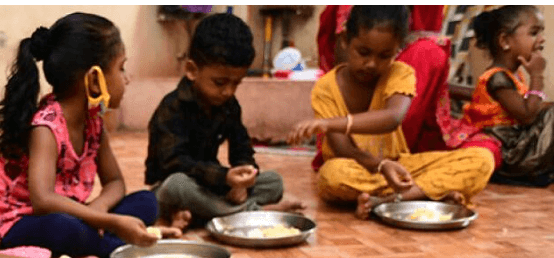
13.PM-POSHAN School Meal Scheme Review (Midday Meal)

The Hindu
Illustration for PM-POSHAN School Meal Scheme Review (Midday Meal)

What & Where

Centrally sponsored PM-POSHAN supplies one hot cooked meal to Classes 1-8 in govt & aided schools across India

Replaced 1995 Mid-Day Meal; cost-sharing 60:40 between Centre & States (90:10 for NE, Himalayan, UT-with-legislature)

Current reach: 11.80 crore children in 11.20 lakh schools (2023-24)

Quick Facts for MCQs

Achievements

  • Enrolment boost; attendance & retention higher among SC/ST/OBC per Jean Dreze 2024 review
  • Gender equity; Tamil Nadu breakfast cut girl dropouts sharply
  • Classroom hunger reduction; UNICEF links meals to better concentration

Operational Gaps

  • Funding delays 3-6 months; teachers take loans for ingredients
  • Allocation inadequate; UP, Kerala spend triple sanctioned amount
  • Caste bias incidents; Dalit pupils segregated or denied meals in multiple States

Reform Suggestions

  • Norm revision; raise per-child cost aligned to inflation & local diet
  • Direct transfers to schools with strict timelines for transparency
  • Decentralised menus; Odisha millet model cited for regional nutrition

Key Data Points

FeatureData-Point
Launch year2021-22
Full formPradhan Mantri Poshan Shakti Nirman Yojana
Scheme typeCentrally Sponsored
Centre : State cost ratio60 : 40
Central outlay (till 2025-26)₹54,061 crore
State/UT outlay (till 2025-26)₹31,733 crore
Daily allocation per child (many States)₹6–10 (against ₹30–40 cost)
Allowed menu itemsRice/wheat, pulses, vegetables; eggs/banana where permitted
Linked missionsSamagra Shiksha Abhiyan, Poshan Abhiyan
Monitoring toolsIT dashboards, social audits, nutrition gardens promoted

Related UPSC Prelims PYQs

GS1 2023PYQ 1

‘पोषण मुक्त भारत अभियान’ के अंतर्गत की जा रही व्यवस्थाओं के संबंध में, निम्नलिखित कथनों पर विचार कीजिए :

GS1 2004PYQ 2

Which one of the following statements is NOT correct?

GS-2Environment

14.RECLAIM Framework for Sustainable Mine Closure (Mine Closure Framework)

PIB

What & Where

RECLAIM Framework = India-specific tool by Coal Controller + Heartfulness for inclusive, sustainable coal-mine closure.

Operates through Pre-Closure, Closure, Post-Closure phases across 299 non-operational mines.

Core coal belts: Damodar, Mahanadi, Godavari, Narmada valleys; tertiary seams in NE, J-K, Rajasthan, TN.

Quick Facts for MCQs

Legal & Policy

  • Closure guidelines exist since 2009; compliance extremely low.
  • Draft 2024 CBA Bill: return unused land to original owners; enforcement details pending.
  • RECLAIM aligns with Panchayati Raj for institutional convergence.

Environmental Impact

  • Abandoned pits emit methane, trigger illegal mining, accident risks.
  • Framework mandates ecological restoration and post-closure monitoring.
  • Promotes asset repurposing for renewable or community use only after scientific closure.

Social Concerns

  • Unsustainable mining spurs unemployment, migration, reduced community capacity.
  • RECLAIM stresses gender equity, focus on vulnerable groups, livelihood diversification.
  • Community-centric planning builds trust, supports SDGs in mining regions.

Key Data Points

FeatureData-Point
Launch year2025
Parent ministryMinistry of Coal
Formal closures since 20093 mines
Non-operational mines (2024)299
Mines applying for closure8
Escrow deposit (opencast)₹14 lakh/ha
Gondwana share of reserves98 %
India’s coal rank globally2nd
Anthracite C% range80–95 %
Top coal producers (1-3)China, India, Indonesia
GS-1Editorial

15.Model Code of Conduct for Teachers (Professional Ethics)

Times of India

What & Where

Code of Conduct: rule-based framework prescribing acceptable professional behaviour, accountability, consequences within institutions.

Key types: Compliance-based (legal duty, penalties) & Value-based (virtue ethics, self-governance).

Latest draft issued by Tamil Nadu Higher Education Department for all state college teachers.

Quick Facts for MCQs

Ethical Framework

  • Compliance-based: deontological, obey laws & institutional rules, explicit penalties.
  • Value-based: virtue ethics, nurture integrity, equity, justice via self-reflection.
  • Conduct vs Ethics: former actionable rules; latter moral philosophy guidelines.

Implementation Tools

  • Policy localisation: universities adapt state model to campus statutes.
  • Capacity-building: orientation, periodic ethics workshops for faculty & staff.
  • Oversight: ethics committees review complaints, recommend sanctions.

Classroom & Social Media Conduct

  • Maintain respectful teacher-student boundaries; protect privacy and inclusivity.
  • Prohibit offensive content, personal agenda reels, derogatory online remarks.
  • Uphold research integrity; UGC-mandated anti-plagiarism software compulsory.

Limitations & Risks

  • Weak enforcement may render code symbolic, non-deterrent.
  • Over-standardization can ignore local cultural contexts.
  • Ambiguous clauses risk chilling academic freedom, expression.

Key Data Points

FeatureData-Point
Issuing bodyTN Higher Education Dept
Primary audienceCollege teachers under TANSCHE
Social-media ruleNo posts/reels harming sentiments or college image
Political clauseBar on disruptive political participation/associations
Inclusivity mandateZero discrimination on caste, gender, religion
GS-1Scheme

16.WHO 3 by 35 Health Tax Drive (Health Taxes)

WHO

What & Where

Global WHO initiative raising taxes on tobacco, alcohol, sugary drinks

Seeks ≥50 % real price hike by 2035 to curb harmful use

Offers technical, legal, administrative support to all willing countries

Quick Facts for MCQs

Legal & Policy

  • Taxation focus; preference for excise duties over outright prohibitions
  • Country-tailored legislation backed by WHO toolkits and legal advice
  • Aligns with SDG 3.B domestic-resource targets, lowers aid dependence

Economic Angle

  • Large revenue stream earmarked for UHC, climate and wider SDG needs
  • Higher prices expected to cut future healthcare outlays on NCDs
  • Strengthens fiscal space during post-pandemic budget stress

Health Impact

  • Price elasticity leveraged to slash consumption of addictive, sugary items
  • Anticipates millions fewer deaths from cardiovascular disease, cancer, diabetes
  • Complements WHA goal of 25 % reduction in premature NCD mortality

Key Data Points

FeatureData-Point
Launching bodyWorld Health Organization
Target price rise≥50 % by 2035
Covered productsTobacco ; Alcohol ; Sugary drinks
Revenue goal 2035≈ US$1 trillion additional
5-year revenue estimateUp to US$3.7 trillion
Action pillarsMobilize Countries / Support Policies / Build Partnerships
Core objectiveReduce NCD burden & fund SDGs
Financing modelHealth-specific excise taxes

Ready to practice?

Test your knowledge with our UPSC test series.

Start Free Trial