UPSC Current Affairs

17 topicsGS-1: 3GS-2: 2GS-3: 12
0/17 done
GS-3Editorial

1.Cooperatives Boost MSME Growth (Cooperative MSMEs)

BL

What & Where

Cooperatives = member-owned enterprises serving economic, social, cultural needs; enshrined as a constitutional right since 2011

Types: agriculture, credit, dairy, housing, fisheries; flagships include PACS, AMUL, IFFCO, Lijjat

Spread: 8.14 lakh societies, 29 crore members across rural-urban India

Quick Facts for MCQs

Legal & Policy

  • Legislation: 2002 MSCS Act; 2011 97th Amendment; 2022 amendment adds Election Authority, Rehabilitation Fund, merger window
  • Ministry: Cooperation Ministry 2021 spearheads Sahakar se Samriddhi vision
  • Policy: Draft National Cooperative Policy 2023 seeks uniform state laws, tax reliefs

Economic Angle

  • Pooling: Shared machinery and raw material cut MSME production costs
  • Marketing: Collective branding & certification widen domestic and export markets
  • Inclusion: Women-led SEWA, Lijjat advance rural jobs, circular economy

Challenges

  • Finance: Cooperative banks liquidity crunch; commercial banks perceive high risk
  • Regulation: Overlapping laws and GST norms delay registration, compliance
  • Digital: Low e-accounting, e-commerce adoption restricts scale benefits

Tech & Schemes

  • Training: Cluster centres upgrade carpentry, pottery, tailoring via digital tools
  • Platforms: ONDC, GeM, Amazon Karigar envisaged for CoopMade product sales
  • Credit: Linking PACS to MUDRA, CGTMSE, NABARD for fintech-enabled lending

Key Data Points

FeatureData-Point
Total cooperatives≈ 8.14 lakh
Membership base29 crore persons
Direct employment share13.3 % of India’s jobs
Short-term agri credit15 % routed through cooperatives
National sugar output share30 %
Fertiliser distribution share35 %
Cooperatives in banking20 % of total cooperatives
PM Vishwakarma loan rate5–7 % interest
Constitutional backing97th Amendment 2011, Part IX-B
Union Cooperation MinistryCreated 2021

Related UPSC Prelims PYQs

CDS_GK, GS1 2022PYQ 1

सूक्ष्म, लघु और मध्यम उद्योगों (MSMEs) के बारे में निम्नलिखित कथनों पर विचार कीजिए:

CDS_GK, GS1 2011PYQ 2

In India, which of the following have the highest share in the disbursement of credit to agriculture and allied activities?
GS-3Economy

2.SEBI Action Against Jane Street (Market Regulation)

The Hindu

What & Where

Manipulation Site: Indian equity-derivatives market; actor Jane Street (US prop-trader) via JSI Investments, Mumbai.

Method: “Marking the close” large late-session buy orders, then sell to harvest inflated futures prices.

Regulator: Securities and Exchange Board of India (SEBI), statutory watchdog headquartered Mumbai, penalised and banned firm.

Quick Facts for MCQs

Legal & Policy

  • SEBI Act 1992 enables inquiries, penalties, market bans for integrity breaches.
  • FPIs barred from intraday cash trades; Jane Street exploited domestic entity loophole.
  • Action underscores tightening compliance framework for proprietary trading desks.

Market Tactics

  • Marking-the-close: inflate closing price via outsized buys, then unwind for profit.
  • Push-pull sequence generates artificial volatility, deceiving retail price discovery.
  • Trades executed intraday; no intent to hold directional exposure.

Economic Angle

  • Penalty among largest on a foreign market participant; deterrence signal to high-frequency traders.
  • Investor-confidence risk mitigated by swift regulatory response.
  • Case spotlights need for robust surveillance, algorithmic trade checks.

Key Data Points

FeatureData-Point
Penalised firmJane Street Group
Domestic conduitJSI Investments Pvt Ltd
SEBI penalty₹ 4,843 crore
Violated segmentIndex & stock futures
Manipulation toolMarking-the-close push-pull trades
FPI cash-market limitIntraday trading prohibited
SEBI Act enactment1992
SEBI natureQuasi-legislative & quasi-judicial statutory body
HQ locationMumbai
Regional officesAhmedabad, Kolkata, Chennai, Delhi

Related UPSC Prelims PYQs

GS1 1995PYQ 1

To prevent recurrence of scams in Indian Capital Market, the Government of India has assigned regulatory powers to

GS-1History

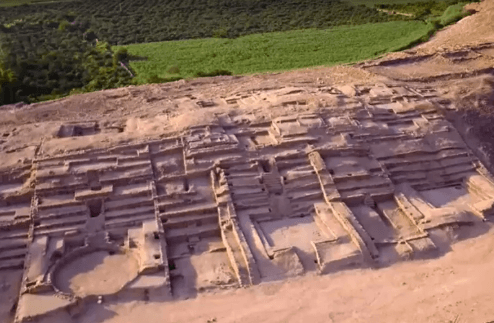
3.Penico Ancient Peruvian City Discovery (Ancient Settlement)

BBC
Illustration for Penico Ancient Peruvian City Discovery (Ancient Settlement)

What & Where

Penico 3,500-year-old pre-Inca city functioning as major post-Caral trade hub

Barranca Province, northern Peru; ~200 km north of Lima; hillside terrace 600 m altitude

Corridor linking Pacific coast, Andean highlands, Amazon basin encouraging interregional exchange

Quick Facts for MCQs

Archaeological Features

  • Central circular structure flanked by 18 planned stone-mud buildings indicating urban design
  • Stone-mud materials reflect early Andean construction technology
  • Sculpted-relief plaza evidences communal ceremonial gatherings

Trade & Economy

  • Strategic valley location enabled coastal fish, Andean crops, Amazonian exotica exchange
  • Conch shell pututu trumpets reveal maritime trade connections
  • Beaded necklaces suggest valued portable wealth and social ranking

Civilizational Context

  • Post-Caral emergence after climatic disruption showcases cultural continuity and resilience
  • Parallel development to Old World Bronze Age highlights independent civilizational trajectory
  • Transitional phase preceding Chavín and later Andean cultures

Material Culture

  • Clay human and animal figurines indicate ritual symbolism and storytelling
  • Pututu trumpets used for acoustic signalling during ceremonies
  • Stone, shell, bead artifacts display craft specialisation and aesthetic preference

Key Data Points

FeatureData-Point
Cultural phasePost-Caral continuation
Founded1800–1500 BCE
Altitude≈600 m
Distance from Lima~200 km N
Buildings counted18 stone-mud structures
Core layoutCentral circular structure + plaza
Key structuresCeremonial temples, residences
Main artifactsClay figurines, pututus, bead necklaces
Comparative epochContemporary to early Egypt, Sumer, Indus
GS-1History

4.Syama Prasad Mookerjee Legacy (Nationalist Leader)

PIB
Illustration for Syama Prasad Mookerjee Legacy (Nationalist Leader)

What & Where

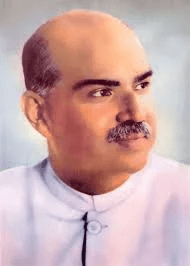
Nationalist leader, educationist, founder of Bharatiya Jana Sangh; pivotal in post-Independence industrial policy.

Born Calcutta (Kolkata); political influence spanned Bengal, Constituent Assembly and Parliament.

Championed “One nation, one Constitution, one flag”; died 1953 during J&K protest against Article 370.

Quick Facts for MCQs

Academic Milestones

  • Youngest VC 33 in 1934; represented Calcutta Univ at British Empire conference.
  • Established Bang Wani and later The Nationalist to spread nationalist thought.

Political Journey

  • Joined INC 1920s, resigned over ideology; entered Hindu Mahasabha.
  • Finance Minister Bengal 1937 coalition; Acting President Hindu Mahasabha 1940.
  • Founded Bharatiya Jana Sangh 1951, ideological precursor to BJP.

Ideological Positions

  • Advocated complete independence and cultural nationalism.
  • Opposed Article 370, linguistic reorganisation; stressed unity for security and efficiency.
  • Arrested during Kashmir satyagraha leading to 1953 death.

Industrial Contributions

  • As Industry & Supply Minister promoted heavy industry strategy.
  • Spearheaded Chittaranjan Locomotive Factory establishment.
  • Facilitated Sindri and Hindustan Fertilizer corporations for fertilizer self-sufficiency.

Key Data Points

FeatureData-Point
Birth anniversary6 July
BirthplaceCalcutta (now Kolkata)
FatherSir Ashutosh Mookerjee
Youngest Vice-ChancellorCalcutta University, age 33, 1934
University meet1931 Conference of Universities of British Empire, London
Early journalsBang Wani (1922); The Nationalist (1940s)
Bengal postFinance Minister, 1937 Progressive Coalition
Hindu Mahasabha roleActing President, 1940
Independence demandCalled for complete independence before 1947
Founded partyAll India Bharatiya Jana Sangh, 1951
Interim Govt postMinister for Industry & Supply
Industrial legaciesChittaranjan Locomotive; Sindri & Hindustan Fertilizer plants
Article 370 stand“No two Constitutions, heads, flags”
Death1953 while detained in Kashmir
Parliament nickname“Lion of Parliament”

Related UPSC Prelims PYQs

GS1 2024PYQ 1

Consider the following pairs:

GS1 2002PYQ 2

With reference to the period of extremist nationalist movement in India with its spirit of Swadeshi, which one of the following statements is correct?

GS-1Mapping

5.Seine River Revival (European River)

Unknown
Illustration for Seine River Revival (European River)

What & Where

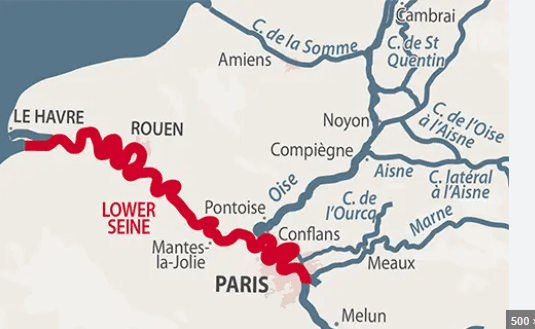
Historic inland waterway of northern France; runs through Île-de-France and Normandy.

Low-gradient, sluggish flow enables year-round navigation and tidal influence near estuary.

Quick Facts for MCQs

Economic Angle

  • Major freight corridor Paris–Rouen–Le Havre; supports heavy commercial navigation below Paris.
  • Connectivity to Rhine & Saône-Rhône boosts intra-EU trade routes.
  • Clean-up viewed as tourism multiplier pre-Paris Olympics.

Hydrological Traits

  • Sluggish flow from gentle gradient facilitates navigation but increases pollutant residence time.
  • Mascaret once popular with surfers; frequency dropped post-dredging.
  • Tidal influence noticeable dozens of kilometres upstream.

Recent Developments

  • Extensive sanitation projects made river swimmable, aligning with Olympic sustainability targets.
  • 2024 reopening marks end of 101-year public-swim ban.
  • Initiative doubles as ecological restoration showcase for urban rivers globally.

Key Data Points

FeatureData-Point
Source altitude1,545 ft (≈471 m)
Total length780 km / 485 mi
Mouth locationEnglish Channel at Le Havre
Regions crossedBurgundy → Île-de-France → Normandy
Elevation at Paris≈80 ft above sea level
Key tributariesAube, Yonne, Marne, Oise
Estuary phenomenonTidal bore (mascaret), now reduced by dredging
Main portsRouen, Le Havre
Waterway linksRhine, Belgian network, Loire, Saône-Rhône
Public swimmingRestarted 2024; first time since 1923
GS-3Environment

6.Plant Genetic Resources Treaty Amendments (Plant Treaty)

The Hindu
Illustration for Plant Genetic Resources Treaty Amendments (Plant Treaty)

What & Where

International Treaty on Plant Genetic Resources for Food & Agriculture; FAO-led, legally binding since 2004

Sets up Multilateral System for access & benefit-sharing of 64 listed food + forage crops

Ongoing amendment talks at 10th Governing Body, Lima (Peru); India participating

Quick Facts for MCQs

Legal & Policy

  • Amendment expands MLS to all crops, overrides national ABS laws
  • SMTA terms to be drafted by Governing Body, not domestic statutes
  • Debate aligns with Nagoya Protocol benefit sharing discussions

Farmers’ Interests

  • Article 9 confers right to save, exchange, sell farm-saved seed
  • Expanded MLS may curb traditional seed saving and exchange
  • India cites PPVFR Act 2001 to safeguard farmer privileges

Sovereignty Concerns

  • India fears loss of control over indigenous germplasm and IPR revenue
  • Mandatory sharing could risk strategic food security crops
  • Centralised benefit sharing may divert earnings from local communities

Key Data Points

FeatureData-Point
Adoption year2001 (FAO Conference)
Entry into force2004
Parties149+ including India
Linked conventionConvention on Biological Diversity
Annex I crop count64 species
Access instrumentStandard Material Transfer Agreement
Farmers’ Rights clauseArticle 9
Current negotiation siteLima, Peru (2024)

Related UPSC Prelims PYQs

GS1 2005PYQ 1

Which one of the following statements is correct?

GS-3Environment

8.Bonn Climate Change Conference Outcomes 2025 (UNFCCC Subsidiaries)

Indian Express

What & Where

Mid-year Sessions of Subsidiary Bodies under UNFCCC; 62nd meet held June-July 2025, Bonn, Germany.

Reviews implementation, receives IPCC science; key organs – SBI (implementation) & SBSTA (science/tech).

Sets negotiating agenda for COP30 in Belém; attended by Parties, Indigenous groups, civil society, financiers.

Quick Facts for MCQs

Legal & Policy

  • GGA indicator list (~100) to be finalised at COP30.
  • Belém Action Mechanism under JTWP anchors equitable workforce transition.
  • Article 9.1 re-invoked; developed nations reminded of finance obligation.

Climate Finance

  • Developing bloc seeks public grants; rich nations push private flows.
  • Only USD 321 m paid into Loss-Damage Fund to date.
  • Finance shortfall risks breaching 1.5 °C pathway, warns CPI.

India Progress

  • Emission intensity down 36 % (2005–2019), already beating 2030 pledge.
  • Non-fossil power capacity 47.10 % by Dec 2024, beyond 50 % 2030 target trajectory.
  • Carbon sink created 2.29 bn t toward 2.5–3 bn t 2030 goal.

Key Data Points

FeatureData-Point
Edition62nd (2025)
VenueBonn, Germany
Core UNFCCC bodiesSBI & SBSTA
Next COPCOP30, Belém, Brazil
NDC update deadline28 Feb 2025 (largely missed)
Developing finance askUSD 1.3 trn / yr till 2030
CPI finance need≈ USD 9 trn / yr by 2030
Loss & Damage pledgedUSD 0.768 bn vs USD 1 trn need

Related UPSC Prelims PYQs

CAPF_GAI, CDS_GK 2024PYQ 1

Which one among the following statements with regard to the United Nations Climate Change Conference (COP28) is NOT correct?

CAPF_GAI, CDS_GK 2024PYQ 2

Which one of the following resolutions in the final agreement reached at COP28 is associated with the target of achieving 'Net Zero by 2050'?

GS-3Editorial

9.GM Crop Adoption Challenges (GM Crops)

Indian Express
Illustration for GM Crop Adoption Challenges (GM Crops)

What & Where

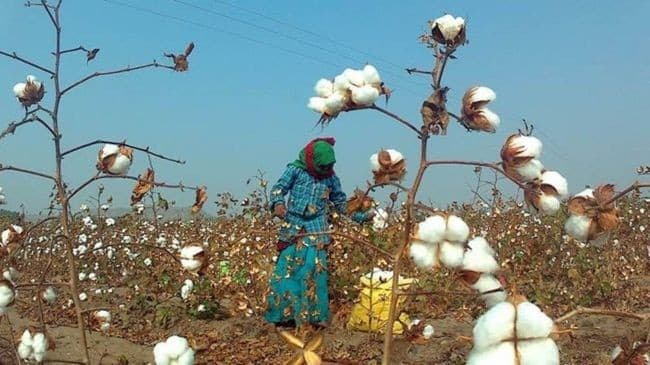
Genetically-modified crops: transgenic plants for pest/herbicide resistance or higher yields, cleared by India’s GEAC.

Officially grown only Bt cotton; GM mustard, brinjal, soy, corn await approval; illegal HT-Bt cotton spans 5 states.

Core cotton belt: Maharashtra, Gujarat, Telangana, Andhra Pradesh, Punjab; Indian yields far below China & Brazil.

Quick Facts for MCQs

Productivity Gap

  • Declining: National cotton yield down 23 % since 2013-14 despite stable acreage.
  • Contrast: India produces only ~24 % of China/Brazil per-hectare output.
  • Pests: Pink bollworms & whiteflies intensify yield erosion.

Legal & Policy

  • Bottlenecks: Bt brinjal moratorium (2009); GM mustard environmental nod (2022) minus commercial release.
  • Controls: SPCO 2015 fee caps; 2016 mandatory tech-sharing clauses curb private R&D.
  • Transparency: Perceived GEAC opacity sustains public and state resistance.

Economic Angle

  • Shift: India moved from exporter to importer of cotton, spending USD 0.4 bn annually.
  • Disincentive: Trait-fee ceilings and delays lower biotech investment returns.
  • Vulnerability: Farmers using grey-market seeds lack legal redress, face higher failure risks.

Technology & Innovation

  • Success: Bt cotton lifted productivity 87 % and farm incomes, notably in Gujarat.
  • Potential: GM mustard & brinjal promise pesticide cuts and yield boosts enhancing food security.
  • Support: ₹1 lakh crore Jai Anusandhan fund targets agri-biotech scale-up, needs regulatory coherence.

Key Data Points

FeatureData-Point
Bt cotton approval year2002
Cotton yield India (2023-24)436 kg/ha
Cotton yield China/Brazil1,800–1,900 kg/ha
Cotton import bill (2024-25)USD 0.4 billion
Global GM crop area>200 million ha
Countries cultivating GM76
Illegal HT-Bt cotton share≈25 % of area
SPCO trait-fee cap year2015
Jai Anusandhan fund size₹1 lakh crore
Bt cotton output rise 2002-12193 %

Related UPSC Prelims PYQs

GS1 2018PYQ 1

भारत में विकसित आनुवंशिकतः संशोधित सरसों (जेनेटिकली मॉडिफाइड सरसों / GM सरसों) के सन्दर्भ में, निम्नलिखित कथनों पर विचार कीजिए:

GS1 2021PYQ 2

Bollgard I and Bollgard II technologies are mentioned in the context of

GS-3S&T

10.Nipah Virus Recurring Outbreaks (Nipah Virus)

NDTV
Illustration for Nipah Virus Recurring Outbreaks (Nipah Virus)

What & Where

Zoonotic Henipavirus causing mild respiratory illness to fatal encephalitis; case fatality 40 – 75 %

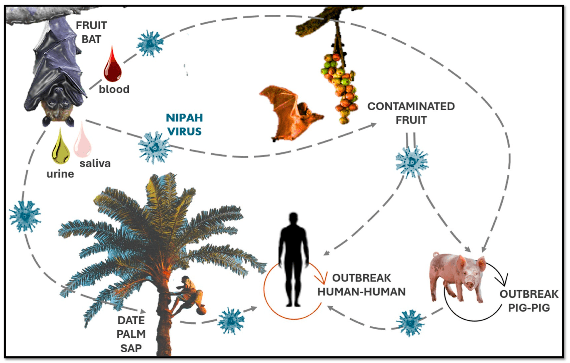
Spreads animal-to-human and human-to-human; natural reservoir fruit bats (genus Pteropus)

Indian hotspots: West Bengal (Siliguri) & northern Kerala; eight outbreaks since 2018

Quick Facts for MCQs

Transmission Pathways

  • Animal contact; pigs, bats prime sources
  • Foodborne; raw date palm sap, half-eaten fruits
  • Human-to-human via saliva, urine, respiratory secretions; healthcare clusters common

Clinical Profile

  • Early phase; fever, sore throat, myalgia, vomiting
  • Severe phase; encephalitis, seizures, respiratory distress, altered consciousness
  • Sequelae; 20 % survivors retain neurological deficits

Diagnostics & Assays

  • RT-PCR; primary confirmatory test on blood, CSF, throat swab
  • ELISA; detects NiV IgM or IgG antibodies
  • Kerala survey; pseudo-virus neutralisation mapping community immunity

Outbreak History

  • Malaysia 1999 pig-farm epidemic named after Sungai Nipah village
  • Bangladesh reports near-annual cases since 2001
  • Kerala’s Kozhikode, Malappuram, Kannur form recurring cluster

Key Data Points

FeatureData-Point
Virus familyParamyxoviridae (Henipavirus)
Natural reservoirFruit bats, genus Pteropus
Case fatality rate40 – 75 %
Incubation period4 – 14 days; max 45 days
First global outbreak1999, Malaysia pig farms
Indian outbreaksWest Bengal 2001; Kerala × 8 (2018-24)
Key transmissionDirect contact, contaminated food, body fluids
Kerala 2024 surveyPseudo-virus neutralisation assay on humans & animals
GS-3S&T

11.Indigenous Pressurised Heavy Water Reactors (Nuclear Reactor)

Business Standard
Illustration for Indigenous Pressurised Heavy Water Reactors (Nuclear Reactor)

What & Where

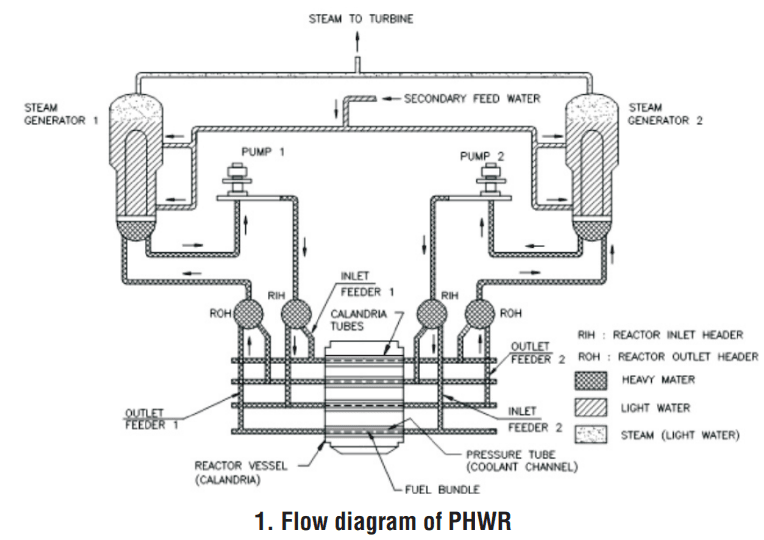
Definition Pressurised Heavy Water Reactor: natural-uranium fuel, heavy-water (D₂O) coolant + moderator, online refuelling capability

Location Operational licences issued for Kakrapar Atomic Power Station Units-3 & 4, Surat district, Gujarat

Context First 700 MWe fully indigenous PHWRs cleared by Atomic Energy Regulatory Board (AERB)

Quick Facts for MCQs

Technology Specs

  • Online-refuelling boosts capacity factor, trims outage losses
  • Digital instrumentation enables real-time monitoring, automated trip logic
  • Pressure-tube design allows heavy-water saving versus light-water reactors

Indigenisation Path

  • Post-AECL exit, RAPS-2 onward fully Indian R&D, manufacturing supply chain
  • 10-reactor fleet mode sanctioned to add 7 000 MWe domestic capacity
  • End-to-end mastery spans design, fuel fabrication, decommission planning

Regulatory & Governance

  • AERB issues Stage-I (construction) to Stage-IV (operation) clearances after multi-tier safety review
  • Emergency Core Cooling System compliance mandatory before criticality approval
  • Double containment meets Atomic Energy (Radiation Protection) Rules, 2004

Key Data Points

FeatureData-Point
Reactor type700 MWe Pressurised Heavy Water Reactor
FuelNatural uranium (unenriched UO₂)
Coolant & ModeratorHeavy water (D₂O)
Licence authorityAtomic Energy Regulatory Board
Plant ownerNuclear Power Corporation of India Ltd (NPCIL)
Indigenous agenciesBARC + NPCIL under Department of Atomic Energy
Online refuellingYes, without reactor shutdown
Safety systemsTwin shutdown, double containment, passive heat removal
First Indian PHWRRAPS-1, 1973 (220 MWe, Canada aided)
Capacity progression220 → 540 → 700 MWe

Related UPSC Prelims PYQs

GS1, NDA_GAT 2006PYQ 1

In which one of the following areas did the Indira Gandhi Center for Atomic Research make significant progress in the year 2005?

GS1, NDA_GAT 2025PYQ 2

The Joint Venture named ‘ASHVINI’ to develop nuclear power facility in India is between

GS-3S&T

12.National Genomic Biobank Launch (Genomic Repository)

PIB

What & Where

National Biobank: centralised high-resolution repository of genomic, lifestyle & clinical data representing India’s population diversity

Situated at CSIR-Institute of Genomics & Integrative Biology, New Delhi; cornerstone of Phenome India longitudinal cohort

Tracks ≥10,000 volunteers over time to decode gene–environment interactions for precision healthcare

Quick Facts for MCQs

Tech & Schemes

  • Platform uses high-throughput sequencing, cryo-storage, AI analytics
  • Enables future low-cost indigenous CRISPR therapeutics
  • Draws central funding under Science & Technology ministry initiatives

Health Impact

  • Personalisation: genotype-based drug choice, dosage, preventive screening
  • Surveillance: tracks disease susceptibility & treatment response across decades
  • Priority areas include antimicrobial resistance, oncology, metabolic and cardiovascular disorders

Self-Reliance

  • Reduces dependence on foreign genomic datasets; builds sovereign health data infrastructure
  • Facilitates public-sector precision medicine, preventive programmes
  • Empowers domestic R&D in diagnostics, therapeutics, policy planning

International Examples

  • Benchmarked against UK Biobank; tailored to India’s caste, ethnic, socio-economic heterogeneity
  • Adds tropical climate and dietary variables absent in Western cohorts

Key Data Points

FeatureData-Point
Implementing agencyCSIR-IGIB
Supporting ministryMinistry of Science & Technology
Study natureLongitudinal population study (Phenome India)
Target sample size10,000+ individuals
Data typesGenomic, lifestyle, clinical
Model inspirationUK Biobank
Prime disease focusRare disorders, AMR, cancer, diabetes, CVD
Key tech outcomeAI-powered diagnostics & gene-guided therapies
Self-reliance aimIndigenous population-specific health database

Related UPSC Prelims PYQs

CDS_GK 2020PYQ 1

Which one of the following Indian institutes was approved by the Drugs Controller General of India for conducting human trials of the Oxford-AstraZeneca Covid-19 vaccine candidate?

GS-3S&TQuick Bite

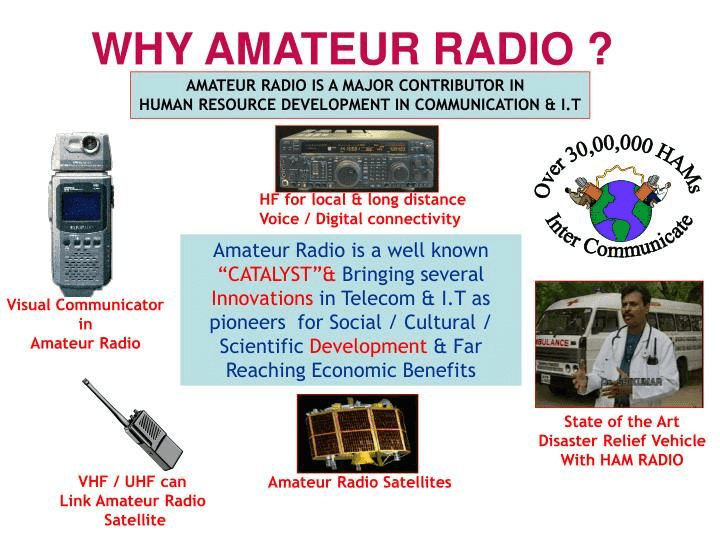
13.Ham Radio Communication from ISS (Amateur Radio)

Indian Express
Illustration for Ham Radio Communication from ISS (Amateur Radio)

What & Where

Ham radio = licensed, non-commercial amateur radio service for education, experimentation, emergency links.

ARISS system enables two-way ham contacts between International Space Station (Low-Earth orbit, ~400 km) and Earth.

In India, licences issued by MeitY; operation allowed nationwide, often mobilised in disaster-prone regions.

Quick Facts for MCQs

Tech & Schemes

  • ARISS: onboard transceiver, antennas, global ground-station network for education outreach.
  • Propagation: line-of-sight, ionospheric reflection, satellite relay enable long-distance amateur contacts.
  • Licence tiers demand technical exam; holders receive unique call signs for legal operation.

Emergency Uses

  • Disasters: amateur stations restored critical links post-tsunami 2004 and Himalayan floods 2013.
  • Redundancy: independent power, simple gear ensure communication when cellular, internet fail.
  • Community: volunteer hams regularly support state disaster-management drills.

Space Life

  • Microgravity meals: dehydrated packs rehydrated with hot water; Velcro trays prevent drifting food.
  • Cleaning: utensils wiped with sterile cloths; no running water on station.
  • Nutrition: high calcium, vitamin D, low sodium diet counters space-induced bone loss.

Key Data Points

FeatureData-Point
Astronaut using ham radioShubhanshu Shukla (Axiom-4 mission)
First ham use in space1983
ISS ham setupARISS (Amateur Radio on the ISS)
Supporting nationsUS, Russia, Canada, Japan, Europe
Indian minimum licence age12 years
Licensing authority (India)Ministry of Electronics & IT
Key Indian disaster roles2004 Tsunami; 2013 Uttarakhand floods
Radio-wave discovererHeinrich Hertz
GS-3S&TQuick Bite

14.Low-Cost Sulfur Dioxide Sensor (Gas Sensor)

PIB

What & Where

Low-cost SO₂ sensor using nickel oxide & neodymium nickelate fabricated at CeNS, Bengaluru

Detects sulfur dioxide in real time down to 320 ppb for industrial, urban air monitoring

Visual threshold alert: green = safe, yellow = warning for public health response

Quick Facts for MCQs

Tech & Schemes

  • NiO captures SO₂ molecules; NdNiO₃ converts interaction into electrical signal
  • Sensitivity surpasses several commercial semiconductor gas sensors

Health Impact

  • Minute SO₂ exposure linked to bronchoconstriction, especially in asthmatics
  • Early detection enables preventive evacuation and ventilation measures

Environmental Impact

  • Continuous monitoring aids compliance with National Ambient Air Quality Standards
  • Urban deployment can map pollution hotspots for policy action

Key Data Points

FeatureData-Point
Developing instituteCeNS, Bengaluru
Core materialsNiO (receptor) + NdNiO₃ (transducer)
Lowest detection limit320 ppb SO₂
Alert coloursGreen (safe), Yellow (warning)
Gas propertiesColourless, water-soluble, toxic
Major emission sourcesVehicles, industrial processes
Health riskTriggers asthma, long-term lung damage

Related UPSC Prelims PYQs

GS1 2025PYQ 1

वायु प्रदूषण माप करने हेतु भूमि-पृष्ठ-स्तर के तरीकों में किसका प्रयोग होता है?

GS-3S&TQuick Bite

15.Lanthanum-Doped Supercapacitor Material (Energy Storage)

PIB

What & Where

Innovation: lanthanum-doped silver niobate (AgNbO₃) nanocomposite for high-performance supercapacitors

Process: rare-earth lanthanum ions reduce particle size, raise surface area, boost electrical conductivity

Geography: jointly developed by CeNS Bengaluru & Aligarh Muslim University, India

Quick Facts for MCQs

Tech & Specs

  • Nanostructure: lanthanum doping shrinks particles, enlarges active surface
  • Power density: markedly higher than batteries; energy density improved over usual capacitors
  • Mechanism: electrostatic charge separation, not chemical reaction, minimises degradation

Environmental Impact

  • Lead-free: avoids toxic Pb common in many piezoelectrics and batteries
  • Green energy suitability: safe for recycling, lower ecological footprint
  • Rare-earth use: lanthanum availability comparatively abundant among REEs

Applications

  • Portable electronics: quick bursts of power for wearables, IoT nodes
  • Electric vehicles: fills regenerative-braking, acceleration power gaps alongside batteries
  • Renewable systems: smooths solar/wind output fluctuations via rapid charge–discharge

Key Data Points

FeatureData-Point
Base materialLead-free perovskite AgNbO₃
Dopant elementLanthanum (La³⁺)
Energy retention118 %
Coulombic efficiency100 %
Charge–discharge traitFaster cycles due to higher conductivity
Life cycleMillions of cycles (supercapacitor typical)
Demonstrated devicePowered an LCD display
Key developersCeNS & AMU
GS-2Misc

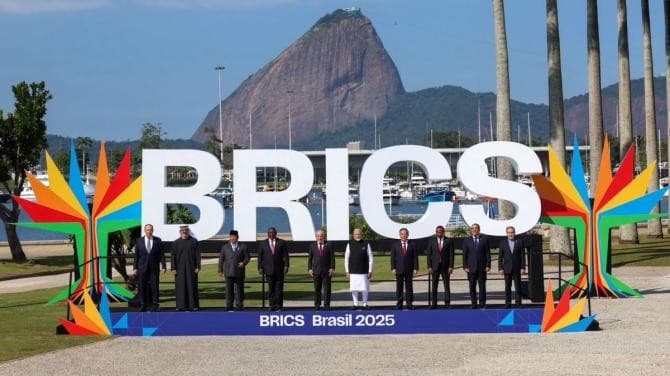
16.BRICS Rio Summit Expansion (BRICS Summit)

LiveMint
Illustration for BRICS Rio Summit Expansion (BRICS Summit)

What & Where

BRICS: intergovernmental forum of emerging economies Brazil-Russia-India-China-South Africa, now branded BRICS Plus after 2024-25 expansion

17th BRICS Summit: convened Rio de Janeiro, Brazil, 2025; inducted Indonesia as sixth full member

Rio de Janeiro Declaration: joint statement on global-governance reform, sustainable development, anti-terror resolve, tech cooperation

Quick Facts for MCQs

Membership & Expansion

  • Expansion 2024-25 added Egypt-Ethiopia-Iran-UAE-Indonesia, forum now called BRICS Plus
  • Indonesia entry deepens Asia-Africa-Latin America linkages
  • Leaders endorsed India as 2026 chair, preparing 18th summit in India

Governance Reform

  • Declaration sought urgent UNSC-IMF-WTO restructuring to mirror 21st-century realities
  • Emphasised stronger Global South voice and multipolar world order
  • Aim to counterbalance G7-centric institutions

Security Dimension

  • Rio Declaration condemned terrorism citing Pahalgam attack, urged zero tolerance toward sponsors
  • Advocated responsible AI governance balancing innovation and regulation
  • Supported collective action for peace and security

Economic Cooperation

  • NDB financing to stay demand-driven and sustainable
  • Call for resilient supply chains in critical minerals among members
  • Proposal for BRICS Science & Research Repository to widen tech access

Key Data Points

FeatureData-Point
Coined term “BRIC”Jim O’Neill, 2001
First summit year2009
First summit venueYekaterinburg, Russia
17th summit host cityRio de Janeiro
First Southeast-Asian memberIndonesia
Other 2024-25 entrantsEgypt, Ethiopia, Iran, UAE
India’s next chairship2026
18th BRICS Summit venueIndia
BRICS bank nameNew Development Bank (NDB)

Related UPSC Prelims PYQs

GS1 2025PYQ 1

Consider the following statements with regard to BRICS:

GS1 2014PYQ 2

With reference to a grouping of countries known as BRICS, consider the following statements :

GS-2Misc

17.India–Trinidad and Tobago Partnership (Bilateral Ties)

The Hindu
Illustration for India–Trinidad and Tobago Partnership (Bilateral Ties)

What & Where

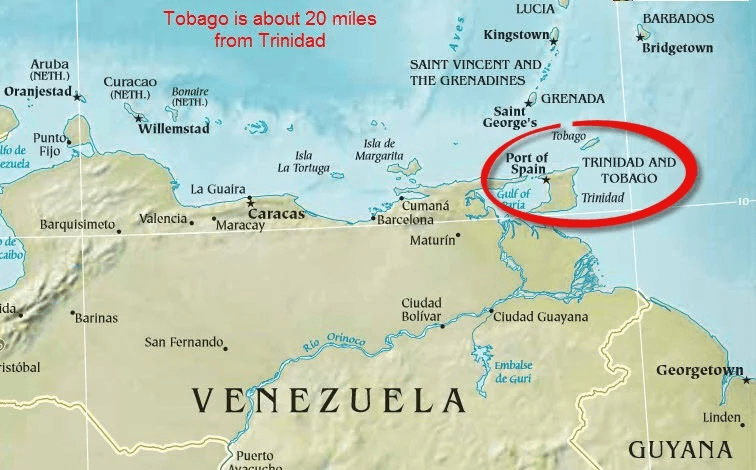
Trinidad & Tobago twin-island Caribbean state NE of Venezuela; Gulf of Paria separates it from mainland

CARICOM 15-member regional bloc founded 1973 Treaty of Chaguaramas; Secretariat Georgetown Guyana

India-led initiatives CDRI and Global Biofuel Alliance now joined by Trinidad & Tobago

Quick Facts for MCQs

Bilateral Outcomes

  • Membership secured in CDRI and Global Biofuel Alliance during July 2025 visit
  • Five Quick Impact Projects yearly; Indian grant ≤ USD 50 000 each
  • MoUs on pharma supply, diplomat training, India Stack tools DigiLocker and e-Sign

Economic Angle

  • Trade basket India→T&T pharma, vehicles, iron; T&T→India LNG, crude
  • USD 1 mn Indian agro-machinery gift to NAMDEVCO plus millet and seaweed support
  • UPI rollout positions T&T digital payments hub for wider Caribbean

Diaspora & Culture

  • OCI facility extended up to 6th-generation Indo-Trinidadians
  • Two ICCR academic chairs in Hindi and Indian Studies revived at University of the West Indies
  • Girmitiya descendants central to society; ship Fatel Razack landmark of 1845 migration

Regional Groupings

  • CARICOM 15 full members; rotating chairmanship; founded from earlier CARIFTA
  • India offers USD 14 mn grant plus USD 150 mn LoC for solar and climate projects
  • 2nd India-CARICOM Summit 2024 Georgetown framed seven-pillar cooperation agenda

Key Data Points

FeatureData-Point
CapitalPort of Spain
Highest civilian awardOrder of the Republic of Trinidad and Tobago
Pitch Lake locationLa Brea, Trinidad – world’s largest natural asphalt deposit
National birdScarlet Ibis
Indian-origin population share40–45 %
First Indian arrivalFatel Razack, 1845
Digital paymentsT&T first Caribbean adopter of UPI
India exports to T&T 2024-25USD 120.65 mn
India imports from T&T 2024-25USD 220.96 mn
CARICOM headquartersGeorgetown, Guyana

Ready to practice?

Test your knowledge with our UPSC test series.

Start Free Trial