UPSC Current Affairs

16 topicsGS-1: 2GS-2: 4GS-3: 10
0/16 done
GS-2Polity

1.Appointment of Chief Justice of India (Judiciary)

LL

What & Where

Chief Justice of India: apex judge heading Supreme Court & entire Indian judiciary

Constitutional anchor: Article 124(2), Union of India jurisdiction

Latest incumbent: Justice B R Gavai, sworn 14 May 2025, Rashtrapati Bhavan

Quick Facts for MCQs

Constitutional Basis

  • Article 124(2) prescribes appointment of CJI and other Supreme Court judges
  • CJI consultation mandatory for appointing SC & HC judges, excluding own post
  • Vacancy scenario: CJI may discharge presidential duties if both top offices vacant

Appointment Process

  • Law Minister seeks outgoing CJI recommendation, consults senior judges on fitness doubts
  • Proposal forwarded to PM, who advises President for formal appointment
  • Oath of office administered by President at Rashtrapati Bhavan

Powers & Functions

  • Roster control: allocates cases, constitutes Constitution Benches
  • Judicial leadership: shapes jurisprudence, guides Supreme Court policy direction
  • Administrative authority: appoints court officers, oversees overall court functioning

Representation Milestone

  • Diversity boost: first Buddhist, reinforcing inclusivity at judiciary’s apex
  • Dalit presence: only second in history, signals incremental social representation

Key Data Points

FeatureData-Point
Numerical order52nd CJI
Swearing-in date14 May 2025
Oath byPresident Droupadi Murmu
Religion milestoneFirst Buddhist CJI
Social milestoneSecond Dalit after K G Balakrishnan
Appointing articleArticle 124(2)
Recommending authorityOutgoing CJI (seniority convention)
Official nicknameMaster of the Roster

Related UPSC Prelims PYQs

CAPF_GAI 2022PYQ 1

Which one of the following is correct in respect of the appointment of District Judges?

CAPF_GAI 2021PYQ 2

उच्चतम न्यायालय के न्यायाधीश के रूप में किसे नियुक्त किया जा सकता है?
GS-2Polity

2.Union Public Service Commission Functions (Constitutional Body)

Hindustan Times

What & Where

UPSC: constitutional body recruiting for All-India Services, Central Civil Services Group A & B.

Article 315 origin; HQ Dholpur House, New Delhi.

Nationwide jurisdiction over merit-based competitive examinations.

Quick Facts for MCQs

Composition

  • Structure decided by President; includes Chairman plus appointed members.
  • Experience clause: half members must hold 10 years government tenure.

Appointment & Tenure

  • Appointment under Article 316(1) by President, who sets pay and service conditions.
  • Tenure ends on completing 6 years or reaching 65 years, whichever first.

Removal Mechanisms

  • President may remove for insolvency, paid work, infirmity, or proven misbehaviour.
  • Misbehaviour enquiry sent to Supreme Court; member can be suspended during probe.

Functions

  • Conducts CSE, ESE, CDS, NDA, CAPF, IFoS and similar examinations.
  • Advises Centre on recruitment modes, promotions, transfers, disciplinary matters.

Key Data Points

FeatureData-Point
Constitutional article315
Appointing authorityPresident of India
Usual membership9–11 including Chairman
Experience rule≥50 % members with 10 yr govt service
Term length6 years
Upper age limit65 years
Removal article317
Enquiry bodySupreme Court; advice binding
Present ChairmanDr Ajay Kumar (retired IAS)

Related UPSC Prelims PYQs

CAPF_GAI, CDS_GK 2024PYQ 1

Under which one among the following Articles of the Constitution of India, a member of a Civil Service, whether of the Union or of a State, seeks protection from unlawful dismissal from service?

CAPF_GAI, CDS_GK 2025PYQ 2

Part IV-A of the Constitution of India relates to which of the following?

GS-3Economy

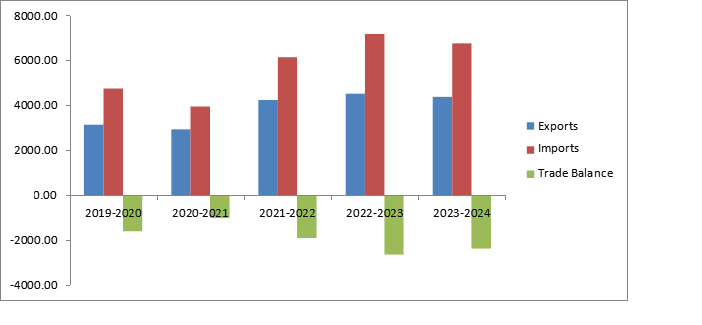
4.India’s Agricultural Export Policy Framework (Agri Trade Policy)

DH
Illustration for India’s Agricultural Export Policy Framework (Agri Trade Policy)

What & Where

Agro-export regime = policies, infrastructure, institutions governing outbound farm trade from India

Operates via bodies like APEDA, ODOP-GI cells, FSSAI clearance nodes at ports

Geography focus: pan-India producers; export chokepoints in landlocked UP, MP; main markets UK, EFTA, US

Quick Facts for MCQs

Trade Policy

  • Sensitivity; agriculture placed in FTA negative lists or long transition periods
  • Fragmented Centre-State powers cause contradictory export curbs, delay clearances
  • DBT proposal to replace input subsidies for WTO-friendly, crop-diversified exports

Bottlenecks

  • Quality; high EU rejections of mango, peanut consignments over MRL breaches
  • Infrastructure; cold chains, inland depots scarce in hinterland, raising logistics cost
  • Value chain; raw commodity dominance, limited branded/processed share reduces earnings

Prescribed Fixes

  • Clusters; agro-processing hubs near APMCs, linked to port gateways via output incentives
  • Council; National Agri Trade Council mooted for unified SPS, customs, state nodal links
  • Tech; AI crop monitoring, vernacular advisories, GIS produce mapping for traceable exports

Key Data Points

FeatureData-Point
FY 2023-24 agri-export valueUSD 48 bn
FY 2022-23 agri-export valueUSD 52 bn
Basmati share in agri exports≈ 21 %
Recent FTAs excluding agricultureUK, EFTA bloc, proposed India–US deal
Top rejection reasons abroadPesticide residue, SPS non-compliance
Governance splitTrade = Union List; Agriculture = State List
Key subsidy distortionsPower, water, fertiliser
Support agencyAPEDA (1985, Commerce Ministry)

Related UPSC Prelims PYQs

CDS_GK, GS1 2024PYQ 1

If India enters into Free Trade Agreements (FTAs) with other nations, then the growth of exports of India would depend upon which of the following?

CDS_GK, GS1 2002PYQ 2

In terms of value, which one of the following commodities accounted for the largest agricultural exports by India during the three-year period from 1997-1998 to 1999-2000?

GS-3Infrastructure

6.India’s Road Safety Challenges and Reforms (Road Safety)

The Hindu

What & Where

Road safety: measures to prevent crashes on India’s 6.3 million km network, second-largest globally

4 Es framework: Education, Engineering, Enforcement, Emergency Care guiding Union & State interventions

Black spots: ≥5,000 high-fatality road sections identified for priority rectification

Quick Facts for MCQs

Accident Causes

  • Overspeeding/intoxication: dominate 78 % crash causality
  • Infrastructure gaps: missing pedestrian zones, unsafe junction design, under-maintained rural/state highways
  • Enforcement weakness: low deterrence despite e-challan, CCTV, high statutory fines

Government Measures

  • Engineering: Mandatory road-safety audits for all NH stages; e-DAR digital crash reporting; rectification funding for black spots
  • Vehicle safety: Dual airbags, ABS, seat-belt reminder, reverse sensors mandatory; Bharat-NCAP star rating notified
  • Emergency care: Ambulances at every toll plaza; cashless trauma pilot in 6 states; Good Samaritan protection strengthened

Future Roadmap

  • Authority: Proposal for unified National Road Safety Authority to integrate Centre-State accountability
  • Data systems: Scaling real-time accident database for evidence-based policy and resource allocation
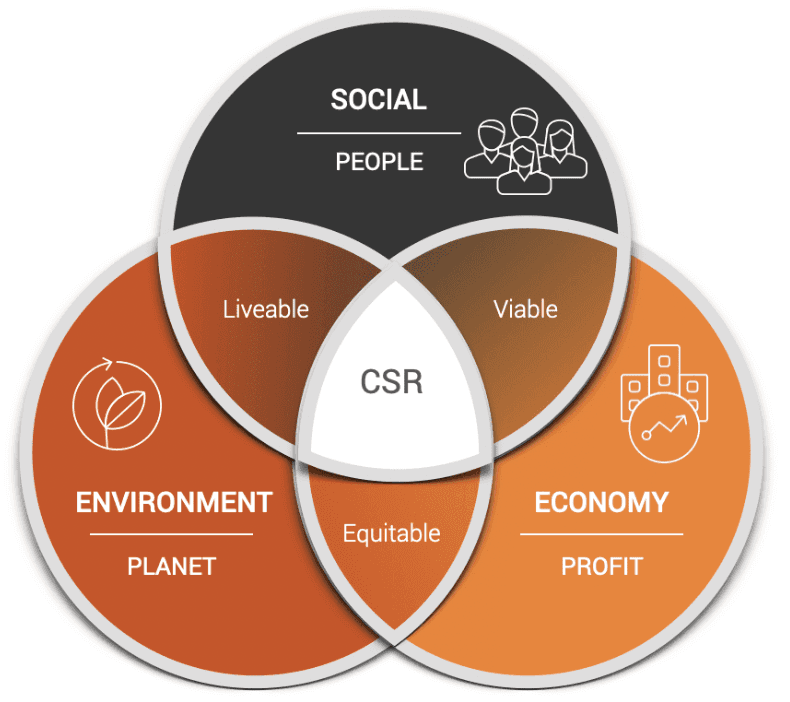
  • CSR leverage: Mandating auto OEM CSR funds for safety R&D, driver training, and public awareness

Key Data Points

FeatureData-Point
Road length (India)6.3 million km
Fatalities 20221.68 lakh
Death rate 202212.2 per lakh population
UK / Japan death rate2.6 / 2.5 per lakh
GDP loss from crashes~3 % annually
Share due to driver fault78 %
Identified black spots>5,000
MV Amendment Act2019
Safe-System targetHalve deaths by 2030 (WB $109 bn est.)
Good Samaritan lawCentral Rules 2016

Related UPSC Prelims PYQs

NDA_GAT 2025PYQ 1

S1: National highways connect one state with another and are of national importance.

GS-3EconomyQuick Bite

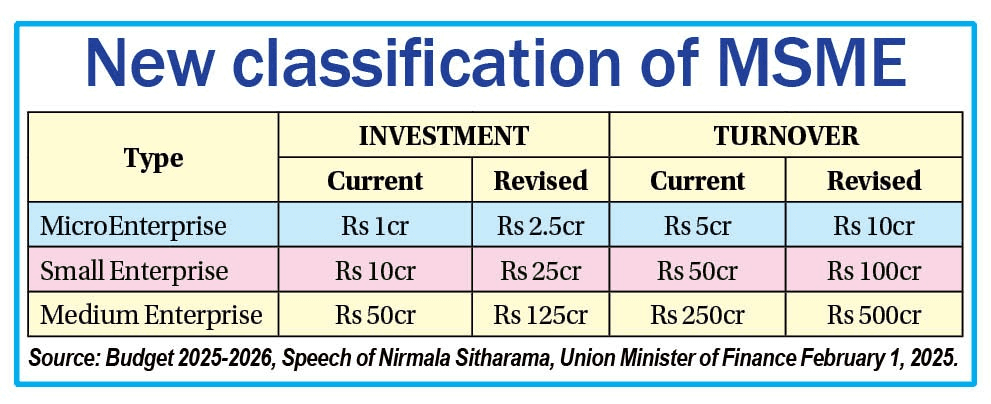
7.SIDBI Report on MSME Credit Gap (MSME Financing)

The Hindu
Illustration for SIDBI Report on MSME Credit Gap (MSME Financing)

What & Where

SIDBI – statutory lender under SIDBI Act 1989; HQ Lucknow; anchors MSME financing nationwide

MSME sector – micro, small, medium enterprises across manufacturing & services; vital for jobs, exports, GVA

“Understanding the Indian MSME Sector: Progress and Challenges” (2025) – SIDBI diagnostic report on credit, skills

Quick Facts for MCQs

Economic Angle

  • Contribution: GVA share rose from 27.3% (2020-21) to 30.1% (2022-23)
  • Exports: value grew from ₹3.95 lakh crore (2020-21) to ₹12.39 lakh crore (2024-25)

Credit Access

  • Gap: Overall 24% finance shortfall equals ~₹30 lakh crore
  • Disparity: Services gap 27%; women-owned MSMEs face 35% gap
  • Informality: 12% micro, 3% small enterprises still tap non-formal lenders

Labour & Skills

  • Shortage: One-in-four MSMEs lacks skilled workers
  • Hotspots: Defence, garments, hotels, sanitaryware sectors most affected

Legal & Policy

  • Mandate: SIDBI established 1989 to promote, finance, develop MSMEs
  • Governance: 100% Government-owned statutory body; principal institutional lender to the sector

Key Data Points

FeatureData-Point
Addressable credit gap24% ≈ ₹30 lakh crore
Credit gap – services27%
Credit gap – women MSMEs35%
Informal borrowing – micro units12%
Informal borrowing – small units3%
Skilled-manpower shortage25% MSMEs
MSME exports 2024-25₹12.39 lakh crore
Share in total exports 202445.79%
MSME GVA share 2022-2330.1%
SIDBI headquartersLucknow, Uttar Pradesh

Related UPSC Prelims PYQs

CDS_GK, GS1 2023PYQ 1

Consider the following statements with reference to India:

CDS_GK, GS1 2022PYQ 2

सूक्ष्म, लघु और मध्यम उद्योगों (MSMEs) के बारे में निम्नलिखित कथनों पर विचार कीजिए:

GS-3EconomyQuick Bite

8.Revised SHAKTI Coal Allocation Policy (Coal Allocation)

PIB

What & Where

SHAKTI Policy 2017 : central scheme ensuring transparent coal allocation via auction or tariff-based bidding to power generators

Revision 2025 : two supply windows—fixed-price Window-I for government plants, premium-auction Window-II for other producers

Coal heartland : Odisha, Jharkhand, Chhattisgarh together house ≈69 % of India’s proved reserves

Quick Facts for MCQs

Legal & Policy

  • CCEA approval gives statutory backing enhancing inter-ministerial coordination
  • Streamlined two-window system replaces eight earlier categories simplifying compliance
  • Premium auction aligns with National Electricity Policy market-orientation

Economic Angle

  • Fixed-price supply lowers cost uncertainty for state utilities improving tariff planning
  • Auction premiums create revenue upside for Coal India and captive miners
  • Flexible tenors aid plants in hedging against demand volatility

Energy Data

  • Coal continues as dominant baseload contributing majority electricity despite renewable push
  • Revised policy targets higher plant load factors mitigating imported coal dependence
  • Concentrated reserves necessitate efficient logistics corridors for eastern coalfields

Key Data Points

FeatureData-Point
SHAKTI full formScheme for Harnessing and Allocating Koyla Transparently in India
First issued2017
Latest revision clearedCCEA, May 2025
Allocation shiftNomination → auction / tariff bidding
Window-I priceNotified fixed price
Eligible for Window-IGovt-owned, JV, subsidiary thermal stations
Window-II pricePremium over notified price via auction
Contract tenor choicesLong-term ≤25 yr; Short-term ≤12 mo
India coal reserve rank5th globally
Coal share in energy mix~55 %
Coal share in electricity>74 %
Top three reserve statesOdisha, Jharkhand, Chhattisgarh
Their combined reserve share~69 %
India coal consumption rank2nd globally

Related UPSC Prelims PYQs

GS1 2019PYQ 1

निम्नलिखित कथनों पर विचार कीजिए :

GS-3EconomyQuick Bite

9.RBI Framework for Bond Forward Contracts (Bond Derivatives)

Business Standard

What & Where

Bond forwards; customised forward contracts with physical delivery of Indian central/state government bonds.

Regulated framework issued by RBI; transactions governed by FEMA (Debt Instruments) Regulations, 2019.

Traded OTC within India; accessible to residents and FEMA-eligible non-residents.

Quick Facts for MCQs

Legal & Policy

  • RBI norms create first formal Indian market for bond‐delivery forwards.
  • Framework aligns with BIS guideline on derivative transparency.
  • Aims to deepen domestic bond derivative segment.

Market Impact

  • Higher demand expected for 10-15 yr SDLs due to superior yields.
  • Instrument may flatten mid-curve spreads via hedging activity.
  • Could reduce reliance on offshore NDF-style interest products.

Participant Landscape

  • Residents & FEMA-eligible FPIs may transact as users.
  • SCBs & PDs provide two-way quotes; insurers likely heavy hedgers.
  • Retail individuals remain outside scope to curb speculation.

Instrument Features

  • Customisable notional, tenor, and coupon; price fixed at contract initiation.
  • Maturity date must match an outstanding G-Sec/SDL ISIN.
  • Mark-to-market margins mandated by RBI to manage counter-party risk.

Key Data Points

FeatureData-Point
RegulatorReserve Bank of India
Underlying bondsCentral G-Secs & State Development Loans
Settlement modePhysical delivery (not just cash)
Key purposeHedge long-term interest-rate risk, aid cash-flow planning
Yield example10–15 yr SDL ≈ 6.71 %; same-tenor G-Sec ≈ 6.41 %
Allowed usersSCBs, PDs, insurers, other non-retail entities
Excluded entitiesSFBs, Payments banks, LABs, RRBs
Market makersPrimary Dealers
ComparatorFRAs – unregulated, cash-settled only
Earliest legal basisFEMA (Debt Instruments) Regulations, 2019

Related UPSC Prelims PYQs

GS1 2021PYQ 1

भारतीय सरकारी बांड प्रतिफल (Government Bond Yields) निम्नलिखित में से किससे/किनसे प्रभावित होता है/होते हैं?

GS1 2021PYQ 2

निम्नलिखित पर विचार कीजिए :

GS-1History

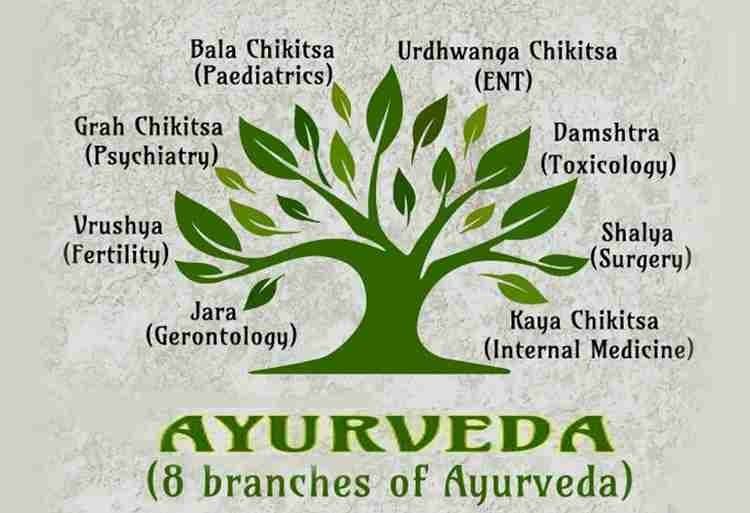
10.Ayurveda Day Observance on 23 September (Traditional Medicine)

Economic Times
Illustration for Ayurveda Day Observance on 23 September (Traditional Medicine)

What & Where

National observance “Ayurveda Day” to honour India’s ancient medical system

Celebrated across India annually on 23 September, aligning with the autumnal equinox

Ayurveda rooted in Atharva Veda; practice emphasises balance of body-mind-spirit

Quick Facts for MCQs

Legal & Policy

  • Gazette notification fixes date enabling predictable planning and budgeting
  • Aligns AYUSH sector promotions with national calendar events
  • Supports inclusion of Ayurveda in global health dialogues as science-based system

Philosophical Foundations

  • Balance symbolism mirrored by equinox, core to Tridosha theory
  • Emphasis on harmony between individual and environment
  • Customised care via Prakriti concept for each person

Healthcare Approach

  • Focus on preventive care using herbal drugs, diet, yoga, meditation
  • Seasonal routines and detox therapies recommended for mind-body sync
  • Promotes sustainable, low-cost interventions leveraging local resources

Key Data Points

FeatureData-Point
Official declarationGazette of Government of India
Start year for fixed date2025 onwards
Annual date23 September
Astronomical tie-inAutumnal equinox (day–night balance)
Core Sanskrit meaningAyu = life; Veda = knowledge
Vedic sourceAtharva Veda
Age of tradition> 5000 years
Key dictum 1Swasthasya Swasthya Rakshanam (preserve health)
Key dictum 2Aturasya Vikara Prashamanam (cure illness)
Approach typePreventive & holistic healthcare
GS-1HistoryQuick Bite

11.Dongria Kondh PVTG Profile (Tribal Community)

The Hindu

What & Where

Dongria Kondh – a Particularly Vulnerable Tribal Group (PVTG) inhabiting Odisha’s Niyamgiri Hills.

Distinct culture: worship Niyam Raja, practise podu (shifting) cultivation, speak script-less Kui (Dravidian).

Niyamgiri range spans Kalahandi & Rayagada districts; bordered by Karlapat WLS (NW) and Kotgarh WLS (NE).

Quick Facts for MCQs

Cultural & Linguistic

  • Worship: Niyam Raja central to cosmology; rituals integrate forests, streams, wildlife.
  • Language: Kui oral transmission via songs, dance, myths; preserves pre-literate knowledge.
  • Sub-tribes: Jharnia guard water sources; Kovi, Kuttia, Languli, Penga maintain clan diversity.

Legal & Policy

  • Resistance: 2000s mass mobilisation blocked Vedanta’s bauxite project on sacred hills.
  • Verdict: 2013 Supreme Court affirmed Gram Sabha veto, strengthening constitutional tribal consent.
  • Precedent: Case showcased empowerment under Fifth Schedule & PESA provisions.

Geography & Ecology

  • Location: Niyamgiri hills form rugged Eastern Ghats spur across Kalahandi-Rayagada.
  • Borders: Karlapat (NW) & Kotgarh (NE) Wildlife Sanctuaries create contiguous biodiversity zone.
  • Cultivation: Podu cycles allow soil recovery, sustaining mixed forest-agri mosaic.

Key Data Points

FeatureData-Point
Tribe statusPVTG within Scheduled Tribes
Total PVTGs in India75
State with most PVTGsOdisha – 13 groups
LanguageKui; no written script
Main deityNiyam Raja (hill god)
Traditional farmingPodu (shifting cultivation)
Key sub-tribesKovi, Kuttia, Languli, Penga, Jharnia
Opposed companyVedanta (bauxite mining)
Landmark ruling2013 SC upheld Gram Sabha’s right to reject mining
Districts occupiedKalahandi & Rayagada, Odisha
GS-3S&T

12.High-Pressure Fabrication of 2D Metals (2D Materials)

The Hindu

What & Where

2D metals: atom-thick (1–2 atoms) metallic sheets confining electrons to planar motion; exhibit quantum-scale behaviours.

Fabricated in China (Beijing & Dongguan labs) by high-pressure molten-metal spreading between MoS₂-coated sapphire plates.

First atomically thin sheets of Bi, Ga, In, Sn, Pb; bismuth layer merely 6.3 Å (~2 atoms).

Quick Facts for MCQs

Technique & Materials

  • Method: Melt metal powder, compress; MoS₂ acts as anti-sticking, enabling angstrom-level spreading.
  • Outcome: Uniform, continuous metallic monolayers captured on sapphire for characterization.

Quantum Traits

  • Quantum-confinement shifts energy bands, enabling exotic conductivity regimes absent in 3-D bulk.
  • Non-linear Hall signals arise without magnetic field, promising topological electronics.

Potential Uses

  • Quantum-computing hardware with low-energy, high-speed switching.
  • Flexible electronics: ultra-thin transistors, wearable sensors, foldable optoelectronic panels.
  • Biomedical diagnostics leveraging extreme surface sensitivity for biosensing and imaging.

International Context

  • China joins graphene-analog research race; prior successes mainly with semiconducting dichalcogenides, not pure metals.

Key Data Points

FeatureData-Point
Pressure applied200 million Pa (≈200 MPa)
Substrate layersMoS₂ film on sapphire plates
Metals producedBi, Ga, In, Sn, Pb
Bismuth sheet thickness6.3 Å
Electron confinementTwo dimensions only
Key quantum effectNon-linear Hall effect
Field-effect tunabilityStrong; conductivity externally modulated
Possible topologyEdge-conducting topological insulator behavior

Related UPSC Prelims PYQs

CDS_GK, GS1 2025PYQ 1

Which one of the following is not a property of 'graphene'?

CDS_GK, GS1 2012PYQ 2

Graphene is frequently in news recently. What is its importance?

GS-2Mapping

13.China’s Renaming of Arunachal Toponyms (India-China Border)

Down to Earth
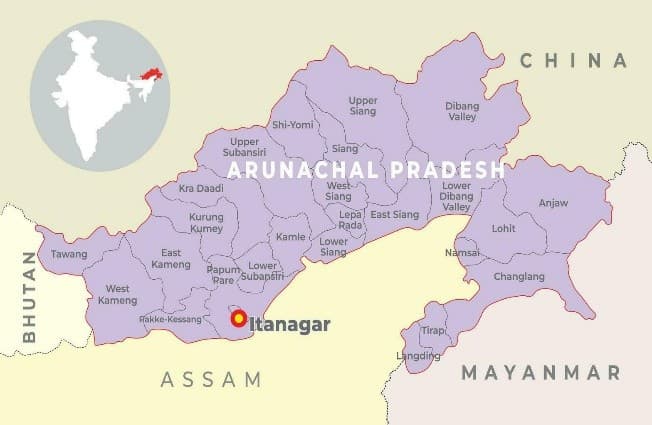
Illustration for China’s Renaming of Arunachal Toponyms (India-China Border)

What & Where

Renaming tactic: Beijing keeps issuing Chinese names for Arunachal sites to reinforce claim over “Zangnan / South Tibet”.

Arunachal Pradesh: Himalayan state in Northeast India, formed 1987; capital Itanagar; borders China, Bhutan, Myanmar.

Boundary status: 1,030 km McMahon Line is India’s de facto border; China rejects its legality.

Quick Facts for MCQs

Legal & Boundary

  • Claim: China cites Tawang-Lhasa cultural links to dispute McMahon Line.
  • India stance: Arunachal “was, is, will remain” integral; line internationally accepted.
  • Renaming lists cover villages, mountains, rivers lying well within Indian control.

Geography & Biodiversity

  • Terrain: Eastern Himalayas with alpine, temperate and tropical forest belts.
  • Biodiversity: Orchid Paradise; Namdapha NP, Pakke TR, Dibang WLS host tiger, snow leopard.
  • Rivers: Mostly snow-fed; sustain rich medicinal plant endemism.

Tribal Diversity

  • Demography: >25 major tribes—Nyishi, Apatani, Mishmi, Wancho, Momba, Khamti, Abor.
  • Festivals: Losar, Solung, Dree, Nyokum, Boori-Boot mark agrarian and spiritual calendars.
  • Monpa cultural sphere around Tawang Monastery leveraged by China for historical narrative.

Key Data Points

FeatureData-Point
Chinese claimed area≈ 90,000 sq km
Year renaming began2017
Former nameNorth-East Frontier Agency
Statehood year1987 (24th state)
India-China border length1,030 km
Other external bordersMyanmar 440 km; Bhutan 160 km
Key riversSiang, Kameng, Subansiri, Lohit, Tirap
Important passesBum La, Bomdila, Tunga, Dihang
GS-3Security

14.Bhargavastra Counter-Drone Micro-Missile System (Counter-Drone Tech)

Times of India
Illustration for Bhargavastra Counter-Drone Micro-Missile System (Counter-Drone Tech)

What & Where

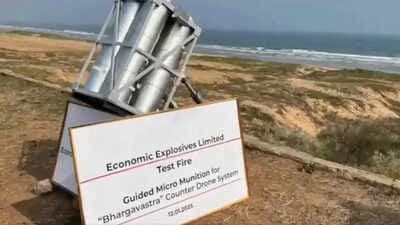
Bhargavastra – micro-missile counter-drone system to detect & destroy hostile drones, incl. swarms

Developed in India by Solar Defence & Aerospace Ltd with Economic Explosives Ltd

Deployed on mobile launcher for Army Air Defence in border, high-altitude zones

Quick Facts for MCQs

Technology Specs

  • Detection radar/optics integrated with guided micro-munitions for precision neutralisation
  • Simultaneous 64-round load enables massed swarm engagement
  • Launcher mobility allows rapid relocation, 360° coverage

Operational Advantage

  • Rapid-response firing cycle counters low-flying, low-RCS drones before payload release
  • Stand-off kill distance >2.5 km protects troops & assets from debris/explosives
  • Economical munitions cut expenditure against cheap commercial UAV threats

Security Dimension

  • Fills critical anti-drone gap exposed along Pakistan border & during recent conflicts
  • Indigenous design reduces import dependence, aligns with Atmanirbhar Bharat
  • Limited comparable global systems positions India as emerging C-UAS tech provider

Key Data Points

FeatureData-Point
Detection range> 6 km for small UAVs
Kill/engagement range> 2.5 km stand-off
Missiles per launcher64 micro-missiles
Salvo rate2 rockets within 2 s
PlatformTruck-mounted, high-altitude capable
DevelopersSDAL + Economic Explosives Ltd
Service usersArmy Air Defence; IAF interest
DistinctionIndia’s first micro-missile C-UAS system
Cost tagLow-cost versus conventional air-defence

Related UPSC Prelims PYQs

CDS_GK, ESE_GS 2024PYQ 1

Ministry of Defence signed contract with which one of the following organizations for Upgraded Super Rapid Gun Mount (SRGM) and other equipment for around 3000 crores?

CDS_GK, ESE_GS 2024PYQ 2

भारत का ‘मिशन शक्ति’ (DRDO) निम्नलिखित में से किससे संबंधित है?

GS-3Security

15.Operation Black Forest Anti-Naxal Drive (Left Wing Extremism)

ANI

What & Where

Operation Black Forest – 21-day high-intensity counterinsurgency sweep against Maoist bases

Core theatre – ~1,200 sq km Kurraguttalu/Karregutta Hills straddling Chhattisgarh–Telangana border

Goal – dismantle Naxal HQs, neutralise leadership, aid 31 Mar 2026 Left-Wing Extremism eradication target

Quick Facts for MCQs

Security Dimension

  • Neutralisation: 31 cadres eliminated, bid to decapitate top Maoist command
  • Coordination: CRPF, CoBRA, STF, DRG executed deep-insertion multi-column assaults
  • Continuum: aligns with nationwide strategy to finish LWE by FY 2025-26

Geophysical Factors

  • Terrain: steep escarpments, caves, thick sal forests aid guerrilla concealment
  • Extent: Karregutta belt spans 25–50 km along inter-state ridge line
  • Accessibility: 5,000 ft altitude and broken slopes hinder regular patrols

Tribal Perspective

  • Demography: Koya, Gond, Chenchu communities inhabit hill forests
  • Impact: prolonged cross-fire, displacement, livelihood disruption recorded
  • Nomenclature: locals dub the range “Black Hills” reflecting dark rocky outcrops

Key Data Points

FeatureData-Point
Code-nameOperation Black Forest
Duration21 days
Maoists killed31
Area covered~1,200 sq km
Peak elevation~5,000 ft
Border districtsSukma (CG) / Bhadradri Kothagudem (TS)
Lead forceCRPF with CoBRA units
Partner forcesChhattisgarh STF, DRG
Key terrainSteep hills, caves, waterfalls, dense forests
LWE deadline31 March 2026
GS-2SchemeQuick Bite

16.Scheme to Upgrade Government ITIs (Skill Development)

Business Standard

What & Where

National Rs 60,000-crore scheme to upgrade 1,000 government ITIs and build 5 National Centres of Excellence for Skilling (NCOEs).

Implemented across India under MSDE; NCOEs housed in existing NSTIs at Bhubaneswar, Chennai, Hyderabad, Kanpur, Ludhiana.

Uses hub-and-spoke ITI model to deliver automation, AI, advanced-manufacturing skills.

Quick Facts for MCQs

Financials & Funding

  • Outlay: Rs 60,000 crore spread over five fiscal years.
  • Multilaterals: ADB & World Bank cover half of central expenditure.
  • Contributors: Remaining cost shared by Centre, States, Industry.

Institutional Network

  • ITIs: 1,000 government institutes upgraded under hub-and-spoke pattern.
  • NCOEs: 5 centres situated inside National Skill Training Institutes.
  • NSTIs: 33 existing institutes dedicated to trainer training nationwide.

Skill Focus & Targets

  • Youth: 2 million to acquire automation, AI, advanced manufacturing competencies.
  • Trainers: 50,000 instructors developed via NCOEs.
  • Trades: Curriculum aligned to industry-relevant, capital-intensive sectors.

Governance Model

  • SPV: Industry-led special purpose vehicle steers curriculum, infrastructure, management.
  • Shift: Moves control from government-only to public-private partnership.
  • Oversight: DGT retains affiliation and accreditation authority for all ITIs.

Key Data Points

FeatureData-Point
Total outlayRs 60,000 crore
Scheme period5 years
Govt ITIs covered1,000
National Centres of Excellence5
NCOE locationsBBSR, Chennai, Hyd, Kanpur, Ludhiana
Trainers target50,000
Youth to be skilled2 million
Funding mixCentre-State-Industry
Multilateral shareADB & World Bank finance 50 % of central
Apex accreditorDGT, MSDE

Related UPSC Prelims PYQs

GEO_GS, GS1 2026PYQ 1

Consider the following statements about the SANKALP Scheme:

GEO_GS, GS1 2019PYQ 2

अटल नवाचार (Innovation) मिशन किसके अधीन स्थापित किया गया है?

Ready to practice?

Test your knowledge with our UPSC test series.

Start Free Trial