UPSC Current Affairs

16 topicsGS-1: 3GS-2: 3GS-3: 10
0/16 done
GS-2Polity

1.Supreme Court Advisory Jurisdiction (Advisory Jurisdiction)

Hindustan Times

What & Where

Advisory jurisdiction: President seeks Supreme Court opinion on public-importance questions of law/fact under Constitution of India.

Two routes: Article 143(1) general references; Article 143(2) pre-constitutional treaties, former princely-state covenants.

Heard mandatorily by Constitution Bench (≥5 judges); opinion only advisory, non-binding.

Quick Facts for MCQs

Legal & Policy

  • Discretionary power; SC may refuse, providing institutional check on executive overuse.
  • Offers President independent legal advice beyond mandatory Council-of-Ministers aid.
  • Non-binding opinion preserves separation; Parliament/state not automatically compelled.

Historical Precedents

  • Berubari Union 1960 enabled territory transfer to Pakistan via constitutional amendment.
  • Cauvery Water Reference 1992 affirmed tribunal award, shaping federal water dispute resolution.
  • Kesavananda follow-up 1973 reinforced Basic Structure post original 1973 verdict.

Procedural Specifics

  • Reference sent as Presidential order; registered as “Special Reference” before SC.
  • Parties, AGI, state counsels invited; Court may appoint amici for wider viewpoints.
  • Opinion communicated to President; may be cited as precedent though non-binding.

Key Data Points

FeatureData-Point
Constitutional article143
Nature of opinionAdvisory, non-binding
Bench requirementConstitution Bench, Art 145(3), ≥5 judges
SC discretion to answerYes
President’s latest queryTime-limits for President/Governor assent to Bills
Total invocations till 202314
First useDelhi Laws Act Reference, 1951
Only declined referenceAyodhya Acquisition Act, 1993
Case clarifying CollegiumJudges Appointment Reference, 1998
Article 143(2) focusPre-1947 treaties & covenants

Related UPSC Prelims PYQs

GEO_GS, GS1 2026PYQ 1

Which of the following statements is/are correct about the advisory jurisdiction of the Supreme Court of India?

GEO_GS, GS1 2001PYQ 2

The Supreme Court of India tenders’ advice to the President on a matter of law or fact

GS-2Polity

2.Right to Digital Access (Article 21 Digital)

The Hindu
Illustration for Right to Digital Access (Article 21 Digital)

What & Where

Definition: Right to digital access—assured ability of every citizen to use essential digital public, financial infrastructure

Coverage: Mandates inclusion of PwDs, rural users, seniors, linguistic minorities throughout India

Constitutional hook: SC expands Article 21 read with Articles 14, 15, 38 for non-discriminatory digital systems

Quick Facts for MCQs

Legal & Policy

  • Recognition: Digital inclusion declared constitutional imperative, not policy preference
  • Equality: Judgment treats inaccessible tech as discrimination under Articles 14-15
  • Obligation: Government, private entities must ensure WCAG-aligned design and audits

Accessibility Barriers

  • Design flaw: Visual, motor heavy KYC blocks blind, motor-impaired, facial disfigurement users
  • Non-compliance: Most KYC apps lack screen-reader support, audio prompts, language options
  • Impact: Denial of banking, SIM cards, pensions widens rural-urban and disability digital divides

Supreme Court Directives

  • Verification: Provide voice, caregiver-assisted, offline ID alternatives within 90 days
  • Governance: Appoint digital accessibility nodal officer in every regulator and bank
  • Oversight: Mandate annual third-party accessibility certification for all public-facing portals

Significance

  • Rights boost: Aligns domestic law with UNCRPD, strengthens enforceability of RPwD Act
  • Inclusive tech: Sets precedent for future AI, fintech, e-governance regulations
  • Substantive equality: Shifts focus from formal compliance to user-centred universal design

Key Data Points

FeatureData-Point
Landmark casePragya Prasun & Amar Jain v. Union of India (2025)
Fundamental right citedArticle 21 (life & liberty)
Supporting articlesArticles 14, 15, 38
Key statute referencedRights of Persons with Disabilities Act 2016
Specific section breachedSection 42 (universal design)
Global treaty invokedUN Convention on Rights of Persons with Disabilities
Main exclusion examplesBlinking, selfie, OTP based e-KYC
Directed reformsAlt live-verification, nodal officers, periodic accessibility audits
Affected servicesBanking, telecom, pension, welfare schemes

Related UPSC Prelims PYQs

CDS_GK, GS1 2024PYQ 1

Who among the following filed the Writ Petition that led to the famous verdict of the Supreme Court of India recognising the Right to Privacy as a Fundamental Right?

CDS_GK, GS1 2011PYQ 2

India is home to lakhs of persons with disabilities. What are the benefits available to them under the law?

GS-3EconomyQuick Bite

3.Bhutan Crypto Tourism Payments (Crypto Payments)

Financial Express

What & Where

National crypto tourism payment system: Bhutan’s cash-free QR platform built with Binance Pay & DK Bank.

Accepts 300+ digital coins (BNB, BTC, USDC) enabling real-time settlement at hotels, shops, transport.

Bhutan: land-locked Himalayan kingdom (capital Thimphu) between India & China; first carbon-neutral state.

Quick Facts for MCQs

Economic Angle

  • Tourism revenue expected to rise via friction-free, multi-currency payments reducing forex conversion costs.
  • Lower merchant fees than card rails enhance local business profitability.
  • Financial inclusion push links unbanked Bhutanese to digital wallets.

Technology Setup

  • Binance Pay processes on/off-chain transfers; DK Bank handles fiat conversion & compliance.
  • System operable nationwide across hotels, taxis, eateries; scans settle instantly in Ngultrum equivalent.
  • Scalability allows addition of new tokens without hardware changes.

Legal & Policy

  • India treats crypto as assets; usage permitted yet not recognised as legal tender.
  • Bhutan’s rollout aligns with sovereign digital-asset strategy while preserving carbon-neutral commitments.
  • Initiative dovetails with GNH philosophy, prioritising well-being over GDP metrics.

Key Data Points

FeatureData-Point
Global first for national crypto tourism payBhutan
Key partnersBinance Pay, DK Bank
Cryptos supported300+ incl. BNB, BTC, USDC
Transaction modeQR-code, real-time
Core aimsLower fees, boost tourism, financial inclusion
Bhutan longest riverManas River – 376 km, India-Bhutan
Bhutan’s development metricGross National Happiness
India: crypto legal statusNot legal tender, not banned
Bhutan nicknameLand of the Thunder Dragon
Carbon statusWorld’s first carbon-neutral country

Related UPSC Prelims PYQs

CDS_GK, GEO_GS 2023PYQ 1

विश्व का एकमात्र देश कौन-सा है, जिसने आधिकारिक रूप से सकल राष्ट्रीय खुशहाली (GNH) को देश की प्रगति का मान्य मापक घोषित किया है ?

CDS_GK, GEO_GS 2022PYQ 2

Recently which one of the following countries became the first in the world to adopt the cryptocurrency 'Bitcoin' as legal tender?

GS-3EconomyQuick Bite

4.Jute Minimum Support Price (Jute MSP)

The Hindu

What & Where

Jute; golden fibre; mainly grown in West Bengal, Assam, Bihar

Jute Corporation of India; price-support PSU under Textiles Ministry; nationwide MSP procurement

Minimum Support Price; floor rate fixed by CCEA on CACP advice covering raw jute

Quick Facts for MCQs

Agronomic Conditions

  • Temperature 17–41 °C, humidity 40–90 %, >120 cm rainfall optimise fibre quality
  • Alluvial Ganga-Brahmaputra soils plus monsoon retting water essential
  • Long photoperiod of humid tropics favours rapid stem growth

Institutional Setup

  • JCI buys raw jute at MSP, grades, stores, supplies mills
  • Operates purchase centres across seven jute-growing states; HQ Kolkata
  • Mandate prevents trader cartelisation, supports Price Support Scheme implementation

Economic Angle

  • MSP hike 2025-26 shields farmers from distress sales, stabilises income
  • Raw jute feeds compulsory packaging demand under Jute Packaging Materials Act
  • Sector sustains rural livelihoods, export earnings, eco-friendly fibre market

Key Data Points

FeatureData-Point
Largest jute producerIndia
Cash-crop rank2nd after cotton
Main jute statesWest Bengal, Assam, Bihar
Ideal temperature17 °C – 41 °C
Ideal rainfall> 120 cm, well-distributed
Ideal humidity40 % – 90 %
JCI parent ministryTextiles
Procurement limitNo quantity ceiling
MSP decided byCCEA on CACP advice
2025-26 MSP aimCurb distress sales

Related UPSC Prelims PYQs

GS1 2020PYQ 1

Consider the following statements :

GS1 1996PYQ 2

Which one of the following is an important crop of the Barak valley?

GS-1Mapping

5.Mahadayi River System (Interstate River)

The Hindu

What & Where

Rain-fed interstate Mahadayi / Mandovi / Mhadei flows 111 km through Karnataka, Maharashtra, Goa into the Arabian Sea

Origin Bhimgad Wildlife Sanctuary, Khanapur taluk, Belagavi; estuary empties at Panaji beside Mormugao Harbour

Lifeline of Goa for drinking water, farming, navigation, tourism; famed for Dudhsagar Falls & estuarine biodiversity

Quick Facts for MCQs

Legal & Policy

  • Tribunal Mahadayi Water Disputes Tribunal under Inter-State River Water Disputes Act adjudicates allocations
  • Karnataka seeks diversion for drinking water to Belagavi, Dharwad, Bagalkot, Gadag drought-prone districts
  • Goa resists citing wildlife-sanctuary damage, salinity changes, tourism and fisheries loss

Project Details

  • Kalasa-Banduri project (1980s) diverts Kalasa & Banduri flows to Malaprabha basin within Krishna system
  • CSIR-NIO & INCOIS 2024 study says Karnataka diversion causes limited ecological impact, triggering Goa protests
  • Diversion involves dams, canals, pumping infrastructure; final clearances still under dispute

Environmental Assets

  • Estuary hosts mangroves, fish nurseries, Salim Ali Bird Sanctuary; supports rich Western Ghats biodiversity
  • River enables inland navigation, Mandovi cruises, iron-ore barge traffic vital for Goa’s economy
  • Three parallel bridges, including Atal Setu, showcase engineering while boosting regional connectivity

Key Data Points

FeatureData-Point
Alternate namesMandovi, Mhadei
River typeRain-fed, west-flowing
Total length111 km
Stretch in Karnataka35 km
Stretch in Maharashtra1 km
Stretch in Goa76 km
Catchment area2,032 km² (Goa 1,580; Kar 375; Mah 77)
Origin siteBhimgad Wildlife Sanctuary
MouthArabian Sea at Panaji
Major tributariesKalasa, Banduri, Mapusa, Ragada
Linking canalCumbarjua joins Mahadayi–Zuari
Iconic waterfallDudhsagar Falls
Key bird habitatSalim Ali Bird Sanctuary, Chorão
Tallest bridge3.2-km Atal Setu

Related UPSC Prelims PYQs

CDS_GK 2024PYQ 1

Which peninsular river has a tributary named ‘Kabini’?

GS-3Environment

6.South Australia Toxic Algal Bloom (Harmful Algal Bloom)

The Hindu

What & Where

Toxic dinoflagellate Karenia mikimotoi forms harmful algal blooms (red tides) causing mass marine mortality.

March 2025 bloom off South Australia spans ~4,400 sq km near Kangaroo, Fleurieu & Yorke peninsulas.

Alga is photosynthetic, thecal-plate-less; thrives in warm, calm, nutrient-rich seawater.

Quick Facts for MCQs

Environmental Impact

  • Mass-mortality: sharks, rays, octopuses, crabs; trophic chain disruption.
  • Oxygen-depletion generates benthic dead zones harming sessile fauna.
  • Persistent water chemistry changes threaten long-term coastal biodiversity.

Economic Angle

  • Fisheries suffer catch loss and equipment fouling.
  • Beach tourism declines due to foamy discoloured water and odour.
  • Local livelihoods across affected peninsulas face revenue shortfalls.

Health Concerns

  • Aerosolised toxins irritate skin, eyes, respiratory tracts of nearby residents.
  • Authorities issue advisories against swimming and seafood intake.
  • Low acute toxin potency masks cumulative exposure risks.

Climate Linkage

  • Marine heatwave elevates SSTs, boosting bloom proliferation.
  • Climate change projected to raise HAB frequency and duration globally.
  • 2025 event logged as South Australia’s largest harmful algal bloom.

Key Data Points

FeatureData-Point
KingdomProtista
PhylumDinoflagellata
First recordedJapan 1935
Main toxinsGymnocin A & Gymnocin B
2025 bloom area~4,400 sq km
Coastline hitSouth Australia (Kangaroo, Fleurieu, Yorke)
Marine species killed>200
Human symptomsSkin, eye, respiratory irritation
Water statusOxygen-depleted anoxic zones
Key driversMarine heatwave, calm seas, climate change

Related UPSC Prelims PYQs

GS1 1998PYQ 1

Estuaries possess distinct blooms of excessive growth of a pigmented dinoflagellate. These blooms are called

GS-3Environment

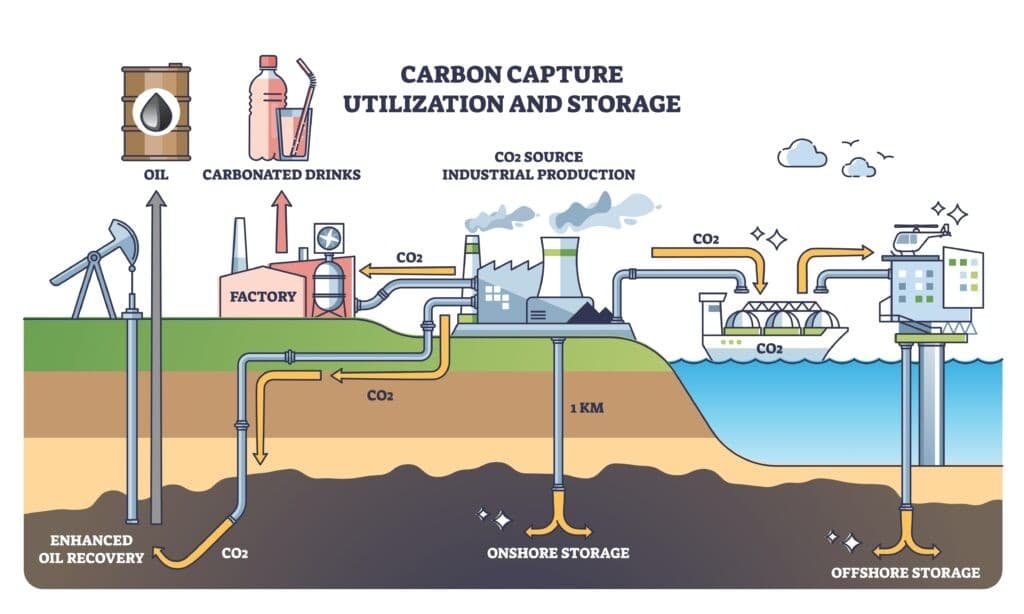
7.India Carbon Capture Utilisation Testbeds (Carbon Capture)

Times of India
Illustration for India Carbon Capture Utilisation Testbeds (Carbon Capture)

What & Where

Definition: CCU captures industrial CO₂ and converts it to value-added products; subset of CCUS.

Key processes: Capture → Transport → Utilisation; capture routes include post-combustion, pre-combustion, oxy-fuel, direct-air.

India focus: Five PPP pilot testbeds in Haryana, Kanpur, Mumbai, Dehradun-Tirupati, Chennai-Goa clusters.

Quick Facts for MCQs

Tech & Schemes

  • Capture-types: Post-combustion, Pre-combustion, Oxy-fuel, DAC each suiting different plant configurations.
  • R&D-focus: Catalysis for CO₂ conversion, low-energy separations, scale-ready integration with kilns.
  • Product-range: Fuels, fertiliser feedstock, construction materials extend CO₂ life-cycle beyond emission point.

Institutional Tie-ups

  • Haryana: NCCBM + JK Cement.
  • Uttar Pradesh: IIT Kanpur + JSW Cement; Maharashtra: IIT Bombay + Dalmia.
  • Uttarakhand–AP: CSIR-IIP + IIT Tirupati + IISc + JSW; TN-Goa: IIT Madras + BITS Goa + Ultratech.

Limitations

  • Market-size: CO₂-derived products currently niche, curbing revenue scale.
  • Energy-intensity: High, especially DAC, risks negating climate gains if powered by fossil grid.
  • Climate-benefit: Dependent on CO₂ source, process emissions, product lifetime.

Trade Angle

  • CBAM-pressure: Indigenous CCU aims to shield exports from EU carbon levy.
  • Future-proofing: Early deployment gives Indian cement global compliance edge.

Key Data Points

FeatureData-Point
Parent frameworkCCUS
Approved Indian CCU testbeds5
PPP modelPublic + academia + cement majors
Target sectorsHard-to-abate, esp. cement
Capture stagesCapture, Transport, Utilisation
Post-combustion suitabilityRetrofit-friendly
Energy demand highest inDirect Air Capture
Utilisation outputsSynthetic fuels, urea, concrete aggregate, chemicals, food-grade CO₂
Strategy driverCounter EU Carbon Border Adjustment Mechanism
Leading R&D themesCO₂ catalysis, vacuum gas separation, industrial integration

Related UPSC Prelims PYQs

GS1 2025PYQ 1

'प्रयास वात प्रसारण (कार्बन एयर कैप्चर)', जो नई उभरती प्रौद्योगिकी है, के संदर्भ में, निम्नलिखित कथनों में से कौन-सा/कौन-से सही है/हैं?

GS1 2023PYQ 2

Consider the following activities:

GS-3Species

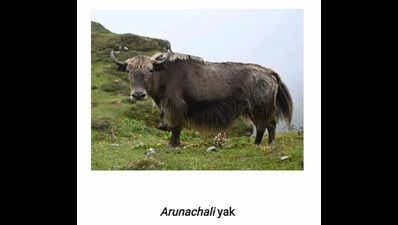
8.Indian Yak Genomic Breakthrough (High-Altitude Bovine)

Times of India
Illustration for Indian Yak Genomic Breakthrough (High-Altitude Bovine)

What & Where

Indian yak (Bos grunniens): long-haired high-altitude bovine of Bovini tribe; dubbed “ship of the Himalayas”.

Genome milestone: first chromosome-level assembly by ICAR-NRC on Yak, Dirang, Arunachal Pradesh.

Range: Tibetan Plateau and Indian states—Arunachal Pr., Sikkim, Uttarakhand, Himachal Pr., J-K & Ladakh—above ≈14,000 ft.

Quick Facts for MCQs

Tech & Schemes

  • Genome: Chromosome-level assembly aids marker-assisted selection, conservation planning.
  • Collaboration: ICAR-NRC on Yak spearheaded with national genomics partners.
  • Breeding goal: Identify cold-resilience, disease-resistance genes for climate-smart livestock.

Biological Adaptations

  • Thermoregulation: Dense outer coat plus woolly under-fur resists Himalayan wind chill.
  • Nutrition: Enlarged rumen enables efficient digestion of sparse alpine grasses.

Economic Angle

  • Livelihood: Milk, meat, wool, hides, dung fuel and pack transport sustain hill pastoralists.
  • Transhumance: Seasonal migrations optimise pasture use, anchoring nomad economies.
  • Tourism: Yak rides and products bolster mountain eco-tourism revenues.

Ecological Impact

  • Grazing: Controlled yak herds curb shrub invasion, maintaining alpine meadow biodiversity.
  • Manure: Nutrient-rich dung enhances soil fertility in cold desert ecosystems.

Key Data Points

FeatureData-Point
Scientific nameBos grunniens
Taxonomic tribeBovini (cattle, buffalo, bison)
Comfortable altitude≥ 4,200 m (14,000 ft)
Cold toleranceDown to –40 °C
Lead instituteICAR-National Research Centre on Yak
BreakthroughFirst Indian yak chromosome-level genome
Indian states rearing yak6 (AP, Sikkim, Uttarakhand, HP, J-K, Ladakh)
Key digestive traitEnlarged rumen for low-quality forage
Coat featureLong hanging hair forms insulating layer
Traditional systemNomadic transhumance
GS-3EnvironmentQuick Bite

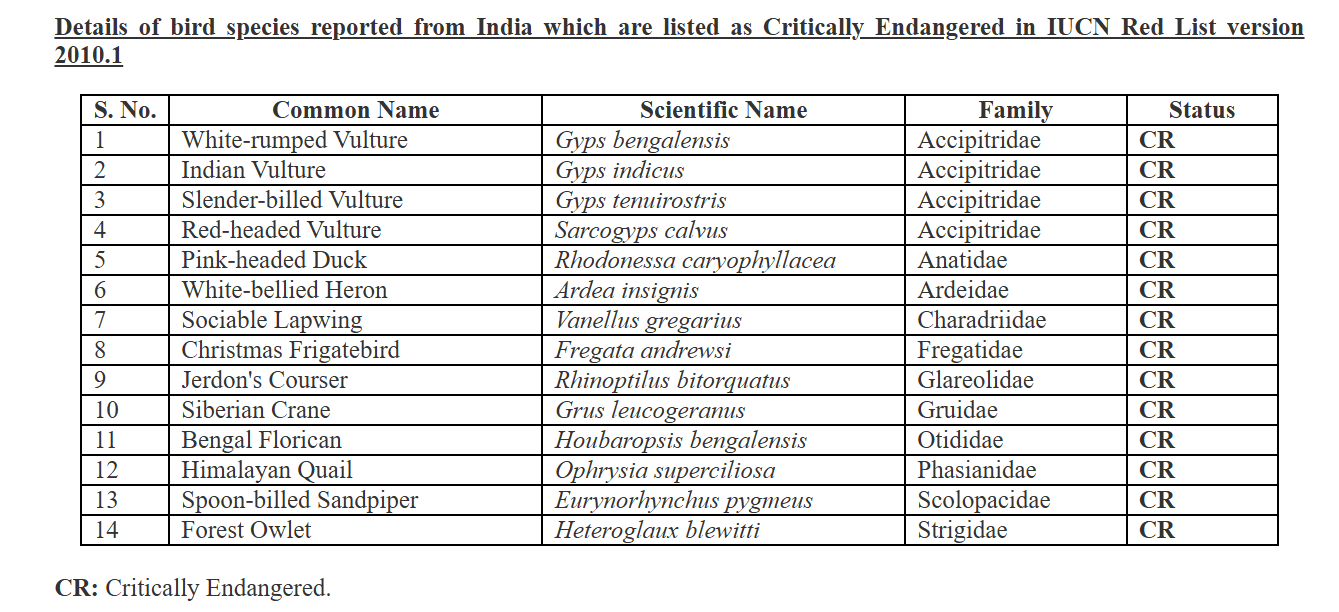
9.Illegal Killing of Migratory Birds (CMS Rome Plan)

Down to Earth
Illustration for Illegal Killing of Migratory Birds (CMS Rome Plan)

What & Where

Illegal Bird Killing (IKB); shooting, trapping, illegal trade of wild birds

Geography Mediterranean littoral: 46 states across Europe, North Africa, West Asia

CMS Rome Strategic Plan 2020-30 to halve IKB vs 2020 baseline

Quick Facts for MCQs

Legal & Policy

  • CMS Rome Plan builds on Bern Convention, seeks 50% IKB cut by 2030
  • Bern Convention 1979 pioneered continent-wide habitat and species protection across Europe, some Africa
  • Wildlife Protection Act 1972 Schedule-I grants rare Indian birds absolute protection, strict penalties

Species at Risk

  • European Turtle Dove hunted heavily, population crashing across Mediterranean migratory corridor
  • Egyptian Vulture critically endangered; poisoned carcasses, electrocution, hunting elevate mortality
  • European Goldfinch prized cage bird, mass trapping persists despite legal moratoriums

Indian Actions

  • National Action Plan 2018-23 targets habitat, monitoring, awareness along Central Asian Flyway
  • India-CMS MoUs: Siberian Crane 1998, Marine Turtles 2007, Dugong 2008, Raptors 2016
  • Enforcement via WPA 1972 includes 7-year jail, ₹25,000 fine for Schedule-I bird offences

Key Data Points

FeatureData-Point
CMS Rome Plan years2020-2030
IKB reduction target50% by 2030 vs 2020
Countries assessed46
Off-track nations38
Example at-risk speciesEuropean Turtle Dove
Bern Convention year1979
India Migratory Bird Plan2018-2023
Indian flyway focusCentral Asian Flyway

Related UPSC Prelims PYQs

ESE_GS, GS1 2017PYQ 1

In India, if a species of tortoise is declared protected under Schedule I of the Wild Life (Protection) Act, 1972, what does it imply?

ESE_GS, GS1 2021PYQ 2

The Thirteenth Meeting of the Conference of the Parties to the Convention on the Conservation of Migratory Species of Wild Animals (CMS COP-13) in 2020 was held in

GS-3EnvironmentQuick Bite

10.Parali Protection Force Initiative (Stubble Burning Control)

Times of India

What & Where

Parali Protection Force: district/block-level team to deter paddy-straw (parali) burning

Core geography: Punjab, Haryana, Uttar Pradesh; aimed at Delhi-NCR air-shed

Process focus: real-time monitoring, residue collection, bioenergy linkage

Quick Facts for MCQs

Legal & Policy

  • Mandate: CAQM directions are binding on state governments under Environment Protection Act powers
  • Compliance: States must notify force structure, action plan within stipulated timeline
  • Record impact: Red Entry curtails future government benefits to violators

Enforcement Setup

  • Surveillance: Force patrols fields, uses real-time satellite/fire alerts for rapid response
  • Supply chain: District units earmark Govt/Panchayat land for straw bale depots
  • Chain-of-command: State nodal officers report weekly progress to CAQM portal

Farmer Support Measures

  • Incentive: Rent-free availability of super seeders, happy seeders, balers via CHCs
  • Assistance: Nodal officers guide residue collection, link farmers with bioenergy buyers
  • Replacement: Outdated CRM implements swapped with efficient models by Aug 2025

Key Data Points

FeatureData-Point
Statutory anchorCAQM Act, 2021
Order dateMay 2025
Target statesPunjab, Haryana, Uttar Pradesh
Force compositionPolice + agriculture officers + local officials
Duty cycle24 × 7 field vigilance
Penalty tagEnvironmental Compensation + Red Entry in land records
One nodal officerFor every 50 farmers
CRM machine costRent-free via Custom Hiring Centres
Old machine phase-outBefore Aug 2025
Digital toolOnline dashboard tracking residue generation & use
GS-3S&T

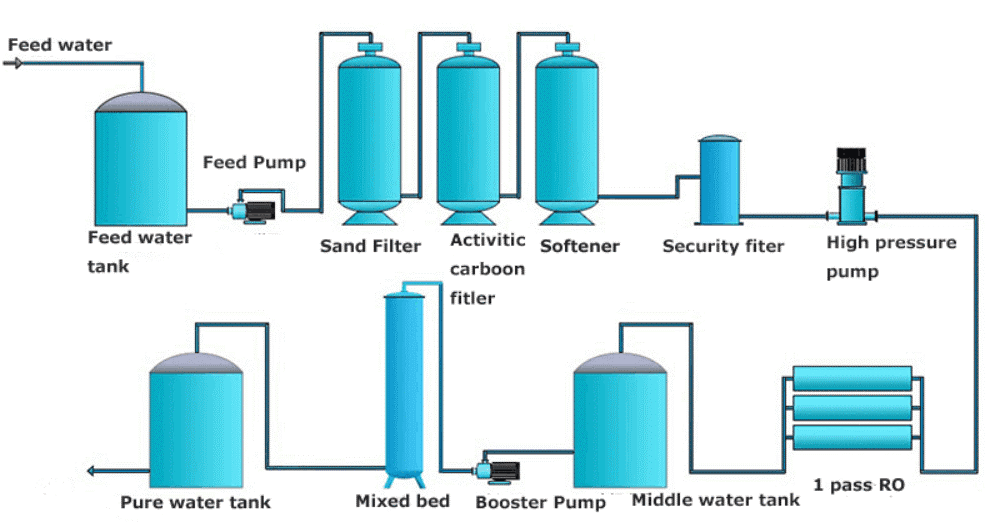
11.DRDO Nanoporous Desalination Membrane (Desalination Tech)

DD News
Illustration for DRDO Nanoporous Desalination Membrane (Desalination Tech)

What & Where

Membrane: DRDO-DMSRDE high-pressure nanoporous multi-layer polymer sheet for seawater reverse-osmosis desalination.

Processes: Nanofiltration + reverse osmosis; field-tested on Indian Coast Guard Offshore Patrol Vessel.

Geography: Developed Kanpur (UP); intended for Indian maritime/coastal zones, scalable to civilian plants.

Quick Facts for MCQs

Tech & Schemes

  • Nanopores: Sub-100 nm pores yield efficient salt & impurity rejection.
  • Multilayer design: Sequential layers boost mechanical strength without external supports.
  • Fast-track R&D: Completed under internal DRDO Mission Mode, bypassing import dependence.

Environmental Impact

  • Lower energy demand reduces carbon footprint versus thermal desalination.
  • Durable membrane lessens replacement waste, curbing polymer disposal.
  • Potential brine management: Higher recovery rates shrink brine volume discharged.

Security Dimension

  • On-board fresh water generation extends patrol endurance for Coast Guard & Navy.
  • Indigenous tech cuts foreign sourcing risks during conflict or sanctions.
  • Dual-use potential supports island & border outpost self-sufficiency.

Key Data Points

FeatureData-Point
Developing agencyDMSRDE, DRDO, Kanpur
Partner userIndian Coast Guard
Build time8 months
Core materialPolymeric nano-porous multilayers
Pressure toleranceHigh-pressure marine environment
Anti-degradation traitResists chloride ion, high salinity
Field trialOPV sea trials + 500 h endurance test
ScalabilityPlug-and-play for civilian RO units
Key benefitLower energy, longer membrane life

Related UPSC Prelims PYQs

CAPF_GAI 2021PYQ 1

Scientists at CSIR-NCL Pune, with support from the Water Technology Initiative of the Department of Science and Technology (DST), Government of India, have recently developed a novel hybrid technology to bring safe and healthy drinking water. What is the name of the hybrid technology?

GS-3S&T

12.Bharat 6G Vision Roadmap (6G Roadmap)

PIB
Illustration for Bharat 6G Vision Roadmap (6G Roadmap)

What & Where

Bharat 6G Vision: India’s roadmap for sixth-generation telecom, launched 2023, targeting global leadership by 2030.

Process: 9-year mission (2022-31) covering R&D, field trials, standards contribution; uses THz & optical testbeds.

Geography: Pan-India deployment; aligns with ITU’s IMT-2030 for worldwide interoperability and sustainability.

Quick Facts for MCQs

Tech & Schemes

  • Phased-Mission: Early research, piloting, large-scale deployment mapped to 2025, 2027, 2030 checkpoints.
  • Testbeds: Facilitate device-level THz experiments and long-haul optical backhaul innovations within India.
  • Green-Networks: Emphasis on energy-efficient protocols and hardware to cut telecom carbon footprint.

Capacity Building

  • Academia: 100 state-funded 5G labs groom researchers for 6G tasks and indigenous IPR.
  • Start-ups: Alliance mentors early-stage firms on chips, antennas, security layers.
  • Skill-Pipeline: Curriculum revamp towards AI-defined radios, spectrum-sharing, quantum-safe encryption.

International Alignment

  • ITU Role: India co-drafted IMT-2030 requirements and usage scenarios.
  • Global Standards: Planned submission of indigenous waveforms and security suites by 2026.
  • Interoperability: Vision stresses open RAN, harmonised spectrum bands for seamless cross-border roaming.

Key Data Points

FeatureData-Point
Vision launch2023
Mission span2022 – 2031
Target leadership year2030
5G base stations (Apr 2024)4.35 lakh
5G labs sanctioned FY 24100
Core testbedsTHz & Advanced Optical
National platformBharat 6G Alliance
Peak 6G speed aim1 Tbps
Latency ambition100 µs
ITU codenameIMT 2030
International eventBharat 6G 2025 Conference
Guiding principlesAffordability, Sustainability, Ubiquity

Related UPSC Prelims PYQs

ESE_GS 2026PYQ 1

The Samriddh Gram Phygital Services Pilot Project was recently launched by which organization?

ESE_GS 2024PYQ 2

Which Union Ministry announced '5G & Beyond Hackathon 2023' aimed at shortlisting India-focused cutting-edge ideas workable beyond products and solutions?

GS-2Misc

13.International Atomic Energy Agency Overview (Nuclear Watchdog)

TN

What & Where

International Atomic Energy Agency (IAEA) — UN-linked watchdog for safe, secure, peaceful nuclear technology.

HQ Vienna, Austria; Statute signed 23 Oct 1956, in force 29 Jul 1957.

Global remit; 178 member states (2025); reports to UNGA & UNSC.

Quick Facts for MCQs

Mandate & Safeguards

  • Verification; inspects facilities, tracks nuclear material to block weapon diversion.
  • Safety standards; issues codes on reactors, waste, transport, security.
  • Technical cooperation; funds training, equipment for energy, health, agriculture R&D.

Emergency Response

  • IEC; 24×7 hub for nuclear-radiological incident coordination and information.
  • Clarification; swiftly denied Kirana Hills leak rumours after Operation Sindoor media reports.
  • Assistance missions; deploys experts, dosimeters, lab analysis when member states request.

Historical Context

  • 1953 Eisenhower “Atoms for Peace” speech spurred agency creation.
  • Mandate balances civilian nuclear promotion with non-proliferation oversight.
  • Safeguards framework later embedded in 1970 Nuclear Non-Proliferation Treaty.

Key Data Points

FeatureData-Point
HeadquartersVienna, Austria
Statute adopted23 Oct 1956
Came into force29 Jul 1957
Current members178 (2025)
UN reportingGeneral Assembly & Security Council
Popular moniker“Atoms for Peace and Development”
Emergency armIncident and Emergency Centre (IEC)
Latest clarificationNo radiation leak at Kirana Hills, Pakistan

Related UPSC Prelims PYQs

GS1 2018PYQ 1

भारत के सन्दर्भ में ‘अंतर्राष्ट्रीय परमाणु ऊर्जा एजेंसी (IAEA)’ के अतिरिक्त प्रोटोकॉल (Additional Protocol) का अनुमोदन करने का निहितार्थ क्या है?

GS1 2017PYQ 2

Consider the following statements:

GS-3Security

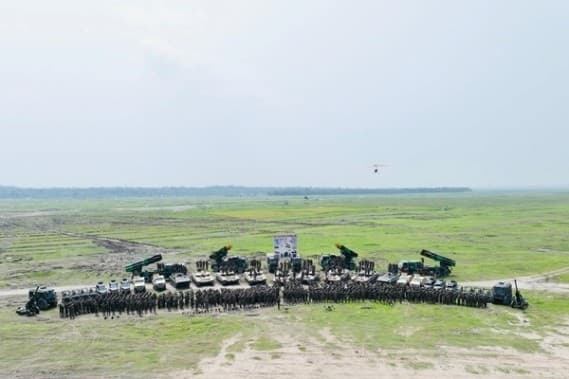
14.Exercise Teesta Prahar (Army Field Exercise)

IT
Illustration for Exercise Teesta Prahar (Army Field Exercise)

What & Where

Definition: large-scale Indian Army field exercise simulating combat in riverine + all-terrain zones

Location: Teesta Field Firing Range, North Bengal, West Bengal

Conducted by Trishakti Corps, Eastern Command with multi-arm, tech-enabled joint warfare drills

Quick Facts for MCQs

Operational Objectives

  • Validation: seamless inter-arm coordination and interoperability
  • Readiness: rapid mobilisation and quick-response manoeuvres under real-time pressure
  • Simulation: hybrid, high-tech warfare scenarios for future conflicts

Force Composition

  • Integration: infantry, armour, artillery with aviation, engineers, signals in single battle group
  • SpecialOps: Para SF executed precision tasks amid river obstacles
  • Jointness: reinforces Army–Air Force synergy demonstrated during Operation Sindoor

Technology Edge

  • Deployment: drones, smart munitions, secure SDR radios for networked battlefield awareness
  • C4ISR: real-time targeting through integrated command, control, comms, computers, intelligence, surveillance, recon
  • Mobility: assault boats, modular bridges enabling swift river crossings

Key Data Points

FeatureData-Point
NameExercise Teesta Prahar
Conducting formationTrishakti Corps, Eastern Command
VenueTeesta Field Firing Range, West Bengal
Terrain focusRiverine and diverse all-terrain
Branches involvedInf, Mech Inf, Armour, Artillery, Aviation, Para SF, Engineers, Signals
Core aimValidate jointness, rapid mobilisation, tech integration
Key capabilityNext-gen surveillance, comms, weapon systems
Recent linkageFollows Army-Air Force strike Operation Sindoor

Related UPSC Prelims PYQs

CDS_GK, GS1 2024PYQ 1

Which of the following statements about 'Exercise Mitra Shakti-2023' are correct?

CDS_GK, GS1 2023PYQ 2

The 16th edition of Indo-Nepal annual joint training exercise in jungle warfare and counter-terrorism operations was held in December 2022 at Nepal Army Battle School, Saljhandi. What is the name of this exercise?

GS-1Misc

15.Sample Registration System Report 2021 (Demographic Indicators)

The Hindu
Illustration for Sample Registration System Report 2021 (Demographic Indicators)

What & Where

System: Dual survey of births & deaths run by Registrar General of India since 1970

Purpose: Provides annual fertility, mortality, sex-ratio estimates for policy and SDG tracking

Coverage: SRS Statistical Report 2021 spans all States/UTs, rural-urban samples

Quick Facts for MCQs

Demographic Trends

  • Fertility: National TFR 2.0 below replacement; Delhi, Kerala, WB 1.4-1.5
  • BirthRate: CBR declined 0.2 points in 2021 continuing steady fall
  • GenderBalance: Sex ratio at birth climbed from 899 (2014) to 913

Maternal & Child Health

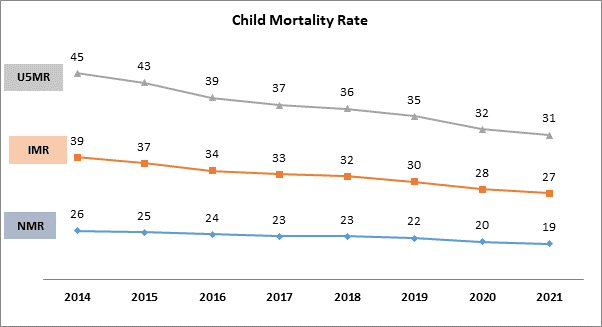
  • InfantMortality: IMR dropped 7 points since 2016 to 27
  • UnderFive: U5MR at 31; eight states met SDG targets
  • NeonatalCare: NMR now 19; medical attended deliveries 91.1 %

Regional Disparities

  • HighFertility: Bihar TFR 3.0; decline <1 % yearly in Bihar, UP, Rajasthan
  • ChildDeaths: MP IMR 41 vs Kerala 6 showing wide gap
  • UrbanRural: TFR 2.2 rural against 1.6 urban indicates service inequity

Policy & Way Forward

  • TargetedPrograms: Intensify family planning, behaviour change in high-TFR states
  • RuralHealth: Expand skilled workforce, infrastructure to cut rural IMR & MMR
  • DigitalMonitoring: Deploy AI dashboards for real-time maternal-child tracking

Key Data Points

FeatureData-Point
CBR (India)19.3/1000 (2021)
Lowest CBR stateKerala 12.9
Highest CBR stateBihar 25.6
CDR (India)7.5/1000
IMR (India)27/1000 live births
Best IMR stateKerala 6
Worst IMR stateMadhya Pradesh 41
TFR (India)2.0
Sex ratio at birth913 females/1000 males
Medical attention at delivery91.1 %

Related UPSC Prelims PYQs

CDS_GK, GS1 2024PYQ 1

किसी अर्थव्यवस्था में कुल जन्म दर को किस रूप में परिभाषित किया जाता है ?

CDS_GK, GS1 2022PYQ 2

Infant mortality ratio of which one of the following countries is comparable to that of India ?

GS-1Misc

16.Global Internal Displacement Report 2025 (Internal Displacement)

Down to Earth

What & Where

Internal displacement = forced movement within national borders by conflict, disasters, climate change (IDMC definition).

Climate refugees = people compelled to migrate as rising seas, extreme weather, desertification or water stress make homes unviable.

2024 saw record 45.8 m displacements; India led with 5.4 m, two-thirds flood-driven.

Quick Facts for MCQs

Drivers

  • Extreme-weather—storms, floods, wildfires caused 32.6 m moves in 2022, escalating through 2024.
  • Sea-level—Bangladesh projections 2-110 m potential displaced.
  • Desertification—sub-Saharan, MENA, India land loss forcing pastoralist migration.

India Snapshot

  • Floods—primary trigger of highest 12-year displacement spike.
  • Conflict—Manipur centre of 1 k out of 1.7 k violence moves.
  • Trend—places India among top global displacement hotspots.

Legal & Policy

  • Exclusion—1951 Refugee Convention omits climate; non-refoulement not assured.
  • Regional cover—OAU 1969 & Cartagena 1984 accept “events disturbing public order”.
  • Finance—Loss & Damage Fund operational 2025; Green Climate Fund focuses on mitigation, not relocation.

Consequences

  • Humanitarian—food, water, health shortages in temporary shelters.
  • Urban-strain—swift inflows overload housing, sanitation, jobs.
  • Security—resource contests heighten unrest in fragile regions.

Key Data Points

FeatureData-Point
IDMC Global Report year2025
Global internal displacements 202445.8 million (highest since 2008)
Displacements linked to climate weather99.5 % of disaster total
Conflict-related moves20.1 million, mainly climate-vulnerable states
Indian displacements 20245.4 million
Share of Indian flood moves≈ 66 %
Violence moves in India1,700; Manipur ≈ 1,000
Land degradation India 2015-194.42 % → 9.45 % (30.51 m ha)

Related UPSC Prelims PYQs

CDS_GK, GEO_GS 2020PYQ 1

According to the Global Climate Risk Index 2020, published by environmental think tank Germanwatch, in the year 2018 India’s rank in the list of top most climate affected nations is:

CDS_GK, GEO_GS 2020PYQ 2

2011 की जनगणना के अनुसार, भारत में ऐसे लोग, जिन्हें प्रवासी (आंतरिक) माना जा सकता है अर्थात् जो अपने पिछले निवास से हट कर किसी अन्य स्थान पर बस गए हैं, की प्रतिशतता (लगभग) कितनी है?

Ready to practice?

Test your knowledge with our UPSC test series.

Start Free Trial