UPSC Current Affairs

18 topicsGS-1: 4GS-2: 3GS-3: 11
0/18 done
GS-3Economy

1.India Data Centre Expansion Prospects (Data Centre Industry)

LiveMint
Illustration for India Data Centre Expansion Prospects (Data Centre Industry)

What & Where

Definition: Purpose-built facilities housing servers, storage, networking, power backup and cooling to manage massive digital data

Key elements: UPS + generators, HVAC/liquid cooling, routers/switches, cyber-physical security, scalable racks for cloud/AI workloads

Core geography: >50 % capacity in Mumbai; rising clusters Ahmedabad–Pune–Vizag; roughly 150 centres across India

Quick Facts for MCQs

Growth Drivers

  • Digitalisation: mobile internet surge, cloud adoption, AI workloads demanding proximate processing
  • 5G & IoT: expected to triple data consumption hence edge-heavy infrastructure
  • Data-local laws: Public Records Act 1993 and DPDP Act 2023 boosting domestic storage need

Economic Angle

  • Capacity doubling by FY27 could unlock ₹50,000 crore economic activity
  • Sector fuels jobs across construction, power, cooling, cybersecurity
  • Attracts FDI from AWS, Microsoft, Google, CtrlS, Sify, Yotta

Challenges

  • Infrastructure: patchy power, high land & cooling capex outside metros
  • Skills: shortage of specialised engineers in operations, sustainability, security
  • Competition: China’s larger, cheaper hyperscale parks lure global workloads

Policy & Schemes

  • Digital India 2015 expanded broadband backbone supporting data-centre demand
  • States like Maharashtra 2023 IT/ITES Policy offer stamp-duty, power-tariff incentives
  • NIC operates National Data Centres for e-governance workloads

Environmental Impact

  • Energy intensity raises carbon footprint; renewables adoption critical
  • Efficient HVAC, liquid cooling and heat-reuse gaining investor preference
  • Regulatory push for green power purchase agreements in upcoming parks

Key Data Points

FeatureData-Point
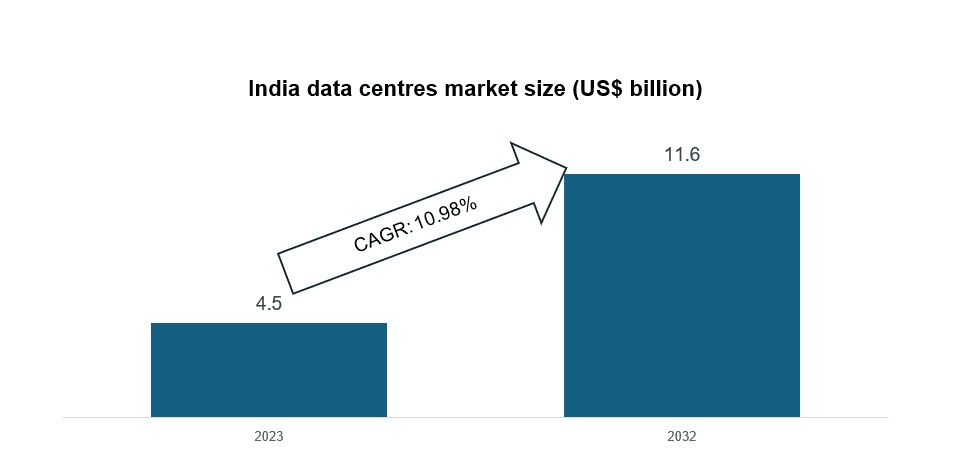
Market size FY23USD 4.5 billion
Projected size 2032USD 11.6 billion
CAGR 2023-3210.98 %
India share global data20 % produced vs 3 % capacity
Internet users 2024751.5 million (52.4 % penetration)
RBI data-local rule2018 mandate for payment data storage in India
Infra status threshold>5 MW IT load gets infrastructure tag
Estimated capex FY25-27₹55,000–65,000 crore
First hyperscaleYotta D1, Greater Noida, UP
Key metro shareMumbai hosts >50 % capacity

Related UPSC Prelims PYQs

GS1 2019PYQ 1

Consider the following statements:
GS-3EconomyQuick Bite

2.Index of Eight Core Industries Update (Core Industries Index)

PIB

What & Where

Index of Eight Core Industries (ICI) tracks output of 8 key sectors within India’s industrial economy

Released monthly by Office of Economic Adviser, Ministry of Commerce & Industry

ICI influences overall Index of Industrial Production (IIP) due to 40.27 % combined weight

Quick Facts for MCQs

Composition & Weights

  • Constituents: Coal, Crude Oil, Natural Gas, Refinery Products, Fertilizers, Steel, Cement, Electricity
  • Weight ranking: Refinery Products > Electricity > Steel > Coal > Crude Oil > Natural Gas > Cement > Fertilizers
  • Weight shares fixed using 2011-12 IIP series

Institutional Setup

  • Compilation: Office of Economic Adviser prepares ICI; Central Statistical Office compiles IIP
  • Both indices part of National Statistical System ensuring monthly industrial monitoring
  • Ministries & PSUs supply sector-wise production data to OEA/CSO

Economic Angle

  • Positive 4.3 % core growth signals underlying industrial momentum before full IIP release
  • High weights make energy-related sectors critical for aggregate industrial cycles
  • Policymakers track ICI for quick infra & demand assessment prior to GDP estimates

Key Data Points

FeatureData-Point
YoY growth, Nov 20244.3 %
Combined ICI weight in IIP40.27 %
Publishing authorityOffice of Economic Adviser
Parent ministryCommerce & Industry
Release frequencyMonthly
Base year, IIP2011-12
Data lag, IIP6 weeks
Largest-weight core industryRefinery Products – 28.04 %
Next two weightsElectricity 19.85 %; Steel 17.92 %
Lowest-weight core industryFertilizers 2.63 %

Related UPSC Prelims PYQs

GS1 2012PYQ 1

In India, in the overall Index of Industrial Production, the Indices of Eight Core Industries have a combined weight of 37·90%. Which of the following are among those Eight Core Industries?

GS1 2015PYQ 2

In the ‘Index of Eight Core Industries’, which one of the following is given the highest weight?

GS-1History

3.Leader Memorial Practices in India (Leader Memorial Traditions)

The Hindu

What & Where

Memorial samadhis: post-cremation sites for top leaders, clustered on Yamuna riverfront, Delhi.

Custom started with Raj Ghat (Gandhi, 1948); no legal compulsion for later Prime Ministers.

2025 break: Manmohan Singh cremated at public Nigambodh Ghat; no separate memorial announced.

Quick Facts for MCQs

Tradition & Symbols

  • Naming conveys ideals: Vijay Ghat (victory), Shakti Sthal (strength), Kisan Ghat (farmer leadership).
  • Samadhis serve as public memory spaces reinforcing national unity narratives.
  • Open public access generally maintained, unlike restricted VIP enclosures.

Political Angle

  • Memorial decisions often politicised; Rao’s Gyan Bhumi cleared by NDA after Congress hesitation.
  • V. P. Singh’s absence shows discretionary, party-linked nature of recognitions.
  • Choice of open cremation for Manmohan Singh signals shift from personality cults.

Governance & Maintenance

  • No statutory mandate; Cabinet Secretariat issues funeral protocol only.
  • Land/allocation under Delhi Development Authority; maintenance via Delhi Govt & NDMC, occasional Central grants.
  • Costs, landscaping, security borne by respective state/local bodies.

Geographical Spread

  • Outside-Delhi samadhis: Rajendra Prasad (Patna), B. R. Ambedkar (Mumbai), Morarji Desai & Gulzarilal Nanda (Ahmedabad).
  • Highlights decentralised remembrance beyond capital-centric model.
  • Regional pride influences memorial siting and funding.

Key Data Points

FeatureData-Point
Precedent memorialRaj Ghat (Mahatma Gandhi)
Nehru samadhiShanti Van
Shastri samadhiVijay Ghat
Indira Gandhi samadhiShakti Sthal
Atal Bihari Vajpayee samadhiSmriti Sthal
Charan Singh samadhiKisan Ghat
Only ex-PM without memorialV. P. Singh
P. V. Narasimha Rao memorialGyan Bhumi, built by NDA
2025 cremation siteNigambodh Ghat, Delhi
Primary upkeep agenciesState govts/municipalities; MoUD support
GS-1S&T

4.India Meteorological Department Functions (Meteorological Agency)

The Hindu

What & Where

National weather service of India under Ministry of Earth Sciences; HQ New Delhi.

Operates nationwide weather observation, forecasting, climate research for land and adjoining seas.

Created 1875 after 1864 Calcutta cyclone and monsoon failures of 1866 & 1871.

Quick Facts for MCQs

History & Evolution

  • Origins: scattered provincial observatories consolidated into central authority in 1875.
  • Timeline: eighteenth-century setups → 1793 Madras Observatory → national IMD.
  • Continuity: nearly 150 years of uninterrupted weather services.

Core Functions

  • Weather-forecasting: short, medium, long-range outlooks supporting farming and disaster management.
  • Cyclone-warning: dedicated division issues track, intensity, landfall alerts.
  • Sectoral-services: supplies customised data to aviation, marine, fisheries, hydrology.

Infrastructure & Network

  • Network: regional/state centres, upper-air sites, Doppler radars, satellites, >700 surface stations.
  • Data-collection: real-time temperature, pressure, wind, rainfall across diverse terrains.
  • Technology: numerical weather prediction models improve spatial–temporal accuracy.

Climate Research

  • Focus: monsoon variability, extreme events, climate-change impacts on India.
  • Outputs: annual Climate Summary, peer-reviewed studies guiding adaptation policy.
  • Collaboration: partners with national institutes & WMO for datasets, capacity building.

Key Data Points

FeatureData-Point
Parent ministryMinistry of Earth Sciences
Establishment year1875
HeadquartersNew Delhi
Historical triggers1864 Calcutta cyclone; monsoon failures 1866 & 1871
Earliest observatoryMadras Observatory 1793
Field observatories700 +
Key warning focusCyclones over Indian Ocean
Major user sectorsAgriculture, aviation, shipping, fisheries, floods

Related UPSC Prelims PYQs

NDA_GAT 2020PYQ 1

Which one of the following is the oldest scientific department of Government of India?

NDA_GAT 2025PYQ 2

Which one of the following organisations has completed 150 years of service to the nation in the year 2025?

GS-1Mapping

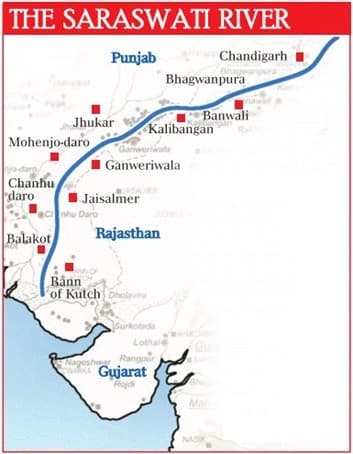
5.Saraswati River Course and Legacy (Ancient River)

Times of India
Illustration for Saraswati River Course and Legacy (Ancient River)

What & Where

Saraswati; ancient, now-vanished Himalayan river, culturally venerated, debated paleo-channel across northwest India.

Possible present course; Ghaggar-Hakra system from Shivalik Hills through Punjab-Haryana-Rajasthan, ending in Thar Desert.

Recent Jaisalmer tube-well water-gas eruption revives hypothesis of subterranean Saraswati flow under Thar.

Quick Facts for MCQs

Historical Significance

  • Rigvedic texts extol Saraswati as “perfect mother” goddess central to Vedic rituals.
  • Archaeology finds ~2/3 Harappan sites along presumed Saraswati paleo-channel.
  • River decline posited as trigger for Harappan eastward migration.

Geological Aspects

  • Tectonic shifts and aridity cited for channel abandonment post-2000 BCE.
  • Groundwater-gas upsurge in Thar hints at trapped palaeofluvial aquifers.
  • Remote sensing traces buried channels aligning with Ghaggar-Hakra course.

River System Linkages

  • Ghaggar becomes Hakra downstream Ottu barrage, indicating man-made interruption.
  • Seasonal flows suggest lost glacial feeders formerly from Sutlej & Yamuna deflection.
  • Proposed interlinking projects aim to rejuvenate Ghaggar-Saraswati channel for irrigation.

Key Data Points

FeatureData-Point
Mythic mentionRigveda Nadistuti Sukta
Civilisation linkedHarappan settlements densely along banks
Original sourceKapal Tirith, Himalayas near Kailash
Early southward flowTowards Lake Mansarovar
Alternate nameGuptagamini (hidden course)
Modern remnantGhaggar-Hakra River
Ghaggar originShivalik Hills, Himachal Pradesh
Transiting statesHaryana, Rajasthan, Gujarat
Hakra end-pointDries in Thar Desert after Ottu barrage
Recent field eventWater-methane burst during tube-well drilling, Jaisalmer

Related UPSC Prelims PYQs

CDS_GK, GS1 1996PYQ 1

The river most mentioned in early Vedic literature is

CDS_GK, GS1 2022PYQ 2

प्राचीन वैदिक काल में निम्नलिखित में से किस नदी के तट पर दस राज युद्ध हुआ था ?

GS-3Environment

6.Waste Incineration Process and Benefits (Waste Disposal)

The Hindu
Illustration for Waste Incineration Process and Benefits (Waste Disposal)

What & Where

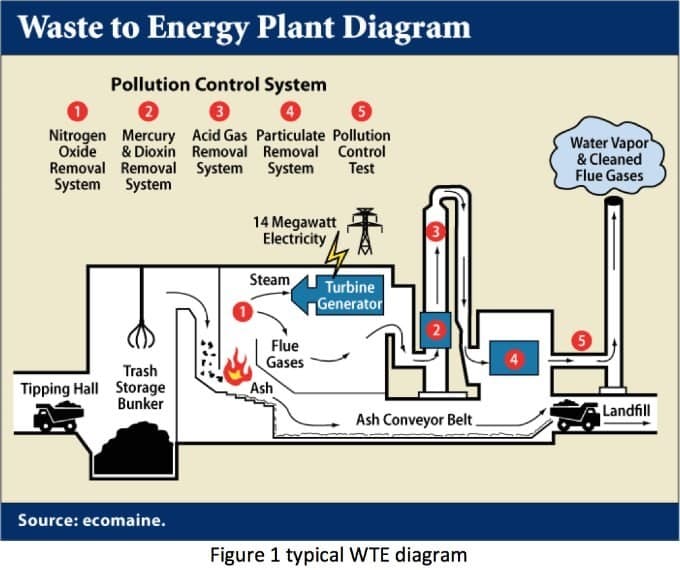
Incineration = controlled high-temperature combustion to shrink volume, destroy toxins, recover energy

337 t chemical waste from 1984 Bhopal disaster being trucked to Pithampur, Madhya Pradesh

Complete burn planned inside 3–9 months at Common Hazardous Waste Incinerator

Quick Facts for MCQs

Tech & Process

  • Combustion: waste oxidised above 850 °C for toxin destruction
  • Energy-recovery: heat → steam → turbine electricity
  • Residue-handling: bottom ash reused/landfilled; fly ash chemically stabilised

Advantages

  • Volume-reduction: landfill demand curtailed in dense zones
  • Hazard-neutralization: dioxins precursors destroyed when plant maintained properly
  • Resource-recovery: by-products converted to paving bricks, activated carbon

Limitations & Risks

  • Emission-threat: dioxins, furans if combustion incomplete
  • Cost-intensity: advanced plants need high capital, O&M outlays
  • Moisture-penalty: Indian wet waste lowers calorific efficiency

Key Data Points

FeatureData-Point
Waste quantity337 tonnes
Origin siteBhopal gas tragedy (1984)
Disposal sitePithampur industrial area, MP
Furnace temperature> 850 °C
Planned timeframe3–9 months
Energy outputSteam-driven electricity generation
Emission controlsScrubbers, bag-house filters

Related UPSC Prelims PYQs

ESE_GS 2020PYQ 1

Which one of the following is a hygienic way of disposing solid waste and is more suitable if the waste contains more hazardous material and organic content?

GS-3Environment

7.Global Environment Summits 2024 (Climate Summits 2024)

The Hindu
Illustration for Global Environment Summits 2024 (Climate Summits 2024)

What & Where

2024 UN environment summits tackled biodiversity, climate, land degradation, plastic pollution under Rio-Convention/INC tracks.

Hosted across Colombia, Azerbaijan, Saudi Arabia, South Korea; sought finance, fossil exit, drought protocol, plastic treaty.

None produced binding, adequately funded agreements, exposing North-South divides and implementation gaps.

Quick Facts for MCQs

2024 Summit Outcomes

  • Biodiversity: Financing mechanism unfinished; $700 bn gap persists.
  • UNFCCC: Insufficient pledges, fossil phase-out language contested.
  • UNCCD & INC: Drought protocol, plastics reduction language blocked.

Failure Drivers

  • Divergent-Priorities: Developing states seek finance/tech; developed cite domestic constraints.
  • Economic-Pressures: Inflation, wars, post-COVID recovery diverted budgets.
  • Accountability-Deficit: No agreed tracking or enforcement frameworks.

Youth Climate Advocacy

  • Litigation: Cases in US, Netherlands, Germany, Canada compel stronger targets.
  • Rights-Based: Argue climate inaction violates life, health, equality, intergenerational equity.
  • Momentum: Court wins amplify youth role in negotiations and media.

Forward Actions

  • Finance-Honour: Developed nations must deliver promised climate, biodiversity, adaptation funds.
  • Integrated-Approach: Tackle biodiversity loss, land, pollution alongside emission cuts with measurable milestones.

Key Data Points

FeatureData-Point
Biodiversity finance targetUS $700 billion annually
Biodiversity summit venueColombia
Climate COP-29 hostAzerbaijan
Key COP-29 clashFossil-fuel transition wording & finance
UNCCD COP-16 hostSaudi Arabia
Drought protocol statusNo legal consensus
Plastic INC round venueSouth Korea
Plastic debate fault-lineReduction v/s recycling economies
Landmark US youth caseHeld v. Montana
German climate verdict year2021 Federal-Court youth win

Related UPSC Prelims PYQs

GEO_GS, GS1 2026PYQ 1

The United Nations Framework Convention on Climate Change (UNFCCC) was first signed during

GEO_GS, GS1 2018PYQ 2

The Partnership for Action on Green Economy (PAGE), a UN mechanism to assist countries' transition towards greener and more inclusive economies, emerged at

GS-3Environment

8.CGWB Groundwater Contamination 2023 Findings (Groundwater Nitrate Pollution)

The Hindu
Illustration for CGWB Groundwater Contamination 2023 Findings (Groundwater Nitrate Pollution)

What & Where

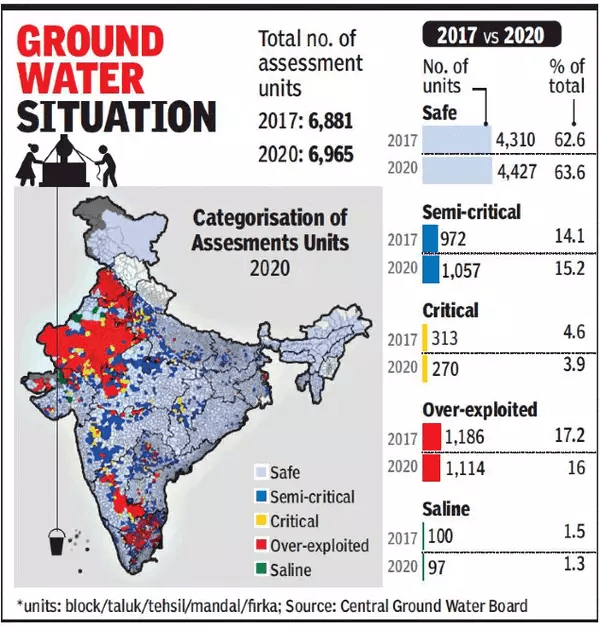
Groundwater nitrate contamination >45 mg/L flagged by CGWB 2023, indicating rising chemical pollution of aquifers

Process involves leaching of nitrogenous fertilizers, septic effluents and runoff, with concentrations peaking post-monsoon

Geography spans 440 districts; hotspots include Rajasthan, Karnataka, Tamil Nadu, and spreading across central-southern India

Quick Facts for MCQs

Health Impact

  • Methemoglobinemia: high nitrate causes blue baby syndrome in infants
  • Fluorosis: chronic fluoride ingestion deforms bones and teeth
  • Treatment: contamination elevates community water-treatment costs

Regional Trends

  • Expansion: 81 new districts joined contamination list since 2017
  • Seasonality: monsoon runoff pushes nitrate exceedance to 32.66 % samples
  • Quantity-quality paradox: 73 % blocks safe for volume yet quality deteriorates

Sources

  • Agriculture: excess urea, pesticides seep into aquifers
  • Waste: leaking septic tanks, landfills, hazardous sites introduce chemicals
  • Deforestation: reduced soil filtration intensifies pollutant recharge

Schemes & Initiatives

  • NAQUIM: nationwide aquifer mapping and recharge planning
  • ABHY: ₹6000 cr participatory groundwater management in seven states
  • Jal Shakti Abhiyan Catch the Rain drives rooftop harvesting and recharge pits

Key Data Points

FeatureData-Point
Districts above safe nitrate 2017359
Districts above safe nitrate 2023440
Share of Indian districts unsafe56 %
Safe limit nitrate (BIS)45 mg L⁻¹
Highest state shareRajasthan 49 %
Post-monsoon samples exceeding32.66 %
National groundwater extraction60.4 % of availability
Blocks in safe category 202373 %
Fluoride hotspot statesRJ, HR, KA, AP, TS
Uranium exceedance zonesOver-exploited areas of RJ, PB, HR, GJ, TN, AP, KA

Related UPSC Prelims PYQs

ESE_GS, GS1 2025PYQ 1

Nitrate when present in excess in drinking water causes

ESE_GS, GS1 2020PYQ 2

Consider the following statements:
GS-3Environment

9.India Renewable Energy Expansion Strategy (Renewable Energy Targets)

LiveMint

What & Where

Renewable energy: power from replenishable natural flows; solar, wind, hydro, biomass, geothermal, tidal

Key processes: sunlight-photovoltaic/thermal, wind-turbine, water-turbine, biomass-cogeneration

Core Indian belts: Solar-Rajasthan / Gujarat / Tamil Nadu; Onshore wind-Tamil Nadu / Gujarat / Karnataka; Offshore prospects-Gujarat coast

Quick Facts for MCQs

Capacity & Potential

  • Solar leadership 94 GW; wind second 48 GW; plan to double wind to 100 GW
  • Solar potential 748 GW with 3 % wasteland; wind potential >300 GW including offshore margins
  • Hydro potential 148 GW total; small hydro 20 GW Himalayan and Northeast

Challenges

  • Land scarcity; fragmented ownership Gujarat / Maharashtra / Tamil Nadu complicates aggregation
  • Grid curtailment during peak wind seasons; supply variability hampers revenues
  • Capital intensive projects with long payback; policy inconsistencies deter private investment

Schemes & Policy Tools

  • Flagship programmes PM-KUSUM, Suryodaya, Solar Parks, Green Energy Corridor, PLI for modules
  • 100 % FDI automatic route in renewables attracts capital
  • National Green Hydrogen Mission and Bioenergy Programme expand downstream demand

Way Forward

  • Transparent digital land banks; promote agrivoltaics dual use
  • Accelerate transmission, hybrid projects and storage for smooth dispatch
  • Pilot offshore wind with fiscal incentives; create green banks for affordable finance

Key Data Points

FeatureData-Point
Total RE installed (Nov 2024)158.55 GW
Solar installed94.17 GW
Wind installed47.96 GW
Wind addition FY 24-252.07 GW
Small hydro installed5.08 GW
Biomass installed10.72 GW
Waste-to-Energy installed0.61 GW
2030 non-fossil target500 GW
Estimated solar potential748 GW
Estimated onshore + offshore wind potential>300 GW

Related UPSC Prelims PYQs

GEO_GS, GS1 2026PYQ 1

India's installed solar capacity in 2025 is close to

GEO_GS, GS1 2022PYQ 2

निम्नलिखित कथनों पर विचार कीजिए :

GS-3S&T

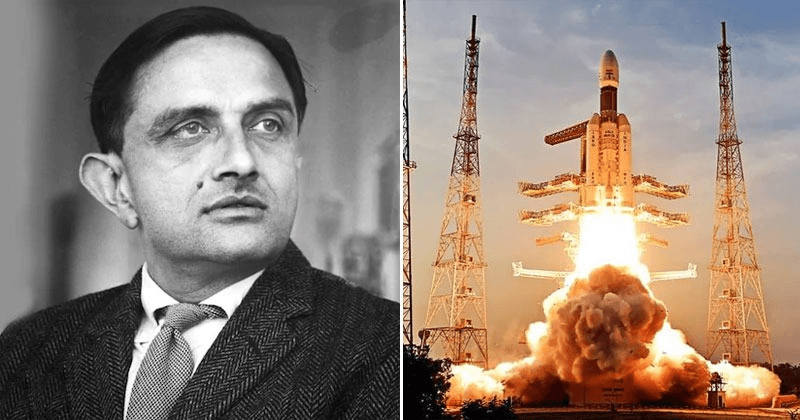
10.Vikram Sarabhai Contributions to Indian Space (Space Pioneer)

Indian Express
Illustration for Vikram Sarabhai Contributions to Indian Space (Space Pioneer)

What & Where

Pioneer; launched modern Indian space & nuclear research; death anniversary marked every 30 December

Core geography: Ahmedabad upbringing & labs; principal centres at PRL-Ahmedabad, VSSC-Thiruvananthapuram

Key processes: cosmic-ray studies, satellite applications for education, institution-building for self-reliant S&T

Quick Facts for MCQs

Early Life & Education

  • Mentored by CV Raman at IISc during WWII return
  • Built working train-engine model at 15, displayed at Ahmedabad CSC
  • Completed Natural Sciences Tripos, St John’s College Cambridge 1940

Institution Building

  • Founded PRL, VSSC, Space Applications Centre, Community Science Centre, Darpan Academy
  • Catalysed establishment of IIM-Ahmedabad; promoted modern management education
  • Led creation of ECIL Hyderabad & UCIL Jaduguda for electronics & uranium supply

Space & Nuclear Programmes

  • Laid organisational groundwork for ISRO post-INCOSPAR era
  • Championed SITE beaming lessons to 2,400 rural villages; precedent for Krishi Darshan
  • Chaired Atomic Energy Commission after Homi Bhabha, integrated peaceful nuclear research

Awards & Positions

  • Won Shanti Swarup Bhatnagar Award 1962; youngest recipient then
  • Presided Physics Section, Indian Science Congress 1962; IAEA General Conference Vienna 1970
  • Vice-President, 4th UN Conference on Peaceful Uses of Atomic Energy 1971

Key Data Points

FeatureData-Point
Birth12 Aug 1919, Ahmedabad
PhD topicCosmic rays, Cambridge 1947
First lab foundedPhysical Research Laboratory, 1947
ISRO ethos“Space technology for societal good”
SITE years1975-76 pilot with NASA
First Indian satelliteAryabhata, launched 1975 (conceptualised by him)
Key management schoolCo-founded IIM-Ahmedabad
Major PSU rolesSet up ECIL & UCIL
Top civilian honoursPadma Bhushan 1966; Padma Vibhushan 1972 (posthumous)
Nickname by A P J Kalam“Mahatma Gandhi of Indian Science”
Lunar tributeSarabhai crater on Moon
GS-3S&T

11.World Malaria Report 2024 India Progress (Malaria Elimination)

PIB

What & Where

Disease; Plasmodium infection spread by female Anopheles mosquitoes

Species; Five human parasites, P. falciparum & P. vivax most dangerous

Geography; Tropical–sub-tropical belt, WHO-African Region holds 94 % 2023 cases

Quick Facts for MCQs

Global Burden

  • Numbers; 263 m cases, 5.97 lakh deaths 2023, deaths down from 6.22 lakh 2020
  • Concentration; Nigeria, DR Congo, Uganda, Ethiopia, Mozambique give ~52 % cases
  • Certification; Nine countries malaria-free since 2015, Egypt joined 2024

India Trend

  • Decline; 80 % case & 78 % death reduction 2015-23
  • Burden shift; High-burden states now Mizoram & Tripura; Ladakh, Lakshadweep, Puducherry at zero
  • Surveillance; ABER climbed to 11.62 enabling earlier diagnosis

Policy & Schemes

  • Framework; National Malaria Elimination 2016-30 fixes 2027 & 2030 milestones
  • Programs; NVBDCP, NMCP 1953, HBHI 2019 deploy IRS, LLINs, surveillance, treatment
  • Research; MERA-India under ICMR drives multi-partner studies

Vaccines

  • Products; RTS,S/AS01 & R21/Matrix-M rolled out in endemic zones
  • Mechanism; Target pre-erythrocytic P. falciparum stage, boost antibodies
  • Relevance; Complement nets, spraying, chemoprevention towards elimination goal

Key Data Points

FeatureData-Point
ReportWorld Malaria Report 2024
Global cases 2023263 million
Global deaths 20235,97,000
Africa share 202394 % cases / 95 % deaths
Biggest-burden countryNigeria 26 % global cases
Nations certified malaria-free 2015-249 (latest Egypt 2024)
India cases 2015 → 202311.7 lakh → 2.3 lakh
India deaths 202383
India exited HBHI group2024
Annual Blood Examination Rate 202311.62
Elimination targetsZero indigenous 2027; malaria-free 2030
WHO-approved vaccinesRTS,S / AS01 & R21 / Matrix-M

Related UPSC Prelims PYQs

CDS_GK, NDA_GAT 2021PYQ 1

Which one of the following countries has recently been awarded a malaria-free certification by the WHO?

CDS_GK, NDA_GAT 2019PYQ 2

Malaria is a widespread disease.

GS-3S&TQuick Bite

12.Birth of Commercial Internet 1983 (TCP/IP Adoption)

The Telegraph

What & Where

Event 1 Jan 1983: ARPANET shifts from NCP to TCP/IP, marking modern Internet’s birth

Network ARPANET: first public packet-switched system, Cold War project of US Defence

Geography USA-led innovation, later enabling worldwide inter-networking

Quick Facts for MCQs

Tech & Schemes

  • TCP/IP stack enables scalable, interoperable data exchange across heterogeneous networks
  • Shift created first true “network of networks,” basis for Web, email, e-commerce
  • Adoption mandatory for every ARPANET node on Flag Day

Security Dimension

  • Cold War context drove resilient, decentralised architecture to withstand nuclear strike disruptions
  • Packet switching and TCP/IP routing avoid single points of failure
  • Defence-origin technology later civilian-dominated

Innovation History

  • ARPANET 1969 launch, but NCP limitations surfaced by late 1970s
  • TCP/IP proposal issued 1974, field-tested mid-1970s on multiple networks
  • Transition success credited as seminal milestone in global communication evolution

Key Data Points

FeatureData-Point
Flag Day1 January 1983
Old protocolNetwork Control Protocol (NCP)
New protocolTransmission Control Protocol/Internet Protocol (TCP/IP)
Key developersVinton Cerf & Robert Kahn
Parent projectARPANET
Initiating bodyUS Department of Defense
Primary ARPANET aimCommunication survival during nuclear attacks
Network typePublic packet-switched computer network

Related UPSC Prelims PYQs

CDS_GK 2023PYQ 1

Which one of the following pairs of events and years is not correctly matched ?

GS-2Misc

13.Moldova Transnistria Gas Supply Crisis (Moldova-Transnistria Conflict)

BBC

What & Where

Ukraine halted Russian gas transit (Jan 2025) ending pre-war 2020-24 route to EU.

Moldova, landlocked between Romania (W) & Ukraine (E), faces winter energy crunch.

Transnistria, Russian-backed strip along Dniester River, de-facto separate from Moldova since 1992.

Quick Facts for MCQs

Energy & Transit

  • Disruption; EU loses one of last Russian pipeline corridors outside TurkStream & Nord Stream.
  • Moldova’s power plants depend ~100 % on Gazprom gas; winter heating jeopardised.
  • Alternative supply; Romania’s Interconnector Iasi-Ungheni offers limited back-flow capacity.

India Dimension

  • Embassy; Moldova’s first resident mission in South Asia targets trade, IT, pharma partnerships.
  • Bilateral; India extends e-Visa, supports agriculture R&D with Moldovan institutes.

Security & Geopolitics

  • Russian peacekeepers; ~1,500 troops guarantee Transnistrian autonomy, complicating EU integration talks.
  • Kyiv’s cutoff heightens Moscow–Chişinău tensions; potential pretext for increased Russian leverage.

Sovereignty & Recognition

  • No UN member recognises Transnistria; even Russia maintains de jure Moldovan borders.
  • 1992 cease-fire accord under OSCE oversight still frames negotiation format “5+2”.

Key Data Points

FeatureData-Point
Transit deal expiry31 Dec 2024
Cut routeRussia → EU via Ukraine
Crisis-hit areasMoldova, Transnistria
Moldova neighboursRomania (west), Ukraine (east)
Moldova embassy in IndiaOpened 2024, New Delhi
Indo-Moldova tiesFormal since 1992
Transnistria statusUnrecognised; viewed internationally as Moldova
Russian troops presentYes, since 1990s
Dominant citizenship in TransnistriaDual/triple (Russia, Transnistria, Moldova)
Descriptor of Transnistria“Remnant of the Soviet Union”
GS-2Misc

14.Quad Cooperation 20th Anniversary Highlights (Quad Strategic Dialogue)

Indian Express
Illustration for Quad Cooperation 20th Anniversary Highlights (Quad Strategic Dialogue)

What & Where

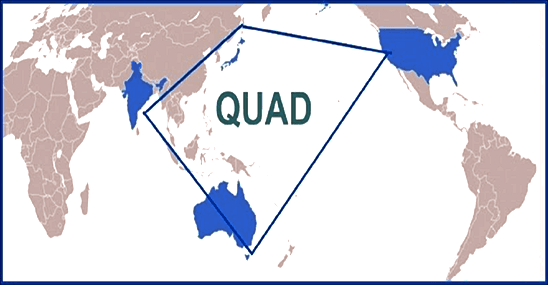
Quad; strategic forum of US-India-Japan-Australia for Indo-Pacific security

Aim; free, open, rule-based maritime order countering China’s assertiveness

Geography; Indian & Pacific Oceans with focus on South/East China Seas, IOR

Quick Facts for MCQs

Origins & Evolution

  • Tsunami Core Group 2004 became seed for Quadrilateral Security Dialogue
  • Formalised 2007, paused 2008 under Beijing pressure, revived 2017 Philippines
  • Leader summits since 2021 deepen agenda beyond security

Key Initiatives

  • IPMDA satellites share data on illegal fishing and grey-zone tactics
  • MAITRI builds coast-guard, law-enforcement capacity across Indo-Pacific
  • Quad Fellowship funds STEM post-grads; now open to ASEAN nationals

India Angle

  • MaritimeSecurity; complements SAGAR, counters “String of Pearls” encirclement
  • SupplyChain; SCRI, semiconductor network attract post-Covid manufacturing shifts
  • SoftPower; scholarships, cancer mission, AI-ENGAGE boost regional goodwill

Operational Gaps

  • Structure; absence of secretariat slows coordinated action and funding
  • DivergentPriorities; US-Japan security focus vs India-Australia development tilt
  • Overlap; ASEAN, AUKUS, IPEF duplication risks resource dilution

Key Data Points

FeatureData-Point
MembersIndia, USA, Japan, Australia
Formal structureNo treaty, no secretariat
Origin event2004 Indian Ocean tsunami relief
Term proposed2007 by Japan’s PM Shinzo Abe
Australian withdrawal2008; returned 2017 Manila meet
Flagship drillMalabar; Australia joined 2020
Core maritime toolIPMDA for real-time vessel tracking
Health projectQuad Cancer Moonshot on cervical cancer
Tech focusOpen RAN for secure 5G
2025 Quad meet in IndiaRegional Ports & Transportation Conference

Related UPSC Prelims PYQs

CAPF_GAI, GEO_GS 2024PYQ 1

Which one among the following statements with regard to India’s maritime initiative, SAGAR, is correct?

CAPF_GAI, GEO_GS 2025PYQ 2

Which one of the following countries hosted the QUAD Leaders' Summit in 2024?

GS-3S&T

15.Fighter Jet Generational Evolution (Fighter Jet Tech)

Indian Express

What & Where

Concept: “Generations” classify fighter jets by era-specific leaps in speed, stealth, avionics and weapons.

Types: 1st Gen ➜ 6th Gen; 5th Gen currently operational, 6th Gen prototypes under development.

Geography: 5th Gen in service only with USA, Russia, China; India developing AMCA for similar capability.

Quick Facts for MCQs

Tech & Schemes

  • 6th Gen envisages AI-assisted cockpit, optionally unmanned sortie capability, loyal wingman drones.
  • Hypersonic cruise, variable-cycle engines targeted for sustained Mach 5+ dash.
  • Directed-energy modules planned for missile defence and electronic attack roles.

International Examples

  • Tempest: UK-Italy-Japan joint 6th Gen; entry into service aimed ~2035.
  • NGAD: US Air Force Next-Generation Air Dominance; manned-unmanned family concept.
  • Baidi: Reported Chinese 6th Gen images circulating; official confirmation pending.

Security Dimension

  • Stealth race intensifying; 5th Gen provides low-observable first-strike edge.
  • Network-centric data fusion gives battlespace awareness, complicating adversary air-defence calculus.
  • Hypersonic plus AI may compress decision loops, elevating deterrence thresholds.

Indian Context

  • AMCA targets twin-engine, stealth, supercruise; first flight projected late 2020s.
  • DRDO collaborating with ADA, IAF; engine selection yet finalised.
  • Indigenous push aligns with Make-in-India, reducing import dependency.

Key Data Points

FeatureData-Point
1st Gen Era1943 – 1955
2nd Gen Era1955 – 1970
3rd Gen Key Add-onBeyond-visual-range combat
4th Gen HallmarksFly-by-wire, multi-role design
5th Gen Start2000 onwards
5th Gen JetsF-22, F-35, Su-57, J-20
5th Gen OperatorsUSA, Russia, China
India’s ProgrammeAMCA (design phase)
6th Gen StatusIn development; no operational jets
6th Gen Core TechHypersonic speed, AI, directed-energy weapons

Related UPSC Prelims PYQs

CAPF_GAI, GS1 2024PYQ 1

Consider the following aircraft:

CAPF_GAI, GS1 2022PYQ 2

निम्नलिखित कथनों पर विचार कीजिए :

GS-3Security

16.Defence Ministry Year of Reforms 2025 (Defense Reforms)

PIB

What & Where

Initiative: 2025 declared ‘Year of Reforms’ to modernise Indian Armed Forces.

Scope: Year-long MoD programme covering jointness, tech adoption, exports, veterans’ welfare.

Geography: Applies to all tri-services and defence industrial ecosystem across India.

Quick Facts for MCQs

Tech & Schemes

  • AI/Robotics focus: Drive autonomous systems, decision support, unmanned platforms.
  • Hypersonic push: Accelerate long-range, high-speed missile R&D.
  • Cyber-Space domain: Strengthen offensive & defensive capabilities for network-centric warfare.

Security Dimension

  • Integrated Theatre Commands: Merge service assets under unified operational commands for rapid response.
  • Multi-domain operations: Synchronise land, sea, air, cyber, space for future conflicts.
  • Combat readiness: Continuous capability development through streamlined acquisitions.

Economic Angle

  • Defence exports: Target new markets via PPPs and indigenous tech.
  • R&D investment: Incentivise startups, MSMEs to join supply chain.
  • Simplified procurement: Reduce timelines, boost domestic manufacturing orders.

Social Concerns

  • Veterans welfare: Upgrade pensions, healthcare, resettlement schemes.
  • Skill utilisation: Engage ex-servicemen in training, advisory, cyber security roles.

Key Data Points

FeatureData-Point
Declared byMinistry of Defence, GoI
Year tagged2025
Main goalTransform forces into technologically advanced, combat-ready entity
Core doctrine shiftEstablish Integrated Theatre Commands
Priority techAI, robotics, hypersonic, cyber, space
Acquisition reformSimplified, time-bound procurement pipelines
Export ambitionPosition India as global defence exporter
Veterans angleEnhance welfare, utilise expertise in reforms
Civil-military linkPromote technology transfer, R&D partnerships
Overarching themeMulti-domain operations & enhanced jointness

Related UPSC Prelims PYQs

CAPF_GAI, ESE_GS 2024PYQ 1

Which one of the following is associated with 'SPRINT Challenges' aimed at giving a boost to the usage of 75 new indigenous technologies/products in collaboration with Innovations for Defence Excellence, NIIO and Technology Development Acceleration Cell?

CAPF_GAI, ESE_GS 2025PYQ 2

Which one among the following statements about the Department of Defence (DoD) is not correct?

GS-2Scheme

17.Pradhan Mantri Fasal Bima Continuation (Crop Insurance)

DD News

What & Where

PM Fasal Bima Yojana: pan-India crop-insurance scheme of Agriculture Ministry, launched 2016.

Works on notified area basis; village/village-panchayat unit for major crops, voluntary since Kharif 2020.

Union Cabinet cleared continuation to 2025-26 with ₹69,515 cr outlay.

Quick Facts for MCQs

Premium Structure

  • Kharif: 2 % farmer premium, remaining subsidised equally.
  • Rabi: 1.5 % farmer premium; identical subsidy pattern.
  • Commercial crops: 5 % farmer share, highest among categories.

Risk Coverage

  • Yield: drought, flood, cyclone, pest, hailstorm losses.
  • Prevented sowing: 25 % payout when weather blocks planting.
  • Post-harvest: 14-day protection against cyclones/heavy rain.

Technology & Implementation

  • Satellite, drones, remote sensing, AI integrated for yield assessment.
  • YES-TECH targets lower reliance on crop-cutting experiments.
  • Mobile app enables 72-hour self-reporting of crop loss.

Funding & Governance

  • Government subsidy uncapped, ensuring farmer premium ceilings.
  • Equal Centre-State contribution irrespective of actuarial premium.
  • Scheme linked to KCC loans, encouraging formal credit flow.

Beneficiaries & Area

  • Eligibility: all farmers with insurable interest in notified crops.
  • Village/Village-Panchayat designated as smallest insurance unit.
  • Localised risk claims settle at individual farm level.

Key Data Points

FeatureData-Point
Launch year2016
Admin ministryAgriculture & Farmers Welfare
Fresh approval span2020-21 to 2025-26
Cabinet allocation₹69,515 crore
Farmer premium: Kharif2 % of sum insured
Farmer premium: Rabi1.5 %
Farmer premium: Commercial/Horticulture5 %
Central-State subsidy ratioEqual share; no upper cap
Participation modeVoluntary from Kharif 2020
Unit of insuranceVillage/Village-Panchayat
Prevented sowing claimUp to 25 % insured sum
Post-harvest cover14 days drying period
Localised risksHailstorm, landslide, inundation
Reporting window72 hrs via Crop Insurance App
Tech initiativeYES-TECH for satellite/drone yield estimates

Related UPSC Prelims PYQs

ESE_GS, GS1 2025PYQ 1

Which one of the following Yojanas replaces two schemes – National Agricultural Insurance Scheme (NAIS), 1999 as well as the Modified National Agricultural Insurance Scheme (MNAIS), 2010 – by incorporating the best features of all these schemes while removing the previous shortcomings and weaknesses?

ESE_GS, GS1 2016PYQ 2

With reference to ‘Pradhan Mantri Fasal Bima Yojana’, consider the following statements:

GS-1Misc

18.UDISE Plus 2023-24 Education Insights (School Education Data)

Economic Times

What & Where

Database: Unified District Information System for Education Plus (UDISE+), annual school-education census, Ministry of Education.

Coverage: ~14.9 lakh recognised schools, student-, teacher-, infrastructure-wise data across every Indian district.

Purpose: Track enrolment, resources, equity; feed NEP-2020 monitoring & evidence-based interventions.

Quick Facts for MCQs

Social Concerns

  • Enrolment-drop highest in SC (-2.6 %) & OBC (-2.2 %) cohorts, signalling widening equity gap.
  • GER declines registered at foundational, preparatory, middle & secondary levels; dropout risk rises with grade.
  • Minority trend: Muslim numbers fell 0.01 Cr despite near-static share, indicating persistent access barriers.

Infrastructure & Quality

  • Teacher availability uneven; poor training lowers learning outcomes, hampers NEP competency goals.
  • Infrastructure utilisation skewed among states; some surplus classrooms coexist with acute shortages elsewhere.
  • UDISE+ geo-tagged data enables targeted building rationalisation and resource redeployment.

Policy Targets

  • NEP-2020 goal: universal school GER 100 % by 2030; UDISE+ is primary progress tracker.
  • Inclusive measures: scholarships, hostels, bridge courses planned for SC/ST/OBC/Minority retention.
  • Student-wise digital IDs proposed to flag early dropouts and guide real-time remedial action.

Key Data Points

FeatureData-Point
Report year2023-24
Total enrolment24.8 Cr
YoY change−0.37 Cr
Girl enrolment11.93 Cr
Boy enrolment12.87 Cr
SC enrolment4.47 Cr
ST enrolment2.46 Cr
OBC enrolment11.2 Cr
Muslim enrolment3.92 Cr

Related UPSC Prelims PYQs

CAPF_GAI, CDS_GK 2020PYQ 1

मानव विकास सूचकांक बनाने के लिए संयुक्त राष्ट्र विकास कार्यक्रम (UNDP) द्वारा वर्तमान में, निम्नलिखित में से कौन सा एक शिक्षा विकास सूचक प्रयोग किया जाता है ?

CAPF_GAI, CDS_GK 2025PYQ 2

NEP 2020 के दिशा-निर्देश के अनुसार, 'पोषण और पढ़ाई पूर्व' (PPBP), निम्नलिखित में से किस कार्यक्रम के अंतर्गत प्रारंभ की गई है?

Ready to practice?

Test your knowledge with our UPSC test series.

Start Free Trial