UPSC Current Affairs

20 topicsGS-1: 5GS-2: 7GS-3: 8
0/20 done
GS-2Polity

1.CAG Open Data Kit Audit Platform (CAG Audit Tech)

Times of India

What & Where

Definition: CAG’s Open Data Kit–based digital platform for designing, collecting, managing audit data on govt schemes

Process: Real-time beneficiary surveys, encrypted transfer to CAG’s Own Integrated Operating System (OIOS) for evidence-grade analysis

Geography: Nationwide rollout for audits of central / state programmes, including premier institutions like AIIMS

Quick Facts for MCQs

Tech & Schemes

  • Open-source platform lowers vendor lock-in, boosts scalability for diverse government schemes
  • Mobile-friendly forms enable offline capture, automatic sync when connectivity resumes
  • Encryption plus role-based access preserves data integrity during audits

Governance Dimension

  • Citizen-centric data empowers evidence-based audit observations, reducing discretion
  • Toolkit aligns with SDG16 targets on strong institutions & transparency
  • Findings can trigger mid-course corrections, strengthening fiscal accountability

Audit Workflow

  • Design phase: auditors craft survey on web console; field teams download via app
  • Collection phase: GPS-tagged, time-stamped responses feed directly into OIOS dashboards
  • Reporting phase: analytics highlight red flags for CAG’s compliance, performance, efficiency audits

Key Data Points

FeatureData-Point
Launching bodyComptroller and Auditor General of India
Core technologyOpen Data Kit (ODK) platform
Backend integrationCAG’s Own Integrated Operating System (OIOS)
Data securityEnd-to-end encryption
Survey languagesMulti-language support
Primary aimTransparency & accountability in public spending
Key outputReal-time beneficiary feedback as audit evidence
Example use casePerformance review of AIIMS
User interfaceNo-code, form-builder style
Beneficiary roleIdentifies scheme delivery gaps
GS-2Polity

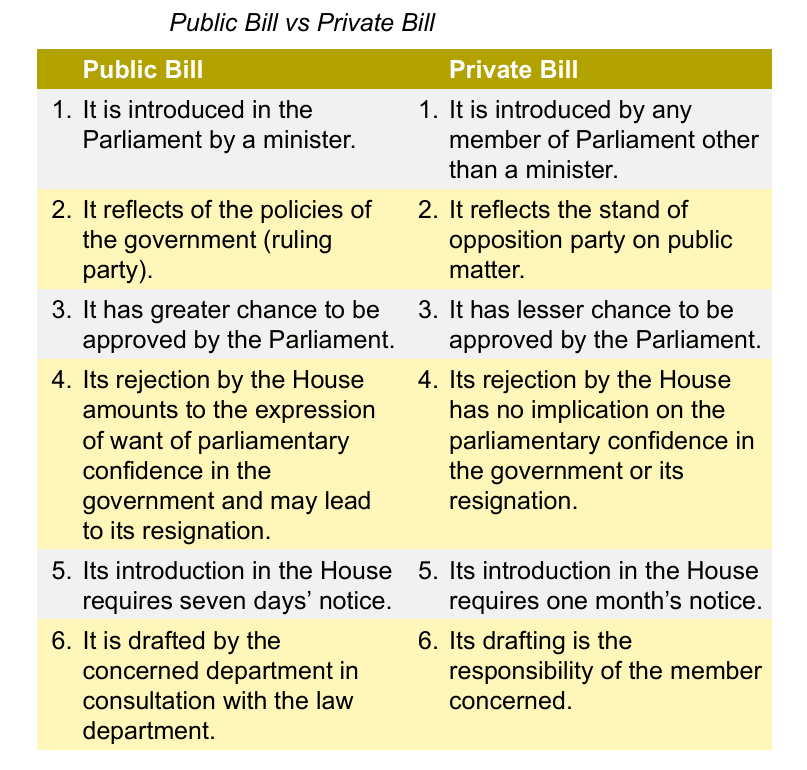
2.Decline of Private Members' Bills (Parliamentary Procedure)

The Hindu
Illustration for Decline of Private Members' Bills (Parliamentary Procedure)

What & Where

Definition Private Members' Bills are legislative proposals by non-minister MPs in Indian Parliament

Process One-month notice then Friday introduction debate vote or withdrawal in Lok Sabha or Rajya Sabha

Venue Private Members’ Business fixed post-lunch Friday in both Houses limiting discussion opportunities

Quick Facts for MCQs

Parliamentary Procedure

  • Notice Minimum one month then ballot decides listed bills
  • Debate Speaker or Chairman calls mover opening speech minister reply optional
  • Vote House may adopt reject or allow withdrawal absence leads to lapse

Historical Trend

  • Passages Zero private members' bills enacted after 1970 despite 3000+ introductions
  • Highlight Rights of Transgender Persons Bill 2014 first RS approval in 45 years yet lapsed
  • Example 1966 Kamath constitutional amendment showcased individual initiative on highest office

Decline Drivers

  • Scheduling Friday slot coincides with MPs leaving for constituencies lowering attendance
  • Allocation 17th Lok Sabha devoted barely 0.7 % of total hours to this business
  • Participation Many movers absent during listing signalling low seriousness

Revival Suggestions

  • Reschedule Midweek slot proposed for greater quorum and deliberation
  • Safeguard Speakers urged to protect individual legislative space within constitutional framework
  • Incentivise Party whips can encourage movers to remain present and pursue debate

Key Data Points

FeatureData-Point
Introduced byAny MP not holding ministerial office
Notice periodMinimum 1 month to House Secretariat
Discussion slotFriday after 1 pm
Bills passed into law14 between 1952-1970
17th Lok Sabha time9.08 hours (LS)
17th Rajya Sabha time27.01 hours
18th LS first two sessions0.15 hours
18th RS first two sessions0.62 hours
Latest RS-cleared BillRights of Transgender Persons Bill 2014 (lapsed)
Historic exampleH V Kamath Bill 1966 on PM eligibility

Related UPSC Prelims PYQs

GS1 2017PYQ 1

With reference to the Parliament of India, consider the following statements :

GS1 2017PYQ 2

भारत की संसद के संदर्भ में, निम्नलिखित कथनों पर विचार कीजिए :

GS-2Polity

3.Supreme Court Senior Advocates Designation (Senior Advocate Rules)

Indian Express

What & Where

Senior Advocate = distinct class of lawyers designated by Supreme Court/High Courts of India after ≥10 yrs Bar practice.

Applies nationwide; Supreme Court uses Advocates-on-Record (AoR) to brief them, AoR only ones who can file documents.

116 fresh designations in Supreme Court during 2024 triggered scrutiny of selection rigour.

Quick Facts for MCQs

Legal & Policy

  • Constitution Article 145, Supreme Court rules empower court to frame criteria for Senior Advocate designation.
  • 2017 guidelines mandate secretariat, evaluation committee, interview for transparency & inclusivity.

Professional Hierarchy

  • Advocate-on-Record files, appears; other advocates may argue but lack filing rights; Seniors argue only, no paperwork.
  • State Bar Council enrolment prerequisite before any Supreme Court appearance category.

Operational Restrictions

  • Prohibited-activity rule ensures Seniors focus on pure law points, avoiding solicitor-type functions.
  • Court may suspend or revoke Senior designation upon professional misconduct findings.

Key Data Points

FeatureData-Point
Minimum practice for designation10 years
Authority conferring titleSupreme Court or any High Court
Key PIL prompting reformIndira Jaising v. Supreme Court of India (2017)
Reform outcomeObjective, points-based assessment of judgments, publications, experience
Tasks barred to SeniorsDirect client instructions, drafting pleadings/affidavits, evidence advice
Must be briefed throughAdvocate-on-Record (AoR)
High-stakes matters often arguedDeath penalty, company liquidation, child custody, bail
New Seniors added in SC, 2024116

Related UPSC Prelims PYQs

CAPF_GAI, GS1 2021PYQ 1

उच्चतम न्यायालय के न्यायाधीश के रूप में किसे नियुक्त किया जा सकता है?

CAPF_GAI, GS1 2004PYQ 2

Which one of the following is the correct sequence in the descending order of precedence in the warrant of precedence?

GS-3Economy

4.Ramesh Chand Committee on WPI Reform (Price Index Revision)

The Hindu
Illustration for Ramesh Chand Committee on WPI Reform (Price Index Revision)

What & Where

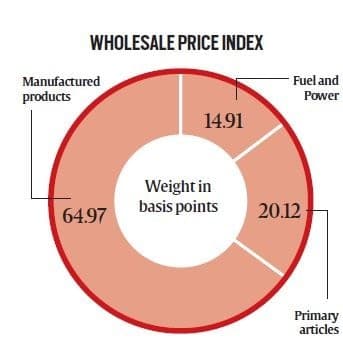
Wholesale Price Index: tracks bulk price movement of 697 goods at first wholesale transaction level in India

Producer Price Index: gauges average prices received by domestic producers for goods and services; includes outputs and inputs

Core geography: compiled nationally by Office of Economic Adviser, DPIIT, Ministry of Commerce & Industry, Government of India

Quick Facts for MCQs

Index Features

  • Compilation: monthly release by Office of Economic Adviser
  • Purpose: monitor supply-demand pressures and complement GDP deflators
  • Limitation: WPI omits services, causing partial inflation picture

Institutional Setup

  • Committee mandate: revise WPI basket and study shift toward PPI
  • Framework reference: System of National Accounts guidelines for producer prices
  • Outcome expectation: internationally comparable inflation metric

Advantages of PPI

  • Perspective: producer-centric, capturing price shifts before retail stage
  • Scope: includes goods and services, both domestic sales and exports
  • Global status: many nations replaced WPI with PPI for policy calibration

Key Data Points

FeatureData-Point
Expert panel size18 members
Panel headRamesh Chand, NITI Aayog
Current WPI base year2011-12
Proposed new base year2022-23
Items covered697 goods
Primary articles117
Fuel and power items16
Manufactured products564
Services coverage in WPIExcluded
Services coverage in PPIIncluded

Related UPSC Prelims PYQs

GS1 1997PYQ 1

In India, inflation is measured by the

GS1 2001PYQ 2

The new series of Wholesale Price Index (WPI) released by the Government of India is with reference to the base prices of

GS-3Economy

5.Green Banks for Climate Finance (Climate Finance Banking)

Down to Earth
Illustration for Green Banks for Climate Finance (Climate Finance Banking)

What & Where

Green Banks: mission-driven financial entities that channel concessional, revolving funds into proven clean-energy & climate-adaptation projects.

Proposed Indian Green Bank: domestic institution to mobilise, retain and recycle climate finance for Net-Zero 2070.

Geographic focus: India/Global South, where commercial credit for decarbonisation is scarce and expensive.

Quick Facts for MCQs

Economic Angle

  • Affordable-credit gap: commercial bank rates inflate LCOE of renewables, stalling adoption in MSME & agri sectors.
  • Capital leverage: every ₹1 public seed can crowd-in ₹3-₹5 private through risk-sharing & blended finance.
  • Local value addition: funds stay domestic, stimulating clean-tech jobs and import substitution.

Operational Model

  • Capital mobilisation: layered funding—government equity base, green bonds for scale, carbon-cess inflows for continuity.
  • Project selection: only proven tech (rooftop PV, EV fleets, industrial efficiency) to maintain predictable cashflows.
  • Circular reinvestment: repayments + interest form a revolving corpus, minimising perpetual budgetary support.

Challenges & Risks

  • Regulatory vacuum: no dedicated statute; overlaps with RBI, SEBI, NABARD mandates.
  • Default exposure: policy volatility, DISCOM payment delays may impair loan books.
  • Awareness deficit: investors, borrowers unfamiliar with green-finance instruments, limiting demand pull.

Key Data Points

FeatureData-Point
Core mandateAccelerate clean-energy deployment & climate resilience
Typical capital sourcesUnion grants, environmental cesses, sovereign/municipal green bonds
Lending patternConcessional loans to projects with assured revenue streams
Priority borrowersFarmers, MSMEs, local DISCOMs, rooftop-solar & efficiency projects
Financial modelRecycle repaid principal into fresh green projects (“evergreen” fund)
India’s Net-Zero target year2070
Major hurdlesHigh start-up capital, regulatory gaps, default risks, low public awareness

Related UPSC Prelims PYQs

CAPF_GAI, GS1 2025PYQ 1

The Union Budget for which of the following years announced the issue of Sovereign Green Bonds to reduce the carbon intensity of the economy?

CAPF_GAI, GS1 2015PYQ 2

Which of the following statements regarding ‘Green Climate Fund’ is/are correct?

GS-3Economy

6.NPCI Extends UPI Market Cap Deadline (Digital Payments Regulation)

LiveMint

What & Where

UPI 30 % transaction-share cap targets each Third-Party App Provider (TPAP) across India.

NPCI, set up by RBI & IBA under Payment and Settlement Systems Act 2007, issues guidelines.

TPAPs (e.g., PhonePe, Google Pay) deliver app-based UPI services via sponsor banks, not as banks.

Quick Facts for MCQs

Legal & Policy

  • Extension: Deadline shifted from 31 Dec 2024 to 31 Dec 2026 for cap compliance.
  • Compliance: TPAPs breaching cap must stop onboarding new users until share reduces.
  • Phasing: Existing violators granted two-year staggered reduction plan.

Tech & Schemes

  • Calculation: 30 % share based on average transaction volume of trailing three months.
  • Scope: Cap covers all UPI payments including person-to-merchant and person-to-person.
  • Oversight: NPCI monitors volumes using real-time settlement data.

Economic Angle

  • Concentration: PhonePe and Google Pay currently control over 80 % UPI volume, heightening systemic risk.
  • Objective: Cap aims diversified market, reduced single-point failure probability.
  • Market Impact: Smaller TPAPs expected increased onboarding opportunity post-cap.

Key Data Points

FeatureData-Point
New compliance deadline31 December 2026
Cap on TPAP UPI volume30 %
Measurement basisRolling 3-month average transaction volume
Cap announcementNovember 2020
Previous extension grantedDecember 2022
Combined PhonePe + Google Pay share>80 % of UPI transactions
Founding bodies of NPCIRBI & Indian Banks’ Association
Governing legislationPayment and Settlement Systems Act 2007
GS-1History

7.Mubarak Manzil Heritage Demolition (Mughal Architecture)

Times of India
Illustration for Mubarak Manzil Heritage Demolition (Mughal Architecture)

What & Where

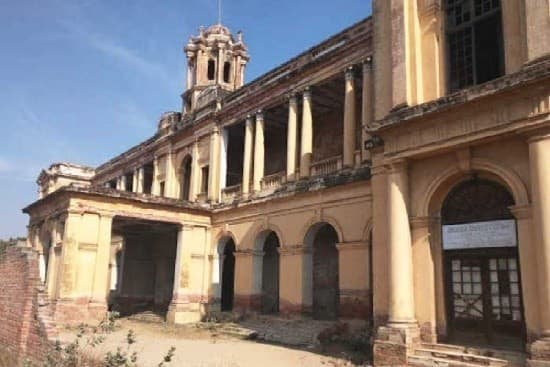
Mubarak Manzil (Aurangzeb’s Haveli): 17th-century Mughal riverside palace, Agra, Uttar Pradesh.

Built after 1658 Battle of Samugarh; later British customs house, salt office, railway depot.

Currently a state-protected heritage site; large portions illegally demolished.

Quick Facts for MCQs

History & Usage

  • Residence phase: Housed imperial family pre-move to Red Fort Delhi.
  • Colonial phase: Adapted for revenue collection, reflecting British economic priorities.
  • Railway phase: Integrated into East Indian Railway logistics network.

Architectural Features

  • Red-sandstone plinth with multi-foil arches and corner minarets.
  • British add-ons: flat roofs, utilitarian interior partitions.
  • 1871 Carlyle report praised intricate floral and geometric carvings.

Heritage & Legal

  • Protected-monument tag mandates 100 m prohibited, 200 m regulated zones.
  • Demolition allegedly okayed by municipal staff despite ASI correspondence.
  • FIR filed; state archaeology ordering restoration & accountability probe.

Key Data Points

FeatureData-Point
Original builderEmperor Aurangzeb
Initial residentsShah Jahan, Aurangzeb
Victory commemoratedBattle of Samugarh, 1658
Alternate nameMubarak Manzil (“Auspicious Mansion”)
City & riverAgra, bank of Yamuna
Base materialRed sandstone
Style blendMughal arches & minarets + later British elements
19th-c. surveyorArchibald Carlyle, 1871
Colonial usesCustoms house, salt office
Post-1850s useEast Indian Railway goods depot
Recent event2023-24 partial demolition by private builder
Legal statusListed under U.P. Ancient & Historical Monuments Act
GS-1History

8.Sree Narayana Guru Reforms Legacy (Kerala Social Reform)

IT
Illustration for Sree Narayana Guru Reforms Legacy (Kerala Social Reform)

What & Where

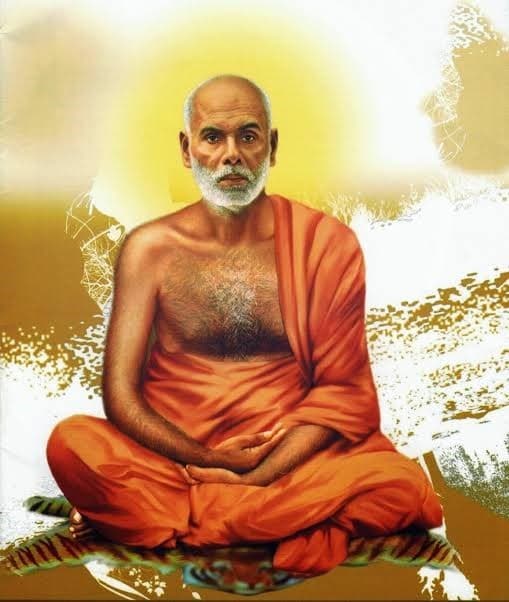
Social reformer Sree Narayana Guru, born 22 Aug 1856 at Chempazhanthy near Thiruvananthapuram, Kerala

Iconic 1888 Aruvippuram Shivalinga consecration challenged caste‐based temple restrictions in Travancore

Movement centred in Kerala’s Ezhava community, later radiating through SNDP Yogam networks

Quick Facts for MCQs

Social Reform Agenda

  • Equality drive covered education, government jobs, temple entry for Ezhavas
  • Slogan One caste One religion One god promoted interfaith harmony without conversions
  • Ahimsa stance opposed animal sacrifice and all violence

Philosophy & Literature

  • Hymns such as Atmopadesa Satakam propagated self-knowledge and universal brotherhood
  • Writings stressed moral discipline and spiritual uplift over ritual formalism
  • Teachings integrated into Kerala renaissance and modern curricula

Organisational Initiatives

  • SNDP Yogam 1903 institutionalised caste reform via schools, temples, cooperatives
  • Leadership mobilised Ezhava community into a socio-economic power bloc
  • Influence extended to Vaikom and Guruvayur temple-entry campaigns

Key Data Points

FeatureData-Point
BirthplaceChempazhanthy, Thiruvananthapuram
Birthdate22 August 1856
CommunityEzhava (Avarna)
Landmark actAruvippuram Shivalinga installation 1888
Key organisationSree Narayana Dharma Paripalana Yogam
Organisation year1903
Famous sloganOne Caste One Religion One God for All
Major literary workAtmopadesa Satakam

Related UPSC Prelims PYQs

NDA_GAT 2021PYQ 1

The founders of the Paramhansa Mandali founded in Maharashtra believed in which one of the following?

GS-1History

9.Soviet Union Disintegration 1991 (USSR Collapse)

Indian Express
Illustration for Soviet Union Disintegration 1991 (USSR Collapse)

What & Where

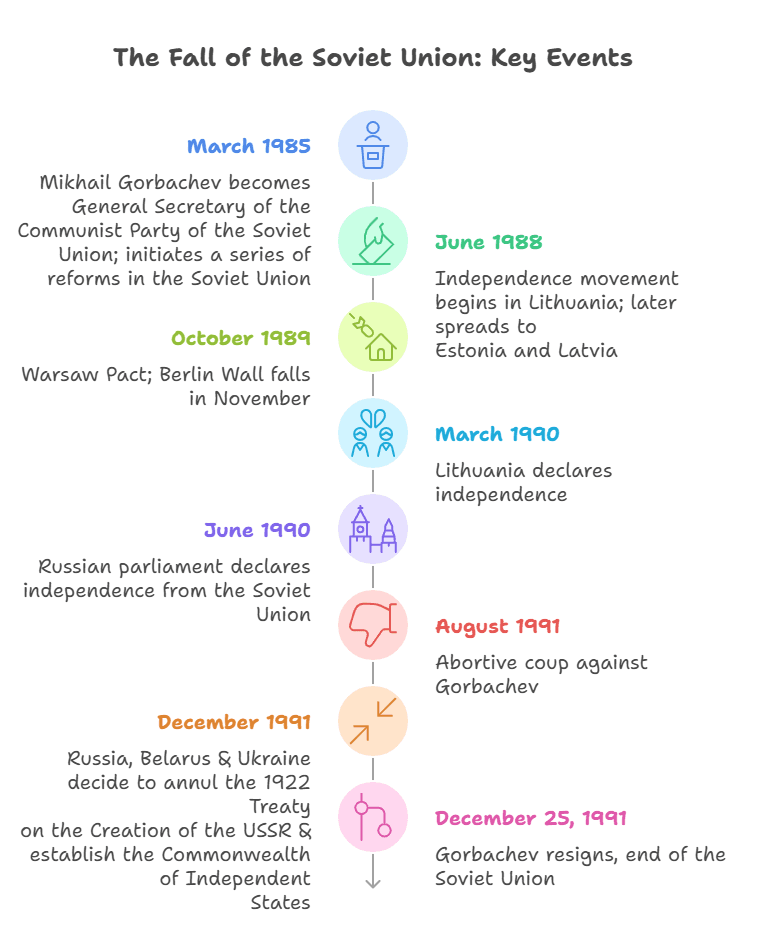
USSR; socialist federation of 15 republics; existed 1922-1991, capital Moscow, ruled by Communist Party.

Formed after 1917 Russian Revolutions & civil war; officially proclaimed 30 Dec 1922.

Dissolved 25 Dec 1991 when red flag lowered at Kremlin; successor states emerged, chiefly Russian Federation.

Quick Facts for MCQs

Historical Evolution

  • Revolution; February 1917 monarchy ends, October 1917 Bolsheviks seize power, Red Army wins civil war 1922.
  • Leadership phases; Stalin centralization, Khrushchev de-Stalinization, Brezhnev stagnation, Gorbachev reforms.
  • Baltic states annexed 1940 under Molotov–Ribbentrop Pact; independence restored 1991.

Economic Factors

  • Stagnation; 1970s heavy military spend, consumer goods shortages, tech lag versus West.
  • Oil price volatility and command-economy rigidity deepened fiscal strain.
  • IMF-style shock therapy later guided transition in ex-Soviet economies.

Political Reforms & Nationalism

  • Glasnost opened media, exposed past abuses; Perestroika introduced limited market mechanisms.
  • 1990 multi-party elections eroded CPSU monopoly; republics declared sovereignty, e.g., Lithuania March 1990.
  • Yeltsin promoted Russian supremacy, hastening union’s legal dissolution via Belavezha Accords.

Global Impact

  • Cold War ends; US becomes lone superpower; NATO enlarges to Poland, Baltic trio, others.
  • Power vacuum enables China, India, EU to pursue multipolar agendas.
  • Legacy disputes fuel conflicts: Crimea 2014, Nagorno-Karabakh, Kosovo-Serbia tensions.

India Angle

  • 1991 balance-of-payments crisis spurred Liberalisation, Look/Act East & Act West outreach.
  • Defence ties recalibrated; joint BrahMos, diversification toward US, France, Israel.
  • Continued space, nuclear collaboration; membership in SCO, BRICS preserves strategic autonomy.

Key Data Points

FeatureData-Point
First Soviet leaderV. I. Lenin (1922-24)
Last Soviet leaderM. S. Gorbachev (1985-91)
Core reformsGlasnost + Perestroika (1986 onwards)
Peak republic count15 Union Republics
Key military blocWarsaw Pact (1955-91)
Costly foreign warAfghanistan, 1979-89
USSR collapse trigger date25 Dec 1991
GS-1MappingQuick Bite

10.Mount Kanlaon Stratovolcano Eruption (Pacific Ring Volcano)

Business Standard
Illustration for Mount Kanlaon Stratovolcano Eruption (Pacific Ring Volcano)

What & Where

Volcano weak crustal point expelling magma, gases, ash; an endogenic geomorphic process

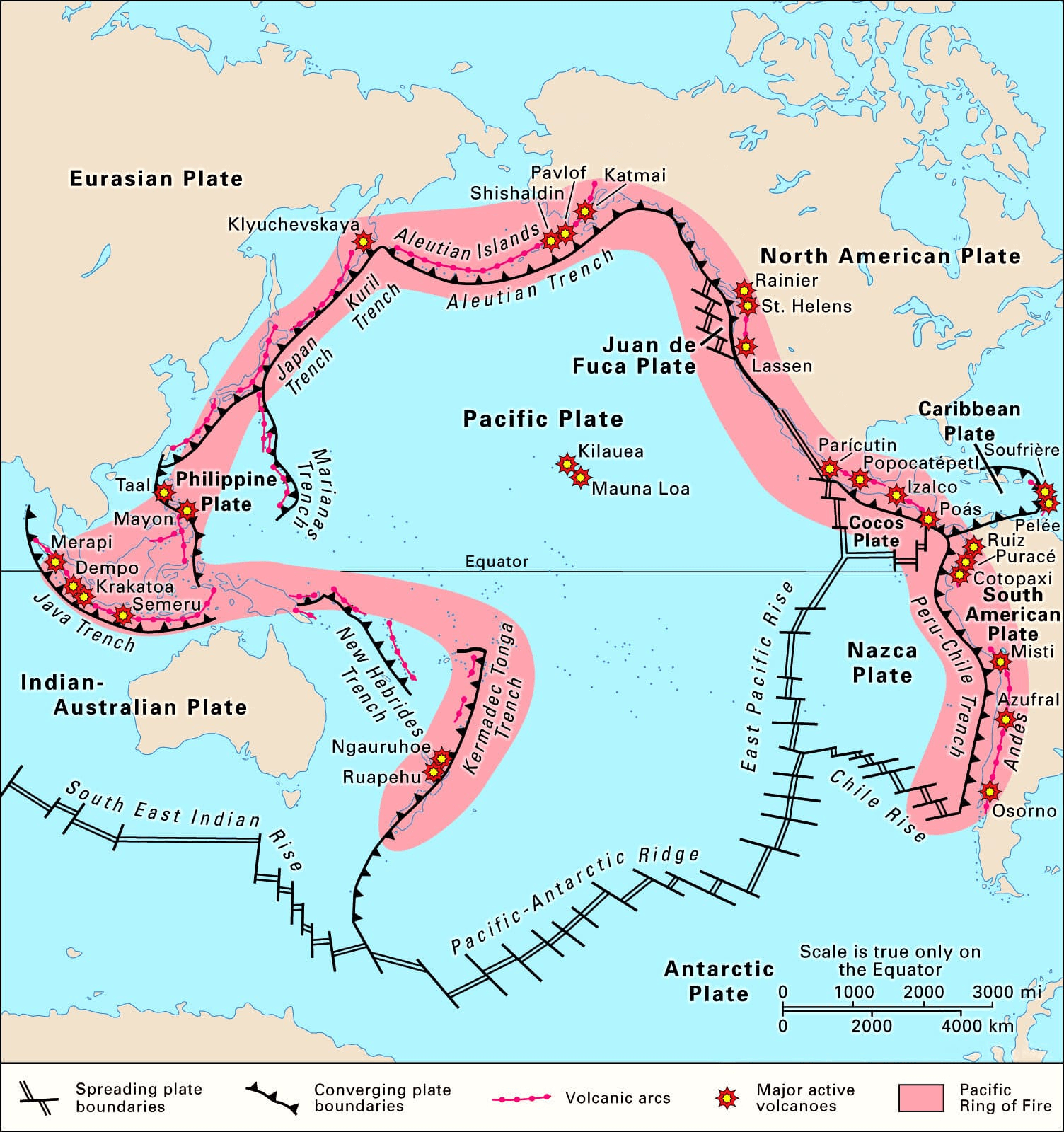
Mount Kanlaon active 2,435 m stratovolcano on Negros Island, central Philippines

Pacific Ring of Fire 40,000 km circum-Pacific seismic belt along Pacific, Philippine, Nazca, other plates

Quick Facts for MCQs

Volcanology Basics

  • Endogenic-process magma ascent forms cones through successive eruptions
  • Stratovolcano steep, layered lava-ash structure common in subduction zones
  • Eruptive products include lava flows, pyroclastics, volcanic gases, steam

Tectonic Setting

  • Subduction of dense Pacific Plate under lighter margins drives Ring of Fire volcanism
  • Philippine Sea Plate interactions produce frequent quakes and eruptions around Kanlaon
  • Multiple microplates enhance tectonic complexity in Western Pacific

Disaster Risk

  • Philippines among world’s most disaster-prone owing to combined volcanic, seismic, typhoon hazards
  • Ashfall impacts aviation, agriculture, water quality across Negros communities
  • Early warning, evacuation plans vital for populations near active cones

Key Data Points

FeatureData-Point
Volcano nameMount Kanlaon
Height2,435 m
Volcano typeStratovolcano
Island & provinceNegros, north-central
CountryPhilippines
Latest activityAsh-gas eruption Jan 2025
Tectonic beltPacific Ring of Fire
Ring of Fire length~40,000 km
Key interacting platesPacific, Juan de Fuca, Cocos, Nazca, North American, Indian-Australian, Philippine
GS-3Species

11.Brazilian Velvet Ant Ultrablack Trait (Ultrablack Insect)

The Hindu
Illustration for Brazilian Velvet Ant Ultrablack Trait (Ultrablack Insect)

What & Where

Definition: Brazilian velvet ant (Traumatomutilla bifurca) is a wasp, family Mutillidae, order Hymenoptera

Geography: Native to tropical savanna and dry shrub deserts of South America

Distinction: Females possess ultrablack body parts absorbing > 99.5 % visible light

Quick Facts for MCQs

Biological Traits

  • Nanostructures: densely packed cuticular ridges scatter photons internally, yielding near-total absorption
  • Sexual dimorphism: males share pattern yet reflect more light, lacking equivalent nano-architecture
  • Mimicry: velvet-like setae and colour pattern imitate ants, discouraging predators

Evolutionary Insight

  • Convergence: comparable ultrablack surfaces evolved in birds-of-paradise, deep-sea fish, certain butterflies
  • Selective pressure: predator avoidance in sun-exposed habitats favours extreme light-absorbent exoskeletons

Tech & Applications

  • Stealth tech: bio-inspired coatings for defence optics and space telescopes require ultralow reflectance
  • Solar energy: nanostructure templates enhance panel efficiency by maximising photon capture

Ecological Role

  • Pollination: adults visit flowers, facilitating reproduction in arid ecosystems
  • Predator deterrence: potent sting plus camouflage stabilises niche within local food webs

Key Data Points

FeatureData-Point
OrderHymenoptera
FamilyMutillidae
Studied speciesTraumatomutilla bifurca
Visible-light absorption> 99.5 %
Ultrablack sexFemale only
Primary habitatsTropical savanna; dry shrub deserts
Adaptive functionsCamouflage; thermoregulation; mate signalling
Nanostructure locationExoskeleton micro-traps
GS-3S&T

12.Glutathione-Responsive Injectable Hydrogel Therapy (Targeted Drug Delivery)

The Hindu

What & Where

Injectable hydrogel: water-based polymer network for site-specific anti-cancer drug release

Key process: responds to high glutathione (GSH) in tumour microenvironment, sparing healthy cells

Developed in India by IIT-Guwahati & Bose Institute, Kolkata; pre-clinical focus on breast cancer

Quick Facts for MCQs

Tech & Schemes

  • Injectable-format enables minimally invasive outpatient administration
  • Insoluble network anchors gel at tumour, preventing systemic dispersion
  • Tissue-mimicking matrix supports high biocompatibility and regulatory acceptance

Health Impact

  • Localised release lowers cardiotoxicity, nausea, alopecia from systemic drugs
  • Breast-tumour specificity boosts therapeutic index and patient quality of life
  • Personalized dosing achievable via adjustable polymer–drug loading

Biological Mechanism

  • Glutathione-rich tumour microenvironment cleaves disulfide linkers, triggering drug release
  • Low GSH in normal cells leaves hydrogel intact, ensuring selective cytotoxicity

Key Data Points

FeatureData-Point
Developer institutionsIIT-Guwahati & Bose Institute Kolkata
Material typeWater-based polymer hydrogel
Trigger moleculeElevated glutathione (GSH)
Delivery modeInjectable, localized, insoluble in biofluids
Cancer focusBreast cancer (model)
Prime advantageReduces systemic chemotherapy side effects
GS-3S&T

13.In-Flight Internet Connectivity Technology (In-flight Connectivity)

Indian Express
Illustration for In-Flight Internet Connectivity Technology (In-flight Connectivity)

What & Where

Definition In-flight Wi-Fi enables real-time Internet access onboard commercial aircraft

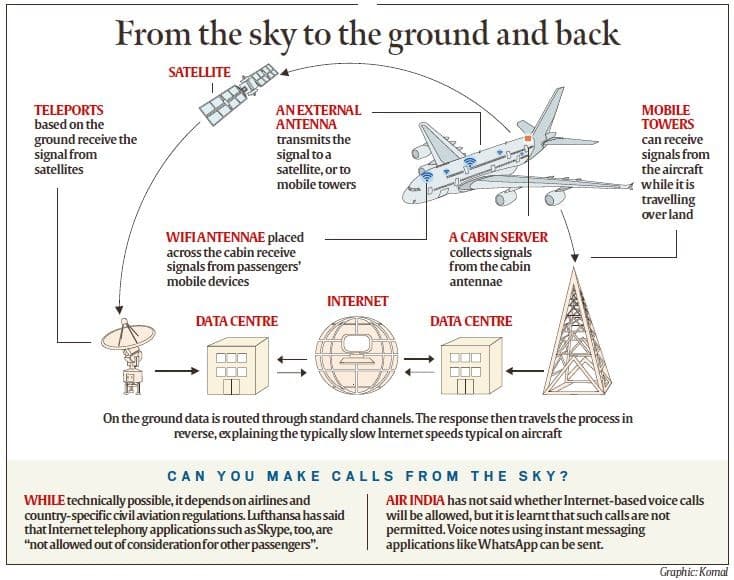
Systems Two pathways: Air-to-Ground (ATG) underbelly antennae; Satellite-based top-mounted antennae

Geography ATG suits tower-dense terrestrial routes; satellite essential over oceans & remote Indian airspace

Quick Facts for MCQs

Technology Architecture

  • ATG Relies on ground cellular towers up to ~100 km range per tower
  • Satellite Uses GEO/MEO satellites ensuring pan-Indian including maritime coverage
  • Server Acts as onboard router managing traffic and content filtering

Passenger Benefits

  • Connectivity Allows browsing, OTT streaming, real-time messaging throughout flight
  • Integration Accessed through existing airline portal, reducing login friction
  • Flexibility Supports smartphones, tablets, laptops without additional hardware

Limitations & Challenges

  • Bandwidth Contention causes variable, generally low speeds versus ground networks
  • Economics High capital and recurring costs may push airlines to adopt pay-per-use models
  • Coverage Blackspots persist during polar, deep-ocean, or severe weather conditions

Key Data Points

FeatureData-Point
First Indian carrier with domestic in-flight InternetAir India (Tata Group)
Launch segmentDomestic narrow-body flights
Core technologiesAir-to-Ground; Ku/Ka-band satellite
Antenna placement ATGFuselage underside
Antenna placement SatelliteAircraft rooftop radome
Signal path SatelliteCabin → server → satellite → ground station → satellite → aircraft
Major cost headHardware installation & bandwidth leasing
Common speed traitSlower than terrestrial broadband
Coverage gap ATGLarge water bodies & sparsely towered regions
Passenger device limitMultiple device compatibility via cabin Wi-Fi
GS-3S&TQuick Bite

14.VSSC Polar Sundial Display (Sundial Innovation)

The Hindu
Illustration for VSSC Polar Sundial Display (Sundial Innovation)

What & Where

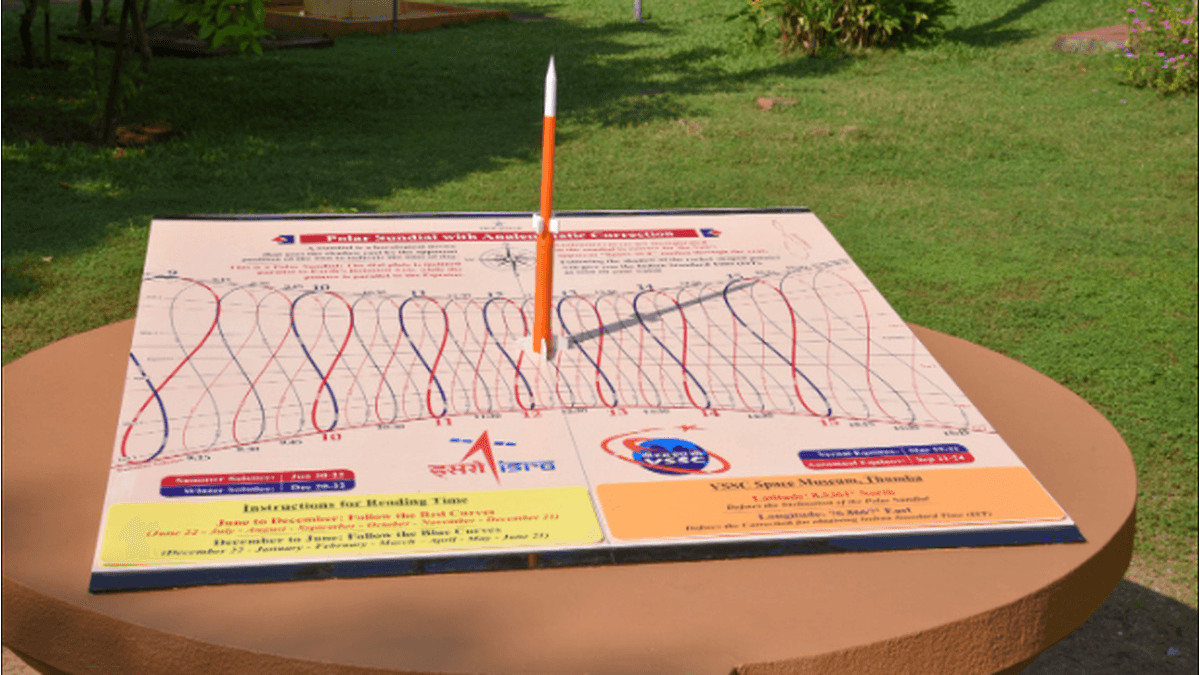
Polar sundial: time-keeping device with plate parallel to Earth’s axis, designed by VSSC.

Uses inverted analemma curves to auto-convert local solar time to mean solar time, showing IST and date year-round.

Installed in Rocket Garden, Space Museum, Thumba, Kerala.

Quick Facts for MCQs

Technology & Design

  • Polar-plate orientation ensures uniform gnomon shadow geometry across seasons.
  • 3D-printed RH-200 miniature doubles as central gnomon and exhibition piece.
  • Wedge mount custom-angled to local latitude for accuracy.

Astronomical Concept

  • Analemma correction counters Equation of Time variations from Earth’s 23.5° tilt and orbital eccentricity.
  • Inverted hour curves embed seasonal time shift without needing manual charts.
  • Device outputs mean solar time directly usable for civil purposes.

Educational & Outreach

  • Museum placement offers hands-on demonstration of celestial mechanics to visitors.
  • Visual figure-eight curves aid comprehension of solar declination changes.
  • Integrates indigenous rocket icon to spark STEM interest among students.

Key Data Points

FeatureData-Point
DesignerVikram Sarabhai Space Centre (ISRO)
Installation siteRocket Garden, Space Museum, Thumba, Kerala
Sundial categoryPolar with analemmatic correction
Key correction patternFigure-eight analemma
Time displayedIndian Standard Time (IST)
Extra displayCalendar date
Hour markersInverted analemma curves
AlignmentPlate parallel to Earth’s polar axis
Support structureWedge set to Thumba latitude
Added model1.6-ft 3D-printed RH-200 rocket
GS-2Editorial

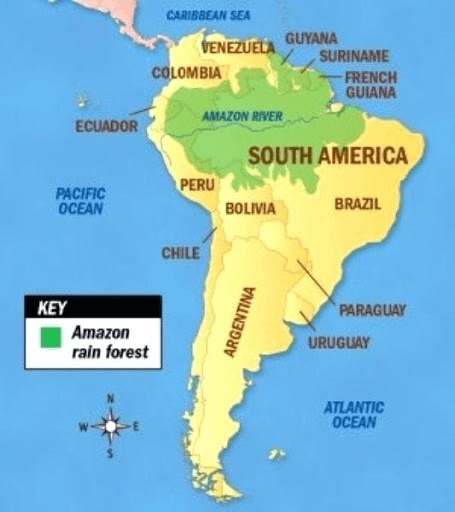
15.India-Latin America Trade Engagement (India-LAC Relations)

Financial Express
Illustration for India-Latin America Trade Engagement (India-LAC Relations)

What & Where

Latin America & Caribbean (LAC): 33 nations in Western Hemisphere, mid-regulated “goldilocks” market for Indian exporters

Engagement tools: Focus LAC 1997, PTAs with Chile & MERCOSUR, assorted bilateral MoUs and credit lines

Core sectors: crude oil, lithium-copper minerals, soybeans; Indian strengths in pharma, IT, automobiles

Quick Facts for MCQs

Historical Milestones

  • 1961 Nehru Mexico visit; 1968 Indira Gandhi toured eight LAC capitals
  • 1997 Focus LAC programme inaugurated to spur exports
  • 2014 Modi attended BRICS Brazil; 2023 Jaishankar landmark four-nation tour

Economic Angle

  • USD 43.22 bn trade 2023 aimed to more than double by 2028
  • Imports led by petroleum, gold, soybean oil; exports topped by refined fuels, passenger cars
  • Indian IT and pharma footprint expanding, 40 k local employees generating goodwill

Political & Strategic

  • Brazil, Argentina, Mexico shifted to Cabinet-level handling in 2022 signifying higher priority
  • Shared stance of strategic autonomy/Active Non-Alignment on Ukraine and multilateral reforms
  • PTAs with Chile & MERCOSUR act as stepping-stones toward broader FTAs

Challenges

  • Narrow PTA coverage; no region-wide framework with CELAC, Pacific Alliance, SICA
  • Distance, Spanish-Portuguese language, costly connectivity and visa frictions deter SMEs
  • China’s deeper trade, credit and infrastructure presence outcompetes Indian offers

Key Data Points

FeatureData-Point
LAC country count33
India–LAC trade FY 2023USD 43.22 bn
Imports from LAC 2023USD 22.93 bn
Exports to LAC 2023USD 20.09 bn
Trade target 2028USD 100 bn
Key partnersBrazil, Mexico, Colombia
Crude share in LAC imports30 %
Focus LAC launch year1997
MERCOSUR formed1991
MERCOSUR customs union1995
Region GDP> USD 6 trn
Indian IT local jobs40,000
First EAM visit comboApr 2023 (Guyana, Panama, Colombia, DR)

Related UPSC Prelims PYQs

CDS_GK 2024PYQ 1

Recently the Government of India entered into an agreement for a lithium exploration and mining project with which one among the following countries?

GS-2Polity

16.Torrijos-Carter Panama Canal Treaties (Panama Canal Treaty)

The Hindu
Illustration for Torrijos-Carter Panama Canal Treaties (Panama Canal Treaty)

What & Where

Panama Canal: artificial waterway across Panama Isthmus linking Atlantic (Caribbean) and Pacific Oceans; vital global shipping shortcut.

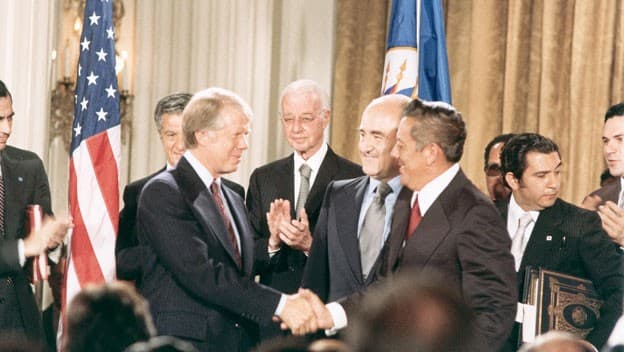
Torrijos-Carter Treaties (1977): US–Panama accords transferring canal control and declaring its permanent neutrality.

Canal zone in central Panama near Panama City & Colón; under full Panamanian sovereignty since 31 Dec 1999.

Quick Facts for MCQs

Legal & Policy

  • Transfer clause: phased canal, lands, facility handover culminating 1999.
  • Neutrality article: perpetual open access, non-discriminatory tolls guaranteed by Panama & USA.
  • Superseded 1903 Hay-Bunau-Varilla Treaty granting US perpetual rights.

Economic Angle

  • Neutral status preserves uninterrupted commerce, securing toll revenues central to Panama’s GDP.
  • Panamanian control post-1999 redirects canal income to national development and upkeep.

Security Dimension

  • USA may use force to protect canal neutrality and receives priority wartime passage.
  • Canal’s chokepoint nature necessitates continual Panama–US security coordination.
  • Trump labelled treaties “foolish”, signalling potential policy reassessment.

Key Data Points

FeatureData-Point
Signatory nationsUnited States & Panama
Signing date7 September 1977
US signatoryPresident Jimmy Carter
Panama signatoryGeneral Omar Torrijos
Number of treatiesTwo
Treaty namesPanama Canal Treaty; Permanent Neutrality Treaty
Control handover deadline31 December 1999
US reserved rightDefend neutrality & priority warship passage
Core symbolismPanama’s regained sovereignty
GS-3Security

17.2025 Defence Forces Reform Year (Armed Forces Reforms)

PIB

What & Where

MoD declares 2025 ‘Year of Reforms’ to build tech-centric, multi-domain, joint force.

Core focus: jointness, emerging tech, faster procurement, export push, veteran welfare.

Integrated Theatre Commands mapped: Northern – Lucknow; Western – Jaipur; Maritime – Thiruvananthapuram.

Quick Facts for MCQs

Legal & Policy

  • DAP 2020 mandates ≥50 % indigenous content; streamlines, time-bounds buying.
  • CDS & DMA instituted for tri-service synergy; clearer tasking still awaited.
  • Absence of written National Security Strategy weakens politico-military linkage.

Tech & Schemes

  • Priority tech: AI, ML, hypersonics, robotics, cyber, space-based capabilities.
  • iDEX, Defence Startup Challenge, SRIJAN portal channel startup–forces collaboration.
  • Defence Corridors, OFB corporatisation nurture concentrated manufacturing clusters.

Economic Angle

  • Private output 20 %; TATA Vadodara C-295 line first private military FAL.
  • 14,000 MSMEs + 329 startups active in defence by 2023.
  • Exports rising yet India remains top global arms importer 2019-23.

International Examples

  • Goldwater-Nichols Act 1986 reorganised US DoD, empowering unified joint commands.

Security Dimension

  • Cyberspace 5th war-domain; Estonia, Ukraine conflicts show disruptive reach.
  • Galwan 2020 led to emergency buys, underscoring readiness gaps.
  • Agnipath’s 6-month training, 4-year tenure raise experience, morale concerns.

Key Data Points

FeatureData-Point
Observance year2025 ‘Year of Reforms’
Parallel tag2024 Army ‘Year of Technology Absorption’
Defence exports FY 2023-24₹21,083 crore
Export goal FY 2028-29₹50,000 crore
Production turnover 2022-23₹1,086.84 billion
Private sector share20 % of output
FDI automatic route cap74 %
Defence budget share of GDP1.9 %

Related UPSC Prelims PYQs

CAPF_GAI, ESE_GS 2024PYQ 1

Which one of the following is associated with 'SPRINT Challenges' aimed at giving a boost to the usage of 75 new indigenous technologies/products in collaboration with Innovations for Defence Excellence, NIIO and Technology Development Acceleration Cell?

CAPF_GAI, ESE_GS 2025PYQ 2

केंद्रीय बजट, 2025-26 में व्यय की निम्नलिखित में से किस मद को उच्चतम आवंटन प्राप्त हुआ?

GS-2Scheme

18.Project VISTAAR Digital Agri Extension (Digital Agri Extension)

DD News

What & Where

Digital platform Project VISTAAR for nationwide agricultural extension and advisory

Partnership: IIT Madras + Ministry of Agriculture & Farmers’ Welfare, Govt of India

Integrates 12,000+ agri-startups; disseminates crop, market, value-addition guidance

Quick Facts for MCQs

Tech & Schemes

  • Integration: YNOS engine merges startup profiles, datasets, geo-tagged farm info
  • Delivery: multilingual mobile dashboards push real-time contextual advisories
  • Access: single window to subsidies, crop insurance, PM-KISAN, eNAM

Start-up Ecosystem

  • Database: 12k+ agri-startups showcased for rural deployment
  • Opportunity: innovators pilot products with on-ground farmer cohorts
  • Support: IIT Madras incubation aids capital, mentorship, scale-up

Agricultural Extension

  • Efficiency: remote advisory cuts travel to Krishi Vigyan Kendras
  • Outreach: digital channels reach small, marginal, tribal farmers
  • Content: modules cover inputs, post-harvest, market linkage

Climate & Sustainability

  • Focus: promotes low-carbon, water-saving agronomy
  • Alerts: dissemination of weather, pest, drought early warnings
  • Alignment: supports SDG-2 and India NDC on adaptation

Key Data Points

FeatureData-Point
Full formVirtually Integrated System to Access Agricultural Resources
Launch partnersIIT Madras; MoA&FW
Implementing engineIIT Madras YNOS Venture Engine
Startup database size>12,000 agri-startups
Core serviceDigitalised agricultural extension
Advisory coverageProduction, marketing, value addition, supply chain
Scheme linkageOne-stop access to central agri schemes
Sustainability aimPromote climate-resilient farming

Related UPSC Prelims PYQs

ESE_GS, NDA_GAT 2021PYQ 1

Which one of the following is the latest in series being organized as the largest virtual gathering to create dialogues, and accelerate innovation in agriculture ?

ESE_GS, NDA_GAT 2025PYQ 2

Which one of the following statements about ‘REJUPAVE’ is correct?

GS-2Scheme

19.Digital India Land Records Modernisation (Land Records Digitalisation)

The Print
Illustration for Digital India Land Records Modernisation (Land Records Digitalisation)

What & Where

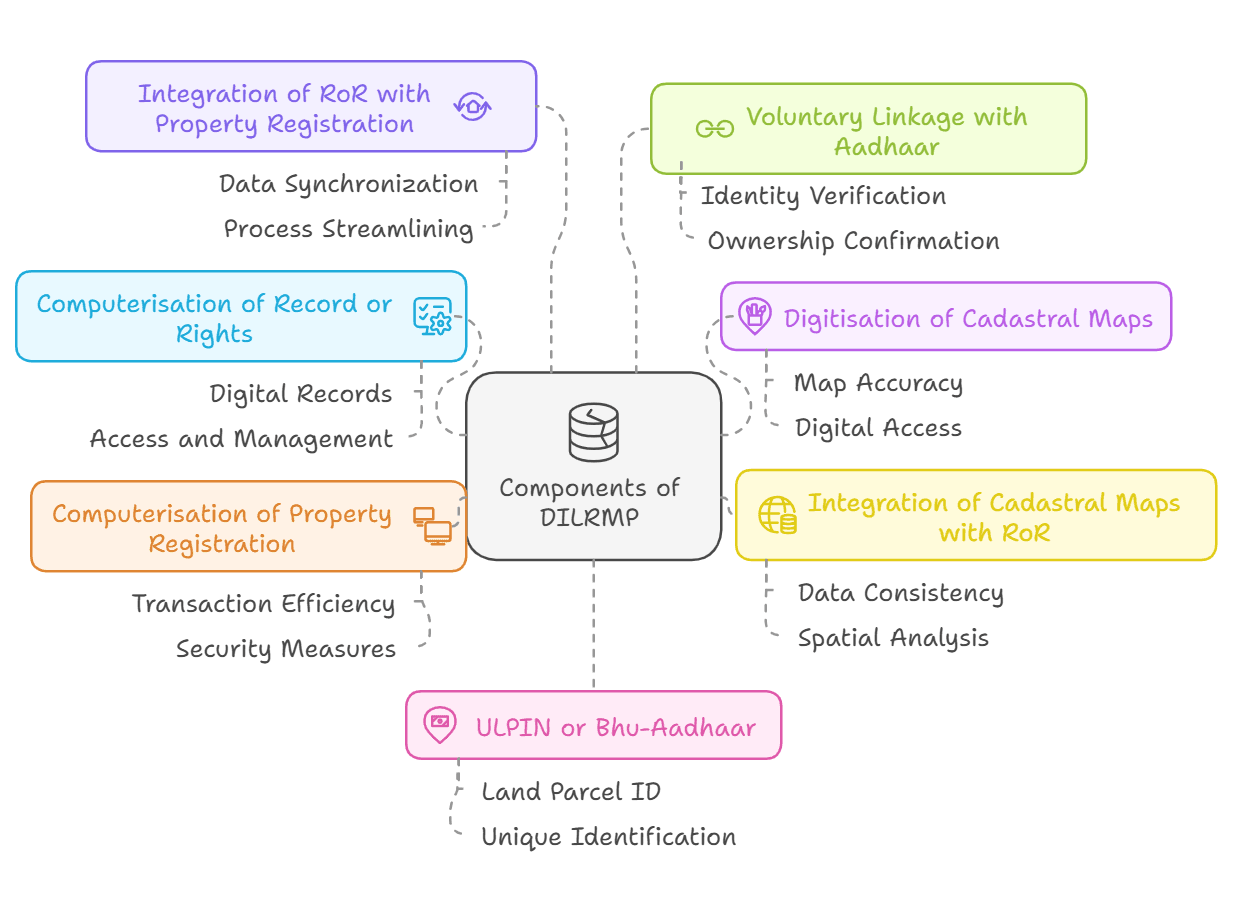
Digital India Land Records Modernization Programme (DILRMP): central-sector scheme (100% Centre) to digitise, integrate, give title certainty.

Coverage: 98.5 % rural land records digitised across India; ULPIN, NGDRS, e-Courts rolled out state-wise.

Geography: Implemented in 29 States/UTs (ULPIN), 18 States/UTs (NGDRS) plus SVAMITVA for inhabited village areas.

Quick Facts for MCQs

Tech & Schemes

  • ULPIN: geo-referenced “Bhu-Aadhaar” links cadastral, revenue, spatial layers, easing transactions and disaster response.
  • NGDRS: uniform e-registration with online entry, e-stamp duty, appointment scheduling, document search.
  • SVAMITVA: drone mapping for property cards in abadi areas enabling bank credit, gram-panchayat taxation.

Benefits

  • Transparency: online, tamper-evident records deter benami holdings and fraud.
  • Credit-access: conclusive titles facilitate mortgages, crop loans, insurance uptake.
  • Litigation-cut: authenticated data aids faster judicial disposal, lowering civil case backlog.

Challenges

  • Linguistic diversity: limited vernacular interfaces, slow transliteration in many districts.
  • Legacy gaps: outdated cadastral maps, community holdings, unclear inter-departmental data convergence.
  • Resource constraints: uneven staff skills, funding and hardware at tehsil level.

Way Forward

  • Integration push: single portal linking registration, tax, subsidies, grievance redress.
  • Tech upgrade: drones, satellites, possible blockchain pilots for immutable ledgers.
  • Community outreach: local media, NGOs to boost awareness, women’s inclusion in title verification.

Key Data Points

FeatureData-Point
Initial launch name/yearNLRMP, 2008
Revamped & renamedDILRMP, 2016
Scheme typeCentral-sector, 100 % Union funding
Rural records digitised (2024)98.5 %
ULPIN code length14-digit alphanumeric
ULPIN coverage29 States/UTs
NGDRS adoption18 States/UTs (12 more data-sharing)
e-Court integration clearance26 States/UTs
Bhoomi Samman Platinum districts168 across 16 States
Workforce in agriculture (Eco Survey 23-24)>45 %

Related UPSC Prelims PYQs

GS1, NDA_GAT 2024PYQ 1

With reference to the Digital India Land Records Modernisation Programme, consider the following statements:

GS1, NDA_GAT 2022PYQ 2

भारत सरकार की प्रमुख टेलीमेडिसिन सेवा ‘ई-संजीवनी’ को हाल ही में किसके साथ एकीकृत किया गया?

GS-1Editorial

20.Debate on Government Cash Transfers (Direct Benefit Transfers)

Indian Express

What & Where

Definition; government’s direct payment to individuals/households for social protection or behaviour incentive

Key types; Unconditional, Conditional, Universal, Targeted transfers

Indian context; Mahila Samman Yojana-Delhi, PM-KISAN, NSAP pensions illustrate varied models

Quick Facts for MCQs

Economic Angle

  • Fiscal-burden; large allocations divert from health, education, infra
  • Demand-boost; cash raises local purchasing power, short-run stimulus
  • Populism; states compete on larger outlays, risking unsustainable debt

Social Impact

  • Women-empowerment; direct deposit enhances autonomy, mobility decisions
  • Poverty-relief; immediate liquidity cushions consumption shocks among poorest
  • Equity-bridge; targets marginalised, narrows income disparities when well-designed

Policy Alternatives

  • Public-services; strengthen school, health, nutrition delivery over pure cash
  • Job-schemes; expand MGNREGA, skill training for durable livelihood
  • Universal-Basic-Services; provide no-cost essentials instead of money transfers

Implementation Guidance

  • Evidence-base; launch post rigorous data assessment, measurable outcomes
  • Targeting; prioritise most vulnerable to curb leakages & fiscal stress
  • Monitoring; continuous evaluation to plug gaps, improve efficiency

Key Data Points

FeatureData-Point
Core instrumentDirect cash payment
Unconditional examplePM-KISAN to cultivator families
Conditional exampleMaternity Benefit Programme (vaccination, ante-natal care)
Universal categoryTransfer to every citizen, no income filter
Targeted categoryNational Social Assistance Programme pensions
Key proBypasses intermediaries, ensures beneficiary receipt
Key conHigh fiscal outgo strains health-education capex
Risk flaggedDependency, lower job-seeking incentive
Populism issueCompetitive promise escalation before elections
Suggested balancePair transfers with service & job creation investments

Related UPSC Prelims PYQs

CAPF_GAI, CDS_GK 2020PYQ 1

PAHAL, an initiative to transfer the subsidy to direct bank account of the beneficiaries, is related to

CAPF_GAI, CDS_GK 2024PYQ 2

Consider the following statements:

Ready to practice?

Test your knowledge with our UPSC test series.

Start Free Trial