Kanishak Kataria
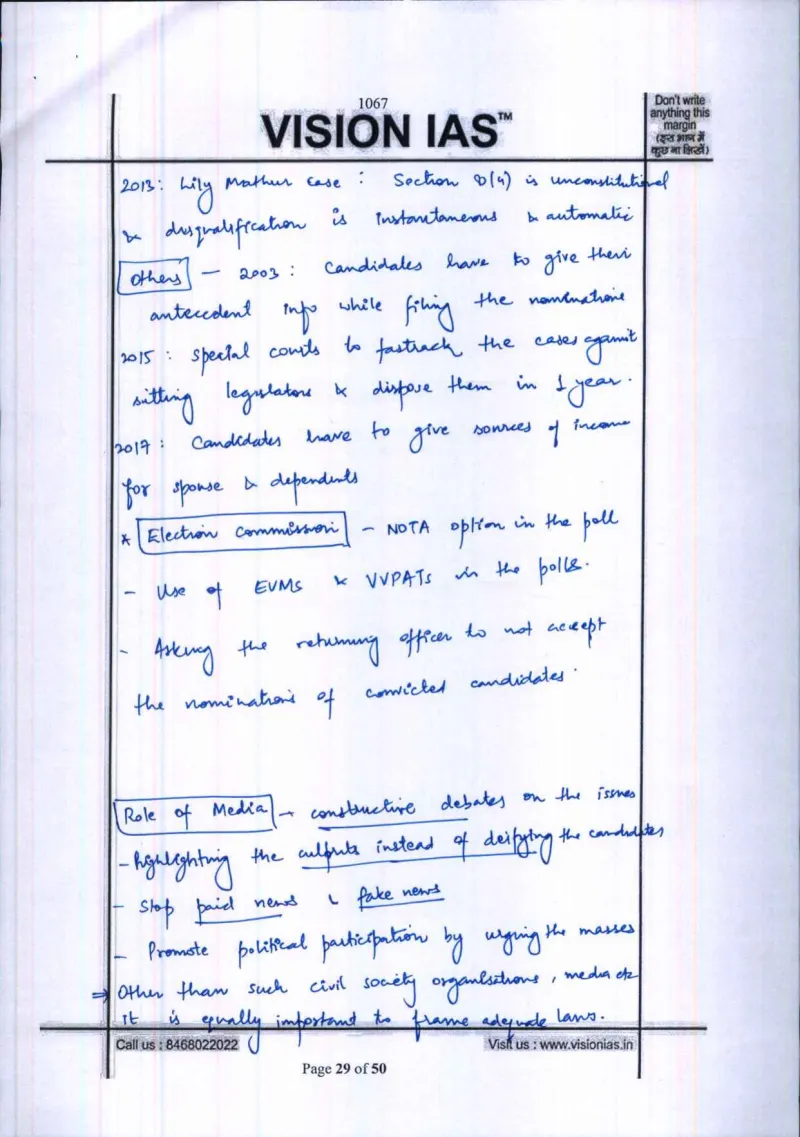
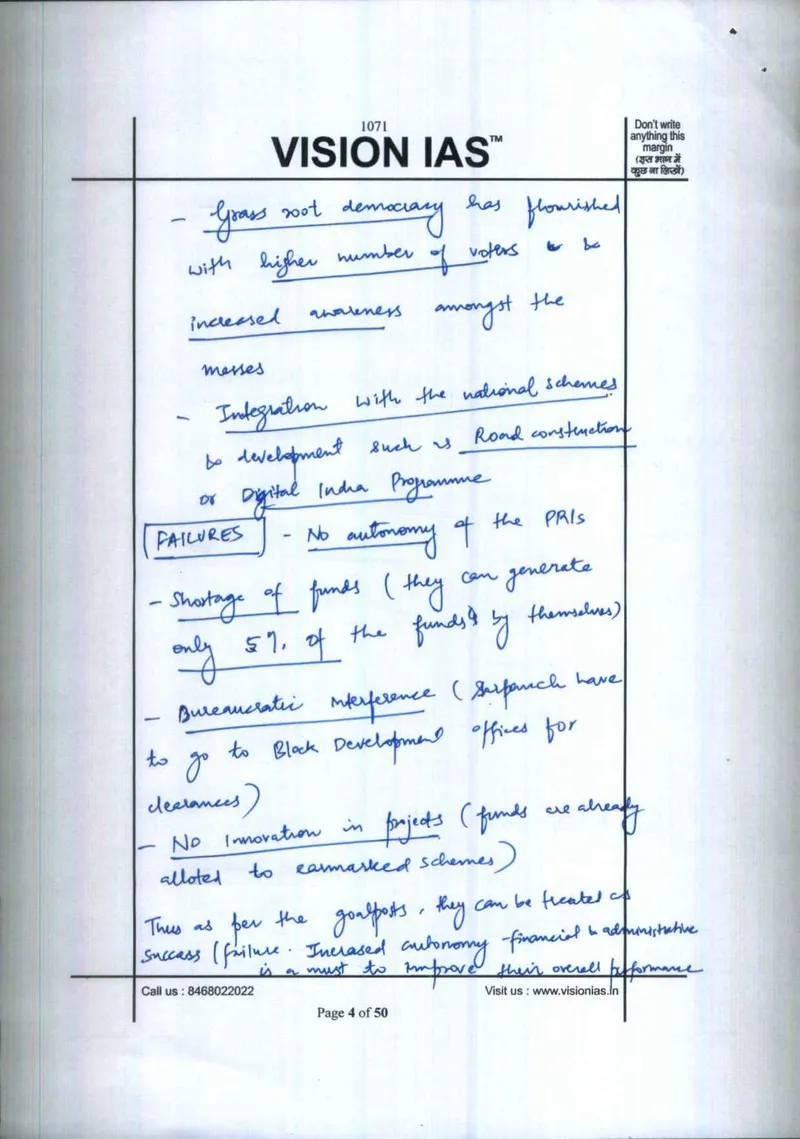
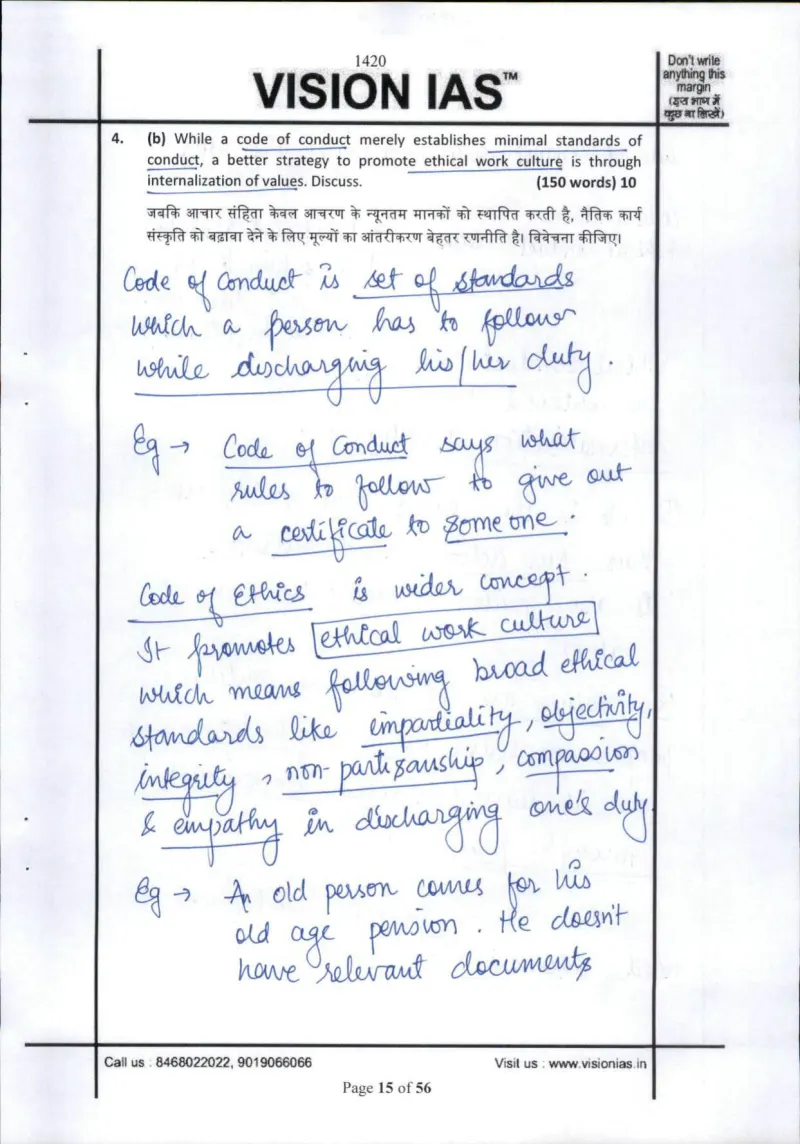
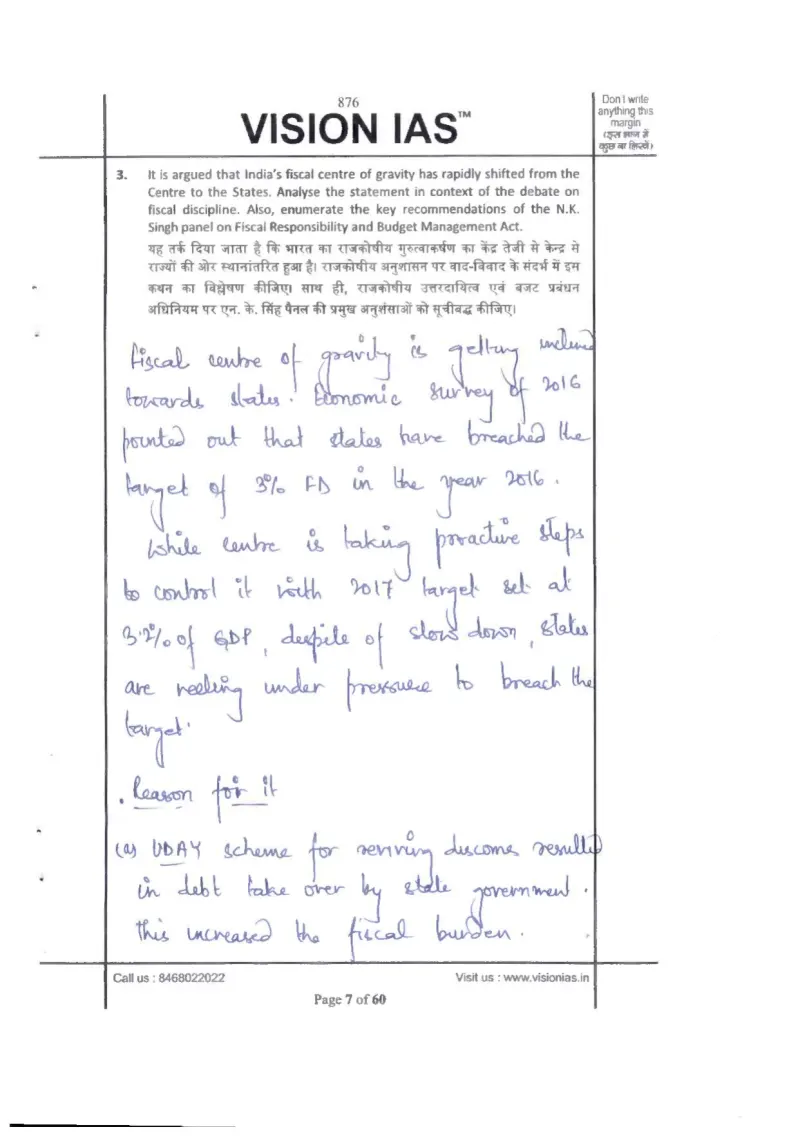
Unevaluated VisionIAS GS copy (Test Code 1067, Jaipur, 22/8/2018): every marks field and the examiner-comments page are blank — no scores or remarks anywhere.
20 questions · 14 examples analysed
Loading...
29 handwritten mains booklets from 9 candidates, written on VisionIAS test-series papers. Almost entirely full-length GS mains booklets, and the strongest rank list of any source: Aditya Srivastava (AIR 1, CSE 2023), Ishita Kishore (AIR 1, CSE 2022), Junaid Ahmad and Akshat Jain.
UnlockIAS is not affiliated with VisionIAS. These are candidates’ own answer sheets, filed under the test series whose paper they were written on.

Unevaluated VisionIAS GS copy (Test Code 1067, Jaipur, 22/8/2018): every marks field and the examiner-comments page are blank — no scores or remarks anywhere.
20 questions · 14 examples analysed

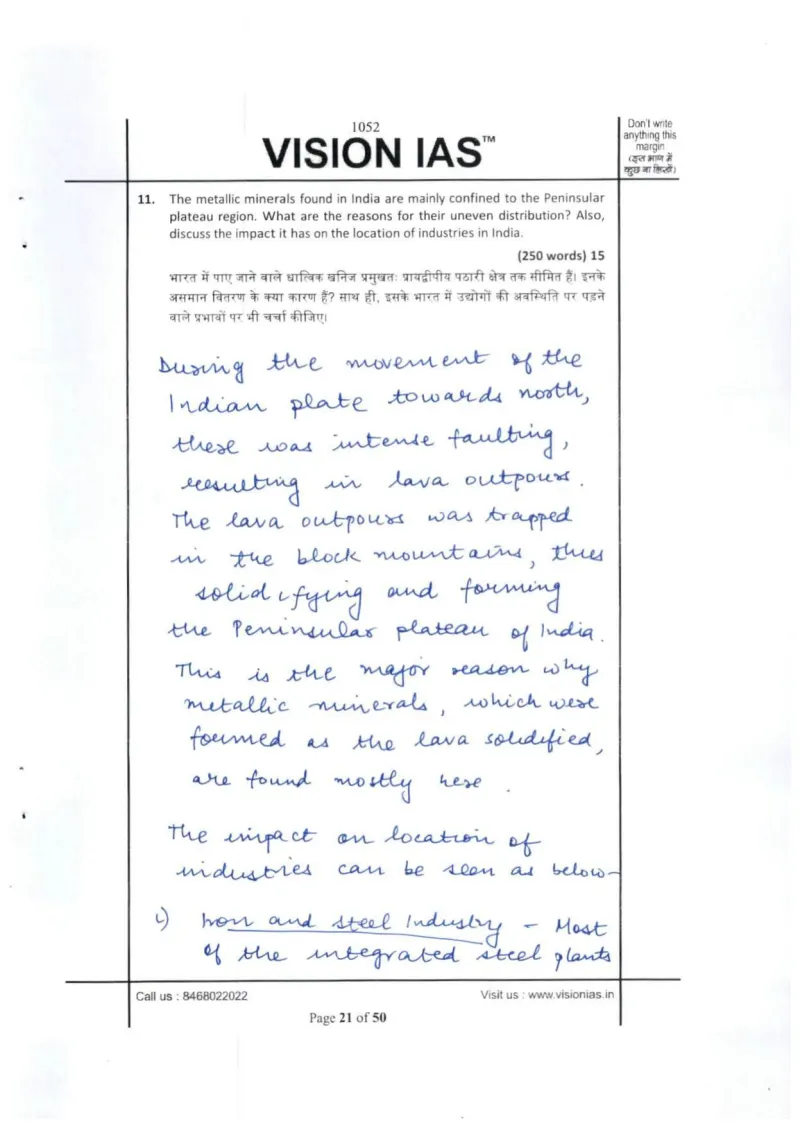
Every answer follows the same disciplined skeleton: a 1-2 line context/definition intro, then boxed ALL-CAPS sub-headings (SUCCESSES/ISSUES/CHALLENGES/MEASURES/WAY FORWARD) with crisp bullets, closing on a one-line normative verdict
18 questions · 14 examples analysed

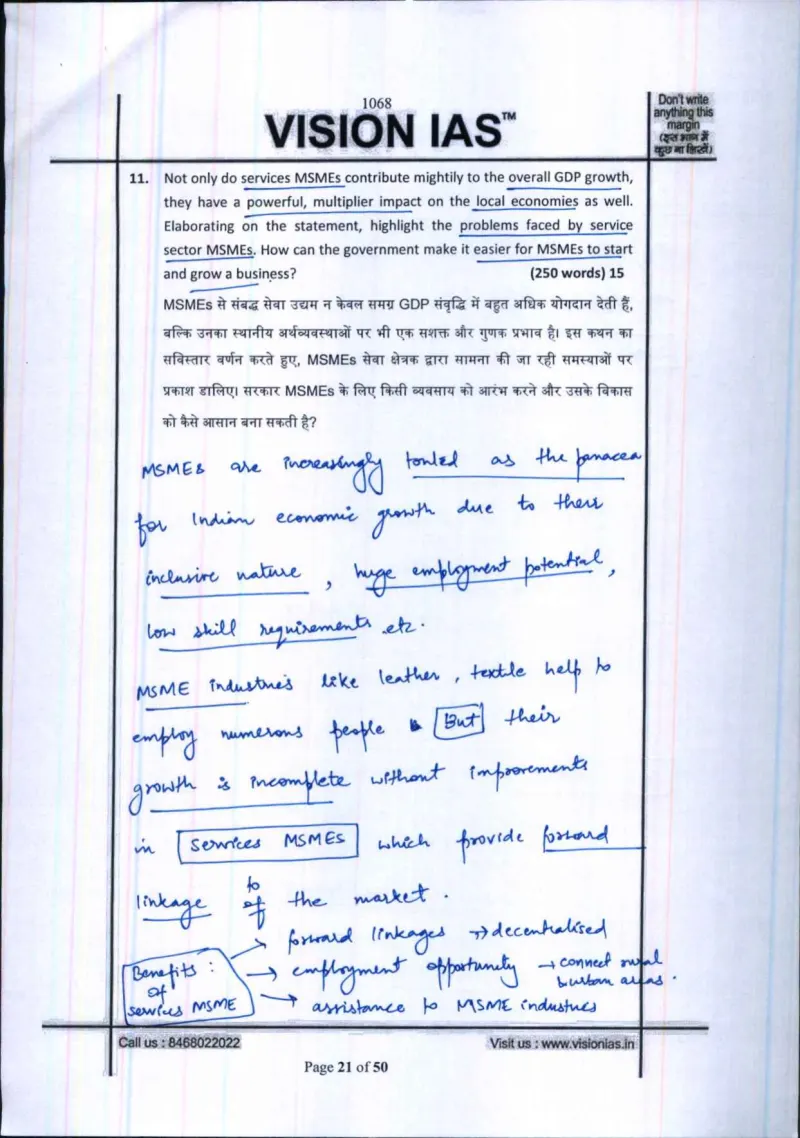
AIR 1 Kanishak Kataria's VisionIAS GS mock (Test 1068, Jaipur, Aug 2018) — a clean, fully unmarked copy with no scores entered anywhere.
20 questions · 14 examples analysed

Every Section-B case study follows an identical disciplined skeleton: Stakeholders -> Issues involved -> Options available (each weighed with explicit Merit/Demerit) -> chosen option -> long-term measures.
19 questions · 14 examples analysed

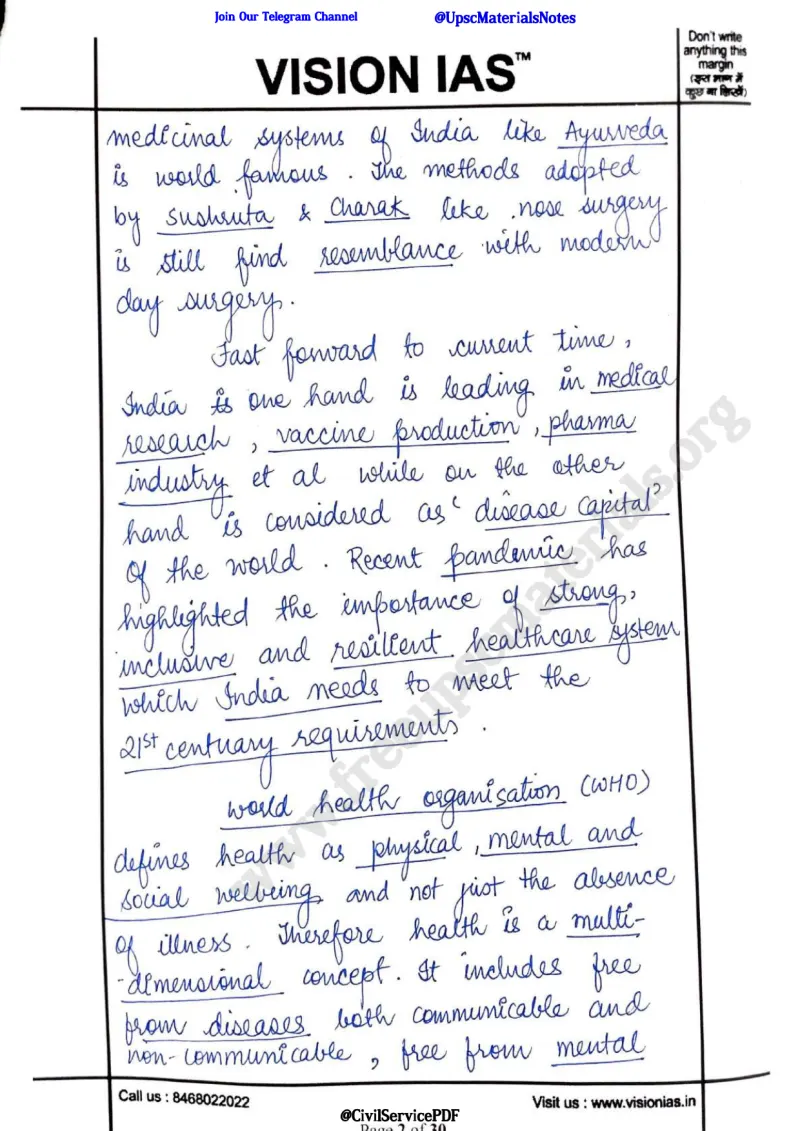
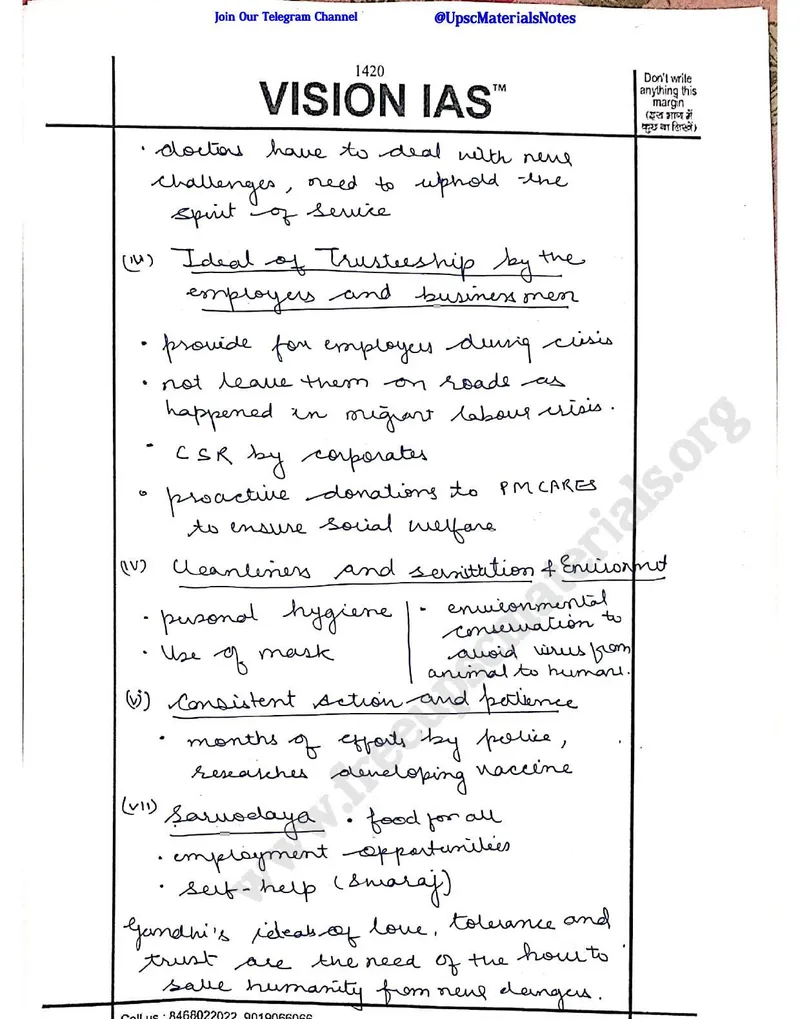
Opens the health essay with a sweeping historical hook - Bubonic plague to Spanish flu to COVID-19 - framing health as a recurring civilisational threat
2 questions · 14 examples analysed

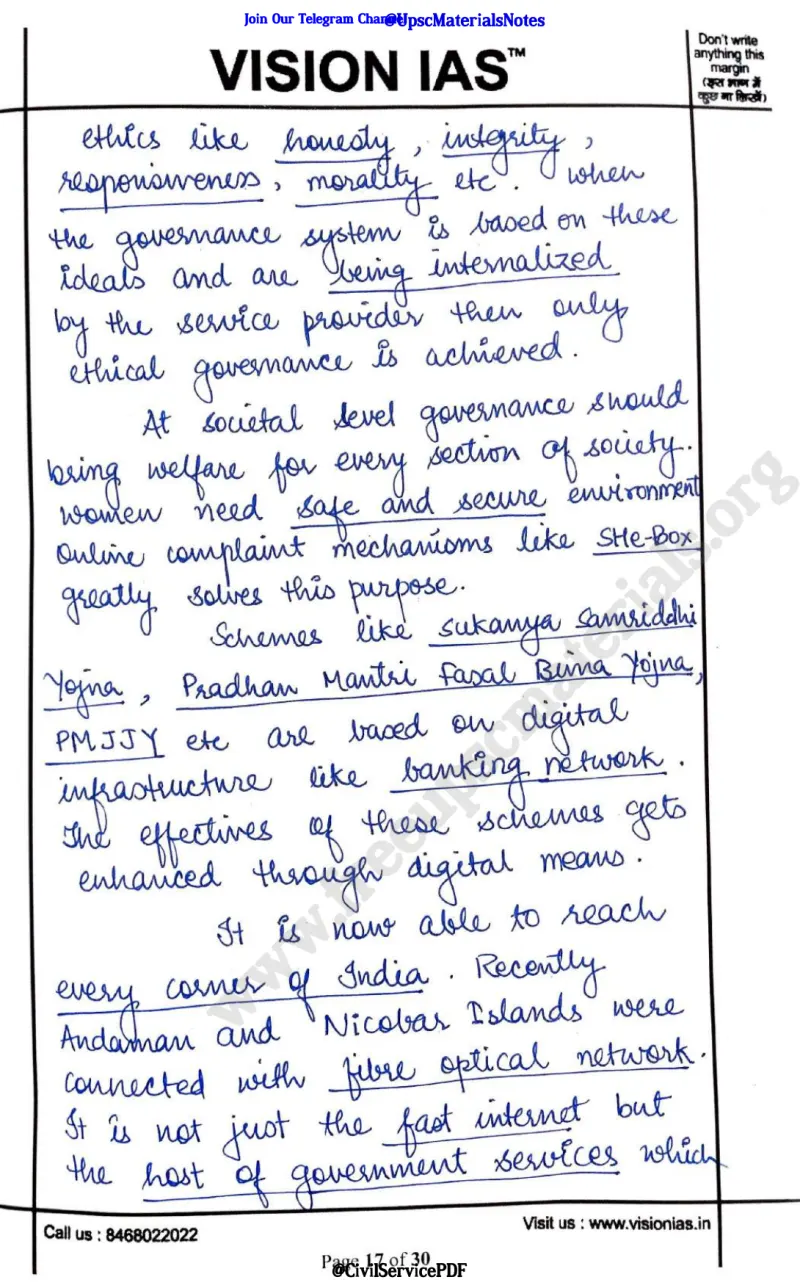
AIR 1 Shubham Kumar's VisionIAS essay copy contains two full essays — 'Some things you learn best in calm, and some in storm' and 'Digital Infrastructure is key for future-ready governance.'
2 questions · 14 examples analysed

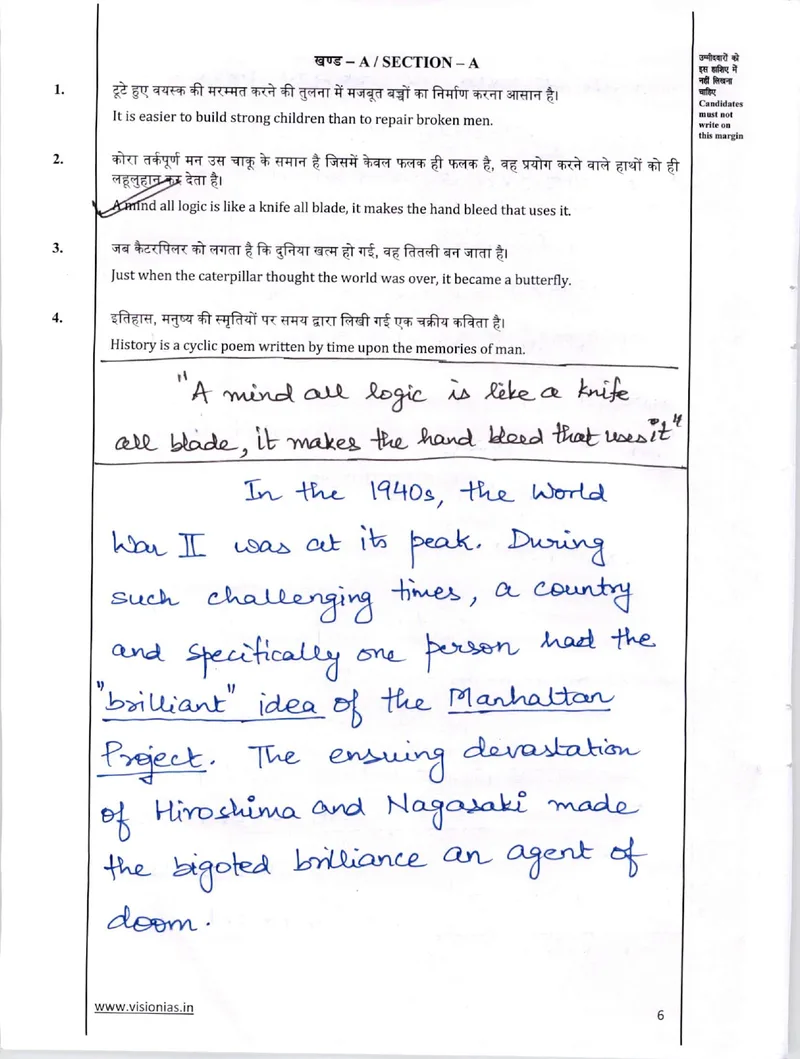
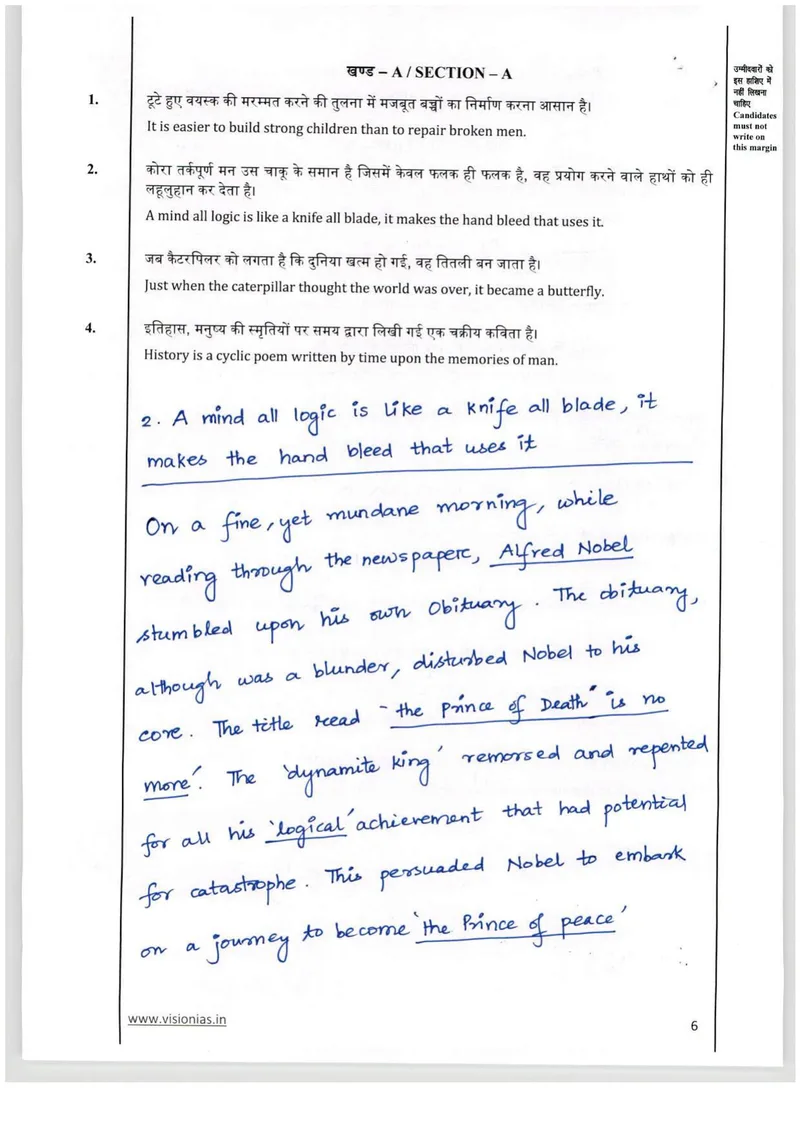
Chose Section A topic 2 — 'A mind all logic is like a knife all blade, it makes the hand bleed that uses it'
1 question · 1 example analysed

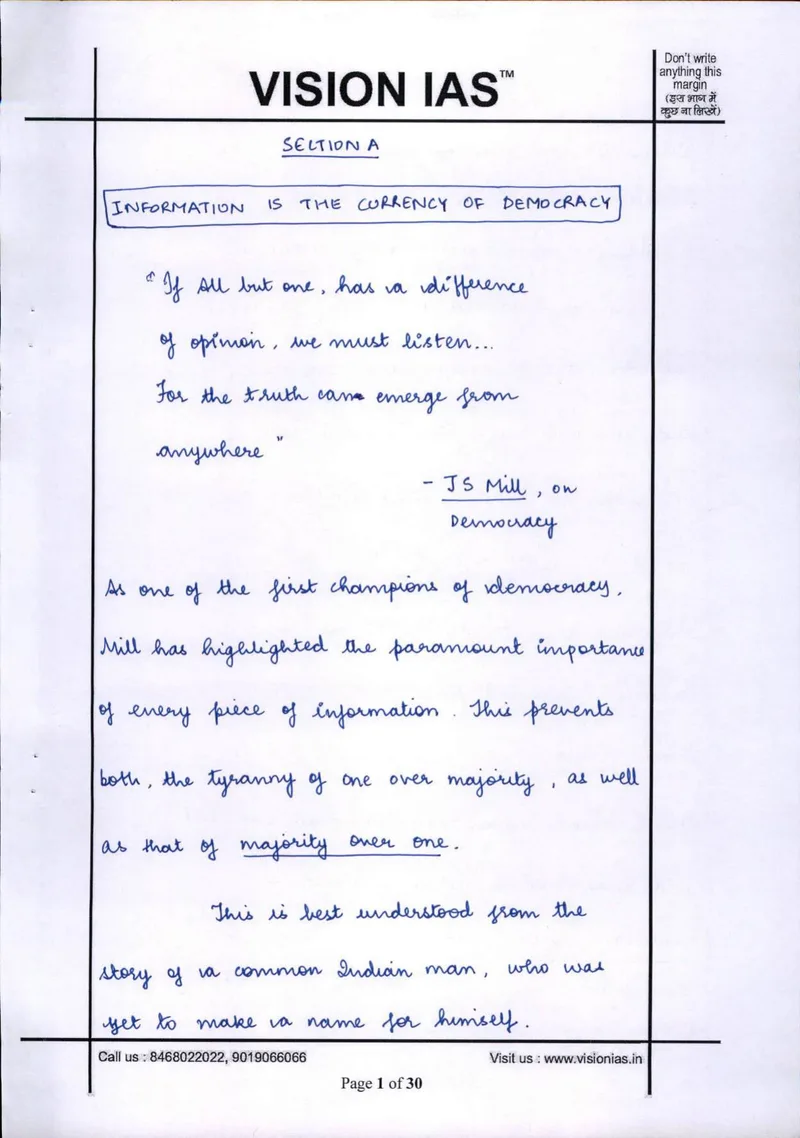
Section A essay titled 'Information is the currency of democracy'
1 question · 3 examples analysed

Attempts all 20 questions fully (ten 150-word + ten 250-word answers) with no blank/skipped answers and consistent point-form layout.
20 questions · 14 examples analysed

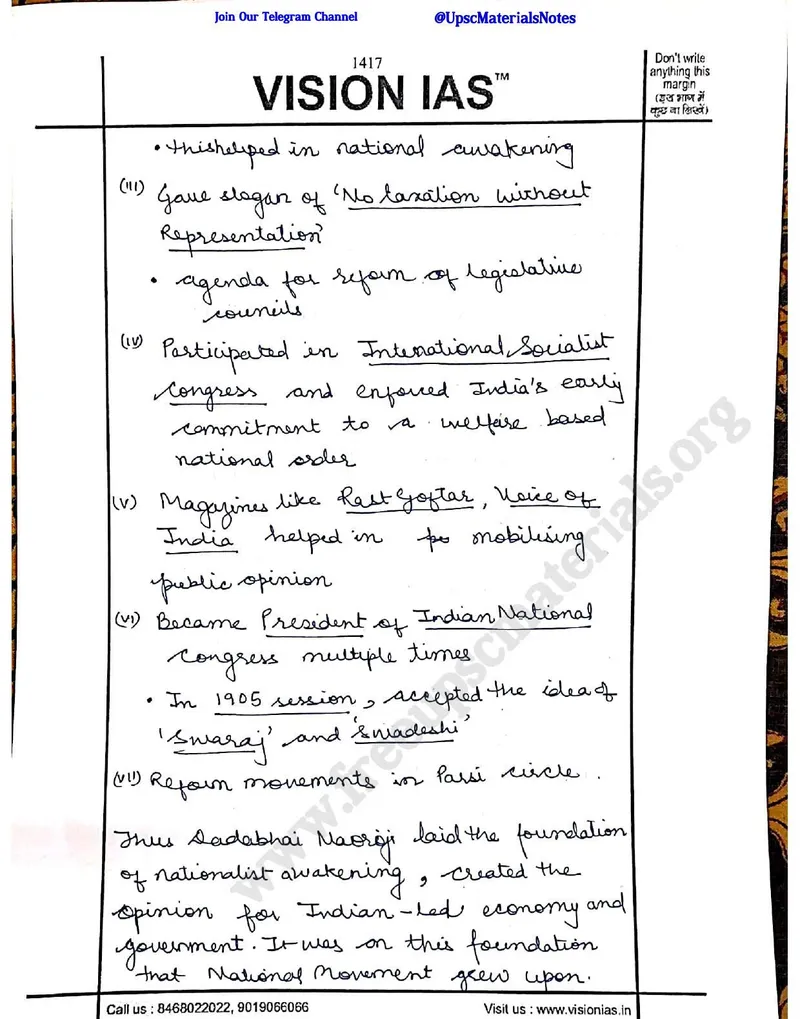
Opens almost every answer with a crisp one-line definition or context, then builds with Roman-numeral points, each capped by a concrete 'Eg' scheme or case - a repeatable, examiner-friendly template.
12 questions · 12 examples analysed

Case studies follow a disciplined template — stakeholders, ethical issues, options with pros/cons, chosen option, course of action, and a value-based conclusion.
8 questions · 8 examples analysed

Chose the same Section A topic 2 as AIR 1 Aditya Srivastava — 'A mind all logic is like a knife all blade…' — but with a completely different opening
1 question · 1 example analysed

Almost every answer opens with a hard data hook — Q1 leads with 'India 130 of 190', Q6 with 'SMEs ~38% of GDP and over 8 crore jobs', Q8 with per-capita energy figures — anchoring the answer in facts immediately.
20 questions · 14 examples analysed

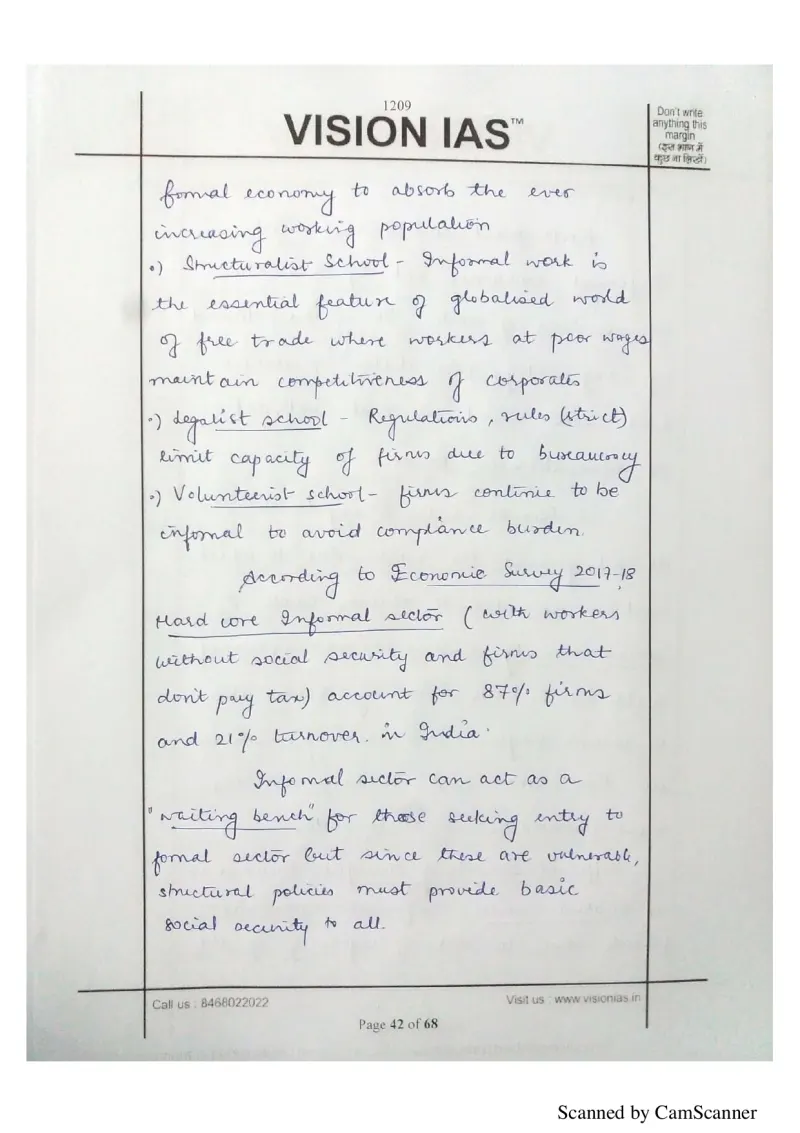
Opens nearly every answer by defining the term through a named sociologist (Bierstedt for objectivity, Keith Hart for informal work, Yogendra Singh for development, Wilbert Moore for social change) before building the body
19 questions · 10 examples analysed
AIR 1 · CSE 2020 · GS Mains
AIR 1 · CSE 2023 · Essay
AIR 1 · CSE 2022 · Essay
AIR 2 · CSE 2020 · GS Mains
AIR 2 · CSE 2023 · Essay
29 booklets from 9 candidates, covering Essay (5), Full GS mains (24). Every one is a free PDF — no sign-up, no paywall.
No. These are candidates' own handwritten answer sheets, written on VisionIAS mains test-series papers and filed here under that label so you can find them. UnlockIAS is not affiliated with VisionIAS; credit for each booklet belongs to the candidate who wrote it and to the test series that set and evaluated the paper.
Not the content — the shape. How long the introduction runs, whether the body is point-wise or paragraph-wise, where diagrams and flowcharts sit, how the conclusion links back to the question, and how much of the answer space each sub-part gets. Those are the transferable decisions; the facts you already have from your own notes.
Yes, and it is the more useful exercise. The same archive holds booklets from Vajiram & Ravi, NextIAS, DrishtiIAS, ForumIAS, InsightsIAS. Reading two writers on the same paper from different programmes shows you which habits are genuinely common to good answers and which are just one evaluator's house style.

A topper's copy shows you the target. The Sherlocking Mains programme trains you to hit it — daily answer writing with AWE Bot evaluation and mentorship. Or get one Mains answer evaluated free.