Shubham Kumar secured All India Rank 1 in UPSC CSE 2020.
The archive holds eight of his Vision IAS booklets, including two full essay tests.
We read 3 of these booklets page by page — below is exactly what’s inside: the questions Shubham attempted, the examples and quotations used, and how each answer was structured. Every copy is a free PDF.
AIR 1 · CSE 20208 free PDFsUpdated 29 Jun 2026
Inside Shubham Kumar’s answer copies
Shubham Kumar — Vision IAS Paper 1 booklet
GS Paper 4 · EthicsPDF · 22 MB
What’s inside this copy
▸Every Section-B case study follows an identical disciplined skeleton: Stakeholders -> Issues involved -> Options available (each weighed with explicit Merit/Demerit) -> chosen option -> long-term measures.
▸Almost every theoretical point is immediately anchored with an 'Eg ->' real-world example (Gandhi's train incident, Sonu Sood, Aadhaar/UIDAI, the Bihar shelter-home case).
▸Answers open with a crisp one-line definition or hook before the body (e.g., defines 'Probity in Governance' and 'Corruption' up front before arguing).
▸Reform arguments are backed by named authorities: 2nd ARC (cooling-off period, Codes of Ethics/Conduct), NOLAN Committee, the Supreme Court's Civil Services Board, and the LARR Act 2013.
▸Time is tracked in the margins per question ('Case Study - 2hrs', 'total 3:35'), evidence of tight time management across all 14 compulsory questions.
▸For the corporate-leader question he picks Nandan Nilekani and ties each moral lesson to a concrete act (left an MNC to build Infosys, donated an IIT-Bombay hostel, chaired UIDAI/Aadhaar).
What to learn from this copy
★He runs an identical 5-step skeleton on EVERY Section-B case study: Stakeholders -> Issues involved -> Options available (each weighed with an explicit Merit/Demerit pair) -> chosen option -> long-term measures (used across the Sarpanch-on-paper, shelter-home rape, Chief Secretary PWD-tender, and SPV power-plant cases). -> Build one reusable case-study template and apply it mechanically so under exam pressure you never freeze on 'how do I structure this 20-marker' — the Merit/Demerit weighing of each option is what shows the examiner you reasoned rather than jumped to a verdict.
★Almost every theoretical point is immediately anchored with an 'Eg ->' real example rather than left abstract — Gandhi being thrown off the train (man modifying his environment), Sonu Sood/NGOs ferrying migrants home in lockdown, India sending medicines to 150+ countries (Gandhian ideals vs Covid), and Nandan Nilekani leaving an MNC to build Infosys / chairing UIDAI-Aadhaar for the corporate-leader question. -> Treat every claim as incomplete until it has a concrete 'Eg ->'; stock a small bank of versatile real-world instances (a freedom fighter, a contemporary citizen-hero, a scheme) you can attach to ethics arguments on demand.
★He backs reform arguments with NAMED authorities instead of vague 'committees have suggested' — 2nd ARC's 2-year cooling-off period and its Code of Ethics/Code of Conduct (post-retirement-jobs answer), the Nolan Committee, the Supreme Court's Civil Services Board, and the LARR Act 2013. -> Memorise a handful of precise, citable ethics/governance anchors (committee + its specific recommendation, landmark act + year) so your suggestions read as informed policy rather than opinion.
★Every 150-word answer opens with a crisp one-line definition or aphoristic hook before the body — e.g. defining 'Probity in Governance' and 'Corruption' up front in the probity question, and seeding quotes like Sardar Patel's 'Civil Servants are the steel frame of India' (Q12) and 'Knowledge is power' (Q7). -> Lead with a tight definition/hook to set the terms of the answer in your favour; for quotation questions, decode the keyword in the first line before explaining, so the examiner sees you grasped the demand instantly.
★He uses arrow-linked cause-effect chains as his core visual device instead of decorative diagrams — e.g. 'Integrity in private life -> think/act/speak consistently -> professional life impacted' and 'knowledge is power -> ... -> Good Governance', and he tracks time per question in the margins ('Case Study - 2hrs', 'total 3:35') across all 14 compulsory questions. -> When a topic is conceptual (not map/data driven), a simple arrow flow conveys logic faster than prose; and margin time-stamping is a concrete discipline trick to guarantee you finish every compulsory question.
Questions attempted: Man is a product of his environment but can also modify it — agree? (150w, max 10); Accountability vs efficiency; accountability as sine qua non for good governance (150w, max 10); Gandhian ideals to deal with the Covid-19 pandemic — evaluate (150w, max 10), and 16 more below.
Questions attempted in this booklet (19)+
1(a).Man is a product of his environment but can also modify it — agree? (150w, max 10)
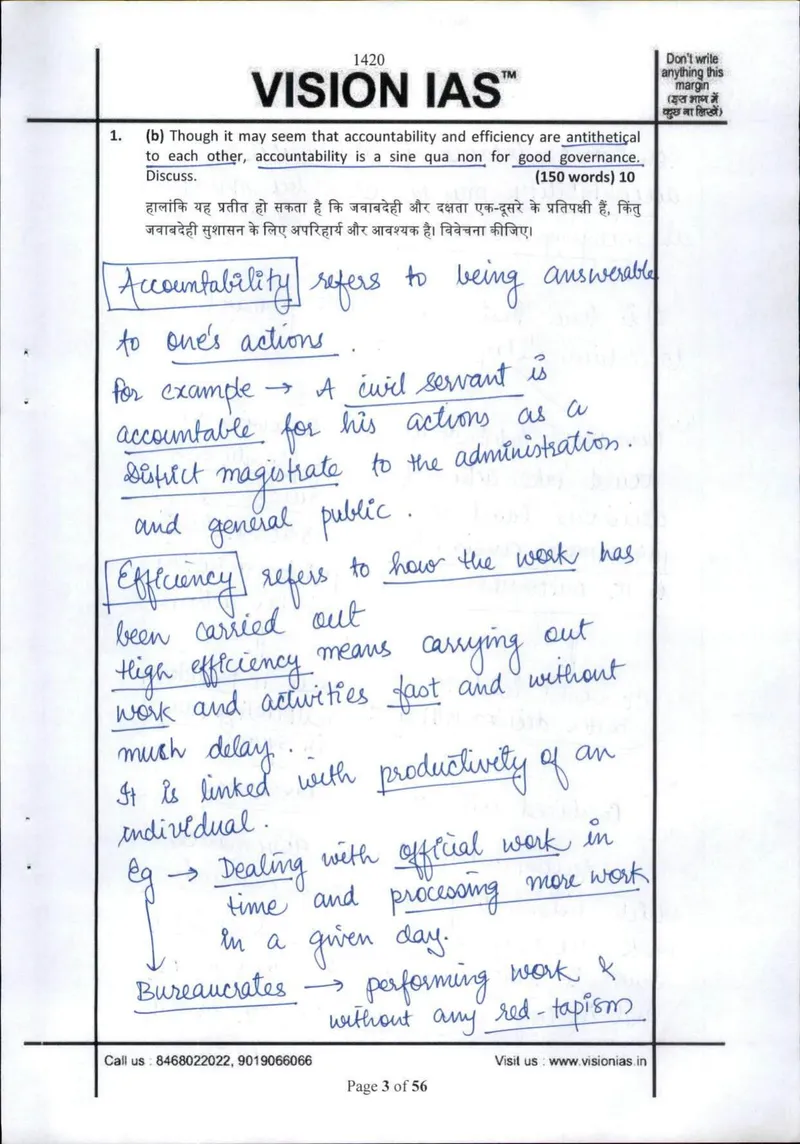
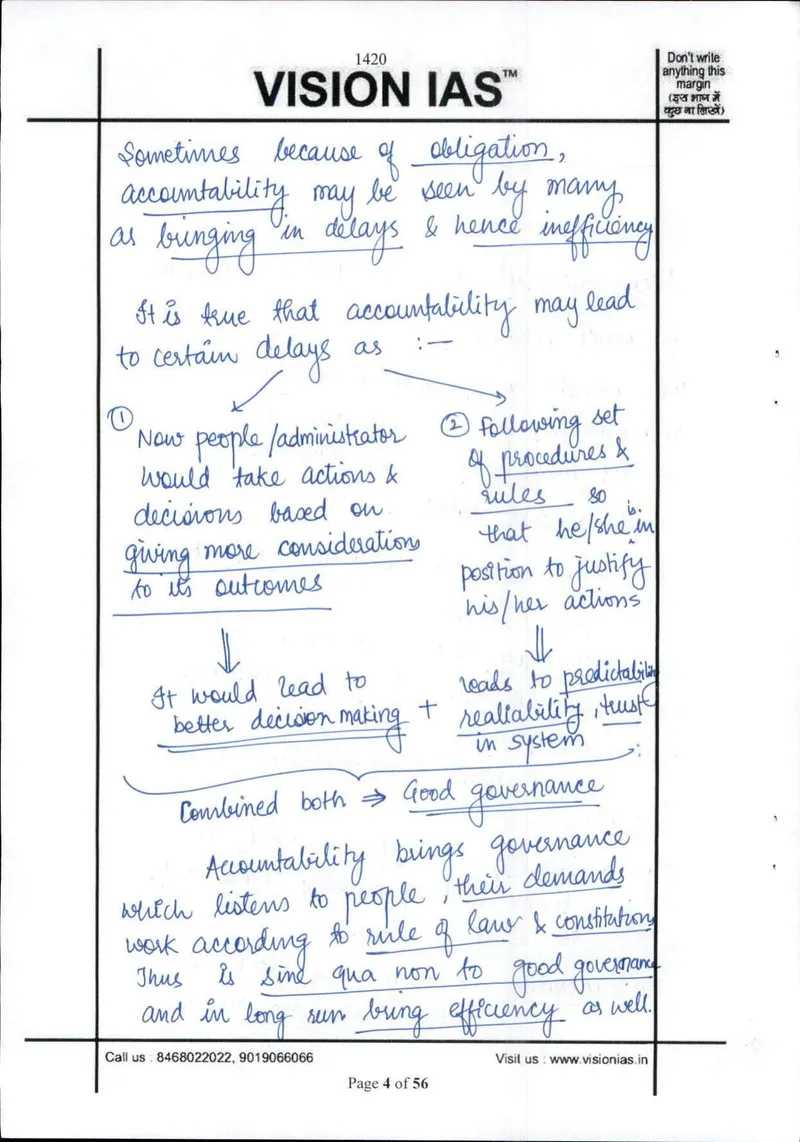
1(b).Accountability vs efficiency; accountability as sine qua non for good governance (150w, max 10)
2(a).Gandhian ideals to deal with the Covid-19 pandemic — evaluate (150w, max 10)
2(b).Civil servants' post-retirement jobs — legal right vs ethical issues (150w, max 10)
3(a).Quotation explanation — Einstein: 'Try not to become a man of success but a man of value' (150w, max 10)
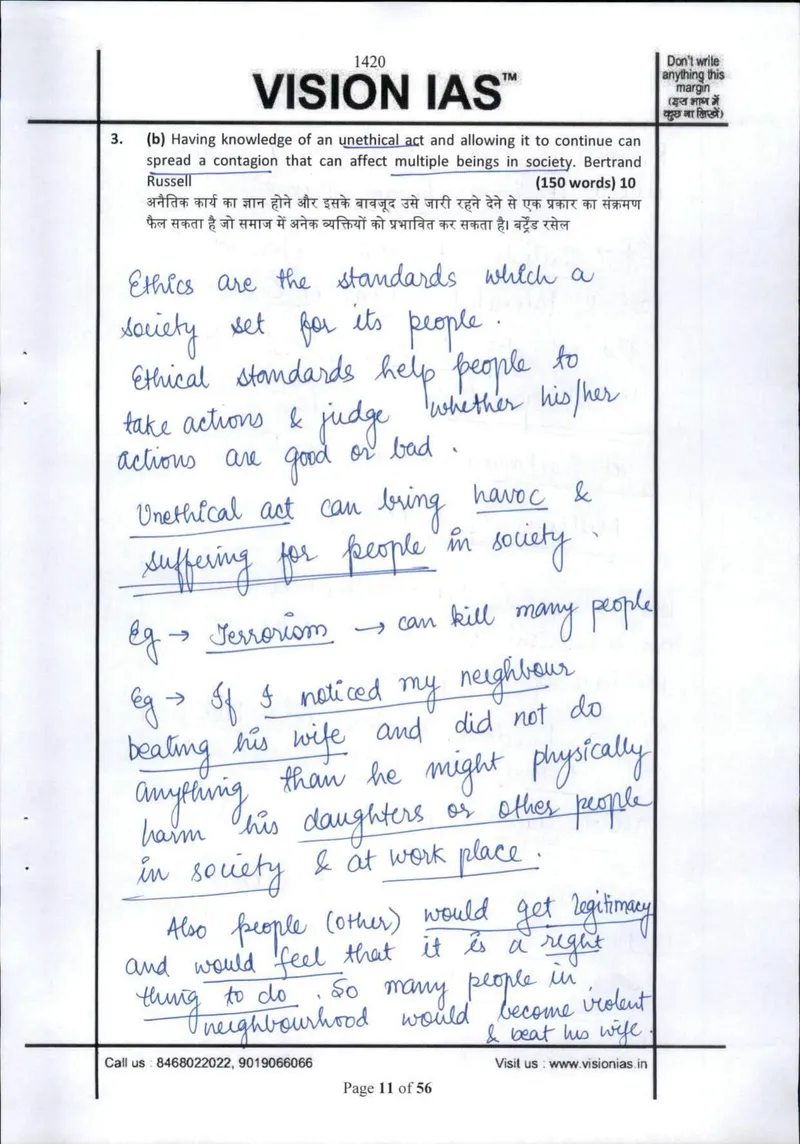
3(b).Quotation explanation — Bertrand Russell: knowing an unethical act and allowing it spreads a contagion (150w, max 10)
4(a).Tragedy of the commons — ethical challenges of utilizing Global Commons (150w, max 10)
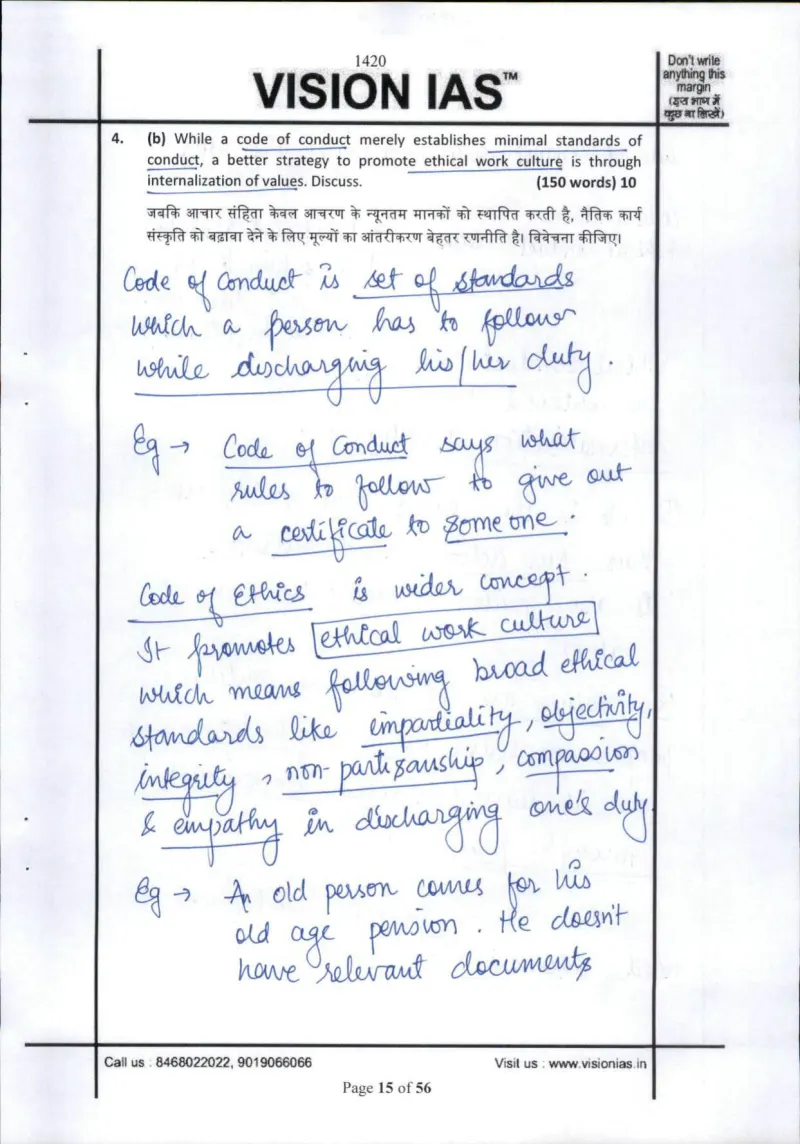
4(b).Code of conduct vs internalization of values for ethical work culture (150w, max 10)
5(a).Political will/discipline to enforce probity needed to end prolonged corruption (150w, max 10)
5(b).Colonial mindset in administration; Indian bureaucratic work culture (150w, max 10)
6.Corporate leader who inspired you most and moral lessons — answered Nandan Nilekani (150w, max 10)
7.People's participation + easy access to information transform governance into good governance (150w, max 10)
8.Does moral scrupulousness in private life guarantee high moral stature in professional life? (150w, max 10)
9.Case study — DM; woman Sarpanch 'head only on paper', husband runs the panchayat (250w, max 20)
10.Case study — global governance: factors hindering collective action, moral obligation, guiding principles (250w, max 20)
11.Case study — SP; shelter-home rape case, police-politician nexus, pressure to go slow (250w, max 20)
12.Case study — senior IAS up for Chief Secretary; PWD tender favouring CM's son-in-law's Company X (250w, max 20)
13.Case study — head of SPV; power plant vs displacement, NGO, environment vs growth (250w, max 20)
14.Case study — genome/genetic editing bioethics; CRISPR, designer babies (250w, max 20)
Examples, data & evidence used
Gandhi thrown off a train — resolve to fight discrimination/British rule
Ambedkar's childhood experience shaping his personality
Raja Ram Mohan Roy — fight to eradicate Sati
Abraham Lincoln — changing American views on slavery
Gandhi — non-violence and Satyagraha
Paris Climate Deal/agreement
Sonu Sood and NGOs helping migrants reach home during the lockdown
Gandhian Trusteeship concept
India distributing medicines to 150+ countries; food security to the Gulf region and neighbourhood (Covid)
A former Chief Justice of India joining as a Member of Parliament (post-retirement job example)
2nd ARC — recommendation of a 2-year cooling-off period; Code of Ethics for civil servants & Code of Conduct for ministers
Terrorism as an unethical act killing many
Britain & France tolerating Nazi Germany after WWI; Hitler gaining legitimacy; millions of deaths
Freedom fighters — Bose, Nehru, Gandhi
Quotes the candidate used
Einstein (question prompt 3a): 'Try not to become a man of success but rather try to become a man of value.'
Bertrand Russell (question prompt 3b): 'Having knowledge of an unethical act and allowing it to continue can spread a contagion that can affect multiple beings in society.'
Gandhian, candidate-introduced (Q2a): 'The best way to find yourself is to lose yourself in the service of others' (paraphrased in copy)
Candidate-introduced (Q2a, Trusteeship): 'Service to people is service to God'
Sardar Patel, candidate-introduced (Q12): 'Civil Servants are the steel frame of India'
'Knowledge is power' (Q7)
How it’s written: Tight, formulaic UPSC structure. 150-word theory answers open with a short definition/contextual hook (often 'X refers to...' or a one-line aphorism), then break into underlined segmented sub-headings with bulleted/circled-number points, and almost every point carries an 'Eg ->' example; many close with a 'Way Forwa…
Diagrams & visuals: Merit/Demerit paired listings for each option in every Section-B case study (quasi-tabular two-side weighing); Arrow-linked flow chains using arrows to show cause-effect (e.g., 'Integrity in private life -> think/act/speak consistently -> professional life impacted'; 'knowledge is power -> ... -> Good Governance'); No maps; no formal boxed/labelled diagrams confirmable from the text layer (arrow-flow notation is the dominant visual device)
Evaluator: No examiner marks or comments are filled in on this copy.
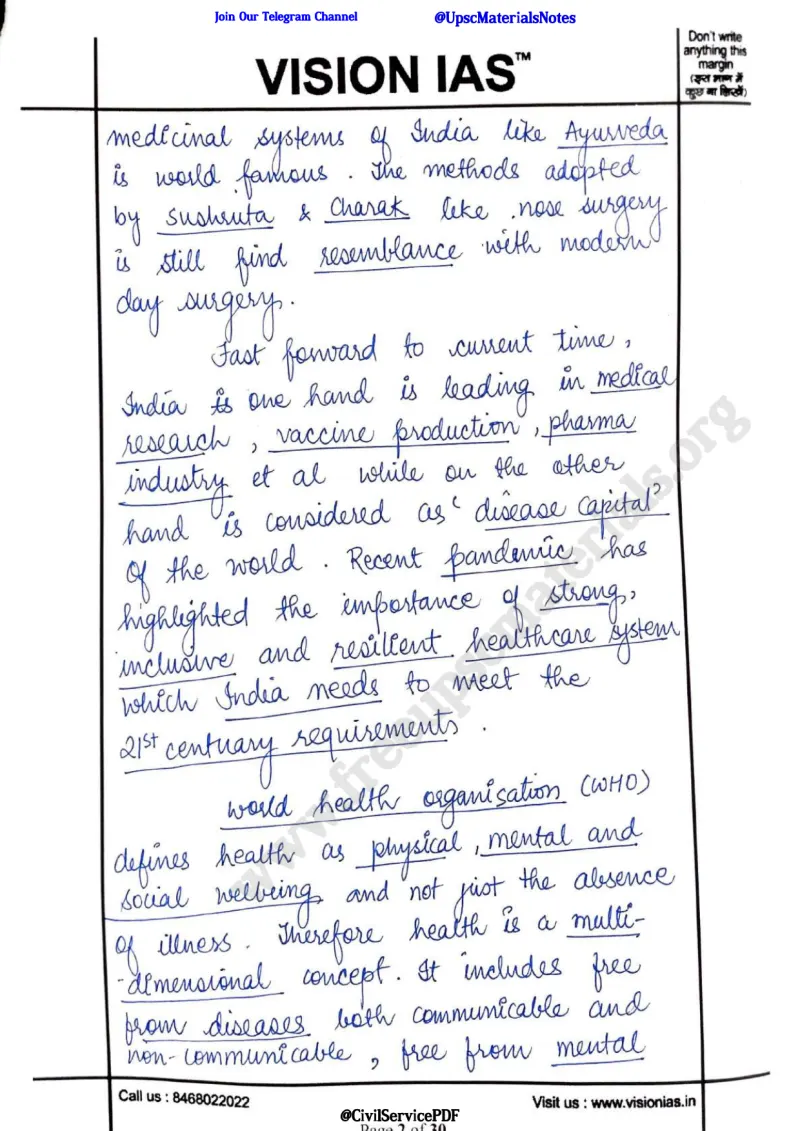
▸Opens the health essay with a sweeping historical hook - Bubonic plague to Spanish flu to COVID-19 - framing health as a recurring civilisational threat
▸Anchors arguments in definitions: cites the WHO 'physical, mental and social wellbeing' definition before calling health multi-dimensional
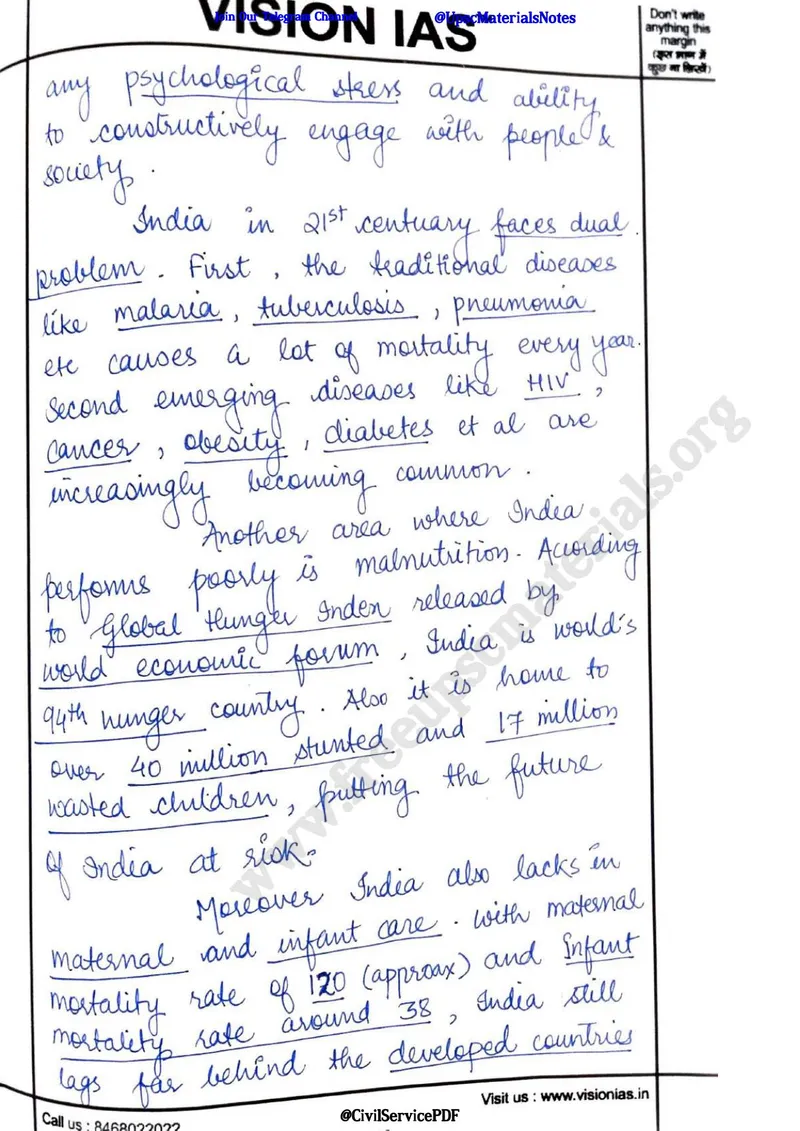
▸Data-backed throughout - Global Hunger Index rank, ~40 million stunted/17 million wasted children, maternal and infant mortality rates, doctor-to-patient ratio
▸Both essays are built from a detailed handwritten mind-map (intro/body/conclusion plus boxed sector-wise angles) visible on the rough-work sheets before the prose
▸The army-of-principles essay sweeps across social, political, economic, international, judicial, legal, ethical, technological and sports angles, each looped back to the theme
▸Closes each essay on a marquee quote - Victor Hugo for health, A.P.J. Abdul Kalam's 'righteousness to peace in the world' ladder for principles
What to learn from this copy
★Shubham opens the health essay with a chronological civilisational hook — Bubonic plague (14th c., ~a third of humanity) -> Spanish flu (~50 million dead) -> COVID-19 — to frame health as a recurring threat across eras before narrowing to India. -> Build your intro as a short historical escalation that ends at the present-day relevance of the prompt, so the reader feels the topic's weight before you state your thesis.
★He anchors the abstract word 'health' in an authoritative definition first — quoting the WHO ('physical, mental and social wellbeing, not merely absence of illness') — and only then argues health is multi-dimensional. -> When an essay turns on a contested/abstract keyword, define it via a credible source up front; the rest of the essay then has a fixed yardstick to argue against.
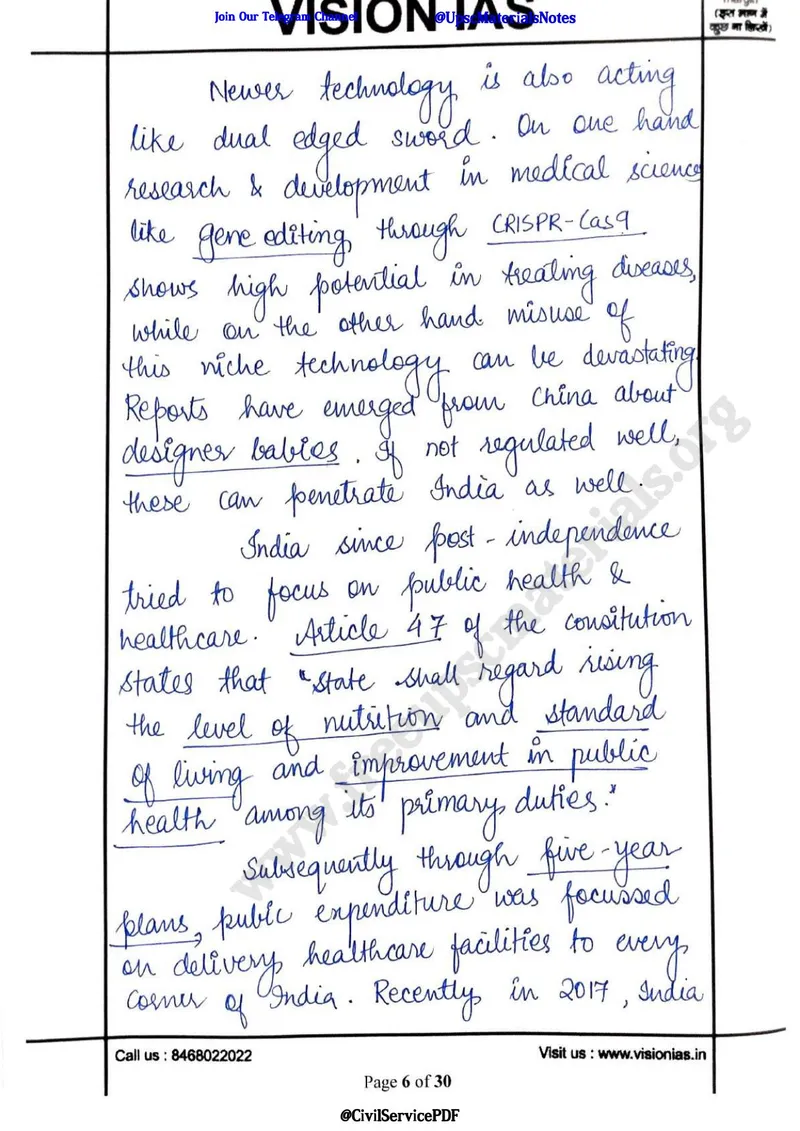
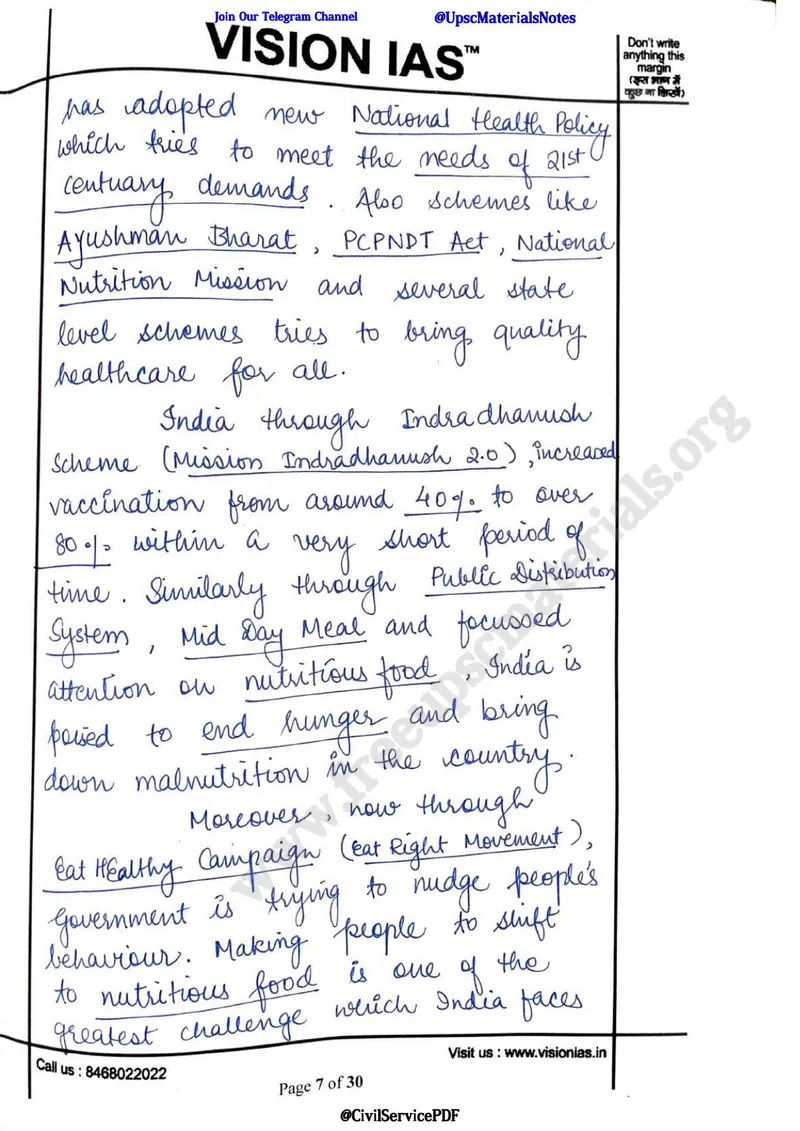
★The body is saturated with concrete India-specific data rather than adjectives: Global Hunger Index rank 94, ~40 million stunted and ~17 million wasted children, maternal mortality ~120, infant mortality ~38, doctor-to-patient ratio ~32 per lakh, plus Article 47 as the constitutional hook. -> Convert claims like 'India's health is weak' into a stacked set of named statistics and the relevant Article — specificity is what separates a topper essay from generic prose.
★Before writing, he made a detailed handwritten mind-map for each essay (visible on the rough sheets) with explicit Intro/Body/Conclusion blocks and boxed sector-wise angles — social, political, economic, international, judicial, legal, ethical, technological, sports — joined by arrows. -> Spend the first minutes drawing a multi-dimensional planning map; the 'boxed angles' method guarantees the essay covers every sphere and reads as deliberately structured, not stream-of-consciousness.
★For the abstract 'army of principles' essay he forces the theme through that same set of distinct sectoral lenses, each looped back to the central idea, so a philosophical quote becomes a 360-degree argument. -> For quote/abstract essays, don't stay philosophical — systematically test the statement across society, politics, economy, law, ethics, technology etc., tying each back to the line.
★Each essay closes on a marquee quotation that mirrors its theme — Victor Hugo's 'no greater force than the idea whose time has come' for health, and Kalam's 'righteousness in the heart... peace in the world' ladder for principles. -> End on a memorized, theme-matched quote that resolves your argument rather than a flat summary; the right closing line leaves the examiner with your thesis in elevated form.
Questions attempted: "A health system to meet 21st century needs in India"; "An army of principles can penetrate where an army of soldiers cannot".
Questions attempted in this booklet (2)+
Section A - Essay 4."A health system to meet 21st century needs in India"
Section B - Essay 5."An army of principles can penetrate where an army of soldiers cannot"
Examples, data & evidence used
Essay 1 (Health) - Bubonic plague (14th century, killed ~one-third of humanity)
Essay 1 - Spanish flu (~50 million deaths)
Essay 1 - COVID-19 / current global pandemic
Essay 1 - WHO definition of health (physical, mental and social wellbeing, not merely absence of illness)
Essay 1 - Ayurveda; Sushruta and Charaka (nose surgery resembling modern surgery)
Essay 1 - Global Hunger Index (India ranked 94th, per World Economic Forum)
Essay 1 - ~40 million stunted and ~17 million wasted children
Essay 1 - Maternal mortality ~120 and infant mortality ~38
Essay 1 - Doctor-to-patient ratio ~32 per lakh population
Essay 1 - Blue Whale challenge (mental health risk to children)
Essay 1 - CRISPR-Cas9 gene editing; 'designer babies' reports from China
Essay 1 - Article 47 of the Constitution (raising nutrition, standard of living, public health)
Essay 1 - Five-Year Plans
Quotes the candidate used
Victor Hugo: 'There is no greater force than the idea whose time has come.' (closes Essay 1)
Nelson Mandela: 'Education is the most powerful weapon which you can use to change the world.' (Essay 2)
A.P.J. Abdul Kalam: 'Where there is righteousness in the heart, there is beauty in the character. When there is beauty in the character, there is harmony in the home. When there is harmony in the home, there is order in the nation. When there is order in the nation, there is peace in the world.' (closes Essay 2)
How it’s written: Two full-length prose essays, each running roughly half of the 30-page booklet, balanced in length. Each essay is preceded/accompanied by a detailed handwritten PLANNING sheet (mind-map/outline) at the back of the booklet, with explicit Intro / Body / Conclusion blocks and boxed sector-wise sub-themes joined by arro…
Diagrams & visuals: No formal diagrams, flowcharts, maps or tables within the essay bodies (both are continuous prose); Detailed handwritten mind-map / outline planning sheets for both essays - boxed sub-themes (social, political, economic, international, judicial, legal, ethical, technological, sports angles) linked by arrows, with Intro/Body/Conclusion structure
Evaluator: No examiner marks or comments are filled in on this copy.
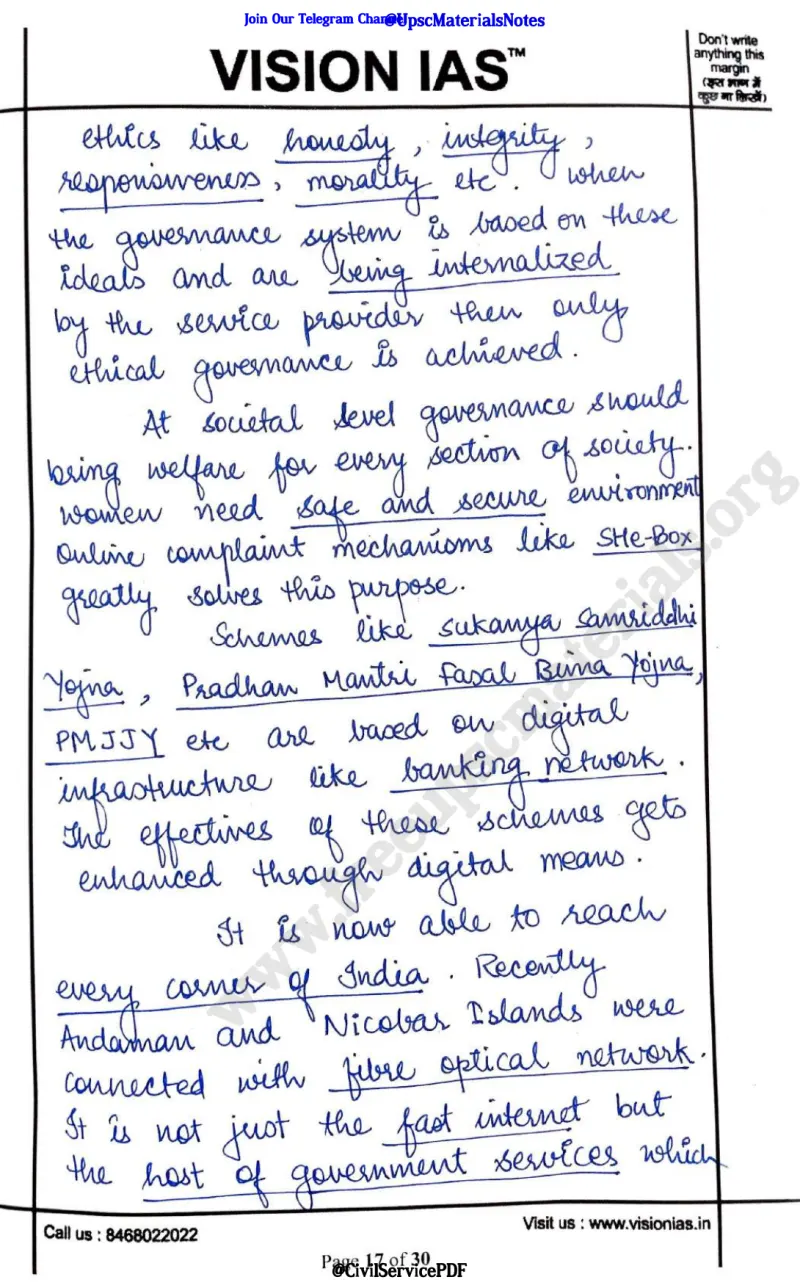
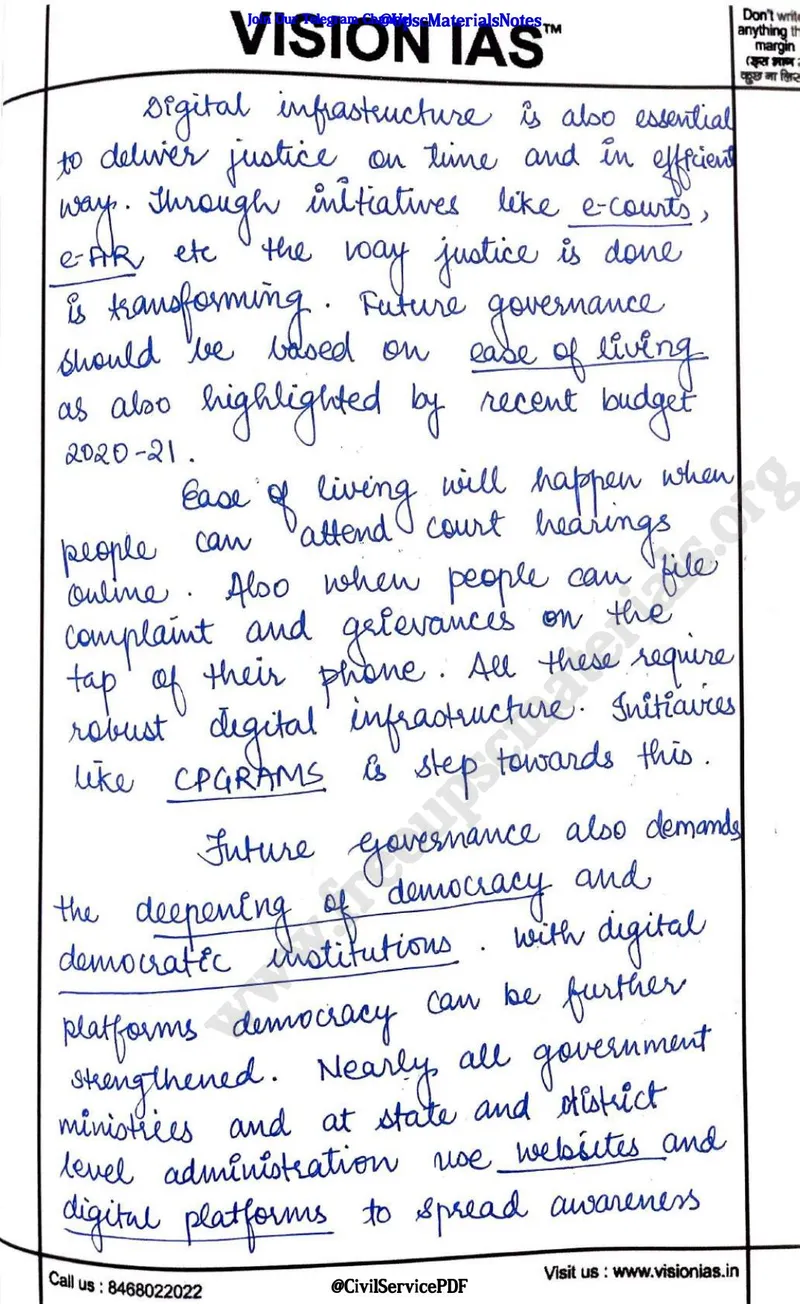
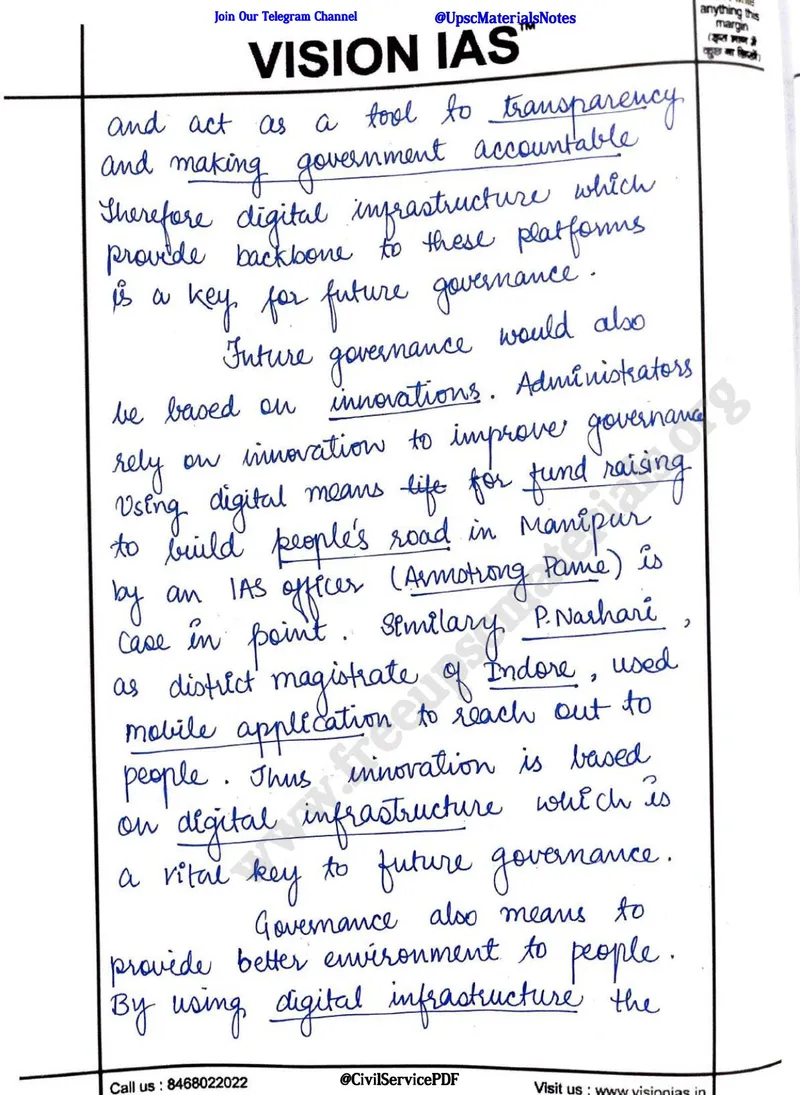
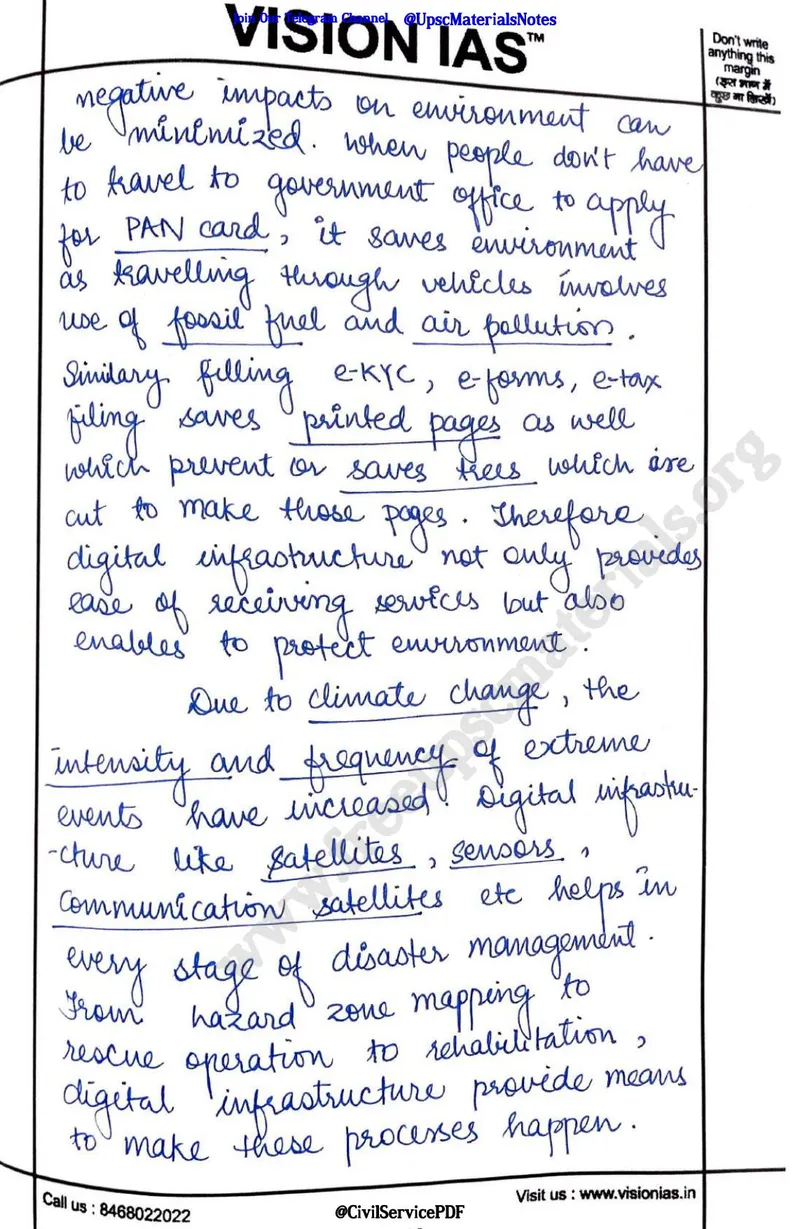
▸AIR 1 Shubham Kumar's VisionIAS essay copy contains two full essays — 'Some things you learn best in calm, and some in storm' and 'Digital Infrastructure is key for future-ready governance.'
▸The calm/storm essay opens with twin parables — Buddha's enlightenment under the peepal tree (calm) and Ashoka's awakening after the Kalinga war (storm) — a story-led hook.
▸He grounds the argument in concrete Indian milestones: Hindu Succession Act 1956 and the Mahalanobis model (calm) versus RTI 2005, Lokpal 2013 and the crisis-born 1991 LPG reforms (storm).
▸The governance essay opens with a Kautilya/Arthashastra quote on the ruler's welfare lying in his subjects' welfare, then maps digital governance across society, economy, justice, democracy and disaster management.
▸Each essay is preceded by a detailed branching mind-map plan — the digital-governance plan alone spans two pages, from schemes (She-Box, PM Fasal Bima, TRIFED) and platforms (PRAGATI, Mission Karmayogi, DBT, eNAM) to challenges (digital divide, 5G imports, surveillance state, data security).
▸He closes with Socrates — 'An unexamined life is not worth living' — linking learning to self-examination, yoga and conscience.
What to learn from this copy
★He opens the calm/storm essay with twin parables that physically embody the two halves of the topic - Buddha attaining enlightenment under the peepal tree after ~40 days of meditation (calm) set directly against Ashoka's awakening after the bloody Kalinga war (storm) -> when a topic has a binary in it, hook the reader with one concrete story for EACH pole in the very first lines, so your introduction itself demonstrates the dichotomy instead of just stating it.
★He proves abstract claims with paired, contrasting Indian milestones rather than vague assertions: calm-phase law-making (Hindu Succession Act 1956, Mahalanobis model) deliberately set against crisis-born change (RTI 2005, Lokpal 2013, the 1991 LPG reforms triggered by the balance-of-payments crisis) -> build your body around matched example-pairs that sit on opposite sides of your argument; the contrast does the analytical work and shows range across history, economy and law.
★He drives a single thread across multiple dimensions in a fixed escalating order - individual -> institutional (ISRO's first satellite-launch failure as a learning) -> economic -> health/education -> international (World Bank, IMF, UN born after wars) -> environmental (Rio 1992) -> nations that failed to learn (fall of USSR, break-up of Pakistan) -> climb deliberately from the personal to the national-to-global scale so the essay visibly widens; including counter-cases of failure-to-learn shows you can argue the negative side too.
★He anchors the governance essay in authority by opening on the Kautilya/Arthashastra line that the ruler's welfare lies in his subjects' welfare, and closes the calm/storm essay on Socrates' 'An unexamined life is not worth living' linking learning to self-examination and conscience -> bookend an essay with a substantive, on-point quotation (an ancient Indian source to open, a philosophical one to close) so the argument is framed by ideas, not decoration.
★Before writing, he made a two-page branching mind-map plan (booklet pages 29-30): a hub-and-spoke flowchart fanning Governance into Historical/Social/Economic/Political/Constitutional/Environmental branches, with sub-nodes for Women/Tribal/Children/Health/Disaster, stocked with ready specifics (She-Box, PM Fasal Bima, PRAGATI, Mission Karmayogi, DBT, eNAM) and a numbered 1-7 Challenges list plus Way Forward and Conclusion nodes -> invest the first minutes in a visual brainstorm that pre-loads concrete schemes and a challenges-to-way-forward arc, so the prose flows in one structured pass instead of drifting.
Questions attempted: "There are some things you learn best in calm, and some in storm" — learning across calm vs crisis phases (individual, institutional, national, international); "Digital Infrastructure is key for future-ready governance" — digital infra as backbone of good/ethical governance, with challenges and way forward.
Questions attempted in this booklet (2)+
Section A, Q3."There are some things you learn best in calm, and some in storm" — learning across calm vs crisis phases (individual, institutional, national, international)
Section B, Q7."Digital Infrastructure is key for future-ready governance" — digital infra as backbone of good/ethical governance, with challenges and way forward
Examples, data & evidence used
Kautilya / Arthashastra — concept of governance (welfare of subjects)
Buddha — enlightenment under peepal tree after ~40 days of meditation (calm)
Ashoka — transformation after the Kalinga war, turn to path of Dhamma (storm)
Gandhi — 'Struggle-Truce-Struggle' method; Non-Cooperation, Salt Satyagraha, Quit India movements
Hindu Succession Act 1956; Prevention of Atrocities Act 1989 (calm-phase legislation)
Mahalanobis model — rapid industrialisation / core industries (1950s)
1991 LPG reforms — liberalisation & privatisation, end of License Raj, balance-of-payments crisis
IITs, AIIMS, IIMs and 3-tier health infrastructure; COVID-19 driving tele-education & tele-medicine
ISRO — first satellite launch failure as a learning that shaped later success
World Bank & IMF (Bretton Woods agreement); United Nations — institutions born after wars/conflicts/Cold War
Rio Summit 1992 (environmental governance)
Fall of USSR and break-up of Pakistan — nations that failed to learn from history
She-Box (online complaint mechanism for women)
Quotes the candidate used
Kautilya (Arthashastra): "In the happiness of his subjects lies the King's happiness; in their welfare his welfare. He shall not consider as good only that which pleases him but treat as beneficial to him whatever pleases his subjects."
Socrates: "An unexamined life is not worth living."
"Life itself is the greatest teacher of all" (used as 'As rightly said' — no author attributed)
How it’s written: Both essays follow a disciplined, multi-dimensional structure. The calm/storm essay opens with twin parables (Buddha = calm, Ashoka = storm), defines 'learning', then moves through individual → institutional (ISRO) → economic → health/education → international → environmental dimensions, addresses why some people/na…
Diagrams & visuals: Two-page branching mind-map / brainstorm plan for the digital-governance essay (booklet pages 29-30): hub-and-spoke flowchart with arrows branching Governance into Historical/Social/Economic/Political/Constitutional/Environmental, sub-branches for Women, Tribal, Children, Health, International, Disaster, a numbered Challenges list (1-7) and a Way Forward + Conclusion node; No in-text diagrams within the essay bodies themselves — the essays are continuous prose; the diagrammatic content is confined to the pre-writing planning pages
Evaluator: No examiner marks or comments are filled in on this copy.
▸Essay booklet 1456 contains “A health system to meet 21st-century needs in India” — it opens with a historical sweep (bubonic plague → Spanish flu → COVID-19), then builds on the WHO definition of health, Global Hunger Index data and Ayushman Bharat before closing with the National Health Policy 2.5%-of-GDP target.
▸His second essay, “Digital infrastructure is key for future-ready governance”, opens with Kautilya’s Arthashastra and works through SHe-Box, eNAM and the Andaman optical-fibre link as governance examples.
▸The last pages of the essay booklet preserve his rough-work outline — a Social/Economic/Political/Environmental brainstorm grid with challenges and way-forward — a ready-made template for structuring your own essays.
How many Shubham Kumar answer copies can I download here?+
This page links to 8 of Shubham Kumar's mains answer copies (General Studies and Essay) as free PDFs, from the UnlockIAS topper-copy archive. Each opens in Google Drive — no sign-up or payment.
What rank did Shubham Kumar get and in which year?+
Shubham Kumar secured AIR 1 in UPSC CSE 2020.
Are Shubham Kumar's answer copies evaluated with marks?+
These are Shubham Kumar's test-series mains booklets. Most are clean (unmarked) fair copies — their value is in the actual answers: the questions attempted, the examples and quotations used, and how the answers are structured, which we summarise on this page. A few topper copies in the wider library do carry the evaluator's qualitative feedback.
What can I learn from Shubham Kumar's answer copies?+
Decode the pattern, don't copy the content. For example, in Shubham Kumar's copies: every Section-B case study follows an identical disciplined skeleton: Stakeholders -> Issues involved -> Options available (each weighed with explicit Merit/Demerit) -> chosen option -> long-term measures.. Read a copy, then write the same question yourself and compare structure, example density and conclusion quality.
Are these Shubham Kumar copies really free?+
Yes — every PDF on this page is free to view and download. UnlockIAS hosts this index for free educational use; credit for each booklet belongs to the candidate and the evaluating test series.
Studying Shubham Kumar's copies shows you the target; the Sherlocking Mains programme trains you to hit it — daily answer writing with AWE Bot evaluation and mentorship. Or get one Mains answer evaluated free.