
Kumud Mishra — InsightsIAS GS Paper 4 (Ethics) copy
What’s inside this copy
- ▸Full 250-mark GS4 mock (InsightsIAS IPM/YLM 6.0 2025, Ethics Test 15): 13 theory sub-parts plus 6 case studies, all attempted across 51 handwritten pages
- ▸Every theory point is anchored to a concrete, real Indian example — Sreedharan, Durga Shakti Nagpal, Armstrong Pame, Sanjukta Parashar, Satish Dhawan and more
- ▸Signature flourish: nearly every answer closes with a Sanskrit shloka or value-line (Sarvodaya, Sarve Bhavantu Sukhinah, Vasudhaiva Kutumbakam, Prakriti Rakshati Rakshita, Appa Deepo Bhava)
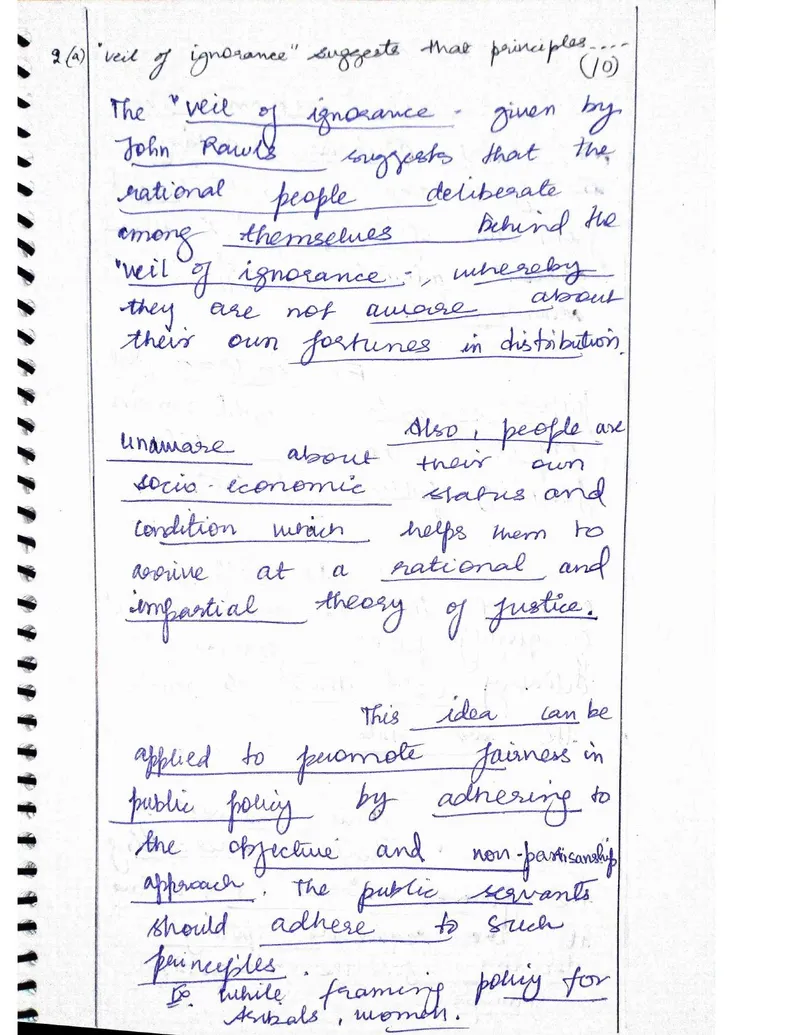
- ▸Theory firmly grounded in named thinkers — Rawls' veil of ignorance, Kant's categorical imperative, Bentham vs Mill utilitarianism, Stoicism/Taoism/Confucianism
- ▸Case studies follow a tight template: stakeholders, then ethical issues, then options weighed in Merits/Demerits tables, a clear chosen course, and a way-forward list
- ▸Current, topical material woven in: Hema Committee, #MeToo, POSH Act 2013, Vaccine Maitri, Elon Musk's ketamine use
What to learn from this copy
- ★Every theory point is followed by a concrete real-Indian example tagged 'Ex.' — E. Sreedharan as the 'Metro Man', Armstrong Pame's 'People's Road' in Manipur, Vinoba Bhave's Bhoodan revolution, Sindhutai Sapkal's work for orphans, Dr. Rajendra Prasad quitting law for peasants -> in Ethics, never let an abstract value float free: pin each point to a named administrator or reformer so the examiner sees you can operationalise the concept, not just define it.
- ★Theory answers are anchored to the correct named thinker AND their signature idea, not vague paraphrase — Rawls' 'veil of ignorance', Kant's categorical imperative and means-vs-ends dignity, and Bentham vs Mill via the actual lines 'Two sovereign masters — pain and pleasure' (Bentham) answered by Mill's 'Poetry is better than pushpin' -> learn one precise phrase or device per philosopher so you can deploy the thinker accurately under time pressure instead of generic 'as per utilitarianism'.
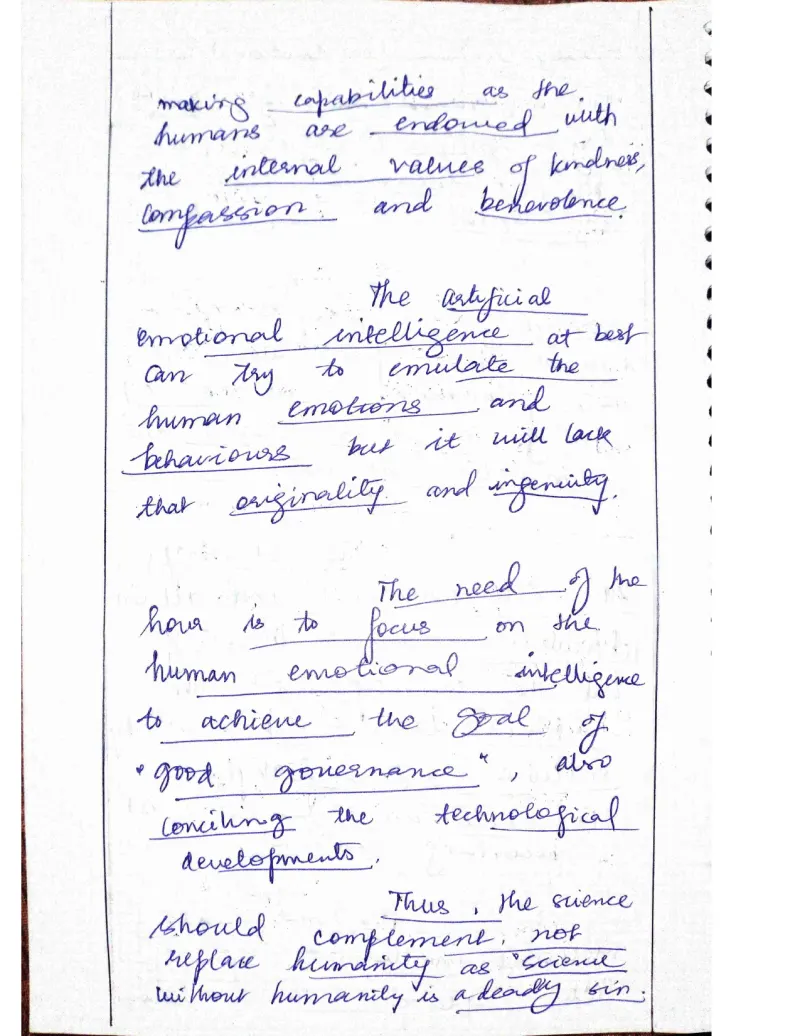
- ★Nearly every answer closes with a Sanskrit shloka or value-line matched to the topic — 'Vasudhaiva Kutumbakam' (Maha Upanishad) for the global-family question, 'Sarve bhavantu sukhinah', 'Atmano Mokshartham Jagat Hitaya cha', 'Prakriti Rakshati Rakshita' for the environment case, 'Appa Deepo Bhava' -> build a small bank of topic-tagged value-lines so conclusions land with cultural weight rather than a flat summary, but keep the shloka relevant to the specific question (the environment case got the Prakriti line, not a generic one).
- ★Case studies run a tight repeatable template — identify stakeholders, list ethical issues, weigh the realistic options in a two-column Merits/Demerits table (used in Q8 Election Commissioner, Q11 conflict-of-interest, Q12 harassment committee), commit to one clear chosen course, then give a way-forward list -> a visible decision structure with options explicitly weighed in a table shows the examiner your reasoning process, which scores higher than jumping straight to the 'right' answer.
- ★Current and topical hooks are woven directly into the ethics case studies — Hema Committee and #MeToo and POSH Act 2013 for the film-industry harassment case (Q12), Elon Musk's ketamine use for the performance-enhancing-drug CEO case (Q9), plus Vaccine Maitri -> mapping a live news anchor onto the exact scenario proves the case is real to you and makes the answer current, but match the reference to the specific dilemma rather than dropping unrelated GK.
Questions attempted: Gandhian philosophy — politically charged, non-violent and ethical leadership (Satya, Ahimsa, Sarvodaya); Emotional Intelligence: increasing relevance, components, role in public service delivery; Rawls' 'veil of ignorance' and promoting fairness/impartiality in public policy, and 16 more below.
Questions attempted in this booklet (19)+
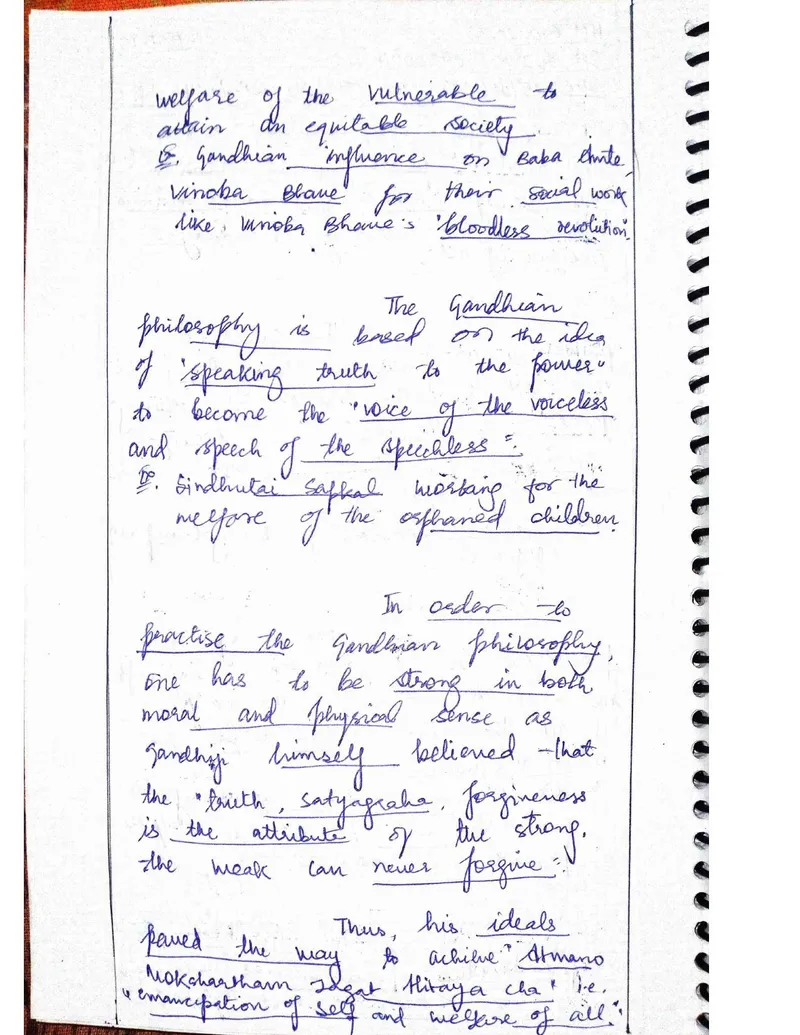
- 1(a).Gandhian philosophy — politically charged, non-violent and ethical leadership (Satya, Ahimsa, Sarvodaya)
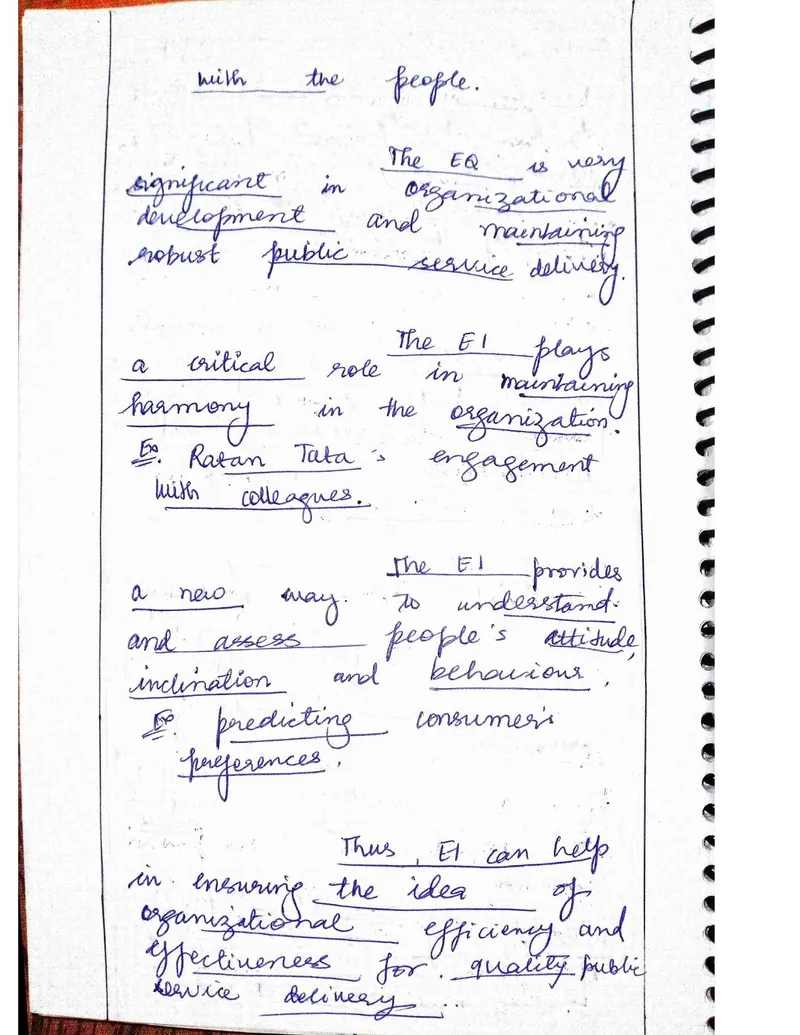
- 1(b).Emotional Intelligence: increasing relevance, components, role in public service delivery
- 2(a).Rawls' 'veil of ignorance' and promoting fairness/impartiality in public policy
- 2(b).Emotional Intelligence is important, but its dark side — manipulation and undue influence
- 3(a).Kant's ethical theory — categorical imperative, deontology, human dignity (means and ends)
- 3(b).Short notes: (i) Stoicism, (ii) Taoism, (iii) Confucianism
- 4(a).Critically evaluate Emotional Intelligence vis-a-vis AI / sentient machines
- 4(b).Utilitarianism as a normative ethics — Bentham (felicific calculus) and J.S. Mill
- 5(a).Significance and applications of Emotional Intelligence in administration
- 5(b).Ethos and philosophy of 'Vasudhaiva Kutumbakam' (from Maha Upanishad)
- 6(a).Quote answer — strength of character & EI; failures as stepping stones to success
- 6(b).Quote answer — 'All knowledge should be subject to' continuous scrutiny/examination
- 6(c).Quote answer — 'The greatest religion is to be true to oneself/one's nature'
- 7.Case study — District Magistrate executing disaster management amid public outrage
- 8.Case study — Election Commissioner (Mr. Raghav) under political pressure; free & fair elections
- 9.Case study — CEO of global tech firm (Mr. Varun); ketamine/performance-enhancing drug use
- 10.Case study — Rajesh Kumar; environment protection vs development projects
- 11.Case study — Anita Verma, social activist; conflict of interest involving husband Rajesh
- 12.Case study — 2017 actress/regional film industry harassment; head of Special Investigative Committee
Examples, data & evidence used
- Champaran Satyagraha (Gandhian leadership)
- Dr. Rajendra Prasad — gave up lucrative law practice for peasants/workers
- Vinoba Bhave's bloodless (Bhoodan) revolution
- Sindhutai Sapkal — welfare of orphaned children
- Tech Mahindra employee engagement
- Ratan Tata's engagement with colleagues
- Sevottam model (2nd ARC)
- IAS G.K. Pillai's negotiation with the Nagas
- Role in Kudumbashree (Kerala)
- E. Sreedharan — the 'Metro Man'
- Armstrong Pame — 'People's Road' in Manipur
- S.K. Patel IAS — Digi Gaon initiative
- RTI Act and social audits
- Jeremy Bentham — felicific calculus
Quotes the candidate used
- 'Atmano Mokshartham Jagat Hitaya cha' — emancipation of self and welfare of all (Gandhian/Vivekananda tradition)
- 'Forgiveness is the attribute of the strong' — Gandhi
- 'Seva paramo dharma' — service is the supreme duty
- Nishkama Karma (Bhagavad Gita)
- 'Sarve bhavantu sukhinah, Sarve santu niramaya'
- 'Poetry is better than pushpin' — J.S. Mill (on Bentham's pushpin)
- 'Two sovereign masters — pain and pleasure' — Bentham
- 'Vasudhaiva Kutumbakam' — Maha Upanishad
How it’s written: Highly consistent, formula-driven structure. Theory answers open by defining/restating the concept and naming the thinker, then build the body as short point-paragraphs each immediately backed by a real Indian example prefixed 'Ex.', and close with a 'Thus...' conclusion tied to a Sanskrit shloka or value-line. Heav…
Diagrams & visuals: No conventional diagrams or maps; Two-column Merits/Demerits tables used to weigh options in case studies (e.g., Q8, Q11, Q12); Bracketed/listed enumeration of EI components (self-awareness, self-regulation, motivation, empathy, social & communication skills)
Evaluator: No examiner marks or comments are filled in on this copy.