
Where is the earliest literary reference to the river Narmada found?
- (a)Shatapatha Brahmana
- (b)Manusmriti
- (c)Varahamihira Samhita
- (d)Agni Purana
Correct — A, Shatapatha Brahmana. The Narmada — known in Sanskrit literature by its older name 'Reva' — receives its earliest surviving literary mention in the Shatapatha Brahmana, a major prose text of the Vedic corpus (Shukla Yajurveda tradition). This text chronologically predates the Puranas, the Manusmriti, and Varahamihira's 6th-century CE work by many centuries.
- (b)Manusmriti — A dharmashastra (legal and social code) text compiled well after the Vedic Brahmanas — it is not primarily a geographical source and postdates the Shatapatha Brahmana.
- (c)Varahamihira Samhita — Varahamihira's Brihat Samhita is a 6th-century CE astronomical/geographical treatise — far later than the Vedic-era Shatapatha Brahmana, even though it does discuss the Narmada region.
- (d)Agni Purana — One of the later Puranas, which describes the Narmada's sacred geography extensively — but the Puranic corpus as a whole is chronologically later than the Vedic Brahmanas.
The Shatapatha Brahmana ('Brahmana of a hundred paths') is one of the most important prose texts of the Vedic corpus, generally dated by scholars to roughly the 8th–6th centuries BCE. Brahmana texts interweave Vedic ritual instruction with geographical and mythological references, making them prime sources for the earliest literary mentions of Indian rivers, including the Narmada (referred to there as 'Reva').
The trap is picking the text that discusses the Narmada most extensively (the Puranas devote whole sections to its sanctity) rather than the one that mentions it FIRST, chronologically. 'Most detailed' and 'earliest' are different tests, and MPPSC is asking for the latter.
- The Narmada's older Sanskrit name is 'Reva'.
- The Shatapatha Brahmana is a prose text of the Vedic corpus (Shukla Yajurveda) — among the oldest strata of Sanskrit literature.
- The Puranas (including the Agni Purana) discuss the Narmada's sacred geography far more extensively, but are chronologically later texts.
- Manusmriti is primarily a dharmashastra (legal/social code) text, not a geographical one.
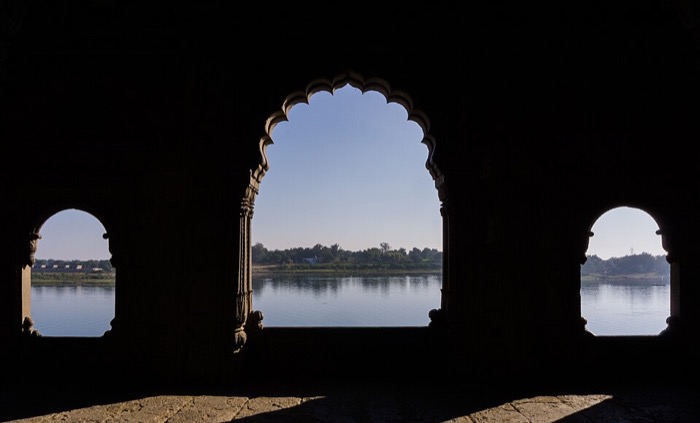
The Shatapatha Brahmana's Vedic-era date makes it the earliest of the four, even though later texts describe the Narmada in far more detail.
- Confusing 'most extensively described' (the Puranas) with 'earliest mentioned' (the Shatapatha Brahmana)
- Assuming an astrology/geography-focused text (Varahamihira Samhita) must be the earliest source — it is actually a 6th-century CE text, much later than the Vedic Brahmanas
MPPSC likes 'earliest literary reference' questions on MP's rivers and regions — rank the option texts chronologically (Vedic → post-Vedic → classical → Puranic) rather than by topical relevance.
The UPSC store's Narmada questions test its physical geography (course, rift valley, tributary order) rather than the earliest-literary-reference angle tested here, so no directly matching past PYQ was found.
- practice — not a real PYQ
The Narmada river is referred to by which older Sanskrit name in ancient literature?
- (a)Reva
- (b)Sindhu
- (c)Vitasta
- (d)Iravati
Answer(a) Reva.
- practice — not a real PYQ
Which of the following is the correct chronological order (earliest to latest) of these strata of Sanskrit literature?
- (a)Vedic Samhitas → Brahmanas → Upanishads → Puranas
- (b)Puranas → Brahmanas → Samhitas → Upanishads
- (c)Upanishads → Samhitas → Brahmanas → Puranas
- (d)Brahmanas → Samhitas → Puranas → Upanishads
Answer(a) Vedic Samhitas → Brahmanas → Upanishads → Puranas.