
In Ashtanga Yoga, which practice is called 'Antaranga Sadhana' (inner or internal practice)?
- (a)Pratyahara
- (b)Niyama
- (c)Pranayama
- (d)Dharana
Correct — D, Dharana. Ashtanga Yoga (Patanjali's eight-limbed yoga) is traditionally divided into two groups: the first five limbs — Yama, Niyama, Asana, Pranayama, Pratyahara — are Bahiranga Sadhana ('external' practice, since they still engage the body, breath, or senses); the last three — Dharana (concentration), Dhyana (meditation), and Samadhi (absorption) — are Antaranga Sadhana ('internal' practice), working purely on the mind. Of the four options, only Dharana belongs to this internal group.
- (a)Pratyahara — The fifth limb — withdrawal of the senses from external objects — is the last of the Bahiranga (external) group; it is a transition point but is still classified as external, not internal.
- (b)Niyama — The second limb — personal observances such as self-discipline and contentment — is part of the Bahiranga (external) group.
- (c)Pranayama — The fourth limb — breath control — is also part of the Bahiranga (external) group.
The classical commentary tradition on Patanjali's Yoga Sutra groups Ashtanga Yoga's eight limbs into two sets: Bahiranga Sadhana (Yama, Niyama, Asana, Pranayama, Pratyahara — external, since they still involve the body, breath, or senses) and Antaranga Sadhana (Dharana, Dhyana, Samadhi — internal, since they are purely mental). The three Antaranga limbs together are also called Samyama.
Exams isolate one limb and ask which group it belongs to — Pratyahara is the trickiest distractor because it already turns the senses inward, but it is still classed as the last external (Bahiranga) limb, with Dharana marking the true start of the internal (Antaranga) path.
- Ashtanga Yoga's eight limbs, in order: Yama, Niyama, Asana, Pranayama, Pratyahara, Dharana, Dhyana, Samadhi.
- Bahiranga Sadhana (external): Yama, Niyama, Asana, Pranayama, Pratyahara — the first five limbs.
- Antaranga Sadhana (internal): Dharana, Dhyana, Samadhi — the last three limbs, together also called Samyama.
- Dharana = concentration (fixing the mind on one point); Dhyana = meditation; Samadhi = absorption.
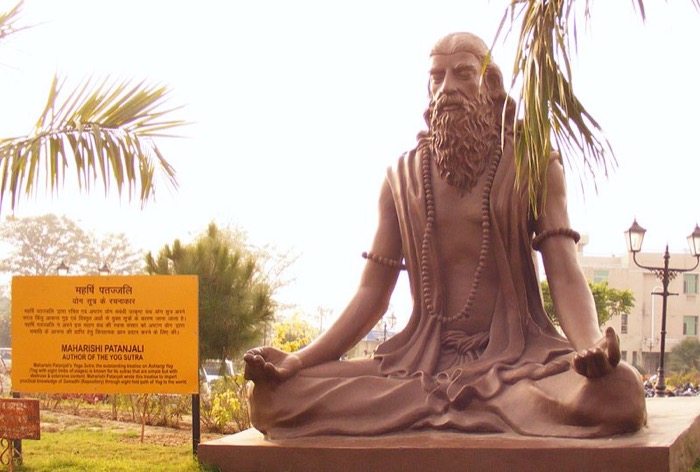
Only the last three limbs — Dharana, Dhyana, Samadhi — are Antaranga (internal) Sadhana; Dharana is the correct answer among this question's four options.
- Classifying Pratyahara as internal because it involves withdrawing the senses — it is still grouped under Bahiranga (external) Sadhana.
- Forgetting that Antaranga Sadhana is a group of three limbs (Dharana, Dhyana, Samadhi), not just one.
MPPSC/UPSC ask which single limb, from a mixed list, belongs to the Bahiranga or Antaranga group — know the full five-three split, not just the group names.
No directly related past UPSC PYQ on Ashtanga Yoga's eight limbs (Bahiranga/Antaranga classification) was found in this store.
- practice — not a real PYQ
Which THREE limbs of Ashtanga Yoga are together classified as 'Antaranga Sadhana' (internal practice)?
- (a)Yama, Niyama, Asana
- (b)Pranayama, Pratyahara, Dharana
- (c)Dharana, Dhyana, Samadhi
- (d)Asana, Pranayama, Pratyahara
Answer(c) Dharana, Dhyana, Samadhi.
- practice — not a real PYQ
The combined practice of Dharana, Dhyana, and Samadhi in Ashtanga Yoga is also known as:
- (a)Samyama
- (b)Samadhi
- (c)Kriya Yoga
- (d)Hatha Yoga
Answer(a) Samyama.