
For whom did K. M. Panikkar say that “He was the first diplomat of modern India”?
- (a)Dadabhai Naoroji
- (b)Lala Lajpat Rai
- (c)Gopal Krishna Gokhale
- (d)Bal Gangadhar Tilak
Correct — C, Gopal Krishna Gokhale. Gokhale, the moderate Congress leader and Gandhi's political mentor, built his career on measured negotiation rather than confrontation: he served as the Congress's unofficial envoy to England, lobbied English public opinion and testified before official commissions, and helped shape the Morley-Minto Reforms of 1909 through sustained dialogue with British authorities. This negotiation-first style — reasoned persuasion within the constitutional system rather than agitation — is the basis for historians crediting him as independent India's diplomatic forerunner among nationalist leaders, in contrast to the more confrontational approach of leaders like Tilak.
- (a)Dadabhai Naoroji — Known as the 'Grand Old Man of India' and for the Drain of Wealth theory; historically remembered as an economic critic and the first Indian elected to the British House of Commons, not for this specific 'diplomat' description.
- (b)Lala Lajpat Rai — Part of the assertive 'Lal-Bal-Pal' trio, known for confrontational nationalism rather than a diplomatic, negotiation-based style.
- (d)Bal Gangadhar Tilak — Leader of the Extremist wing ('Swaraj is my birthright'), whose confrontational approach stood in direct contrast to Gokhale's moderate, negotiation-based method.
The Indian National Congress's early decades (1885-1907) were dominated by 'Moderate' leaders — Gokhale foremost among them — who pursued reform through petitions, constitutional advocacy and direct negotiation with British authorities, rather than mass agitation. Gokhale's Servants of India Society (founded 1905) formalised this method: trained public servants working within the system for gradual reform.
Exams pair a specific historian's assessment or quote with the correct leader — the trap is defaulting to the most 'famous' nationalist (Tilak) rather than matching the description (diplomatic, negotiation-based) to the leader it actually fits.
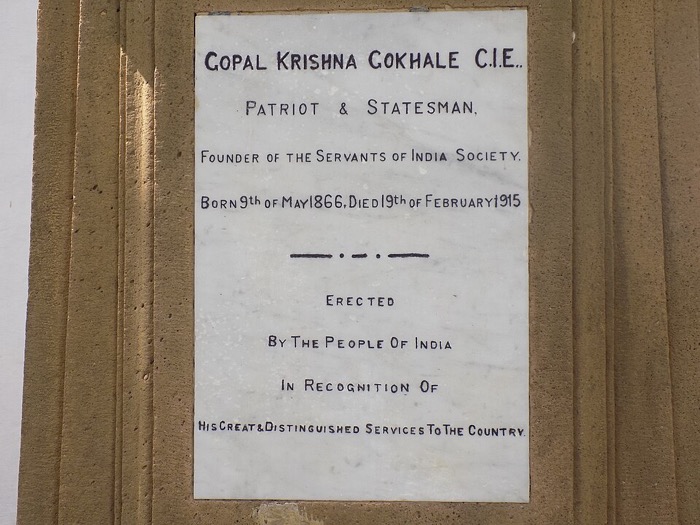
- Gopal Krishna Gokhale (1866-1915) was a senior Moderate leader of the Indian National Congress and Gandhi's acknowledged political mentor ('Guru').
- He acted as the Congress's unofficial envoy to England, engaging British opinion and officials directly.
- He founded the Servants of India Society (1905) to train public workers for constitutional, negotiation-based reform.
- His approach contrasted with the confrontational 'Extremist' style of contemporaries such as Tilak, Lajpat Rai and Bipin Chandra Pal.
- Defaulting to the most famous nationalist name (Tilak) rather than matching the specific 'diplomat/negotiator' description
- Confusing Gokhale's moderate, constitutional method with the confrontational approach of Extremist-era leaders
MPPSC/UPSC test which specific leader a historian's quote or description fits — anchor Gokhale to 'moderate, negotiation, Gandhi's mentor, Servants of India Society' as a fixed identity chain.
“A graduate at 18, professor and associated editor of the Sudharak at 20, Secretary of the Sarvajanik Sabha and of the Provincial Conference at 25, Secretary of the National Congress at 29, leading witness before an important Royal Commission at 31, Provincial legislator at 34, Imperial legislator at 36, President of the Indian National Congress at 39 …… a patriot whom Mahatma Gandhi himself regarded as his master.” This is how a biographer describes
- (a) Pandit Madan Mohan Malaviya
- (b) Mahadev Govind Ranade
- (c) Gopal Krishna Gokhale
- (d) Bal Gangadhar Tilak
Answer(c) Gopal Krishna Gokhale
Same core figure and same question pattern — a laudatory description/quote identifying Gopal Krishna Gokhale by his exceptional career and stature, exactly as this question uses K. M. Panikkar's 'first diplomat' description to identify him.
- practice — not a real PYQ
Gopal Krishna Gokhale founded which organisation in 1905 to train public workers for constitutional, negotiation-based reform?
- (a)Servants of India Society
- (b)Poona Sarvajanik Sabha
- (c)Indian Reform Association
- (d)Deccan Education Society
Answer(a) Servants of India Society, founded by Gokhale in 1905.
- practice — not a real PYQ
Gopal Krishna Gokhale is widely acknowledged as the political mentor ('Guru') of which nationalist leader?
- (a)Bal Gangadhar Tilak
- (b)Mahatma Gandhi
- (c)Subhas Chandra Bose
- (d)Jawaharlal Nehru
Answer(b) Mahatma Gandhi, who called Gokhale his political guru.