
Which among the following Article speaks about impeachment of the President of India?
- (a)Article 63
- (b)Article 62
- (c)Article 61
- (d)Article 60
Correct — C, Article 61. Article 61 lays down the procedure for the impeachment of the President on a charge of 'violation of the Constitution' — the charge must be moved in either House of Parliament after at least 14 days' notice signed by not less than one-fourth of that House's total membership, and must be passed by a majority of not less than two-thirds of the total membership of that House before being investigated by the other House.
- (a)Article 63 — Article 63 establishes the office of the Vice-President of India; it has nothing to do with the President's impeachment.
- (b)Article 62 — Article 62 deals with the time of holding the election to fill a vacancy in the office of President, and the term of a person elected to fill a casual vacancy — not impeachment.
- (d)Article 60 — Article 60 prescribes the oath or affirmation the President takes on entering office — a different, earlier-numbered Article often confused with 61 because of its proximity.
Articles 60-63 of the Constitution form a tight cluster on the office of the President: oath, impeachment procedure, filling a vacancy, and the Vice-President's office. Impeachment is the sole constitutional method to remove a sitting President before term, on the ground of 'violation of the Constitution.'
Exams like testing this exact numeric sequence because the Articles are consecutive and easy to swap in distractors — lock each number to its one-line function rather than a vague sense of 'it's somewhere around there.'
- Article 61: procedure for impeachment of the President — the sole ground is 'violation of the Constitution.'
- The charge must be preferred by either House, after at least 14 days' notice signed by one-fourth of that House's total membership.
- The resolution must be passed by a two-thirds majority of the TOTAL membership of that House (not just members present and voting), then investigated by the other House.
- Article 60 = oath of the President; Article 62 = filling a presidential vacancy; Article 63 = office of the Vice-President.
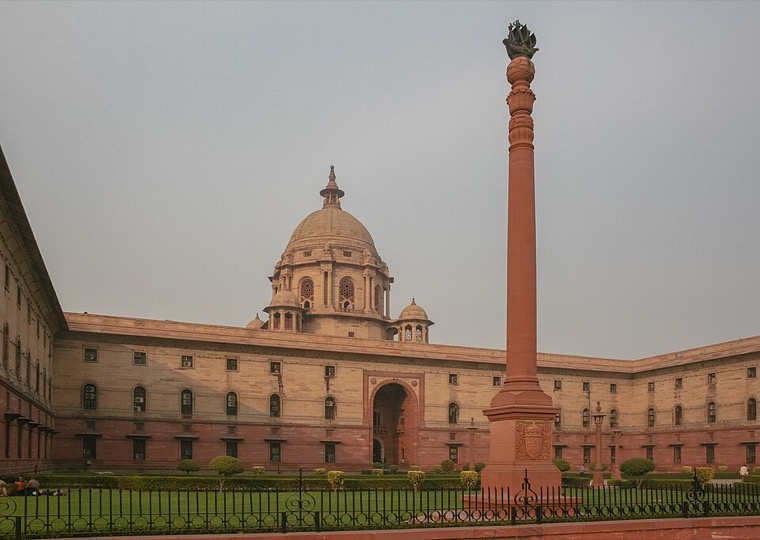
Four consecutive Articles, four distinct functions — Article 61 alone covers impeachment.
- Mixing up Article 60 (oath) with Article 61 (impeachment) — both are early, close-numbered Articles
- Assuming impeachment needs a majority of members present and voting — it actually needs two-thirds of the TOTAL membership of each House
MPPSC/UPSC like testing exact Article numbers for close, sequential provisions (60-63) — build a numbered chain rather than memorising each in isolation.
Which one of the following is part of the electoral college for the election of the President of India but does not form part of the forum for his impeachment?
- (a) Lok Sabha
- (b) Rajya Sabha
- (c) State Legislative Councils
- (d) State Legislative Assemblies
Answer(d) State Legislative Assemblies
UPSC 1996 directly tests Article 61's impeachment process (a Parliament-only forum, unlike the Article 54 electoral college which includes States) — the same core concept as this question's identification of Article 61.
- practice — not a real PYQ
Under Article 61 of the Constitution, a charge of impeachment against the President must be preferred by a House of Parliament in a resolution moved after a notice in writing signed by not less than one-fourth of that House's total membership, given at least how many days before the resolution is moved?
- (a)7 days
- (b)14 days
- (c)21 days
- (d)30 days
Answer(b) 14 days.
- practice — not a real PYQ
The impeachment charge against the President of India must be sustained in each House of Parliament by:
- (a)A simple majority of members present and voting
- (b)A two-thirds majority of members present and voting
- (c)A two-thirds majority of the total membership of the House
- (d)An absolute majority of the Lok Sabha only
Answer(c) A two-thirds majority of the total membership of the House.