UPSC Current Affairs

14 topicsGS-1: 4GS-2: 3GS-3: 7
0/14 done
GS-2Polity

1.Centrally Sponsored Schemes Reform (Centrally Sponsored Schemes)

Indian Express

What & Where

Centrally Sponsored Schemes: Centre–State cost-shared programmes on State/Concurrent subjects; money enters State Consolidated Fund.

Present basket: 54 schemes classified as Core of Core, Core, Optional; implemented across all states/UTs.

2025 CAG committee reviewing CSS budgeting, accounting, payments, SDG linkage.

Quick Facts for MCQs

Funding Pattern

  • Allocation: 60:40 standard, 80:20 select sectors, 90:10 North-East, tribal, hilly special states
  • Centre spends 8 paise per rupee on CSS, roughly a tenth of Union budget
  • Funds routed exclusively through each State’s Consolidated Fund before utilisation

Operational Challenges

  • Transparency: Budgets often merge Centre and State shares, masking CSS outlay, hindering SDG mapping
  • Fund flow: Irregular releases trigger project delays, year-end spending rush, idle balances
  • Payments: DBT hampered by beneficiary data errors, banking glitches, weak real-time tracking

Reform Proposals

  • Budgeting: Uniform heads, SDG-tagged line items, 3-year rolling allocations, 10–15 % performance linked
  • Accounting: National template, common codes, compulsory State IFMIS sync for consolidation and CAG audit trail
  • Technology: AI analytics and mobile monitoring detect anomalies; Aadhaar-based authentication, grievance redress via CSCs

Key Data Points

FeatureData-Point
Current CSS count54
Central Sector Schemes count260
Union budget share to CSS≈ 10 %
Standard funding ratio60 : 40 (Centre : State)
N-E / Special Category ratio90 : 10
Core-of-Core exampleMGNREGA
CAG constitutional articleArticle 148
CAG tenure ceiling6 yrs or 65 yrs
GS-1History

4.Centenary of Indian Hockey (Indian Hockey Legacy)

PIB

What & Where

Field hockey in India – 11-a-side stick-and-ball game, revered as national sport of pride

Centenary celebrations (1925-2025) slated 7 Nov at Major Dhyan Chand National Stadium, New Delhi

Sport introduced by British in 1850s; first Indian club at Calcutta 1855

Quick Facts for MCQs

Historical Timeline

  • 1850s British officers introduce hockey; rapid adoption due to open grounds
  • 1925 IHF formed soon after FIH; aligns India with global governance
  • Post-2000s revival through targeted funding, scientific training, league exposure

Achievements & Records

  • Six straight Olympic golds remain unmatched across all team sports
  • 13 total Olympic podiums, 1 World Cup, multiple Asian titles underline dominance
  • Dhyan Chand nicknamed Wizard for scoring prowess on 1926-36 tours

Cultural Significance

  • Post-colonial identity builder, uniting linguistically diverse regions under tricolour
  • Symbol of teamwork, discipline, resilience; integral to school and armed-forces sport culture
  • Major tournaments spur local stick manufacturing hubs in Punjab, UP, Odisha

Women’s Hockey

  • ASMITA, Khelo India schemes fuel talent pipelines from rural belts
  • 2002 Commonwealth gold broke glass ceiling, inspiring Haryana-Odisha athlete surge
  • Near-podium Tokyo 2020 elevated visibility, corporate support, broadcast hours

Key Data Points

FeatureData-Point
Centenary span1925 – 2025
Celebration date7 November 2024*
VenueMajor Dhyan Chand National Stadium, Delhi
First Indian clubCalcutta, 1855
National federationIndian Hockey Federation, 1925
First overseas tourNew Zealand 1926; 18 wins / 21
Olympic gold streak6 consecutive, 1928-1956
Total Olympic golds8 (last 1980)
Only World Cup winKuala Lumpur 1975
Latest Olympic medalBronze, Tokyo 2020
Asian Games goldHangzhou 2023
Current world rankTop 5 (FIH men)
Noted legendsDhyan Chand, Balbir Singh Sr, Dhanraj Pillay
Women milestoneCommonwealth gold 2002; Olympic 4th place 2020

Related UPSC Prelims PYQs

GS1 1996PYQ 1

Consider the following statements: Towards the close of 1995, the fortunes of Indian hockey were believed to be on the upswing because —

GS-1Geography

5.Afghanistan 2025 Earthquake Overview (Earthquake Basics)

RT
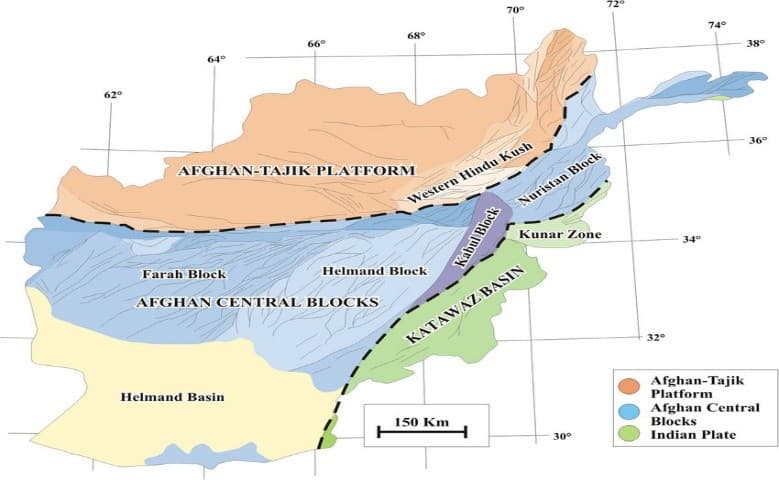
Illustration for Afghanistan 2025 Earthquake Overview (Earthquake Basics)

What & Where

Earthquake = sudden ground shaking from fault slip; focus = hypocenter, surface point = epicenter.

Northern Afghanistan (near Mazar-e-Sharif) hit by Mw 6.3; region sits on Indian-Eurasian-Arabian plate junction.

Seismic cycle involves foreshocks, mainshock, aftershocks transmitted as P-waves (fast) and S-waves (shear).

Quick Facts for MCQs

Measurement & Scales

  • Seismograph converts ground motion to electronic trace for analysis.
  • Mw scale logarithmic; each whole number ≈ 32× energy increase.
  • Mercalli intensity grades damage felt; independent of released energy.

Afghan Vulnerabilities

  • Collision zone concentrates stress; frequent shallow crustal quakes.
  • Steep mountains trigger quake-induced landslides, blocking relief.
  • Mud-brick dwellings lack reinforcement; sparse seismic network limits alerts.

Seismic Sequence

  • Foreshocks: smaller slips shortly before mainshock, same fault area.
  • Mainshock: peak energy discharge, governs overall damage pattern.
  • Aftershocks: tapering series for weeks–months while crust re-adjusts.

Key Data Points

FeatureData-Point
Latest magnitude6.3 Mw
InstrumentSeismograph → seismogram
Magnitude scaleRichter / Moment Magnitude (Mw)
Intensity scaleModified Mercalli (I–XII)
Epicenter locationTriangulation using P & S arrival times
Major Afghan faultsChaman, Hari Rud, Badakhshan
Plate settingCollision of Indian, Eurasian, Arabian plates
GS-1Geography

6.Western Disturbance Weather System (Western Disturbances)

DD News
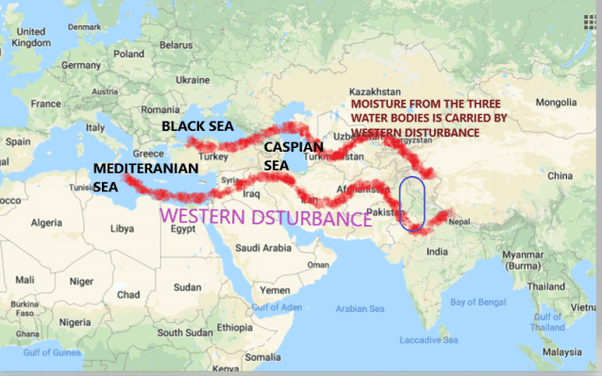
Illustration for Western Disturbance Weather System (Western Disturbances)

What & Where

Definition Extratropical storm from Mediterranean bringing winter rain‐snow to northwest India, Pakistan, Himalayas

Process Cyclogenesis over Mediterranean, eastward drift on subtropical westerly jet, moisture release against Himalayas

Geography Impacts Jammu-Kashmir, Himachal, Uttarakhand, Punjab, Haryana, Rajasthan, Delhi-NCR and adjoining plains

Quick Facts for MCQs

Formation Dynamics

  • Trigger Temperature gradient between polar Europe air and warm subtropics initiates upper-air low pressure
  • Enhancement Strong jet core and sharp gradient raise frequency and intensity
  • Termination Rapid weakening after moisture dump over Himalayan barrier

Agricultural Impact

  • Moisture Timely showers boost soil moisture crucial for Rabi yield
  • Yield Moderate WD frequency correlates with higher wheat productivity in Indo-Gangetic belt
  • Risk Excess rain or hail damages standing crops, especially during grain-filling stage

Weather & Climate

  • Precipitation Provides bulk of winter rainfall for northwest India, replenishing rivers and groundwater
  • Temperature Cloud cover raises night minima yet suppresses day maxima, inducing cold day conditions
  • Air quality Rain-wind combo temporarily disperses particulate pollution over IGP

Hazard Potential

  • Disasters Heavy WDs can trigger floods, landslides, avalanches in Himalayan terrain
  • Urban impact Waterlogging and traffic disruption common in Delhi-NCR during intense spells
  • Monsoon link Decline of WDs by late May facilitates smooth southwest monsoon onset

Key Data Points

FeatureData-Point
Origin basinMediterranean Sea
Driving jetSubtropical westerly jet stream
Key moisture sourcesMediterranean, Caspian, Black Seas
Peak influence monthsDecember – April
Essential crop stageRabi growth of wheat, mustard
Orographic barrierHimalayas
Typical effectsCloudy sky, warmer nights, cold days
Post-passage risksFog, cold wave
Interaction record2013 Uttarakhand flood with southwest monsoon
Dissipation zoneSouth-slope Himalayas

Related UPSC Prelims PYQs

GS1 2001PYQ 1

Assertion (A): Anti-cyclonic conditions are formed in winter season when atmospheric pressure is high and air temperatures are low.

GS-1Mapping

7.Nigeria Geography and Key Features (Country Mapping)

IT
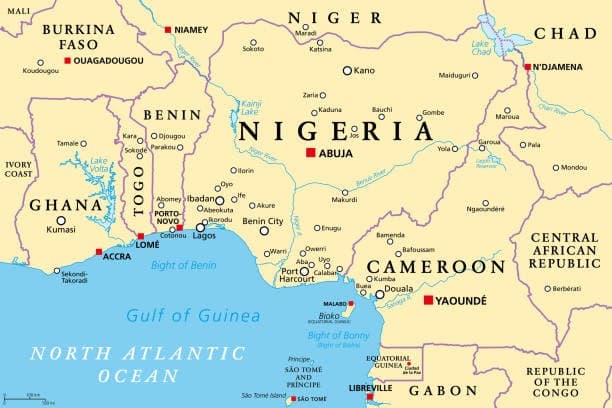
Illustration for Nigeria Geography and Key Features (Country Mapping)

What & Where

Nigeria — federal republic, most populous in Africa, West Africa’s largest oil producer.

Capital Abuja; borders Niger, Chad, Cameroon, Benin; south opens to Gulf of Guinea.

Core terrains: Niger-Benue basin, Niger Delta wetlands, Jos Plateau, Cameroon Highlands.

Quick Facts for MCQs

Security Dimension

  • Boko Haram & ISWAP drive protracted northeast insurgency, amplifying humanitarian crisis.
  • Farmer-herder clashes intensified by resource scarcity, climate stress.
  • Trump threatened military action “to wipe out Islamic terrorists” inside Nigeria.

Diplomatic Angle

  • Dec 2020: US placed Nigeria on “Country of Particular Concern” list.
  • CPC label enables sanctions, arms restrictions, aid conditions.
  • Move reignited debate over US interventionism in African conflicts.

Physical Geography

  • Sokoto & Borno plains dominate northwest and northeast savannas.
  • Niger Delta rich in petroleum, natural gas; critical to export revenue.
  • Jos Plateau offers temperate microclimate, supports tin and columbite mining.

Key Data Points

FeatureData-Point
Political systemFederal presidential republic
Capital shift year1991 (Lagos ➔ Abuja)
Highest peakChappal Waddi – 2,419 m
Main drainageNiger-Benue River system
Delta rankAmong world’s largest wetlands
Climate gradientHumid equatorial (S) → Arid (N)
Key soilsLateritic/alluvial south; Sandy arid north
Top insurgent groupsBoko Haram, ISWAP
US CPC tag lawInternational Religious Freedom Act 1998
US allegationFailure to protect Christians from Islamist attacks
GS-3Environment

8.Pampadum Shola National Park Restoration (Western Ghats NP)

Down to Earth

What & Where

Park – Pampadum Shola NP, 1 300 ha, southernmost shola–grassland mosaic of Western Ghats

Location – Upper Devikulam taluk, Idukki, Kerala-Tamil Nadu border near Kodaikanal, elevation 1 900-2 300 m

Process – 2020-24 manual removal of invasive Australian black wattle restoring native grassland–shola ecology

Quick Facts for MCQs

Biodiversity

  • Endemics include Nilgiri marten, Kerala laughing thrush, rare orchids and ferns
  • Grassland–shola mosaic supports high beta diversity across short altitudinal range

Hydrological Significance

  • Grasslands store monsoon runoff ensuring perennial flow to Pambar–Vaigai basins
  • Wattle removal improves soil porosity and groundwater recharge

Invasive Species Management

  • Method – cut stump plus herbicide ban, manual uprooting followed by native grass reseeding
  • Outcome – first Western Ghats park to restore >35 % invaded area within 4 years

Key Data Points

FeatureData-Point
StateKerala
DistrictIdukki
Area≈1 300 ha
Western Ghats tagUNESCO WH site (under consideration)
Elevation band1 900–2 300 m
Watershed riversPambar & Vaigai
Removal period2020–2024
Invasive cleared>475 ha Australian wattle
Native roleGrasslands act as natural aquifers
Key mammalsNilgiri marten
Key birdsKerala laughing thrush, black-and-orange flycatcher
Fire episodeSevere blaze 2015, fueled by wattle
Wattle origin in IndiaBritish introductions early 1900s
Ecological threatDense canopy suppresses native flora, lowers soil porosity
Hydrological impactDeep roots deplete aquifers, seasonalise streams

Related UPSC Prelims PYQs

NDA_GAT 2025PYQ 1

Temperate forests of South India, known as ‘Sholas’ are found in which of the following hills?

GS-3Environment

9.Cauvery River Heavy Metal Pollution (Cauvery River)

The Hindu

What & Where

Cauvery River: 765 km east-southeast flow from Brahmagiri Hills (Karnataka) to Bay of Bengal, key South-Indian lifeline

Heavy metals: high-density elements (Pb, Cd, Cr, Cu, Zn) becoming toxic on bioaccumulation in aquatic food chains

Study zone: fish samples along industrial-agri stretches of Cauvery show Cd & Pb above safety limits

Quick Facts for MCQs

Hydrography

  • Waterfalls formation enriches irrigation plains across Karnataka–Tamil Nadu corridor
  • Sacred nodes: Srirangapatna, Srirangam located mid-stream attracting pilgrim inflows
  • Outflow forms fertile delta south of Cuddalore before meeting Bay of Bengal

Pollution Sources

  • Industrial discharge: dyeing, electroplating units release Cd, Pb into river column
  • Agricultural runoff transports fertiliser-bound metals into tributaries
  • Urban sewage influx adds mixed contaminants elevating cumulative load

Health Risks

  • Bioaccumulation: Cd & Pb concentrate in fish muscle exceeding permissible dietary limits
  • Chronic exposure: potential neurological, renal malfunctions plus cancer probability
  • Risk variability: species and site dictate metal uptake, complicating food-safety advisories

Key Data Points

FeatureData-Point
Alias of CauveryDakshina Ganga
River originBrahmagiri Hills, Western Ghats
Total length≈ 765 km
Major damsKrishnaraja Sagar, Mettur, Grand Anicut
Key tributaryKabini (others: Hemavati, Amaravati, Bhavani, Noyil)
Delta nicknameGarden of Southern India
Metals analysedCr, Cd, Cu, Pb, Zn
Principal pollutantsCadmium, Lead
Main contamination sourcesTextile, electroplating effluents; agricultural runoff; untreated sewage
Health impact flaggedCarcinogenic & neuro-renal risks from regular fish intake

Related UPSC Prelims PYQs

CDS_GK, GS1 1996PYQ 1

Which one of the following rivers thrice forks into two streams and reunites a few miles farther on, thus forming the islands of Srirangapattnam, Sivasamudram and Srirangam?

CDS_GK, GS1 2024PYQ 2

Which peninsular river has a tributary named ‘Kabini’?

GS-3Environment

10.Rowmari-Donduwa Wetland Ramsar Proposal (Rowmari Wetland)

Times of India

What & Where

Location – 2.5–3 km² floodplain–marsh inside Laokhowa WLS, buffer of Kaziranga Tiger Reserve, Assam.

Hydrology – Interlinked Brahmaputra floodplain wetlands forming avian migration link between Kaziranga, Orang and Pobitora protected areas.

Significance – 2025 census logged 47,000 + waterbirds from 75–88 species; proposed Rowmari–Donduwa Ramsar site.

Quick Facts for MCQs

Ecological Assets

  • Fauna – Great Indian Rhino, Royal Bengal Tiger, Asiatic Elephant, Water Buffalo inhabit surrounding WLS.
  • Avifauna – Bengal Florican, Greater/Lesser Adjutant, Black-necked Stork frequent wetland–grassland mosaic.
  • Aquatic – Brahmaputra stretch shelters endangered Gangetic River Dolphin and diverse fish nurseries.

Legal & Policy

  • Ramsar-criteria – Site meets uniqueness, life-cycle refuge and avian abundance thresholds.
  • Protection – Inside Kaziranga Tiger Reserve buffer; Ramsar tag adds international obligation.
  • Coverage – Only ~10 % of India’s wetland area presently under Ramsar framework.

Geography & Connectivity

  • Corridor – Laokhowa-Burhachapori WLS bridges Kaziranga (east) with Orang NP (west) across Brahmaputra chars.
  • Boundary – Brahmaputra River forms northern edge, creating dynamic sandbars supporting wetland regeneration.
  • Landscape – Tall grasslands, woodlands, seasonal beels and riverine islands ensure habitat heterogeneity.

Key Data Points

FeatureData-Point
Wetland typeFloodplain–marsh
Area2.5–3 km²
2025 bird census47,000 + birds; 75–88 spp
Key waterfowlKnob-billed Duck; Ferruginous Pochard
Convention year1971
India joined Ramsar1982
Indian Ramsar sites94 (Nov 2025)
First Indian siteChilika Lake, 1981
State with most sitesTamil Nadu
Avian Ramsar benchmark≥20,000 waterbirds or 1 % population

Related UPSC Prelims PYQs

CDS_GK, GEO_GS 2024PYQ 1

Which of the following Ramsar Wetland sites is not situated in any of the Union Territories of India?

CDS_GK, GEO_GS 2025PYQ 2

Which one of the following pairs of Ramsar Sites and States is not correctly matched?

GS-3Species

11.Project Cheetah Reintroduction Update (Project Cheetah)

New Indian Express
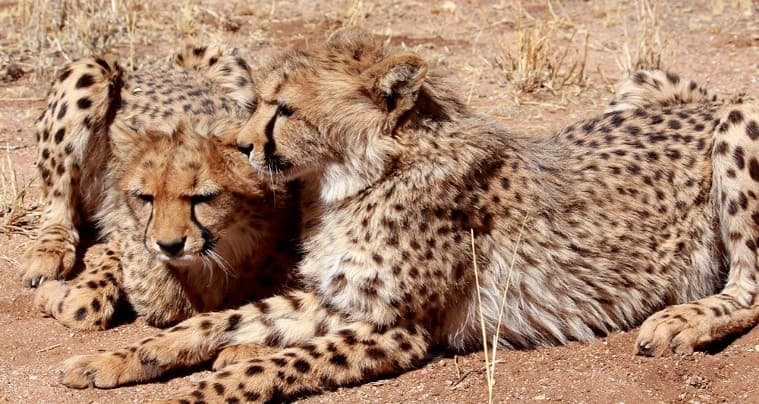
Illustration for Project Cheetah Reintroduction Update (Project Cheetah)

What & Where

Project Cheetah – world’s first intercontinental cheetah reintroduction; launched India, 2022

Core release sites: Kuno National Park & Gandhi Sagar WLS, Madhya Pradesh

Next batch: 8 cheetahs from Botswana scheduled by Dec 2025

Quick Facts for MCQs

Tech & Schemes

  • Translocation stepwise; aim restoring grassland, biodiversity, eco-tourism
  • Partners NTCA, Wildlife Institute, Namibian & Botswanan authorities
  • Long-term goal self-sustaining meta-population across five Indian landscapes

Species Biology

  • Morphology long limbs, flexible spine, non-retractable claws enabling blistering acceleration
  • Social males form sibling coalitions; females solitary with cubs
  • Cubs stay 18–24 months learning hunting

Conservation Status

  • Global population approx 7,000; Asiatic subspecies <50 confined Iran
  • Main threats habitat loss, prey decline, human-wildlife conflict
  • Project Cheetah aligns with IUCN reintroduction guidelines

International Examples

  • Namibia sent first 8 cheetahs Sept 2022; Botswana second donor Dec 2025 schedule
  • South Africa sent 12 cheetahs Feb 2023 augmenting gene pool
  • India-Africa cooperation covers training, telemetry, disease management

Key Data Points

FeatureData-Point
Launch date17 Sep 2022
Implementing bodyMoEFCC + NTCA
Initial donor nationNamibia
Upcoming donor nationBotswana
Additional donorSouth Africa (12 cheetahs, Feb 2023)
Extinction in India1952
Present Indian stock27 (11 adults + 16 cubs)
Scientific nameAcinonyx jubatus
Global IUCN statusVulnerable
Asiatic subspecies statusCritically Endangered
Peak speed97–113 km/h
Average weight35–65 kg
Gestation period~93 days
Usual litter size3–6 cubs
Cub mortalityUp to 90 %
Preferred habitatOpen grassland & savanna

Related UPSC Prelims PYQs

CDS_GK 2023PYQ 1

Cheetahs, brought from Namibia, were introduced in India to which one of the following National Parks?

CDS_GK 2023PYQ 2

Cheetahs were recently re-introduced to India from Africa. From which language is the name ‘Cheetah’ derived?

GS-2Editorial

12.APEC Summit 2025 Outcomes (APEC Summit)

The Hindu
Illustration for APEC Summit 2025 Outcomes (APEC Summit)

What & Where

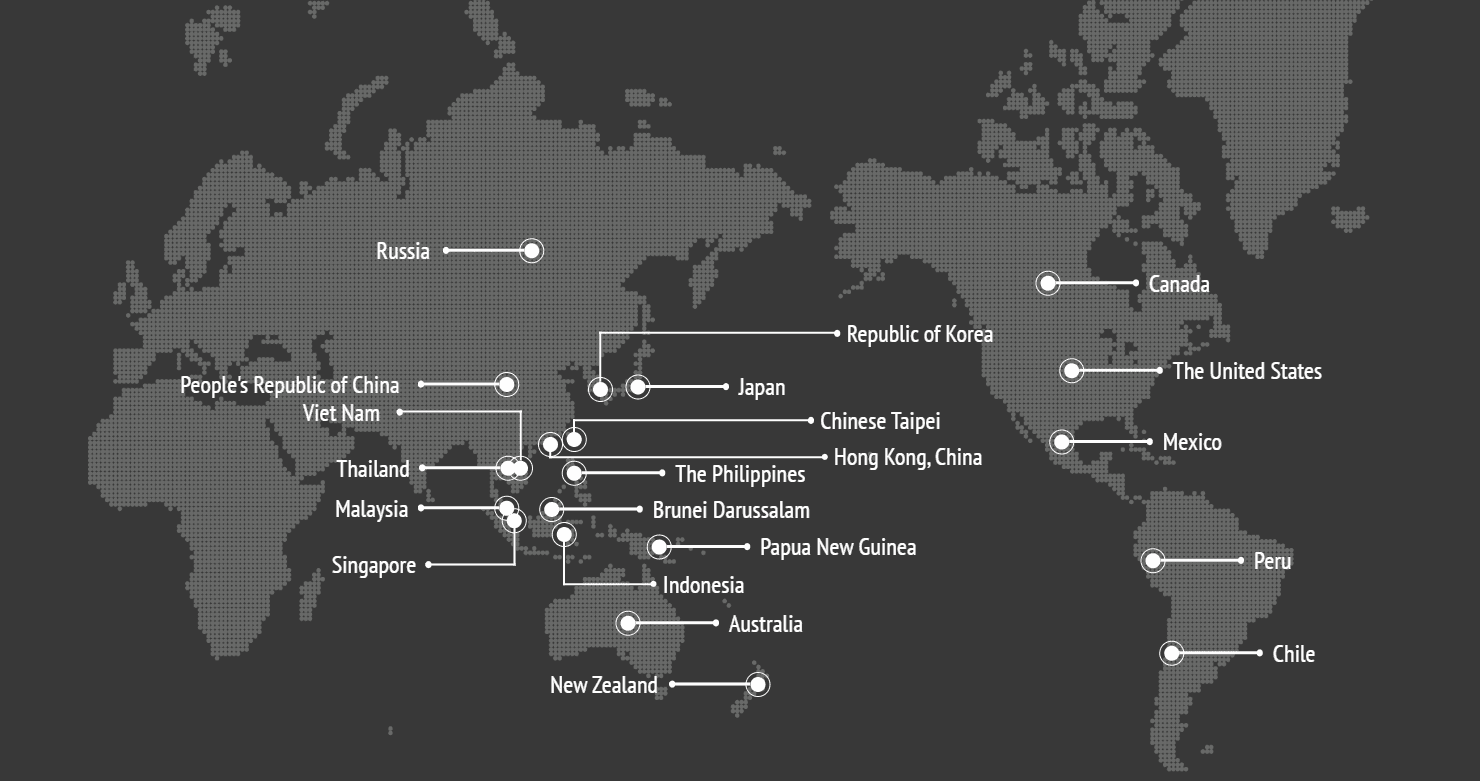
APEC: 21-economy forum (1989) advancing balanced, inclusive, sustainable growth and regional economic integration in the Asia-Pacific.

Process: Consensus-based, voluntary participation; equal voice; permanent secretariat in Singapore.

Geography: Pacific-Rim membership covers 62 % world GDP, 48 % trade; India remains outside.

Quick Facts for MCQs

Summit Outcomes

  • Declaration: dynamic regional economy, AI preparedness, inclusive growth.
  • Vision: leaders reaffirmed Putrajaya Vision 2040, free & fair trade multilateralism.
  • Diplomacy: China-South Korea swap, US-China resume trade talks, selective tariff cuts.

Technology Agenda

  • Initiative: AI Initiative 2026-30 for inclusive, resilient, sustainable AI growth.
  • Digital: leaders pledge customs streamlining, standard harmonisation, enhanced digital connectivity.
  • Energy: push energy-efficient AI infrastructure in member economies.

Demographic Shift

  • Framework: tackles ageing, low fertility, urbanisation via intergenerational policies.
  • Silver Economy: boosts elder-centric goods, jobs, fiscal resilience.
  • Shared: urges social innovation, coordinated regional response.

India Dimension

  • Interest: seeks APEC entry for deeper Indo-Pacific trade, investment.
  • Obstacles: forum freeze, consensus rule, protectionism tag, Chinese opposition.
  • Alignment: Act East, IPOI, MAHASAGAR match APEC connectivity, supply-chain goals.

Key Data Points

FeatureData-Point
Establishment Year1989
Members Count21 economies
Secretariat LocationSingapore
2025 Summit HostGyeongju, South Korea
2025 Declaration NameGyeongju Declaration
AI Initiative Period2026 – 2030
Putrajaya Vision Adoption2020
Share of World GDP~62 % (2021)
Share of World Trade~48 % (2021)
India MembershipNot a member

Related UPSC Prelims PYQs

CAPF_GAI, GEO_GS 2025PYQ 1

वर्ष 2025 में निम्नलिखित में से किसके तत्वावधान में आयोजित की गई बैठक का विषय 'दुश्मान युग के लिए सहयोग (Collaboration for the Intelligent Age)' था?

CAPF_GAI, GEO_GS 2026PYQ 2

The 22nd India-ASEAN Summit was held in October 2025 in

GS-3S&TQuick Bite

13.Patriot Air Defense System (Patriot System)

Economic Times
Illustration for Patriot Air Defense System (Patriot System)

What & Where

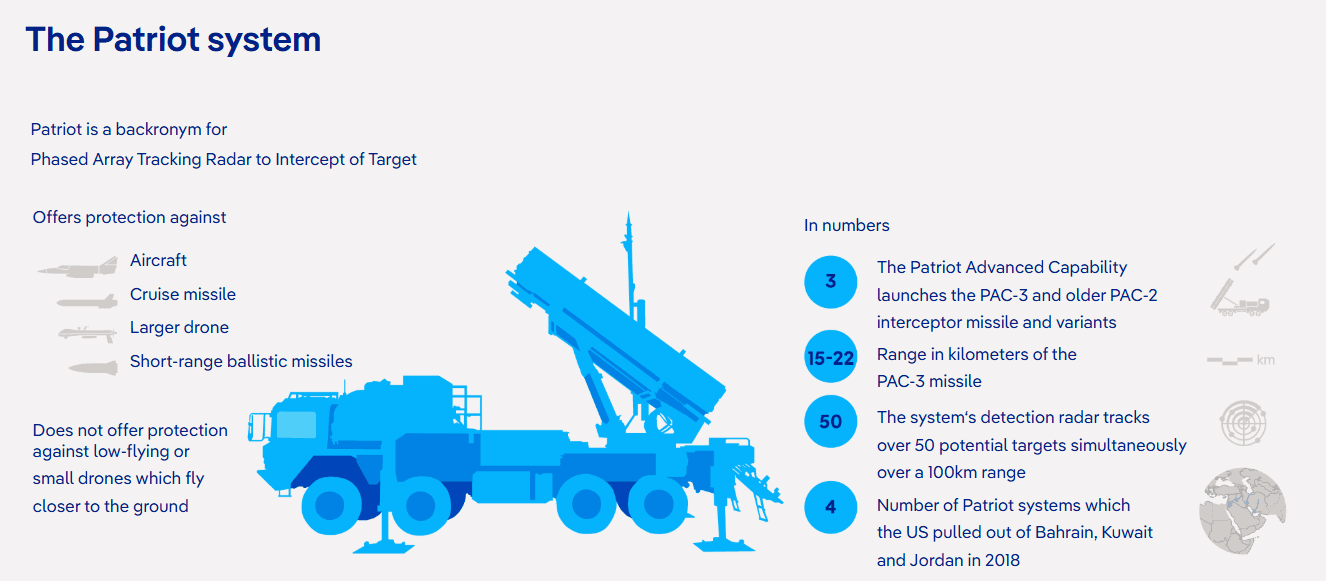
Acronym: PATRIOT = Phased Array Tracking Radar for Intercept on Target; US-developed mobile surface-to-air missile system.

Theatre: Newly dispatched by Germany and allies to Ukraine against intensifying Russian missile-and-drone strikes.

Capability: Detects targets > 150 km; intercept window roughly 15–20 km radius, up to 20 km altitude.

Quick Facts for MCQs

Technical Specs

  • Detection: Phased-array radar provides long-range target tracking and missile guidance.
  • Mobility: System mounted on road-mobile launchers, enabling rapid deployment.

Global Operators

  • Europe: Germany largest external supplier; Poland also fields Patriot batteries.
  • Asia: Japan, Israel, South Korea widely deploy Patriots for regional defence.
  • Middle East: Saudi Arabia major operator against airborne threats.

Comparative Systems

  • India: Akash, PAD, QRSAM form layered indigenous shield.
  • Russia: S-400, S-500, Buk, Tor dominate its strategic defence inventory.
  • USA portfolio: Patriot complemented by THAAD, NASAMS, Avenger, proposed Golden Dome.

Security Dimension

  • Supply: Additional batteries enhance Kyiv’s ability to deter Russian cruise and ballistic assaults.
  • Coverage gap: Patriot’s 15–20 km radius necessitates multiple batteries for city-wide protection.

Key Data Points

FeatureData-Point
DeveloperRaytheon Technologies, USA
First fielded1980s
Missile types interceptedAircraft, cruise missiles, ballistic missiles
Detection rangeOver 150 km
Max engagement altitudeAbout 20 km
Typical defence footprint15–20 km radius
Main current donor to UkraineGermany
Nations operating system16 (incl. Germany, Japan, Israel, S. Korea, Saudi Arabia, Poland)

Related UPSC Prelims PYQs

CDS_GK, GS1 2018PYQ 1

What is "Terminal High Altitude Area Defense (THAAD)", sometimes seen in the news?

CDS_GK, GS1 2022PYQ 2

The term ‘Terminal High Altitude Area Defense’, sometimes mentioned in news, refers to

GS-2Scheme

14.Reimagining Agriculture Frontier Tech Roadmap (Digital Agriculture Mission)

PIB
Illustration for Reimagining Agriculture Frontier Tech Roadmap (Digital Agriculture Mission)

What & Where

Roadmap: “Reimagining Agriculture – 2047” by NITI Aayog Frontier Tech Hub

Purpose: Embed AI, IoT, drones, bio-innovation to boost productivity, sustainability, incomes

Location: Released at Gandhinagar, Gujarat

Quick Facts for MCQs

Tech & Schemes

  • AI: predictive analytics, digital twins, agentic AI enable real-time advisories and precision operations
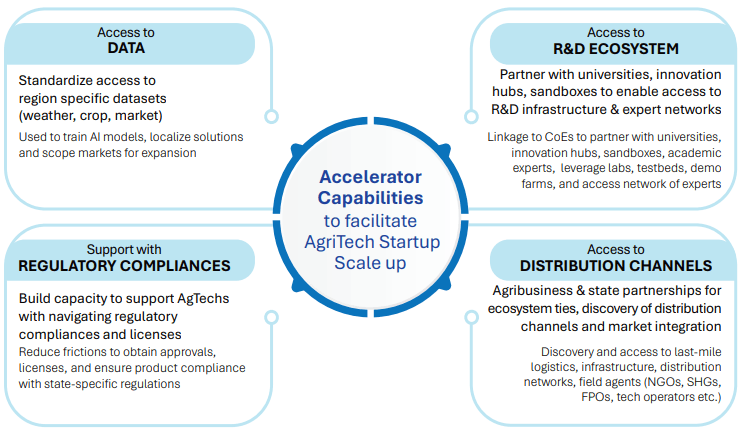
  • Schemes: Digital Agriculture Mission 2021-25, Kisan Drone Scheme, eNAM, Agri Accelerator Fund expand digital reach
  • Hardware: drones, IoT sensors, smart mechanisation optimise water, nutrients, labour

Challenges

  • Data: non-standardised siloed datasets hinder interoperability and analytics
  • Infrastructure: phygital divide from weak connectivity and rural logistics slows tech diffusion
  • Capacity: low digital literacy and AI-agri skill fusion limit farmer trust and uptake

Recommendations

  • Mission: launch Digital Agriculture Mission 2.0 for 360° data ecosystem integrating advisories, credit, insurance
  • R&D: promote cross-disciplinary translational research linking labs to fields for faster adoption
  • Finance: deploy AI-based credit scoring and patient capital to de-risk deep-tech agri start-ups

Key Data Points

FeatureData-Point
Vision horizon2047
Launching bodyNITI Aayog Frontier Tech Hub
Release venueGandhinagar, Gujarat
Three-pillar frameworkEnhance – Reimagine – Converge
Farmer archetypesAspiring 70-80 % ; Transitioning 15-20 % ; Advanced 1-2 %
Agri workforce share45.8 % of national employment
Smallholder prevalence86 % farms < 1 ha
Post-harvest lossUSD 18 billion yearly
Telangana AI pilotYield ↑21 % ; Input ↓9 %
Indian agritech start-ups1,000 + entities

Related UPSC Prelims PYQs

ESE_GS, NDA_GAT 2021PYQ 1

Which one of the following is the latest in series being organized as the largest virtual gathering to create dialogues, and accelerate innovation in agriculture ?

ESE_GS, NDA_GAT 2025PYQ 2

Which one of the following statements about ‘REJUPAVE’ is correct?

Ready to practice?

Test your knowledge with our UPSC test series.

Start Free Trial