UPSC Current Affairs

14 topicsGS-1: 4GS-2: 3GS-3: 7
0/14 done
GS-2Editorial

1.RTI Act 20-Year Review (Right to Information)

FL

What & Where

Definition: RTI Act, 2005 grants citizens statutory right to seek information from all public authorities across India.

Process: Three-tier system—Public Information Officer → First Appellate Authority → Central/State Information Commissions for final appeal.

Geography: Applies nationwide to Union, State, local bodies; excludes only intelligence agencies listed in Second Schedule.

Quick Facts for MCQs

Performance Highlights

  • Exposure: RTI revealed 2G, Commonwealth Games, Adarsh scams, irregularities in MNREGA & PDS.
  • Inclusion: Empowered marginalised groups to secure pensions, rations, housing benefits.
  • Precedent: CIC brought political parties, PMO, RBI, CJI’s office under RTI ambit.

Institutional Gaps

  • Vacancies: Delayed hearings; appeals in some states listed for decades.
  • Penalties: Rare enforcement fosters bureaucratic non-compliance.
  • Appointments: Post-retirement sinecures dilute Commission independence.

Recent Legal Changes

  • Amendment 2019: Removed fixed tenure & Election Commission parity, increasing executive control.
  • DPDPA 2023: Sec 44(3) overrides RTI Sec 8(1)(j), blocking personal data access.
  • Judicial trend: Courts increasingly “nudge” rather than compel timely disclosures.

Way Forward

  • Appoint: Fill all CIC/SIC posts within SC-mandated timelines.
  • Restore: Fixed tenure, pay parity to secure autonomy.
  • Digitise: Universal RTI e-portal, online hearings, public dashboards to cut pendency.

Key Data Points

FeatureData-Point
Enactment year2005 (UPA government)
Application fee₹10 per RTI
Ordinary reply time30 days from receipt
Life/Liberty reply48 hours
Penalty ceiling₹25,000 on erring officials (Sec 20)
Total RTIs filed≈2.5 crore since 2005
Penal action rate~1.2 % of cases
Tier structurePIOs, FAAs, CIC/SICs
CIC/SIC vacanciesChronic; Telangana backlog equals 29 years
2019 AmendmentCentre controls tenure & salary of Commissioners
DPDPA clauseSec 44(3) curbs “personal information” disclosures

Related UPSC Prelims PYQs

CAPF_GAI 2023PYQ 1

सूचना का अधिकार अधिनियम, 2005 के बारे में निम्नलिखित में से कौन-सा/कौन-से कथन सही है/हैं ?

CAPF_GAI 2024PYQ 2

Which of the following statements is/are correct?
GS-3Economy

2.Limestone Reclassified as Major Mineral (Mineral Regulation)

TBL

What & Where

Limestone; sedimentary CaCO₃ rock used in cement, steel, fertilizer, sugar, chemical industries

Formation via biogenic precipitation of marine organisms or mechanical deposition of older limestone

India; from Oct 2025 all limestone treated as major mineral under MMDR Act 1957

Quick Facts for MCQs

Legal & Policy

  • Notification by Ministry of Mines removes dual classification under MMDR Act
  • All grades, qualities, end uses now governed by central major-mineral regime
  • Leaseholders free to sell limestone to any purchaser without separate minor-major permits

Economic Angle

  • Uniform category simplifies compliance promoting ease of doing business for miners and industries
  • Open market access expected to streamline supply chains for cement, steel, fertilizer, glass sectors

Geological Basics

  • Rock primarily composed of calcite or aragonite; may include dolomite
  • Rich fossil content helps reconstruct Earth evolutionary history
  • Forms through marine organism shells settling and lithification over geologic time

Key Data Points

FeatureData-Point
Post-notification statusMajor mineral (uniform)
Earlier classification basisEnd use; minor for lime, major for industry
Notification month–yearOctober 2025
Governing statuteMines and Minerals (Development and Regulation) Act, 1957
Primary compositionCalcium carbonate (CaCO₃)
Leading consumer sectorCement industry

Related UPSC Prelims PYQs

GEO_GS, GS1 2022PYQ 1

What are the major raw materials used in the manufacture of cement?

GEO_GS, GS1 2020PYQ 2

Consider the following minerals:

GS-3InfrastructureQuick Bite

3.Google AI Hub Visakhapatnam (Data Centres)

PIB

What & Where

Data-centre: facility housing servers, networking, storage; migrated from on-premise racks to cloud-based hyperscale campuses

Site: Google’s first gigawatt-scale data centre + AI hub slated for Visakhapatnam, Andhra Pradesh coast

Capacity: ≈1 GW power draw, construction 2026-30 under Viksit Bharat digital-infra push

Quick Facts for MCQs

Economic Angle

  • Investment: USD 15 bn marks Google’s largest outlay in India
  • Revenue: Rs 10,000 crore intake projected, lifting tax and service receipts
  • Jobs: High-skill employment across data-ops, maintenance, cyber-security

Tech & Schemes

  • Infrastructure: Hyperscale facility enables low-latency AI, ML, big-data analytics
  • Alignment: Complements Digital India & MeitY data-centre policy ambitions
  • Energy: Gigawatt demand likely paired with renewable purchase agreements

Regional Impact

  • Visakhapatnam: Emerges as East-coast digital and cloud services hub
  • Ancillary: Triggers fibre backhaul, power, real-estate, and logistics upgrades
  • Diversification: Broadens Andhra Pradesh economy beyond ports, pharma, agro

Key Data Points

FeatureData-Point
LocationVisakhapatnam, Andhra Pradesh
Scale tagFirst gigawatt-scale data centre in India
InvestorGoogle LLC
Capex size~USD 15 billion
Spend window2026 – 2030
Estimated revenueRs 10,000 crore
GDP effectDirect boost to state gross value added
Policy linkageViksit Bharat Vision
Core workloadsCloud, AI, machine learning
Sector usersE-commerce, banking, healthcare, government
GS-3EconomyQuick Bite

4.2025 Nobel Prize in Economics (Innovation Growth)

Economic Times

What & Where

Definition Prize in Economic Sciences instituted 1968 by Sveriges Riksbank equal in stature to original Nobels

Process Annual selection by Royal Swedish Academy of Sciences Stockholm with October announcement and December ceremony

2025 Focus Innovation-driven growth work by laureates from Netherlands France Canada

Quick Facts for MCQs

Laureates & Work

  • Mokyr historical analysis shows technological progress prerequisite for long-run growth
  • Aghion-Howitt model formalises creative destruction replacing old products with new
  • Combined research builds dynamic framework of innovation‐led economic expansion

Economic Significance

  • Explains two centuries of rising global living standards via continuous innovation
  • Rebuts notion of automatic growth highlighting vulnerability to stagnation
  • Stresses need to safeguard institutions fostering research entrepreneurship finance

Policy Insights

  • Urges Europe to couple market competition with proactive industrial policy
  • Highlights incentives regulations taxation alignment to sustain innovation pipelines
  • Draws comparative lessons from US and China strategic support ecosystems

Nobel Trivia

  • Amartya Sen 1998 prize on welfare economics and capabilities approach
  • Abhijit Banerjee 2019 co-laureate for RCT based poverty evaluations
  • Prize formally titled Sveriges Riksbank Prize in Economic Sciences in Memory of Alfred Nobel

Key Data Points

FeatureData-Point
Award year2025
LaureatesJoel Mokyr; Philippe Aghion; Peter Howitt
Prize splitMokyr ½; Aghion-Howitt ½
Core theoryInnovation & creative destruction sustain growth
Awarding bodyRoyal Swedish Academy of Sciences
Bank endowment year1968
Ceremony cityStockholm
Monetary valueSame as other Nobel prizes

Related UPSC Prelims PYQs

ESE_GS, GS1 1998PYQ 1

Nobel Prize in Economics for the year 1997 was awarded for contribution in the area of

ESE_GS, GS1 2021PYQ 2

Select the incorrect pair of the 2020 Nobel Prize Winners with their respective areas of contribution :

GS-1History

5.Visva-Bharati University Heritage (Tagore Institution)

The Hindu
Illustration for Visva-Bharati University Heritage (Tagore Institution)

What & Where

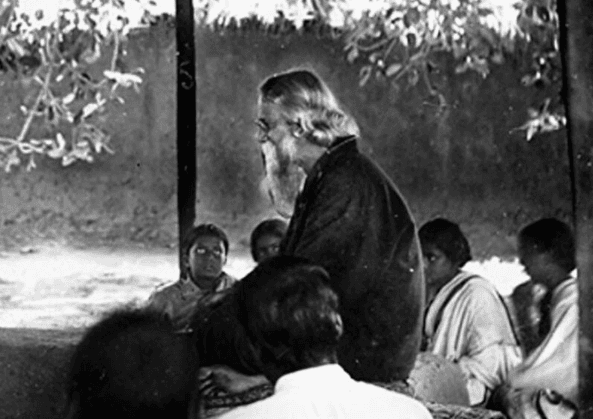
Institution: Visva-Bharati, Tagore-founded Central University of national importance

Geography: Santiniketan, Birbhum district, West Bengal

Core idea: Integrates Indian ethos with global, interdisciplinary learning in open, nature-centric campus

Quick Facts for MCQs

Historical Milestones

  • 1901 Shantiniketan ashram school opened, stressing simplicity and nature learning
  • 1921 World University concept launched, embracing global cultural exchange
  • 1951 Parliament elevated institute to Central University with autonomous governance

Academic Philosophy

  • Interdisciplinarity: arts-science-humanities taught without rigid departmental walls
  • Rural engagement: Sriniketan focuses on craft, agriculture, community uplift
  • Artistic focus: Kala Bhavana nurtures Indian modern art, music, dance traditions

Governance Crisis

  • NEP-linked funding rationalisation reducing grants, delaying projects
  • Faculty protests over alleged administrative overreach and erosion of Tagorean ethos
  • Autonomy concerns amid shift toward standardized central policies

Key Data Points

FeatureData-Point
FounderRabindranath Tagore
Year of university set-up1921
Original ashram schoolShantiniketan, 1901
Central University sinceVisva-Bharati Act, 1951
Parliamentary statusInstitution of National Importance
Key schoolsKala Bhavana, Sriniketan
Educational motto“Visva Bharati” – unity of humanity
Learning principleFreedom, creativity over rote
StateWest Bengal
NEP 2020 impactFunding cuts, faculty unrest, admin disputes

Related UPSC Prelims PYQs

GS1 2006PYQ 1

Which one of the following is not a Central University?

GS-1Mapping

6.Madagascar Island Nation (Country Mapping)

Times of India

What & Where

Island republic in southwestern Indian Ocean, ≈400 km east of Mozambique across Mozambique Channel.

Tri-zonal relief: central high plateau, eastern coastal plains, western low plateaus with volcanic massifs Ankaratra & Andringitra.

2024 crisis: elite military unit CAPSAT ousts president after bid to dissolve Parliament.

Quick Facts for MCQs

Political Crisis

  • Trigger: Presidential attempt to dissolve Parliament deepened constitutional breakdown.
  • Actors: CAPSAT now controls key state organs; president reportedly in hiding.
  • Mobilisation: Gen-Z-led street protests denounce corruption, governance failures.

Colonial & Governance History

  • 1960 independence marked switch from French colony to republic.
  • Post-1960 era dotted with coups, power struggles; 2009 coup by Andry Rajoelina notable precedent.

Physical Geography

  • Watersheds: Volcanic massifs feed rivers Mangoky, Onilahy, Tsiribihina supporting western agriculture.
  • Plate tectonics: Prolonged isolation fostered unique biogeographic evolution.

Biodiversity

  • Endemism: Lemurs, baobabs and >80 % flora/fauna species found nowhere else.
  • Conservation value underpins nickname “Eighth continent”.

Key Data Points

FeatureData-Point
CapitalAntananarivo
Colonial rulerFrance (till 1960)
Independence year1960
Elite coup unitCAPSAT
Highest massifAndringitra – 8,720 ft
Main river exampleMangoky
Distance from Mozambique≈400 km
Nickname“Eighth continent”

Related UPSC Prelims PYQs

CDS_GK, NDA_GAT 2021PYQ 1

Which country has replaced Maldives to host the 2023 Indian Ocean Island Games?

CDS_GK, NDA_GAT 2020PYQ 2

Which one of the following Indian Ocean island nations has recently declared a state of environmental emergency due to oil spill from a grounded ship?

GS-3Environment

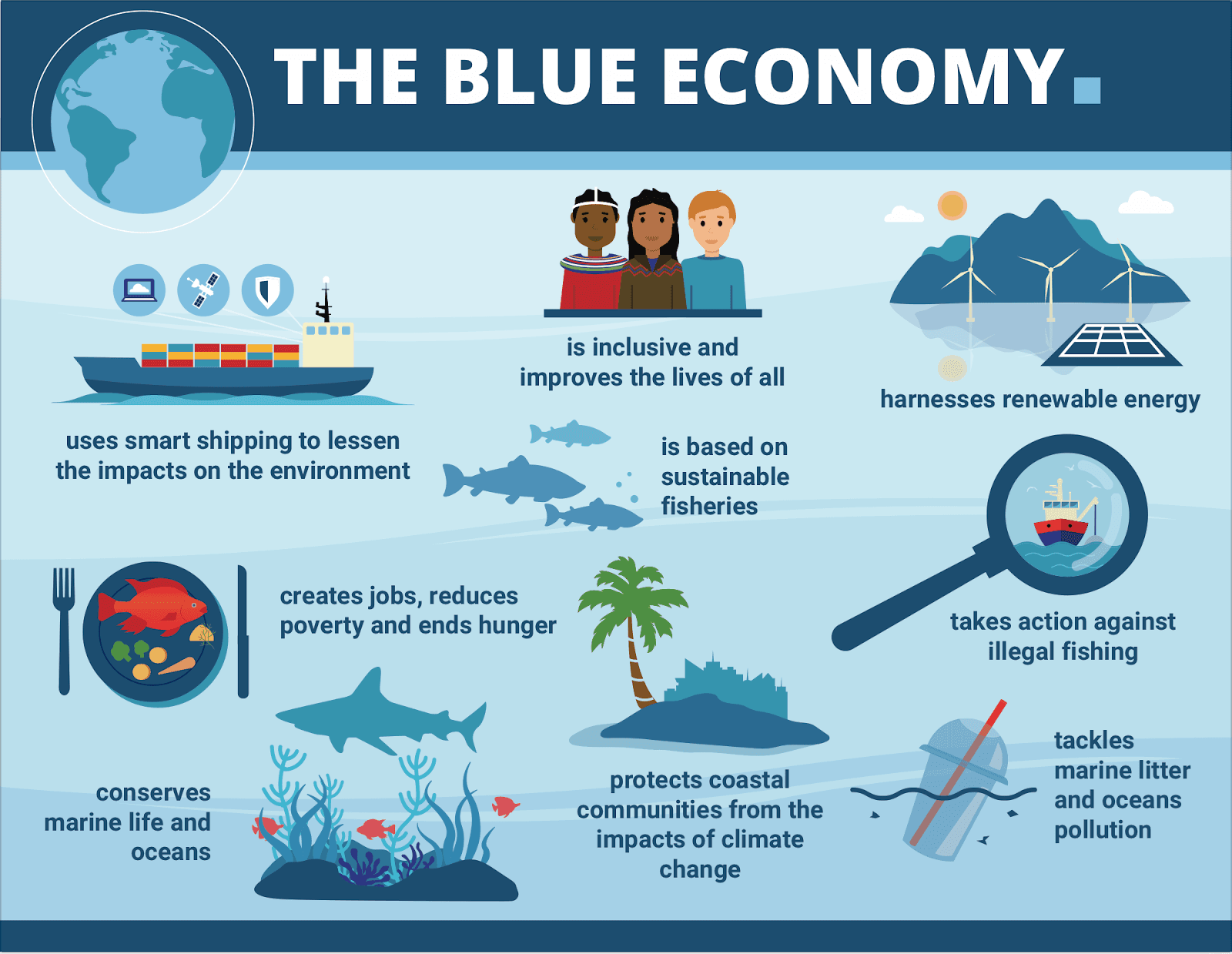
7.NITI Aayog Deep-Sea Fisheries Strategy (Blue Economy)

PIB
Illustration for NITI Aayog Deep-Sea Fisheries Strategy (Blue Economy)

What & Where

Deep-sea & offshore fisheries: harvesting resources beyond continental shelf within 2 million sq km Indian EEZ

Core processes: stock assessment, fleet modernisation, ecosystem-based management, export-oriented value chains

Geography focus: Arabian Sea, Bay of Bengal and Indian Ocean high seas adjoining 200 nm Exclusive Economic Zone

Quick Facts for MCQs

Legal & Policy

  • Envisaged dedicated deep-sea fisheries law aligned with UNCLOS, licensing and access regulation overhaul
  • Proposal for Deep-Sea Fishing Program with Programme Management Unit and inter-state advisory council
  • Current Coastal Regulation acts cover only 0-12 nm, leaving governance vacuum for EEZ operations

Infrastructure & Tech

  • Recommendation to upgrade harbours, landing centres, cold chains, onboard refrigeration and processing units
  • Mandated vessel monitoring systems, sonar, AI-assisted fish finders, bycatch reduction gear
  • Collective ownership clusters suggested for small fishers to access modern vessels

Challenges

  • Data gap: limited remote sensing, acoustic surveys causing unreliable stock estimates and risk of overfishing
  • Weak surveillance enables IUU and cross-border incursions, threatening maritime security and fisher safety
  • Fragmented subsidies and scarce credit hinder fleet modernisation and green technology adoption

Finance

  • Deep-Sea Fishing Development Fund planned under PMMSY with industry co-contribution
  • Public-private partnerships encouraged for vessels, harbours, processing parks
  • Soft loans or viability-gap funding proposed for eco-friendly engines and low-carbon refrigeration

Sustainability

  • Marine spatial planning, MPAs and total allowable catch limits recommended for stock conservation
  • Real-time traceability and eco-labelling to secure premium markets and curb illegal harvests
  • Alignment with SDG 14 to ensure biodiversity protection alongside economic growth

Key Data Points

FeatureData-Point
India’s global fish rank2nd largest producer
Share in world output8 % of global fish catch
Livelihoods supported≈ 30 million people
EEZ area> 2 million sq km
Estimated deep-sea potential7.16 million t annually
Fishery export earnings FY24₹ 60,523 crore
Roadmap phases2025-28, 2029-32, 2033-onwards

Related UPSC Prelims PYQs

CDS_GK, ESE_GS 2026PYQ 1

Which institution released the report titled “India’s Blue Economy: Strategy for Harnessing Deep-Sea and Offshore Fisheries”?

CDS_GK, ESE_GS 2024PYQ 2

Which of the following statements is not correct?

GS-3S&T

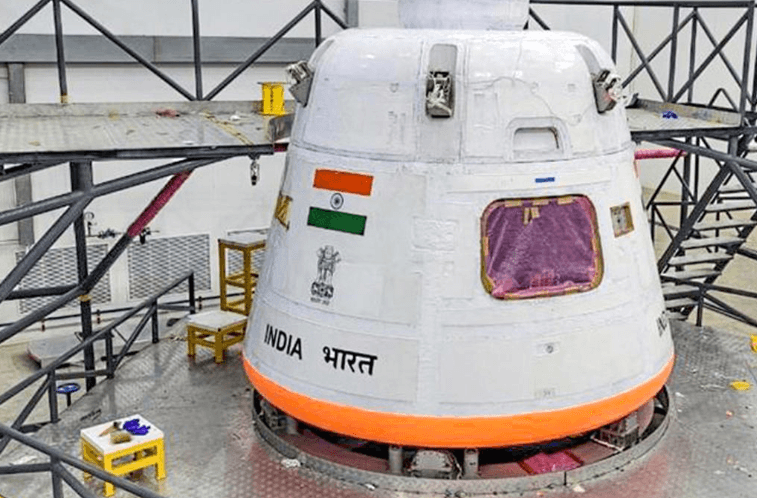
8.ISRO Crew Escape System (Human Spaceflight)

The Hindu
Illustration for ISRO Crew Escape System (Human Spaceflight)

What & Where

Definition: Rapid-acting system that yanks crew module from malfunctioning launch vehicle during Gaganyaan launch emergencies

Location: Mounted on nose of LVM3; uses high-burn solid motors to out-accelerate rocket

Types: Puller design adopted by ISRO; alternative pusher design used by SpaceX Falcon 9

Quick Facts for MCQs

Tech & Schemes

  • High-burn motors generate acceleration higher than LVM3 ensuring rapid divergence
  • Multi-stage parachute suite provides controlled descent and splash-down recovery
  • CES integral to human-rating standards set for Indian Human Spaceflight Programme

Safety Significance

  • Life-critical redundancy validates India’s compliance with global astronaut-safety norms
  • Enables mission abort within seconds, even before catastrophic vehicle breakup
  • Extends protection window from T-0 on pad through max-Q phase

International Comparisons

  • Puller style mirrors legacy Soviet Soyuz and NASA Saturn V escape towers
  • Pusher style by SpaceX uses liquid engines allowing reuse but adds mass to capsule
  • Design choice influences aerodynamics, mass, refurbishment complexity

Key Data Points

FeatureData-Point
DeveloperISRO, Gaganyaan programme
ObjectiveAstronaut survival in early ascent or pad abort
ActivationIntegrated Vehicle Health Management (IVHM) monitors & triggers
PropulsionMultiple high-burn solid motors
Separation SequenceMotor firing → multi-stage parachutes → sea splash-down
Launch VehicleHuman-rated LVM3
CES Design TypePuller (solid)
Foreign Puller UsersSoyuz, Saturn V
Foreign Pusher UserSpaceX Falcon 9
Safety Phase CoveragePre-lift-off to initial ascent

Related UPSC Prelims PYQs

ESE_GS 2026PYQ 1

Which space organization launched the PUNCH Space Mission?

GS-3S&T

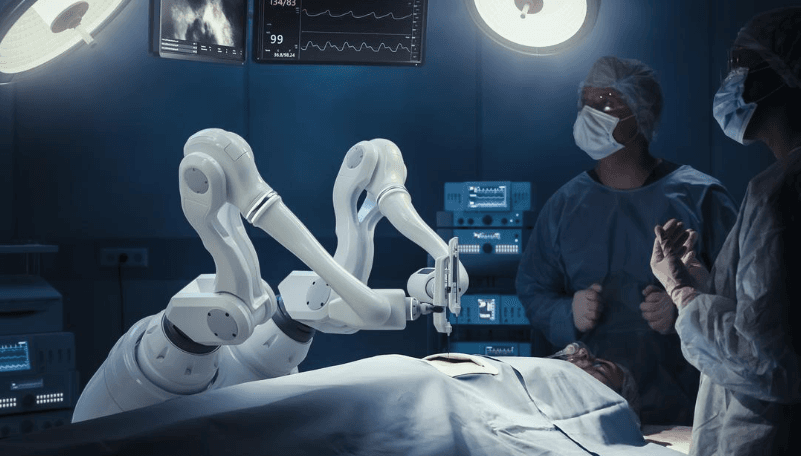
9.AI-Driven Robotics Applications (AI Robotics)

The Hindu
Illustration for AI-Driven Robotics Applications (AI Robotics)

What & Where

AI in Robotics = integration of machine learning with automated hardware enabling autonomous, adaptive decisions beyond pre-programmed routines

Core processes: robotic surgery, precision farming agribots, cobots & warehouse mobiles for smart manufacturing

Geography focus: India under Digital India, AI for All, Atmanirbhar Bharat initiatives

Quick Facts for MCQs

Sectoral Applications

  • Healthcare robots deliver precision surgery, early diagnostics, elderly care, rehabilitation assistance
  • Agriculture drones, soil-analytics agribots, AI irrigation, vision pest detection optimise inputs and cut chemicals
  • Industry cobots, predictive-maintenance bots, self-navigating warehouse units slash downtime and speed fulfilment

Emerging Trends

  • Conversational interfaces allow natural voice commands to robots enhancing usability
  • Composite AI blends vision, NLP, planning for superior adaptability in mixed environments
  • Sovereign BharatGPT stresses indigenous datasets ensuring data privacy and strategic autonomy

Development Significance

  • Efficiency boost ensures productivity growth with safer high-risk task automation
  • Sustainability gains through water-saving smart irrigation and resource-optimised manufacturing
  • Indigenous R&D nurtures global leadership positioning India as intelligent automation hub

Key Data Points

FeatureData-Point
Healthcare useMicrometric minimally invasive robotic surgery, AI imaging diagnostics, assistive exoskeletons
Agri case studySaagu Baagu, Telangana; >7,000 farmers; up to 2× yield rise
Industrial startupsGreyOrange, Addverb, Ati Motors developing warehouse & mobility robots
Trend techConversational GenAI, domain-specific LLMs, composite AI, sovereign BharatGPT
Cobot roleHuman–machine shared workspace, dynamic speed & safety adjustments
Policy visionAI for All + Digital India target democratised, responsible automation
Job impactShift to design, maintenance, data analytics rather than outright displacement

Related UPSC Prelims PYQs

GS1 2025PYQ 1

विश्व बैंक ने यह चेतावनी दी है कि भारत वह पहला देश बन सकता है जहाँ आर्टिफ़िशियल इंटेलिजेंस-आधारित ऑटोमेशन (डेटा-ड्रिवन ऑटोमेशन) के कारण 35% से अधिक नौकरियाँ प्रभावित होंगी। निम्नलिखित कथनों पर विचार कीजिए:

GS1 2020PYQ 2

विकास की वर्तमान स्थिति में, कृत्रिम बुद्धिमत्ता (Artificial Intelligence), निम्नलिखित में से किस कार्य को प्रभावी रूप से कर सकती है?

GS-2Editorial

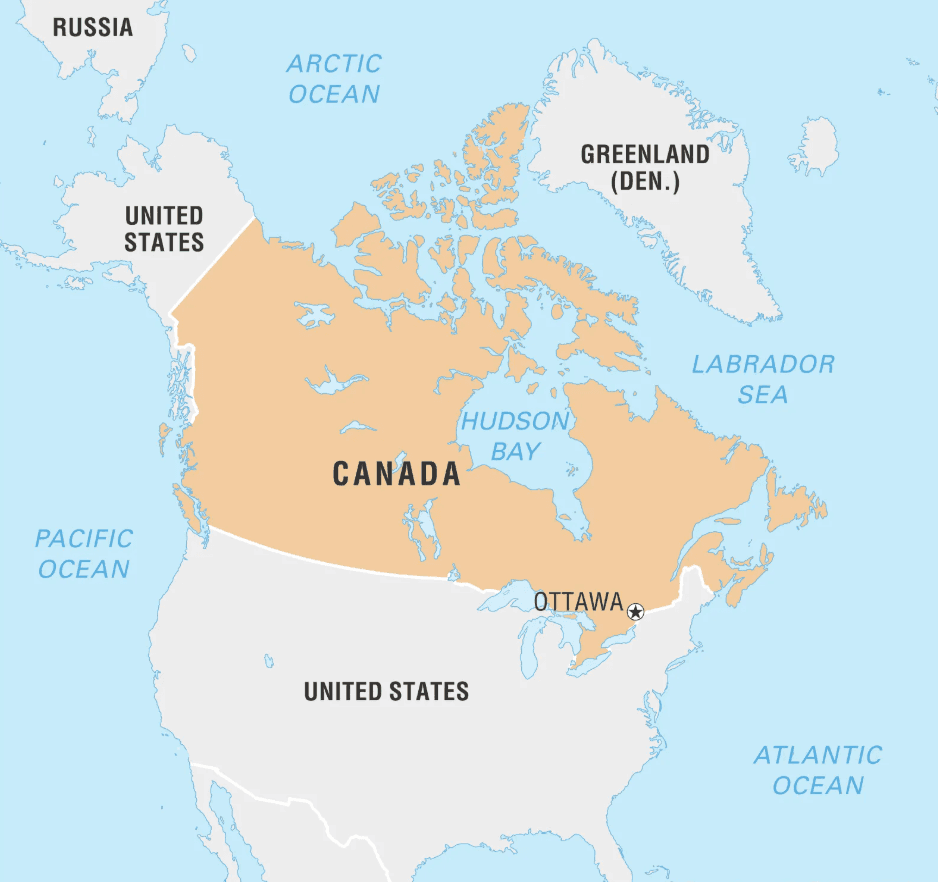
10.India-Canada Partnership Roadmap (Bilateral Relations)

The Hindu
Illustration for India-Canada Partnership Roadmap (Bilateral Relations)

What & Where

Joint statement “Renewing Momentum Towards a Stronger Partnership” issued 15 Oct 2025 by India and Canada.

Framework covers trade, clean energy, S&T and people links to reset strained ties.

Partnership spans South-Asia–North-America; anchored in shared democracy, rule of law, sovereignty.

Quick Facts for MCQs

Economic Angle

  • CEO Forum resuming early 2026; CEPA talks frozen since 2023, early-harvest pacts proposed.
  • Priority sectors: clean tech, infrastructure, agri-food, digital innovation; 600 + Canadian companies in India.
  • Critical Minerals Annual Dialogue starts Mar 2026 to secure supply chains.

Clean Energy & Tech

  • Ministerial Energy Dialogue revival targets green hydrogen, biofuels, carbon capture, electric mobility.
  • JSTCC restart and Canadian slot at AI Impact Summit 2026 deepen AI, DPI cooperation.
  • ISRO-CSA tie-ups and proposed Innovation Bridge back joint R&D in quantum, semiconductors, cybersecurity.

Security Dimension

  • JWG on Counter Terrorism 1997 and 2018 framework guide cooperation; Khalistan separatism remains flashpoint.
  • Proposed NSA-level Security & Sovereignty Dialogue and 2 + 2 format align Indo-Pacific, maritime, CT priorities.
  • Extradition Treaty 1987 and MLAT 1994 provide legal backbone for prosecuting extremists.

Key Data Points

FeatureData-Point
Joint statement date15 Oct 2025
New roadmap nameRenewing Momentum Towards a Stronger Partnership
Bilateral trade 2023CAD 26 bn +
Canadian pension fund investmentCAD 75 bn +
Indian diaspora in Canada~1.8 mn persons
Indian students in Canada (2023)~427,000
Nuclear Cooperation Agreement signed2010
JWG on Counter Terrorism launched1997

Related UPSC Prelims PYQs

CAPF_GAI, ESE_GS 2026PYQ 1

What is the name of the initiative launched by India and Denmark in November 2025 to enhance bilateral ties?

CAPF_GAI, ESE_GS 2025PYQ 2

India and Poland have agreed to implement the 'India-Poland Strategic Partnership' in terms of a Five-Year Action Plan. Identify the current Five-Year Action Plan.

GS-2Polity

11.India Wins UNHRC Seat (UN Bodies)

News on Air
Illustration for India Wins UNHRC Seat (UN Bodies)

What & Where

UNHRC – UNGA-created (2006) intergovernmental body for global human-rights promotion, protection and monitoring

Core tools: Universal Periodic Review, Special Rapporteurs, fact-finding missions, resolutions on thematic/crisis issues

Headquarters at UN Office, Geneva, Switzerland; meets thrice yearly in regular sessions

Quick Facts for MCQs

Functions & Mechanisms

  • Universal Periodic Review scrutinises every state’s rights record; reports debated publicly
  • Special Rapporteurs/Working Groups monitor themes or nations, submit findings to Council
  • Council authorises inquiries, adopts resolutions urging corrective action

Membership & Election

  • Regional seat split: Africa 13, Asia-Pacific 13, LAC 8, WEOG 7, Eastern Europe 6
  • Candidates need absolute UNGA majority; competitive lists optional, India 2026-28 elected unopposed
  • One-term break required after two consecutive stints

India’s Engagement

  • Prior terms: 2006-07, 2011-14, 2014-17, 2017-20, 2022-24; upcoming 2026-28
  • Focus areas: inclusive development, digital rights governance, gender equality advocacy
  • Regularly co-sponsors resolutions, participates actively in UPR reviews of peers

Key Data Points

FeatureData-Point
Established2006
UNGA Resolution60/251
HeadquartersGeneva, Switzerland
Total seats47
Member term3 years
Asia-Pacific seats13
Election methodUNGA secret ballot
Seats renewed yearlyOne-third
Max consecutive termsTwo
India’s tenures7 (incl. 2026-28)

Related UPSC Prelims PYQs

GS1 2022PYQ 1

“संयुक्त राष्ट्र प्रत्यय समिति (United Nations Credentials Committee)” के सम्बन्ध में, निम्नलिखित कथनों पर विचार कीजिए:

GS-3Security

12.India's Recent Military Exercises (Joint Exercises)

PIB
Illustration for India's Recent Military Exercises (Joint Exercises)

What & Where

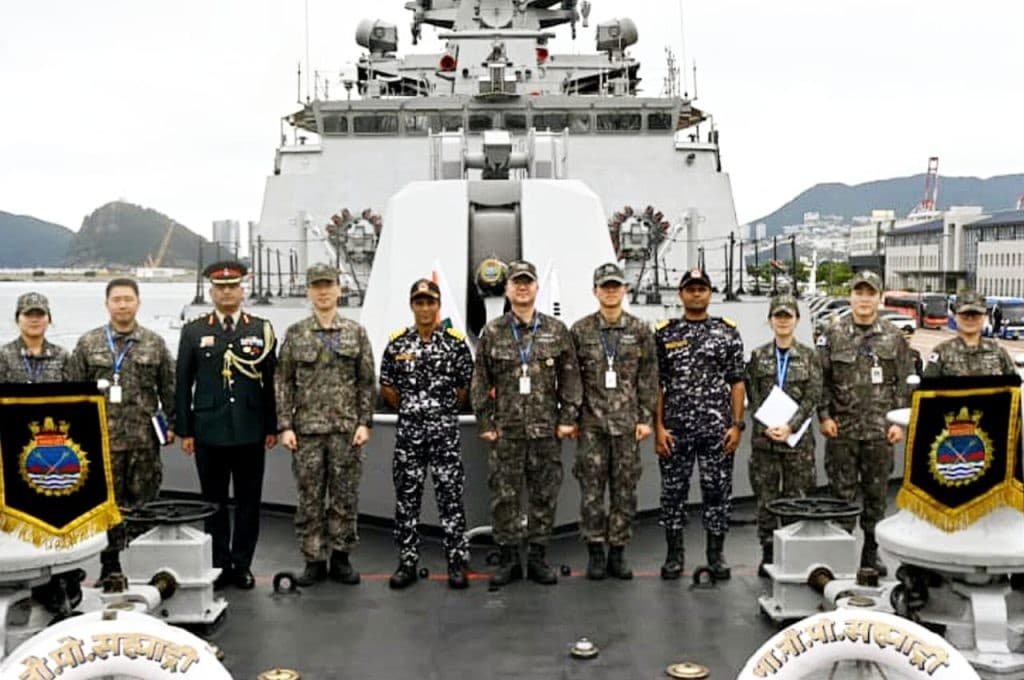
Bilateral drills: India with South Korea, Australia, Russia to upgrade joint combat readiness.

Formats: Naval harbour + sea phase; Army sub-conventional & urban warfare; Desert counter-terrorism live-fire.

Sites: Busan Naval Harbour (ROK), Perth (Australia), Mahajan Field Firing Range Bikaner (India).

Quick Facts for MCQs

Security Dimension

  • Interoperability drills boost readiness across Indo-Pacific maritime lanes and desert land theatres.
  • Live-fire, hostage-rescue scenarios sharpen joint counter-terror response.
  • Participation spans company to frigate level ensuring tactical-to-operational cohesion.

Tech & Capability

  • UAV reconnaissance and precision artillery central in INDRA 2025 network-centric playbook.
  • AUSTRAHIND trials emerging tech integration in semi-desert environments.
  • Cross-deck visits share electronic warfare and maintenance know-how between INS Sahyadri & ROKS Gyeongnam.

Foreign Policy Linkages

  • Act East underpins India–ROK exercise, reaffirming maritime stability goals.
  • AUSTRAHIND aligns with India-Australia Comprehensive Strategic Partnership and QUAD synergy.
  • INDRA sustains legacy India-Russia defence ties amid shifting Eurasian power equations.

Key Data Points

FeatureData-Point
India–ROK Navy exercise1st edition, Busan Naval Harbour
Indian shipINS Sahyadri (Shivalik-class frigate)
Korean shipROKS Gyeongnam (Daegu-class frigate)
Core policy tagLinked to India’s Act East Policy
AUSTRAHIND 2025 hostPerth, Western Australia
AUSTRAHIND focusSub-conventional & urban operations
INDRA 2025 venueMahajan Field Firing Range, Rajasthan
INDRA focusCounter-terrorism, UAV recon, precision strikes

Related UPSC Prelims PYQs

ESE_GS, NDA_GAT 2022PYQ 1

Which one of the following countries did the Indian Navy participate in the U.S. Navy-led Southeast Asia Cooperation and Training (SEACAT) military exercise, to demonstrate its maritime manoeuvres?

ESE_GS, NDA_GAT 2021PYQ 2

Which one of the following statements is most appropriate about ‘Exercise Kavach’?

GS-1Scheme

13.EPF Withdrawal Rules 2025 (EPF Reforms)

DH

What & Where

EPF New Withdrawal Rules 2025: updated framework under EPFO 3.0 for provident-fund withdrawals.

Merges 13 purposes into 3 categories—Essential, Housing, Special—with automated, paper-free digital processing.

Applicable across India for 30 crore EPFO subscribers.

Quick Facts for MCQs

Legal & Policy

  • Minimum-balance rule statutorily preserves retirement corpus while allowing liquidity.
  • Vishwas Scheme reduces litigation by simplifying penalty on delayed PF remittances.

Tech & Schemes

  • Cloud integration enables near real-time settlements without physical forms.
  • Multilingual self-service portals broaden access for diverse workforce.

Economic Angle

  • Higher withdrawal limits aid short-term liquidity, potentially boosting consumption.
  • Retention clause ensures compounding, safeguarding long-term pension adequacy.

Social Concerns

  • Easier education and marriage withdrawals address common life-cycle expenses of salaried Indians.
  • Streamlined claims cut bureaucratic delays during medical emergencies.

Key Data Points

FeatureData-Point
Governing bodyEmployees’ Provident Fund Organisation
Operational nameEPFO 3.0 withdrawal framework
Roll-out year2025
Total categories now3 (Essential, Housing, Special)
Minimum corpus to retain25 % of EPF balance
Max withdrawals for education10 during service
Max withdrawals for marriage5 during service
Service tenure for housing12 months
Service tenure for education/marriage7 years
Eligible withdrawal ceiling100 % of admissible balance
Prior purposes merged13 to 3
Digital claim modeDocument-free, cloud-based core banking
Subscriber base impacted~30 crore members
Vishwas Scheme focusPenal damage rationalisation & dispute resolution
GS-1Misc

14.Vital Statistics Report 2023 Findings (Civil Registration)

The Hindu

What & Where

Civil Registration System (CRS) India – continuous, compulsory, universal recording of births, deaths, stillbirths

Vital Statistics 2023 report by Registrar General of India, Ministry of Home Affairs, pan-India coverage

Key focus areas – birth-death numbers, sex ratio at birth, institutional birth share across states

Quick Facts for MCQs

Demographic Trends

  • Births gradual decline despite near-universal registration
  • Deaths stabilising post COVID-19 second wave peak of 2021
  • Natural growth rate narrowing as birth and death figures converge

Regional Variations

  • East-Central belt lowest SRB; Jharkhand 899 Bihar 900 Telangana 906
  • Northeastern leaders; Arunachal 1085 Nagaland 1007 reflect balanced births
  • Kerala Goa Ladakh Tripura maintain SRB above national mean

Legal & Schemes

  • PCPNDT Act 1994 prohibits sex selection; strict enforcement essential
  • Beti Bachao Beti Padhao targets patriarchal preferences via awareness and incentives
  • Drugs Technical Advisory Board move to list ultrasound machines under Drugs and Cosmetics Act aims misuse curb

Key Data Points

FeatureData-Point
Registered births 20232.52 crore
Decline vs 20222.32 lakh fewer
Registered deaths 202386.6 lakh
Death spike 20211.02 crore
Excess deaths 2021 over 2020~21 lakh
Birth registration rate 202398.4 %
Institutional birth share 202374.7 %
Timely registration windowWithin 21 days
Lowest SRB stateJharkhand 899
Highest SRB stateArunachal Pradesh 1085
Registrar General origin1961
Governing lawRBD Act 1969

Related UPSC Prelims PYQs

CDS_GK, GS1 2024PYQ 1

किसी अर्थव्यवस्था में कुल जन्म दर को किस रूप में परिभाषित किया जाता है ?

CDS_GK, GS1 2022PYQ 2

यदि हम भारत के सभी राज्यों के सभी ग्रामीण-शहरी वर्गों और पुरुष-महिला श्रेणियों के लिए जन्म के समय आयु संभाव्यता दरों को देखें और उसकी तालिका देखें, तो आपको क्या देखने को नहीं मिलेगा?

Ready to practice?

Test your knowledge with our UPSC test series.

Start Free Trial