UPSC Current Affairs

16 topicsGS-1: 3GS-2: 3GS-3: 10
0/16 done
GS-2Polity

1.Champakam Dorairajan Judgment Significance (Fundamental Rights)

Indian Express

What & Where

Champakam Dorairajan case 1951, first Supreme Court clash between Fundamental Rights and Directive Principles

Disputed Madras Communal General Order reserving college seats by caste & religion

Heard in Madras High Court, finally decided by five-judge Supreme Court bench, New Delhi

Quick Facts for MCQs

Legal & Policy

  • Judgment allowed Parliament to amend FRs under Article 368
  • Education quotas voided until Article 15(4) restoration
  • DPSPs remain non-justiciable guidance, cannot automatically curb FRs

Constitutional Amendments

  • First Amendment widened Article 19(2) limits, added Articles 31A & 31B
  • Ninth Schedule shields land reform laws from FR review
  • Articles 85 & 174 capped inter-session gap at six months

Judiciary Precedents

  • Golaknath 1967 barred FR curbs, later overruled on scope
  • Kesavananda 1973 coined Basic Structure, upheld limited Article 31C shield
  • Minerva Mills 1980 struck 42nd Amendment’s DPSP supremacy, restored harmony

Social Justice

  • Article 46 obliges state to advance SC, ST, weaker sections
  • Public job quotas already valid via Article 16(4)
  • President lists SCs & STs statewise under Articles 341 & 342

Key Data Points

FeatureData-Point
Supreme Court verdict year1951
Bench strength5 judges
Impugned orderMadras Communal GO 1927
Articles held violated14, 15(1)
Hierarchy establishedFRs prevail over DPSPs
Triggered amendment1st Constitutional Amendment 1951
Clause insertedArticle 15(4) for SEBC, SC, ST quotas
Protective device createdNinth Schedule via Article 31B

Related UPSC Prelims PYQs

GS1 1995PYQ 1

Prohibition of discrimination on grounds of religion, etc. (Article 15 of the Constitution of India) is a Fundamental Right classifiable under

GS1 2002PYQ 2

Match List I (Article of Indian Constitution) with List II (Provisions) and select the correct answer using the codes given below the lists:

GS-3Economy

2.World Bank Growth Roadmap 2047 (Growth Strategy)

IT
Illustration for World Bank Growth Roadmap 2047 (Growth Strategy)

What & Where

World Bank India Country Economic Memorandum 2025: roadmap for India to attain high-income status by 2047

Target: sustained real GDP growth 7.8 % p.a.; heavy focus on investment, labour participation, trade integration

Geography: emphasises balanced development across lagging northern-eastern states and industrial coastal corridors

Quick Facts for MCQs

Investment & Capital

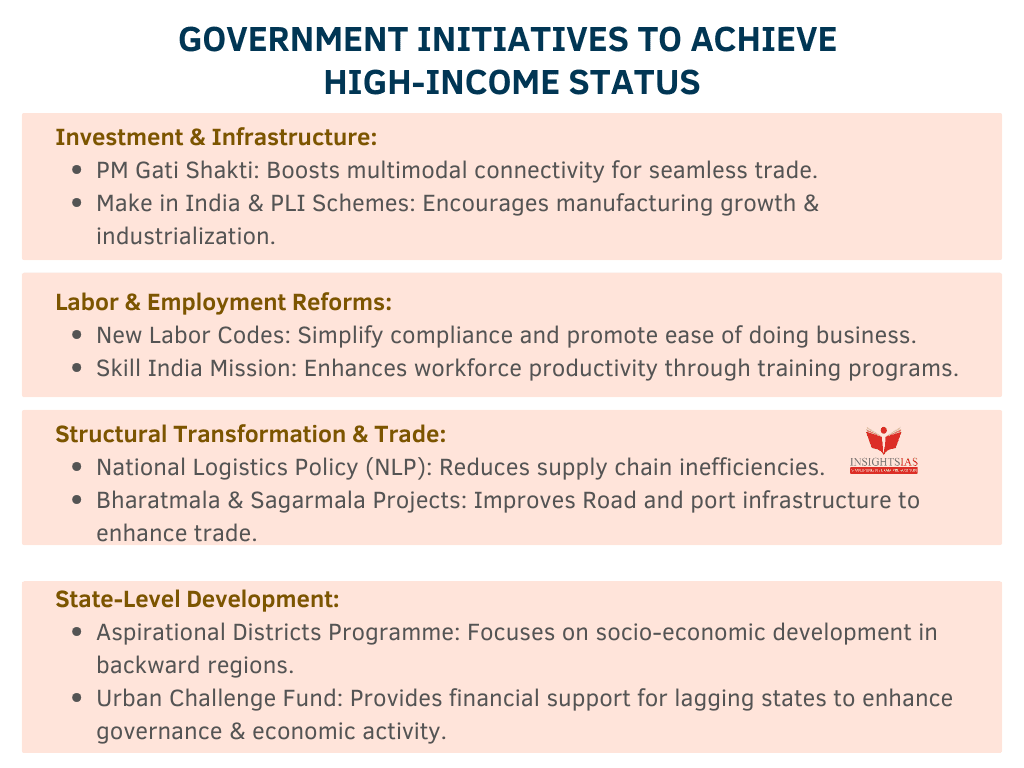
  • Scale-up investment via private FDI, reformed financial regulations, MSME credit deepening
  • Address land, infrastructure bottlenecks to unlock long-horizon manufacturing projects
  • Incentivise states through Urban Challenge Fund-type competitive federalism

Labour & Employment

  • Raise female participation with childcare, safety, flexible work policies
  • Focus on job-rich sectors: manufacturing, hospitality, transport, care economy
  • Simplify labour codes to cut compliance and boost formal hiring

Structural Transformation

  • Shift surplus farm labour into higher-productivity manufacturing & services clusters
  • Expand Global Value Chain participation; benchmark against Vietnam, Thailand, China
  • Leverage tech adoption—AI, automation—for productivity surge

Inter-State Balance

  • Support lagging states on health, education, logistics infrastructure
  • Encourage advanced states to deepen GVC links and business-friendly reforms
  • Use incentive-driven schemes to narrow regional productivity gaps

Key Challenges

  • Employment growth lagging GDP, with large informal sector dominance
  • Persistently low female LFPR suppressing potential output
  • Uneven state capacities hindering nationwide convergence

Key Data Points

FeatureData-Point
Required avg. GDP growth7.8 % per annum till 2047
Current investment ratio33.5 % of GDP
Investment target40 % of GDP by 2035
Overall LFPR now56.4 %
LFPR target65 %
Female LFPR now35.6 %
Female LFPR target50 %
Agriculture share in jobs45 %
Q2 FY25 GDP growth5.4 % (vs 8.1 % yr-ago)
Urban female LFPR Oct-Dec 202425.2 %

Related UPSC Prelims PYQs

ESE_GS, NDA_GAT 2023PYQ 1

IMF raises its projection for economic growth in 2021-22 to

ESE_GS, NDA_GAT 2025PYQ 2

S1. Liberalisation and globalisation freed India's economy from the low GDP trap that had impeded India's progress

GS-3EconomyQuick Bite

3.CPI-AL And CPI-RL Update (Inflation Indices)

PIB

What & Where

Labour Bureau’s CPI-AL/CPI-RL indices track rural cost-of-living across 20 states plus All-India.

CPI-AL targets agricultural-labour households; CPI-RL covers all rural labour; AL is a subset of RL.

Indices guide wage indexation, rural inflation assessment and related policy decisions.

Quick Facts for MCQs

Economic Angle

  • Inflation dip January 2025 eases price pressure on rural essentials.
  • Indices inform RBI monetary stance on rural inflation components.

Labour Policy

  • Index numbers benchmark state minimum-wage revisions for agricultural labour.
  • Separate AL series offers targeted cost-of-living protection to farm workers.

Data & Methodology

  • Base 1986-87 enables long-term trend comparison despite basket changes.
  • Monthly price capture covers food, fuel, clothing and miscellaneous rural items.

Key Data Points

FeatureData-Point
CompilerLabour Bureau, MoL&E
Coverage20 States + All-India
FrequencyMonthly
Base Year1986-87 = 100
Jan 2025 Inflation CPI-AL4.61 %
Jan 2025 Inflation CPI-RL4.73 %
CPI-AL RelationSubset of CPI-RL
Key Use CPI-ALMinimum-wage adjustment for farm workers

Related UPSC Prelims PYQs

GS1 2015PYQ 1

Which of the following brings out the ‘Consumer Price Index Number for Industrial Workers’?

GS1 1997PYQ 2

In India, inflation is measured by the

GS-3EconomyQuick Bite

4.RBI Survey On Farmers' Price Share (Farmers Price Share)

Indian Express

What & Where

Definition: RBI pan-India survey measuring farmers’ share in final consumer prices for rabi produce

Coverage: 18 states, 12 rabi crops, inputs from farmers, traders, retailers in mandis & villages

Timing: Conducted during 2024 rabi marketing season

Quick Facts for MCQs

Economic Angle

  • FarmersShare non-perishables higher, perishables lose margin to market layers
  • Margin capture by traders and retailers undermines farm profitability
  • Low farmgate prices deter diversification from cereals

Commodity-wise Insights

  • WheatTopper at 67 % farmer share, buoyed by MSP procurement
  • PulsesStrong with Lentil 66 %, Chana 60 % showing better returns
  • OilseedDip as Mustard declines to 52 % from 55 % in 2021

Supply Chain Issues

  • Structure unorganised, multiple intermediaries cut into farmer earnings
  • Transparency limited in product flow, finance, pricing data
  • Perishability drives higher wastage, logistics cost, middlemen dependence

Tech & Schemes

  • Payments shift toward digital since 2018 baseline
  • Digital trail can curb hidden margins, boost farmer realisation
  • Synergy needed with e-NAM and FPO networks for streamlined marketing

Key Data Points

FeatureData-Point
Survey agencyReserve Bank of India
Survey year2024
States covered18
Rabi crops covered12
Farmers share range40–67 % of retail price
Highest share cropWheat 67 %
Wheat sold at MSP25 % of surveyed farmers
Rice farmer share52 % in 2024 ; 45 % in 2022
Lentil (Masoor) share66 %
Chana share60 %
Mustard share52 % ; 55 % in 2021 study
Perishables farmer share40–63 %
Trader + retailer share in perishables>50 % (except tomato)
Payment mode trendElectronic payments rising though cash dominates
GS-1History

5.Amir Khusrau Life And Legacy (Sufi Poet)

Indian Express
Illustration for Amir Khusrau Life And Legacy (Sufi Poet)

What & Where

Polymath Amir Khusrau (1253-1325): Persian-Hindavi poet-musician of Delhi Sultanate.

Contributions: founded Hindavi literature, formalised qawwali, enriched Hindustani ragas & instrument lore.

Geography: born Patiyali (Etah, UP), served in Delhi courts, tomb beside Nizamuddin Auliya’s dargah.

Quick Facts for MCQs

Family & Migration

  • Parentage: Turkic noble father, Indian Muslim mother; family fled Mongol raids in Transoxiana.
  • Birthplace: Patiyali on Ganga plain; early immersion in composite Indo-Persian culture.

Literary Legacy

  • Language-blend: fused Persian imagery with Hindavi diction, shaping proto-Hindi/Urdu.
  • Major masnavis: Nuh Siphir; Qiran-us-Saadain; plus ghazals, dohas, riddles.
  • Paheli tradition: pioneered playful riddles and proverbs still recited across North India.

Musical Impact

  • Qawwali system: organised Sufi sama into chorus-solo format mixing Persian, Arabic, Indic melodies.
  • Khayal advance: credited with introducing khayal, bol-bant and several ragas to Hindustani canon.
  • Instrument lore: folk memory attributes sitar, tabla invention; scholars note gradual evolution.

Key Data Points

FeatureData-Point
Lifespan1253 – 1325 CE
NicknameTuti-yi-Hind (Parrot of India)
Spiritual mentorNizamuddin Auliya, Chishti order
BirthplacePatiyali, Etah district, Uttar Pradesh
Sultans servedQaiqabad, Jalaluddin, Alauddin, Mubarak, Ghiyasuddin
Key languagesPersian & Hindavi
Famous qawwalisChhaap Tilak; Zehal-e-Maskeen
Annual festivalJahan-e-Khusrau (25th edition)

Related UPSC Prelims PYQs

CDS_GK, GS1 2025PYQ 1

निम्नलिखित में से किस रचना में अमीर खुसरो ने भारत की जलवायु, इसकी भाषा (मुख्यता संस्कृत), इसकी कला एवं संगीत और न कि इसके पशुओं की प्रशंसा की है ?

CDS_GK, GS1 1997PYQ 2

The medieval Indian writer who refers to the discovery of America is

GS-1Environment

6.Avalanche Types And Triggers (Avalanche Types)

Indian Express

What & Where

Avalanche: sudden, fast-moving snow/ice/debris slide on mountain slopes, triggered naturally or by human activity.

Key types: Loose Snow, Slab, Gliding, Powder, Wet Snow—differ in cohesion, speed (100–300 km/h) and destruction mode.

Core Indian belt: Higher Himalaya (Uttarakhand, Himachal, J-K, Ladakh) on 30°-45° slopes, especially after heavy snowfall.

Quick Facts for MCQs

Causes & Triggers

  • Heavy Snowfall: wind-drifted deposits create unstable layered snowpack.
  • Temperature Fluctuation: melting-refreezing weakens internal bonds.
  • Human Activity: skiing, roads, detonations, deforestation disturb slope equilibrium.

Impacts

  • Mortality: suffocation, hypothermia, trauma; sharp survival drop after 15 minutes burial.
  • Infrastructure: highways, BRO camps, power lines buried or severed, isolating valleys.
  • Secondary Hazards: post-melt avalanches can induce landslides and flash floods.

Mitigation & Response

  • Early Warning: IMD models, satellite & AI real-time monitoring.
  • Structural Barriers: snow fences, deflection walls, avalanche tunnels on highways.
  • Managed Release: small, controlled blasts to avoid large catastrophic slides.

Current Incident

  • Location: BRO project near Mana village, Chamoli district, Uttarakhand.
  • Status: 22 workers trapped beneath ice; Indian Army & ITBP leading rescue.
  • Context: follows recent heavy snowfall in upper Alaknanda basin.

Key Data Points

FeatureData-Point
Deadliest typeSlab avalanche
Slab speed≈ 100 km/h
Fastest typePowder avalanche
Powder speedUp to 300 km/h
Common slope range30°–45°
Loose Snow slope> 40°
Gliding slope threshold> 15°
Survival window under snow~15 minutes
Indian forecast agencyIMD Snow & Avalanche Estt.
Pre-emptive methodControlled explosions

Related UPSC Prelims PYQs

CDS_GK, NDA_GAT 2022PYQ 1

Consider the following features about a geographical phenomenon:

CDS_GK, NDA_GAT 2021PYQ 2

An avalanche is a type of which one of the following disasters?

GS-1Mapping

7.Sudan Geographic Overview (African Geography)

Times of India

What & Where

Sudan — NE Africa, third-largest African state; straddles Sahara north to Congo basin south.

Core axes: Nile River (White + Blue) converging at Khartoum capital.

Indian Coast Guard ship ‘Sachet’ sailing to Sudan with >2 tonnes life-saving medicines.

Quick Facts for MCQs

Hydrology

  • Nile system dominates; seasonal wadis feed main channel then dry in arid belts.
  • White Nile traverses South Sudan into Sudan; calmer flow than Blue Nile.
  • Blue Nile contributes bulk of sediment & summer floodwater at Khartoum junction.

Relief & Topography

  • Marrah Mountains form volcanic Darfur Plateau, highest Sudanese point.
  • Red Sea Hills create NE escarpment parallel to coast.
  • Nuba Mountains rise abruptly from south-central plains, isolated massif.

Humanitarian Aid

  • India dispatching medicines via Offshore Patrol Vessel ‘Sachet’.
  • Cargo includes life-saving, anti-cancer formulations for Sudanese populace.
  • Continues India’s medical diplomacy in Africa.

Neighbourhood & Access

  • Sudan touches eight entities: seven land neighbours + maritime Red Sea.
  • Position links North Africa, Sahel, Horn and Nile Valley corridors.

Key Data Points

FeatureData-Point
Capital cityKhartoum
Confluence riversWhite Nile + Blue Nile
White Nile sourceLake Victoria (Uganda)
Blue Nile originEthiopian Highlands
Highest elevationMarrah Mts., ~3 000 m
Coastal frontageRed Sea (NE Sudan)
Key escarpmentRed Sea Hills
Central uplandsNuba Mountains
Immediate neighboursEgypt, Libya, Chad, CAR, South Sudan, Ethiopia, Eritrea
ICG humanitarian load>2 tonnes medicines incl. anti-cancer drugs
GS-3Environment

8.Cali Fund Biodiversity Financing (Biodiversity Finance)

Down to Earth

What & Where

Global fund ensuring equitable benefit-sharing from digital genetic resources

Operates via access-and-benefit-sharing (ABS) payments from biodiversity-using industries

Proposed Cali (Colombia) CBD-COP16 2024; official launch Rome 2025 under Convention on Biological Diversity

Quick Facts for MCQs

Legal & Policy

  • ABS mandate makes profit-sharing with provider countries legally binding under CBD
  • Fund supports Article 15 principles on fair benefit-sharing of genetic resources
  • Governments required to report finance flows for transparency and accountability

Economic Angle

  • Creates long-term biodiversity revenue stream independent of public budgets
  • Industry payments internalise ecological costs into product pricing
  • Predictable finance considered key to closing biodiversity funding gap

Social Concerns

  • 50 % earmark recognises Indigenous stewardship of ecosystems
  • Compensation aims to reduce biopiracy grievances among developing nations
  • Inclusive governance planned with Indigenous and local community representation

Key Data Points

FeatureData-Point
Annual conservation finance committedUSD 200 billion by 2030
Fund nameCali Fund
Revenue sourceMandatory ABS contributions from pharma, biotech, agri firms
Indigenous peoples’ allocation50 % of fund resources
Implementing bodiesCBD Secretariat + Global Environment Facility
Linked global pactKunming-Montreal Global Biodiversity Framework
First utilisation reviewCOP17, Armenia 2026
Tracking toolUpdated KMGBF finance indicators
GS-3Environment

9.Lakshadweep Marine Litter Crisis (Marine Pollution)

Down to Earth
Illustration for Lakshadweep Marine Litter Crisis (Marine Pollution)

What & Where

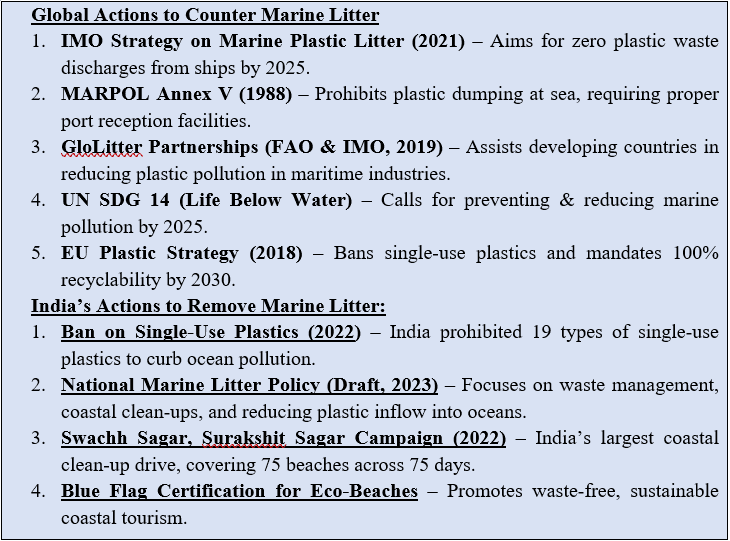
Marine litter = persistent, man-made waste accumulating in seas; ≥ 80 % plastics, from land & ocean sources.

Key types: macro-plastics (>5 mm), micro-plastics (<5 mm); ghost nets, ship discharges prominent.

Hotspot flagged: Lakshadweep coral reefs—Elsevier 2024 study warns of existential threat from plastic influx.

Quick Facts for MCQs

Environmental Impact

  • Coral smothering; plastic blocks sunlight, stresses Lakshadweep’s reef-building polyps.
  • Entanglement; ghost nets trap turtles, dolphins, reef fish reducing biodiversity.
  • Ocean currents redistribute debris, complicating removal and monitoring efforts.

Economic Angle

  • Port authorities spend millions on debris clearance; raises shipping turnaround time.
  • Damaged fishing gear & reduced catch directly slash livelihoods along India’s coasts.
  • Tourism declines as littered beaches deter visitors, shrinking local revenue.

Human Health

  • Seafood pathway; microplastics enter human diet, potential endocrine disruption.
  • Chemical leachates contaminate coastal drinking water sources.
  • Navigation hazards from floating debris risk accidents, livelihood losses.

Governance & Policy

  • MARPOL Annex V violations persist; enforcement weak at Indian ports.
  • Extended Producer Responsibility proposed to shift disposal costs to manufacturers.
  • Need: ocean-waste recycling hubs, strict penalties, community clean-ups for circular economy.

Key Data Points

FeatureData-Point
Plastic share in marine litter> 80 % (UNEP)
Floating plastic particles≈ 5.25 trillion worldwide
India’s annual plastic waste3.5 million t; 90 % mismanaged
Ghost-net contributionMajor fishing-sector source
Coral reef risk zoneLakshadweep archipelago
Economic loss to global fisheriesUS $ 1.3 billion/yr (FAO 2023)
Species with ingested microplastics114 marine species (GESAMP 2021)
Study journalJournal of Environmental Management (Elsevier)

Related UPSC Prelims PYQs

GS1 2019PYQ 1

पर्यावरण में निष्क्रिय हो जाने वाली ‘सूक्ष्ममणिकाएँ’ (Micro-beads) के विषय में अत्यधिक चिंता क्यों है?

GS-3SpeciesQuick Bite

10.Cape Vulture Sighting South Africa (Cape Vulture)

Down to Earth
Illustration for Cape Vulture Sighting South Africa (Cape Vulture)

What & Where

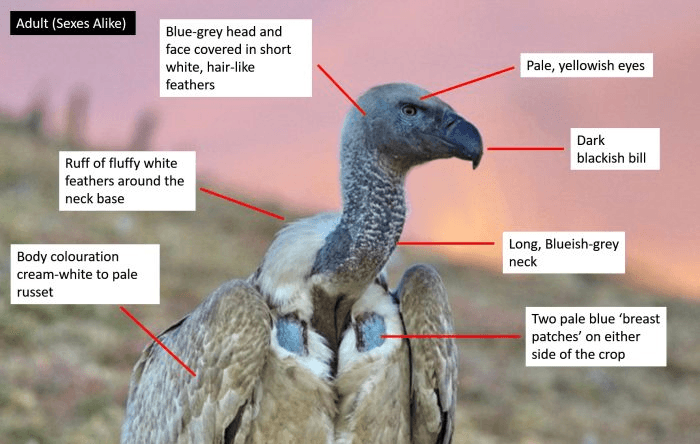
Cape Vulture (Gyps coprotheres): large carrion-eating raptor, one of three vulture species endemic to Africa.

Range: Southern Africa—South Africa, Lesotho, Botswana, Mozambique; 2025 resighting near Mountain Zebra NP, Eastern Cape.

Global context: 23 vulture species; 16 Old World across Afro-Eurasia, 7 New World across the Americas.

Quick Facts for MCQs

Biological Traits

  • Wingspan c.2.6 m, adapted for thermal soaring over open landscapes.
  • Strong neck muscles allow deep carrion penetration.
  • Nesting on high cliffs, reuses sites annually.

Conservation Status

  • Threats: powerline collisions, poison-laced carcasses, food scarcity.
  • Listed on CITES Appendix II, protected under South African law.
  • Population trend decreasing despite regional breeding colonies.

Geographical Scope

  • Core strongholds: Drakensberg and Magaliesberg mountain ranges.
  • Occasional dispersal into Namibia, Zimbabwe, Eswatini.
  • Prefers open savanna and karoo scrub near livestock areas.

Key Data Points

FeatureData-Point
IUCN statusVulnerable
Endemic African speciesCape, White-headed, Hooded
Main dietObligate carrion
Social behaviourGregarious; monogamous, one chick/season
Key plumageCreamy-buff body, dark flight/tail feathers
Eye & bill colourHoney eyes; black bill
Throat colourBluish
2025 sighting gapFirst in 30 years for Eastern Cape
Global vulture total23 species
Old vs New World split16 Old World; 7 New World
GS-3S&T

11.Aditya-L1 Solar Flare Imaging (Solar Mission)

The Hindu
Illustration for Aditya-L1 Solar Flare Imaging (Solar Mission)

What & Where

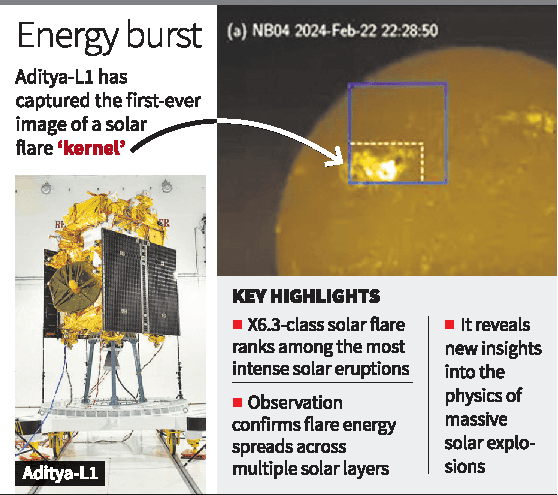
Aditya-L1: India’s first space-based solar observatory, parked at Sun-Earth L1 (~1.5 million km) for uninterrupted viewing.

SUIT instrument aboard Aditya-L1 imaged first-ever Near-UV ‘kernel’ of an X6.3 solar flare.

L1 halo orbit allows continuous monitoring of flares, CMEs and magnetic dynamics without Earth/Sun eclipses.

Quick Facts for MCQs

Tech & Instruments

  • Payload mix: SUIT, SoLEXS, HEL1OS enable UV and X-ray spectroscopy for real-time flare detection.
  • Continuous telemetry from L1 eliminates occultation, enhancing high-cadence solar imaging.
  • SUIT resolution aids energy-transfer mapping from photosphere to corona.

Solar Physics Gains

  • Validation: Observed kernel supports theories on lower-atmosphere energy buildup before coronal release.
  • Dataset: First systematic Near-UV flare profiles enrich global solar models.
  • Insight: Links surface brightening to coronal heating mechanisms.

Space Weather Relevance

  • Early-warning: Real-time flare data improves prediction of geomagnetic storms affecting satellites, grids.
  • Risk-mitigation: Precise X-ray flux tracking aids aviation and communication blackout advisories.
  • Policy-support: Enhances international space-weather monitoring networks led by NOAA, ESA, ISRO.

Key Data Points

FeatureData-Point
Launch date2 Sep 2023
Launch vehiclePSLV-C57
L1 halo-orbit insertion6 Jan 2024
Observatory distance~1.5 million km from Earth
Key telescopeSUIT (Solar Ultraviolet Imaging Telescope)
SUIT developerIUCAA, Pune
NUV bands captured11 (200-400 nm)
Flare class detectedX6.3
First-time observationBright NUV flare kernel
Main mission goalsStudy flares, CMEs, magnetic fields, space weather

Related UPSC Prelims PYQs

GEO_GS, NDA_GAT 2024PYQ 1

‘ध्रुवीय ज्योति’ के संबंध में निम्नलिखित में से कौन-सा/कौन-से कथन सही है/हैं ?

GEO_GS, NDA_GAT 2026PYQ 2

A spacecraft is placed at a Lagrange point in our solar system where it is far away from the Sun. Which of the following could this point be?

GS-3S&T

12.Nanocrystal Quantum Gravity Experiment (Quantum Gravity)

The Hindu
Illustration for Nanocrystal Quantum Gravity Experiment (Quantum Gravity)

What & Where

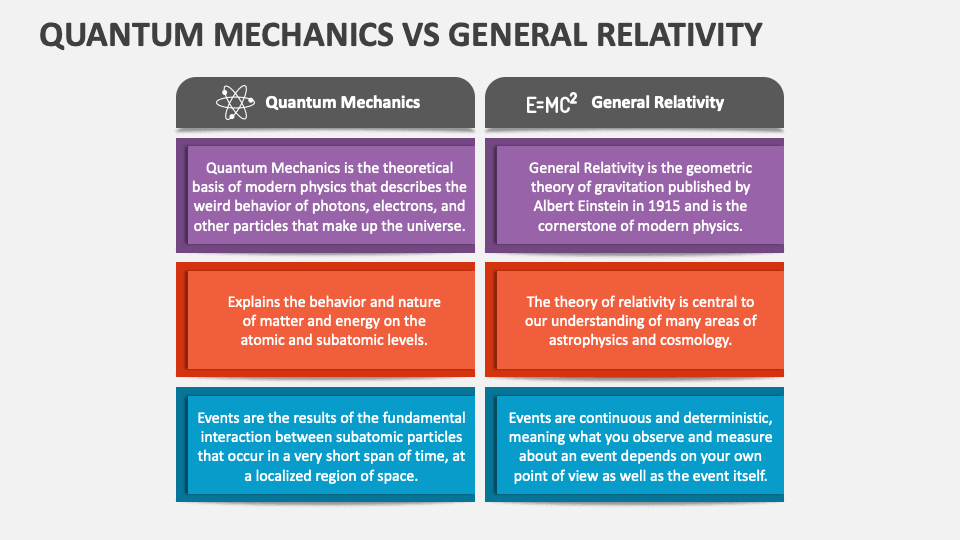
Quantum-gravity test: lab experiment placing nanocrystal mass in spatial superposition to probe gravity’s quantumness

Process: second nanocrystal interacts only gravitationally; its measurement checks if gravity collapses superposed state

Geography: tabletop, ultra-high-vacuum facilities under development across multiple international labs

Quick Facts for MCQs

Scientific Principles

  • Superposition: test mass exists in two locations simultaneously until interaction measured
  • Wave-particle duality: nanocrystals manipulated as matter waves via optical control
  • Entanglement: gravitational coupling may entangle spatial states of both crystals if gravity is quantum

Significance

  • Validation: success would imply gravity possesses quantum properties, advancing unified quantum-gravity search
  • Accessibility: employs weak laboratory gravity, bypassing impractical black-hole or cosmological tests
  • Paradigm-shift: potential move toward reconciling quantum mechanics and general relativity

Technical Challenges

  • Isolation: demands near-perfect vacuum; single air molecule could decohere superposition
  • Stability: seismic, thermal vibrations must be suppressed to sub-nanometre levels
  • Instrumentation: ultrafast, high-precision detectors and cryogenic levitation technology still under development

Key Data Points

FeatureData-Point
Test platformLevitated nanocrystals (~10⁻¹⁴ kg)
Core principleQuantum superposition of mass
Interaction probedGravity-induced collapse/entanglement
EnvironmentUltra-high vacuum, seismic isolation
SignificancePotential evidence for quantum nature of gravity
Tech statusExperimental setup under development globally
GS-3S&TQuick Bite

13.National Science Day 2025 Theme (National Science Day)

Indian Express
Illustration for National Science Day 2025 Theme (National Science Day)

What & Where

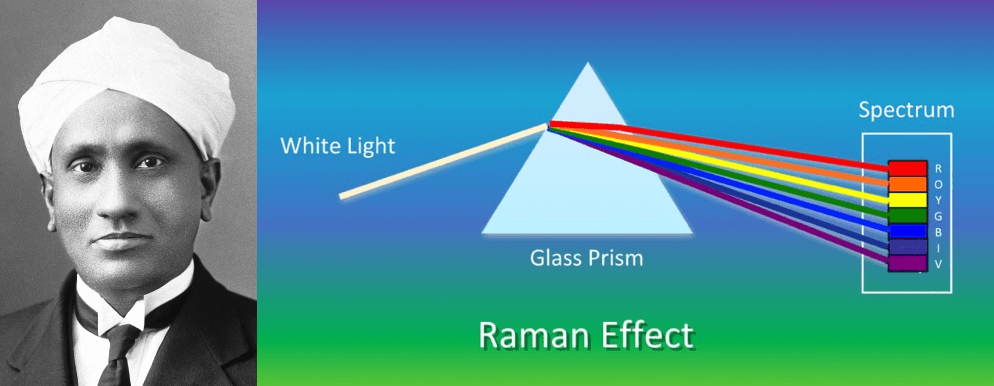
National Science Day: 28 Feb annual Indian observance marking CV Raman’s 1928 Raman Effect discovery at IACS, Kolkata

Raman Effect: inelastic light scattering causing wavelength shift via molecular vibrations; basis of Raman spectroscopy

2025 theme: “Empowering Indian Youth for Global Leadership…” aligned to Viksit Bharat 2047 vision

Quick Facts for MCQs

Personalities & Institutions

  • CV Raman founded Indian Journal of Physics 1926; Indian Academy of Sciences 1934; Raman Research Institute 1948
  • First Asian science Nobel laureate; honors include knighthood 1929 and Bharat Ratna 1954
  • Raman’s work covered optics, X-rays, acoustics, sea colours, light scattering

Scientific Applications

  • Raman spectroscopy enables non-destructive material ID, forensic drug detection, fibre-optic nuclear waste analysis
  • Laser availability since 1960s amplified chemical, physical, industrial uses of Raman Effect
  • Centres of Excellence map flood-drought risks, boosting climate resilience research

Tech & Schemes

  • Anusandhan National Research Foundation Act 2023 funds R&D; includes electric-vehicle promotion program
  • National Quantum Mission pursues leadership in quantum computing, communication, sensing, materials
  • BharatGen initiative crafting India’s first multimodal, multilingual GenAI large language model

Innovation Rankings

  • India ranks 6th globally in IP filings per WIPO 2024 report; patents, trademarks rising
  • Geospatial Spatial-Thinking Program covers 116 schools across seven states, widening GIS literacy
  • Network and innovation climbs reflect stronger ICT infrastructure, digital transformation initiatives

Key Data Points

FeatureData-Point
NSD declared1986
First NSD celebration1987
NSD 2025 themeYouth leadership for Viksit Bharat
CV Raman birth7 Nov 1888, Tiruchirappalli
Nobel Prize1930 Physics, Raman Effect
Knighthood1929 by British Govt
Bharat Ratna1954
Global Innovation Index 2024Rank 39
Network Readiness Index 2024Rank 49 (from 79 in 2019)
Supercomputers under NSM33 units, 32 PF; target 77 PF

Related UPSC Prelims PYQs

NDA_GAT 2025PYQ 1

राष्ट्रीय प्रौद्योगिकी दिवस के संबंध में निम्नलिखित कथनों पर विचार कीजिए :

NDA_GAT 2021PYQ 2

When light is scattered by a molecule and the frequency of the scattered light is changed, this phenomenon is called

GS-3S&TQuick Bite

14.Ultra-Conserved Elements Prevent Infertility (Ultra-Conserved Elements)

The Hindu
Illustration for Ultra-Conserved Elements Prevent Infertility (Ultra-Conserved Elements)

What & Where

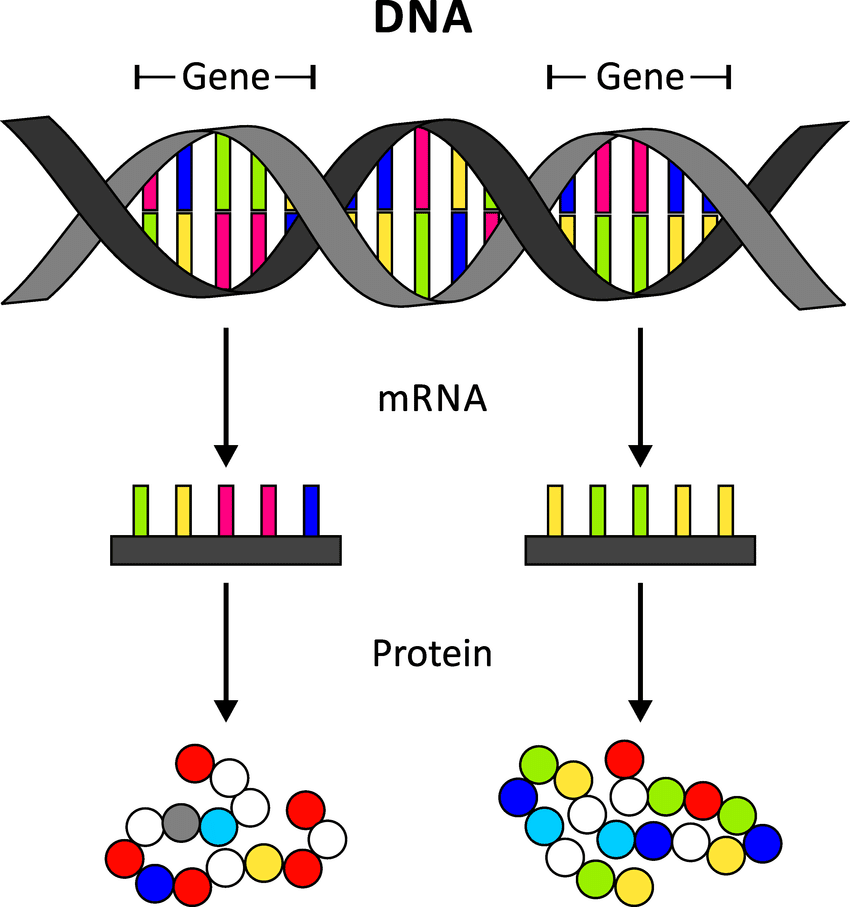
Ultra-Conserved Elements (UCEs): ≥200 bp DNA sequences identical across vertebrates for ~80 million years

Key process: UCE inside Tra2b gene functions as poison exon, throttling Tra2β protein synthesis

Distribution: ~500 UCEs in human genome; conserved in mice, rats, chickens, fish

Quick Facts for MCQs

Genetic Mechanism

  • Poison-exon insertion halts translation when Tra2β levels rise
  • Stop codon prematurely terminates mRNA, curbing protein overproduction
  • Feedback loop maintains optimal Tra2β dosage

Evolutionary Significance

  • Strong purifying selection retains UCE sequence across distant taxa
  • Infertility from disruptive mutations blocks allele transmission
  • Sequence conservation evidences critical reproductive function

Health Implications

  • Proper UCE function essential for viable sperm development
  • Dysregulation risk: male infertility, potential broader splicing disorders
  • Highlighted target for genetic infertility diagnostics

Research Method

  • Mouse testis model used for UCE knockout experiments
  • Observation: elevated Tra2β protein preceded germ-cell apoptosis
  • Cross-species sequence comparison confirmed absolute conservation

Key Data Points

FeatureData-Point
Minimum length for UCE tag200 base-pairs
Conservation timespan≈80 million years
Human UCE count~500
Gene analysed in studyTra2b (Transformer-2 beta)
Protein auto-regulatedTra2β splicing factor
Molecular switch typePoison exon introducing stop codon
Effect of UCE deletion in miceSperm cell death → infertility
GS-2Economy

15.EU-India Trade Technology Council (India-EU TTC)

NDTV

What & Where

Bilateral Trade & Technology Council: India-EU platform for trade, technology, security collaboration

Three-tier work: ministerial steering over 3 groups—Digital, Green-Energy, Trade-Supply resilience

Geography: Republic of India and 27-member European Union

Quick Facts for MCQs

Tech & Schemes

  • Focus: 6G, AI, quantum computing, semiconductors, critical raw materials
  • Clean-energy wing targets battery supply chains, renewables, green hydrogen
  • Alignment: EU Digital Compass 2030, Quad Emerging Tech group, Supply Chain Resilience Initiative

Economic Angle

  • Objective: diversify trade routes, build resilient supply chains for chips, batteries, rare earths
  • FTA link: complements ongoing EU-India free trade talks, promising tariff cuts and regulatory convergence
  • Benefit: curbs Chinese technological dominance, boosts bilateral investment and innovation funding

Security Dimension

  • Strategy: lessen dependency on China and Russia in military and critical technologies
  • Support: reinforces India Indo-Pacific vision and EU strategic autonomy goals
  • Utility: joint platform to anticipate cyber, supply-chain, and energy security risks

Key Data Points

FeatureData-Point
PartnersIndia & European Union
AnnouncedApril 2022
Formal launchFeb 2023
1st ministerial meetMay 2023, Brussels
Working groups3
EU’s TTC countSecond (after EU-US)
India’s TTC countFirst ever

Related UPSC Prelims PYQs

ESE_GS, GS1 2026PYQ 1

What is the name of the initiative launched by India and Denmark in November 2025 to enhance bilateral ties?

ESE_GS, GS1 2017PYQ 2

‘ब्रोड-बेस्ड ट्रेड एंड इनवेस्टमेंट एग्रीमेंट (BTIA)’ के संबंध में भारत और निम्नलिखित में से किस एक के बीच वार्ताओं के संदर्भ में चर्चा चल रही है ?

GS-2Scheme

16.MISHTI Mangrove Afforestation Scheme (Mangrove Afforestation)

New Indian Express
Illustration for MISHTI Mangrove Afforestation Scheme (Mangrove Afforestation)

What & Where

MISHTI = Mangrove Initiative for Shoreline Habitats & Tangible Incomes; national afforestation-livelihood scheme announced in Union Budget 2023-24.

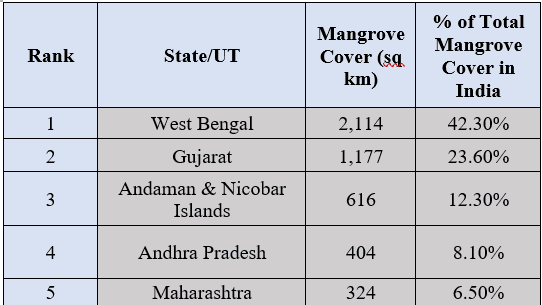
Operates 2023-2028 across 9 coastal States + 4 UTs; Gujarat leads with 19,020 ha planted in two years.

Executed by MoEF&CC using CAMPA, MGNREGS and supplementary public-private funds.

Quick Facts for MCQs

Tech & Schemes

  • Targeted: site-specific planting, degraded-land restoration, tidal channel re-establishment.
  • Monitoring: remote sensing, GIS for baseline & survival checks.
  • Convergence: uses MGNREGS labour mandates to cut project costs.

Environmental Impact

  • Resilience: buffers coasts against cyclones, storm surges, sea-level rise.
  • Mitigation: high carbon sequestration aids Paris Agreement, SDG-13 targets.
  • Biodiversity: supports nursery grounds for fish, crustaceans, birds.

Economic Angle

  • Livelihood: promotes crab-farming, honey collection, eco-tour guiding.
  • Employment: MGNREGS creates green jobs in planting & maintenance.
  • Value-addition: branding of mangrove-based products for coastal communities.

International Examples

  • Alliance: India co-chairs MAC with UAE to upscale global mangrove finance & science.
  • Knowledge-sharing: leverages best practices from Indonesia, Australia for species mix.

Key Data Points

FeatureData-Point
Launch year2023
Budget mentionUnion Budget 2023-24
Implementing ministryMoEF&CC
Scheme duration2023-2028
Afforestation target540 km² mangroves
Geographic coverage9 States + 4 UTs
Leading StateGujarat – 19,020 ha (first 2 yrs)
Core fundingCAMPA + MGNREGS + other sources
India mangrove cover (ISFR-2023)4,991.68 km²
Global linkageMangrove Alliance for Climate (COP27)

Ready to practice?

Test your knowledge with our UPSC test series.

Start Free Trial