UPSC Current Affairs

13 topicsGS-1: 2GS-2: 4GS-3: 7
0/13 done
GS-2Misc

1.23 Feb 2026 Current Affairs Digest (Current Affairs)

The Hindu
Illustration for 23 Feb 2026 Current Affairs Digest (Current Affairs)

What & Where

Definition – Hoysala temple architecture (11th-13th C), carved in soft soapstone; UNESCO World Heritage tag 2023.

Key types/processes – Stellate (Jagati) platform, Dvikuta/Chatuskuta shrine plans, lathe-turned mirror pillars, high-relief friezes.

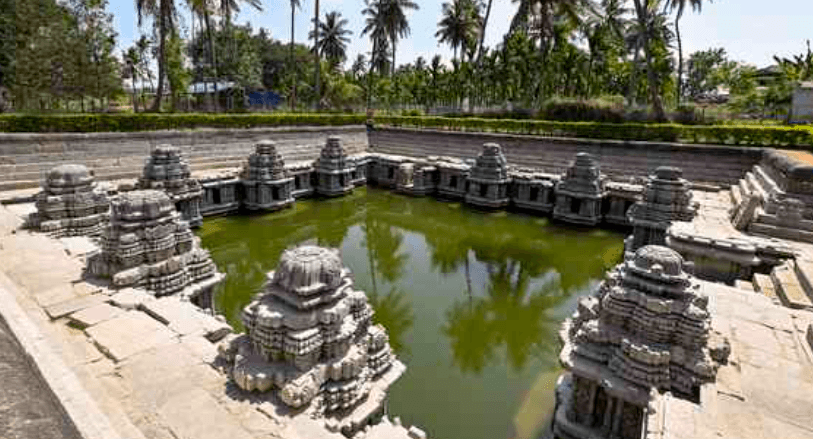
Core geography – Karnataka’s Belur, Halebidu, Somanathapura; silent gems Koravangala, Doddagaddavalli, Hulikere step-well.

Quick Facts for MCQs

Security Dimension

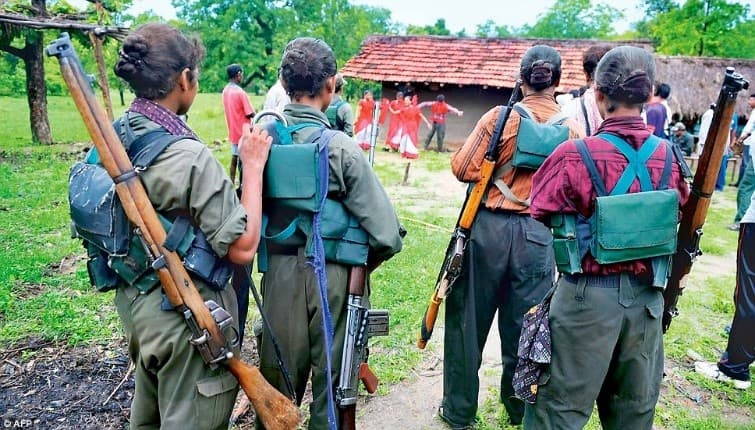
  • Neutralisation – 285 Maoists killed (2025); Politburo down to one active member.
  • Operation SAMADHAN combines smart leadership, tech intel, dashboard KPIs.
  • Memorial clearing – 200+ Maoist monuments razed under Operation Demolishment.

Tech & Schemes

  • Satphones – GEO/LEO link; illegal use in Indian waters flagged for security.
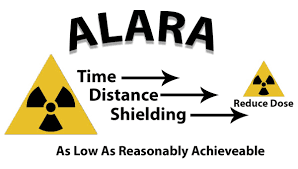
  • LNT model – assumes zero-threshold radiation risk; ALARA dropped by US DOE.
  • IEA – India seeks full membership; charter change needed as India non-OECD.

Environmental Impact

  • Rewilding – 158 hybrid Galápagos tortoises (40–80 % C. niger DNA) released on Floreana.
  • Role – Tortoises act as keystone seed-dispersers, landscape shapers.
  • Protection – Archipelago UNESCO Natural World Heritage Site (1978).

International Examples

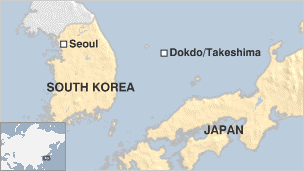
  • Dokdo/Takeshima – two volcanic islets, closer to Korea’s Ulleungdo (87 km) than Japan’s Oki (157 km).
  • Sovereignty – South Korea exercises de facto control since 1954, rejects ICJ arbitration.
  • Resource hook – Estimated 600 Mt gas-hydrate “fire-ice” under surrounding seabed.

Key Data Points

FeatureData-Point
Dynasty spanc. 1026 – 1343 CE
UNESCO inscription45th WH site of India, 2023
Prime materialChloritic Schist (soapstone)
Signature plan16-point star Jagati platform
Pillar finishLathe-turned, metallic polish
Noted sculptures42 Madanikas, Chennakeshava, Belur

Related UPSC Prelims PYQs

CDS_GK, GEO_GS 2021PYQ 1

Why was Dholavira in the news recently?

CDS_GK, GEO_GS 2022PYQ 2

Among the following, which one has been accorded the status of UNESCO World Heritage Site recently?
GS-3InfrastructureQuick Bite

2.Namo Bharat Rapid Rail and Meerut Metro (Regional Rapid Transit)

PIB

What & Where

Namo Bharat Rapid Rail: first Regional Rapid Transit System, semi-high-speed commuter network for National Capital Region (NCR).

Meerut Metro: runs Meerut South–Modipuram on same tracks; India’s fastest metro.

Flagship corridor Delhi–Ghaziabad–Meerut ≈ 82 km; full services began Feb 2026.

Quick Facts for MCQs

Technology Specs

  • Semi-high-speed rolling stock, ETCS signalling, shared infrastructure for metro & RRTS.
  • 25 kV AC electrification sustains 180 km/h design velocity.
  • Meerut Metro coaches optimised for 120 km/h urban operations.

Service Differentiation

  • RRTS vs Metro: regional reach, fewer halts, higher speeds, larger station spacing.
  • RRTS vs Vande Bharat: shorter regional trips, higher frequency, commuter focus.
  • Designed to shift daily NCR travellers from roads & conventional rail.

Infrastructure & Connectivity

  • Integrated stations enable seamless interchange within NCR mobility grid.
  • Single-platform inauguration showcases multimodal planning efficiency.
  • Expected congestion relief for NH-58 and parallel rail lines.

Key Data Points

FeatureData-Point
Launch date23 Feb 2026
Inaugurated byPrime Minister of India
NoveltyFirst dual rapid rail-metro launch on one platform
RRTS design speed180 km/h
RRTS operational speedUp to 160 km/h
RRTS average speed~100 km/h
Meerut Metro top speed120 km/h
Corridor length~82 km (Delhi-Ghaziabad-Meerut)
Intended commute range100–200 km
GS-1History

3.Hoysala Temple Architectural Splendour (Hoysala Architecture)

The Hindu
Illustration for Hoysala Temple Architectural Splendour (Hoysala Architecture)

What & Where

Dynasty scope – Hoysala temple architecture, 11th–13th c Karnataka, soapstone star-plan shrines with dense reliefs

Core UNESCO zone – Belur, Halebidu, Somanathapura collectively inscribed 2023 as Sacred Ensembles of Hoysalas

Wider spread – 150-plus rural monuments across Hassan, Mandya, Mysuru districts including Koravangala, Doddagaddavalli, Hulikere

Quick Facts for MCQs

Architecture

  • Star platform multiplies exterior faces for 360-degree narrative carving
  • Perforated stone jalis admit filtered light, promote ventilation
  • Soapstone softness enables lace-like jewellery, fingernails, hollowed bangles on idols

Major Temples

  • Belur Chennakeshava boasts 42 madanikas, gravity pillar, once-rotatable Narasimha pillar
  • Halebidu Hoysaleshwara shows twin sanctums, mile-long friezes, two monolithic Nandis
  • Somanathapura Keshava exemplifies mature trikuta layout with complete sculptural program

Silent Sites

  • Doddagaddavalli Lakshmidevi 1114 CE chatuskuta, Mahakali shrine flanked by skeletal betalas
  • Koravangala Bucheshwara transitional dvikuta displaying shift toward peak ornamentation
  • Hulikere Kalyani stepwell houses 26 miniature shrines representing zodiac and lunar mansions

Socio-Cultural

  • Shaiva, Vaishnava, Jain basadis coexist, reflecting medieval religious accommodation
  • Epigraphs mention women donors, merchant guilds, sculptor names revealing participatory patronage
  • Frieze panels depict courtly dance, warfare, processions offering visual social documentation

Key Data Points

FeatureData-Point
Dynasty periodc 1026–1343 CE
Primary stoneChloritic Schist (soapstone)
Typical planStellate Jagati with Dvi/Trai/Chatuskuta shrines
Trademark friezesElephants-horses-lions-scrolls sequence
Lathe-turned pillarsMirror-finish circular shafts
Belur foundation1117 CE by King Vishnuvardhana
Halebidu completionc 1121 CE by official Ketamalla
UNESCO listing year2023

Related UPSC Prelims PYQs

GEO_GS, GS1 2001PYQ 1

Hoysala monuments are found in

GEO_GS, GS1 2022PYQ 2

Among the following, which one has been accorded the status of UNESCO World Heritage Site recently?
GS-1Mapping

4.Takeshima–Dokdo Disputed Islands Mapping (Disputed Islands)

FP
Illustration for Takeshima–Dokdo Disputed Islands Mapping (Disputed Islands)

What & Where

Volcanic Dokdo/Takeshima islet-cluster in Sea of Japan (East Sea).

Two main islets—Dongdo & Seodo—plus 30-90 minor rocks/reefs.

Sits 87 km from Ulleungdo (SK) and 157 km from Oki (JP).

Quick Facts for MCQs

History & Claims

  • Silla-era texts, Sejong Sillok cited by Korea for 6th-century ownership.
  • 1905 Japan annexed islands as terra nullius amid Russo-Japanese War.
  • 1954 South Korea stationed coast guard, sustaining uninterrupted presence.

Legal & Policy

  • Seoul labels area integral territory; rejects ICJ as “no dispute exists”.
  • Tokyo calls islands inherent territory; presses claim via annual prefectural event.
  • Allied occupation 1945-1952 left sovereignty questions unaddressed.

Economic Angle

  • Fisheries convergence zone supplies valuable cephalopod and cod catches.
  • Seabed gas hydrates promise strategic energy worth about US$10 bn yearly.
  • Resource allure heightens bilateral territorial stakes.

Key Data Points

FeatureData-Point
Alternate namesDokdo (KR) / Takeshima (JP)
Main isletsDongdo (East) & Seodo (West)
Total outcrops30–90 rocks/reefs
Oceanic locationSea of Japan / East Sea
Nearest S Korea landUlleungdo 87 km
Nearest Japan landOki Islands 157 km
Geological ageCenozoic volcanic rock
FisheriesSquid, pollock, cod rich zone
Gas hydrate reserve600 mn t; ≈ US$10 bn/yr
De facto controlSK police & lighthouse since 1954
ICJ stanceSeoul refuses arbitration
Symbolic dateTakeshima Day, 22 Feb (Shimane)

Related UPSC Prelims PYQs

GS1 2022PYQ 1

Which one of the following statements best reflects the issue with Senkaku Islands, sometimes mentioned in the news?

GS-3Species

5.Galapagos Giant Tortoise Reintroduction (Giant Tortoise)

BBC
Illustration for Galapagos Giant Tortoise Reintroduction (Giant Tortoise)

What & Where

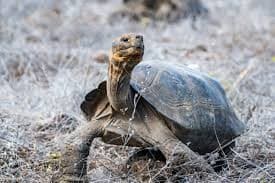
Galápagos giant tortoise reintroduction: 158 hybrid juveniles released on Floreana Island to revive extinct Chelonoidis niger.

Galápagos Islands: 19 volcanic islands + 100 islets, ~1,000 km west of Ecuador in Pacific Ocean.

Geology & status: Hotspot at Nazca–Cocos–Pacific plates; UNESCO Natural World Heritage Site since 1978.

Quick Facts for MCQs

Conservation Strategy

  • Selective-breeding harnesses Wolf Volcano hybrids to reconstruct Floreana lineage without cloning.
  • Release size deters predation from invasive rats, cats; ongoing habitat restoration.
  • Program aims long-term self-sustaining population and ecosystem recovery.

Ecological Role

  • Seed dispersal and vegetation clearing reshape plant communities, aiding forest regeneration.
  • Wallows created by tortoises supply micro-habitats for insects, birds, reptiles.
  • Reintroduction expected to rebalance ecosystem altered since 19th-century extirpation.

Evolutionary Significance

  • Archipelago furnished Darwin critical evidence for natural selection in 1830s voyage.
  • Saddleback shell evolved for higher browsing on arid, cactus-rich islands.
  • Genetic introgression revealed “lost” Floreana lineage persisted within hybrid populations.

Key Data Points

FeatureData-Point
Release siteFloreana Island, Galápagos
Hybrids released158 individuals
Age at release8–13 years
Ancestral DNA share40–80 % Chelonoidis niger
Original species IUCNExtinct in the Wild
Genus ChelonoidisEndangered/Critically Endangered
Shell typeSaddlebacked carapace
Expected lifespan>100 years
Discovery of hybridsWolf Volcano, Isabela Island
Archipelago main islands19
Distance from Ecuador≈1,000 km (620 mi)
Volcanic platesNazca, Cocos, Pacific
UNESCO listing year1978
Darwin linkInspired theory of natural selection
GS-3S&T

6.New Delhi Declaration on Global AI Governance (AI Governance)

PIB
Illustration for New Delhi Declaration on Global AI Governance (AI Governance)

What & Where

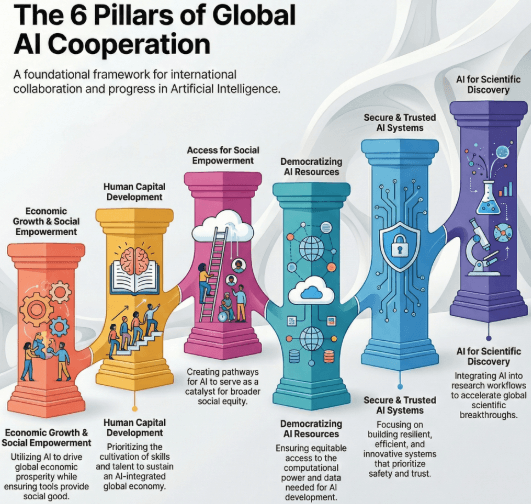
New Delhi Declaration: voluntary multilateral framework guiding equitable, ethical AI development

Adoption at AI Impact Summit 2026, New Delhi; endorsed by 89 countries & international organisations

Anchoring ethos “Sarvajan Hitaya, Sarvajan Sukhaya”; declaration is global yet non-binding

Quick Facts for MCQs

Legal & Policy

  • Roadmap is non-binding; respects national laws via sovereignty-based approach
  • Democratic Diffusion Charter ensures affordable compute, data, spurs local innovation ecosystems
  • Voluntary standards, benchmarks, best practices advanced for safe, trustworthy AI deployment

Tech & Collaborative Platforms

  • Global AI Impact Commons replicates proven AI use-cases across nations for development gains
  • Trusted AI Commons aggregates tools, benchmarks, resources helping stakeholders build secure AI tailored to contexts
  • International Network of AI for Science Institutions pools compute, expertise to accelerate collaborative AI-enabled research

Human Capital & Sustainability

  • Workforce playbook suggests reskilling strategies for AI-era jobs transition
  • Seven-Pillar framework enshrines energy-efficient, resilient AI infrastructure targets
  • Principles aim inclusive human-centric AI promoting social empowerment

Key Data Points

FeatureData-Point
Summit year2026
VenueNew Delhi, India
Endorsing entities89 countries & int’l bodies
Legal statusNon-binding consensus declaration
Guiding ethosSarvajan Hitaya, Sarvajan Sukhaya
Framework structureSeven Pillars (Chakras)
Main charterDemocratic Diffusion of AI Charter
Key platformsGlobal AI Impact Commons; Trusted AI Commons; AI for Social Empowerment
Science networkInternational Network of AI for Science Institutions

Related UPSC Prelims PYQs

GEO_GS, GS1 2024PYQ 1

Which of the following statements about GPAI (Global Partnership on Artificial Intelligence) is/are correct?

GEO_GS, GS1 2015PYQ 2

‘Beijing Declaration and Platform for Action’, often seen in the news, is

GS-3S&T

7.Linear No-Threshold Radiation Risk Model (Radiation Safety)

The Hindu
Illustration for Linear No-Threshold Radiation Risk Model (Radiation Safety)

What & Where

LNT model: linear, no-threshold risk framework governing ionising-radiation standards worldwide.

ALARA principle: operational spin-off of LNT, urges exposures be kept As Low As Reasonably Achievable.

United States: DOE has deleted ALARA from safety directives, diverging from ICRP-led global practice.

Quick Facts for MCQs

Science Principle

  • Linearity: damage probability rises proportionally with dose.
  • Cumulative effect: small doses add up biologically, no complete repair assumed.
  • Precaution: framework chosen due to low-dose uncertainty.

Policy Shift

  • DOE removal: first major national rollback of ALARA since Cold War era.
  • Debate: critics fear weakened worker & public safeguards; proponents cite cost and over-regulation.
  • International bodies: continue endorsing LNT, creating regulatory divergence.

Historical Context

  • Genesis: Muller’s 1927 mutation findings spurred zero-threshold thinking.
  • Cold War: nuclear testing fears pushed LNT into global codes.
  • Evolution: ALARA coined to translate LNT into day-to-day plant practice.

Operational Measures

  • Time: minimise stay near sources to cut dose linearly.
  • Distance: double separation roughly quarters exposure.
  • Shielding: lead, concrete barriers absorb particle/γ energy before human contact.

Key Data Points

FeatureData-Point
Model full formLinear No-Threshold
Key assumptionZero safe dose
Risk type addressedStochastic cancer & mutations
Scientific origin1920s, Hermann Muller fruit-fly studies
Formal adoption1950s-60s by ICRP
Operational mottoALARA: As Low As Reasonably Achievable
ALARA pillarsTime, Distance, Shielding
Cost filterSafety gain vs socio-economic cost
Recent policy shift2023 DOE cancellation of ALARA
Global stanceICRP, WHO, IAEA still retain LNT
GS-3S&T

8.Indigenous Tetanus–Diphtheria Td Vaccine Launch (Td Vaccine)

PIB

What & Where

Td vaccine = combined tetanus toxoid + reduced-dose diphtheria toxoid booster for adolescents/adults.

Manufactured indigenously at Central Research Institute (CRI), Kasauli, Himachal Pradesh.

Formally inducted into India’s Universal Immunization Programme (UIP) in Feb 2026.

Quick Facts for MCQs

Tech & Schemes

  • Atmanirbharta: domestic Td slashes import reliance, fortifies health security.
  • U-WIN digital registry ensures dose-wise tracking till age 16.
  • CRI readied development, approvals, commercial rollout in-house.

Disease Facts

  • Tetanus: non-communicable; enters via wounds/umbilical stump; no post-recovery immunity.
  • Diphtheria: droplet spread; grey “pseudomembrane” blocks airway; toxin causes myocarditis, neuropathy.
  • Neonatal tetanus mortality down 97 % globally (1988-2018) through TTCV drives.

International Guidance

  • WHO push: Td boosters sustain tetanus elimination, restore waning adult diphtheria immunity.
  • Conflict, overcrowding, pandemic immunisation gaps fuel diphtheria resurgence.
  • Growing antimicrobial resistance undermines Diphtheria Antitoxin + antibiotic regimen.

Key Data Points

FeatureData-Point
Full formTetanus and Adult Diphtheria (Td)
ProtectionDual: Tetanus (T) + Diphtheria (d)
Antigen tweakLower diphtheria toxoid dose to cut side-effects
ReplacesStand-alone Tetanus Toxoid (TT)
WHO stanceGlobal switch from TT → Td recommended
Indian nodal bodyNTAGI okays Td for all ages incl. pregnant women
First supply55 lakh doses by April 2026
Programme scaleUIP ≈ 5 crore beneficiaries/yr, 27 doses tracked
Tetanus agentClostridium tetani (anaerobic spores)
Diphtheria CFRUp to 30 % untreated in <5-yr-olds

Related UPSC Prelims PYQs

CDS_GK 2021PYQ 1

Mission Indradhanush aims at

GS-3S&TQuick Bite

9.Satellite Phone Technology and Security Concerns (Satellite Communication)

The Hindu

What & Where

Definition: Hand-held phone linking directly to orbiting satellites, bypassing terrestrial towers

Key systems: Geostationary (GEO) constellations, Low-Earth-Orbit (LEO) fleets

Geography: Operates in remote oceans, deserts, polar regions, disaster sites where cellular fails

Quick Facts for MCQs

Technical Types

  • GEO satellites: 35,786 km altitude, constant position, noticeable voice delay
  • LEO satellites: 500-2,000 km altitude, lower latency, need hand-off tracking
  • Ground segment: Gateway stations route calls to PSTN or another satphone

Use Cases

  • Maritime navigation, polar expeditions, desert logistics rely for always-on link
  • Disaster relief teams deploy for communication when terrestrial grids collapse
  • Adventure tourism operators issue devices for SOS connectivity

Limitations

  • Expense: Handsets and airtime markedly costlier than cellular equivalents
  • Bandwidth: Suited to voice/text; not practical for high-speed internet streaming
  • Terrain challenge: Mountains, urban canyons, dense foliage obstruct satellite sight

Security Dimension

  • Monitoring difficulty makes devices attractive for covert activities, smuggling, piracy
  • India mandates prior clearance; unauthorised carriage punishable under Indian Telegraph Act
  • Recent interceptions in Indian waters triggered alerts to tighten coastal surveillance

Key Data Points

FeatureData-Point
Line-of-sight needUnobstructed sky view essential
Core servicesVoice, SMS, limited low-speed data
Emergency roleIntegral to maritime GMDSS distress alerts
Typical latencyHigher with GEO, lower with LEO
Cost driverHigh per-minute airtime & handset price
Hybrid trendSome models switch cellular ↔ satellite
Main drawback indoorWeak/zero signal through roofs, dense canopy
National concernHard interception ⇒ flagged by Indian security agencies

Related UPSC Prelims PYQs

GS1 2011PYQ 1

Satellites used for telecommunication relay are kept in a geostationary orbit. A satellite is said to be in such an orbit when:

GS-2Editorial

10.Deepening India–Brazil Strategic Cooperation (India-Brazil Ties)

Hindustan Times

What & Where

India–Brazil Strategic Partnership: formalised 2006; refreshed Feb 2026 State Visit, covers five agreed priority pillars.

Spatial context: 14,000 km apart; India’s embassy in Brasília, Brazil’s in New Delhi plus consulates São Paulo/Mumbai.

Platforms intersecting interests: BRICS, G20, G-4 UNSC reform drive, ISA, Global Biofuel Alliance.

Quick Facts for MCQs

Trade & Investment

  • PTA with MERCOSUR slated for scope expansion; electronic certificates of origin MOU signed.
  • Trade basket asymmetry: India exports pharma, petro-products; imports sugar, soybean oil, gold, crude.

Defence & Security

  • Defence pact 2003; Joint Defence Committee active, 2+2 Political-Military Dialogue launched 2024.
  • Scorpene-class submarine maintenance MoU inked with Mazagon Dock & both navies.

Energy & Climate

  • Joint champions of Global Biofuel Alliance; aligned National Biofuel Policy & RenovaBio.
  • “Belém 4x Pledge” aims fourfold rise in sustainable fuels by 2035.

Digital & Tech

  • India-Brazil Digital Partnership leverages DPIs for SDGs; both endorse multilateral AI governance.
  • Planned 3rd Joint S&T Commission, Aug 2026, will deepen IP cooperation via TKDL access.

Multilateral Diplomacy

  • G-4 strategy: push “text-based negotiations” for UNSC permanent seats.
  • Both advocate WTO, IMF, UNSC reforms to mirror 21st-century Global South realities.

Key Data Points

FeatureData-Point
Strategic Partnership year2006
2025 bilateral tradeUSD 15.21 bn
2030 trade targetUSD 30 bn
2025 trade growth25.5 % YoY
Largest LatAm partner for IndiaBrazil
Key MoU Feb 2026Rare-earths & critical minerals
Digital launch 2026Open Planetary Intelligence Network (OPIN)
First Cyber DialogueBrasília, Nov 2025
COP30 host cityBelém, Brazil (Nov 2025)

Related UPSC Prelims PYQs

CAPF_GAI, ESE_GS 2026PYQ 1

What is the name of the initiative launched by India and Denmark in November 2025 to enhance bilateral ties?

CAPF_GAI, ESE_GS 2025PYQ 2

India and Poland have agreed to implement the 'India-Poland Strategic Partnership' in terms of a Five-Year Action Plan. Identify the current Five-Year Action Plan.

GS-2Economy

11.International Energy Agency Membership Expansion (International Energy)

Indian Express

What & Where

Intergovernmental agency for energy security, data and sustainable policy; created 1974 after the 1973 oil crisis.

Headquarters Paris, France; membership historically limited to OECD states.

Coordinates emergency oil stocks, analyses markets, guides global energy transition.

Quick Facts for MCQs

Membership Structure

  • Categories: Full Members, Association Countries; latter join discussions without voting rights.
  • Charter currently ties full membership to OECD status; amendment process underway.
  • Members share emergency oil stocks via collective action mechanism.

India Engagement

  • India world’s 3rd-largest energy consumer; seeks decision-making seat.
  • Formal membership bid backed by IEA leadership, major members despite OECD absence.
  • Successful entry would make India first non-OECD full member.

Key Functions

  • Security: Coordinates collective response during supply shocks, maintains shared reserve data.
  • Analysis: Publishes monthly Oil Market Report, tracks critical minerals supply chains.
  • Transition: Leads global dialogue on renewables, efficiency, decarbonisation through Net Zero roadmap.

Key Data Points

FeatureData-Point
Establishment year1974
Founding trigger1973 Arab oil embargo
HeadquartersParis, France
Full members (2024)33
33rd member & timingColombia, Feb 2026 (scheduled)
Associate countries13
Mandatory oil stocks≥ 90 days of net imports
Flagship reportWorld Energy Outlook
Clean-energy roadmapNet Zero by 2050
India: Associate status2017
India–IEA Strategic Partnership2021
India full-membership requestOct 2023
Charter change neededOECD clause removal
GS-3Security

12.Declining Naxalism Footprint in India (Left-Wing Extremism)

Indian Express

What & Where

Definition Armed Maoist–LWE movement aiming to overthrow Indian state via protracted guerrilla war

Processes Mobilise tribals, ambush security, exploit forest cover; now hit by surrenders, targeted ops, development push

Core geography Red Corridor shrunk to South Bastar (Chhattisgarh) plus Jharkhand–Bihar border pockets

Quick Facts for MCQs

Leadership Attrition

  • Decimation; Telugu core gone after Tirupathi, Sonu surrenders
  • Ideological vacuum; no strategist guiding platoons, recruitment stagnates
  • Politburo contraction; nearly 50 earlier, now single operative

Security Measures

  • Offensive posture; forces now penetrate Abujhmad strongholds regularly
  • Tech infusion; drones, real-time intel enable pinpoint strikes e.g., May 2025 Keshav Rao kill
  • Symbol erasure; 100 + memorials razed, undermining psychological control

Development Schemes

  • Aspirational Districts; 35 LWE areas prioritised for health, education, banking
  • ROSHNI; placement-linked skilling for tribal youth to pre-empt recruitment
  • Surrender policy; cash, land, livelihood incentives accelerate cadre exit

Residual Challenges

  • Hardened pockets; Bastar snipers, IED belts still inflict casualties
  • Inter-state escapes; porous Odisha–Chhattisgarh–Jharkhand borders exploited
  • Governance lag; water, land rights unresolved, fuelling sporadic sympathy

Key Data Points

FeatureData-Point
Cash bounty on Thippiri Tirupathi₹1 crore
Politburo strength 20261 member (Misir Besra)
Maoists killed in 2025285
Neutralisations Jan–Feb 202622
Total cadres killed since 2024500 +
Affected districts (peak vs now)100 + → few clusters
Demolished Maoist memorials100 +
Key elite unitsGreyhounds, COBRA
Infrastructure programmeRoad Requirement Plan (RRP)
Flagship counter-LWE doctrineOperation SAMADHAN
GS-2Scheme

13.SANKALP Skill Development Scheme (Skill Development)

PIB

What & Where

SANKALP: Centrally Sponsored skill-development programme of MSDE, co-financed by World Bank, operational in all States.

STRIVE: Central Sector project, MSDE-World Bank, strengthens ITIs and apprenticeship ecosystem nationwide.

Special focus geographies: 9 grant-recipient States + 117 Aspirational Districts under Aspirational Skilling Abhiyaan.

Quick Facts for MCQs

Scheme Objectives

  • Convergence: unify State-led and Union-funded skilling efforts at district and State levels.
  • Quality: trainer pool, model curriculum, standardised assessment & certification under SANKALP.
  • Efficiency: STRIVE targets relevance and output of ITIs and apprenticeships.

Implementation & Coverage

  • Portal: Skill India Portal captures, converges district-level skill data for monitoring.
  • Grants: first tranche disbursed to Andhra Pradesh, Assam, Bihar, Gujarat, J-K, Maharashtra, Manipur, Punjab, Uttar Pradesh.
  • Aspirational push: separate funding pipeline for 117 Aspirational Districts to fast-track skilling.

Funding & Classification

  • Central Sector: 100 % Union funding, executed by Central machinery; example—STRIVE.
  • Centrally Sponsored: cost-shared with States per fixed ratios; example—SANKALP.

Key Data Points

FeatureData-Point
SANKALP scheme typeCentrally Sponsored
STRIVE scheme typeCentral Sector
Nodal ministrySkill Development & Entrepreneurship
External partner (both)World Bank
Key data platformSkill India Portal
SANKALP core aimsConvergence, Quality, M&E, Inclusiveness
STRIVE result areasITI performance; State capacity; Teaching–Learning; Apprenticeship breadth
Grants released9 States + 117 Aspirational Districts
CSS funding ratios50:50, 70:30, 75:25, 90:10
Central Sector funding100 % Union government

Related UPSC Prelims PYQs

GEO_GS, NDA_GAT 2026PYQ 1

Consider the following statements about the SANKALP Scheme:

GEO_GS, NDA_GAT 2025PYQ 2

Under which one of the following initiatives does the NITI Aayog support interested States to establish a State Institution for Transformation (SIT)?

Ready to practice?

Test your knowledge with our UPSC test series.

Start Free Trial