UPSC Current Affairs

15 topicsGS-1: 2GS-2: 6GS-3: 7
0/15 done
GS-2Polity

1.Bill Seeks Diversity in Higher Judiciary (Judicial Appointments)

The Hindu

What & Where

Private Member’s Constitution (Amendment) Bill, Feb 2026, seeks compulsory social diversity in higher-judiciary appointments and permanent regional Supreme Court benches

Proportional slots mandated for SC, ST, OBC, women, religious minorities; Centre must notify Collegium names within 90 days

Four-bench structure: Constitution Bench stays in Delhi; appellate benches proposed at Kolkata, Mumbai, Chennai for nationwide access

Quick Facts for MCQs

Constitutional Provisions

  • Article-124 President appoints SC judges in consultation with CJI and senior judges
  • Article-130 permits CJI, with Presidential nod, to situate Supreme Court outside Delhi
  • Article-217 governs High Court judge appointments via President, CJI, Governor, HC Chief Justice

Structural Barriers

  • Opacity Collegium decisions lack public criteria, minutes, diversity audits
  • Nepotism Family connections create “Uncle Judge” exclusion of first-generation advocates
  • Gender-leak Women comprise only 14 % High Court judges by 2024

Strengthening Measures

  • MoP-update Mandate demographic diversity alongside merit and seniority
  • NJAC-revival Include judiciary, executive, bar, academia for transparent selection
  • Facilities Crèches, safe washrooms, harassment redressal to retain women litigators

Key Data Points

FeatureData-Point
Bill typePrivate Member Constitution Amendment
IntroducedLok Sabha, Feb 2026
Articles relevant124, 217, 130
Diversity quota groupsSC, ST, OBC, women, minorities
2018-24 SC/ST/OBC share≈20 % of higher-judiciary appointees
Women share 2018-24<15 %
Minority share 2018-24<5 %
Govt notification limit90 days after Collegium recommendation
Proposed SC benchesDelhi, Kolkata, Mumbai, Chennai
Law Commission backing229th Report, 2009

Related UPSC Prelims PYQs

GS1 2006PYQ 1

What does the 104th Constitution Amendment Bill relate to?

GS1 2007PYQ 2

Consider the following statements:
GS-3Economy

2.Draft Revisions to Lead Bank Scheme (Financial Inclusion)

Economic Times

What & Where

Lead Bank Scheme (LBS) — RBI’s district-centric “Area Approach” for credit deployment & financial inclusion

Core processes: Lead bank designation, SLBC coordination, Service Area village mapping

Geography: Nationwide except early exclusions of Mumbai, Kolkata, Chennai metros

Quick Facts for MCQs

Policy Revision

  • Draft guidelines seek streamlined operations, stronger SLBCs, empowered LDM offices
  • Benchmark 60 % CD ratio to be monitored branch-wise, reported district-wise
  • Focus on tighter bank-government-agency convergence for resource mobilisation

Institutional Framework

  • Lead Bank anchors credit planning, chairs District Consultative Committee
  • SLBC quarterly reviews state credit targets, sectoral gaps, financial inclusion progress
  • LDM coordinates branch credit plans, data aggregation, grievance redress in district

Historical Evolution

  • 1969 vision of social banking fused developmental goals with commercial banking
  • Service Area Approach 1989 allotted 15–25 village clusters per rural branch to avoid overlap
  • Scheme continuously updated; latest draft is first major overhaul in over a decade

Key Data Points

FeatureData-Point
Launch month-yearDecember 1969
Launching authorityReserve Bank of India
Guiding committeesGadgil Study Group, Nariman Committee (1969)
Draft CD ratio norm60 % for rural & semi-urban branches
Primary planning unitDistrict
Executing officerLead District Manager (LDM)
SLBC roleApex state-level coordination forum
Service Area Approach startApril 1989
Typical lead bank typePublic Sector Commercial Bank
Core objectivePriority-sector credit flow & inclusion

Related UPSC Prelims PYQs

GS1 2012PYQ 1

The basic aim of Lead Bank Scheme is that

GS1 2010PYQ 2

Which of the following terms indicates a mechanism used by commercial banks for providing credit to the government ?

GS-3Economy

3.Export Promotion Mission Interventions (MSME Exports)

PIB

What & Where

Export Promotion Mission (EPM): 6-year umbrella scheme boosting MSME exports through converged financial & non-financial tools.

Twin streams: Niryat Protsahan (financial enablers) and Niryat Disha (capacity, logistics, compliance).

Coverage: All-India rollout FY 2025-26 to FY 2030-31, led by Department of Commerce & DGFT.

Quick Facts for MCQs

Financial Enablers

  • Factoring: Interest rebate makes discounted invoice finance affordable for small exporters.
  • E-commerce credit: Dual facilities cover domestic dispatch & overseas inventory holding.
  • Emerging markets support: Shared-risk instruments cushion high-risk buyer or country exposure.

Logistics & Warehousing

  • FLOW: Up to 30 % capital subsidy for foreign warehouses, incl. E-commerce Export Hubs, max 3 years.
  • LIFT: Freight reimbursement targets low-export districts to neutralise distance disadvantage.

Quality & Compliance

  • TRACE: Partial TIC cost refund incentivises global certifications, yearly cap ₹25 lakh per IEC.
  • INSIGHT: 50 % project aid; 100 % for govt bodies, strengthening Districts as Export Hubs skilling.

Governance & Scope

  • Anchor: Department of Commerce; DGFT nodal; coordination with MSME Ministry, EPCs, states.
  • Sectoral priority: Textiles, leather, gems-&-jewellery, engineering, marine—most tariff-exposed lines.

Key Data Points

FeatureData-Point
Total EPM outlay₹25,060 crore
Mission span6 years (2025-26 → 2030-31)
Operational interventions10 of 11
Freshly launched interventions7 (3 financial, 4 non-financial)
Uniform interest subvention2.75 %
Export Factoring cap₹50 lakh per MSME/yr
Direct E-commerce credit limit₹50 lakh; 90 % guarantee
Overseas Inventory credit limit₹5 crore; 75 % guarantee
TRACE reimbursement60 % Positive List; 75 % Priority List
LIFT freight aid ceiling₹20 lakh per IEC/yr

Related UPSC Prelims PYQs

CAPF_GAI, GEO_GS 2024PYQ 1

Which of the following is NOT one of the pillars of India’s ‘Foreign Trade Policy-2023’?

CAPF_GAI, GEO_GS 2021PYQ 2

Micro, Small & Medium Enterprises (MSMEs) contribute significantly in the economic and social development of the country. Which of the following measures is / are taken by the Government with respect to MSMEs?

GS-1HistoryQuick Bite

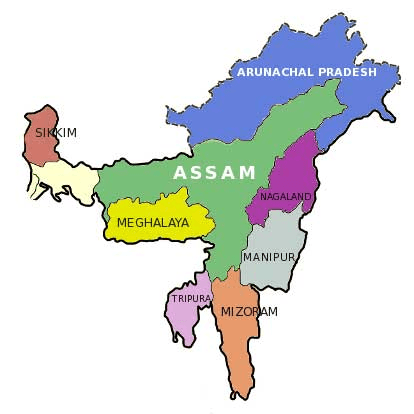
4.Mizoram and Arunachal Statehood Anniversary (Post-Independence States)

PIB
Illustration for Mizoram and Arunachal Statehood Anniversary (Post-Independence States)

What & Where

Statehood Day: Mizoram & Arunachal Pradesh became 23rd & 24th Indian states on 21 Feb 1987.

Northeast Himalaya; Mizoram flanks Myanmar–Bangladesh, Arunachal borders Bhutan–China–Myanmar.

Both carved from Assam via Union-Territory phase (1972) after accords ending insurgency or strategic concerns.

Quick Facts for MCQs

Historical Evolution

  • 1959-61 Mautam famine spurred Mizo National Front insurgency.
  • 1986 Mizoram Peace Accord, State of Mizoram Act 1986 enabled statehood.
  • China border risk drove Arunachal’s elevation; State Act passed 1986.

Demography & Society

  • Mizoram highest tribal concentration; Arunachal hosts widest tribal diversity spectrum.
  • Literacy gap: Mizoram far above national, Arunachal below national average.
  • Sex ratios roughly match national trend, Mizoram slightly favourable.

Geopolitics & Security

  • Arunachal strategic for India–China boundary (McMahon Line, Tawang axis).
  • Mizoram stability critical for India–Myanmar border management and Act East projects.
  • Statehood settlements reduced secessionist violence, integrating NE periphery.

Environment

  • Mizoram’s 85 % forest cover tops India, aiding biodiversity & climate goals.

Key Data Points

FeatureData-Point
Statehood date (both)21 Feb 1987
Union-Territory creation1972 for both
Capital – MizoramAizawl
Capital – ArunachalItanagar
Forest cover % (Mizoram)85.4 % of area
Largest NE state (area)Arunachal Pradesh
Intl borders – MizoramMyanmar, Bangladesh
Intl borders – ArunachalBhutan, China, Myanmar
Literacy – Mizoram91.58 %
Literacy – Arunachal65.38 %
Sex ratio – Mizoram975 ♀/1000 ♂
Sex ratio – Arunachal938 ♀/1000 ♂
Tribal population peakMizoram (highest %)

Related UPSC Prelims PYQs

GS1, NDA_GAT 2021PYQ 1

The Constitution (35th Amendment) Act of 1974 is related to which one of the following States?

GS1, NDA_GAT 2002PYQ 2

Chapchar Kut is a festival celebrated in the state of

GS-3S&T

5.Tetanus-Diphtheria Booster Vaccine (Immunization)

News on Air

What & Where

Td vaccine = booster against tetanus & diphtheria; launched by Union Health Minister at Central Research Institute, Kasauli (H.P.)

Two formulations: Td (tetanus + diphtheria); Tdap (adds pertussis, advised for pregnant women & infant caregivers)

Administered post-childhood; boosts waning immunity every 10 yrs, can be co-given with other routine shots

Quick Facts for MCQs

Tech & Schemes

  • UIP integration ensures free Td boosters via public health facilities, improving adolescent & adult coverage
  • Co-administration policy cuts extra visits; boosts overall completion rates

Disease Biology

  • Tetanus spores in soil enter via wounds; toxin causes lockjaw, muscle spasms, respiratory failure
  • Diphtheria aerosol-borne; throat pseudomembrane may suffocate, toxins damage heart & nerves

Dosage & Safety

  • Intramuscular 0.5 ml deltoid/thigh; immunity peaks within weeks, sustained by memory cells
  • Contra-indicated only in severe allergic reaction to previous dose; no live organisms, so safe for immunocompromised

Key Data Points

FeatureData-Point
Pathogens covered (Td)Clostridium tetani; Corynebacterium diphtheriae
Booster intervalEvery 10 years
Age/phase targetedAdolescence & adulthood after primary childhood series
Key side-effectsMild pain, redness, low-grade fever
Pregnancy advisoryPrefer Tdap during each pregnancy (27-36 weeks)
Launch siteCentral Research Institute, Kasauli, Himachal Pradesh
Immunisation linkPart of India’s Universal Immunisation Programme
Storage requirement2 – 8 °C cold chain
Community benefitHerd immunity; reduced respiratory failure & cardiac/nerve damage
Co-administrationSafe with other vaccines in same visit
GS-2Editorial

6.India’s Strategy Amid Multilateral Erosion (Foreign Policy)

The Hindu

What & Where

Emerging world order: power-centric, minilateral alignments replacing rule-based multilateralism.

Key processes: US isolationism, China-built architectures (BRI, NDB, RCEP), niche groups like QUAD, AUKUS, I2U2.

Core geography: Indo-Pacific—LAC land frontier and Indian Ocean Region pivotal for India.

Quick Facts for MCQs

Geopolitical Shifts

  • Unilateralism: US tariff threats, WHO & Paris exits erode collective norms.
  • Minilateralism: QUAD, AUKUS, RCEP gaining over universal WTO, UNSC setups.
  • Weaponised interdependence: semiconductors, SWIFT, energy routes used for coercion.

India’s Diplomatic Phases

  • Non-Alignment 1947-64 focused on decolonisation; exposed by 1962 China war.
  • Realist 1964-91 saw 1971 Indo-Soviet Treaty, 1974 nuclear deterrent.
  • Assertive Multi-vector 2014-26 balances Quad with Russian arms, leads Global South.

Key Challenges

  • China: border standoff, pharma–electronics import dependence, IOR encirclement via BRI ports.
  • Transactional trade: India-US interim pact demands concessions before tariff cuts.
  • Expectation gap: rising calls for decisive Indian positions on Ukraine, Gaza, climate.

Suggested Actions

  • Supply-chain de-risk: SCRI, friend-shoring electronics, APIs, semiconductors.
  • Tech sovereignty: secure critical minerals; push AI, quantum to become digital rule-maker.
  • BRICS reboot: convert bloc to economic cooperation; pilot cross-border CBDC linkage.

Key Data Points

FeatureData-Point
US withdrawals from UN bodies31 institutions exited
China-led UN specialised agencies4 of 15
WTO Appellate BodyBlocked since Dec 2019
Troops deployed along LAC≈ 60,000 each side
India joins revived Quad2017
Russian S-400 contract2018
African Union in G20Inducted 2023 Delhi summit
Pokhran-I nuclear test1974
Voice of Global South SummitLaunched 2023
UNSC veto holdersUS, UK, France, Russia, China

Related UPSC Prelims PYQs

ESE_GS, GS1 2022PYQ 1

Consider the following:

ESE_GS, GS1 2025PYQ 2

Which one of the following is not the principle of India’s Foreign Policy for Panchsheel?

GS-2Economy

7.Pax Silica Supply Chain Initiative (Critical Minerals)

IT
Illustration for Pax Silica Supply Chain Initiative (Critical Minerals)

What & Where

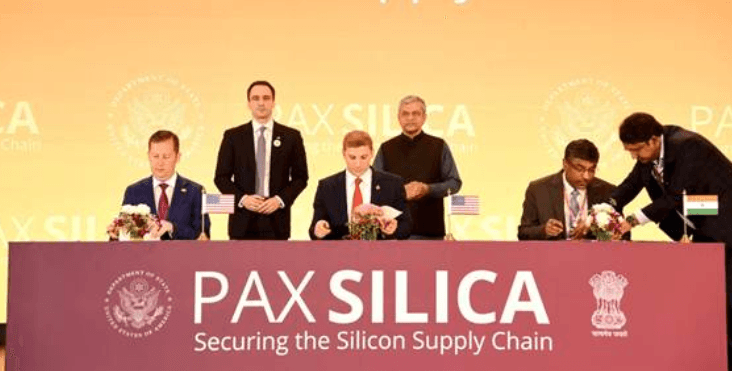
Strategic U.S.-led initiative securing diversified supply chains for critical minerals, semiconductors, electronics & AI technologies

Conceived against rare-earth concentration worries; inaugural summit Washington D.C., Dec 2025

India now joins 10 other signatories spanning Indo-Pacific, West Asia & Europe

Quick Facts for MCQs

Supply Chain Security

  • Diversification cuts over-reliance on single-country rare-earth processing and chip fabrication
  • Addresses non-market dumping; shields sensitive tech & infrastructure
  • Coordinates mineral refining, processing, access among partners

Technology Collaboration

  • Joint R&D across semiconductors, AI systems, data infrastructure, advanced manufacturing
  • Builds trusted innovation ecosystem linking governments, industry, academia
  • Aligns long-term tech governance standards among like-minded democracies

Economic & Investment Angle

  • Promotes pooled investments, incentives strengthening industrial networks
  • Deepens economic partnerships to hedge coercive supply disruptions
  • Seeks resilient global economic architecture based on transparent markets

Key Data Points

FeatureData-Point
Lead agencyU.S. Department of State
Launch summitWashington D.C., Dec 2025
Signatory members11 (US, Australia, Greece, Israel, Japan, Qatar, ROK, Singapore, UAE, UK, India)
Non-signatory participantsCanada, EU, Netherlands, OECD, Taiwan
Core sectorsCritical minerals, Semiconductors, Electronics, AI
Primary aimResilient, diversified, trusted supply chains
Key risk addressedCoercive or monopolistic supply practices
India statusNew entrant, 2025
Private sector roleMobilise entrepreneurship & scale innovation
Geostrategic tagPax Silica initiative

Related UPSC Prelims PYQs

CAPF_GAI 2024PYQ 1

Which one among the following statements with regard to India’s maritime initiative, SAGAR, is correct?

GS-2MiscQuick Bite

8.India Observes Board of Peace Meeting (Israel-Palestine)

The Hindu

What & Where

Board of Peace; US-initiated multilateral forum, pitched as alternate conflict-resolution platform

First meet: Washington D.C., Feb 2026; agenda—Gaza Strip redevelopment

Membership: 27 countries; India present only as “observer”

Quick Facts for MCQs

Institutional Details

  • Members include Saudi Arabia, UAE, Argentina; mix of West Asian, Latin American, Asian states
  • Structure undefined; positioning as quicker, flexible platform versus UN mechanisms
  • Funding anchored by US, inviting voluntary contributions from participants

India’s Stand

  • Supports Gaza Peace Plan, signed >100-entity statement condemning West Bank settlements as illegal
  • Maintains “de-hyphenated” diplomacy, balancing Arab League engagement with Israel ties
  • Reiterates commitment to sovereign, contiguous Palestine alongside Israel

Funding & Projects

  • USD 10 billion earmarked for Gaza infrastructure, housing, health facilities
  • Priority areas: power grid revival, desalination plants, job-oriented economic zones

West Asia Diplomacy

  • Participation keeps India engaged in region’s peace architecture without formal alliance obligations
  • Alignment with wider international criticism of settlement expansion bolsters rules-based image

Key Data Points

FeatureData-Point
Founding actorUnited States
Launch year2026
Initial meet venueWashington D.C.
Total participant states27
Indian roleObserver, not full member
Core mandateGaza reconstruction, conflict mediation
US financial pledgeUSD 10 billion
Potential rival institutionUnited Nations
Related UNSC Resolution2803
India’s preferred solutionTwo-State based on 1967 borders
GS-2Misc

9.Operation Chivalrous Knight 3 (UAE Aid Mission)

DD News

What & Where

Operation Chivalrous Knight 3 (OCK-3): UAE-led international humanitarian mission targeting the Gaza Strip

Provides continuous sea-air-land bridge of food, medicine, water, shelters during Ramadan humanitarian peak

Core geography: Gaza (field hospital), Rafah (desalination plants), Al Arish Egypt (floating hospital)

Quick Facts for MCQs

Logistics & Transport

  • Bridge design: dedicated air corridor + sealift + truck convoys ensuring uninterrupted supply chain
  • Airdrop capability: Birds of Goodness reaches inaccessible northern Gaza zones
  • Volume focus: labelled one of region’s highest sustained relief tonnages

Medical Infrastructure

  • Field hospital: emergency, primary care, stabilization inside Gaza conflict zone
  • Floating hospital: specialized surgeries offshore at Al Arish to bypass ground access limits
  • Health scope: surgery, trauma care, maternal-child services bolstering overstretched local facilities

Funding & Diplomacy

  • Billion-dollar top-up signals pivot from short-term relief to long-term stabilization projects
  • Board of Peace platform used to mobilize multilateral coordination around OCK-3 efforts
  • UAE positioning: ranks among leading donors to Palestinian humanitarian response

Key Data Points

FeatureData-Point
Launch directivePresident Sheikh Mohamed bin Zayed Al Nahyan
Mission phaseThird edition of Chivalrous Knight series
Transport mixHundreds of flights, several ships, 300+ land convoys
Field hospital siteInside Gaza Strip
Floating hospital siteAl Arish, Egypt
Desalination plant siteRafah crossing area
Special airdrop armBirds of Goodness initiative
Recent UAE pledgeAdditional USD 1 billion at Board of Peace, Washington
Cumulative UAE aidNearly USD 2 billion
Primary timing windowHoly Month of Ramadan 2024
GS-3Security

10.Indian Ocean Naval Symposium (Naval Forum)

PIB
Illustration for Indian Ocean Naval Symposium (Naval Forum)

What & Where

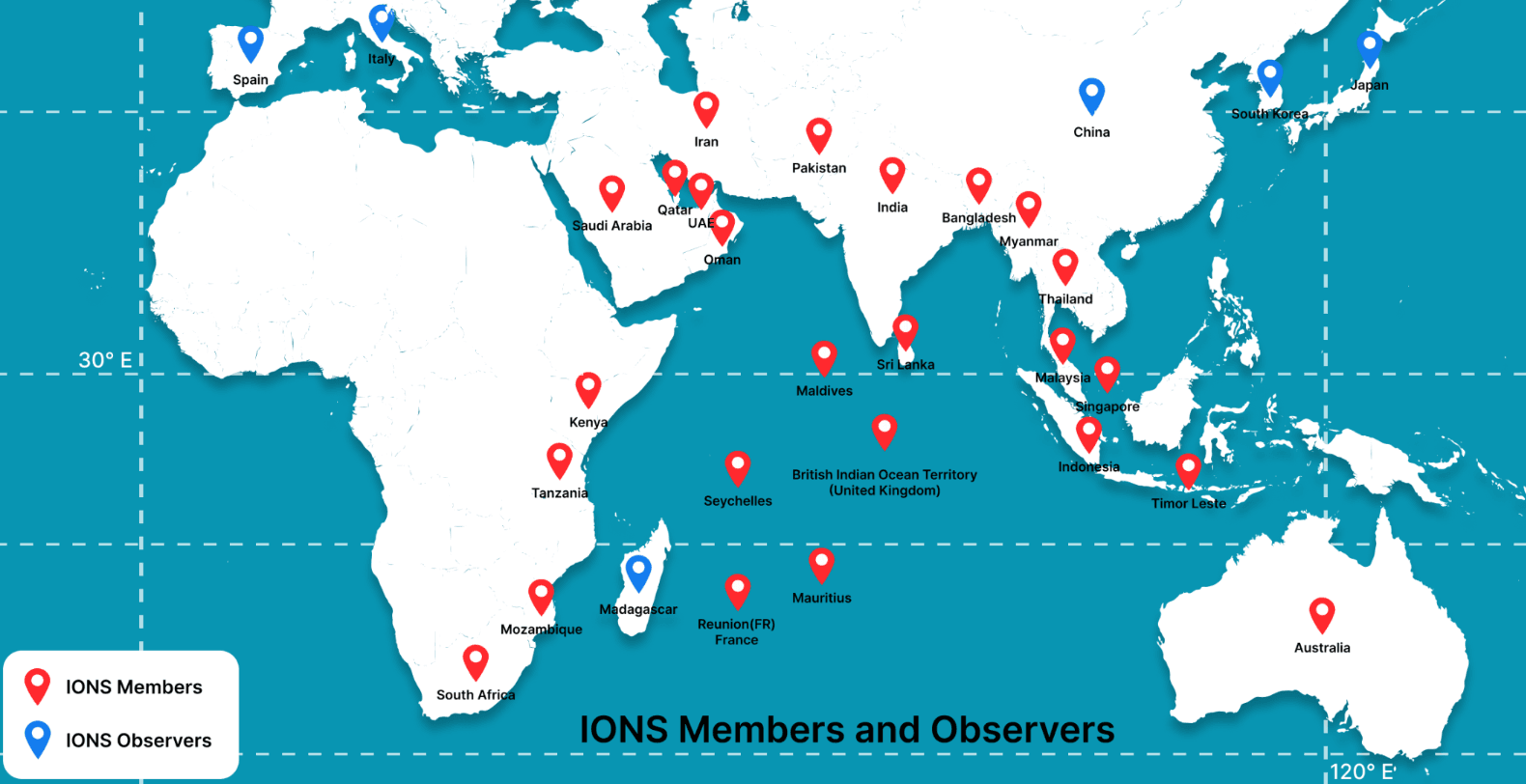
Voluntary multilateral naval forum for Indian Ocean Region (IOR) littorals

Initiated by Indian Navy; HQ functions rotate with chair

Core geography: 25 IOR nations spanning Africa, West Asia, South Asia, SE Asia, Australia

Quick Facts for MCQs

History & Chairmanship

  • Rotation: UAE, South Africa, Australia, Bangladesh, Iran, France, Thailand followed India’s first term
  • 2026 reassumption signals renewed Indian leadership and agenda-setting opportunity
  • Conclave of Chiefs serves as formal handover and strategic review mechanism

Core Functions

  • Strategic dialogue: Biennial Conclaves for chiefs to address threats, cooperation roadmaps
  • Capacity building: Joint IMEX drills, professional exchanges, interoperability enhancement
  • Maritime domain awareness: Shared data, coordinated surveillance for safer sea lines of communication

Working Groups

  • HADR: Frameworks for rapid disaster response, best-practice drills among littoral navies
  • MARSEC: Joint strategies against piracy, terrorism, trafficking, other non-traditional threats
  • IS&I: Real-time information exchange protocols, common procedures, digital tools for joint ops

Key Data Points

FeatureData-Point
Full nameIndian Ocean Naval Symposium (IONS)
Launch year2008
Inaugural chairIndia (2008-10)
Current chair cycleIndia, Feb 2026-28
9th Conclave venueVisakhapatnam, India
NatureVoluntary, inclusive, multilateral maritime forum
Membership strength~25 navies + observers
Flagship exerciseIMEX (multilateral maritime drills)
Specialised working groupsHADR; Maritime Security; Information-Sharing & Interoperability
Key aimPeace, stability, secure sea lanes in Indian Ocean

Related UPSC Prelims PYQs

CAPF_GAI, GS1 2017PYQ 1

Consider the following in respect of Indian Ocean Naval Symposium (IONS):

CAPF_GAI, GS1 2024PYQ 2

Which one among the following statements with regard to India’s maritime initiative, SAGAR, is correct?

GS-3Security

11.INS Krishna Cadet Training Ship (Naval Training)

Times of India
Illustration for INS Krishna Cadet Training Ship (Naval Training)

What & Where

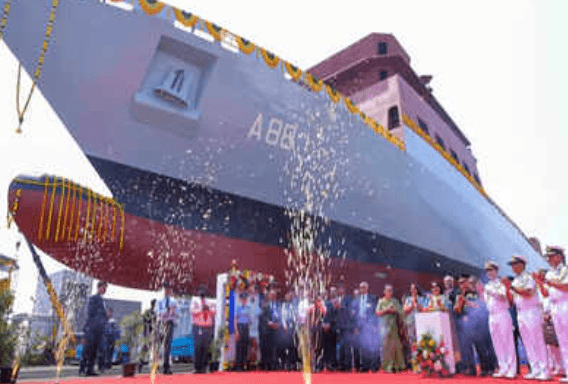
Launch site Kattupalli (Chennai); INS Krishna is Indian Navy’s first indigenous Cadet Training Ship (CTS).

Lead ship of three-vessel CTS class for practical navigation, seamanship & ship-handling training of officer cadets.

Built under Buy (Indian-IDDM) route; showcases private-sector warship design capability via Larsen & Toubro.

Quick Facts for MCQs

Tech & Design

  • Indigenous hull; integrated simulators enable onboard watch-keeping, navigation and seamanship drills.
  • Dual-propulsion architecture supports sustained 60-day missions without replenishment.
  • Modular armament fit allows easy future upgrades.

Training Infrastructure

  • Purpose-built ship frees frontline combatants from training diversion.
  • 70-seat smart classrooms replicate Naval Academy pedagogy at sea.

Security Dimension

  • 76 mm gun + CIWS provide point defence during training deployments.
  • Capability boosts fleet readiness by accelerating cadet–to–bridge transition.

Naval Diplomacy

  • Berths reserved for Friendly Foreign Country cadets foster maritime partnerships.
  • Port calls during training voyages project Aatmanirbhar Bharat shipbuilding prowess worldwide.

Key Data Points

FeatureData-Point
Ship classCadet Training Ship (CTS)
Builder & yardL&T Shipyard, Kattupalli
Displacement~4,700 tonnes
Length122 metres
Top speed20 knots
Sea endurance60 days
Classroom capacity3 rooms × 70 cadets
Total accommodation20 officers, 150 sailors, 200 cadets
Primary gun76 mm naval gun
CIWS fit2 × AK-630M
Additional weapons12.7 mm RC guns
Training bridgeDedicated cadet bridge + chart house
Procurement categoryBuy (Indian-IDDM)
Gender inclusivityFacilities for women cadets
Overseas trainingCadets from Friendly Foreign Countries

Related UPSC Prelims PYQs

CDS_GK 2024PYQ 1

Which one of the following statements about 'INS Tarmugli' is not correct?

CDS_GK 2021PYQ 2

Which one of the following ships was involved in ‘Mission Sagar – II’?

GS-3SecurityQuick Bite

13.Poland Withdraws from Ottawa Mine Ban (Anti-Personnel Mines)

The Hindu
Illustration for Poland Withdraws from Ottawa Mine Ban (Anti-Personnel Mines)

What & Where

Ottawa Convention 1997 – global ban on anti-personnel mines

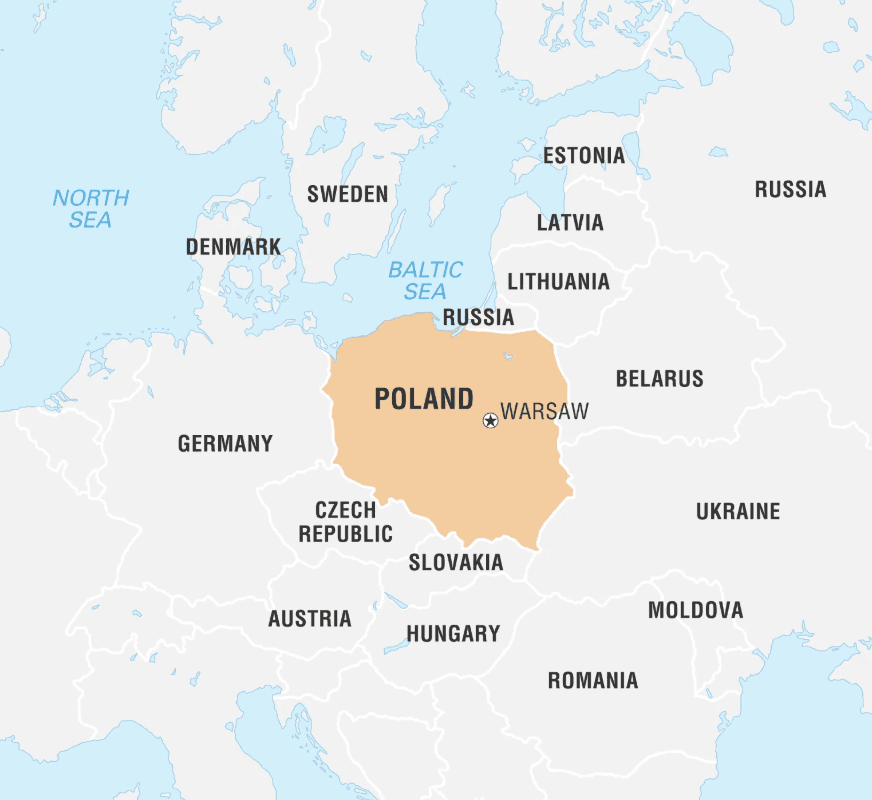
Poland’s Eastern Shield fortification zone along Russia’s Kaliningrad enclave & Belarus border

Landmine classes: anti-personnel banned, anti-tank regulated by CCW 1980 Amended Protocol II 1996

Quick Facts for MCQs

Legal & Policy

  • Ottawa Convention bans anti-personnel mines use, stockpiling, production, transfer
  • Anti-tank mines regulated, not banned, under CCW 1980 Amended Protocol II 1996
  • Poland ratified 2012, now withdrawing 2026, ending treaty obligations

Security Dimension

  • Eastern Shield fortifications contemplate minefields deterring aggression from Russia and Belarus
  • Withdrawal follows Russia’s 2022 Ukraine invasion, heightening regional threat perception
  • Polish government promises deployment only under realistic threat to minimise civilian harm

International Examples

  • Regional exits include Finland, Estonia, Latvia, Lithuania, Ukraine post-Ukraine war
  • Non-parties India, Russia, United States among nearly three dozen states
  • Trend signals NATO eastern flank re-evaluating disarmament commitments

Production & Industry

  • Poland pursues self-sufficiency via domestic manufacture of anti-personnel and anti-tank mines
  • Collaboration planned with Polish defence producers for inventory rebuilding
  • Mines retained in stockpiles pending security trigger deployment

Key Data Points

FeatureData-Point
Treaty nameAnti-Personnel Mine Ban Treaty (Ottawa) 1997
Poland ratification year2012
Stockpile destruction completed2016
Withdrawal announcedFeb 2026
Fortification projectEastern Shield
Other recent withdrawersFinland, Estonia, Latvia, Lithuania, Ukraine
Non-party major powersIndia, Russia, United States
Anti-tank mines statusAllowed under CCW Amended Protocol II
GS-2Scheme

14.SANKALP Skill Development Scheme (Skill Training)

The Hindu

What & Where

Flagship scheme SANKALP upgrades short-term skill training quality, reach and inclusion across India.

Launch 19 Jan 2018; original closure Mar 2023, now extended.

Implementing agency MSDE with World Bank loan; executed through Central-State-District skill institutions.

Quick Facts for MCQs

Scheme Design

  • Institutional-strengthening: upskills NSDC, SSCs, State Skill Missions, District hubs.
  • Quality-assurance: standards, third-party assessments, unified certification portal.
  • Industry-linkage: MoUs with employers for demand-driven curricula and placements.

Financials

  • Allocation ₹4,455 cr split GoI & World Bank; draws released on achieving DLIs.
  • Performance-based grants incentivise states to reform training governance.
  • Cost allows modern labs, trainer capacity, inclusion pilots.

Implementation Gaps

  • PAC-observed: slow progress, delayed milestones, weak field monitoring.
  • Extension beyond 2023 indicates lag in meeting reform targets.
  • Committee recommends tighter MSDE oversight, real-time dashboard use.

Key Data Points

FeatureData-Point
Full formSkill Acquisition & Knowledge Awareness for Livelihood Promotion
Nodal ministryMinistry of Skill Development & Entrepreneurship
Launch date19 January 2018
Original durationFY 2018-23
Total outlay₹4,455 crore
Key financierWorld Bank loan assistance
Scheme typeCentrally Sponsored, performance-linked
Monitoring toolResults Framework & Disbursement Linked Indicators
Core focusQuality, industry linkage, marginalised inclusion
Parliamentary scrutinyPublic Accounts Committee (PAC) 2024

Related UPSC Prelims PYQs

GEO_GS, GS1 2026PYQ 1

Consider the following statements about the SANKALP Scheme:

GEO_GS, GS1 2008PYQ 2

What is the name of the scheme which provides training and skills to women in traditional and non-traditional trades?

GS-1Editorial

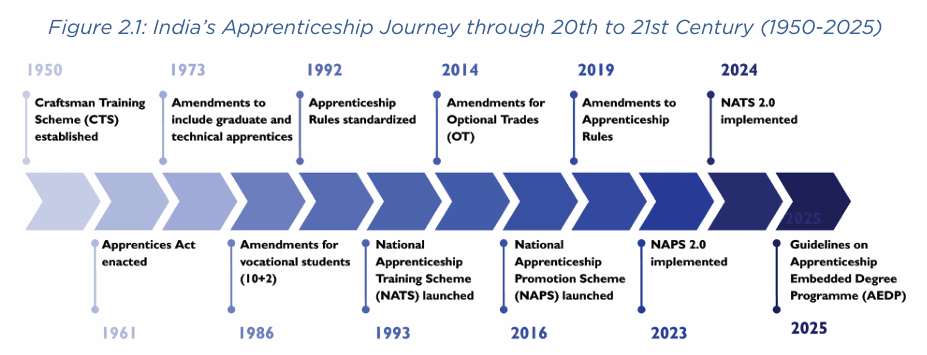
15.Revitalizing Apprenticeship Ecosystem Report (Skill Apprenticeship)

PIB
Illustration for Revitalizing Apprenticeship Ecosystem Report (Skill Apprenticeship)

What & Where

Policy report “Revitalizing Apprenticeship Ecosystem” by NITI Aayog, 2024, to embed apprenticeships as human-capital pillar for Viksit Bharat @ 2047

Framework spans five processes — policy reform, structural strengthening, state-district action, industry engagement, aspirant support

Core geography skewed toward industrial states; Gujarat alone commands 24.18 % of National Apprenticeship Promotion Scheme engagements

Quick Facts for MCQs

State Disparities

  • Concentration: Gujarat, Maharashtra, Haryana, Tamil Nadu, Karnataka dominate apprenticeship seats
  • Negligible uptake: several states/UTs contribute under 0.001 % to national pool
  • Implication: unequal access erodes demographic dividend in lagging regions

Systemic Challenges

  • Aspirational bias: degree preference over vocational skills hampers enrolment
  • Regulatory clutter: multiple portals NAPS vs NATS deter MSMEs participation
  • Infrastructure gaps: District Skill Committees often lack funds, trainers, equipment

Recommendations & Tools

  • Single digital portal to unify registration, compliance, stipend flow
  • Apprenticeship Engagement Index to rank states, foster competitive federalism
  • Cluster-based MSME consortia proposed to collectively hire and train apprentices

Economic Angle

  • Learning-by-doing raises enterprise productivity, lowers onboarding costs
  • Skilling mismatch now causing higher unemployment among tertiary-educated youth
  • Bio-energy linkage could turn rural apprenticeships into 18 GW annual power opportunity

Social Inclusion

  • District-level skilling anchors to map local industry demand with marginalized youth supply
  • Portable, globally recognized certifications to enhance mobility and wages
  • Vocational mainstreaming under NEP 2020 integrates classroom credit with shop-floor exposure

Key Data Points

FeatureData-Point
Releasing agencyNITI Aayog
Report recommendations20
Strategic pillars listed5
Gujarat share in NAPS FY 24-2524.18 %
Power potential from agri residues18,000 MW per year
Proposed new metricApprenticeship Engagement Index

Related UPSC Prelims PYQs

CDS_GK, NDA_GAT 2023PYQ 1

Consider the following statements concerning the National Education Policy, 2020:

CDS_GK, NDA_GAT 2025PYQ 2

Under which one of the following initiatives does the NITI Aayog support interested States to establish a State Institution for Transformation (SIT)?

Ready to practice?

Test your knowledge with our UPSC test series.

Start Free Trial