UPSC Current Affairs

15 topicsGS-1: 2GS-2: 5GS-3: 8
0/15 done
GS-2Polity

1.Lok Sabha Biometric Attendance System Launch (Parliamentary Procedures)

Hindustan Times
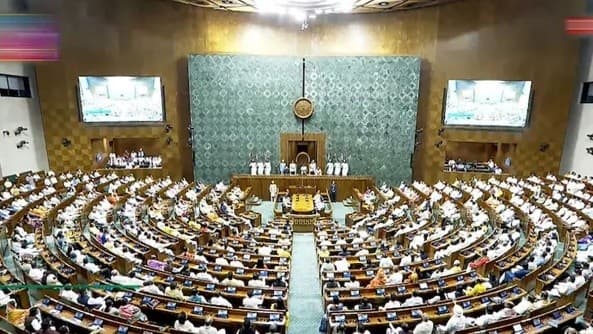
Illustration for Lok Sabha Biometric Attendance System Launch (Parliamentary Procedures)

What & Where

Seat-based biometric attendance system for MPs inside Lok Sabha chamber

To replace lobby register from Budget Session 2026 onward

Attendance marked only from designated seat within House

Quick Facts for MCQs

Tech & Schemes

  • Biometric console integrates with existing e-Parliament stack, enabling real-time data capture and dashboards
  • Paperless attendance aligns with Digital India, reduces manual recordkeeping errors
  • System part of broader modernisation drive including AI-assisted legislative drafting

Governance & Accountability

  • Direct financial penalty ties presence to pay, incentivising punctuality
  • No proxy entry boosts transparency, curbs misuse of quorum rules
  • Seat-locked consoles compel continuous floor presence during debates

Operational Protocols

  • Attendance possible only when Speaker opens session console, preventing pre-or post-marking
  • System deactivates instantly upon adjournment due to protests or business completion
  • MPs cannot mark and exit; continuous presence prerequisite for allowance

Key Data Points

FeatureData-Point
Announced bySpeaker Om Birla
Launch targetBudget Session 2026
Authentication modeThumb-based biometrics
Attendance windowOpen only while House in session
Post-adjournment statusConsole auto-locks, no retro entry
Allowance linkageDaily allowance forfeited if no in-House mark
Hardware locationConsole embedded in every seat
Legacy system replacedRegister signing in lobby
Proxy marking riskEliminated via biometrics
Complementary initiativesMultilingual translation, paperless files, AI workflows
GS-2Security

2.Ban on Illegal Online Gambling Platforms (Online Gambling Regulation)

The Hindu

What & Where

Online gambling: internet-based betting on casino games, sports, poker and lotteries to win money/prizes.

India: Promotion & Regulation of Online Gaming Act, 2025 institutes nationwide ban on real-money online games.

Govt blocked 242 more illegal betting sites (Jan 2026); cumulative blocks now 7,800.

Quick Facts for MCQs

Legal & Policy

  • Act 2025 bans offering, advertising or facilitating any real-money online game across India.
  • Banks/financial institutions prohibited from processing payments linked to such platforms.
  • Centre invokes IT Act 2000 to direct blocking of unlawful gaming/gambling websites.

Enforcement Tactics

  • Operators constantly switch domains/URLs to dodge government blocks.
  • Funds siphoned abroad via mule accounts, complicating seizure and repatriation.
  • Multi-agency approach combines website blocking, payment denial and tax tracking.

Fiscal & Regulatory

  • 28 % GST continues on online money gaming, casinos and horse racing.
  • Illegal portals evade GST, eroding revenue and widening compliance gap.
  • Skill-based activities classed as gaming; chance-based treated as gambling.

Key Data Points

FeatureData-Point
Fresh sites blocked (Jan 2026)242
Total illegal sites blocked7,800
Governing legislationPromotion & Regulation of Online Gaming Act, 2025
GST rate on online money gaming28 %
Constitutional entry for betting/gamblingEntry 34, State List

Related UPSC Prelims PYQs

ESE_GS 2024PYQ 1

Which one of the following Acts mandates schools and libraries in India to use some form of technological protection to block computer access to obscene material, pornography, and anything else considered harmful to minors?

GS-3Economy

4.State Borrowings Elevate Bond Yields (Bond Yields)

The Hindu

What & Where

Bond yield – percentage return on a bond via fixed coupons plus price change, key barometer for borrowing costs

Where – Indian Government Securities and State Development Loans market supervised by RBI

FY 2025-26 sees record State bond issuance almost matching Central borrowings, skewing domestic yield curve

Quick Facts for MCQs

Drivers of Yield

  • Interest-rate cuts, inflation outlook, government supply, global US-Treasury moves collectively sway Indian bond yields
  • Supply surge – large Centre or State issues increase bond availability, forcing higher yields
  • Credit-risk perception higher risk demands higher returns especially for non-sovereign issuers

State Borrowing Pattern

  • Scale – States borrowing nearly at par with Centre for the first time, altering public-debt mix
  • Preference – Investors pick SDLs due to quasi-sovereign status plus 80–100 bps extra yield
  • Substitution – Banks, insurers, PFs swap G-secs for SDLs, depressing G-sec demand and lifting their yields

Monetary Transmission

  • Elevated long-term yields blunt RBI repo cuts, steepening curve and slowing credit cost pass-through
  • Coordination gap fiscal federalism complexities arise as State funding choices hinder unified debt management
  • Correctives suggested staggered SDL maturities, larger Centre infrastructure loans, wider small-savings access

Key Data Points

FeatureData-Point
FY26 gross State borrowing≈ ₹ 12.5 trillion
FY26 gross Centre borrowing≈ ₹ 14.6 trillion
FY26 net State borrowing≈ ₹ 9 trillion
FY26 net Centre borrowing≈ ₹ 10.3 trillion
SDL yield spread over G-secs80–100 basis points
Usual bond price–yield linkInverse relationship
Inverted yield curve signalLikely slowdown or recession

Related UPSC Prelims PYQs

GS1 2022PYQ 1

With reference to the Indian economy, consider the following statements:

GS1 2018PYQ 2

Consider the following statements:

GS-1History

5.Parbati Giri Birth Centenary Tribute (Freedom Fighter)

All India Radio

What & Where

Freedom-fighter Parbati Giri; key woman leader from Western Odisha during late-colonial mass movements

Core theatre: Samlaipadar village & Bargarh district; outreach across rural Odisha via Congress networks

Active span: joined 1938 at 12 yrs; militant–Gandhian role till 1945; social service till death 1995

Quick Facts for MCQs

Freedom Struggle Actions

  • Individual Satyagraha 1940; village mobilisation; khadi promotion
  • Quit India 1942; led tricolour rallies; openly defied Bargarh Court
  • Imprisonment; endured two-year jail term for sedition

Gandhian Influence

  • Khadi adoption; spinning, weaving integral daily discipline
  • Constructive programme; literacy, hygiene, self-help drives in villages
  • Inspiration channelled through Congress cells led by uncle Ramachandra Giri

Post-Independence Social Work

  • Odisha famine 1951; organised relief kitchens, supply chains
  • Public health; spearheaded leprosy campaigns, prison humanisation, destitute shelters
  • Service approach mirrored Gandhian trusteeship and sarvodaya ideals

Recognitions & Legacy

  • Honorary Doctorate 1988; academia acknowledged grassroots contribution
  • Epithets highlight fiery patriotism and compassion fusion
  • Birth-centenary 2026; national homage underscores women’s role in freedom saga

Key Data Points

FeatureData-Point
Birth date19 Jan 1926
Birth placeSamlaipadar, Bargarh, Odisha
Uncle–mentorRamachandra Giri
First joinedIndian National Congress, 1938
Key ideologiesKhadi, self-reliance, Gandhian constructive work
Major actionsIndividual Satyagraha 1940; Quit India 1942
Famous protest siteBargarh Court flag demonstration
British sentence2 years imprisonment
Post-1947 focusFamine relief, prison reform, leprosy eradication
Honorary doctorateSambalpur University, 1988
Popular titlesBanhi Kanya; Mother Teresa of Western Odisha
Death17 Aug 1995
Centenary homagePM of India, Jan 2026

Related UPSC Prelims PYQs

CDS_GK, NDA_GAT 2024PYQ 1

Freedom Fighter Kanaklata Barua sacrificed her life while participating in

CDS_GK, NDA_GAT 2025PYQ 2

Matangini Hazra and Lakshman Naik sacrificed their lives in:

GS-3Species

6.Rare Ant Fly Species Discoveries (Ant Fly Species)

The Hindu
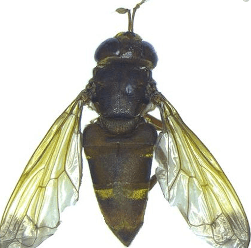
Illustration for Rare Ant Fly Species Discoveries (Ant Fly Species)

What & Where

Microdontinae ant flies (family Syrphidae); larvae live in ant nests, feed on brood.

New species: Metadon ghorpadei (Delhi Ridge, Delhi) & M. reemeri (Siruvani Hills, Western Ghats, TN).

Only 27 Microdontinae known from India (~454 global); finds reveal hidden urban-forest and hotspot diversity.

Quick Facts for MCQs

Conservation Significance

  • Habitat-value: Urban, hotspot forests shelter cryptic taxa needing tailored safeguards.
  • Endemism: Western Ghats gain adds to globally recognised insect-rich UNESCO landscape.
  • Management-need: Advocates habitat mapping, invasive control, native flora restoration.

Urban Planning

  • Delhi Ridge demonstrates biodiversity persistence within highly fragmented city green islands.
  • Risk: Tree-count metrics overlook microhabitat loss harming ant-associated specialists.
  • Restoration: Maintain leaf litter, deadwood, ant colonies in urban forestry guidelines.

Research Gaps

  • Knowledge-gap: Microdontinae underdocumented; difficulty due to secretive life stages.
  • Detection-issue: Adults inconspicuous, larvae hidden, elude conventional sweep-net surveys.
  • Methodology: Paper urges ant-nest sampling plus molecular phylogenetics for inventories.

Key Data Points

FeatureData-Point
SubfamilyMicrodontinae
FamilySyrphidae
Larval habitMyrmecophily—ant-brood feeder
Indian Microdontinae spp.27
Global Microdontinae spp.~454
Species–site 1M. ghorpadei – Delhi Ridge
Species–site 2M. reemeri – Siruvani Hills
GS-3Mapping

7.Kumbhalgarh Wildlife Sanctuary ESZ Notification (Protected Area)

News on Air
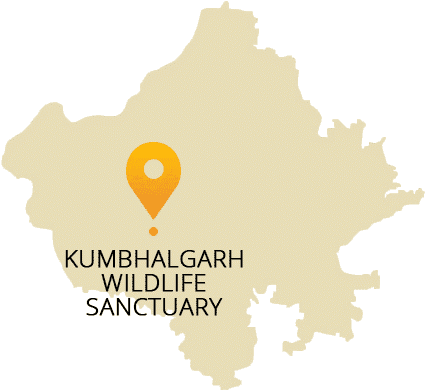
Illustration for Kumbhalgarh Wildlife Sanctuary ESZ Notification (Protected Area)

What & Where

Protected dry-deciduous reserve encircling Kumbhalgarh Fort in Aravalli hills, Rajasthan.

Spreads ~610.5 sq km across Rajsamand, Udaipur & Pali districts; elevation 500 – 1 300 m.

Now ring-fenced by 0–1 km Eco-Sensitive Zone (MoEFCC, 2024) to curb high-impact activity.

Quick Facts for MCQs

Legal & Policy

  • MoEFCC notification under Environment (Protection) Act classifies fringe as Eco-Sensitive Zone.
  • ESZ restricts mining, large industries, new polluting units; promotes eco-tourism, organic farming.
  • Aim: buffer human pressure, reduce habitat fragmentation in Aravalli landscape.

Geology & Terrain

  • Ancient metamorphic rocks impart rugged, discontinuous ridges favorable for den sites and water percolation.
  • Elevational mosaic (500–1 300 m) produces scrub, grassland, woodland micro-habitats.
  • Thin sandy-loam soils support drought-tolerant vegetation typical of semi-arid Rajasthan.

Faunal Diversity

  • Carnivores: leopard, Indian wolf, sloth bear, striped hyena, jungle cat, golden jackal.
  • Ungulates: sambhar, nilgai, chausingha, chinkara; also Indian hare & pangolin.
  • Avifauna & herpetofauna: grey junglefowl, painted francolin, Indian eagle-owl; Indian cobra, rat snake, checkered keelback; fish—mahseer, rohu, katla.

Biodiversity Corridor

  • Links fragmented Aravalli habitats, easing gene flow between northern & southern wildlife populations.
  • Complements nearby reserves (e.g., Todgarh-Raoli) for large-mammal dispersal.
  • Essential for long-term viability of leopard-centric trophic web.

Key Data Points

FeatureData-Point
StateRajasthan
Hill systemAravalli Range (western India)
District spreadRajsamand, Udaipur, Pali
Total notified area≈ 610.5 sq km
Core geomorphic unitsKumbhalgarh, Sadri, Desuri, Bokhada ranges
Rock typeAncient Archean metamorphics
SoilThin sandy-loam cover
EcoregionKhathiar–Gir dry deciduous forest
Apex predatorLeopard
ESZ width0 – 1 km around sanctuary

Related UPSC Prelims PYQs

GS1 2017PYQ 1

Recently there was a proposal to translocate some of the lions from their natural habitat in Gujarat to which one of the following sites?

GS-3S&T

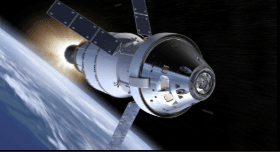
8.Artemis II Crewed Lunar Flyby Mission (Lunar Mission)

DD News
Illustration for Artemis II Crewed Lunar Flyby Mission (Lunar Mission)

What & Where

Artemis II: first crewed mission of NASA’s Artemis programme, performing a lunar flyby without landing.

Path: free-return orbit looping round Moon’s far side, then back to Earth.

Launch pad: Kennedy Space Center; splashdown targeted in Pacific Ocean.

Quick Facts for MCQs

Mission Objectives

  • Validation of life-support, navigation, comms, radiation shielding under crewed deep-space conditions.
  • Preparation for Artemis III lunar landing and later Mars expeditions.
  • Progress toward sustained human presence beyond low-Earth orbit.

Technical Profile

  • Free-return trajectory exploits Earth-Moon gravity, reducing need for large return burn.
  • Orion capsule to set new human distance record (>370,000 km).
  • SLS Block 1 provides 95 t to LEO; splashdown via parachutes in Pacific.

International Collaboration

  • CSA contributing Canadarm3 tech & astronaut seat on Artemis II crew.
  • Artemis Accords involve >25 nations endorsing peaceful lunar activities.
  • Shared costs and expertise model for Gateway, surface habitats, lunar comms.

Historical Context

  • First crewed deep-space flight since Apollo era, closing 52-year gap.
  • Follows uncrewed Artemis I (2022); precursor to Artemis III landing mid-decade.
  • Signals revival of human lunar exploration, shifting focus from ISS to deep space.

Key Data Points

FeatureData-Point
Planned launch date6 Feb 2025*
Lead agencyNASA
International partnerCanadian Space Agency
Crew size4 astronauts
SpacecraftOrion + SLS Block 1
Trajectory typeFree-return lunar flyby
Max distance from Earth>230,000 mi (~370,000 km)
Mission length≈10 days
Splashdown zonePacific Ocean
Last human lunar missionApollo 17, 1972
GS-3S&T

9.Future of Reusable Space Rockets (Reusable Launch Vehicles)

The Hindu
Illustration for Future of Reusable Space Rockets (Reusable Launch Vehicles)

What & Where

Reusable Launch Vehicle (RLV): launch system that returns intact for refurbishment, enabling repeat flights instead of single-use disposal.

Main architectures: VTVL boosters (retro-propulsion landing) and winged spaceplanes (horizontal runway landing).

Geography: USA – SpaceX/Blue Origin; India – ISRO Pushpak & NGLV; China – LandSpace Zhuque-3 (2026).

Quick Facts for MCQs

Technology & Design

  • Full reusability demands booster + upper stage recovery via retro-propulsion or glider touchdown.
  • Vertical integration with 3D-printed, modular parts speeds inspection and lowers refurbishment cost.
  • LOX–Methane engines chosen for clean burns and multiple in-flight restarts.

Indian Roadmap

  • Pushpak RLV-TD slated for OREX orbital return test in 2026 validating winged landing.
  • NGLV Soorya three developmental flights (D1–D3) targeted within eight years for crewed station/lunar needs.
  • Dedicated 4 km airstrip, barges, high-speed telemetry planned to support routine recoveries.

Challenges

  • Thermal protection: Ceramic Matrix Composites must survive 2000 °C during atmospheric re-entry.
  • Precision landing: sub-meter autonomous guidance from orbital velocity yet to be proven by ISRO.
  • Economics: Post-PSLV C-62 failure raised insurance premiums, stressing low-cost refurbishment targets.

Key Data Points

FeatureData-Point
Cost cut potentialUp to 80%
Starship payload100 t to LEO
Turnaround goal24 h between flights
Falcon 9 reuse record30 + flights/booster
NGLV Soorya lift30 t to LEO
IN-SPACe VC kitty₹1,000 crore
Planned RLV runway4 km at Sriharikota
Re-entry heat load~2000 °C
New propellant choiceLOX–Methane
2026 new entrantsBlue Origin New Glenn; LandSpace Zhuque-3

Related UPSC Prelims PYQs

CAPF_GAI, GS1 2022PYQ 1

Which one of the following aerospace companies designed and manufactured 'Falcon 9', a reusable rocket?

CAPF_GAI, GS1 2016PYQ 2

What is 'Greased Lightning-10 (GL-10)', recently in the news?

GS-3S&T

10.Recent PSLV Failures and Lessons (PSLV Failures)

The Hindu

What & Where

Polar Satellite Launch Vehicle (PSLV) – India’s four-stage, solid–liquid mixed launcher; first success October 1994

Core role: inserts up to 1,750 kg into 600 km Sun-Synchronous Polar Orbit; adaptable XL variant uses six strap-ons

Launch pad: Satish Dhawan Space Centre, Sriharikota (Andhra Pradesh)

Quick Facts for MCQs

Failure Mode

  • Pressure drop in C61 and roll-rate in C62 traced to PS3 combustion anomalies
  • Solid motor irreversibility means defects in propellant or nozzle cannot be corrected post-ignition
  • Side-venting exhaust created asymmetric thrust producing uncontrollable spin and guidance loss

Strategic Impact

  • Surveillance gap as EOS-09 and Anvesha intended for border monitoring lost
  • Military space dependence heightens urgency for reliable domestic launch capability
  • Defence ISR constellation deployment schedule now delayed affecting joint operations planning

Commercial Angle

  • Market share collapsed from 35 % in 2017 to near zero by 2024
  • Insurance premiums on future PSLV launches likely to spike reducing price advantage
  • Competitors SpaceX and Rocket Lab gain customer preference for assured reliability

Corrective Steps

  • Reliability-first phase advocated; fewer launches with deeper quality audits
  • FAC reports to be publicly released with sensitive redactions for transparency
  • Indigenise space-grade electronics; develop second launch site beyond Sriharikota

Key Data Points

FeatureData-Point
Stage count4 (S-L-S-L)
Third stage (PS3) propellantHTPB solid
Payload to 600 km SSPO1,750 kg
Payload to sub-GTO1,425 kg
First successful PSLV flightOctober 1994
Recent failed missionsC61 (May 2025) & C62 (Jan 2026)
Common anomaly stageThird stage (PS3)
Lost primary payloadsEOS-09 & EOS-N1 (Anvesha)

Related UPSC Prelims PYQs

CDS_GK, GS1 2025PYQ 1

Which one of the following PSLVs, launched by ISRO, is not correctly matched with their Missions?

CDS_GK, GS1 2002PYQ 2

With reference to Indian satellites and their launchers, consider the following statements:

GS-2Polity

11.UNESCO Media Literacy Alliance Board Election (Media Literacy)

UNESCO

What & Where

UNESCO-coordinated global network combating disinformation via Media & Information Literacy (MIL) capacity-building.

Launched 2013, Global Forum for Partnerships on MIL, Abuja (Nigeria); first Global Board elected 2024.

Operates through 300+ organisations, 180 experts spanning 100+ countries; MIL Unit, Paris, anchors coordination.

Quick Facts for MCQs

Governance Structure

  • Global Board ensures inclusive decision-making, strategic coherence, regional balance.
  • Board monitors platform, mandates annual reporting for transparency.
  • New chapters admitted via Board-approved structured growth.

Functions & Services

  • Shares research, tools, best practices to boost institutional/community MIL capacity.
  • Provides expert inputs shaping global, regional, national MIL norms and standards.
  • Oversees continuous platform upgrades, keeps it user-centric.

Policy Influence

  • Alliance contributions feed into international policy discussions on disinformation, media risks.
  • Cartagena Declaration 2025 set renewed strategic action plan aligning with SDG 16.
  • Outputs guide governments in MIL curriculum and regulatory frameworks.

Key Data Points

FeatureData-Point
Formal nameUNESCO Media and Information Literacy Alliance
Launch year & venue2013, Abuja (Nigeria)
Relaunch year & document2025, Cartagena Declaration
New milestone 2024First-ever Global Board elected
Core coordinatorUNESCO MIL Unit
Membership size300+ organisations; 180 individual experts
Country spread100+ nations
Primary decision bodyGlobal Board
Stated aimsResilience to disinfo, misinformation, hate speech
Key activity weekGlobal MIL Week

Related UPSC Prelims PYQs

ESE_GS 2026PYQ 1

What is the theme of Global Media and Information Literacy (MIL) Week 2025?

GS-2Misc

12.US Secondary Tariffs on Iran Trade (US Iran Sanctions)

Indian Express

What & Where

Tariff move; 25 % duty announced by US on any nation still trading with Iran

Geography; Iran in West Asia, key node Chabahar Port on Gulf of Oman linking India to Afghanistan-Central Asia

Stakeholders; India, Iran, US, top Iranian partners China, UAE, Türkiye, EU

Quick Facts for MCQs

Economic Angle

  • Trade decline; Iran now outside India’s top-50 partners limiting direct tariff exposure
  • Vulnerable exports; cereals, tea, coffee, spices, animal fodder, fruits-nuts face potential US duty barrier
  • Pre-2018; Indian crude imports from Iran ceased after Trump-era secondary sanctions

Strategic Infrastructure

  • Chabahar; only Indian-managed overseas port enhancing INSTC access to Afghanistan, Central Asia, Russia
  • Investment mix; USD 120 mn grant plus USD 250 mn LOC, 10-year operation signed May 2023
  • Sanctions risk; US action could impede equipment sourcing, insurance, and global financing for port upgrade

Global Impact

  • Primary target; China largest Iranian customer, liable for bulk of new tariff burden
  • Other partners; UAE, Türkiye, EU carry notable but smaller trade volumes with Iran
  • Oil market; US move pressures alternative routing, may tighten supply amid already sanctioned Iranian crude

Key Data Points

FeatureData-Point
US tariff rate25 %
India-Iran trade FY25USD 1.6 bn
India-Iran trade pre-2020 peak~USD 15 bn
India’s Chabahar grantUSD 120 mn
Chabahar Line of CreditUSD 250 mn
Operations contract tenure10 years
China’s share in Iran oil 2025>80 % shipped oil
Iran exports to China 2022USD 22 bn

Related UPSC Prelims PYQs

GEO_GS 2022PYQ 1

Chabahar Port is located in which one of the following countries?

GS-3Security

13.NDRF Raising Day and Mandate Highlights (NDRF Mandate)

PIB

What & Where

Mandate: National Disaster Response Force, all-hazards specialist force under Disaster Management Act 2005

Geography: 16 battalions, 68 deployment sites across four zones headquartered New Delhi

Training hub: NDRF Academy since 2018, new Nagpur campus upcoming

Quick Facts for MCQs

Legal & Policy

  • Statutory-force status derives from Sections 44-45 Disaster Management Act
  • Prime Minister chairs National Disaster Management Authority which administratively controls NDRF
  • Forest-fire inclusion via 2022 policy update expanding natural-hazard spectrum

Structure & Training

  • Battalion composition includes engineering, medical, dog squads and CBRN units
  • Academy conducts IEDD, rope rescue, collapsed-structure courses for domestic & SAARC responders
  • Ongoing Nagpur campus to host simulators for chemical, nuclear, urban collapse scenarios

International Operations

  • Japan tsunami 2011 first major overseas deployment showcasing SAR, medical assistance
  • Nepal earthquake 2015 earned INSARAG appreciation for quickest foreign responder
  • Operation Dost Türkiye 2023 involved 151 rescuers, 6 canine teams, saved 42 lives

CBRN Preparedness

  • 2024 initiative ran national workshops, SOP drafting, multi-agency mock drills
  • Dedicated Quick Reaction Teams equipped with hazmat suits, radiological detectors, decontamination pods
  • Collaboration underway with DRDO for portable mass-casualty decontamination system

Key Data Points

FeatureData-Point
Raising Day19 January
Year of raising2006
Parent lawDisaster Management Act 2005
Present strength18,556 personnel
Battalions count16 (initially 8)
Deployment sites68 incl. Regional Centres & Tactical Locations
Zone HQNew Delhi (controls 4 operational zones)
Teams per battalion18 specialised SAR teams
Latest mandate additionForest fire response 2022
CBRN focus year2024 declared Year of CBRN Preparedness
Apex training bodyNDRF Academy, est. 2018
Overseas operationsJapan 2011, Nepal 2015, Türkiye Operation Dost 2023
INSARAG goalHeavy Urban SAR team under mentorship
MottoApda Seva Sadaiv

Related UPSC Prelims PYQs

CDS_GK, ESE_GS 2024PYQ 1

'Scheme for Expansion and Modernization of Fire Services in the States' from the allocation of preparedness and Capacity Building Funding Window under the National Disaster Response Fund for strengthening fire services in the States was introduced by which Union Ministry?

CDS_GK, ESE_GS 2021PYQ 2

National Disaster Management Authority is headed by

GS-2Scheme

14.Internet Governance Internship Capacity Building Scheme (Internet Governance)

PIB

What & Where

Programme: Internet Governance Internship & Capacity Building Scheme (IGICBS), nationwide internship to train youth in internet governance.

Implementers: National Internet Exchange of India (NIXI) under MeitY; launch 2025, anniversary event New Delhi, Jan 2026.

Format: 3- and 6-month mentored internships blending research, outreach, global exposure, certification as NIXI Internet Influencers.

Quick Facts for MCQs

Scheme Design

  • Structure: Research plus practical outreach ensures theory-practice blend; interdisciplinary curriculum spans tech to policy.
  • Pathways: High performers gain long-term ambassador status, extending scheme impact beyond internship period.
  • Exposure: Interns engage with global internet governance institutions, standards bodies, multistakeholder forums.

Capacity Building

  • Awareness: Interns must conduct capacity sessions across educational and community settings, multiplying knowledge reach.
  • Skill pool: Creates cadre of experts versed in policy-technology interface, ready for national and international roles.
  • Resilience: Focus on safe, inclusive, trustworthy internet ecosystem aligns with India Digital Public Infrastructure goals.

Stakeholders

  • Government: MeitY provides oversight, aligning scheme with national digital strategy.
  • NIXI: Implements, mentors, certifies interns, links them to international platforms.
  • Academia & NGOs: Partner locations for outreach, broadening grassroots understanding of internet governance.

Strategic Significance

  • Representation: Enhances India’s contribution in ICANN, ITU, IGF, standards committees.
  • Policy influence: Bridges policy–technology divide, informing domestic cyber regulations and global negotiations.
  • Leadership: Fosters future diplomats, technocrats, policymakers shaping the open, secure, interoperable internet.

Key Data Points

FeatureData-Point
Launch year2025
Anniversary markedJanuary 2026
Nodal bodyNational Internet Exchange of India
Administrative ministryMeitY
Internship terms3 months & 6 months
Mentorship sourceSenior experts from government, academia, global IG bodies
Mandatory outreachAwareness drives in colleges, NGOs, communities
Certification pathwayNIXI Internet Influencer
Interdisciplinary areasTech, law, public policy, cybersecurity, digital ID, Universal Acceptance
Ultimate aimStrong Indian voice in global internet governance

Related UPSC Prelims PYQs

ESE_GS 2020PYQ 1

Infrastructure aspects provided by the Government of India in formation of National e-Governance Plan for storage of data and hosting applications, network connectivity and capacity building respectively are

ESE_GS 2024PYQ 2

Which one of the following Institutions launched Centre of Data for Public Good (CDPG) for multidisciplinary research, bringing together experts from academia, industry, and Government to harness the power of data to benefit the public?

GS-1Editorial

15.India’s Emerging Regional Demographic Divide (Demographic Transition)

FL
Illustration for India’s Emerging Regional Demographic Divide (Demographic Transition)

What & Where

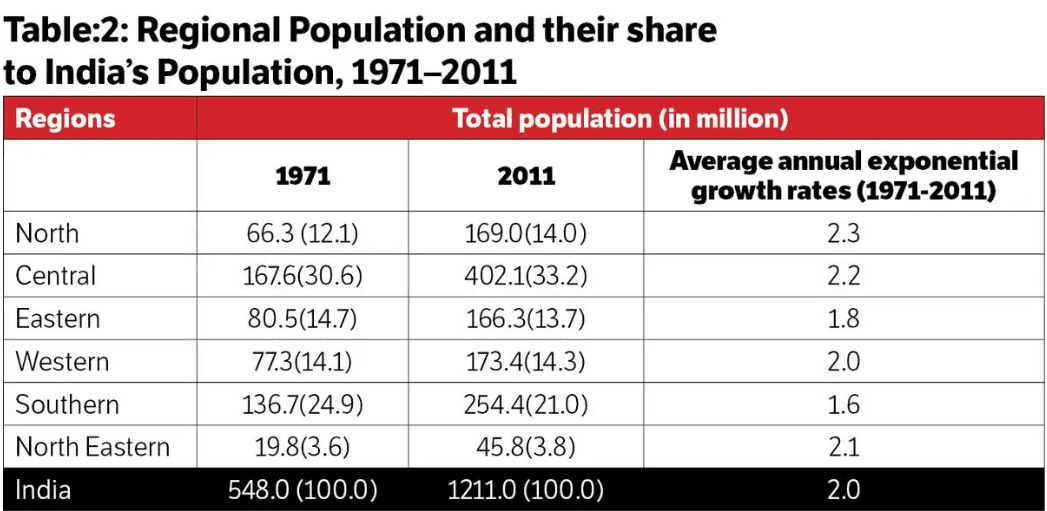
Demographic divide: simultaneous high-fertility North and aging low-fertility South within one national economy

Key stages: late expanding (Bihar UP), stationary / declining (Kerala Tamil Nadu), national TFR ~2.0

Core geography: North-Central share projected 52.7% by 2051; Southern share falls to 17%

Quick Facts for MCQs

Political Implications

  • Delimitation 2026 could transfer 40+ Lok Sabha seats to North
  • Representation loss fuels federal friction over population control success
  • Weighted voting formulas suggested to protect Southern voice

Economic Angle

  • Workforce peaks 2041 then contracts, squeezing tax revenues and growth
  • Southern dependency ratio 20 strains state pensions and health budgets
  • Silver economy underdeveloped despite expanding senior consumer cohort

Migration Dynamics

  • Labour-scarce South attracting Bihar UP migrants, sparking insider-outsider debates
  • Safe, dignified interstate mobility essential to realign labour supply
  • Skill standardisation needed to match northern youth with tech-heavy southern jobs

Social Concerns

  • Rural aging 71 % elderly lack advanced medical access and social security
  • Feminisation of aging leaves many widows economically dependent
  • Geriatric infrastructure gaps persist despite Atal Vayo Abhyuday Yojana expansion

Key Data Points

FeatureData-Point
Population peak1,590.1 mn in 2051
Annual growth 20510.5 %
Stabilization target shift2045 → 2065
North-Central share 205152.7 % population
Southern share 205117 % population
Working-age peak1.01 bn in 2041
School enrolment drop−13.4 mn (2019-25)
Kerala elderly 203623-25 % population 60+
Old-age dependency South20 per 100 workers
Old-age dependency North13 per 100 workers
Bihar TFR~2.9-3.0
Sikkim / Goa TFR1.1-1.3
Rural elderly share71 %
Women 60+ extra life+4 yrs vs men (Himachal)

Related UPSC Prelims PYQs

GEO_GS, GS1 2011PYQ 1

India is regarded as a country with “Demographic Dividend”. This is due to

GEO_GS, GS1 2023PYQ 2

Which one among the following States of India experienced the highest fall in population growth rate during 2001–2011 in relation to the previous decade?

Ready to practice?

Test your knowledge with our UPSC test series.

Start Free Trial