UPSC Current Affairs

16 topicsGS-1: 3GS-2: 6GS-3: 7
0/16 done
GS-2Polity

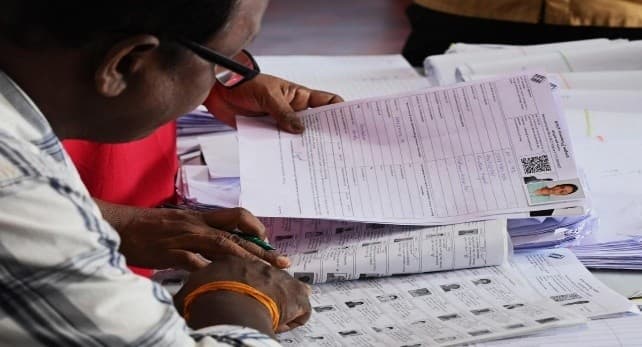
1.Digitising SIR Voter Verification (Electoral Roll Digitisation)

The Hindu
Illustration for Digitising SIR Voter Verification (Electoral Roll Digitisation)

What & Where

Special Intensive Revision (SIR) 2.0; nationwide exercise to cleanse, include, correct electoral rolls

SIR digitisation; ECINet-based, audit-ready workflow replacing paper hearings and manual field inquiries

Geography hotspot; Uttar Pradesh shows 13 million-voter gap, >10 million non-mapped cases

Quick Facts for MCQs

Tech & Schemes

  • Backend-verification; Aadhaar-style KYC via ECINet boosts accuracy
  • Real-time-updates; SMS / Email confirm application progress instantly
  • Audit-trail; digital logs enable transparent, tamper-evident processing

Administrative Challenges

  • Reliance-on-paper; manual hearings override ECINet capacity
  • Legacy-data; 2002-04 errors propagate duplicate and deceased entries
  • Institutional-resistance; coercive approach preferred over automation

Citizen Hardship

  • Physical-summons; eminent citizens queue despite online alternatives
  • Digital-divide; rural and vulnerable rely on BLO assistance
  • Legal-risk; false statements on Form 6 invite BNS-2023 penalties

Policy Prescriptions

  • Notify-status; mandatory SMS/email on acceptance or objection
  • Hybrid-support; BLO doorstep assistance or kiosk uploads for offline voters
  • Continuous-roll; real-time draft list updated with each digital approval

Key Data Points

FeatureData-Point
Digital platformECINet
Legacy rolls targeted2002-04 editions
Estimated genuine deletions≈ 65 million voters
Non-mapped voters (UP)> 10 million
Panchayat vs SIR gap (UP)13 million names
Misapplied form for restorationForm 6
Possible penal law invokedBharatiya Nyaya Sanhita 2023
Key field officialBooth Level Officer (BLO)
Suggested citizen alertsSMS, Email, EPIC-linked account

Related UPSC Prelims PYQs

ESE_GS, GEO_GS 2026PYQ 1

What is the full form of SIR introduced by the Election Commission of India?

ESE_GS, GEO_GS 2024PYQ 2

These days V-CIP is simple, safe and secure. You can complete your V-CIP from wherever you are in India; you only need your PAN card and Aadhaar card. Then, what is the full form of the term 'V-CIP'?
GS-3Economy

2.Indian Cooperative Sector Achievements (Cooperative Sector)

PIB

What & Where

Definition: Voluntary, member-owned enterprise; “one member, one vote”; aims shared economic, social, cultural needs

Types: State cooperatives under respective State Acts; Multi-State cooperatives under MSCS Act 2002, Central Registrar

Geography: Maharashtra >25 %; top five states combine 57 % of India’s 8.5 lakh cooperatives

Quick Facts for MCQs

Legal & Policy

  • Amendment 97th: added Art 19(1)(c), Art 43B, Part IXB for cooperative rights & governance
  • National Cooperation Policy 2025: roadmap 2025-2045; targets 2 lakh new M-PACS, diversification drives
  • Ministry of Cooperation: single-window coordination, national export, organics, seed cooperatives launched

Financial & Institutional Support

  • RuPay Kisan Credit Card: 22 lakh cards, ~₹10,000 cr farm credit in Gujarat pilot
  • Tribhuvan Sahkari University: first national cooperative university; professional training programmes running
  • GeM onboarding: 721 cooperatives as buyers; ₹396.77 cr procurement completed

Challenges

  • Regulation overlap: State Registrar vs RBI causes supervision gaps; PMC Bank collapse cited
  • Governance deficit: elite capture, low transparency weaken member control, accountability
  • Infrastructure & tech: scant storage, digital divide, weak logistics curb rural cooperative efficiency

Key Data Points

FeatureData-Point
Total cooperatives8.5 lakh across 30 sectors
Member coverage~32 crore individuals
Women linked via SHGs~10 crore
New multipurpose/dairy/fisheries coops32,000+ registered
NCDC yearly disbursement₹95,000 crore+
Dairy societies added20,070 in 31 States/UTs
FFPOs formed1,070 units
Decentralised grain storage68,702 MT in 112 PACS
National coops createdNCEL, NCOL, BBSSL
2025 UN observanceInternational Year of Cooperatives

Related UPSC Prelims PYQs

GS1 2011PYQ 1

In India, which of the following have the highest share in the disbursement of credit to agriculture and allied activities?

GS-1History

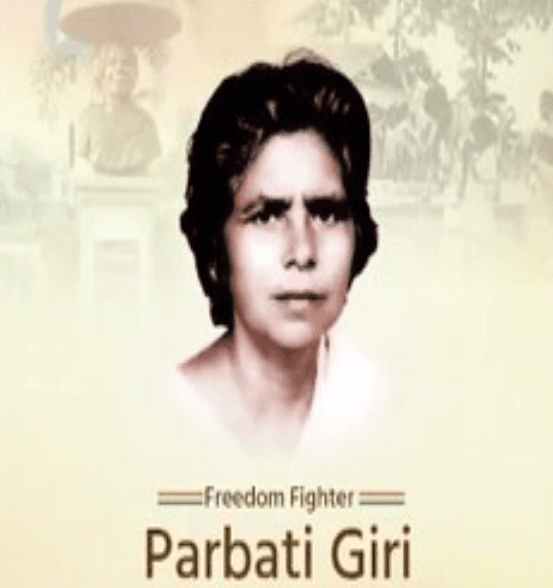
4.Parbati Giri Contributions (Freedom Fighter)

DD News
Illustration for Parbati Giri Contributions (Freedom Fighter)

What & Where

Identity: Parbati Giri (1926–1995), Gandhian freedom fighter & social reformer, called “Mother Teresa of Western Odisha”.

Geography: Born Samlaipadar village, Bargarh district; activism centred in rural Western Odisha.

Key movements: Individual Satyagraha 1940, Quit India 1942, Khadi-Charkha village mobilisation.

Quick Facts for MCQs

Freedom Movement Role

  • Individual Satyagraha 1940: Promoted Khadi, mobilised villagers against colonial economy.
  • Quit India 1942: Led rallies, picketed offices, urged boycott; arrested under Defence of India Rules.
  • Imprisonment: Two-year jail fortified reputation for fearless grassroots nationalism.

Post-Independence Service

  • Famine relief 1951: Coordinated food, medical aid across drought-hit Western Odisha.
  • Health reforms: Campaigned for humane prisons, anti-leprosy drives, tribal healthcare access.
  • Community work: Founded centres training women in spinning, sewing, basic education.

Awards & Legacy

  • Govt honour 1984 recognised four decades of voluntary service among marginalised.
  • Sambalpur University D.Litt 1988 affirmed academic acknowledgment of societal impact.
  • Birth-centenary tributes: 2026 commemorations flagged by Prime Minister underscore enduring model of service-driven patriotism.

Key Data Points

FeatureData-Point
Birth date19 Jan 1926
Birth placeSamlaipadar, Bargarh, Odisha
NicknameMother Teresa of Western Odisha
Freedom epithetBanhi Kanya (Flame Girl)
Age during Quit India16 years
Jail term2 years (1942-44)
Key Gandhian drivesKhadi, Charkha, Village boycott of British bodies
Social focus post-1947Famine relief, prison reform, leprosy eradication, tribal welfare
Govt awardDept of Social Welfare, 1984
Honorary doctorateSambalpur University, 1988
Death17 Aug 1995

Related UPSC Prelims PYQs

NDA_GAT 2024PYQ 1

Freedom Fighter Kanaklata Barua sacrificed her life while participating in

GS-1Environment

5.Western Himalaya Snowfall Deficit (Himalayan Climate)

Indian Express

What & Where

Western Himalayas: J&K, Himachal Pradesh, Uttarakhand; depend on winter Western Disturbances (WDs) for snow/rain.

Western Disturbance: east-moving, Mediterranean-origin low-pressure system embedded in Sub-tropical Westerly Jet, triggers Himalayan precipitation.

Snowfall acts as staggered water reservoir; deficit disrupts river recharge, rabi moisture and alpine ecology.

Quick Facts for MCQs

Drivers of Snow Deficit

  • Weak WDs: shallow core, limited moisture, shorter residence, poor uplift.
  • Poleward WD tracks: miss Himachal & Uttarakhand, minor Kashmir snowfall only.
  • Warmer winters: higher snowline, more rain substitution at mid-elevations.

Multi-Sector Impacts

  • Water security: faster glacier retreat, reduced summer flow in snow-fed rivers.
  • Agriculture: rapid melt fails to sustain soil moisture for wheat, mustard.
  • Forest management: drier floors escalate fire frequency, threaten alpine biodiversity.

Adaptation & Schemes

  • Monitoring: expand high-altitude AWS + INSAT/CartoSat snow mapping for WD forecasts.
  • Water buffers: scale ice-stupas, artificial glaciers; implement spring-shed recharge under NITI Aayog.
  • Risk planning: integrate snow variability into SAPCCs, NDMA forest-fire early warning.

Key Data Points

FeatureData-Point
Core snowfall monthsDecember – January
Rainfall deficit 2025-26“Severe” across J&K, HP, Uttarakhand
WD moisture source routeMediterranean → West Asia → India
Jet guiding WDsSub-tropical Westerly Jet Stream
Typical WD sequenceKashmir → Himachal → Uttarakhand
Key rivers fedGanga, Yamuna, Indus
Forest-fire hotspots citedValley of Flowers, Nanda Devi NP
Artificial glacier modelLadakh “ice-stupa” projects
Spring revival templateSikkim’s “Dhara Vikas”
National mission monitoring glaciersNMSHE

Related UPSC Prelims PYQs

CDS_GK, NDA_GAT 2022PYQ 1

The forests of Uttarakhand, Kullu Valley in Himachal Pradesh and Dzukuo Valley in Nagaland and Manipur were in the news on account of which one of the following reasons?

CDS_GK, NDA_GAT 2024PYQ 2

ISRO, in its studies, has revealed that there is a 178% increase in the size of the Gepang Ghat Glacial Lake. In which of the following States/UTs is this lake located?

GS-1Mapping

6.Hooghly River Profile (Indian Rivers)

Times of India
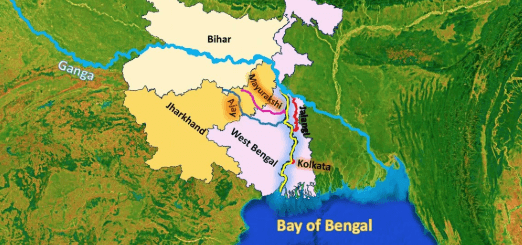
Illustration for Hooghly River Profile (Indian Rivers)

What & Where

Hooghly River – tidal distributary of Ganga, born at Nabadwip (Bhagirathi + Jalangi).

Runs south through Nadia, Hooghly, Howrah, Kolkata, South 24 Parganas to Bay of Bengal estuary.

West Bengal SMCG using drones to map pollution along a 120 km reach.

Quick Facts for MCQs

Tech & Schemes

  • Drones: high-resolution mapping of discharge points, solid-waste dumps.
  • SMCG: state arm under Namami Gange programme coordinating survey.
  • Output: geo-tagged database for targeted remediation projects.

Environmental Impact

  • Pollution: sewage, industrial effluents, urban runoff main contaminants.
  • Siltation: tidal bore deposits sediment, complicates channel depth.
  • Monitoring: drone data to prioritise interception, treatment plants.

Infrastructure & Navigation

  • Bridges: Howrah Bridge, Bally Bridge span tidal reach.
  • Economy: river supports Kolkata port, jute, petrochemical, fertiliser hubs.
  • Maintenance: regular dredging by Kolkata Port Trust ensures 7–9 m draft.

Key Data Points

FeatureData-Point
Parent riverGanga
Formation pointNabadwip (Bhagirathi + Jalangi)
MouthBay of Bengal
NatureStrong tidal bore; estuarine
Major tributariesAjay, Damodar, Rupnarayan, Haldi
Key city on banksKolkata
Navigation limitOcean-going vessels up to Kolkata
Constant needDredging to counter siltation
Mapping stretch120 km (first drone survey)
Implementing bodyState Mission for Clean Ganga, WB

Related UPSC Prelims PYQs

CDS_GK, GEO_GS 2025PYQ 1

Which one among the following rivers is a tributary of river Hooghly?

CDS_GK, GEO_GS 2023PYQ 2

Under which one of the following rivers has India's first underwater metro rail tunnel been constructed?

GS-3Environment

7.Greenhouse Gas Emission Intensity Rules 2025 (Emission Intensity Rules)

Times of India

What & Where

Greenhouse Gases Emission Intensity (GEI) Target (Amendment) Rules, 2025: India’s first legally binding, sector-wise GHG-intensity limits.

Applies to specified industrial units nationwide; links them to domestic Carbon Credit Trading Scheme (CCTS).

Operates under Environment (Protection) Act, 1986; notified by MoEFCC.

Quick Facts for MCQs

Legal & Policy

  • Statutory shift from voluntary PAT-style schemes to mandatory compliance for high-emitting industries.
  • Sequential sectoral rollout; Round 1 (2025) already covers aluminium, cement, chlor-alkali, pulp & paper.
  • Rules empower CPCB to levy, recover environmental compensation as arrears of land revenue.

Market Mechanism

  • BEE issues electronic carbon credits; fungible across compliance cycles or sale on approved exchanges.
  • Price discovery within Indian Carbon Market expected to spur low-carbon tech adoption.
  • Banking of unused credits allowed, fostering multi-year abatement planning.

Compliance & Penalty

  • Verified emission data submitted annually; intensity calculated against sector-specific benchmarks.
  • Non-payment of penalty within 90 days invites additional interest, possible plant closure directives.
  • Public disclosure of compliant/non-compliant entities to aid ESG-oriented investment decisions.

Climate Target Contribution

  • Industrial sector holds ~30 % of India’s total GHG; rule focuses on intensity, not absolute caps.
  • Complements Renewable Purchase Obligation, PAT, hydrogen missions for cumulative NDC fulfilment.
  • Early alignment with prospective global carbon border measures strengthens export competitiveness.

Key Data Points

FeatureData-Point
Enforced from9 Oct 2025
Baseline year2023-24
Compliance years2025-26 & 2026-27
Legal basisEnvironment (Protection) Act 1986, Sec 6(2)(a) rules
Nodal ministryMoEFCC
Implementing bodiesBEE (credits) ; CPCB (penalties)
Covered sectors – Round 2Refineries, Petrochemicals, Textiles, Secondary Aluminium
Units added in Round 2208 (incl. IOC, BPCL, RIL, ONGC)
Emission metrictCO₂e per unit output, all GHGs by GWP
IncentiveSurplus → tradable carbon credit certificates
PenaltyTwice average carbon-credit price; payable within 90 days
Overall target3-7 % intensity cut by 2026-27 vs baseline
LinkageObligatory entry into Indian Carbon Market under CCTS 2023
Supports NDC goal45 % GDP-intensity cut by 2030 (vs 2005)

Related UPSC Prelims PYQs

CAPF_GAI, GEO_GS 2020PYQ 1

India has committed to reduce emission intensity of its GDP from 2005 levels by 33-35 per cent by the year:

CAPF_GAI, GEO_GS 2025PYQ 2

India’s key climate targets include

GS-3Environment

8.Environmental Protection Fund Rules (Environmental Fund)

Times of India

What & Where

Environmental (Protection) Fund; statutory pool of penalty money for pollution control and restoration

Created under Environment (Protection) Act 1986; rules notified January 2026 after Jan Vishwas Act 2023 amendments

Applicable across India; administered by MoEFCC or body notified by Centre

Quick Facts for MCQs

Legal & Policy

  • Decriminalisation retained monetary penalties, reinforcing polluter-pays without jail terms
  • Fund rules align Centre–State fiscal federalism through prescribed revenue split
  • Rules enable direct linkage of penalties to environmental remediation obligations

Financial Structure

  • Interest earnings and other prescribed receipts added to penalty corpus
  • Expenditure allowed on clean tech R&D, site remediation, monitoring equipment, capacity building
  • Unused balances invested per Government of India investment norms

Institutional Oversight

  • CAG mandated yearly audit, ensuring parliamentary accountability
  • CPCB online portal to track inflows, allocations, project milestones in real time
  • PMUs handle proposal appraisal, fund release, utilisation certificates to MoEFCC

Key Data Points

FeatureData-Point
Parent ActEnvironment (Protection) Act 1986
Strengthening lawJan Vishwas (Amendment) Act 2023
Operational rules dateJanuary 2026
Nodal authorityMoEFCC or notified body
Central–State share25 % Centre : 75 % State/UT
Key fund inflowPenalties under Air Act 1981 & EP Act 1986
Permitted activity count11 specified heads
Audit agencyComptroller & Auditor General of India
IT platform developerCentral Pollution Control Board
Project unitsDedicated PMUs at Centre & States

Related UPSC Prelims PYQs

GS1 1999PYQ 1

Which one of the following legislations does not deal with the protection of environment?

GS1 2019PYQ 2

Consider the following statements:

GS-3Species

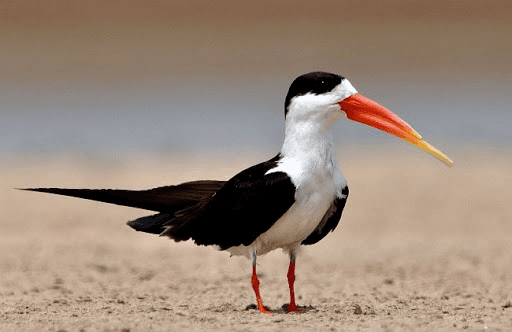
9.Indian Skimmer Conservation (Endangered Bird)

DH
Illustration for Indian Skimmer Conservation (Endangered Bird)

What & Where

Indian Skimmer: riverine bird feeding by skimming water with elongated lower mandible.

Core range: Ganga, Chambal, Yamuna rivers; occupies coastal zones post-breeding.

BNHS-NMCG project targets Ganga Basin sandbars/islands for nesting protection.

Quick Facts for MCQs

Ecological Role

  • Flagship species highlighting riverine biodiversity and sediment processes.
  • Presence signals intact sandbar habitats and adequate fish availability.

Threats

  • Dams & regulated flows reduce sandbar formation and prey density.
  • Illegal sand mining and human disturbance destroy nesting colonies.
  • Rapid population decline mirrors broader freshwater‐ecosystem degradation.

Conservation Measures

  • BNHS-NMCG project: habitat mapping, colony monitoring, community outreach.
  • Focus on restricting mining, stabilising flow regime during breeding months.
  • Plans include eco-tourism sensitisation to generate local stewardship.

Key Data Points

FeatureData-Point
Scientific nameRynchops albicollis
IUCN statusEndangered (EN)
Global population3,700 – 4,400 birds
India’s share≈ 90 % of world total
Key bill traitBright orange; lower mandible longer
Nesting styleColonial on exposed river sandbars
Indicator ofHealthy river flow & sediment dynamics
Off-season habitatCoastal areas
Main breeding riversGanga, Chambal, Yamuna + tributaries
GS-3EnvironmentQuick Bite

10.BBNJ Treaty Comes Into Force (BBNJ Treaty)

UN

What & Where

Treaty—BBNJ safeguards marine biodiversity beyond national jurisdiction under UNCLOS

Scope—high seas and international seabed outside national EEZs

Status—adopted 2023 New York; in force 17 Jan 2026 after 60 ratifications

Quick Facts for MCQs

Legal & Policy

  • Implementation—third UNCLOS agreement after 1994 Part XI and 1995 Fish Stocks
  • Inclusivity—requires gender balance plus roles for Indigenous Peoples and local communities
  • Governance—addresses gap covering >67 % ocean surface and >90 % living space

Environmental Impact

  • Conservation—enables Marine Protected Areas through ABMTs on high seas
  • Scrutiny—mandates Environmental Impact Assessments for high-seas activities
  • Crisis-response—supports action on climate change, biodiversity loss, pollution

Equity & Technology

  • Benefit-sharing—equitable access to Marine Genetic Resources for developing states
  • Capacity—provides training and marine technology transfer via funding mechanism
  • Funding—mechanism finances developing-country participation and compliance

Institutional Mechanism

  • COP—supreme body sets rules, adopts decisions, reviews implementation
  • Clearing-House—centralises data on MGR use, EIAs, capacity needs
  • Secretariat—handles administration, reporting, coordination duties

Key Data Points

FeatureData-Point
Parent conventionUNCLOS 1982
Entry into force17 Jan 2026
Minimum ratifications60
Ratifications reached>80 countries
India statusSigned 2024; ratification pending
Core pillarsMGRs, ABMTs, EIAs, Capacity-building
Key institutionsCOP, Subsidiary bodies, Clearing-House, Secretariat
Linked SDGSDG 14 Life Below Water

Related UPSC Prelims PYQs

GEO_GS 2020PYQ 1

Pursuant to the ratification of Convention on Biological Diversity, India legislated Biodiversity Act in the year:

GS-2MiscQuick Bite

11.China's Polar Silk Road (Polar Silk Road)

DC
Illustration for China's Polar Silk Road (Polar Silk Road)

What & Where

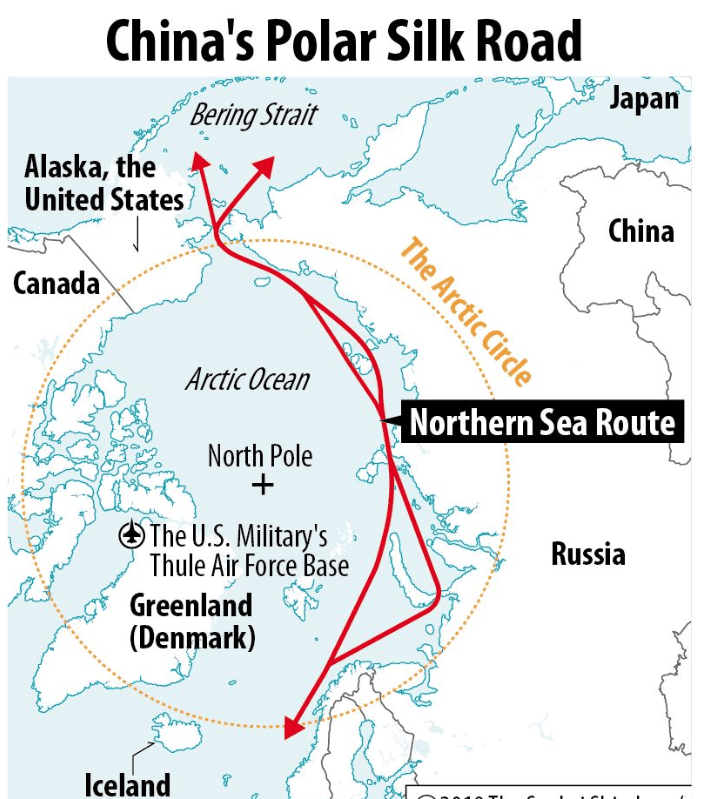
Polar Silk Road: Arctic branch of China’s Belt and Road Initiative for shipping, resources, influence

Core geography: Northern Sea Route along Russian coast; backup Northwest Passage along Canadian Arctic

Corridor links Northeast Asia–Northern Europe, bypassing Suez and shortening distance up to 40 %

Quick Facts for MCQs

Strategic Rationale

  • Energy security via diversified LNG, minerals, rare earth supply lines
  • Geopolitical influence through Arctic partnerships, infrastructure stakes, forum engagement
  • Trade efficiency lowering voyage time, costs, emissions between Asia and Europe

Routes & Logistics

  • Northern Sea Route ice-free window widening; transit 30–35 days Shanghai–Rotterdam
  • Northwest Passage secondary option pending Canadian regulatory clarity
  • Russian nuclear icebreakers provide escorts enabling year-round PSR traffic

Status & Constraints

  • Chinese military footprint currently minimal, focused on civilian research vessels
  • Arctic Council observer status grants scientific access yet no voting rights
  • Western sanctions on Russia risk slowing joint PSR infrastructure financing

Key Data Points

FeatureData-Point
Origin year2017 China-Russia joint launch
Policy paper2018 China Arctic Policy
China’s self-labelNear-Arctic state
2030 visionPolar great power
Primary routeNorthern Sea Route
Distance cut Asia–EuropeUp to 40 %
Key chokepoint avoidedSuez Canal
Foundational schemeBelt and Road Initiative 2013

Related UPSC Prelims PYQs

GS1 2022PYQ 1

Which one of the following statements best describes the ‘Polar Code’?

GS-2Misc

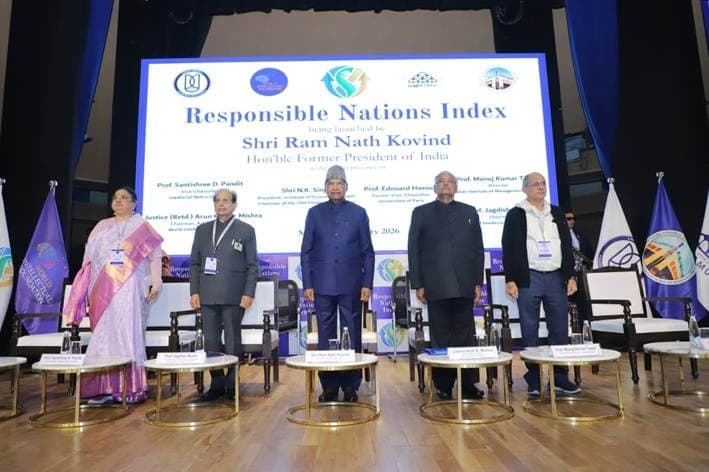
12.Responsible Nations Index Launch (Global Governance Index)

PIB
Illustration for Responsible Nations Index Launch (Global Governance Index)

What & Where

Responsible Nations Index 2026 (RNI): global composite index on ethical governance, social welfare, environment, global responsibility

Launched under World Intellectual Foundation; announced in India, covering 154 countries

India ranks 16th overall, highest in Asia, highlighting non-GDP yardstick adoption

Quick Facts for MCQs

Rankings

  • Europe dominance; nine of top ten slots underscore institutional ethics strength
  • South Korea 21, Kyrgyzstan 22, Thailand 24 trail India
  • Cyprus unexpected entry at rank 4, ahead of Sweden

Assessment Criteria

  • Metrics integrate governance quality with moral values and humanitarian outputs
  • Composite score moves beyond power or GDP yardsticks
  • Annual report planned for ongoing benchmarking

Significance

  • Normative shift; aligns with SDGs, climate goals, inclusive governance agenda
  • Tool for policy introspection, ethical benchmarking among states
  • Encourages cooperation over competition in global governance

Key Data Points

FeatureData-Point
Launch bodyWorld Intellectual Foundation (WIF)
First editionRNI 2026
Pillars counted4
Pillar listEthical governance; Social well-being; Environmental stewardship; Global responsibility
Method focusResponsibility-centric, dialogue-driven
Top rankSingapore (1)
India rank16 (score 0.5515)
Lowest rankCentral African Republic (154; score 0.35715)
Asian topperIndia
European share in Top 109 nations
GS-2Misc

13.Proposed Gaza Peace Board (Gaza Reconstruction)

TN

What & Where

Proposed US-led international body to supervise post-war governance and rebuilding of Gaza Strip.

Headquarters unspecified; operates directly in Gaza, outside United Nations architecture.

Designed as template for conflict-to-peace transition, combining ceasefire monitoring, reconstruction, investment.

Quick Facts for MCQs

Legal & Policy

  • Veto Power: Chair holds unilateral veto, raising sovereignty and accountability concerns.
  • Parallelism: Operates outside UN, challenging existing multilateral conflict-management norms.
  • Membership: Conditional participation; charter draft yet to clarify rights of invited states.

Economic Angle

  • Reconstruction: Board to pool donor funds, private capital for housing, utilities, jobs.
  • Investment Mobilisation: Seeks multinational corporate participation, infrastructure bonds, diaspora contributions.
  • Decision Hub: Acts as high-level authority for project approvals and fund allocation.

Security Dimension

  • Ceasefire Monitoring: Mandate to verify Israel–Hamas truce adherence on ground.
  • Transition Plan: Supervises disarmament, security handover from Hamas to NCAG police units.
  • Regional Coordination: Works with Egypt, Jordan for border security and humanitarian corridors.

Key Data Points

FeatureData-Point
Official nameGaza Peace Board / Board of Peace
ProposerUS President Donald Trump
Draft Chair & veto holderDonald Trump (irrespective of White House tenure)
Initial invitees~60 nations; India, Egypt, Jordan, Türkiye, Canada, Argentina among them
Palestinian partnerTechnocratic National Caretaker Administration of Gaza (NCAG)
Core mandatesCeasefire oversight, governance shift from Hamas, reconstruction, capital mobilisation
Institutional locusOutside UN; independent global governance mechanism
GS-3Editorial

14.AI Integration Risks in Policing (AI Policing Risks)

Indian Express

What & Where

Definition: AI-driven surveillance, predictive and analytic tools supplementing conventional policing in India

Key tools: Face-recognition cameras, distress-detection, predictive platforms, surveillance drones, CCTNS data integration

Geography: Delhi Safe City 2026; Maharashtra MahaCrime OS; rapid adoption across urban police forces

Quick Facts for MCQs

Legal & Policy

  • Vacuum: No dedicated AI policing statute; existing Police Manuals lack algorithmic guidelines
  • Exemptions: DPDPA 2023 grants broad law-enforcement carve-outs, diluting data-protection safeguards
  • Proposal: Enact law mandating pre-deployment safety tests and public algorithmic disclosure

Rights & Social Concerns

  • Presumption: Continuous analytics flips innocence principle, chilling protest and assembly rights
  • Bias: Historical discriminatory data trains AI to over-police marginalised castes, religions, genders
  • Surveillance: One camera ≈100 policemen; millions create suspicion-heavy, trust-deficient urban life

Accountability & Reforms

  • Human-in-loop: Final detention decisions must rest with named officers for legal accountability
  • Audits: Independent, periodic algorithmic reviews advised to flag accuracy drops and bias
  • Data-limits: Amend Criminal Procedure (Identification) Act 2022 to restrict non-convict biometric storage

Key Data Points

FeatureData-Point
Delhi Safe City launchJanuary 2026
AI cameras (Delhi)10,000 units
Core functionsFace Recognition, Distress Detection
MahaCrime OS AI reachMaharashtra statewide
Single AI camera power≈ 100 policemen
Main data backendCCTNS historical records
Privacy law in forceDPDPA 2023 with LE exemptions
Notable failure case2023 Khadeer Khan, Telangana
GS-2Scheme

15.Export Promotion Mission Overview (Export Promotion)

News on Air

What & Where

Mission-mode national framework to raise India’s export competitiveness through unified financial + non-financial support

Pan-India rollout by Directorate General of Foreign Trade; operational window FY 2025-26 → FY 2030-31

Architecture split into Niryat Protsahan (credit, guarantees) and Niryat Disha (quality, logistics, branding)

Quick Facts for MCQs

Legal & Policy

  • RBI circular issues operational rules for banks on interest subvention, asset-classification forbearance
  • FEMA relaxations allowed to lengthen export realisation timelines
  • Unified mission collapses earlier fragmented export schemes, enabling outcome-linked budgeting

Financial Instruments

  • Interest subvention lowers export credit cost via scheduled banks, NBFC-FCs, export factoring, deep-tier financing
  • CGSE offers collateral-free working capital up to sanctioned limits, fully sovereign guaranteed
  • E-commerce exporter credit cards proposed for small consignments

Digital Governance

  • Single DGFT dashboard ensures paperless sanction, claim and audit trails
  • API integration with banking core systems for real-time subsidy settlement
  • Data analytics module tracks district-wise export growth against targets

Sectoral Focus

  • Labour-intensive clusters given first-priority in credit allocation scorecard
  • Districts with sub-1 % share in exports receive extra logistics & branding grants
  • Performance incentives tied to incremental value addition, not just shipment value

Key Data Points

FeatureData-Point
Launch vehicleUnion Budget 2025–26
Mission period2025–26 to 2030–31
Nodal agencyDGFT, Commerce Ministry
Finance sub-schemeNiryat Protsahan
Non-finance sub-schemeNiryat Disha
Credit guarantee corpus₹20,000 crore under CGSE
Guarantee providerNCGTC, 100 % govt-backed
Interest benefitRBI-guided subvention on pre/post-shipment export credit
Digital backboneEnd-to-end DGFT portal linked to Customs & ICEGATE
Priority sectorsTextiles, leather, gems-jewellery, engineering, marine, low-export districts

Related UPSC Prelims PYQs

CAPF_GAI 2024PYQ 1

Which of the following is NOT one of the pillars of India’s ‘Foreign Trade Policy-2023’?

GS-2Scheme

16.Chips to Start-up Programme (Semiconductor Capacity)

PIB

What & Where

Programme: Chips to Start-up (C2S) – MeitY’s 2022 semiconductor capacity-building initiative.

Geography: Academic network pan-India; ChipIN Centre (C-DAC Bengaluru); fabrication at SCL Mohali, Punjab.

Process: Quarterly aggregation of student ASIC/SoC layouts, shared-wafer fabrication on 180 nm node, packaging & return.

Quick Facts for MCQs

Objectives & Targets

  • Skill-creation: develop industry-ready VLSI designers, verification, IP & fab testing talent.
  • Innovation: enable start-up incubation, IP core creation, patent filing, research publications.
  • Self-reliance: strengthen domestic semiconductor value-chain, cut import dependence.

Implementation Mechanism

  • Ecosystem: tri-party link of academia, ChipIN Centre, NIELIT SMART Labs.
  • Training: blended coursework, industry mentors, multi-year R&D projects using real workflows.
  • Wafer-sharing: multiple student dies stitched per wafer to lower prototyping cost.

Outcomes & Impact

  • Enrolment: large student participation across 100+ institutes (PIB note).
  • Deliverables: first batches of packaged chips dispatched; several patents already filed.
  • Employability: hands-on fab exposure raising placement prospects in India’s upcoming fabs.

Key Data Points

FeatureData-Point
Launch year2022
MinistryElectronics & IT (MeitY)
Total outlay₹250 crore
Scheme tenure5 years
Professionals aimed85,000 UG/PG/PhD
Student training target1 lakh
Start-ups to incubate25
Tech transfers planned10
Patent goal50
Research papers goal≥2,000
Central support hubChipIN Centre, C-DAC Bengaluru
Fab node used180 nm
Fabrication facilitySemi-Conductor Laboratory, Mohali
Support tickets resolved4,855+
Shared toolsAdvanced EDA suites, SMART Labs access

Ready to practice?

Test your knowledge with our UPSC test series.

Start Free Trial