UPSC Current Affairs

15 topicsGS-1: 2GS-2: 4GS-3: 9
0/15 done
GS-2Polity

1.Supreme Court Passive Euthanasia Case (Right to Die)

The Hindu

What & Where

Euthanasia = intentional, painless death to end incurable suffering; Active (direct act) vs Passive (withdraw treatment).

India: Active banned; Passive allowed by Supreme Court under Article 21 “right to die with dignity”.

Procedure: Two-stage Medical Boards; 2023 order trims specialist experience to 5 yrs, fixes 48-hr decision window.

Quick Facts for MCQs

Legal & Policy

  • Judgments: Dubal 1987, Gian Kaur 1996, Aruna 2011, Common Cause 2018 shape current position.
  • Statute: Bharatiya Nyaya Sanhita deems intentional death culpable homicide/murder.
  • Autonomy: SC extends “die with dignity” within Article 21 framework.

Procedure & Safeguards

  • Boards: Primary hospital; Secondary district nominee; both three-member post-2023.
  • Experience: Requirement cut from twenty to five years to widen specialist pool.
  • Timeline: Collector forwards Secondary report; overall clearance needed before withdrawal.

International Examples

  • Full permit: Netherlands, Belgium, Luxembourg, Spain, Quebec, Australian states.
  • Switzerland: Allows assisted suicide by laypersons; bans active euthanasia.
  • Passive only: Sweden, France; Italy recognises refusal of treatment.

Ethical Concerns

  • Autonomy vs sanctity: Mill–Bentham liberty clashes with Kantian duty to preserve life.
  • Misuse risk: Elderly, disabled, poor may face subtle coercion.
  • Competency doubts: Limited psychiatric capacity to detect depression or pressure.

Key Data Points

FeatureData-Point
Governing ArticleArticle 21, Right to Life & Dignity
Active euthanasia statusIllegal; BNS 2023 §100/101
Passive euthanasia statusPermitted (Aruna 2011; Common Cause 2018)
Living will validityRecognised by SC, 2018
Primary Board compositionDept Head + 3 specialists
Specialist experience (post-2023)Minimum 5 years
Board opinion deadline48 hours each
Case under hearingHarish Rana v UoI 2025
Countries allowing both E & PASNetherlands, Belgium, Luxembourg, Spain, Quebec, parts Australia
Gian Kaur 1996 holdingNo fundamental right to die
GS-3Economy

2.Reforming India's Agricultural Subsidies (Agricultural Subsidies)

Indian Express
Illustration for Reforming India's Agricultural Subsidies (Agricultural Subsidies)

What & Where

Definition – Government cash or in-kind support lowering farm input costs or guaranteeing output prices.

Key types – Direct cash (PM-Kisan), indirect input subsidies (fertiliser, power, irrigation) & price support (MSP, PDS).

Geography – Disbursement heavily skewed to cereal belt (Punjab-Haryana-UP); national coverage through NFSA & PM-Kisan.

Quick Facts for MCQs

Fiscal Impact

  • Subsidies consume ~8.5 % of Union budget, dwarfing MoA allocation (₹1.37 lakh cr).
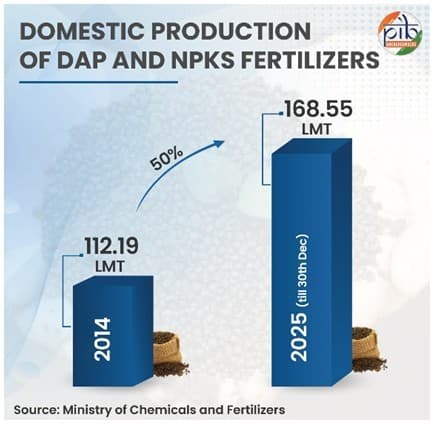
  • Rising global fertiliser prices required extra ₹3,500/t DAP support in 2025.
  • Proposal – merge food & fertiliser aid into higher PM-Kisan DBT.

Environmental Impact

  • Over-subsidised urea pushes N:P:K to unsustainable levels, harming soil & groundwater.
  • North-West India shows depleted soil organic carbon; nitrate contamination rising.
  • PM-PRANAM rewards states cutting chemical fertiliser use, channeling 50 % savings back.

Reform Measures

  • Digitalised 80,000 PACS; DBT transfers ₹3.7 lakh cr to 11 cr farmers, curbing leakages.
  • Expanded Nutrient-Based Subsidy to Mg/Zn fortified grades; plan to include urea next.
  • Mission on Pulses offers 100 % MSP procurement to diversify from paddy-wheat.

WTO & Trade

  • India edges near 10 % Amber-box limit; rice & wheat MSP draws periodic disputes.
  • Developed members flag “market price support” and large buffer stocks as trade-distorting.
  • Shift to Green-box spending (R&D, irrigation) proposed for compliance & productivity.

Key Data Points

FeatureData-Point
FY 25-26 food + fertiliser outlay₹3.71 lakh cr
Food subsidy share of pop.56 % ≈ 813 mn people
Food subsidy amount FY 25-26₹2.03 lakh cr
Fertiliser subsidy amount FY 25-26₹1.67 lakh cr
MSP payouts (Jun 2025)₹3.33 lakh cr; >3× in 10 yrs
Import dependence – Potash / Phosphate90 % / 60 %
Ideal vs actual N:P:K ratio4:2:1 vs ~7:2.7:1
WTO Amber-box ceiling10 % of agri output value
Urea leakage estimate (2025)20-25 % diverted to non-farm
PM-KUSUM pumps solarised (2026)49 lakh units

Related UPSC Prelims PYQs

CAPF_GAI, CDS_GK 2020PYQ 1

As per the Budget Estimates of expenditure on major subsidies during 2019–20, the maximum expenditure was likely to be on

CAPF_GAI, CDS_GK 2020PYQ 2

PAHAL, an initiative to transfer the subsidy to direct bank account of the beneficiaries, is related to

GS-3Economy

3.India's Cooperative Sector Growth (Cooperative Sector)

New Indian Express
Illustration for India's Cooperative Sector Growth (Cooperative Sector)

What & Where

Cooperatives: member-owned, democratic enterprises spanning credit, dairy, seeds, exports, organics.

Key tiers: PACS (rural credit), urban cooperative banks, Multi-State apex bodies (NCEL, NCOL, BBSSL).

Geography: India hosts 27 % of world cooperatives; densest in Maharashtra-Gujarat, focus on NE/East expansion.

Quick Facts for MCQs

Economic Impact

  • Aggregation increases farm bargaining power; Amul model lifts rural milk incomes.
  • NCEL exports 13.77 LMT goods worth ₹5,500 cr to 28 countries.
  • 15 Indian entities rank in Global Top-300 cooperatives.

Tech & Schemes

  • ERP in 14 languages enables real-time audit for 60,000 PACS, 34 cr digital transactions.
  • PACS allowed 25+ businesses: Janaushadhi stores, fuel outlets, CSC services.
  • NCOL provides “Bharat Organics” brand, residue testing, export facilitation.

Social Concerns

  • Inclusion integrates 10 cr women; Nandini Sahakar scheme funds women-led bodies.
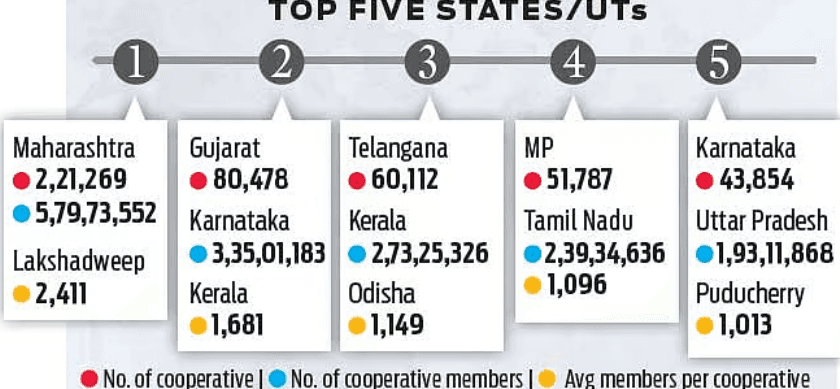
  • Regional skew: Maharashtra 2.21 lakh societies vs low NE density.
  • Legacy nepotism (“Uncle Judge Syndrome”) hampers professionalism and governance.

Way Forward

  • Tribhuvan Sahkari University to create trained cooperative managers.
  • AI–Blockchain driven National Cooperative Database for fraud-proof traceability.
  • Converting all viable PACS into multi-service centres for diversified, sustainable revenue.

Key Data Points

FeatureData-Point
Global share27 % of all cooperatives
Registered societies8.5 lakh; 6.6 lakh active
Total membership32 crore; ~98 % rural coverage
PACS strength~80,000 units; ₹2,925 cr ERP project
Urban coop banks1,457; assets ₹7.38 tn; deposits ₹5.84 tn
Women integrated10 crore via SHG–cooperative link
Grain storage pilot112 PACS; 68,702 MT capacity
White Revolution 2.020,070 new dairy societies; 50 % milk procurement rise target

Related UPSC Prelims PYQs

GS1 2011PYQ 1

In India, which of the following have the highest share in the disbursement of credit to agriculture and allied activities?

GS1 1999PYQ 2

The main sources of credit to the farmers include

GS-3EconomyQuick Bite

4.Export Preparedness Index 2024 Release (Export Preparedness Index)

PIB

What & Where

Export Preparedness Index (EPI) 2024; NITI Aayog tool gauging State/UT export-readiness across India.

Framework: 4 pillars, 13 sub-pillars, 70 indicators measuring infrastructure, ecosystem, policy and performance.

Supports India’s USD 1 trn merchandise-export goal by 2030; aligns with Viksit Bharat @ 2047 vision.

Quick Facts for MCQs

Index Design

  • Weighting prioritises cost efficiency, MSME access to finance, innovation within Business Ecosystem pillar.
  • Comparative framework fosters peer learning and cooperative federalism across different state categories.

State Rankings

  • Maharashtra leads overall; Tamil Nadu second, reflecting strong industrial clusters and logistics.
  • North-East focus shows Nagaland emerging despite infrastructural constraints.

Development Vision

  • Index intended as evidence base for district-led export strategies feeding $1 trn export target.
  • Aligns with Make in India, Atmanirbhar Bharat schemes to boost global value-chain integration.

Key Data Points

FeatureData-Point
Launch year2020
Current edition2024
Compiling bodyNITI Aayog
Total pillars4
Sub-pillars13
Indicators70
Highest-weight pillarBusiness Ecosystem – 40 %
Other pillar weight20 % each
State groupingsLarge, Small, North-East, UT
Readiness bandsLeaders, Challengers, Aspirers
Top 5 large statesMaharashtra, Tamil Nadu, Gujarat, Uttar Pradesh, Andhra Pradesh
Best small stateUttarakhand
Best North-East stateNagaland
Best UTsDadra & Nagar Haveli & Daman & Diu; Goa
Key policy linksMake in India, Atmanirbhar Bharat, MSME support

Related UPSC Prelims PYQs

CAPF_GAI 2024PYQ 1

Which of the following is NOT one of the pillars of India’s ‘Foreign Trade Policy-2023’?

CAPF_GAI 2022PYQ 2

Based on the scoring on SDG (Sustainable Development Goals) India Index, the NITI Aayog has classified various States into certain categories. Which one of the following is not one of the categories?

GS-1S&TQuick Bite

5.Kondagai Lake Holocene Climate Record (Palaeoclimate Study)

PIB

What & Where

Kondagai Lake, inland wetland in Sivaganga (TN), crucial proxy site for Northeast Monsoon history.

Sediment-core multiproxy study reconstructs 4,500-year Late Holocene climate sequence.

Record captures arid (4.2 ka, 3.2 ka) and Roman Warm Period impacts on hydrology & humans.

Quick Facts for MCQs

Scientific Technique

  • Multiproxy approach merges isotope ratios, palynology, granulometry, radiocarbon, enhancing chronological precision
  • Radiocarbon dates calibrate to create continuous lake-level timeline
  • Grain-size variation tracks catchment runoff intensity

Monsoon Behaviour

  • 4.2 ka event marks pronounced Northeast Monsoon weakening, regional drought signatures
  • 3.2 ka dry spell coincides with reduced settlement density south India
  • Roman Warm Period reflects stronger monsoon, elevated lake levels

Resource Planning

  • Record inputs refine Vaigai basin flood-risk models and early warnings
  • Lake-groundwater coupling guides sustainable extraction thresholds
  • Hydrological variability envelope aids wetland restoration and biodiversity plans

Archaeological Context

  • Sediment data complements Keeladi artefacts, revealing human–environment dynamics
  • Climatic stress aligns with cultural transitions in Sangam landscape
  • Settlement patterns mirror monsoon-driven water availability shifts

Key Data Points

FeatureData-Point
LocationSivaganga district, Tamil Nadu
Epoch coveredLate Holocene (last 4,500 yr)
Core methodsStable isotopes, pollen, grain size, ^14C dating
Key arid event4.2 ka event (~2200 BCE)
Second dry phase3.2 ka phase (~1200 BCE)
Warm phaseRoman Warm Period (~250 BCE–400 CE)
Monsoon examinedNortheast (winter) monsoon
River basinVaigai
Nearby siteKeeladi Sangam-era settlement
Applied usesFlood mapping, groundwater, wetland restoration
GS-3Environment

6.Andaman Open-Sea Fish Farming Pilot (Blue Economy)

TI
Illustration for Andaman Open-Sea Fish Farming Pilot (Blue Economy)

What & Where

Project: India’s first pilot open-sea aquaculture for finfish + seaweed using NIOT cages, launched 2024.

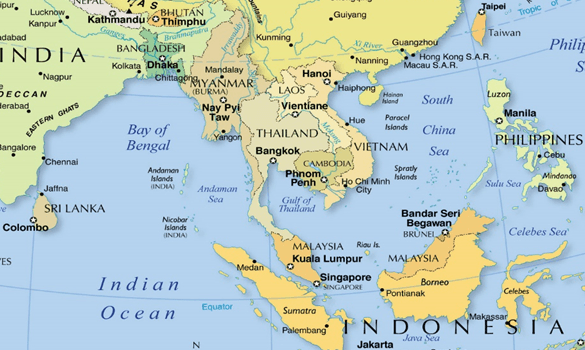
Location: North Bay, near Sri Vijaya Puram, Andaman Sea, UT of Andaman & Nicobar Islands.

Aim: Science-led Blue Economy model to test feasibility, livelihoods, marine food security.

Quick Facts for MCQs

Tech & Schemes

  • Innovation: NIOT high-density polyethylene cages withstand currents, waves, cyclones.
  • Scheme link: Fits MoES Draft Blue Economy Policy pillars—marine resources, livelihoods, tech.
  • Replicability: Design intended for mainland coasts post-pilot validation.

Economic Angle

  • Livelihood: Targets income boost for island fishers via seaweed raw material + table fish.
  • Food security: Diversifies protein sources, reduces capture-fishery pressure.
  • PPP scope: Private investment invited once techno-economic metrics confirmed.

Geographic Traits

  • Bathymetry: Andaman Sea hosts >4,400 m valleys; shallow northern shelf from Irrawaddy sediments.
  • Connectivity: Flanks Strait of Malacca; strategic trade corridor.
  • Seismicity: Active Andaman–Nicobar Ridge influences site engineering standards.

Key Data Points

FeatureData-Point
Implementing ministryMinistry of Earth Sciences
Tech partnerNational Institute of Ocean Technology
Farming componentsMarine finfish, deep-water seaweed
Cage typeIndigenously designed, open-sea, storm-resilient
Sea depth rangeDeep-water; natural oceanic conditions
Community roleSeeds/cages supplied to local fishers
Scale statusPilot; PPP-ready for future expansion
Nearest cityPort Blair (~12 km)
Andaman Sea area≈7.98 lakh sq km
Tectonic settingIndian Plate subducts under Burma microplate

Related UPSC Prelims PYQs

ESE_GS, NDA_GAT 2026PYQ 1

Which institution released the report titled “India’s Blue Economy: Strategy for Harnessing Deep-Sea and Offshore Fisheries”?

ESE_GS, NDA_GAT 2024PYQ 2

aquaculture nation in the world and P

GS-3Environment

7.UN High Seas Biodiversity Treaty (High Seas Treaty)

DD News
Illustration for UN High Seas Biodiversity Treaty (High Seas Treaty)

What & Where

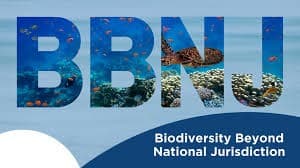
Legally-binding BBNJ Treaty under UNCLOS for conserving & sustainably using biodiversity in high seas beyond national jurisdiction

Geographic scope covers ≈ two-thirds of global ocean lying outside EEZs; establishes MPAs, EIAs, benefit-sharing

Enters into force 120 days after 60th ratification (reached Sept 2025); pursues 30 % ocean protection by 2030

Quick Facts for MCQs

Legal & Policy

  • Obliges parties to conduct prior Environmental Impact Assessments for activities risking high-seas ecosystems
  • Reaffirms freedom of high seas yet bars sovereign claims over biological resources
  • Provides institutional framework for compliance, dispute settlement, capacity support

Conservation Tools

  • Enables global network of Marine Protected Areas across international waters
  • Mandates ecosystem-based, science-driven and precautionary management for fragile habitats
  • Incorporates traditional knowledge alongside best available science in decision-making

Equity & Access

  • Establishes fair, equitable sharing of benefits from marine genetic resources for biotech and pharma uses
  • Creates financial, training, data-sharing platforms aiding developing coastal and land-locked states
  • Aims to balance research freedom with custodial responsibilities over common heritage

Key Data Points

FeatureData-Point
Parent conventionUNCLOS
Negotiation start2008
Treaty finalisedMarch 2023
Ratifications needed60
Entry-into-force trigger120 days post-60th ratification
60th ratification achievedSeptember 2025
Coverage areaHigh seas ≈ 67 % of ocean
Global targetProtect 30 % ocean by 2030
Core principlesPrecautionary & ecosystem-based
Key mechanismsMPAs, EIAs, MGR benefit-sharing
Sovereignty stanceNo state can claim high-seas biodiversity
Support measuresCapacity-building & technology transfer
GS-3Environment

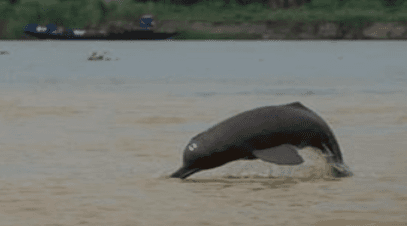
8.Second National Dolphin Population Survey (Project Dolphin)

News on Air
Illustration for Second National Dolphin Population Survey (Project Dolphin)

What & Where

Project Dolphin: 10-year MoEFCC drive (launched 15 Aug 2020) to protect India’s riverine & oceanic dolphins via habitat-centric actions.

Second range-wide Dolphin Survey: two-phase, pan-India census using visual counts & hydrophones across Ganga, Indus, Brahmaputra, Sundarbans, Odisha.

Core habitats: Ganga-Brahmaputra-Meghna basin, Beas-Indus reach, estuarine Sundarbans & Odisha coast.

Quick Facts for MCQs

Tech & Schemes

  • Instrumentation: Hydrophones capture sub-surface clicks, enhancing detectability in turbid rivers.
  • Integration: Survey dovetails with National Mission for Clean Ganga & flow-regulation policies.
  • Capacity-building: Trained multi-state field teams follow uniform protocols ensuring comparability.

Geographic Spread

  • Uttar Pradesh-Bihar stretch holds maximum Gangetic dolphin density.
  • Beas Conservation Reserve hosts India’s only Indus River Dolphin group.
  • Estuarine focus includes Sundarbans mangroves and Odisha’s Mahanadi delta.

Threats & Mitigation

  • Pressures: Habitat degradation, pollution, by-catch, altered river flows.
  • Mitigation: Flow management, pollution abatement, community-led surveillance envisaged under Project Dolphin.
  • Community angle: Local livelihoods aligned with ecotourism & conservation incentives.

Key Data Points

FeatureData-Point
Initiative typeNational conservation programme
Project launch date15 Aug 2020
Project duration10 years
Nodal ministryMoEFCC
Implementing body (survey)Wildlife Institute of India + State Forest Depts
Survey phasesI: Ganga main stem & Indus; II: Brahmaputra, Ganga tributaries, Sundarbans, Odisha
Key toolsStandardised protocols, hydrophone acoustic monitoring
Last survey years2021–23
Riverine dolphin count 2021–23~6,327 individuals
States with highest numbersUttar Pradesh, Bihar
Estuarine section surveyedSundarbans
Indus River Dolphin Indian rangeBeas system (small population)

Related UPSC Prelims PYQs

GS1 2015PYQ 1

Which one of the following is the national aquatic animal of India?

GS1 2014PYQ 2

Other than poaching, what are the possible reasons for the decline in the population of Ganges River Dolphins?

GS-3Species

9.Indiaphonte bijoyi Discovery in Lakshadweep (New Marine Species)

The Hindu
Illustration for Indiaphonte bijoyi Discovery in Lakshadweep (New Marine Species)

What & Where

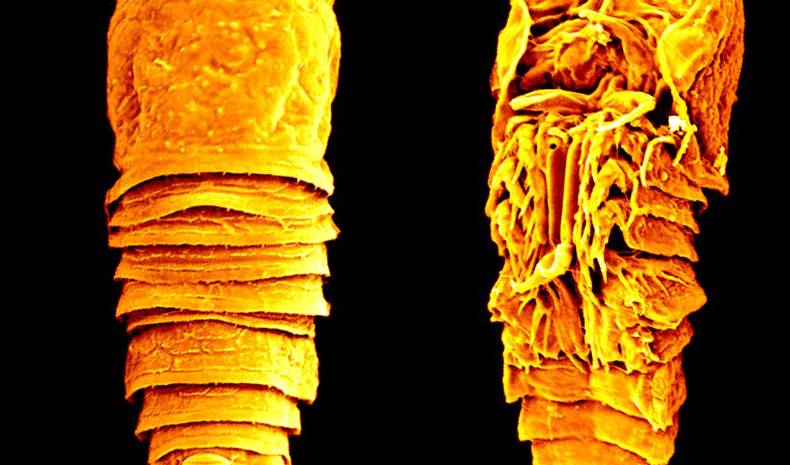
Indiaphonte bijoyi – novel meiofaunal copepod genus & species, family Laophontidae, order Harpacticoida, size < 1 mm.

Located in sediment of coral-rich Kavaratti lagoon, Lakshadweep archipelago, Arabian Sea.

Meiofaunal copepods inhabit interstitial pores, crucial for nutrient recycling and base-level trophic support.

Quick Facts for MCQs

Taxonomy & Morphology

  • Unique antennule, mouthpart, swimming-leg set distinguishes genus within Laophontidae.
  • Body widest mid-thorax, posteriorly tapering; cuticle lightly chitinised.
  • Limb spines modified for crawling through compact sand grains.

Ecological Role

  • Nutrient cycling; releases locked organic matter back to water column.
  • Primary prey for juvenile fish, maintaining lagoon trophodynamics.
  • Abundance often correlates with sediment oxygen and microalgal productivity.

Lakshadweep Context

  • Kavaratti lagoon supports corals, seagrass, diverse meiofauna yet remains under-surveyed.
  • Discovery elevates India’s marine taxonomic contribution, prompts further benthic studies.
  • Adds impetus for lagoon conservation amid tourism and climate pressures.

Key Data Points

FeatureData-Point
Taxonomic orderHarpacticoida
FamilyLaophontidae
Size range518 – 772 µm (♀ larger)
HabitatLagoon sediment, coral ecosystem
Discovery siteKavaratti, Lakshadweep
Island locationArabian Sea, India
Genus name honoursIndia
Species name honoursS. Bijoy Nandan
Body formSemi-cylindrical, dorsoventrally flat
Key appendagesAntennae-like structures, sediment-adapted limbs
Food-web roleNutrient recycler, microalgae grazer
GS-3EnvironmentQuick Bite

10.Kaziranga Elevated Corridor, Bagurumba Festival (Kaziranga Corridor)

PIB

What & Where

Festival Bagurumba Dwhou, Guwahati, showcases Bagurumba folk dance of Bodo community, Assam

Corridor Kaziranga Elevated, NH-715 Kaliabor–Numaligarh, Brahmaputra floodplains, enables wildlife-safe passage in Kaziranga NP & TR

Trains Amrit Bharat Express pairs Kamakhya–Rohtak and Dibrugarh–Gomti Nagar, boosting Northeast–North connectivity

Quick Facts for MCQs

Cultural Heritage

  • Symbolism Butterflies, birds, flowers shown via circular & linear formations denoting peace, fertility
  • Celebration Bagurumba Dwhou Jan 2026 Guwahati spotlights distinctive Bodo identity

Conservation & Infrastructure

  • Safety Elevated corridor lowers animal–vehicle collisions, enhances human road safety
  • Connectivity Four-lane NH-715 eases Upper Assam travel while retaining wildlife-friendly design

Rail Connectivity

  • Amenities Amrit Bharat Express offers modern LHB coaches, improved comfort, speed
  • Impact New services decongest existing lines, cut Northeast–North India travel time

Key Data Points

FeatureData-Point
Linked communityBodo
Dance themeHarmony with nature
PerformersWomen dancers, male musicians
Associated festivalBwisagu (Bodo New Year)
Park traversedKaziranga National Park & Tiger Reserve
Flagship faunaWorld’s largest one-horned rhino population
Bird diversityNearly 500 species
Highway sectionNH-715 Kaliabor–Numaligarh 86.675 km
Elevated stretch≈34.5 km wildlife corridor
FloodplainBrahmaputra
Planned bypassesJakhalabandha, Bokakhat
Train 1 routeKamakhya (Guwahati) – Rohtak
Train 2 routeDibrugarh – Gomti Nagar (Lucknow)
Launch authorityPrime Minister of India
GS-2International Relations

11.ECOSOC 80th Anniversary Milestone (UN ECOSOC)

ECOSOC
Illustration for ECOSOC 80th Anniversary Milestone (UN ECOSOC)

What & Where

UN principal organ coordinating global economic, social, environmental policy; central forum for development dialogue.

Created 1945 by UN Charter; inaugural session 23 Jan 1946, London.

Operates worldwide through functional & regional commissions to track Sustainable Development Goals (SDGs).

Quick Facts for MCQs

Mandate & Functions

  • Policy coordination across UN development system, specialised agencies, programmes.
  • Global debate platform fostering consensus, innovative thinking on development challenges.
  • Annual SDG progress review through HLPF under GA/ECOSOC auspices.

Institutional Structure

  • Supervises functional commissions (e.g., Statistics, Population), five regional commissions, numerous expert bodies.
  • Serves as parent body for executive boards of key funds, programmes.
  • Grants, suspends, or withdraws NGO consultative statuses.

Stakeholder Engagement

  • Connects governments, civil society, youth, academia, private sector via inclusive forums.
  • Uses convening power to rebuild confidence in multilateral action.
  • Enables non-state actors to input on global norms, policies.

Historical Context

  • Conceived alongside Security Council to balance peace with development equity.
  • 1946 London session set agenda for post-war reconstruction and social justice.
  • Has evolved to align with contemporary 2030 Agenda and climate imperatives.

Key Data Points

FeatureData-Point
80th anniversary23 Jan 2026
Original establishment1945 UN Charter
First meeting venueChurch House, London
Core aimIntegrate growth, inclusion, environmental protection—“leave no one behind”
NGO consultative status6,500 + organisations
SDG review mechanismHigh-Level Political Forum (HLPF)
UN bodies whose boards it electsUNICEF, UNDP, UNHCR (among others)

Related UPSC Prelims PYQs

GEO_GS, GS1 2009PYQ 1

With reference to the United Nations, consider the following statements :

GEO_GS, GS1 2024PYQ 2

Which one among the following statements about the United Nations (UN) is not correct?

GS-3Security

12.BRICS Plus 'Will for Peace' Naval Drill (Naval Exercise)

RT
Illustration for BRICS Plus 'Will for Peace' Naval Drill (Naval Exercise)

What & Where

Definition Host-led, non-institutional “BRICS Plus” naval drill titled “Will for Peace 2026”

Process Joint naval ops on shipping-lane security, counter-terrorism, anti-sea strike, search & rescue

Geography Off Simon’s Town naval base, Cape Town coast, South Africa

Quick Facts for MCQs

Security Dimension

  • Focus Maritime security drills project Global South capability without Western navies
  • Inclusion Sanctioned Russia and Iran signals defiance of Western pressure
  • Outcome Enhances interoperability among participant navies in high-traffic sea-lanes

Geopolitical Angle

  • Divergence India separates economic BRICS from defence entanglements to keep strategic autonomy
  • Perception Exercise viewed as potential anti-Western bloc strengthening China-Russia axis
  • Expansion “BRICS Plus” label widens outreach beyond core five, diluting consensus

Indian Standpoint

  • Rationale Non-institutional nature lets New Delhi decline without harming BRICS economic agenda
  • Concern Ongoing border tensions with China deter close naval coordination
  • Consistency India favours multilateral economic forums while avoiding formal military alliances

Key Data Points

FeatureData-Point
Host nationSouth Africa
Exact venueSimon’s Town, near Cape Town
Scheduled year2026
Exercise themeJoint Actions to Ensure Safety of Key Shipping Lanes & Maritime Economic Activities
Participating naviesChina, Russia, Iran, UAE, South Africa
Observer statesBrazil, Egypt, Ethiopia, Indonesia
Non-participantsIndia, Brazil (active phase)
Coordination leadChina
Institutional statusOutside formal BRICS framework
Sanctioned states insideRussia, Iran

Related UPSC Prelims PYQs

CDS_GK 2023PYQ 1

The joint multinational maritime exercise named IBSAMAR is conducted by the Navies of which of the following countries?

CDS_GK 2020PYQ 2

BRICS Summit, 2020 will be hosted by

GS-2Scheme

13.Chips to Start-up Semiconductor Scheme (Semiconductor Design)

PIB
Illustration for Chips to Start-up Semiconductor Scheme (Semiconductor Design)

What & Where

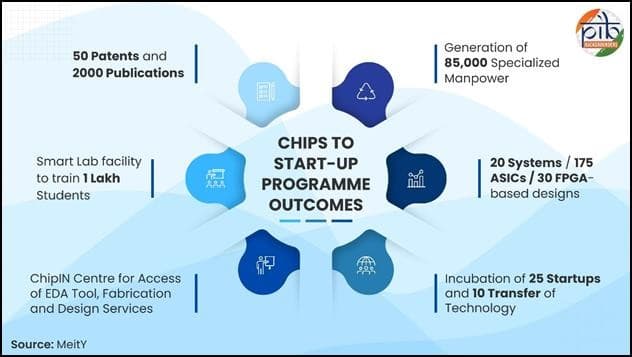
National capacity-building programme on semiconductor chip design, fabrication exposure and start-up support.

Launched 2022; implemented across India by MeitY with hub at C-DAC Bengaluru and wafer runs at SCL Mohali.

Targets academia, start-ups and industry to create an indigenous, industry-ready VLSI talent pipeline.

Quick Facts for MCQs

Tech & Scheme Design

  • Infrastructure: Shared EDA tools, HPC resources, FPGA boards, SMART labs nationwide.
  • Output: Enables ASICs, SoCs, IP cores, start-up incubation.
  • Collaboration: Training modules co-created with global EDA and semiconductor firms.

Human Resource Targets

  • Pipeline: 85,000+ engineers spanning B.Tech to PhD in five years.
  • Focus: VLSI, embedded systems, allied semiconductor design streams.
  • Delivery: University courses, specialised workshops, mentored chip tape-outs.

Strategic Significance

  • Self-reliance: Supports Atmanirbhar Bharat in a critical, security-sensitive sector.
  • Competitiveness: Addresses global semiconductor skill shortage, builds export-ready talent.
  • Democratisation: Provides nationwide access to costly design tools and fabrication slots.

Key Data Points

FeatureData-Point
Launch year2022
Nodal ministryMeitY
Total outlay₹250 crore
Programme span5 years
PhD trainees goal200
M.Tech (VLSI) goal7,000
M.Tech (related) goal8,800
B.Tech trainees goal69,000
Student-designed chips fabricated56
Patents filed so far75 +
Primary fab partnerSCL, Mohali
Chip design enablement hubNational ChipIN Centre, C-DAC Bengaluru
GS-2SchemeQuick Bite

14.ESIC SPREE Extends Social Security (ESIC Reforms)

The Hindu

What & Where

Employees’ State Insurance Corporation (ESIC): autonomous body, Ministry of Labour & Employment, runs nationwide Employees’ State Insurance Scheme.

Employees’ Provident Fund Organisation (EPFO): statutory body, same ministry, manages provident-fund & pension schemes across India.

SPREE: 2025-26, one-time penalty-free ESIC registration window for previously unregistered employers and employees.

Quick Facts for MCQs

Legal & Policy

  • ESIC & EPFO classified as autonomous statutory bodies under Concurrent List labour legislation.
  • SPREE removes retrospective liabilities, waiving penalties for late registration.
  • EPFO auto-settlement simplification aligns with Ease-of-Doing-Business labour codes.

Scheme Mechanics

  • ESIC financed by employer-employee contributions; SPREE only changes entry, not rate.
  • PF partial-withdrawal rule offers liquidity for job loss, illness, housing.
  • Auto-settlement utilises Aadhaar-seeded UAN for faster claim processing.

Social Impact

  • Formalisation; >1 crore informal workers gain sickness & pension cushions.
  • Women workforce benefits via maternity cash, medical cover.
  • Portability of UAN and ESIC e-Pechan card enhances migrant worker security.

Key Data Points

FeatureData-Point
SPREE employers added1.17 lakh
SPREE employees added1.03 crore
Workers newly covered (total)> 1 crore
SPREE cut-off date11 Jan 2026
ESIC parent Act year1948
EPFO parent Act year1952
PF withdrawal allowedUp to 75 % balance
Balance retained for retirement25 %
EPFO/ESIC supervising ministryLabour & Employment
ESIC coverage benefitsSickness, maternity, disablement, injury, medical care
GS-1Social Issues

15.Urbanisation Shift to India's Small Towns (Small Town Growth)

The Hindu

What & Where

Phenomenon: accelerating shift of urban growth to sub-1-lakh small towns across India

Process: decentralised expansion as megacities saturate; rural youth migrate to nearby service hubs

Geography: ≈9,000 census/statutory towns; logistics nodes include Sattenapalle (AP), Dhamtari (CG), Bongaigaon (AS)

Quick Facts for MCQs

Economic Drivers

  • Saturation megacities: high land cost, congestion shift capital to Tier-2/3 towns
  • Decentralisation: agro-processing, logistics, services diversify rural non-farm economy
  • Connectivity: PMGSY, BharatNet integrate small towns into regional markets

Governance & Policy

  • Statutory status: many census towns unnotified, denying municipal finance, planning powers
  • Revenue crunch: low own-source income, limited municipal bonds, dependence on grants
  • Scheme focus: AMRUT, Smart Cities remain metro-centric, small towns receive fragmented support

Infrastructure Gap

  • Water: low piped coverage, tanker dependence, groundwater over-extraction causing ecological stress
  • Sanitation: sparse sewerage, SWM, storm drains trigger health and flooding risks
  • Planning vacuum: absent master plans creates haphazard growth, eco-zone encroachment

Social Concerns

  • Poverty urbanised: informal, precarious jobs dominate, limited upward mobility
  • Local elites: brokers, contractors, moneylenders entrench exploitative hierarchies
  • Demographic risk: inadequate education and skills may waste youth dividend

Action Agenda

  • Formalisation: notify census towns, train ULBs, prepare GIS-based flexible master plans
  • Foundational services: converge AMRUT2.0, SBM-U grants for universal water, decentralised STPs, walk-cycle networks
  • Place-based clusters: agro-processing, crafts, eco-tourism through Rurban Mission and PMFME

Key Data Points

FeatureData-Point
Census + statutory towns~9,000
Large cities (>1 lakh pop.)~500
Small-town cut-off used<1,00,000 population
Urban population share 201131.16 %
Projected urban share 202536 % (UN DESA)
Projected urban share 205050 %
Urban GDP share now63 %
Urban GDP share 2030>75 % (NITI)
New urban residents 2025-50>20 crore

Related UPSC Prelims PYQs

CDS_GK, GEO_GS 2024PYQ 1

Which of the following statements regarding Urban Population in India as per Census 2011 is/are correct?

CDS_GK, GEO_GS 2025PYQ 2

Which among the following Classes of Towns in India holds the highest percentage of Urban Population as per the Census 2011?

Ready to practice?

Test your knowledge with our UPSC test series.

Start Free Trial