Polity
1.Indelible Ink in Indian Elections (Election Materials)
Indian Expressindelible ink · silver nitrate · Mysore Paints
What & Where
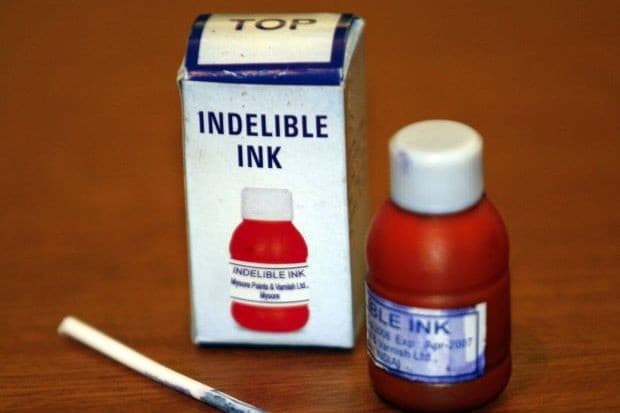
Indelible ink: silver-nitrate staining liquid applied on voters’ left index finger to block repeat balloting.
Adopted across India in 1962 General Election; still default for Parliament, Assembly, local-body polls.
Produced only at Karnataka’s Mysore Paints & Varnish Ltd; formula secured by National Physical Laboratory.
Quick Facts for MCQs
Historical Evolution
- 1962 adoption created low-cost safeguard against impersonation in huge electorates.
- 2024: Maharashtra SEC discards marker pens, re-embraces traditional ink for ZP & panchayat samiti polls.
Tech & Chemistry
- Silver-nitrate penetrates epidermis, forms photo-activated stain impossible to wash with soap or solvents.
- Standard 10 ml phials cater ~700 voters, enabling cost-efficient large-scale deployment.
Security Dimension
- Visible mark instantly signals “voted”, deterring multiple voting and boosting electoral credibility.
- Six decades’ error-free use underpins public trust in India’s free, fair, high-turnout elections.
Key Data Points
| Feature | Data-Point |
|---|---|
| Introduction in Indian polls | 1962 (Third General Election) |
| Exclusive producer | Mysore Paints & Varnish Ltd, Karnataka PSU |
| Formula developer | CSIR-National Physical Laboratory |
| Active chemical | Silver nitrate (reacts with keratin + light) |
| Skin mark visibility | Fades in 3–4 days |
| Nail stain duration | Persists 2–4 weeks |
| Application site | Left index finger across nail–cuticle |