UPSC Current Affairs

13 topicsGS-1: 2GS-2: 2GS-3: 9
0/13 done
GS-3Economy

1.TERI Solar PV Manufacturing Report (Solar PV Manufacturing)

TERI
Illustration for TERI Solar PV Manufacturing Report (Solar PV Manufacturing)

What & Where

TERI report “India’s PV Manufacturing & Its Strategic Inflection Points” reviews full solar PV value-chain competitiveness.

Tracks processes: polysilicon → ingot/wafer → cell → module; extends to recycling/circularity.

Focus: India’s scale-up vs China-centric global supply (~80 % production in China).

Quick Facts for MCQs

Policy & Finance

  • Incentives: PLI, basic customs duty, ALMM list drove module capacity surge.
  • Funding: Sovereign Green PV Bonds + NIIF/DFI blended finance to de-risk upstream fabs.
  • FX hedge: RBI/SBI-style facility advised for equipment import currency swings.

Capacity Trends

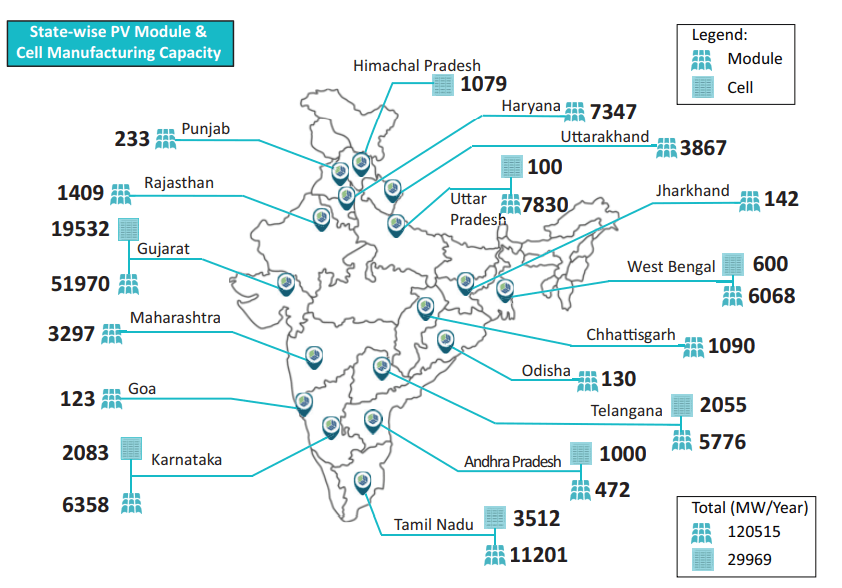
  • Downstream strength: 120 GW/yr module lines operational; >280 GW/yr targeted by 2030.
  • Upstream ambition: Integrate polysilicon-wafer-cell production to capture higher value.
  • Global outlook: China retains overwhelming upstream dominance despite India’s growth.

Challenges & Risks

  • Supply security: 98 % wafer, 92 % polysilicon import reliance threatens deployment resilience.
  • Cost hurdle: High capital intensity, expensive domestic credit impede mega-fab viability.
  • Sustainability gap: Limited recycling infra risks environmental non-compliance at scale.

Circular Economy

  • Actions: Create PV recycling associations, enforce take-back schemes for silicon/silver/glass recovery.
  • MNRE prioritisation: End-of-life PV management slated for early policy rollout.
  • Market upside: ESG-linked finance may spawn new domestic cleantech recycling sector.

Key Data Points

FeatureData-Point
Global cumulative PV (2024)~2.2 TW
Global module capacity (2025 est.)~1.8 TW/yr
China share – wafers~98 %
China share – polysilicon~92 %
China share – cells~91.8 %
China share – modules~84.6 %
India module capacity FY25~120 GW/yr
India projected module capacity 2030~280 GW/yr
India cell capacity FY25~30 GW/yr
India projected cell capacity 2030~171 GW/yr
Green PV Bond on-lending rate4–5 %
Proposed skill bodyPV–Semiconductor Skill Council
Launch platformBharat Climate Forum 2026

Related UPSC Prelims PYQs

GEO_GS, GS1 2018PYQ 1

With reference to solar power production in India, consider the following statements:

GEO_GS, GS1 2026PYQ 2

India's installed solar capacity in 2025 is close to
GS-3Economy

2.Digital Dairy Revolution in India (Dairy Digitalisation)

PIB
Illustration for Digital Dairy Revolution in India (Dairy Digitalisation)

What & Where

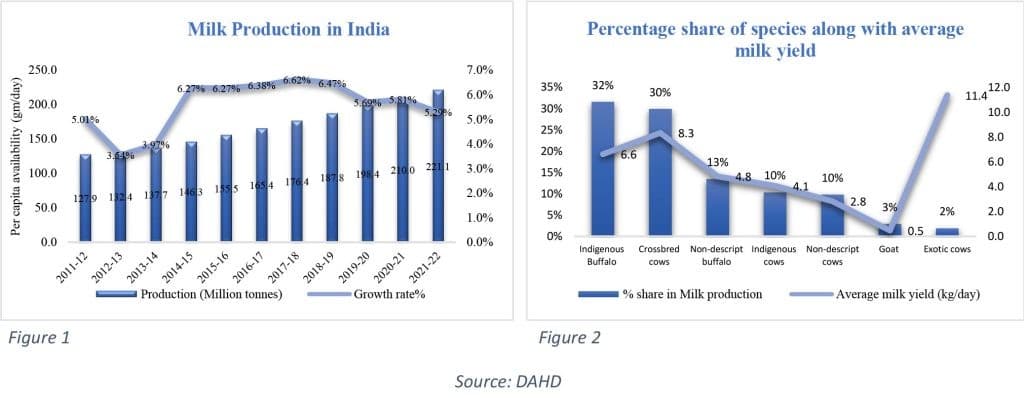
Definition Digitalizing dairy via Pashu Aadhaar, NDLM, AMCS—framed as Second White Revolution.

Key processes Unique 12-digit ear tags, automatic milk collection, open-source ERP, GIS route optimisation.

Geography Pan-India; NDDB spearheads in Gujarat yet covers 80 mn rural households nationwide.

Quick Facts for MCQs

Tech & Schemes

  • Pashu Aadhaar ensures end-to-end animal traceability, supports digital lending.
  • NDLM creates Bharat Pashudhan database covering breeding, health, vaccination.
  • NDERP using ERPNext links cow-to-consumer supply chain for cooperatives.

Economic Angle

  • Dairy valuation expected to more than double to USD 300 bn by 2027.
  • Livestock income often surpasses combined rice-wheat value in agri-GDP.
  • Value-added products like cheese, probiotics eyed for higher margins, exports.

Social Impact

  • Women manage majority of dairying; SHGs running village collection centres gain financial autonomy.
  • Dairy offers safety-net income in drought-prone Vidarbha, Marathwada reducing agrarian distress.
  • Livestock ownership more equitable than land; 75 % households own 2-4 animals.

Challenges

  • Low productivity; indigenous breeds yield < cross-breds, AI coverage still patchy.
  • 75–85 % surplus handled by informal sector causing quality, spoilage issues.
  • Feed cost spikes in maize, soybean erode farmer margins; formal credit access limited.

Key Data Points

FeatureData-Point
India’s milk output 2021-22221.06 million t
Share of world milk25 %
Decadal production rise73 %
Sector value 2021USD 130 bn
Projected value 2027USD 300 bn
Per-capita milk availability444 g/day
Pashu Aadhaar IDs issued35.68 crore
Producers on AMCS17.3 lakh
Avg Indian yield per lactation987 kg
Global avg yield2 038 kg
Rural households engaged80 million +
Indian share in dairy exports< 1 %

Related UPSC Prelims PYQs

CAPF_GAI, GEO_GS 2022PYQ 1

‘Operation Flood’ is also popularly known as

CAPF_GAI, GEO_GS 2024PYQ 2

Which of the following statements with respect to milk production in India is/are not correct?

GS-3EconomyQuick Bite

3.H1 FY26 FDI Surge (FDI Statistics)

BL

What & Where

Foreign Direct Investment (FDI): non-resident equity stakes creating sustained management influence in Indian companies.

Period reviewed: H1 FY26 (Apr–Sep 2025); data compiled by DPIIT.

Spatial focus: National totals; Maharashtra, Karnataka, Tamil Nadu lead recipients; Singapore tops origin list.

Quick Facts for MCQs

Investment Trend

  • Uptick: Doubling of IT inflows propelled overall 18 % rise in H1 FY26.
  • Milestone: Aggregate FDI since 2000 breached USD 1.1 trn threshold.

Source Countries

  • Concentration: Singapore, USA, Mauritius jointly supply over 60 % of fresh equity.
  • Gateway role: Singapore’s holding entities channel Asia-Pacific and global funds into India.

State Distribution

  • Leadership: Maharashtra retains ~30 % share; port, service clusters attract capital.
  • Southern surge: Karnataka and Tamil Nadu rank 2nd, 3rd on back of tech manufacturing.

Policy Moves

  • Reforms: GST, SEZ expansion simplify logistics, tax regime for investors.
  • Liberalisation: 100 % insurance FDI, sectoral caps rationalisation deepen automatic-route attractiveness.

Key Data Points

FeatureData-Point
H1 FY26 inflowUSD 35.2 bn
YoY growth18 %
Cumulative Apr 2000–Sep 2025USD 1.12 trn
Top investorSingapore USD 12 bn (34 %)
Second investorUSA USD 6.6 bn
Top recipient stateMaharashtra ≈30 % share
Karnataka inflowUSD 9.4 bn
Lead sectorsServices; Software & Hardware 16 % each
Key liberalisationInsurance FDI cap raised to 100 %

Related UPSC Prelims PYQs

ESE_GS, NDA_GAT 2026PYQ 1

According to the Reserve Bank of India’s report, which two countries together accounted for over one-third of the total FDI in India?

ESE_GS, NDA_GAT 2021PYQ 2

As per the data up to November, 2020, released by the Union Finance Ministry, which one of the following countries ranks 1 in terms of ODI (Outward Direct Investment) for the year 2020–21?

GS-1History

4.Zehanpora Kushan Buddhist Complex (Kushan Buddhist Site)

IT
Illustration for Zehanpora Kushan Buddhist Complex (Kushan Buddhist Site)

What & Where

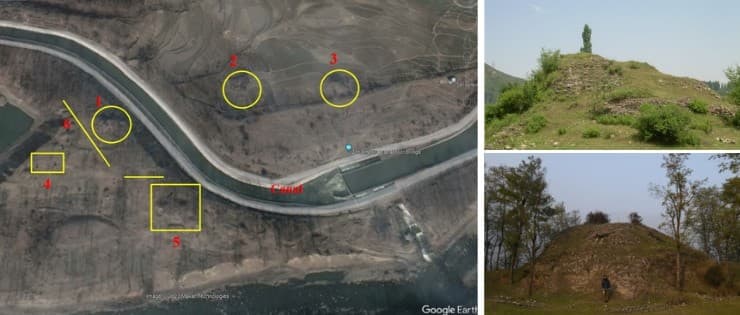
Large Kushan-era Buddhist complex with stupas, apsidal chaityas, viharas and settlement remains

Sits at Zehanpora village, Baramulla district, North Kashmir on Kashmir–Gandhara Silk Route

Dates to 1st–3rd CE; freshly mapped and scientifically excavated

Quick Facts for MCQs

Archaeological Features

  • Clustered mounds hint multiple stupas, indicating large integrated complex
  • Evidence wooden superstructure atop stone bases suggests layered construction
  • Layout unparalleled in Kashmir per experts

Historical Context

  • Kashmir became major Mahayana centre during Kanishka-Huvishka reign
  • Zehanpora part of Gandhara Buddhist trans-regional monastic network
  • Buddhism in valley originated under Ashoka 3rd BCE patronage

Tech & Methods

  • Drone orthophotos mapped sub-surface density beyond visible mounds
  • Remote sensing plus ground survey guided precise excavation strategy
  • Scientific excavation aimed at safeguarding site from looting

Key Data Points

FeatureData-Point
Cultural phaseKushan era (1st–3rd CE)
UTJammu & Kashmir
DistrictBaramulla
VillageZehanpora
Area covered≈10 acres
Core structuresStupas, apsidal chaityas, viharas
Trade linkKashmir–Gandhara Silk Route corridor
Key rulersKanishka, Huvishka
Earliest patronageAshoka, 3rd BCE
Survey toolsDrones, remote sensing, aerial imagery
GS-3Environment

5.Gadgil Panel on Western Ghats (Western Ghats ESA)

Indian Express

What & Where

WGEEP (Gadgil Commission): MoEFCC panel (2010-11) to map Ecologically Sensitive Areas in the Western Ghats and frame conservation norms

Western Ghats: 1,600 km range across Gujarat, Goa, Maharashtra, Karnataka, Kerala, Tamil Nadu; UNESCO World Heritage, mega-biodiversity hotspot

Recommended zoning: entire 1,29,037 km² Ghats as ESA, split into ESZ-1 (high), ESZ-2 (medium-high), ESZ-3 (moderate)

Quick Facts for MCQs

Legal & Policy

  • Recommendation: create WGEA under Environment Protection Act 1986 for multi-state regulation
  • Gram Sabha consent made mandatory, promoting inclusionary rather than exclusionary conservation
  • HLWG 2013 diluted scope; used village boundaries, not landscape units

Environmental Guidelines

  • Infrastructure curbs: no new major roads or rail lines in ESZ-1 & 2 unless essential
  • Agriculture: organic shift urged; complete ban on GM crops across Ghats
  • Hydropower and new hill stations discouraged to protect fragile slopes and flow regimes

Political Economy

  • Opposition from Kerala, Maharashtra citing cash-crop economy, habitation fears, institutional overlap
  • Central government shelved report; acceptance remains partial despite recurring landslides and floods
  • Conflict illustrates development–conservation trade-offs in federal ecological governance

Personality & Legacy

  • Madhav Gadgil: founder, Centre for Ecological Sciences, IISc (1982); co-drafted Biological Diversity Act 2002, Forest Rights Act 2006
  • Key works: “This Fissured Land”, “Ecology and Equity” with Ramachandra Guha
  • Awards: Shanti Swarup Bhatnagar, Padma Shri, Padma Bhushan

Key Data Points

FeatureData-Point
ConstitutedMarch 2010
Report submittedAugust 2011
ChairpersonProf Madhav Gadgil
Proposed ESA coverage1,29,037 km² (100 % Ghats)
HLWG (Kasturirangan) ESA56,825 km²
States covered6 (GJ, GA, MH, KA, KL, TN)
ESA categoriesESZ-1, ESZ-2, ESZ-3
Mining in ESZ-1 & 2New ban; existing phased-out in 5 yrs
GM crops, new SEZsProhibited in all ESZs
Proposed authorityWestern Ghats Ecology Authority (statutory)

Related UPSC Prelims PYQs

GS1 2016PYQ 1

'Gadgil Committee Report' and 'Kasturirangan Committee Report', sometimes seen in the news, are related to

GS1 1996PYQ 2

Which one of the following regions of India is now regarded as an 'ecological hot spot'?

GS-3Species

6.Endangered Kashmir Markhor Goat (Endangered Goat)

Down to Earth
Illustration for Endangered Kashmir Markhor Goat (Endangered Goat)

What & Where

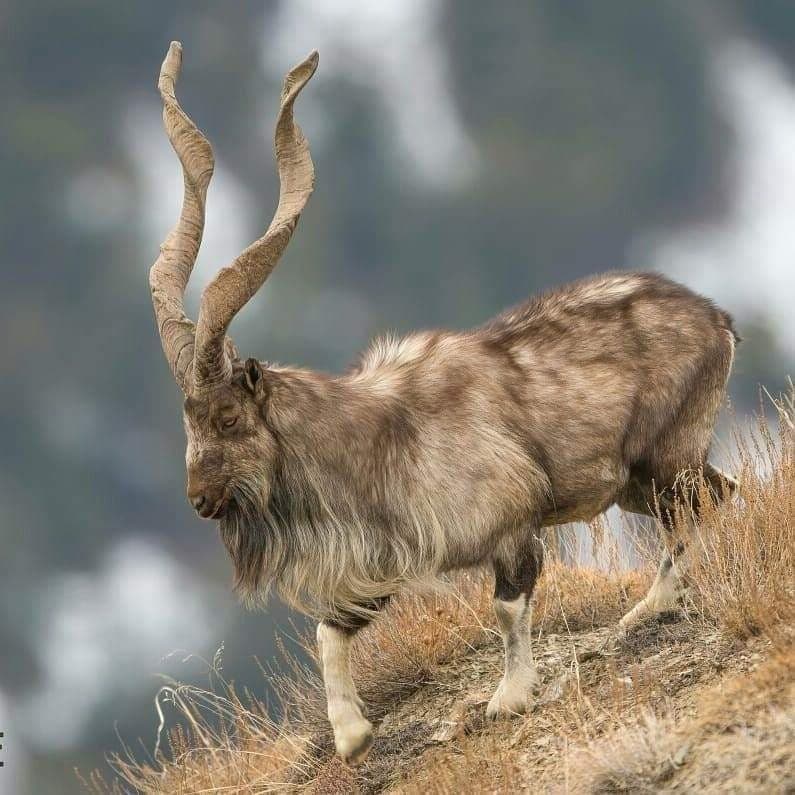
Definition: Rare cliff-dwelling wild goat, subspecies Capra falconeri, noted for majestic spiral horns

Geography: Endemic to Jammu & Kashmir, mainly Pir Panjal mountains; last viable herd in Kazinag National Park

Numbers: India holds barely 200–300 individuals, facing local extinction risk

Quick Facts for MCQs

Population Status

  • Estimate: Only 40–50 animals outside Kazinag, highlighting extreme fragmentation
  • Trend: Continued decline flagged; species locally extinct in many historical sites

Habitat & Range

  • Concentration: >70 % of individuals clustered along Indo-Pak Line of Control in Kazinag range
  • Elevation: Occupies high-altitude cliffs enabling predator evasion and niche feeding

Ecological Role

  • Indicator: Stable markhor signals healthy Himalayan mountain ecosystem
  • Vegetation control: Browsing maintains meadow succession, aids soil conservation

Key Data Points

FeatureData-Point
IUCN subspecies nameCapra falconeri cashmiriensis
Current Indian population~200–300 goats
Core mountain rangePir Panjal, J&K
Key protected areasKazinag NP; Hirpora & Tattakuti WLS; Khara Gali CR
Male horn lengthUp to 160 cm
Adult body weightUp to 100 kg
Terrain choiceSteep rocky cliffs, open forests, alpine meadows
Diet typeHerbivorous—grasses, herbs, twigs
Name originPersian “markhor” = snake-killer
Predator linkPrey for snow leopard, common leopard, wolf
GS-3EnvironmentQuick Bite

7.Assam Winter Migratory Birds (Migratory Birds Assam)

The Hindu
Illustration for Assam Winter Migratory Birds (Migratory Birds Assam)

What & Where

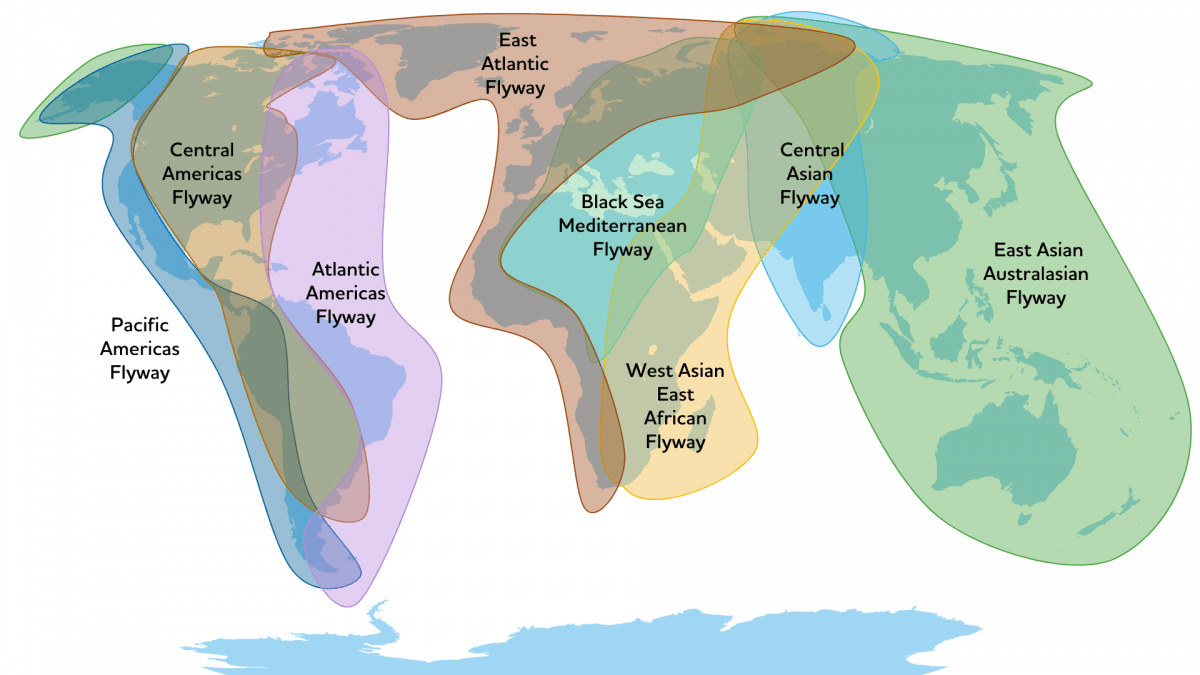
Central Asian Flyway: main migratory corridor linking Arctic/temperate zones with South Asia, passes directly over Assam

Assam’s wetlands, riverbeds, floodplains & reservoirs serve as prime wintering/stop-over habitats for long-distance birds

Core sites: Deepor Beel (Ramsar), Maguri-Motapung, Pani Dihing, Son Beel, Kaziranga NP lakes, Pobitora WLS

Quick Facts for MCQs

Species Portfolio

  • Geese: Bar-headed, White-fronted, Greylag flock to open lakes & sandbars
  • Ducks: Northern pintail, Common/Ferruginous pochard, Falcated, Eurasian wigeon utilise floodplains
  • Waders & others: Pied avocet, Great crested grebe, Glossy ibis, Purple heron diversify assemblage

Important Wetlands

  • Deepor Beel: Ramsar tag ensures international attention to habitat integrity
  • Maguri-Motapung & Pani Dihing Beels provide feeding grounds during low river flow
  • Son Beel: state’s largest wetland, vital for mass roosting of geese & ducks

Legal & Policy

  • CMS membership obliges India to safeguard migratory bird corridors & staging sites
  • National Action Plan targets habitat protection, monitoring & community outreach along flyway
  • Schemes complement state bird-festival ecotourism drives, boosting local conservation incentives

Key Data Points

FeatureData-Point
First migrant reaching AssamCitrine Wagtail
High-altitude flyer recordedBar-headed Goose
Other visiting geeseWhite-fronted, Greylag
Frequent duck visitorsNorthern pintail, Common & Ferruginous pochard
Largest wetland in AssamSon Beel
Only Ramsar site listedDeepor Beel
International treaty referencedConvention on Migratory Species (CMS)
National initiativeAction Plan for Central Asian Flyway migrants
Additional Indian seasonal migrantsAmur Falcon, Black-necked Crane, Marine turtles, Humpback Whale

Related UPSC Prelims PYQs

CAPF_GAI, CDS_GK 2023PYQ 1

Consider the following statements about Ramsar Wetland sites in India:

CAPF_GAI, CDS_GK 2022PYQ 2

With reference to Bhindawas Wildlife Sanctuary, Sultanpur National Park, Thol Lake Wildlife Sanctuary and Wadhwana Wetland, which of the following statements is/are correct?

GS-3S&T

8.Nationwide V2V Communication Rollout (Road Safety Tech)

NDTV
Illustration for Nationwide V2V Communication Rollout (Road Safety Tech)

What & Where

Definition: Wireless Vehicle-to-Vehicle (V2V) system letting nearby vehicles exchange speed, location, direction and braking data in real time.

Process: SIM-like On-Board Unit uses Dedicated Short-Range Communication on 5.875–5.905 GHz, independent of mobile networks.

Geography: Government targets nationwide deployment across India by end-2026; spectrum cleared by Department of Telecommunications.

Quick Facts for MCQs

Tech & Schemes

  • Spectrum: DoT earmarked unlicensed ITS band enabling network-independent broadcasts.
  • Integration: V2V interfaces with Advanced Driver Assistance Systems for automatic braking, lane correction.
  • Alert scope: 360-degree warnings from front, rear, side, including hidden or stationary vehicles.

Safety Edge

  • Collision: Real-time data sharing cuts reaction time, curbing rear-end and chain crashes.
  • Low-visibility: Early alerts mitigate fog-related highway pile-ups common in northern plains.
  • Urban driving: Blind-spot notifications aid cyclists, two-wheelers safety in congested cities.

Limitations & Challenges

  • Adoption: Safety gains scale only when high fleet penetration achieved.
  • Cost: Additional device price likely passed to consumers, affecting entry-level segments.
  • Range gap: Long-distance hazards still rely on radar, cellular V2X or satellite inputs.

Key Data Points

FeatureData-Point
Frequency band5.875–5.905 GHz
Roll-out deadlineEnd-2026
Core aimCollision & pile-up prevention
Connectivity needWorks without mobile internet
HardwareSIM-like On-Board Unit
ADAS linkAlerts trigger driver-assist actions
Effective radiusFew hundred metres
Visibility edgeFunctions in fog, dust, blind spots

Related UPSC Prelims PYQs

ESE_GS 2021PYQ 1

Which one of the following standards is used in vehicular communication system ?

GS-3S&TQuick Bite

9.Rising Childhood Hypertension Concern (Paediatric Hypertension)

The Hindu

What & Where

Childhood hypertension = persistently high BP in <18 yrs, judged by age-sex-height percentiles

Predominantly secondary aetiology (renal, adrenal, vascular) unlike primary-dominated adult hypertension

Global prevalence almost doubled between 2000-2020, emerging as major paediatric concern

Quick Facts for MCQs

Risk Factors

  • Urbanisation fuels processed high-salt diet, low activity, prolonged screen time
  • Obesity, especially central adiposity, remains strongest adjustable driver
  • Noise, air pollution, academic pressure add physiological stress elevating BP

Health Impact

  • Early vascular damage causes irreversible arterial stiffening
  • Tracks into adulthood, escalating coronary heart disease, stroke, CKD, type-2 diabetes burden
  • Lifelong morbidity increases healthcare costs and productivity losses

Prevention & Management

  • Lifestyle pivot: cut salt, sugar, ultra-processed food; ensure ≥60 min daily exercise
  • Adequate sleep plus mindfulness or relaxation techniques mitigate stress-induced BP rise
  • School-based periodic BP checks enable timely counselling and intervention

Key Data Points

FeatureData-Point
Global prevalence trendNearly doubled 2000-2020
Diagnostic yardstickAge-sex-height specific BP percentiles
Common paediatric aetiologySecondary; renal, adrenal, vascular disorders
Top modifiable riskRapid weight gain & central obesity
Early clinical pictureMostly asymptomatic; needs routine screening
Long-term outcomes↑ Risk CHD, stroke, T2DM, CKD
GS-2Polity

10.UN DESA Development Mandate (UN Development Dept)

News on Air

What & Where

UNDESA: UN Secretariat department steering economic, social, environmental development; HQ New York City.

Drives 2030 Agenda implementation, monitors 17 SDGs; issues World Economic Situation & Prospects (WESP).

WESP 2026 projects India’s GDP growth at 7.4 % during FY 2025-26.

Quick Facts for MCQs

Mandate & Functions

  • Policy aid: poverty, inequality, jobs, climate, social protection.
  • Secretariat support to UNGA, ECOSOC, Commissions, HLPF.
  • SDG tracking and national implementation guidance.

Reports & Data

  • WESP supplies global forecasts shaping budgets, G20, Bretton Woods discourse.
  • Houses major development databases, statistical platforms.
  • Regular economic & social analysis underpins UN deliberations.

Significance

  • Acts as institutional backbone for 2030 Agenda progress.
  • Forecasts influence IMF, World Bank policy outlooks.
  • Converts global UN commitments into actionable national policies.

Key Data Points

FeatureData-Point
Establishment1948; re-structured 1997
HeadquartersNew York City, USA
Flagship reportWorld Economic Situation & Prospects
India GDP FY 25-267.4 % (UNDESA forecast)
Core mandateEconomic, Social, Environmental development
Agenda alignment2030 Agenda & 17 SDGs
Key bodies servedUNGA, ECOSOC, HLPF, UN Commissions
GS-2Mapping

11.Weimar Triangle Trilateral Grouping (Trilateral Grouping)

Hindustan Times
Illustration for Weimar Triangle Trilateral Grouping (Trilateral Grouping)

What & Where

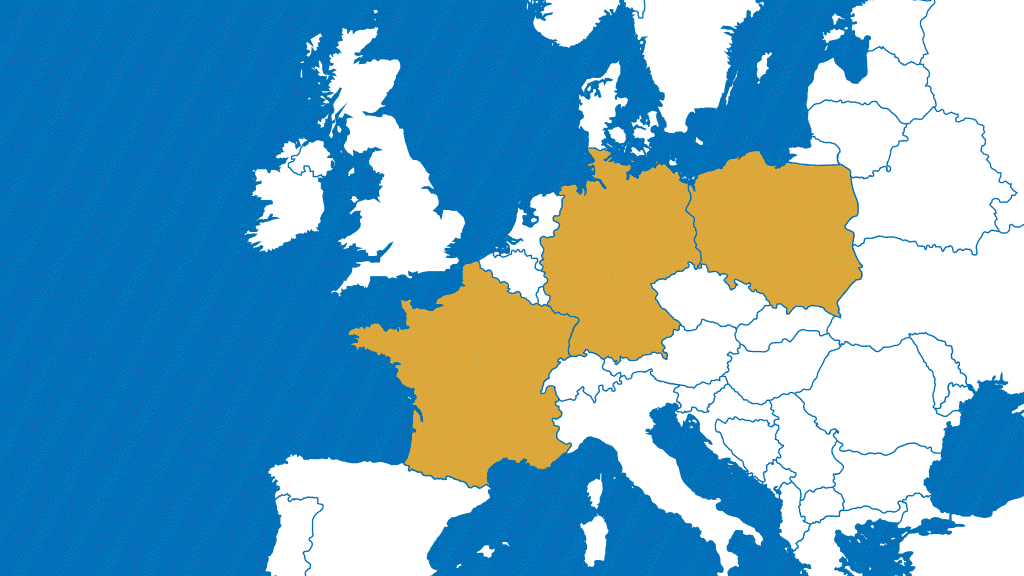
Trilateral political–diplomatic grouping of France, Germany, Poland for European integration & security coordination

Founded 1991 at Weimar (Thuringia, Germany); focuses on Russia, Eastern Europe, EU-NATO pre-summit talks

Geography spans Western and Central Europe, acting as bridge to Eastern flank

Quick Facts for MCQs

Security Dimension

  • Cooperation tackles Russia deterrence, Eastern flank reassurance
  • Aligns EU Common Security & Defence Policy stances among big continental powers
  • Offers rapid trilateral consultations during crises, incl Ukraine war

European Integration

  • Platform accelerated Poland’s western anchoring pre-2004 EU accession
  • Promotes cohesive EU positions on enlargement, neighbourhood policy
  • Functions as informal engine complementing Franco-German core

India Angle

  • Poland publicly backed uninterrupted Indian crude imports from Russia amid US pressure
  • First-ever Indian presence widens Triangle outreach to Indo-Pacific matters
  • Potential avenue for deeper India–EU security, energy dialogue

Key Data Points

FeatureData-Point
Established1991
Named afterWeimar city, Germany
Core membersFrance, Germany, Poland
Primary aimUnited, secure Europe via political, security, economic cooperation
Key security focusCoordinated response to Russia, support to Ukraine
Original successFacilitated Poland’s NATO entry 1999 & EU entry 2004
Regular rolePre-summit consultations before EU & NATO meetings
India’s milestoneFirst participation in 2024 Weimar Triangle format
GS-3Security

12.National IED Data Repository (IED Data Platform)

Times of India

What & Where

Digital platform storing, standardising, analysing all Indian IED / blast data since 1999

Located at National Security Guard garrison, Manesar; technical backbone: National Bomb Data Centre

Provides investigators nationwide single-click access to archive and real-time uploads

Quick Facts for MCQs

Tech & Schemes

  • AI-analytics extracts modus operandi trends, supports predictive threat mapping
  • Secure architecture enforces uniform data formats, evidence tagging, encrypted sharing
  • Two-way portal lets agencies upload fresh incidents and pull historical cases instantly

Security Dimension

  • Pattern linking via device type, circuit, timer, explosive material strengthens attribution
  • Instant nationwide archive cuts investigation time, boosts court-ready scientific evidence
  • Strategic tool labelled “next-generation shield against terrorism” by Home Minister

Inter-agency Coordination

  • Shared repository eliminates fragmented case files across police, CAPFs, NIA, ATS
  • Upcoming links with CCTNS etc create seamless criminal-justice information flow
  • Standardised inputs ensure comparable datasets for all stakeholder agencies

Key Data Points

FeatureData-Point
Launch inaugurated byUnion Home Minister, NSG Manesar
Host agencyNational Security Guard (NSG)
Policy oversightMinistry of Home Affairs
Technical backboneNational Bomb Data Centre (NBDC)
Data coverage spanBlasts from 1999 onwards
Core aimOne Nation, One IED Data Repository
Key user agenciesState Police, CAPFs, NIA, ATS
Analytics toolAI-enabled pattern & signature detection
Upload-access modelTwo-way window; real-time sharing
Planned integrationsCCTNS, ICJS-2, NAFIS, e-Prisons, e-Prosecution

Related UPSC Prelims PYQs

ESE_GS 2024PYQ 1

Which one of the following Institutions launched Centre of Data for Public Good (CDPG) for multidisciplinary research, bringing together experts from academia, industry, and Government to harness the power of data to benefit the public?

GS-1Editorial

13.Transgender Welfare Gaps in India (Transgender Rights)

The Hindu

What & Where

Transgender person = self-identified gender differing from birth sex; includes Hijra, Kinnar, Aravani, trans men/women, non-binary

Key process: self-identification certificate via District Magistrate under Transgender Persons (Protection of Rights) Act 2019 & Rules 2020

Census 2011 hotspots: Uttar Pradesh, Andhra Pradesh, Maharashtra host largest enumerated transgender populations

Quick Facts for MCQs

Healthcare Gaps

  • Denial: 27 % refused care; misgendering, binary attitudes especially hurt trans men
  • Hazard: widespread hormone self-medication; risk of stroke, renal damage; no national clinical protocol
  • Support: Ayushman Bharat TG Plus, Tamil Nadu’s free surgeries partly offset treatment costs

Economic & Education

  • Joblessness: 48 % unemployment; informal work dominant despite SMILE skilling push
  • Literacy: 56.1 % rate; harassment, non-inclusive toilets spur high drop-outs, scant university presence
  • Assets: Hindu Succession Act bars non-binary heirs; limited banking hampers credit access

Legal & Policy

  • Landmark: NALSA 2014 recognised third gender, SEBC status, mandated reservations & welfare schemes
  • Framework: Act 2019 bars discrimination, forms National Council; Rules 2020 detail certification, welfare duties
  • Bottleneck: National Portal processes only 16 % applications; underfunded Garima Greh shelters restrict coverage

Key Data Points

FeatureData-Point
Census 2011 transgender count4.88 lakh
Literacy rate (community/national)56.1 % / 74 %
Unemployment rate (ILO 2022)48 %
Economic exclusion (NHRC 2018)92 % impacted
Refused medical care27 %
Suicide attempts <20 yrs50 %
Identity certificates issued277 since Nov 2020
Processing rate on portal16 %
Ayushman Bharat TG Plus cover₹5 lakh per year
Karnataka job quota1 % in state posts

Related UPSC Prelims PYQs

CDS_GK 2024PYQ 1

India's first dedicated OPD for the Transgenders was opened at which one among the following hospitals?

Ready to practice?

Test your knowledge with our UPSC test series.

Start Free Trial