UPSC Current Affairs

16 topicsGS-1: 3GS-2: 8GS-3: 5
0/16 done
GS-2Editorial

1.Supreme Court Environmental Governance (Environmental Judicial Review)

The Hindu

What & Where

Supreme Court green governance: proactive, policy-shaping environmental adjudication via continuing mandamus

Key tools: precautionary principle, polluter-pays, public trust, inter-generational equity

Geography: pan-India jurisdiction; 2025 flashpoints — Aravallis, Delhi-NCR, Hyderabad

Quick Facts for MCQs

Legal & Policy

  • Vanashakti review permitted ex post facto clearances; marked doctrinal U-turn
  • Aravalli order redefined hills < 100 m excluded; later stayed by coordinate bench
  • Stray Dog case shifted from relocation to sterilisation-release balancing safety, welfare

Environmental Jurisprudence Gains

  • Article 21 linkage elevates clean environment to fundamental right, non-derogable
  • Precautionary halts prevented irreversible loss; example bustard power-line undergrounding
  • Polluter-Pays enforced; tanneries liable for restoration costs in Vellore Monitoring Committee 2025

Operational Challenges

  • Judicial micromanagement blurs separation; smog-tower directions intruded CAQM domain
  • Frequent reversals erode predictability, deter long-term investment
  • Expert committee churn lowers scientific consistency, prolongs dispute resolution

Suggested Reforms

  • Non-Regression principle to bar dilution of existing safeguards
  • Strengthen SPCBs, CAQM, NGT staffing to reduce Court dependence
  • Focus on accountability—penalise officials misusing CAMPA funds instead of designing projects

Key Data Points

FeatureData-Point
Peak reversal year2025
Case allowing post-facto ECVanashakti v. Union
Body repeatedly directedCAQM (Delhi-NCR)
Expanded doctrinePublic trust
Constitutional hookArticle 21

Related UPSC Prelims PYQs

GS1 2012PYQ 1

The National Green Tribunal Act, 2010 was enacted in consonance with which of the following provisions of the Constitution of India?

GS1 2018PYQ 2

How is the National Green Tribunal (NGT) different from the Central Pollution Control Board (CPCB)?
GS-2Polity

2.Department of Justice 2025 Review (Justice Reforms 2025)

PIB

What & Where

Department of Justice: central node for judicial appointments, e-Courts, legal aid, infrastructure monitoring across India

Coverage: initiatives span 776 districts, 2.5 lakh Gram Panchayats, all 25 High Courts

Core processes: judge induction, Tele-Law outreach, FTSC rollout, digital filings, Nyaya Vikas real-time tracking

Quick Facts for MCQs

Judicial Capacity

  • Appointments: 157 High Court judges added; 47 additionals confirmed; 13 tenure extensions
  • Leadership: 12 Chief Justices posted; 44 inter-High-Court transfers balance expertise

Digital & eCourts

  • Virtual hearings cross 3.91 crore, placing India among global leaders
  • e-filings 92 lakh; ₹1,215 crore fees; 3.38 crore mobile-app downloads
  • Front-end presence: 1,987 eSewa Kendras, Tele-Law available in 2.5 lakh Panchayats

Legal Aid & Schemes

  • Tele-Law delivered pre-litigation advice to 1.12 crore citizens across 776 districts
  • New schemes: Veer Parivar, Human-Wildlife Conflict, SPRUHA, Community Mediation module
  • Outreach training: 37,000 participants in 638 districts; Hamara Samvidhan campaign reached 70.70 lakh people

Fast-Track & Infrastructure

  • FTSCs: 774 courts (398 POCSO) dispose 7.41 cases/month/court versus regular courts’ 3.18
  • Infrastructure jump: court halls 22,663; residential units 20,033; 94.66 % projects geotagged
  • Monitoring: Nyaya Vikas 2.0 enables real-time tracking; aligns with World Bank B-READY benchmarks

Key Data Points

FeatureData-Point
High Court judges appointed (2025)157
New Chief Justices12
Inter-HC judge transfers44
Additional judges made permanent47
Tele-Law Gram Panchayats covered2.5 lakh
Tele-Law beneficiaries1.12 crore
Virtual hearings held3.91 crore
eSewa Kendras functional1,987
e-Courts app downloads3.38 crore
e-filings under Phase-III92 lakh
Online court fees collected₹1,215 crore
Fast Track Special Courts774 (398 POCSO)
FTSC cases disposed3.6 lakh
Court halls (2025)22,663
Projects geotagged on Nyaya Vikas94.66 %
GS-2Misc

3.Current Affairs Digest 9 Jan 2026 (Daily Compilation)

The Hindu
Illustration for Current Affairs Digest 9 Jan 2026 (Daily Compilation)

What & Where

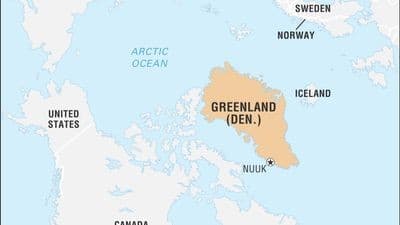
Greenland — world’s largest island; autonomous within Kingdom of Denmark since 2009 Self-Rule Act

Sits in North Atlantic & Arctic Oceans; 80 % covered by the Greenland Ice Sheet

Key processes: rapid outlet-glacier flow, ice-sheet melt influencing global sea-level rise

Quick Facts for MCQs

Legal & Policy

  • UN Charter Art 2(4) bars territorial acquisition by force; transfer needs Danish & Greenlandic consent
  • 2009 Self-Rule Act recognises right to self-determination, possible future independence referendum
  • U.S. purchase proposal faces sovereignty, referendum, and Danish parliamentary hurdles

Environmental Impact

  • Ice Sheet melt adds ~0.7 mm/yr to global sea level; critical in IPCC projections
  • Fast-moving glaciers (e.g., Jakobshavn) key indicators for climate models
  • Arctic amplification: warming here ~3× global average, threatening permafrost & biodiversity

Resource Potential

  • Kvanefjeld & Kringlerne hold large rare-earth + uranium reserves; strategic for green tech supply chains
  • Offshore basins mapped for oil/gas, but moratorium (2021) pauses new exploration licences
  • Melting ice improves access, yet raises ecological and Inuit livelihood concerns

Strategic Angle

  • U.S. Thule Air Base (northwest) vital for missile-warning & space-tracking systems
  • Northern Sea Route viability increases great-power interest in Arctic governance
  • China’s 2018 “Polar Silk Road” white paper lists Greenland as potential BRI node

Key Data Points

FeatureData-Point
CapitalNuuk
Sovereign linkDenmark handles defence/foreign affairs
Land ice cover≈ 1.7 million km² (≈ 80 % of area)
GeologyPart of Precambrian Canadian Shield
Strategic interestRare-earths, hydrocarbons, Arctic shipping routes

Related UPSC Prelims PYQs

GEO_GS 2020PYQ 1

According to the Global Climate Risk Index 2020, published by environmental think tank Germanwatch, in the year 2018 India’s rank in the list of top most climate affected nations is:

GEO_GS 2026PYQ 2

A23a refers to

GS-1History

4.Turkman Gate Heritage Significance (Shahjahanabad Gate)

Indian Express

What & Where

Turkman Gate — surviving Mughal-era gate of 17th-century walled city Shahjahanabad, Old Delhi, near Jama Masjid

Named after 13th-c Sufi saint Hazrat Shah Turkman Bayabani; his dargah plus Razia Sultan’s tomb lie nearby

Stood on arterial Fatehpuri Masjid–Hauz Qazi–Yamuna route, controlling trade, defence, pilgrim flow

Quick Facts for MCQs

Historical Timeline

  • 13th c saint settlement pre-dates Mughal city, embedding early Sufi culture
  • 17th c incorporation into Shahjahanabad fortifications, one of fourteen gates
  • 20th c remembered for 1976 Emergency bulldozers and police firing

Cultural Landscape

  • Sufism nexus; dargah attracts devotees cutting across faiths
  • Proximity to Jama Masjid and Chandni Chowk markets sustains continuous commercial bustle
  • Razia Sultan burial site underlines Delhi’s multilayered dynastic history

Socio-Political Episodes

  • Emergency demolitions triggered local resistance, symbolising state overreach in urban planning
  • Shah Commission report later criticised procedural violations and human-rights abuses
  • Current demolitions revive debates on heritage conservation versus redevelopment

Key Data Points

FeatureData-Point
Founder of ShahjahanabadMughal emperor Shah Jahan
Gate’s construction erac. 1650 AD
Total original city gates14
Named afterSufi saint Shah Turkman Bayabani
Nearby Sultanate relicRazia Sultan’s grave
Major upheavals survived1857 Revolt, colonial wall demolition, Partition
Emergency memory1976 demolition & coercive sterilisation; probed by Shah Commission
Present locationOld Delhi, Central district, NCT of Delhi
Urban functionRegulated entry of people & goods; part of commercial thoroughfare
Architectural styleLate Indo-Islamic city-gate masonry (arched passage, battlements)
GS-1Mapping

5.Greenland Geographical Overview (Arctic Territory)

Times of India
Illustration for Greenland Geographical Overview (Arctic Territory)

What & Where

Greenland: world’s largest island; self-governing territory within Kingdom of Denmark.

Sits in North Atlantic & largely inside Arctic Circle between North America and Europe.

Dominated by Greenland Ice Sheet covering ≈80 % of landmass.

Quick Facts for MCQs

Governance & Autonomy

  • Self-Rule Act grants Greenland control over most domestic matters; Denmark handles defence, foreign relations, currency.
  • Island’s parliament may call independence referendum; population consent mandatory for sovereignty change.
  • Extensive Inuit cultural, linguistic rights preserved under home-rule framework.

Geology & Resources

  • Precambrian shield rocks host rare-earths, uranium, other critical minerals essential for clean-tech supply chains.
  • Offshore basins viewed as frontier for Arctic hydrocarbons; exploration limited by ice, cost, environment concerns.
  • Rapid glacier flow (e.g., Jakobshavn) aids fjord formation, influences shipping opportunities and resource access.

International Law

  • UN Charter Article 2(4) prohibits territory acquisition via force; applies to any Greenland purchase attempt.
  • Lawful transfer needs Denmark’s and Greenlanders’ free, informed consent; coercion renders deal void.
  • Modern norms classify annexation or coerced cession as illegal, attracting non-recognition and potential sanctions.

Key Data Points

FeatureData-Point
Political statusSelf-rule since 2009; Denmark retains defence, foreign affairs, currency
Sovereign kingdomDenmark
CapitalNuuk
Ice sheet rankWorld’s 2nd largest after Antarctica
Ice sheet coverage~80 % of island area
Key glacierJakobshavn (fast-moving outlet)
Geological provincePart of Canadian Shield (Precambrian rocks)
Strategic resourcesRare-earths, critical minerals, hydrocarbons
UN Charter ref.Art 2(4) bars forcible territorial acquisition
Self-determinationExplicitly recognised in Greenland Self-Rule Act, 2009
GS-3Environment

6.White-bellied Heron Conservation (Critically Endangered Heron)

Indian Express

What & Where

White-bellied Heron – world’s 2nd-largest heron; survives on undammed, fast-flowing Eastern Himalayan rivers with minimal disturbance.

Kalai-II – 1,200 MW run-of-river hydropower project on Lohit River, Anjaw district, Arunachal Pradesh.

Lohit River – right-bank Brahmaputra tributary; enters India at Kibithu, curves through Mishmi Hills, merges with Siang + Dibang near Kobo, Assam.

Quick Facts for MCQs

Conservation Status

  • IUCN listing signals acute extinction risk; species extinct in Nepal, possibly Bangladesh.
  • Schedule-I tag grants highest legal protection in India.
  • Acts as freshwater bio-indicator reflecting water quality, fish density, habitat integrity.

Hydropower Project

  • Allotment shifted from private firm to THDC during 2023-24 revival push.
  • Central PSU takeover aims faster execution of 13 dormant Arunachal schemes.
  • Even small pondage disrupts rapids vital for heron foraging.

Environmental Impact

  • Dams fragment riverine habitat, alter flow, cut fish supply, increase disturbance.
  • EIA for Kalai-II criticised for omitting white-bellied heron presence along Lohit stretch.
  • Tiny gene pool plus altered hydrology heighten extinction probability.

Key Data Points

FeatureData-Point
IUCN statusCritically Endangered
Wildlife Act slotSchedule-I, WPA 1972
Global population< 60 individuals
Bhutan share~45 %; 3–5 breeding pairs
Indian rangeLohit, Anjaw, Changlang (AR)
Project capacity1,200 MW
Project developerTHDC India Ltd
Project typeRun-of-river with pondage
River basinLohit → Brahmaputra
Reassignment tag1 of 13 stalled AR projects
GS-3S&T

7.Spina Bifida Prevention Overview (Neural Tube Defect)

The Hindu
Illustration for Spina Bifida Prevention Overview (Neural Tube Defect)

What & Where

Congenital neural tube defect; spinal cord/meninges fail to close within 28 days after conception

Non-communicable; >70 % cases preventable by pre-conception folic-acid supplementation

India reports one of world’s highest burdens; lifelong disability ranges from limb paralysis to hydrocephalus

Quick Facts for MCQs

Clinical Manifestations

  • Swelling; spinal tissue protrusion in open spina bifida detectable at birth
  • Motor deficit; weakness or paralysis proportional to lesion level
  • Continence loss; bladder and bowel nerve damage causes lifelong management challenges

Treatment & Rehab

  • Surgery; early defect closure prevents infection, halts further nerve damage
  • Shunting; VP shunt drains cerebrospinal fluid, averts raised intracranial pressure
  • Physiotherapy; braces, orthopaedic surgeries maximise mobility, correct deformities

Preventive Strategy

  • Supplementation; 400 µg folic acid daily for women of reproductive age recommended
  • Fortification; mandatory folate enrichment of staples lowers population risk
  • Planning; antenatal counselling ensures micronutrient intake before conception

Public Health Angle

  • India; high anaemia, unplanned pregnancies exacerbate folate deficiency burden
  • Cost; lifelong care strains families and health budgets, stressing need for prevention
  • Awareness; limited knowledge among women and healthcare workers impedes early supplementation

Key Data Points

FeatureData-Point
PathologyOpen/closed spinal cord exposure
Critical windowFirst 28 gestational days
Key nutrientFolic acid (vitamin B₉)
Preventability≥ 70 % with adequate pre-conception folate
Primary causeMaternal folate deficiency
Visible signSac-like swelling on newborn’s back
Major complicationsHydrocephalus, lower-limb paralysis, incontinence
Hydrocephalus remedyVentriculo-peritoneal shunt
Orthopaedic issueClub foot, joint contractures
Definitive repairSurgical closure soon after birth
GS-3S&T

8.ISRO Dust EXperiment Detector (Cosmic Dust Detector)

Indian Express
Illustration for ISRO Dust EXperiment Detector (Cosmic Dust Detector)

What & Where

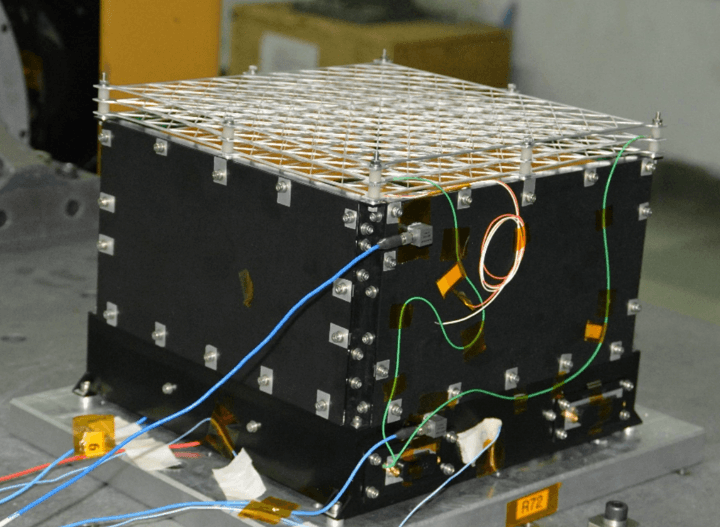
DEX: India’s first cosmic dust detector aboard PSLV-C58 POEM, operating ~350 km low-Earth orbit, 9.5° inclination

Interplanetary Dust Particles: microscopic comet and asteroid debris continuously bombarding atmospheres, forming upper-atmospheric meteor layer

DEX measurement: average IDP arrival to Earth roughly every 16 minutes, validating global dust flux models

Quick Facts for MCQs

Tech & Specs

  • Hypervelocity principle uses plasma signal from melting dust on impact
  • Miniaturized 3-kg design enables integration on CubeSats and deep-space probes
  • Ground calibration aligns with Grün meteoroid flux model for accuracy

Space Safety

  • Hypervelocity IDPs can puncture thermal blankets, solar arrays, jeopardising mission life
  • DEX data refines satellite shielding thickness and safe attitude manoeuvres
  • Dataset distinguishes natural dust from trackable man-made debris for collision probability models

Planetary Science

  • IDPs carry pristine presolar grains, informing Solar System formation chemistry
  • Future DEX variants proposed for Venus, Mars, lunar orbits to map dust climatology
  • Flux variation helps separate cometary and asteroidal contributions to zodiacal cloud

Key Data Points

FeatureData-Point
DeveloperPRL Ahmedabad under ISRO
First flight platformPSLV-C58 POEM (XPoSat)
Payload mass3 kg
Power draw4.5 W
Field of view140°
Detectable speed threshold>4 km s⁻¹
Detection rate~1 impact per 1 000 s
Measured dust flux6.5 × 10⁻³ particles m⁻² s⁻¹
IDP arrival frequency1 every 16 minutes
Orbit altitude~350 km, 9.5° inclination

Related UPSC Prelims PYQs

CDS_GK 2025PYQ 1

Which one of the following PSLVs, launched by ISRO, is not correctly matched with their Missions?

GS-3S&T

9.India's Remote Sensing Programme (Remote Sensing Satellites)

The Hindu

What & Where

Definition: Remote sensing = gathering Earth data from satellites/drones via reflected/emitted electromagnetic radiation, no ground contact.

Key processes: Optical indices (NDVI / NDWI), Synthetic Aperture Radar (SAR), hyperspectral splitting, gravity-field measurement.

Core geography: India’s IRS constellation (since 1988) among world’s largest Earth-observation fleets, operated by ISRO.

Quick Facts for MCQs

Applications

  • Agriculture: NDVI maps crop stress, enables site-specific irrigation, fertiliser, pest advice.
  • Water: NDWI plus SAR map floods, support early warning, insurance payouts.
  • Minerals: Hyperspectral signatures locate copper, gold, lithium alteration zones.

Indian Schemes

  • Bhuvan: National geoportal for visualising development, disaster layers.
  • Geo-MGNREGA: Satellite geotags for asset transparency, planning efficiency.
  • DMSP: ISRO inputs for hazard, vulnerability, risk, real-time disaster response.

Challenges

  • Accessibility: High-res data costly/restricted; municipal planning stuck with coarse imagery.
  • Weather: Monsoon cloud hampers optical crop/flood assessment; delays Kharif damage estimates.
  • Capacity: District staff lack geospatial skills; early-warning maps underused.

Policy Measures

  • Open-data: National Geospatial Policy 2022 to widen affordable high-res access.
  • SAR expansion: More RISAT-class launches for continuous monitoring, cyclone-flood response.
  • Training: ISRO-IIRS outreach to embed satellite insights in local governance.

Key Data Points

FeatureData-Point
First IRS launchIRS-1A, 1988
NDVI comparesNear-infrared reflectance vs red absorption
Water index namesNDWI, Modified NDWI
SAR abilityAll-weather, day–night imaging
Geo-MGNREGA assets tagged6.24 crore+
PMKSY-WDC 2.0 projects assessed~1,150 via Cartosat-2S/3
Gravity satellites revealSevere groundwater loss in North India
Hyperspectral satelliteHysIS (2018)
Upcoming joint SAR missionNISAR (NASA-ISRO)

Related UPSC Prelims PYQs

GS1 1996PYQ 1

Which one of the following satellites is to be launched from India in 1996?

GS1 2015PYQ 2

The term ‘IndARC’, sometimes seen in the news, is the name of

GS-3S&TQuick Bite

10.BHASHINI Shrutlekh Translation Tool (AI Speech Translation)

PIB

What & Where

Shrutlekh – AI tool under BHASHINI enabling real-time speech-to-text and multilingual translation across Indian languages.

BHASHINI – National Language Translation Mission platform by MeitY for language-inclusive Digital Public Infrastructure.

Geography – Pan-India rollout; supports 22 scheduled languages across governance, education, healthcare portals.

Quick Facts for MCQs

Tech & Schemes

  • Architecture uses AI-driven NLP, speech recognition, machine translation layers for seamless interoperability.
  • Shrutlekh demoed during key government speeches showcasing sub-second translation latency.
  • Platform aligns with Digital India agenda for scalable public tech solutions.

Governance Use-Cases

  • Real-time translation integrated on e-Shram enhancing migrant worker registration accessibility.
  • Multilingual conversational UPI enables voice-based payments for non-English users.
  • Live translation support planned for parliamentary and state events for wider citizen engagement.

Digital Inclusion

  • Objective to bridge language divide, ensuring equitable e-governance, education, healthcare service delivery.
  • Enables first-generation internet users to consume, create content in mother tongue.
  • Supports SDG target of inclusive information access, boosting digital literacy metrics.

Key Data Points

FeatureData-Point
Nodal ministryMeitY
Parent missionNational Language Translation Mission
Platform nameBHASHINI (BHASHa INterface for India)
Flagship toolShrutlekh
Core functionsAutomatic Language Detection, transcription, live translation display
Language coverage22 Constitution-scheduled Indian languages
Crowdsourcing portalBhashadaan
Digital stack peersAadhaar, UPI, DigiLocker
Sample deploymente-Shram portal, conversational UPI, large public events
AimUniversal digital content access in preferred language
GS-2Editorial

11.US 500% Tariff Bill (Russia Oil Sanctions)

The Print

What & Where

Act: Sanctioning Russia Act 2025; bipartisan US Bill empowering President to levy punitive tariffs.

Scope: Secondary sanctions on any country importing Russian oil/gas/uranium; goods entering US face up to 500 % duty.

Geography: Targets major Russian-energy buyers—India, China, Turkey, others—despite no direct US trade link.

Quick Facts for MCQs

Legal & Policy

  • Secondary-sanctions tool; mirrors CAATSA logic but focuses exclusively on Russian energy revenue choke.
  • Treasury mandated to property-block Russian banks plus foreign entities transacting with them.
  • Act authorises tariff setting by Executive; Congress only oversight.

Economic Impact

  • De facto embargo effect; labour-intensive Indian sectors (textiles, gems) already under 50 % duties risk shutdown.
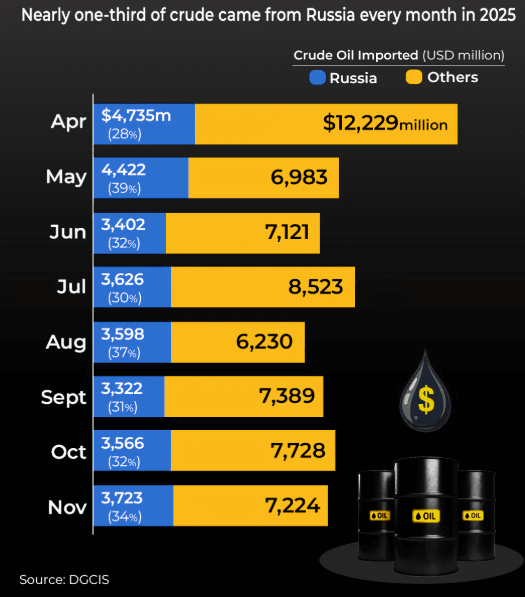
  • Import-bill spike predicted; Russian crude share ≈35 % of India’s intake FY 24.
  • Market fragmentation danger; may accelerate non-dollar settlements, commodity bloc formation.

Diplomatic Angle

  • Pressure tests India–US Comprehensive Global Strategic Partnership; perceived China leniency raises double-standard charge.
  • Waiver clause offers bargaining chip; India can link Quad, defence, climate cooperation to tariff relief.
  • High-level energy-price-cap dialogue pushed as stabiliser argument to Washington.

Mitigation Options

  • Energy-source diversification towards Guyana, Brazil, ME to reach “sanction-safe” exposure.
  • Fast-track FTAs with UK, EU to cushion export losses.
  • Possible WTO/G20 challenge citing MFN & proportionality norms.

Key Data Points

FeatureData-Point
Maximum tariff ceiling500 % on imports from non-compliant countries
Existing G7 oil price capUS $ 60 per barrel on Russian crude
Waiver windowUp to 180 days, President’s national-interest discretion
Earlier US tariff on India exports25 % (Aug 2025) → 50 % (Nov 2025)
Estimated Indian export exposure≈ US $ 120 billion (GTRI)
Potential extra Indian oil billUS $ 9–11 billion if Russian inflow cut
Senate lead sponsorSenator Lindsey Graham
Legal basis citedInternational Emergency Economic Powers Act (IEEPA)
GS-2PolityQuick Bite

12.e-B-4 Business Visa for Chinese (Business Visa Reform)

The Hindu

What & Where

e-Production & Investment Business Visa (e-B-4) lets Chinese professionals enter India for manufacturing-investment business.

Fully online process via Bureau of Immigration e-Visa portal; approval expected within 45-50 days.

Applicable across India; designed to deepen India-China production and investment linkages.

Quick Facts for MCQs

Scope of Activities

  • Installation commissioning maintenance of equipment across Indian facilities.
  • Quality checks training vendor empanelment and supply-chain development permitted.
  • IT ERP ramp-up plant design senior management visits covered.

Application Mechanics

  • Applicant submits forms fees documents on e-Visa portal; no embassy appearance.
  • Inviting Indian company preregisters on DPIIT National Single Window System.
  • Visa issued electronically and emailed for travel authorisation.

Diplomatic Significance

  • Measure part of recent India-China people-centric confidence building.
  • Targets smoother business mobility aiding investment-linked economic engagement.
  • Expected to help reset bilateral economic ties post border tensions.

Key Data Points

FeatureData-Point
Visa codee-B-4
Eligible nationalityChinese nationals
Processing time45–50 days
Maximum stayUp to 6 months
Application portalBureau of Immigration e-Visa
Inviting firm’s platformDPIIT National Single Window System
Key activitiesInstallation, QC, IT/ERP ramp-up, training, supply-chain work
Launch periodJanuary 2026
GS-2Scheme

13.PANKHUDI CSR Partnership Portal (Women-Child CSR)

DD News
Illustration for PANKHUDI CSR Partnership Portal (Women-Child CSR)

What & Where

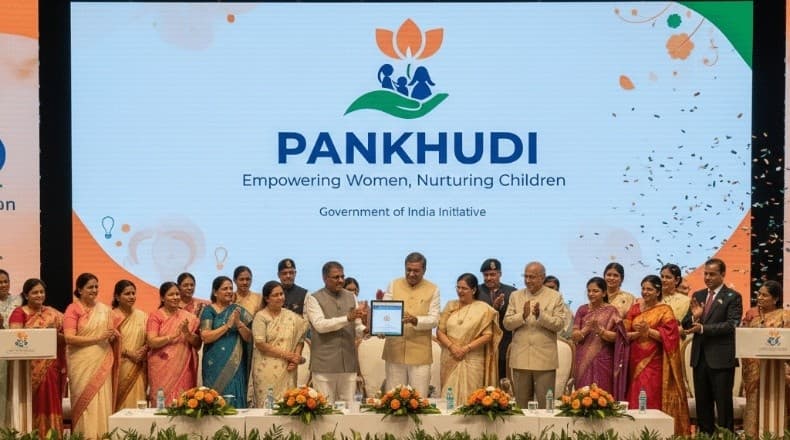
PANKHUDI: single-window digital portal enabling CSR/voluntary funding for women & child development projects.

Core processes: online registration, proposal upload, approval workflow, real-time outcome tracking; accepts only in-kind contributions.

Coverage: nationwide infrastructure—14 lakh+ Anganwadis, ~5,000 CCIs, ~800 One Stop Centres, ~500 Sakhi Niwas, ~400 Shakti Sadan.

Quick Facts for MCQs

Tech & Schemes

  • Workflow automation ensures end-to-end transparency from proposal to impact metrics.
  • Digital backbone strengthens convergence of three flagship missions under one dashboard.
  • Real-time GIS tagging possible for infrastructure upgrades.

Governance Angle

  • Transparency mandate reduces leakages and dual funding risks.
  • Standardised approval timelines enhance predictability for CSR planners.
  • Dashboard visibility aids ministry in evidence-based fund allocation.

Stakeholder Convergence

  • Single interface lowers transaction costs for corporates and NGOs.
  • NRIs gain verifiable channel to fund homeland social projects.
  • Citizens can track project status, boosting trust and accountability.

Key Data Points

FeatureData-Point
Parent ministryWomen & Child Development
Launch mediumIntegrated digital portal
Accepts cash?No; only non-cash/in-kind
Priority themesNutrition, health, ECCE, child welfare, women’s safety
Linked missionsSaksham Anganwadi & Poshan 2.0; Mission Vatsalya; Mission Shakti
Stakeholder typesIndividuals, NRIs, NGOs, corporates, govt bodies
Anganwadi reach14 lakh+ centres
Child Care Institutions~5,000 units
GS-2Scheme

14.District-Led Textiles Transformation Plan (Textile Export Districts)

PIB

What & Where

DLTT: district-level, data-driven textile transformation plan steered by Ministry of Textiles.

Coverage: 100 Champion Districts + 100 Aspirational Districts across India.

Geography focus: extra thrust on Eastern & North-Eastern tribal belt via Purvodaya convergence.

Quick Facts for MCQs

Tech & Schemes

  • Industry 4.0 adoption incentivised in Champion Districts.
  • Mega CFCs envisioned as shared processing, testing, logistics infrastructure.
  • Raw Material Banks planned to stabilise inputs for micro units in Aspirational areas.

Economic Angle

  • Export basket diversification through advanced clusters.
  • MSME competitiveness uplifted via scale efficiencies and formal credit access.
  • Logistics upgrades aim lower turnaround, enhance global market reach.

Social Concerns

  • Labour formalisation targets social security inclusion for informal textile workers.
  • Women-led SHGs, cooperatives prioritised for micro-enterprise creation.
  • Skilling & certification programmes designed for local youth employability.

Regional Focus

  • Eastern & NE districts get priority funding, connectivity, tribal handicraft GI tagging.
  • Plan aligns with Purvodaya for balanced regional industrial growth.
  • Convergence taps schemes like PM-GatiShakti for infrastructure gaps.

Key Data Points

FeatureData-Point
Parent ministryMinistry of Textiles
Core objectiveMake districts Global Export Champions / self-reliant hubs
District scoring pillarsExport performance, MSME ecosystem, Workforce presence
Champion District tagHigh scale & sophistication
Key tool—ChampionMega CFCs, Industry 4.0, advanced logistics, direct export linkages
Aspirational District tagFoundation & formalisation stage
Key tool—AspirationalBasic skilling, Raw Material Banks, SHG & cooperative promotion
Purvodaya elementTribal belt, GI tagging, connectivity boosts
Workforce focusMSME strengthening, labour formalisation, women & SHG enterprises
Collaboration modelConvergence of govt schemes, industry, academia
GS-2Scheme

15.Aadhaar Mascot Udai Launch (Aadhaar Outreach)

News on Air
Illustration for Aadhaar Mascot Udai Launch (Aadhaar Outreach)

What & Where

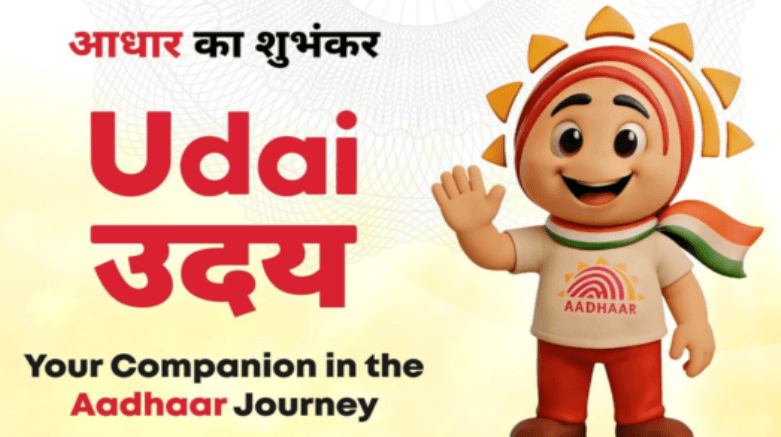
Udai – resident-facing mascot easing public grasp of Aadhaar processes

Rolled out nationwide by UIDAI, MeitY, Government of India

Covers updates, authentication, offline verification, selective data-sharing

Quick Facts for MCQs

Tech & Schemes

  • Digital-public-infrastructure: Positions Aadhaar as user-friendly DPI backbone
  • Process clarity: Visual guide demystifies QR, face-auth, offline e-KYC
  • Multilingual rollout: Assets planned across major Indian languages

Participatory Design

  • Open contest: Citizen inputs shape final mascot, boosting ownership
  • Inclusive approach: Friendly persona bridges gaps in literacy & digital access
  • Standardised visuals: Ensures uniform messaging across print, TV, digital

Service Delivery

  • Error check: Better guidance cuts update & auth mistakes at enrolment centres
  • Trust gain: Familiar symbol reinforces “participation builds trust” principle
  • Outreach efficiency: Single mascot enables cost-effective, recognisable campaigns

Key Data Points

FeatureData-Point
Launching bodyUIDAI
Mascot nameUdai (उदय)
Launch aimHumanise & standardise Aadhaar communication
Selection routeOpen national mascot contest
Entries received875 designs
EvaluationMulti-tier screening & jury
Core services explainedUpdate, authentication, offline e-KYC, data-sharing
Intended reach1 billion+ Aadhaar residents
GS-1Polity

16.India's Child Marriage Laws (Child Marriage Laws)

News on Air
Illustration for India's Child Marriage Laws (Child Marriage Laws)

What & Where

Definition Child marriage = union where girl < 18 yrs or boy < 21 yrs, outlawed under PCMA 2006

Campaign Bal Vivah Mukt Bharat aims 10 % prevalence cut by 2026, nationwide eradication by 2030

Geography Highest incidence in West Bengal, Bihar, Uttar Pradesh, central–eastern belt per NFHS-5

Quick Facts for MCQs

Legal & Policy

  • PCMA 2006 prohibits marriages, mandates CMPOs for prevention, protection, prosecution
  • Bharatiya Nyaya Sanhita 2023 removes marital immunity below 18, criminalising sexual act as rape
  • POCSO 2012 designates sexual assault within child marriage as aggravated, non-bailable

Historical Reforms

  • Reformers Raja Rammohan Roy, Vidyasagar, Phule spearheaded 19th-century opposition to early marriages
  • Sarda Act 1929 later amended 1948, 1978, raising ages to current 18/21 benchmarks

Targets & Implementation

  • Community-driven declarations of “child-marriage-free” districts, panchayats central to BVMB strategy
  • SDG 5.3 alignment ensures global reporting, mobilises multi-sector funding and monitoring

Regional Trends

  • Prevalence concentrated in West Bengal, Bihar, Uttar Pradesh, parts of central-eastern India
  • National proportion has declined across decades yet remains substantial at one-in-four young women

Key Data Points

FeatureData-Point
Legal minimum age18 yrs female; 21 yrs male
Current governing lawProhibition of Child Marriage Act 2006
Marriage validity under PCMAVoidable; void if force/trafficking/deceit
Campaign target-110 % prevalence reduction by 2026
Campaign target-2Child-marriage-free India by 2030
NFHS-5 prevalence23 % women 20-24 married before 18
First colonial lawAge of Consent Act 1891
Sarda Act ages (1929)14 yrs girls; 18 yrs boys
CMPO full formChild Marriage Prohibition Officer
Marital rape clauseSex with wife < 18 = rape (Bharatiya Nyaya Sanhita 2023)
POCSO viewTreats such sex as aggravated penetrative assault

Ready to practice?

Test your knowledge with our UPSC test series.

Start Free Trial