UPSC Current Affairs

14 topicsGS-1: 2GS-2: 4GS-3: 8
0/14 done
GS-2Polity

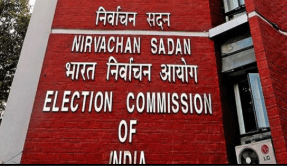
1.Election Commission Constitutional Powers (Election Commission)

New Indian Express
Illustration for Election Commission Constitutional Powers (Election Commission)

What & Where

Election Commission of India: constitutional body supervising all Union & State elections.

Special Intensive Revision: ECI-ordered drive to purge/add names on electoral rolls.

Jurisdiction: entire territory of India under Articles 324-329.

Quick Facts for MCQs

Legal & Policy

  • Article 324 prevails over ordinary laws when roll preparation disputed.
  • Parliament/States may legislate but cannot dilute ECI’s constitutional control.
  • Supreme Court acknowledged ECI duty to maintain voter roll purity.

Governance Angle

  • SIR ensures removal of ineligible names, reinforcing electoral integrity.
  • Balanced framework prevents executive overreach while allowing legislative oversight.
  • Citizenship verification central to franchise protection.

Electoral Process

  • Purity of rolls indispensable for free, fair, credible elections.
  • ECI exercises include continuous updating plus intensive or special revisions.
  • Discrimination in enrolment expressly barred under Article 325.

Key Data Points

FeatureData-Point
Constitutional seatArticle 324(1)
Core mandateSuperintendence, direction, control of elections & rolls
SIR legal basisArticle 324 + R-P Act, 1950
Single roll ruleArticle 325
Adult suffrage age18 years (Article 326)
Citizenship linkOnly Indian citizens can vote
Parliamentary powerArticle 327; subject to Article 324
State power gap-fillerArticle 328
Offices coveredParliament, State Legislatures, President, Vice-President
Non-discrimination groundsReligion, race, caste, sex, etc.

Related UPSC Prelims PYQs

GEO_GS, GS1 2022PYQ 1

Article 324 of the Constitution of India provides for the establishment of which one of the following institutions in India?

GEO_GS, GS1 2004PYQ 2

Consider the following tasks:
GS-2Polity

2.Bureau of Indian Standards Overview (Standards Body)

PIB

What & Where

BIS: National Standards Body under BIS Act 2016 for standards, certification, hallmarking, consumer protection

Geography: Pan-India mandate; Headquarters – New Delhi; interfaces with foreign manufacturers via dedicated certification scheme

Core workflow: Standard proposal → drafting → consultation → publication; licensing through ISI mark, Hallmarking, Compulsory Registration

Quick Facts for MCQs

Legal & Policy

  • Mandate strengthened by BIS Act 2016 enabling enforcement, consumer inclusion, global standard alignment
  • Shift emphasised: regulatory → facilitative to aid ease-of-doing-business, quality culture
  • Fast-track licensing introduced for strategic, time-bound approvals

Tech & Schemes

  • Standardisation Portal offers end-to-end digital lifecycle, dashboards, reduced timelines, higher transparency
  • Laboratory ecosystem: BIS labs, recognition programme, market surveillance testing
  • Schemes cover ISI mark, Hallmarking, Compulsory Registration, FMCS for imported goods

Social Concerns

  • SHINE trains SHGs/NGOs, positioning women as quality ambassadors in villages and urban clusters
  • Consumer affairs: awareness drives, sale of standards at subsidised rates, grievance redressal windows
  • SAKSHAM annually recognises high-impact staff, nurturing skill development within BIS

Key Data Points

FeatureData-Point
Foundation Day79th celebrated 6 Jan 2024
Origin bodyIndian Standards Institution (ISI), 1947
BIS establishment1 April 1987
Governing lawBIS Act, 2016
HQ cityNew Delhi
Total Indian Standards23,300 + across sectors
Certification logoISI mark
Precious-metal markHallmark
Foreign maker schemeFMCS (Foreign Manufacturers Certification Scheme)
Compulsory IT productsCovered under Compulsory Registration Scheme
New digital portalBIS Standardisation Portal (beta)
Women outreachSHINE programme
Annual awardsBIS–SAKSHAM scheme

Related UPSC Prelims PYQs

ESE_GS 2024PYQ 1

To increase transparency and consumer awareness and handle customer complaints, a 'Centralised Receipt and Processing Centre' and an 'Integrated Ombudsman Scheme' have been set up. These two schemes are related to which one of the following institutions?

GS-2Polity

3.Parliamentary Affairs Ministry 2025 Review (Parliamentary Affairs)

PIB

What & Where

Ministry of Parliamentary Affairs: coordinates Government business, questions, assurances in the two Houses of India’s Parliament.

National e-Vidhan Application (NeVA): mission-mode platform enabling paper-less, real-time functioning of State/UT legislatures.

2025 coverage: 20 legislatures live on NeVA; 3rd National NeVA Conference hosted in India.

Quick Facts for MCQs

Legislative & Policy

  • Passage: 39 Bills including tax simplification, rural jobs, online gaming regulation.
  • Debate: special discussions on Operation Sindoor, election reforms, space programme, Vande Mataram 150th.
  • Committees: 42 consultative bodies supported across ministries.

Digital Governance

  • Roll-out: 20 legislatures fully paper-less via NeVA, enhancing transparency and speed.
  • Support: capacity workshops and 3rd National NeVA Conference for officials nationwide.
  • Monitoring: OAMS ensures real-time tracking of parliamentary assurances.

Youth Engagement & Outreach

  • Expansion: NYPS 2.0 spurred 1,800 institutions, 15,800 individuals into Youth Parliament activity.
  • Celebrations: Constitution Day and Vande Mataram 150th events fostered civic awareness.
  • Language: Hindi Pakhwada, seminars advanced official-language usage.

Accountability & House Management

  • Mechanisms: Rule 377, Zero Hour effectively managed for member issues.
  • Disposal: 100 % RTI and public grievance cases cleared in 2025.
  • Cleanliness: Special Campaign 5.0 removed all identified physical and file pendencies.

International Coordination

  • Engagements: parliamentary delegations hosted from UK, Russia, Saudi Arabia.
  • Clearances: MoPA processed state legislature visits abroad smoothly.
  • Outreach: Exchanges bolstered inter-parliamentary diplomacy.

Key Data Points

FeatureData-Point
Bills steered in 202539
Key tax reformIncome-tax Bill, 2025
Rural employment lawVB-G-Ram-G Bill, 2025
Online gaming regulationPromotion & Regulation of Online Gaming Bill, 2025
Legislatures live on NeVA20 States/UTs
NeVA capacity events3rd National Conference + state workshops
Youth Parliament portalNYPS 2.0
Institutional registrations1,800+
Individual participants15,800+
RTI & grievance disposal100 %
Assurances trackerOnline Assurance Monitoring System (OAMS)
Consultative Committees42
Meetings held85
Constitution Day coordinationNationwide 2025
Cleanliness driveSpecial Campaign 5.0
GS-3Economy

4.Open Network for Digital Commerce (Digital Commerce)

New Indian Express

What & Where

Open Network for Digital Commerce (ONDC): open-protocol network letting any compliant app buy/sell goods & services across platforms.

Process: decentralised linkage of Buyer Apps, Seller Apps, Logistics & Tech Enablers via standard APIs, no central marketplace.

Geography: India; launched April 2022 under DPIIT, Ministry of Commerce & Industry.

Quick Facts for MCQs

Tech & Architecture

  • Decentralisation: network only sets protocols, leaves hosting, catalogues and fulfillment to participants.
  • Interoperability: any buyer app can discover and order from any seller app network-wide.
  • Modularisation: distinct specialists handle catalogue management, order flow, logistics and payments.

Governance & Policy

  • Ministry: DPIIT leads; ONDC created as public digital infrastructure.
  • Inclusivity: aims to curb marketplace monopolies, empower MSMEs and consumers equally.
  • Cost-efficiency: open standards expected to slash commission, onboarding and discovery costs.

Sectoral Coverage

  • Goods: food & beverage, grocery, fashion, electronics, home, beauty, agriculture inputs/outputs.
  • Services: mobility (cabs, metro, flights), financial products, skilled subscriptions, education & training.
  • Heritage: ASI enabled online ticketing for 170+ centrally protected monuments via ONDC buyer apps.

Key Data Points

FeatureData-Point
Launch month-yearApril 2022
Nodal departmentDPIIT, Commerce & Industry
Network natureOpen, interoperable, decentralised
Core toolsOpen protocols + standardised APIs
Key actorsBuyer App, Seller App, Logistics, Tech Enabler
Prime objectiveDemocratise digital commerce; break platform silos
MSME benefitLow entry cost, wider reach
Latest tie-inASI tickets for 170+ monuments/museums
Domains onboardFood, Grocery, Fashion, Mobility, Finance, Agriculture, Services
Ownership of listingsNone; ONDC holds no catalogues

Related UPSC Prelims PYQs

ESE_GS 2026PYQ 1

Which organization developed the Online National Drugs Licensing System (ONDLS) portal?

GS-3Infrastructure

5.Indian Railways Near-Complete Electrification (Railway Electrification)

News on Air
Illustration for Indian Railways Near-Complete Electrification (Railway Electrification)

What & Where

Entity Indian Railways: national transporter running world’s largest electrified broad-gauge network.

Mission 100 % Railway Electrification: post-2014 push to replace diesel with electric traction.

Geography Pan-India ~70 000 km broad-gauge; 25 States/UTs already fully electrified.

Quick Facts for MCQs

Policy & Targets

  • Target full electrification by Nov 2025 nearly achieved at 99.2 %.
  • Focus removal of diesel traction from regular operations nationwide.
  • Electrification completed across entire networks of 25 States/UTs.

Environmental Impact

  • Electric shift cuts greenhouse gases and local air pollutants versus diesel.
  • Renewable solar capacity onboarded up from 3.68 MW (2014) to 898 MW (2025).
  • Lower emissions aid India’s NDC commitments under Paris Agreement.

Economic Angle

  • Electric traction delivers ~70 % operational cost saving over diesel.
  • Reduced diesel use trims foreign exchange outflow on fuel imports.
  • Higher speeds and reliability lower overall logistics cost for economy.

Technological Measures

  • Automatic wiring trains accelerate overhead equipment installation to ≥15 km/day pace.
  • Mechanised OHE foundations improve safety, consistency across terrains.
  • Continuous energy monitoring enables optimisation of electric consumption network-wide.

Key Data Points

FeatureData-Point
Electrification coverage (Nov 2025)99.2 % BG route-km
Broad-gauge length~70 000 km
First electric rail operation1925
Mission-mode accelerationPost-2014
Avg pace 2004-141.42 km/day
Avg pace 2019-25≥15 km/day
Fully electrified States/UTs25
Solar capacity 20143.68 MW
Solar capacity 2025898 MW
Electric vs diesel cost~70 % cheaper
GS-3Environment

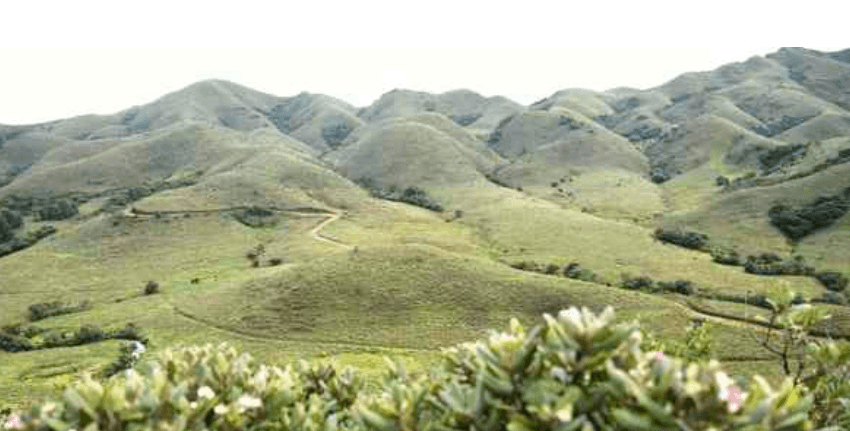
6.Integrating Grasslands into Climate Action (Grassland Carbon)

The Hindu
Illustration for Integrating Grasslands into Climate Action (Grassland Carbon)

What & Where

Definition Grasslands = open ecosystems dominated by grasses, few/no trees; include savannahs, steppes, prairies, rangelands

Extent Cover ≈ 40 % of Earth’s land; major belts in African savannahs, North-American prairies, Eurasian steppes, Australian rangelands

Indian context Present as Shola grasslands, Terai, Banni, Deccan savannahs; often mis-tagged “wastelands” in land records

Quick Facts for MCQs

Climate Significance

  • Sequestration Deep roots lock carbon, remain sinks even under frequent fires
  • Cooling Bright canopy reflects solar radiation, moderates semi-arid temperatures
  • Hydrology Root mats enhance groundwater recharge, buffer drought–flood cycles

Policy Bias

  • Finance Global climate funds skewed to forests, e.g., COP30 Tropical Forest Forever Facility
  • Multilateral gap UNFCCC, CBD, UNCCD treat grasslands separately, diluting focus
  • NDC neglect Most countries, incl. India, exclude grassland targets, losing funding avenues

India Concerns

  • Mislabeling Grasslands recorded as degraded land enables diversion to solar parks, plantations
  • Biodiversity “Extinction by afforestation” threatens open-habitat fauna like Great Indian Bustard
  • Livelihoods Fencing commons displaces pastoralists, erodes traditional grazing rights

Mainstreaming Measures

  • Reclassify Adopt Open Natural Ecosystem tag, drop “wasteland” terminology in surveys
  • Integrate Insert grassland carbon, biodiversity metrics into upcoming NDC revision
  • Incentivise Launch National Rangeland Utilisation Policy with PES for sustainable grazing

Key Data Points

FeatureData-Point
UN designation2026 = International Year for Rangelands & Pastoralists
Global land share≈ 40 % of terrestrial surface
Carbon stored below ground≈ 90 % of total grassland carbon
Fire impactSoil carbon largely retained; forests lose most biomass carbon instantly
Albedo effectHigher reflectance than forests, adds local cooling
India NDC sink focus2.5–3 billion t CO₂ via forests; grasslands omitted
Misclassification toolWasteland Atlas tags productive grazing commons
Example restorationSenegal Ferlo Reserve: 2 million ha grassland revived (2025)

Related UPSC Prelims PYQs

GEO_GS 2020PYQ 1

Biodiversity in terms of species richness is maximum in:

GEO_GS 2023PYQ 2

Which one of the following managed ecosystems has the highest amount of standing crop?

GS-3Species

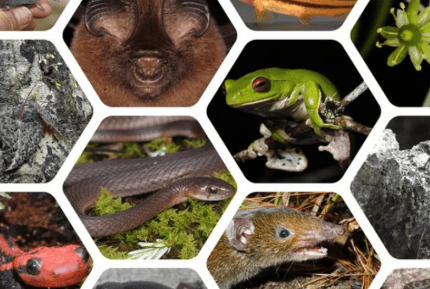
7.2025 New Species Discoveries in India (New Species)

MB
Illustration for 2025 New Species Discoveries in India (New Species)

What & Where

Discoveries: Six novel taxa across fungi, plant, arthropod, reptile, spider; announced in India, Dec 2025

Geography: Sites span Western Ghats, Khasi & Mizoram Hills, West Kameng (Arunachal), high-altitude Sikkim

First-records: Include first Indian Neelus springtail, first Indian fishing spider, entirely new fungal genus

Quick Facts for MCQs

Biodiversity Hotspots

  • WesternGhats: produced shieldtail snake and fishing spider, reflecting rainforest endemism
  • EasternHimalaya: West Kameng fungus, Sikkim springtail, Mizoram shrub highlight alpine-to-moist forest diversity

Conservation Status

  • Ophiorrhiza: <200 mature individuals, provisional IUCN Critically Endangered; habitat near Indo-Myanmar border
  • MicrohabitatDependence: bamboo-associate fungus and Abies-living macrofungus risked by forest loss

Adaptive Traits

  • Dolomedes: hydrophobic legs enable water-skating, hunting small fish/insects
  • Shieldtail: keratinized tail-disk aids burrowing, blocks predator ingress in wet soil

Key Data Points

FeatureData-Point
Bridgeoporus kanadiiColossal Abies-growing fungus, West Kameng, Arunachal
Rhinophis siruvaniensisBurrowing shieldtail snake, Siruvani Hills, Kerala
Neelus sikkimensisHigh-altitude springtail, first Neelus in India, Sikkim
Parasynnemellisia khasianaNew bamboo-forest fungus genus, Khasi Hills, Meghalaya
Dolomedes indicusSemi-aquatic fishing spider, Wayanad-Lakkidi, Western Ghats
Ophiorrhiza mizoramensisCritically endangered Rubiaceae shrub, Murlen NP, Mizoram

Related UPSC Prelims PYQs

CDS_GK, GS1 2023PYQ 1

A new species of pit-viper was discovered in 2019 and named after the State in which it was found. Identify the State from among the following:

CDS_GK, GS1 2016PYQ 2

Recently, our scientists have discovered a new and distinct species of banana plant which attains a height of about 11 metres and has orange-coloured fruit pulp. In which part of India has it been discovered?

GS-3S&T

8.Biomaterials Manufacturing in India (Biomaterials)

The Hindu

What & Where

Biomaterials: materials wholly/partly bio-derived or bio-engineered to replace petroleum plastics, now scaled in India’s PLA mega-plants

Key types: Drop-in (Bio-PET), Drop-out (PLA), Novel (self-healing composites, bioactive scaffolds)

Core geography: India leading 2026 PLA capacity; feedstocks from sugarcane, maize, agri-waste nationwide

Quick Facts for MCQs

Tech & Schemes

  • Fermentation: microbes convert sugars to lactic acid then polymerised to PLA
  • Composite crafting: lignin-cellulose blends yield lightweight auto, aerospace parts
  • 3D-printing: bioactive scaffolds enable bone regrowth applications

Environmental Impact

  • Renewability: crop-based carbon offsets production emissions
  • Biodegradability: avoids century-long microplastic persistence, decomposes to water and CO₂
  • Recycling clash: PLA contaminates conventional plastic streams, mandates separate composting

Economic Angle

  • Drop-in advantage: zero machinery upgrade costs for industry adoption
  • Industrial shift: India’s 2026 PLA mega-facilities mark climax of biomanufacturing focus
  • Market pull: single-use plastic bans driving seaweed or corn-starch packaging demand

Key Data Points

FeatureData-Point
Primary feedstocksSugarcane, maize, agri residues, floral/seafood waste
Microbial workhorsesBacteria Xanthomonas, various fungi
PLA end-of-life needIndustrial composting; not recyclable with PET
Drop-in plastic sampleBio-PET; fits existing lines
Carbon logicUses current CO₂ cycle via photosynthesis
Biocompatibility useStents, drug-delivery systems
Tunability leverMicrobe genetic engineering alters strength, flexibility, degradation
Typical biodegradation timeMonths under suitable bacterial action
GS-3S&T

9.Mpemba Effect Simulation Breakthrough (Thermodynamics)

News on Air
Illustration for Mpemba Effect Simulation Breakthrough (Thermodynamics)

What & Where

Definition: Mpemba effect—initially hotter water freezes faster than colder under certain conditions

Origin: Named after Tanzanian student Erasto Mpemba who reported it scientifically in 1969

Latest locale: First full-scale supercomputer simulation achieved by Indian scientists

Quick Facts for MCQs

Scientific Mechanisms

  • Evaporation: mass loss quickens solidification
  • Convection: internal circulation increases heat dissipation
  • Supercooling shift: hot water initiates crystallisation at higher temperature

Tech & Schemes

  • Supercomputing: high-resolution molecular dynamics used to replicate full freeze cycle
  • Validation: simulation matches laboratory observations across variable initial temperatures
  • Capability: showcases Indian HPC infrastructure for complex multiphase problems

Industrial & Climate Uses

  • Food sector: optimises rapid freezing protocols saving energy
  • Cryosphere models: refines ice nucleation data for climate projections
  • Materials science: informs controlled solidification in alloys and polymers

Key Data Points

FeatureData-Point
First recorded thinkersAristotle, Bacon, Descartes
Formal scientific reportErasto Mpemba, 1969
Key Indian milestone2024 supercomputer simulation resolving paradox
Main driving disciplineNon-equilibrium physics of phase transitions
Prominent mechanismsEvaporation, dissolved-gas loss, convection, supercooling, environmental coupling
Industrial relevanceFood freezing, cryopreservation, climate ice modelling
GS-3S&TQuick Bite

10.Wolf Supermoon Phenomenon (Celestial Event)

The Hindu

What & Where

Wolf Supermoon = January’s “Wolf Moon” coinciding with a supermoon when full Moon occurs at perigee.

Wolf Moon: first full moon of January in Indigenous, Celtic, Old-English folklore; no physical lunar change.

Supermoon: full Moon near Earth-Moon perigee, giving a slightly larger, brighter apparent disc.

Quick Facts for MCQs

Folklore & Naming

  • Wolf name stems from mid-winter belief of louder wolf howls.
  • Popularised by almanacs like the Old Farmer’s Almanac.
  • No astronomical property tied to the “wolf” label.

Orbital Mechanics

  • Moon’s perigee produces ~14 % larger, ~30 % brighter disc than apogee full moon.
  • Supermoon combines full phase timing with perigee pass.
  • Alignment rarely matches January’s full Moon, hence few Wolf Supermoons.

Observation Phenomena

  • Moon illusion: brain compares low-lying Moon against terrestrial objects, inflating perceived size.
  • Apparent enlargement is perceptual; telescope shows unchanged angular diameter shift only from distance.
  • Increased brightness aids night-sky visibility but doesn’t affect tidal physics beyond normal perigean spring tides.

Key Data Points

FeatureData-Point
2026 peak date2 January 2026
Traditional monthJanuary
Orbit shapeElliptical
Closest point termPerigee
Farthest point termApogee
Visual trickMoon illusion near horizon
FrequencyRelatively uncommon alignment
GS-3SecurityQuick Bite

11.ICGS Samudra Pratap Commissioning (Pollution Control Vessel)

The Hindu

What & Where

Vessel: ICGS Samudra Pratap, first indigenously built Pollution Control Vessel for Indian Coast Guard

Geography: Homeported Kochi, tasked for Exclusive Economic Zone and high-sea pollution response

Type: Largest ICG ship, multi-role platform for oil-spill control, fire-fighting, patrol and surveillance

Quick Facts for MCQs

Defence Technology

  • Indigenization: >60 % local components aligns with Atmanirbhar Bharat push
  • Capability: Equipped with pollution detectors, specialised response craft, modern firefighting gear, integrated helicopter hangar
  • Performance: Speed >22 kn and 6,000 nmi range enable rapid, pan-EEZ operations

Environmental Impact

  • Mission: Oil-spill containment safeguards coral reefs, mangroves, fisheries
  • Compliance: Enhances obligations under MARPOL and National Oil Spill Contingency Plan
  • Blue economy: Cleaner seas bolster coastal livelihoods and maritime tourism

Security Dimension

  • Multipurpose: Fire-fighting, coastal patrol, maritime safety augment naval security grid
  • Coverage: Assigned to Region West, guarding busy tanker routes off Kerala coast
  • Deterrence: Persistent presence counters illegal fishing, smuggling, piracy

Key Data Points

FeatureData-Point
BuilderGoa Shipyard Ltd
Indigenous content>60 %
CommissionedJan 2026 by Defence Minister
Top speed>22 knots
Endurance6,000 nautical miles
Fleet statusLargest ship in ICG
Primary rolePollution response & oil-spill containment
HomeportKochi, Coast Guard Region West
Aviation facilityHelicopter hangar

Related UPSC Prelims PYQs

CDS_GK, ESE_GS 2026PYQ 1

Where were the Fast Patrol Vessels (FPVs) ICGS Ajit and ICGS Aparajit launched?

CDS_GK, ESE_GS 2021PYQ 2

Which one of the following ships was involved in ‘Mission Sagar – II’?

GS-2Scheme

12.Design Linked Incentive Scheme for Semiconductors (Semiconductor Design)

PIB

What & Where

Design Linked Incentive Scheme: MeitY‐run initiative boosting indigenous fabless semiconductor design under Semicon India Programme

Key processes: 50 % cost reimbursement, 4–6 % sales incentive, shared EDA grids, MPW prototyping via ChipIN Centre

Geography: pan-India coverage; eligibility restricted to Indian-owned startups, MSMEs, domestic companies

Quick Facts for MCQs

Objectives & Need

  • Strategic value: design/IP adds ≥50 % chip value, drives 30–35 % global sales
  • Self-reliance: offsets import dependence despite local fabs
  • Security: indigenous IP avoids backdoor, supply-chain risks

Incentives & Infrastructure

  • Reimbursement: upfront design costs halved, easing capital crunch
  • Sales incentive: performance-linked, encourages market deployment
  • EDA Grid: national tool access, MPW shuttles cut prototyping cost

Institutional Setup

  • C-DAC: nodal implementer for DLI, SIM, microprocessor missions
  • Chips-to-Startup: academic skilling pipeline for BTech–PhD levels
  • Microprocessor Development: SHAKTI, VEGA, AJIT open-source cores

Achievements

  • Application domains: video surveillance, drone detection, smart meters, sat-com, IoT SoC
  • Ecosystem adoption: extensive EDA Grid utilisation signals rising domestic design activity
  • Democratisation: start-ups, MSMEs, academia share high-end tools formerly unaffordable

Key Data Points

FeatureData-Point
Nodal ministryMeitY
Scheme launch year2021 (Semicon India Programme)
Product Design incentive50 % eligible spend, cap ₹15 cr
Deployment incentive4–6 % net sales for 5 yrs, cap ₹30 cr
Design infra hubChipIN Centre, C-DAC
Projects sanctioned24 till Jan 2026
Engineers/students reached≈1 lakh across 400 orgs
SIM total outlay₹76,000 cr
Skill programme target85,000 chip-design professionals (C2S)
GS-1Editorial

13.Privatisation Impact on Public Health (Public Health)

The Hindu

What & Where

Privatisation in public health: rising role of private hospitals, insurers, colleges funded partly by public money

Key modes: Public–Private Partnerships, insurance-based purchasing (PM-JAY), expansion of private medical education

Geography: India with highest OOPE share among G-20, uneven State regulation

Quick Facts for MCQs

Financing Pattern

  • Underfunding: low public spend pushes insurance funds toward private reimbursement, starving public facilities
  • Revenue focus: private hospitals driven by case-based tariffs; audits show unnecessary C-sections, hysterectomies
  • Poverty risk: high OOPE pushes millions below poverty line each year

Regulatory Gaps

  • Fragmented oversight: price caps, quality norms differ by State; enforcement weak
  • Transparency deficit: limited audit of standard treatment guidelines in empanelled private units
  • Consumer impact: identical cardiac stent cost varies up to 5× across cities

Medical Education

  • Cost escalation: private seats >₹40 lakh leads to debt-driven specialty choices, urban concentration
  • Capacity skew: 60 % new MBBS seats since 2014 added in private colleges
  • Service vacuum: high fees undermine rural, primary-care postings

Government Schemes

  • PM-JAY: covers 55 crore citizens, but 60-70 % claims routed to private sector
  • Ayushman Arogya Mandirs: planned 1.5 lakh centres; potential to treat 80–90 % common ailments
  • ABDM: digital health IDs, interoperability push for both public and private facilities

Key Data Points

FeatureData-Point
Public health spend (2023-24)2.1 % of GDP
Household OOPE share>60 % of total health spend
PM-JAY test share during COVID-19~45 % RT-PCRs by private labs
High-end diagnostics share~70 % provided by private sector
Private MBBS fee band₹40–50 lakh (often ₹1 crore for NRI seats)
National Health Policy target2.5 % of GDP by 2025
PM-JAY hospitalisation patternMajority reimbursements to private hospitals
Dialysis PPP exampleAll district units in Uttar Pradesh
Stent price variation3–5× across private hospitals

Related UPSC Prelims PYQs

CDS_GK, GS1 2021PYQ 1

Which one of the following statements in the context of social sector spending in India during 2014–19 (both States and the Union Government together) is true?

CDS_GK, GS1 2023PYQ 2

Consider the following statements:

GS-1Social IssuesQuick Bite

14.India's Braille Literacy Ecosystem (Braille Literacy)

PIB

What & Where

World Braille Day: 4 January, UN-recognised observance spotlighting tactile literacy for persons with visual disabilities.

Braille: six-dot, two-column tactile code enabling reading/writing of multiple languages through touch.

India: adopted in late 19th C; ~50.32 lakh visually-impaired citizens (Census 2011).

Quick Facts for MCQs

Legal & Policy

  • RPwD Act 2016 mandates accessibility, inclusive education, Braille & assistive devices.
  • Sugamya Bharat sets nationwide accessibility norms, including Braille-enabled infrastructure.
  • Compliance aligns with UNCRPD Articles 9 & 24 on information, education access.

Tech & Schemes

  • Standard Bharati Braille 2025: Unicode-mapped, covers all Indian languages for digital interfaces.
  • NIEPVD’s Draft 2.1 targets enhanced tech compatibility and future device integration.
  • Sugamya Pustakalaya hosts multilingual Braille, DAISY, e-text resources for print-disabled users.

Social Stats

  • India houses world’s largest Braille-using population outside China.
  • Literacy via Braille central to dignity, independence, equal participation for visually-impaired.
  • Expansion crucial given ageing demographic and surge in diabetic retinopathy cases.

Key Data Points

FeatureData-Point
Observance date4 January (annual)
Braille cell6 dots, 2 × 3 grid
NatureCode, not a language
Indian visually-impaired50.32 lakh (2011 Census)
Key lawRights of Persons with Disabilities Act 2016
Unified scriptStandard Bharati Braille Code 2025
Upgraded draftBharati Braille 2.1 by NIEPVD, 2026
Flagship missionSugamya Bharat Abhiyan
Digital librarySugamya Pustakalaya
UN treatyUNCRPD (India State Party)

Ready to practice?

Test your knowledge with our UPSC test series.

Start Free Trial