UPSC Current Affairs

13 topicsGS-1: 4GS-2: 2GS-3: 7
0/13 done
GS-2Polity

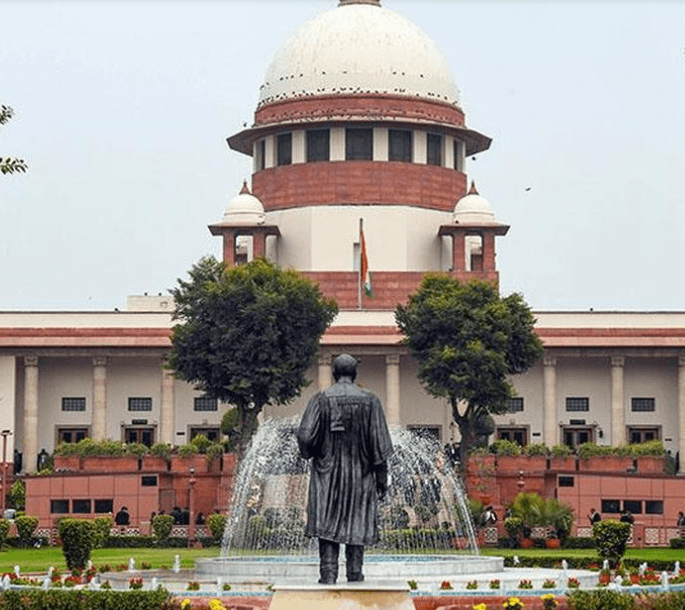
1.Tribunal Reforms Act Verdict (Tribunal Reforms Act)

The Hindu
Illustration for Tribunal Reforms Act Verdict (Tribunal Reforms Act)

What & Where

Tribunal Reforms Act 2021: Centre-enacted statute abolishing/reshaping several appellate tribunals across India.

Supreme Court Judgment 2025: Bench invalidated key clauses for violating separation of powers & prior MBA IV-V rulings.

National Tribunal Commission: Court-mandated independent body for appointments, tenure, oversight—deadline four months.

Quick Facts for MCQs

Legal & Policy

  • Principle: Parliament cannot re-enact provisions already struck down without curing defects.
  • Court restored 5-yr minimum tenure, 10-yr advocate eligibility, balanced committee composition.
  • Executive rule-making on pay/conditions declared contrary to tribunal autonomy.

Judicial Independence

  • Short 4-yr terms linked to re-appointment risk seen as government leverage on adjudicators.
  • Two-name panel option diluted primacy of judicial members in final selection.
  • Civil-service salary parity viewed as undermining parity with High Court judges.

Administrative Impact

  • Abolition shifted pending appeals to overburdened High Courts, risking delay, lost technical expertise.
  • Centralised control projected as efficient but criticised for excessive ministerial discretion.
  • Commission envisaged to unify recruitment, evaluation, infrastructure, budget independent of litigant ministries.

Pros & Cons Debate

  • Supporters: uniformity, speedy appointments, experienced (>50 yrs) adjudicators, performance review via fixed terms.
  • Critics: excludes younger talent, replicates struck-down clauses, executive dominance when Union is top litigant.

Key Data Points

FeatureData-Point
Enactment date13 Aug 2021
Parent OrdinanceTribunal Reforms Ordinance 2021
Chairperson term (Act)4 yrs or 70 yrs age whichever earlier
Member term (Act)4 yrs or 67 yrs age whichever earlier
Minimum entry age fixed50 years
Selection body headCJI or nominee (Search-cum-Selection Committee)
Tribunals abolishedIPAB, Film Certification AT, Airport AT, etc.
Articles cited by Court14, 323A, 323B + basic structure
Compliance directiveForm National Tribunal Commission in 4 months
Earlier safeguards revivedMadras Bar Association IV & V norms

Related UPSC Prelims PYQs

CDS_GK, GS1 2024PYQ 1

प्रतिषेध रिट उच्चतम न्यायालय या उच्च न्यायालयों द्वारा किसे और किस प्रयोजन से जारी किया गया एक आदेश है ?

CDS_GK, GS1 2023PYQ 2

Which of the following conditions is/are necessary for the issue of a writ of certiorari in India?
GS-1History

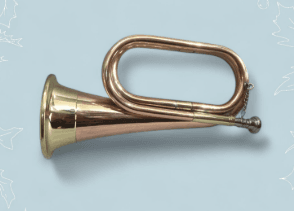
2.Meerut Bugle GI Instrument (GI Tag)

New Indian Express
Illustration for Meerut Bugle GI Instrument (GI Tag)

What & Where

Meerut Bugle – handmade brass wind-instrument, core of Indian military drills, parades, signals.

Crafted in Meerut (Uttar Pradesh); tradition since late 19th-century British era battlefield communication.

Now GI-tagged, anchoring local brass-ware cluster to national ceremonial use.

Quick Facts for MCQs

Craft Features

  • Handcrafted; emphasis on durability, tonal accuracy, commanding sound.
  • Links colonial communication tools to modern ceremonial tradition.

Legal & Policy

  • GI grants exclusive production rights to authorised Meerut artisans, deters counterfeits.
  • Infringement legally punishable under 1999 Act provisions.

Economic Angle

  • GI status expected to lift market value, boost artisan livelihoods, sustain local brass industry.
  • Enhances export visibility via fairs, defence memorabilia markets.

Key Data Points

FeatureData-Point
Instrument categoryBrass wind bugle
Primary usersArmy, paramilitary, police bands
Core materialHigh-quality brass
Craft origin eraLate 1800s (colonial)
GI lawGeographical Indications of Goods Act 1999
GI enforcement startSeptember 2003
GI registry locationChennai
Supervising officeController General of Patents, Designs & TMs
Total Indian GI tags605 (current)
GS-1History

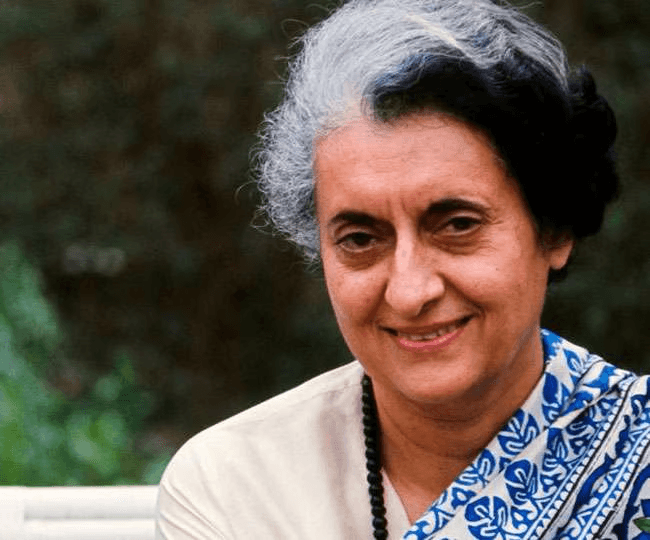
3.Indira Gandhi Birth Anniversary (Indira Gandhi)

Indian Express
Illustration for Indira Gandhi Birth Anniversary (Indira Gandhi)

What & Where

Identity – Indira Gandhi, first & only woman Prime Minister of India

Origins – Born 19 Nov 1917, Allahabad (Prayagraj), Uttar Pradesh

Memorial – Shakti Sthal, New Delhi; 108th birth anniversary marked on 19 Nov 2025

Quick Facts for MCQs

Freedom Struggle

  • Organisation – Mobilised children via Bal Charkha Sangh and Vanar Sena during Non-Cooperation
  • Incarceration – Imprisoned for Quit India participation, 1942

Economic Measures

  • Banking – 1969 nationalisation widened rural credit and aligned finance with socialist priorities
  • Agriculture – HYV seeds, fertiliser subsidies under Fourth Plan drove foodgrain self-sufficiency

Constitutional & Governance

  • Amendment – 26th Act 1971 abolished Privy Purses, ending princely privileges
  • Emergency – 1975 proclamation suspended civil liberties, imposed press censorship

Defence & Nuclear

  • War – Directed 1971 Indo-Pak conflict, leading to independent Bangladesh
  • Deterrence – Oversaw 1974 Pokhran-I, establishing India’s nuclear capability

Social Welfare & Recognition

  • Welfare – Garibi Hatao programmes launched to target poverty and expand benefits
  • Awards – Bharat Ratna and multiple international honours cemented global stature

Key Data Points

FeatureData-Point
PM Tenure1966–77 and 1980–84
Freedom-era groupsBal Charkha Sangh; Vanar Sena (1930)
Independence arrestQuit India Movement, 1942
Bank nationalisation14 major banks, 19 July 1969
Green Revolution pushFourth Five-Year Plan, 1969-74
Bangladesh War roleBacked Mukti Bahini; victory Dec 1971
Privy Purses end26th Constitutional Amendment, 1971
Nuclear milestonePokhran-I test “Smiling Buddha”, 18 May 1974
National Emergency25 Jun 1975 – 21 Mar 1977
Anti-poverty sloganGaribi Hatao (Remove Poverty)
Highest civilian awardBharat Ratna, 1972
Key publicationsYears of Challenge; Years of Endeavour; India; Inde
Global honoursMexican Academy Award 1972; FAO Medal 1973

Related UPSC Prelims PYQs

GS1 2009PYQ 1

In the context of independent India's economy, which one of the following was the earliest event to take place ?

GS-1History

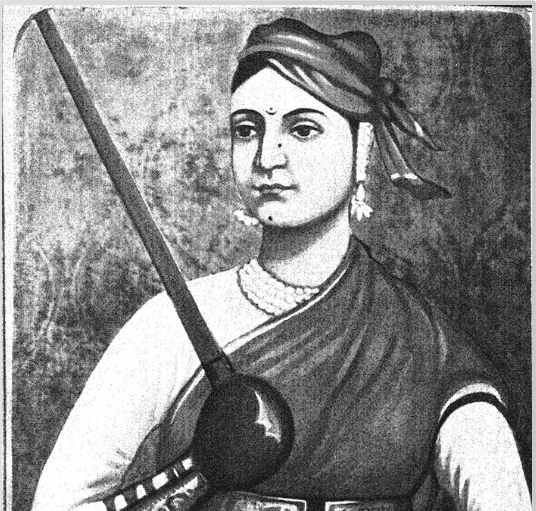
4.Rani Lakshmibai Birth Anniversary (Revolt of 1857)

PIB
Illustration for Rani Lakshmibai Birth Anniversary (Revolt of 1857)

What & Where

Rani Lakshmibai aka Manikarnika; queen of Jhansi in Bundelkhand, present Uttar Pradesh

Central figure in 1857 Revolt; led Jhansi, Kalpi, Gwalior theatres against East India Company

Birth Varanasi 1828; martyrdom Gwalior 17 June 1858

Quick Facts for MCQs

Early Life

  • Training; horseback, sword, rifle under Brahmin upbringing
  • Association; childhood friends Nana Sahib, Tatya Tope later 1857 leaders
  • Marriage age 14; moved from Varanasi to Jhansi palace

Annexation Dispute

  • Doctrine of Lapse invoked after Gangadhar Rao death 1853
  • Adoption of Damodar Rao ignored by Governor-General Dalhousie
  • Jhansi annexation triggered armed resistance

Military Command

  • Fortification; led Jhansi troops, raised women battalion
  • Alliance; joined forces at Kalpi, captured Gwalior with rebels
  • Martyrdom; fought British cavalry in disguise, died wielding sword

Legacy

  • INA 1943 all-women Rani of Jhansi Regiment set precedent
  • Celebrated in nationalist poetry by Subhadra Kumari Chauhan
  • Annual 19 Nov events honor her courage across India

Key Data Points

FeatureData-Point
Birth nameManikarnika Tambe
Birth date19 Nov 1828
Birth placeVaranasi, Kashi Kingdom
SpouseMaharaja Gangadhar Rao, Jhansi
Adopted heirDamodar Rao
British annexation toolDoctrine of Lapse, 1853
Key comradesNana Sahib; Tatya Tope
Death17 Jun 1858, near Gwalior
INA women regimentRani of Jhansi Regiment
SymbolismBravery; resistance to colonial rule

Related UPSC Prelims PYQs

CDS_GK 2025PYQ 1

The popular poem "Khoob ladi mardani woh to Jhansi wali rani thi" (Like a man she fought, she was the Rani of Jhansi) was written by:

GS-3Editorial

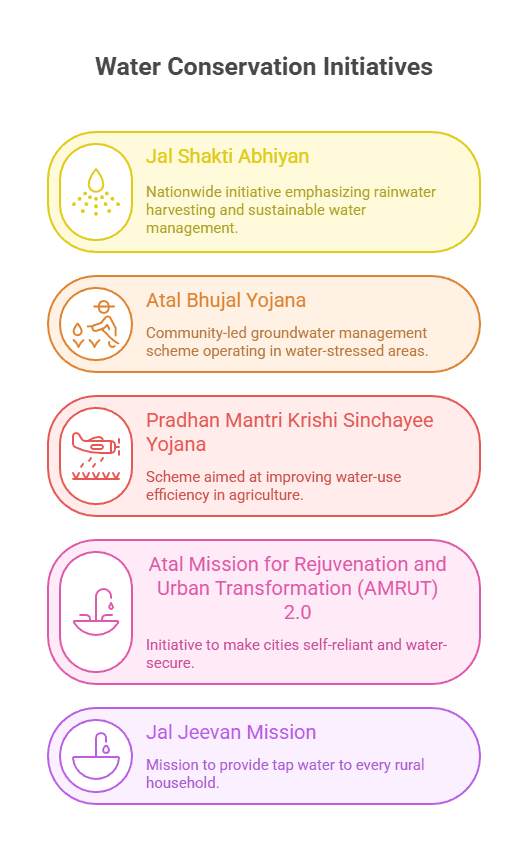
5.Agricultural Water Management (Agricultural Water Use)

Indian Express
Illustration for Agricultural Water Management (Agricultural Water Use)

What & Where

National Water Awards – annual Ministry of Jal Shakti honour for exemplary water conservation, instituted 2018.

6ᵗʰ edition (2024) chose 46 winners in 10 categories; Maharashtra ranked Best State.

Awards cover pan-India entities, advancing “Jal Samridh Bharat” water-secure vision.

Quick Facts for MCQs

Policy & Schemes

  • Jal Samridh Bharat vision: efficiency, recycling, reuse, citizen awareness.
  • Free farm electricity & MSP-driven paddy/sugarcane deepen aquifer stress.
  • National Water Awards encourage capacity-building and participatory groundwater governance.

Agriculture Challenges

  • Ageing canals lose 40 % water; repairs lag kharif sowing.
  • Drip/sprinkler reach only 12 % area; high capex deters smallholders.
  • 13 million ha waterlogged; salinity, nitrate hotspots expanding.

Technology Solutions

  • AI-IoT piped irrigation (e.g., Microsoft FarmVibes) enables demand-based supply.
  • Digital-twin command models track soil moisture, canal releases, crop stress.
  • Solar-powered smart drip/sprinkler automates valves, cuts energy use.

Environmental Concerns

  • India taps 25 % global groundwater; over-extraction widespread.
  • 5.6 % 2023 rainfall shortfall triggered deep-aquifer pumping in >200 districts.
  • Coastal over-pumping invites seawater intrusion, degrading ecosystems and yields.

Key Data Points

FeatureData-Point
Launch year2018
Administering departmentWater Resources, RD & Ganga Rejuvenation, Jal Shakti
6ᵗʰ Award venue/year2024, New Delhi
Best State (6ᵗʰ)Maharashtra
Runners-up StatesGujarat, Haryana
Total 6ᵗʰ edition winners46
Award categories (6ᵗʰ)10
India’s share in world groundwater use≈25 %
Irrigated area under micro-irrigation≈12 %
Canal transmission lossUp to 40 %
Land at waterlogging risk≈13 million ha
Districts with nitrate contamination56 %
Monsoon contribution to groundwater recharge≈60 %
2023 monsoon deficit5.6 % across >200 districts

Related UPSC Prelims PYQs

GEO_GS, GS1 2012PYQ 1

If National Water Mission is properly and completely implemented, how will it impact the country?

GEO_GS, GS1 2024PYQ 2

Which one among the following statements about PDMC scheme (Per Drop More Crop) is not correct?

GS-3Editorial

6.Long-Term NCR Air Quality Plan (Air Pollution Strategy)

The Hindu
Illustration for Long-Term NCR Air Quality Plan (Air Pollution Strategy)

What & Where

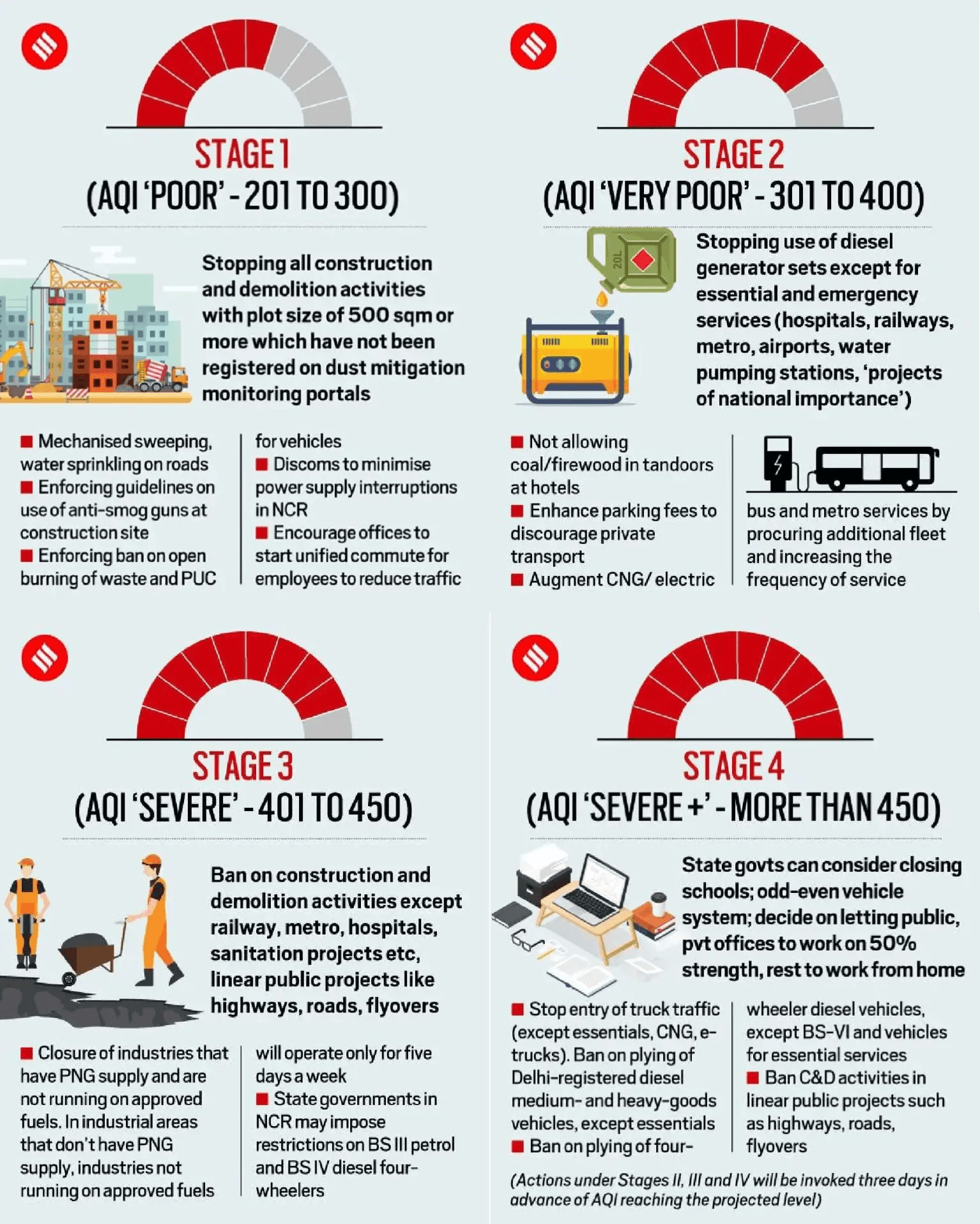
GRAP = graded, threshold-triggered emergency plan for National Capital Region to curb emissions when AQI crosses set bands

NCR spans Delhi + parts of Haryana, Uttar Pradesh, Rajasthan; winter PM2.5 hotspot

Supreme Court (20 Nov 2025) sought holistic, year-round pollution strategy beyond perpetual GRAP

Quick Facts for MCQs

Legal & Policy

  • SupremeCourt: rejected year-round GRAP, citing harm to daily-wage, migrant construction labour
  • Court: directed Centre, states, farmers, urban bodies to craft long-term roadmap, avoid knee-jerk bans
  • GovernanceOverlap: CPCB, NGT, CAQM duplication slows coordinated enforcement

International Examples

  • ChinaAirpocalypse: 2000s smog + 2008 Olympics pressure catalysed nationwide reforms
  • CadreEvaluation: provincial promotions linked to meeting air-quality targets under 11th FYP
  • ShenzhenModel: e-bus fleet 2017; parallel stricter vehicle norms, coal-boiler and residential-heating controls

Implementation Gaps

  • GRAPReactive: activates post-violation; misses stubble, vehicle-growth, construction-dust prevention
  • SeasonalBans: lift → pollution rebounds; systemic transport, waste, agriculture fixes absent
  • SourceBeyondDelhi: biomass cooking, Punjab-Haryana fires, dust storms dilute impact of city-centric measures

Key Data Points

FeatureData-Point
Supreme Court order date20 Nov 2025
Key pollutant flaggedPM2.5
China’s 11th Five-Year Plan2006–10
Cities with early full e-bus switchShenzhen (by 2017)
China areas with better air since 2013≈ 80 %

Related UPSC Prelims PYQs

CDS_GK, GS1 2023PYQ 1

भारत के सन्दर्भ में जलवायु परिवर्तन पर राष्ट्रीय कार्य योजना (NAPCC) के बारे में निम्नलिखित में से कौन-सा/कौन-से कथन सही है/हैं ?

CDS_GK, GS1 2022PYQ 2

WHO के वायु गुणवत्ता दिशानिर्देशों के संदर्भ में, निम्नलिखित कथनों पर विचार कीजिए :

GS-3Species

7.Dugong Conservation Status India (Marine Mammal)

Indian Express
Illustration for Dugong Conservation Status India (Marine Mammal)

What & Where

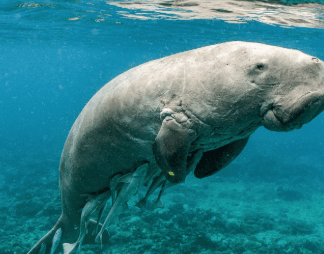
Dugong dugon; large, slow, herbivorous marine mammal inspiring mermaid legends

Indian strongholds: Gulf of Mannar–Palk Bay, Andaman-Nicobar, Gulf of Kutch

Global belt: warm, shallow Indian–Pacific waters from East Africa to Australia

Quick Facts for MCQs

Legal & Policy

  • Schedule I tag mandates highest penalties for hunting, trade
  • IUCN Vulnerable listing triggers global monitoring, funding channels
  • Abu Dhabi IUCN Congress report alarms on Indian regional declines

Biology & Ecology

  • Whale-like tail and paddle flippers enable slow cruising over seagrass meadows
  • Heavy grazing turns dugongs into ecosystem engineers, boosting meadow regeneration
  • Seagrass beds foster blue-carbon storage, aiding climate mitigation

Threats

  • Bycatch forefront killer in Tamil Nadu, A&N, Gujarat gill-net fisheries
  • Habitat loss via dredging, turbidity, port projects degrades sole food source
  • Tissue analyses show arsenic, cadmium, mercury, lead contamination from runoff, sewage

Key Data Points

FeatureData-Point
IUCN Red ListVulnerable (since 1982 decline)
WLPA, 1972 statusSchedule I, absolute protection
Max length≈ 3 m
Adult weight300–420 kg
DietExclusively seagrass
Daily intake30–40 kg seagrass
LifespanUp to 70 years
Calving interval3–7 years
Major Indian sitesGulf of Mannar–Palk Bay, A&N, Gulf of Kutch
Largest global populationNorthwestern Australia

Related UPSC Prelims PYQs

GS1 2015PYQ 1

With reference to ‘dugong’, a mammal found in India, which of the following statements is/are correct?

GS1 2009PYQ 2

The marine animal called dugong which is vulnerable to extinction is a/an

GS-3Mapping

8.Ratanmahal Wildlife Sanctuary, Gujarat (Wildlife Sanctuary)

New Indian Express

What & Where

Ratanmahal Wildlife Sanctuary: 65 sq km dry-deciduous forest block in Dahod, Central Gujarat, abutting Madhya Pradesh.

Stronghold of sloth bear; since 2023 a dispersing tiger has held territory here for 9 continuous months.

Gujarat now only Indian state hosting lion, leopard & tiger within one contiguous landscape.

Quick Facts for MCQs

Biodiversity & Species

  • Sloth bear density highest in state; valuable for behaviour studies
  • Co-occurring fauna: leopard, four-horned antelope, palm civet, pit viper, junglefowl
  • Tiger arrival signals adequate prey, water, secure cover

Hydrology & Ecosystem Services

  • Sanctuary forms upper catchment of Panam River, lifeline for Dahod & Panchmahals
  • Downstream irrigation dam near Godhra depends on intact forest cover
  • Mahuda, bamboo and mixed canopy aid soil-moisture retention

Geography & Connectivity

  • Lies on Gujarat–MP border, facilitating carnivore dispersal from MP forests
  • Rugged hill-station-like topography offers microclimates and refuge sites
  • Acts as ecological stepping-stone between central Indian and western dry forests

Key Data Points

FeatureData-Point
NotificationWildlife Sanctuary, March 1982
Core area65 sq km
Interaction villages41
DistrictDahod, Gujarat
Neighbouring stateMadhya Pradesh (Jhabua)
Major river catchmentPanam
Dominant treeMahuda
Key forest typesDry teak, mixed deciduous, bamboo brakes
Flagship residentHighest sloth-bear density in Gujarat
Tiger presenceFirst in decades; 9-month residency
Gujarat big-cat trioAsiatic lion, Indian leopard, Bengal tiger

Related UPSC Prelims PYQs

GS1 2017PYQ 1

Recently there was a proposal to translocate some of the lions from their natural habitat in Gujarat to which one of the following sites?

GS-3S&T

9.Kodaikanal Solar Observatory Archives (Solar Observatory)

DD News
Illustration for Kodaikanal Solar Observatory Archives (Solar Observatory)

What & Where

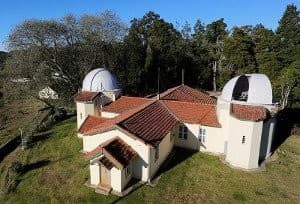
Kodaikanal Solar Observatory (KoSO) – century-old solar observatory in Palani Hills, Tamil Nadu, under Indian Institute of Astrophysics.

Continuous Ca II K chromospheric imaging since 1904; among world’s longest solar datasets.

Archive enabled 1904-2022 reconstruction of Sun’s polar magnetic fields by ARIES-led team.

Quick Facts for MCQs

Observatory Profile

  • Continuity; one of world’s longest uniform solar records aiding long-term heliophysics.
  • Multi-wavelength imaging captures plages, sunspots, magnetic networks; dataset fully digitised and public.

Methodology

  • AI-based feature recognition isolates faint polar bright points in Ca II K plates.
  • Cross-calibration with Rome-PSPT ensures photometric uniformity across decades.
  • Polar Network Index quantifies brightness as magnetic field strength proxy pre-1976.

Strategic Significance

  • Century-scale magnetic record refines strength forecast for Solar Cycle 25 and beyond.
  • Better solar storm prediction safeguards GPS, satellites, aviation, power grids.

Key Data Points

FeatureData-Point
Establishment year1899
Systematic Ca II K imaging start1904
LocationPalani Hills, Tamil Nadu
Parent instituteIndian Institute of Astrophysics, Bengaluru
Archive length> 120 years continuous solar data
Reconstruction span1904 – 2022
Direct polar field data available from1976
Proxy index employedPolar Network Index (PNI)
Additional datasetRome-Precision Solar Photometric Telescope
Ongoing solar cycle predictedSolar Cycle 25
GS-3S&T

10.BIRSA 101 CRISPR Gene Therapy (Gene Therapy)

PIB
Illustration for BIRSA 101 CRISPR Gene Therapy (Gene Therapy)

What & Where

BIRSA 101 = India’s first home-grown CRISPR therapy to cure Sickle Cell Disease via precise gene editing.

Process: patient stem cells edited with indigenous enFnCas9, corrected cells reinfused for potential one-time, lifelong cure.

Geography: Developed at CSIR-IGIB, Delhi; national scale-up through Serum Institute of India, Pune.

Quick Facts for MCQs

Tech & Schemes

  • Indigenous enFnCas9 engineered for high specificity, reduced off-target effects.
  • CRISPR acts as “genetic surgery”, converting sickle haemoglobin gene into normal variant.
  • Aligns with Atmanirbhar Bharat push for biotech self-reliance.

Economic Angle

  • Cost-effective manufacturing envisioned via Serum Institute’s existing vaccine-scale infrastructure.
  • Public–private model reduces R&D to patient delivery expenses dramatically.
  • Affordable gene therapy expected to widen domestic and Global South markets.

Social Concerns

  • SCD prevalence high among Gond, Munda, Bhil, Santal tribal groups.
  • One-time cure can reduce chronic pain, organ damage, early mortality burdens.
  • Supports tribal health commitments in National SCD Elimination Mission.

Institutional Setup

  • CSIR-IGIB handles discovery, pre-clinical, regulatory dossiers.
  • Serum Institute oversees GMP production, clinical trial logistics, pan-India deployment.
  • Government backing ensures streamlined approval through DBT, ICMR, CDSCO channels.

Key Data Points

FeatureData-Point
Full nameBIRSA 101 Gene Therapy
Target diseaseSickle Cell Disease (β-globin mutation)
Core techCRISPR platform enFnCas9
Lead developerCSIR–Institute of Genomics & Integrative Biology
Industry partnerSerum Institute of India
Naming honourTribal icon Birsa Munda (150th birth anniversary)
Policy mission“Sickle Cell–Free India by 2047”
Cost aimReplace ₹20–25 crore foreign therapies with low-cost indigenous option
Therapy typeEx vivo autologous stem-cell gene editing
Support facilityNew advanced translational research unit at CSIR-IGIB

Related UPSC Prelims PYQs

GEO_GS 2025PYQ 1

Clustered Regularly Interspaced Short Palindromic Repeats are associated with

GS-3S&TQuick Bite

11.Solar Flares and CMEs Overview (Solar Activity)

Indian Express
Illustration for Solar Flares and CMEs Overview (Solar Activity)

What & Where

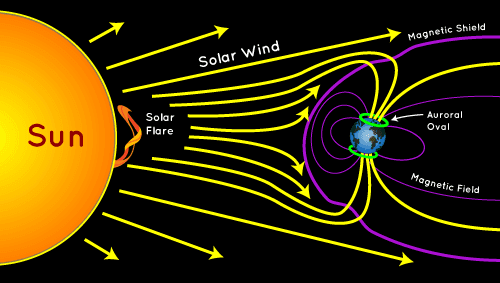
Solar cycle: ~11-year magnetic oscillation driving sunspots, flares, coronal mass ejections (CMEs).

Solar/geomagnetic storm: CME hits magnetosphere, compresses it, injects charged solar-wind particles toward poles.

Auroras: polar-latitude (~66.5° N/S) light shows from oxygen/nitrogen excitation by guided solar particles.

Quick Facts for MCQs

Solar Activity Cycle

  • Sunspot counting gauges phase; minimum low activity, maximum peak eruptions, NOAA numbers track daily.
  • Cycle-25 accelerating; mid-latitude auroras signal approach toward expected 2025 solar maximum.
  • Poles swap magnetic polarity each cycle, resetting heliospheric field orientation.

Auroral Science

  • Green oxygen glow 100–150 km; red oxygen >200 km; blue-violet molecular nitrogen <100 km.
  • Magnetic field lines channel solar particles along polar cusps, forming oval luminous belts.
  • Stronger storms widen auroral ovals equator-ward, enabling sightings beyond 40° latitude.

Geomagnetic Impact

  • Severe flares disrupt HF radio, GNSS accuracy, airline polar routes, power-grid stability.
  • Magnetosphere compression injects energetic particles, elevating satellite charging and astronaut radiation doses.
  • Kp≥5 classified geomagnetic storm; space-weather centres issue alerts for operational mitigation.

Key Data Points

FeatureData-Point
Solar cycle length~11 years
Magnetic polarity flipOnce per cycle
Sunspot phase orderMinimum → Maximum
CME contentPlasma + magnetic field
Aurora Borealis beltNorway, Sweden, Finland, Canada, Alaska
Aurora Australis beltAntarctica, S Australia, NZ, Chile
Dominant aurora colourGreen-yellow; oxygen ions lower altitude
Kp-index scale0–9 geomagnetic disturbance

Related UPSC Prelims PYQs

GS1 2022PYQ 1

If a major solar storm (solar flare) reaches the Earth, which of the following are the possible effects on the Earth ?

GS1 2025PYQ 2

Consider the following statements:

GS-2Security

12.Major Non-NATO Ally Status (US Defense Designation)

Times of India

What & Where

Designation: Major Non-NATO Ally (MNNA) = U.S. strategic tag giving defence perks minus Article-5-style guarantees

Origin: Enacted under U.S. law, early 1980s, to deepen security ties beyond the NATO bloc

Spread: 20 nations across Asia, Africa, S. America & Oceania; newest entrant — Saudi Arabia

Quick Facts for MCQs

Legal & Policy

  • Creation: Statutory, not treaty; hence revocable by U.S. President/Congress
  • Guarantees: No automatic mutual-defence clause unlike NATO Article 5
  • Upgrade signal: White House uses MNNA to reward pivotal regional partners quickly

Defence Privileges

  • Procurement: Streamlined Direct Commercial Sales & Foreign Military Sales licensing
  • Contracts: MNNA firms may bid for DoD overseas maintenance/repair work
  • Financing: Eligibility for loans/leasing of U.S. military equipment at favorable terms

Membership Roster

  • Middle East: Bahrain, Israel, Jordan, Kuwait, Morocco, Qatar, Saudi, Tunisia
  • Asia-Pacific: Australia, Japan, South Korea, New Zealand, Philippines, Thailand, Pakistan
  • Americas/Africa: Argentina, Brazil, Colombia, Egypt, Kenya

India Angle

  • Unique category grants India access to high-end tech sans MNNA obligations
  • S. 400 waiver & COMCASA/BECA interoperability framed under “Major Defence Partner” logic

Key Data Points

FeatureData-Point
Total MNNA countries20 (post-Saudi inclusion)
Latest designeeSaudi Arabia
First legal basisU.S. Congress, 1980s statutes
Core benefitPriority access to U.S. Excess Defence Articles
Stockpile rightCan host U.S. War Reserve Stockpiles
R&D privilegeEligible for joint defence tech RDT&E with U.S.
Training edgeEasier bilateral/multilateral training agreements
Counter-terror fundingAccess to specific U.S. appropriations
India’s tag“Major Defence Partner” (2016), not MNNA
Example MNNA trioJapan, Israel, Brazil
GS-1Polity

13.Transgender Rights Framework India (Transgender Rights)

PIB
Illustration for Transgender Rights Framework India (Transgender Rights)

What & Where

Definition: Transgender persons self-identify beyond male/female binaries; India legally recognises them as a third gender.

Process: Self-identification certificate and ID card issued online via National Portal under 2020 Rules.

Geography: 4.87 lakh self-declared nationwide (Census 2011); numbers higher in urban clusters due to migration.

Quick Facts for MCQs

Legal & Policy

  • Article14, 15, 16, 19, 21 extend equality, non-discrimination, dignity to gender identity.
  • Act mandates no denial of education, employment, healthcare; prescribes complaint officers and penalties.
  • States must establish Transgender Protection Cells and Welfare Boards for monitoring and grievance redressal.

Welfare Schemes

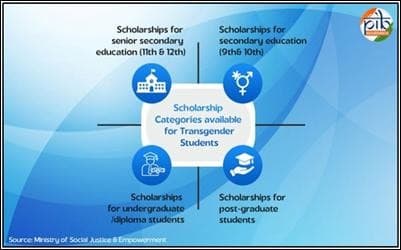
  • SMILE provides scholarships, skilling, livelihood grants, Garima Greh shelters in 20+ states.
  • National Portal enables multilingual self-ID, scheme enrolment, real-time tracking without physical visits.
  • Equal-Opportunity policy obliges public and private employers to adopt inclusive hiring and workplace practices.

Challenges

  • Stigma causes family rejection, school dropout, limited formal jobs, reliance on begging or sex work.
  • Documentation hurdles in updating IDs restrict banking, housing, welfare, and mobility.
  • Budgetary constraints weaken outreach, rehabilitation, skilling, and protection measures.

Healthcare

  • Scarce trained professionals, high surgery costs, minimal insurance impede safe gender-affirming care.
  • Proposed LGBTQIA+ modules in medical curricula to build sensitive, evidence-based services.
  • Planned Centres of Excellence could boost affordable procedures and position India as a medical-tourism hub.

Key Data Points

FeatureData-Point
Self-declared population (2011)4.87 lakh
Landmark judgmentNALSA vs Union of India, 2014
Core statuteTransgender Persons (Protection of Rights) Act, 2019
Implementing Rules2020
Online certification portal launchNov 2020
Statutory advisory bodyNational Council for Transgender Persons
Flagship welfare packageSMILE Scheme, 2022
Dedicated health coverAyushman Bharat TG Plus

Related UPSC Prelims PYQs

CDS_GK 2024PYQ 1

India's first dedicated OPD for the Transgenders was opened at which one among the following hospitals?

Ready to practice?

Test your knowledge with our UPSC test series.

Start Free Trial