UPSC Current Affairs

16 topicsGS-1: 1GS-2: 5GS-3: 10
0/16 done
GS-2Polity

1.Constitutional morality and democratic conduct (Constitutional Morality)

The Hindu

What & Where

Concept: “paramount reverence for the Constitution” ensuring lawful obedience plus freedom to critique power.

Origin: coined by historian George Grote; championed in India by Dr B.R. Ambedkar.

Spatial reach: binds all public institutions and citizens across Indian Union, guiding rule-making, adjudication and governance.

Quick Facts for MCQs

Judicial Landmarks

  • Puttaswamy recognised privacy as fundamental, rooted in dignity and constitutional morality.
  • Kesavananda birthed Basic Structure, limiting Parliament’s amendatory power.
  • Navtej Johar overrode societal prejudice, decriminalising same-sex relations.

Current Challenges

  • Political interference undermines ECI, CBI, Governor assent duties.
  • Judicial overreach risks breaching separation of powers despite activist gains.
  • Social hierarchies impede equality in caste, gender, religious practices.

Institutional Measures

  • Strengthen autonomy of ECI, CBI, NIA for unbiased oversight.
  • Cut case backlog; expand legal aid to realise equality before law.
  • Embed constitutional literacy in curricula to cultivate civic culture.

Key Data Points

FeatureData-Point
First propounderGeorge Grote, British historian
Indian advocateDr B.R. Ambedkar; Constituent Assembly
Ambedkar quote“Constitutional morality is not a natural sentiment—it has to be cultivated.”
Core pillarsJustice, Liberty, Equality, Fraternity, Secularism, Rule of Law, Transparency
Key privacy caseJustice K.S. Puttaswamy (2017)
LGBTQ+ decriminalisationNavtej Singh Johar v. UOI (2018)
Temple-entry gender caseIndian Young Lawyers Assn. v. State of Kerala (2018)
Adultery struck downJoseph Shine v. UOI (2018)
Basic Structure anchorKesavananda Bharati (1973)
Common challengePolitical interference in constitutional/statutory bodies

Related UPSC Prelims PYQs

CAPF_GAI, CDS_GK 2023PYQ 1

सुभाष शर्मा बनाम भारत संघ (1991) के मामले में उच्चतम न्यायालय के ऐतिहासिक निर्णय में निम्नलिखित में से भारत के संविधान के किस मूल सिद्धान्त के बारे में उल्लेख किया गया ?

CAPF_GAI, CDS_GK 2021PYQ 2

निम्नलिखित उद्धरण पर विचार कीजिए :
GS-2PolityQuick Bite

2.Justice Surya Kant appointed CJI (Chief Justice Appointment)

The Hindu

What & Where

Chief Justice of India (CJI): head of Supreme Court, senior-most judge, custodian of judicial administration.

Appointment under Article 124(2), Union Law Ministry issues notification after Presidential warrant.

53rd CJI: Justice Surya Kant, succeeds Justice B.R. Gavai, apex court, New Delhi.

Quick Facts for MCQs

Constitutional Provisions

  • Article 124(2) governs appointment, oath, removal of Supreme Court judges.
  • Convention of seniority guides choice; not legally binding, yet rarely broken.
  • Parliamentary special majority equals majority of total membership + two-thirds present voting.

Appointment Process

  • Outgoing CJI sends recommendation to Law Ministry; file moves through PMO to President.
  • Law Ministry prints and gazettes warrant, fixation of oath date by President.
  • Seniority counted by continuous Supreme Court tenure.

Tenure & Removal

  • Tenure variable; ends on attaining 65 years age.
  • Removal requires proven misbehaviour/incapacity via Judges (Inquiry) Act procedure.
  • No reappointment or extension permissible post-retirement.

Key Data Points

FeatureData-Point
Serial order53rd CJI
AppointeeJustice Surya Kant
PredecessorJustice B.R. Gavai
Constitutional articleArticle 124(2)
Recommending authorityOutgoing CJI, by convention
Appointing authorityPresident of India
EligibilityCitizen + 5 yrs HC judge / 10 yrs advocate / distinguished jurist
Retirement age65 years
Removal modePresidential order after special majority address of both Houses
Law Ministry roleIssues appointment notification

Related UPSC Prelims PYQs

CAPF_GAI, CDS_GK 2021PYQ 1

उच्चतम न्यायालय के न्यायाधीश के रूप में किसे नियुक्त किया जा सकता है?

CAPF_GAI, CDS_GK 2023PYQ 2

Who among the following Chief Justices of India ordered the constitution of a Special Bench called 'Social Justice Bench'?

GS-3Editorial

3.Corporate capture deepens farm inequality (Agricultural Distress)

TF

What & Where

Concept: Indian agriculture under neoliberal era marked by corporate capture and widening rural inequality

FocusAreas: Smallholder distress hubs Vidarbha & Bundelkhand (<15 % irrigation) plus nationwide income-price squeeze

Processes: Post-1991 policy shifts, weak MSP enforcement, rapid contract-farming and agri-business consolidation

Quick Facts for MCQs

Economic Angle

  • TermsOfTrade: Cotton purchasing power fell from 12 g to under 1 g gold per quintal since 1970s
  • IncomeDecline: NSS77 records ₹10,218 monthly income, 10 % slide versus 2012-13 amid soaring inputs
  • WealthGap: 217 billionaires hold US$1.04 trn, equalling 58× Union agriculture budget

Social Concerns

  • SuicideCrisis: Over 4 lakh suicides since 1995; 2022 rate ≈1 farmer per hour
  • RuralExodus: 15 mn cultivators quit 1991-2011; about 2,000 departures daily
  • FoodSecurity: Distress sales of milk and cereals heighten rural child malnutrition

Policy & Governance

  • LiberalisationBias: Post-1991 subsidies, credit and investment tilt toward capital-intensive corporates
  • MSPWeakness: Bihar paddy fetched ₹1,850/qtl, ₹250 below MSP after mandi deregulation
  • CreditSkew: Top-10 agribusinesses secured ₹1.3 lakh cr loans, fivefold small-farmer total

Key Data Points

FeatureData-Point
Farmer suicides 1995-2022>4,00,000
Farmer suicides 202211,290
Avg farm income 2018-19₹10,218 / month
Cultivators lost 1991-201115 million
Workforce share45 %
GDP share~18 %
Billionaires wealth : agri budget58 ×
Loans to top-10 agribiz₹1.3 lakh cr
Cotton gold buying power drop12 g → <1 g
GS-3Economy

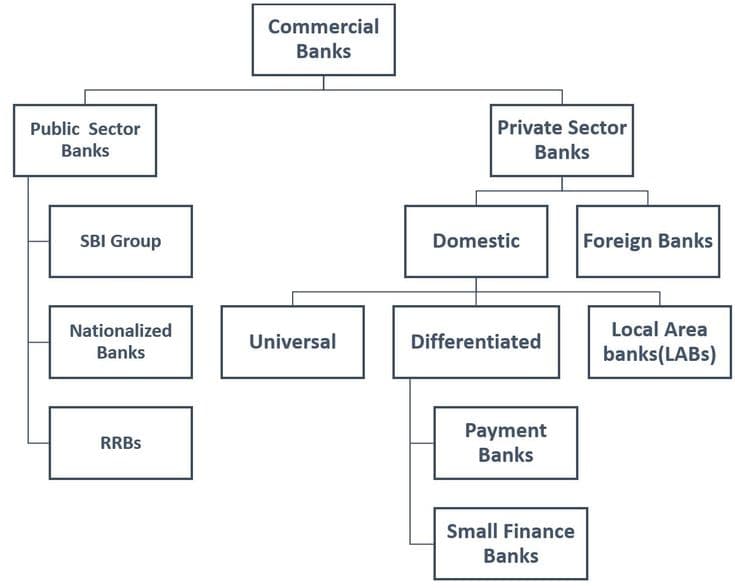
4.RBI returns Jana SFB universal bank bid (Small Finance Banks)

Business Standard
Illustration for RBI returns Jana SFB universal bank bid (Small Finance Banks)

What & Where

Definition: RBI-licensed Small Finance Banks (SFBs) provide deposit & credit services to underserved sections in India

Process: Eligible resident-controlled entities gain SFB licence; listed SFBs may later seek universal-bank status under 2024 norms

Geography: Pan-India operations; minimum 25 % branches in unbanked rural centres

Quick Facts for MCQs

Regulatory Benchmarks

  • RBI 2024 norms restrict conversion to listed SFBs with scheduled bank status
  • Foreign investment allowed per private-sector bank limits; no subsidiaries for non-banking activities
  • CRR & SLR maintenance identical to universal banks

Capital & Ownership

  • Resident individuals/NBFCs/MFIs/LABs with 10-yr financial experience eligible promoters
  • Cooperative banks shifting to SFB must meet staged net-worth targets of ₹100 crore then ₹200 crore
  • Promoters’ stake dilution schedule ensures wider ownership over time

Operational Mandates

  • Priority: Extend credit to small farmers, micro industries, informal enterprises
  • Distribution: May sell mutual fund, insurance, pension products after regulatory nod
  • Forex: Eligible for Category II Authorised Dealer licence for limited foreign-exchange services

Key Data Points

FeatureData-Point
Minimum net worth for SFB licence₹200 crore
Promoter initial stake cap40 %; dilute to 26 % within 12 yrs
Required ANBC to Priority Sector75 %
Small-ticket credit share≥50 % loans ≤₹25 lakh
Rural branch mandate≥25 % of total branches
Capital ask for UCBs converting₹100 crore rising to ₹200 crore
Net worth to become universal bank≥₹1,000 crore
Profit track recordContinuous profit ≥5 yrs
NPA thresholds for conversionGross <3 %; Net <1 % (last 2 yrs)
RegulationBanking Regulation Act 1949; RBI supervision

Related UPSC Prelims PYQs

GS1 2017PYQ 1

What is the purpose of setting up of Small Finance Banks (SFBs) in India?

GS1 2024PYQ 2

विदेशी बैंकों के साथ व्यवहार करते समय भारतीय रिज़र्व बैंक द्वारा अधिरोपित नियमों के संदर्भ में, निम्नलिखित कथनों पर विचार कीजिए:

GS-3Economy

5.India secures Chinese rare earth magnets (Rare Earth Magnets)

Indian Express
Illustration for India secures Chinese rare earth magnets (Rare Earth Magnets)

What & Where

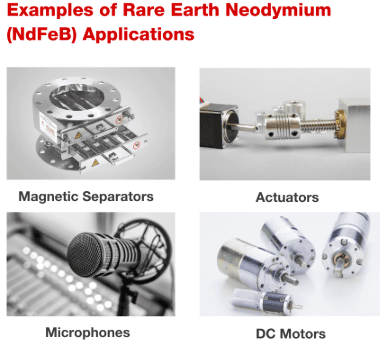
NdFeB magnets; neodymium-iron-boron permanent magnets; highest strength, work at 150–200 °C.

Geography; China dominates global rare-earth mining, processing, and finished magnet exports.

India; conditional import licences issued 2025, magnets allowed only for non-defence auto/EV uses.

Quick Facts for MCQs

Trade & Supply Chain

  • Disruption; April 2025 curbs threatened EV production delays and cost escalations in India.
  • Relief; selective export resumption prevents immediate shortages in Indian automotive sector.
  • Diversification; India scouting multiple suppliers to hedge against future Chinese restrictions.

Tech & Schemes

  • Atmanirbhar Bharat; incentives planned for indigenous rare-earth processing, magnet manufacturing.
  • Partnerships; government courting global firms for joint ventures, technology transfer.
  • Short-term; import route via FTP relaxations until domestic units operational.

Security Dimension

  • Strategic; rare-earth control viewed as energy security and critical materials issue.
  • Licence clamp; explicit ban on defence usage to align with Chinese export-control conditions.
  • Long-term; domestic capacity aims to reduce vulnerability to coercive export policies.

Key Data Points

FeatureData-Point
Magnet typeNeodymium-Iron-Boron (NdFeB)
Operating temperature150–200 °C
Chinese global shareNear-monopoly (≈90% supply)
Export curb statusPaused 1 year under US-China deal (2025-26)
Indian licence conditionNon-defence end use only
Key Indian dependenceEV motors, EPS, braking, wipers
Domestic target timeline3–5 years for local processing/making
Alternative import sourcesVietnam, Brazil

Related UPSC Prelims PYQs

GS1 2012PYQ 1

Recently, there has been a concern over the short supply of a group of elements called ‘rare earth metals’. Why?

GS1 2022PYQ 2

With reference to India, consider the following statements :

GS-3Infrastructure

6.Transit-oriented development for urban sustainability (Transit-Oriented Development)

Indian Express

What & Where

Transit-Oriented Development (TOD): high-density, mixed-use construction within 500–800 m of mass-transit stations.

Shifts city growth from car focus to walkable, public-transport–centred neighbourhoods using World Bank’s 3V framework (Node, Place, Market).

India’s first TOD project: 48-storey “Towering Heights”, Karkardooma, East Delhi.

Quick Facts for MCQs

Legal & Policy

  • National TOD Policy 2017: compact, green, affordable, inclusive housing around transit.
  • Metro Rail Policy 2017 & UIDF finance TOD; MMTH promotes multimodal integration.
  • Proposal: Unified Metropolitan Transport Authority for coordinated execution.

Environmental Impact

  • Walkable TOD cuts car use, congestion, fuel wastage, urban air pollution.
  • Stockholm case shows 35 % emission drop via transit-based growth.
  • TOD encourages green mobility options—cycling lanes, feeder buses.

Economic Angle

  • Dense station areas raise ridership, enabling metro cost recovery through farebox & value capture.
  • Job clustering near hubs boosts city competitiveness; +5–10 % productivity per density doubling.
  • Rising land prices around hubs leveraged for project financing.

Social Concerns

  • High land values may displace low-income residents; mandates EWS/LIG housing quotas essential.
  • Poor last-mile design, water & sewage strain risk TOD failure.
  • Fragmented urban governance stalls approvals, inflates project timelines & costs.

Key Data Points

FeatureData-Point
TOD influence zone radius500–800 m around station
3V Framework componentsNode Value, Place Value, Market Potential Value
First Indian TOD tower“Towering Heights”, 48 floors, East Delhi
National TOD Policy launchMoHUA, 2017
Metro Rail Policy linkage2017 policy mandates TOD along corridors
Typical productivity gainDoubling job density → +5–10 % output
Stockholm TOD result (1993-2010)Economic value +41 %; CO₂ ‑35 %
Value-capture toolsLand value tax, development charges, extra FAR
GS-1History

7.Sardar Patel national integration legacy (Freedom Movement Leader)

Times of India
Illustration for Sardar Patel national integration legacy (Freedom Movement Leader)

What & Where

Rashtriya Ekta Diwas: national‐unity day celebrated 31 Oct to honour Sardar Vallabhbhai Patel.

2025: Ministry of Culture planning grand cultural performances; Prime Minister as Chief Guest.

Core geography: Patel born Nadiad (Gujarat); legacy sites include Bardoli, Ahmedabad, Kevadia’s Statue of Unity.

Quick Facts for MCQs

Freedom Movement

  • Kheda 1918 transformed lawyer Patel into farmers’ organiser under Gandhi.
  • Bardoli 1928 conferred title Sardar; forced rollback of revenue hike.
  • INC Karachi 1931 presidency guided party after Bhagat Singh execution.

National Integration

  • Integrated 565 princely states through diplomacy, persuasion, calculated firmness.
  • Managed accessions: Junagadh, Travancore, Kashmir 1947; Hyderabad via Operation Polo 1948.
  • Advocated strong Centre to secure territorial, administrative unity.

Institution Building

  • Founded IAS, IPS, allied All-India Services; called them Steel Frame.
  • Drafted frameworks for Home, States, civil-services coordination.
  • Led Ahmedabad sanitation drives 1924, showcasing hands-on governance.

Legacy Symbols

  • Rashtriya Ekta Diwas marked annually 31 Oct; 150th birth anniversary falls 2025.
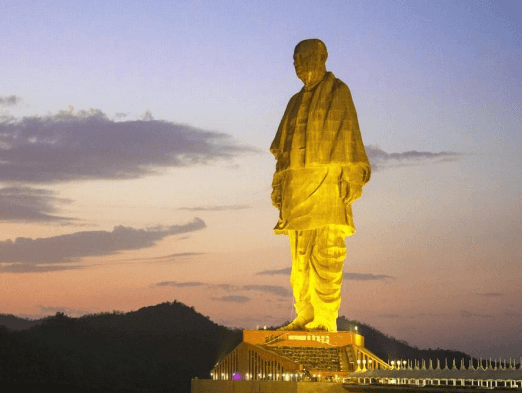
  • Statue of Unity Kevadia stands 182 m, world’s tallest statue since 2018.
  • Later milestones Goa 1961, Sikkim 1975, Article 370 abrogation 2019 echo his unity vision.

Key Data Points

FeatureData-Point
Birth date31 Oct 1875
Birth placeNadiad, Gujarat
NicknameIron Man of India
First big satyagrahaKheda 1918
Bardoli Satyagraha year1928
INC presidencyKarachi Session 1931
Deputy PM–Home Minister1947-50
Princely states integrated565
Hyderabad accession codeOperation Polo 1948
All-India Services termSteel Frame of India
Statue of Unity height182 m
Statue inauguration2018, Kevadia
Unity day observed since2014

Related UPSC Prelims PYQs

CDS_GK, GS1 2020PYQ 1

The Government of India has recently constituted a civilian award in the name of Sardar Vallabhbhai Patel in the field of contribution to

CDS_GK, GS1 2003PYQ 2

The leader of the Bardoli Satyagraha (1928) was

GS-3Environment

8.UNEP Adaptation Gap Report 2025 findings (Adaptation Finance Gap)

Down to Earth

What & Where

Adaptation Gap Report 2025 (UNEP) assesses global shortfall in finance for climate-change adaptation measures

Focus on developing nations needing rapid-onset & slow-onset impact resilience; finance flows tracked 2019-24

Core geography: Global, with spotlight on Small Island Developing States (SIDS) and other vulnerable economies

Quick Facts for MCQs

Finance Numbers

  • Requirement scale-up roadmap Baku-to-Belém seeks USD 1.3 tn / yr by 2035
  • Potential private finance with de-risk tools projected USD 50 bn / yr yet still marginal
  • Grants & concessional instruments urged to avoid new debt traps for poor nations

Global Targets

  • Glasgow doubling pledge from 2019 baseline off-track before 2025 deadline
  • NCQG criticised as nominal figure lacking inflation adjustment and adequacy
  • 172 / 197 countries possess national plans; 36 outdated undermining responsiveness

Equity Angle

  • Developing countries carry unequal burden via non-concessional loans deepening climate injustice
  • SIDS exhibit highest mainstreaming of adaptation into policy frameworks
  • Report links stronger mitigation to reduced future adaptation cost burden

Indian Context

  • Policy tilt toward adaptation funding aligning with National Adaptation Fund for Climate Change
  • Economic Survey 2024-25 prioritises development before aggressive deep decarbonisation citing CBDR-RC
  • India remains committed to Net Zero 2070 despite probable delay in 2035 NDC submission

Key Data Points

FeatureData-Point
Annual adaptation need (developing) 2035USD 310–365 bn (USD 440–520 bn inflation-adjusted)
Current int’l public adaptation finance 2023USD 26 bn
Finance gap 2023USD 284–339 bn / yr
Glasgow Pact target 2025USD 40 bn; likely missed
NCQG 2035USD 300 bn (not inflation-linked)
Share of adaptation funds as debt58 %
Multilateral fund disbursal 2024USD 920 mn (86 % above 2019-23 avg)
Private adaptation finance~USD 5 bn / yr
GS-3Species

9.Nauradehi Sanctuary cheetah relocation hub (Cheetah Reintroduction)

NDTV
Illustration for Nauradehi Sanctuary cheetah relocation hub (Cheetah Reintroduction)

What & Where

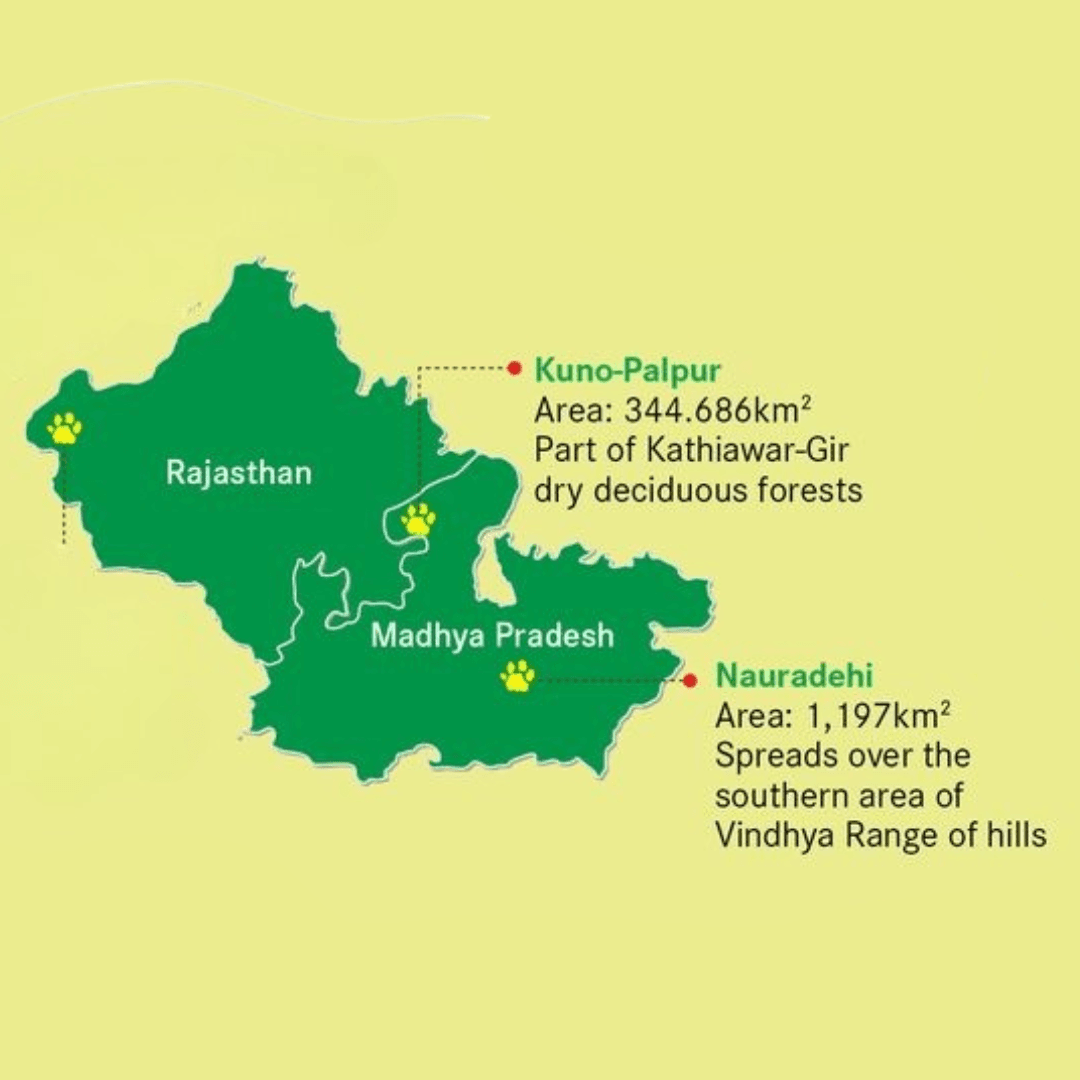
Nauradehi Wildlife Sanctuary; 1,197 sq km upper Vindhyan corridor across Sagar–Damoh–Narsinghpur, Madhya Pradesh

Declared third cheetah release site after Kuno National Park and Gandhi Sagar Sanctuary under Project Cheetah

Lies between Yamuna–Narmada basins; fed by Bamner, Kopra, Bearma rivers

Quick Facts for MCQs

Ecology & Fauna

  • Species: tiger, leopard, sloth bear, dhole, blackbuck, chinkara, sambhar ensuring balanced predator–prey web
  • Avifauna: storks, vultures, pheasants raising bird species tally beyond 170
  • Vegetation: grass–herb–shrub mosaic plus bamboo providing ample ungulate forage

Cheetah Conservation

  • Extinction: Asiatic cheetah wiped out 1952 due to hunting, habitat loss
  • Project Cheetah: African cheetahs from Namibia into Kuno 2022, Gandhi Sagar 2024, Nauradehi announced next
  • Objectives: spatial expansion, genetic diversification, grassland ecosystem restoration central India

Physical Parameters

  • Altitude: undulating 400–600 m Vindhyan sandstone plateau
  • Hydrology: perennial Bamner–Kopra–Bearma tributaries sustain woodland waterholes
  • Soil: red, black, alluvial mixes supporting diverse floristic assemblage

Key Data Points

FeatureData-Point
Sanctuary area1,197 sq km
Altitude range400–600 m
Annual rainfall~1,200 mm
Districts coveredSagar, Damoh, Narsinghpur
River basinsYamuna, Narmada
Major riversBamner, Kopra, Bearma
Forest typeMixed deciduous + bamboo
Terrestrial fauna>250 species
Avifauna species>170
Cheetah extinct in India1952
First reintroductionKuno NP, 2022
Second release siteGandhi Sagar, 2024

Related UPSC Prelims PYQs

GEO_GS, GS1 2022PYQ 1

Which one of the following was recently considered to be a suitable site for introducing African cheetah in India?

GEO_GS, GS1 2017PYQ 2

Recently there was a proposal to translocate some of the lions from their natural habitat in Gujarat to which one of the following sites?

GS-3Species

10.Unique anti-predator traits in Indian frogs (Frog Defence Behaviour)

The Hindu
Illustration for Unique anti-predator traits in Indian frogs (Frog Defence Behaviour)

What & Where

Research; first Indian records of rare anti-predator defences in frogs

Geography; Talle Valley Arunachal Pradesh & Silent Valley–Nilambur stretch Kerala Western Ghats

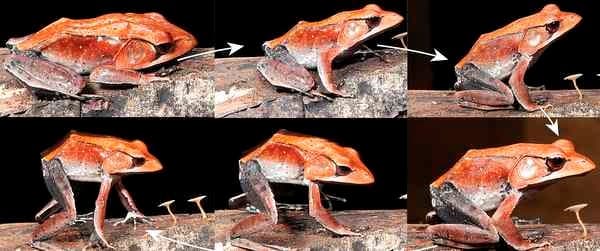
Behaviours; body inflation, sharp calls, biting, limb-stretch body-raising to deter predators

Quick Facts for MCQs

Behavioural Adaptations

  • Xenophrys apatani inflates body, emits distress shriek, attempts biting predator
  • Clinotarsus curtipes arches torso by vertical limb stretch, appears larger to intimidate
  • Only about 8 % global frog diversity displays comparable active defences

Evolutionary Insight

  • Traits signal niche-specific adaptation in Indian leaf-litter and forest-stream habitats
  • Fresh records enrich comparative datasets for phylogeny, anti-predator strategy evolution

Conservation Angle

  • Findings spotlight undocumented behavioural diversity within two biodiversity hotspots
  • Enhanced awareness may bolster habitat protection agendas for lesser-known amphibians

Key Data Points

FeatureData-Point
Lead instituteUniversity of Delhi Systematics Lab
JournalHerpetological Notes
Global frog species7,800 +
Species with such defences≈ 650
Indian species studiedXenophrys apatani; Clinotarsus curtipes
Common namesApatani Horned Toad; Bicoloured Frog
State locationsArunachal Pradesh; Kerala
Activity cycleX. apatani nocturnal; C. curtipes diurnal
Key defence X. apataniInflates body, shrieks, bites
Key defence C. curtipesLimb-stretch body-raising posture
GS-3S&T

11.Small modular reactors for AI data centres (Small Modular Reactors)

The Hindu

What & Where

Small Modular Reactors (SMRs): factory-built 1–300 MW nuclear fission units delivering 24×7, low-carbon baseload power.

Purpose: meet surging electricity needs of AI data centres, 5G, EVs, green-hydrogen and Digital India workloads.

Geography: India targets five SMRs by 2033 under 2025 Nuclear Energy Mission; pilot sites near Mumbai, Chennai, Bengaluru.

Quick Facts for MCQs

Demand Drivers

  • Digitalisation: data-localisation, AI/LLMs, IoT, 5G multiplying high-density GPU clusters.
  • Grid-growth: electricity demand accelerating beyond historic 5 % owing to new digital baseload.
  • Sovereignty: data protection law requires sensitive processing within Indian borders.

Policy & Targets

  • Mission: 2025 Nuclear Energy Mission seeks ₹26 billion private inflow, tech-neutral licensing overhaul.
  • Renewables: 500 GW clean capacity by 2030, yet intermittency limits 24×7 industrial supply.
  • Repurposing: retired coal plants, hydrogen hubs earmarked for SMR siting.

Safety & Limitations

  • Design: passive cooling, smaller cores, accident-tolerant fuels enhance inherent safety.
  • Bottlenecks: large-reactor licensing, waste disposal, high capital, HALEU supply challenges.
  • Social: liability regime and radiation fears may delay public acceptance.

Global Snapshot

  • Hubs: Texas, Virginia, Phoenix driving 25 % U.S. grid demand growth from data centres.
  • Investment: international SMR vendors committing modular factories, site-specific micro-grids.
  • Comparative: China, U.S. lead in both AI workload and advanced reactor pilot deployments.

Key Data Points

FeatureData-Point
Global data-centre use 2024460 TWh
Projected global use 20351,300 TWh
India data-centre capacity 20241.4 GW
India projected capacity 20307 GW
SMR output range1–300 MW
Planned Indian SMRs by 20335 units
Global SMR investmentUSD 15.4 billion
Nuclear Energy Mission corpus₹20,000 crore
India 2047 nuclear target100 GW
U.S. share of global data centres51 %
GS-3S&TQuick Bite

12.FDA eases biosimilar development norms (Biosimilars)

Economic Times
Illustration for FDA eases biosimilar development norms (Biosimilars)

What & Where

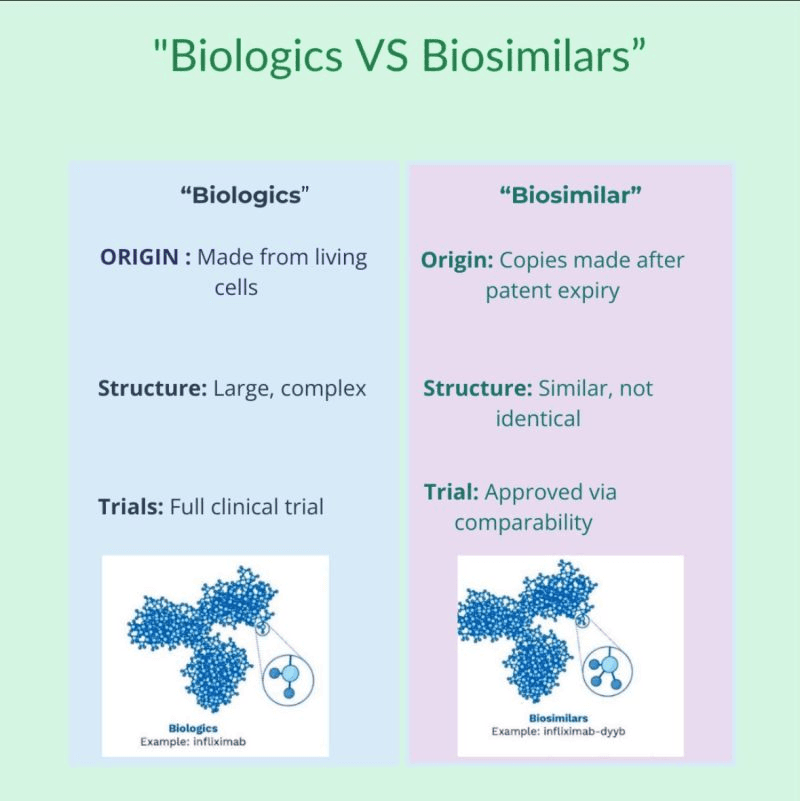
Biosimilar – complex protein drug, produced in living cells, designed highly similar (not identical) to licensed biologic.

USA – FDA draft guidance drops comparative efficacy trials, targets faster, cheaper biosimilar approvals.

India – Growing manufacturing hub; National Biopharma Mission & Genome Valley drive export-oriented biosimilar capacity.

Quick Facts for MCQs

Legal & Policy

  • FDA draft stresses analytical similarity, PK/PD, immunogenicity; clinical efficacy optional.
  • Guidance aligns with Biologics Price Competition & Innovation Act goals of affordability.
  • US move may influence WHO, EMA to relax parallel trial norms.

Economic Angle

  • Savings USD20–25 mn per molecule lift Indian firms’ ROIC.
  • 3–4-year cycle accelerates revenue, improves cash flow competitiveness.
  • Export potential USD30–35 bn by 2047 promises large biotech employment surge.

Tech & Schemes

  • National Biopharma Mission funds R&D, GMP facilities, regulatory training.
  • Genome Valley expansion offers tax breaks, ready cGMP labs for biologics.
  • Firms deploy cell-line engineering, high-throughput analytics to match reference biologics.

Key Data Points

FeatureData-Point
Draft guideline issuerUS Food & Drug Administration
Trial requirement removedComparative efficacy trials
Cost saving per projectUSD 20–25 million
Development timelineCut from 5–7 yrs to 3–4 yrs
Global biosimilar market~USD 30 billion
Present Indian market share< 5 %
Indian biosimilar exports (2023)USD 0.8 billion
Export target 2030USD 4.2 billion (≈5 ×)
Projected 2030 global share4 %
Export projection 2047USD 30–35 billion
GS-2Infrastructure

13.US waiver extends India’s Chabahar operations (Chabahar Port)

FPJ
Illustration for US waiver extends India’s Chabahar operations (Chabahar Port)

What & Where

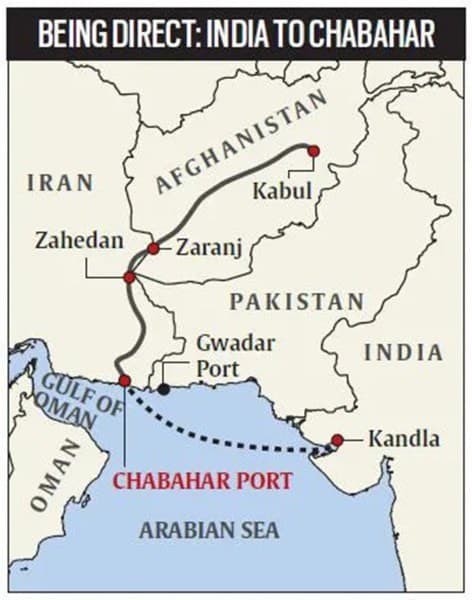
Strategic seaport on Gulf of Oman jointly developed by India–Iran to access Afghanistan/Central Asia minus Pakistan.

Two terminals — Shahid Beheshti & Shahid Kalantari — multi-berth cargo hubs.

Sited in Chabahar city, Sistan-Baluchistan, Iran; ~170 km west of Pakistan’s Gwadar, only Iranian oceanic port.

Quick Facts for MCQs

Legal & Policy

  • Waiver: US grants six-month CAATSA sanctions relief for Indian operations.
  • Agreement: 2003 Indo-Iran MoU to develop port; delays due to earlier sanctions.
  • Rights: 2016 pact allows India to equip & run two Beheshti berths.

Infrastructure Features

  • Equipment: container terminals, ship-to-shore cranes, modern logistics yards.
  • Capacity goal: handle heavy cargo for Central Asian transit.
  • Multimodal link: planned rail/highway integration with Iranian network.

Connectivity & Strategy

  • Bypass: Offers India direct sea-land route to Afghanistan, avoids Karachi/Gwadar chokepoint.
  • Corridor node: Aligns with INSTC reaching Russia, Europe via Iran, Caspian.
  • Counterweight: Enhances Indian leverage against China-Pakistan Economic Corridor (CPEC).

Key Data Points

FeatureData-Point
Country & ProvinceIran, Sistan-Baluchistan
TerminalsShahid Beheshti, Shahid Kalantari
Developer (Indian side)India Ports Global Ltd (IPGL)
Indian operations takeoverDecember 2018
Distance from Gwadar~170 km
Key corridorInternational North–South Transport Corridor (INSTC)
Trilateral Transit PactIndia-Iran-Afghanistan, 2016
US waiver length6 months
Original proposal year1973 (under Shah)
Port access seaGulf of Oman / Indian Ocean

Related UPSC Prelims PYQs

GEO_GS 2022PYQ 1

Chabahar Port is located in which one of the following countries?

GS-2Mapping

14.Durand Line Pakistan-Afghanistan border dispute (Durand Line)

Business Standard
Illustration for Durand Line Pakistan-Afghanistan border dispute (Durand Line)

What & Where

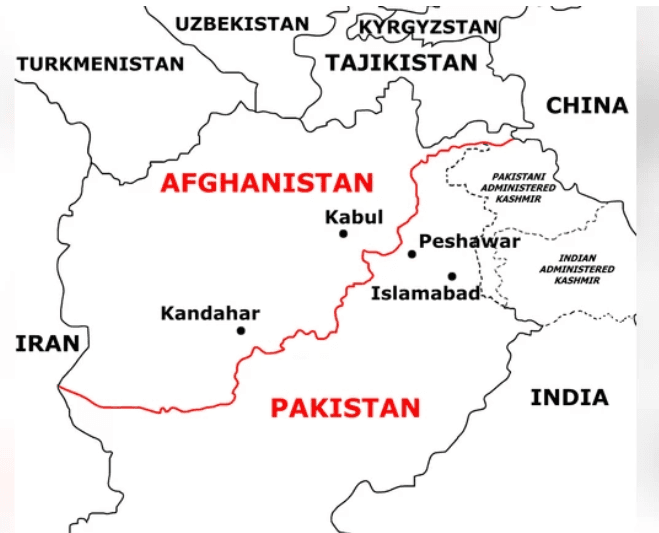
Durand Line: 2,640 km frontier drawn 1893 by Sir Mortimer Durand & Emir Abdur Rahman Khan.

Runs Hindu Kush-Spin Ghar to Balochistan, bisecting historic Pashtun tribal heartland.

Kabul never ratified as permanent border after Pakistan’s 1947 birth, fuelling recurring clashes.

Quick Facts for MCQs

Historical Trajectory

  • 1947-61 repeated embassy closures over “Pashtunistan” demand.
  • 1979-89 Soviet war turned line into Mujahideen supply route.
  • Post-2001 mutual terror-harbouring charges deepened mistrust.

Ethnic & Social Faultlines

  • Pashtun kin, trade routes, grazing lands split without local consent.
  • Cross-border tribes ignore visas, easing militant and smuggling flows.
  • Refugee camps enduring for decades, altering Pakistan’s demography.

Security Dimension

  • Pakistan uses airstrikes, fencing, Taliban proxies to curb TTP sanctuaries.
  • Kabul leverages TTP presence for bargaining against Islamabad pressure.
  • Frequent skirmishes threaten wider South Asian stability corridors.

India Angle

  • Diplomatic space widens as Pak-Afghan ties sour, reducing Islamabad regional heft.
  • Instability can imperil India’s Chabahar, INSTC connectivity to Central Asia.
  • Extremist spillover risk for India-bound projects and consular personnel.

Key Data Points

FeatureData-Point
Total length~2,640 km
Year demarcated1893
Colonial signatoriesBritish India & Emirate of Afghanistan
Pashtun areas splitKhyber Pakhtunkhwa, former FATA, parts of Balochistan
Afghan vote on Pak UN entryOnly “No” vote, 1947
Diplomatic breaks (Pashtunistan rows)1947–61, multiple
Cold-War refugee influx>3 million Afghans into Pakistan, 1979-89
Border fence start2017, Pakistan side
Key militant actorsAfghan Taliban, Tehreek-i-Taliban Pakistan (TTP)
Latest flare-up2025 Pakistan airstrikes, Afghan return fire

Related UPSC Prelims PYQs

CDS_GK, GS1 2025PYQ 1

The 'Durand Line' is a boundary line separating which of the following pairs of countries?

CDS_GK, GS1 1996PYQ 2

Consider the map given below:

GS-3Security

15.India’s exit from Ayni air base (Ayni Air Base)

The Print
Illustration for India’s exit from Ayni air base (Ayni Air Base)

What & Where

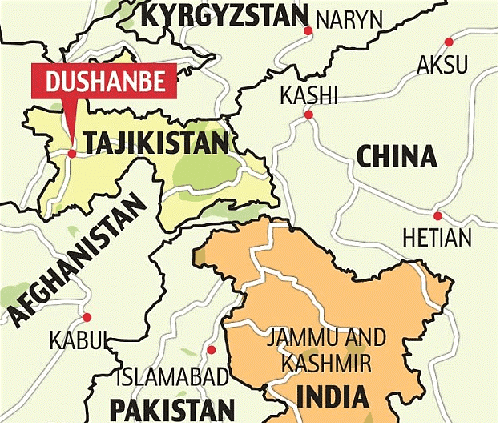
Airbase: Ayni (Gissar Military Aerodrome); India-Tajikistan joint facility since 2002, India’s first overseas base

Location: Just west of Dushanbe; ~20 km from Afghanistan’s Wakhan Corridor touching PoK & China

Role: Forward post for IAF reach, surveillance, evacuations across Central Asia, Afghanistan, Pakistan

Quick Facts for MCQs

History & Development

  • Origin: Built Soviet era; lay idle post-1991 Soviet collapse
  • Upgrade: Runway extension, hangars, fuel, maintenance by BRO; cost funded via MEA
  • Champions: Ajit Doval (then IB chief), Air Chief Marshal B S Dhanoa steered project

Strategic Significance

  • Geography: Central Asian foothold counters China-Pakistan axis, monitors Afghanistan, PoK
  • Capability: Allows fighter, transport, ISR aircraft staging without mid-air refuel from India
  • Diplomacy: Signalled India’s security partner status in SCO-dominated region

Current Status

  • Lease: Non-renewal attributed to Russian & Chinese pressure on Dushanbe
  • Handover: IAF vacated by 2022; Russian units reportedly control base early-2023
  • Engagement: India shifting to training, defence-diplomacy with Central Asian republics

Key Stakeholders

  • Russia: Seeks exclusive security primacy in Tajikistan, hosts 201st Motor Rifle Division nearby
  • China: Prefers limiting Indian presence near CPEC, Xinjiang border
  • Tajikistan: Balances aid, security guarantees from Moscow-Beijing duo over New Delhi allure

Key Data Points

FeatureData-Point
Alternative nameGissar Military Aerodrome
Host countryTajikistan
Indian redevelopment2001-02
Runway length3,200 metres
Indian spend≈ US$100 million
Funding ministryExternal Affairs
Lease expiry2021
Indian withdrawal2022
Current operatorRussian forces (2023)
Distance to Wakhan Corridor~20 km
GS-2Scheme

16.Model Youth Gram Sabha initiative (Youth Gram Sabha)

PIB

What & Where

Model Youth Gram Sabha (MYGS): nationwide school-level simulation of Gram Sabha to teach grassroots democracy.

Joint launch: Ministries of Panchayati Raj, Education & Tribal Affairs; unveiled in New Delhi.

Coverage: 1,000 + JNVs, EMRSs & State Government schools; urban rollout via future Model Ward Sabhas.

Quick Facts for MCQs

Tech & Schemes

  • Digital portal hosts training, reporting & resource kits for easy replication.
  • Activity templates standardise mock sessions across diverse school systems.

Social Concerns

  • Early civic exposure builds transparency ethos and teamwork among adolescents.
  • Targets both rural & tribal youth, reducing democratic participation gaps.

Legal & Policy

  • Mirrors constitutional Gram Sabha under Part IX to internalise panchayat processes.
  • Supplements NEP 2020 directive on experiential, citizenship-oriented pedagogy.

Key Data Points

FeatureData-Point
Launch ministriesPanchayati Raj, Education (DoSEL), Tribal Affairs
Supporting schoolsJNVs, EMRSs, State Govt. schools
Scale 2024-251,000 + institutions
Learning modeMock Gram Sabha, activity-based, “learning by doing”
Digital supportDedicated MYGS portal & training modules
Policy alignmentNational Education Policy (NEP) 2020
Core aimNurture democratic leadership, participatory governance
Planned urban corollaryModel Ward Sabha for city students

Related UPSC Prelims PYQs

GEO_GS, NDA_GAT 2024PYQ 1

निम्नलिखित में से किस युवा संगठन/योजना का आदर्श वाक्य “स्वयं से पहले आप (Not me, but you)” है ?

GEO_GS, NDA_GAT 2021PYQ 2

The objective of National Youth Parliament Festival is to hear the voice of youth between:

Ready to practice?

Test your knowledge with our UPSC test series.

Start Free Trial