UPSC Current Affairs

14 topicsGS-1: 3GS-2: 7GS-3: 4
0/14 done
GS-2Polity

1.SC Validates Minors’ Property Rights (Guardian Property)

Indian Express

What & Where

Repudiation of unauthorised guardian sale of a minor’s immovable property under Indian law

Two modes: file suit or show clear conduct (resell etc.) within limitation window

Ruled by Supreme Court in K.S. Shivappa vs K. Neelamma, 2025

Quick Facts for MCQs

Legal & Policy

  • Indian Contract Act 1872, HMG Act 1956, G&W Act 1890 collectively regulate minor property transactions
  • Sale without court permission is voidable at minor’s instance, not automatically void
  • Limitation Act 1963 fixes three-year period to challenge or affirm such sales

Judicial Pronouncement

  • Supreme Court affirms repudiation through conduct equals formal suit if done within limitation
  • Resale by erstwhile minor counted as unequivocal rejection of original unauthorized deed
  • Ruling reinforces fiduciary duty standards for natural guardians

Procedural Nuances

  • Plaintiff refusal to testify blocks power-of-attorney holder from giving evidence on personal knowledge
  • Guardian’s unauthorised sale attracts burden of proof on buyer to show court sanction
  • Clear conduct must be unmistakable; ambiguous actions don’t constitute valid repudiation

Key Data Points

FeatureData-Point
Year of judgment2025
Limitation window3 years after attaining majority
Valid repudiation actsSuit filing OR unequivocal conduct (e.g., resale)
Contract status by minorVoid ab initio under Indian Contract Act 1872
Guardian power to sellNeeds district court sanction per HMG Act 1956 & G&W Act 1890
Precedent citedAbdul Rahman v. Sukhdayal Singh 1905
Power-of-Attorney testimonyCannot substitute principal on personal facts
GS-2S&T

2.Aadhaar Vision 2032 Roadmap (Digital Identity)

Indian Express
Illustration for Aadhaar Vision 2032 Roadmap (Digital Identity)

What & Where

Aadhaar Vision 2032—decade-long roadmap modernising India’s digital identity infrastructure

Launched by UIDAI under MeitY; guided by High-Level Expert Committee

Applies nationwide, positioning Aadhaar as backbone for governance, economy, welfare services

Quick Facts for MCQs

Tech & Schemes

  • AI-enabled authentication promises faster, simultaneous verification for millions
  • Blockchain layer to provide tamper-proof audit trail of Aadhaar transactions
  • Overhauled tech stack targets cross-platform interoperability for governance, fintech, welfare

Legal & Policy

  • Framework aligns architecture with DPDP Act 2023 privacy-by-design norms
  • Consent-based data use, minimal retention mandated across all upgrades
  • Global cybersecurity standards adopted to position Aadhaar as compliant exportable model

Security Dimension

  • Quantum-safe encryption planned to counter next-gen computational attacks
  • Multi-layered advanced encryption to secure data integrity and confidentiality
  • AI-driven anomaly detection expected to curb identity fraud and spoofing

Key Data Points

FeatureData-Point
Implementing bodyUIDAI, Ministry of Electronics & IT
Committee chairNeelkanth Mishra
Horizon period2023-2032 (10 years)
Core technologiesAI, Blockchain, Quantum-safe cryptography, Advanced encryption
Compliance statuteDigital Personal Data Protection Act 2023
Authentication upgradeAI-based real-time anomaly & fraud detection
Security focusQuantum-resilient, multi-layered encryption protocols
Primary objectiveFuture-proof inclusive, scalable digital ID ecosystem

Related UPSC Prelims PYQs

ESE_GS 2026PYQ 1

Which Ministry released the India AI Governance Guidelines in 2025?

GS-3Economy

3.Roadmap to Boost Textile Competitiveness (Textile Sector)

Economic Times

What & Where

Sector scope: fibre cultivation to finished apparel; anchors 2.3 % of India’s GDP and 45 mn direct jobs.

Geography: dense MSME clusters in Tiruppur, Surat, Ludhiana; mega mills across Gujarat, Maharashtra, Tamil Nadu.

Govt move: 3-phase cost-benchmark roadmap (2-yr, 5-yr, 2030) to hit USD 100 bn export target.

Quick Facts for MCQs

Competitive Gaps

  • Input-cost spike: QCOs curb fibre imports, raising polyester prices 33 % over China.
  • Productivity lag: Bangladeshi & Vietnamese units deliver 20–40 % higher output per worker.
  • Trade handicap: No EU FTA denies duty-free access enjoyed by rivals.

Policy Roadmap

  • Cost focus: rationalise cotton/MMF duties, cheaper power via industrial corridors, port modernisation.
  • Regulatory tweak: streamline GST refunds, seasonally flexible labour under four new Codes.
  • Export thrust: clinch EU FTA, simplify PLI processes, stable compliance regime.

Innovation & Sustainability

  • R&D push: technical textiles, circular materials, Industry 4.0 automation for MSMEs via easy credit.
  • Branding drive: elevate “India Handloom/Craft” identities, integrate design houses and start-ups.
  • Green mandate: promote renewable energy, water recycling, waste-to-value models to meet buyers’ ESG norms.

Key Data Points

FeatureData-Point
GDP share2.3 %
Industrial production share13 %
Share in total exports12 %
Export value 2023-24USD 34.4 bn
Apparel slice in exports42 %
Employment45 mn (second only to agriculture)
Global rank (market size)5th, 2024
Domestic market size (2022)USD 174 bn
Projected domestic size 2030USD 350 bn
Annual garment output22 bn pieces
MSME capacity share~80 %
Labour productivity gap20–40 % below Bangladesh/Vietnam
Polyester fibre cost gap33–36 % costlier than China
Export target 2030USD 100 bn
Roadmap phasesShort 2 yr, Medium 5 yr, Long-term
Key FTAs missingEU, CPTPP bloc
Labour codes citedWages, IR, Social Security, OSH (2019-20)
Sustainable cost warningEconomic Survey FY25

Related UPSC Prelims PYQs

CDS_GK 2025PYQ 1

Consider the following statements with reference to the Cotton textile industry in India:

CDS_GK 2024PYQ 2

Which of the following industries was most affected by the ‘de-industrialisation’ of India in the 19th century?

GS-3EnvironmentQuick Bite

4.India Surpasses 500 GW Power Capacity (Renewable Energy)

PIB
Illustration for India Surpasses 500 GW Power Capacity (Renewable Energy)

What & Where

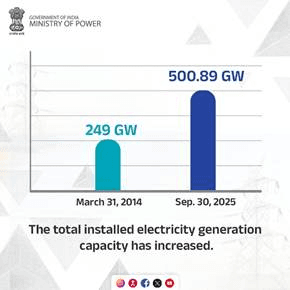
Milestone — India crosses 500.89 GW total installed electricity capacity.

Non-fossil sources now exceed 51 %; solar, wind, hydro, nuclear dominate mix.

Data from PIB (1 Nov 2025); applies pan-India interconnected grid.

Quick Facts for MCQs

Global Ranking

  • Solar capacity rank 3rd worldwide, only China, USA ahead.
  • Wind capacity rank 4th, behind China, USA, Germany.
  • Aggregate renewable capacity rank 4th globally across all sources.

Climate Targets

  • Panchamrit pledge: 50 % installed power from non-fossil by 2030.
  • Milestone reached in 2025, five years ahead of schedule.
  • Supports updated NDC, enhancing India’s transition credibility.

Tech & Schemes

  • PLI scheme incentivises integrated domestic solar-PV manufacturing.
  • PM-KUSUM funds farm-level solar pumps, decentralised power plants.
  • NGHM, SATAT, PM Surya Ghar drive green hydrogen, biogas, rooftop adoption.

Energy Significance

  • First day with >50 % electricity from green sources shows grid resilience.
  • Rising non-fossil share curbs coal dependence, bolsters energy security.
  • Balanced renewable-nuclear portfolio aids stable supply, emission cuts.

Key Data Points

FeatureData-Point
Total installed capacity500.89 GW
Non-fossil share256.09 GW (≈51 %)
Fossil share244.80 GW (≈49 %)
Solar capacity127.33 GW
Wind capacity53.12 GW
Hydro capacity30.29 GW
Nuclear capacity45.25 GW
Global rank — solar3rd
Global rank — wind4th
Global rank — renewables overall4th

Related UPSC Prelims PYQs

CAPF_GAI, GEO_GS 2026PYQ 1

India's installed solar capacity in 2025 is close to

CAPF_GAI, GEO_GS 2025PYQ 2

India’s key climate targets include

GS-1History

5.Arya Samaj 150-Year Legacy (Arya Samaj)

PIB

What & Where

Arya Samaj : 1875 Bombay Hindu reform movement upholding Vedas, rejecting idolatry, ritualism, social evils

Key processes : Shuddhi reconversion, Vedic havan-samskara rites, Gurukul & DAV education networks

Geographic spread : Began western India, flourished in north-west, later pan-India and diaspora communities

Quick Facts for MCQs

Social Reforms

  • Women’s education, widow remarriage, inter-caste marriage promoted, Sati and child marriage condemned
  • Shuddhi reconversion drive countered colonial conversions, strengthened Hindu identity
  • Famine relief, orphanages, medical aid organised across North India

Education Initiatives

  • Dayanand inspired Gurukul Kangri 1902 and DAV chain 1886 blending Vedic knowledge with modern science
  • Hansraj led Sanskrit-centric Gurukul model, Lajpat Rai advanced English-based DAV colleges

Nationalist Link

  • Dayanand first demanded Swaraj 1876, slogan later echoed by Tilak, Lajpat, Gandhi
  • Movement pushed Swadeshi, Hindi national language, cow protection, boosting anti-colonial sentiment

Organisational Split

  • 1893 schism over vegetarianism versus meat-eating and Sanskrit versus English education
  • Post-split Gurukul faction led by Hansraj; DAV faction steered by Lajpat Rai

Key Data Points

FeatureData-Point
FounderSwami Dayanand Saraswati
Year founded1875
Place foundedBombay (Mumbai)
Guiding textSatyarth Prakash
Motto“Back to the Vedas”
First Swaraj call1876 by Dayanand
First DAV school1886, Lahore, Mahatma Hansraj
Movement split1893
Split issuesDiet & medium of education
Dayanand birth12 Feb 1824, Gujarat

Related UPSC Prelims PYQs

GS1 2001PYQ 1

Consider the following statements:

GS1 2018PYQ 2

Which among the following events happened earliest?

GS-1Environment

6.Himalayan Disaster Early-Warning Systems (Early Warning)

The Hindu

What & Where

Early Warning System (EWS): sensor-satellite-AI network issuing advance alerts for floods, landslides, GLOFs, avalanches.

Himalayan focus: 240 disaster-prone districts from Jammu & Kashmir to Arunachal Pradesh within the Indian Himalayan Region.

Core processes: real-time hazard detection, rapid data transmission, community evacuation on crossing danger thresholds.

Quick Facts for MCQs

Disaster Trend

  • Disasters: 240 events over 1900-2022 concentrated in Himalayas.
  • Surge: 68 incidents recorded 2013-22, sharpest decadal spike.
  • Warming: Accelerated snowmelt intensifying flash-flood frequency.

Tech & Schemes

  • AI-models: Sub-kilometre forecasts piloted in Uttarakhand and Himachal Pradesh.
  • Satellite & drones: Lake-level, glacier-motion tracking enables early GLOF alerts.
  • MoEF scheme: AI hailstorm warning service for Himalayan apple growers.

International Examples

  • Switzerland: Local siren network plus community drills averted glacier-collapse deaths.
  • China: Cirenmaco Lake EWS employs satellite feeds and unmanned boats since 2022.
  • Evidence: Integrated community coordination consistently reduces glacier hazard losses.

Challenges

  • Terrain: Steep remote valleys complicate sensor placement and upkeep.
  • Connectivity: Telecom gaps delay real-time data relay and alerts.
  • Governance: Fragmented agencies, low local ownership blunt system efficacy.

Way Ahead

  • Indigenous: Solar-powered, weather-proof, low-cost sensors tailored for Himalayan climate.
  • Mission: Proposed National Himalayan Early Warning Mission under NDMA for unified command.
  • Community: Village task forces trained to interpret alerts and execute evacuations.

Key Data Points

FeatureData-Point
Total Indian disasters 1900-2022687
Himalayan share of total240 events
Incidents before 19625
Incidents 2013-202268 (44 % of national)
NASA-logged landslides 2007-20171,121
Warming rate Himalayas0.15–0.60 °C per decade
Key hazard types risingCloudbursts, GLOFs, avalanches
Proven EWS success nationsSwitzerland, China

Related UPSC Prelims PYQs

CDS_GK, NDA_GAT 2024PYQ 1

ISRO, in its studies, has revealed that there is a 178% increase in the size of the Gepang Ghat Glacial Lake. In which of the following States/UTs is this lake located?

CDS_GK, NDA_GAT 2022PYQ 2

Consider the following features about a geographical phenomenon:

GS-1Mapping

7.Tanzania Geographic Profile (Place in News)

New Indian Express
Illustration for Tanzania Geographic Profile (Place in News)

What & Where

Union nation of Tanganyika + Zanzibar since 1964; unitary multiparty republic with single-house National Assembly

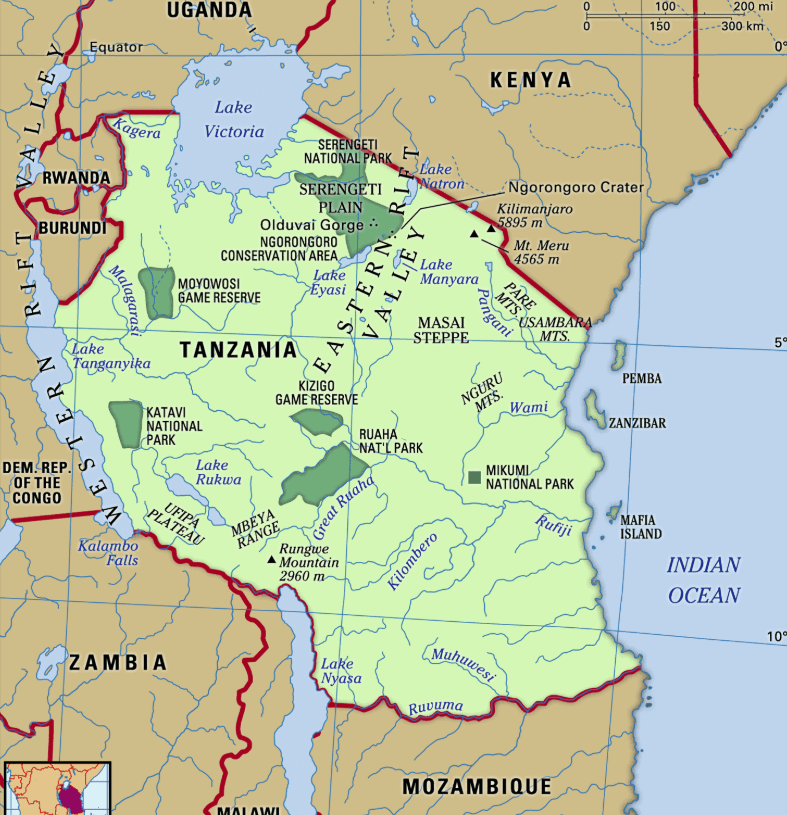
Lies just south of Equator in East Africa, Indian Ocean east, Rift-Valley lakes west

Official capital Dodoma; Dar es Salaam remains largest port-city and economic centre

Quick Facts for MCQs

Political Structure

  • President Samia Suluhu Hassan heads state and government
  • Opposition leaders barred from 2025 polls triggered nationwide protests
  • Internet cuts and curfews imposed; government pledges restoration of order

Physical Features

  • Plateau and highlands dominate; most land > 600 ft elevation
  • East African Rift splits into Western & Eastern valleys creating scenic depressions
  • Ngorongoro Crater exemplifies volcanic geomorphology and rich biodiversity

Natural Resources & Ecology

  • Volcanic soils confer high agricultural fertility in northern highlands
  • Significant hydroelectric potential from rift-fed rivers and lakes
  • Iconic megafauna attract ecotourism revenue, boosting conservation incentives

Security Dimension

  • Post-election unrest highlights governance and civil-liberty challenges
  • Curfews underline reliance on emergency powers for crowd control
  • Internet shutdown used as information-flow restriction tool

Key Data Points

FeatureData-Point
Formation year1964 (Tanganyika–Zanzibar union)
Political set-upUnitary multiparty republic
Legislature typeSingle chamber National Assembly
Official capitalDodoma (declared 1974)
Largest cityDar es Salaam
Highest pointMt Kilimanjaro 5,895 m
Deep rift lakeLake Tanganyika
Key wildlife zoneSerengeti Plains
Neighbouring seasIndian Ocean
Borders shared withUganda, Kenya, Rwanda, Burundi, Zambia, Malawi, Mozambique
GS-2Editorial

8.UN at 80: Reform Imperatives (UN Reform)

Indian Express
Illustration for UN at 80: Reform Imperatives (UN Reform)

What & Where

United Nations: intergovernmental organisation founded 1945 to maintain peace, security and cooperation

Dual structure: ‘one nation-one vote’ General Assembly vs P-5 veto-wielding Security Council

Membership: 193 states; HQ New York; regional offices Geneva, Vienna, Nairobi

Quick Facts for MCQs

Major Successes

  • Peacekeeping: UNTAC 1992-93 restored democracy Cambodia
  • Norm-building: UDHR 1948, Paris Agreement 2015, SDGs 2015 guide national policies
  • Humanitarian: WFP fed nearly 6 million displaced in Sudan 2023 famine risk

Key Failures & Challenges

  • Veto paralysis: 2024 Russian veto blocked Gaza ceasefire
  • Conflict prevention failure: Rwanda 1994 genocide 800 000 deaths despite warnings
  • Reform fatigue: G-4 expansion stalled two decades without consensus

India’s Position

  • Reformed multilateralism: G-20 2023 slogan One Earth-One Family-One Future demands democratic UN
  • Global South voice: South Summit 2023 convened 125 countries
  • Development diplomacy: ISA, CDRI, Vaccine Maitri showcase tech and aid leadership

Key Data Points

FeatureData-Point
Founding date24 Oct 1945
Original members51
Present membership193
Peacekeeping missions to date70+ since 1948
Highest veto userRussia – 161 vetoes
UNGA 2025 leaders attendance43 heads of government
Veto restraint proposalFrance–Mexico 2015 voluntary suspension

Related UPSC Prelims PYQs

CDS_GK, GEO_GS 2024PYQ 1

Which one among the following statements about the United Nations (UN) is not correct?

CDS_GK, GEO_GS 2023PYQ 2

निम्नलिखित में से कौन-सा, भारत के संविधान के अनुच्छेद 51 का भाग नहीं है?

GS-2Infrastructure

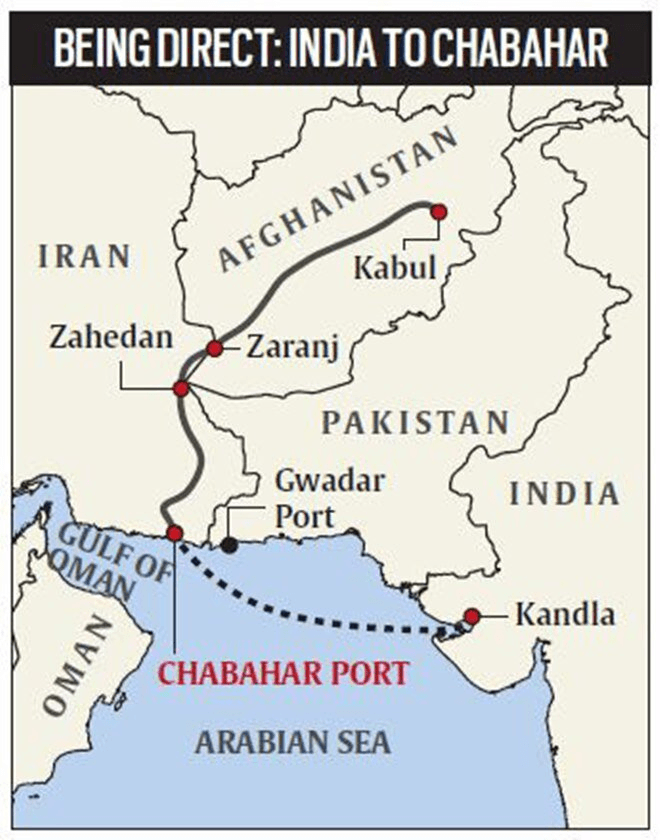
9.US Waiver Extends Chabahar Operations (Chabahar Port)

The Hindu
Illustration for US Waiver Extends Chabahar Operations (Chabahar Port)

What & Where

Location Gulf of Oman, Sistan-Baluchestan (Iran); 170 km west of Pakistan’s Chinese-run Gwadar.

Structure Twin facilities — Shahid Kalantari & Shahid Beheshti; Iran’s only deep-water, ocean-facing port.

Purpose Gateway for India to Afghanistan/Central Asia; critical node on International North-South Transport Corridor (INSTC).

Quick Facts for MCQs

Strategic Significance

  • Access Afghanistan & Central Asia bypassing Pakistan, bolstering India’s westward trade reach.
  • Counterweight to China’s BRI and Pakistan’s Gwadar within CPEC.
  • Strengthens Indian Ocean energy & supply-chain security.

India–Iran Deals

  • 2005 initial agreement; 2015 MoU to modernise Shahid Beheshti.
  • 2018 IPGL formally took over terminal operations.
  • 2016 trilateral transit pact institutionalised multimodal corridor via Chabahar.

US Sanctions

  • 2018 waiver granted recognising Afghan development role.
  • Sept 2025 waiver revoked, exposing partners to IFCA penalties.
  • Oct 2025 six-month carve-out reinstated, insulating Indian activity until Apr 2026.

Connectivity Projects

  • Planned Chabahar-Zahedan-Mashhad rail with Iranian Railways.
  • Integration drive with INSTC for India-Caspian-Russia-Europe freight.
  • Taliban-led Afghanistan signals readiness to route exports/imports through Chabahar.

Key Data Points

FeatureData-Point
Port typeOceanic deep-water
ProvinceSistan-Baluchestan, Iran
Water bodyGulf of Oman
Sub-portsShahid Kalantari; Shahid Beheshti
Distance to Gwadar~170 km west
Indian operatorIndia Ports Global Ltd (IPGL)
First India-Iran pact2005
2016 pactIndia-Iran-Afghanistan Transit Corridor
Key corridorINSTC
Latest US waiverOct 2025 – Apr 2026
Sanction statuteIran Freedom & Counter-Proliferation Act, 2012

Related UPSC Prelims PYQs

GEO_GS 2022PYQ 1

Chabahar Port is located in which one of the following countries?

GS-2Security

10.India–US 10-Year Defence Framework (India-US Defence)

The Hindu
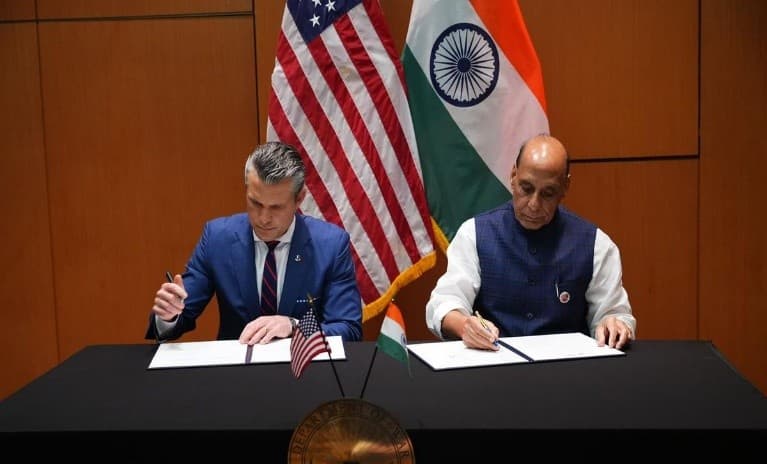
Illustration for India–US 10-Year Defence Framework (India-US Defence)

What & Where

Framework: 10-year U.S.–India Major Defence Partnership guiding cooperation in land, maritime, air, space, cyber.

Where & When: inked at Kuala Lumpur during 12th ADMM-Plus by Rajnath Singh and U.S. Secretary of War Pete Hegseth.

Theatre: Indo-Pacific; seeks free, open, rules-based order and secure maritime commerce.

Quick Facts for MCQs

Objectives

  • Freedom-of-Navigation: protects sea-lanes, commerce, sovereignty across Indo-Pacific.
  • Interoperability: boosts joint readiness, information-sharing, coordinated threat responses.
  • Regional-Partnerships: deepens Quad and other multilateral security architectures.

Industry & Technology

  • Co-production: promotes joint R&D, manufacturing of advanced systems.
  • Innovation-Push: leverages COMPACT to accelerate tech transfer and industrial integration.
  • Capacity-Build: expands defence supply chains and indigenous capability.

Security Dimension

  • Deterrence: enhances credible posture against regional instability or coercion.
  • Institutionalisation: sets structured policy roadmap ensuring continuity across administrations.
  • Trust-Building: cements India as priority U.S. defence partner and regional stability pillar.

Key Data Points

FeatureData-Point
Validity period2024-2034 (10 years)
Signing event12th ASEAN Defence Ministers’ Meeting-Plus
Venue cityKuala Lumpur
Indian signatoryDefence Minister Rajnath Singh
U.S. signatorySecretary of War Pete Hegseth
Precursor pacts2013 Joint Principles; 2016 Major Defence Partner status
Covered domainsLand, Maritime, Air, Space, Cyberspace
Linked initiativeCOMPACT = Catalyzing Opportunities for Military Partnership, Accelerated Commerce and Technology
Primary regionIndo-Pacific

Related UPSC Prelims PYQs

CAPF_GAI, CDS_GK 2022PYQ 1

समृद्धि के लिए हिंद-प्रशांत आर्थिक ढाँचा (Indo-Pacific Economic Framework for Prosperity) का गठन करते समय, सदस्य देशों ने चार स्तंभों पर भावी समझौता-वार्ता के लिए सामूहिक परिचर्चा शुरू की है। उन स्तंभों में, निम्नलिखित में से कौन-सा नहीं है ?

CAPF_GAI, CDS_GK 2024PYQ 2

Which one among the following statements with regard to India’s maritime initiative, SAGAR, is correct?

GS-3Security

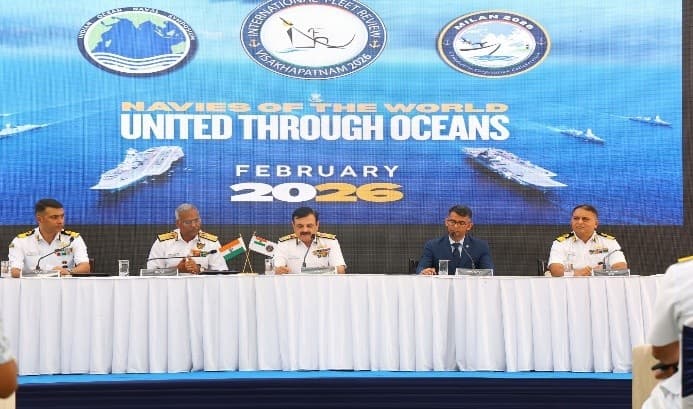
11.Exercise MILAN 2026 Maritime Drill (Naval Exercise)

PIB
Illustration for Exercise MILAN 2026 Maritime Drill (Naval Exercise)

What & Where

Biennial multilateral naval Exercise MILAN 2026 hosted by Indian Navy at Visakhapatnam, Andhra Pradesh, February 2026

Dual-phase format — Harbour & Sea — covers ASW, air defence, search-and-rescue, maritime domain awareness

Embedded in larger maritime convergence with International Fleet Review and IONS Conclave under MAHASAGAR vision

Quick Facts for MCQs

Security Dimension

  • Capability-building via complex multilateral drills enhances readiness against regional maritime contingencies
  • Focus on rules-based order supports freedom of navigation across Indo-Pacific sea lanes
  • Enhanced interoperability boosts trust, communication, tactical synergy among partner navies

Naval Diplomacy

  • Hosting establishes India as convenor for cooperative security under MAHASAGAR vision
  • Participation from Indo-Pacific, Africa, Europe, ASEAN widens strategic outreach beyond neighbourhood
  • Tri-service City Parade projects soft power and maritime awareness to domestic and global audience

Indigenous Capability

  • Display of INS Vikrant signifies transition to Carrier Operating and Builder’s Navy
  • Visakhapatnam-class destroyers and Nilgiri-class frigates highlight Make in India shipbuilding
  • Event platform showcases Indian hulls, sensors, weapon systems to potential partners

Key Data Points

FeatureData-Point
FrequencyBiennial
First edition1995, Port Blair, 4 navies
Host editionFeb 2026, Visakhapatnam
Expected navies 202640 + friendly foreign navies
PhasesHarbour phase + Sea phase
Key drillsASW, air defence, MDA, SAR
Public outreachInternational City Parade at RK Beach
Showcased vesselsINS Vikrant; Visakhapatnam-class destroyer; Nilgiri-class frigate
Wider eventsInternational Fleet Review; IONS Conclave of Chiefs

Related UPSC Prelims PYQs

CDS_GK, NDA_GAT 2020PYQ 1

MILAN, एक बहुपक्षीय नौसैनिक अभ्यास, 2020 निम्नलिखित में से किस शहर में आयोजित किया गया था ?

CDS_GK, NDA_GAT 2021PYQ 2

The first phase of Exercise Malabar, 2020 was conducted at

GS-3Security

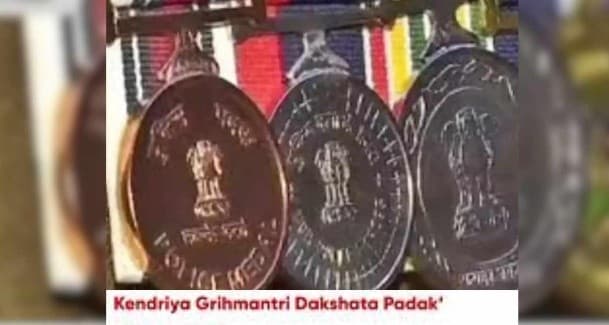
12.Kendriya Grihmantri Dakshata Padak Award (Police Award)

New Indian Express
Illustration for Kendriya Grihmantri Dakshata Padak Award (Police Award)

What & Where

National-level police award instituted by Ministry of Home Affairs via Gazette notification dated 1 Feb 2024.

Conferred every 31 Oct (Sardar Vallabhbhai Patel’s birth anniversary) for exceptional professionalism, courage and integrity in policing.

Open to State/UT Police, CAPFs, CPOs, Intelligence branches and Forensic Science units nationwide.

Quick Facts for MCQs

Legal & Policy

  • Notification-based creation under MHA, avoiding separate Parliamentary statute.
  • Aligns with Patel’s internal-security vision, reinforcing constitutional duty of Union to maintain public order.

Human Resource Angle

  • Motivation; provides career-advancement leverage and peer recognition within 30-lakh-strong police force.
  • Merit-based selection, reinforcing integrity and efficiency norms across police cadre.

Security Dimension

  • Encourages adoption of modern investigative, intelligence and forensic techniques for stronger law-enforcement outcomes.
  • Highlights operational courage, signalling governmental support for high-risk special operations.

Key Data Points

FeatureData-Point
Launch notification date1 February 2024
Awarding ministryMinistry of Home Affairs
Annual presentation day31 October
First large-scale award31 Oct 2025; 1,466 personnel
Core focus areasSpecial Operations, Investigation, Intelligence, Forensic Science

Related UPSC Prelims PYQs

CDS_GK, GS1 2020PYQ 1

The Government of India has recently constituted a civilian award in the name of Sardar Vallabhbhai Patel in the field of contribution to

CDS_GK, GS1 2004PYQ 2

Param Padam, which was in news recently, is

GS-2Scheme

13.Aabhar Online Store Promotes Artisans (Vocal for Local)

The Hindu

What & Where

Aabhar online store; digital gifting portal on GeM featuring ODOP & GI-tagged artisanal products

Products crafted by indigenous tribes, handloom weavers; sourced through CCIE, KVIC, Central/State emporiums

Patronised nationwide by Indian Railways for official gifts, extending One Station One Product ethos

Quick Facts for MCQs

Tech & Schemes

  • GeM integration enables direct procurement of certified artisanal goods
  • Complements OSOP stalls at stations, widening ODOP market outreach
  • Aligns with Atmanirbhar Bharat digital procurement reforms

Economic Angle

  • Creates assured institutional demand boosting rural artisan incomes
  • Diversifies revenue for KVIC & handloom cooperatives without middlemen
  • Encourages sustainable, inclusive growth emphasised by GeM CEO

Social Concerns

  • Targets marginalised tribes, women-led micro units for market entry
  • Promotes preservation of traditional craft skills via guaranteed orders
  • Builds pride in local heritage among passengers and officials

Key Data Points

FeatureData-Point
Hosting platformGovernment e-Marketplace (GeM)
Primary buyerIndian Railways
Flagship campaignVocal for Local
Product categoriesODOP & Geographical Indication gifts
Key suppliersCCIE, KVIC, Central/State Handicraft-Handloom Emporiums
First-use purposeGifts/hampers at Railway events & ceremonies
GS-2Scheme

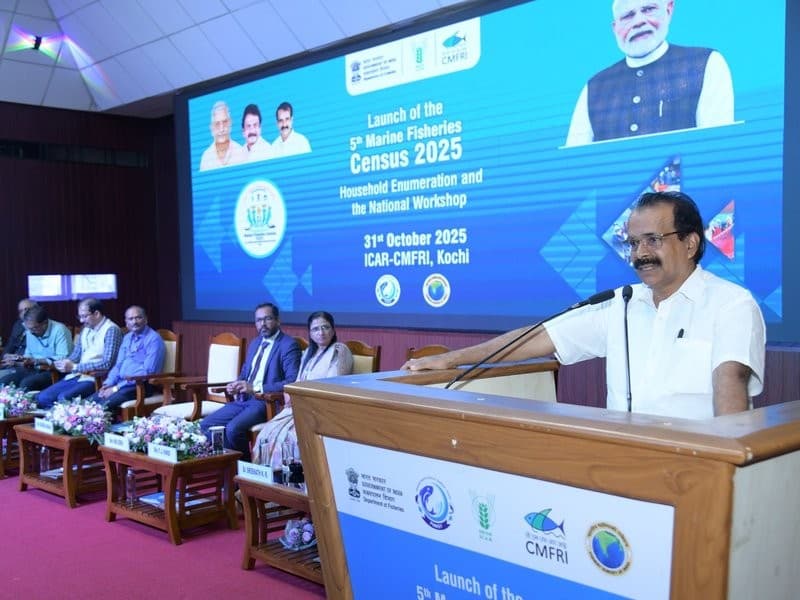
14.Marine Fisheries Census 2025 (Fisheries Census)

DD News
Illustration for Marine Fisheries Census 2025 (Fisheries Census)

What & Where

Marine Fisheries Census 2025 — first fully digital, geo-referenced enumeration of India’s marine fishing communities

Conducted nationwide across 13 coastal States & UTs; targets 5,000 marine fishing villages

Uses VYAS mobile app suite plus drone imagery for craft counting

Quick Facts for MCQs

Tech & Schemes

  • VYAS–NAV validates fishing villages and harbours with real-time GPS tagging
  • VYAS–BHARAT captures household, infrastructure, socio-economic indicators in local languages
  • VYAS–SUTRA offers live dashboards enabling supervisors and policymakers instant analytics

Socio-Economic Data

  • Indicators include income, debt, insurance cover, scheme participation
  • Evidence base to tailor livelihood, credit and welfare interventions
  • Cloud storage ensures tamper-proof records for future audits

Governance & Monitoring

  • Digital verification enhances transparency versus earlier paper surveys
  • Supervisory dashboards allow progress tracking and field error flags instantly
  • Centralised database aids sustainable fisheries management and scheme delivery

Key Data Points

FeatureData-Point
Funding ministryDepartment of Fisheries, GoI
Implementing agencyICAR–CMFRI with FSI support
Census cycle2025 edition
Target households1.2 million fisher families
Village coverage≈5,000 marine villages
Coastal States/UTs13
Enumeration modePaperless, GPS-tagged via VYAS apps
Drone useAerial craft enumeration for accuracy
Key appsVYAS–NAV, VYAS–BHARAT, VYAS–SUTRA
Welfare data capturedPMMSY, PM-MKSSY enrolment

Related UPSC Prelims PYQs

ESE_GS 2026PYQ 1

Which institution released the report titled “India’s Blue Economy: Strategy for Harnessing Deep-Sea and Offshore Fisheries”?

Ready to practice?

Test your knowledge with our UPSC test series.

Start Free Trial