UPSC Current Affairs

14 topicsGS-1: 1GS-2: 6GS-3: 7
0/14 done
GS-2Polity

1.Special Intensive Voter Roll Revision 2025 (Electoral Roll Verification)

Indian Express
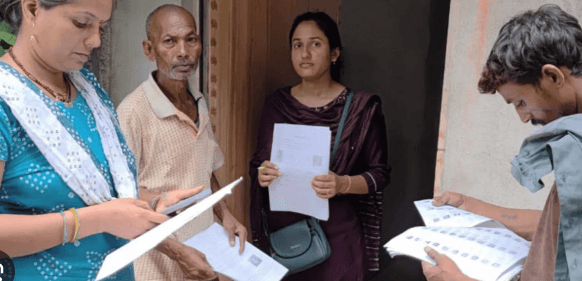
Illustration for Special Intensive Voter Roll Revision 2025 (Electoral Roll Verification)

What & Where

Special Intensive Revision (SIR) 2025 = document-based voter roll purification drive after ~20 yrs.

Run by Election Commission of India across 12 States/UTs; house-to-house & online enumeration.

Anchored in Representation of the People Act, 1950 to ensure only eligible Indian citizens remain voters.

Quick Facts for MCQs

Process Flow

  • Preparation; EF auto-filled from 27 Oct 2025 database then printed for delivery.
  • Distribution & collection; BLOs three visits, alternately voter self-upload on portal.
  • Verification; ERO/AERO cross-checks, demands documents if no historic roll match.

Institutional Roles

  • BLO: delivers/collects EF, detects shifted/deceased voters, links to past rolls.
  • DM & CEO: two-tier appeal mechanism against deletion decisions.
  • BLAs: party observers ensuring transparency during form collection & verification.

Legal & Policy

  • Authority derived from Representation of the People Act 1950 Sections on roll maintenance.
  • Aim: clean, error-free, inclusive rolls before upcoming elections, strengthening electoral credibility.
  • Document requirement triggered only when historic linkage absent, balancing verification with voter convenience.

Key Data Points

FeatureData-Point
Supervising authorityChief Election Commissioner Gyanesh Kumar
Ground workerBooth Level Officer (≈1,000 voters each)
Political oversightBooth Level Agents of recognised parties
Key formEnumeration Form (EF), pre-printed & online
Historic roll linkage2002-2004 electoral rolls
Cut-off database date27 Oct 2025
Home visitsUp to three per household by BLO
First appeal heard byDistrict Magistrate
Second appeal heard byChief Electoral Officer
Online portalvoters.eci.gov.in

Related UPSC Prelims PYQs

CDS_GK, GEO_GS 2026PYQ 1

What is the full form of SIR introduced by the Election Commission of India?

CDS_GK, GEO_GS 2022PYQ 2

The use of ‘Electors Photo Identity Cards (EPIC)’ by the Election Commission of India was started in which one of the following years ?
GS-3Economy

3.Indi & Puliyankudi GI Lime Export (GI Tags)

LiveMint
Illustration for Indi & Puliyankudi GI Lime Export (GI Tags)

What & Where

Geographical Indication (GI): IPR tag under 1999 Act, certifies region-linked qualities of goods

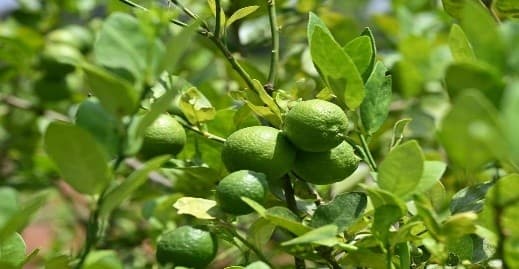
Indi Lime: grown mainly Vijayapura district, Karnataka; high-juice, aromatic, balanced acidity

Puliyankudi (Kadayam) Lime: cultivated Tenkasi district, Tamil Nadu; thin peel, ≈55 % juice, strong acidity

Quick Facts for MCQs

Export & Trade

  • APEDA enabled air consignment of both GI limes from Bengaluru to UK
  • Initiative targets premium overseas market, boosting farmer income
  • Success may open regular GI-produce export corridors

Geographical Indication Law

  • Registration confers legal protection, bars unauthorised name use
  • Valid for 10 years, renewable indefinitely
  • Enhances product value, ensures rural economic gains

Regional Varieties

  • Indi Lime valued for culinary uses, traditional medicine, cultural rituals in Karnataka
  • Puliyankudi belt dubbed “Lemon City of Tamil Nadu” owing to dense lime orchards
  • High Vitamin C and antioxidant profile adds nutritional branding potential

Key Data Points

FeatureData-Point
Facilitating bodyAPEDA
Shipment mode & noveltyFirst-ever air export of GI limes
Destination countryUnited Kingdom
Governing lawGI of Goods (Registration & Protection) Act 1999
Registry locationChennai
Supervising departmentDPIIT, Ministry of Commerce & Industry
Puliyankudi Lime GI tag grantedApril 2025
Kadayam Lime juice content≈55 %
Ascorbic acid in Kadayam Lime34.3 mg/100 g
GS-3Economy

4.KOYLA SHAKTI Coal Analytics Dashboard (Coal Sector Digitization)

PIB

What & Where

KOYLA SHAKTI Dashboard = Smart Coal Analytics Dashboard integrating mine-to-market data across India, housed in Ministry of Coal.

CLAMP Portal = Coal Land Acquisition, Management & Payment system digitising land records, compensation and R&R in coal-bearing districts.

National scope; interoperable with Coal PSUs, State revenue departments and district authorities in major coal states.

Quick Facts for MCQs

Tech & Schemes

  • Integration; KOYLA links production, logistics, consumption data; CLAMP links PSUs, State, district databases.
  • Real-time; live analytics & alerts enable evidence-based policy and quick disruption response.
  • End-to-end; both platforms cover complete process chains, minimising manual intervention.

Governance & Transparency

  • KPI display; dashboard publishes stakeholder performance, enhancing accountability.
  • Digital payments; CLAMP ensures direct, trackable compensation to beneficiaries.
  • Audit trail; unified databases cut scope for duplicate claims or delays.

Operational Efficiency

  • Predictive analytics; KOYLA aids demand forecasting and resource allocation.
  • Time-bound processes; CLAMP standardises land acquisition timelines, expediting project starts.
  • Incident response; dashboard auto-flags transport bottlenecks, enabling rapid corrective action.

Key Data Points

FeatureData-Point
Parent ministryMinistry of Coal
Launch portfolioUnion Minister of Coal & Mines
KOYLA SHAKTI full formSmart Coal Analytics Dashboard (SCAD)
KOYLA core functionReal-time, unified monitoring of production, logistics, consumption
Dashboard analyticsPredictive demand forecasting, incident alerts
Transport modes trackedRail, road, multimodal
CLAMP primary mandateLand acquisition, compensation, R&R digitisation
CLAMP workflow spanUpload records → compensation disbursal
Data storageCentral repository of land ownership & payments
Key governance aimTransparency, reduced discretion, time-bound processing

Related UPSC Prelims PYQs

GS1 2022PYQ 1

भारत में, कोल कंट्रोलर संगठन (Coal Controller's Organization-CCO) की क्या भूमिका है?

GS-3Economy

5.Advanced Manufacturing Roadmap 2035 (Advanced Manufacturing)

BW
Illustration for Advanced Manufacturing Roadmap 2035 (Advanced Manufacturing)

What & Where

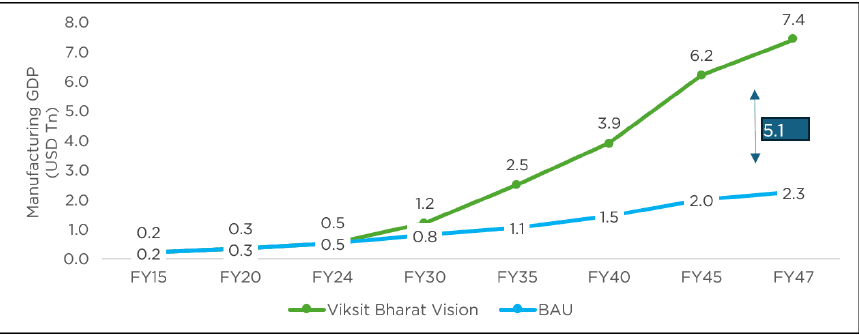
Roadmap_Reimagining_Manufacturing: 10-year strategy (2026-2035) to embed frontier tech in 13 priority manufacturing sectors

Publisher: NITI Aayog’s Frontier Tech Hub with CII & Deloitte, targeting global top-three hub status by 2035

Geography: pan-India implementation through five sectoral clusters and 20 proposed plug-and-play parks

Quick Facts for MCQs

Economic Targets

  • Manufacturing_GDP Target: reach 25% of GDP, ranking top-three globally
  • Export_Upside: merchandise share expected 6.5% of global trade by 2035
  • Value_Addition: advanced tech infusion could add $1 trn to GDP by 2047

Key Challenges

  • R&D_Lag: spending below 1% GDP limits patents, high-tech product pipeline
  • Skilling_Gap: large workforce untrained in AI, robotics, slowing automation uptake
  • Infrastructure_Deficit: shortage of smart parks, 5G, reliable power hampers scale

Policy Tools

  • National_Manufacturing_Mission: coordinates frontier tech adoption and sectoral policy convergence
  • PLI_Schemes: performance-linked incentives for electronics, semiconductors, sunrise sectors
  • Industrial_Corridors: Gati Shakti, PM MITRA enhance logistics, cluster competitiveness

Tech Recommendations

  • GFTI: proposed Centre of Excellence for advanced R&D, testing, certification
  • Plug-and-Play_Parks: 20 tech-enabled zones with 5G, simulation labs, ready utilities
  • Digital_Backbone: real-time industrial IoT network enabling predictive efficiency and data sharing

Key Data Points

FeatureData-Point
Roadmap year span2026–2035
Lead agencyNITI Aayog Frontier Tech Hub
Current mfg GDP share15–17%
Target share 203525%
Potential GDP gain 2035$270 bn
Potential GDP gain 2047$1 trn
Skilled jobs to create100+ million
Export share goal6.5% of global trade
Proposed tech parks20
Current R&D spend<1% GDP

Related UPSC Prelims PYQs

CAPF_GAI, GS1 2025PYQ 1

'राष्ट्रीय विनिर्माण मिशन' के संबंध में निम्नलिखित में से कौन-सा/कौन-से कथन सही है/हैं?

CAPF_GAI, GS1 2019PYQ 2

अटल नवाचार (Innovation) मिशन किसके अधीन स्थापित किया गया है?

GS-3Infrastructure

6.Bharat Taxi Cooperative Cab Service (Cooperative Ride-Hailing)

DH

What & Where

Bharat Taxi: government-backed cooperative ride-hailing platform empowering drivers as shareholder-members.

First launch: Delhi, November 2025; nationwide scale-up planned through Ministry of Cooperation & NeGD.

Managed under Sahakar Taxi Cooperative Ltd; emphasises zero-commission, transparent fares, digital governance links.

Quick Facts for MCQs

Cooperative Framework

  • Collective ownership; each Saarthi holds share, voting rights, income residuals.
  • Supported by apex cooperatives, enhancing capital access and governance credibility.
  • Promotes cooperative entrepreneurship model within service sector.

Tech & Schemes

  • DigiLocker enables KYC, licence verification; UMANG offers booking interface.
  • API Setu links payment, grievance redressal, real-time fare display.
  • Platform aligns with Digital India, ensures data security via government stacks.

Economic Angle

  • Eliminates 15–30 % aggregator commissions, boosting driver net income.
  • Regulated fare structure seeks commuter affordability, market stability.
  • Local ownership curbs profit outflow to foreign VC-backed aggregators.

Phased Rollout

  • Pilot 650 cabs Delhi 2025; performance metrics to guide scale decisions.
  • 20-city expansion 2026 prioritises metros, tier-1 urban clusters.
  • Goal 1 lakh cooperative cabs pan-India by 2030 with self-financed growth.

Key Data Points

FeatureData-Point
Implementing ministryUnion Ministry of Cooperation
Tech partnerNational e-Governance Division (NeGD)
Managing entitySahakar Taxi Cooperative Ltd
Initial authorised capital₹300 crore
Launch scheduleNovember 2025
First-city rollout strength650 driver-owners
Phase-II target20 cities by 2026
2030 fleet goal1 lakh cabs
Driver designation“Saarthi”
Driver earnings100 % of fare
Pricing policyNo surge, transparent tariff
Digital integrationsDigiLocker, UMANG, API Setu
Backing cooperativesAmul, IFFCO, NAFED, KRIBHCO, NABARD, NCDC
GS-3Environment

7.Saranda Wildlife Sanctuary (Wildlife Sanctuary)

Times of India
Illustration for Saranda Wildlife Sanctuary (Wildlife Sanctuary)

What & Where

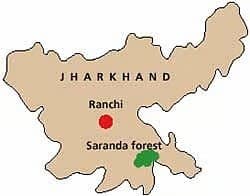
Proposed wildlife sanctuary inside Saranda Forest Division, West Singhbhum, southern Jharkhand

Part of Singhbhum Elephant Reserve, key corridor linking Jharkhand, Odisha, Chhattisgarh

Envisaged 310 sq km within 856 sq km Sal-rich Saranda landscape

Quick Facts for MCQs

Legal & Policy

  • SupremeCourt reserves verdict on plea trimming sanctuary to 250 sq km citing tribal habitation
  • NGT 2022 mandated sanctuary notification under Wildlife Protection Act 1972
  • Game reserve tag since 1968 under erstwhile Bihar law

Environmental Impact

  • Sal forests serve major carbon sink and eastern biodiversity hotspot
  • Maintains elephant movement between Jharkhand Odisha Chhattisgarh habitats
  • Hosts rare orchids plus diverse mammals birds reptiles

Social Concerns

  • Ho Munda Oraon PVTGs depend on mahua lac resin for livelihoods
  • Forest Rights Act 2006 backs community tenure inside proposed sanctuary
  • State argues area cut shields villages customary rights

Economic Angle

  • Contains about 26 % national iron ore luring SAIL and private miners
  • Mining vs conservation drives policy friction in Saranda hills
  • Potential habitat loss threatens long term ecosystem services

Key Data Points

FeatureData-Point
Proposed sanctuary area310 sq km (state seeks 250 sq km)
Total Saranda region856 sq km; 816 sq km reserved forest
District & StateWest Singhbhum, Jharkhand
First legal statusGame reserve 1968, Bihar Forest Act
NGT order year2022 directive to notify under WLPA 1972
Dominant treeSal Shorea robusta
Flagship faunaAsian elephant
Other faunaFour-horned antelope, sloth bear, flying lizard
Iron ore share≈26 % of India’s reserves
Resident communitiesHo, Munda, Oraon, PVTGs
Corridor connectsSaranda–Similipal–Sundargarh forests
Local NTFPsMahua flowers, resin, lac

Related UPSC Prelims PYQs

GS1 2011PYQ 1

Two important rivers – one with its source in Jharkhand (and known by a different name in Odisha), and another, with its source in Odisha – merge at a place only a short distance from the coast of Bay of Bengal before flowing into the sea. This is an important site of wildlife and biodiversity and a protected area. Which one of the following could be this?

GS-3Environment

8.UNEP Adaptation Gap Report 2025 (Climate Adaptation Finance)

UNEP
Illustration for UNEP Adaptation Gap Report 2025 (Climate Adaptation Finance)

What & Where

UNEP Adaptation Gap Report (annual, UNEP–Copenhagen Climate Centre) audits global adaptation planning, implementation, finance progress

Focuses on developing-country resilience gap; informs UNFCCC negotiations and upcoming COP30 in Belém, Brazil

2025 edition “Running on Empty” flags severe funding shortfall, high loan dependence, sluggish private investment

Quick Facts for MCQs

Finance & Debt

  • Widening-gap: flows fell from US$28 bn (2022) to US$26 bn (2023) despite rising needs
  • Debt-heavy: non-concessional loans dominate, risking adaptation debt traps for vulnerable economies
  • Baku–Belém roadmap urges US$1.3 tn annual climate finance with more grants, non-debt tools

Planning & Implementation

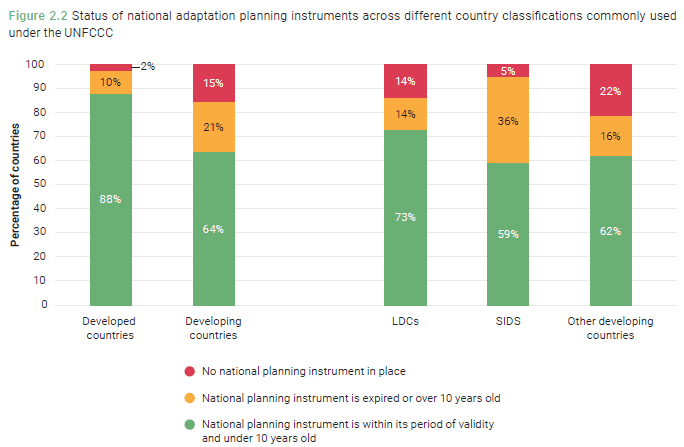
  • Coverage: near-universal NAP adoption yet 36 outdated, limiting efficacy
  • Actions: >1,600 measures logged, concentrated in biodiversity, water, agriculture, infrastructure; outcome metrics scarce
  • MEL gaps: weak monitoring and evaluation hinder evidence-based scaling, raise maladaptation risk

India Dimension

  • Alignment: NAPCC, state plans mirror UNEP priority sectors—agriculture, water, infrastructure
  • Exposure: recurrent heatwaves, floods, glacial retreat intensify adaptation urgency and funding need
  • Leadership: ISA, LiFE, G20-2023 showcase diplomacy; still reliant on concessional international finance for scale-up

Key Data Points

FeatureData-Point
Required adaptation finance (2035)US$310–365 billion / year
Current flows (2023)US$26 billion
Shortfall multiple12–14 times
Loan share in flows58 %
Private sector share~US$5 billion
Potential private capacityUp to US$50 billion
Countries with ≥1 NAP172
Outdated NAPs36
UNFCCC funds disbursed (2024)US$920 million
Glasgow pledge statusDoubling by 2025 off-track

Related UPSC Prelims PYQs

CAPF_GAI 2024PYQ 1

Which one among the following statements with regard to the United Nations Climate Change Conference (COP28) is NOT correct?

GS-2Environment

9.International Solar Alliance Assembly Session-8 (Solar Energy Diplomacy)

PIB
Illustration for International Solar Alliance Assembly Session-8 (Solar Energy Diplomacy)

What & Where

Alliance: International Solar Alliance, 2015 India-France launch, HQ Gurugram, 125 members targeting global solar scale-up

Venue: 8th ISA Assembly, 30 Oct 2025, Vigyan Bhawan New Delhi, chaired by India, focus on Global South leadership

Agenda: New initiatives — SUNRISE recycling network, OSOWOG trans-continental grid, SIDS joint procurement platform

Quick Facts for MCQs

New Programs

  • SUNRISE: Drives circular economy, solar waste recycling, green jobs across member states
  • OSOWOG: Feasibility studies within 2–3 yrs for intercontinental transmission links
  • SIDS Platform: 16 island states MoU with ISA-World Bank for pooled procurement and digital integration

Reports & Data

  • Launch: Ease of Doing Solar 2025, Solar Compass, Floating Solar Framework, Global Trends 2025
  • Statistic: Solar confirmed as leading clean-energy growth driver per Global Trends report
  • Metric: 70 % future buildings in developing nations still unbuilt, boosting BIPV potential

India’s Achievements

  • Capacity: Solar rose 2.82 GW (2014) → 110.9 GW (2025); record 23.83 GW added FY 25
  • Manufacturing: Module 2.3 GW → 88 GW; Cell 1.2 GW → 25 GW by Mar 2025
  • Milestone: Non-fossil sources now 50 % of installed capacity, met five years early

Challenges

  • Dependence: >50 % solar hardware imported from China, minerals supply risk
  • Land: Project-agriculture conflict; agrivoltaics and 600 MW Omkareshwar floating solar proposed
  • Waste: Absence of recycling rules; SUNRISE to craft solar e-waste guidelines

Key Data Points

FeatureData-Point
ISA launch year2015 (COP21, Paris)
ISA headquartersGurugram, India
Member & signatory countries125
8th Assembly date30 October 2025
SUNRISE full formSolar Upcycling Network for Recycling, Innovation & Stakeholder Engagement
OSOWOG coverageAsia–Middle East–Europe–Africa
ISA investment targetUSD 1 trillion by 2030
Solar investment 2024USD 521 billion
Energy transition investment 2024USD 2,083 billion
Share by ISA membersUSD 861.2 billion

Related UPSC Prelims PYQs

ESE_GS, GS1 2016PYQ 1

Consider the following statements:

ESE_GS, GS1 2026PYQ 2

What is the name of the initiative launched by India and Denmark in November 2025 to enhance bilateral ties?

GS-2International RelationsQuick Bite

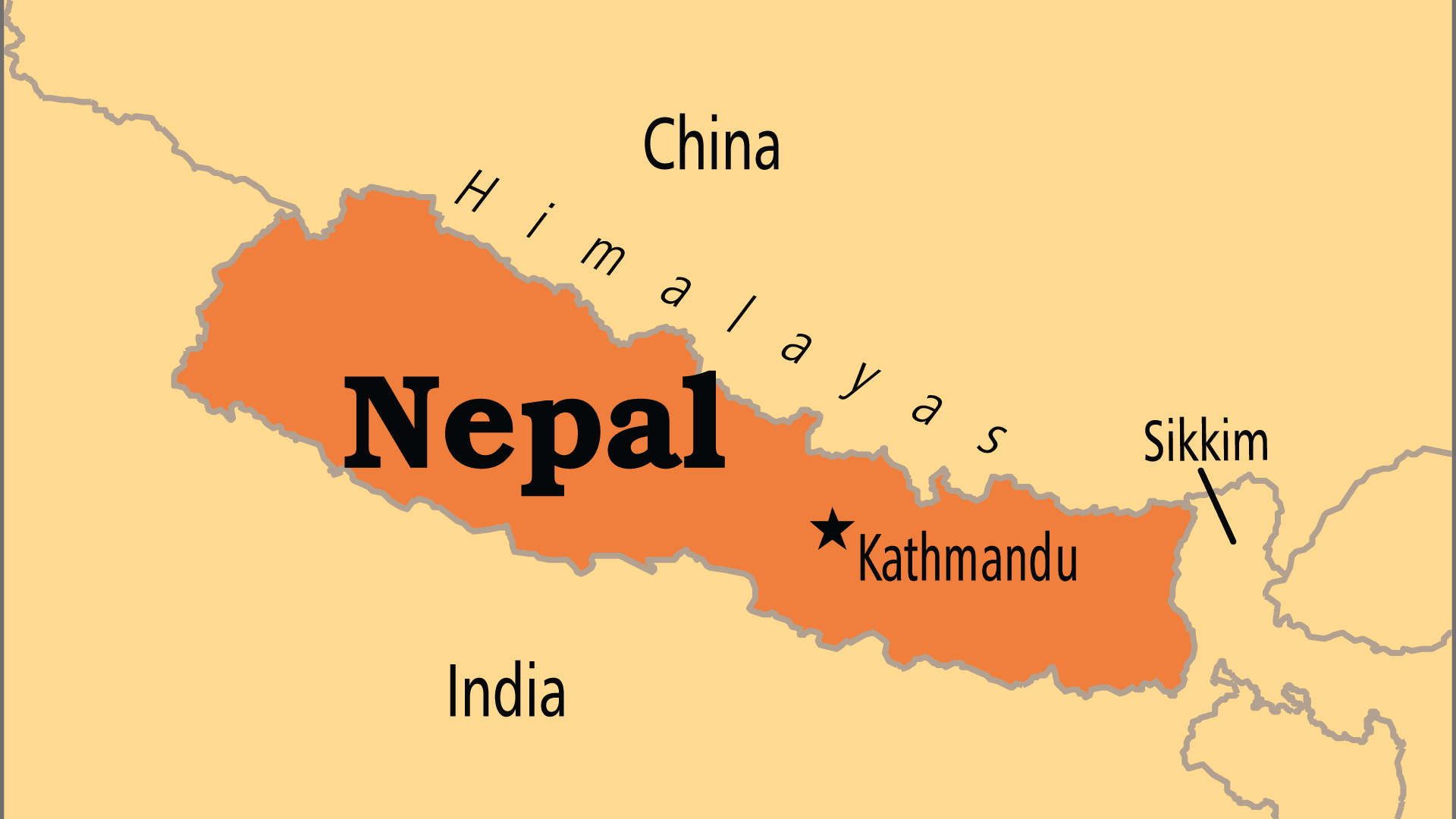
10.India–Nepal 400 kV Power Lines (Cross-Border Power Trade)

Economic Times
Illustration for India–Nepal 400 kV Power Lines (Cross-Border Power Trade)

What & Where

Project: two 400 kV India–Nepal cross-border transmission systems under POWERGRID–NEA pact

Route 1: Inaruwa (Morang, Nepal) ↔ New Purnea (Bihar, India)

Route 2: Lamki-Dododhara (Kailali, Nepal) ↔ Bareilly (Uttar Pradesh, India)

Quick Facts for MCQs

Tech & Schemes

  • Transmission spec: high-capacity 400 kV double-circuit lines enabling bulk power flow both directions
  • Grid integration: aligns with South Asian Association for Regional Energy Cooperation framework
  • Clean energy: facilitates dispatch of surplus Nepali hydropower into India’s renewable mix

Economic Angle

  • Trade boost: higher interconnection capacity lowers wheeling charges and curbs import dependence on fossil fuels
  • Investment: cross-border infrastructure spurs private hydel projects in Nepal, EPC contracts for Indian firms

Diplomatic Dimension

  • Bilateral ties: energy interdependence deepens strategic trust under 2014 India–Nepal Power Trade Agreement
  • Security: stable electricity supply in Terai region reduces illicit diesel-gen trade and border tensions

Key Data Points

FeatureData-Point
Voltage level400 kilovolt (kV)
Indian utilityPower Grid Corporation of India Ltd (POWERGRID)
Nepali utilityNepal Electricity Authority (NEA)
Indian nodesNew Purnea (Bihar); Bareilly (UP)
Nepali nodesInaruwa (Morang); Lamki-Dododhara (Kailali)
Policy backdropIndia’s Neighborhood First & Regional Energy Integration
Key resourceNepal hydropower exports to India
Primary goalRaise power-trade capacity, grid reliability

Related UPSC Prelims PYQs

NDA_GAT 2024PYQ 1

In January 2024, India has entered into a bilateral agreement through which it will provide grant assistance to a country to construct a 20 feet Bailey bridge. Identify the country.

GS-3SecurityQuick Bite

11.India Exits Tajikistan Ayni Airbase (Overseas Military Bases)

Economic Times
Illustration for India Exits Tajikistan Ayni Airbase (Overseas Military Bases)

What & Where

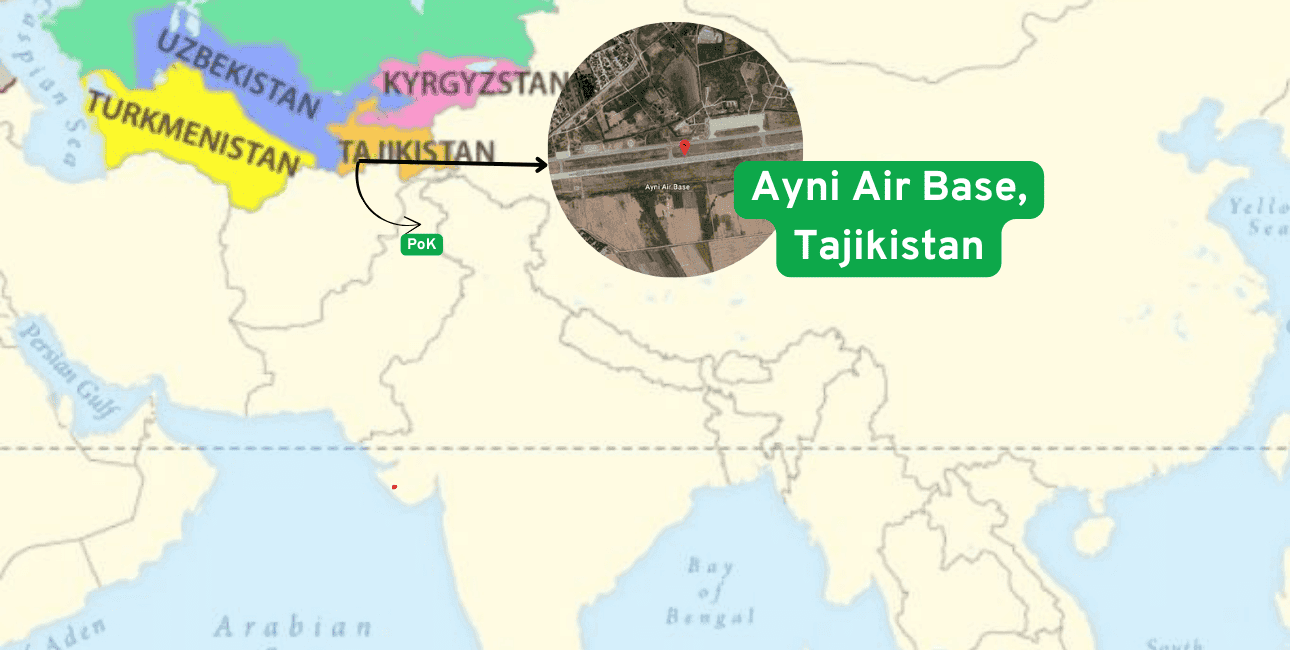
Ayni Airbase – Soviet-era strip modernised by India; India’s 2nd overseas military base after Farkhor (1998-2008).

Sited ~10 km west of Dushanbe, Tajikistan; ~20 km from Afghanistan’s Wakhan Corridor.

Logistics-intelligence hub for Afghan Northern Alliance; Indian deployment withdrawn after 2022 pact expiry.

Quick Facts for MCQs

Security Dimension

  • Proximity offers surveillance over Pakistan’s Gilgit-Baltistan and Afghan airspace.
  • No combat sorties; served repair, refuel, med-evac roles for Tajik & Indian forces.
  • Withdrawal reduces India’s quick-reaction presence in Central Asia.

Timeline & Agreements

  • Farkhor activated 1998; shut ~2008; Ayni modernisation followed.
  • India-Tajik pact on personnel stationing expired 2022; not renewed.
  • Full Indian drawdown acknowledged October 2025.

Geopolitical Significance

  • Base’s worth declined post-2021 Taliban takeover, erasing Northern Alliance buffer.
  • Reflects India’s limited footprint in land-locked Central Asia amid evolving Afghan dynamics.

Key Data Points

FeatureData-Point
Host countryTajikistan
Distance from Dushanbe≈10 km west
Nearby corridor~20 km to Afghanistan’s Wakhan
Indian base order2nd overseas (after Farkhor)
Primary Indian assetMi-17 helicopters
Permanent fighter squadronNil
Support objectiveNorthern Alliance vs. Taliban
Evacuation useKabul fall, Aug 2021
Agreement lapse2022
Indian exit confirmedOct 2025
GS-2Scheme

12.Nutrient Based Subsidy Scheme Rabi 2025 (Fertilizer Subsidy)

PIB

What & Where

Nutrient Based Subsidy (NBS): 2010 central-sector scheme ensuring affordable Phosphatic & Potassic fertilizers country-wide

Subsidy fixed per kg of N, P, K, S; paid to manufacturers/importers; P&K prices partially decontrolled

Latest Cabinet clearance applies to Rabi 2025-26 (1 Oct 2025 – 31 Mar 2026)

Quick Facts for MCQs

Policy & Scheme

  • Decontrol: P&K MRPs free, Government monitors affordability
  • Support: Cabinet may sanction extra subsidy e.g., DAP during global volatility
  • Targeting: Subsidy released via Direct Benefit Transfer after sales

Fiscal & Economic Angle

  • Burden: Fertilizer subsidy second only to food, swollen by global price spikes
  • Volatility: Rising non-urea prices hurt crop profitability, deter balanced nutrient use
  • Exposure: Heavy import reliance makes subsidy bill sensitive to exchange, freight rates

Environmental Impact

  • Imbalance: Cheap urea drives N overapplication, P&K underuse, nutrient skew
  • Pollution: Excess nitrogen leaches to groundwater, emits nitrous oxide
  • Degradation: Declining soil organic carbon threatens long-term productivity

Reform Proposals

  • Inclusion: CACP urges bringing urea under NBS for nutrient parity
  • Targeting: Cap subsidized bag quota per farmer, verify via Aadhaar
  • Diversification: Incentivise organic, bio, nano fertilizers for soil health

Key Data Points

FeatureData-Point
Launch year2010
Implementing ministryDept of Fertilizers, Mo Chemicals & Fertilizers
Fertilizer categories covered28 P&K grades incl DAP, NPKS
Subsidy metric₹ per kg of N, P, K, S
Urea statusExcluded; MRP ₹242 per 45 kg bag (since 2018)
Price control P&KDecontrolled; MRPs set by firms, monitored
Latest season approvedRabi 2025-26 (Oct–Mar)
Import dependence25 % urea, 90 % phosphate, 100 % potash
Fiscal ranking2nd-largest subsidy head after food

Related UPSC Prelims PYQs

CDS_GK, ESE_GS 2020PYQ 1

As per the Budget Estimates of expenditure on major subsidies during 2019–20, the maximum expenditure was likely to be on

CDS_GK, ESE_GS 2025PYQ 2

Which one of the following Yojanas replaces two schemes – National Agricultural Insurance Scheme (NAIS), 1999 as well as the Modified National Agricultural Insurance Scheme (MNAIS), 2010 – by incorporating the best features of all these schemes while removing the previous shortcomings and weaknesses?

GS-2Scheme

13.PM-ABHIM Health Infrastructure Mission (Health Infrastructure)

PIB
Illustration for PM-ABHIM Health Infrastructure Mission (Health Infrastructure)

What & Where

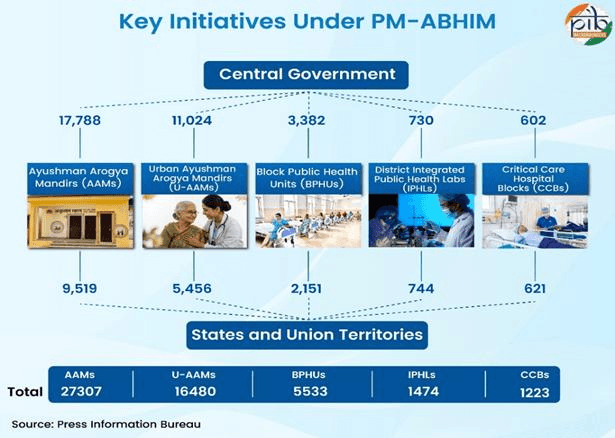
Scheme: Pradhan Mantri Ayushman Bharat Health Infrastructure Mission; nationwide CSS launched Oct 2021 to fortify public health capacity 2021-26

Scope: Upgrades entire care chain via Ayushman Arogya Mandirs, BPHUs, IPHLs, Critical-Care Blocks across rural-urban India

Approach: Integrates One-Health, real-time surveillance, research; anchors India’s SDG-3 and Universal Health Coverage goals

Quick Facts for MCQs

Infrastructure Components

  • AAMs; convert Sub-Health & Primary Centres into rural/urban hubs offering preventive, promotive, basic curative services
  • IPHLs; district labs provide advanced diagnostics, feed data into national digital surveillance network
  • CCBs; new tertiary critical-care units established in population-dense districts for emergency response

Governance & Policy

  • Mission; supports Universal Health Coverage, complements NHM 2005 and National Health Policy 2017 decentralisation vision
  • Funding; centre-state cost-sharing under CSS with outcome-based monitoring
  • BPHUs; strengthen block-level administration, integrate public health planning and logistics

International Context

  • WHO agreement; adopted 20 May 2025 at 78th WHA to ensure equitable pandemic response tools
  • Instrument; only second binding treaty under WHO after 2003 FCTC
  • Obligation; parties cooperate on timely access to diagnostics, vaccines, therapeutics, data-sharing

Key Data Points

FeatureData-Point
Launch monthOctober 2021
Scheme natureCentrally Sponsored Scheme
Coverage periodFY 2021-22 → FY 2025-26
Core componentsAAMs, BPHUs, IPHLs, CCBs, IT-Surveillance, Research
Primary centres renamedAyushman Arogya Mandirs
Guiding conceptOne-Health (human-animal-environment)
SDG addressedGoal 3 – Good Health & Well-being
WHO treaty linkedGlobal Pandemic Agreement 2025
Treaty legal baseArticle 19, WHO Constitution
Earlier WHO treaty2003 Framework Convention on Tobacco Control

Related UPSC Prelims PYQs

CDS_GK, GS1 2023PYQ 1

निम्नलिखित में से कौन-सा/कौन-से, प्रधानमंत्री स्वास्थ्य सुरक्षा योजना (PMSSY) का/के उद्देश्य है/हैं?

CDS_GK, GS1 2022PYQ 2

With reference to Ayushman Bharat Digital Mission, consider the following statements:

GS-1Economy

14.Graduate Employability Gap in India (Employment Skills Gap)

The Hindu

What & Where

Employability = graduate ability to acquire, apply, adapt knowledge + skills + mindset for fast-changing work settings.

Key processes: holistic skillset, adaptability, lifelong learning, measurable value creation for employers.

India context: only 42.6 % graduates job-ready, highlighting widening academia-industry gap.

Quick Facts for MCQs

Causal Factors

  • Academia: outdated syllabi, exam focus, negligible soft-skill grooming.
  • Industry: rapid tech shifts, weak campus collaboration, short-term recruitment bias.
  • Coordination: minimal joint research, course design, or mentorship initiatives.

Government & Industry Schemes

  • NEP 2020 promotes multidisciplinary credits, apprenticeships, research-industry links.
  • AICTE policy requires internships to bridge classroom–shop-floor divide.
  • FutureSkills PRIME and Skill India Mission target digital, vocational upskilling at scale.

Operational Challenges

  • Curriculum inertia due to regulatory delays slows new-skill inclusion.
  • Faculty exposure limited; few sabbaticals or tech immersions available.
  • Urban–rural divide leaves smaller colleges without labs, broadband, corporate interface.

Proposed Reforms

  • Curriculum co-design with employers, universities, regulators on biennial cycle.
  • Dual-learning: embed apprenticeships, live projects within degree credit structure.
  • Faculty immersion programmes to import industry practices into pedagogy.

Key Data Points

FeatureData-Point
Job-ready graduates (India)42.6 %
Core deficitAcademia–industry alignment
NEP 2020 thrustFlexibility, experiential learning, integration
AICTE Internship PolicyMandatory industrial exposure for engineering students
Skill India Mission toolSector Skill Councils for vocational training
NASSCOM FutureSkills PRIMECertifications in AI, cybersecurity, data analytics
Top academic flawOutdated, theory-heavy curriculum
Top industry flaw“Plug-and-play” hire expectation without training

Ready to practice?

Test your knowledge with our UPSC test series.

Start Free Trial