UPSC Current Affairs

12 topicsGS-2: 5GS-3: 7
0/12 done
GS-2Editorial

1.States' Fiscal Space Post GST (Fiscal Federalism)

The Hindu

What & Where

GST regime—101st Amendment 2017—unified indirect taxes under destination principle across India, curbing States’ tax autonomy

GST Compensation Cess ends July 2025, exposing revenue-weak States to fiscal shocks

Finance Commission (Art 280) decides Centre–State tax split; current recommended vertical share 41%

Quick Facts for MCQs

Legal & Policy

  • Amendment 101 centralised indirect taxation; merged 17 levies into GST
  • Article 279A sets GST Council; quorum 50%; Centre’s 33 % vote blocks 75 % decisions
  • Article 280 mandates quinquennial Finance Commission for vertical & horizontal devolution

Fiscal Imbalance

  • Imbalance; Centre retains ~₹12 lakh crore FY18-23 via non-divisible revenues
  • States handle > 52 % national expenditure, yet collect only one-third of taxes
  • Compensation delay ₹78,000 crore in FY22 heightened Centre-State distrust

Proposed Reforms

  • Recommendation; share Personal Income Tax 50:50, adding ~₹7 lakh crore yearly to States
  • Suggestion; allow 1–2 % State surcharge on PIT, Canada-style flexibility
  • Call; merge all cesses/surcharges into divisible pool, yielding extra ₹1.5 lakh crore to States

Key Data Points

FeatureData-Point
Centre voting share in GST Council33 % (effective veto)
GST compensation cessation date1 July 2025
States’ recommended share in Central taxes (15th FC)41 % of divisible pool
Actual States’ share in Gross Tax Revenue FY23< 33 %
Cesses & surcharges, BE 2025-26₹4.23 lakh crore
Non-shareable cesses share in Centre’s receipts18 %
Centre vs State tax collection ratio67 : 33
Average State dependence on Central transfers44 % of revenue; Bihar 72 %, UP 61 %
States’ debt-to-GSDP FY2431.2 % (above FRBM limit)

Related UPSC Prelims PYQs

CAPF_GAI, CDS_GK 2021PYQ 1

Following the Constitution (One Hundred and First Amendment) Act, 2016, the Parliament of India enacted quite a few GST Acts in the year 2017. Which one of the following does not fall in this category?

CAPF_GAI, CDS_GK 2024PYQ 2

Arrange the following sources of revenue of the Central Government in ascending manner in terms of percentage contribution to the total revenues of the Central Government in 2023-24:
GS-3Economy

2.State Mining Readiness Index Rankings (Mining Sector)

Business Standard

What & Where

Framework: State Mining Readiness Index (SMRI) ranks States on non-coal mining efficiency & sustainability

Geography: Covers all Indian States, grouped into three endowment categories (A, B, C)

Publisher: Released 2025 by Union Ministry of Mines, New Delhi

Quick Facts for MCQs

Criteria & Indicators

  • Auction Performance: transparency, revenue maximisation
  • Early Operationalisation: time taken from auction win to mine start
  • Exploration Thrust: funds, surveys, new resource discovery
  • Sustainable Practices: environmental safeguards, social responsibility

Category Classification

  • Category A: mineral-rich States for fair peer comparison
  • Category B: moderate resource States; incentives to scale capability
  • Category C: low-endowment States; judged on governance quality, not volume

Ranking Highlights

  • A-category podium: Madhya Pradesh, Rajasthan, Gujarat
  • B-category podium: Goa, Uttar Pradesh, Assam
  • C-category podium: Punjab, Uttarakhand, Tripura

Governance Aims

  • Competition: spur States to accelerate reforms & approvals
  • Transparency: uniform metrics to curb discretion & opacity
  • Sustainability: align mining with climate, ESG, local livelihood goals

Key Data Points

FeatureData-Point
Launch editionFirst, 2025
Releasing bodyMinistry of Mines
Mineral focusNon-coal (incl. critical/strategic)
Core indicatorsAuction Performance; Early Mine Operationalisation; Exploration Thrust; Sustainable Mining Practices
Category A topperMadhya Pradesh
Category B topperGoa
Category C topperPunjab
Budget originUnion Budget 2025-26 announcement
Reform modelCooperative federalism benchmarking
Evaluation basisState-wise performance, not absolute endowment

Related UPSC Prelims PYQs

CDS_GK, GS1 2025PYQ 1

Consider the following statements:

CDS_GK, GS1 2025PYQ 2

As per the Annual Report 2023 – 24 of the Ministry of Mines, Government of India, which of the following are the major bauxite producing states in India?

GS-3Environment

3.Sundarbans SAIME Mangrove Aquaculture Model (Mangrove Conservation)

The Hindu
Illustration for Sundarbans SAIME Mangrove Aquaculture Model (Mangrove Conservation)

What & Where

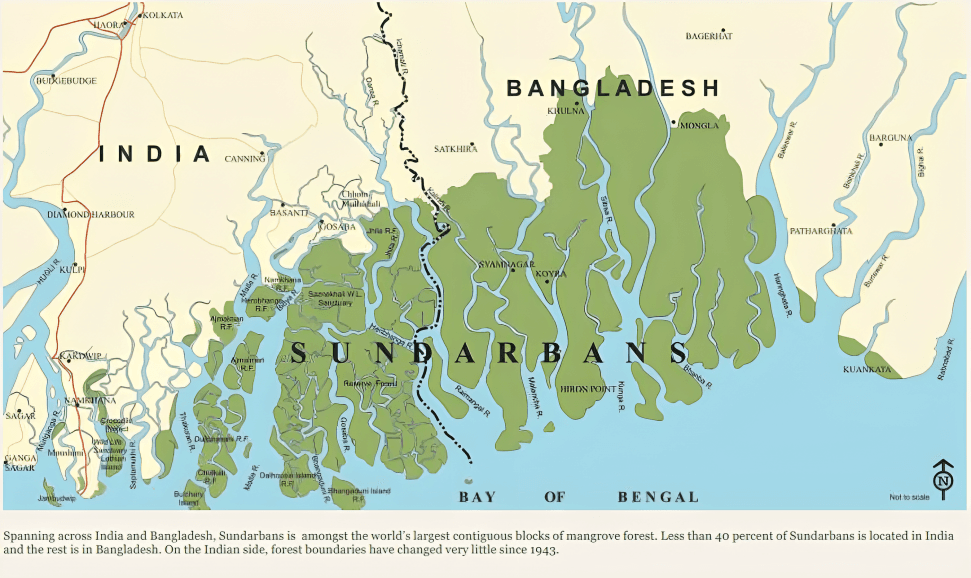
SAIME = community-run model marrying mangrove conservation with shrimp/fish aquaculture in West Bengal’s Sundarbans.

Process: reserve 5–30 % pond area for mangroves; let fallen leaves feed Black Tiger Shrimp, cut chemicals.

Locale: deltaic islands of Indian Sundarbans, Bay of Bengal—highly vulnerable to sea-level rise and salinity.

Quick Facts for MCQs

Environmental Impact

  • Carbon-sequestration: saline soils and biomass trap large CO₂ stocks.
  • Resilience: mangrove roots cut wave energy 5–35 %, lessen erosion.
  • Biodiversity: ponds double as nurseries for fish, crab, shrimp.

Economic Angle

  • Cost-saving: leaf litter feed slashes synthetic input bills.
  • Income: doubled profits encourage wider community uptake.
  • Diversification: supports aquaculture, apiculture, eco-tourism revenues.

Threats & Responses

  • Land-conversion: rice, oil-palm, unregulated aquaculture erode mangrove cover.
  • Pollution: oil spills, plastics impair seedling growth, soil quality.
  • Strategy: coastal zoning, bio-restoration, Blue Carbon Initiative scaling.

Legal & Policy

  • Designations: UNESCO WHS, Ramsar site, Biosphere Reserve status bolster protection.
  • Bilateral: 2011 India-Bangladesh MoU enables joint tiger, habitat monitoring.
  • Frameworks: FAO’s sustainable food systems, ecosystem restoration align with SAIME goals.

Key Data Points

FeatureData-Point
SAIME full formSustainable Aquaculture in Mangrove Ecosystems
Implementing groupNature Environment & Wildlife Society (NEWS)
Global tagFAO Global Technical Recognition 2025
Mangrove share per pond5 – 30 % area
Flagship cropBlack Tiger Shrimp (Penaeus monodon)
Farmer profit change~2× annual net income
Carbon functionMangroves act as blue-carbon sinks
UNESCO WHS years1987 (India) & 1997 (Bangladesh)
Ramsar statusSundarban Wetland, India, 2019
Population dependent≈ 12 million people

Related UPSC Prelims PYQs

GS1 1995PYQ 1

“Monoculture of commercially viable trees is destroying the unique natural profile of ……… Thoughtless exploitation of timber, deforesting vast tracts for palm cultivation, destruction of mangroves, illegal logging by tribals and poaching only compound the problem. Fresh water pockets are fast drying up due to deforestation and destruction of mangroves.” The place referred to in this quotation is

GS-3Environment

4.CSIR Green Firecrackers Initiative (Air Pollution)

The Hindu

What & Where

Green firecrackers = low-emission fireworks by CSIR-NEERI, available as sparklers, flowerpots, maroons, atom bombs.

Manufactured via 230 licensed firms nationwide; identified through green logo + QR code on each unit.

Aimed at ∼30 % cut in particulate pollution; comply with SC mandate of no mercury, arsenic, barium.

Quick Facts for MCQs

Legal & Policy

  • SC ban 2018 restricts non-green crackers; noise & toxic metals capped.
  • May 2019: SC allows bulk production of CSIR-certified green crackers.
  • Next SC hearing on “improved” barium-reduced crackers: 22 Oct 2019.

Technological Details

  • Two-pronged approach: barium reduction and potassium-nitrate substitution.
  • QR coding ensures traceability, curbs counterfeit supply.
  • Products must meet PESO safety norms and prescribed sound limits.

Institutional Setup

  • CSIR: autonomous under Science & Tech Ministry; 38 national labs.
  • PESO: nodal body for explosives, petroleum, compressed gases regulation; under DPIIT.
  • Both headquartered in Nagpur, enabling streamlined R&D–regulation interface.

Environmental Impact

  • Particulate, SO₂ and NOx emissions expected to drop around one-third.
  • Mercury, arsenic, barium eliminated to lower soil-air toxicity.
  • Initiative part of broader government drive against festival-season smog.

Key Data Points

FeatureData-Point
Developing labCSIR-NEERI (Nagpur)
Industry tie-ups230 manufacturers
Particulate cut≈ 30 % vs conventional
Identification toolGreen logo & QR code
Chemical tweak 1Barium nitrate level reduced
Chemical tweak 2Potassium nitrate replaces barium
Approving agencyPESO, Dept. of DPIIT
PESO HQNagpur, Maharashtra
PESO established1898
SC first ban orderOct 2018
GS-3S&T

5.South Atlantic Magnetic Field Anomaly (Geomagnetism)

The Hindu
Illustration for South Atlantic Magnetic Field Anomaly (Geomagnetism)

What & Where

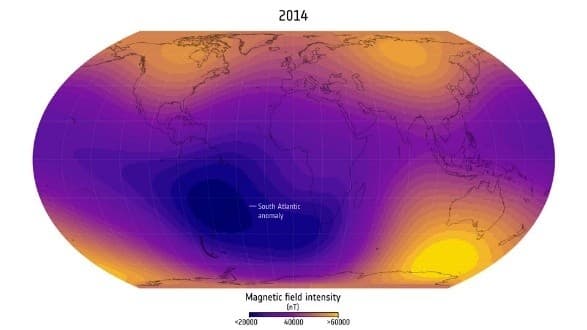
South Atlantic Anomaly (SAA) – Earth’s weakest magnetic-field zone over South America & southern Atlantic Ocean

Caused by irregular outer-core iron-nickel flow creating reverse flux patches that sap surface intensity

Tracked by ESA Swarm (2013–); since 2020 shows two sub-cells, drifting west and enlarging

Quick Facts for MCQs

Core Dynamics

  • Geodynamo: Convection and rotation in liquid outer core generate global magnetic field
  • Reverse flux: Field lines dive back into core under SAA, weakening surface intensity
  • Uneven flow: Thermal variations shuffle stronger and weaker magnetic spots across globe

Recent Trends

  • Expansion: SAA area grew 0.9 % since 2014, continuing westward drift
  • Bifurcation: 2020 observations show split into South America and SW Africa lobes
  • Drift speed: Anomaly migrates several kilometres per year toward west

Tech Implications

  • Satellite dosimetry: Instruments switched off when crossing SAA to avoid radiation damage
  • Data loss: Increased particle flux disrupts on-board memory, causing bit flips and blackouts
  • Navigation recalibration: Low-Earth-orbit missions adjust magnetometer readings due to regional field weakening

Key Data Points

FeatureData-Point
First noted19th century
Mapping missionESA Swarm constellation
Expansion 2014-24+0.9 % area
Split into sub-cellsObserved 2020
Core causeReverse magnetic flux patches
Geographic spanS. America, S. Atlantic, SW Africa
Satellite issueHeightened radiation exposure

Related UPSC Prelims PYQs

GEO_GS 2026PYQ 1

If the electric conductivity of the Earth's outer core is slightly decreased, then which one of the following is the most immediate effect?

GS-3S&T

6.Dopamine Overload and Brain Health (Neuroscience)

The Hindu

What & Where

Dopamine overdose: chronic, digitally driven hyper-release of dopamine rewires brain reward circuitry, lowering natural pleasure baseline.

Core neural route: mesolimbic pathway—ventral tegmental area ➜ nucleus accumbens—mediates motivation and reinforcement.

Highest incidence in hyper-connected youth populations across urban, smartphone-saturated societies.

Quick Facts for MCQs

Neurobiology

  • Mesolimbic desensitisation: sustained surges down-regulate D2 receptors, blunting everyday rewards.
  • fMRI evidence: social media lights nucleus accumbens akin to cocaine exposure.
  • Chronic overdrive induces boredom, low motivation, emotional fatigue.

Digital Drivers

  • Intermittent-reward algorithms mirror casino variable-ratio schedules, maximising screen time.
  • Notifications, likes, infinite scroll deliver micro-dopamine bursts reinforcing compulsive checking.
  • Withdrawal symptoms evident; 63 % adults report anxiety on separation.

Youth Impact

  • Adolescent plasticity heightens risk; heavy users show 60 % higher depression prevalence.
  • Average attention span down to 8.25 s, spawning ADHD-like focus issues.
  • 52 % youth feel unmotivated without digital stimulus.

Mitigation Strategies

  • Dopamine fasting: 24–48 h tech abstinence helps reset reward baseline.
  • Exercise and mindfulness: 45 min activity or 15 min meditation cuts depression and stress by 30 % & 27 %.
  • Real-world social interaction triggers sustainable dopamine plus oxytocin release.

Key Data Points

FeatureData-Point
Neurotransmitter classDopamine, catecholamine
Primary reward pathwayMesolimbic (VTA → Nucleus Accumbens)
Avg. phone checks/day150 (MIT, 2023)
Adults anxious minus phone63 % (Pew, 2024)
Teen SM use > 3 h depression60 % higher (APA, 2023)
Global teen depression rise28 % (WHO, 2023)
Current attention span8.25 s (Microsoft, 2023)
Exercise benefit30 % lower depression risk, 45 min/day (Lancet, 2022)
GS-2Economy

7.India-MERCOSUR Preferential Trade Agreement (Trade Agreement)

Business Standard
Illustration for India-MERCOSUR Preferential Trade Agreement (Trade Agreement)

What & Where

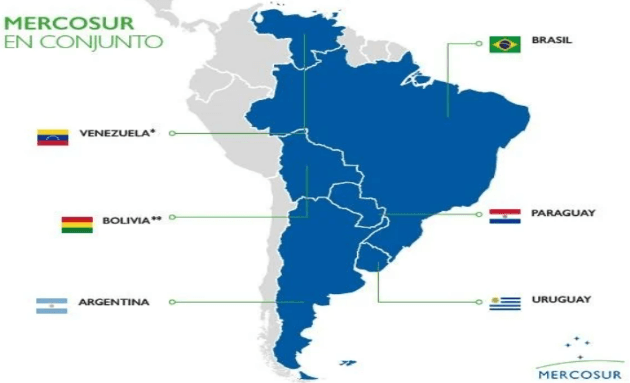
Bloc; MERCOSUR is a South-American customs union fostering free movement of goods, services, capital & people.

Geography; core members Argentina, Brazil, Paraguay, Uruguay; HQ at Montevideo, Uruguay.

PTA; India-MERCOSUR pact (2009) now slated for “deepening” within one year.

Quick Facts for MCQs

History & Evolution

  • Timeline; 1991 creation → 1994 institutionalisation → 2003 external agreements incl. India, EU, ASEAN.
  • Expansion; Venezuela joined 2012 (suspended), Bolivia ratified 2023, associates added gradually.
  • India link; Framework Agreement 2003 enabled 2009 PTA covering 450+ tariff lines.

Institutional Setup

  • Governance; Common Market Council (CMC) apex, Common Market Group (CMG) executes, Trade Commission handles disputes.
  • Fund; FOCEM finances competitiveness, social cohesion, convergence projects among weaker economies.
  • Decision-making; consensus-based, emphasises democratic governance clauses.

Trade Mechanisms

  • Tariff liberalisation; phased removal of internal duties, CET shields bloc from external competition.
  • Non-tariff; harmonised standards, customs procedures to ease intra-bloc logistics.
  • Social integration; labour, migration, education cooperation branded “human-faced integration”.

Key Data Points

FeatureData-Point
Creation instrumentTreaty of Asunción, 26 Mar 1991
Legal personalityProtocol of Ouro Preto, 1994
Headquarters cityMontevideo, Uruguay
Official languagesSpanish, Portuguese
Founding membersArgentina, Brazil, Paraguay, Uruguay
Suspended memberVenezuela (since 2016)
Newest full memberBolivia, acceded 2023
Associate membersChile, Peru, Colombia, Ecuador, Guyana, Suriname
Common External TariffUniform on non-member imports
Development fundFOCEM, launched 2005

Related UPSC Prelims PYQs

GS1 1998PYQ 1

‘MERCOSUR’ consists of a group of countries of

GS-2Economy

8.China-India EV Subsidy WTO Dispute (WTO Dispute)

LiveMint

What & Where

Dispute: China vs India over electric-vehicle (EV) & battery subsidies at WTO Dispute Settlement Body, Geneva.

Process: Consultation → Panel → (MPIA) Appeal → Compliance/retaliation.

Geography: Measures contested inside India; arbitration seated in Switzerland (WTO HQ).

Quick Facts for MCQs

Dispute Settlement Flow

  • Consultation: confidential talks mandated before any adjudication.
  • Panel: examines evidence, issues report on conformity with SCM rules.
  • Appeal/Arbitration: legal review possible via MPIA given AB paralysis.

Subsidy Elements

  • Incentives: reduced GST, state road-tax waivers, PLI cash support.
  • Beneficiaries: domestic OEMs like Tata Motors, Mahindra Electric.
  • Global comparison: India’s 46 % vs 10–26 % subsidy range in other economies.

Compliance & Enforcement

  • Violation finding → India must withdraw/modify measures within “reasonable period”.
  • Non-compliance empowers China to seek equivalent trade countermeasures.
  • WTO retaliation: principally additional tariffs matching assessed injury.

Key Data Points

FeatureData-Point
ComplainantPeople’s Republic of China
RespondentRepublic of India
Key WTO pact citedAgreement on Subsidies & Countervailing Measures (SCM)
Indian EV subsidy level≈ 46 % of vehicle cost
Major Indian schemesGST cut, PM e-Drive, PLI for Auto & ACC Batteries
Consultation window30 days to start, 60 days to settle
Panel size3 independent trade experts
Appellate Body statusNon-functional since 2019
Interim appeal optionMulti-Party Interim Appeal Arbitration (MPIA)
Potential retaliationChina may levy WTO-authorised tariffs if India non-compliant
GS-2Environment

9.India-Australia Renewable Energy Partnership (Clean Energy Cooperation)

The Hindu
Illustration for India-Australia Renewable Energy Partnership (Clean Energy Cooperation)

What & Where

Australia–India Renewable Energy Partnership (REP); launched 2024 to co-develop solar, hydrogen, storage, supply-chain resilience

Indo-Pacific climate-risk zone; average 10 disasters/month (1970-2022) with up to 89 million displaced by 2050

Geography complementarity: Australia’s critical minerals + India’s manufacturing scale create regional clean-energy ecosystem

Quick Facts for MCQs

Supply Chain Dependence

  • China-dominance: 90 % REE refining, 80 % solar modules controlling upstream
  • Import-profile: India needs RE magnets, batteries; Australia exports lithium, cobalt, REE yet lacks refining
  • Co-investment: bilateral refining and processing planned for resilient Indo-Pacific supply chains

Partnership Architecture

  • REP-scope: eight pillars—solar PV, storage, green hydrogen, supply chains, circular economy, investment, capacity, other priorities
  • Track 1.5: dialogue links policymakers, industry, researchers for actionable cooperation
  • Complementary-ties: CECP, SCEP, GFAI, Global Biofuels Alliance expand India’s clean-energy diplomacy

India’s Renewable Stats

  • FY 24-25 additions: solar 23.83 GW, wind 4.15 GW; solar largest contributor
  • Totals: RE 220.10 GW; solar 105.65 GW; wind 50.04 GW
  • Bioenergy 11.58 GW; small hydro 5.10 GW with 0.44 GW under implementation

Key Data Points

FeatureData-Point
China share rare-earth refining> 90 %
China share global solar modules80 %
Indo-Pacific disasters per month10
Potential displaced by 205089 million
India non-fossil target 2030500 GW (280 GW solar)
Australia emission cut goal62–70 % by 2035
REP launch year2024
India RE capacity Mar 2025220.10 GW
Installed solar Mar 2025105.65 GW
Installed wind Mar 202550.04 GW

Related UPSC Prelims PYQs

CDS_GK, ESE_GS 2026PYQ 1

What is the name of the initiative launched by India and Denmark in November 2025 to enhance bilateral ties?

CDS_GK, ESE_GS 2022PYQ 2

समृद्धि के लिए हिंद-प्रशांत आर्थिक ढाँचा (Indo-Pacific Economic Framework for Prosperity) का गठन करते समय, सदस्य देशों ने चार स्तंभों पर भावी समझौता-वार्ता के लिए सामूहिक परिचर्चा शुरू की है। उन स्तंभों में, निम्नलिखित में से कौन-सा नहीं है ?

GS-3S&T

10.Tomahawk Long-Range Cruise Missiles (Cruise Missiles)

Indian Express

What & Where

Tomahawk; US long-range subsonic cruise missile for precision land-attack

Geography; launched from US Navy ships and submarines, proposed for Ukrainian use

Flight; terrain-hugging low altitude enables radar evasion on strategic strikes

Quick Facts for MCQs

Technical Specifications

  • Range; Block IV variant reaches ~1,600 km enabling deep-strike without aircraft risk
  • Propulsion; solid rocket launch then low-IR turbofan sustainer offers radar and infrared stealth
  • Payload; 450 kg warhead with programmable fuze for hardened or area targets

Guidance Systems

  • Navigation; INS, GPS, TERCOM, DSMAC deliver sub-10 m accuracy
  • Uplink; satellite datalink allows retasking or mission abort mid-flight
  • Altitude control; radar altimeter keeps missile 30–60 m above terrain reducing detection

Security Dimension

  • Transfer; US may supply if Russia ignores de-escalation calls
  • Capability; would let Ukraine strike command nodes, ammo depots beyond frontline
  • Escalation; Moscow warns long-range Western arms could widen conflict theater

Key Data Points

FeatureData-Point
ManufacturerUnited States (Raytheon)
Range (Block IV)~1,600 km
Speed~880 km/h (Mach 0.75)
Launch platformsSurface ships, attack submarines
Warhead~450 kg high-explosive or submunitions
Guidance suiteINS + GPS + TERCOM + DSMAC
Mid-course updateTwo-way satellite datalink
PropulsionSolid booster then Williams F107 turbofan
Atmosphere pathStays within atmosphere (cruise)
Proposed recipientUkraine (conditional on Russian de-escalation)

Related UPSC Prelims PYQs

CDS_GK 2022PYQ 1

The term ‘Terminal High Altitude Area Defense’, sometimes mentioned in news, refers to

GS-3S&TQuick Bite

11.Indigenous Military Combat Parachute System (Parachute Tech)

PIB

What & Where

Military Combat Parachute System (MCPS) = DRDO-built high-altitude combat parachute for Indian Armed Forces.

Developed by ADRDE (Agra) + DEBEL (Bengaluru); field-tested over Agra drop zone.

Record trial from 32,000 ft; only Indian system operable above 25,000 ft.

Quick Facts for MCQs

Tech & Schemes

  • Integration: NavIC module ensures indigenous PNT; resists GPS denial.
  • Design: Ram-air canopy offers stability, steerability, softer touchdown.
  • Maintenance: Modular packing enables quick turnaround in field depots.

Security Dimension

  • Anti-jamming: Encrypted NavIC shield vs electronic warfare threats.
  • Altitude edge: Enables covert HAHO/HALO insertions from commercial air-routes.
  • Safety: Controlled glide minimizes injury, enhances mission success odds.

Defence Indigenization

  • Self-reliance: Replaces imported HF-HAP parachutes; aligns with Atmanirbhar Bharat.
  • Cost-saving: Local production cuts forex outflow, eases spares logistics.
  • Export potential: Niche high-altitude capability opens friendly-nation markets.

Key Data Points

FeatureData-Point
DeveloperDRDO
Lead labsADRDE Agra; DEBEL Bengaluru
Record test altitude32,000 ft
Certified operational ceiling> 25,000 ft
Navigation aidNavIC-based system
Descent traitLower descent rate for safety
SteeringSuperior control; pre-set landing zone
Anti-jammingSecure, interference-free links
Primary userIndian Armed Forces
Strategic goalReduce foreign dependence
GS-2Scheme

12.SITAA Aadhaar Security Innovation Scheme (Digital Identity)

DD News

What & Where

Definition: SITAA = UIDAI-run collaboration scheme to harden Aadhaar authentication via next-gen biometric & AI tech.

Key processes: Face Liveness, Presentation Attack Detection, Contactless Fingerprint Authentication SDKs.

Geography: Implemented pan-India under UIDAI; linked with MeitY Startup Hub & NASSCOM networks.

Quick Facts for MCQs

Tech & Schemes

  • Face-Liveness SDK detects photo, video, mask spoofs using AI algorithms.
  • PAD tools employ ML to flag fake iris/fingerprint inputs in real time.
  • Contactless fingerprint module enables remote, hygienic print capture via mobile cameras.

Security Dimension

  • Deepfake resistance enhances trust in Aadhaar e-KYC, subsidy and payment gateways.
  • Presentation-attack safeguards reduce identity theft & welfare leakage.

Collaborative Ecosystem

  • UIDAI supplies data standards; start-ups craft deployable SDKs.
  • Mentorship, funding, global outreach channelled through MeitY Startup Hub & NASSCOM.

Key Data Points

FeatureData-Point
Full nameScheme for Innovation and Technology Association with Aadhaar
Launched byUnique Identification Authority of India (UIDAI)
Parent ministryMinistry of Electronics & IT (MeitY)
Core objectiveCounter deepfakes, spoofing, biometric fraud in Aadhaar use
Innovation challengesFace Liveness, PAD, Contactless Fingerprint Authentication
Tech focus areasBiometric, AI/ML, cybersecurity
Collaboration actorsStart-ups, academia, industry
Support platformsMeitY Startup Hub, NASSCOM
Strategic visionAtmanirbhar Bharat & global data-security norms
Target devicesSmartphones & low-cost sensors for contactless prints

Related UPSC Prelims PYQs

NDA_GAT 2025PYQ 1

Under which one of the following initiatives does the NITI Aayog support interested States to establish a State Institution for Transformation (SIT)?

Ready to practice?

Test your knowledge with our UPSC test series.

Start Free Trial