UPSC Current Affairs

12 topicsGS-1: 2GS-2: 5GS-3: 5
0/12 done
GS-2Editorial

1.DPDP Act Weakens RTI Access (RTI Amendments)

The Hindu

What & Where

RTI Act 2005 grants citizens enforceable access to information from all Indian public authorities.

Section 8(1)(j) privacy exemption truncated by Digital Personal Data Protection (DPDP) Act 2023.

DPDP labels almost all data “personal”; ₹250 crore breach penalty discourages disclosure.

Quick Facts for MCQs

Legal & Policy

  • Amendment removes proviso equating citizen access with Parliament, diluting disclosure parity.
  • Proportionality balance from Puttaswamy sidelined; blanket privacy invoked instead.
  • “Personal data” now covers individuals, companies, HUFs, State, widening denial scope.

Governance Impact

  • Transparency hit; pension, recruitment, beneficiary lists likely refused as personal info.
  • Corruption shielded; ghost employees and inflated procurement harder to expose.
  • Participatory-democracy weakened; RTI risks morphing into Right-to-Deny.

Institutional Issues

  • PIOs choose safe denial to avoid hefty DPDP penalties.
  • CIC and State bodies understaffed by up to 40 %, increasing appeal backlog.
  • Digital divide limits rural citizens’ ability to file online appeals.

Way Forward

  • Reinstate proviso ensuring citizens get data not denied to Parliament.
  • Narrow personal-data scope to genuinely sensitive fields via proportionality.
  • Fill commission vacancies; mandate proactive online release of beneficiary, tender datasets.

Key Data Points

FeatureData-Point
RTI Act Year2005
Constitutional ArticleArticle 19(1)(a)
Original Section 8(1)(j) TestPublic interest + no unwarranted privacy harm
DPDP Act Year2023
Maximum Data-breach Penalty₹250 crore
CIC/State Commission Vacancies30–40 %

Related UPSC Prelims PYQs

CAPF_GAI, GS1 2023PYQ 1

सूचना का अधिकार अधिनियम, 2005 के बारे में निम्नलिखित में से कौन-सा/कौन-से कथन सही है/हैं ?

CAPF_GAI, GS1 2018PYQ 2

Right to Privacy is protected as an intrinsic part of Right to Life and Personal Liberty. Which of the following in the Constitution of India correctly and appropriately imply the above statement?
GS-3Economy

2.Bhadohi Handmade Carpet Cluster Crisis (Carpet Industry)

The Hindu
Illustration for Bhadohi Handmade Carpet Cluster Crisis (Carpet Industry)

What & Where

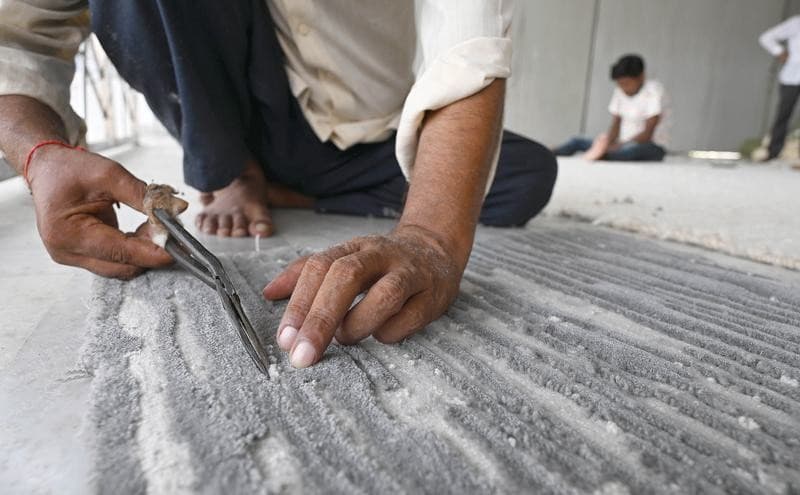
Craft: hand-knotting wool/silk/cotton on looms to create durable decorative floor coverings

Location: Bhadohi–Mirzapur belt, Uttar Pradesh; world’s largest hand-knotted carpet hub

Processes: carding, dyeing, knotting, washing; labour-intensive rural cottage industry

Quick Facts for MCQs

Economic Angle

  • Tariff: United States slapped 50% duty on Indian carpets, triggering bulk order cancellations
  • Output: exporters scaling down looms, jeopardising projected ₹17,000 crore FY24-25 earnings
  • Employment: layoffs looming for 22 lakh artisans across Uttar Pradesh villages

Production Features

  • Materials: New Zealand wool, Karnataka silk, plant dyes ensure durability and eco-cred
  • Duration: artisanal hand-knotting needs 3–6 months depending on size, knot density
  • Workflow: six stages carding-to-shearing, each requiring specialised rural labour

Historical Roots

  • Mughal era: Ain-i-Akbari (16th c) documents royal carpet patronage
  • Indo-Persian designs: Persian weavers invited, fusing motifs with local artistry
  • Post-independence: export-oriented cluster matured via colonial trade links, global buyers

Key Data Points

FeatureData-Point
Cluster nicknameCarpet City
Core district beltBhadohi–Mirzapur, Uttar Pradesh
Share in India’s carpet exports60%+
US share of cluster exports58.6%
FY24-25 export value₹17,000 crore
Artisans involved22 lakh
GS-3Infrastructure

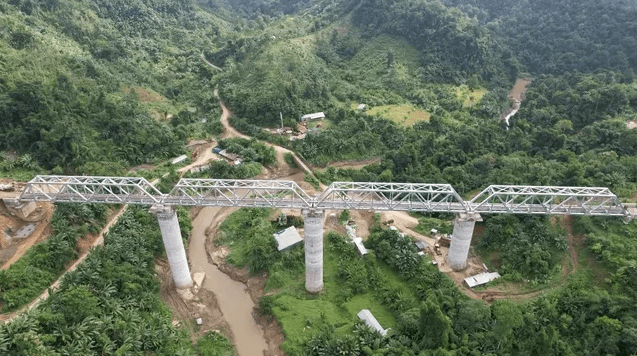
3.Bairabi–Sairang Rail Line to Aizawl (Rail Connectivity)

New Indian Express
Illustration for Bairabi–Sairang Rail Line to Aizawl (Rail Connectivity)

What & Where

Rail project: 38 km broad-gauge line linking Bairabi (Assam border) to Sairang, 12 km north of Aizawl

Geography: traverses north-central Mizoram, crossing gorges via 55 major bridges and 48 tunnels

Purpose: first direct rail access to Mizoram’s capital under Act East–North-East connectivity mission

Quick Facts for MCQs

Legal & Policy

  • Alignment with Act East policy, sanctioned under Vision 2020 and Transformation of North East (TONE)
  • CRS safety clearance obtained June 2025 enabling full commercial operation

Tech & Schemes

  • Engineering: 48 tunnels, 55 major bridges; Bridge 196 at 104 m exceeds Qutub Minar by 42 m
  • Infrastructure includes 5 ROBs, 6 RUBs; four construction sections for phased execution

Economic Angle

  • Logistics: expected sharp cut in freight cost and travel time for essential goods and agri produce
  • Growth: boosts trade, tourism, industrial access, integrating Mizoram with national market

Key Data Points

FeatureData-Point
Length38 km
GaugeBroad-gauge
ConnectsBairabi – Sairang
Capital reachedAizawl (via Sairang)
StateMizoram
Project cost₹8,000 crore
Tallest bridge height104 m (Bridge 196)
Major bridges55
Minor bridges87
Tunnel count48
Total tunnel length12.85 km
Road overbridges5
Road underbridges6
Design passenger speed100 km ph
SanctionIndian Railways Vision 2020
Policy anchorAct East; TONE programme
Final commissioningJune 2025 (Hortoki–Sairang)

Related UPSC Prelims PYQs

CAPF_GAI, NDA_GAT 2022PYQ 1

Which one of the following States/UTs was connected with the Indian Railways network in the year 2021?

CAPF_GAI, NDA_GAT 2022PYQ 2

As part of the Look/Act East Policy, which one of the following capitals of North-East Indian States is proposed to be connected with Bangladesh via rail route?

GS-1History

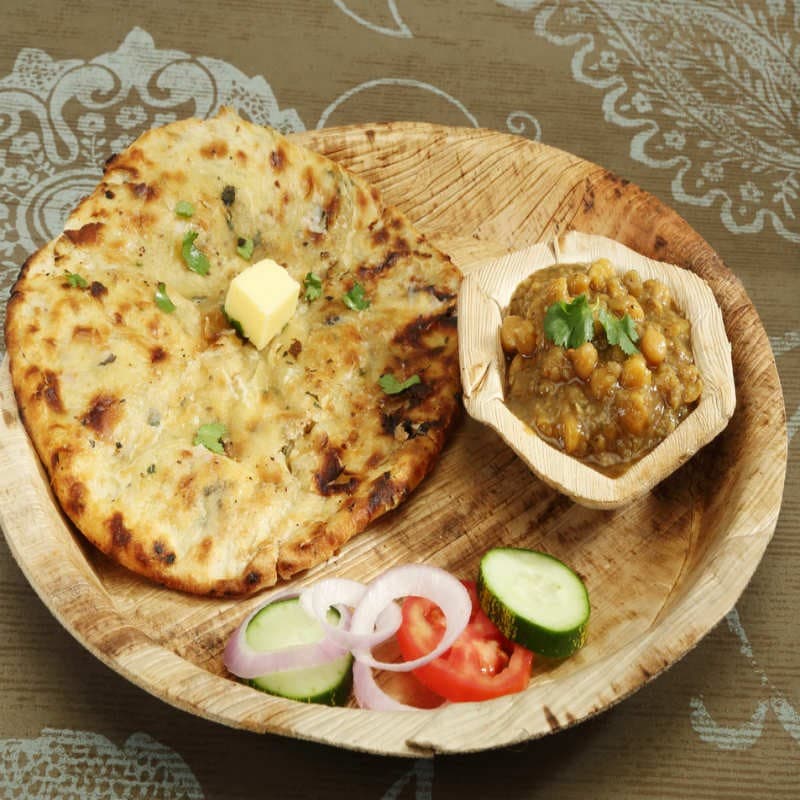
4.Amritsari Kulcha GI Tag Bid (GI Food Specialty)

Indian Express
Illustration for Amritsari Kulcha GI Tag Bid (GI Food Specialty)

What & Where

Stuffed, multi-layered tandoori flatbread; maida dough fermented with yogurt/leavening; baked low-heat in clay oven

Core geography Amritsar, Punjab; city dubbed “Kulcha Capital of India”

Served with chhole, tamarind chutney, pickled onions; butter/ghee finish

Quick Facts for MCQs

Legal & Policy

  • Protection sought under Geographical Indications of Goods (Registration & Protection) Act 1999
  • GI expected to curb imitation in other states preserving authenticity
  • Tag would grant exclusive use of name to registered Amritsar producers

Economic Angle

  • Certification can boost culinary tourism revenue for local eateries
  • Upstream benefit for regional farmers supplying wheat, dairy, spices
  • Branding may enable premium pricing in domestic and export markets

Culinary Heritage

  • Evolution from plain naan to stuffed variant reflects regional adaptation
  • Local water mineral profile credited for distinctive taste
  • Dish integral to Punjabi breakfast culture and festive menus

Key Data Points

FeatureData-Point
Proposed IPRGeographical Indication (GI) tag
Nodal agencyPunjab Food Processing Department
Claimed origin age~200 years
Technique rootsKhameeri roti fermentation + colonial layering
Signature textureFlaky layers from multi-roll & low-temp ghee melt
Primary flourRefined wheat flour (maida)
Oven typeTraditional clay tandoor
Key accompanimentsChhole; tamarind chutney; pickled onions
Major outletsKesar Da Dhaba; Bhai Kulwant Singh Kulchian Wale
Tourism angleForms iconic Punjabi breakfast attracting food tourists
GS-1Mapping

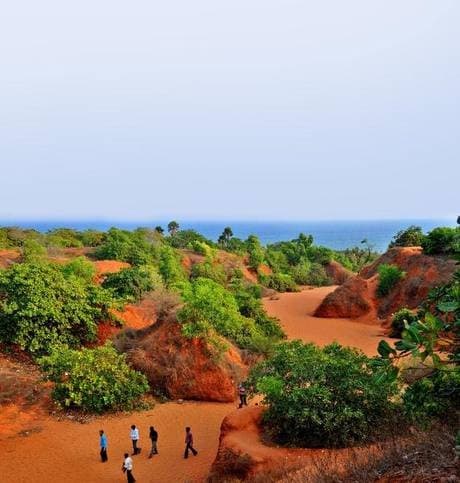
5.Erra Matti Dibbalu Geoheritage Site (Geo-heritage Site)

New Indian Express
Illustration for Erra Matti Dibbalu Geoheritage Site (Geo-heritage Site)

What & Where

Coastal, reddish sand–silt–clay badlands along Bay of Bengal, 20 km north of Visakhapatnam, Andhra Pradesh

Late Quaternary aeolian-fluvial formations; records monsoon, sea-level oscillations

Now on UNESCO Tentative List (with Tirumala Hills) and a National Geo-heritage Monument

Quick Facts for MCQs

Geological Significance

  • Stratigraphy archives paleomonsoon, paleo-sea-level, tectonic stability
  • Dendritic drainage and cross-bedding showcase coastal geomorphology evolution
  • Serves as open-air Quaternary laboratory for earth-science scholars

Legal & Policy

  • GSI notification ensures protection under National Geo-heritage Monument rules
  • Inclusion in UNESCO list enables international conservation funding avenues
  • Any land-use change now needs State/Union environment clearance

Tourism & Education

  • Potential hub for geotourism, geo-trails, student field camps
  • Visakhapatnam–Bhimili beach corridor offers easy public access
  • Community-led interpretation centres can generate local livelihoods

Key Data Points

FeatureData-Point
Local nameErra Matti Dibbalu (Red Sand Dunes)
DistrictVisakhapatnam
Approx. area≈1,500 acres
Geological ageLate Quaternary (~2.6 Ma)
First studyW. King, 1886
Geo-heritage tagGSI, 2016
UNESCO Tentative2024
Main lithologySand, silt, clay
Red colour causeNatural iron oxidation
Similar global sites2 (- Sri Lanka; Tamil Nadu)

Related UPSC Prelims PYQs

GS1 2009PYQ 1

Recently, which one of the following was included in the UNESCO's World Heritage list ?

GS-3Environment

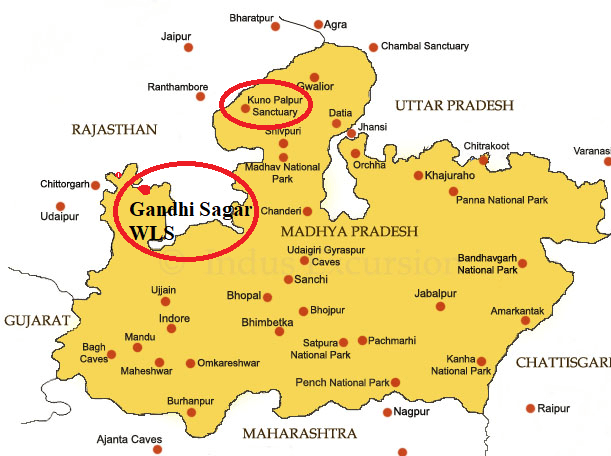
6.Gandhi Sagar Wildlife Sanctuary (Wildlife Sanctuary)

The Hindu
Illustration for Gandhi Sagar Wildlife Sanctuary (Wildlife Sanctuary)

What & Where

Gandhi Sagar Wildlife Sanctuary ‒ protected mixed-deciduous landscape on Mandsaur–Neemuch MP border adjoining Rajasthan.

Cheetah Mating Programme ‒ controlled breeding of relocated females with existing male coalition to build second viable population after Kuno.

Habitat spans 368.62 sq km, bisected by Chambal River; grassland–dry forest mosaic ideal for cheetah prey and denning.

Quick Facts for MCQs

Habitat & Ecology

  • Mosaic grasslands and dry deciduous forests provide open chase terrain plus shaded den spots for cheetahs.
  • Chambal riparian belt supports otter, mugger and augments overall prey biomass.
  • Khair–Salai dominance indicates arid-zone vegetation matching historical cheetah range.

Conservation Strategy

  • Objective create self-sustaining meta-population, lowering single-site risk concentrated at Kuno.
  • Protocols separate pre-mating enclosures, remote cams, aggression watch—lesson from 2023 Kuno injury.
  • Risk-mitigation includes leopard removal, prey supplementation, remote den monitoring till cub independence.

Cultural Heritage

  • Heritage clusters could leverage eco-tourism revenue for sanctuary financing and local livelihoods.
  • Temples, forts and Paleolithic art underscore long human–nature interface demanding sensitive tourism management.

Key Data Points

FeatureData-Point
Year notified1974; enlarged 1983
Area368.62 sq km
Main riverChambal
DistrictsMandsaur & Neemuch, MP
Dominant treesKhair, Salai, Kardhai, Tendu, Palash
Key faunaChinkara, sambar, nilgai, leopard, wild dog, mugger
Leopards relocated17 to secure den sites
Feed during gestation15–20 kg every 3–4 days
Pregnancy checksBi-weekly veterinary exams
Cultural sitesChaturbhujnath temple, Hinglajgarh Fort, Bhadkaji rock art, Dharmrajeshwar caves

Related UPSC Prelims PYQs

CDS_GK, GS1 2023PYQ 1

Cheetahs, brought from Namibia, were introduced in India to which one of the following National Parks?

CDS_GK, GS1 2017PYQ 2

Recently there was a proposal to translocate some of the lions from their natural habitat in Gujarat to which one of the following sites?

GS-3Environment

7.Forest Borehole Relaxation for Exploration (Forest Clearance Exemption)

Indian Express

What & Where

Exemption: 2023 Forest Conservation Act amendment lets exploratory mineral drilling proceed in Indian forests with eased clearance.

Process: Allows 62–80 boreholes per 10 sq km, each ≤ 6 inch diameter; earlier cap 25.

Geography: Targets lithium-bearing Reasi (J-K), cobalt–nickel belts, other prospective forested zones nationwide.

Quick Facts for MCQs

Legal & Policy

  • Amendment2023 labels exploratory drilling “forest activity”, trimming multi-stage FCA scrutiny.
  • MMDR2023 auctions 24 critical minerals, boosting private investment and EoDB.
  • NCMM centralises exploration, recycling, strategic stockpiles for supply security.

Environmental Impact

  • HabitatLoss risk: denser drilling may fragment flora-fauna corridors, alter local rainfall.
  • FRA2006 rights: probable clashes with tribal livelihood, sacred groves protection.
  • SOPCall: bar drilling in wetlands, breeding seasons; enforce site-restoration mandates.

Tech & Schemes

  • NonintrusiveTools: satellite, AI prospectivity maps, drone geophysics to curb ground disturbance.
  • ClusterMining: shared conveyors, bucket-wheel excavators, systematic overburden landfills to shrink footprint.
  • OverseasTie-ups: KABIL, MSP partnerships diversify lithium, cobalt, REE supply chains.

Key Data Points

FeatureData-Point
Governing lawForest Conservation Act, amended 2023
New borehole cap62–80 per 10 sq km
Old borehole cap25 per 10 sq km
Borehole diameter≤ 6 inches
Prior tree-felling limit100 trees without clearance
Critical minerals listed by India30
NCMM target1 ,200 deposits by 2030
Lithium find year/place2023, Reasi (J-K)
MMDR Amendment2023 enables critical-mineral auctions
KABIL launch2019, overseas asset acquisition
India joined MSP2023
Budget 2024–25 stepCustoms duty scrapped on most critical minerals

Related UPSC Prelims PYQs

GS1 2025PYQ 1

Consider the following statements:

GS1 2011PYQ 2

With reference to India, consider the following Central Acts:

GS-3Species

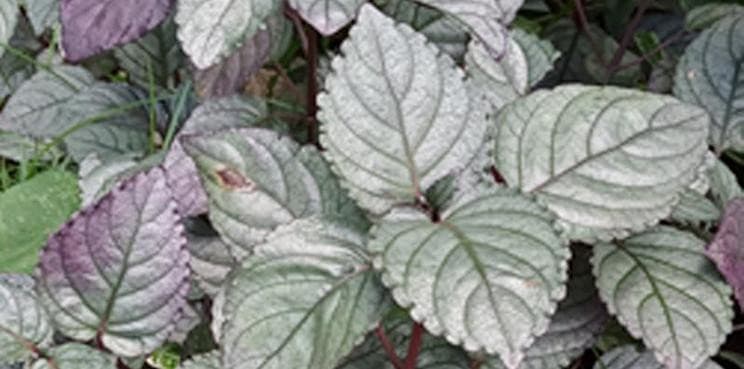
8.Red Ivy Medicinal Plant Discovery (Medicinal Plant)

The Hindu
Illustration for Red Ivy Medicinal Plant Discovery (Medicinal Plant)

What & Where

Plant; tropical medicinal vine Strobilanthes alternata (Red Ivy) valued for rapid wound healing

Process; acteoside isolated and embedded in biodegradable nano-fibrous pad via nanotechnology

Distribution; moist, shaded zones of India, Sri Lanka, Southeast Asia; abundant in Kerala Western Ghats

Quick Facts for MCQs

Tech & Innovation

  • Nanotechnology; first isolation of acteoside forms base for nano-fibrous scaffold
  • Concentration; only 0.2 % compound needed for accelerated healing
  • Biodegradability; pad decomposes naturally reducing biomedical waste

Traditional Knowledge

  • Indigenous medicine; leaves applied on cuts, bruises, skin infections by local healers
  • Validation; scientific isolation confirms folk claims of antimicrobial efficacy
  • Cultivation; plant already grown in homesteads, ensuring community familiarity

Biodiversity & Ecology

  • Habitat; prefers tropical moist forests, shaded rural homesteads
  • Range; Western Ghats hotspot supports natural populations
  • Sustainability; easy cultivation avoids pressure on wild stocks

Key Data Points

FeatureData-Point
Scientific nameStrobilanthes alternata
Local nameMurikooti Pacha / Red Ivy
Plant familyAcanthaceae
Key compoundActeoside
Acteoside actionsAntioxidant, anti-inflammatory, antimicrobial
Innovation leadJNTBGRI, Kerala
ProductMultifunctional wound-healing pad
Pad matrixBiodegradable nano-fibrous scaffold
Effective dose0.2 % acteoside
Leaf colourRed-green variegated
Habitat typeTropical moist forests, shaded homesteads
Cultivation easeEasily propagated, scalable
GS-2Editorial

9.Nepal Turmoil Tests India Policy (India–Nepal Relations)

DH
Illustration for Nepal Turmoil Tests India Policy (India–Nepal Relations)

What & Where

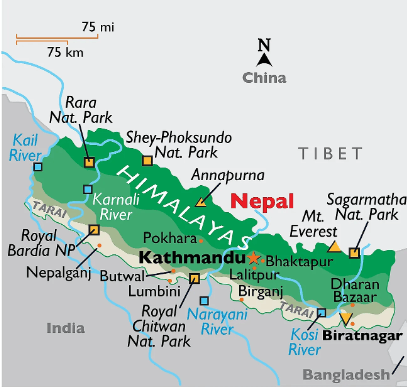
Nepal’s current churn: PM K P Oli resigns, violent protests, ex-Chief Justice Sushila Karki becomes interim PM.

India–Nepal: 1,770-2,000 km open Himalayan border enabling visa-free movement of people and goods.

Region’s stakes: India’s security, hydropower, trade; China’s BRI push reaching Kathmandu and near Siliguri Corridor.

Quick Facts for MCQs

Security Dimension

  • Vacuum risks cross-border smuggling, fake currency, terror transit via open frontier.
  • Chinese presence near Siliguri heightens India’s encirclement concerns.
  • Refugee influx and intelligence operations likely if instability prolongs.

Economic Angle

  • India prime investor, FDI, fuel and medicines lifeline to Nepalese economy.
  • Crisis can stall ICPs, rail links, power trade corridors.
  • Hydropower imports crucial for India’s renewable mix and Nepal’s revenue.

China Factor

  • BRI funds highways, airports, rail; mediates Nepal Communist Party factions.
  • Soft power via Confucius Institutes, scholarships influences urban youth.
  • Strategic depth challenges India’s traditional primacy in Himalayas.

Diplomatic Moves

  • Engage provinces, Madhes leaders; widen Track 1.5 dialogues.
  • Fast-track border infrastructure, scholarships, Ramayana tourism circuit for goodwill.
  • Maintain calibrated non-interference to avoid “big-brother” tag while securing interests.

Key Data Points

FeatureData-Point
Open border length1,770–2,000 km
India’s share in Nepal trade> 60 %
Governments since 200714
Major India-backed hydropowerUpper Karnali, Arun-III
Key rail projectsJaynagar–Bardibas, Raxaul–Kathmandu
Chinese flagship linkTibet–Kathmandu Railway (BRI)
Indian Army Gorkha regiments7
Strategic choke point nearbySiliguri Corridor (Chicken’s Neck)

Related UPSC Prelims PYQs

NDA_GAT 2024PYQ 1

In January 2024, India has entered into a bilateral agreement through which it will provide grant assistance to a country to construct a 20 feet Bailey bridge. Identify the country.

GS-2Polity

10.Pakistan Hosts 2027 SCO Summit (SCO Summit)

IT
Illustration for Pakistan Hosts 2027 SCO Summit (SCO Summit)

What & Where

SCO: permanent Eurasian inter-governmental body for political, economic, security cooperation; upholds “Shanghai Spirit”.

Core geography: China, Russia, Central & South Asia, Iran–Belarus; HQ Beijing; RATS counter-terror centre Tashkent.

Forthcoming summits: 2026 Bishkek, 2027 Islamabad (Pakistan hosts).

Quick Facts for MCQs

Origin & Evolution

  • Shanghai Five 1996 resolved China–Central Asia borders, built trust.
  • Membership growth 2001-24: Uzbekistan, India, Pakistan, Iran, Belarus joined successive enlargements.
  • Mandate widened to connectivity, energy, economy alongside security.

Institutional Structure

  • Chairmanship rotates annually following Russian alphabet sequence of state names.
  • Council of Heads of State is supreme decision body; CHG (PM-level) handles budget.
  • Auxiliary bodies: Business Council, Interbank Consortium, mooted SCO Development Bank.

Security Dimension

  • RATS spearheads intelligence sharing, joint anti-terror, separatism, extremism operations.
  • Biennial “Peace Mission” military drills enhance interoperability among member forces.
  • Platform used for coordinated approaches on Afghanistan security and narcotics.

Key Data Points

FeatureData-Point
Establishment date15 Jun 2001, Shanghai
Charter signed2002, St Petersburg
Charter in force19 Sep 2003
HeadquartersBeijing, China
RATS locationTashkent, Uzbekistan
Current full members10
Latest full memberBelarus
Observer statesAfghanistan, Mongolia
2026 Chair & venueKyrgyzstan; Bishkek summit
2027 Chair & venuePakistan; Islamabad summit

Related UPSC Prelims PYQs

CDS_GK 2024PYQ 1

शांघाई सहयोग संगठन (SCO) के संबंध में निम्नलिखित में से कौन-सा/कौन-से कथन सही है/हैं?

CDS_GK 2024PYQ 2

Consider the following statements about the Shanghai Cooperation Organisation (SCO):

GS-2Security

11.India Myanmar Rare-Earth Supply Deal (Rare Earth Diplomacy)

Indian Express
Illustration for India Myanmar Rare-Earth Supply Deal (Rare Earth Diplomacy)

What & Where

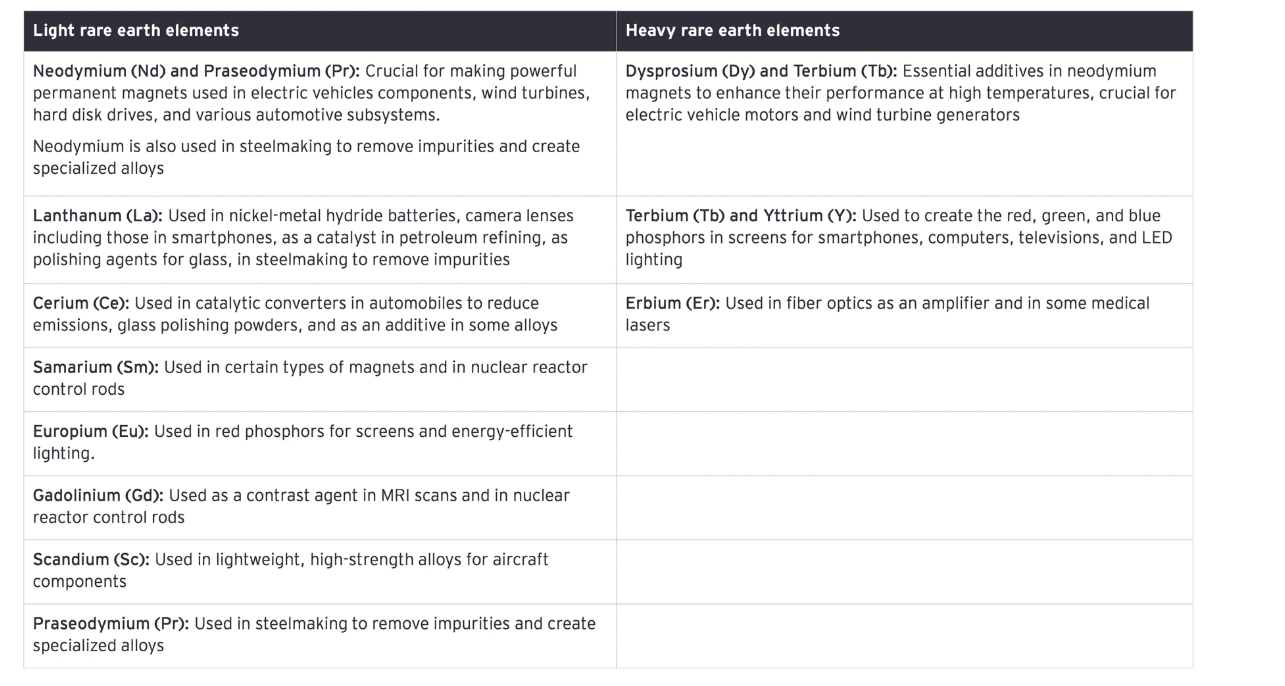
Rare Earth Elements (REEs): 17 metals (15 lanthanides + scandium, yttrium); low-grade, widely dispersed, extraction costly.

Heavy-REE hub: Chipwe-Pangwa belt, Kachin State, Myanmar; now under Kachin Independence Army (KIA).

India: 5th-largest reserves 6.9 mn t; still imports finished magnets, mainly from China.

Quick Facts for MCQs

Security Dimension

  • India seeks mineral samples via informal pact with KIA, reducing Chinese dependence.
  • KIA controls Chipwe-Pangwa mines supplying dysprosium, terbium for strategic industries.
  • Operation shows resource-driven geostrategic outreach amid Myanmar conflict.

Environmental Impact

  • Solvent processing creates toxic effluents; regulatory hurdles slow projects.
  • Monazite ores carry thorium/uranium; acid leach heightens radioactivity risk.
  • Cleaner techniques exist but lack scale.

Tech & Schemes

  • IREL runs Odisha extraction, Kerala refining; exploring Japan–Korea JV for magnets.
  • 2025 NCMM: GSI to finish 1,200 explorations by 2031.
  • AMD mapping coastal, riverine placers to boost resources.

Global Market

  • Heavy REEs crucial for EVs, wind, missiles, radar.
  • China supplies 90 % processed magnets; diversification urgent.
  • Chipwe-Pangwa provides bulk of global heavy REEs.

Key Data Points

FeatureData-Point
Total REE elements17
China’s global share60 % mining, 90 % processing/magnets
India’s REE reserves6.9 mn t (5th)
FY25 magnet imports53,748 t
Sole Indian minerIREL (Miniratna)
2025 missionNational Critical Mineral Mission
GSI exploration target1,200 projects, FY25-31
Myanmar armed partnerKachin Independence Army (1961)

Related UPSC Prelims PYQs

GS1 2022PYQ 1

With reference to India, consider the following statements :

GS1 2012PYQ 2

Recently, there has been a concern over the short supply of a group of elements called ‘rare earth metals’. Why?

GS-2Scheme

12.AI Monsoon Alerts for Farmers (AI Weather Advisory)

PIB

What & Where

Government AI-powered monsoon-forecasting service by MoAFW for Kharif planning.

Uses blended Google Neural GCM + ECMWF AIFS models to issue 4-week rainfall outlooks.

Piloted in 13 monsoon-dependent states; advisories sent via m-Kisan SMS to 3.8 crore farmers.

Quick Facts for MCQs

Tech & Schemes

  • Blended-AI approach outperforms conventional IMD outputs in local accuracy.
  • SMS crafted in farmer-friendly language with crop-wise advice.
  • Framework designed for Rabi rollout and nationwide scale-up.

Economic Angle

  • Timely sowing alerts cut input wastage, boost yields, enhance rural income.
  • Drought-spell warnings lower crop-loss insurance claims.
  • Initiative positions India as early adopter of AI advisories in agriculture.

Climate & Risk

  • Early warnings aid irrigation scheduling, enhancing climate resilience.
  • Advisories help shift cropping choices under rainfall variability.
  • Supports national climate-smart agriculture agenda.

Key Data Points

FeatureData-Point
Nodal ministryMoAFW
Tech partnersDevelopment Innovation Lab; Precision Development
AI modelsGoogle Neural GCM & ECMWF AIFS
Forecast lead time4 weeks ahead
Dissemination toolm-Kisan SMS platform
Beneficiary base~3.8 crore farmers
Geographic reach13 states
Update frequencyWeekly during monsoon
Trial successDetected 20-day monsoon stall (2025)
Primary season coveredKharif

Related UPSC Prelims PYQs

ESE_GS 2025PYQ 1

Which one of the following Yojanas replaces two schemes – National Agricultural Insurance Scheme (NAIS), 1999 as well as the Modified National Agricultural Insurance Scheme (MNAIS), 2010 – by incorporating the best features of all these schemes while removing the previous shortcomings and weaknesses?

Ready to practice?

Test your knowledge with our UPSC test series.

Start Free Trial