UPSC Current Affairs

14 topicsGS-1: 4GS-2: 3GS-3: 7
0/14 done
GS-3Economy

1.India's GST Reforms 2017-2025 (Indirect Tax Reform)

Business Standard
Illustration for India's GST Reforms 2017-2025 (Indirect Tax Reform)

What & Where

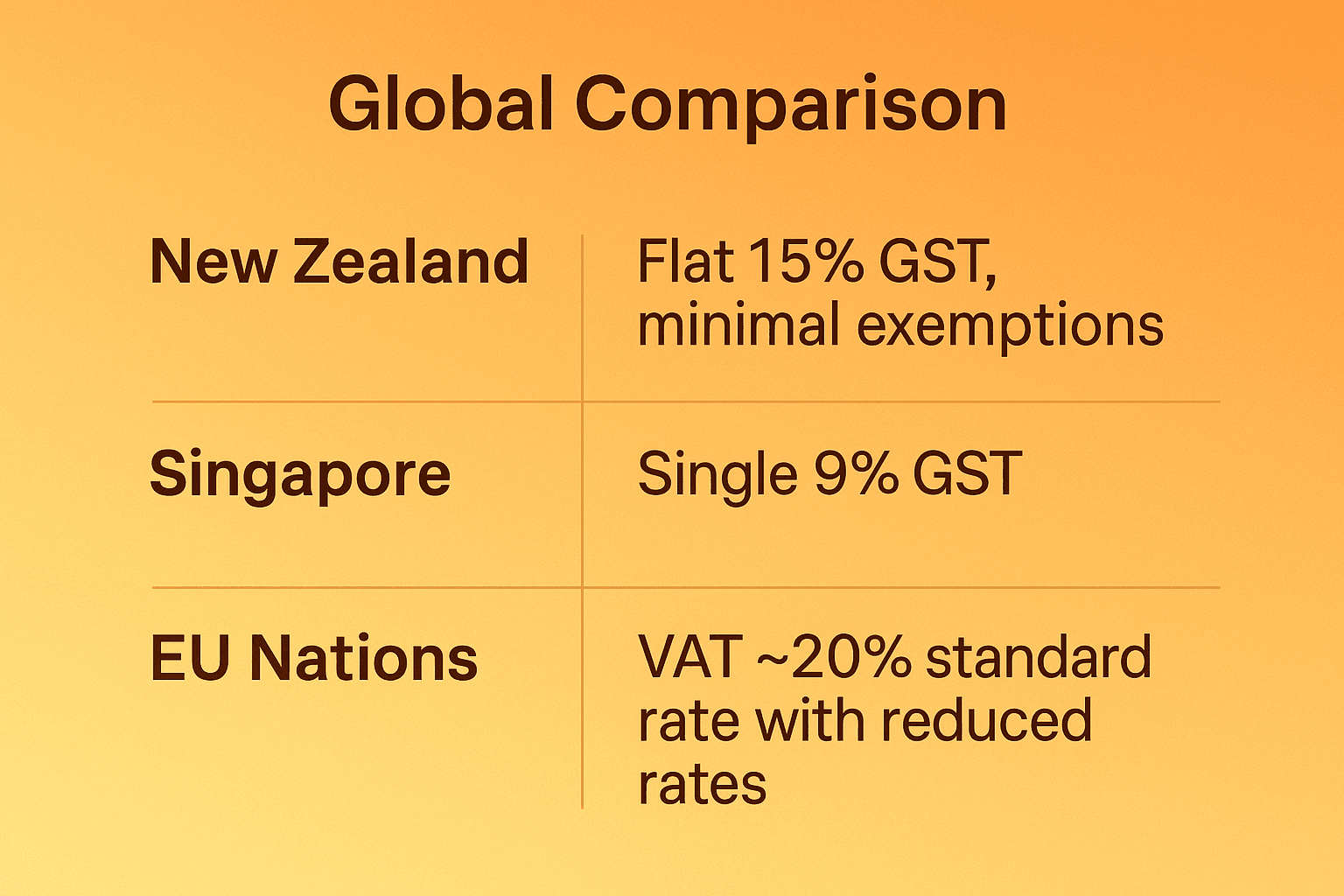
Tax: Destination-based Goods and Services Tax, nationwide indirect levy replacing excise, VAT, service tax etc

Structure: Dual collection CGST SGST plus IGST for interstate supplies, guided by Article 279A GST Council

Timeline: Rolled out 1 Jul 2017, next-generation reforms slated by Diwali 2025

Quick Facts for MCQs

Legal & Policy

  • Amendment: 101st Constitutional Amendment inserted Art 279A, enabled concurrent taxation by Centre and states
  • Council: GST Council decisions by 75% weighted vote, embody cooperative federalism
  • Reform2025: Government targets slab rationalisation law and rules by Diwali 2025

Economic Angle

  • Revenue: Collections average ₹1.84 lakh crore per month FY25, indicating buoyant consumption
  • RateCut: Over 200 items shifted to lower slabs 2017-19, FMCG and restaurants prominent
  • TaxBase: Petroleum and alcohol exclusion continues cascading, limits buoyancy

Compliance & Tech

  • Digitisation: Mandatory e-way bill, e-invoicing, analytics curbed fake billing and boosted matching
  • MSME: Multiple returns, refund delays, classification disputes still burden small firms
  • NextStep: AI-driven monitoring planned for further evasion control

State Finance

  • Compensation: 14% assured growth ended Jun 2022, creating fiscal gaps for several states
  • Demand: States seek fresh stabilisation fund before accepting slab cuts
  • Equity: Consumption-based share benefits richer buyer states, fuels inter-state debate

Key Data Points

FeatureData-Point
Constitutional amendment101st
Launch date1 July 2017
Governing article279A
Initial slabs0.25 % 3 % 5 % 12 % 18 % 28 % + cess
Proposed slabs 2025Special <1 % 5 % 18 % 40 %
Compensation window2017-18 to Jun 2022
Avg monthly revenue FY25₹1.84 lakh crore
Tax structureCGST + SGST + IGST
Slab reform bodyGroup of Ministers 2023

Related UPSC Prelims PYQs

CDS_GK, GS1 2024PYQ 1

Which one of the following statements regarding GST is not correct?

CDS_GK, GS1 2017PYQ 2

वस्तु एवं सेवा कर (Goods and Services Tax/GST) के क्रियान्वयन हेतु निम्नलिखित संभावित लाभ क्या है/हैं ?
GS-1History

2.Women in India's Freedom Struggle (Women Freedom Fighters)

Indian Express

What & Where

Definition: Women’s multi-layered participation in 19th–20th C Indian anti-colonial and social reform movements

Key types/processes: Mass civil disobedience, armed revolutionary networks, gender-focused reform platforms

Core geography: Pan-Indian span from Kittur (Karnataka) to Chittagong (Bengal) and Naga hills

Quick Facts for MCQs

Mass Movements

  • Non-Cooperation: Women picketed liquor, boycotted cloth, spun khadi, accepted jail terms
  • Salt Satyagraha: Sarojini Naidu, Kamala Nehru led marches, activated coastal and rural sisters
  • Quit India: Female networks managed rallies, supplies, clandestine messaging after male arrests

Revolutionary Actions

  • Chittagong raid: Kalpana Datta, Pritilata Waddedar transported arms, planned assaults
  • Pahartali Club attack 1932: Pritilata protested “Dogs and Indians not allowed” sign
  • Calcutta convocation 1932: Bina Das fired at Governor, spotlighting campus militancy

Leadership Bodies

  • AIWC and WIA shaped agendas on suffrage, education, property rights within nationalism
  • Sarojini Naidu, Vijaya Lakshmi Pandit voiced India in London, Washington, fostering female diplomacy
  • Kamaladevi’s 1926 Madras candidature normalised women in legislatures, ensured equal Salt participation

Social Reform

  • Savitribai Phule and Fatima Sheikh opened pioneering girls’ schools, battled caste and child marriage
  • Pandita Ramabai’s Sharada Sadan sheltered widows, argued for universal female suffrage
  • Begum Rokeya’s Sultana’s Dream imagined matriarchal, science-driven peace challenging patriarchy

Key Data Points

FeatureData-Point
First woman INC PresidentAnnie Besant, 1917
First Indian woman INC PresidentSarojini Naidu, 1925
‘Heroine of 1942’ titleAruna Asaf Ali
Underground Congress Radio voiceUsha Mehta, 1942
First Indian flag unfurled abroadBhikaji Cama, Stuttgart 1907
Kittur rebellion year & leader1824, Rani Chennamma
Teen Naga resistance leaderRani Gaidinliu, Heraka
First woman Chief MinisterSucheta Kripalani, UP 1963
AIWC architect & Salt persuaderKamaladevi Chattopadhyay
Attempt on Gov. JacksonBina Das, Calcutta 1932

Related UPSC Prelims PYQs

GEO_GS, NDA_GAT 2025PYQ 1

Salt March was the first nationalist activity in which women participated in large numbers. Who among the following was instrumental in persuading Mahatma Gandhi not to restrict the protest to men alone?

GEO_GS, NDA_GAT 2024PYQ 2

Freedom Fighter Kanaklata Barua sacrificed her life while participating in

GS-1MappingQuick Bite

3.Typhoon Kajiki Impacts Vietnam (Tropical Cyclones)

Hindustan Times

What & Where

Typhoon Kajiki: Category-2 tropical cyclone; formed near Philippines, intensified over South China Sea, struck China & Vietnam’s coast.

Typhoons = western-Pacific tropical cyclones, equivalent to hurricanes (Atlantic) and cyclones (Indian Ocean).

Vietnam: Southeast-Asian littoral state; borders China (N), Laos & Cambodia (W), South China Sea (E).

Quick Facts for MCQs

Physical Geography

  • Mekong River sustains fertile southern delta before discharging into South China Sea.
  • Red River creates northern deltaic plains en route to same sea.
  • Annamite Cordillera parallels Laos border, shaping rainfall patterns.

Disaster Impact

  • Coastal inundation caused extensive flooding, crop destruction and multiple fatalities in Vietnamese provinces.
  • Category-2 wind speeds escalated structural and agricultural damage intensity.

Storm Track & Classification

  • Origin Philippines ➔ intensification South China Sea ➔ landfall China, Vietnam.
  • Typhoon classification mirrors hurricane scale; Category 2 implies 154–177 km/h sustained winds.

Key Data Points

FeatureData-Point
Storm nameTyphoon Kajiki
Basin of originWestern Pacific
Peak categoryCategory 2, Saffir-Simpson
First land interactionPhilippines (formation)
Main landfall nationsChina, Vietnam
Capital of VietnamHanoi
Vietnam independence day2 Sep 1945
Major southern riverMekong
Major northern riverRed River
Key mountain rangeAnnamite Cordillera
GS-3Environment

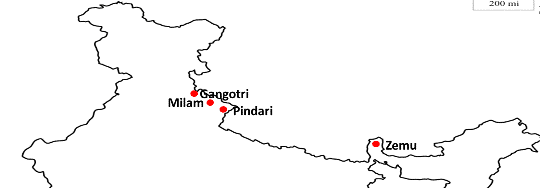
4.Gangotri Glacier Snowmelt Decline (Himalayan Glacier)

Down to Earth
Illustration for Gangotri Glacier Snowmelt Decline (Himalayan Glacier)

What & Where

Largest Garhwal Himalayan valley glacier, 30 km × 143 km², headwaters of Bhagirathi — primary Ganga source

Sits inside Gangotri NP, Uttarkashi district, central Greater Himalaya near Shivling, Meru, Bhagirathi peaks

Year-round discharge via snowmelt, ice melt, rainfall, base flow; supplies ~25 % of Ganga in lean months

Quick Facts for MCQs

Hydrology Trends

  • Snowmelt share down 10 %; rainfall, base flow fractions rising since 1980
  • Earlier melt shifts discharge peak to July, compressing accumulation season
  • Continuous snout retreat signals ongoing negative mass balance

Climate Change Signals

  • Basin air temperature increased +0.5 °C during 2001-20 versus 1980-2000
  • Himalayan mean ice thinning ~46 cm/yr supports Gangotri loss patterns
  • Higher rainfall-runoff shows shift from snow to liquid precipitation

Strategic Stakes

  • Bhagirathi hydropower faces timing-based generation and revenue uncertainties
  • Indo-Gangetic agriculture risks lean-season irrigation deficits from reduced snowmelt
  • Sacred Gaumukh pilgrimage, downstream cultural life hinge on glacier conservation

Key Data Points

FeatureData-Point
Length~30 km
Area~143 km²
StateUttarakhand
DistrictUttarkashi
National ParkGangotri NP
Non-monsoon Ganga supply~25 %
Dominant flow 1980-2020Snowmelt 64 %
Glacier melt share21 %
Rainfall-runoff share11 %
Base-flow share4 %
Snowmelt share 1980-9073 %
Snowmelt share 2010-2063 %
Snowmelt flow loss≈10 % (1980-2020)
Temperature rise+0.5 °C (post-2000)
Peak flow shiftAugust → July
Avg Himalayan ice loss46 cm/yr
Study period1980-2020

Related UPSC Prelims PYQs

CDS_GK, GEO_GS 2024PYQ 1

ISRO, in its studies, has revealed that there is a 178% increase in the size of the Gepang Ghat Glacial Lake. In which of the following States/UTs is this lake located?

CDS_GK, GEO_GS 2023PYQ 2

Which one of the following glaciers is not part of Pir Panjal Range?

GS-3Environment

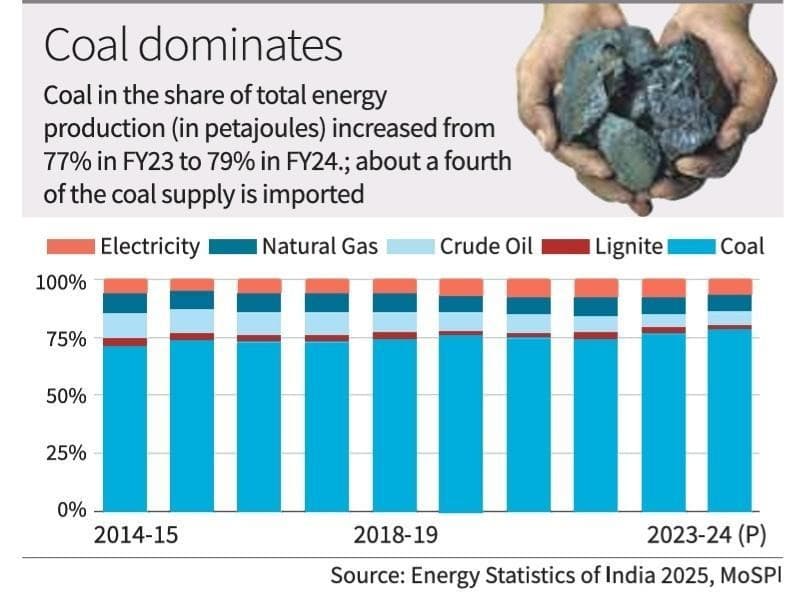
5.NGT Report on Coal Operations (Coal Environmental Impact)

Down to Earth
Illustration for NGT Report on Coal Operations (Coal Environmental Impact)

What & Where

Coal-operations regulation in India overseen by National Green Tribunal; 2025 report examines environmental & social impacts

Major coal belts: Jharkhand, Chhattisgarh, Odisha, West Bengal; pollution hotspots Jharia (Jharkhand) & Ennore (Tamil Nadu)

Focus on integrating Health Impact Assessments into project approvals for mines & thermal plants

Quick Facts for MCQs

Drivers of Reliance

  • Energy-security: indigenous coal shields against import shocks
  • Infrastructure-lock-in: entrenched rail, plants, utilities sustain demand
  • Baseload-necessity: renewables’ intermittency keeps coal as reliability anchor

Environmental & Health

  • Air-pollution: Fly ash, SOx, PM10 cause respiratory disorders, silicosis
  • Water-toxicity: Fly-ash breaches contaminate rivers, soils, aquifers
  • Habitat-loss: Opencast mines fragment forests, wildlife corridors

Governance Gaps

  • Enforcement-weakness: Emission manipulation noted at Ennore, Mejia
  • FRA-exclusion: Tribal consent bypassed despite 2006 mandate
  • Participation-deficit: Affected villagers absent in decision bodies

Recommendations

  • HIA-mandate: Pair HIAs with EIAs for all coal projects
  • Community-oversight: Local committees to monitor air, water, health
  • Just-Transition-Fund: Finance reskilling, livelihood diversification in mining districts

Key Data Points

FeatureData-Point
Report titleRegulating Coal Operations: Environmental & Social Impacts through the Lens of the NGT
Release date26 Aug 2025, New Delhi
Coal share in power (2022-23)>70%
Proven domestic coal reserves~350 billion tonnes
Key coal-dependent sectorsSteel, cement, aluminium, fertiliser, railways
Employment footprintMillions of workers in 4 eastern states
PM10 exceedance5× CPCB limit at Jharia & Ennore
Neglected lawForest Rights Act 2006
Flagship recommendationCompulsory Health Impact Assessment

Related UPSC Prelims PYQs

CDS_GK, GS1 2020PYQ 1

Consider the following statements:

CDS_GK, GS1 2022PYQ 2

Which one of the following is the first and the oldest Government-owned coal mining company in India?

GS-3S&T

6.National Biofoundry Network Launch (Synthetic Biology)

The Hindu
Illustration for National Biofoundry Network Launch (Synthetic Biology)

What & Where

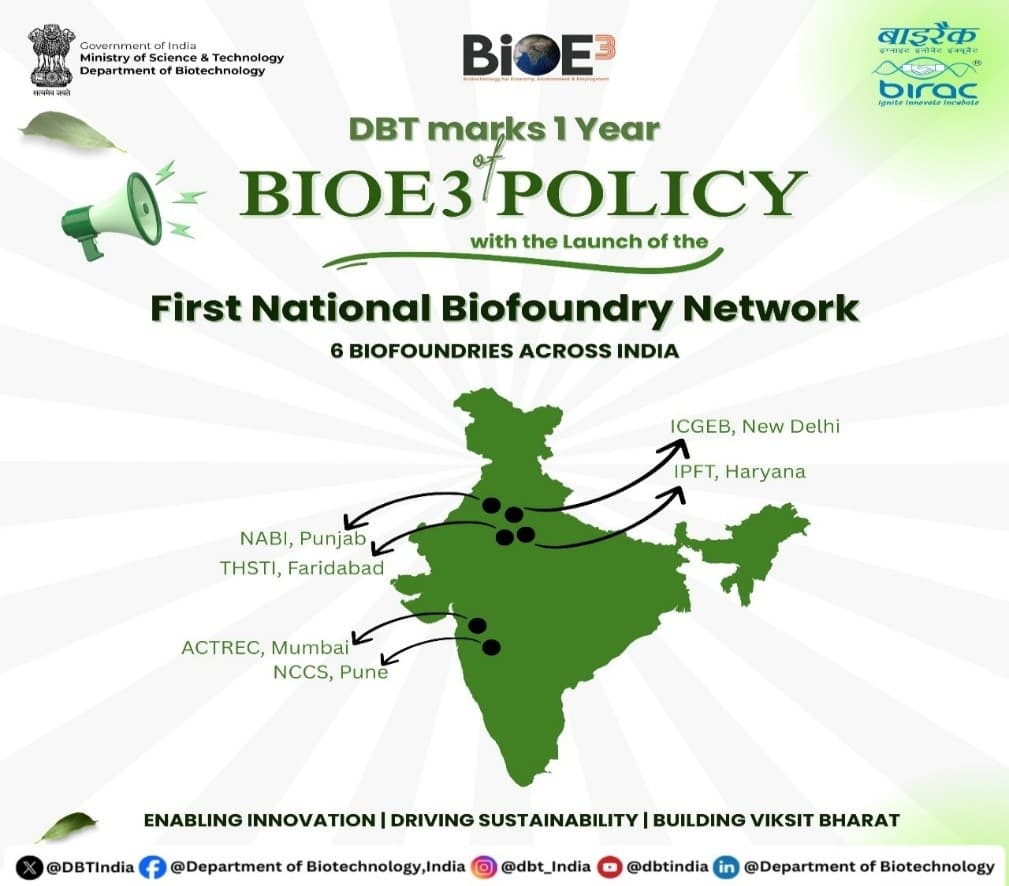
National Biofoundry Network: pan-India platform of six premier institutions for advanced biomanufacturing and synthetic biology.

Purpose: fast-track lab-to-market translation under BioE3 goals—economy, environment, employment.

Geography: Centrally steered by DBT, MoS&T; facilities distributed across member campuses nationwide.

Quick Facts for MCQs

Tech & Schemes

  • End-to-end biofoundry enables automated design-build-test-learn pipeline for rapid biologic prototypes.
  • BioE3 Challenge adopts DESIGn steps: Define, Evidence, Sustainability, Integration, Go-to-market, Net-positive.
  • Open-access infrastructure offered to academia, startups, industry under DBT guidelines.

Economic Angle

  • Initiative targets Indian bioeconomy expansion to USD 300 bn by 2030.
  • Domestic biomanufacturing cuts enzyme, biomaterial imports; strengthens trade balance.
  • Green biotech orientation aligns with climate pledges, drives circular bio-based growth.

International Linkages

  • Network joining Global Biofoundry Alliance for standards and protocol harmonisation.
  • Partnerships foster talent exchange, shared data, co-development of biologics.
  • Bolsters India’s status as Global South hub for sustainable biotech exports.

Key Data Points

FeatureData-Point
Year launched2025
Nodal ministryDBT, Ministry of S&T
Participating institutions6
Guiding policyBioE3
Bioeconomy targetUSD 300 bn by 2030
Core domainsSynthetic biology, gene editing, climate-smart agri, green biotech
Youth challenge theme“Design Microbes, Molecules & More”
Monthly cash prize₹1 lakh to top 10
Max BIRAC funding₹25 lakh per innovator
GS-3S&T

7.Gaganyaan Integrated Air Drop Test (Human Spaceflight)

The Hindu

What & Where

Gaganyaan; India’s first crewed spaceflight; returns three astronauts after 3 days in 400 km Low Earth Orbit.

IADT-1; air-dropping full-scale Crew Module at 4.5 km, validating multi-parachute deceleration before sea-recovery.

Recovery zone; Arabian Sea/Indian Ocean perimeter, coordinated by Indian Navy & Coast Guard assets.

Quick Facts for MCQs

Tech & Schemes

  • Launcher; HLVM3 redesigned for human rating, redundant avionics, vibration attenuation.
  • Module; Service Module offers power, propulsion, thermal control; jettisoned before re-entry.
  • Life-support; CM keeps Earth-like pressure, oxygen, temperature throughout mission.

Safety Systems

  • Abort; Crew Escape System separates capsule within milliseconds during launch anomalies.
  • Tests; Pad Abort Test, Test Vehicle flights, IADT and WSTF validate abort, descent, recovery.
  • Parachutes; cluster of main, drogue, pilot canopies limits touchdown ≤7 m/s.

Inter-Agency Collaboration

  • DRDO; supplies parachutes, pyro devices, bio-astronautics support.
  • IAF; provides C-17 for drop tests, astronaut cadre, recovery helicopters.
  • Navy & Coast Guard; execute open-sea retrieval, med-evac and isolation protocols.

Key Data Points

FeatureData-Point
First IADT date28 Aug 2025
IADT aircraftIAF C-17 Globemaster-III
Crew size planned3 astronauts
Orbit altitude400 km LEO
On-orbit duration~3 days
Crewed launch targetEarly 2027
Human-rated launcherHLVM3 (solid, liquid, cryo stages)
Emergency safeguardCrew Escape System (high-burn solids)
Orbital Module partsCrew Module + Service Module
Astronaut designatesPB Nair, A Krishnan, A Pratap, S Shukla
Key test seriesPAT, TV missions, IADT, WSTF
Partner agenciesISRO, DRDO, IAF, Navy, Coast Guard

Related UPSC Prelims PYQs

CDS_GK 2022PYQ 1

India's maiden human space mission will be launched in 2023. What is its name?

GS-2Polity

8.India-Fiji Bilateral Cooperation (India-Fiji Ties)

PIB

What & Where

Fiji – South Pacific archipelago north of Auckland; >300 islands, ~100 inhabited

Parliamentary democracy; population mix: Indigenous Fijians, Indo-Fijians, Europeans, others; sugarcane long-time economic base

“Soft coral capital”; 4 000 sq km reefs; hosts Sri Siva Subramaniya Swami, largest Hindu temple in Southern Hemisphere

Quick Facts for MCQs

Defence & Security

  • Training, equipment support pledged for Republic of Fiji Military Forces
  • Cooperation spans UN peacekeeping operations, military medicine, cybersecurity, white-shipping info exchange
  • Joint stance against terrorism; Fiji backs India’s permanent UNSC seat

Health & People Links

  • India to build 100-bed hospital; expand Jan Aushadhi, telemedicine via e-Sanjeevani
  • Focus on Hindi-Sanskrit studies, Girmitiya heritage, sports ties, student/professional mobility

Indo-Pacific Strategy

  • Ocean of Peace initiative championed by Fiji aligns with IPOI goals
  • Both nations promote South-South cooperation, climate action, sustainable development
  • Partnership seen as counterbalance to rising Chinese influence in Pacific Island Countries

Key Data Points

FeatureData-Point
Fijian PM India visit3 days (Aug 2025)
Planned hospital size100-bedded super-specialty
Health schemes tappedJan Aushadhi, Heal in India, e-Sanjeevani
Defence cooperationTraining, equipment, UN PKO, military medicine, White Shipping, cybersecurity
Indo-Pacific visionStable, secure, sustainable; branded “Ocean of Peace”
India policy linkageAct East Policy + Indo-Pacific Oceans Initiative
Fiji coral reef area≈4 000 sq km
Total / inhabited islands>300 / ~100
Fiji’s tourism tag“Soft coral capital of the world”
Largest S.-Hemisphere Hindu templeSri Siva Subramaniya Swami, Nadi
GS-3Security

9.Exercise Bright Star 2025 (Multilateral Exercise)

PIB
Illustration for Exercise Bright Star 2025 (Multilateral Exercise)

What & Where

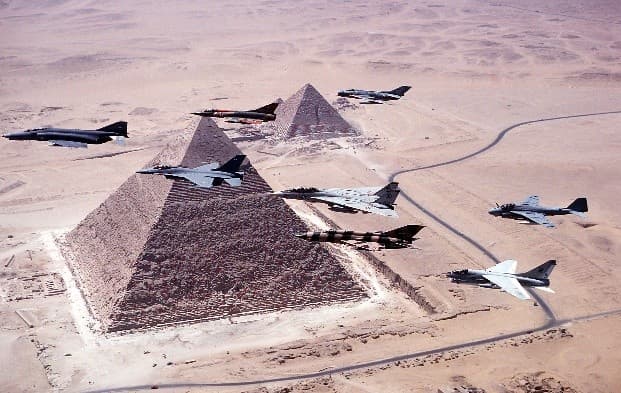
Multilateral biennial tri-service military exercise, among largest in Middle East–North Africa region

Hosted in Egypt with US partnership; conducted since 1980

2025 edition features India plus nations from Asia, Africa, Europe, Middle East

Quick Facts for MCQs

Security Dimension

  • Promotes regional peace security stability through large scale coalition training
  • Prepares forces for modern multi-domain warfare scenarios
  • Showcases credible deterrence via tri-service live firing

Operational Features

  • Live firing by Army Navy Air Force tests integrated combat readiness
  • Command Post Exercise strengthens joint planning and operational coordination
  • Short training drills plus SME sessions address contemporary military domains

Indian Angle

  • India projects tri-service capability on foreign soil enhancing strategic reach
  • Builds defence diplomacy with Egypt US and other partner nations
  • Offers hands-on interoperability experience for Indian personnel across services

Key Data Points

FeatureData-Point
First edition1980
FrequencyBiennial
Primary hostsEgypt & United States
Region focusMENA
Indian contingent 2025≈700 tri-service personnel
Core objectiveJointness & interoperability
2025 highlightsLive firing, Command Post Exercise, SME interactions

Related UPSC Prelims PYQs

GEO_GS, NDA_GAT 2021PYQ 1

'Exercise Desert Knight – 21' is a bilateral air exercise between the Indian Air Force and the Air Force of which one of the following countries?

GEO_GS, NDA_GAT 2025PYQ 2

Naseem-Al-Bahr, held in October 2024, was a joint maritime exercise between the navies of India and

GS-3Security

10.Project 17A Stealth Frigates (Stealth Frigates)

Indian Express

What & Where

Project 17A Nilgiri-class: 7 indigenous multi-mission stealth frigates for Indian Navy’s blue-water operations.

Built at Mazagon Dock Shipbuilders Ltd (MDL)-Mumbai & Garden Reach Shipbuilders & Engineers (GRSE)-Kolkata.

Latest commissions: INS Udaygiri (MDL) & INS Himgiri (GRSE) inducted Aug 2025, Arabian Sea fleet.

Quick Facts for MCQs

Tech & Schemes

  • Design features: composite superstructure, flush deck, low-acoustic propellers enhancing stealth, survivability.
  • Weapons integration: plug-and-play architecture eases future indigenous sensor upgrades.
  • IPMS: remote monitoring, automated damage control, cuts crew load.

Security Dimension

  • Blue-water role: anti-surface, anti-air, anti-submarine tasks across Indian Ocean Region.
  • 360° layered defence: long-range SAM + CIWS counters saturation missile threats.
  • Indigenous build reduces foreign vulnerability in wartime spares.

Indigenization Push

  • Over 75 % indigenous content targeted, promoting Atmanirbhar Bharat.
  • Collaboration: Navy’s Warship Design Bureau, 200+ MSMEs, DRDO labs supply subsystems.
  • P-17B approval signals continuity of domestic shipbuilding pipeline.

Key Data Points

FeatureData-Point
Total P-17A ships7
Ship namesNilgiri, Udaygiri, Himgiri, Taragiri, Mahendragiri, Dunagiri, Vindhyagiri
Stealth upgrade overP-17 Shivalik-class
Hull materialReduced Radar Cross Section design
PropulsionCODOG: 1 Diesel + 1 Gas Turbine per shaft, CPP
Key missilesBrahMos SSM, Barak-8/LRSAM
CIWSRapid-fire Close-in Weapon System
Combat managementIntegrated Platform Management System (IPMS)
Radar/EWShakti Electronic Warfare Suite, advanced multifunction radars
BuildersMDL (4 ships), GRSE (3 ships)
First GRSE frigateINS Himgiri
100th WDB designINS Udaygiri
Legacy names revivedINS Udaygiri 1976, INS Himgiri 1974
Past ops of namesakesPawan, Cactus, Sahayata
Follow-on projectProject 17 Bravo cleared 2024

Related UPSC Prelims PYQs

NDA_GAT 2022PYQ 1

Which of the following Indian Naval Ships were decommissioned in June 2022?

NDA_GAT 2022PYQ 2

With reference to India's defence, the terms ‘Surat’ and ‘Udaygiri’ refer to

GS-2Scheme

11.UMEED Portal for Waqf Management (Waqf Digitalisation)

PIB

What & Where

UMEED: unified digital platform for registration, regulation and monitoring of Waqf properties.

Operates pan-India under Ministry of Minority Affairs with State/UT Waqf Boards.

New module lets widows, divorced women & orphans claim Waqf-alal-aulad maintenance online.

Quick Facts for MCQs

Tech & Schemes

  • Geotagging, digitised records and online approval ensure end-to-end transparency.
  • DBT minimises leakages; tracking through real-time dashboards.

Legal & Policy

  • Deadline non-compliance auto-triggers tribunal scrutiny boosting accountability.
  • Women, children, EWS remain eligible beneficiaries despite property ownership exclusion clause.

Social Concerns

  • Module targets maintenance for vulnerable groups: widows, divorced women, orphans.
  • Centralised data aids evidence-based welfare allocation across Minority communities.

Key Data Points

FeatureData-Point
Acronym expansionUnified Waqf Management, Empowerment, Efficiency & Development
Nodal ministryMinority Affairs
Mandatory registration window6 months from portal launch
Geospatial requirementProperty geotagging with precise measurements
Post-deadline statusUnregistered property sent to Waqf Tribunal as disputed
Beneficiary ID proofAadhaar-based authentication
Fund transfer modeDirect Benefit Transfer to bank account
Key legal ruleRule 8(2), Unified Waqf Rules 2025
Act referenceSection 3(r)(iv), Unified Waqf Act 1995
Women property clauseProperty solely in woman’s name can’t be declared Waqf
GS-2Scheme

12.Revised Glanders Action Plan (Equine Disease Control)

PIB
Illustration for Revised Glanders Action Plan (Equine Disease Control)

What & Where

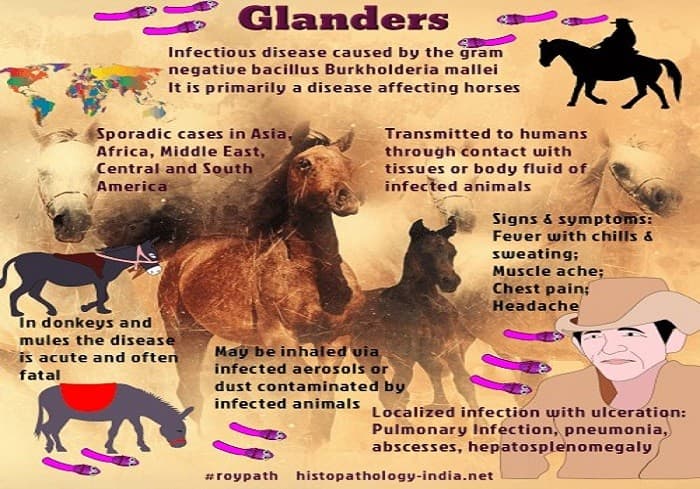
Revised National Action Plan (2025) on Glanders issued by DAHD to eradicate equine bacterial disease in India.

Glanders: zoonotic infection by Burkholderia mallei affecting horses, mules, donkeys; high fatality, notifiable.

Plan applies nationwide; zoning re-drawn around outbreaks for targeted surveillance and control.

Quick Facts for MCQs

Zoning & Surveillance

  • Infected zone: reduced radius improves resource focus, quicker containment.
  • Surveillance zone: capped at 10 km; restrictions lifted beyond.
  • Diagnostics: advanced labs plus frequent field inspection mandated.

Quarantine & Movement

  • Quarantine: rigorous isolation of affected premises, strict biosecurity.
  • Movement: only certified equines allowed in events and interstate travel.
  • Border checks: coordination with state departments for permits.

Capacity & Outreach

  • Training: veterinarians, para-vets on recognition, biosafety, reporting protocols.
  • Awareness: targeted communication to horse owners, breeders, local communities.

Research & Laboratory Support

  • Collaboration: DAHD with ICAR-NRCE for diagnostics, epidemiology studies.
  • Lab upgrades: modern tests to improve detection sensitivity and speed.

Key Data Points

FeatureData-Point
Infected zone radius2 km (earlier 5 km)
Surveillance zone radius2–10 km (earlier 5–25 km)
Mandatory testingEndemic/high-risk equine populations
Rapid response toolStandard Operating Procedures for containment, isolation, humane handling
Movement controlCertification needed for fairs, yatras, interstate transport
Lead laboratoryICAR–National Research Centre on Equines, Hisar
Legal backingPCICDA Act 2009; disease notifiable
Causative agentBurkholderia mallei (bacterium)
Primary hostsHorses, mules, donkeys
Global statusEradicated in many nations; sporadic in Asia, Africa, Middle East
GS-1Economy

13.Women-Led Economic Growth Vision (Women Workforce)

PIB

What & Where

Women-led development: India’s shift from welfare to women as prime movers in Viksit Bharat 2047 roadmap

Key drivers: labour-force entry, MSME & startup ownership, large-scale financial inclusion schemes

Spread: nationwide; 2017-24 rural female employment +96 %, urban +43 %

Quick Facts for MCQs

Workforce Trends

  • LFPR jump 18.3 percentage points; unemployment down to 3.2 %
  • Formalisation boost: EPFO added 1.56 crore women; graduate employability 47.53 %
  • Worker Population Ratio for postgraduates 40 % in 2023-24

Entrepreneurship & Finance

  • MUDRA, SVANidhi, Stand-Up India driving 68 % loan share to women
  • Women-led MSMEs doubled to 1.92 crore; 89 lakh new female jobs FY21-23
  • Lakhpati Didis touch 2 crore; Namo Drone Didi scaling agri tech use

Policy & Budget

  • Gender-budget allocation quadrupled since 2013-14, signalling priority shift
  • Startup India yields 50 % DPIIT entities with women directors
  • Schemes: Beti Bachao, PM-Ujjwala, Poshan 2.0 integrate gender outcomes

Challenges

  • Patriarchy: unpaid care load, early marriage, mobility curbs
  • Literacy only 65.4 %; digital divide limits tech adoption
  • Safety gap: 51 crimes against women every hour, Board & Parliament under-representation

Suggested Measures

  • Childcare: National Crèche Grid; extend paid maternity to informal sector
  • Infrastructure: mandatory gender budgeting in transport, sanitation, digital skilling via PMGDISHA
  • Governance: enforce board quotas, gram-level Gender Action Plans, strong ICCs for workplace safety

Key Data Points

FeatureData-Point
Female LFPR 2017-1822 %
Female LFPR 2023-2440.3 %
Rural female employment rise96 %
Urban female employment rise43 %
Women added to formal workforce (7 yrs)1.56 crore
Women e-Shram registrants16.69 crore
Gender Budget 2013-14₹0.85 lakh cr
Gender Budget 2025-26₹4.49 lakh cr (429 % up)
Women share in MUDRA loans68 % (₹14.72 lakh cr)
Women share in PM SVANidhi44 %
Women-led MSMEs 2023-241.92 crore
Extra jobs via women MSMEs FY21-2389 lakh
Lakhpati Didi count2 crore
DPIIT startups with woman director50 %
Global Gender Gap Rank 2025131 / 148
GDP gain if gap closed30 %

Related UPSC Prelims PYQs

CAPF_GAI, CDS_GK 2023PYQ 1

निम्नलिखित में से भारत की G20 प्राथमिकताएँ क्या हैं?

CAPF_GAI, CDS_GK 2025PYQ 2

आधुनिक भारत में सफल महिलाओं के संदर्भ में, निम्नलिखित कथनों पर विचार कीजिए:

GS-1Misc

14.India's 2030 Commonwealth Games Bid (International Sports Event)

New Indian Express

What & Where

Quadrennial multi-sport event of 72 Commonwealth nations, inaugurated 1930 at Hamilton, Canada

Earlier titles: British Empire Games (1930-50), British Empire & Commonwealth Games (1954-66), British Commonwealth Games (1970-74)

India bidding to stage 2030 edition in Ahmedabad, earlier hosted once in 2010 New Delhi

Quick Facts for MCQs

India Track Record

  • Medal tally 564; wrestling, shooting, weightlifting, badminton major contributors
  • Delhi 2010 only prior hosting; produced record 101-medal finish
  • Milestones include Rashid Anwar 1934 bronze and Milkha Singh 1958 first gold

2030 Bid & Venue

  • Union Cabinet cleared 2030 bid; focal venues Narendra Modi Stadium & Sardar Vallabhbhai Patel Sports Enclave
  • Programme to retain full core sports and add Indian staples kabaddi, kho-kho
  • Ahmedabad promotion dovetails with India’s 2036 Olympic ambition

Distinctive Features

  • Para-sports events integrated within main schedule, unlike standalone Paralympics
  • Traditional Commonwealth sports such as lawn bowls, netball, squash maintained alongside Olympic staples
  • Games framed as instrument for friendship, cultural exchange and sporting excellence among member nations

Key Data Points

FeatureData-Point
First edition1930, Hamilton (Canada)
PeriodicityEvery 4 years
Participating members72 nations & territories
Former namesBritish Empire Games; British Empire & Commonwealth Games; British Commonwealth Games
India debut1934 London Games
India’s first medalRashid Anwar, bronze wrestling
First Indian goldMilkha Singh, 1958 Cardiff
Best Indian haul101 medals (39 gold), 2nd rank, 2010 Delhi
India total medals564 (203 gold) till 2022
Proposed 2030 host cityAhmedabad, Gujarat

Related UPSC Prelims PYQs

CDS_GK, GEO_GS 2020PYQ 1

Which one of the following States is planned to host the Khelo India Youth Games (4th Edition)?

CDS_GK, GEO_GS 2025PYQ 2

The host country of the inaugural Kho Kho World Cup, 2025 is

Ready to practice?

Test your knowledge with our UPSC test series.

Start Free Trial