UPSC Current Affairs

14 topicsGS-1: 1GS-2: 3GS-3: 10
0/14 done
GS-3Economy

1.Digital Services Taxes Overview (Digital Taxation)

Business Standard

What & Where

Digital Services Tax (DST) = destination-based gross-revenue levy on online ads, marketplaces, intermediation, user-data sales

Applied on revenue sourced from users inside taxing country, regardless of company headquarters

Geography: Adopted by several economies (EU members, India till 2025); opposed by USA citing discrimination

Quick Facts for MCQs

Tax Design

  • Scope targets large digital firms exceeding global + domestic revenue thresholds
  • Objective ensures local taxation of value created by user participation, curbs base erosion
  • Levy stays outside bilateral tax treaties owing to non-income character

US Opposition

  • Argument calls DSTs discriminatory against American tech majors
  • President Trump warned retaliatory import tariffs on countries maintaining DSTs
  • US stance pushes for multilateral OECD solution over unilateral levies

India Measures

  • Equalisation Levy 2016 covered non-resident online ads; 2020 expansion added e-commerce supply/services
  • Gradual withdrawal schedule (2024–25) signals commitment to OECD consensus
  • Post-withdrawal, India expected to rely on upcoming Two-Pillar global tax framework

Key Data Points

FeatureData-Point
Tax natureGross-revenue, not corporate income
Core principleDestination; user location decides liability
Typical rate band2 % – 7.5 %
Global turnover trigger≥ €750 million
Main affected firmsGoogle, Amazon, Meta, Apple (US-based)
India ad levy6 % since Jun 2016
India e-commerce levy2 % Apr 2020 – Aug 2024
Ad levy withdrawal1 Apr 2025 (Finance Act 2025)
E-commerce levy withdrawal1 Aug 2024
Policy shiftIndia aligning with OECD global tax deal
US responseTariff threat on DST-imposing nations

Related UPSC Prelims PYQs

CAPF_GAI, GS1 2018PYQ 1

अवासी इकाइयों द्वारा दी जा रही ऑनलाइन विज्ञापन सेवाओं पर भारत द्वारा 6% ‘समतुल्य कर’ (Equalisation Levy) लगाए जाने के निर्णय के सन्दर्भ में निम्नलिखित कथनों पर विचार कीजिए:

CAPF_GAI, GS1 2022PYQ 2

GST is a/an
GS-3Economy

2.RBI Flexible Inflation Targeting Framework (Monetary Policy)

DD News

What & Where

Framework ; RBI’s Flexible Inflation Targeting guides monetary policy via CPI headline inflation.

Adoption ; enforced 2016 after RBI Act-1934 amendment and 2015 Government-RBI agreement.

Target ; 4 % CPI with ±2 % band, nationwide, steered by six-member Monetary Policy Committee.

Quick Facts for MCQs

Legal & Policy

  • Statutory ; RBI Act change, Monetary Policy Framework Agreement provides legal backing.
  • Accountability ; MPC votes, minutes, breach reports enhance transparency and credibility.
  • Review ; 2021-26 cycle retained 4 % target and ±2 % band.

Performance & Outcomes

  • Disinflation ; CPI volatility down; 94 % readings stayed within 2-6 % band till 2019.
  • Expectations ; Household and market long-term inflation expectations better anchored.
  • Flexibility ; Covid-19 and Ukraine shocks saw balanced focus on growth then price stability.

Key Debates

  • Metric ; Headline vs Core—food-fuel 50 % weight supports headline targeting.
  • Design ; Point-plus-band gives clear anchor; range-only offers greater flexibility.
  • Measurement ; 2012 CPI base outdated; revision urged to capture new consumption mix.

Key Data Points

FeatureData-Point
Target metricCPI (headline)
Point target4 %
Tolerance band2 % – 6 %
Statutory start2016
Review cycleEvery 5 years
Breach clause3 quarters outside band ⇒ RBI report to Govt
Avg inflation pre-FIT6.8 %
Avg inflation under FIT4.9 %

Related UPSC Prelims PYQs

GS1 2022PYQ 1

In India, which one of the following is responsible for maintaining price stability by controlling inflation?

GS1 2017PYQ 2

मौद्रिक नीति समिति (Monetary Policy Committee/MPC) के सम्बन्ध में निम्नलिखित कथनों में से कौन-सा/से सही है/हैं ?

GS-3Economy

3.India's Role in Global Food Security (Global Food Security)

PIB
Illustration for India's Role in Global Food Security (Global Food Security)

What & Where

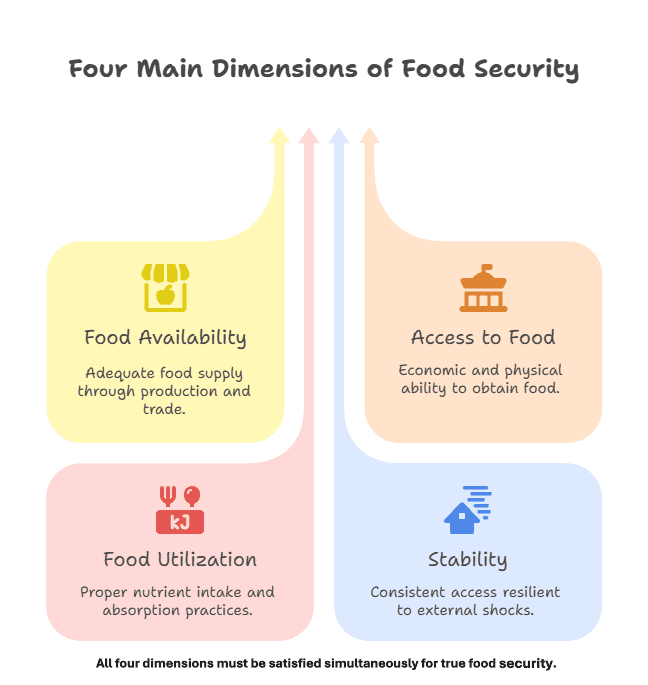
Letter of Intent 2025: India will route surplus fortified rice to vulnerable nations through WFP channels

World Food Programme: UN hunger-focused agency; HQ Rome; operations in 120 + countries

Fortified rice: micronutrient kernel premix blended 1 : 100 to curb hidden hunger in Asia-Africa

Quick Facts for MCQs

Legal & Policy

  • NFSA 2013 legalises food entitlement, shifting welfare to rights
  • ONORC portability plus Aadhaar purge curbs leakages and ghost cards
  • India defends public stockholding rights for developing nations at WTO

Tech & Schemes

  • Fortified Rice Kernel tech adds iron, folic acid, B12 via PDS & PM-POSHAN
  • Grain ATMs, smart warehouses, Flospan units streamline WFP-India logistics
  • NICRA, drip irrigation, crop diversification build climate-resilient farming

International Role

  • India shipped wheat, pulses, vaccines to Afghanistan & African states via WFP
  • ICAR South-South cooperation shares high-yield seeds and agri-tech with Asia-Africa
  • Millets promotion showcases climate-smart cereals as global hunger solution

Key Data Points

FeatureData-Point
WFP establishment1961 (UNGA + FAO)
WFP headquartersRome, Italy
Nobel Peace PrizeAwarded to WFP in 2020
India production rank1st milk, pulses, spices; 2nd food-grains
NFSA population cap75 % rural, 50 % urban
Subsidised grain reach≈ 80 crore people
Fortified rice ratio1 kg kernels : 100 kg normal rice
GHI 2024 rankIndia 105 / 127
Fake ration cards axed4.7 crore (2013-21)
Intl Year of Millets2023, led by India

Related UPSC Prelims PYQs

GS1 2010PYQ 1

An objective of the National Food Security Mission is to increase the production of certain crops through area expansion and productivity enhancement in a sustainable manner in the identified districts of the country. What are those crops?

GS1 2018PYQ 2

राष्ट्रीय खाद्य सुरक्षा अधिनियम, 2013 के अधीन बनाए गए नियमों के संदर्भ में, निम्नलिखित कथनों पर विचार कीजिए :

GS-1Mapping

4.East China Sea Geopolitical Mapping (Marginal Sea)

The Hindu
Illustration for East China Sea Geopolitical Mapping (Marginal Sea)

What & Where

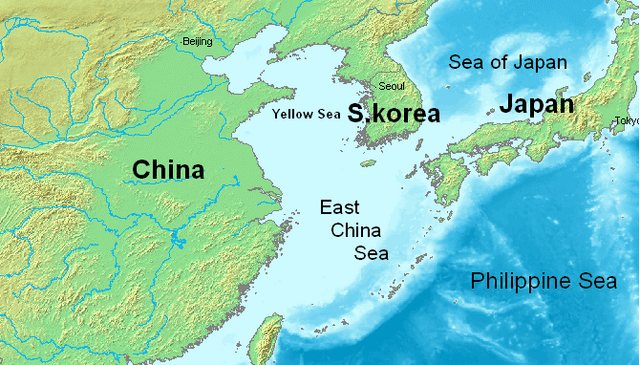
Marginal Western-Pacific sea bounded by China, Japan, Taiwan, South Korea.

Lies east of Chinese coast, south of Kyushu–Ryukyu; links Yellow Sea, Taiwan Strait, Pacific.

Noted for dense fisheries, sizable oil-gas reserves, high maritime-security salience.

Quick Facts for MCQs

Islands & Straits

  • Senkaku/Diaoyu: 5 islets, 3 rocks, strategic for EEZ extension.
  • Miyako Strait: deep-water passage enabling PLA Navy Pacific access.
  • Taiwan Strait: separates East & South China Seas, busy global shipping lane.

Legal & Policy

  • EEZ overlap: 200 nm claims collide; no final delimitation treaty.
  • Japan protest: objects to Chinese gas platforms west of median line.
  • China rejection: cites sovereign right over continental-shelf resources.

Resource Potential

  • Hydrocarbons: Xihu Trough holds proven natural-gas deposits.
  • Joint development talks periodically stall over sovereignty wording.
  • Fisheries: hosts lucrative squid, mackerel, hairtail grounds for littoral states.

Key Data Points

FeatureData-Point
Approx. area1.249 million sq km
Average depth~350 m, generally shallow
Chinese coastsShanghai, Zhejiang, Fujian
Japanese islandsKyushu, Okinawa/Ryukyu chain
Key disputed islandsSenkaku / Diaoyu (uninhabited)
Main connecting straitsKorea, Taiwan, Miyako
EEZ stance: JapanMedian-line principle
EEZ stance: ChinaContinental shelf to Okinawa Trough
Primary resourcesOil, natural gas, rich fisheries

Related UPSC Prelims PYQs

GS1 2022PYQ 1

Which one of the following statements best reflects the issue with Senkaku Islands, sometimes mentioned in the news?

GS-3Environment

5.India's Carbon Market Authority (Carbon Markets)

The Hindu
Illustration for India's Carbon Market Authority (Carbon Markets)

What & Where

Statutory body: National Designated Authority-Carbon Markets (NDA) under MoEFCC, New Delhi.

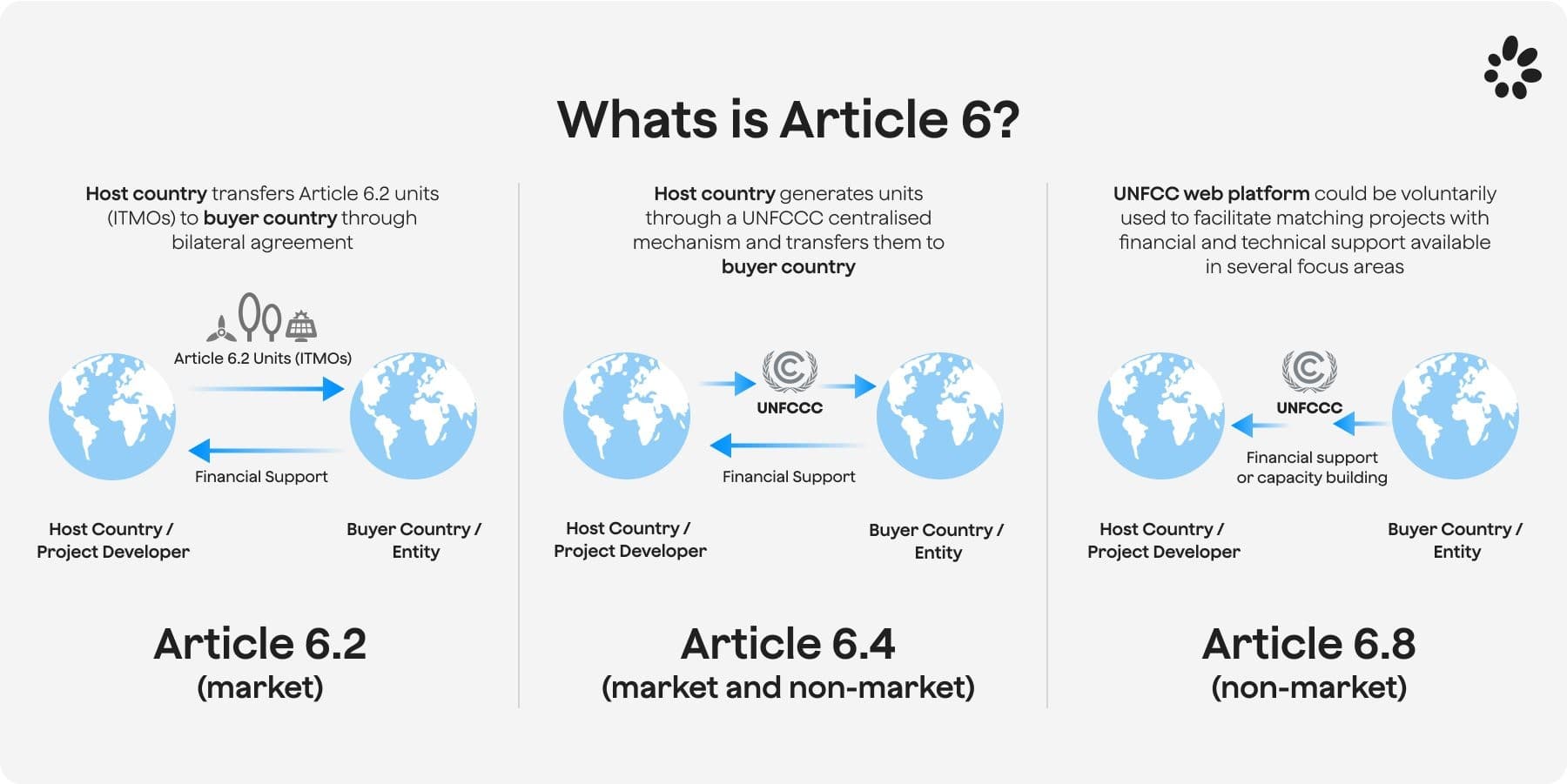
Mandated process: approves, authorises and tracks emission-reduction units under Paris Agreement Article 6.

Core geography: governs all India projects; interfaces globally for credit transfers.

Quick Facts for MCQs

Legal & Policy

  • Compliance: NDA fulfilment is compulsory for participation in Article 6 carbon markets.
  • Authority: recommends national criteria for tradable activities, revisable with policy shifts.
  • Representation: serves as single window for India in bilateral or multilateral carbon credit deals.

Institutional Design

  • Composition: multi-sectoral membership ensures economic, diplomatic, energy and planning perspectives.
  • Decision flow: project proposals scrutinised, approved, then recorded in national registry.
  • Oversight: continuous monitoring of issued ERUs to avoid double counting.

Climate Targets

  • Alignment: ERU allocation prioritises projects aiding 45 % intensity reduction target.
  • Incentive: renewable, low-carbon tech expected to attract larger private investments.
  • Flexibility: NDA may update eligible sectors as India’s sustainability priorities evolve.

Key Data Points

FeatureData-Point
Legal anchorArticle 6, Paris Agreement 2015
Year NDA constituted2024 (Centre notification)
Parent ministryEnvironment, Forest & Climate Change
Total members21
ChairpersonEnvironment Secretary, GoI
Key ministries on boardExternal Affairs, Steel, MNRE, Power, NITI Aayog
Main market outputEmission Reduction Units (ERUs)
Allowed ERU useDomestic NDC compliance & international transfer
India’s NDC goal45 % emission-intensity cut by 2030 vs 2005
COP finalising Article 6 rulebookCOP-29, Baku 2024

Related UPSC Prelims PYQs

CDS_GK, GS1 2023PYQ 1

भारत के सन्दर्भ में जलवायु परिवर्तन पर राष्ट्रीय कार्य योजना (NAPCC) के बारे में निम्नलिखित में से कौन-सा/कौन-से कथन सही है/हैं ?

CDS_GK, GS1 2011PYQ 2

Regarding “carbon credits”, which one of the following statements is not correct?

GS-3Environment

6.Heatwave Risks for Elderly Indians (Heatwave Vulnerability)

Down to Earth

What & Where

Geriatric population = Indians aged 65 +, facing physiological decline and higher climate sensitivity.

Heatwave mortality among elderly rose 55 % between 2000–04 and 2017–21.

Worst-hit states: Uttar Pradesh, Rajasthan; risk amplified on “tropical nights” > 20 °C.

Quick Facts for MCQs

Biological & Health Factors

  • Thermoregulation decline; reduced sweating & circulation heighten heat-stroke risk.
  • Blunted thirst perception → dehydration, electrolyte loss, renal stress.
  • Night-time heat hampers cardiovascular recovery, escalating mortality.

Gender & Social Dimensions

  • Women: prolonged kitchen heat, caregiving burdens, poorer resource control.
  • Men: continued outdoor labour, scant hydration/rest breaks.
  • Social isolation & poverty delay help-seeking, erode adaptive capacity.

Policy & Tech Solutions

  • Subsidised fans, hydration kits, energy support for poor elderly in Heat Action Plans.
  • Train ASHA/health staff; set up temporary cooling centres at block/ward level.
  • Integrate IMD apps into one multilingual alert platform; push low-cost cooling tech via PLI incentives.

Key Data Points

FeatureData-Point
Elderly share of population (2022)10.5 % ≈ 14 crore
Projected share by 2050Nearly doubles; exceeds youth cohort
Rural residence71 % of elderly
Sex ratio (elderly)71 mn women : 67 mn men
Heat-death surge+55 % (2000–04 vs 2017–21)
Key vulnerable statesUttar Pradesh, Rajasthan
Tropical night thresholdMinimum temp > 20 °C
Common comorbiditiesHeart, kidney, mental-health disorders
GS-3EnvironmentQuick Bite

7.Climate Change Workplace Heat Stress Report (Workplace Heat Stress)

WHO

What & Where

Report: WHO–WMO joint study “Climate Change and Workplace Heat Stress” on rising occupational heat hazards

Mechanism: Extreme heatwaves (>40–50 °C) lower worker output 2–3 % per °C above 20 °C, raise illness risk

Geography: Heat-stress danger spreading beyond equatorial belt, now threatens roughly half of world population

Quick Facts for MCQs

Health Impact

  • Heatstroke, dehydration, kidney, neurological disorders rising among exposed workers
  • Indoor as well as outdoor labour now vulnerable to ambient heat
  • Half of global population experiencing measurable heat-related health risks

Economic Angle

  • Productivity dips 2–3 % for every °C over 20 °C
  • Heat stress responsible for 22.85 million occupational injuries annually
  • Manual, labour-intensive sectors in developing economies face greatest income loss

Policy & SDGs

  • Report urges occupational heat-health standards, wide awareness and locally co-created strategies
  • Recommends practical, affordable, tech-enabled, sustainable cooling and scheduling solutions
  • Measures align with UN SDG 3 Good Health, SDG 8 Decent Work, SDG 10 Reduced Inequalities

Key Data Points

FeatureData-Point
Report publishersWorld Health Organization & World Meteorological Organization
Workers exposed to excessive heat>2.4 billion
Heat-linked work injuries/year22.85 million (ILO)
Productivity loss rate2–3 % per °C above 20 °C
Typical heatwave daytime peak40–50 °C
High-risk sectorsAgriculture, construction, fisheries
SDG linkageSDG 3, SDG 8, SDG 10
GS-3Editorial

8.Sci-Hub Ban and ONOS Policy (Research Access Policy)

Indian Express

What & Where

Sci-Hub free repository bypassing paywalls founded 2011 by Alexandra Elbakyan

Delhi High Court 2024 order blocks Sci-Hub and mirrors via Indian ISPs

India debates universal research access through One Nation One Subscription scheme

Quick Facts for MCQs

Legal & Policy

  • Delhi_HC contempt order directs ISPs to block Sci-Hub and all mirror sites
  • Verdict upholds copyright claims of Elsevier Wiley ACS under Indian law
  • Affordability gap for ordinary researchers remains unresolved by judgment

Tech & Schemes

  • ONOS bulk deal negotiates nationwide access to 13 000 journals from 30 publishers
  • Funding ₹6 000 crore allocated for Phase I 2023–26 implementation
  • Coverage Phase I public bodies Phase II extends to private colleges

Access & Equity

  • Students researchers in developing nations heavily depend on Sci-Hub for paywalled literature
  • ONOS objective reduce piracy by ensuring universal legal research access across India
  • Implementation speed will determine equity gains for academia nationwide

Key Data Points

FeatureData-Point
Sci-Hub founding year2011
Sci-Hub founderAlexandra Elbakyan
Plaintiffs in HC caseElsevier, Wiley, ACS
Court order year2024
ONOS launch year2024
ONOS Phase I span2023–26
Initial ONOS outlay₹6 000 crore
Publishers under deal30
Journals promised13 000
Phase I coveragePublic institutions & universities
Phase II targetPrivate institutes & colleges
GS-3S&T

9.UPM J1040−3551 Quadruple Star System (Quadruple Star System)

Indian Express

What & Where

UPM J1040−3551 AabBab; quadruple stellar system inside the Milky Way

Components: 2 hydrogen-burning red dwarfs + 2 non-fusing brown dwarfs

First known case of a brown-dwarf pair orbiting a red-dwarf binary

Quick Facts for MCQs

Astronomical Significance

  • Benchmark; extends understanding of multiple-star formation in low-mass regime
  • Mass-distribution data refine galactic dark-matter models
  • Rarity informs statistical occurrence of sub-stellar companions

Physical Characteristics

  • Red dwarfs: faint, long-lived hydrogen-fusers
  • Brown dwarfs: too cool for sustained hydrogen fusion; emit mainly infrared
  • System mass spectrum spans planetary to stellar thresholds

Research Opportunities

  • Natural laboratory; four co-evolved bodies enable controlled comparative analysis
  • Temperature-luminosity links of brown dwarfs better calibrated via brighter red-dwarf hosts
  • Potential target for future high-resolution infrared spectroscopy

Key Data Points

FeatureData-Point
System typeHierarchical 4-star system
GalaxyMilky Way
Primary stars2 M-class red dwarfs
Secondary bodies2 brown dwarfs
Brown-dwarf size≈ Jupiter radius
Brown-dwarf massSeveral-times Jupiter mass
Companion probability< 5 % for low-mass brown dwarfs
Key uniquenessFirst red-dwarf + brown-dwarf double pair
Study benefitCoeval formation aids precise age, temp, composition checks
Detection easeRed-dwarf brightness guides brown-dwarf property estimates
GS-2Polity

10.India-EAEU Free Trade Agreement Talks (EAEU FTA)

PIB
Illustration for India-EAEU Free Trade Agreement Talks (EAEU FTA)

What & Where

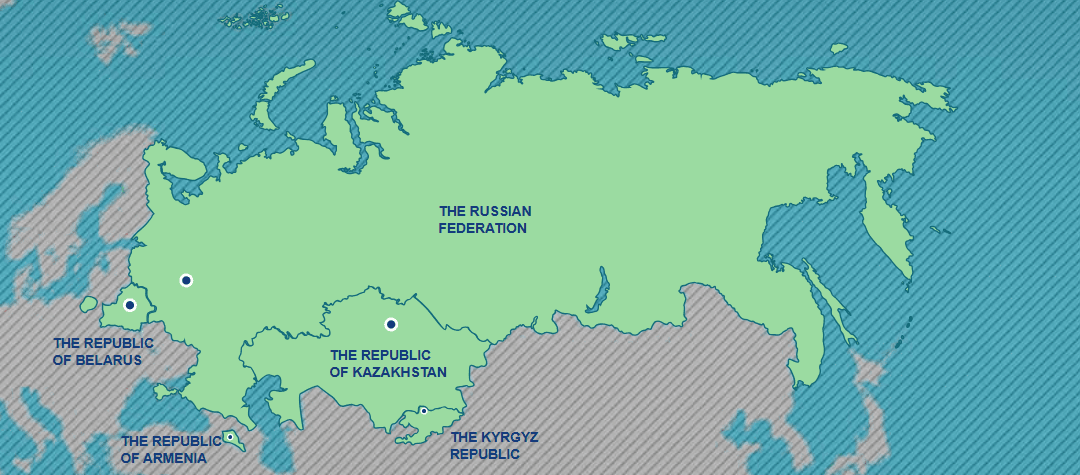
EAEU: regional economic-integration bloc with legal personality, born via 2015 Treaty on the Eurasian Economic Union.

Members: Armenia, Belarus, Kazakhstan, Kyrgyzstan, Russia; headquarters – Moscow.

India inked Aug 2025 ToR for FTA talks; aligns with INSTC & Chennai–Vladivostok corridors linking South Asia–Eurasia.

Quick Facts for MCQs

Economic Angle

  • Market-access: FTA promises export gains in textiles, pharma, engineering, electronics, benefiting MSMEs.
  • Diversification: Lowers over-reliance on US/EU demand amid escalating tariff frictions.
  • Deficit-concern: Hydrocarbon-heavy imports widen gap, challenging trade balance sustainability.

Connectivity & Logistics

  • Corridor-boost: INSTC and Chennai–Vladivostok routes slash transit time, freight cost.
  • Arctic-option: Northern Sea Route offers alternate linkage to Russian Far East.
  • Payments: Push for rupee–ruble settlements to cut dollar-based transaction delays.

Challenges & Risks

  • Sanctions-shadow: Deeper Russia ties risk NATO, US-EU punitive measures.
  • Industry-pressure: Cheap EAEU oil/metals threaten domestic producers, prompting safeguard debate.
  • Non-tariff: Strict SPS norms, customs red-tape suppress already low 25 % FTA usage.

Policy Measures

  • Programme-2025-30: Planned cooperation in energy, agriculture, industry, education, culture across EAEU.
  • Multilateral-outreach: Leveraging BRICS, reviving RIC to broaden supply chains, bargaining clout.
  • Currency-innovation: Standardised local-currency settlement frameworks with ample liquidity to curb USD dependence.

Key Data Points

FeatureData-Point
Year of EAEU entry into force2015
EAEU member count5
Combined EAEU GDP~USD 6.5 trn
India–EAEU trade 2024USD 69 bn
India’s trade deficit with Russia 2024-25USD 58.9 bn
Russia share in India’s crude imports35–40 %
Average US tariff on Indian goods (2025)50 %
India’s FTA utilisation rate≈25 %

Related UPSC Prelims PYQs

CDS_GK, GS1 2024PYQ 1

If India enters into Free Trade Agreements (FTAs) with other nations, then the growth of exports of India would depend upon which of the following?

CDS_GK, GS1 2017PYQ 2

‘ब्रोड-बेस्ड ट्रेड एंड इनवेस्टमेंट एग्रीमेंट (BTIA)’ के संबंध में भारत और निम्नलिखित में से किस एक के बीच वार्ताओं के संदर्भ में चर्चा चल रही है ?

GS-3Security

11.MiG-21 Retirement and Legacy (MiG-21 Fighter)

NDTV
Illustration for MiG-21 Retirement and Legacy (MiG-21 Fighter)

What & Where

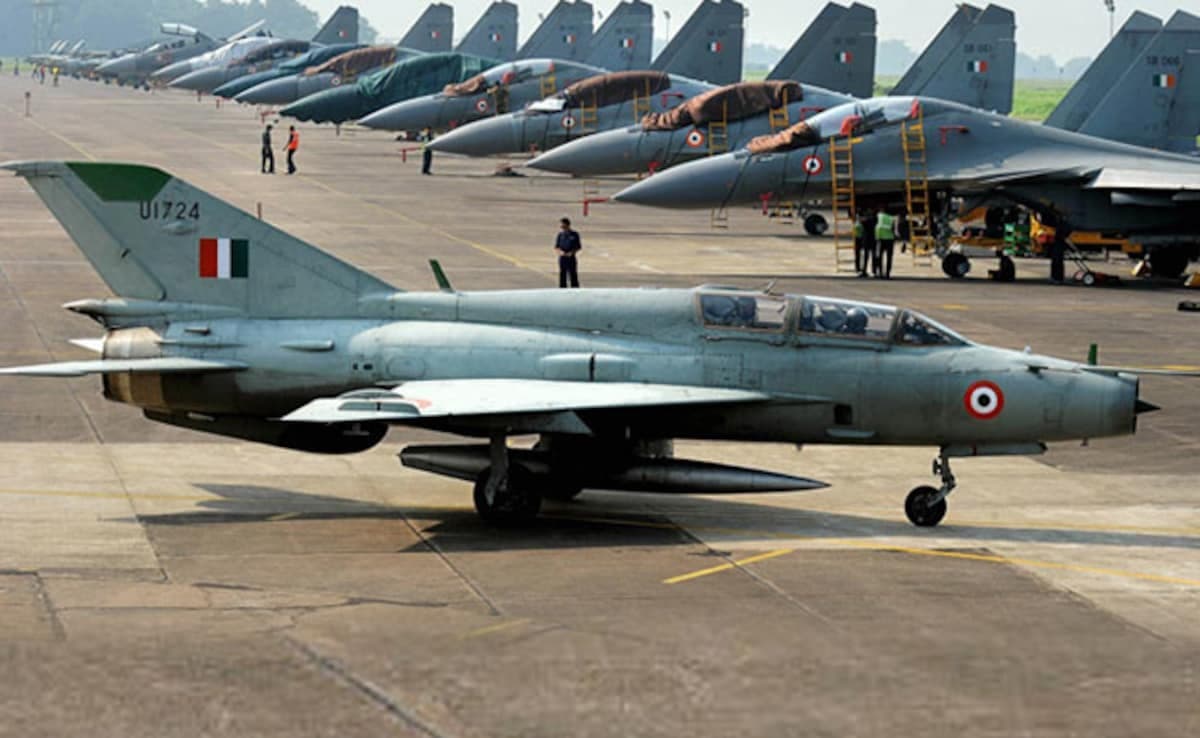
MiG-21 : Soviet-designed, delta-wing, supersonic fighter forming Indian Air Force backbone since 1963

Operated nationwide by 50+ squadrons; ~900 aircraft, incl. ~660 licence-built by HAL, Bengaluru & Nasik

Set for complete retirement from IAF service on 26 September 2025

Quick Facts for MCQs

Operational History

  • War-roles : frontline interceptor 1965, Dhaka strikes 1971, ground-attack & AD Kargil, air combat 2019
  • Record : first supersonic kill for India, Abhinandan Varthaman downed F-16 over PoK
  • Squadron spread enabled rapid pan-India response, shaping IAF air-defence doctrine

Upgrades & Variants

  • Bison package added Israeli jammer, Russian R-77/R-73 missiles, partial glass cockpit, helmet-mounted sight
  • Reconnaissance, trainer and Type-96/75 sub-variants adapted for diverse mission profiles
  • Continuous avionics, weapons, and radar retrofits prolonged relevance into 21st century

Indigenous Production

  • HAL Nasik & Bengaluru built aircraft under Soviet licence, boosting aerospace self-reliance credentials
  • Component localisation included engines, airframes, and accessories, nurturing domestic vendor ecosystem
  • MiG-21 programme pivotal in later LCA Tejas and Su-30MKI manufacturing competencies

Retirement & Legacy

  • Drawdown aligns with induction of LCA Tejas Mk-1A and Rafale for gap-free air-defence cover
  • Despite crash tag, symbolised courage, Indo-Russian defence ties, and pilot training pipeline
  • Final fly-past planned 2025; aircraft to enter museums, training aids, ceremonial displays

Key Data Points

FeatureData-Point
DesignerMikoyan-Gurevich Bureau, USSR
First prototype flight1955
IAF induction year1963
First IAF squadronNo. 28 “The First Supersonics”, Chandigarh
Total MiG-21s with IAF~900
Licence-built in India~660 units
Maximum speedMach 2.05 ≈ 2,175 km/h
Key wars flown1965, 1971, Kargil 1999, Balakot aftermath 2019
Pakistani F-16 shoot-down27 Feb 2019 by MiG-21 Bison
Major upgradeBison standard (early 2000s)
Retirement date26 Sep 2025
Popular moniker“Flying Coffin”

Related UPSC Prelims PYQs

GS1 2024PYQ 1

Consider the following aircraft:

GS1 2025PYQ 2

भारत की रक्षा के संदर्भ में, निम्नलिखित युग्मों पर विचार कीजिए :

GS-3Security

12.Strengthening India's Cybersecurity Framework (Cyber Threats)

Economic Times

What & Where

Cyberthreats: malicious activities targeting digital networks, data and critical infrastructure

Scope: includes financial fraud, ransomware, deepfakes, data breaches, cyber-terrorism

Geography: rising sharply across Indian cyberspace and critical-infrastructure nodes nationwide

Quick Facts for MCQs

Key Threats

  • Phishing & UPI frauds dominating 2024 financial cybercrime landscape
  • Ransomware hitting hospitals, utilities, government databases with high ransom demands
  • Deepfakes eroding electoral integrity during 2024 campaign, spreading misinfo on social media

Capability Gaps

  • Outdated IT Act 2000 omits AI, deepfakes, ransomware specifics
  • Fragmented CERT-In, NCIIPC, I4C coordination slows national threat response
  • Rural low cyber hygiene magnifies phishing success, limited digital-literacy programs persist

Existing Framework

  • Core laws: IT Act 2000; Digital Personal Data Protection Act 2023 providing baseline regulation
  • Institutions: CERT-In, NCIIPC, I4C, Cyber Swachhta Kendra operate incident response, capacity building
  • Bharat National Cybersecurity Exercise 2024 tested cross-sector resilience, simulated real-world attacks

Recommended Measures

  • Update IT Act, enforce DPDP Act with clear penalties, ransomware reporting mandate
  • Mandate audits, encryption, zero-trust architecture for power, banking, healthcare networks
  • Launch multilingual cyber-literacy drives, embed cybersecurity modules in school, university curricula

Key Data Points

FeatureData-Point
Cybercrime complaints 20241.91 million
AIIMS Delhi ransomware2022
Kudankulam nuclear malware2019
Air India data-leak victims≈4.5 million passengers
Needed cyber pros (NASSCOM)1 million
Present cyber pros< 0.5 million

Related UPSC Prelims PYQs

CAPF_GAI, GS1 2022PYQ 1

भारतीय कंप्यूटर आपातकालीन प्रतिक्रिया दल (CERT-In) द्वारा जारी किए गए नवीनतम दिशानिर्देशों के संदर्भ में निम्नलिखित कथनों पर विचार कीजिए:

CAPF_GAI, GS1 2020PYQ 2

भारत में, किसी व्यक्ति के साइबर बीमा पॉलिसी पर, निजी क्षति की भरपाई हेतु अन्य लोगों के अतिरिक्त, सामान्यतः निम्नलिखित में से कौन-से लाभ दिए जाते हैं?

GS-2Scheme

13.Project Aarohan Education Scholarships (Scholarship Scheme)

PIB
Illustration for Project Aarohan Education Scholarships (Scholarship Scheme)

What & Where

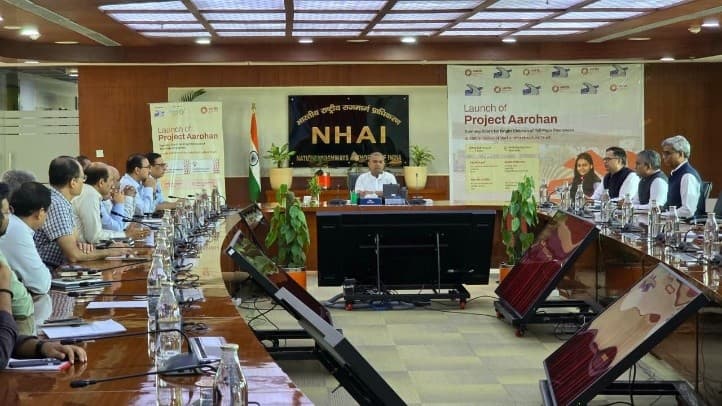
Project Aarohan; scholarship-cum-mentorship scheme for children of toll plaza staff.

Launched nationwide by National Highways Authority of India with Vertis Infrastructure Trust.

Executed by SMEC Trust’s Bharat Cares via online application portal.

Quick Facts for MCQs

Tech & Schemes

  • Digital-first application; portal streamlines documentation and selection.
  • Structured tracking dashboard monitors academic performance and fund use.
  • Scheme aligns with CSR obligations under Trust model.

Social Concerns

  • Inclusivity lens addresses gender, caste and minority gaps in highway workforce families.
  • Mentorship component tackles non-financial barriers like career awareness.
  • Aims inter-generational mobility for road-sector’s blue-collar segment.

Economic Angle

  • ₹1 crore corpus signifies low-cost high-impact CSR deployment.
  • Scholarships reduce dropout risk, preserving human capital investment.
  • Trust-based funding model may attract additional private partners.

Key Data Points

FeatureData-Point
Launching bodiesNHAI + Vertis Infrastructure Trust
Implementing partnerBharat Cares (SMEC Trust)
Target groupChildren of toll plaza employees, EWS focus
Academic classes coveredClass 11 to final year graduation
Total beneficiaries (Phase-I)500 students
Annual scholarship₹12,000 per student (FY 2025-26)
PG/above special grant₹50,000 each for 50 students
Mentorship add-onsCareer guidance, skill workshops, progress tracking
Fund earmarked Phase-I₹1 crore (Jul 2025-Mar 2026)
Priority categoriesGirls, first-gen learners, SC, ST, OBC, minorities
Application modeOnline; requires marksheets, income, caste, ID proofs

Related UPSC Prelims PYQs

CDS_GK, NDA_GAT 2023PYQ 1

भारतीय राष्ट्रीय राजमार्ग प्राधिकरण (NHAI) के बारे में निम्नलिखित में से कौन-सा कथन सही नहीं है?

CDS_GK, NDA_GAT 2022PYQ 2

भारत सरकार द्वारा हाल ही में आरम्भ की गई ‘SHRESHTA’ योजना के बारे में निम्नलिखित में से कौन-सा/कौन-से कथन सही है/हैं?

GS-2Scheme

14.Jan Dhan Yojana Financial Inclusion Progress (Financial Inclusion)

Indian Express
Illustration for Jan Dhan Yojana Financial Inclusion Progress (Financial Inclusion)

What & Where

Financial-inclusion scheme; launched 2014; mandates universal, zero-balance Jan Dhan bank accounts

Components: RuPay debit cards, micro-insurance, Atal Pension Yojana link, DBT-enabled subsidies

Geography: pan-India; 99.9 % villages within 5 km of branch, Bank Mitra or IPPB outlet

Quick Facts for MCQs

Inclusion Metrics

  • Gender empowerment 56 % accounts female owned improving decision-making autonomy
  • Rural focus 37.5 crore accounts plus 16.2 lakh Bank Mitras enable doorstep service
  • Savings uptick deposits up 17× since 2015 indicating shift from mere account opening

Digital Ecosystem

  • RuPay expansion 38.7 crore cards spurred UPI usage and cashless payments
  • DBT backbone LPG pensions COVID relief credited instantly reducing leakages
  • Tech coverage India Post Payments Bank supports last-mile digital banking

Challenges

  • Dormancy many accounts inactive limiting sustained financial behaviour change
  • Credit access gap beneficiaries still rely on informal lenders due to limited microcredit linkage
  • Digital divide low smartphone and literacy levels in Tier-4/5 centres curb full benefits

Way Forward

  • Reactivation drives incentives and literacy camps to boost regular transactions
  • Credit linkage integrate microloans entrepreneurship support with Jan Dhan platform
  • Tech innovation voice-based AI tools and vernacular content for low-literacy users

Key Data Points

FeatureData-Point
Launch year2014
Anniversary marked11 years on 28 Aug 2025
Total accounts56.2 crore
Women’s share56 % of accounts
Rural/semi-urban accounts37.5 crore
Deposits balance₹2.68 lakh crore
RuPay cards issued38.7 crore
Bank correspondents16.2 lakh
Villages within 5 km access99.9 %

Related UPSC Prelims PYQs

CDS_GK, GS1 2015PYQ 1

‘Pradhan Mantri Jan-Dhan Yojana’ has been launched for

CDS_GK, GS1 2024PYQ 2

निम्नलिखित में से कौन-सा कथन PM-JANMAN योजना के संदर्भ में सही है?

Ready to practice?

Test your knowledge with our UPSC test series.

Start Free Trial