UPSC Current Affairs

13 topicsGS-1: 3GS-2: 1GS-3: 9
0/13 done
GS-3Editorial

1.Balanced Industrial Distribution Action Plan (Industrial Policy)

The Hindu

What & Where

Industrial imbalance: concentration in Maharashtra, Gujarat, Tamil Nadu; lag in Bihar, Jharkhand, NE states

Industry: Constitutionally State subject; Centre shapes national policy, incentives, disinvestment roadmap

SCoF 2025 call: national action plan for evenly spread manufacturing, fast-track CPSE privatisation

Quick Facts for MCQs

Policy Recommendations

  • Disinvestment: privatise/close non-strategic loss-making CPSEs; energise State-level PSU reform incentives
  • Investment push: mobilise public–private funds, lift rate to 35 % GDP, maintain social-sector spends
  • Balanced growth: draft location policy, central packages for backward regions, cluster-based incentives

Drivers of Imbalance

  • Colonial legacy: jute in Bengal, cotton in Bombay Presidency, patterns persisted post-1947
  • Infrastructure differential: ports, corridors aid coastal plains; Himalayan & NE states face power, logistics gaps
  • Agglomeration pull: existing clusters attract suppliers, talent, finance, reinforcing regional concentration

Economic & Social Impact

  • Fiscal skew: UP, Bihar, MP contribute only 5 % of direct taxes, depend heavily on central transfers
  • Migration surge: Mumbai, Bengaluru, Delhi absorb bulk labour, causing housing, congestion, pollution stress
  • Federal friction: advanced states seek autonomy; lagging states demand special packages, straining cooperation

Key Data Points

FeatureData-Point
Current investment rate~31 % of GDP
Target rate for 8 % growth35 % of GDP
CPSE disinvestment policy launchDec 2021
Loss-making CPSE proposals approvedZero (till Aug 2025)
Domestic migrants (EAC-PM 2023)40.2 crore
Top-5 industrial states direct-tax share FY2472 %
Bihar 2023-24 GSDP₹8.5 lakh cr
Maharashtra 2024-25 GSDP₹45.3 lakh cr

Related UPSC Prelims PYQs

ESE_GS, GS1 2024PYQ 1

Which one of the following is NOT a factor for large scale diversification into unrelated areas by some of the industry Conglomerate in India?

ESE_GS, GS1 1999PYQ 2

The planning process in the industrial sector in India has assumed a relatively less important position in the nineties as compared to that in the earlier period. Which one of the following is true in this regard?

GS-3Economy

2.India Ethanol Blended Petrol Expansion (Ethanol Blending)

Down to Earth
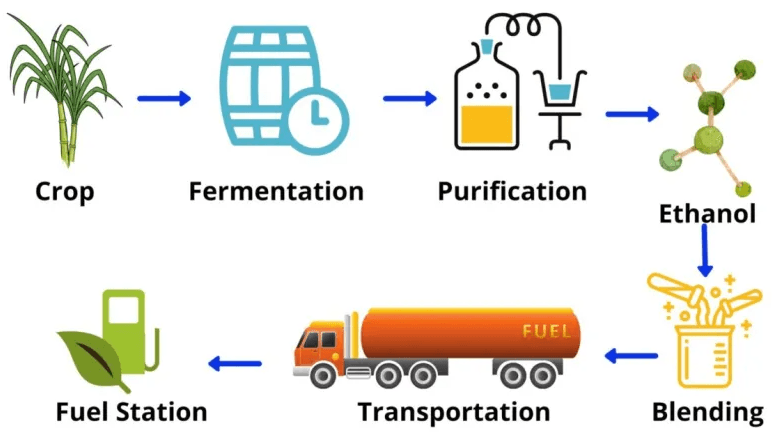
Illustration for India Ethanol Blended Petrol Expansion (Ethanol Blending)

What & Where

Definition: Petrol blended with plant-derived ethanol (sugarcane, maize, surplus grains) to cut imports and emissions

Process: Ethanol Blended Petrol (EBP) Programme launched 2003; scaling from 5 % to proposed 27 % (E27) by 2030

Geography: Major feedstock belts Uttar Pradesh, Maharashtra, Karnataka; nationwide retail rollout via OMC depots

Quick Facts for MCQs

Policy & Targets

  • Target: Interim E20 nationwide 2025, full E27 by 2030
  • Scheme: PM-JI-VAN incentivises second-gen ethanol from agri residues
  • Directive: Flex Fuel Vehicle standards notified to enable high blends

Environmental Impact

  • Emission: Ethanol cuts carbon monoxide and hydrocarbons, aiding Net Zero 2070 pledge
  • Residue use: Crop-waste ethanol curbs stubble burning, improves air quality
  • Water risk: Sugarcane-centric supply stresses aquifers in UP, Maharashtra

Economic Angle

  • Import bill: Ethanol substitution saves forex on crude purchases
  • Rural industry: New distilleries generate jobs, spur agro-based value chains
  • Finance gap: Bank reluctance delays capacity expansion in stressed sugar mills

Social Concerns

  • Food security: Rising maize diversion inflates feed and starch prices, forcing imports
  • Consumer hit: Higher blends cut mileage 6–7 % without dedicated engines
  • Adoption cost: Flex Fuel Vehicles pricier; subsidy, awareness essential

Key Data Points

FeatureData-Point
EBP launch year2003
Initial blend cap5 % ethanol
New target27 % by 2030
Crude-oil import share≈ 88 % of demand
Ethanol produced 2023~700 crore litres
Litres needed for E27> 1,200 crore litres
Water per kg sugar1,500–2,000 litres
Farmer payment last decade₹1.2 lakh crore

Related UPSC Prelims PYQs

CAPF_GAI, ESE_GS 2021PYQ 1

E-100 pilot project, launched in Pune in June 2021, is related to the production and distribution of

CAPF_GAI, ESE_GS 2024PYQ 2

Consider the following statements about ethanol:

GS-1History

3.Archaeological Survey of India Functions (Heritage Conservation)

The Hindu

What & Where

Apex government body for archaeological research, conservation and monument preservation across India.

Formed 1861 by Alexander Cunningham; under Ministry of Culture; HQ New Delhi.

Operates ~36 regional “circles” that coordinate excavations, surveys and site upkeep nationwide.

Quick Facts for MCQs

Organisational Setup

  • Hierarchy: Director General → 36 Superintending Archaeologists heading circles.
  • Wings: Epigraphy, Prehistory, Science, Excavation, Museums, Conservation ensure domain expertise.
  • Assets: Runs site museums, libraries, research institutes as subordinate offices.

Functional Mandate

  • Excavation: Undertakes systematic surveys and digs nationwide.
  • Conservation: Maintains 3,600 + monuments, incl. multiple UNESCO World Heritage Sites.
  • Regulation: Issues permits, controls archaeological practices near protected property.

Legal & Policy

  • Act: Enforces Ancient Monuments & Archaeological Sites and Remains Act 1958 for national-importance sites.
  • Notification: Declares monuments “of national importance” and frames conservation norms.

International Cooperation

  • Collaboration: Works with foreign missions and UNESCO on excavation, training and heritage management projects.

Key Data Points

FeatureData-Point
Parent ministryMinistry of Culture
Year established1861
FounderAlexander Cunningham
HeadquartersNew Delhi
Administrative headDirector General of Archaeology
Governing lawAncient Monuments & Archaeological Sites and Remains Act 1958
Protected monuments3,600 +
Regional circles~36
Key specialist wingsEpigraphy, Prehistory, Science, Excavation, Museums, Conservation

Related UPSC Prelims PYQs

CDS_GK, GS1 2004PYQ 1

The Archaeological Survey of India is an attached office of the Department/Ministry of

CDS_GK, GS1 2021PYQ 2

The location of the ancient city of Taxila (Takshshila), mentioned in ancient Indian texts, was identified by

GS-1History

4.Bengali Women Freedom Revolutionaries Profiles (Freedom Struggle Women)

Indian Express
Illustration for Bengali Women Freedom Revolutionaries Profiles (Freedom Struggle Women)

What & Where

Who: Militant and reformist Bengali women shaping India’s anti-colonial struggle, 1905-1942

What: Roles ranged from armed raids, assassinations, covert logistics to feminist writing and grassroots education

Where: Bengal Presidency (Chittagong, Calcutta, Tamluk) with actions reaching Peshawar jail, pan-Indian inspiration

Quick Facts for MCQs

Armed Actions

  • Assaults: European Club bombing, Armoury Raid, gubernatorial shooting marked direct female participation in terror tactics
  • Logistics: Arms smuggled in food baskets, fugitives sheltered, highlighting household space as safehouse
  • Martyrdom: Cyanide ingestion and bullet deaths forged symbols galvanising mass resistance

Social Reform

  • Education: Girls’ schools, literacy circles, door-to-door enrolment linked emancipation with nationalism
  • Literature: Feminist utopia in Sultana’s Dream and revolutionary memoirs broadened intellectual frontiers
  • Khadi & journals: Cloth choice and nationalist presses challenged colonial economy and orthodox norms

Gender Impact

  • Dual battle: Fought British rule and patriarchal exclusion, redefining public role of Indian women
  • Inclusivity: Revolutionaries spanned widows to university graduates, cutting across class and religion
  • Legacy: Pioneered template for later women’s movements, anchoring gender justice within nation-building

Key Data Points

FeatureData-Point
Pritilata WaddedarEuropean Club attack, Chittagong, 1932; cyanide suicide
Kalpana DattaChittagong Armoury Raid team, 1930; Surya Sen associate
Bina DasGovernor Stanley Jackson assassination attempt, Calcutta Univ, 1932
Begum RokeyaSultana’s Dream 1905; Sakhawat Memorial Girls’ School founder
Kamala Das GuptaJugantar courier; memoir ‘Rakter Akshar’ on underground networks
Nanibala DeviTortured in Peshawar lock-up; refused to testify
Labanya P. GhoshMukti journal writer; rural women reading circles
Matangini HazraMartyred leading Quit India march, Tamluk, 1942

Related UPSC Prelims PYQs

GS1, NDA_GAT 2001PYQ 1

Who among the following organised the famous Chittagong armoury raid?

GS1, NDA_GAT 2024PYQ 2

Freedom Fighter Kanaklata Barua sacrificed her life while participating in

GS-1Mapping

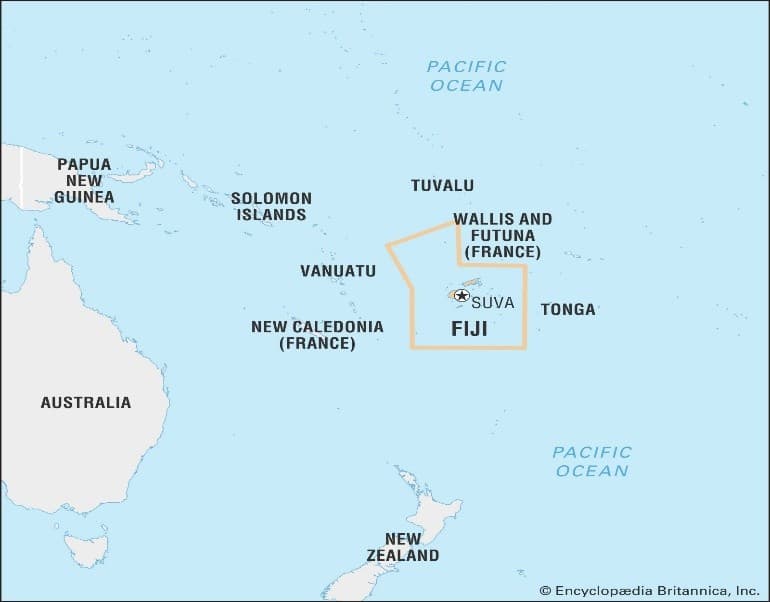
5.Fiji Pacific Island Nation (Pacific Island Nation)

News on Air
Illustration for Fiji Pacific Island Nation (Pacific Island Nation)

What & Where

Sovereign island nation in Melanesia, Oceania; officially the Republic of Fiji.

Location: South Pacific Ocean, ~2 000 km northeast of New Zealand within the Koro Sea archipelago.

Capital: Suva on Viti Levu; archipelago hosts 330 + islands, 110 permanently inhabited.

Quick Facts for MCQs

Physical Geography

  • Volcanic origin; notable geothermal zones on Vanua Levu and Taveuni.
  • Koro Sea encloses tropical maritime archipelago, enabling rich marine biodiversity.

Demography

  • Population 87 % concentrated on Viti Levu and Vanua Levu.
  • Ethnicity Austronesian-Melanesian with observable Polynesian cultural strands.

India Ties

  • Visit: PM Sitiveni Rabuka on 3-day India tour, first in current tenure (2023).
  • Aim: deepen bilateral cooperation and people-to-people engagement across Pacific-India corridor.

Key Data Points

FeatureData-Point
Official nameRepublic of Fiji
RegionMelanesia, South Pacific
Capital citySuva
Total islands~330 (+500 islets)
Permanently inhabited~110 islands
Major islandsViti Levu & Vanua Levu
Population on majors87 %
Surrounding seaKoro Sea (Pacific)
Geological originVolcanic; active on Vanua Levu & Taveuni
CurrencyFijian Dollar (FJD)
GS-3Environment

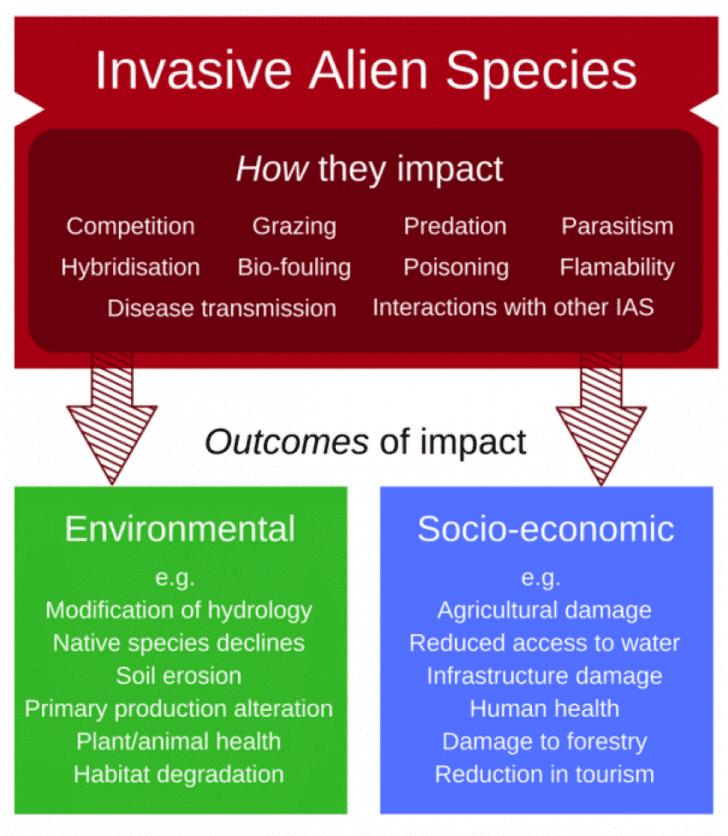
6.India Invasive Alien Species Costs (Biological Invasions)

The Hindu
Illustration for India Invasive Alien Species Costs (Biological Invasions)

What & Where

Definition: non-native species whose introduction & spread threaten biodiversity, ecosystem services or human well-being (CBD, Indian law)

Key Indian invaders: Lantana camara, Parthenium hysterophorus, Prosopis juliflora, Water hyacinth overrunning forests, rangelands, wetlands

Hotspots: Bandipur, Mudumalai, irrigation canals, fisheries reservoirs across central-south India

Quick Facts for MCQs

Economic Angle

  • Underreporting skews budgets hindering development prioritisation and SDG alignment
  • Agriculture loses yield to weed competition increasing input costs for herbicides labour
  • Hidden drainage on forestry tourism fisheries sectors remains largely unquantified

Ecological Impact

  • Biodiversity displacement via aggressive growth and absence of local predators
  • Soil chemistry and hydrology alteration degrading habitat quality for endemic species
  • Increased wildfire probability from dense, dry lantana thickets

Legal & Policy

  • CBD Article 8(h) obliges contracting parties including India to prevent control eradicate IAS
  • NBA issues guidelines on import screening, public awareness, rapid response mechanisms
  • NBAP earmarks dedicated action plan on early detection, risk assessment, restoration

Management Measures

  • Field actions: manual uprooting, controlled grazing, biological control insects, replacement planting with natives
  • Marine sector: ballast water exchange, port surveillance mandated post IMO convention ratification
  • State forest departments running lantana removal drives in Western Ghats and central India

Key Data Points

FeatureData-Point
Global invasive cost (1960-2020)> US $2.2 trillion
India’s management cost underreporting1.16 billion % (highest worldwide)
Costliest taxon globallyNon-native plants – US $926 billion
Next costliest groupsArthropods US $830 bn; Mammals US $263 bn
Region with highest recorded costEurope US $1.5 trillion
Combustible invader raising fire riskLantana camara
Health-impact weedParthenium hysterophorus (allergens)
Key convention addressing marine IASBallast Water Management Convention 2004
National coordinating bodyNational Biodiversity Authority (NBA)
Core national strategy docNational Biodiversity Action Plan 2008

Related UPSC Prelims PYQs

GEO_GS, GS1 2025PYQ 1

Which one of the following is an example of endemic plant species of India?

GEO_GS, GS1 2020PYQ 2

If a particular plant species is placed under Schedule VI of The Wildlife Protection Act, 1972, what is the implication?

GS-3Species

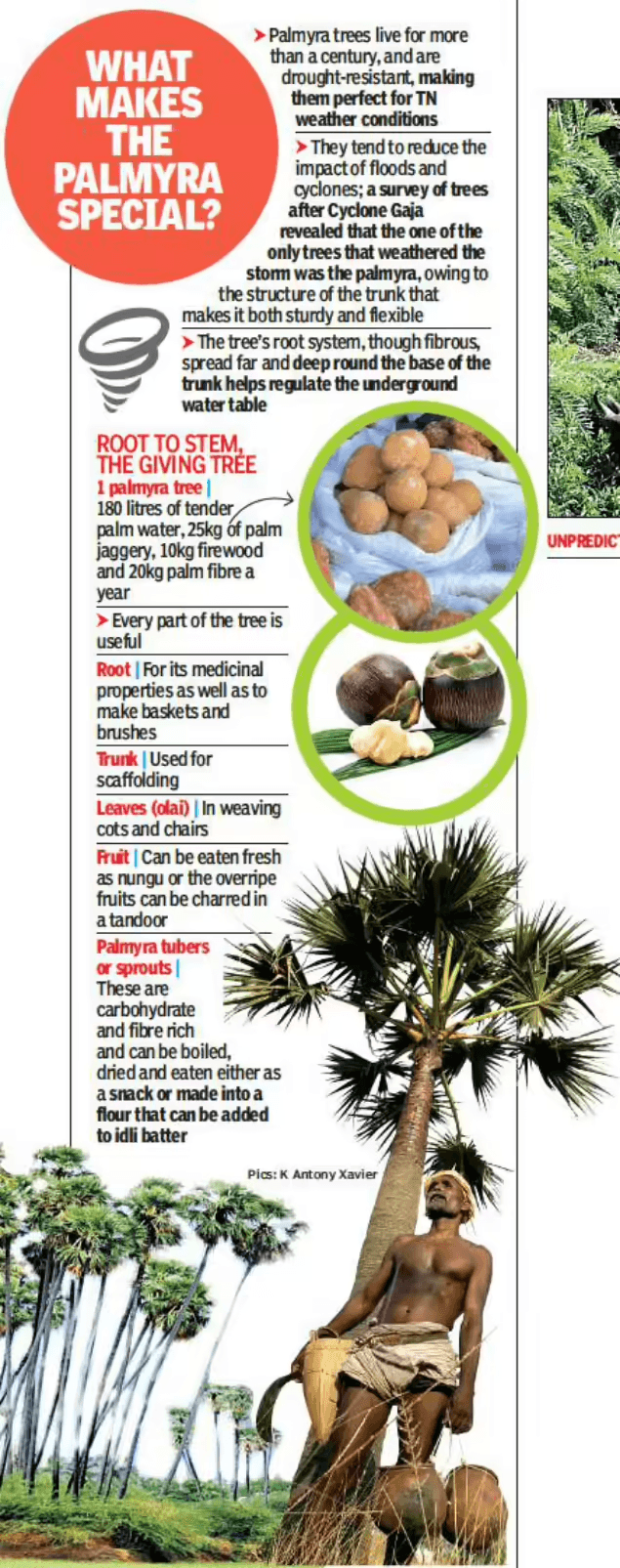
7.Palmyra Palm Ecological Significance (Indigenous Palm Tree)

Down to Earth
Illustration for Palmyra Palm Ecological Significance (Indigenous Palm Tree)

What & Where

Drought-resistant Palmyra palm (Borassus flabellifer) indigenous to South & Southeast Asia

Indian range: Odisha, Andhra Pradesh, West Bengal, Tamil Nadu; State Tree of Tamil Nadu

2025: Odisha restricts felling citing ecological, conflict-mitigation and livelihood benefits

Quick Facts for MCQs

Ecological Role

  • Fruits sustain elephants during lean season, easing human-elephant conflict
  • Height acts natural lightning conductor, lowering monsoon fatalities
  • Roots recharge groundwater, give drought resilience, curb coastal soil erosion

Cultural Significance

  • Manuscripts on palm leaves preserved classical Tamil literature for centuries
  • Tree revered in Tamil culture as Karpaga Vruksham, celestial wish-fulfilling symbol
  • Traditional beverages and sweeteners integral to regional diets and rituals

Livelihood & Products

  • Kernel nungu consumed as mineral-rich summer coolant
  • Palm sugar, karuppatti jaggery, padaneer, toddy offer healthier alternatives to refined products
  • Leaves supply roofing, mats, handicrafts; timber used for construction and fuel

Policy Action

  • Odisha restricts palm felling recognising ecological and social services
  • Measure conserves corridor palms essential for elephant diet and lightning safety
  • Action aids coastal resilience and sustains rural livelihoods

Key Data Points

FeatureData-Point
Scientific nameBorassus flabellifer
Native regionSouth & Southeast Asia
Indian strongholdsOdisha, AP, WB, TN
State tree ofTamil Nadu
Fruit seasonJuly–August
Tamil epithetKarpaga Vruksham
Key productsNungu, palm sugar, toddy, padaneer
Ecological servicesElephant fodder, lightning conductor, groundwater recharge
2025 policyOdisha bans indiscriminate felling

Related UPSC Prelims PYQs

NDA_GAT 2022PYQ 1

A person had visited a region in India and found trees, such as Khair, Neem, Khejri and Palas. Which one of the following regions is she/he expected to have visited?

GS-3S&T

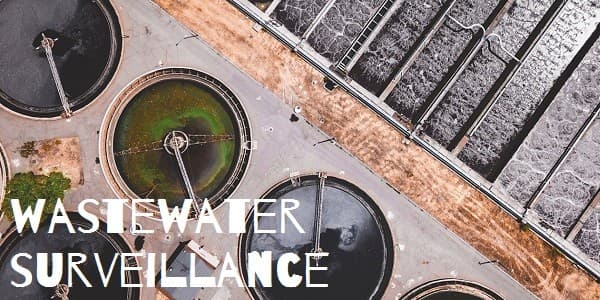
8.ICMR Wastewater Surveillance Expansion (Wastewater Epidemiology)

The Hindu
Illustration for ICMR Wastewater Surveillance Expansion (Wastewater Epidemiology)

What & Where

Wastewater-Based Epidemiology tracks human-shed pathogens in sewage before treatment

ICMR expanding surveillance from 5 to 50 Indian cities inside six months

Network will monitor 10 viruses covering respiratory, enteric and neurological diseases

Quick Facts for MCQs

Health Objectives

  • Early-warning supports timely vaccination drives and containment measures
  • Monitoring emerging and re-emerging pathogens boosts epidemic preparedness
  • Community-level insight gathered cost-effectively and non-invasively

Technical Process

  • Shedding phase: urine, stool, washwater release viral particles into sewer
  • Sampling phase: composite sewage collected pre-treatment for representativeness
  • Lab phase: RT-PCR detects RNA or DNA fragments, enabling trend modelling

Coverage & Scale

  • Pilot grid operating in 5 urban centres
  • Scale-up aims for 50 cities within six months under ICMR coordination
  • National surveillance grid expected to strengthen pandemic prevention capacity

Key Data Points

FeatureData-Point
Implementing agencyIndian Council of Medical Research
Surveillance methodWastewater-Based Epidemiology
Present city coverage5 cities
Planned city coverage50 cities
Expansion timelineNext 6 months
Total viruses targeted10
Viruses already trackedSARS-CoV-2, Polio
New example virusAvian Influenza Virus
Data turnaroundInfection trends visible in 5–7 days
GS-3S&T

9.ISRO Lunar Module Launch Vehicle (Heavy-Lift Rocket)

Indian Express
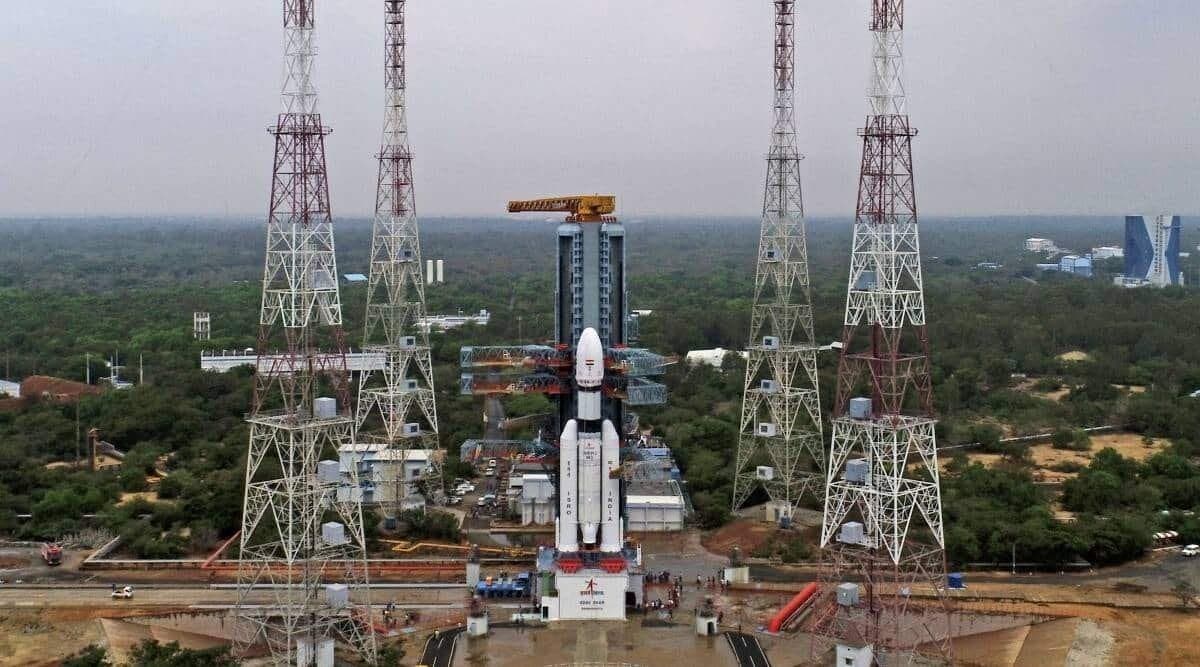
Illustration for ISRO Lunar Module Launch Vehicle (Heavy-Lift Rocket)

What & Where

LMLV: ISRO’s forthcoming heavy-lift rocket, intended for lunar & deep-space missions.

Geography: Designed, integrated and to be launched from India’s Satish Dhawan Space Centre, Sriharikota.

Key process: Uses advanced cryogenic + semi-cryogenic stages to loft 27 t to Moon, 80 t to Low-Earth Orbit.

Quick Facts for MCQs

Tech & Specs

  • Thrust: Largest ever Indian engines under development for LMLV core & upper stages.
  • Structure: Multi-stage configuration optimised for high-energy trans-lunar injection.
  • Reusability study: ISRO exploring partial recovery to cut mission costs.

Launch Vehicle Evolution

  • Sounding-rockets era: Nike Apache launch, Thumba 1963 initiated atmospheric research.
  • Incremental upgrade path: SLV-3 → ASLV → PSLV → GSLV → LVM-3 → projected LMLV.
  • Cryogenic milestone: Indigenous CE-7.5 engine success pivotal for heavier classes.

Human Spaceflight Goals

  • Gaganyaan: Precursor crewed LEO mission targeted before 2025 to validate life-support tech.
  • Roadmap: LMLV to ferry integrated lunar lander & crew module by 2040.
  • Self-reliance aim: Reduce dependence on foreign heavy-lift services for exploration.

Key Data Points

FeatureData-Point
AgencyISRO
Planned readiness2035
Payload to Moon≈ 27 tonnes
Payload to LEO (200–2 000 km)≈ 80 tonnes
Primary objectiveCrewed lunar mission by 2040
Propulsion mixCryogenic & semi-cryogenic
Present heaviest Indian rocketLVM-3 (≈4 t to GTO)
First Indian orbital launcherSLV-3, 1980
PSLV hallmark missionsChandrayaan-1 (2008), Mangalyaan (2013)
Cryogenic tech debutGSLV series, post-1990s US denial

Related UPSC Prelims PYQs

GS1 2018PYQ 1

भारत के उपग्रह प्रक्षेपित करने वाले वाहनों के संदर्भ में, निम्नलिखित कथनों पर विचार कीजिए :

GS-3S&T

10.Gaganyaan Parachute Air Drop Test (Crew Module Recovery)

IT

What & Where

Integrated Air Drop Test-01: first full-chain parachute recovery demo for Gaganyaan crew module.

Dummy 5-tonne capsule air-dropped from Indian Air Force Chinook at test site over Indian airspace.

Developed/led by ISRO; recovery by Indian Navy & Coast Guard post-splashdown.

Quick Facts for MCQs

Tech & Schemes

  • Redundancy built-in; safe landing assured with loss of one main chute.
  • Sequenced deployment: drogue → pilot → main; stabilises, slows, then lands module.

Mission Timeline

  • IADT-01 precedes TV-D2 abort test and first uncrewed G1 orbital flight.
  • Successful test a prerequisite for human-rating of Gaganyaan systems.

Institutional Roles

  • ISRO: design, integration, mission planning.
  • IAF: aerial lift & drop; Navy/Coast Guard: post-splashdown recovery ops.

Key Data Points

FeatureData-Point
Test nameIntegrated Air Drop Test (IADT-01)
Mission linkedGaganyaan human-spaceflight programme
Capsule mass≈ 5 tonnes (dummy crew module)
Lift platformIAF CH-47F Chinook helicopter
Primary aimValidate end-to-end parachute sequencing & redundancy
Drogue chutes2 conical units; first to deploy
Pilot chutesSmall pair; extract main canopies
Main chutes3 large canopies; safe descent even if 1 fails
Splashdown mediumWater body; speed reduced to survivable limit
Next milestonesTest Vehicle-D2 (TV-D2), uncrewed G1 mission
Targeted crew flightAround 2027 (tentative)
Lead agencyISRO Vikram Sarabhai Space Centre (parachute system design)

Related UPSC Prelims PYQs

CDS_GK 2022PYQ 1

India's maiden human space mission will be launched in 2023. What is its name?

CDS_GK 2024PYQ 2

भारत का ‘मिशन शक्ति’ (DRDO) निम्नलिखित में से किससे संबंधित है?

GS-3S&TQuick Bite

11.Pseudomonas Aeruginosa Bistable Gene Expression (Bacterial Pathogen)

The Hindu

What & Where

Bacterium; Pseudomonas aeruginosa is a Gram-negative, aerobic rod found in soil, freshwater and hospital equipment

Process; Shows bistable glpD expression enabling on-off metabolic states passed epigenetically without DNA change

Geography; Prolific in Indian ICUs, plastic surfaces, burn wards and contact-lens solutions

Quick Facts for MCQs

Pathogenic Profile

  • Hosts; Infects both immunocompetent and immunocompromised causing skin, respiratory, ear, eye and bone infections
  • Environment; Feeds on plastic and survives disinfectants, soil, water, contact lenses
  • Severity; Leading agent in fatal burn sepsis and keratitis

Antibiotic Resistance

  • Intrinsic; Low-permeability membrane plus efflux pumps block many antimicrobials
  • Acquired; Horizontal genes and mutations yield multidrug and carbapenem resistance
  • Options; Aminoglycosides like tobramycin and amikacin remain useful

Genetic Insights

  • Bistability; Identical cells divide into glpD-on and glpD-off subpopulations
  • Advantage; glpD-on cells show higher infectivity while off cells provide survival diversity
  • Heritability; ON-OFF pattern transmitted to progeny epigenetically

Hospital Burden

  • Incidence; Dominates Indian ICU pathogens causing one-third hospital infections
  • Devices; Robust colonisation of ventilators, catheters and dialysis lines increases morbidity

Key Data Points

FeatureData-Point
Gene with bistabilityglpD (glycerol utilisation)
Expression natureEpigenetic inheritance, no DNA mutation
HAI share in India≈30 % of nosocomial cases
Key hospital diseasesVentilator pneumonia, catheter UTI, bloodstream infection
Community diseasesFolliculitis, osteomyelitis, otitis externa, pneumonia
Intrinsic resistance toolsTough outer membrane, efflux pumps
Acquired resistance sourcesMutations, plasmids, transposons, integrons
Still-effective drugsTobramycin, Amikacin
GS-2Misc

12.UNHCR Mandate and Refugee Framework (UN Refugee Agency)

The Hindu

What & Where

UNHCR — UN agency (est. 1950, Geneva) supervising refugee protection in 137 countries.

Voluntary repatriation of Sri Lankan Tamil refugees from India to Sri Lanka now paused after returnee arrests.

Governing law: 1951 Refugee Convention + 1967 Protocol, anchoring global refugee rights and non-refoulement.

Quick Facts for MCQs

Legal & Policy

  • Convention grants refugees rights to housing, work, education, legal aid; obliges obedience to host laws.
  • Excludes perpetrators of war crimes or serious crimes from refugee protections.
  • UNHCR assists states in drafting compliant refugee frameworks.

India Angle

  • Manages refugees under general immigration law, collaborates with UNHCR on humanitarian grounds despite non-signatory status.
  • Continues hosting sizeable Sri Lankan Tamil population in Tamil Nadu camps.
  • Suspension highlights security-humanitarian balance in Indo-Sri Lankan context.

Protection Mechanisms

  • Durable solutions triad: asylum in host, local integration, safe repatriation or third-country resettlement.
  • Voluntary repatriation requires safety assurances; arrests breached conditions, triggering pause.
  • Non-refoulement bans forced return to territories where life or freedom threatened.

Key Data Points

FeatureData-Point
UNHCR founding year1950
Parent bodyUN General Assembly
HeadquartersGeneva, Switzerland
Field presence~137 countries
Core legal texts1951 Convention, 1967 Protocol
Key doctrineNon-refoulement
Refugee definition basisFear of persecution (race, religion, nationality, social group, political opinion)
India party to Convention?No
Primary Indian refugee cohortsSri Lankan Tamils, Tibetans, Afghans, Rohingyas
Latest UNHCR action (Aug 2025)Suspended Sri Lankan Tamil repatriation
GS-3Security

13.DRDO Integrated Air Defence System (Air Defence System)

The Print
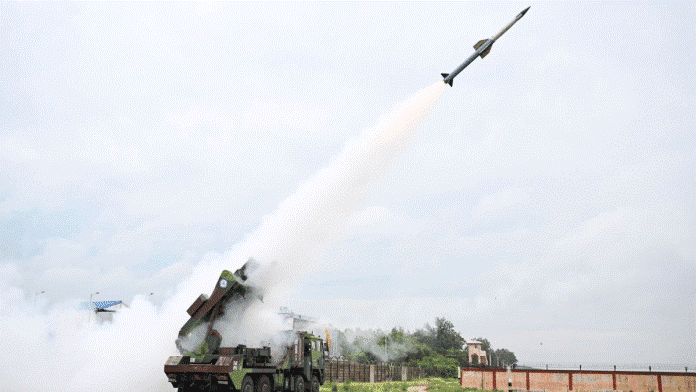
Illustration for DRDO Integrated Air Defence System (Air Defence System)

What & Where

Definition: Indigenous, multi-layered Integrated Air Defence Weapon System (IADWS) by DRDO under Project Sudarshan Chakra

Components: QRSAM, VSHORADS, high-power laser DEW networked via Centralised Command & Control (C2C2)

Geography: Maiden flight-tests conducted over Bay of Bengal off Odisha coast

Quick Facts for MCQs

Tech & Schemes

  • Network-centric architecture enables simultaneous multi-target tracking and engagement
  • Indigenous radars, sensors, secure datalinks minimise import dependence
  • DEW inclusion offers low-cost per shot against small UAVs

Security Dimension

  • Area defence shield for airbases, radar sites, command centres, nuclear & space assets
  • Enhances layered deterrence against saturation drone or missile attacks
  • Complements existing Akash, S-400, Spyder batteries in IAF inventory

Operational Layers

  • QRSAM intercepts high-speed aircraft and cruise missiles before 30 km line
  • VSHORADS neutralises low-flying helis or UAVs breaching inner bubble
  • DEW provides last-ditch, silent kill against micro-drones at close quarters

Key Data Points

FeatureData-Point
Developing agencyDRDO
Project codenameSudarshan Chakra
System layeringOuter QRSAM, Middle VSHORADS, Inner DEW
QRSAM range/altitude25-30 km / ~10 km
VSHORADS range/altitude≤6 km / ~4 km
DEW natureHigh-power laser, unlimited shots
C2 centre roleFuses radar & EO feeds for real-time air picture
Threat spectrumFast jets, cruise missiles, drones, swarm UAVs, loitering munitions
MobilityTruck-mounted, rapid deployment in forward areas
First test siteIntegrated Test Range, Odisha

Related UPSC Prelims PYQs

GS1 2003PYQ 1

With reference to Indian defence, which one of the following statements is correct?

GS1 2018PYQ 2

What is "Terminal High Altitude Area Defense (THAAD)", sometimes seen in the news?

Ready to practice?

Test your knowledge with our UPSC test series.

Start Free Trial