UPSC Current Affairs

15 topicsGS-1: 4GS-2: 3GS-3: 8
0/15 done
GS-3Editorial

1.Formalisation for Manufacturing Productivity (Manufacturing Labour)

The Hindu

What & Where

Concept Contractualisation within formal manufacturing used mainly to cut wage bills

Types Contract labour vs regular labour; contract-labour-intensive (CLI) vs regular-labour-intensive (RLI) firms

Geography India’s formal manufacturing sector analysed through ASI data 1999–2019

Quick Facts for MCQs

Legal & Policy

  • Code Industrial Relations Code 2020 awaiting state adoption; fixed-term hiring reform stalled
  • Misuse Contracting circumvents Industrial Disputes Act protections on retrenchment and layoffs
  • Enforcement Weak inspections, especially in MSMEs, allow unchecked contractualisation

Productivity Impact

  • Finding CLI firms record 31% lower value added per worker
  • Micro-small labour-intensive CLI units show 42% productivity deficit versus RLI peers
  • Capital/high-skill CLI segment (≈20% firms) gains only 5–20% productivity

Social Concerns

  • Wage Contract workers earn 14.47–31% less than regular counterparts
  • Security Limited access to EPF, ESI, maternity benefits heightens precarity
  • Skilling High turnover deters firms from investing in training and innovation

Key Data Points

FeatureData-Point
Contract labour share 1999-200020%
Contract labour share 2022-2340.7%
Wage gap contract vs regular (overall)14.47% lower
Wage gap in large enterprises31% lower
Employer labour-cost saving via contracts24%
Productivity gap CLI vs RLI firms31% lower
Productivity gap small CLI units42% lower
PMRPY incentive window2016 – 2022
GS-3Economy

2.Parametric Insurance for Disaster Losses (Parametric Insurance)

The Hindu

What & Where

Parametric insurance: predefined hazard index triggers automatic payout; no post-disaster claim survey

Common triggers: rainfall, wind, temperature, seismic intensity; measured by satellites, gauges

India pilots: water-balance drought covers (Rajasthan & UP); multi-year landslide cover (Nagaland)

Quick Facts for MCQs

Risk Statistics

  • Frequency: Half of 764 recorded disasters occurred after 2000
  • Heat-GDP: RBI estimates 4.5 % GDP exposure to heat by 2030
  • Precipitation: Heavy rainfall up 85 %, drought extent up 57 %

Insurance Mechanics

  • Trigger: Index threshold like rainfall or wind speed releases payout automatically
  • Speed: Funds reach beneficiaries within days, bypassing loss surveys
  • Basis-risk: Weather stations and satellites improve index accuracy versus losses

Integration Strategy

  • SDRF-cover: States urged to buy multi-hazard policies under disaster funds
  • Sector-scale: Planned expansion to agriculture, MSME, energy, transport
  • Microfinance: Loans bundled with parametric cover shield smallholder women farmers

Key Data Points

FeatureData-Point
Himachal flash-floods (2025)>20 incidents
Weather-disaster loss 2019-23US$56 bn
Major disasters since 1900764 events
Share after 2000≈50 %
Drought-prone area rise+57 % since 1997
Heavy-rain events spike+85 % since 2012
GDP at climate risk 2030up to 4.5 %
Asia-Pacific loss share≈25 %, highest S Asia
First state parametric coverNagaland

Related UPSC Prelims PYQs

GS1 2016PYQ 1

With reference to ‘Pradhan Mantri Fasal Bima Yojana’, consider the following statements:

GS-1HistoryQuick Bite

3.Paithani Sarees Cultural Heritage (GI Saree)

All India Radio
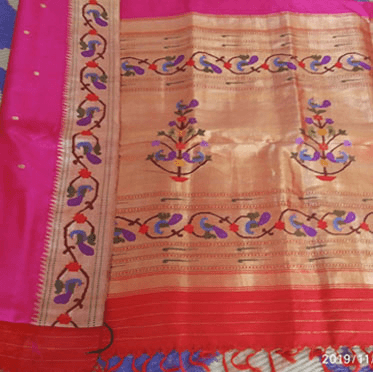
Illustration for Paithani Sarees Cultural Heritage (GI Saree)

What & Where

Paithani: hand-woven silk Mahavastra of Maharashtra with opulent gold/silver zari pallus.

Originated in Paithan (Chhatrapati Sambhajinagar) circa 6th century B.C.; 2000-year continuous weaving legacy.

Production rooted along the Godavari-belt town of Paithan.

Quick Facts for MCQs

Historical Timeline

  • Satavahana ports enabled Roman silk trade.
  • Medieval patronage: Vakataka → Rashtrakuta → Tughlaq → Mughal → Maratha courts.
  • 2025: Prime Minister spotlight revived national attention.

Craft Characteristics

  • Entirely hand-woven; rich zari interlaced on vibrant pallus.
  • Motifs mirror Ajanta–Ellora cave art and Hindu mythology.
  • Complex design raises production time and price.

GI & Recognition

  • Registered as Paithani Sarees & Fabrics under Geographical Indications Act, 2010.
  • GI shields authentic weavers from cheap power-loom imitations.
  • State handloom programmes market Paithani for domestic and export sales.

Related Sarees

  • Karvathi Kati: Vidarbha-made Tussar with stepped temple borders.
  • Patola: Gujarat double-ikat luxury weave; noted for geometric precision.
  • Chendamangalam: Kerala cotton saree famed for plain body, minimal stripes.

Key Data Points

FeatureData-Point
Origin placePaithan, Chhatrapati Sambhajinagar, Maharashtra
Earliest referencec. 6th century B.C. (Satavahana era)
MaterialMulberry silk with gold/silver zari
Signature motifsPeacock, lotus; Ajanta–Ellora inspired
Local title“Mahavastra” of Maharashtra
GI tag year2010
Historical exportSilk shipped from Paithan to Roman Empire
Patron dynastiesSatavahana, Vakataka, Rashtrakuta, Tughlaq, Mughal, Maratha
Other Maharashtra GI sareeKarvathi Kati Tussar Silk
Karvathi Kati hallmarkTemple-like (Vimana) borders
Mentioned comparator sareesPatola (Gujarat); Chendamangalam (Kerala)

Related UPSC Prelims PYQs

GS1 2018PYQ 1

Consider the following pairs:

GS-1Environment

4.Tsunami Formation and Impacts (Tsunami Mechanism)

NDTV
Illustration for Tsunami Formation and Impacts (Tsunami Mechanism)

What & Where

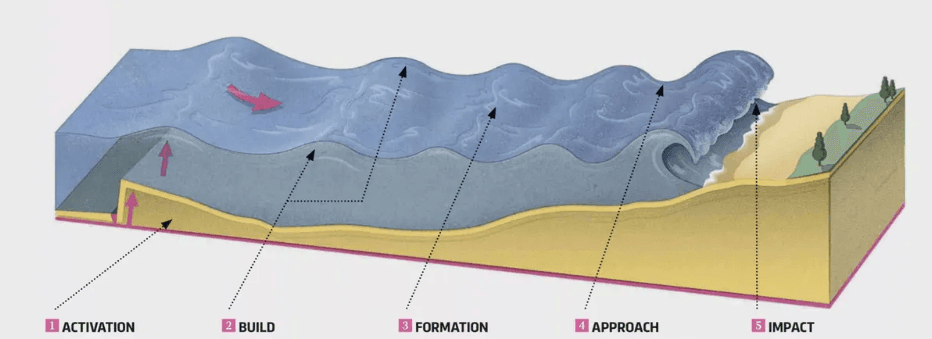
Tsunami; series of long‐wavelength sea waves from sudden seafloor displacement like earthquakes, volcanoes, landslides

Formation; deep-ocean speed 800-900 km/h, height <0.5 m; amplifies near shore due to energy compression

Geography; recent 8.8 M quake off Russia’s Kamchatka Peninsula triggered Pacific-wide alerts up to Hawaii, New Zealand

Quick Facts for MCQs

Wave Dynamics

  • Speed; deep-ocean jet-like, slows near coast causing wave height surge
  • Multiplicity; waves arrive for hours, first seldom most destructive
  • Drawback; sudden shoreline recession alerts upcoming wave

Impacts

  • Inundation; can penetrate kilometres inland destroying buildings, vegetation, vehicles
  • Secondary; hazards include fires, chemical leaks, landslides
  • Saltwater; intrusion devastates croplands and coastal ecosystems

Early Warning Tech

  • Seismic; networks identify tsunamigenic quakes near real time
  • DART; buoys measure pressure changes signalling deep-sea wave passage
  • Tide; gauges confirm height enabling graded alerts

Indian Framework

  • INCOIS; centre operational 24×7 for Indian Ocean tsunamis
  • Alerts; disseminated to NDMA, states, media via SMS, satellite, sirens
  • Mandate; centre also services 25 Indian Ocean nations under IOC-UNESCO

Key Data Points

FeatureData-Point
Quake magnitude8.8 Mw
EpicentreKamchatka Peninsula
Deep-ocean wave speed800–900 km/h
Deep-ocean wave height30–50 cm
Typical wavelengthUp to 200 km
Potential coastal height>10 m
Natural precursorDrawback sea recession
Indian warning agencyINCOIS
Core sensor typeDART BPR buoy
GS-1Mapping

5.Mount Cilo Glacial Retreat (Turkish Peak)

Times of India

What & Where

Mount Cilo glaciers, East Taurus Range, Yüksekova-Hakkâri on Iraq border; Turkey’s 2nd-highest peak.

Summit Reşko rises 4,135 m within 30-km Cilo-Sat massif, made a National Park in 2020.

Nearly 50 % continuous ice cover lost since 1980s due to warming and heatwaves.

Quick Facts for MCQs

Physical Geography

  • Second-highest Turkish peak; rugged limestone ridges, deep gorges, glacial valleys.
  • Forms western arm of 30-km Cilo-Sat massif bordering Iraq.
  • Cilo-Sat Mountains designated National Park in 2020.

Environmental Impact

  • Glacier retreat ~50 % since 1980s alters hydrology, intensifies torrents & waterfalls.
  • Visible ice blocks calve into streams; snowfields recede upslope.
  • Loss threatens downstream water security in semi-arid Anatolia.

Climate Extremes

  • Southeastern Turkey faces frequent heatwaves; Silopi hit 50.5 °C record July 2025.
  • UN projections: regional warming 5–6 °C, rainfall drop 30 % by 2100.
  • Heat extremes accelerating Cilo glacier melt beyond historical averages.

Key Data Points

FeatureData-Point
Summit elevation4,135 m
Local districtYüksekova, Hakkâri
Nearby peakSuppa Durek 4,116 m
Massif length30 km
NP notification year2020
Glacier ice loss~50 % in 40 yrs
Silopi heat record50.5 °C (Jul 2025)
2100 rainfall change‑30 % (UN)
GS-3Environment

6.Kaziranga Tiger Reserve Density Milestone (National Park)

The Hindu

What & Where

Definition Tiger density = tigers per 100 km²; proxy for predator viability & ecosystem balance

Geography Kaziranga Tiger Reserve spans Golaghat–Nagaon districts, Assam; along Brahmaputra floodplains, Eastern Himalayan hotspot edge

Standing Ranks 3rd in India (18.65 tigers/100 km²), after Bandipur & Corbett in 2024 assessment

Quick Facts for MCQs

Ranking & Metrics

  • Density-leader Bandipur marginally ahead of Corbett; both ≈ 19.8 tigers/100 km²
  • Kaziranga contributes ~12 % of India’s high-density tiger landscape
  • Density calculated on camera-trap based Phase-IV monitoring

Site History

  • Origin 1905 reserve to protect declining rhinos; gazetted park 1974, WHS 1985
  • Upgraded to Tiger Reserve 2006 under Project Tiger expansion
  • Named after Karbi word “Kajir-a-rang” meaning “village of Kajir”

Habitat & Flora

  • Landscape tall elephant grass, marshes, riverine & semi-evergreen forests shaped by annual Brahmaputra floods
  • Key trees Elephant Apple, Cotton Tree (Semul), Indian Gooseberry support frugivores
  • Seasonal inundation creates nutrient-rich grasslands sustaining mega-herbivores

Key Fauna

  • Megafauna tigers, Asian elephants, wild buffalo, swamp deer, Hoolock gibbon coexist
  • Avifauna supports greater adjutant, black-necked stork, winter migratory waterfowl
  • Kaziranga harbours India’s highest one-horned rhino density, aiding IUCN down-listing

Key Data Points

FeatureData-Point
2024 top densityBandipur 19.83 > Corbett 19.56 > Kaziranga 18.65
Kaziranga tiger count 2024148 individuals
Kaziranga area surveyed1,307.49 km²
Increase since 2022+44 tigers (104 → 148)
Biswanath Division addition27 tigers newly recorded
UNESCO World Heritage tag1985
Tiger Reserve notification2006
Establishment proposal1905 by Mary Curzon
Dominant vegetation typesAlluvial grassland, savanna woodland, moist deciduous, semi-evergreen
Flagship rhino population>2,200 Indian one-horned rhinoceros

Related UPSC Prelims PYQs

CDS_GK 2023PYQ 1

Cheetahs, brought from Namibia, were introduced in India to which one of the following National Parks?

CDS_GK 2021PYQ 2

In the year 2020 which one of the following tiger reserves of India was declared by UNESCO as a Biosphere Reserve?

GS-3Environment

7.International Mangrove Conservation Day (Mangrove Conservation)

The Hindu

What & Where

Mangroves = halophytic forests in tropical–sub-tropical intertidal zones; India: 4,992 km² (0.15 % area), max in West Bengal.

Fishbone channel technique = central backbone + angled feeders restoring tidal flow before seedling planting on degraded mudflats.

Sundarbans = world’s largest mangrove block, Ganga-Brahmaputra-Meghna delta; UNESCO Biosphere & Ramsar wetland.

Quick Facts for MCQs

Ecological Services

  • Carbon-sink: 1 ha mangrove offsets emissions of ≈2,650 cars annually, stores carbon millennia in anaerobic soils.
  • Bio-shield: root webs curb erosion, reduce flood depth 15–20 %, crucial for coastal resilience.
  • Biodiversity: 5,746 Indian species across 21 phyla; nurseries underpin one-third Southeast-Asian fish catch.

Threats & Drivers

  • Conversion: aquaculture, rice, oil-palm plantations dominate global loss (SOWM 2024).
  • Pollution: oil spills, industrial effluents, plastics impede regeneration; Niger Delta cited example.
  • Climate-risk: sea-level rise, cyclones; IUCN says 33 % mangrove ecosystems threatened.

Tech & Schemes

  • Global platforms: Mangrove Alliance for Climate, Mangroves for the Future, Blue Carbon Initiative mobilise finance.
  • India: MISHTI, SAIME, CAMPA funds, CRZ rules protect and expand cover.
  • TN practice: Fishbone channels under Green Tamil Nadu Mission; community Vana Samrakshana Samitis participate.

Sundarbans

  • Status: Biosphere Reserve shelters tigers, dolphins, crocodiles; pivotal cyclone buffer for Bay of Bengal coasts.
  • Pressures: rapid erosion, salinity, repeated cyclones (e.g., Amphan 2020) stressing livelihoods.
  • Response: Indo-Bangla climate-smart villages, enlarged plantations, Joint Mangrove Management initiatives.

Key Data Points

FeatureData-Point
Intl. Mangrove Day26 July
UNESCO adoption year2015
Global cover loss rate3–5 × faster than other forests
Cover change since 1985≈ 50 % decline
Ecosystems at collapse risk50 % remaining stands
Avg. carbon stored394 t C / ha
Max. carbon per UNESCO3,754 t C / ha
Wave energy cut5–35 %; >70 % extreme storms
India’s mangrove area4,992 km²
Largest Indian state shareWest Bengal
Conversion driversAquaculture 26 %, rice/oil-palm 43 %

Related UPSC Prelims PYQs

GEO_GS, GS1 2011PYQ 1

The 2004 Tsunami made people realize that mangroves can serve as a reliable safety hedge against coastal calamities. How do mangroves function as a safety hedge?

GEO_GS, GS1 2021PYQ 2

Which one among the following is NOT a characteristic feature of Mangrove?

GS-3EnvironmentQuick Bite

8.Mycorrhizal Fungi Conservation Gaps (Mycorrhizal Fungi)

Down to Earth

What & Where

Mycorrhizal fungi = symbiotic soil network with >80 % plants, boosts phosphorus uptake & carbon storage.

Two major types: AM (penetrates root cells) in crops/grasses; EcM (ensheathes roots) in oaks, pines, etc.

Hotspots: AM—Brazilian Cerrado, Southeast Asia, West Africa; EcM—Canada, Siberia, Central Europe, Western US; >90 % lie outside protected areas.

Quick Facts for MCQs

Conservation Gap

  • Protection deficit: fungal hotspots largely absent from current PA networks.
  • Many hotspots coincide with intensive farming or logging zones, heightening conservation conflicts.

Carbon & Climate

  • Fungi lock 13 Gt CO₂ annually, vital for natural climate mitigation.
  • Mycorrhizae transfer root-derived carbon into long-lived soil aggregates.

Global Initiatives

  • SPUN’s Underground Atlas offers first spatial layer for subterranean biodiversity planning.
  • FAO-run GLOBSOB to standardise soil biodiversity data for national policies.

Key Data Points

FeatureData-Point
Symbiosis coverage>80 % terrestrial plants
Annual CO₂ stored≈13 billion t (≈⅓ fossil-fuel emissions)
Hotspots outside PAs>90 %
Main AM hotspotsBrazilian Cerrado; SE Asia; West Africa
Main EcM hotspotsCanada; Siberia; Central Europe; Western US
Key nutrient aidedPhosphorus uptake
Mapping projectUnderground Atlas – SPUN
Soil-life observatoryGLOBSOB, FAO, launched COP15 CBD (Canada 2022)
GS-3S&T

9.CRIB Blood Group Discovery (Blood Group)

TN
Illustration for CRIB Blood Group Discovery (Blood Group)

What & Where

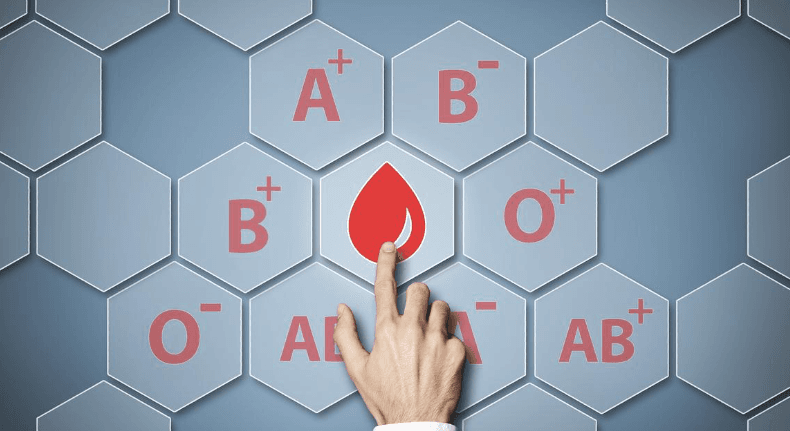
CRIB (Cromer India Bengaluru) = new red-cell antigen within Cromer (CR) blood-group system, first ever reported worldwide

Detected in a 38-year-old woman at Rotary Bangalore TTK Blood Centre, Kolar, Karnataka; characterised by IBGRL UK

Now accepted by ISBT, placing India on the global map of novel blood-group discoveries

Quick Facts for MCQs

Discovery Process

  • Screening: Pre-surgery serology showed panreactivity against all commercial panel cells
  • Family: Testing of 20 relatives failed to yield compatible donor
  • Sequencing: IBGRL molecular assays identified novel Cromer allele, designated CRIB by ISBT

Scientific Significance

  • Contribution: First India-origin antigen in Cromer series enriches global immuno-genetic database
  • Precision: Underscores value of genomic typing alongside serology in transfusion science
  • Database: Patient details entered into international rare-donor registries for future reference

Transfusion Implications

  • Compatibility: CRIB-positive recipients need antigen-negative or autologous units to prevent haemolysis
  • Registry: Case strengthens call for national frozen rare-donor panel and global sample exchange
  • Training: Promotes advanced immunohaematology capability in tertiary care centres

Key Data Points

FeatureData-Point
Antigen codeCRIB
Full formCromer India Bengaluru
Blood-group systemCromer (ISBT 21)
Carrier proteinDecay-Accelerating Factor (CD55)
Patient profile38-year-old South Indian female
Discovery siteRotary Bangalore TTK Blood Centre
Cross-match resultPanreactive; incompatible with O⁺ cells
Family matches0 of 20 relatives compatible
Confirmation labInternational Blood Group Reference Laboratory, UK
Analysis duration~10 months molecular work-up
Recognition year2024 (ISBT listing)
GS-3S&T

10.Pralay Quasi-Ballistic Missile Tests (Ballistic Missile)

Times of India
Illustration for Pralay Quasi-Ballistic Missile Tests (Ballistic Missile)

What & Where

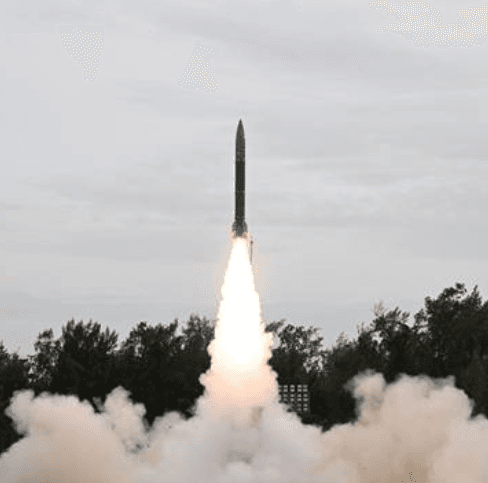
Pralay: solid-fuel, road-mobile, quasi-ballistic surface-to-surface missile for precision conventional strikes

Two user-evaluation flight tests from Dr APJ Abdul Kalam Island, Odisha, validated maximum and minimum ranges

Designed by RCI-DRDO with DRDL, ASL, BDL, BEL partners

Quick Facts for MCQs

Tech & Schemes

  • Quasi-ballistic trajectory enables unpredictable path, complicating interception
  • Composite rocket motor, state-of-art navigation deliver pinpoint accuracy within conventional strike envelope
  • Candidate asset for proposed Integrated Rocket Force structure

Security Dimension

  • Strengthens India’s theatre deterrence against adversary assets within 500 km
  • Complements BrahMos cruise missile, offers faster time-to-target for time-critical tasks
  • Enhances preparedness for potential Operation Sindoor-style contingencies along border

Testing Objectives

  • Validate maximum & minimum range performance under realistic user evaluation trials
  • Confirm subsystem reliability including guidance, control, propulsion ahead of induction
  • Collect trajectory and terminal accuracy data for production clearance

Key Data Points

FeatureData-Point
PropellantSolid fuel
Range envelope150–500 km
Payload≤1000 kg warhead (unitary/cluster)
GuidanceINS + satellite; in-flight manoeuvre
MobilityRoad-mobile transporter-launcher
Developer leadRCI-DRDO, Hyderabad
Test locationDr APJ Abdul Kalam Island, Odisha
Deterrence roleNon-nuclear high-speed tactical strikes

Related UPSC Prelims PYQs

GS1 2003PYQ 1

With reference to Indian defence, which one of the following statements is correct?

GS1 2007PYQ 2

Consider the following statements:

GS-2Editorial

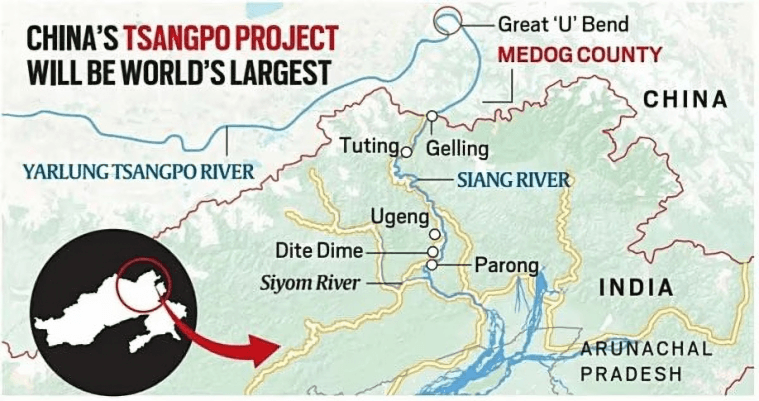
11.China’s Brahmaputra Megadam Concerns (Brahmaputra Dam)

Hindustan Times
Illustration for China’s Brahmaputra Megadam Concerns (Brahmaputra Dam)

What & Where

River Brahmaputra (Yarlung Zangbo in Tibet, Siang in Arunachal, Jamuna in Bangladesh) starts at Chemayungdung Glacier, drains into Bay of Bengal

China’s 60 GW five-cascade hydropower complex planned near Gelling, Tibet, just upstream of Indian border

India’s planned 11.2 GW Upper Siang project and two Brahmaputra-Ganga link canals form key counter-strategy

Quick Facts for MCQs

Environmental Impact

  • Flash-flood risk from sudden upstream releases threatens Siang belt agriculture and Adi tribal habitat
  • Large reservoir in high seismic zone raises landslide and water-bomb scenarios akin to Three Gorges
  • Flow regulation can erase indigenous flood-rhythm knowledge critical for biodiversity in Kaziranga and Manas parks

Security Dimension

  • Upstream control enables potential water weaponisation during border or diplomatic crises
  • Dam complements PLA infrastructure buildup along Line of Actual Control in Arunachal segment
  • Data denial since 2022 weakens Indian early-warning systems for monsoon flood surges

India’s Counter-Moves

  • Fast-track Upper Siang multipurpose dam plus basin-wide storage expansion for flood moderation
  • Execute NWDA links: Manas–Sankosh–Teesta–Ganga and Jogighopa–Teesta–Farakka to redistribute surplus east water westward
  • Sustain diplomatic outreach; seek revival of hydrological MoUs and build joint warning grids with Bhutan, Bangladesh, Myanmar

Key Data Points

FeatureData-Point
Chinese dam capacity60,000 MW
Number of cascades5
Comparative scale≈3 × Three Gorges (22.5 GW)
Project timelineAnnounced 2021; target completion 2030s
Seismic settingHimalayan convergent plate boundary
Brahmaputra length2,900 km (916 km in India)
Indian basin share34 % area but >80 % annual flow
Hydropower potential share41 % of India’s total
Major right-bank tributariesLohit, Dibang, Subansiri, Manas, Teesta
Major left-bank tributariesBurhidihing, Dikhow, Kopili
India counter-dam height≈300 m (Upper Siang)
Data-sharing statusBrahmaputra MoU lapsed Jun 2023; data halted 2022

Related UPSC Prelims PYQs

CDS_GK, GS1 2011PYQ 1

The Brahmaputra, Irrawady and Mekong rivers originate in Tibet and flow through narrow and parallel mountain ranges in their upper reaches. Of these rivers, Brahmaputra makes a "U" turn in its course to flow into India. This "U" turn is due to

CDS_GK, GS1 2025PYQ 2

चिनाब नदी पर बने बाँधों (Dams) के बारे में निम्नलिखित में से कौन-सा/कौन-से कथन सही हैं?

GS-2Infrastructure

12.BIMSTEC Ports Conclave Outcomes (BIMSTEC Ports)

PIB

What & Where

BIMSTEC Ports Conclave – ministerial forum of seven Bay-of-Bengal states; 2nd edition held Visakhapatnam, India, July 2025.

Focus on blue-economy, maritime connectivity and sustainable port-led growth; advances India’s Sagarmala and Indo-Pacific outreach.

Core geography: Bangladesh, Bhutan, India, Myanmar, Nepal, Sri Lanka, Thailand littorals of Bay of Bengal.

Quick Facts for MCQs

Infrastructure Projects

  • Kaladan KMTTP links Sittwe–Paletwa (river) & Paletwa–Zorinpui (road), skirting Siliguri Corridor chokepoint.
  • Cruise-terminal PPPs, eco-routes envisioned to brand Bay of Bengal as sustainable tourism corridor.
  • Port digitalisation and green-fuel retrofits highlighted for cost and emission cuts.

Institutional Framework

  • AMTC seeks uniform cabotage rules, training exchanges, joint port state control.
  • Mumbai-based Sustainable Maritime Transport Centre to pilot policy harmonisation and green tech demonstrators.
  • BIMSTEC sectors rationalised 2021; each state now “lead-country” for assigned clusters.

Strategic & Security Angle

  • Conclave boosts India’s Act East, Neighbourhood First and Indo-Pacific maritime posture.
  • Enhanced Bay links reduce North-East freight time, aiding economic integration and security logistics.
  • BIMSTEC cooperation complements Quad and IORA without Chinese participation, reinforcing regional balance.

Key Data Points

FeatureData-Point
Host city (2025)Visakhapatnam, Andhra Pradesh
Event number2nd BIMSTEC Ports Conclave
Conclave theme“Navigating the Future: Blue Economy, Innovation and Sustainable Partnerships”
BIMSTEC founded6 Jun 1997, Bangkok Declaration
Secretariat locationDhaka; set up 2014 (3rd Summit)
Members countSeven (Bangladesh, Bhutan, India, Myanmar, Nepal, Sri Lanka, Thailand)
India-led BIMSTEC pillarSecurity (counter-terrorism, disaster management, energy)
Key pact urgedAgreement on Maritime Transport Cooperation (AMTC)
AMTC signed at6th BIMSTEC Summit, Bangkok 2025
Strategic corridor flaggedKaladan Multimodal Transit Transport Project
Upcoming BIMSTEC centreSustainable Maritime Transport Centre, Mumbai (under IOCE-SMarT)

Related UPSC Prelims PYQs

GS1, NDA_GAT 2025PYQ 1

BIMSTEC के संदर्भ में, निम्नलिखित कथनों पर विचार कीजिए :

GS1, NDA_GAT 2024PYQ 2

Consider the following statements:

GS-3Security

13.Operation ShivShakti Counter-Infiltration (Counter Infiltration)

CBN

What & Where

Counter-infiltration mission along Line of Control in Degwar sector, Poonch district, J&K

Run by Indian Army’s White Knight Corps in joint mode with Jammu & Kashmir Police

Purpose: intercept and neutralise terrorists before they reach civilian zones or assets

Quick Facts for MCQs

Security Dimension

  • LoC hotspot Degwar flagged for frequent infiltration attempts by Pakistan-origin militants
  • Neutralisation deters cross-border terrorism and safeguards nearby civilian infrastructure
  • Successive ops indicate heightened force posture in Pir Panjal sub-region

Operational Tactics

  • Swift, accurate firepower used to minimise response window and collateral risk
  • Weapon recovery suggests infiltrators prepared for high-intensity contact
  • Ongoing cordon-and-search to rule out additional hidden elements

Inter-agency Coordination

  • Shared intelligence between Army, JKP and central agencies enabled pre-emptive positioning
  • Synergy model mirrors broader Kashmir counter-terror grid for rapid actionable inputs
  • Joint ops reinforce civil-military trust and unified command credibility

Key Data Points

FeatureData-Point
Operation nameShivShakti
Launch agenciesIndian Army White Knight Corps + JKP
Intelligence flowMulti-agency, precise, real-time
Core geographyMaldivalan area, Degwar sector, LoC
Terrorists neutralised2 infiltrators (latest action)
Weapons seized3 small arms recovered
Recent prior opOperation Mahadev; 3 LeT killed
Follow-up actionContinuous search & cordon

Related UPSC Prelims PYQs

CDS_GK, GS1 2024PYQ 1

भारतीय सेना ने आतंकवादियों का सफाया करने के लिए कहाँ ‘ऑपरेशन सर्वशक्ति’ चलाया?

CDS_GK, GS1 2024PYQ 2

मूलभूत आवश्यकताओं को पूरा करने सहित दूरस्थ क्षेत्रों में स्थानीय जन-समुदाय के उद्धार के लिए सेना द्वारा संचालित अभियान (ऑपरेशन) को क्या कहा जाता है ?

GS-2Infrastructure

14.LoIs to Foreign Universities in India (NEP 2020)

The Print

What & Where

LoI: non-binding document signalling foreign universities’ intent to establish Indian campuses

Process: Ministry of Education issues LoI before final agreements under NEP 2020 framework

Geography: Proposed sites—Greater Noida, Noida, Bengaluru, Mumbai (from 2026)

Quick Facts for MCQs

Legal & Policy

  • NEP2020: promotes multidisciplinary learning, innovation, global academic partnerships
  • LoI: sets scope, timeline, responsibilities; eases subsequent binding contract drafting
  • Commitment: demonstrates institutional intent without immediate legal enforceability

Academic Offerings

  • Degrees: business, AI, logistics, cybersecurity, health, public policy across campuses
  • Research: joint Ph.D. academy fostering collaborative supervision and funding
  • Mobility: 3 + 1 model enables seamless UG completion plus integrated PG year

Implementation Geography

  • Western Sydney University: Greater Noida campus
  • Victoria University: Noida; La Trobe University: Bengaluru
  • University of Bristol: Mumbai campus targeted for 2026 launch

Key Data Points

FeatureData-Point
Issuing authorityMinistry of Education, GoI
Union ministerDharmendra Pradhan
Event of releaseAkhil Bharatiya Shiksha Samagam 2025
Foreign universitiesWestern Sydney, Victoria, La Trobe, Bristol
Indian city allocationGreater Noida, Noida, Bengaluru, Mumbai
Planned start for Bristol2026
Core disciplinesBusiness, AI, Logistics, Cybersecurity, Health, Public Policy
LoI legal natureNon-binding yet directional
NEP 2020 goal servedInternationalisation of higher education
Unique pathway3 + 1 UG-PG integration

Ready to practice?

Test your knowledge with our UPSC test series.

Start Free Trial