UPSC Current Affairs

12 topicsGS-1: 2GS-2: 6GS-3: 4
0/12 done
GS-2Polity

1.National Cooperation Policy 2025 (Cooperative Sector)

The Hindu

What & Where

Cooperative; autonomous, member-owned enterprises practising “one member, one vote”.

National Cooperation Policy 2025; Indian roadmap 2025-2045 to expand, modernise and diversify cooperatives.

International Year of Cooperatives 2025; UN-designated, global CoopsDay every first July Saturday.

Quick Facts for MCQs

Legal & Policy

  • Constitutional; 97th Amendment inserted Part IX-B, elevated cooperatives to fundamental right and DPSP.
  • Statute; MSCS Amendment 2023 enforces digital audits, timely elections, conflict-of-interest checks.
  • Ministry; separate Cooperation ministry since 2021, Central Registrar oversees multi-state societies.

Government Schemes & Tech

  • Convergence; NCP links PACS with DIDF, PMMSY, NPDD for funds, infrastructure.
  • Export; National Cooperative Exports Limited aggregates produce, starts with rice and wheat consignments.
  • Standardisation; model PACS bye-laws, Tribhuvan Sahkari University training, GeM buyer access for 550+ co-ops.

Challenges

  • Infrastructure; UP, Bihar possess sparse cooperative networks, needing capital and logistics upgrades.
  • Inclusion; Dalits, Adivasis, women, youth under-represented, weakening democratic depth.
  • Credit; limited collateral restricts borrowing, curbing technological and managerial modernisation.

Key Data Points

FeatureData-Point
IYC 2025 ThemeCooperatives Build a Better World
Global Coop Coverage>12 % population, 3 million entities
Global Coop Employment280 million jobs (~10 % workforce)
ICA Representation>1 billion cooperative members
Indian Cooperatives8.42 lakh societies
Indian Membership29 crore persons (27 % global)
NCP Timeframe2025 – 2045
New M-PACS Goal2 lakh within 5 years
Targeted Sectors>25, e.g., dairy, fisheries, grain
Constitutional Base97th Amend.; Art 19(1)(c), Art 43B, Part IX-B

Related UPSC Prelims PYQs

CAPF_GAI 2025PYQ 1

नवीनी सहकार योजना के बारे में निम्नलिखित कथनों पर विचार कीजिए:
GS-3Economy

2.Draft National Telecom Policy 2025 (Telecom Policy)

BT
Illustration for Draft National Telecom Policy 2025 (Telecom Policy)

What & Where

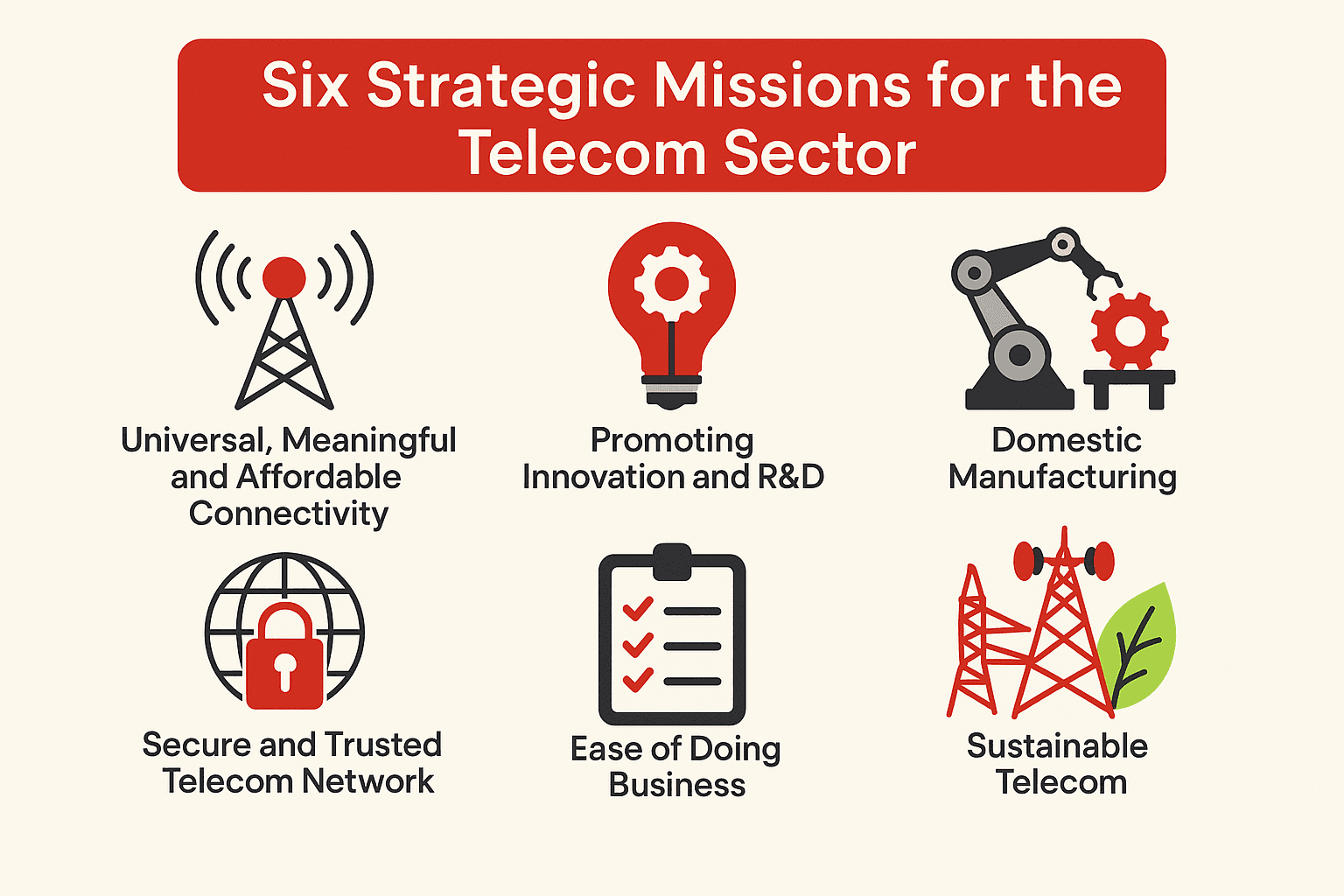
Draft National Telecom Policy 2025: DoT blueprint steering India’s telecom landscape during 2025-30.

Priorities: Atmanirbhar equipment, universal high-speed access, leap to 6G & quantum-secure networks.

Coverage: Nationwide, with rural backbone via BharatNet linking every gram panchayat.

Quick Facts for MCQs

Domestic Manufacturing

  • Incentives: Operator benefits for sourcing Indian-made gear; boosts Tejas Networks, HFCL, others.
  • Policy aligns with PLI tweaks to generate assured domestic demand.
  • Targets gradual reduction of Chinese import dependence.

Connectivity & Infrastructure

  • Fiber push: 80 % tower fiberization enables dense 5G rollout, low-latency services.
  • Rural focus: BharatNet plus 1 M Wi-Fi hotspots narrow digital divide.
  • Household broadband expansion to 100 M strengthens fixed network resilience.

R&D & Innovation

  • Funding: Blended finance, fund-of-fund catalyse telecom R&D spend to double current levels.
  • IP thrust: 10 % global 6G patents positions India in upcoming standards debates.
  • Startup pipeline nurtures quantum, satellite, Open-RAN solutions.

Security & Green Goals

  • Security: Non-trusted gear audits, quantum-secure systems safeguard strategic networks.
  • Sustainability: 30 % carbon cut via renewable power and energy-efficient equipment.
  • Policy integrates security, environment into licensing and rollout norms.

Key Data Points

FeatureData-Point
Import substitution goal50 % of telecom gear by 2030
Domestic startups supported500 tech startups
Share of global 6G IPR aimed10 %
4G coverage target100 % population by 2030
5G coverage target90 % population by 2030
Tower fiberization rise46 % → 80 %
BharatNet uptime target98 %
Fixed-line broadband homes100 million
Public Wi-Fi hotspots1 million
New jobs projected1 million
Workforce upskilled1 million
Annual telecom investment goal₹1 trillion
Export ambitionDouble current telecom exports
Carbon footprint cut30 %
Trusted-hardware auditMandatory equipment checks

Related UPSC Prelims PYQs

ESE_GS, GS1 2026PYQ 1

The Samriddh Gram Phygital Services Pilot Project was recently launched by which organization?

ESE_GS, GS1 2018PYQ 2

निम्नलिखित में से कौन-सा/से भारत सरकार की ‘Digital India’ योजना का/के उद्देश्य है/हैं?

GS-1History

3.Rajendra Chola I Legacy (Chola Dynasty)

Indian Express
Illustration for Rajendra Chola I Legacy (Chola Dynasty)

What & Where

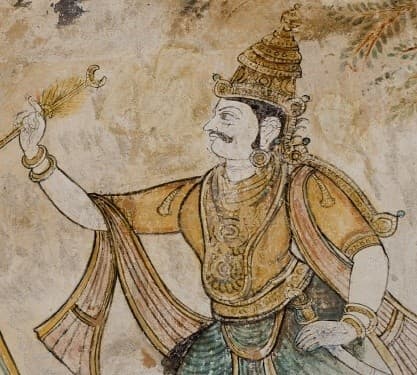
Rajendra Chola I (1014–1044 CE); most powerful Chola emperor; succeeded Rajaraja I

1025 CE naval campaign struck Srivijaya; secured Malacca Strait, Southeast Asian trade routes

Founded new capital Gangaikonda Cholapuram, Tamil Nadu; empire stretched South India to Bengal

Quick Facts for MCQs

Military & Maritime

  • Fleet defeated Srivijaya, Kedah, Tambralinga; secured spice routes and Malacca Strait
  • Campaign projected Chola power to Sri Lanka, Maldives, Bengal and wider Southeast Asia
  • Victories commemorated via title Kadaramkondan and water procession with sacred Ganga

Art & Architecture

  • Temple Gangaikonda Cholapuram mirrors Brihadeeswara scale; 55 m vimana; intricate bronze iconography
  • Encouraged stone inscriptions detailing grants, wars, social welfare; key epigraphic sources today
  • Patronised Chola bronze casting; Nataraja masterpieces exported as diplomatic gifts

Hydraulic Engineering

  • Constructed Cholagangam tank using sluices, sediment traps; irrigated >1,500 acres
  • Water infrastructure integrated with temple complexes, boosting agrarian surplus and rituals
  • Design showcased ecological foresight and state skill in large-scale earthworks

Trade & Diaspora

  • Supported guilds Manigramam, Ayyavole; secured tax exemptions, naval escorts
  • Tamil merchants, artisans, priests settled Kedah, Sumatra, Angkor; built temples and markets
  • Soft-power template predates modern diplomacy by a millennium

Administrative Systems

  • Strengthened village sabhas; empowered tax collection, local justice, irrigation maintenance
  • Inscriptions codified land grants, temple revenues, emergency famine relief norms
  • Governance model blended royal oversight with community autonomy

Key Data Points

FeatureData-Point
Reign1014–1044 CE
FatherRajaraja Chola I
New capitalGangaikonda Cholapuram
Honorific titleGangaikondachola
Naval expedition1025 CE
Overseas adversarySrivijaya Empire
Key templeGangaikonda Cholapuram Temple
Major tankCholagangam, irrigated >1,500 acres
Trade guildsManigramam; Ayyavole
2024 focusMillennium commemoration

Related UPSC Prelims PYQs

CDS_GK, GS1 2001PYQ 1

Which one of the Chola kings conquered Ceylon?

CDS_GK, GS1 2024PYQ 2

Who among the following Chola kings encouraged the Sailendra ruler of Sri Vijaya to build a Buddhist Vihara in Negapatnam?

GS-1History

4.Sohrai Pattachitra Patua Paintings (Traditional Paintings)

PIB
Illustration for Sohrai Pattachitra Patua Paintings (Traditional Paintings)

What & Where

Sohrai Khovar, Pattachitra & Patua are indigenous wall/cloth‐based painting traditions linked to tribal–folk groups in eastern India.

Core belt: Hazaribagh-Jharkhand (Sohrai), coastal Odisha-Puri (Pattachitra), south-west Bengal & adjoining Bihar/Jharkhand (Patua).

Processes: finger-drawn earth pigments on mud walls (Sohrai); mineral–vegetable colours on cloth coated with chalk-tamarind glue (Pattachitra); narrative scrolls painted with vegetable dyes on sari-lined cloth (Patua).

Quick Facts for MCQs

Cultural Context

  • Harvest-season festival of Sohrai aligns with cattle worship, ensuring community participation by village women.
  • Patua scrolls historically sung door-to-door, merging visual art with itinerant storytelling.
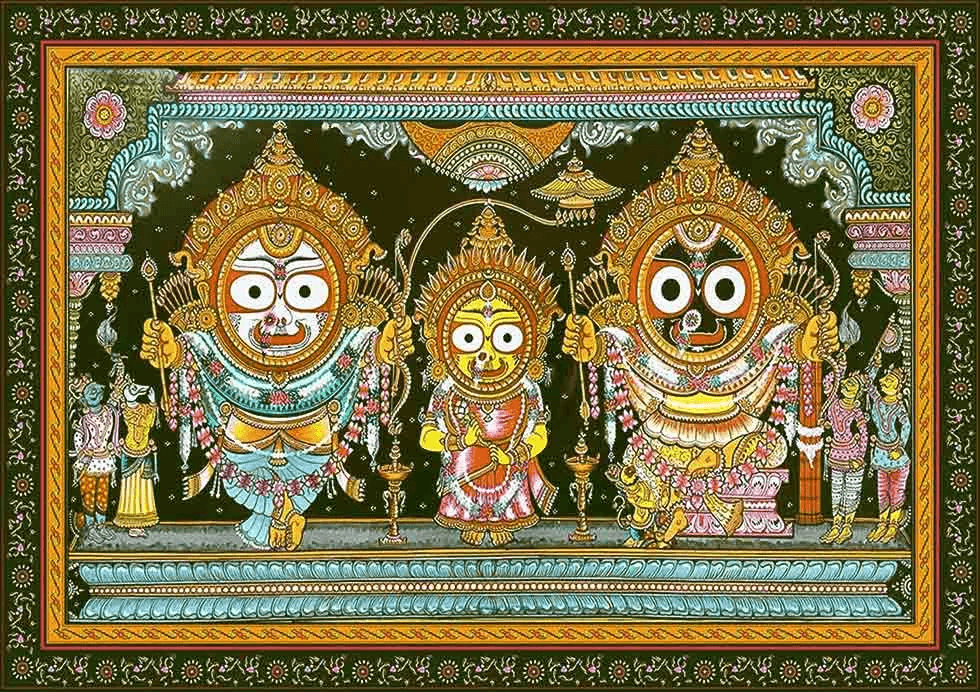
  • Pattachitra remains integral to Jagannath cult; chitrakars supply daily ritual paintings.

Materials & Technique

  • Natural binders: rice gruel (Sohrai), tamarind seed glue (Pattachitra), gum arabic substitutes (Patua).
  • Lacquer finish in Pattachitra confers durability, enabling temple reuse.
  • Absence of preliminary sketching in Pattachitra demands mastery of proportion & border discipline.

Legal & Tagging

  • Sohrai Khovar secured GI tag in 2020, aiding artisan branding & combatting machine prints.
  • Odisha Pattachitra enjoys earlier GI protection (2008), facilitating export promotion.
  • Patua scrolls lack GI; advocacy ongoing for recognition across Bengal–Odisha corridor.

Key Data Points

FeatureData-Point
Community baseKurmi, Santhal etc. (Sohrai); Chitrakar families (Patua); temple painters (Pattachitra)
Key ritual linkPost-harvest cattle welcome (Sohrai)
Drawing toolFingertips (Sohrai)
Support surfaceMud house walls (Sohrai)
Colour sourceEarth pigments (Sohrai)
Protective finishNone traditional (Sohrai)
Signature themesCattle, flora-fauna motifs (Sohrai)
GI tag statusSohrai Khovar – 2020
GS-3S&T

5.Black Hole GRS 1915+105 Observations (Astrophysics)

New Indian Express
Illustration for Black Hole GRS 1915+105 Observations (Astrophysics)

What & Where

Stellar-mass black hole GRS 1915+105 in binary with normal star; exhibits extreme X-ray variability.

Processes: accretion disk + oscillating plasma corona create high-frequency Quasi-periodic Oscillations (QPOs).

Position: ~28,000 light-years away in constellation Aquila, Milky Way.

Quick Facts for MCQs

Observation Findings

  • AstroSat LAXPC logged 70 Hz flickers during bright phases, confirming high-frequency QPOs.
  • X-ray dips and flares alternate on ~minute scale, tracing inner-disk instability.

Plasma Corona Dynamics

  • Corona toggles between compact-hot and expanded-cool states, modulating emitted X-ray spectrum.
  • Oscillatory corona considered immediate source of high-frequency QPOs near event horizon.

Indian Space Science

  • AstroSat, India’s first dedicated space observatory, enabled real-time tracking of coronal behaviour.
  • ISRO-led findings strengthen India’s role in high-energy astrophysics research.

Key Data Points

FeatureData-Point
Discovery (instrument, year)WATCH monitor on Granat, 1992
Black-hole mass≈ 12 solar masses
Distance from Earth~28,000 light-years
ConstellationAquila
QPO frequency captured70 Hz
X-ray flare cycleEvery few hundred seconds
Corona temperature≈ 100 million °C
Accretion-disk temperature1–10 million °C
Observatory usedAstroSat (India)
Journal of studyMonthly Notices of the RAS

Related UPSC Prelims PYQs

ESE_GS, GS1 2019PYQ 1

Recently, scientists observed the merger of giant 'blackholes' billions of light-years away from the Earth. What is the significance of this observation?

ESE_GS, GS1 2024PYQ 2

AstroSat space telescope has crossed a major milestone by detecting 600th Gamma-Ray Burst launched by which one of the following countries?

GS-3S&T

6.Hydrogen-Powered Driving Power Car (Hydrogen Train)

THB
Illustration for Hydrogen-Powered Driving Power Car (Hydrogen Train)

What & Where

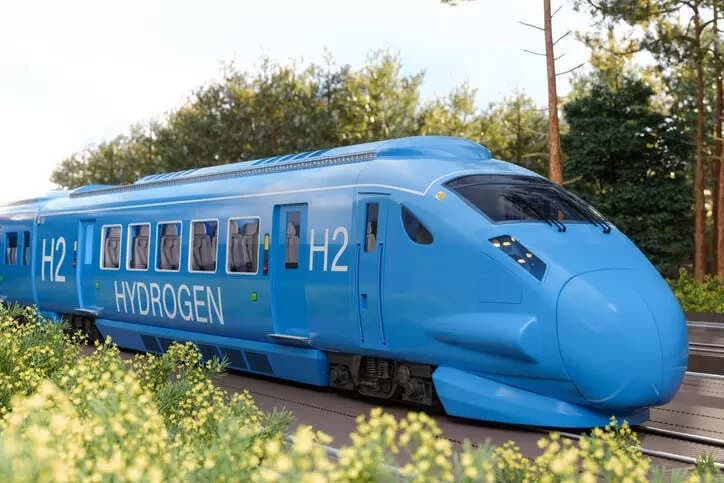
Hydrogen-powered Driving Power Car; first Indian hydrogen train prototype using fuel cells emitting only water vapour

Built by Integral Coach Factory, Chennai; technical oversight Northern Railways

Pilot commercial run on Jind–Sonipat heritage, non-electrified section, Haryana

Quick Facts for MCQs

Tech & Schemes

  • Hydrogen fuel cells convert H2 and O2 producing electricity, heat, water; batteries store excess; regenerative braking used
  • Scheme Hydrogen for Heritage plans 35 hydrogen trains across Indian heritage, non-electrified routes
  • 10-car rake doubles global average five carsets, showcasing higher passenger capacity

Environmental Impact

  • Zero tailpipe emissions align with Indian Railways net-zero carbon goal 2030
  • Replacement of diesel locomotives reduces localized air pollutants on heritage, eco-sensitive corridors
  • Water vapour by-product aids compliance with global green mobility norms

Economic Angle

  • Estimated combined capex ₹150 crore per train plus route; touted as cost-competitive with diesel over lifecycle
  • Indigenous design advances Make-in-India, potential export revenue in hydrogen mobility
  • Technology spill-over anticipated to heavy trucks, tugboats, industrial hydrogen applications

Key Data Points

FeatureData-Point
SchemeHydrogen for Heritage
Power capacity1200 HP
Rake length10 coaches
Fuel sourceGreen hydrogen via fuel cells
EmissionOnly water vapour
Cost/train₹80 crore
Infra cost/route₹70 crore
Pilot routeJind–Sonipat, Haryana
BuilderIntegral Coach Factory, Chennai
OversightNorthern Railways
Net-zero target2030
GS-2Editorial

7.India–Maldives Bilateral Agreements 2025 (India-Maldives Ties)

Hindustan Times
Illustration for India–Maldives Bilateral Agreements 2025 (India-Maldives Ties)

What & Where

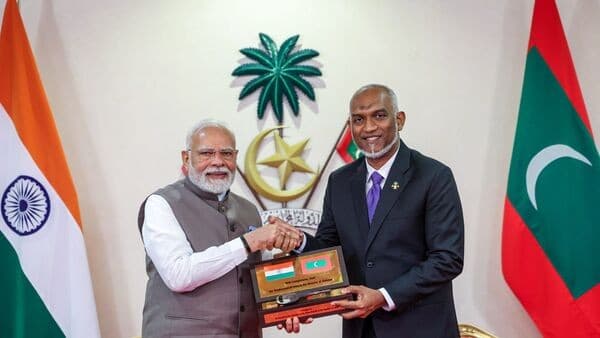
Bilateral Focus: India–Maldives ties under “Neighbourhood First” & SAGAR; renewed during PM Modi’s 2025 Malé visit.

Geography: Maldives—archipelagic nation, 700 km south-west of Kerala, astride vital Indian Ocean SLOCs.

Event: Eight agreements inked on digital pay, debt relief, fisheries, housing, climate, defence, ₹4,850 cr LoC.

Quick Facts for MCQs

Defence & Security

  • Exercises: Ekuverin (army), Dosti (coast guard), Ekatha (special ops) deepen interoperability.
  • Infrastructure: UTF Harbour, Coastal Radar, MNDF Training Centre built with Indian aid.
  • Role: India retains “first responder” tag for HADR & MEDEVAC in Maldives.

Development Projects

  • Flagship: Greater Malé Connectivity & Hanimaadhoo Airport under execution via Indian funding.
  • Community: 47 High-Impact Community Development Projects across islands delivered.
  • Housing: 3,300 units handed over, strengthening people-centric goodwill.

Economic & Fintech

  • Trade: India became Maldives’ largest trading partner in 2023.
  • Payments: UPI/RuPay link aims local-currency settlements, tourism retail boost.
  • Fisheries: New pact enhances export, cold-chain, MIFCO expansion.

Challenges

  • Campaign: “India Out” nationalism questions troop presence, sovereignty.
  • China Factor: Rising BRI debt tilts Maldivian leverage, strategic competition.
  • Execution: Political churn delays Indian projects, risking credibility.

Key Data Points

FeatureData-Point
Agreements signed (2025)8
Debt-repayment cut40 % annual burden
Line of Credit₹4,850 crore
Social housing units3,300 in Hulhumalé
Defence gift72 vehicles & equipment
Digital tie-upUPI & RuPay integration
Key joint exercisesEkuverin, Dosti, Ekatha
Indian-trained MNDF officers>1,500
Bilateral trade 2023US $548 million
India’s tourist rank 2021-231st (≥2 lakh arrivals/yr)

Related UPSC Prelims PYQs

CAPF_GAI, NDA_GAT 2024PYQ 1

Which of the following statements with regard to the outcomes of the talks between the Prime Minister of India and the President of UAE held in February, 2024 is/are correct?

CAPF_GAI, NDA_GAT 2024PYQ 2

In January 2024, India has entered into a bilateral agreement through which it will provide grant assistance to a country to construct a 20 feet Bailey bridge. Identify the country.

GS-2Polity

8.France Recognition of Palestinian Statehood (State Recognition)

Times of India
Illustration for France Recognition of Palestinian Statehood (State Recognition)

What & Where

Recognition: formal diplomatic acceptance of Palestine as sovereign under international law.

Process: states issue declaration; enables bilateral ties, UN membership push, treaty participation.

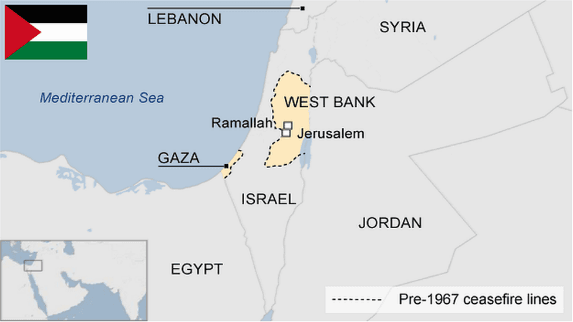
Geography: West Bank, Gaza Strip, East Jerusalem in the Middle East adjoining Israel, Jordan, Egypt, Mediterranean.

Quick Facts for MCQs

International Recognition

  • Spread: Global South, Sweden, Cyprus, ex-Eastern Bloc EU already extended recognition.
  • Momentum: Recent EU picks aim to re-energise stalled two-state framework.
  • Multilateral weight: France’s step precedes its UNGA presentation, signals G7 policy shift.

Humanitarian Drivers

  • Crisis: >2 million Gazans face acute starvation, health collapse post-hostilities.
  • Justice: Recognition pitched as accountability tool alongside calls for ceasefire.
  • Conference: France–Saudi UN meet planned to mobilise aid and political process.

Historical Timeline

  • 1917 Balfour: British support for Jewish homeland initiated mandate tensions.
  • 1947 Partition: UN proposed dual states; only Israel materialised after 1948 war.
  • 1967 War: Israel occupied West Bank, Gaza, East Jerusalem; occupation persists.

Governance & Conflict

  • Division: Fatah-led Palestinian Authority governs West Bank; Hamas controls Gaza.
  • Flashpoints: Land seizures, blockades, settler expansion fuel recurrent violence.
  • UN role: Supports inalienable Palestinian rights, monitors via UNRWA, UNSCO.

Key Data Points

FeatureData-Point
First G7 state to recogniseFrance (2024)
UN members recognising Palestine144 of 193
Latest EU recognisers before FranceSpain, Ireland, Norway (2024)
Year Palestine proclaimed independence1988, Algiers
UN observer status granted2012 (General Assembly)
Principal Palestinian administrationsPalestinian Authority – West Bank; Hamas – Gaza
Core two-state UN resolutionResolution 242 (1967)
ICJ 2024 advisory viewIsraeli occupation declared unlawful
GS-2MiscQuick Bite

9.Henley Passport Index 2025 Q2 (Passport Ranking)

The Hindu

What & Where

Henley Passport Index: global ranking of passports by visa-free/visa-on-arrival access.

Scope: 199 passports benchmarked against 227 international destinations.

Data source: IATA travel database; index refreshed quarterly.

Quick Facts for MCQs

India's Position

  • Rank jump of 8 places in six months, now 77th.
  • Visa-free/VoA access up by 2 destinations to 59.

Global Mobility Trends

  • Singapore tops with 193 visa-free/VoA destinations.
  • Japan, South Korea share second spot at 190 each.

Institutional Details

  • Index methodology relies exclusively on IATA databases.
  • IATA represents 300 airlines; HQ located in Montreal.

Key Data Points

FeatureData-Point
India rank, 2025 Q277th
India rank, 2025 Q185th
Indian visa-free/VoA reach59 destinations
New additions for IndiaPhilippines; Sri Lanka
Top passport, 2025 Q2Singapore – 193 destinations
Second placeJapan & South Korea – 190
Passports assessed199
Destinations considered227
Data providerIATA
IATA member airlines300
IATA traffic share83 % of global air traffic
IATA headquartersMontreal, Canada
Update frequencyQuarterly

Related UPSC Prelims PYQs

CAPF_GAI, ESE_GS 2024PYQ 1

Consider the following statements regarding Henley Passport Index 2023:

CAPF_GAI, ESE_GS 2021PYQ 2

In the latest Chandler Good Government Index (CGGI), which classifies 104 countries in terms of government capabilities and outcomes, India has been ranked

GS-3Security

10.Kargil Vijay Diwas Observance (Kargil War)

LiveMint
Illustration for Kargil Vijay Diwas Observance (Kargil War)

What & Where

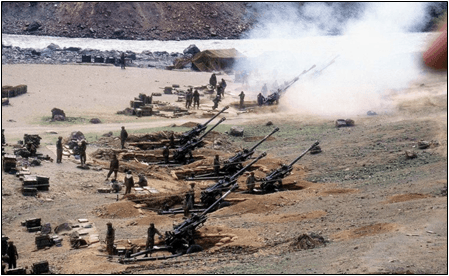
Observance Date; annual 26 July salute to 1999 Kargil victory

Operation Vijay; Indian counter-offensive that restored breached Ladakh heights without LoC crossing

Geography; Dras–Batalik–Kaksar sector above 16 000 ft shielding NH-1A Srinagar-Leh

Quick Facts for MCQs

Security Dimension

  • Infiltration; Pakistani regulars and militants covertly occupied Indian ridgelines, violating Shimla Agreement
  • Highway; NH-1A targeted to cut Srinagar-Leh logistical lifeline
  • Restraint; India avoided LoC crossing, earned global diplomatic support

Military Operations

  • Assault; high-angle infantry climbs with artillery cover reclaimed successive bunkers
  • Airpower; precision LGB strikes by Mirage-2000 at rarefied altitudes neutralised supply posts
  • Symbols; Tiger Hill capture became turning-point boosting national morale

Reforms & Legacy

  • Structural; Kargil review pushed creation of Chief of Defence Staff and integrated commands
  • Modernisation; accelerated buys of high-altitude gear, UAV surveillance, indigenous weapons
  • Public memory; Kargil Vijay Diwas ceremonies, war memorial at Dras instil civil-military bonding

Key Data Points

FeatureData-Point
War yearMay–July 1999
Victory declared26 July 1999
Indian operationOperation Vijay
IAF supportOperation Safed Sagar (Mirage-2000)
Key peaks wonTololing, Tiger Hill, Point 4875, Khalubar
Indian martyrs545 personnel
Enemy aimSever NH-1A supply route
Fighting altitude~16 000 ft, sub-zero temperatures
GS-2Scheme

11.PM Viksit Bharat Rozgar Yojana (Employment Incentive)

PIB
Illustration for PM Viksit Bharat Rozgar Yojana (Employment Incentive)

What & Where

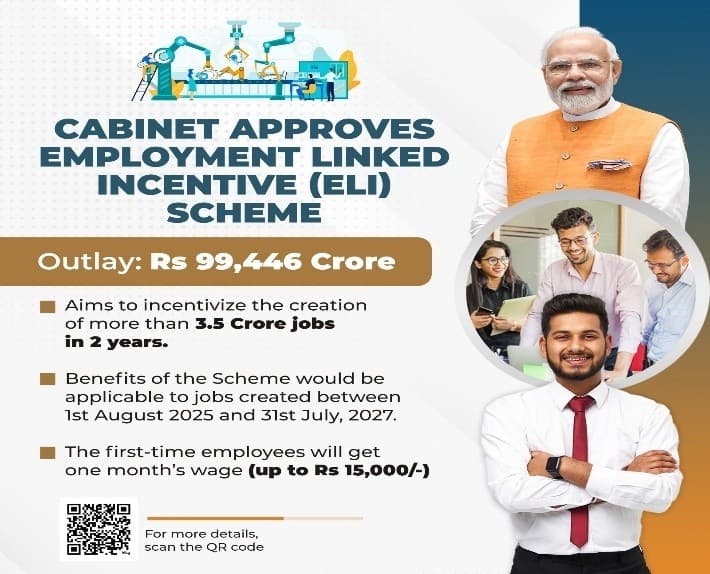
PM-Viksit Bharat Rozgar Yojana; pan-India employment-linked incentive scheme to spur formal job creation, esp. manufacturing

Operative window 2025-27; replaces Employment Linked Incentive (ELI) Scheme from 1 Aug 2025

Nodal body: Ministry of Labour & Employment; target 3.5 crore new jobs

Quick Facts for MCQs

Scheme Design

  • Dual-part structure; Part A targets employees, Part B targets employers
  • Wage-based, time-bound incentives; savings element via locked deposit for workers
  • Replaces ELI to align with Viksit Bharat vision 2047

Financial Incentives

  • Higher monthly subsidy for higher wage brackets up to ₹1 lakh ensuring formalisation across skill levels
  • Manufacturing units enjoy twice-longer subsidy horizon, encouraging capital-intensive job growth

Eligibility Norms

  • Only EPFO-registered entities and workers; ensures social security coverage
  • Worker must be new EPFO entrant; employers must show net payroll addition meeting thresholds

Administration

  • Central budgetary funding; monitoring through EPFO payroll data
  • DBT and PAN linkage aimed at leakage-free, audit-ready disbursals

Key Data Points

FeatureData-Point
Effective date1 Aug 2025
Scheme tenureFY 2025-26 & 2026-27
Total outlay₹99,446 crore
Job target3.5 crore
First-time worker target1.92 crore
Admin ministryLabour & Employment
Max salary covered (employee)₹1 lakh / month
Employee incentive1-month EPF wage, capped ₹15,000
Employee instalmentsAfter 6 & 12 months + financial literacy
Employer extra-hire threshold≥2 workers (<50 staff) or ≥5 (≥50 staff)
Employer incentive slab₹1k, ₹2k, ₹3k per worker by wage band
Incentive tenure employers2 yrs; 4 yrs for manufacturing
Focus sectorManufacturing given extended support
Payment mode workersABPS-based DBT
Payment mode employersDirect to PAN-linked account
GS-2Scheme

12.Atal Pension Yojana (Pension Scheme)

DC
Illustration for Atal Pension Yojana (Pension Scheme)

What & Where

Government-backed, voluntary pension scheme for informal workers, launched 9 May 2015, pan-India coverage.

Administered by Pension Fund Regulatory & Development Authority; promises ₹1k–₹5k monthly pension from 60 yrs.

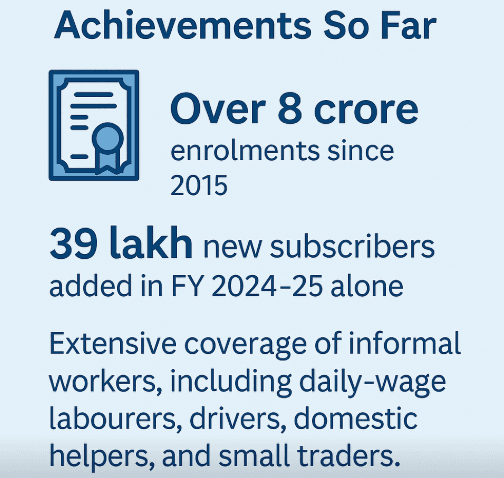
Operates through bank/post-office savings a/cs; enrolment crossed 8 crore in its 10th year.

Quick Facts for MCQs

Tech & Schemes

  • Auto-debit via CBS bank or post-office account; PRAN generated under NPS tech stack.
  • Aadhaar & mobile linking optional but streamlines e-KYC, SMS alerts, online servicing.
  • Nominee captured at enrolment; digital records ease corpus transfer.

Economic Angle

  • 8 crore small savers pooled, boosting domestic long-term funds.
  • Central guarantee transfers market-risk to exchequer, ensuring floor pension.
  • Death benefit: spouse pension + corpus to nominee, aiding asset retention.

Legal & Policy

  • Launched under PFRDA Act; scheme notified through GSR 321(E) 2015.
  • Govt guarantee distinguishes APY from purely market-linked NPS Tier-I.
  • Income-tax payers & statutory-scheme members excluded from govt co-contribution.

Key Data Points

FeatureData-Point
Launch date9 May 2015
Admin bodyPFRDA
Target sectorUnorganised workers
Eligible age band18–40 years
Contribution modeMonthly / Quarterly / Half-yearly auto-debit
Guaranteed pension₹1,000 – ₹5,000 per month
Govt guaranteeCovers any shortfall in returns
Co-contribution window2015-20; 50 % of input, max ₹1,000/yr
Current enrolment8 crore (39 lakh added FY 24-25)
Exit age for full pension60 years

Related UPSC Prelims PYQs

GEO_GS, GS1 2016PYQ 1

Regarding ‘Atal Pension Yojana’, which of the following statements is/are correct?

GEO_GS, GS1 2021PYQ 2

Which one of the following is NOT correct with regard to Pradhan Mantri Shram Yogi Maan-Dhan Yojana (PM-SYM)?

Ready to practice?

Test your knowledge with our UPSC test series.

Start Free Trial