UPSC Current Affairs

11 topicsGS-1: 2GS-2: 6GS-3: 3
0/11 done
GS-2Polity

1.National Financial Reporting Authority Role (NFRA Regulator)

Business Standard
Illustration for National Financial Reporting Authority Role (NFRA Regulator)

What & Where

Independent audit-oversight authority under Ministry of Corporate Affairs, India.

Constituted 1 Oct 2018 via Companies Act 2013, Sec 132(1).

HQ New Delhi; supervises listed entities and large/unlisted companies meeting prescribed thresholds.

Quick Facts for MCQs

Legal & Policy

  • Mandate regulate, enforce compliance with accounting/auditing standards, recommend governance policies.
  • Can be assigned additional entities by Central Government citing public interest.
  • Ensures alignment with IFRS, ISA for global comparability.

Powers & Enforcement

  • Authority issue directions, debar auditors, levy monetary penalties.
  • Can investigate professional misconduct in specified company classes.
  • Functions complement, surpass self-regulatory bodies like ICAI.

Coverage Criteria

  • Automatically covers all listed companies domestic or overseas.
  • Includes unlisted public firms breaching capital, turnover or borrowing thresholds.
  • Insurance, banking, power, and special-Act companies fall automatically under ambit.

Significance

  • Acts watchdog upholding investor confidence and corporate financial discipline.
  • Strengthens audit quality, transparency after high-profile corporate frauds.
  • Enhances trust in financial disclosures of large unlisted entities.

Key Data Points

FeatureData-Point
Latest ChairpersonShri Nitin Gupta, Retd. IRS
Parent ministryCorporate Affairs
Constitution date1 October 2018
Legal basisCompanies Act 2013, Section 132(1)
Statutory natureAutonomous, investigative powers
HeadquartersNew Delhi
Paid-up capital threshold≥ ₹500 crore
Turnover threshold≥ ₹1,000 crore
Loans/debentures/deposits threshold≥ ₹500 crore
Foreign subsidiary coverage≥ 20 % income or net worth contribution
GS-1History

2.Ta Muen Thom Temple Complex (Khmer Temple)

Hindustan Times
Illustration for Ta Muen Thom Temple Complex (Khmer Temple)

What & Where

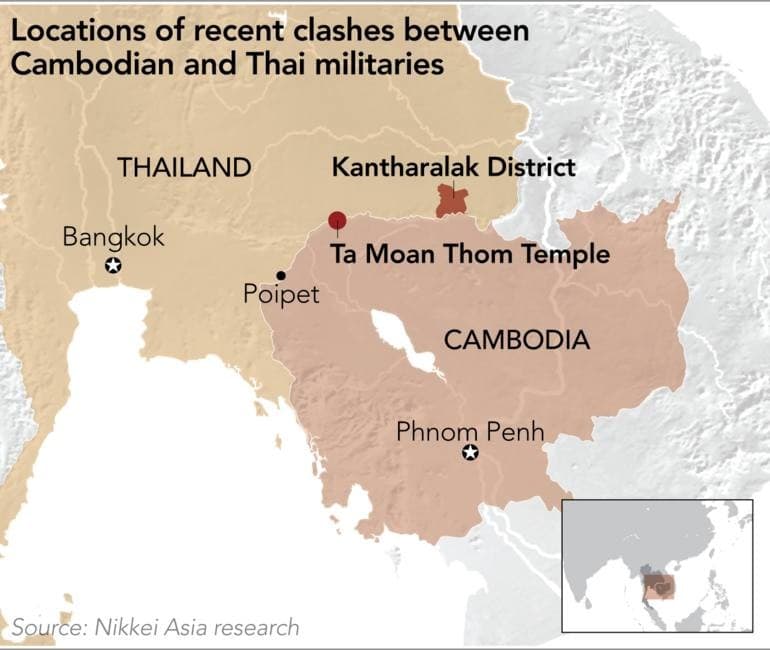
Ancient 12th-century Khmer temple-complex on Dangrek range, Thailand–Cambodia border, along historic Angkor–Phimai highway.

Core shrine Prasat Ta Muen Thom faces south, originally Shaivite, later adapted to Buddhism; flanked by hospital & dharma-sala.

Sits at strategic mountain pass, presently claimed by both Bangkok & Phnom Penh, sparking recurring armed clashes.

Quick Facts for MCQs

Architecture

  • South-facing design mirrors Khmer road-temples aligning with pilgrimage route orientation.
  • Hospital shrine cites Jayavarman VII’s empire-wide public-health network.
  • Cloistered courtyard, library annexes, pool evidence standard Angkorian temple layout.

Historical Timeline

  • Udayadityavarman II initiates Shaivite layout; Jayavarman VII repurposes for Mahayana service & healthcare.
  • Khmer Highway use peaks 11th–13th C, linking Angkor heartland to Phimai outpost.

Security Dimension

  • 2024 flare-up: drone sorties, artillery exchanges, Thai airstrikes around temple vicinity.
  • Colonial-era map mismatches drive overlapping sovereignty claims despite ICJ verdict on Preah Vihear.
  • Temple zone periodically closed to tourists, patrolled by both militaries.

Religious Syncretism

  • Hindu origin visible in lingam, yoni channel; later Buddhist reliefs overlay walls.
  • Dharma Sala served itinerant monks and traders, reflecting combined religious-trade corridors.

Key Data Points

FeatureData-Point
EmpireAngkorian Khmer (9th–15th C)
Main construction phase12th C; expanded 13th C
Key rulersUdayadityavarman II; Jayavarman VII
Building materialSandstone main shrine; laterite libraries
Principal deityShiva (lingam with water outlet)
Auxiliary shrinesPrasat Ta Muen (Dharma Sala); Prasat Ta Muen Tot (Hospital)
Notable inscriptionKhmer-Sanskrit text on appointment of medical staff
Mountain rangeDangrek Range
Nearest Thai villageBan Nong Khanna, Tambon Ta Mueang
Border statusUndemarcated; ICJ ruling only on nearby Preah Vihear
GS-1Infrastructure

3.Building Climate-Resilient Indian Cities (Urban Climate Risks)

Indian Express

What & Where

Focus: World Bank–MoHUA study on climate-resilient urbanisation in India

Geography: 4,000+ Urban Local Bodies; major metros to tier-2/3 towns

Key processes: flooding, extreme heat, air pollution threatening future urban jobs & infrastructure

Quick Facts for MCQs

Climate Risks

  • Flooding: 10–20 % road inundation cripples >50 % urban transport
  • Heat-island: concrete/asphalt store day heat, raise night temps significantly
  • Air quality: vehicular fumes, construction dust, biomass burning dominate emissions

Fiscal Capacity

  • Devolution: India’s ULB transfers far below South Africa 2.6 %, Brazil 5.1 %
  • Revenue: GST subsumed key levies, shrinking municipal autonomy
  • GIS push: 12th FC urged digitised property mapping to widen tax base

Policy & Schemes

  • Governance: 74th CAA lists urban planning, land-use, water under ULB purview
  • AMRUT 2.0: funds parks, wetlands, water recycling for climate buffering
  • Climate Smart Cities Assessment: benchmarks risk mapping, early-warning systems

Key Data Points

FeatureData-Point
Urban population 2050951 million
Share of new jobs 203070 % in cities
Climate-resilient infra needUSD 2.4 trillion by 2050
Annual flood loss 2030USD 5 billion
Flood loss 2070 (no action)USD 30 billion
Heat deaths 20503 lakh/year
Deaths avoidable via cool roofs1.3 lakh/year
Property tax yield< 0.2 % GDP (OECD 1.1 %)
Polluted cities 202342 of world’s worst 50

Related UPSC Prelims PYQs

GEO_GS 2020PYQ 1

According to the Global Climate Risk Index 2020, published by environmental think tank Germanwatch, in the year 2018 India’s rank in the list of top most climate affected nations is:

GS-3Environment

4.ICJ Advisory on Environmental Rights (ICJ Climate Opinion)

LiveMint
Illustration for ICJ Advisory on Environmental Rights (ICJ Climate Opinion)

What & Where

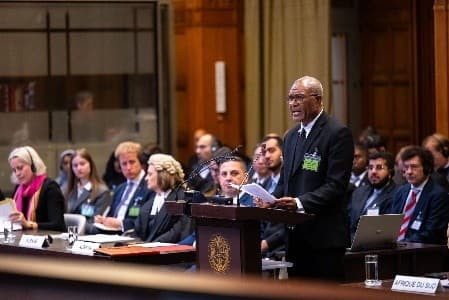
ICJ Advisory Opinion (2025): clarifies states’ international-law duties to combat climate change.

Heard at International Court of Justice, The Hague; initiated by Vanuatu on behalf of Small Island Developing States.

Addresses global obligation to ensure a clean, healthy, sustainable environment as a human right.

Quick Facts for MCQs

Legal & Policy

  • Bindingness: Treaties plus customary law create enforceable mitigation, adaptation, finance, technology-transfer duties.
  • Accountability: Failure equals internationally wrongful act invoking restitution, compensation, guarantees of non-repetition.
  • Evidence: Climate science accepted for causation, enabling litigation against high-emitters.

Human Rights Links

  • Life: ICCPR Article 6 breached by climate-induced threats.
  • Health: ICESCR Article 12 violated by pollution, degradation.
  • Intergenerational equity: Court stresses duty to protect future generations’ environmental rights.

India Angle

  • Constitution: Article 21 & 48A reinforced by ICJ recognition of environmental right.
  • Litigation boost: Supports Supreme Court/NGT actions on air quality, waste, climate adaptation.
  • Negotiation leverage: Strengthens developing-country stance on CBDR and climate finance.

Key Data Points

FeatureData-Point
UNGA request year2023
Opinion delivery year2025
Lead petitionerVanuatu
Supporting states130 +
Core rulingEnvironment right = fundamental human right
Obligations natureErga omnes (owed to all)
Key treaties citedUNFCCC, Kyoto Protocol, Paris Agreement
Standard imposedDue diligence to prevent transboundary harm
Liability for inactionCessation, non-repetition, compensation
Historical emissions viewLegally attributable to specific states
GS-3S&T

5.Dynamic Targeting Satellite AI (Satellite AI)

NASA
Illustration for Dynamic Targeting Satellite AI (Satellite AI)

What & Where

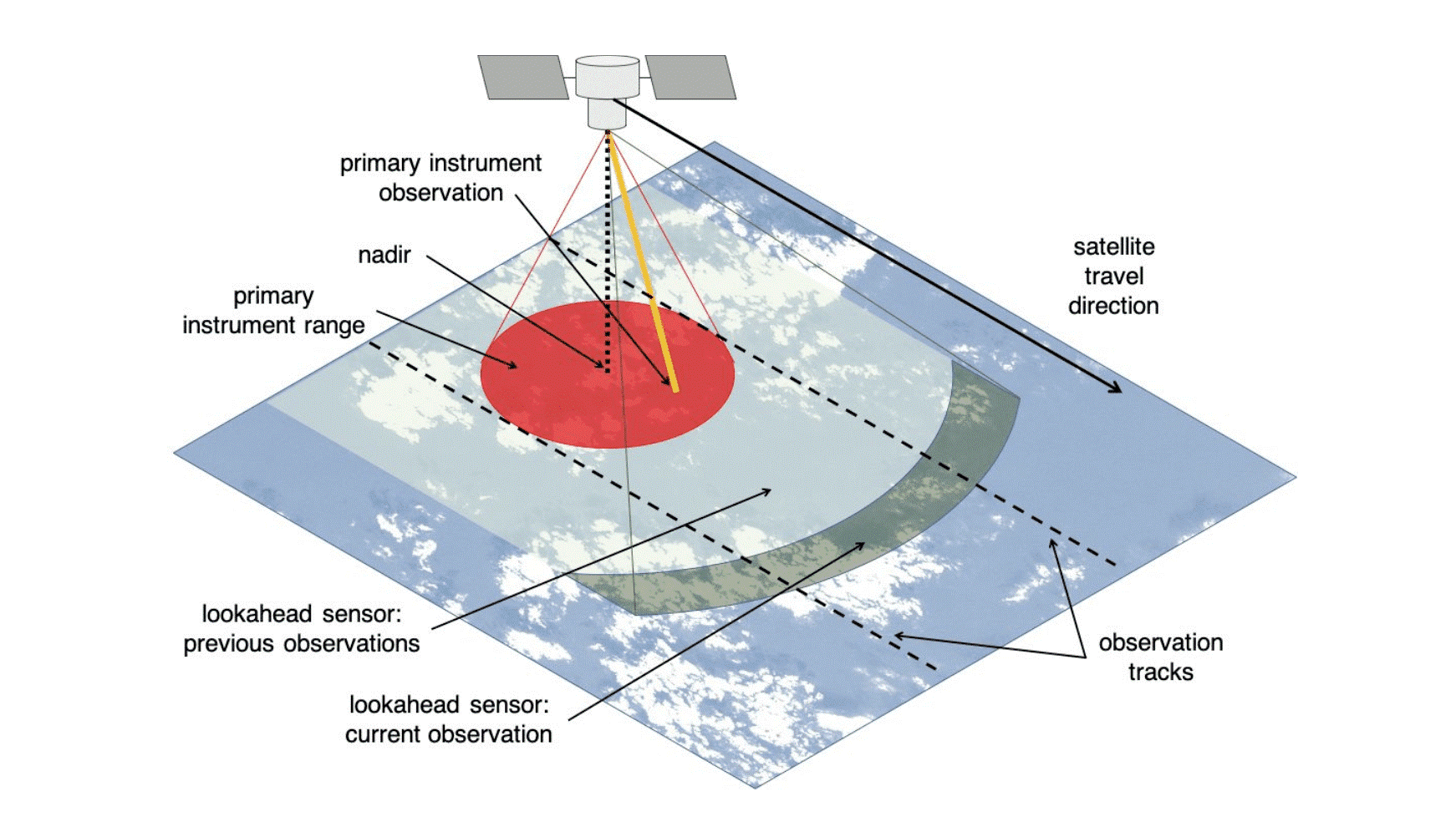
Dynamic Targeting: AI-driven onboard software letting Earth-observation satellites autonomously pick cloud-free, high-value scenes.

Core process: look-ahead imaging, AI cloud classification, auto pivot-shoot within 60-90 s—no ground commands.

Geography: Tested by NASA’s Jet Propulsion Laboratory on Low-Earth-Orbit CubeSat-class platforms.

Quick Facts for MCQs

Tech & Schemes

  • AI-Edge: Neural networks run on onboard processors, trimming downlink/command lag.
  • Lightweight: Algorithm suited for small satellites; scalable to multi-sat constellations.
  • Autonomy: Real-time target selection eliminates continuous ground-station intervention.

Environmental Impact

  • Climate-events: Better capture of transient wildfires, storms, volcanic plumes, ice events.
  • Data-efficiency: Reduces storage and bandwidth wasted on cloud-obscured frames.

Security Dimension

  • Disaster-readiness: Potential for autonomous early warning of hurricanes, eruptions, large wildfires.
  • Situational-awareness: Rapid, clear imagery supports emergency agencies without waiting for tasking commands.

Key Data Points

FeatureData-Point
DeveloperNASA Jet Propulsion Laboratory with Open Cosmos & Ubotica
Overseer officeNASA Earth Science Technology Office
Look-ahead distanceUp to 500 km ahead of ground track
Decision window< 90 seconds from preview to capture
Viewing shiftForward tilt → nadir pivot (“pivot & shoot”)
Tested platform sizeCubeSat-scale payload
Key sensorsOptical & near-infrared imagers
Main benefitHigher usable imagery by cloud avoidance
Applicable missionsEarth-observation constellations, future planetary probes
GS-2Editorial

6.India-UK Vision 2035 and CETA (India-UK CETA)

PIB

What & Where

India–UK Vision 2035 roadmap; launched July 2025 in London; umbrella for multisectoral ties till 2035

Comprehensive Economic & Trade Agreement (CETA); proposed FTA targeting near-zero tariffs, services access, investment facilitation

Geography: bilateral pact between Republic of India and United Kingdom, spanning Indo-Pacific to North Atlantic logistics

Quick Facts for MCQs

Economic Angle

  • Duty-free textiles, leather, seafood expected to double Indian exports, spur MSME participation
  • UK exports to India forecast +60 % by 2040, aided by simplified services visas
  • Bilateral investment flows buoyed by GCC push and forthcoming BIT

Tech & Innovation

  • Technology Security Initiative prioritises AI, quantum, semiconductors, telecom resilience
  • Net-Zero Innovation Virtual Centre targets green hydrogen, hard-to-abate sector decarbonisation
  • International Science Partnership Fund lists India as core collaborator

Security Dimension

  • Regional Maritime Security Centre of Excellence planned under IPOI for non-traditional threats
  • UK to use Indian logistics in Indian Ocean, reinforcing Indo-Pacific naval presence
  • AUKUS synergy potential in cyber, under-sea domain awareness

Climate & Sustainability

  • Joint mobilisation of green finance via ISA, CDRI, offshore wind corridors
  • Planned supply-chain collaboration on green goods, critical minerals, nuclear components
  • Green Skills Partnership to align vocational training with climate jobs

Irritants

  • Extradition delays over economic offenders like Vijay Mallya erode legal trust
  • UK Carbon Border Adjustment risk to Indian steel, aluminium exports viewed as protectionist
  • Pro-Khalistan protests and IPP rigidity remain diplomatic flashpoints

Key Data Points

FeatureData-Point
CETA duty-free access for India99 % of UK tariff lines
Indian tariff cut on UK goods90 % lines (92 % import value)
EV tariff elimination year6th year; EVs < £40,000 zero duty
Bilateral trade targetUSD 100 bn+ by 2030
Projected trade by CETAUSD 112 bn goods + services
Overseer bodyJoint Economic & Trade Committee (JETCO)
BIT statusTo be negotiated post-CETA
Defence roadmap span10 years; jet engines to directed energy
Diaspora size in UK1.86 million people of Indian origin
UK research partner rank for India2nd after United States
Social-security exemption3 yrs under Double Contribution Convention
Key joint exercisesKonkan, Cobra Warrior, Ajeya Warrior
Green finance focusOffshore wind, nuclear, critical minerals supply-chain

Related UPSC Prelims PYQs

CDS_GK, ESE_GS 2026PYQ 1

What is the name of the initiative launched by India and Denmark in November 2025 to enhance bilateral ties?

CDS_GK, ESE_GS 2024PYQ 2

If India enters into Free Trade Agreements (FTAs) with other nations, then the growth of exports of India would depend upon which of the following?

GS-2Misc

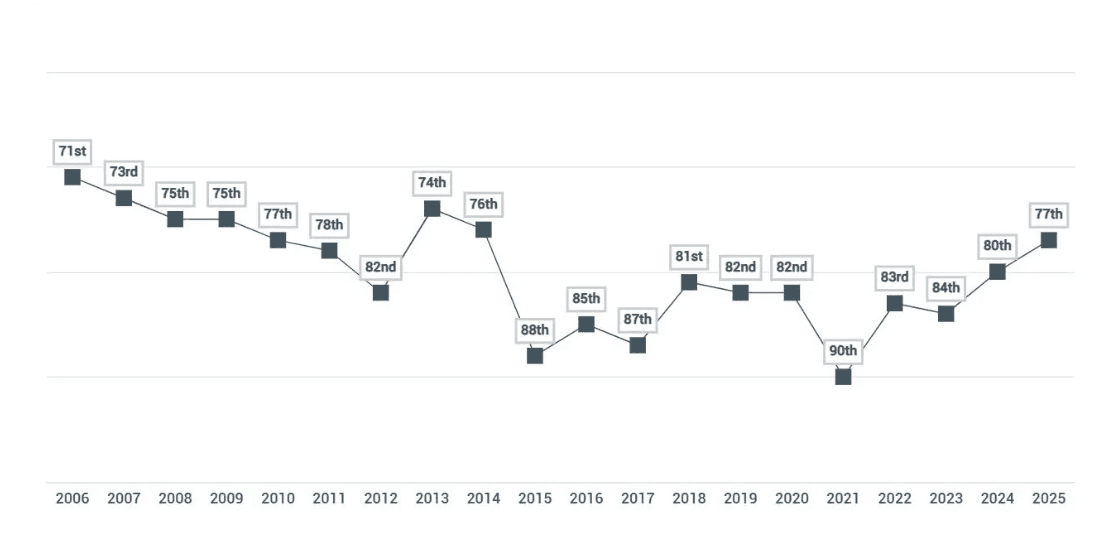
7.Henley Passport Index 2025 Update (Passport Ranking)

Indian Express
Illustration for Henley Passport Index 2025 Update (Passport Ranking)

What & Where

Henley Passport Index (HPI) = annual ranking of passports by visa-free/visa-on-arrival/eTA access.

Compiled by Henley & Partners using International Air Transport Association (IATA) travel-data plus in-house verification.

Universe: 227 destinations; higher score = greater travel freedom and perceived diplomatic strength.

Quick Facts for MCQs

Global Rankings

  • Europe dominates top 5: Germany, France, Italy join Asian leaders.
  • USA now 10th; UK 6th, marking steady decline since late-2000s peak.
  • Afghanistan, Syria, Iraq remain last, reflecting protracted conflict isolation.

India Profile

  • Visa-free: Malaysia, Maldives, Thailand; Visa-on-Arrival: Sri Lanka, Myanmar, Indonesia, Macau.
  • Rise credited to bilateral agreements, digital visa facilitation, wider economic footprint.
  • Still trails BRICS peers: China 60th, Russia 51st, Brazil 18th, South Africa 51st.

Major Movers

  • UAE gain of 34 ranks in 10 years showcases proactive diplomacy, trade corridors.
  • Saudi Arabia adds 4 destinations in 2025 alone, total access 91.
  • Pandemic recovery phase saw Asian passports rebound fastest in mobility scores.

Key Data Points

FeatureData-Point
HPI Year2025 edition
India’s rank 202577th (up from 85th)
Indian passport score59 destinations
India best/lowest rank71st (2006) / 90th (2021)
Global No. 1 passportSingapore – 193 destinations
Joint No. 2 passportsJapan, South Korea – 190
Fastest decade climbUAE: 42nd→8th
China’s 10-yr change94th→60th
Bottom rank stateAfghanistan – 25 destinations
Total destinations counted227 by IATA list

Related UPSC Prelims PYQs

ESE_GS, GEO_GS 2024PYQ 1

Consider the following statements regarding Henley Passport Index 2023:

ESE_GS, GEO_GS 2023PYQ 2

According to the Climate Change Performance Index (CCPI), 2023, India climbed two spots to rank

GS-3Security

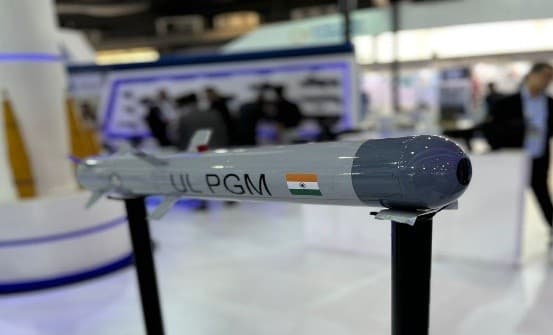
8.ULPGM-V3 Drone-Launched Missile (Drone Missile)

Times of India
Illustration for ULPGM-V3 Drone-Launched Missile (Drone Missile)

What & Where

Indigenous UAV-Launched Precision Guided Missile (ULPGM) family: air-to-surface, fire-and-forget munitions for drones.

Variants: V1 prototype, V2 production, V3 (ULM-ER) extended-range; V3 just flight-tested.

Latest trials at NOAR Test Range, Kurnool district, Andhra Pradesh.

Quick Facts for MCQs

Technological Features

  • Capability Fire-and-forget design delivers autonomous terminal homing.
  • Datalink Real-time communication permits mid-course updates and higher accuracy.
  • Payload Multiple selectable warheads suit diverse mission profiles.

Indigenisation & Make in India

  • Collaboration DRDO, BDL, Adani, MSMEs, startups drive local design-to-production ecosystem.
  • Validation Successful V3 trials confirm indigenous mastery of drone-borne precision weapons.
  • Supply-chain Domestic sourcing cuts imports and nurtures skilled defence workforce.

Export Potential

  • Policy Defence Export Policy 2020 enables sales to friendly nations.
  • Market Compact precision missile meets rising global demand for low-collateral drone munitions.
  • Revenue Foreign orders expected to fund further R&D and scale production.

Key Data Points

FeatureData-Point
Variant testedULPGM-V3 (ULM-ER)
Effective range (day)4 km
Effective range (night)2.5 km
Weight12.5 kg
GuidanceImaging IR seeker + two-way datalink
PropulsionDual-thrust solid motor
Warhead optionsAnti-tank / bunker-buster / soft-target
Primary developersDRDO + Bharat Dynamics Ltd.
Compatible UAVsRustom, TAPAS-BH class

Related UPSC Prelims PYQs

CDS_GK 2025PYQ 1

भारत के सैन्य आयुध (military arsenal) के बारे में निम्नलिखित में से कौन-सा/कौन-से कथन सही है/हैं?

CDS_GK 2024PYQ 2

भारत का ‘मिशन शक्ति’ (DRDO) निम्नलिखित में से किससे संबंधित है?

GS-2Scheme

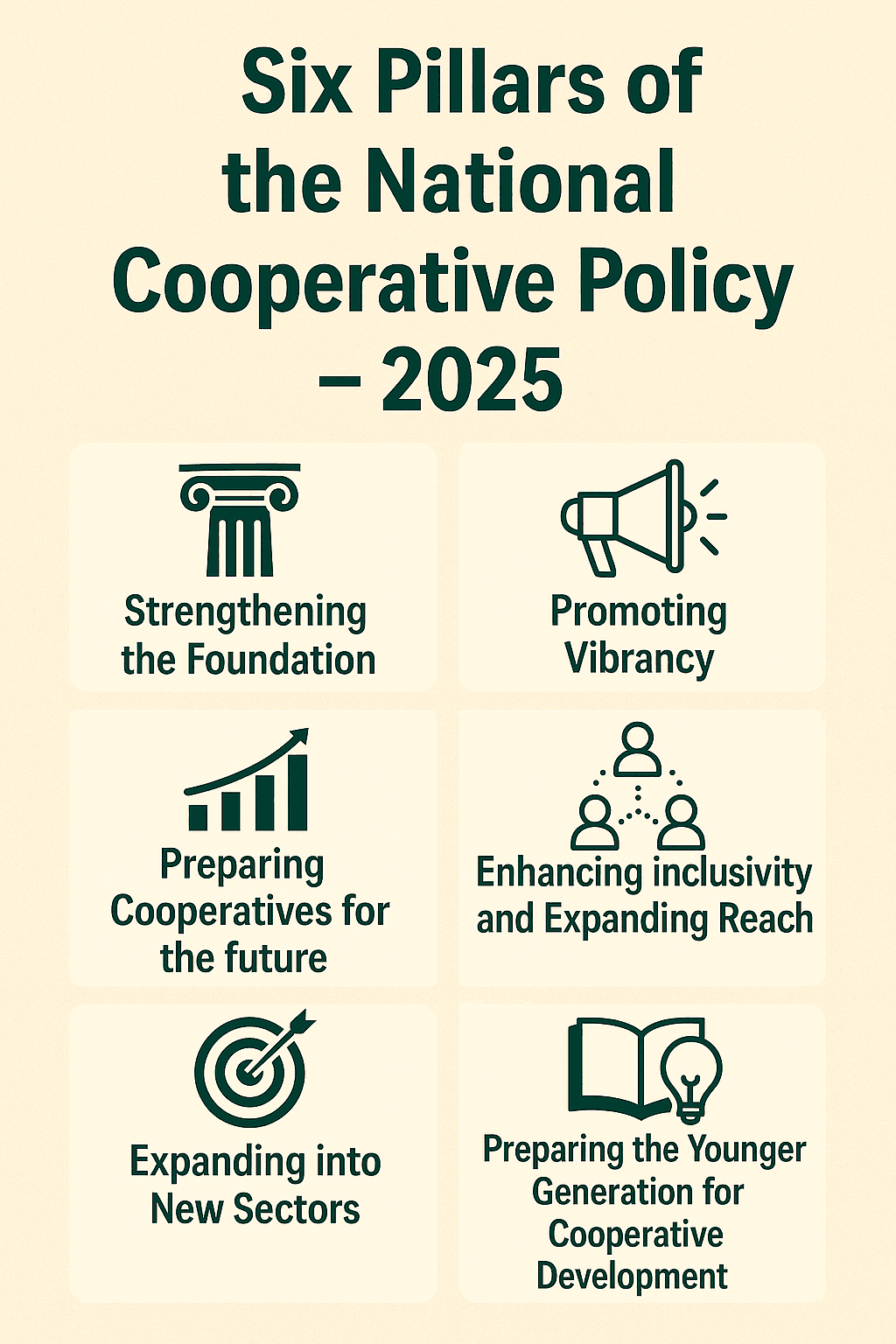
9.National Cooperative Policy 2025 (Cooperative Policy)

The Hindu
Illustration for National Cooperative Policy 2025 (Cooperative Policy)

What & Where

Definition: National Cooperative Policy 2025 to modernise, institutionalise Indian cooperatives for inclusive growth

Scope: Measurable economic, digital and social targets; model villages; diversified cooperative sectors

Geography: Nationwide rollout; unveiled New Delhi; mandates ≥1 cooperative in every village

Quick Facts for MCQs

Targets & Numbers

  • GDP: Share aimed to triple by 2034
  • Membership: 50 crore cooperators envisaged
  • Coverage: One cooperative per village plus 5 model villages per tehsil

Digital & Transparency

  • Computerisation: All PACS slated for tech-enabled governance and real-time dashboards
  • Monitoring: Cluster-based data systems ensure accountability across tiers
  • Statutes: Cooperative laws pledged review and upgrade every 10 years

Inclusivity

  • Focus: Rural women, tribals, Dalits, youth integrated via dedicated cooperative programmes
  • Skilling: Tribhuvan Sahkari University to drive cooperative entrepreneurship and jobs
  • Dairy: White Revolution 2.0 to expand women-led dairy societies

Sectoral Diversification

  • New areas: Taxi, tourism, logistics, insurance, green energy cooperatives promoted
  • Schemes: Sahkar Taxi model to shift profits toward drivers
  • Multi-state bodies: Exports, Seed, Organic Marketing societies formalised for scale

Key Data Points

FeatureData-Point
Policy horizon2025
GDP share goalTriple by 2034
Membership goal50 crore active members
Village coverage≥1 cooperative per village
Model villages5 per tehsil
New PACS45,000 units planned
Coop number rise30 % increase targeted
Legal review cycleEvery 10 years
Employment visionSelf-reliant, job-rich sector by 2047
Multi-state societiesExports, Seed, Organic (3)

Related UPSC Prelims PYQs

CAPF_GAI 2025PYQ 1

नवीनी सहकार योजना के बारे में निम्नलिखित कथनों पर विचार कीजिए:

CAPF_GAI 2025PYQ 2

Which among the following statements with regard to Grameen Bharat Mahotsav, 2025 is/are correct?

GS-2Scheme

10.One Stop Centres Scheme (Women Support)

Hindustan Times

What & Where

One Stop Centres (OSCs) / Sakhi Centres: MWCD scheme offering integrated support to violence-affected women.

Single-window services: emergency rescue, medical, legal, psycho-social counselling, short-stay shelter, video-linkage.

Coverage target: minimum one centre per district across all States/UTs; Delhi sites under judicial scrutiny.

Quick Facts for MCQs

Legal & Policy

  • Court-direction: High Court ordered awareness drives, SOP circulation on child pregnancy & marriage.
  • Governance: Delhi to appoint Nodal Officer for OSC monitoring and compliance.
  • Signage mandate: helpline numbers on schools, hospitals, bus stops ordered for visibility.

Operational Gaps

  • Staffing shortage: many centres rely on ad-hoc hospital staff, counsellors called only on need basis.
  • Record lapse: child death reviews and ANC registers often missing, weakening monitoring.
  • SoP non-compliance: audit flagged repeated breach of prescribed manpower norms.

Financial & Audit

  • Fund flow: PFMS ensures direct transfer to Single Nodal Agency for each State/UT.
  • Audit tier: CAG statutory audit supplemented by civil society social audits for transparency.
  • 100 % Central fund: States bear no cost, still lag in timely utilisation and staff hiring.

Key Data Points

FeatureData-Point
Launch MinistryWomen & Child Development (MWCD)
Funding pattern100 % Central via Nirbhaya Fund
Mission Shakti verticalSambal
Implementing agencyState/UT governments
Core beneficiariesAll women & girls, incl. <18 yrs
Linked lawsJJ Act 2015; POCSO 2012
Mandatory district presenceYes, at least one OSC per district
Delhi SoP staffing norm5 counsellors + 5 SR doctors + 5 staff nurses + 5 orderlies
Audit mechanismCAG guidelines + social audit
PFMS routeSingle Nodal Agency / SNA-SPARSH

Related UPSC Prelims PYQs

GEO_GS, GS1 2023PYQ 1

Which one of the following is not an objective of One Stop Centre scheme?

GEO_GS, GS1 2010PYQ 2

Two of the schemes launched by the Government of India for Women’s development are Swadhar and Swayam Siddha. As regards the difference between them, consider the following statements:

GS-2SchemeQuick Bite

11.DHRUVA Digital Address Policy (Digital Address)

PIB

What & Where

DHRUVA: geo-coded Digital Public Infrastructure by Department of Posts assigning every Indian address a unique virtual identity.

Two-step process: 10-character DIGIPIN (exact lat-long in 4 × 4 m grid) + user-defined Digital Address Layer.

Nation-wide coverage; built entirely with indigenous tech for secure, consent-based address sharing.

Quick Facts for MCQs

Tech & Scheme Design

  • Digital Public Infrastructure leveraging geospatial data, APIs, mobile apps.
  • Consent-driven sharing enables authentication without revealing full address.
  • Custom labels let users map house numbers, landmarks to DIGIPIN.

Economic Angle

  • Lower last-mile delivery cost for e-commerce, courier, postal sectors.
  • Precise geocoding trims fuel use, route distances, failed deliveries.
  • Potential boosts for startup logistics and hyperlocal services.

Governance & Service Delivery

  • Accurate addresses aid telecom tower rollout, fibre, utility mapping.
  • Urban planning, emergency response, census enumeration become faster and data-rich.
  • Supports targeted welfare delivery by linking schemes to verified locations.

Key Data Points

FeatureData-Point
Implementing bodyDepartment of Posts
Launch year2025
Tech modelAddress-as-a-Service (AaaS)
Code name & lengthDIGIPIN, 10-digit alphanumeric
Grid resolution4 m × 4 m
Layers in system2 (DIGIPIN + Digital Address Layer)
Core objectiveCut logistics cost, aid governance
Data sharing modeSecure, consent based
Development originFully indigenous
Coverage scopeAll Indian households/locations

Ready to practice?

Test your knowledge with our UPSC test series.

Start Free Trial