UPSC Current Affairs

15 topicsGS-1: 3GS-2: 6GS-3: 6
0/15 done
GS-2Polity

1.Custodial Deaths Highlight Need for Police Reforms (Police Reforms)

NDTV

What & Where

Definition Custodial death means death in police, judicial or military custody pre-trial, during trial or post-conviction

Coverage Includes natural causes like illness and unnatural causes like torture, assault or negligence

Hotspot Tamil Nadu leads south; 490 deaths 2016-22, Sivaganga case drew Madras HC ire

Quick Facts for MCQs

Legal & Policy

  • Absence Standalone anti-torture law despite 273rd Law Commission draft 2017
  • Status India signed but not ratified UN Convention Against Torture limiting global accountability
  • Judgments DK Basu 1996, Nilabati Behera 1993, PUCL 2005 mandated arrest memo, compensation, CCTV respectively

Accountability & Oversight

  • Opaque Investigations evidence destruction, shifted post-mortems, missing CCTV in Ajith Sivaganga case
  • Disciplinary-Gap Only 0.23 % NHRC cases saw police punishment; convictions almost nil nationwide
  • Internal Control weak; arrests sans FIR, unofficial detention, rank-and-file cover-ups prevalent

Social Concerns

  • Marginalisation SCs over-represented in preventive detention; reflects structural bias in policing
  • Health Risk overcrowded understaffed prisons foster suicide, untreated illness, mental distress deaths
  • Public Perception Madras HC termed recent torture “more brutal than murder”, flagging constitutional disregard

Key Data Points

FeatureData-Point
NHRC judicial-custody deaths 2021-222,150
NHRC police-custody deaths 2021-22155
NHRC disciplinary action rate0.23 % (21 cases)
NCRB deaths 2000-20201,888
NCRB police convictions 2000-202026
Judicial inquiries 2017-22345
Convictions 2017-220
Tamil Nadu deaths 2016-22490
SCs share preventive detenues TN38.5 %
TN SC population share20 %
Key judgment DK Basu year1996
UNCAT status IndiaSigned, not ratified

Related UPSC Prelims PYQs

CAPF_GAI 2023PYQ 1

The Judgment of the Supreme Court in Peoples’ Union for Civil Liberties v. Union of India 2004 is related to which of the following ?
GS-3Editorial

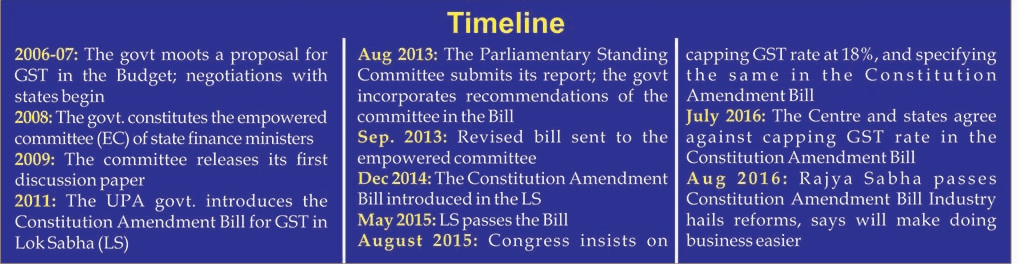
2.GST Achievements and Challenges After Eight Years (Indirect Tax Reform)

Economic Times
Illustration for GST Achievements and Challenges After Eight Years (Indirect Tax Reform)

What & Where

Goods & Services Tax: destination-based, value-added levy on all supplies across India

Dual model: CGST + SGST for intra-state; IGST for inter-state and imports

Anchored in 101st Constitutional Amendment; rolled out nationwide on 1 July 2017

Quick Facts for MCQs

Revenue Trend

  • Record ₹22.08 lakh cr FY25 collections outpaced nominal GDP growth
  • Average ₹1.84 lakh cr monthly inflow signals heightened compliance
  • Registrations surged to 1.51 cr from 65 lakh in 2017

Digital & Compliance

  • E-invoicing, e-way bills, real-time credit matching curb fraud and errors
  • Automated IGST refunds credited within a week, easing exporter liquidity
  • Planned AI-based single window linking GSTN, ICEGATE, DGFT, MCA

Structural Challenges

  • Five slabs + special rates trigger classification disputes, inverted duty pains
  • Petroleum & alcohol exclusion causes tax cascading, state revenue concerns
  • GSTAT vacancies pile appeals; ambiguities on intermediary, employee services

Reform Agenda

  • Phase inclusion of natural gas & ATF; compensate states temporarily
  • Target three-rate structure, merge/phase out compensation cess
  • Fast-track GSTAT appointments; offer amnesty on minor procedural lapses

Key Data Points

FeatureData-Point
Launch date1 July 2017
Constitutional backing101st Amendment Act, 2016
FY 2024-25 gross mop-up₹22.08 lakh crore
Avg monthly FY25₹1.84 lakh crore
Active GST registrations (Apr 2025)1.51 crore
Standard rate slabs0, 5, 12, 18, 28 %
Special rates0.25 %, 1 %, 3 % (precious metals)
Items outside GSTPetroleum products, potable alcohol
IGST refund timeline≤ 1 week via ICEGATE
Governing bodyGST Council

Related UPSC Prelims PYQs

CDS_GK, GS1 2017PYQ 1

वस्तु एवं सेवा कर (Goods and Services Tax/GST) के क्रियान्वयन हेतु निम्नलिखित संभावित लाभ क्या है/हैं ?

CDS_GK, GS1 2024PYQ 2

Which one of the following statements regarding GST is not correct?

GS-3Economy

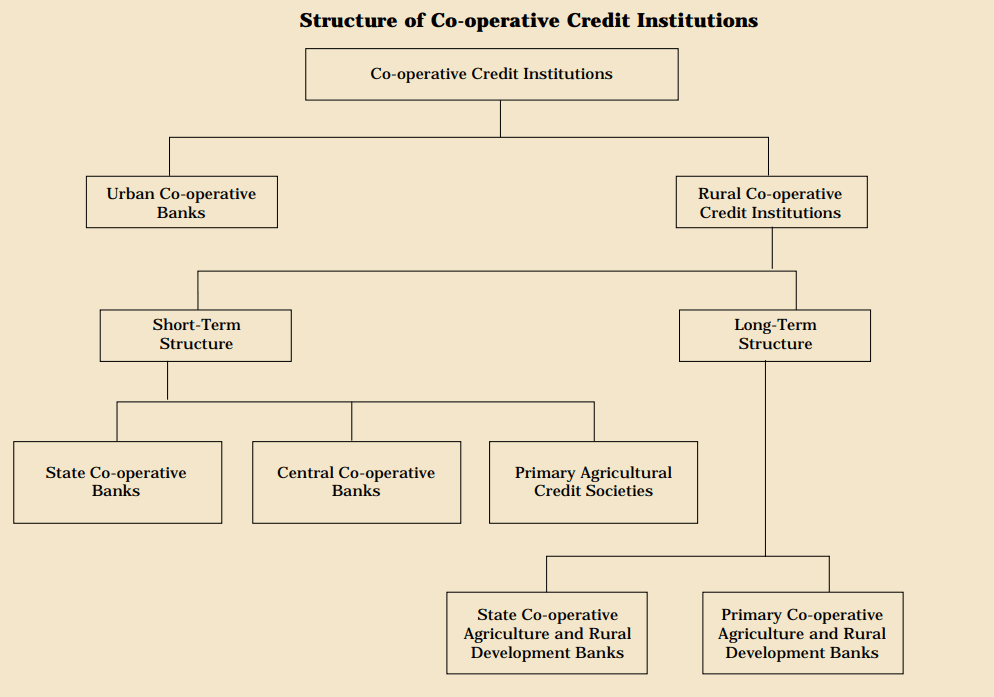
3.Voluntary Amalgamation Scheme for Urban Cooperative Banks (Co-operative Bank Merger)

LiveMint
Illustration for Voluntary Amalgamation Scheme for Urban Cooperative Banks (Co-operative Bank Merger)

What & Where

Voluntary Amalgamation Scheme: RBI master-direction (2020) permitting merger of Urban Co-operative Banks (UCBs).

Coverage: all primary (single-state & multi-state) UCBs operating across India.

Structure: weaker “amalgamated” bank’s assets & liabilities shift to stronger “amalgamating” bank to safeguard depositors.

Quick Facts for MCQs

Legal & Policy

  • RBI empowered to direct, approve or reject UCB mergers to uphold financial stability & depositor interest.
  • Extension of Prompt Corrective Action to UCBs effective April 2025.
  • National Co-operative Policy 2025⁠–⁠2045 envisages one co-op per village, 2 lakh new PACS.

Operational Conditions

  • Positive net worth case: merger allowed with full depositor protection by acquiring bank.
  • Negative net worth cases: allowed with voluntary protection or state-government support.
  • Core Banking System adoption mandated for all UCBs by Mar 2025.

Regulatory Oversight

  • FY 24-25: RBI issued 215 penalties, cancelled 7 licences, restricted 23 UCBs for KYC, NPA & fraud breaches.
  • Revised prudential norms raised loan ceilings, eased provisioning timelines, tweaked real-estate exposure.
  • Master Direction on Fraud Management 2024 installs early-warning flags & accountability ladders.

Key Data Points

FeatureData-Point
Governing law sections35A, 44A, 56 of Banking Regulation Act, 1949
Supporting amendmentBanking Regulation (Amendment) Act, 2020
Board nod threshold≥ ⅔ of total directors of each UCB
Shareholder nod threshold≥ ⅔ of members (number & value) present in person
Master Direction release year2020
Priority Sector Lending ask for UCBs FY 24-2565 % of ANBC (target 75 % by Mar 2026)

Related UPSC Prelims PYQs

GS1 2021PYQ 1

भारत में ‘शहरी सहकारी बैंकों’ के संबंध में, निम्नलिखित कथनों पर विचार कीजिए :

GS1 2017PYQ 2

Which of the following statements best describes the term ‘Scheme for Sustainable Structuring of Stressed Assets (S4A)’, recently seen in the news?

GS-1History

4.Gaden Phodrang Trust Reincarnation Authority (Tibetan Buddhism)

Indian Express
Illustration for Gaden Phodrang Trust Reincarnation Authority (Tibetan Buddhism)

What & Where

Gaden Phodrang Trust: Dharamshala-based nonprofit overseeing recognition of future Dalai Lamas.

Core process: validates reincarnation via traditional visions, divinations, high-lama consultations.

Geography: Originated at Drepung Monastery, Lhasa; functions from Dalai Lama’s office, Himachal Pradesh.

Quick Facts for MCQs

Historical Context

  • Emergence: Became spiritual-political seat of Dalai Lamas from 1642 under Fifth Dalai Lama.
  • Transition: Lost governmental role post-1959 exile; reoriented to spiritual guardianship in India.
  • Continuity: Upholds Tibetan Buddhist lineage amid diaspora conditions.

Institutional Structure

  • Governance: Chaired by Dalai Lama, managed by close monastic-lay aides.
  • Collaboration: Coordinates charitable, outreach work with Delhi & Zurich sister bodies.
  • Legal base: Indian trust law ensures operational autonomy.

Succession Process

  • Indicators: Dreams, omens, oracle pronouncements, sacred-site divinations guide search.
  • Validation: Final recognition decision vested exclusively in Gaden Phodrang trustees.
  • Safeguard: Codified 2011 statement reiterated June 2024 before Dalai Lama’s 90th birthday.

Security Dimension

  • Assertion: Trust’s exclusivity counters state-backed Chinese plans to appoint rival reincarnate.
  • Autonomy: Reaffirmed religious self-determination aligns with 2011 Dalai Lama decree.
  • Vigilance: International attention expected during eventual transition phase.

Key Data Points

FeatureData-Point
Registration year2011
Legal formIndian non-profit trust
HeadquartersDharamshala, Himachal Pradesh
Chairperson14th Dalai Lama
Key aideProf. Samdhong Rinpoche
Primary mandateSole authority to recognise 15th Dalai Lama & successors
Historical seat span17th century – 1959 in Tibet
Linked bodiesDalai Lama Trust (Delhi), Gaden Phodrang Foundation (Zurich)
Protection focusInsulates succession from external, notably Chinese, interference
GS-3Environment

5.RECLAIM Framework for Just Mine Closure Transition (Mine Closure Transition)

ET Energy
Illustration for RECLAIM Framework for Just Mine Closure Transition (Mine Closure Transition)

What & Where

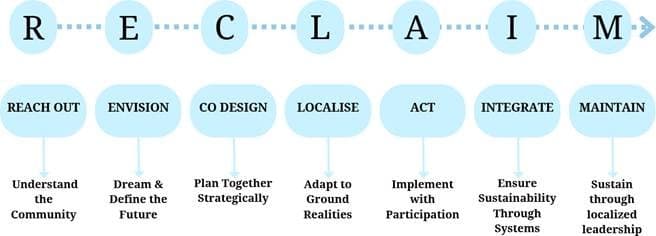
Acronym RECLAIM = structured Community Engagement & Development Framework guiding mine closure and repurposing

Launched by Ministry of Coal with Coal Controller Organisation & Heartfulness Institute across Indian coalfields

Step-wise guide enabling just, inclusive social-ecological transitions in post-mining regions

Quick Facts for MCQs

Legal & Policy

  • Novelty: First-of-its-kind people-centric closure policy in Indian coal sector
  • Accountability: Institutionalised community consultation across planning, execution, monitoring
  • Alignment: Integrates national climate adaptation and net-zero targets

Environmental Impact

  • Reclamation: Focus on land reshaping, water-table recharge, afforestation
  • Resilience: Enhances climate adaptation, biodiversity in degraded mining zones
  • Metrics: Ecological indicators fixed for post-closure audits

Social Concerns

  • Participation: Gram sabhas, social audits, grievance systems embedded
  • Inclusion: Mandatory seats for women, SC/ST, vulnerable groups
  • Livelihood: Skilling and alternate enterprise programmes cushion job losses

Key Data Points

FeatureData-Point
Acronym meaningCommunity Engagement & Development Framework for mine closure
Nodal ministryMinistry of Coal
Key collaboratorsCoal Controller Organisation; Heartfulness Institute
Policy natureVoluntary yet structured mine-closure community roadmap
Equity focusWomen & vulnerable groups representation mandatory
Governance linkPanchayati Raj Institutions embedded in planning
Environmental actionsReclamation, water-table renewal, afforestation
Socio-economic toolsAlternate livelihood, skilling, capacity building
Toolkit offerReady templates & field-tested models
National firstIndia’s debut people-centric coal-closure framework
GS-3Environment

6.Model Rules Simplify Tree Felling on Farmland (Agroforestry Regulations)

PIB

What & Where

Model Rules for Felling Trees in Agricultural Lands 2025; MoEFCC guide easing tree harvest on non-forest farms

Lays down online processes for plantation registration, felling permission, timber transit via National Timber Management System (NTMS)

Pan-India reference; states adopt voluntarily, echoing National Agroforestry Policy 2014

Quick Facts for MCQs

Legal & Policy

  • Alignment with Forest (Conservation) Act exemptions for private farmland
  • Provides model; states free to tweak species lists, fee, timelines
  • Mandates periodic MoEFCC review for uniformity and compliance

Tech & Schemes

  • Digital registration, GPS coordinates, geotagged photos ensure traceability
  • Google Earth imagery used to project timber yield, detect illegal felling
  • NTMS integration planned with e-Transit Pass and wood-based industry databases

Economic Angle

  • Incentivises high-value trees like teak, sandalwood, poplar boosting farm income
  • Domestic timber supply augmentation aims to curb costly imports
  • Creates rural jobs in nursery, harvesting, transport, wood processing

Environmental Impact

  • Enhances carbon sequestration aiding Paris targets and NDC sink goals
  • Promotes on-farm biodiversity, water retention, soil health resilience
  • Reduces extraction pressure on natural forests through farm-grown wood

Implementation Challenges

  • Portal development lag and patchy internet hinder early rollout
  • Low digital literacy among smallholders may spur middlemen dependency
  • Potential timber-lobby misuse if state monitoring stays weak

Key Data Points

FeatureData-Point
Notification year2025
Issuing ministryMoEFCC
Land categoryNon-forest agricultural lands
Portal nameNational Timber Management System
Trees ≤10Photo upload; auto NOC
Trees >10Online form + field verification
State oversight bodyState-Level Committee
Third-party roleEmpanelled verification agencies
India’s wood import bill≈ US $2 billion/yr
Policy linkageNational Agroforestry Policy 2014
GS-2Editorial

7.India Ghana Relations Strengthen Via State Visit (India-Ghana Ties)

PIB
Illustration for India Ghana Relations Strengthen Via State Visit (India-Ghana Ties)

What & Where

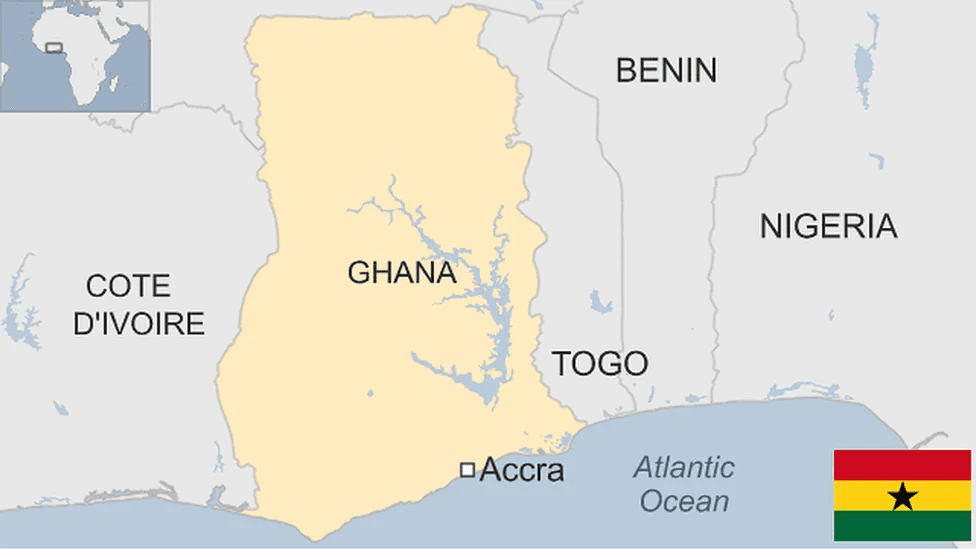
Ghana – West African republic; borders Côte d’Ivoire, Burkina Faso, Togo; opens to Gulf of Guinea/Atlantic

Lake Volta – among world’s largest man-made lakes; spans central Ghana, within Volta River basin

2025 Modi visit – first Indian PM trip in 30 yrs; ties elevated to Comprehensive Partnership

Quick Facts for MCQs

Bilateral Agreements

  • MoUs cover Cultural Exchange, Standards, Ayurveda-Traditional Medicine, Joint Commission institutionalisation
  • Partnership upgrade labelled Comprehensive; digital public infrastructure sharing incl. UPI offered
  • Ghana backed India as Global South voice; India thanked for multilateral alignment

Economic Angle

  • Ghana exports gold, cocoa, cashew; India supplies pharma, agri-machinery, textiles; balance favours Ghana
  • Indian companies crucial in healthcare supply chains via affordable generics
  • Africa overall: Indian investments USD 75 billion; target to double by 2030

Development & Tech Cooperation

  • Concessional credits finance rural electrification, sugar, fish processing, rail connectivity
  • Digital initiatives: Pan-African e-Network, e-VBAB scholarships, over 1,100 Ghanaians trained under ITEC
  • India pledged USD 2 billion for African solar projects through International Solar Alliance

Key Data Points

FeatureData-Point
Ghana capitalAccra
Independence year1957
Civilian award to PMOfficer of the Order of the Star of Ghana
India–Ghana trade 2024-25USD 3 billion
Ghana export share in Indian importsGold ≈ 70 %
Indian investment projects≈ 900 worth USD 2 billion
Indian LoCs to GhanaUSD 450 million
Key rail projectTema–Mpakadan incl. 300 m Volta bridge
Ghana–India ICT hubKofi Annan Centre (2003)
India–Africa trade 2025USD 100 billion

Related UPSC Prelims PYQs

NDA_GAT 2022PYQ 1

Nkrumah was one of the five leaders, who comprised the core of the Non-Aligned Movement (NAM). He was the leader of which country in Africa?

GS-2Economy

8.Seville Financing for Development Conference Global Finance Reform (Global Finance Reforms)

Down to Earth

What & Where

Fourth International Financing for Development Conference (FfD4); UN forum on sustainable-development finance reform.

Scheduled 2025, Seville, Andalusia, Spain; convened by UN Department of Economic & Social Affairs.

Targets equitable financial architecture aligned with climate goals before COP30 (Belém, 2025).

Quick Facts for MCQs

Governance Reforms

  • MDBs: call for capital-adequacy review, mission expansion toward climate-development nexus.
  • Debt: advocates sustainable restructuring mechanisms to avoid future fiscal crises.
  • Taxation: pushes global rules curbing illicit flows, boosting domestic revenues.

Climate Finance Targets

  • USD 1.3 trn: proposed yearly mobilisation by 2035 via B2B roadmap.
  • Implementation: COP30 leaders demand delivery mechanisms, not fresh negotiations.
  • Levies: solidarity taxes on private jets, cross-border finance to raise grant-based funds.

Equity & Inclusion

  • Emissions: top 1 % blamed for half of output; accountability sought.
  • Participation: indigenous, women, youth requested guaranteed roles in future COPs.
  • South-South: conference backs India’s G20 call for fair, non-loan climate finance.

Key Data Points

FeatureData-Point
Conference editionFourth (FfD4)
Host city / yearSeville, Spain / 2025
Lead UN bodyUN DESA
Key roadmap name“Baku to Belém” (B2B)
Annual climate-finance goalUSD 1.3 trillion by 2035
Focus institutionsMultilateral Development Banks
Proposed revenue toolGlobal Solidarity Levies (tax private jets, financial flows)
Equity statisticRichest 1 % causes ~50 % global emissions
GS-3S&T

9.Financial Fraud Risk Indicator for Mobile Numbers (Cyber Fraud Prevention)

Business Standard

What & Where

Financial Fraud Risk Indicator (FRI) = mobile-number risk-classification tool to curb cyber-enabled financial frauds.

Developed by Digital Intelligence Unit, Department of Telecommunications; advised for adoption by RBI across Indian banks.

Operational nationwide since May 2025; hooks into banking & UPI transaction rails.

Quick Facts for MCQs

Tech & Schemes

  • API architecture enables instant delay, decline or flag of suspect transactions.
  • MNRL circulates disconnected/deactivated fraud numbers to stakeholders.
  • FRI complements DoT’s Chakshu crowdsourced reporting platform.

Security Dimension

  • Risk tagging triggers secondary KYC or customer warning for High/Very High categories.
  • Shared intelligence loop among DoT, RBI, banks reduces social-engineering and mule-account frauds.
  • Aims to bolster public trust in world-leading Indian real-time payments volume.

Stakeholder Network

  • Core triad: DoT (data), RBI (regulatory push), Banks/UPI players (execution).
  • Collaborative surveillance model mirrors public-private partnership ethos.

Operational Mechanism

  • Inputs funnelled from NCRP FIRs, user complaints, bank incident logs.
  • Continuous scoring allows proactive blocking before funds leave victim’s account.

Key Data Points

FeatureData-Point
Primary objectiveReal-time flagging of fraud-linked mobile numbers
Launch month/yearMay 2025
Developing bodyDigital Intelligence Unit (DoT)
Current regulator pushRBI advisory to all banks
Risk tiersMedium, High, Very High
Integration modeAPI into banking/UPI systems
Key data sourcesNCRP, Chakshu, banks/UPI reports
Revocation list nameMobile Number Revocation List (MNRL)
Sample private adoptersPhonePe, Paytm, HDFC, ICICI, PNB
Supports national visionDigital India & secure UPI ecosystem
GS-3SecurityQuick Bite

10.NCB Operation MED MAX Busts Global Cartel (Transnational Drug Cartel)

The Hindu

What & Where

Operation MED MAX: NCB–led crackdown dismantling a transnational drug cartel.

Narcotics Control Bureau: apex drug-law enforcement/intel agency, formed 1986 under NDPS Act; HQ New Delhi.

Cartel footprint: >10 countries across Asia, North America, Europe, Oceania.

Quick Facts for MCQs

Legal & Policy

  • Article 47 mandates prohibition of intoxicants except medicinal use, guiding national narcotics policy.
  • Supplementary laws strengthen control over manufacture, traffic and forfeiture of drug proceeds.
  • Treaty commitments align domestic law with global narcotics control norms.

Security Dimension

  • NCB spearheads digital, maritime and air-cargo interdictions against organised drug syndicates.
  • MED MAX bust curtails terror-financing and organised crime links, boosting internal security.
  • Multilateral raids improve real-time intel flow and joint operational reach.

International Linkages

  • Ongoing coordination with US DEA, Interpol, other national agencies for synchronized sting operations.
  • Cartel’s four-continent network highlights necessity of transnational legal assistance.
  • UN convention membership eases extradition, evidence sharing and asset freezing.

Key Data Points

FeatureData-Point
Parent ministryMinistry of Home Affairs
Establishment year1986
Foundational ActNDPS Act, 1985
HQ locationNew Delhi
Constitutional basisArticle 47, DPSP
Major 2025 actionOperation MED MAX
Key partnersUS DEA, Interpol
Parallel ActsDrugs & Cosmetics 1940; PIT NDPS 1988
UN treaties signed1961, 1971, 1988 Conventions
GS-2Scheme

11.Research Development Innovation Scheme Funding Boost (Innovation Funding)

PMI
Illustration for Research Development Innovation Scheme Funding Boost (Innovation Funding)

What & Where

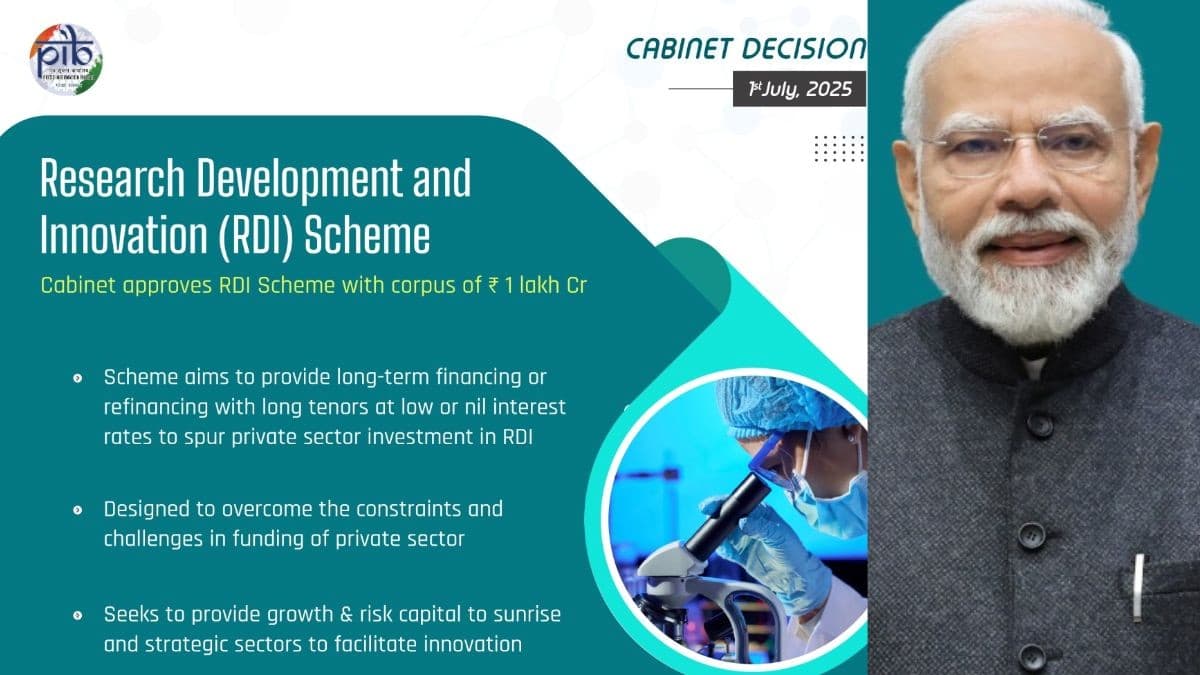
Government long-term financing scheme to spur private R&D, innovation and tech commercialisation

Nationwide roll-out; strategic direction by Anusandhan National Research Foundation chaired by PM

₹1 lakh crore corpus channelled via Special Purpose Fund to second-level fund managers

Quick Facts for MCQs

Legal & Policy

  • Governance layered: ANRF strategic, EGoS oversight, DST nodal
  • Union Cabinet approval positions scheme under national innovation strategy
  • Alignment with Atmanirbhar Bharat self-reliance goals

Funding Structure

  • Two-tier flow: Tier-1 Special Purpose Fund, Tier-2 sectoral fund managers
  • Instruments include low/nil interest loans, equity, risk capital
  • Deep-Tech Fund of Funds earmarked for AI, semiconductors, quantum, biotech

Objectives

  • Scale private R&D in sunrise and strategic sectors
  • Accelerate market-ready high-TRL technologies
  • Enable domestic development or acquisition of critical technologies

Significance

  • Bridges private R&D credit gap, reduces investment risk
  • Catalyses deep-tech innovation vital for economic growth
  • Supports defence tech, electronics, clean energy self-reliance

Key Data Points

FeatureData-Point
Corpus size₹1 lakh crore
Nodal ministryDepartment of Science & Technology
Strategic bodyAnusandhan National Research Foundation
Policy oversightEmpowered Group of Secretaries, Cabinet Secretary
Financing natureLow or zero interest long-term loans
Equity supportAvailable to startups and MSMEs
Dedicated FoFDeep-Tech Fund of Funds
Priority stageHigh Technology Readiness Level projects
Tech acquisition aidCritical foreign technologies eligible

Related UPSC Prelims PYQs

CDS_GK, GS1 2021PYQ 1

NIDHI is an umbrella scheme for the promotion of

CDS_GK, GS1 2019PYQ 2

अटल नवाचार (Innovation) मिशन किसके अधीन स्थापित किया गया है?

GS-2Scheme

12.SPREE 2025 Expands ESI Social Security Coverage (ESI Coverage Expansion)

DD News

What & Where

SPREE 2025 = one-time amnesty scheme to onboard unregistered employers & workers to Employees’ State Insurance (ESI) net

Launched pan-India by Employees’ State Insurance Corporation under Ministry of Labour & Employment

Operates via ESIC, Shram Suvidha & MCA online portals

Quick Facts for MCQs

Tech & Schemes

  • Digital-first; end-to-end registration through three integrated government portals
  • Removes offline paperwork, enabling rapid employer onboarding
  • Aligns with broader e-Shram, MCA compliance initiatives

Legal & Policy

  • Amnesty; shields from retrospective contribution, inspection, litigation
  • Encourages self-declaration; validity begins once employer states joining date
  • Complements Code on Social Security push for universal coverage

Social Concerns

  • Formalisation; draws informal workers into contributory health insurance & cash benefits
  • Enhances access to healthcare, maternity, disability & dependent support
  • Targets ~90% workforce presently outside organised social-security net

Key Data Points

FeatureData-Point
Full nameScheme for Promotion of Registration of Employers and Employees 2025
Launching bodyEmployees’ State Insurance Corporation (ESIC)
Parent ministryLabour & Employment
Coverage aimContractual, temporary, unorganised workers
Core benefitZero penalty, inspection, or legal demand for pre-registration period
Registration validityFrom date self-declared by employer
NatureOne-time voluntary compliance window
Registration modesESIC portal, Shram Suvidha portal, MCA portal
Key objectiveLabour formalisation & social-security expansion
Duration tagLabeled “2025”; single-window enrolment drive
GS-2Scheme

13.National Sports Policy 2025 Aims Olympic Excellence (Sports Governance Policy)

PIB
Illustration for National Sports Policy 2025 Aims Olympic Excellence (Sports Governance Policy)

What & Where

Policy: National Sports Policy 2025 (Khelo Bharat Niti) supersedes NSP 2001 to transform India into a global sporting leader

Scope: five-pillar roadmap covering grassroots-to-podium excellence, economy, social inclusion, people’s movement, education linkage

Geography: pan-India template; serves as model for all States & UTs; Olympic horizon set for 2036

Quick Facts for MCQs

Legal & Policy

  • Framework: draft sports law envisaged for transparency, accountability and NSF term limits
  • Alignment: synchronises with NEP 2020, Sports Code 2011, Fit India and Khelo India mandates
  • Model-policy: States urged to revise statutes in line with NSP 2025 standards

Economic Angle

  • Investment: incentivises sports startups, equipment clusters and broadcast-driven leagues
  • Tourism: targets mega-events, heritage games circuits to boost local economies
  • Manufacturing: leverages hubs like Meerut, Jalandhar for Make-in-India sports goods

Social Concerns

  • Inclusion: special quotas, safe facilities for women, tribal and PwD athletes
  • Culture: mass-participation campaigns and institutional fitness indices to shift academic bias
  • Tradition: revival of indigenous games to strengthen community identity

Tech & Schemes

  • Technology: AI, wearables, data analytics mandated for training, injury prevention, officiating
  • Science: national and zonal sports science centres for nutrition, biomechanics, psychology support
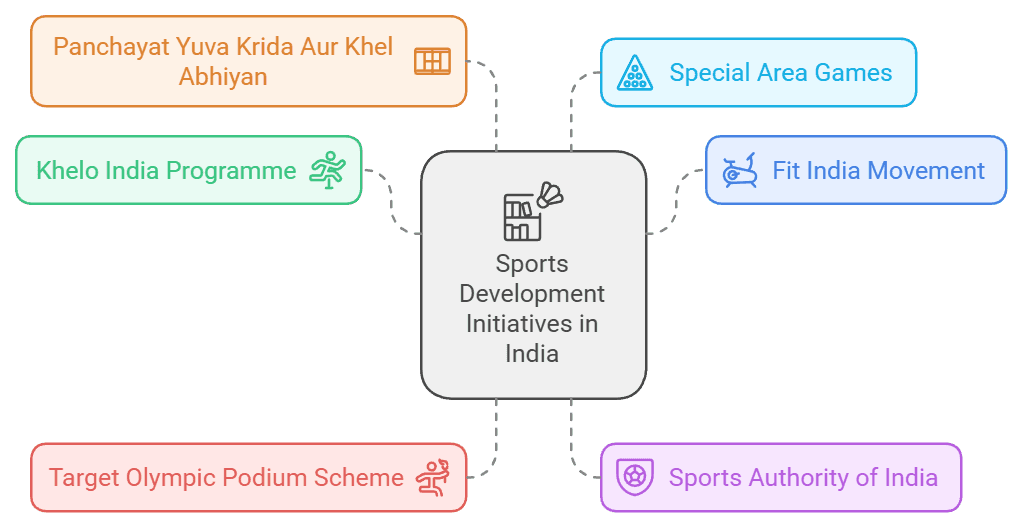
  • Schemes: synergy between TOPS elite support and Khelo India grassroots scouting

Governance Challenges

  • Issues: politicisation, red tape, ethical lapses evidenced by WFI and IOA controversies
  • Representation: Olympic contingent size still low versus USA 594, France 572, Australia 460
  • Market skew: cricket held 87 % sponsorship share in 2023, starving other disciplines

Key Data Points

FeatureData-Point
Union Cabinet nodJuly 2025
Previous policy replacedNational Sports Policy 2001
Long-term milestone2036 Olympic Games bid
Pillars count5 (Excellence, Economic, Social, People, Education)
Lead ministryMinistry of Youth Affairs & Sports
Monitoring toolKPIs with time-bound targets
Private funding routesPPPs and CSR investments
Flagship feeder schemesKhelo India 2017; TOPS 2014

Related UPSC Prelims PYQs

CAPF_GAI 2024PYQ 1

Which of the following statements with regard to National Logistics Policy (NLP) is NOT correct?

GS-1Editorial

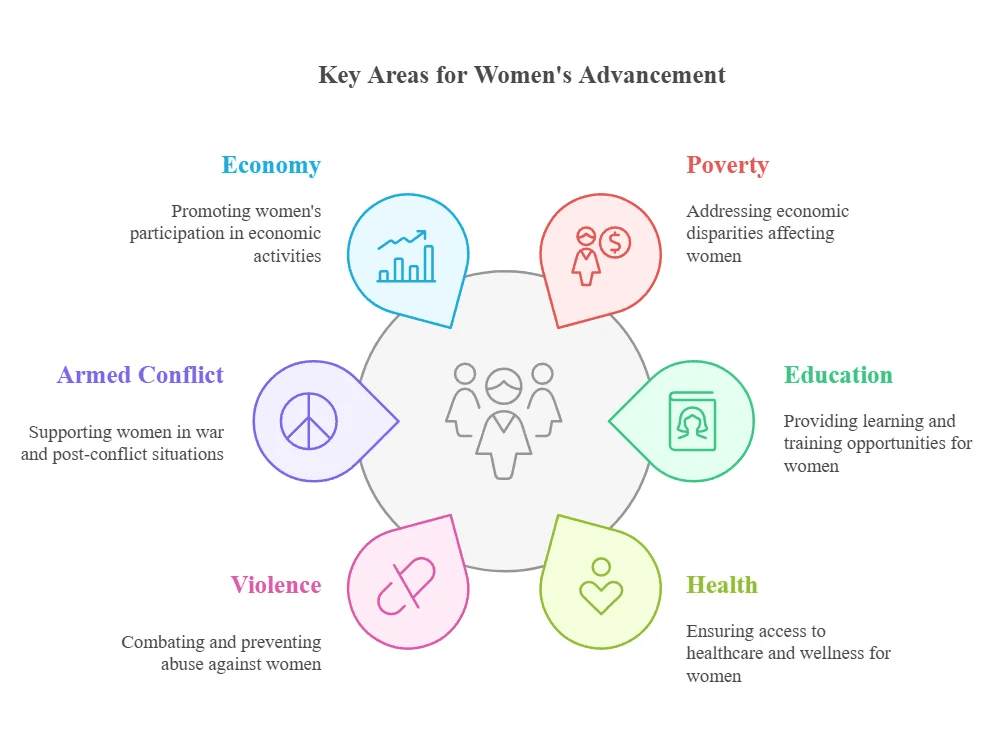
14.UN Women Warns of Global Gender Setbacks (Global Gender Equality)

Down to Earth
Illustration for UN Women Warns of Global Gender Setbacks (Global Gender Equality)

What & Where

Beijing Declaration & Platform for Action 1995 Beijing; global roadmap on 12 critical areas for gender equality

UNSC Resolution 1325 (2000) on Women, Peace & Security; four pillars—participation, protection, prevention, relief-recovery

UN Women created 2010 via UNGA; merges DAW, INSTRAW, OSAGI, UNIFEM; mandate gender equality & women’s empowerment

Quick Facts for MCQs

Legal & Policy

  • Backlash 2024 reported by 1 in 4 countries against women’s rights
  • Discriminatory labour laws restrict equal job access in half the world
  • Only 4 % global aid earmarked for gender equality initiatives

Violence & Security

  • One woman or girl killed every 10 minutes by partner or relative
  • 2020-23 peace talks 80 % and mediations 70 % excluded women
  • UNSC 1325 insists on gender-inclusive peacebuilding and protection from sexual violence

Economic Angle

  • Wage inequality 20 % global, India urban gap 29.4 %, rural 51.3 %
  • Women perform 2.5 × unpaid care; proposed care infrastructure may add 300 million jobs by 2035
  • Majority (81 %) of Indian working women situated in informal sector without social security

Social Concerns

  • Digital divide India: mobile ownership 54 % women vs 82 % men; internet use 33 % vs 57 %
  • Domestic work India: women 236 min/day vs men 24 min/day limiting skilling and income
  • Maternal health: nearly 800 women die daily from preventable pregnancy-related causes globally

Climate & Environment

  • Climate change may push extra 158 million women into extreme poverty by 2050
  • Women hold only 28 % of environment ministerial posts worldwide

Key Data Points

FeatureData-Point
Women’s legal rights vs men64 % parity only
Countries limiting women’s jobs51 %
Global lawmakers male~75 %
ODA targeting gender equality (2021-22)4 %
Women intentionally killed 202385,000
Pay gap globally20 % less for equal work
Unpaid care work ratio2.5 × more by women
Women facing food insecurity47.8 million more than men
Girls out of school119 million
Indian FLFPR 2023-2441.7 %

Related UPSC Prelims PYQs

GEO_GS, GS1 2015PYQ 1

‘Beijing Declaration and Platform for Action’, often seen in the news, is

GEO_GS, GS1 2024PYQ 2

Consider the following statements with reference to a Report titled 'The Paths to Equal', published in 2023, prepared by 'UN Women' and 'UNDP' (United Nations Development Programme):

GS-1Scheme

15.Savitribai Phule Women and Child Development Institute (Women & Child Welfare)

New Indian Express

What & Where

Premier autonomous institute under Ministry of Women & Child Development, renamed Savitribai Phule National Institute of Women & Child Development (SP-NIWCD)

Mandate: training, research, capacity-building for women, child, adolescent welfare schemes

HQ New Delhi; five existing regional centres + new Ranchi centre for Jharkhand, Bihar, Odisha, West Bengal

Quick Facts for MCQs

Legal & Policy

  • Renaming signals government recognition of gender-inclusive reform legacy
  • Institute supplies evidence-based inputs to strengthen WCD scheme guidelines
  • Supports Panchayat-level governance through capacity modules

Regional Outreach

  • Ranchi centre decentralises training, cuts travel for Eastern India staff
  • Region-specific interventions adapt to tribal, rural nutritional needs
  • Enhances last-mile delivery via local language counselling material

Operational Functions

  • Training covers induction & refresher for ICDS, Poshan, Mission Shakti staff
  • Research wing tackles gender, adolescent mental health, nutrition studies
  • Digital documentation archives best practices, creates e-modules for Anganwadi workers

Key Data Points

FeatureData-Point
Old nameNational Institute of Public Cooperation & Child Development (NIPCCD)
HonoureeSavitribai Phule, pioneer woman educationist & reformer
Parent ministryWomen & Child Development
Legal statusAutonomous body, national apex institute
HeadquartersNew Delhi
Existing centresBengaluru, Guwahati, Lucknow, Indore, Mohali
New centreRanchi (Eastern India focus)
Key missions linkedMission Shakti, Vatsalya, Saksham Anganwadi, Poshan 2.0
Frontline workers served≈ 7 lakh
Sample diploma offeredChild Guidance & Counselling
Core functionsTraining, research, policy support, documentation, innovation

Ready to practice?

Test your knowledge with our UPSC test series.

Start Free Trial