UPSC Current Affairs

6 topicsGS-2: 3GS-3: 3
0/6 done
GS-2Polity

1.Preamble Socialist-Secular Debate (Preamble Debate)

Indian Express
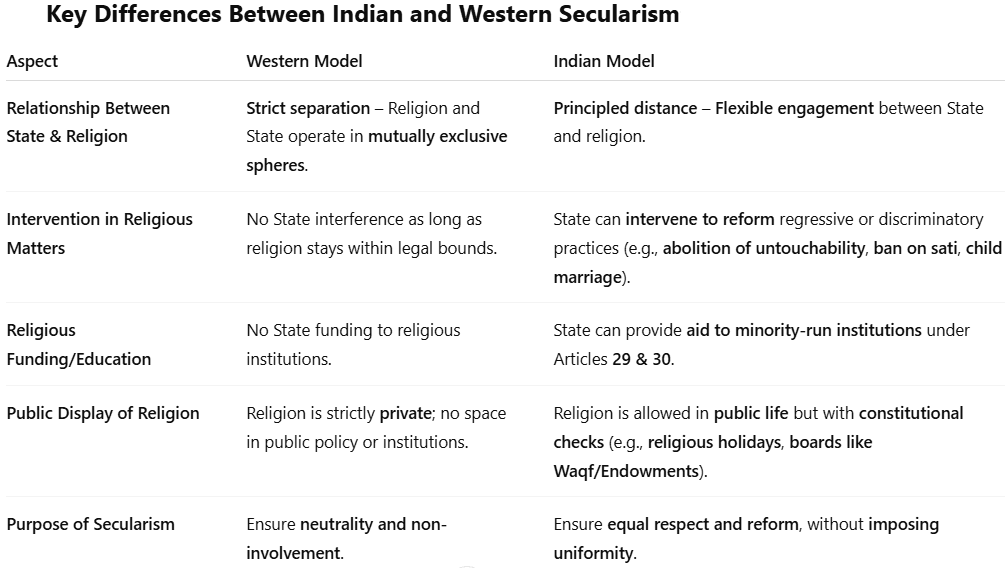
Illustration for Preamble Socialist-Secular Debate (Preamble Debate)

What & Where

Preamble = introductory part of Constitution, mirrors Objectives Resolution (22 Jan 1947) and encapsulates justice-liberty-equality-fraternity vision.

42nd Amendment Act 1976 (Emergency era) inserted the words “Socialist”, “Secular” and added “Integrity” to “unity”.

Supreme Court treats secularism & socialism as Basic Structure; Parliament cannot delete them.

Quick Facts for MCQs

Constituent Assembly Debate

  • Ambedkar: Constitution framework shouldn’t freeze ideologies; values must evolve via people’s will.
  • Nehru: Mere wording symbolic; secularism must be practised, not proclaimed.
  • Misra/Kamath: Feared term might appear anti-religious, alienating faith groups.

Judicial Pronouncements

  • Kesavananda 1973: secularism & socialism intrinsic basic structure.
  • Minerva Mills 1980: DPSPs’ socialist aims can override Arts 14 & 19 when needed.
  • Balram Singh 2024: SC dismissed plea, upheld Preamble wording validity.

Arguments For

  • Constitution already carried secular-socialist spirit via Arts 14-16, 25-28 & DPSPs.
  • Terms formalised prevailing policy of mixed economy & equal religious respect.
  • Adds clarity for legislature, judiciary when balancing rights & social justice.

Arguments Against

  • Critics: 1976 insertion “betrayed” framers’ intent; Preamble should stay untouched.
  • Viewed as Western constructs; India follows positive religion–state engagement, not strict separation.
  • Retrospective amendment seen as diluting Preamble’s sanctity adopted in 1949.

Indian Secularism Model

  • Principled-distance: state equidistant from all faiths; no religious teaching in govt schools.
  • Non-interference: respects rituals unless violating fundamental rights.
  • Selective intervention: abolishes untouchability, reforms personal laws to ensure equality.

Key Data Points

FeatureData-Point
Objectives Resolution date22 Jan 1947
Preamble adoption26 Nov 1949
Constitution commencement26 Jan 1950
Amendment inserting words42nd CAA 1976
Emergency periodJun 1975–Mar 1977
Extra word added with themIntegrity
Amendment reviewing Emergency changes44th CAA 1978 (retained new words)
Basic-structure rulingKesavananda Bharati 1973
Secularism reinforcedS.R. Bommai 1994
Latest SC upholding insertionBalram Singh v. UOI 2024

Related UPSC Prelims PYQs

GEO_GS, NDA_GAT 2023PYQ 1

Which of the following words/phrases was not incorporated into the Preamble to the Constitution of India by the Forty-second Amendment?

GEO_GS, NDA_GAT 2021PYQ 2

With regard to the Constitution of India, which one of the following statements is not correct?
GS-2Polity

2.India's Deportation Framework (Deportation Law)

The Hindu

What & Where

Deportation = formal removal of illegal foreigner after legal proceedings; Pushback = field-level, extra-legal return across border.

Hotspots: Assam, West Bengal along India-Bangladesh border; new fencing across entire 1,643 km India-Myanmar frontier.

Competent agencies: MHA-led Bureau of Immigration/FRRO for deportation; BSF for pushbacks.

Quick Facts for MCQs

Legal & Policy

  • Consolidation: 2025 Act replaced four legacy statutes, made BoI a statutory body.
  • Restriction: Entry can be denied on security, health, foreign-relations grounds; immigration officer’s decision final.
  • Reporting: Hotels, schools, hospitals in notified areas must file foreigner details.

Human-Rights Concerns

  • Burden-of-proof: Foreigners Tribunals often presume foreignness, impacting poor with scant documents.
  • Wrongful-pushbacks: Indian citizens mistakenly forced into Bangladesh/Myanmar, violate Articles 14 & 21.
  • Non-signatory: India outside 1951 Refugee Convention, follows ad-hoc humanitarian approach.

Border Arrangements

  • Nepal: unrestricted movement; Bangladesh/Pakistan: strict passport-visa regime.
  • Post-2023 Manipur violence, fencing & FMR review aimed at curbing illegal Myanmar inflow.
  • Protected/Restricted/Prohibited Areas: special permits mandatory for foreigners near strategic zones.

Institutional Mechanisms

  • Bureau of Immigration: issues visas, controls borders, registers foreigners.
  • Foreigners Tribunals: quasi-judicial bodies deciding citizenship disputes; need training & audits for fairness.
  • BSF: executes on-ground interceptions, sometimes triggering extra-legal pushbacks.

Key Data Points

FeatureData-Point
Core deportation lawForeigners Act 1946 + Immigration & Foreigners Act 2025
Pushback legal statusNot codified; no judicial oversight
Max penalty under Immigration & Foreigners Act 20255 yrs jail or ₹5 lakh
NRC exclusions (2019)≈2 million persons
Assam-specific expulsion lawImmigrants (Expulsion from Assam) Act 1950
Treaty enabling visa-free entryIndia-Nepal Treaty of Peace & Friendship 1950
Free Movement Regime limit10 km on either side of India-Myanmar border
Planned Myanmar border fenceWhole 1,643 km
Principle violated by pushbacksNon-refoulement
Article safeguarding life & libertyArticle 21
GS-3SpeciesQuick Bite

3.Endangered Kharai Camel (Endangered Camel)

Down to Earth
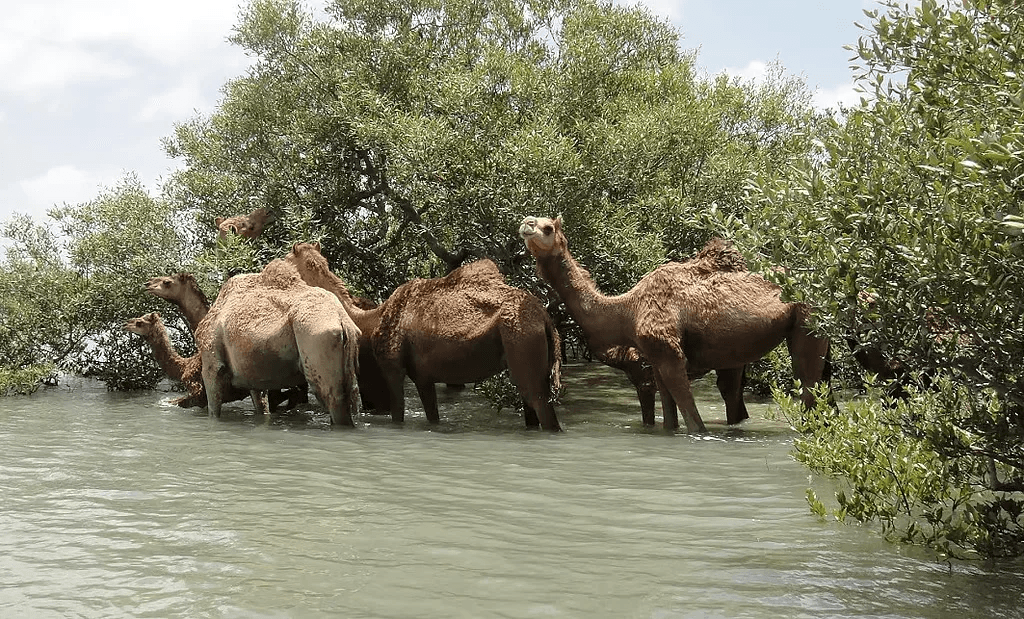
Illustration for Endangered Kharai Camel (Endangered Camel)

What & Where

Indigenous, swimming Kharai camel inhabits mangrove-fringed Kachchh coast, Gujarat

Thrives in saline, brackish estuaries; grazes on mangroves, not confined pastures

Classified Endangered IUCN; threatened breed listed by NBAGR

Quick Facts for MCQs

Biological Traits

  • Webbed feet aid efficient swimming across tidal creeks
  • Digestive system tolerates high-salt Avicennia, Rhizophora forage

Socio-Cultural Linkages

  • Maldhari herders consider camels family; rely for milk, transport, livelihoods
  • Breed recognition by NBAGR encourages community-led conservation programmes

Threat Drivers

  • Rapid salt-pan, cement expansion destroyed CRZ-I mangrove belts
  • Habitat shrinkage curtails forage, causing population dip
  • Industrial effluents further degrade estuarine ecology

Legal & Policy

  • NGT orders repeatedly sought halt to Kachchh mangrove clearance
  • CRZ-I mandates highest protection yet enforcement weak

Key Data Points

FeatureData-Point
IUCN statusEndangered
Core habitatMangrove, brackish estuaries, Kachchh
Unique adaptationWebbed feet, long-distance swimming
Community linkMaldhari pastoralists
Name derivation‘Khar’ = saline
Main threatsSalt pans, cement industry in CRZ-I

Related UPSC Prelims PYQs

GS1 2016PYQ 1

What is/are unique about 'Kharai camel', a breed found in India?

GS1 2011PYQ 2

A sandy and saline area is the natural habitat of an Indian animal species. The animal has no predators in that area but its existence is threatened due to the destruction of its habitat. Which one of the following could be that animal ?

GS-3S&TQuick Bite

4.Teak Leaf Optical Limiter (Optical Limiter)

PIB

What & Where

Teak (Tectona grandis): moist deciduous hardwood, dubbed “King of Timbers” for strength and decay-resistance.

Discovery: Teak leaf anthocyanin extract shows nonlinear optical limiting, shielding eyes/sensors from high-intensity lasers.

Range: Native to S & SE Asia; Indian tracts in MP, Maharashtra, Karnataka, Kerala, Tamil Nadu, Assam, Northeast.

Quick Facts for MCQs

Tech & Applications

  • Discovery: Teak leaf extract acts as natural nonlinear optical limiter against laser radiation.
  • Utility: Enables eco-friendly laser goggles, optical shields, sensor protectors.
  • Advantage: Plant-based pigment lowers reliance on synthetic photonic materials.

Botanical Features

  • Morphology: Large deciduous tree, opposite oblong dark-green leaves, small fragrant white/cream clustered flowers.
  • Timber: High natural oils confer pest, water, decay resistance, prized for shipbuilding and premium furniture.

Geographic Distribution

  • India: Natural stands in MP, Maharashtra, Karnataka, Kerala, Tamil Nadu, Assam, Northeast.
  • Region: Native across India, Myanmar, Thailand, Laos, Indonesia.

Legal & Policy

  • Regulation: Forest Conservation Act 1980 & National Forest Policy 1988 ban green felling in government teak forests.
  • Supply: Private plantations now main source for domestic and export demand.

Key Data Points

FeatureData-Point
World planted-teak shareIndia ≈ 35 %
Global teak resources in Asia95 %
Pigment enabling NLOAnthocyanins
Key optical useLaser safety goggles/optical shields
Tree trunk diameter1–1.5 m straight cylindrical
Green felling statusProhibited in govt forests (FCA 1980)
GS-3S&TQuick Bite

5.EPABX Office Switching (Telecom Switching)

The Hindu

What & Where

Electronic Private Automatic Branch Exchange (EPABX): in-house telephone switching for offices

Switching mechanism directs internal-to-internal and internal-to-external calls via shared trunk lines

Deployed primarily in corporate, government, institutional buildings worldwide

Quick Facts for MCQs

Technology Evolution

  • Electromechanical relays 1970s–80s: mechanical switches, electromagnets connected lines
  • Digital systems late 1980s: microprocessors enabled computer-controlled switching, faster call handling
  • VoIP integration 2000s+: voice packetised, transmitted over IP, reducing long-distance cost

Signal Processing

  • Pulse Code Modulation converts analog speech into binary pulses for digital transport
  • Time Division Multiplexing assigns time-slots letting multiple calls share one channel
  • VoIP compresses voice, encapsulates in IP packets for flexible routing

Operational Benefits

  • Shared trunk line cuts per-user telecom expenditure
  • Integrated platform simplifies intra-office extensions and external connectivity
  • Scalable architecture supports growing workforce without major wiring changes

Key Data Points

FeatureData-Point
Full formElectronic Private Automatic Branch Exchange
Primary functionInternal & external call switching via shared trunk
Initial tech era1970s–80s electromechanical relays
Digital upgradeLate 1980s microprocessor-based switching
Key digital methodsPulse Code Modulation; Time Division Multiplexing
Modern integrationVoice over Internet Protocol (VoIP)
GS-2Scheme

6.Employment Linked Incentive Scheme (Employment Incentive)

PIB

What & Where

Employment Linked Incentive (ELI) Scheme: Union Budget 2024-25 programme to catalyse formal youth employment.

Twin modules: Part A cash support to first-time EPFO workers; Part B wage subsidy to EPFO-registered employers.

Nationwide rollout 1 Aug 2025 – 31 Jul 2027; target 2.6 crore new formal jobs.

Quick Facts for MCQs

Legal & Policy

  • Cabinet-approved youth employment package worth ₹2 lakh crore; ELI forms half.
  • Incentive design aligned with EPF Act for formalisation compliance.
  • Conditionality links cash to retention and literacy, embedding accountability.

Economic Angle

  • Subsidy lowers private hiring cost, especially in manufacturing MSMEs.
  • Expected multiplier effect on consumption via wage support to fresh entrants.
  • Complements observed 10 % informal-sector employment growth FY 23-24.

Implementation Mechanics

  • Disbursement routed through ABPS ensuring real-time DBT transparency.
  • Employer claims verified against EPFO payroll data, minimising fraud.
  • Fixed-deposit component encourages long-term savings behaviour among youth.

Social Concerns

  • Focus on disadvantaged graduates promotes inclusive labour-market entry.
  • Formal social-security enrollment expands ESIC, NPS coverages.
  • Financial-literacy mandate aims at responsible income management.

Key Data Points

FeatureData-Point
Cabinet nodJuly 2025
Scheme windowAug 2025 – Jul 2027
Total outlay≈ ₹1 lakh crore
Part A benefitOne-month EPF wage, cap ₹15,000
Installments6- & 12-month completion; second tied to financial-literacy course
First-time EPFO workers targeted1.92 crore
Savings pushPortion auto-parked in fixed deposit
Part B subsidyUp to ₹3,000/worker/month for 24 months
Employer salary ceilingEligible hires ≤ ₹1 lakh/month
Min new hires2 (<50 staff); 5 (≥50 staff)
Retention requirement≥ 6 months
Employee payment modeDBT via Aadhar-Based Payment System
Employer payment modeCredited into PAN-linked account
FY 23-24 job addition4.67 crore
EPF enrollment growth H1 24-25+2.3 % to 6.1 million

Ready to practice?

Test your knowledge with our UPSC test series.

Start Free Trial