UPSC Current Affairs

12 topicsGS-1: 3GS-2: 3GS-3: 6
0/12 done
GS-2Polity

1.Banakacherla Reservoir Dispute (Inter-state Water)

Indian Express
Illustration for Banakacherla Reservoir Dispute (Inter-state Water)

What & Where

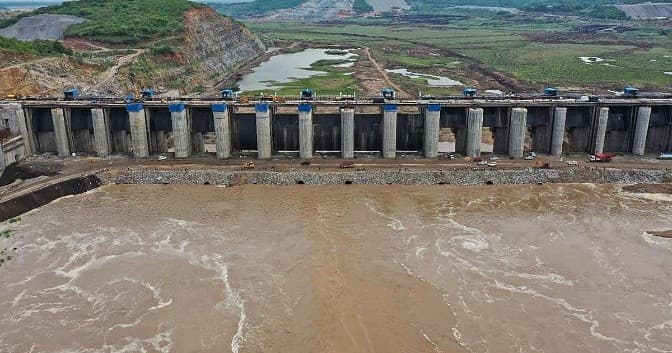
Banakacherla Reservoir Project: AP plan to divert surplus Godavari water via Krishna-Penna link for drought-prone Rayalaseema irrigation.

Geography: Intake through Polavaram Right Main Canal, tunnel under Nallamala forest to Banakacherla, Nandyal district, Andhra Pradesh.

Stakeholders: Implementing state Andhra Pradesh; objecting state Telangana citing Reorganisation Act 2014 violations.

Quick Facts for MCQs

Legal & Policy

  • ReorganisationAct2014 mandates prior KRMB GRMB CWC approval for inter-basin projects post bifurcation.
  • Telangana claims AP bypassed statutory procedure thus project is ultra vires.
  • Absence of final Godavari surplus assessment weakens diversion legality.

Project Specifications

  • Canal upgrades and five high-head lifts enable east-to-west river linkage.
  • Bollapalli reservoir functions as intermediate balancing and lift point.
  • Objective supplies Rayalaseema tanks via Banakacherla balancing reservoir.

Inter-State Dispute

  • Telangana fears reduced inflows to Kaleshwaram, Devadula, SRSP reservoirs.
  • Alleged diversion may upset Krishna water sharing downstream of Nagarjuna Sagar.
  • Issue adds to ongoing KRMB jurisdiction tussles between sibling states.

Key Data Points

FeatureData-Point
Implementing stateAndhra Pradesh
Objecting stateTelangana
Source riverGodavari
Receiving basinsKrishna → Penna
Project locationBanakacherla, Nandyal district
Polavaram Right Main Canal capacityIncrease 17,500 → 38,000 cusecs
Thatipudi Lift Canal capacityIncrease 1,400 → 10,000 cusecs
Lift stations5 (Harischandrapuram, Lingapuram, Vyyandana, Gangireddypalem, Nakirekallu)
Key tunnelThrough Nallamala forest to Banakacherla
Telangana Godavari share (GWDT)968 TMCft of 1,486 TMCft
Mandatory clearancesKRMB, GRMB, CWC
GS-2Polity

2.Strengthening Parliamentary Committees (Parliamentary Committees)

Indian Express
Illustration for Strengthening Parliamentary Committees (Parliamentary Committees)

What & Where

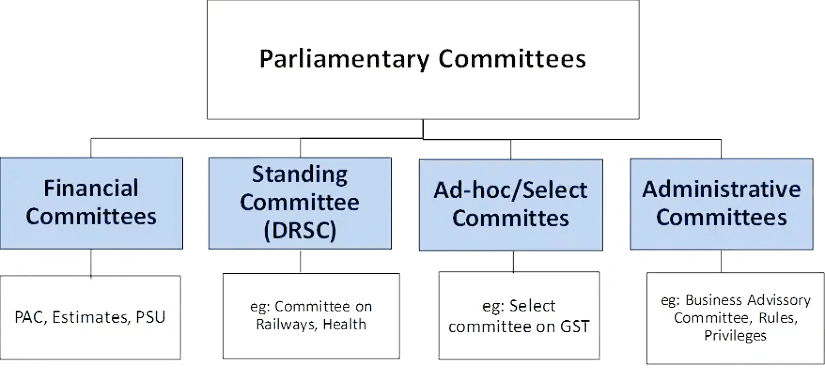
Definition: Panels set up by Lok Sabha/Rajya Sabha/Speaker-Chairman to examine business delegated by Parliament.

Classification: Standing (permanent, yearly reconstituted) and Ad hoc (task-specific, dissolve after report).

Authority: Articles 105 & 118; meetings serviced by LS/RS Secretariats in Parliament House, New Delhi.

Quick Facts for MCQs

Governance Significance

  • Accountability: Detailed, published reports pressure executive despite advisory nature.
  • Inclusiveness: Clause-wise scrutiny plus expert, civil-society inputs yields evidence-based laws.
  • Bipartisanship: Proportional party membership enables quieter, non-whipped discussion year-round.

Functional Challenges

  • Enforcement: No binding powers; weak follow-up on recommendations.
  • Resources: Sparse specialist staff; NCRWC 2002 cited research deficiency in DRSCs.
  • Participation: Scheduling conflicts and low incentives keep attendance near 50 %.

Proposed Reforms

  • Support: Equip committees with expert researchers, data analytics and modern tech.
  • Accountability: Mandate time-bound Action Taken Reports; ministries justify every accept/reject decision.
  • Specialisation: Compulsory referral of all non-finance bills; narrow DRSC mandates for subject expertise.

Key Data Points

FeatureData-Point
OriginBorrowed from British Parliament
Constitutional backingArticle 105 (privileges); Article 118 (procedure rules)
Average MP attendance in committees≈ 50 %
Average MP attendance in House sittings≈ 84 %
Avg. Parliament sittings 2009-1967 days / year
17th LS first session sittings37 days
Union Budget discussed (16th LS)17 % of expenditure
Research gap flagged by2002 National Commission to Review the Constitution

Related UPSC Prelims PYQs

GEO_GS, GS1 2018PYQ 1

With reference to the Parliament of India, which of the following Parliamentary Committees scrutinizes and reports to the House whether the powers to make regulations, rules, sub-rules, by-laws, etc. conferred by the Constitution or delegated by the Parliament are being properly exercised by the Executive within the scope of such delegation?

GEO_GS, GS1 2020PYQ 2

Which one of the following is NOT a parliamentary standing committee on financial matters?

GS-3Economy

3.RBI Eases PSL for SFBs (Priority Lending)

Business Standard

What & Where

Priority Sector Lending norms for Small Finance Banks revised by Reserve Bank of India, pan-India jurisdiction

Overall PSL obligation cut to 60 % of Adjusted Net Bank Credit to widen asset mix

Continues 40 % sub-target for core priority sectors (agri, MSME, etc.) within the 60 % cap

Quick Facts for MCQs

Legal & Policy

  • Revision authorised via RBI master direction on Priority Sector Lending for SFBs
  • Objective: regulatory flexibility, risk diversification, profitability enhancement
  • Core 40 % sub-target aligns with universal bank norms, maintains inclusion intent

Operational Mandates

  • Deposits: SFBs can accept demand, savings, term deposits without limit
  • Distribution: allowed non-risk products like mutual funds, insurance, pensions
  • Rural footprint: one in four branches compulsory in centres with <10k population

Economic Angle

  • Margin pressure eased as SFBs can chase higher-yield non-PSL assets up to 40 %
  • Quality borrowers easier to source, lowering credit cost and NPAs
  • Wider asset mix expected to boost Return on Assets, shareholder value

Key Data Points

FeatureData-Point
Previous overall PSL target75 % of ANBC
New overall PSL target60 % of ANBC
Previous additional PSL component35 % of ANBC
New additional PSL component20 % of ANBC
Mandatory core-sector share40 % of ANBC
Rural branch mandate≥25 % of total outlets
MSME loan share mandate≥50 % of loan book
Minimum net worth at launch₹100 crore
Net worth within 5 years₹200 crore
Minimum Capital Adequacy Ratio15 % of RWAs
Licensing legal basisBanking Regulation Act, 1949
Concept origin committeeNachiket Mor Committee (2013)

Related UPSC Prelims PYQs

GS1 2017PYQ 1

What is the purpose of setting up of Small Finance Banks (SFBs) in India?

GS1 1995PYQ 2

The Narasimham Committee for Financial Sector Reforms has suggested reduction in

GS-3Infrastructure

4.Strategic Jammu-Kashmir Infrastructure Projects (Border Connectivity)

SS
Illustration for Strategic Jammu-Kashmir Infrastructure Projects (Border Connectivity)

What & Where

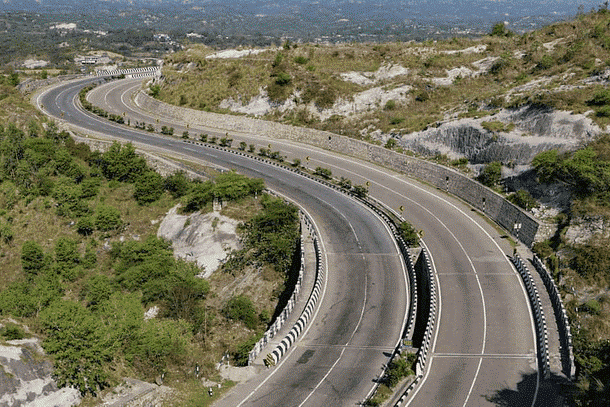
Initiative; 19 new road-tunnel works in Jammu & Kashmir border belts, cleared 24 Jun 2025.

Purpose; boost all-weather connectivity, security logistics, economic access in LoC-facing districts Poonch, Shopian, Kupwara.

Geography; Mughal Road corridor, Kupwara-Karnah axis, Surankote–Shopian–Baramulla link, Trehgam-Teetwal stretch.

Quick Facts for MCQs

Security Dimension

  • Troop-mobility; tunnels secure year-round access to Karnah, Teetwal frontline sectors.
  • Redundancy; Mughal Road creates second Kashmir entry, vital during NH-44 blockades.
  • Response; quicker disaster relief, counter-infiltration patrols near LoC.

Connectivity Gains

  • All-weather; snowbound passes bypassed by 7–9 km tunnels, slashing winter closures.
  • Border-valley trade; Surankote–Baramulla route links agrarian Poonch with Kashmir markets.
  • Tourism; historic Mughal Road, Teetwal border village poised for visitor inflow.

Implementation & Funding

  • Funding; 100 % Central outlay under newly cleared package.
  • Execution; BRO to handle design-build, land acquisition minimal on existing alignments.
  • Priority; four flagship works fast-tracked owing to strategic weightage.

Key Data Points

FeatureData-Point
Projects sanctioned19
Total cost₹10,637 crore
Sanction date24 June 2025
Lead agencyBorder Roads Organisation
Earlier tunnelling agencyNHIDCL (now relieved)
Pir Ki Gali Tunnel length9 km
Pir Ki Gali corridorChatta Pani–Zaznar on Mughal Road
Sadhna Tunnel length7 km
Sadhna connectsKupwara–Karnah (LoC)
Zaznar–Shopian road length28 km
Highway fed by Zaznar–ShopianSurankote–Shopian–Baramulla
Trehgam–Chamkote road length68 km
Trehgam–Chamkote terminusTeetwal near LoC
Main valley highway easedNH-44

Related UPSC Prelims PYQs

CDS_GK, ESE_GS 2021PYQ 1

The distance between which two cities has been reduced by the Atal Tunnel?

CDS_GK, ESE_GS 2021PYQ 2

Which one of the following statements is NOT correct about the Atal Tunnel ?

GS-1Environment

5.Cloudburst Causes and Impacts (Cloudburst Phenomenon)

Indian Express
Illustration for Cloudburst Causes and Impacts (Cloudburst Phenomenon)

What & Where

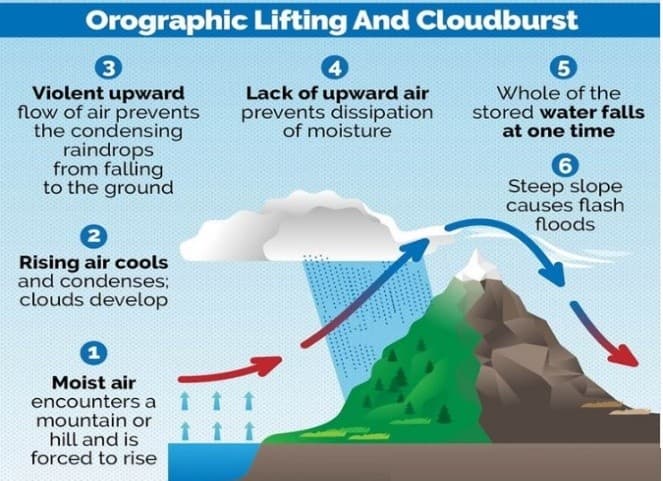
Cloudburst = ≥100 mm rain in <1 hr over ~10 km²; most frequent on windward Himalayan slopes

Triggered by rapid orographic lifting and strong convection forming tall cumulonimbus clouds

Flash floods, landslides, debris flows common in Himachal, Uttarakhand, J-K, NE hills

Quick Facts for MCQs

Physical Drivers

  • Orography lifts monsoon moisture causing adiabatic cooling and explosive condensation
  • Localised convergence traps clouds inside narrow valleys raising rainfall density
  • Latent-heat feedback enlarges storm cores enhancing water-holding capacity

Disaster Impacts

  • Flash-flood surge submerges settlements, wipes bridges like Baladhi 2025
  • Saturated slopes trigger landslides e.g., Chokhang–Nainghar road Lahaul 2025
  • Sediment load spikes destabilise river ecology and clog downstream dams

Management & Policy

  • NDMA guidelines stress early warning, risk zoning, community awareness in hill districts
  • Automatic rain gauges map hotspots enabling district SMS alerts and sirens
  • Panchayat-level drills, emergency numbers, dam release halts mandated by HP government

Climate Trend

  • IPCC links rising cloudburst frequency to Himalayan warming hotspots
  • Urban heat islands in hill towns intensify convection exacerbating peak rainfall
  • Mitigation plus resilient land-use planning essential for future risk reduction

Key Data Points

FeatureData-Point
Rainfall threshold≥100 mm in 60 minutes
Core area impacted≈10 km² pocket
Cloud typeDeep cumulonimbus (15–21 km height)
Vertical air speed60–120 km h⁻¹ updrafts
Extra moisture per 1 °C warming~7 % (Clausius–Clapeyron)
NDMA cloudburst guidelines2010
Radar nowcast lead time<3 hours
Doppler radar coverageSelect hill cities (expanding)
IPCC warningWarmer world → 7–10 % heavier rain per 1 °C
Himachal advisory drillsPre-monsoon, June 2025

Related UPSC Prelims PYQs

NDA_GAT 2022PYQ 1

The deluge affected the population.

GS-1Mapping

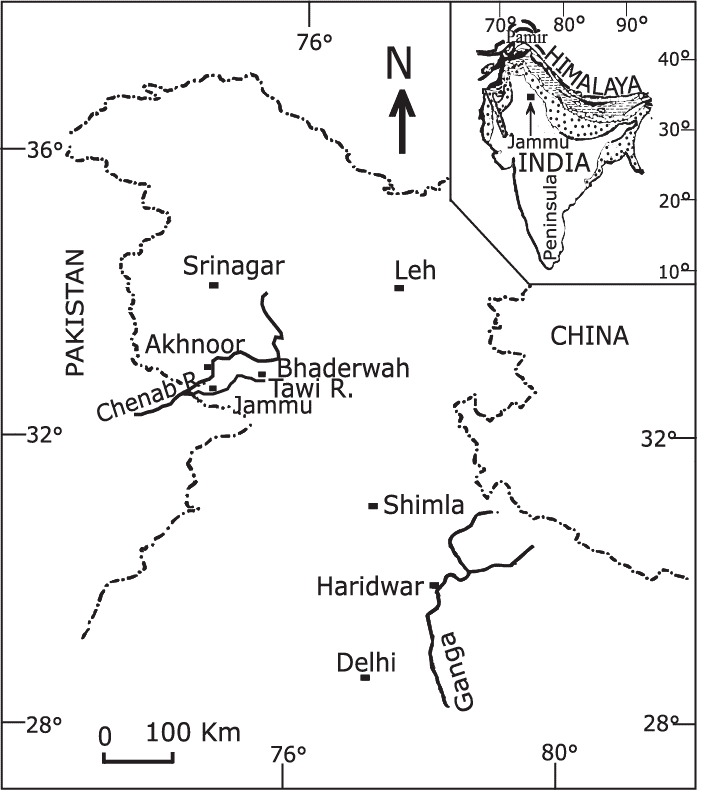
6.Tawi River Profile (River System)

New Indian Express
Illustration for Tawi River Profile (River System)

What & Where

Himalayan river; left-bank tributary of Chenab within Indus basin

Originates Kailash Kund glacier, Doda district; traverses Udhampur, Jammu, then Pakistan’s Punjab

Lifeline of Jammu city; culturally revered as Surya Putri

Quick Facts for MCQs

Physical Geography

  • Glacier-fed; perennial flow supported by monsoonal streams
  • Enters Pakistan near village Miran Sahib; meets Chenab at Marala Headworks
  • River divides Jammu city; two main bridges connect old–new sectors

Cultural Significance

  • Scripture mention: Vishnudharmottara Purana venerates as Sun-god’s daughter
  • Legend: Raja Pehar Devta summoned Tawi to cure father’s blindness
  • Temples along course give Jammu nickname City of Temples

Development & Policy

  • Artificial lake project aims tourism boost, urban drinking water security
  • Central Water Commission monitoring design for treaty compliance
  • Potential hydropower, boating, waterfront promenade envisioned

Recent Incident

  • July cloudburst caused sudden flash flood in Tawi near Jammu
  • SDRF, police rescued nine stranded pilgrims and labourers
  • Event underlines need for early-warning and riverfront safety measures

Key Data Points

FeatureData-Point
Origin glacierKailash Kund (Kailash Kund)
Total length~141 km
Catchment (India)2168 km²
Indian districtsDoda, Udhampur, Jammu
Country crossedIndia → Pakistan
Final confluenceChenab River
TributariesRaji, Gou Karan, seasonal nallahs
Religious epithetSurya Putri
Key heritage siteBahu Fort on bank
Planned lake siteBhagwati Nagar, Jammu
Treaty oversightIndus Water Treaty
GS-3EnvironmentQuick Bite

7.Enhanced Rock Weathering (Carbon Sequestration)

The Hindu

What & Where

Definition: spreads finely ground basalt on croplands to hasten CO₂-locking weathering

Process: basalt + water + CO₂ → bicarbonate → limestone; grinding enlarges surface, turbocharges sequestration

Geography: pilots in Darjeeling (India), US Midwest, Brazil—first nation issuing verified ERW credits

Quick Facts for MCQs

Environmental Impact

  • Sequestration: geological lock-up as limestone, lifespan centuries-millennia
  • Agriculture: pH rise curbs soil acidity, lifts crop output
  • Hydrosphere: lower downstream CO₂ release via acid neutralisation

Economic Angle

  • Carbon markets: accuracy of captured-tonne estimates crucial for credit integrity
  • Investment: tech giants, VCs funnelling capital into ERW scaling
  • Prizes: X-Prize funds accelerate field trials and MRV tech

Risk & Challenges

  • Verification: MRV methods still evolving, overestimation danger
  • Toxicity: improper rock choice can introduce heavy metals
  • Overselling: inflated credits could mask ongoing industrial emissions

International Examples

  • India: Darjeeling tea estates dusting basalt on plantations
  • United States: soy & maize farms experimenting across Midwest
  • Brazil: commercial ERW projects generate first marketable credits

Key Data Points

FeatureData-Point
Feedstock rockBasalt, other silicate silts
Peak removal rate10.5 t CO₂ ha⁻¹ in 4 years (study)
Soil bonusHigher alkalinity, better fertility & yields
Run-off effectNeutralises acids before rivers/oceans
Heavy-metal riskCertain fast-weathering rocks leach toxins
First verified creditsBrazil (ERW carbon credits)
Largest single dealGoogle buys 200 000 t ERW credits
Indian awardeeMati Carbon wins USD 50 mn X-Prize

Related UPSC Prelims PYQs

GS1 2023PYQ 1

Consider the following activities:

GS-3S&T

8.Stress-Responsive CRISPR Plant Switch (Genome Editing)

PIB
Illustration for Stress-Responsive CRISPR Plant Switch (Genome Editing)

What & Where

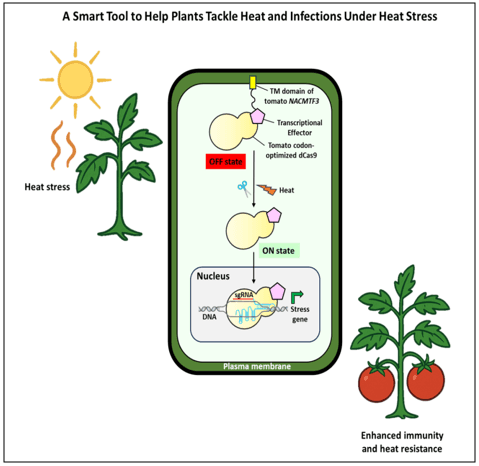
Modified-CRISPR dCas9 switch; activates plant defence genes only under heat or pathogen stress, without DNA cleavage

Mechanism leverages tomato protein NAC‐MTF3 to sequester dCas9 outside nucleus until stress signal releases it

Developed at Bose Institute, Kolkata (DST autonomous); aimed for solanaceous crops globally

Quick Facts for MCQs

Tech & Mechanism

  • Sequestration: NAC-MTF3 holds dCas9 in cytoplasm; stress loosens hold, nuclear import commences
  • Activation: dCas9 binds promoters, up-regulates defence transcripts; reversible, non-transgenic alteration
  • Safety: Avoids off-target mutations, future regulatory acceptance easier

Agricultural Impact

  • Climate-resilience: Shields yields during unpredictable heat spikes and bacterial outbreaks
  • Smart-input: Energy saved when stress absent, improving overall productivity potential
  • Global scope: Applicable across solanaceous varieties cultivated on multiple continents

Institutional & Policy

  • DST support: Demonstrates India’s focus on gene-editing innovations for sustainable farming
  • Compliance: Non-GMO status likely aligns with evolving Indian bio-safety guidelines

Key Data Points

FeatureData-Point
Core tooldCas9 (dead Cas9)
Natural anchor proteinNAC-MTF3 fragment (tomato)
Stress triggersHeat waves, bacterial infection
Key defence genesCBP60g, SARD1, NAC2, HSFA6b
DNA cut involvedNone; epigenetic switch only
Energy usageActivated on-demand, conserves resources
Target crop groupTomato, potato, brinjal, chilli
Lead institutionBose Institute, DST
Publication journalInternational Journal of Biological Macromolecules
Dual protectionHeat tolerance + pathogen resistance

Related UPSC Prelims PYQs

CDS_GK, GS1 2019PYQ 1

What is Cas9 protein that is often mentioned in news?

CDS_GK, GS1 2025PYQ 2

Recently, ICAR (Indian Council of Agricultural Research) has developed the world's first genome-edited rice varieties. Which of the following statements is/are correct with respect to the developed products?

GS-3S&T

9.Axiom Mission-4 to ISS (Private Spaceflight)

Times of India
Illustration for Axiom Mission-4 to ISS (Private Spaceflight)

What & Where

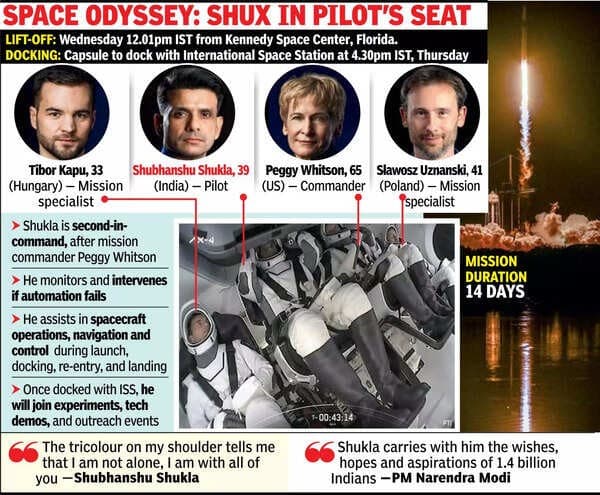
Ax-4: fourth private, Axiom-led human spaceflight mission docking with ISS in low-Earth orbit

Launch: SpaceX Falcon 9-Dragon from LC-39A, Kennedy Space Center, Florida

Stay: ~14-day research stint aboard ISS, June 25–July 9 2025 (planned)

Quick Facts for MCQs

Mission Objectives

  • Microgravity-Research: 60+ experiments spanning life sciences, materials, human physiology, Earth observation
  • Outreach-Collaboration: enables emerging nations to buy ISS time, forging future LEO partnerships
  • National-Programme-Boost: participant data to accelerate domestic human-spaceflight capability

Indian Significance

  • Human-Spaceflight-Revival: first Indian in space since 1984, first ever aboard ISS
  • Gaganyaan-Synergy: in-orbit experience, experiment leads feed into 2025-27 Indian crewed flight and 2035 station goal
  • Science-Diplomacy: India leads multiple Ax-4 experiments, elevating profile in global space fora

Crew Composition

  • Whitson: US record holder, mission commander and LEO operations mentor
  • Shukla: IAF Group Captain, Ax-4 pilot, symbolic leap for Indian Air Force astronauts
  • Uznański & Kapu: ESA-backed mission specialists, represent Poland and Hungary respectively

Technology & Logistics

  • Vehicle-Stack: Reusable Falcon 9 booster, crewed Dragon variant with autonomous docking
  • Launch-Site-Choice: LC-39A supports crew egress towers, previously used for Apollo & Crew Dragon flights
  • ISS-Access-Contract: Axiom purchases NASA unused crew/ cargo capacity, paving way for future Axiom commercial station

Key Data Points

FeatureData-Point
Organising firmAxiom Space
Host stationInternational Space Station (NASA)
Launch vehicleSpaceX Falcon 9 + Dragon capsule
Planned launch date25 June 2025
Mission duration aboard ISS~14 days
Crew size/nationalities4 – USA, India, Poland, Hungary
CommanderPeggy Whitson (USA)
Indian astronautGp Capt Shubhanshu Shukla – first Indian at ISS
Polish astronautSławosz Uznański – second Pole in space
Hungarian astronautTibor Kapu – second Hungarian in space
Zero-g indicator“Joy” baby swan toy
Experiments planned60+ across life, material, human physiology, Earth observation

Related UPSC Prelims PYQs

CDS_GK, GS1 2025PYQ 1

निम्नलिखित अंतरिक्ष मिशनों पर विचार कीजिए :

CDS_GK, GS1 2022PYQ 2

India's maiden human space mission will be launched in 2023. What is its name?

GS-3S&T

10.Fungicide-Driven Drug Resistance (Antifungal Resistance)

The Hindu

What & Where

Tebuconazole – systemic triazole fungicide, extensively used on wheat, barley, rice, fruits, vegetables across major farm belts.

Candida tropicalis – opportunistic human pathogen now showing azole resistance linked to agricultural tebuconazole exposure.

Resistance clusters likely around high-input farmlands with chronic fungicide spraying.

Quick Facts for MCQs

Health Impact

  • Resistance surge complicates azole therapy, increases invasive candidiasis treatment failures.
  • Cross-resistant strains threaten immunocompromised groups, heightening hospital mortality.
  • Limited new antifungal classes amplify urgency for stewardship.

Agricultural Practice

  • Overapplication of tebuconazole in monocultures accelerates resistance, necessitating fungicide rotation.
  • Combined seed, soil, foliar uses elevate environmental residue loads.
  • Integrated Pest Management recommended to curb chemical dependency.

Genetic Mechanism

  • Aneuploidy boosts efflux pump and target enzyme gene dosage, conferring drug tolerance.
  • Ploidy shifts reduce baseline growth yet enhance survival under azole pressure.
  • Emergent mating-capable haploids may propagate resistance across Candida populations.

Key Data Points

FeatureData-Point
Chemical classTriazole systemic fungicide
Target pathwayErgosterol biosynthesis inhibition
Human pathogen affectedCandida tropicalis
Infection mortality55–60 %
Medical azoles with cross-resistanceFluconazole, Voriconazole
Primary genetic changeAneuploidy altering chromosome number
Observed new ploidy statesHaploid 1n, Triploid 3n besides Diploid 2n
Common farm applicationsSeed treatment, Soil drench, Foliar spray
GS-2Editorial

11.UN80 Reform Initiative (UN Reforms)

UN
Illustration for UN80 Reform Initiative (UN Reforms)

What & Where

UN80 Initiative — system-wide UN reform blueprint marking Charter’s 80 years

Scope covers peace, development, human rights, humanitarian, training, specialized agencies

Envisages relocating functions from high-cost New York, Geneva to lower-cost global sites

Quick Facts for MCQs

Governance & Structure

  • Cluster system streamlines entities into seven thematic groups
  • Structural reforms realign programmes, departments, especially headquarters heavy units

Budget & Efficiency

  • Efficiency drive slashes administrative costs, overlaps, underused posts
  • Savings intended for core mandates in peace, development, rights

Multilateral Context

  • Aligns with Pact for the Future vision of revitalised multilateralism
  • Initiative positions UN for 21st-century challenges and member expectations

Key Data Points

FeatureData-Point
Announced byUN SG António Guterres
Launch AimModernize UN, cut duplication, boost accountability
Core WorkstreamsEfficiency & Cost Reduction; Mandate Implementation Review; Structural Reforms
Mandates ScrutinisedImplementation of > 3,600 existing mandates
Thematic ClustersSeven; includes Peace & Security, Development, Humanitarian, Human Rights, Training & Research, Specialized Agencies
Cost StrategyEliminate overlaps, abolish underperformers, automate services
Relocation PlanShift operations from New York, Geneva to cheaper locations
Budget TimelineInitial tweaks: 2026 Revised Budget; major restructure: 2027 Programme Budget
Target MilestoneUN Charter’s 80th anniversary in 2025
Impact FocusResults-oriented delivery over volume reporting
GS-1Editorial

12.Gender Equity in Urban Bureaucracy (Gender Representation)

The Hindu
Illustration for Gender Equity in Urban Bureaucracy (Gender Representation)

What & Where

Definition : Gender equity in urban bureaucracy = equal women presence, power, opportunity in municipal, planning, engineering & policing roles

Key processes : Recruitment, promotion, gender‐responsive budgeting, safety audits within Urban Local Bodies (ULBs)

Geography : Focus on Indian cities under 74th Constitutional Amendment framework

Quick Facts for MCQs

Representation Stats

  • Bureaucracy : <10 % women town planners; male dominance in engineers, police
  • Elected arm : Nearly parity in ULB seats due to reservations, yet limited executive authority
  • Gap : Decision translation weak without matching female officials

Governance Impact

  • Planning : Women officers prioritise lighting, toilets, childcare, multimodal transport, improving daily safety
  • Policing : Higher female presence raises reporting of gender crimes, boosts community trust
  • Budgeting : States like Kerala, Tamil Nadu embed Gender Responsive Budgeting when women hold key posts

Key Challenges

  • Entry barriers : Scholarship deficit, gender bias in STEM, limited police recruitment drives
  • Workplace bias : Glass ceiling in promotions, lack of mentorship, hostile environments
  • Data deficit : Few ULBs maintain gender-disaggregated service indicators hindering monitoring

Social Concerns

  • Safety : Low female police ratio correlates with under-reporting of domestic violence, street harassment
  • Inclusion : Women administrators often integrate needs of elderly, children, disabled in urban design
  • Equity : Token GRB allocations common; real impact minimal without audits

Tech & Schemes

  • Safetipin : Mobile audit tool highlighting lighting and safety gaps across Indian cities
  • Kudumbashree : Kerala community network facilitating participatory planning and service delivery
  • 74th Amendment : Constitutional backing for decentralized, inclusive urban governance

Key Data Points

FeatureData-Point
Women IAS share (2022)≈20 %
Women in urban elected seats46 %
Women in police force11.7 %
Women engineers in workforce14 %
Women among STEM graduates40 %
Public spaces without proper lighting>60 %
Delhi/Mumbai women using public or shared transport84 %

Related UPSC Prelims PYQs

GEO_GS 2024PYQ 1

Consider the following statements with reference to a Report titled 'The Paths to Equal', published in 2023, prepared by 'UN Women' and 'UNDP' (United Nations Development Programme):

Ready to practice?

Test your knowledge with our UPSC test series.

Start Free Trial