UPSC Current Affairs

12 topicsGS-1: 3GS-2: 3GS-3: 6
0/12 done
GS-2Polity

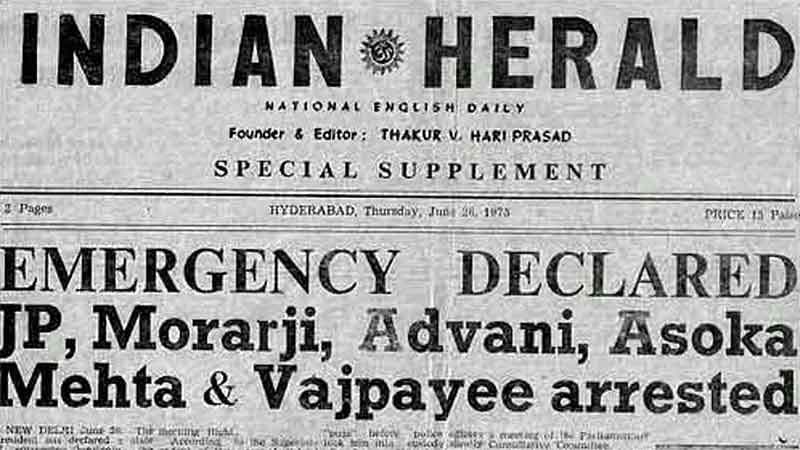
1.Emergency Declaration 50th Anniversary (1975 Emergency)

DD News
Illustration for Emergency Declaration 50th Anniversary (1975 Emergency)

What & Where

Nationwide Emergency invoked under Article 352 citing “internal disturbance”.

Enforced across the Indian Union from 25 Jun 1975 to 21 Mar 1977.

Civil liberties suspended; executive power greatly centralised.

Quick Facts for MCQs

Legal & Policy

  • 42ndAmendment extended Lok Sabha tenure to six years, boosted executive, trimmed judicial review.
  • 44thAmendment substituted “internal disturbance” with “armed rebellion”, restored court oversight on rights.
  • Articles 358-359 activated, blocking enforcement of most Fundamental Rights.

Political Context

  • JPMovement galvanised students, workers in Bihar & Gujarat for “Total Revolution” against corruption.
  • AllahabadHighCourt (12 Jun 1975) invalidated Indira Gandhi’s election, heightening resignation demands.
  • Congress defeat March 1977 enabled Janata Party, leading to Emergency revocation.

Civil Liberties

  • FundamentalRights suspension enabled preventive detention without judicial remedy.
  • PressCensorship rigorous; newspapers pre-cleared, films closely monitored by I&B ministry.
  • Over 35,000 opposition leaders, activists jailed under MISA provisions.

Key Data Points

FeatureData-Point
Declaration ArticleArticle 352
Declaration date25 June 1975
Termination date21 March 1977
Cited reasonInternal disturbance
Rights suspended Articles14, 19, 21, 22 via 358-359
Political detentions>35,000 under MISA
Sterilisation surgeries≈1.07 crore (1975-77)
Empowering amendment42nd Constitutional Amendment 1976
Safeguard amendment44th Constitutional Amendment 1978
Investigative bodyShah Commission 1977

Related UPSC Prelims PYQs

CAPF_GAI, GEO_GS 2023PYQ 1

Which of the following statements about National Emergency is/are correct?

CAPF_GAI, GEO_GS 2026PYQ 2

Which of the following Articles cannot be suspended during the Proclamation of National Emergency?
GS-3Economy

2.India Coffee Export Surge (Coffee Exports)

Times of India
Illustration for India Coffee Export Surge (Coffee Exports)

What & Where

Coffee exports: India 5th largest exporter, 25%+ surge FY25-26 after record FY24-25.

Main varieties: Arabica (Kents, S.795, Cauvery, Sln.9) & Robusta selections, 100% shade-grown.

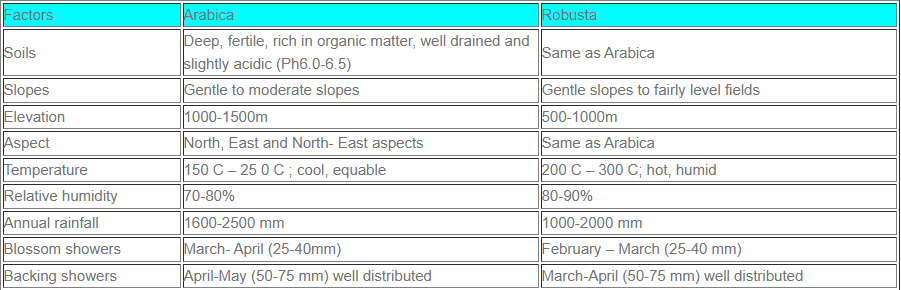
Core geography: Karnataka 70% output; Kerala, Tamil Nadu next; Arabica 1000–1500 m, Robusta 500–1000 m.

Quick Facts for MCQs

Economic Angle

  • Surge drivers: premium shade-grown demand, GI marketing, post-pandemic yield upswing.
  • Export growth: 40 % in FY24-25, continuing >25 % in FY25-26.
  • Forex earning: Coffee Board cites rising digital marketplace visibility.

Production & Varieties

  • Varietals: Arabica Kents, S.795, Cauvery, Sln.9; Robusta high-yield selections.
  • Yield cycle: favourable biennial bearing aided 2023–26 uptick.
  • Intercropping: pepper, cardamom, vanilla improve farm income, biodiversity.

GI & Branding

  • GI tags: Coorg, Chikmagalur, Bababudangiri, Araku Valley, Wayanad; specialty Monsooned Malabar, Robusta Kaapi Royale.
  • Branding: Coffee Board digital campaigns target EU, USA, West Asia.
  • Heritage: Baba Budan introduced beans to Karnataka about 400 years ago.

Agro-ecology

  • Shade canopy: 50+ tree species provide microclimate and soil moisture.
  • Altitude split: Arabica 1000–1500 m, Robusta 500–1000 m.
  • Climate risk: cool humid belts vulnerable to erratic monsoon shifts.

Key Data Points

FeatureData-Point
FY24-25 export valueUS$ 1803 million
FY23-24 export valueUS$ 1286 million
FY25-26 growth so far>25 %
FY24-25 growth40 %
Global exporter rank5th (≈5 % share)
Global producer rank7th (≈3.5 % share)
Annual production3.5–4 lakh t
Karnataka share~70 % national output
Rainfall need1600–2500 mm
Arabica temperature15–25 °C
GI-tagged coffees5 regional + 2 specialty

Related UPSC Prelims PYQs

CDS_GK, GEO_GS 2021PYQ 1

Arabica, Robusta and Liberica are varieties of which one of the following?

CDS_GK, GEO_GS 2025PYQ 2

The cultivation of which one of the following crops was introduced in the Baba Budan Hills?

GS-1History

3.Prime Ministers Museum and Library (PM Museum)

Indian Express
Illustration for Prime Ministers Museum and Library (PM Museum)

What & Where

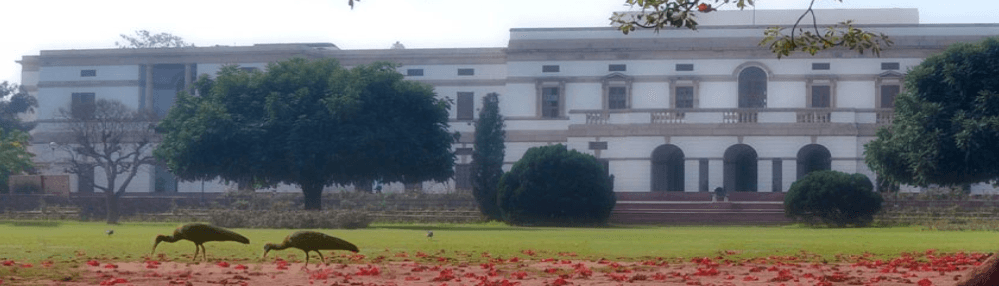
Autonomous research institution on modern Indian history, situated inside Teen Murti House, New Delhi

Preserves & provides public access to private papers, manuscripts, rare books of national leaders

Functions under Prime Ministers Museum & Library Society, Ministry of Culture

Quick Facts for MCQs

History & Infrastructure

  • Residence phase Nehru lived at Teen Murti House 1948-64
  • Expansion timeline Library 1974; Annexe and Centre for Contemporary Studies 1989-90
  • Transformation renamed as Prime Ministers Museum & Library 2023

Governance

  • Structure autonomous society registered under Societies Registration Act
  • Leadership President, Vice-President, Executive Council appointed by Union Govt
  • Funding primarily Ministry of Culture grants and self-generated resources

Collections

  • Holdings private papers of Gandhi, Ambedkar, Azad, 1,000+ others
  • Materials include official correspondence, photographs, oral histories, rare periodicals
  • Classified as national treasure under Public Records Act provisions

Academic Functions

  • Activities host lectures, seminars, fellowships, publications on public policy and history
  • Access policy open to Indian and foreign scholars with prior registration
  • Outreach programs exhibitions, digital archives, school engagement on constitutional values

Key Data Points

FeatureData-Point
Original nameNehru Memorial Museum (1964)
Founded1966 (Govt of India)
Formal inauguration14 Nov 1964
LocationTeen Murti House, New Delhi
Library block added1974
Annexe & CCS added1989–90
Governing ministryCulture
Society headsPresident & VP nominated by Centre
Core objectivePreserve, document, promote research on modern India
Key collection sizePrivate papers of 1,000+ public figures
GS-1History

4.Jayaprakash Narayan Total Revolution (Total Revolution)

Indian Express
Illustration for Jayaprakash Narayan Total Revolution (Total Revolution)

What & Where

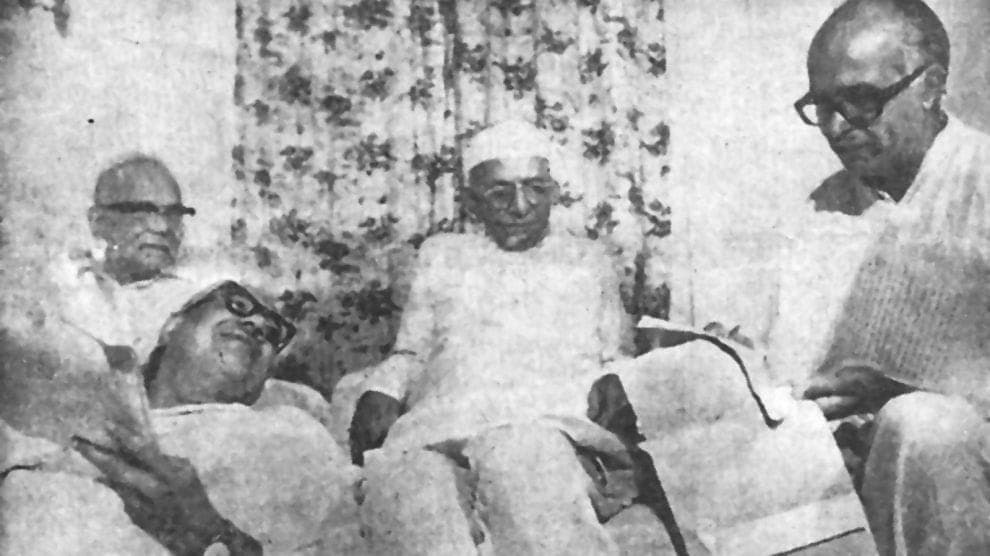
Total Revolution: Gandhian, non-violent call by Jayaprakash Narayan at Gandhi Maidan, Patna on 5 June 1974.

Goal: “Sampoorna Kranti” – overhaul of political, economic, social, educational, cultural structures.

Theatre: Originated in Bihar–Gujarat student agitations; quickly became an all-India democratic movement.

Quick Facts for MCQs

Causes

  • Inflation, unemployment and ration shortages eroded regime legitimacy.
  • Allahabad HC verdict delegitimised PM, igniting nationwide protests.
  • Student agitations in Gujarat & Bihar provided organisational spine.

Components

  • Political: decentralised, accountable, party-less governance vision.
  • Economic: equitable land redistribution, people-centric development.
  • Social/Educational: eradication of caste-gender bias, ethics-oriented curricula.

Governance Impact

  • Opposition unity culminated in first non-Congress Lok Sabha majority, 1977.
  • 44th Amendment restored judicial oversight, limited Article 352 powers.
  • Idea seed for 73rd & 74th Constitutional Amendments on Panchayati Raj.

Key Data Points

FeatureData-Point
LeaderJayaprakash Narayan (JP)
Launch date5 June 1974
Launch venueGandhi Maidan, Patna
Core sloganSampoorna Kranti / Total Revolution
Ideological rootsGandhian Sarvodaya + party-less democracy
Key student triggersGujarat Navnirman, Bihar Movement
Economic backdropInflation >20 %, food shortages, unemployment
Judicial spark1975 Allahabad HC disqualified Indira Gandhi
Major constitutional fallout44th Amendment curtailed Emergency powers
Post-movement govt changeJanata Party victory, March 1977
GS-1Mapping

5.Kosi River Profile (Himalayan River)

Down to Earth
Illustration for Kosi River Profile (Himalayan River)

What & Where

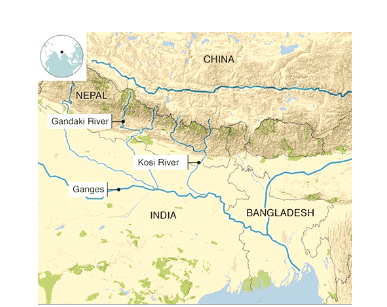
Kosi River; Himalayan transboundary stream from Sun Kosi-Arun Kosi-Tamur Kosi confluence; runs Tibet → Nepal → Bihar, merges with Ganga.

Notorious “Sorrow of Bihar”; highly braided, flood-prone, channels shift westward, heavy silt deposition.

Uttarakhand HC halted illegal sand mining in Bazpur stretch, citing severe ecological harm.

Quick Facts for MCQs

Legal & Policy

  • Uttarakhand High Court ordered immediate stop to illegal sand extraction in Bazpur tehsil Kosi reach.
  • Petition under Public Interest Litigation flagged unregulated mining and administrative inaction.

Environmental Impact

  • Sand removal aggravated riverbed lowering, bank erosion, aquatic habitat loss.
  • Frequent floods worsened by channel instability and huge silt loads from Himalayas.

Economic Angle

  • Chatra Gorge dam enables irrigation, hydropower, fisheries boosting regional livelihoods.
  • Maize cultivation thrives on freshly deposited alluvium along Kosi valley.

Key Data Points

FeatureData-Point
Total length≈ 724 km
Total basin area74,500 km²
Basin in India11,070 km²
Origin streamsSun Kosi, Arun Kosi, Tamur Kosi
Countries traversedChina (Tibet), Nepal, India
Joins main riverGanga south of Purnea, Bihar
Major tributariesSun Kosi, Tama Koshi, Dudh Kosi, Indravati, Likhu, Arun, Tamor
NicknameSorrow of Bihar
Channel typeHighly braided, non-permanent
Key damChatra Gorge (flood control, power)
Dominant crop beltMaize on fertile sandy soils

Related UPSC Prelims PYQs

CAPF_GAI 2022PYQ 1

Which one of the following is a tributary of the Brahmaputra River?

GS-3Environment

6.Sustainable Development Report 2025 (SDG Index)

Economic Times
Illustration for Sustainable Development Report 2025 (SDG Index)

What & Where

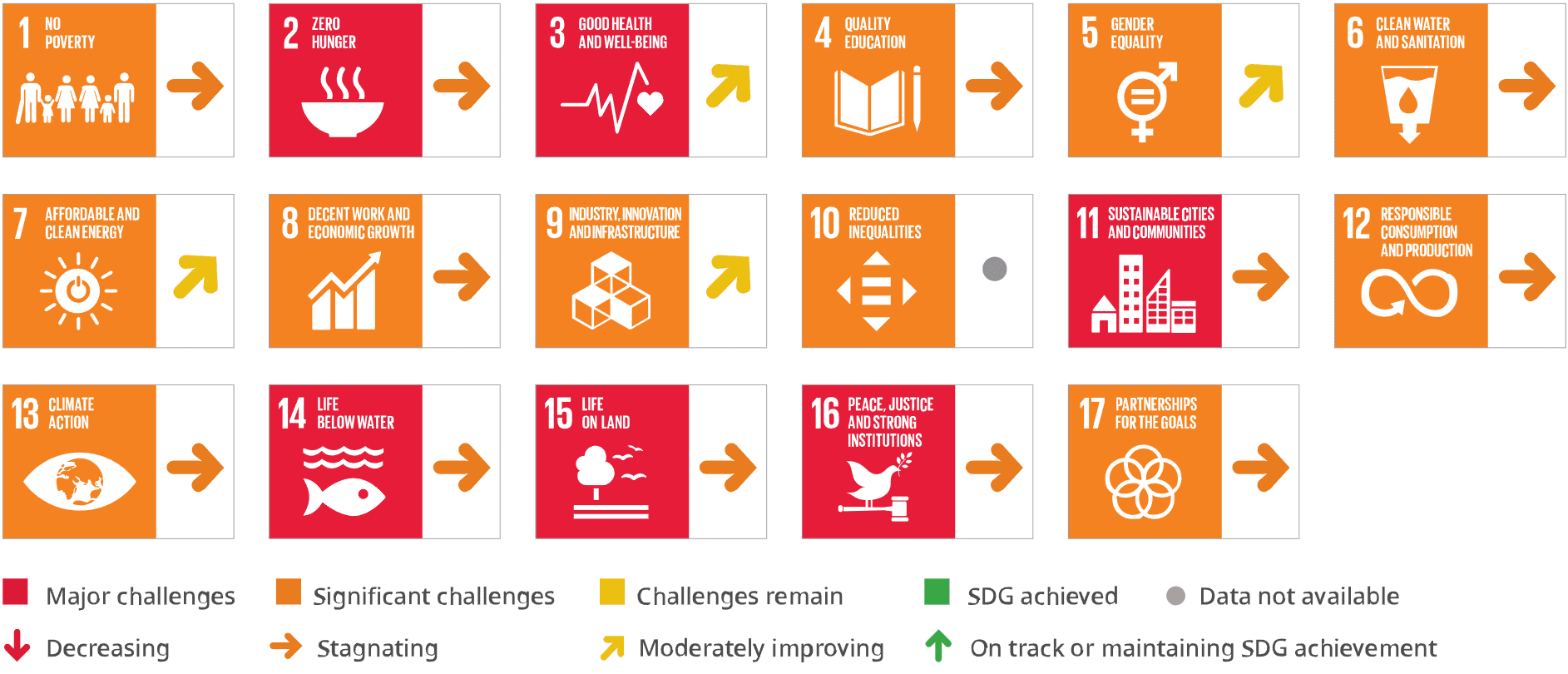
Sustainable Development Goals: 17 universal targets under 2030 Agenda addressing poverty, inequality, climate and ecosystems.

Sustainable Development Report: annual UN-SDSN index (0-100) benchmarking 167 states on SDG performance.

India 2025: ranked 99th (score 67), first time inside global top-100.

Quick Facts for MCQs

Rankings & Comparisons

  • Europe dominates; 19 of top 20 SDG ranks, Nordic trio lead.
  • East-South Asia fastest since 2015; India trails Bhutan, Nepal, Sri Lanka, Maldives.
  • Barbados, Jamaica, Trinidad-Tobago head UN multilateralism index; US bottom.

Indian Schemes

  • Poverty-nutrition: PMAY, MGNREGA, PMJDY, Poshan Abhiyaan, NFSA, PMGKAY.
  • Health-energy-water: Ayushman Bharat, Mission Indradhanush, Jal Jeevan Mission, Swachh Bharat, Saubhagya, UJALA.
  • Urban-climate: Smart Cities, AMRUT, NAPCC, ISA, CDRI.

Implementation Challenges

  • Conflicts displace 120 million, weakening SDG-16 institutions.
  • Climate-finance deficit: USD 6 trillion needed by 2030 for developing nations.
  • Covid-19 and extreme disasters reverse gains in poverty, health, clean energy.

Financing & Governance

  • Reform demand: UN, World Bank, IMF realign lending, embed SDG-based trade standards.
  • Instruments: green bonds, blended finance, debt relief, fossil-fuel subsidy rechanneling.
  • Localisation: district SDG plans, community audits, real-time dashboards for accountability.

Key Data Points

FeatureData-Point
Report edition10th SDR 2025
PublisherUN Sustainable Development Solutions Network
Nations ranked167
India rank / score99 / 67
SDG targets on-track globally17 % by 2030
Top three performersFinland, Sweden, Denmark
Fastest-moving regionEast & South Asia
Multilateralism topperBarbados
US multilateralism rank193rd
Non-VNR participantsHaiti, Myanmar, United States

Related UPSC Prelims PYQs

CDS_GK 2023PYQ 1

SDG India Index, developed by NITI Aayog, includes 17 SDGs for each State. Which one of the following is not included in that index?

CDS_GK 2022PYQ 2

Which one among the following reports defines Sustainable Development as development that meets the needs of the present generation without compromising the ability of future generations to meet their own needs?

GS-3EnvironmentQuick Bite

7.State of Climate in Asia 2024 (Climate Report)

Indian Express

What & Where

Report: WMO “State of Climate in Asia 2024” analyses annual temperature, extreme events, cryosphere and oceans

Geography: Encompasses entire Asian continent, northern Indian Ocean, High Mountain Asia glaciers

Baseline: Compares 2024 observations with 1991–2020 climatology and earlier 1961–1990 trends

Quick Facts for MCQs

Environmental Impact

  • Warming: Asia 2024 hottest or second-hottest year; rate doubled since 1961–1990
  • Glaciers: High Mountain Asia losing mass; Urumqi Glacier No.1 record melt
  • Oceans: Marine heatwaves hit Bay of Bengal, seas off Japan, China

Extreme Weather

  • Heatwaves: India faced 45–50 °C spells, >450 deaths
  • Cyclones: 29 Asian cyclones; subcontinent struck by Remal, Fengal, Dana, Asna
  • Lightning: Combined heat & storms killed ~1,300 in India in 2024

Institutional Details

  • Body: WMO is specialised UN agency on weather, climate, water
  • Evolution: Traces to 1873 Vienna Congress’s IMO
  • Membership: 193 states/territories including India; HQ Geneva

Key Data Points

FeatureData-Point
Asia 2024 temp anomaly+1.04 °C vs 1991–2020 mean
Asian warming speed~2 × global rate
Indian heatwave peak45–50 °C
India heat deaths>450 people
India heat+storm deaths~1,300 (incl. lightning)
Marine heatwave area~15 million sq km
Tropical cyclones Asia 202429 systems
Deadliest 2024 cycloneYagi
Subcontinent cyclonesRemal, Fengal, Dana, Asna
High Mountain Asia glaciers losing mass23 of 24 monitored
Urumqi Glacier No.1 statusWorst melt since 1959
WMO headquartersGeneva, Switzerland
WMO member count193 states & territories
Predecessor bodyInternational Meteorological Organization (1873)

Related UPSC Prelims PYQs

GEO_GS 2021PYQ 1

Which one of the following statements on Climate of India is NOT correct?

GEO_GS 2020PYQ 2

According to the Global Climate Risk Index 2020, published by environmental think tank Germanwatch, in the year 2018 India’s rank in the list of top most climate affected nations is:

GS-3EnvironmentQuick Bite

8.Thirst Waves Phenomenon (Thirst Waves)

The Hindu

What & Where

Thirst wave = ≥3 consecutive days of extreme atmospheric evaporative demand—the air’s “thirst” for moisture

Controlled by temperature, humidity, solar radiation & wind; quantified via short-crop evapotranspiration over a 12-cm grass surface

Emerging hotspots include Northern India and Western/Eastern Himalayas amid global warming

Quick Facts for MCQs

Measurement & Drivers

  • Variable-mix: temperature, humidity, radiation, wind jointly set evaporative demand intensity
  • Indicator: rising short-crop evapotranspiration flags stronger thirst waves
  • Contrast: humidity crucial here, minor in conventional heatwaves

Agricultural Impact

  • Soil-moisture: faster depletion forces higher irrigation demand
  • Crop-health: elevated evaporative pull raises stress, lowering yields
  • Water-planning: simultaneous heat & thirst shocks complicate supply scheduling

India Specifics

  • Trend: evaporative demand steadily rising in North India, Western & Eastern Himalayas
  • Cause: agricultural expansion plus vegetation growth amplify land-atmosphere water loss
  • Outlook: future warming likely overrides past humidity buffer, intensifying thirst waves

Key Data Points

FeatureData-Point
Coined byMeetpal Kukal & Mike Hobbins
Threshold3 or more consecutive high-demand days
Core metricShort-crop evapotranspiration
Reference cropWell-watered 12 cm grass
Key driversTemperature ↑, Humidity ↓, Solar radiation ↑, Wind speed ↑
Main riskRapid soil-moisture loss & crop stress

Related UPSC Prelims PYQs

ESE_GS 2025PYQ 1

A situation when there is a prolonged period of inadequate rain fall, marked with erratic distribution of the same over time and space, is called

GS-3S&T

9.India’s Data Imperative Report (Digital Infrastructure)

LiveMint

What & Where

National report “India’s Data Imperative: The Pivot Towards Quality” released by NITI Aayog, May 2024.

Maps India’s digital public infrastructure—Aadhaar, UPI, Ayushman Bharat, DBT—across governance and welfare delivery.

Applicable pan-India; targets union, state, district data systems for quality, interoperability and stewardship.

Quick Facts for MCQs

Rationale & Benefits

  • Fiscal-saving: Accurate data curbs duplicate beneficiaries, saving up to 7 % welfare outgo.
  • Evidence-based: Clean datasets enable AI-driven, precise scheme targeting.
  • Trust-building: Timely, error-free services enhance citizen confidence in digital governance.

Key Challenges

  • Fragmentation: Siloed, incompatible ministerial databases block seamless use.
  • Legacy-tech: Outdated IT slows real-time updates, hurts interoperability.
  • Incentive-mismatch: Speed rewarded over accuracy, fostering an “80 % good-enough” culture.

Proposed Reforms

  • Custodianship: Designate data stewards at national, state, district levels.
  • Quality-linked incentives: Embed error rates into appraisals and budget allocations.
  • Interoperability: Adopt IndEA and NDGFP standards for uniform formats.

Tools & Capacity

  • Scorecard: Use NITI’s Data Quality Scorecard & Maturity Framework for self-assessment.
  • Training: Upskill field staff in validation, verification, and responsible data handling.

Key Data Points

FeatureData-Point
Aadhaar authentications FY 24-2527 billion
Aadhaar e-KYC FY 24-251.8 billion
UPI monthly transaction value₹23.9 trillion
Ayushman Bharat Digital IDs369 million
DBT transfer FY 24-25₹5.47 lakh crore
Govt. schemes on DBT platform330 +
Mobile subscribers1.2 billion
Internet users800 million
Welfare leakage estimate4–7 % of spending

Related UPSC Prelims PYQs

ESE_GS, GS1 2019PYQ 1

Consider the following statements:

ESE_GS, GS1 2024PYQ 2

To increase transparency and consumer awareness and handle customer complaints, a 'Centralised Receipt and Processing Centre' and an 'Integrated Ombudsman Scheme' have been set up. These two schemes are related to which one of the following institutions?

GS-2Security

10.NATO 5% Defence Spending Target (NATO Spending)

DH

What & Where

NATO = 32-nation Euro-Atlantic military–political alliance; HQ Brussels; founded 1949

Hague Summit 2024 set new goal: members spend 5 % of GDP on combined defence-security outlays

Allocation split: 3.5 % core military; 1.5 % wider security (cyber, energy, infrastructure)

Quick Facts for MCQs

Defence Spending

  • Rationale: counter rising Russian threat post-Ukraine invasion
  • Scope: includes non-traditional domains, incentivising holistic security investment
  • Enforcement: peer pressure via annual defence spending reports

Historical Evolution

  • Cold War era: nuclear deterrence doctrine balanced Soviet power
  • 1990s pivot: crisis-management missions in Balkans and Kosovo
  • Post-2001: spearheaded ISAF Afghanistan, widening counter-terrorism role

Organisational Structure

  • North Atlantic Council: top policy forum with consensus decision-making
  • Allied Command Operations & Allied Command Transformation ensure planning and interoperability
  • Integrated multinational forces enable rapid, collective military response

Key Data Points

FeatureData-Point
Treaty signed4 Apr 1949, Washington D.C.
HeadquartersBrussels, Belgium
Current members32
Latest memberSweden, 2024
Collective-defence clauseArticle 5
Old spending pledge2 % GDP, Wales Summit 2014
States meeting 2 % in 202422 of 32
New spending pledge5 % GDP, Hague Summit 2024
New pledge split3.5 % military + 1.5 % broader security
Core spending coversPersonnel, equipment, operations
Broader security coversCyber defence, critical infrastructure, energy protection

Related UPSC Prelims PYQs

GS1, NDA_GAT 2024PYQ 1

Which one of the following statements is NOT correct about NATO?

GS1, NDA_GAT 2007PYQ 2

Consider the following statements:

GS-3Security

11.CDS Empowered for Joint Instructions (CDS Authority)

Hindustan Times

What & Where

Empowerment: CDS + Secretary DMA now authorised to issue single tri-service instructions

Coverage: Orders bind Army, Navy, Air Force for operations and administration

Seat: Department of Military Affairs, Ministry of Defence, New Delhi

Quick Facts for MCQs

Legal & Policy

  • ISO Act 2023 provides statutory backing to joint structures
  • MoD notification enables unified instructions without amending Service Acts
  • Theatreisation roadmap reinforced through centralised directive power

Administrative Reform

  • Redundancy cut by replacing three parallel orders with one consolidated directive
  • Resource optimisation via joint procurement and common SOPs
  • Transparency improved through single point accountability at DMA

Security Dimension

  • Faster tri-service mobilisation during contingencies
  • Unity of command enhances deterrence and war-fighting efficiency
  • Cross-service cooperation institutionalised for maritime, land, air domains

Key Data Points

FeatureData-Point
Authority granted byDefence Minister of India
Level issuing orders4-star CDS and Secretary DMA jointly
Previous systemSeparate orders by each Service HQ
Key goalSynergy for future integrated theatre commands
ISO Act linkageEmpowers Inter-Services Organisations (ISO Act 2023)
CDS additional postPermanent Chairman, Chiefs of Staff Committee
DMA statusDedicated MoD department set up Dec 2019
Command limitationService Chiefs retain direct operational command

Related UPSC Prelims PYQs

CAPF_GAI, GS1 2024PYQ 1

सैन्य कार्य विभाग के प्रमुख के रूप में चीफ ऑफ डिफेंस स्टाफ (CDS) के कर्तव्य कौन-से हैं ?

CAPF_GAI, GS1 2025PYQ 2

Which one among the following statements about the Department of Defence (DoD) is not correct?

GS-2SchemeQuick Bite

12.Dharti Aaba Janbhagidari Abhiyan (Tribal Empowerment)

PIB

What & Where

Campaign: Dharti Aaba Janbhagidari Abhiyan (DAJA), community-driven tribal empowerment initiative under Janjatiya Gaurav Varsh

Reach: Targets 1 lakh+ tribal villages across 31 States/UTs, covering 207 PVTG districts

Occasion: Runs 15 Nov 2024 – 15 Nov 2025; aligns with Janjatiya Gaurav Diwas honouring Birsa Munda

Quick Facts for MCQs

Legal & Policy

  • Saturation: Seeks 100 % coverage of Aadhaar, Ayushman Bharat, PM-Kisan, Ujjwala, Jan Dhan, tribal entitlements
  • Convergence: Coordinates ministries, district administrations, CSOs, youth volunteers for unified delivery
  • Alignment: Supplements PM-JANMAN and Dharti Aaba Janjatiya Gram Utkarsh Abhiyan objectives

Cultural Lens

  • Tribute: Celebrates Birsa Munda (Dharti Aaba) as symbol of tribal pride and resistance
  • Inclusion: Uses tribal languages, arts, traditions during outreach camps and events
  • Pride: Year-long Janjatiya Gaurav Varsh amplifies cultural identity of indigenous communities

Implementation Model

  • Camp-Based: Mobile enrolment camps organised in remotest habitations, especially PVTG clusters
  • Participation: Youth volunteers and tribal leaders drive door-step outreach and feedback
  • Metrics: Universal entitlement saturation and last-mile delivery serve as success indicators

Key Data Points

FeatureData-Point
Lead ministryTribal Affairs
Villages targeted>1,00,000
States/UTs covered31
PVTG districts207
Duration15 Nov 2024 – 15 Nov 2025
Commemoration dayJanjatiya Gaurav Diwas, 15 Nov
Operational modelCamp-based, community-led
Five pillarsJanbhagidari, Saturation, Cultural Inclusion, Convergence, Last-Mile Delivery

Related UPSC Prelims PYQs

CAPF_GAI, GS1 2022PYQ 1

Which one of the following statements is not true with regard to tribal welfare?

CAPF_GAI, GS1 2014PYQ 2

Every year, a month-long ecologically important campaign/festival is held during which certain communities/tribes plant saplings of fruit-bearing trees. Which of the following are such communities/tribes?

Ready to practice?

Test your knowledge with our UPSC test series.

Start Free Trial