UPSC Current Affairs

13 topicsGS-1: 3GS-2: 4GS-3: 6
0/13 done
GS-2Polity

1.Three-Year Judicial Practice Requirement (Judiciary Recruitment)

Unknown
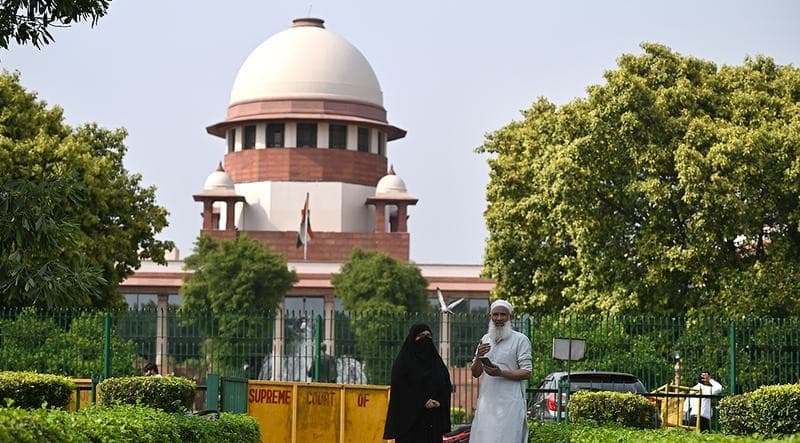
Illustration for Three-Year Judicial Practice Requirement (Judiciary Recruitment)

What & Where

Mandate: Supreme Court restores rule demanding minimum three years active legal practice before sitting for State Civil Judge (Junior Division) exams

Applicability: Entry-level judicial posts across all States/UTs; criterion earlier scrapped in 2002

Quick Facts for MCQs

Quality Rationale

  • Preparedness: Litigation exposure sharpens decision-making, procedural handling, legal intuition
  • Feedback: 23/25 High Courts termed fresh graduates’ performance sub-par
  • Global: Comparable systems demand prior practice before bench entry

Equity Concerns

  • Inclusion: Women, first-generation lawyers face financial, familial hurdles sustaining unpaid early litigation years
  • Workplace: Court corridors rife with harassment, weak mentorship; deters marginalized aspirants
  • Diversity: Added filter risks shrinking representation in subordinate judiciary

Institutional Jurisdiction

  • Constitution: Article 234 assigns eligibility framing to State executive + High Court consultation
  • Debate: Critics label SC condition as possible judicial overreach
  • Enforcement: No uniform verification, raising fears of tokenistic compliance

Key Data Points

FeatureData-Point
Minimum courtroom experience3 years
Target postCivil Judge (Junior Division)
Key Supreme Court caseAll India Judges Association v. Union of India
High Courts finding fresh recruits lacking23 of 25
Constitutional article on appointmentsArticle 234
NFHS average female marriage age19.2 years

Related UPSC Prelims PYQs

CAPF_GAI, GS1 2006PYQ 1

Consider the following statements:

CAPF_GAI, GS1 2021PYQ 2

उच्चतम न्यायालय के न्यायाधीश के रूप में किसे नियुक्त किया जा सकता है?
GS-2Polity

2.Supreme Court Extends Maternity Benefits (Maternity Rights)

Indian Express
Illustration for Supreme Court Extends Maternity Benefits (Maternity Rights)

What & Where

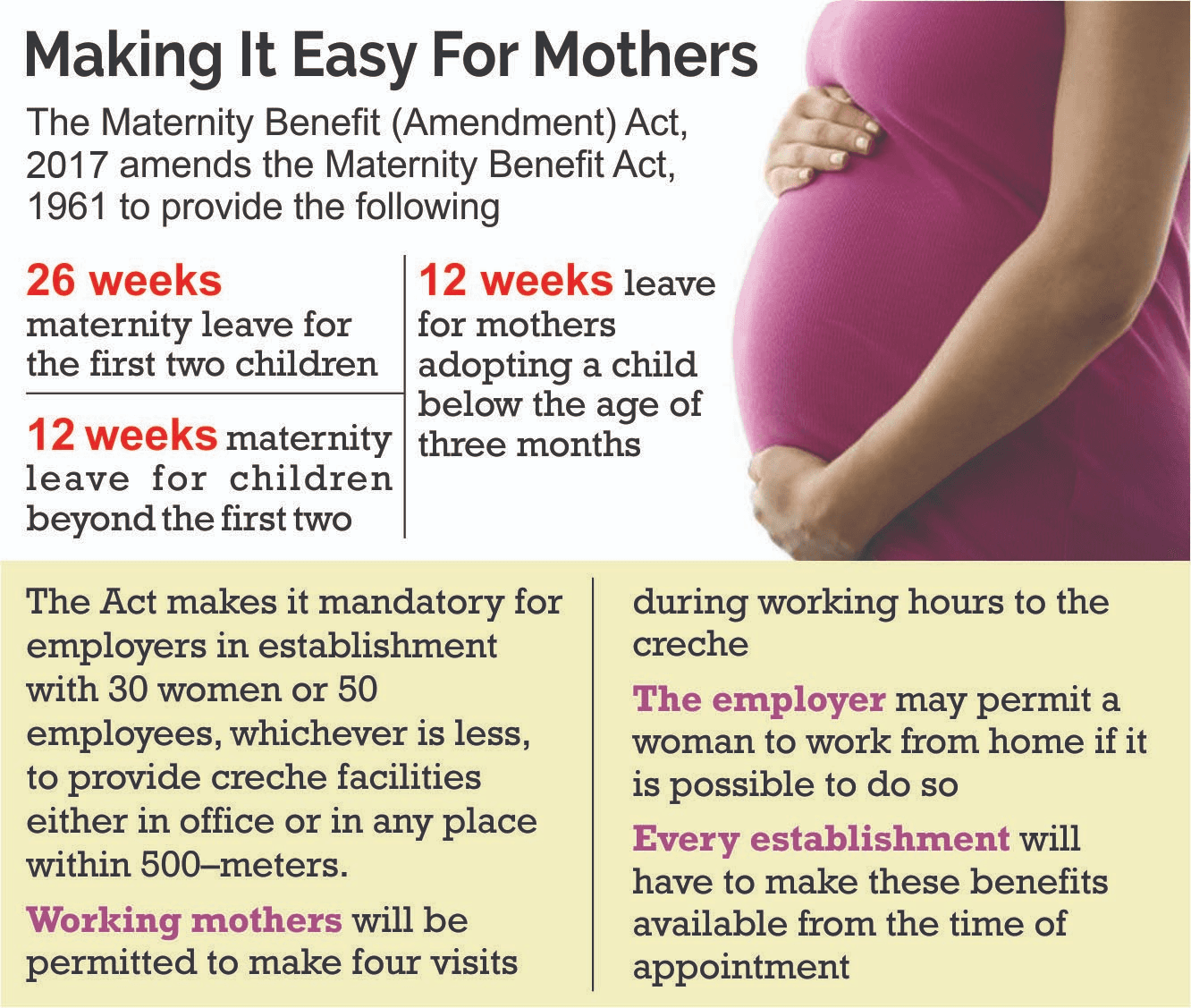
K. Umadevi v. Govt. of TN (2022): SC allowed maternity leave for 3rd child under Maternity Benefit (Amendment) Act 2017.

Act extends paid maternity leave across establishments with ≥10 employees; duration hinges on number of children.

SC rooted ruling in Article 21 reproductive rights, aligning with international human-rights norms.

Quick Facts for MCQs

Legal & Policy

  • Supreme Court labelled maternity benefit for 3rd child a constitutional entitlement, not discretionary policy.
  • Judgment clarifies Act does not bar leave for >2 children; only shorter duration applies.
  • International human-rights instruments cited to expand domestic reproductive protections.

Constitutional Rights

  • Article 21 interpreted to include reproductive autonomy, echoing previous SC jurisprudence on privacy and dignity.
  • Health and equality embedded as inseparable from life, strengthening social-welfare legislation’s enforceability.
  • Decision curbs workplace discrimination against mothers of larger families.

Scheme Details

  • Employers must grant leave plus related benefits (medical bonus, nursing breaks) as per amended Act.
  • Adoption & commissioning mothers receive 12-week leave for children <3 months.
  • Creche facility mandatory for establishments with ≥50 employees under 2017 amendment.

Key Data Points

FeatureData-Point
Act originally enactedMaternity Benefit Act 1961
Key amendment year2017
Paid leave ≤2 children26 weeks
Paid leave if >2 children12 weeks
Employee threshold for applicability10 workers
Coverage includesFactories, mines, plantations, shops, govt. setups
ESI Act 1948 womenAlso entitled to benefits
SC precedent on reproductive choiceSuchita Srivastava v. Chandigarh Admn 2009
Constitution article invokedArticle 21 – Right to Life & Liberty
Rights affirmedHealth, dignity, privacy, non-discrimination

Related UPSC Prelims PYQs

GS1 2019PYQ 1

Which of the following statements is/are correct regarding the Maternity Benefit (Amendment) Act, 2017?

GS-3Economy

3.Advance Authorisation Duty Free Import Scheme (Duty-free Imports)

Business Standard

What & Where

Advance Authorisation Scheme (AA): foreign-trade licence for duty-free import of inputs used to make export goods.

Administered nationwide by Directorate General of Foreign Trade (DGFT), Ministry of Commerce & Industry.

Operates at Indian Customs ports where Bills of Entry for imports are filed.

Quick Facts for MCQs

Legal & Policy

  • Relaxation removes earlier denial where shipment preceded licence, aligning Customs practice with FTP intent.
  • Bill of Entry date now definitive compliance marker; shipment date becomes irrelevant for AA benefit.

Economic Angle

  • Cuts working-capital blockage; faster clearance lowers logistics costs amid Red Sea & freight issues.
  • Expected to boost exporter confidence, especially MSME units relying on just-in-time inputs.

Tech & Schemes

  • AA operates on ICEGATE-linked e-platform; licence data auto-validated during Bill of Entry filing.
  • SION lists ~12,000 norms across sectors; exporters may petition Norms Committee for ad-hoc rates.

Key Data Points

FeatureData-Point
Policy originForeign Trade Policy, Sec 4.03
Administering bodyDGFT under Commerce & Industry Ministry
Core benefit100 % exemption from customs duty, IGST, comp. cess on inputs
Eligible entitiesManufacturer-exporters, merchant-exporters with supporting manufacturers
Governing normsStandard Input-Output Norms (SION) or ad-hoc norms
Input conditionPhysical incorporation/consumption in resultant export product
New relaxation (2024)Duty benefit allowed if Bill of Entry filed post-licence, even when shipment predates licence
Excluded goodsRestricted / canalised items unless DGFT grants specific approval
GS-1History

4.Jawaharlal Nehru Death Anniversary Highlights (Nehru Biography)

PIB
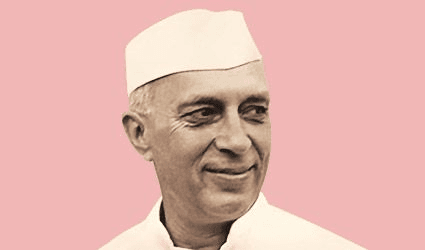
Illustration for Jawaharlal Nehru Death Anniversary Highlights (Nehru Biography)

What & Where

Personality; Jawaharlal Nehru, independent India’s 1st PM (1947-64), key leader of Indian National Congress.

Geography; Born Prayagraj, 14 Nov 1889; died New Delhi, 27 May 1964; political base—Allahabad, nationwide outreach.

Congress Milestones; Lahore 1929 (Purna Swaraj), Lucknow 1936, Faizpur 1937 sessions steered under his presidency.

Quick Facts for MCQs

Freedom Struggle Role

  • Presidency; steered socialist tone, mass mobilisation via Poorna Swaraj call.
  • Drafting; codified Fundamental Rights, economic policy blueprint influencing 1931 Karachi resolution.
  • Advocacy; insisted legal aid for INA trials, strengthening national sentiment.

Post-Independence Governance

  • Planning; launched Five-Year Plans, heavy-industry push shaping mixed economy.
  • Federalism; set up 1953 SRC, leading to 1956 linguistic reorganisation.
  • Foreign Policy; pursued Panchsheel, Non-Alignment, Afro-Asian solidarity.

Literary Contributions

  • Scholarship; prolific writings blended history, nationalism, humanism.
  • Accessibility; letters simplified global events for youth readership.

Key Data Points

FeatureData-Point
First Congress session attendedBankipore, 1912
Joined Home Rule League1916, Annie Besant’s, Allahabad Sec. 1919
Lahore Session presidency1929; Purna Swaraj resolution adopted
Fundamental Rights draft1929-31; accepted Karachi Session 1931
INA soldiers’ defence demandRaised by Nehru, 1945-46
Headed Interim GovernmentSept 1946
States Reorganisation CommissionConstituted 1953
NAM leadershipCo-founder; Belgrade Summit 1961
Bharat Ratna1955
Posthumous World Peace Council Prize1970
Key booksDiscovery of India; Glimpses of World History; Autobiography; Letters to Daughter

Related UPSC Prelims PYQs

GS1 2007PYQ 1

Consider the following statements:

GS1 2006PYQ 2

Under whose presidency was the Lahore Session of the Indian National Congress held in the year 1929 wherein a resolution was adopted to gain complete independence from the British?

GS-1Mapping

5.Kilauea Shield Volcano Eruption Dynamics (Shield Volcano)

LiveMint
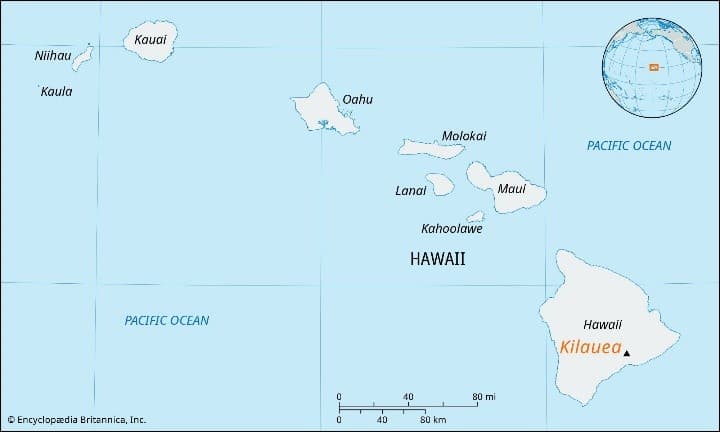
Illustration for Kilauea Shield Volcano Eruption Dynamics (Shield Volcano)

What & Where

Kilauea: active shield volcano on southeastern Big Island, Hawaii; formed by Hawaiian hotspot mantle plume

Shield‐type: broad gentle slopes; central crater Halemaʻumaʻu; two rift zones east 125 km & southwest 35 km

Eruption 2024: lava fountains > 300 m; most vigorous since 1980s Puʻuʻōʻō episode

Quick Facts for MCQs

Geological Features

  • Shield-form: low-viscosity basaltic lava builds wide dome with ≤10° slopes
  • Rift-migration: magma travels within east and southwest rift zones triggering flank vents
  • Lava-style: frequent effusive flows with episodic fountains exceeding 300 m

Eruption Timeline

  • Puʻuʻōʻō 1983-2018: 35-year outburst burying Kalapana and Kaimū settlements
  • May 2018 crisis: summit lake collapse; ash plumes 30,000 ft; 716 houses lost
  • 2024-25 phase: renewed fountaining, SO₂ surges, vog advisories

Environmental Impact

  • SO₂-vog: acid aerosols reduce air quality, corrode infrastructure, irritate lungs
  • Acid-rain: creates Kaʻū Desert barrens hampering plant colonisation
  • Conservation: endemic biota safeguarded within UNESCO park despite lava disturbance

Cultural Significance

  • Pele-myth: Halemaʻumaʻu revered as goddess Pele’s home; central to chants, hula
  • Observatory: Hawaiian Volcano Observatory 1912 oldest US monitoring station
  • Early-survey: 1823 William Ellis journal provided first detailed Western account

Key Data Points

FeatureData-Point
Volcano typeShield (basaltic)
LocationSE coast, Hawai‘i Big Island
Tectonic settingHawaiian hotspot mantle plume
Overall age210,000–280,000 years
Above-sea emergence~100,000 years ago
Main craterHalemaʻumaʻu
East rift length~125 km
Southwest rift length~35 km
Longest eruption1983–2018 (Puʻuʻōʻō)
2018 damage716 homes; ash 30,000 ft
2024 fountain height>1,000 ft (~300 m)
Protected statusHawai‘i Volcanoes NP; UNESCO WHS
Major gas emittedSulphur dioxide (SO₂)
GS-3Species

6.Dhole Distribution And Conservation Status (Asiatic Wild Dog)

Down to Earth
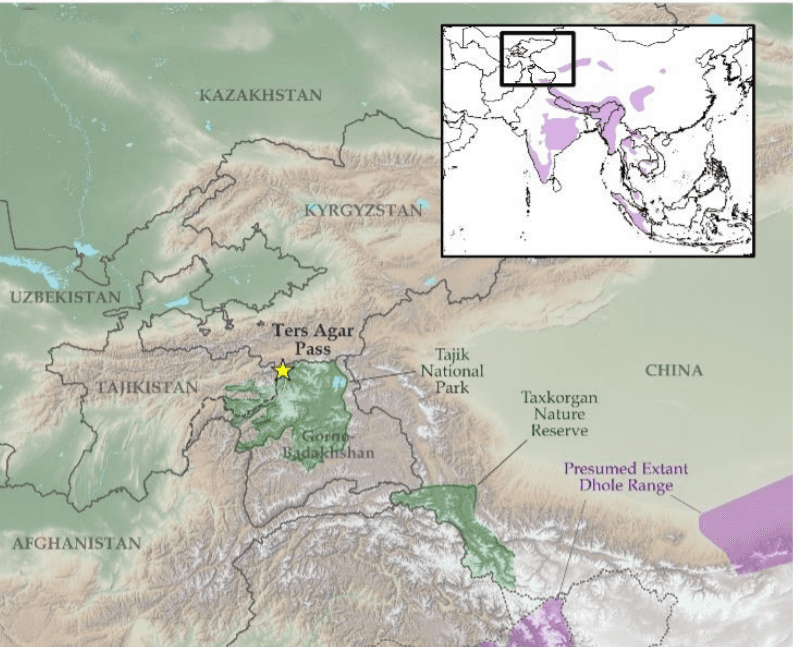
Illustration for Dhole Distribution And Conservation Status (Asiatic Wild Dog)

What & Where

Dhole (Cuon alpinus) – Asiatic wild dog, carnivorous mammal, Canidae family, apex forest predator

Rediscovery after 30 yrs in Bek-Tosot Conservancy, Osh, southern Kyrgyzstan, Pamir mountains near Tajik–China border

Historic range Russia–Central–South–Southeast Asia; now mainly South & Southeast Asia with northernmost pockets in China

Quick Facts for MCQs

Habitat & Distribution

  • Historical range southern Russia to Southeast Asia; drastic northward retreat documented
  • India shows three landscape clusters supporting viable packs
  • Rediscovery widens confirmed presence into Central Asian high-mountain ecosystems

Legal & Policy

  • Endangered tag under IUCN prompts global conservation funding eligibility
  • CITES Appendix II requires export permits, restricts international trade
  • National WPA Schedule II affords legal protection but below tiger-level penalties

Threats

  • Habitat loss from deforestation and corridor fragmentation diminishes territory size
  • Prey depletion as ungulate numbers fall due to hunting and habitat shrinkage
  • Human conflict via livestock predation and disease transmission from domestic dogs

Ecological Role

  • Apex predation by dholes keeps ungulate populations balanced, aiding vegetation recovery
  • Pack hunting behavior supports complex social dynamics in forest ecosystems
  • Indicator species; presence signals intact, contiguous forest habitats

Key Data Points

FeatureData-Point
Common nameAsiatic wild dog
Scientific nameCuon alpinus
IUCN statusEndangered
CITES listingAppendix II
Wildlife Protection ActSchedule II
2022 rediscovery siteBek-Tosot Conservancy, Kyrgyzstan
Indian strongholdsWestern & Eastern Ghats, Central India, Northeast
Top Indian states (2020)Karnataka, Maharashtra, Madhya Pradesh
Key preyUngulates
Ecological nicheApex predator regulating herbivores

Related UPSC Prelims PYQs

GS1 1999PYQ 1

"India has the largest population of the Asian X. Today, there are just about 20,000 to 25,000 X in their natural habitat spreading across the evergreen forests, dry thorn forests, swamps and grasslands. Their prime habitats are, however, the moist deciduous forests. The X population in India ranges from Northwest India where they are found in the forest divisions of Dehradun, Bijnor and Nainital districts of UP to the Western Ghats in the states of Karnataka and Kerala and in Tamil Nadu. In Cen

GS-3S&T

7.Battery Aadhaar Traceability Initiative (Battery Traceability)

BT

What & Where

Digital ID system “Battery Aadhaar” for full‐life traceability of batteries.

Unveiled in India at Battery Summit 2025; built on Tata Elxsi’s blockchain MOBIUS+ platform.

Collaboration: Tata Elxsi, Tata Motors, Tata AutoComp Systems & IIT Kharagpur.

Quick Facts for MCQs

Tech & Schemes

  • Blockchain‐integration ensures tamper-proof, real-time lifecycle data.
  • Automated compliance reporting eases adherence to multiple policy regimes.
  • Digital IDs aid smart diagnostics for EV, energy-storage, electronics batteries.

Environmental Impact

  • Traceability promotes circular economy, lowering raw-material mining demand.
  • Efficient disposal tracking curbs landfill leakage & fire risks.
  • Data-driven reuse lengthens battery life, cutting overall carbon footprint.

Legal & Policy

  • Aligns with forthcoming EU Battery Regulation on sustainability & labeling.
  • Supports India’s Extended Producer Responsibility (EPR) for battery waste.
  • Strengthens supply-chain visibility demanded by NEMMP and green-mobility goals.

Industry Collaboration

  • Trio of Tata firms + IIT fosters academia-industry tech transfer.
  • Framework can become de-facto standard for Indian battery ecosystem.
  • Encourages eco-conscious innovation across mobility and stationary storage markets.

Key Data Points

FeatureData-Point
Lead developerTata Elxsi
Core platformMOBIUS+ (blockchain)
Launch eventBattery Summit 2025
Primary geographyIndia
Key partnersTata Motors, Tata AutoComp, IIT Kharagpur
Main objectiveUnique digital IDs for every battery
Compliance targetEU Battery Regulation + Indian norms
Linked missionNational Electric Mobility Mission Plan
Circular focusRegulated reuse & efficient disposal
Major safety gainStops unsafe reuse of degraded batteries
GS-3Security

8.CAPF Honorary Rank Promotion Policy (CAPF Welfare)

PIB
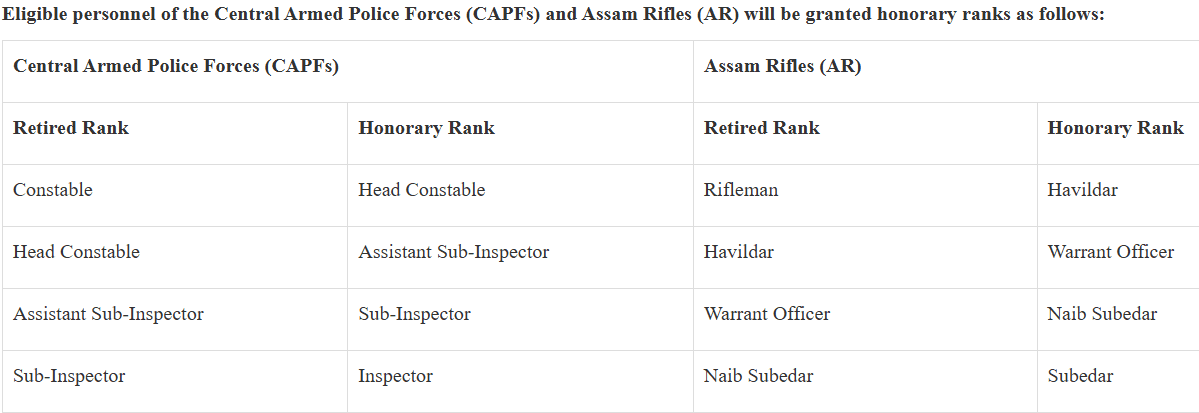
Illustration for CAPF Honorary Rank Promotion Policy (CAPF Welfare)

What & Where

Definition – MHA’s Honorary Rank Promotion Scheme grants one-rank-higher title to retiring CAPF & Assam Rifles personnel.

Process – Conferred nation-wide on retirement day; covers ranks Constable→Sub-Inspector; purely ceremonial, no pay change.

Geography – Applies across all seven CAPFs and Assam Rifles units under Government of India.

Quick Facts for MCQs

Legal & Policy

  • Nature – Honorary promotion excluded from pension or allowance calculations.
  • Structure – Grant allowed only if promoted rank exists in organisation’s sanctioned hierarchy.
  • Seniority – Scheme expressly preserves existing seniority lists.

Eligibility Metrics

  • Performance – Five consecutive APARs at least ‘Good’.
  • Discipline – Mandatory vigilance & departmental clearance; zero major penalties in five years.
  • Recommendation – Commanding officer must formally endorse each case.

Human Resource Impact

  • Morale – Symbolic elevation boosts pride, respect within community post-service.
  • Recognition – Acknowledges decades of dedication, integrity without budgetary strain.
  • Continuity – Aligns with MHA focus on welfare of frontline security personnel.

Key Data Points

FeatureData-Point
Nodal ministryHome Affairs (MHA)
Forces covered7 CAPFs + Assam Rifles
Rank band eligibleConstable to Sub-Inspector
Conferment momentDay of retirement
Financial benefitNone; symbolic only
APAR requirementMinimum ‘Good’ for last 5 years
Disciplinary recordNo major case in past 5 years
Integrity clauseCertificate beyond doubt
Seniority effectNo change in inter-se order
Cadre conditionHigher rank must exist in service

Related UPSC Prelims PYQs

CAPF_GAI 2022PYQ 1

Which one of the following is the oldest Central Paramilitary Force in India?

GS-3Security

9.Inter-Services Organisations Command Rules 2025 (Tri-service Command)

PIB

What & Where

Inter-Services Organisations: joint Army-Navy-Air Force formations for integrated planning, operations, logistics.

Types: Joint Services Command & Inter-Services Establishment; empowered by Inter-Services Organisations Act, 2023.

Key nodes: Andaman-Nicobar Command plus forthcoming theatre commands across India’s land-sea-air domains.

Quick Facts for MCQs

Legal & Policy

  • Act retains separate service laws yet centralises discipline under ISO commanders
  • Centre decides leadership eligibility, maintains overarching control
  • Rules permit creation of additional ISOs and joint commands

Command Structure

  • Joint Services Command led by Commander-in-Chief; multi-service manning
  • Inter-Services Establishment headed by Officer-in-Command; similar composition
  • Commanding Officers oversee unit discipline within ISO framework

Operational Synergy

  • Integration enables real-time tri-service planning, fixing Kargil-era coordination gaps
  • Supports two-front contingencies versus China and Pakistan
  • Joint training enhances cyber, space, multi-domain readiness

Resource Efficiency

  • Shared logistics and maintenance prevent duplication, cut costs
  • Mumbai tri-service station showcases integrated infrastructure approach
  • Pooling resources accelerates deployment and sustainment timelines

Key Data Points

FeatureData-Point
Parent legislationInter-Services Organisations (Command, Control & Discipline) Act 2023
New rules dateISO Rules 2025, notified 30 May 2025
Governing sectionSection 11 of ISO Act
Empowered officer ranksC-in-C: Lt Gen / Air Marshal / Vice Adm; O-in-C: Maj Gen / Air Vice Mshl / Rear Adm
Composition mandatePersonnel from any two or all three services
Replacement protocolFormal designation; emergency substitute by next higher formation
Referral authorityUnaddressed issues escalated to Central Government
Prompting operationTri-service Operation Sindoor
First tri-service common stationMumbai, 2024
Review urging integrationKargil Review Committee, 1999

Related UPSC Prelims PYQs

GS1 2024PYQ 1

सैन्य कार्य विभाग के प्रमुख के रूप में चीफ ऑफ डिफेंस स्टाफ (CDS) के कर्तव्य कौन-से हैं ?

GS1 2024PYQ 2

Which of the following is/are correctly matched in terms of equivalent rank in the three services of Indian Defence forces?

GS-3Security

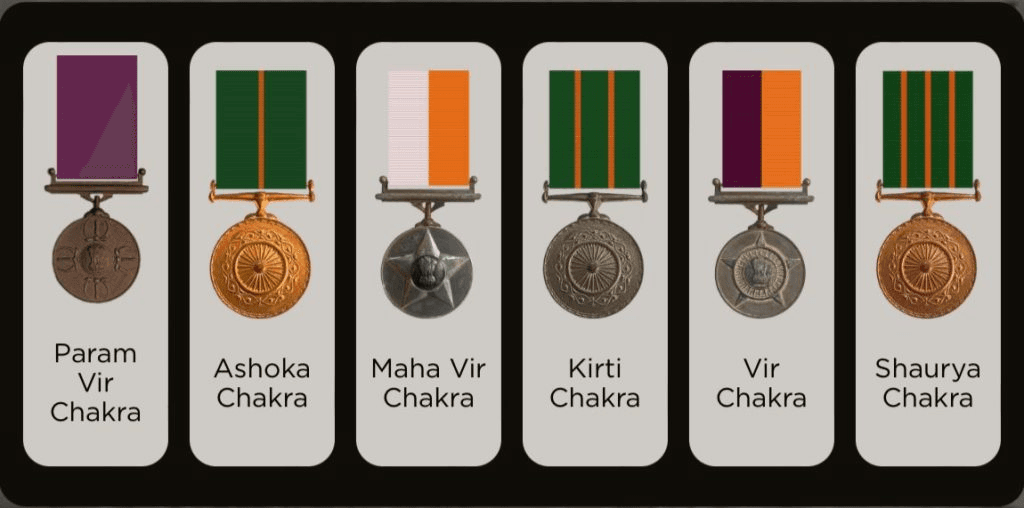
10.Gallantry Awards 2025 Overview (Gallantry Awards)

The Hindu
Illustration for Gallantry Awards 2025 Overview (Gallantry Awards)

What & Where

Gallantry Awards = national medals honouring conspicuous bravery by military, CAPF, police, civilians under service command

Announced twice yearly : Republic Day & Independence Day; presented by President of India at Rashtrapati Bhavan

Two clusters : In-Face-of-Enemy (PVC, MVC, VrC) & Other-Than-Enemy (AC, KC, SC)

Quick Facts for MCQs

Hierarchy & Insignia

  • Precedence fixed since 1950s; higher medal always worn above lower class
  • Wartime trio feature combat symbolism (Vajra, star, chakra); peacetime trio uniform lotus design
  • Reverse side bears Hindi & English name separated by two lotus flowers

Eligibility & Scope

  • PVC/MVC/VrC extend to Navy, Army, Air, territorial, medical staff, civilians under command
  • AC/KC/SC additionally cover CAPF, state police, Railway Protection Force, regular civilians
  • Awards open to posthumous recognition without limit

Conferment Process

  • Ministry of Defence screens recommendations; President approves; Gazette notification precedes ceremony
  • Presentation held at Rashtrapati Bhavan; next of kin receive if posthumous
  • Uniform regulations prescribe ribbon colours distinct for each medal

Key Data Points

FeatureData-Point
2025 investiture totals6 Kirti Chakras (4 posth), 33 Shaurya Chakras (7 posth)
Highest wartime honourParam Vir Chakra
Highest peacetime honourAshoka Chakra
Order of precedencePVC > AC > MVC > KC > VrC > SC
Medal obverse motif (PVC)Four replicas of Indra’s Vajra with State Emblem centre
Medal obverse motif (MVC)Five-point heraldic star with domed State Emblem
Medal obverse motif (VrC)Chakra with domed Emblem at centre
Peacetime medals motifRespective Chakra, lotus wreath & rim of lotus leaves
Frequency of announcementTwice a year
Bar provisionSubsequent similar act earns Bar; both medal & Bar can be posthumous
Eligibility PVC/MVC/VrCAll ranks Armed Forces, reserves, nursing, directed civilians
Eligibility AC/KC/SCAll ranks Armed Forces, CAPF, Police, RPF, civilians

Related UPSC Prelims PYQs

CDS_GK 2024PYQ 1

भारत रत्न सम्मान के बारे में, निम्नलिखित में से कौन-सा/कौन-से कथन सही है/हैं?

CDS_GK 2020PYQ 2

The Government of India has recently constituted a civilian award in the name of Sardar Vallabhbhai Patel in the field of contribution to

GS-2Scheme

11.Viksit Krishi Sankalp Abhiyan Agriculture Drive (Agriculture Scheme)

DD News

What & Where

Campaign VKSA-2025; nationwide agriculture & fisheries tech-transfer drive.

Launch site ICAR-CIFA, Bhubaneswar; coordinated by Central Institute of Freshwater Aquaculture.

Coverage 5 crore farmers across all districts, aligning with Viksit Bharat vision.

Quick Facts for MCQs

Tech & Schemes

  • Innovation CIFA Argu VAX–I; first indigenous vaccine against Argulus parasite in cultured fish.
  • Modality Lab-to-land trainings, demos, scientist–farmer interfaces accelerate adoption.
  • Integration Fisheries treated as co-equal pillar with farming for livelihood security.

Economic Angle

  • Income Doubling pursued via productivity gains, disease loss reduction, aquaculture diversification.
  • Rural Economy boosted through SHGs, KVKs, exhibitions connecting farmers to value chains.
  • Cost Efficiency; preventive vaccine trims treatment outlays, uplifts farmer margins.

Social Concerns

  • Jan Bhagidari stressed; community institutions anchor participatory agri reforms.
  • Capacity Building targets 1.5 crore+ farmers for self-reliance and resilience.
  • Nutrition Security strengthened through diversified crop-fish models.

Key Data Points

FeatureData-Point
Launch ministerUnion Agriculture Minister
Launch year2024
VenueICAR-CIFA, Bhubaneswar
Nodal ministryAgriculture & Farmers’ Welfare
Coordinating agencyICAR-CIFA
Target beneficiaries5 crore farmers
Core sectorsAgriculture + Fisheries
Flagship productCIFA Argu VAX–I fish vaccine
Key methodLab-to-land tech transfer
Vision alignmentViksit Bharat (Developed India)

Related UPSC Prelims PYQs

CAPF_GAI, CDS_GK 2025PYQ 1

Which one among the following schemes focuses on developing modern infrastructure and optimizing supply chain from farm to retail in Indian agriculture sector?

CAPF_GAI, CDS_GK 2025PYQ 2

केंद्र सरकार द्वारा 2015-16 में प्रारंभ की गई परंपरागत कृषि विकास योजना (PKVY) का उद्देश्य है:

GS-2Scheme

12.Swachh Survekshan Grameen 2025 Rural Sanitation Survey (Rural Sanitation)

PIB

What & Where

Nationwide rural sanitation ranking survey under SBM-G Phase II.

Assesses sustainability of ODF Plus outcomes via structured, tech-driven metrics.

Covers 21,000 villages in 761 districts across 34 States/UTs.

Quick Facts for MCQs

Scheme Design

  • Four performance components weight overall rural rankings.
  • Rewards high-performing villages/states to reinforce ODF Plus sustainability.
  • Embedded within SBM-G Phase II framework.

Tech Integration

  • Geo-fencing validates location; real-time dashboard ensures transparency.
  • Mobile app collects citizen inputs, photographs, service timestamps.
  • SGLR quantifies sanitation service quality for comparative analysis.

Social Mobilisation

  • Emphasises Jan Bhagidari via surveys, feedback loops.
  • Swachhagrahis, local bodies and training units mobilised for data collection.
  • Recognition mechanism designed to sustain community ownership of assets.

Key Data Points

FeatureData-Point
Launch editionSwachh Survekshan Grameen 2025
Launching authorityUnion Jal Shakti Minister
Nodal ministryMinistry of Jal Shakti
Implementing dept.DDWS
Independent verifierThird-party agency for field checks
Village sample size21,000
Districts covered761
State/UT coverage34
Core componentsSLP, Direct Observation × 2, Citizen Feedback
Citizen feedback toolMobile App + Face-to-Face
Tech featureGeo-fencing enabled data capture
Quality metricSwachhata Green Leaf Rating (SGLR)
Best-practice compendiumSwachhata Chronicles Vol. III

Related UPSC Prelims PYQs

ESE_GS, GEO_GS 2021PYQ 1

The Programme of Swachh Bharat Mission (Gramin) is implemented by:

ESE_GS, GEO_GS 2023PYQ 2

Consider the following statements regarding the aim of Jal Jeevan Mission to provide every rural household of the country with adequate tap water of prescribed quality on regular basis:

GS-1Editorial

13.Debate On Modernisation Versus Westernisation (Social Change)

The Print

What & Where

Modernisation – technology-led structural, institutional, value shifts for India’s development.

Westernisation – adoption of Western lifestyles/norms; term by sociologist M.N. Srinivas.

Discourse set in Indian socio-cultural space, accentuating urban-rural, elite-mass divides.

Quick Facts for MCQs

Conceptual Contrast

  • Modernisation prioritises productivity, institutions, human development; Westernisation focuses on lifestyle mimicry.
  • Modernisation possible without cultural loss; Westernisation risks erosion of indigenous practices.
  • Blind Westernisation viewed as obstacle to India’s ‘Vishwaguru’ vision.

Social Concerns

  • Cultural erosion – weakening joint families, caste panchayats, traditional festivals.
  • Value conflict – Western individualism vs Indian collectivism spurring inter-generational tension.
  • Social divide – urban Westernised elite diverging from rural traditional masses, fuelling resentment.

Developmental Angle

  • Technological growth – biotech, digital governance, space tech improving public services.
  • Institutional reform – modern bureaucracy, speedy judiciary, transparency bolster efficiency.
  • Balanced development – indigenous-rooted modernisation aims to bridge rural-urban gap without identity loss.

Key Data Points

FeatureData-Point
Coiner of “Westernisation”M.N. Srinivas
Core modernisation traitsRationality, democracy, mass education, urbanisation
Key Westernisation realmsDress, food, language, secular-legal-political codes
Digital payments rank (RBI 2024)India in global Top 5
Cultural-science fusion exampleAyurveda & Yoga promoted with evidence-based validation

Related UPSC Prelims PYQs

NDA_GAT 2024PYQ 1

Social theorists in the nineteenth and twentieth centuries emphasised the emergence of industrialisation, urbanisation, secularisation and bureaucratisation as hallmarks of:

Ready to practice?

Test your knowledge with our UPSC test series.

Start Free Trial