UPSC Current Affairs

14 topicsGS-1: 4GS-2: 2GS-3: 8
0/14 done
GS-3Economy

1.Small Farmers Challenges (Smallholder Agriculture)

Down to Earth

What & Where

Small & marginal farmers: <2 ha land, India Agricultural Census 2015-16

Form >85 % farm households yet cultivate only 45 % net sown area

Core geography: pan-India rain-fed belts reliant on erratic monsoon

Quick Facts for MCQs

Vulnerability Factors

  • Climate: 60 % holdings rain-fed, high monsoon variability escalates crop failure risk
  • Costs: Rising diesel, seed, fertilizer compress net income; RBI Handbook 2022 flagged input inflation
  • Debt: Informal loans dominate for 70 % farmers, inducing chronic indebtedness

Credit & Markets

  • Inequity: Corporate write-offs ₹10.09 lakh cr vs sparse smallholder relief indicates systemic bias
  • Price: Distress sales rampant; limited storage, only 7 % gain MSP support
  • Digital: e-NAM connectivity expanding yet many villages lack broadband, hindering price discovery

Policy Tools

  • Income: PM-KISAN cash smooths liquidity but equals only ₹500 per month per family
  • Risk: PMFBY low-premium insurance shields yield losses from drought, flood, pest
  • Collective: 10,000-FPO mission envisages finance, training, linkage to unlock scale economies

Key Data Points

FeatureData-Point
Landholding cut-off<2 hectares
Share in farmer population85 %
Share in cultivated land45 %
MSP beneficiaries (2015)7 % farmers
Formal credit access30 % holdings
Corporate loan write-offs₹10.09 lakh crore (RBI 2022)
PM-KISAN transfer₹6,000 per year
Planned Farmer Producer Organisations10,000 units
Organic area target (PKVY)2 million ha
Crop insurance schemePMFBY

Related UPSC Prelims PYQs

GS1 2023PYQ 1

Which one of the following best describes the concept of ‘Small Farmer Large Field’?

GS1 2020PYQ 2

Under the ‘Kisan Credit Card’ scheme, for which of the following purposes can farmers avail of short-term credit support?

GS-1History

2.INSV Kaundinya Stitched Sail Ship (Maritime Heritage)

Hindustan Times
Illustration for INSV Kaundinya Stitched Sail Ship (Maritime Heritage)

What & Where

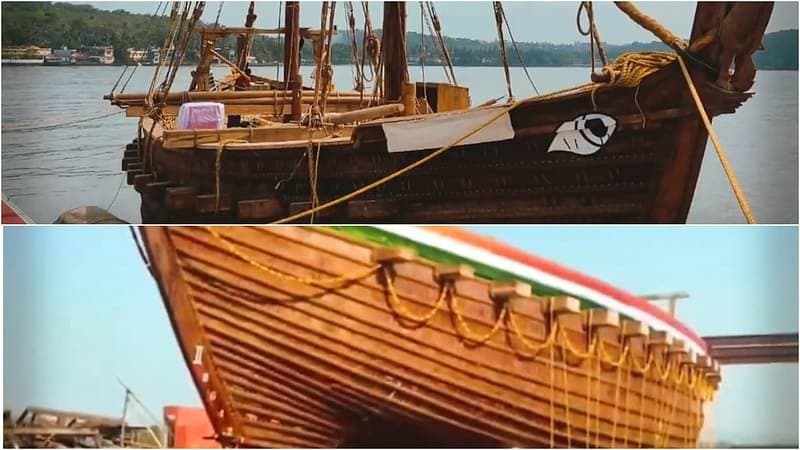
INSV Kaundinya – fully functional stitched-plank sailing ship, inducted at Karwar Naval Base, Karnataka.

Built via ancient technique joining wooden planks with coir, coconut fibre, natural resin; zero metal fasteners.

Scheduled trans-oceanic voyage Mandvi (Gujarat) → Oman, retracing historic Indian maritime trade route.

Quick Facts for MCQs

Tech & Schemes

  • Stitched-plank revival codified under July-2023 tripartite agreement: Culture Ministry, Navy, Hodi Innovations.
  • Eco-friendly build uses locally sourced teak, coir, natural resins; no synthetic or metallic fittings.
  • IIT Madras tests ensured seaworthiness while retaining ancient hull geometry.

Cultural Heritage

  • Project revives India’s pre-modern shipbuilding and navigation prowess for public diplomacy.
  • Ajanta-derived motifs, Harappan anchor integrate art-archaeology into contemporary naval asset.
  • Naming recalls Kaundinya’s voyages, spotlighting millennia-old Indo-Pacific cultural exchanges.

Voyage & Outreach

  • Gujarat-Oman sail planned late-2024 to showcase heritage craft to Gulf nations.
  • Naval crew to employ traditional seamanship; minimal modern aids to prove technique’s viability.
  • Stops en-route planned as floating exhibit promoting ‘Maritime India’ narrative.

Key Data Points

FeatureData-Point
Vessel typeStitched sail ship, Indian Naval Sailing Vessel
Inspiration5th-century CE ship in Ajanta Cave paintings
BuilderHodi Innovations, Mandvi, Gujarat
Funding agencyMinistry of Culture
Technical oversightIndian Navy
Induction baseKarwar, Karnataka
Key rigSquare sails, steering oars
Construction methodStitched planks; coir rope + natural resin, no nails
Design testingHydrodynamic trials, IIT Madras
Decorative iconsGandabherunda & Sun on sails; Simha Yali bow
Anchor styleHarappan stone anchor replica
NamesakeLegendary mariner Kaundinya, early SE Asia links
Planned 2024 voyageGujarat-Oman across Arabian Sea

Related UPSC Prelims PYQs

CAPF_GAI, CDS_GK 2023PYQ 1

Which one of the following Indian Naval Ships has recently concluded a 17,000-nm trans-ocean intercontinental voyage?

CAPF_GAI, CDS_GK 2024PYQ 2

Which one of the following statements about 'INS Tarmugli' is not correct?

GS-1History

3.International Booker Prize 2025 (Literary Awards)

Hindustan Times
Illustration for International Booker Prize 2025 (Literary Awards)

What & Where

International Booker Prize: annual UK honour for best work of fiction translated into English.

£50,000 purse shared equally by original author and translator; established 2005.

2025 award goes to Kannada collection “Heart Lamp” by Banu Mushtaq, tr. Deepa Bhasthi.

Quick Facts for MCQs

Prize Characteristics

  • Focus: Translated fiction only; Booker Prize proper covers English originals.
  • Evaluation: Literary excellence, cultural richness, translation craft equally honoured.
  • Indian wins: 2022 (Hindi), 2025 (Kannada) showcase linguistic diversity.

Author & Activism

  • Professions: Advocate, journalist, councillor, women’s rights campaigner.
  • Journalism: Reported for Lankesh Patrike (1981–1990) under P. Lankesh mentorship.
  • Bandaya role: Writings target caste, gender, religious patriarchy in Karnataka.

Literary Portfolio

  • Heart Lamp: 12 stories (1990–2023) on South-Indian Muslim women’s autonomy versus patriarchy.
  • Benki Male: Won Karnataka Sahitya Academy Award, 1999.
  • Black Cobra story adapted into Girish Kasaravalli’s film Hasina, multiple awards.

Key Data Points

FeatureData-Point
Established2005
Awarding bodyBooker Prize Foundation, UK
FrequencyAnnual
FocusTranslated fiction into English
Prize money£50,000 split author–translator
2025 winning titleHeart Lamp
Original languageKannada
2025 authorBanu Mushtaq
2025 translatorDeepa Bhasthi
First Kannada work to winHeart Lamp (2025)
Previous Indian winTomb of Sand, 2022
Geetanjali Shree translatorDaisy Rockwell
Banu Mushtaq born3 Apr 1948, Hassan (Karnataka)
Activist movementBandaya (Kannada protest literature)

Related UPSC Prelims PYQs

CAPF_GAI, CDS_GK 2021PYQ 1

Which one of the following books was declared winner of the 2021 International Booker Prize?

CAPF_GAI, CDS_GK 2023PYQ 2

Which of the following statements is/are correct?

GS-1HistoryQuick Bite

4.Guttala Drought Inscription 1539 (Kannada Inscriptions)

The Hindu

What & Where

Discovery: rare 1539 CE Kannada stone inscription at Haveri district, Karnataka.

Content: records 6,307 deaths from “bara” (drought); earliest Indian epigraph explicitly noting disaster toll.

Ritual: bodies interred after homage to God Basaveshwara.

Quick Facts for MCQs

Historical Significance

  • Earliest Indian epigraph quantifying humanitarian disaster, precedes modern census-style records.
  • Highlights community memory-keeping beyond royal victories or donations.

Karnataka Epigraphy Landscape

  • Maski Rock Edict, 3rd BCE: first uses Ashoka’s title “Devanampriya”.
  • Halmidi, 450 CE: oldest Kannada inscription; 16-line sandstone; names Kadamba king Kakusthavarma.
  • Aihole, 634 CE: Ravikirti’s Sanskrit verse praising Pulakeshin II’s win over Harshavardhana.

Social & Cultural Notes

  • Reference to Basaveshwara reflects Lingayat devotional spread by 16th century.
  • Mass burial indicates organized community response during severe drought.

Key Data Points

FeatureData-Point
Inscription date18 Aug 1539 CE
Language / ScriptEarly Kannada
Disaster type“Bara” drought
Human toll6,307 deaths (mass burial)
Deity referencedBasaveshwara
Location foundHaveri district, Karnataka
Earliest record of disaster toll?Yes, in India
MaterialStone slab

Related UPSC Prelims PYQs

GS1 1998PYQ 1

Which one of the following ancient Indian records is the earliest royal order to preserve food grains to be utilised during the crises in the country?

GS-1Mapping

5.Arabian Sea Physical Features (Arabian Sea)

FPJ
Illustration for Arabian Sea Physical Features (Arabian Sea)

What & Where

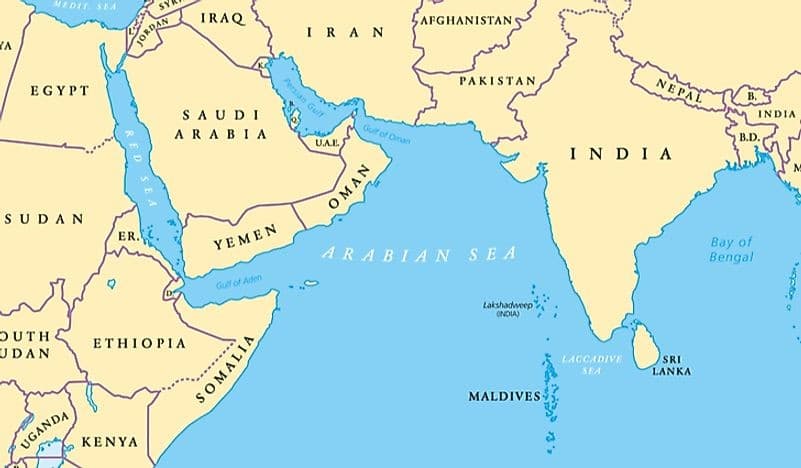
Northwestern arm of Indian Ocean between India (E) and Arabian Peninsula (W).

Links Persian Gulf via Gulf of Oman and Red Sea via Gulf of Aden.

IMD: low-pressure over east-central basin may deepen into depression within 36 h.

Quick Facts for MCQs

Physical Geography

  • Depth shaped by Wheatley Deep abyss and seismically active Carlsberg Ridge.
  • Strategic gulfs create choke-points vital for West Asian energy trade.
  • Island arcs modulate regional cyclone tracks and marine biodiversity.

Monsoon Dynamics

  • Southwest monsoon extracts bulk moisture from sea, driving India’s June–Sept rains.
  • Somali coastal upwelling boosts nutrients, helps trigger monsoon onset.
  • Reversing Somali Current epitomises ocean-atmosphere coupling under monsoon winds.

Marine Geology & Resources

  • Indus River turbidites build extensive submarine fan and high sediment load.
  • Seafloor hosts ferromanganese nodules, polymetallic sulfides of economic interest.
  • Persistent oxygen-minimum, hydrogen-sulfide zones influence biogeochemistry, fisheries.

Key Data Points

FeatureData-Point
Average depth≈2,734 m
Max depth (Wheatley Deep)≈5,803 m
Coastal nationsIndia, Pakistan, Iran, Oman, Yemen, Somalia
Indian littoral statesGujarat, Maharashtra, Goa, Karnataka, Kerala; Lakshadweep UT
Major ridgesCarlsberg, Murray
Principal basinsSomali Basin, Arabian Basin
Key canyonIndus submarine canyon & abyssal cone
Fastest currentSomali Current ≈13 km h⁻¹
Seasonal circulationClockwise in SW monsoon; weak/variable in winter
Prominent islandsSocotra, Kuria Muria, Lakshadweep
GS-3Environment

6.Blue Talks Marine Conservation Dialogue (Marine Conservation)

PIB

What & Where

Blue Talks: multilateral dialogue platform on sustainable ocean use; 2nd edition held in New Delhi, Aug 2024.

UNOC 3: third UN Ocean Conference, scheduled 2025, Nice (France); co-hosted by France & Costa Rica.

Core geography: Indian capital (prep talks), French Riviera (main summit); focus on global oceans (SDG 14).

Quick Facts for MCQs

Objectives

  • Foster dialogues, research, innovation to curb marine pollution and enhance conservation.
  • Accelerate voluntary & collective commitments ahead of UNOC 3 adoption of Nice Ocean Action Plan.
  • Push BBNJ Agreement ratifications for effective high-seas biodiversity governance.

Stakeholder Mix

  • Governments, scientists, civil society, private sector, academia part of Blue Talks & UNOC processes.
  • India positions as knowledge partner; France & Costa Rica act as diplomatic co-hosts.
  • UN system provides platform, monitoring SDG 14 progress.

Policy & Governance

  • Blue Talks serve as preparatory consultation feeding into formal UN negotiations.
  • Outputs are politically persuasive yet legally non-binding, relying on voluntary national actions.
  • Emphasis on multilateral cooperation for marine research, education, innovation funding.

Key Data Points

FeatureData-Point
Second Blue Talks host cityNew Delhi
Coordinating Indian ministryMinistry of Earth Sciences
Partner embassiesFrance, Costa Rica
Primary SDG targetedSDG 14 – Life Below Water
UNOC 3 venue & yearNice, France — 2025
UNOC 3 theme“Accelerating action … conserve & sustainably use the ocean”
UNOC 3 expected outputNon-binding “Nice Ocean Action Plan”
Key treaty promotedBBNJ Agreement (High-Seas Biodiversity)
UNOC 1 year & place2017, New York
UNOC 2 year & place2022, Lisbon (Portugal)

Related UPSC Prelims PYQs

CDS_GK 2023PYQ 1

Which one of the following is the venue of the UN 2023 Water Conference?

CDS_GK 2024PYQ 2

The 7th edition of the Indian Ocean Conference was held at

GS-3Environment

7.16th Asiatic Lion Census (Asiatic Lion Census)

Indian Express
Illustration for 16th Asiatic Lion Census (Asiatic Lion Census)

What & Where

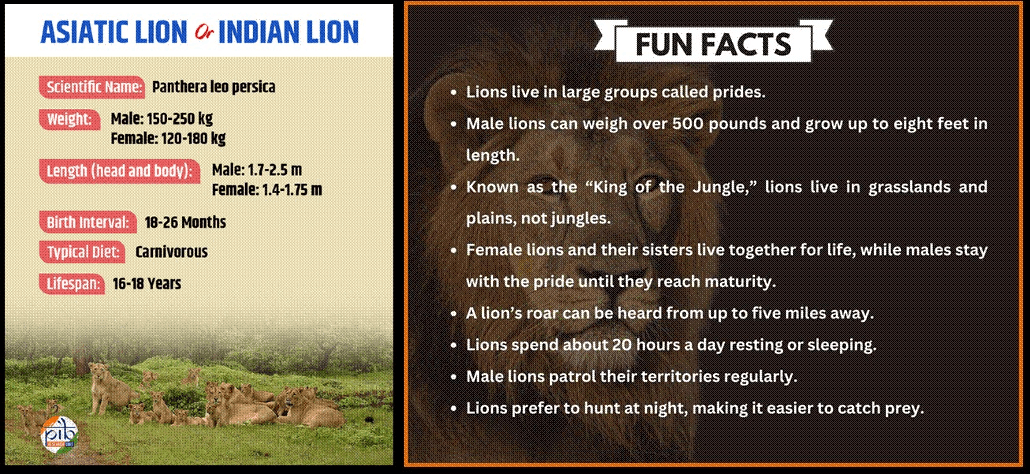
Asiatic lion (Panthera leo persica), IUCN Endangered, survives naturally only in Gujarat, India

16th Asiatic Lion Census 2025 employed direct-beat verification across Gir landscape and adjoining districts

Core range: Gir NP, Gir & Pania sanctuaries; range now spans Amreli, Porbandar, Bhavnagar etc.

Quick Facts for MCQs

Population Trends

  • Rise: 674 (2020) → 891 (2025), 32.2 % growth
  • Distribution: 44.22 % now outside protected areas, signalling range expansion
  • Sex-ratio: Adult females 330, up 27 %, boosting recruitment

Methodology & Tech

  • Direct-beat: landscape split into regions, zones, sub-zones for simultaneous enumeration
  • Speed: survey finished in 3 days versus tiger census two-year cycle
  • Tools: GPS collars, automated sensor grid, GIS dashboards enable 24×7 monitoring

Conservation Initiatives

  • Flagship: Project Lion 2020 emphasises habitat, prey, conflict mitigation across Gir landscape
  • Satellite: Barda hosts 17 lions; Jetpur and Babra-Jasdan clusters emerging
  • Support: Gujarat FD ensures rapid vet care, community outreach, biennial censuses

Key Data Points

FeatureData-Point
Total lions (2025)891
Growth since 2020+32.2 %
Lions inside protected areas384
Lions outside protected areas507 (44.22 %)
Core Gir + sanctuaries394 lions
Highest district countAmreli 257
Barda Sanctuary lions17 (first record since 1879)
Adult females330 (↑27 %)
Census duration3 days
Census methodDirect-beat verification
Project Lion launch2020
IUCN Green StatusLargely Depleted

Related UPSC Prelims PYQs

GS1 1999PYQ 1

"India has the largest population of the Asian X. Today, there are just about 20,000 to 25,000 X in their natural habitat spreading across the evergreen forests, dry thorn forests, swamps and grasslands. Their prime habitats are, however, the moist deciduous forests. The X population in India ranges from Northwest India where they are found in the forest divisions of Dehradun, Bijnor and Nainital districts of UP to the Western Ghats in the states of Karnataka and Kerala and in Tamil Nadu. In Cen

GS1 2017PYQ 2

Recently there was a proposal to translocate some of the lions from their natural habitat in Gujarat to which one of the following sites?

GS-3SpeciesQuick Bite

8.Shirui Lily Festival (Shirui Lily)

Indian Express
Illustration for Shirui Lily Festival (Shirui Lily)

What & Where

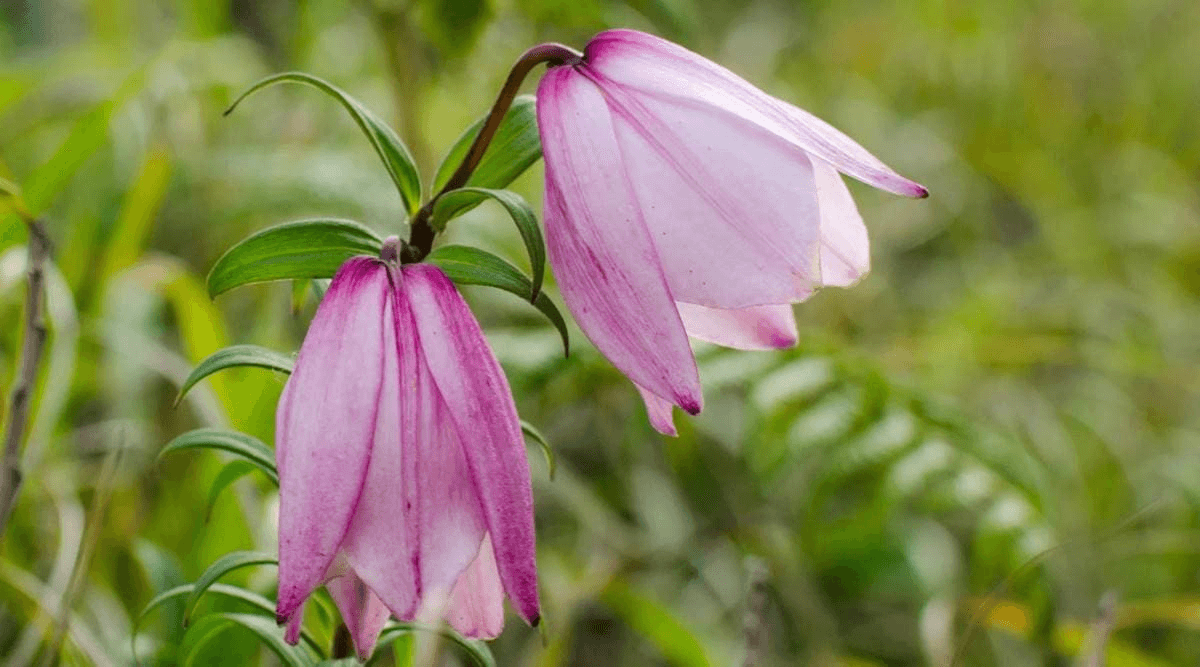
Shirui Lily (Lilium mackliniae) — endemic, pinkish-white flower on Shirui Hills, Ukhrul district, Manipur.

Shirui Lily Festival (since 2017) in Ukhrul celebrates bloom, Tangkhul Naga culture and ecotourism.

2025 edition resumes after two-year ethnic strife, aiming to revive inter-community movement and peace.

Quick Facts for MCQs

Botanical Profile

  • Pinkish-white, bell-shaped bloom; grows roughly one foot tall.
  • Flowering window April–June; rarity earned RHS merit award 1948.
  • Found nowhere outside Shirui Hills; zero natural populations elsewhere.

Conservation Challenges

  • Endangered status driven by climate change and habitat loss.
  • Invasive wild dwarf bamboo outcompetes seedlings, accelerating decline.
  • Festival platform used for conservation awareness, eco-tourism funding.

Socio-Cultural Dimension

  • Festival showcases Tangkhul Naga dance, music and indigenous crafts.
  • Alongside Sangai Festival, forms core of Manipur tourism calendar.
  • 2025 revival intended to ease ethnic tensions, encourage safe inter-community travel.

Key Data Points

FeatureData-Point
Scientific nameLilium mackliniae
State flower ofManipur
HabitatShirui Hills, Ukhrul
Discovery year1946
DiscovererDr Frank Kingdon Ward
Named afterJean Macklin
RHS merit award1948
Blooming monthsApril–June
Plant heightAbout 1 ft
Festival launched2017
Main threatsClimate change, habitat loss, invasive bamboo
GS-3S&T

9.BrahMos-NG Supersonic Cruise Missile (Supersonic Missile)

The Hindu
Illustration for BrahMos-NG Supersonic Cruise Missile (Supersonic Missile)

What & Where

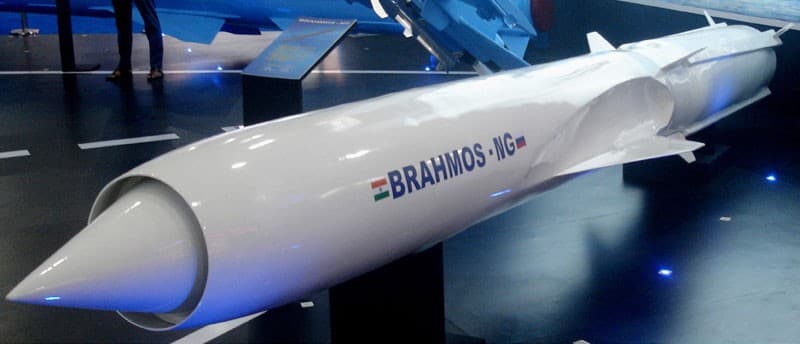
BrahMos-NG: miniaturised supersonic cruise missile co-developed by DRDO & Russia’s NPO Mashinostroyenia.

Deployment: air, land, ship VLS, submarine tubes; engages land/sea targets within 400-450 km, upgrade aiming 800 km.

Platforms: Su-30MKI, LCA Tejas, Rafale, MiG-29 fighters, Indian Navy destroyers, frigates, conventional submarines.

Quick Facts for MCQs

Technical Edge

  • Miniaturization: weight trimmed ~40 %, smaller diameter eases carriage & storage.
  • Stealth: redesigned airframe lowers radar signature, boosting survivability.
  • ECCM: upgraded electronics resist jamming, spoofing attempts.

Platform Compatibility

  • Light-fighters: LCA Tejas, MiG-29, Rafale can carry one missile without performance penalty.
  • Heavy-fighters: Su-30MKI can mount 3 missiles, multiplying strike capacity.
  • Naval-assets: destroyers/frigates host higher missile density per VLS cell.

Program Status

  • Prototype: ground subsystems validated; first flight test slated shortly.
  • Range-upgrade: legacy BrahMos being stretched to 800 km alongside NG work.
  • Export-prospect: lighter, versatile missile attractive to friendly air forces & navies.

Key Data Points

FeatureData-Point
DevelopersDRDO + NPO Mashinostroyenia (BrahMos Aerospace)
Weight≈1.5 t (original BrahMos ≈2.5 t)
Max SpeedMach 2.8
Present Range400–450 km
Extended Range (under test)800 km
Launch ModesAir, land, ship VLS, submarine torpedo tube
Stealth AttributeReduced radar cross-section, low-observable shaping
ECCMAdvanced anti-jamming electronic suite
Compatible FightersTejas, Rafale, MiG-29, Su-30MKI

Related UPSC Prelims PYQs

CDS_GK 2022PYQ 1

With reference to BrahMos missile, consider the following statements:

CDS_GK 2025PYQ 2

भारत के सैन्य आयुध (military arsenal) के बारे में निम्नलिखित में से कौन-सा/कौन-से कथन सही है/हैं?

GS-3S&T

10.Quasi-Steady State Cosmology (Cosmology Theory)

The Hindu
Illustration for Quasi-Steady State Cosmology (Cosmology Theory)

What & Where

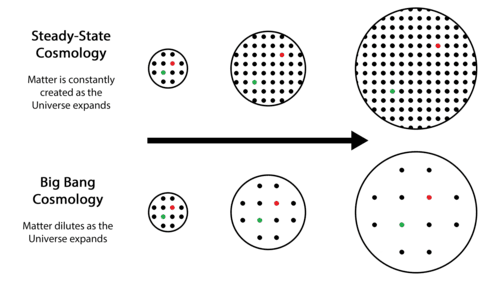
Quasi-Steady State Cosmology (QSSC) — cyclic expansion–contraction yet overall steady appearance of universe

Developed early 1990s by Fred Hoyle, Jayant Narlikar & Geoffrey Burbidge as alternative to Big Bang

Continuous matter creation via localized “mini-bangs”; modifies Einstein equations to bypass singular origin

Quick Facts for MCQs

Scientific Theory Comparison

  • Steady-State 1948 posits constant density; QSSC adds long-term cycles
  • Big Bang backed by CMB, Hubble expansion; QSSC remains minority view
  • Both address cosmic evolution but differ on singular origin requirement

Evidence & Observations

  • CMB interpreted as cooled first light; mapped by ESA Planck mission
  • Galactic redshift gives linear distance–velocity relation validating expansion
  • QSSC predicts intermittent creation events, yet lacks decisive empirical proof

Personal Milestones

  • Institution-building: founded IUCAA Pune in 1988 on UGC invite
  • Awards: Padma Bhushan 1965, Padma Vibhushan 2004, UNESCO Kalinga 1996
  • Science outreach: authored “An Introduction to Cosmology”, Marathi autobiography won Sahitya Akademi 2014

Key Data Points

FeatureData-Point
Core ideaEternal universe with periodic mini-bangs
Key originatorsHoyle, Narlikar, Burbidge
Formulation periodEarly 1990s
Maths tweakAdditional term in General Relativity for matter creation
Main rival theoryBig Bang (Lemaître, 1927)
Big Bang age estimate~13.7 billion years
CMB discoverersPenzias & Wilson
Hubble’s Law insightRecession speed ∝ distance
Planck Epoch span10⁻⁴³ seconds post-Bang
Narlikar birth19 Jul 1938, Kolhapur
GS-3S&TQuick Bite

11.Indian Yak Genome Assembly (Yak Genome)

The Hindu

What & Where

Genome assembly: first chromosome-level map of Indian yak Bos grunniens by Indian scientists

Technology: long-read sequencing plus advanced bioinformatics enabling precise gene-chromosome mapping

Habitat: Indian yak inhabits >7,000 ft zones in Ladakh, Sikkim, Arunachal Pradesh, Himachal Pradesh

Quick Facts for MCQs

Genomics Tech

  • Long-read sequencing reads thousands–millions base pairs, bypasses 100–300 bp short-read limit
  • Bioinformatics merges biology-computing-maths to analyse large DNA/RNA/protein datasets
  • Chromosome-level assembly enables direct gene-to-chromosome localisation enhancing accuracy

Conservation & Breeding

  • Allele mining identifies variants for disease resistance, drought tolerance, higher productivity
  • Genomic data guides selective breeding and local livestock management programmes
  • Enhanced traits aim to stabilise declining yak numbers in Himalayan regions

Legal & Policy

  • FSSAI 2022 tag as ‘food animal’ permits yak products in regulated food chain
  • Policy seeks market demand, herder income, population recovery
  • Genome resource strengthens evidence-based conservation policymaking

Key Data Points

FeatureData-Point
SpeciesIndian yak (Bos grunniens)
Genome achievementFirst chromosome-level assembly
Sequencing platformLong-read DNA sequencing
Key disciplineBioinformatics analysis
Primary benefitAllele mining for desirable traits
Indian altitude presenceAbove 7,000 feet
FSSAI designationFood animal
FSSAI approval year2022
GS-2Polity

12.WHO Pandemic Agreement Treaty (Global Health Treaty)

Business Standard

What & Where

Treaty — WHO Pandemic Agreement, Article 19 instrument; only second binding WHO convention after 2003 Tobacco Control

Objective — secure equitable access to vaccines/diagnostics/therapeutics and a coordinated global pandemic response

Adoption — World Health Assembly vote: 124 yes, 11 abstentions; enters into force after 60 ratifications

Quick Facts for MCQs

Legal & Policy

  • Ratification triggers binding obligations; non-ratifiers unaffected
  • Sovereignty retained; states choose domestic health measures
  • Article 19 allows treaty adoption without unanimous member consent

Equity Measures

  • PABS ensures 20 % vaccines reserved for low-income states
  • Allocation based on epidemiological risk, deters vaccine hoarding
  • National laws must secure public access to publicly funded innovations

Supply & Financing

  • GSCL coordinates real-time logistics for essential goods
  • Financial Mechanism pre-positions funds for rapid pandemic response
  • Aim — timely resource flow to crisis-hit countries

Technology & Capacity

  • Knowledge sharing and IP licensing promoted for South-based manufacturing
  • Local production targets vaccines, diagnostics, therapeutics
  • One Health surveillance boosts early zoonotic outbreak detection

Key Data Points

FeatureData-Point
Treaty typeLegally binding international convention
WHO Constitution articleArticle 19
Precedent treaty2003 Framework Convention on Tobacco Control
Adoption bodyWorld Health Assembly
Ratification threshold60 WHO Member States
Voting result124 in favour; 11 abstained
US positionWithdrew from negotiations under Trump
Core principleEquity in access to pandemic tools
Pathogen mechanismPABS: mandatory sample/genome sharing
Vaccine obligation10 % output free to WHO + 10 % at affordable price
Supply chain toolGlobal Supply Chain & Logistics Network (GSCL)
Financing toolCoordinated Financial Mechanism
Tech measureEncouraged technology transfer & local production
One HealthIntegrates human–animal–environment surveillance
Sovereignty safeguardWHO cannot impose domestic laws
GS-3Security

13.Golden Dome Missile Defence Shield (Missile Defence)

NDTV
Illustration for Golden Dome Missile Defence Shield (Missile Defence)

What & Where

Proposed US next-gen missile-defence shield combining space & terrestrial layers

Intercepts ballistic/hypersonic missiles mainly in boost phase via LEO satellites

Geographical aim: blanket protection of the entire continental United States

Quick Facts for MCQs

Tech & Schemes

  • Space-based interceptors: miniature kill-vehicles target missiles seconds after launch
  • AI-enabled surveillance provides real-time tracking, discrimination, fire-control
  • Integrated architecture links satellites with land, sea and command networks

Security Dimension

  • Seeks strategic edge over China & Russia in contested space domain
  • Would become first fully space-based missile-defence system if deployed
  • Marks explicit US move toward space weaponisation despite existing restraint norms

International Examples

  • Modelled on Israel’s Iron Dome but upgraded for long-range, high-altitude threats
  • Iron Dome defends cities; Golden Dome envisages national-scale umbrella
  • Reflects global trend: layered, multi-domain missile-shield proliferation

Key Data Points

FeatureData-Point
AnnouncedJanuary 2025
AnnouncerPresident Donald Trump
Implementing agencyUS Department of Defense
Primary layerThousands of small interceptors in LEO
Supporting assetsGround radars, sensor grids, naval/missile units
Core threatsICBMs, ballistic & hypersonic missiles
Intended coverageEntire continental USA

Related UPSC Prelims PYQs

CDS_GK, GS1 2022PYQ 1

The term ‘Terminal High Altitude Area Defense’, sometimes mentioned in news, refers to

CDS_GK, GS1 2018PYQ 2

What is "Terminal High Altitude Area Defense (THAAD)", sometimes seen in the news?

GS-2Scheme

14.Mizoram Full Literacy Milestone (Adult Literacy)

CNBC
Illustration for Mizoram Full Literacy Milestone (Adult Literacy)

What & Where

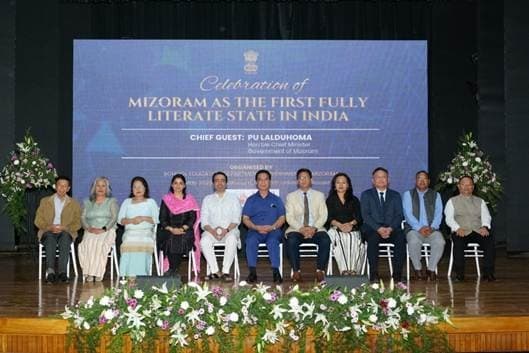
Full literacy = literacy rate above 95% per ULLAS adult-education benchmark.

Mizoram, Northeast India, hits 98.2% (PLFS 2023-24); first Indian state officially declared fully literate.

Achieved through Nav Bharat Saaksharta Karyakram under the centrally sponsored ULLAS scheme.

Quick Facts for MCQs

Tech & Schemes

  • ULLAS five components: FLN, Critical Life Skills, Basic Education, Vocational Skills, Continuing Education.
  • Digital-first delivery via app, TV, radio; aligns with NEP 2020 lifelong-learning mandate.

Implementation Model

  • Community volunteers act as instructors; cost-effective, locally rooted pedagogy.
  • Progress monitored through FLNAT, enabling data-driven tracking of adult-literacy gains.

Comparative Milestones

  • Ladakh achieved unit-level full literacy before any state, highlighting rapid gains in smaller territories.

Key Data Points

FeatureData-Point
First fully literate stateMizoram
Literacy rate reached98.2 %
Census 2011 literacy (Mizoram)91.33 %
Full-literacy threshold>95 %
Earlier full-literate unitLadakh, 24 Jun 2024
Key programmeNav Bharat Saaksharta Karyakram
Umbrella schemeULLAS (FY 2022-27)
Scheme natureCentrally Sponsored
Total outlay₹1037.90 cr
Centre : State share₹700 cr : ₹337.90 cr
Implementing ministryEducation
Target group15 + non-literates
Learners enrolled (till 2025)2.37 crore
Volunteer teachers40.84 lakh
Assessment testFLNAT

Related UPSC Prelims PYQs

GS1, NDA_GAT 1997PYQ 1

What is the correct sequence of the descending order of the following States in respect of female literacy rates as per the 1991 Census?

GS1, NDA_GAT 2022PYQ 2

Which one of the following States/UTs was connected with the Indian Railways network in the year 2021?

Ready to practice?

Test your knowledge with our UPSC test series.

Start Free Trial