UPSC Current Affairs

16 topicsGS-1: 6GS-2: 5GS-3: 5
0/16 done
GS-2Editorial

1.Whistleblowing Ethical Framework and Safeguards (Accountability Mechanism)

FT

What & Where

Whistleblowing = lawful disclosure of fraud, corruption, safety threats to authorised channels.

Process: protected/anonymous reporting via ombudsman, regulator, court; seeks accountability over employer-loyalty.

Geography: Key statutes—US SEC Programme, EU Directive, India’s Whistleblower Protection Act 2014.

Quick Facts for MCQs

Legal & Policy

  • US, EU, UN frameworks offer cash rewards, confidentiality, retaliation shields.
  • India lacks private-sector statute; Act 2014 dormant; amendments awaited.
  • Vigil mechanisms obligatory for SEBI-regulated AMCs, large companies.

Ethical Foundations

  • Aristotelian virtue ethics stresses moral character in exposing wrongdoing.
  • Ross’s prima-facie duties: prevent harm > loyalty to employer.
  • Bhagavad Gita endorses duty-bound action despite adversity.

Challenges & Reforms

  • Fear; >50 % distrust resolution or career safety.
  • No corporate-wide protection breeds under-reporting.
  • Recommended: activate Act 2014, allow anonymous tips, monetary rewards, independent hotlines.

Key Data Points

FeatureData-Point
US SEC awards FY 2023≈ $600 million to whistleblowers
EU DirectiveGuarantees confidentiality, non-retaliation, legal redress
UN Anti-Corruption ConventionEndorses whistleblowing as anti-graft tool
India Whistleblower Act 2014Covers public servants; yet to commence; no corporate anonymity
Companies Act 2013Mandatory vigil mechanism for listed & big cos.
SEBI 2021 circularAMCs must enable insider-trading whistleblower policies
Retaliation in India51 % victims (Global Integrity 2024)
Early-fraud detectionFirms with hotlines 70 % better (KPMG 2023)
ACFE findingWhistleblowers top source of corporate fraud detection
Ethical maximGita: “Karmanye vadhikaraste” supports duty over outcome

Related UPSC Prelims PYQs

ESE_GS 2021PYQ 1

Whistleblowing in an organizational set up affects :
GS-2Polity

2.K Veeraswami Judgment and Judicial Accountability (Judiciary Oversight)

Indian Express

What & Where

In-house inquiry – CJI-appointed judges’ panel probes prima-facie misconduct of SC/HC judges.

Removal route – only constitutional method is impeachment under Article 124; never succeeded since 1950.

K Veeraswami 1991 – SC ruling classifying judges as Public Servants under PC Act, but mandates prior CJI nod for FIR.

Quick Facts for MCQs

Legal & Policy

  • Veeraswami shielding – ensures judicial independence by filtering executive FIRs through CJI consent.
  • VP critique – calls doctrine unconstitutional, seeks presidential sanction aligning with service-law norm.
  • Separation-of-powers concern – executive seizure of cash at Justice Varma fuels demand for clearer oversight.

Institutional Mechanisms

  • In-house panel composition – 3 SC judges for HC judge; 3 senior HC judges for lower-rank misdeeds.
  • Outcome options – censure, advice, request for voluntary resignation, impeachment recommendation.
  • Government discretion – may ignore CJI impeachment advice, as with Justice S N Shukla case.

Accountability Debate

  • Transparency gap – in-house reports rarely public, limiting citizen scrutiny.
  • Statistics deficit – no central database on complaints, actions against higher judiciary.
  • Public trust risk – cash-seizure episodes intensify calls for external oversight body.

Key Data Points

FeatureData-Point
Constitutional removal articleArt 124
Impeachment success record0 in 75 yrs
In-house probe authorityChief Justice of India
CJI powers on errant judgeTransfer, withdraw work, recommend impeachment
FIR against sitting judge needsCJI approval (Veeraswami)
Judges’ constitutional immunityNone; unlike Art 361 for President/Governors
Year of Veeraswami judgment1991
Judges status under PC ActPublic Servants
VP’s proposed sanctioning authorityPresident under Art 53
Example of CJI allowing FIR2019, Justice S N Shukla (CJI Gogoi)

Related UPSC Prelims PYQs

GS1 2012PYQ 1

What is the provision to safeguard the autonomy of the Supreme Court of India?

GS1 1996PYQ 2

When the Chief Justice of a High Court acts in an administrative capacity, he is subject to

GS-3Infrastructure

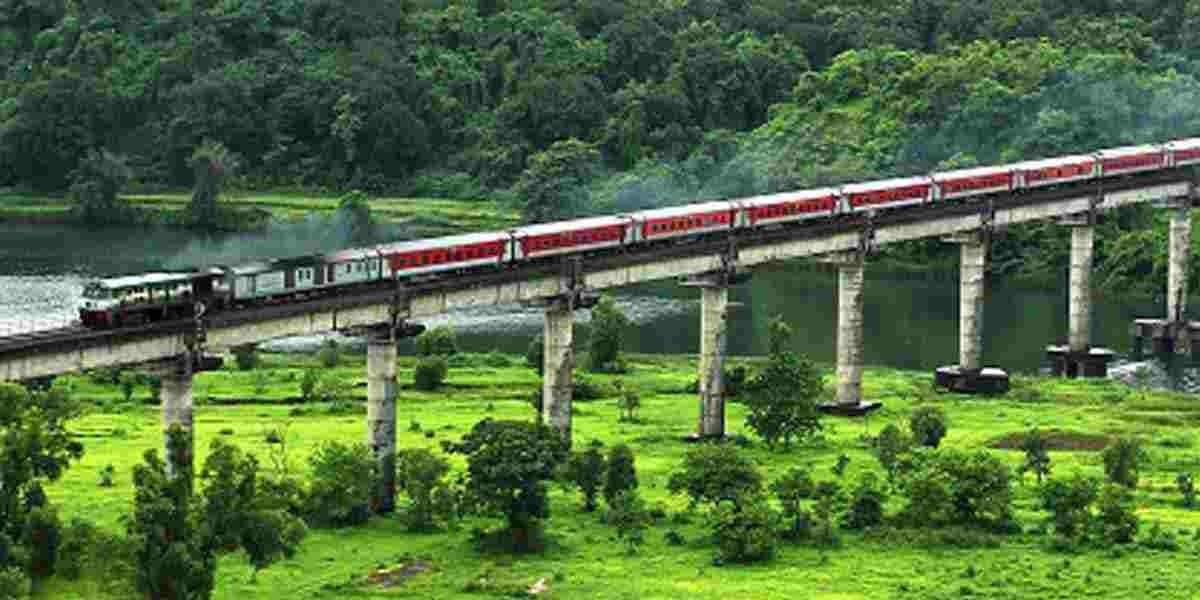
3.Konkan Railway Merger with Indian Railways (Railway Integration)

Hindustan Times
Illustration for Konkan Railway Merger with Indian Railways (Railway Integration)

What & Where

KRCL special-purpose rail SPV under Ministry of Railways, incorporated 1990.

741 km coastal line Roha (Maharashtra)–Mangaluru (Karnataka) via Goa, touches coastal Kerala; tunnels Western Ghats.

Maharashtra cabinet 2024 cleared KRCL merger into Indian Railways, enabling full integration.

Quick Facts for MCQs

Corporate Structure

  • Shareholding multistate JV ensured risk sharing and regional say.
  • SPV model enabled faster land, finance, execution decisions.
  • Post-merger assets, staff, liabilities migrate to Indian Railways books.

Economic & Strategic

  • Lifeline; slashes Mumbai–Mangaluru travel, links Konkan produce to markets.
  • Engineering feat: 1,900 bridges, 92 tunnels combat monsoon terrain.
  • Carries bulk freight like iron ore, fertiliser to west-coast ports.

Railway Administration

  • Zone creation by Railway Board; Jammu newest division under Northern Zone.
  • GM heads zone, reports to Railway Board; DRM commands each division.
  • Integration may streamline tariffs, maintenance, safety oversight.

Legal & Policy

  • All shareholder states had to approve; Maharashtra last nod completed requirement.
  • Merger aligns with Centre goal to rationalise standalone rail SPVs.
  • Unified entity expected to ease funding and regulatory compliance.

Key Data Points

FeatureData-Point
Year incorporated1990
Promoter ministryMinistry of Railways
Line length741 km
States traversedMH, GA, KA, KL
Terrain crossedWestern Ghats
JV share: GoI51 %
JV share: Maharashtra22 %
JV share: Karnataka15 %
JV share: Goa6 %
JV share: Kerala6 %
Core IR zones17
Zones incl Metro & Kolkata19
IR divisions70
Latest divisionJammu
Zone headGeneral Manager
Division headDivisional Railway Manager

Related UPSC Prelims PYQs

GS1 1999PYQ 1

Which one of the following statements is not true of the Konkan Railway?

GS1 1998PYQ 2

Which one of the following sets of states stands to benefit the most from the Konkan Railway?

GS-1History

4.Keezhadi Sangam Urban Settlement Excavation (Tamil Archaeology)

The Hindu
Illustration for Keezhadi Sangam Urban Settlement Excavation (Tamil Archaeology)

What & Where

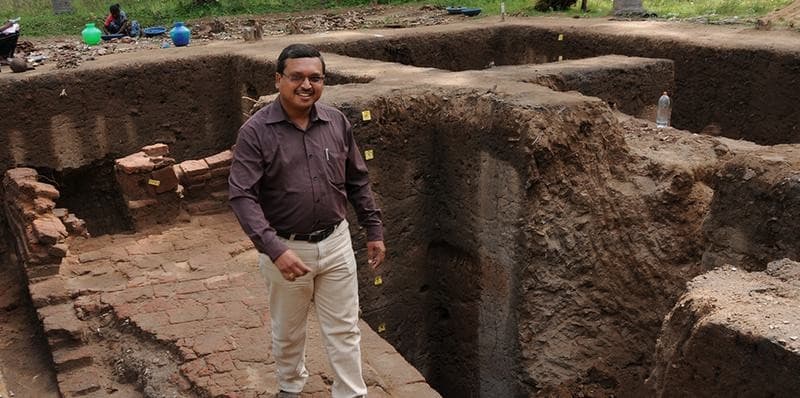
Keezhadi: early-historic urban settlement excavated near Vaigai river, Sivaganga district, Tamil Nadu

Excavations started 2015 after 2013-14 Vaigai valley surveys covering 293 sites

Investigated by ASI first, later Tamil Nadu State Archaeology Department

Quick Facts for MCQs

Dating & Chronology

  • AMS charcoal date 200 BCE validates early urban phase
  • Supports pre-Sangam chronology preceding classical Sangam literature
  • Seasons since 2015 refining ceramic sequence and period classification

Urban Architecture

  • Brick structures, ring wells, water storage indicate planned settlement engineering
  • Graffiti-marked pottery, beads reveal specialised craft activity
  • Only 1% mound excavated yet high artefact density hints extensive habitation

Trade & Literacy

  • Northern symbols and Western trade goods show long-distance economic links
  • Graffiti and pot sherds attest functional literacy within settlement
  • Keezhadi challenges North-centric civilisation narratives through independent Tamil urbanism

Administrative Issue

  • ASI requested archaeologist Amarnath Ramakrishna to resubmit report with improved scientific accuracy
  • Revision seeks clearer periodisation and ceramic classification standards
  • Highlights need for rigorous publication protocols in Indian archaeology

Key Data Points

FeatureData-Point
Site locationPallichanthai Thidal, Sivaganga
River basinVaigai
Surveyed sites293 (2013-14)
Excavation start2015
Excavation agenciesASI; Tamil Nadu State AD
Area dug1 acre of 100
Artefacts count>4,000
Oldest date200 BCE (AMS charcoal)
Cultural phasePre-Sangam urban Tamil
Trade evidenceLinks to North India & West
GS-1History

5.Jain Ritual of Santhara Debate (Religious Practices)

NDTV
Illustration for Jain Ritual of Santhara Debate (Religious Practices)

What & Where

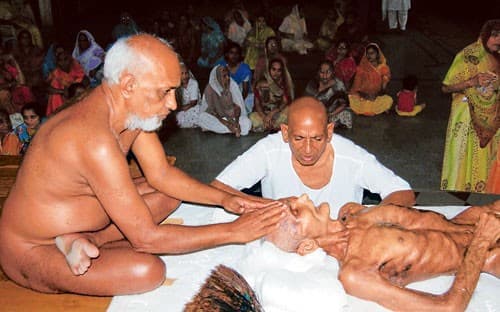
Ritual Santhara or Sallekhana = voluntary, gradual fasting unto death for karmic purification and moksha

Geography mainly among Digambara & Shwetambara communities in Rajasthan, Gujarat, Karnataka, Madhya Pradesh

Eligibility monks or laypersons in terminal illness, extreme age, famine, undertaken with spiritual supervision

Quick Facts for MCQs

Religious Doctrine

  • Five Mahavratas stress Ahimsa Satya Asteya Brahmacharya Aparigraha shaping outlook toward self-willed death
  • Triratna path demands Right Faith, Knowledge, Conduct culminating in karmic exhaustion
  • Forgiveness ritual Pratikramana precedes fast ensuring detachment from worldly bonds

Legal & Policy

  • IPC sections 306 & 309 often cited yet superseded by Article 25 protections after SC stay
  • Courts weigh autonomy versus state duty to preserve life in ongoing jurisprudence
  • Any coercion or minor involvement risks criminal liability despite religious cover

Historical Instances

  • Emperor Chandragupta Maurya reputedly observed Sallekhana at Chandragiri hill 298 BCE
  • Acharya Bhadrabahu performed ritual post-migration to Shravanabelagola inspiring later inscriptions
  • Medieval Jain copperplates and temple carvings document numerous monk and laity fasts

Social Concerns

  • Critics flag possible child participation, elder coercion, gender biases within families
  • Supporters cite dignity, nonviolence, ecological minimalism aligning with Jain ethics
  • Media episodes periodically reignite debate on right-to-die versus faith practice

Key Data Points

FeatureData-Point
Religious schoolJainism
Core aimShed karma, attain moksha
Key vows echoedAhimsa, Aparigraha, Brahmacharya
Process stepProgressive withdrawal from food then water
Consent checkSpiritual guide & family approval
2015 Rajasthan HCDeclared practice suicide under IPC 306
Aug 2015 Supreme CourtStayed HC order, invoked Article 25 freedom
Present legal statusConstitutionally protected, subject to voluntary intent
Historic practitionersBhadrabahu, Chandragupta Maurya at Shravanabelagola
Textual mentionRatnakaranda Shravakachara, Silappadikaram, Neelakesi
Youngest recent case3-year-old girl, Indore 2023

Related UPSC Prelims PYQs

CDS_GK, GS1 2025PYQ 1

Which of the following is one of the ‘three gems’ (triratna) of Jainism?

CDS_GK, GS1 2013PYQ 2

Which of the following statements is/are applicable to Jain doctrine?

GS-1History

6.INSV Kaundinya Stitched Ship Revival (Traditional Shipbuilding)

Indian Express
Illustration for INSV Kaundinya Stitched Ship Revival (Traditional Shipbuilding)

What & Where

INSV Kaundinya - first modern Indian Navy sailing vessel built by ancient stitched-plank Tankai technique

Tankai method - hull-first wooden planks stitched with coir, sealed by cotton-resin-fish oil, zero metal fasteners

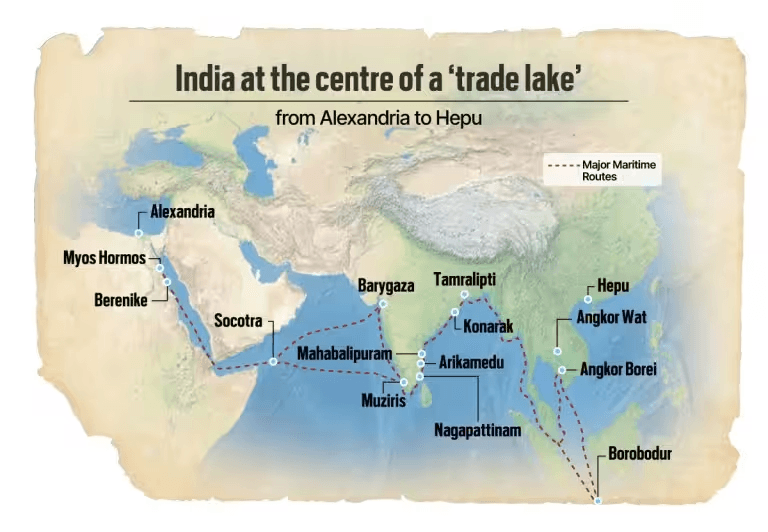
Geography - traditional to Konkan-Malabar coast; new ship to sail Goa → Oman retracing early Indian Ocean trade route

Quick Facts for MCQs

Tech & Craftsmanship

  • Flexibility - stitched joints absorb wave shock, aiding durability and easy mid-sea repair
  • Sequence - hull constructed first, ribs inserted later; opposite of Western frame-first practice
  • Materials - all-indigenous components ensure corrosion resistance and lower weight for long voyages

Heritage Significance

  • Documentation - technique depicted in fifth-century Ajanta Cave 2 mural and ninth-century Bhoja treatise
  • Motifs - Kadamba two-headed eagle and Harappan anchor showcase pan-Indian maritime heritage
  • Revival - Navy project aims to safeguard near-extinct coastal shipbuilding knowledge

Maritime History

  • Kaundinya - first recorded Indian sailor reaching Mekong Delta, marrying warrior queen Soma
  • Legacy - Khmer and Cham dynasties trace mythical ancestry to the Kaundinya-Soma union
  • Impact - Illustrates early Indian cultural diffusion across Southeast Asia

Key Data Points

FeatureData-Point
Ship typeStitched wooden sailing vessel
Construction method2000-yr-old Tankai stitched plank
Woods usedTeak, sal, mango
FasteningCoir rope; no iron nails
Waterproofing mixCotton, dammar resin, fish oil
Decorative motifsGandabherunda, sun symbols, Simha Yali
Anchor styleHarappan stone replica
Named afterMariner Kaundinya of Funan fame
Inspiration sourcesAjanta murals; Yuktikalpataru text
Implementing partiesIndian Navy, Culture Ministry, Goa shipyard
Planned voyageGoa to Oman, end-2025

Related UPSC Prelims PYQs

CAPF_GAI, CDS_GK 2023PYQ 1

Which one of the following Indian Naval Ships has recently concluded a 17,000-nm trans-ocean intercontinental voyage?

CAPF_GAI, CDS_GK 2024PYQ 2

Which one of the following statements about 'INS Tarmugli' is not correct?

GS-1HistoryQuick Bite

7.Heart Lamp Wins International Booker Prize (Indian Literature)

The Hindu
Illustration for Heart Lamp Wins International Booker Prize (Indian Literature)

What & Where

Heart Lamp – Kannada short-story collection on women’s struggles in patriarchal Karnataka, India.

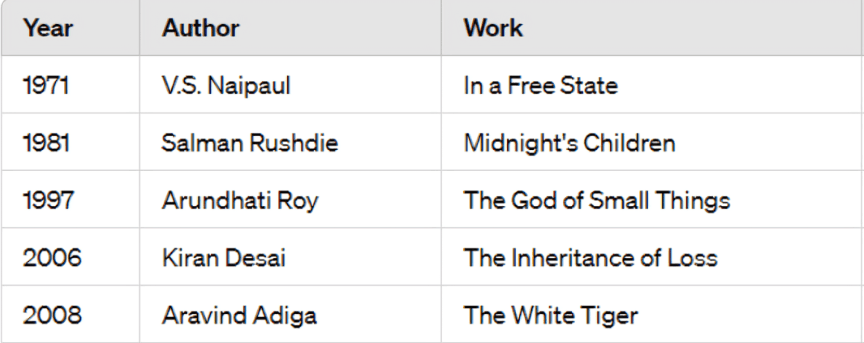
Became first Kannada work to win 2025 International Booker Prize, UK-based award for translated fiction.

Draws on 1970s Karnataka Bandaya Sahitya movement against caste and gender oppression.

Quick Facts for MCQs

Literary Significance

  • First International Booker for any Kannada work; boosts stature of Indian regional literatures.
  • Stories spotlight universal gender discrimination through locally rooted narratives.

Bandaya Sahitya Movement

  • 1970s radical Kannada literary wave; championed Dalit and women’s rights.
  • Influenced Karnataka’s socio-political activism and later Indian protest literature.

Award Mechanics

  • Recognises best translated long-form fiction published in UK/Ireland each year.
  • Each shortlisted author & translator also receive GBP 2,500.

Key Data Points

FeatureData-Point
Book titleHeart Lamp
Original languageKannada
AuthorBanu Mushtaq
English translatorDeepa Bhasthi
Prize year2025
Prize moneyGBP 50,000 split 50:50
Awarding bodyBooker Prize Foundation (UK)
Former nameMan Booker International Prize

Related UPSC Prelims PYQs

CAPF_GAI, CDS_GK 2021PYQ 1

Which one of the following books was declared winner of the 2021 International Booker Prize?

CAPF_GAI, CDS_GK 2023PYQ 2

Georgi Gospodinov Georgiev won the International Booker Prize, 2023 for the darkly comic novel by the name:

GS-1Mapping

8.Chagos Islands Sovereignty Transfer (Indian Ocean Territory)

LiveMint

What & Where

Archipelago: 60-plus coral islands forming British Indian Ocean Territory (BIOT)

Location: central Indian Ocean, south of Maldives, east of Seychelles

Diego Garcia: largest island; hosts joint US-UK military base

Quick Facts for MCQs

Legal & Policy

  • ICJ, UNGA, UK High Court rulings pressured UK toward decolonisation
  • Treaty balances decolonisation norm with defence agreements under international law
  • Marks formal completion of Mauritius’s territorial integrity process

Security Dimension

  • Diego Garcia crucial for logistics, ISR, nuclear-capable aircraft in Indo-Pacific theatre
  • 99-year lease ensures uninterrupted US-UK operational reach despite sovereignty shift
  • Base supports anti-piracy, maritime domain awareness across Indian Ocean chokepoints

India Angle

  • Consistent diplomatic backing aligns with principles of sovereignty and international law
  • Supports stable Indian Ocean order favouring regional stakeholders over extra-regional dominance
  • Potential for deeper India-Mauritius maritime cooperation post-sovereignty transfer

Key Data Points

FeatureData-Point
Colonial control since1814 (UK, after cession from France)
Year separated from Mauritius1965 (creation of BIOT)
Sovereignty hand-over treaty year2025 (UK–Mauritius deal)
Lease length for Diego Garcia99 years to UK & US
Annual payment to Mauritius~£101 million
Personnel hosted on base≈2,500
Main regional coverageWest Asia, South Asia, East Africa
India’s stanceSupports Mauritian sovereignty claim

Related UPSC Prelims PYQs

GS1, NDA_GAT 2002PYQ 1

In the map given below, four islands of Indian Ocean region, i.e. A) Seychelles, B) Chagos, C) Mauritius and D) Socatra are marked as 1, 2, 3 and 4. Match them and select the correct answer from the codes given below.

GS1, NDA_GAT 2021PYQ 2

Which country has replaced Maldives to host the 2023 Indian Ocean Island Games?

GS-3Environment

9.India’s Rising Climate Physical Risks (Climate Impacts)

The Hindu

What & Where

Definition : Climate Physical Risks are climate-driven threats to ecosystems, lives and economic activity.

Types : Acute events (heatwaves, floods, cyclones); chronic trends (warming, sea-level rise, rainfall shifts).

India : 80 % people & GDP exposed; central monsoon belt, coasts, Indo-Gangetic plain are hotspots.

Quick Facts for MCQs

Environmental Impact

  • Heatwaves: +4 °C scenario makes events 25 times longer, escalating morbidity.
  • Water: 12 % citizens near Day-Zero; demand may double supply by 2030.
  • Coasts: Foot sea-level rise could displace 27 million; mangroves act buffers.

Economic Angle

  • Floods: USD 3 bn lost last decade; 10 % of global flood damages.
  • Yields: Wheat −19.3 % by 2050; kharif maize −18 % threatening farm incomes.
  • Exposure: CPRs jeopardise 80 % GDP; water scarcity may shave 6 % GDP.

Tech & Schemes

  • Energy: 77 % power still coal; National Manufacturing Mission boosts solar, batteries, SMRs.
  • Finance: USD 10.1 tn required; Green Bonds, PLI spur domestic green investment.
  • Adaptation: NAPCC, MISHTI, sponge-city codes support groundwater, mangroves, urban drainage.

Data & Governance Gaps

  • Fragmentation: Many agencies, no unified CPR database or standards.
  • Modelling: Global models miss hyper-local extremes; weak district projections.
  • Decentralisation: Proposed district climate cells blend traditional insight with scientific mapping.

Key Data Points

FeatureData-Point
Avg temperature rise 1901-20180.7 °C
Extreme rain (>150 mm) jump 1950-201575 %
Dry-spell increase 1981-201127 %
Heatwave length 2036-65 at +4 °C25 × longer
People facing high water stress600 million
Sea-level rise impact 210027 million displaced
Power from coal FY 2377 %
Green-transition funding need to 2070USD 10.1 trn

Related UPSC Prelims PYQs

GEO_GS, GS1 2020PYQ 1

According to the Global Climate Risk Index 2020, published by environmental think tank Germanwatch, in the year 2018 India’s rank in the list of top most climate affected nations is:

GEO_GS, GS1 2014PYQ 2

The scientific view is that the increase in global temperature should not exceed 2 °C above the pre-industrial level. If the global temperature increases beyond 3 °C above the pre-industrial level, what can be its possible impact/impacts on the world?

GS-3S&T

10.WHO Recognition for Trans Fat Elimination (Public Health)

Down to Earth

What & Where

Definition: Unsaturated fats industrially hydrogenated into solid form, termed industrial trans-fats

Types: Natural (ruminant meat, dairy) versus industrial (partially hydrogenated oils, PHOs)

Geography: WHO 2024 certified Austria, Norway, Oman, Singapore as trans-fat-free food supplies

Quick Facts for MCQs

Health Impact

  • LDL surge, HDL fall, accelerated atherosclerotic plaque, stroke, coronary heart disease
  • High energy density fosters obesity; prolonged intake weakens insulin sensitivity, spurring type-2 diabetes
  • Combined burden causes 278 k global deaths yearly per WHO

Food Sources

  • Industrial PHOs in fried snacks, biscuits, vanaspati, margarine, shortening
  • Baked items including cakes, pastries, refrigerated dough significant contributors
  • Natural trans-fats negligible in red meat, dairy compared to industrial forms

Global Targets

  • WHO REPLACE initiative 2018 seeks worldwide industrial trans-fat ban
  • Goal: eliminate by 2025 with 90 % global population coverage
  • Certification follows best-practice limits (<2 % of fats) plus compliance monitoring

Indian Regulation

  • FSSAI limits industrial trans-fats to 2 % in edible oils/fats from Jan 2022
  • Policy aligns with WHO best practice, includes labelling and surveillance norms
  • Progressive reduction path: 5 % pre-2021, 3 % in 2021, now 2 %

Key Data Points

FeatureData-Point
WHO certified nations 2024Austria, Norway, Oman, Singapore
Annual trans-fat deaths (WHO 2024)278,000
Share in cardiovascular deaths~7 %
Calorific value9 kcal per g
Global elimination target year2025
Population coverage goal90 % world, 70 % each region
India trans-fat cap<2 % in oils/fats
Indian rule effectiveJan 2022

Related UPSC Prelims PYQs

GEO_GS, GS1 2022PYQ 1

Foods like margarine, fried foods, cookies, chips, snack foods are considered as unhealthy foods for humans. Which one of the following varieties of fats found in all of these foods is most harmful?

GEO_GS, GS1 2011PYQ 2

A company marketing food products advertises that its items do not contain trans-fats. What does this campaign signify to the customers?

GS-3S&T

11.Jarosite as Luminescent Geological Clock (Planetary Mineralogy)

The Hindu

What & Where

Mineral: hydrous potassium-iron sulfate KFe₃(SO₄)₂(OH)₆ produced by oxidation of iron sulfides in acidic, arid settings

Geography: occurs in mine tailings, Antarctic ice, clay-rich Kachchh (India); confirmed on Mars by Spirit, Opportunity, Curiosity

Finding: Indian study shows jarosite’s luminescence clocks surface events ≤ 25 kyr under Mars-like radiation

Quick Facts for MCQs

Physical Properties

  • Hardness 2.5-3.5, brittle, basal cleavage, translucent to opaque
  • Thermal stability 450 °C ensures luminescence survives rover heater conditions

Planetary Dating Use

  • Radiation clock traps charge; heat or LEDs release measurable light proportional to dose
  • Dates Martian dust storms, floods, volcanism within late Quaternary 25 kyr window

Indian Research & Method

  • IIT Kanpur team irradiated Kachchh jarosite to Mars-level cosmic doses, recorded thermoluminescence decay
  • Recommends rover modules combining heaters plus LEDs for in-situ non-destructive age reading

Key Data Points

FeatureData-Point
Chemical formulaKFe₃(SO₄)₂(OH)₆
Crystal systemTrigonal
ColourDark yellow to yellow-brown
Mohs hardness2.5 – 3.5
LustreVitreous to dull
Luminescence stable up to450 °C
Dating window~25 000 years
Martian evidence fromSpirit, Opportunity, Curiosity
Indian sample siteKachchh, Gujarat
Formation settingOxidizing, acidic sulfate soils
GS-2Economy

12.India Chairs Asian Productivity Organization 2025 (Regional Productivity Body)

News on Air

What & Where

Intergovernmental body boosting productivity cooperation across Asia-Pacific economies

Founded 1961; headquarters Tokyo, Japan

Covers 21 member economies incl. India, Japan, South Korea, Iran, Vietnam

Quick Facts for MCQs

Governance & Meetings

  • Chairmanship rotates; India chosen at 67th meeting for 2025-26 term
  • Governing Body serves as top decision-making organ
  • Secretariat headed by Secretary-General in Tokyo

Core Functions

  • Policy advisory guides national productivity strategies
  • Capacity building through training, workshops, research programs
  • Centres of Excellence share best practices among members

Focus Areas

  • Green Productivity merges environmental sustainability with efficiency gains
  • Digital & Innovation Ecosystem accelerates regional tech adoption, entrepreneurship
  • Inclusive development targets industry, agriculture, services, public sectors

Key Data Points

FeatureData-Point
Establishment Year1961
HeadquartersTokyo, Japan
Current Members21 economies
India’s StatusFounding member
Upcoming Indian Chair Term2025-26
Latest Governing Body Meet67th
Core MandateSustainable socioeconomic growth via productivity

Related UPSC Prelims PYQs

GS1 2008PYQ 1

India is a member of which of the following?

GS-3S&TQuick Bite

13.Golden Dome Space-Based Missile Shield (Missile Defence)

Indian Express
Illustration for Golden Dome Space-Based Missile Shield (Missile Defence)

What & Where

Golden Dome: US-announced space-based missile-defence shield using sensor-interceptor satellites in Low Earth Orbit.

Aim: Neutralise hypersonic, ballistic, cruise missiles & drones moments after launch, anywhere on globe or from space.

Geography: Thousands of satellites circling Earth create multilayered cover across land, sea, space.

Quick Facts for MCQs

Tech & Schemes

  • Architecture: Multilayered kill-chain—early warning, tracking, intercept—wholly outside atmosphere.
  • Timing: Intercept planned during boost or mid-course phase, minimising debris over defended areas.
  • Sensors: Persistent global surveillance via satellite constellations replaces ground-radar dependence.

Historical Context

  • Precedents: WWII Nazi projects & Cold-War Soviet-US research trialled space intercept concepts.
  • Reagan era: 1983 Strategic Defense Initiative pioneered idea of orbital kinetic weapons.
  • Evolution: Golden Dome reframes earlier ambitions with modern micro-satellite, hypersonic tracking tech.

Comparative Systems

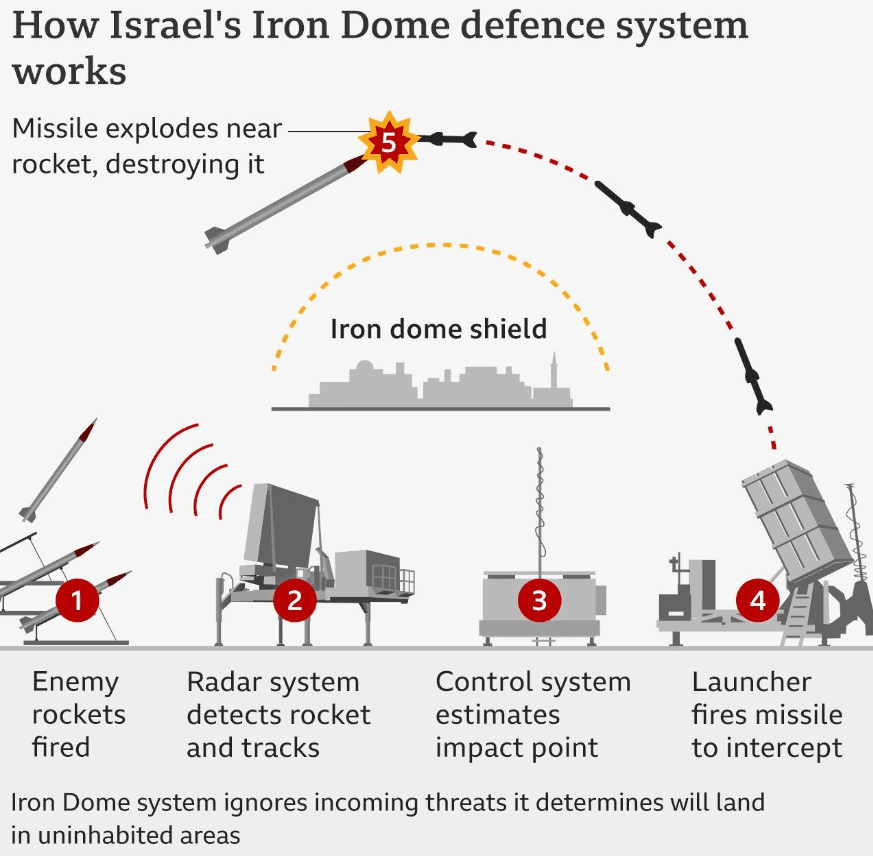
  • Iron Dome: 70 km envelope, X-band radar cueing, truck-mounted launchers.
  • Golden Dome: Theoretical global radius, satellite cueing, exo-atmospheric interceptors.
  • Advantage: Space layer lets engagements start over hostile territory, reducing domestic fallout risk.

Security Dimension

  • Deterrence: Space-layered shield aims to blunt peer adversary missile leverage.
  • Arms race: Could spur anti-satellite weapon development by rivals.
  • Governance: Raises questions under Outer Space Treaty on deployment of weapons in orbit.

Key Data Points

FeatureData-Point
Announced byUS President, May 2025
Core platformLEO satellites carrying interceptors
CoverageLand, sea & outer-space domains
Target spectrumHypersonic, ballistic, cruise missiles; armed drones
Technology mixSpace-based sensors + kinetic interceptors
InspirationsIsrael’s Iron Dome; 1983 Strategic Defense Initiative
ComparisonIron Dome is short-range, radar-only, ground-based
Similar forcesUS, China, France, Japan, Russia, UK maintain Space Forces

Related UPSC Prelims PYQs

CAPF_GAI, CDS_GK 2024PYQ 1

"Mission Shakti" (DRDO) is the name given by India to

CAPF_GAI, CDS_GK 2022PYQ 2

The term ‘Terminal High Altitude Area Defense’, sometimes mentioned in news, refers to

GS-2Scheme

14.Amrit Bharat Railway Station Redevelopment Scheme (Railway Infrastructure)

Economic Times
Illustration for Amrit Bharat Railway Station Redevelopment Scheme (Railway Infrastructure)

What & Where

Amrit Bharat Railway Station Scheme: centrally sponsored plan to modernise 1,275 Indian stations in phases.

Launched 2022 by Ministry of Railways; aims integrated, heritage-sensitive, green, multimodal hubs.

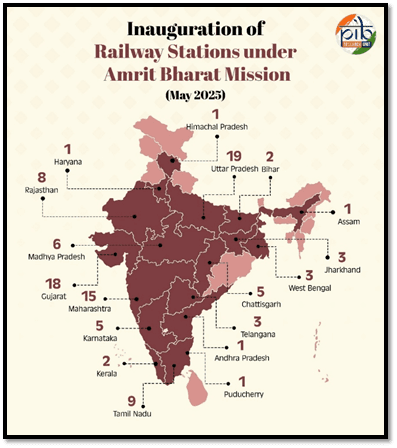
103 revamped stations inaugurated virtually from Deshnoke, Rajasthan; span 86 districts in 18 States/UTs.

Quick Facts for MCQs

Tech & Schemes

  • Master-plan methodology enables modular expansion aligned with future traffic forecasts.
  • Digital-upgrade package: free Wi-Fi, LED signages, real-time information screens, CCTV.
  • Retail integration through One Station One Product stalls promotes indigenous crafts.

Infrastructure & Amenities

  • Accessibility: lifts, escalators, tactile paths, Divyangjan-friendly toilets mandatory.
  • Passenger comfort: enlarged waiting halls, executive lounges, roof plazas, business centres.
  • Multimodal links: dedicated bays for metro, city buses, auto-taxis, park-and-ride zones.

Economic & Cultural Impact

  • Heritage-based architecture highlights local art, boosting cultural tourism footfalls.
  • Construction and station commerce projected to create jobs, spur ancillary services.
  • Redeveloped premises envisioned as urban hubs, elevating surrounding real-estate values.

Key Data Points

FeatureData-Point
Total stations targeted1,275
Launch year2022
Implementing ministryMinistry of Railways
Latest tranche inaugurated103 stations
Districts covered in tranche86
States/UTs covered18
Development approachMaster-plan, phased
Key retail initiativeOne Station One Product kiosks
Digital amenityFree Wi-Fi & passenger info systems
Green focusEco-friendly materials, energy efficiency

Related UPSC Prelims PYQs

NDA_GAT 2025PYQ 1

The scheme PRASHAD (Pilgrimage Rejuvenation & Spiritual Heritage Augmentation Drive) provides assistance for

GS-2Scheme

15.iGOT Karmayogi Civil Service Learning Platform (Mission Karmayogi)

PIB
Illustration for iGOT Karmayogi Civil Service Learning Platform (Mission Karmayogi)

What & Where

Definition: iGOT Karmayogi = national digital platform under Mission Karmayogi for continuous civil-service capacity building.

Process: delivers competency-linked micro-courses, tracks learning certificates, ties progress to career evaluation.

Geography: pan-India rollout; highest registrations from Bihar, Andhra Pradesh, Madhya Pradesh, Rajasthan, Uttar Pradesh.

Quick Facts for MCQs

Tech & Schemes

  • Platform uses iGOT (integrated Government Online Training) architecture for self-paced, mobile-friendly modules.
  • Courses map to indigenous Karmayogi Competency Model grounded in Indic wisdom.
  • Certificates auto-generated, verifiable on completion of assessments.

Capacity Building Model

  • Mission Karmayogi targets professional, future-ready bureaucracy aligned with national priorities.
  • Objective performance evaluation linked to learning milestones and career goals.
  • Emphasis on lifelong learning over one-time induction training.

Administrative Spread

  • Rapid adoption indicates digital governance penetration across cadres and state services.
  • Five leading states contribute bulk of the first crore registrations.
  • Over three-quarter million certificates issued each month on average.

Key Data Points

FeatureData-Point
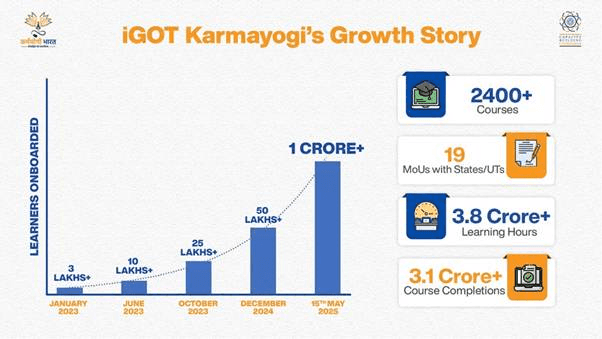
Civil servants onboarded1 crore +
Learning certificates3.1 crore +
Learning hours3.8 crore +
Course count2,400 +
Platform languages16
Managing entityKarmayogi Bharat SPV
Ownership pattern100 % Government of India
Incorporation lawCompanies Act, 2013
Competency pillarsAttitude, Skills, Knowledge (ASK)
Training shiftRule-based → Role-based
Learning model ratio70 % experience, 20 % peers, 10 % formal
Top registration stateBihar

Related UPSC Prelims PYQs

CDS_GK 2024PYQ 1

भारत सरकार की पहल ‘निष्ठा’ (NISHTHA) के संदर्भ में निम्नलिखित में से कौन-सा कथन सही है?

GS-1Editorial

16.Ethical Duties Toward Global Refugees (Refugee Ethics)

AE
Illustration for Ethical Duties Toward Global Refugees (Refugee Ethics)

What & Where

Ethical obligation: moral duty of states/individuals to protect people fleeing war, persecution, climate shocks.

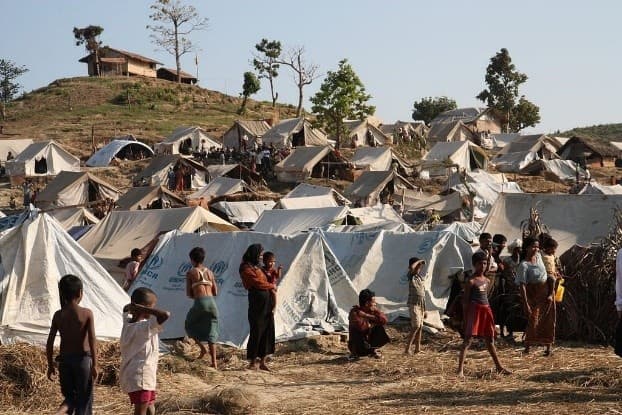
Geography: 75 % of 43.7 mn refugees (2025, UNHCR) hosted in Global South—Jordan, Turkey, Lebanon, etc.

Key refugee types: conflict-driven (Syria, Ukraine), persecuted minorities (Rohingya, Yazidis), climate-displaced (island nations, Sahel).

Quick Facts for MCQs

Legal & Policy

  • Border-abuse hotspots: Calais, EU-Turkey frontier, US–Mexico wall.
  • Detention critique: indefinite holding in Libya camps, Greek islands violates dignity & movement rights.
  • Humanitarian visas: UK/EU schemes for Ukrainians illustrate positive obligation model.

Philosophical Bases

  • Singer: Prevent suffering if cost is minor; inaction is immoral.
  • Arendt: Refugees lack rights due to absence of national protection, not humanity.
  • Moral-equality principle: identical ethical response owed to all displaced.

Global & Institutional Significance

  • Democratic-legitimacy gains: refugee-respecting institutions strengthen rule of law and social justice.
  • Soft-power leverage: ethical refugee stance enhances global credibility and leadership.
  • Cosmopolitan-justice: shared responsibility aligns with international human rights covenants.

Violations & Risks

  • Containment policies trap refugees in unsafe zones, prompting secondary trafficking and exploitation.
  • Border militarisation escalates violence, contradicting “do no harm” obligation.

Key Data Points

FeatureData-Point
Total refugees (2025)43.7 million (UNHCR)
Share in Global South75 %
Negative dutyDo-no-harm: no border abuse, detention, containment
Positive dutiesResettlement, safe routes, host-country aid
Sample safe-route policyEurostar free travel for Ukrainians, 2022
Containment exampleEU–Libya agreement
Philosophical cueSinger’s Samaritan Principle
Rightlessness theoristHannah Arendt
Moral equality maximEqual worth of all refugees
Soft-power effectHumane policy boosts global norm leadership

Ready to practice?

Test your knowledge with our UPSC test series.

Start Free Trial