UPSC Current Affairs

17 topicsGS-1: 4GS-2: 4GS-3: 9
0/17 done
GS-2Polity

1.National Human Rights Commission Mandate (Statutory Body)

FPJ
Illustration for National Human Rights Commission Mandate (Statutory Body)

What & Where

National Human Rights Commission (NHRC) — statutory watchdog for rights under Protection of Human Rights Act, 1993.

Jurisdiction: all Union & state authorities; limited oversight on armed forces.

Founded 12 Oct 1993; complies with 1991 UN Paris Principles.

Quick Facts for MCQs

Legal & Policy

  • Act amendment 2006 refined composition, tenure, compliance with Paris Principles.
  • Recommendations advisory; non-implementation to be reported in Parliament annually.
  • Can review constitutional safeguards, recommend treaty ratification or law changes.

Institutional Design

  • Selection panel includes LS Speaker, RS Dy-Chair, LoPs, Home Minister; CJI consulted for judicial picks.
  • Secretariat headed by Secretary-General; specialised divisions: Law, Investigation, Research, Training.
  • Prison & detention inspections mandated; reports sent to concerned governments.

Powers & Limitations

  • May summon witnesses, demand documents, recommend compensation/interim relief.
  • Armed forces cases: can only seek report, issue advisory to Defence Ministry.
  • No power to enforce orders; success relies on moral and political pressure.

Key Data Points

FeatureData-Point
StatuteProtection of Human Rights Act, 1993 (amended 2006)
Establishment date12 October 1993
Chairperson eligibilityRetired CJI or Supreme Court Judge
Other full-time members1 SC/HC Judge + 3 human-rights experts (incl. 1 woman)
Ex-officio membersHeads of 7 national commissions (Women, SC, ST, BC, Minorities, Child Rights, Disabilities)
Appointment authorityPresident of India
Selection committee headPrime Minister
Tenure3 years or till 70 years, whichever earlier
ReappointmentPermitted once tenure ends
Post-tenure job barNo further government employment allowed
Investigation time-barCannot probe cases after 1 year of violation
Court-like powersCivil court powers under CrPC during inquiries

Related UPSC Prelims PYQs

CAPF_GAI 2023PYQ 1

राष्ट्रीय मानव अधिकार आयोग का गठन किस कानून के अधीन किया गया था ?

CAPF_GAI 2022PYQ 2

What is the term of office of the Chairperson and Members of the National Human Rights Commission?

GS-2Polity

2.Private Member’s Bills Decline (Parliamentary Procedure)

The Hindu
Illustration for Private Member’s Bills Decline (Parliamentary Procedure)

What & Where

Private Member’s Bill (PMB): draft law moved by any non-minister MP; not part of official government business.

Permitted introduction only on Fridays in both Houses; slot decided by ballot under Lok Sabha Rule 66 / Rajya Sabha Rule 67.

Must clear all reading stages in both Houses and obtain Presidential assent to enter statute book.

Quick Facts for MCQs

Legislative Procedure

  • Friday business begins post-Question Hour; government business can supersede via motion.
  • Speaking time capped; mover closes debate; no whip binding but party discipline influences voting.
  • Speaker/Chair can defer, club or drop listed PMBs without stated reasons.

Trends & Data

  • Zero PMBs discussed yet in 18th Lok Sabha; only 64 introduced.
  • Tiruchi Siva’s 2014 Transgender Rights PMB first to pass one House in 45 years.
  • Average annual PMB deliberation 1952-70: ~11 hours; 17th Lok Sabha: <1 hour.

Significance

  • Democratic expression: MPs like Supriya Sule pushed “Right to Disconnect” labor-rights agenda.
  • Policy incubator: Many government bills mirror earlier PMBs, e.g., Transgender Persons Act 2019.
  • Intra-party ventilation: Ruling-party MPs file constituency-specific reforms without cabinet nod.

Causes of Decline

  • Government business expansion—budgets, urgent bills—eats into fixed Friday window.
  • Frequent adjournments and early Friday departures shrink quorum and debate time.
  • Anti-defection fear, plus uncertain scheduling, dampens member enthusiasm to pilot sensitive ideas.

Reform Proposals

  • Make Friday PMB slot non-disruptable except national emergency; enforce through amended Rules.
  • Mid-week PMB hour or extended sittings to counter low Friday attendance.
  • Create cross-party committee to shortlist high-impact PMBs for guaranteed discussion and vote.

Key Data Points

FeatureData-Point
PMBs that became Acts since 195214
Last PMB clearing both Houses1970 (Supreme Court (Enlargement of Criminal Appellate Jurisdiction) Act)
PMBs introduced, 17th Lok Sabha729
PMBs discussed, 17th Lok Sabha2
Time on PMBs, Winter 2024 Lok Sabha0.15 hours
Time on PMBs, Winter 2024 Rajya Sabha0.62 hours

Related UPSC Prelims PYQs

GS1 2017PYQ 1

With reference to the Parliament of India, consider the following statements :

GS1 2017PYQ 2

भारत की संसद के संदर्भ में, निम्नलिखित कथनों पर विचार कीजिए :

GS-2HistoryQuick Bite

3.Maharashtra-Gujarat 65th Statehood Day (State Reorganization)

Economic Times

What & Where

Bombay State split on 1 May 1960 into Marathi-speaking Maharashtra and Gujarati-speaking Gujarat

Samyukta Maharashtra Movement (1956) sought state with Mumbai + Vidarbha for Marathi speakers

Mahagujarat Movement (1928-50s) demanded Gujarati state including Saurashtra + Kutch

Quick Facts for MCQs

Historical Movements

  • Samyukta Maharashtra 1956 mass agitation pivotal for Marathi-majority statehood
  • Mahagujarat 1928-50s mobilised Gujarati speakers for separate identity
  • Dual campaigns culminated in Bombay Reorganisation 1960

Federal Cooperation

  • 1960 linguistic reorganisation showcased coexistence of identity assertion and Centre–state cooperation
  • Maharashtra–Gujarat cited as stable partners within Indian federal structure

Economic Angle

  • Maharashtra & Gujarat now labelled national economic powerhouses
  • Mumbai, Ahmedabad-Surat corridors significantly boost India’s GDP and trade

Key Data Points

FeatureData-Point
Formation date1 May 1960
Anniversary marked65 years on 1 May 2025
Parent entityBombay State
Linguistic basisMarathi vs Gujarati
Key Marathi movementSamyukta Maharashtra, 1956
Key Gujarati movementMahagujarat, 1928-50s
Regions sought (MH)Mumbai, Vidarbha
Regions sought (GJ)Saurashtra, Kutch

Related UPSC Prelims PYQs

GS1 2006PYQ 1

Which one of the following pairs is not correctly matched?

GS-3Economy

4.Annual Services Sector Survey Findings (Services Sector Data)

PIB

What & Where

Pilot Annual Survey of Services Sector Enterprises by MoSPI; maps incorporated firms under Companies Act & LLP Act

Entity mix: Private-Ltd 82.4 %, Public-Ltd 8 %, LLP 8 %

Pan-India coverage; gap-filler as unincorporated units already captured by separate survey

Quick Facts for MCQs

Economic Angle

  • Contribution 55 % GVA yet only 16 % of cumulative FDI, highlighting investment gap
  • Exports USD 280.94 bn; telecom–computer–IT slice gives India 10.2 % world market
  • Servicification boosts manufacturing value via design, logistics, after-sales integration

Employment & Skills

  • Sector engages ≈30 % workforce but 78 % positions informal, high precarity
  • Only 51.25 % youth employable; merely 5 % workforce formally skilled per WEF
  • Gig workers Swiggy/Ola/Uber lack insurance, pension, paid leave, magnifying social risk

Policy Prescriptions

  • Upskilling via Skill India Digital, PMKVY 4.0, PM Internship Scheme targeting AI, cloud, cybersecurity
  • Negotiate FTAs with EU, UK, Australia; promote Global Capability Centers to counter visa curbs
  • Invest in cybersecurity, cloud adoption; bolster Tier-2/3 city digital infra per NITI Aayog

Key Data Points

FeatureData-Point
Services share in GVA FY2555 %
Sector growth FY247.6 %
Workforce share≈30 %
Services exports Apr–Dec 2024USD 280.94 bn
Global export rank in telecom/computer/info2nd; 10.2 % share
FDI into services Apr 2000–Dec 2024USD 116.72 bn (16 % of total)
Informal jobs in services 2017-1878 %
Youth employability (Econ Survey 24)51.25 %
Formally skilled workforce (WEF)5 %
Foreign tourist arrivals H1-202490 % of 2019 baseline

Related UPSC Prelims PYQs

CAPF_GAI, CDS_GK 2022PYQ 1

During 2020-21, when India was passing through the adverse effects of COVID-19, which one of the following sectors witnessed positive growth?

CAPF_GAI, CDS_GK 2021PYQ 2

वर्ष 2009–10 से 2018–19 के लिए सकल स्थिर पूँजी निर्माण (जी.एफ.सी.एफ.) के सेक्टर-वार हिस्से पर आधारित है कि भारत में इन वर्षों में जी.एफ.सी.एफ. में सेवा सेक्टर के हिस्से में वृद्धि हुई है। निम्नलिखित में से किनमें अधिकतम वृद्धि हुई है?

GS-3Infrastructure

5.Namo Bharat Regional Rapid Rail (Regional Rail)

News on Air

What & Where

Namo Bharat = regional rapid rail system for 100–250 km fast inter-city travel inside National Capital Region

Current trial: final Delhi–Ghaziabad–Meerut RRTS corridor segment

Implemented by NCRTC, a GoI–States SPV under Housing & Urban Affairs

Quick Facts for MCQs

Tech & Schemes

  • High-speed aluminium EMUs, six-car sets with upgradeable nine-car configuration
  • ETCS Level-2 signalling enables 5–10 min headway, automated train-control
  • Station assets planned for seamless last-mile: e-buses, bicycle-sharing, park-and-ride

Institutional Setup

  • NCRTC equity: GoI 50 %, Delhi 12.5 %, Haryana 12.5 %, Rajasthan 12.5 %, UP 12.5 %
  • Mandate covers planning, financing, O&M of eight identified RRTS corridors
  • Board chaired by MoHUA secretary, includes chief secretaries of four partner states

Environmental Impact

  • Regenerative braking expected energy saving ~30 % versus conventional EMUs
  • Modal shift from road to rail projected to cut 250,000 t CO₂ annually on first corridor
  • Stations designed as green buildings with rooftop solar and rainwater harvesting

Economic Angle

  • Corridor construction generates 1 lakh direct & indirect jobs, boosts regional real-estate
  • Faster connectivity likely to expand NCR housing & industry radii up to 100 km from Delhi
  • Indigenous supply chain spurs rolling-stock, signalling, telecom MSMEs

Key Data Points

FeatureData-Point
Alternate namesRRTS, Vande Metro
Design speed / Operating180 km/h / 160 km/h
Average commercial speed≈100 km/h
First rake rolloutApr 2024, Rail Coach Factory Kapurthala
CoachesWi-Fi, CCTV, plug doors, dynamic display
Energy techRegenerative braking, efficient HVAC
Implementing agencyNational Capital Region Transport Corporation
NCRTC incorporation21 Aug 2013, Companies Act 1956
Administrative ministryHousing & Urban Affairs
Serving statesDelhi, Haryana, Uttar Pradesh, Rajasthan
Primary objectiveDecongestion & balanced NCR urban growth
Make in India link100 % indigenous manufacturing

Related UPSC Prelims PYQs

GS1, NDA_GAT 2021PYQ 1

Bharatamala Pariyojana is related to

GS1, NDA_GAT 2025PYQ 2

निम्नलिखित कथनों पर विचार कीजिए :

GS-1History

6.Satavahana Dynasty Inscriptions (Ancient Dynasty)

The Hindu

What & Where

Discovery: 11 early-Brahmi Satavahana inscriptions found by ASI in Gundaram Forest, Peddapalli district, Telangana

Linkage: Two records cite Chutu dynasty and Satavahana prince Kumāra Hakusiri

Geography: Core Satavahana realm spanned Andhra, Telangana, Maharashtra; capitals at Pratishthana and Amaravati

Quick Facts for MCQs

Dynasty & Governance

  • Founder: Simuka initiated post-Mauryan polity; Senapati posts blended civil-military authority
  • Feudatory: Three-tier Raja, Mahabhoja, Senapati ensured local autonomy with tribute flow
  • Expansion: Gautamiputra defeated Shakas, stretching control Krishna River to Malwa

Economy & Trade

  • Agriculture: Fertile Krishna-Godavari delta yielded rice surplus fuelling revenue and population support
  • Mining: Iron Warangal and gold Kolar deposits underpinned inland commerce and crafts
  • Maritime: Yajna Sri Satakarni encouraged navigation; ship coins hint export links with Rome and Southeast Asia

Culture & Religion

  • Architecture: Karle Chaitya and Amaravati, Nagarjunakonda stupas display refined rock-cut and sculptural styles
  • Grants: Tax-free Brahmin and Buddhist land endowments fostered education, monastic growth
  • Language: Administrative Prakrit inscribed in Brahmi widened mass outreach and record uniformity

Key Data Points

FeatureData-Point
Dynasty founderSimuka
Period startmid-1st century BCE
Main capitalsPratishthana, Amaravati
Core regionsAndhra, Telangana, Maharashtra
Peak ruler titleGautamiputra Satakarni as Ekabrahmana
Maritime coinsYajna Sri Satakarni, ship motif
Literary workHala’s Gatha Saptashati
Administrative languagePrakrit
Script in recordsEarly Brahmi
First portrait coinsSatavahanas
Feudatory ranksRaja > Mahabhoja > Senapati
Latest ASI find11 inscriptions, Gundaram Forest

Related UPSC Prelims PYQs

CAPF_GAI, NDA_GAT 2020PYQ 1

Which of the following statements is/are correct?

CAPF_GAI, NDA_GAT 2022PYQ 2

Which one of the following was composed by Harishena?

GS-1MappingQuick Bite

7.Emden Deep in Philippine Trench (Oceanic Trench)

The Hindu
Illustration for Emden Deep in Philippine Trench (Oceanic Trench)

What & Where

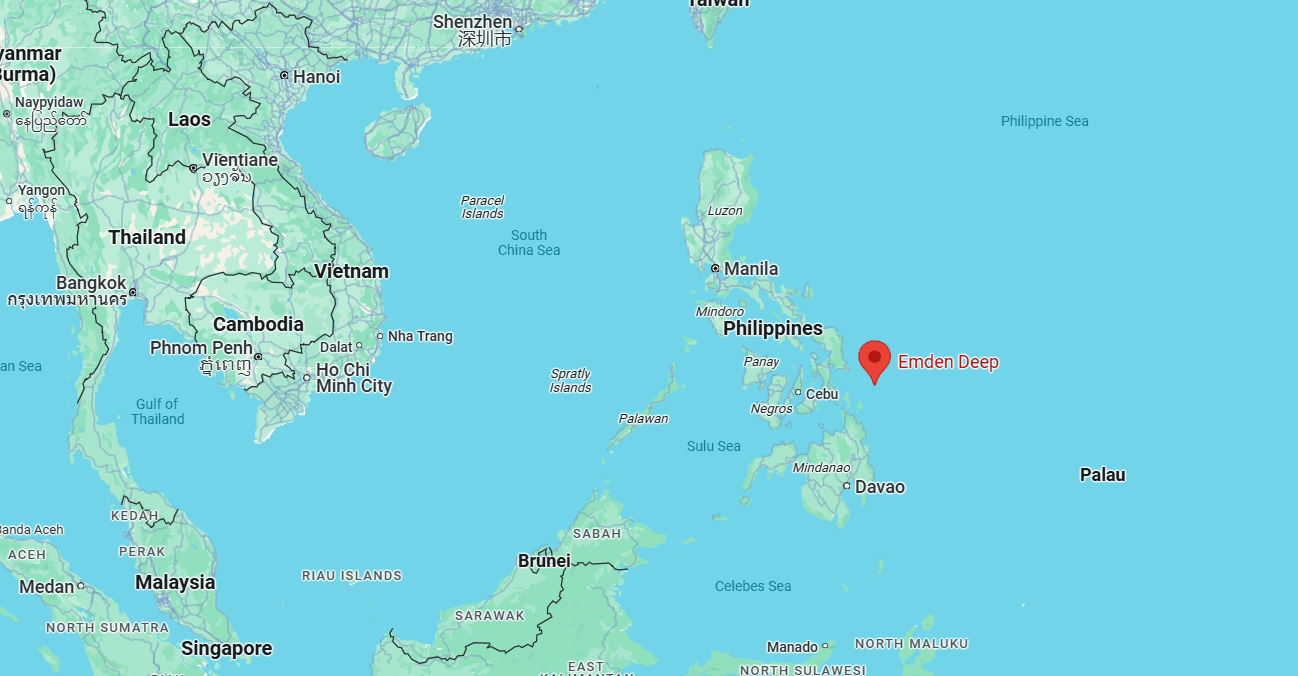
Emden Deep (Galathea Deep) third-deepest oceanic point ~10.5 km within Philippines Trench, western Pacific

Philippines Trench narrow subduction trench east of Philippine Sea created 8–9 million years ago

Zone highly seismic owing to active plate convergence causing frequent earthquakes

Quick Facts for MCQs

Exploration History

  • Discovery 1927 by German ship Emden establishing feature name
  • Detailed mapping 1951 by Danish expedition Galathea adding alternate name
  • Depth ranking fixed after Challenger Deep (Mariana) and Horizon Deep (Tonga)

Geological Setting

  • Subduction of Philippine Sea Plate initiated trench during Plio-Pleistocene
  • Ongoing convergence drives intense seismicity and deep focus quakes
  • Trench trends north–south east of Mindanao archipelago

Historical Reference

  • SMS Emden German cruiser bombed Chennai 22 Sep 1914 World War I
  • Emden Deep name underscores naval exploration-wartime linkages

Key Data Points

FeatureData-Point
Depth rankThird deepest globally
Alternate nameGalathea Deep
Discovery vesselGerman ship Emden
Discovery year1927
Detailed survey vesselDanish ship Galathea
Survey year1951
Oceanic trenchPhilippines Trench
Trench formation age8–9 million years
Seismic statusFrequent earthquakes
Namesake warshipSMS Emden shelled Madras 1914

Related UPSC Prelims PYQs

CDS_GK 2020PYQ 1

Which one of the following is considered as the deepest point of the oceans?

GS-1Mapping

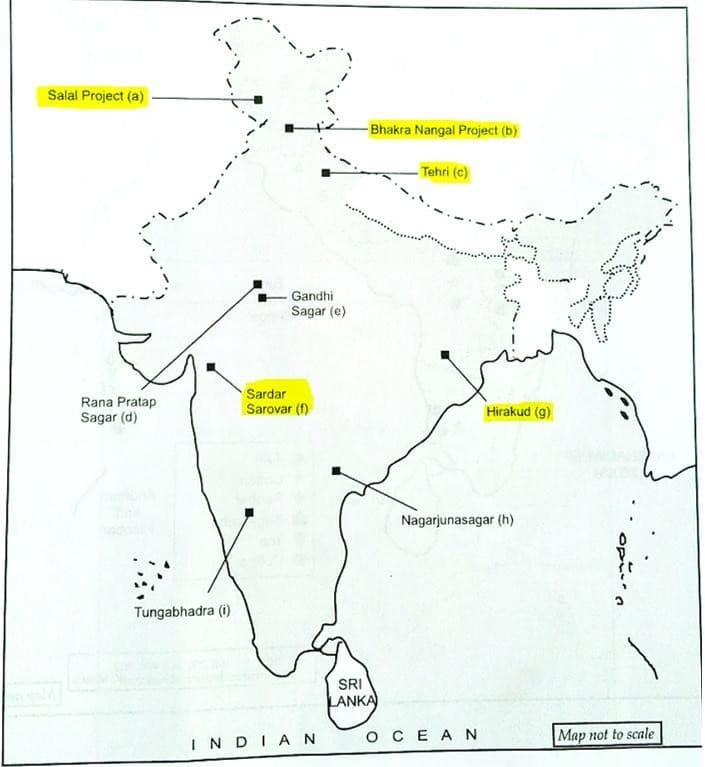
8.Bhakra Dam on Sutlej River (River Dam)

NDTV
Illustration for Bhakra Dam on Sutlej River (River Dam)

What & Where

Bhakra Dam – concrete gravity dam on Sutlej River; Bilaspur district, Himachal Pradesh, 13 km upstream of Nangal, Punjab.

Jointly run via Bhakra Beas Management Board (BBMB) for Punjab, Haryana, Rajasthan, Delhi & Himachal.

Sutlej – Tibet-origin trans-Himalayan river entering India at Shipki La, merging with Beas, then Chenab to form Panjnad-Indus.

Quick Facts for MCQs

Inter-State Governance

  • BBMB order: 8,500 cusecs to Haryana; Punjab opposes citing water crisis.
  • Allocation beneficiaries: Punjab, Haryana, Rajasthan, Delhi, Himachal Pradesh.
  • Interstate water sharing often sparks legal, political contention in north-western India.

Infrastructure Specs

  • Structure: Separate Bhakra & downstream Nangal, collectively termed Bhakra-Nangal.
  • Reservoir: Gobind Sagar supports irrigation, hydropower, flood control, drinking supply.
  • Hydropower network: Linked projects include Nathpa Jhakri, Karcham Wangtoo on Sutlej.

Hydrological Geography

  • Sutlej: Longest Indus tributary; joins Beas in Punjab, later Chenab forming Panjnad.
  • Major left-bank tributaries: Spiti, Baspa, Nogli Khad; right-bank: Soan, Ghaggar-Hakra (historic).
  • Trans-Himalayan peers: Indus and Brahmaputra also cut southward across Himalayas.

Key Data Points

FeatureData-Point
Dam typeConcrete gravity
Reported height55 m (Asia’s 2nd tallest)
Reservoir nameGobind Sagar
Reservoir capacity34 billion m³ (2nd in India after Indira Sagar)
Downstream structureNangal Dam
Nehru epithet“New Temple of Resurgent India”
Managing bodyBhakra Beas Management Board
Recent water release8,500 cusecs to Haryana
Sutlej originLake Rakshastal, near Mt Kailash, Tibet
Indian entry pointShipki La Pass, Himachal Pradesh

Related UPSC Prelims PYQs

CDS_GK, NDA_GAT 2021PYQ 1

River Beas, flowing from Himachal and Punjab, joins the river

CDS_GK, NDA_GAT 2021PYQ 2

The Luhri Hydro-Electric Power Project is being constructed on the river

GS-3Environment

9.Palamu Tiger Reserve, Jharkhand (Tiger Reserve)

New Indian Express

What & Where

Palamu Tiger Reserve (PTR): among first nine Project Tiger sites, only reserve in Jharkhand, notified 1974

Core location: Chhotanagpur Plateau, Latehar district; incorporates parts of Betla National Park

Jaigir village: first settlement fully relocated from PTR core, easing anthropogenic pressure on wildlife

Quick Facts for MCQs

Conservation Milestones

  • Relocation: Jaigir sets precedent for complete village shift out of PTR core
  • Legacy: Site of world’s first tiger pugmark census, pioneer in monitoring techniques
  • Designation: Early inclusion in 1974 underscores national conservation priority

Biodiversity

  • Flora: Sal-dominated dry deciduous forests support varied understorey and grasslands
  • Fauna diversity: Predators, herbivores, insectivores, and semi-aquatic species coexist
  • Keystone roles: Tiger and Elephant regulate trophic dynamics and habitat structure

Physical Geography

  • Drainage: North Koel watershed ensures perennial water via Burha river stretch
  • Lithology: Mixed Precambrian rocks with Gondwana sedimentary belts influence soil fertility
  • Elevation & plateau setting: Undulating terrain offers microhabitats and migration corridors

Human Relocation & Social Angle

  • Incentives: Compensation, housing, and livelihood packages facilitated voluntary move
  • Pressure reduction: Removal of agro-grazing activities lowers firewood extraction and conflict
  • Replicability: Model may guide other core-area relocations nationwide

Key Data Points

FeatureData-Point
StateJharkhand
DistrictLatehar
PlateauChhotanagpur
Notified under Project Tiger1974
Rank among first Project Tiger sites1 of 9
Total area93 sq km
Dominant forest typeNorthern Tropical Dry Deciduous (Sal)
First pugmark census year1932
Census pioneerJ.W. Nicholson
Main riversNorth Koel, Burha, Auranga
Key mammalsTiger, Asiatic Elephant, Leopard, Sloth Bear
Other notable faunaGrey Wolf, Four-horned Antelope, Indian Pangolin, Otter
Major rock typesGneiss, Quartzite, Amphibolite, Laterite
Gondwana formationsSandstone, Shale, Haematite
Village fully relocatedJaigir

Related UPSC Prelims PYQs

CDS_GK, GS1 2012PYQ 1

Consider the following protected areas:

CDS_GK, GS1 2021PYQ 2

In the year 2020 which one of the following tiger reserves of India was declared by UNESCO as a Biosphere Reserve?

GS-3Environment

10.Global Wind Report 2025 Findings (Wind Energy)

Down to Earth

What & Where

Wind energy: converting kinetic wind into electricity via turbines; deployed as onshore and offshore farms

Hotspots 2024: China 70 % new capacity; US, Brazil, India, Germany next; Africa–Middle East onshore doubled

Indian hubs: Gujarat, Karnataka, Tamil Nadu dominate; offshore potential – Gujarat 36 GW, Tamil Nadu 35 GW

Quick Facts for MCQs

Global Trends

  • Growth: 117 GW added 2024; offshore only 8 GW, 26 % decline
  • Regional-shift: Uzbekistan, Egypt, Saudi Arabia success stories; Africa-Middle East onshore doubled 2024
  • Financing: Inflation, high interest, protectionism and weak auctions squeezing project viability worldwide

India Snapshot

  • Manufacturing: turbine 18 GW/yr; towers 5.2 GW, gearboxes 8 GW; blades still import-heavy
  • Grid: resource-rich Rajasthan, Gujarat, coastal Tamil Nadu lack evacuation lines, inflating delivered costs
  • Policy: removal of Accelerated Depreciation and GBI incentives creating uncertainty across state markets

Bottlenecks

  • Land: 7–8 acres per turbine; slow agricultural-to-non-agricultural conversion delaying mega parks
  • Supply-chain: blade shortages, Chinese components raise delay, cybersecurity, strategic dependence worries
  • E-waste: composite blades and toxic inverter metals complicate recycling, escalating hazardous waste loads

Way Forward

  • Policy: national wind policy, land banks, repowering aged farms to unlock quicker permitting
  • Finance: green bonds, carbon credits, proposed PLI for blades, towers, gearboxes to mobilise capital
  • Tech: hybrid solar-wind parks, floating and tidal-coupled turbines, surplus-to-green-hydrogen integration

Key Data Points

FeatureData-Point
Global addition 2024117 GW
Total global capacity end-20241,136 GW
Offshore addition 20248 GW (-26 % y-o-y)
China share in 2024 adds70 %
Projected 2030 wind target met77 % only
COP28 required annual adds320 GW
India cumulative capacity Mar 202550.04 GW
India FY25 addition4.15 GW
India global rank4th

Related UPSC Prelims PYQs

GEO_GS 2026PYQ 1

India's installed solar capacity in 2025 is close to

GS-3Environment

11.Agent Orange Environmental Impact (Herbicide Dioxin)

Indian Express
Illustration for Agent Orange Environmental Impact (Herbicide Dioxin)

What & Where

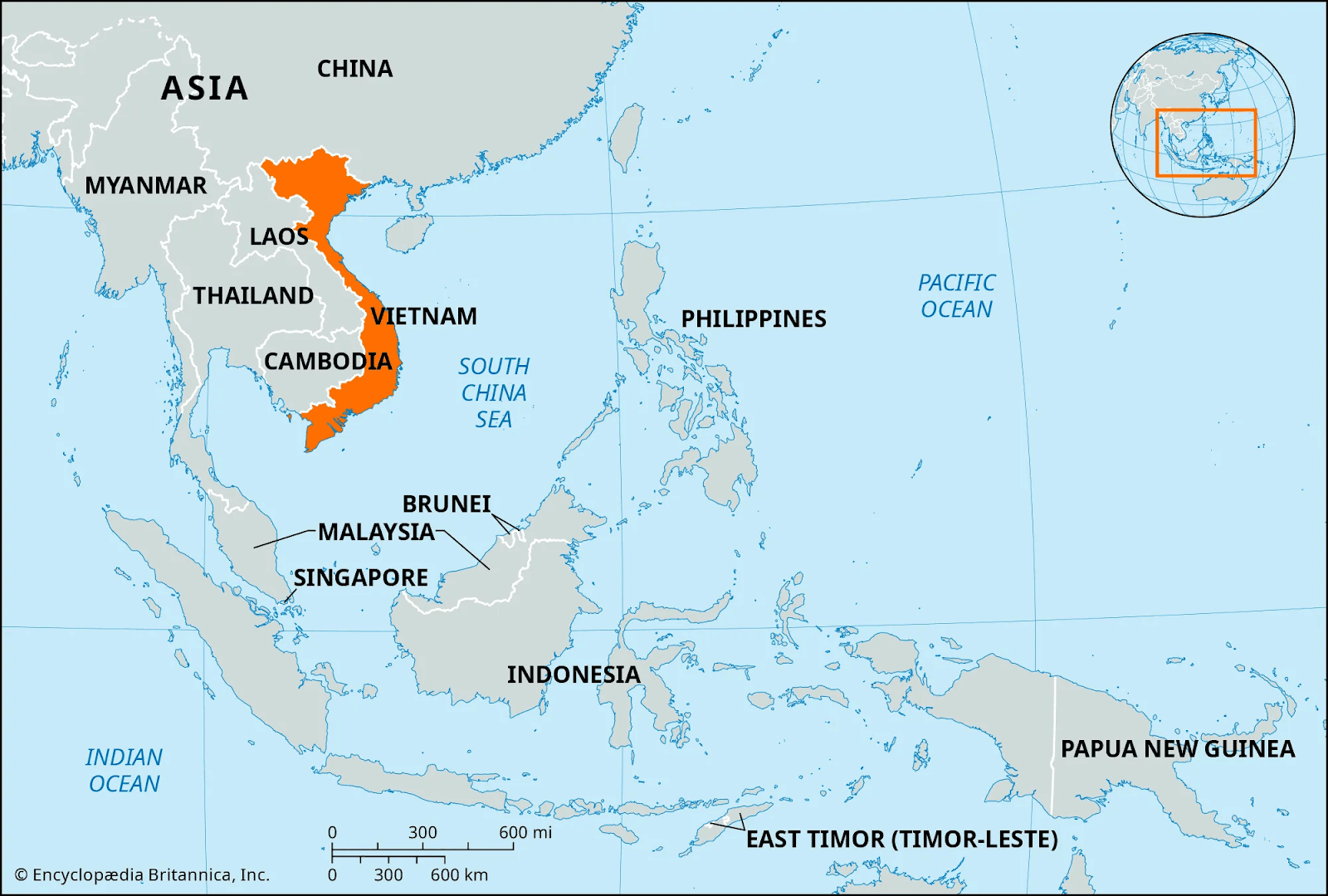
Agent Orange: US herbicidal warfare blend sprayed across Vietnam (1954–75) for defoliation and crop destruction

Composition: Equal parts 2,4-D and 2,4,5-T, both phenoxy herbicides, laced with highly toxic dioxin contaminant

Geography: Residual contamination persists in Vietnamese soils, sediments and water bodies, especially former US bases and heavily-sprayed rural zones

Quick Facts for MCQs

Environmental Impact

  • Soil-sterility: Dioxin residues render sprayed farmland unusable for years
  • Ecosystem-damage: Forest loss decimated wildlife, altered nutrient cycles
  • Livelihood-loss: Agriculture, forestry and fishing sectors suffered prolonged income decline

Health Impact

  • Teratogenicity: Birth defects across multiple Vietnamese generations linked to parental exposure
  • Carcinogenicity: Increased cancers among exposed civilians and US veterans
  • Endocrine-effects: Elevated diabetes and neurological disorders documented

Security & Geopolitics

  • Cold-War: Conflict pitted US-backed South Vietnam against Soviet- and China-supported North Vietnam
  • Tactical-goal: Herbicide spraying aimed to deny Viet Cong concealment and food
  • Legacy-issues: Cleanup and compensation still shape US-Vietnam bilateral agenda

Key Data Points

FeatureData-Point
War duration1954 – 75
War ended on30 Apr 1975
2025 marks50th anniversary
Herbicide mix2,4-D + 2,4,5-T
Key toxinDioxin (TCDD)
Human half-life≤ 20 yrs
Soil/water persistence≤ 100 yrs

Related UPSC Prelims PYQs

GS1 1995PYQ 1

“The final Agent Orange raid in Vietnam took place in 1970…. areas have begun to bloom again. But 19 years after the war’s end, it seems plain that Agent Orange is killing and maiming human beings, something it never intended to do. The apparent toxic fall-out from those clouds ... is a crop of human miseries including cancers, miscarriages and birth defects — that may persist for decades.” The offensive substance referred to in the above quotation is

GS1 2008PYQ 2

What is Agent Orange?

GS-3Environment

12.Locust Swarm Cognitive Behaviour Study (Desert Locust)

The Hindu
Illustration for Locust Swarm Cognitive Behaviour Study (Desert Locust)

What & Where

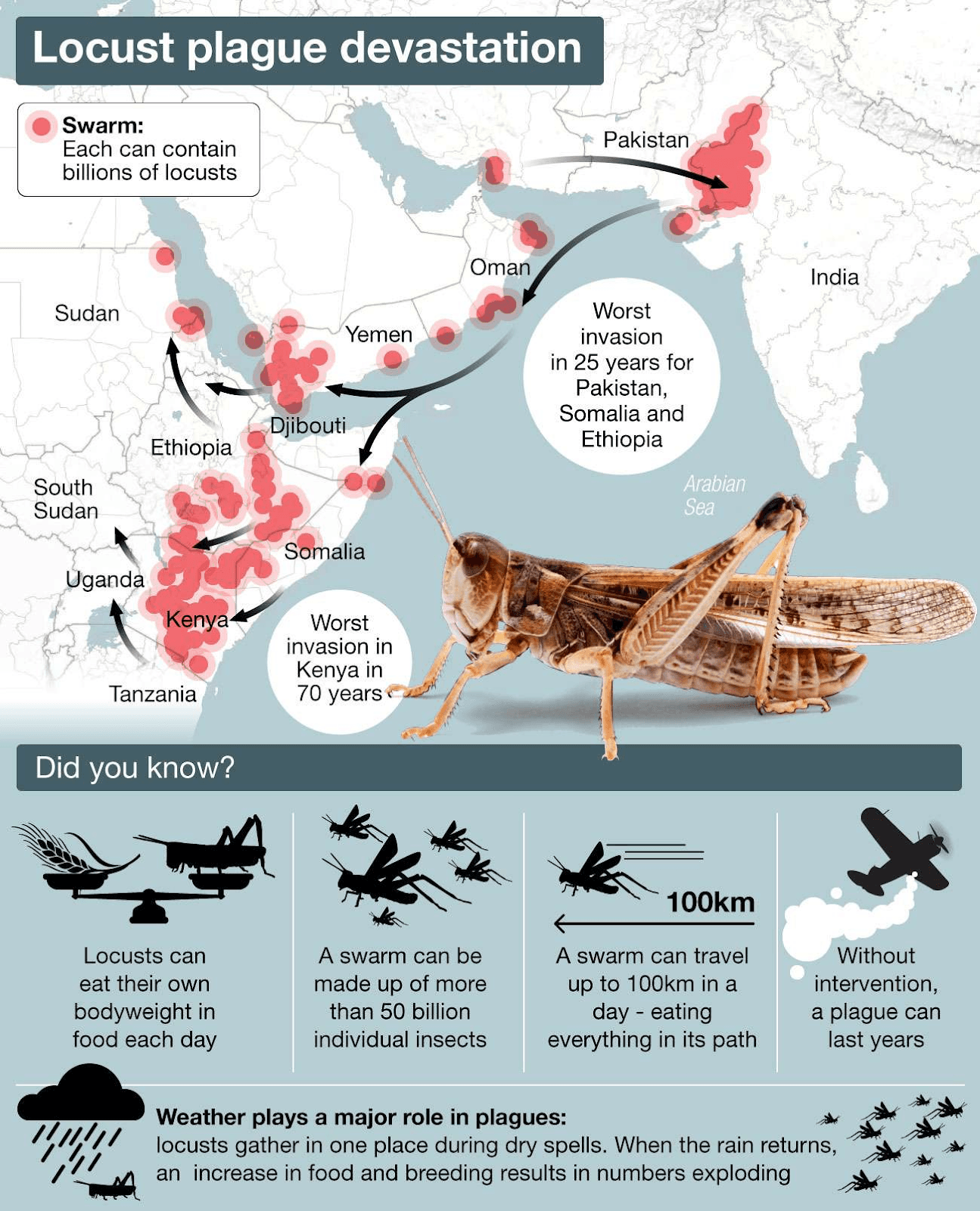
Locusts = short-horned grasshoppers (Acrididae); become highly destructive after gregarisation into migratory swarms.

Indian species: Desert, Migratory, Bombay, Tree locusts.

Core risk zone: Scheduled Desert Area (~2 lakh km²) in Rajasthan, Gujarat, Haryana.

Quick Facts for MCQs

Biology & Behaviour

  • Gregarisation converts solitary insects into cohesive swarms with colour, behaviour, physiology changes.
  • Cognitive decision-making model: multiple visual cues yield decentralized, coordinated movement; not random.
  • Swarms travel hundreds of kilometres, challenging containment efforts.

Geography Spread

  • Trans-border corridor: Africa → Middle East → South Asia; invasions often start from Africa/Gulf.
  • Indian hot-spot: Scheduled Desert Area; entry usually via Pakistan-Iran route.
  • Seasonal winds facilitate rapid cross-border swarm movement.

Administrative Setup

  • Locust Warning Organization conducts continuous survey, monitoring and chemical/biological control operations.
  • Ten Locust Circle Offices support state machinery in Rajasthan & Gujarat.
  • Behaviour model aids earlier forecasting, enabling pre-emptive control interventions.

Key Data Points

FeatureData-Point
Taxonomic familyAcrididae
Phase change termGregarisation
Small swarm size1 km² ≈ 80 million locusts
Food eaten by small swarm≈ diet of 35,000 people/day
Vegetation lost to large swarmUp to 1.8 million t
Typical flight rangeHundreds of kilometres
Scheduled Desert Area size> 2 lakh km²
Monitoring agencyLocust Warning Organization
Locust Circle Offices10 (Rajasthan & Gujarat)
Most destructive speciesDesert Locust (Schistocerca gregaria)
GS-3S&T

13.SeaVision Maritime Domain Software (Maritime Surveillance)

Times of India

What & Where

SeaVision = web-based Maritime Domain Awareness (MDA) software aggregating vessel-tracking data for security, safety, environment.

Built by US Dept of Transportation; presently operated with Virginia-based defence-analytics firm Hawkeye 360.

US cleared USD 131 mn Foreign Military Sale to India covering SeaVision licences, training, life-cycle support.

Quick Facts for MCQs

Tech & Schemes

  • Live-integrates AIS, satellite, radar for real-time common operating picture.
  • Geo-fencing issues automatic breach alerts; analytics flag illegal fishing, smuggling, intrusions.
  • Web interface allows simultaneous access by allied navies, easing joint drills and HADR planning.

Security Dimension

  • Enhances maritime situational awareness, enabling early warning and credible deterrence in Indo-Pacific.
  • Strengthens QUAD & IOR information-sharing networks for coordinated patrols and disaster response.
  • Protects sea-lanes, offshore infrastructure, and blue-economy assets from grey-zone threats.

India-US Defence Ties

  • FMS deal follows COMCASA & BECA, indicating rising tech interoperability.
  • Complements India’s Information Fusion Centre–IOR at Gurugram, feeding US-sourced maritime data.
  • Adds to earlier US procurements—P-8I, MH-60R—toward an integrated surveillance architecture.

Key Data Points

FeatureData-Point
Sale valueUSD 131 million
BuyerGovernment of India
Seller / routeUnited States; FMS
Core productSeaVision MDA software
Platform typeWeb-based; no installation
Main data feedsAIS, satellites, coastal radar
Key functionsLive tracking, geo-fencing, custom alerts, multi-user
Original developerUS Dept of Transportation
Current operatorHawkeye 360 + US agencies
Indian initiatives aidedSAGAR, Sagarmala, Blue Economy monitoring

Related UPSC Prelims PYQs

CAPF_GAI, ESE_GS 2026PYQ 1

What is the name of the national digital framework launched at India Maritime Week 2025 to make Indian ports data-driven and AI-enabled?

CAPF_GAI, ESE_GS 2024PYQ 2

Which one among the following statements with regard to India’s maritime initiative, SAGAR, is correct?

GS-3S&T

14.Antibiotic Access Gap for CRGN (Antimicrobial Resistance)

The Hindu

What & Where

Carbapenem-resistant Gram-negative (CRGN): last-resort antibiotic-evading bacteria incl. E. coli, K. pneumoniae, P. aeruginosa.

Gram stain: thick-wall Gram-positive remain violet; thin-wall Gram-negative turn red after decolorisation.

Lancet 2019 survey: ~1.5 mn CRGN cases in 8 LMICs; India alone ~1 mn.

Quick Facts for MCQs

Health Impact

  • Mortality: Untreated CRGN drove ~3.5 lakh Indian deaths, highest among surveyed LMICs.
  • Morbidity: Causes severe pneumonia, sepsis, UTIs prolonging hospital stay and cost.
  • Global threat: Rising resistance limits therapeutic options and survival rates.

Access Barriers

  • Diagnostics: Limited culture & susceptibility testing leads to empirical, often ineffective, prescriptions.
  • Supply chain: Intermittent availability and high prices of reserve drugs restrict patient reach.
  • Protocol vacuum: Absence of standard national CRGN treatment guidelines in many facilities.

Policy & Stewardship

  • Stewardship: Study urges hospital antibiotic-stewardship programmes to rationalise use.
  • Regulation: Tighter control on marketing, procurement and prescription of new antibiotics recommended.
  • Dual goal: Simultaneous conservation of efficacy and universal patient access emphasised.

Key Data Points

FeatureData-Point
India CRGN infections (2019)≈10 lakh
India correct-therapy rate7.8 %
LMIC average correct rate6.9 %
India deaths from mistreatment≈3.5 lakh
Countries studiedBD, BR, EG, IN, KE, MX, PK, ZA
Total cases analysed≈1.5 million
Resistance mechanismCarbapenemase enzyme production
Carbapenem antibioticsLast-line drugs against MDR bugs
GS-3Security

15.National Security Advisory Board Reconstitution (Security Advisory)

The Hindu

What & Where

Advisory body on national security, set up 1998 under National Security Council Secretariat, New Delhi.

Operates with Strategic Policy Group & Joint Intelligence Committee within the National Security Council framework.

Reconstituted May 2025; ex-R&AW chief Alok Joshi chairs 7-member board.

Quick Facts for MCQs

Mandate & Functions

  • Advises NSC on external threats, internal stability, tech-driven challenges.
  • Provides independent, long-term assessments; drafts policy options.
  • Authored key strategic documents: Nuclear Doctrine 2001, Security Review 2007.

Structure & Composition

  • Chaired by former senior official; multidisciplinary members: diplomacy, military, academia, economics, S&T.
  • No fixed size; strength tweaked to suit evolving security needs.
  • Members hold two-year terms; reappointment purely executive discretion.

Recent Reconstitution

  • Government order May 2025 installs Alok Joshi as chair with seven new appointees.
  • New board tenure: 2025-27, expected to review terror-response frameworks.
  • Revamp coincides with high-level deliberations after Pahalgam terror attack.

Key Data Points

FeatureData-Point
Year set-up1998
Parent secretariatNational Security Council Secretariat
Parallel bodiesStrategic Policy Group, Joint Intelligence Committee
Current chair (2025)Alok Joshi, former R&AW chief
2025 member strength8 (chair + 7)
Tenure per member2 years
Core roleAdvise NSC on external, internal security
Landmark inputsNuclear Doctrine 2001; National Security Review 2007
GS-2Scheme

16.Depot Darpan Food Storage Portal (Foodgrain Monitoring)

DD News

What & Where

Depot Darpan = digital portal + mobile app for real-time monitoring of food-grain depots.

Developed/managed by Ministry of Consumer Affairs, Food & Public Distribution, India.

Covers 2,278 warehouses of FCI, CWC, state and private agencies nationwide.

Quick Facts for MCQs

Tech & Schemes

  • Geo-tag IoT sensors stream continuous depot data to central dashboard.
  • AI modules trial bag counting, personnel FRS, vehicle ANPR for traceability.
  • Smart environment monitors track CO₂, phosphine, humidity, temperature, fire risk.

Food Security

  • Scientific warehousing cuts spoilage, maintaining grain quality for PDS supply.
  • Supports uninterrupted distribution to 80 crore NFSA beneficiaries.
  • Real-time alerts enable prompt fumigation and pest control.

Governance & Oversight

  • Geo-tagged uploads verified by supervisors and third-party auditors.
  • Star ratings spotlight underperforming depots, triggering remedial action.
  • Mobile app lets officials issue instant compliance directives on site.

Economic Angle

  • Reduced losses and faster turnover free storage space, lower logistics cost.
  • Optimized manpower via data-driven resource planning.
  • Strengthens digital public infrastructure, attracting private warehousing investment.

Key Data Points

FeatureData-Point
Launching ministryConsumer Affairs, Food & Public Distribution
Core tech stackGeo-tagging, IoT sensors, AI analytics, CCTV
Monitoring scopeInfrastructure, operations, finance, gas, humidity, temperature, fire
Depot coverage2,278 warehouses (national)
Beneficiary linkage>80 crore NFSA recipients
Feedback systemAutomated composite star ratings
Mobile utilityOn-the-go inspections, auto-generated reports
AI pilotsBag counting, Face Recognition System, ANPR
GS-1Editorial

17.Private School Fee Regulation (Education Policy)

The Hindu
Illustration for Private School Fee Regulation (Education Policy)

What & Where

Private-school fee regulation: state oversight of fee hikes, especially for institutions on government land

Three chief models: approval-based, formula (cap)-based, objection/grievance review

Geography focus: Delhi, Bengaluru, Mumbai illustrate divergent regulatory frameworks

Quick Facts for MCQs

Legal & Policy

  • Delhi School Education Act 1973 enables government pre-approval for fee revision in recognised private schools
  • Draft National Fee Regulation Code proposed for uniform yet flexible standards across states
  • NEP 2020 urges transparency, audited disclosures while encouraging private sector participation

City Models

  • Delhi approval model: schools on leased government land need prior sanction for any hike
  • Karnataka formula model: ≤10 % annual increase, audit justification mandatory
  • Maharashtra objection model: ≥25 % parent protest triggers Fee Revision Committee scrutiny

Challenges & Gaps

  • Transparency deficit: audited accounts and detailed fee breakups rarely shared
  • Regulatory divergence: varied state laws create inconsistency and forum shopping risks
  • Excessive control concern: strict caps may curb teacher pay, infrastructure upgrades, innovation

Key Data Points

FeatureData-Point
NSS 2017-18 Delhi average secondary fee₹32,003
NSS 2017-18 all-India average₹11,026
17th Lok Sabha time on private education9.08 hours
South Delhi April 2025 fee hike20 %
Karnataka 2022 annual cap10 %
Delhi School Education Act1973

Related UPSC Prelims PYQs

CDS_GK, NDA_GAT 2024PYQ 1

good quality elementary education conforming P

CDS_GK, NDA_GAT 2023PYQ 2

शिक्षा मंत्रालय द्वारा वर्ष 2020-2021 के लिए प्रकाशित प्रदर्शन ग्रेडिंग सूचकांक (PGI) में, निम्नलिखित में से किस राज्य/संघ राज्य-क्षेत्र का स्थान शीर्ष दस में शामिल नहीं है?

Ready to practice?

Test your knowledge with our UPSC test series.

Start Free Trial