UPSC Current Affairs

14 topicsGS-1: 4GS-2: 3GS-3: 7
0/14 done
GS-2Polity

1.Deputy Speaker of Lok Sabha (Deputy Speaker)

The Hindu

What & Where

Constitutional post; Lok Sabha elects a Deputy Speaker from its members.

Article 93: election “as soon as may be” after House meets.

17th & 18th Lok Sabhas yet to fill the post, breaking post-1956 convention.

Quick Facts for MCQs

Constitutional Mandate

  • Phrase “as soon as may be” undefined; courts treat as mandatory yet flexible.
  • Vacancy beyond initial session viewed as constitutional non-compliance.

Powers & Functions

  • Presiding: Chairs sittings in Speaker’s absence ensuring quorum and order.
  • Casting-vote: Breaks deadlock; otherwise no regular vote while in chair.
  • Committee-head: Automatically leads committees when nominated.

Parliamentary Convention

  • Opposition occupancy nurtures bipartisan trust since 1956; broken in 2014-24.
  • Speaker from ruling party, Deputy from Opposition mirrors UK Westminster norm.

Implications of Vacancy

  • Continuity gap: No designated presiding officer if Speaker suddenly vacates.
  • Power centralisation: Procedural authority monopolised by Speaker alone.
  • Credibility loss: Signals disregard for parliamentary customs, weakens opposition voice.

Reform Ideas

  • Amend Art. 93: mandate election within 60 days of first sitting.
  • Trigger clause: President may direct election on Cabinet advice if delay persists.
  • Rulebook change: Fix statutory timeline; codify Opposition entitlement.

Key Data Points

FeatureData-Point
Constitutional articleArt. 93
ElectorateWhole Lok Sabha
Election timingDate fixed by Speaker after own election
Removal processResolution passed by Lok Sabha majority
Voting right when presidingCasting vote only on a tie
Usual party practicePost offered to Opposition (not mandatory)
Hierarchical statusNot subordinate to Speaker; answerable to House
Committee roleBecomes chair if appointed to any parliamentary committee
First Deputy SpeakerM. Ananthasayanam Ayyangar (1952)
Emergency exampleAyyangar ran House after Speaker Mavalankar’s death, 1956

Related UPSC Prelims PYQs

CDS_GK, GS1 2022PYQ 1

With reference to Deputy Speaker of Lok Sabha, consider the following statements:

CDS_GK, GS1 2022PYQ 2

Which one of the following statements about the Speaker of Lok Sabha is not correct?
GS-3Economy

2.Central Board of Direct Taxes Overview (Direct Tax Administration)

DD News

What & Where

CBDT; statutory authority administering all Union direct taxes in India

Operates under Department of Revenue, Ministry of Finance; founded 1964 via Central Board of Revenue Act 1963

Core tasks: policy-making, investigation, taxpayer services, international coordination to widen tax base and curb evasion

Quick Facts for MCQs

Legal & Policy

  • Foundation; Act 1963 bifurcated erstwhile Central Board of Revenue 1924
  • Mandate; formulates income tax, corporate tax, erstwhile wealth tax policies
  • Role; drafts amendments, issues circulars, promotes voluntary compliance

Administrative Structure

  • Leadership; Chairperson heads six functional members
  • Supervision; controls entire Income Tax Department hierarchy
  • Service delivery; drives e-filing, grievance redressal, taxpayer awareness

Enforcement Actions

  • Strategy; intensified nationwide searches, surveys, raids using data analytics
  • Objective; recover ₹2.4 lakh crore unreported income, fight black money
  • Investigation; conducts assessments, levies penalties, prosecutes willful evaders

International Cooperation

  • Treaties; negotiates DTAA, TIEA to prevent double taxation, enable information exchange
  • Compliance; aligns with BEPS, FATCA, CRS standards
  • Coordination; shares data with global counterparts for cross-border evasion tracking

Key Data Points

FeatureData-Point
Statutory basisCentral Board of Revenue Act 1963
Formation year1964
Parent ministryMinistry of Finance
Administrative homeDepartment of Revenue
Governing compositionChairperson + 6 Members
Current recovery target₹2.4 lakh crore undisclosed income

Related UPSC Prelims PYQs

CDS_GK, GS1 2025PYQ 1

With reference to the Government of India, consider the following information:

CDS_GK, GS1 2021PYQ 2

Which one of the following is not correct in respect of Directorate of Enforcement?

GS-1Misc

3.Padma Awards Overview (Padma Awards)

NDTV

What & Where

Padma Awards: India’s civilian honours for exceptional, distinguished public‐oriented service across domains.

Three classes since 1955—Padma Vibhushan, Padma Bhushan, Padma Shri; instituted 1954.

Announced every Republic Day eve; conferred at Rashtrapati Bhavan by President.

Quick Facts for MCQs

Origin & Evolution

  • Instituted 1954; reclassified into three grades via 1955 notification.
  • Janata Govt halted 1978-79; reinstated 1980 by Indira Gandhi.
  • 1993-97 suspension ended after 1995 SC upholding constitutionality.

Eligibility & Scope

  • Open to all citizens, foreigners, NRIs, OCIs without bias.
  • Fields: arts, social work, science, medicine, sports, literature, education, public affairs, civil service.
  • Active governmental employees barred except medical/scientific cadres.

Selection Workflow

  • Public, self-nominations accepted via online portal.
  • Padma Committee shortlists; list cleared by PM, then President.
  • Investiture ceremony held March-April at Rashtrapati Bhavan.

Numbers & Limits

  • Normal ceiling 120 per year; Bharat Ratna separate hierarchy.
  • Medallion and Sanad only; no cash component.
  • Awardees ranked after Bharat Ratna in order of precedence.

Key Data Points

FeatureData-Point
Instituted1954
Reclassification year1955
ClassesVibhushan, Bhushan, Shri
PresenterPresident of India
AnnouncementEve of 26 Jan
Committee headCabinet Secretary
Committee constituted byPrime Minister (annual)
Annual cap120 awards
Ceiling exemptionsPosthumous, Foreign, NRI, OCI
Eligibility exceptionServing govt staff (excl. doctors/scientists)
Posthumous awardsPermitted, rare
No‐title clauseNo prefix/suffix allowed
Discontinuation years1978-79; 1993-97
SC validation case1995 Balaji Raghavan

Related UPSC Prelims PYQs

CDS_GK, GS1 2004PYQ 1

Param Padam, which was in news recently, is

CDS_GK, GS1 2024PYQ 2

भारत रत्न सम्मान के बारे में, निम्नलिखित में से कौन-सा/कौन-से कथन सही है/हैं?

GS-1Mapping

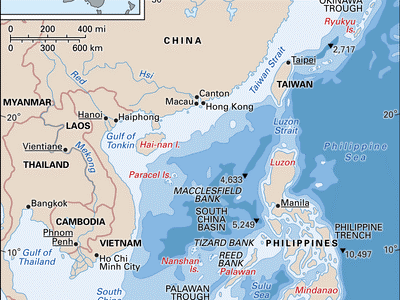
4.Sandy Cay Reef Dispute (South China Sea)

The Hindu
Illustration for Sandy Cay Reef Dispute (South China Sea)

What & Where

Sandy Cay Reef: small reef in northern Thitu Reefs, Spratly Islands, South China Sea

Position: northwest of Thitu Island (Pag-asa, Philippines) and northeast of China-held Subi Reef

Sovereignty: claimed by China, Philippines, Taiwan, Vietnam; 2025 Chinese “maritime control” claim rejected by Manila

Quick Facts for MCQs

Security Dimension

  • Escalation: Beijing and Manila exchange accusations over Sandy Cay activities
  • Control: Subi Reef fortifications and Thitu garrison place forces within ~30 km radius
  • Alliance: Philippine rejection bolstered by wider regional and US interest in freedom of navigation

Geographical Features

  • Basin: China Sea Basin depth 5 016 m marks deepest South China Sea floor
  • Shelf: Sunda Shelf forms broad shallow connector to Gulf of Thailand and Java Sea
  • Straits: Taiwan, Luzon, Malacca act as strategic chokepoints for global shipping

Dispute Matrix

  • Spratly: Claimed by China, Philippines, Vietnam, Malaysia, Taiwan, Brunei
  • Paracel: Contested only by China, Taiwan, Vietnam
  • Scarborough: Bilateral dispute between China and Philippines

Key Data Points

FeatureData-Point
Reef groupSpratly Islands
Claimant statesChina ▪ Philippines ▪ Taiwan ▪ Vietnam
2025 Chinese moveDeclared “maritime control” over Sandy Cay
Philippine replyFormal rejection of Chinese claim
Nearest PH outpostThitu Island (Pag-asa) with military & Coast Guard
Nearest Chinese baseSubi Reef, heavily militarized
Deepest pointChina Sea Basin – 5 016 m
Broad shelfSunda Shelf linking Gulf of Thailand & Java Sea
Major inflow riversMekong ▪ Red ▪ Pearl (Zhu)
Key straitsTaiwan ▪ Luzon ▪ Malacca
Other disputed groupsParacel ▪ Scarborough Shoal

Related UPSC Prelims PYQs

GS1 2022PYQ 1

Which one of the following statements best reflects the issue with Senkaku Islands, sometimes mentioned in the news?

GS-1Mapping

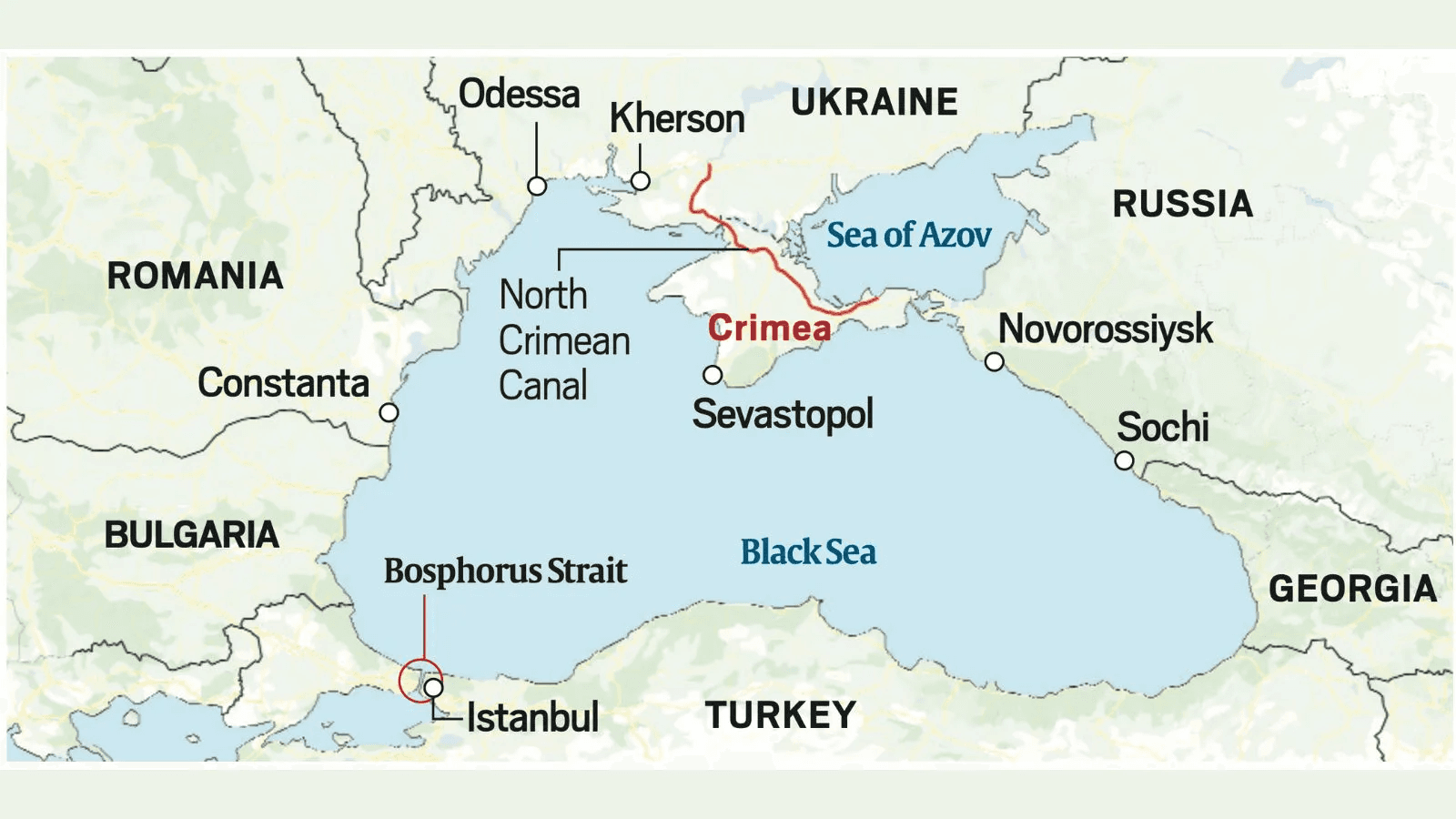
5.Crimea's Geostrategic Importance (Crimea Region)

Indian Express
Illustration for Crimea's Geostrategic Importance (Crimea Region)

What & Where

Peninsula; autonomous region till 2014; situated between Black Sea and Sea of Azov

Linked to Ukraine by narrow Perekop Isthmus; eastern edge bordered by Tonka of Arabat sandspit

Connected to Russia across Kerch Strait via Crimean Bridge; hosts major warm-water port Sevastopol

Quick Facts for MCQs

Physical Geography

  • Peninsula shape blocks northern Black Sea, controls Sea of Azov access
  • Warmest Russian adjacent waters enable all-season naval operations
  • Southern coast features natural harbours, easiest maritime approach for Russia

Historical Claim

  • Annexed by Russian Empire 1783; transferred to Ukrainian SSR 1954
  • Moscow terms 1954 transfer historical injustice, cites cultural ties
  • 2014 referendum under Russian control used to legitimise annexation

Strategic Value

  • Sevastopol base houses Black Sea Fleet, enables power projection into Mediterranean
  • Control secures maritime trade and energy corridors to Southern Europe, West Asia
  • Warm-water access reduces dependence on ice-prone northern ports

Geopolitical Context

  • US President Trump indicated possible recognition of Russian sovereignty
  • Crimea central in Russia-Ukraine conflict since 2014 annexation
  • Territory status influences Black Sea NATO-Russia security dynamics

Key Data Points

FeatureData-Point
Political status pre-2014Autonomous Republic within Ukraine
Year transferred to Ukraine1954 by Nikita Khrushchev
Key strait to RussiaKerch Strait
Land link to UkrainePerekop Isthmus
Sandspit barrierTonka of Arabat
Main warm-water portSevastopol
Russian coastline length≈37,000 km, largely Arctic
Strategic seaBlack Sea opening to Mediterranean
GS-3Environment

6.Greenhouse Gas Intensity Rules 2025 (Carbon Credit Rules)

Indian Express

What & Where

Instrument: Draft Greenhouse Gases Emissions Intensity (GEI) Target Rules 2025; statutory targets for lowering emission‐intensity.

Scope: 282 energy-intensive units in aluminium, cement, chlor-alkali, pulp & paper across India.

Context: Operates under Carbon Credit Trading Scheme 2023 to meet Paris pledge of 45 % GDP-intensity cut by 2030.

Quick Facts for MCQs

Legal & Policy

  • Mandate: First legally binding emission-intensity caps for industries under Environment Protection Act framework.
  • Enforcement: CPCB empowered to levy monetary and other penalties for target shortfalls.
  • Alignment: Complements existing PAT energy-saving scheme but focuses on multisector GHGs, not just energy.

Tech & Schemes

  • Mechanism: Reduction beyond target yields tradable credits; shortfall requires purchase, fostering market liquidity.
  • Platform: Credits issued, verified, and retired digitally within Indian Carbon Market registry.
  • Verification: Sector-wise default emission factors and MRV protocols to ensure uniform accounting.

Economic Angle

  • Incentive: High-efficiency plants monetize surplus; laggards face cost, driving capital toward cleaner tech.
  • Coverage share: Cement alone ≈ 66 % of obligated facilities, indicating major abatement potential.
  • Signal: Provides forward price visibility, encouraging R&D in low-carbon industrial processes.

Key Data Points

FeatureData-Point
Releasing ministryEnvironment, Forest & Climate Change
Baseline year2023-24 emission intensity
Target years2025-26, 2026-27
Covered sectorsAluminium, cement, chlor-alkali, pulp & paper
Total units282 (13 Al, 186 cement, 30 chlor-alkali, 53 pulp-paper)
Compliance rewardIndian Carbon Market credits
Monitoring bodyBureau of Energy Efficiency
Penalty authorityCentral Pollution Control Board
Trading scheme anchorCarbon Credit Trading Scheme 2023
Paris alignment45 % GDP-intensity cut vs 2005 by 2030

Related UPSC Prelims PYQs

CAPF_GAI, GEO_GS 2020PYQ 1

India has committed to reduce emission intensity of its GDP from 2005 levels by 33-35 per cent by the year:

CAPF_GAI, GEO_GS 2025PYQ 2

India’s key climate targets include

GS-3Environment

7.AIM4NatuRe Ecosystem Restoration Monitoring (Ecosystem Monitoring)

FAO

What & Where

Global FAO initiative to improve monitoring & reporting of ecosystem restoration progress.

Focus on all ecosystems; extension of earlier AIM4Forests (forest-only).

Operates worldwide; initial Indigenous pilot sites in Brazil & Peru, UK as core funder.

Quick Facts for MCQs

Tech & Schemes

  • Satellite analytics, cloud platforms, AI tools streamline restoration status detection and reporting.
  • Standardised formats enable cross-country data interoperability, transparency and comparability.
  • Scheme widens scope from forests to wetlands, grasslands, marine zones and more.

International Examples

  • UK finances launch; showcases donor-implementer collaboration model in biodiversity monitoring.
  • Brazil and Peru chosen for Indigenous-led monitoring proof-of-concept projects.

Capacity Building

  • FAO to train national agencies on data collection, processing, dashboard creation.
  • Initiative plugs major reporting gap identified in CBD capacity survey (80 % countries).

Key Data Points

FeatureData-Point
Full formAccelerating Innovative Monitoring for Nature Restoration
Launched byFood and Agriculture Organization (UN)
Funding partnerUnited Kingdom
UK contributionGBP 7 million
Target alignedGBF Target 2 – restore ≥30 % degraded ecosystems by 2030
Tech backboneSatellite imagery + advanced data analytics
Indigenous pilotsBrazil, Peru
Data approachHarmonised global dataset; standardised interoperable formats
Precursor programmeAIM4Forests (forest focus)
Capacity gap flagged80 % CBD-surveyed countries lack restoration data/reporting
GS-3Environment

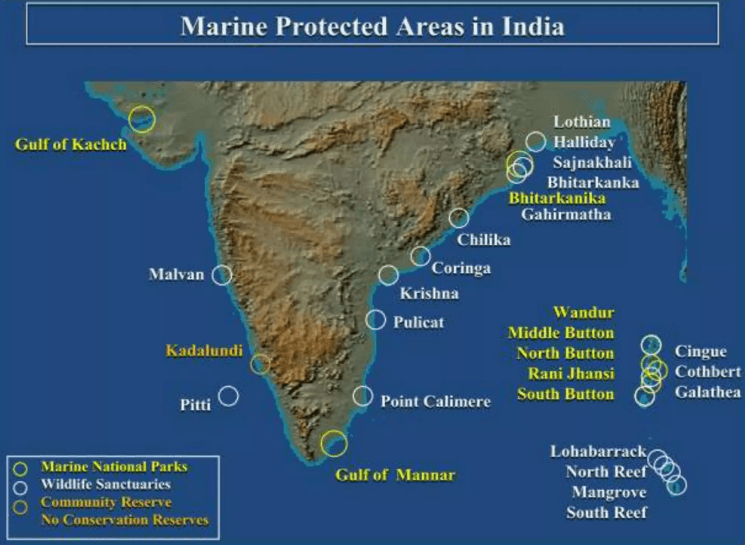
8.Revive Our Ocean Initiative (Marine Protected Areas)

Down to Earth
Illustration for Revive Our Ocean Initiative (Marine Protected Areas)

What & Where

Revive Our Ocean initiative: NGO Dynamic Planet drive to set up community-managed Marine Protected Areas (MPAs).

Geographic focus: seven pilot nations—UK, Portugal, Greece, Turkey, Philippines, Indonesia, Mexico.

Goal aligns with Kunming-Montreal 30×30 target—protect 30 % of global oceans by 2030.

Quick Facts for MCQs

Legal & Policy

  • High Seas Treaty will enable biodiversity rules beyond national waters once 60 ratify.
  • Revive Our Ocean promotes legally designated, locally enforced MPAs over voluntary zones.
  • Framework positions MPAs as instruments for both CBD 30×30 & SDG 14 targets.

Economic Angle

  • Initiative markets MPAs as “economic assets” boosting eco-tourism and sustainable fisheries.
  • Medes Island case shows no-take zone monetisation without extraction.
  • Community stewardship expected to lower enforcement costs, raise local incomes.

Conservation Status

  • Only 3 % of ocean area enjoys full no-take protection despite 16 000 MPAs.
  • Many current MPAs permit destructive bottom-trawling, illustrating management gaps.
  • Revive Our Ocean stresses stricter, outcome-based management plans.

International Examples

  • Spain’s Medes Island cited as benchmark for revenue-positive protection.
  • Similar community-led models planned across Mediterranean, Atlantic & Indo-Pacific pilots.

Key Data Points

FeatureData-Point
Launch year2025
Implementing bodyDynamic Planet (international NGO)
Pilot countries count7
Related global targetKunming-Montreal 30×30 (oceans)
Treaty linkage2023 High Seas Treaty
Ratifications needed for Treaty60 states
India’s statusSigned Treaty
Existing MPAs16,000+; cover 8 % oceans
Fully protected share≈3 % (Protected Planet Report 2024)
Medes Island revenueUSD 16 million/yr via tourism

Related UPSC Prelims PYQs

CDS_GK 2022PYQ 1

A global initiative popularly known as ‘30 × 30 target’ is often seen in the news. Which one of the following statements best reflects this initiative?

GS-3S&T

9.RNA Silencing vs Cucumber Mosaic Virus (Plant Virus Control)

The Hindu

What & Where

Cucumber Mosaic Virus (CMV) — Bromoviridae family pathogen infecting 1,200+ plant species on every continent.

German scientists designed siRNA-rich double-stranded RNA spray; leverages plant RNA-silencing, slashing CMV titre ≈80 %.

India records 25–30 % banana yield loss and ≤70 % cucurbit infection from CMV outbreaks.

Quick Facts for MCQs

Virology & Symptoms

  • Yellow mottling, leaf mosaic, stunting, deformed fruits hallmark CMV infection across cucurbits, bananas, ornamentals.
  • Fast CMV mutation hampers natural siRNA effectiveness inside host plants.

Transmission & Spread

  • Aphids transmit CMV non-persistently within minutes, complicating vector control strategies.
  • Sap-sucking feeding behaviour enables rapid virus acquisition and inoculation.

Technology & Innovation

  • Spray-Induced Gene Silencing offers non-GMO, field-applicable viral defence via exogenous dsRNA.
  • Enriched dsRNA formulation produces targeted siRNAs, avoiding random, low-potency mixes of earlier SIGS products.

Economic Impact

  • FAO estimates pest damage costs USD 220 bn yearly, plant viruses alone exceeding USD 30 bn.
  • CMV-driven yield reductions threaten vegetable supply chains and farmer incomes across Asia and Africa.

Key Data Points

FeatureData-Point
Virus genusCucumovirus
Virus familyBromoviridae
Known host species>1,200
Key enzyme in RNA silencingDicer-like (DCL)
Aphid species able to transmit CMV≈90
German dsRNA spray efficacy~80 % viral load reduction
Banana yield loss India25–30 %
Pumpkin/cucumber/melon infection IndiaUp to 70 %
Global crop destroyed by pests~40 % (FAO)
Annual loss due to plant viruses>USD 30 bn

Related UPSC Prelims PYQs

GS1 2019PYQ 1

'RNA interference (RNAi) technology has gained popularity in the last few years. Why?

GS-3Security

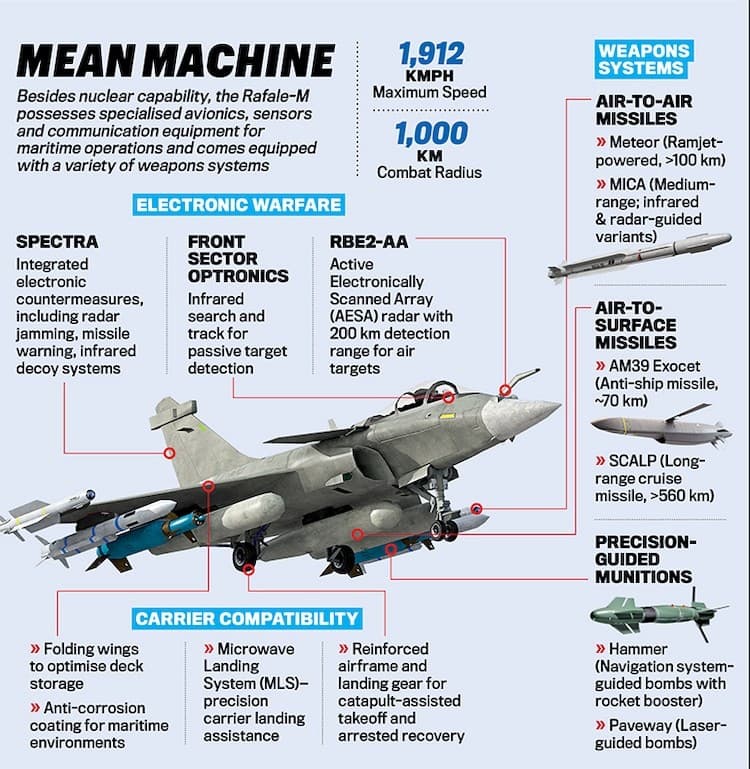
10.Rafale-M Naval Fighter Procurement (Naval Aviation)

IT
Illustration for Rafale-M Naval Fighter Procurement (Naval Aviation)

What & Where

Rafale-M carrier-borne 4.5-gen fighter variant from Dassault for naval deck operations

CCS cleared purchase of 26 jets via India–France G2G deal enhancing maritime strike reach

To fly from INS Vikrant, boosting Indian presence across Indo-Pacific waters

Quick Facts for MCQs

Technical Specs

  • Weapons: Meteor AAM, SCALP cruise 560 km, Exocet anti-ship
  • Sensors: RBE2-AA AESA radar, Front Sector Optronics, SPECTRA EW suite
  • Carrier fit: reinforced frame, corrosion protection, folding wings, strong undercarriage

Procurement Details

  • ₹63,000 cr G2G contract includes aircraft, weapons, simulators, training, logistics for five years
  • Fleet mix 22 single-seaters plus 4 twin-seat trainers for deck qualification
  • Deliveries staged 2029 to 2031 aligning with full operationalisation of INS Vikrant

Security Dimension

  • Adds credible air-superiority, deep-strike and nuclear deterrent capability for Indian Navy
  • Counters PLA Navy’s Shenyang J-15 presence; Pakistan lacks carrier fighters
  • Strengthens India’s role in Indo-Pacific coalition maritime security

Key Data Points

FeatureData-Point
Approving bodyCabinet Committee on Security
Supplier nationFrance
ManufacturerDassault Aviation
Total jets26 (22 single + 4 twin)
Deal value₹63,000 crore
Delivery window2029 – 2031
Carrier platformINS Vikrant
Radar typeRBE2-AA AESA
Main AAMMeteor BVRAAM
Cruise missileSCALP ‑ 560 km range
Anti-ship missileExocet
EW suiteSPECTRA
Service ceiling50,000 ft
Support packageWeapons, simulators, crew training, 5-yr logistics

Related UPSC Prelims PYQs

GS1 2025PYQ 1

भारत की रक्षा के संदर्भ में, निम्नलिखित युग्मों पर विचार कीजिए :

GS1 2024PYQ 2

Consider the following aircraft:

GS-3SecurityQuick Bite

11.I4C Covered by PMLA (I4C PMLA Integration)

The Hindu

What & Where

Indian Cyber Crime Coordination Centre (I4C) – national hub coordinating LEAs against cybercrime, HQ New Delhi

Prevention of Money Laundering Act (PMLA) 2002 – Section 66 allows sharing case information with specified agencies

New step: I4C now notified under Sec 66 to help trace transnational cyber-fraud money trails

Quick Facts for MCQs

Legal & Policy

  • Notification issued by Revenue Dept, Ministry of Finance bringing I4C within PMLA umbrella
  • Sec 66 already covers tax, customs, FCRA, NDPS related bodies

Security Dimension

  • Integration empowers real-time data sharing to unmask transnational cyber-fraud syndicates
  • Enhances follow-the-money capability for LEAs tackling ransomware, phishing, mule accounts

Tech & Schemes

  • I4C runs CyCord portal & 7 verticals including National Cyber Crime Reporting Portal, CryPC analytics
  • Supports state cyber police through standardised SOPs, digital forensics, capacity-building workshops

Key Data Points

FeatureData-Point
Nodal ministry for I4CHome Affairs
Year I4C approved / dedicated2018 / 2020
I4C headquartersNew Delhi
PMLA section invoked66 (Disclosure of Information)
Main enforcement partnerEnforcement Directorate
Key objective of inclusionTrack illicit cyber money flows

Related UPSC Prelims PYQs

CDS_GK, GS1 2025PYQ 1

With reference to the Government of India, consider the following information:

CDS_GK, GS1 2021PYQ 2

Which one of the following is not correct in respect of Directorate of Enforcement?

GS-2Scheme

12.Bio-Input Resource Centres Guidelines (Natural Farming)

Down to Earth

What & Where

Bio-Input Resource Centres (BRCs): cluster-level units producing bio-fertilisers, bio-pesticides, organic formulations for natural farming.

Housed under National Mission on Natural Farming (NMNF), Ministry of Agriculture & Farmers’ Welfare, operative nationwide.

Dual role: supply locally made inputs and serve as knowledge hubs for chemical-free cultivation transition.

Quick Facts for MCQs

Tech & Schemes

  • Convergence envisaged with FPOs, State Rural Livelihood Missions, agri-marketing boards for wider distribution.
  • Inputs crafted on-site using indigenous materials, minimising supply-chain emissions.
  • Village-cluster approach eases scaling of natural farming across contiguous areas.

Economic Angle

  • Seed grant plus local raw materials keep capital needs low for rural entrepreneurs.
  • On-farm bio-input access slashes farmers’ chemical purchase costs, raising net returns.
  • Profit orientation expected to anchor long-term viability beyond government funding.

Training & Capacity

  • BRCs deliver hands-on modules for bio-fertiliser brewing, botanical pesticide extraction, residue-free pest tools.
  • Centres mentor nearby villages, fostering peer networks for knowledge diffusion.
  • Skill upgradation aligns with climate-resilient, low-input agriculture goals.

Key Data Points

FeatureData-Point
Financial aid per BRC₹1 lakh (2×₹50,000 tranches)
Scheme natureCentrally Sponsored
Mission nameNational Mission on Natural Farming
Implementing ministryAgriculture & Farmers’ Welfare
Entrepreneur eligibilityMust practise / adopt natural farming
Business modelFor-profit, sustainable enterprise
Core servicesInput supply, farmer training, market linkage
Input customisationBased on local soil & crop patterns
Training focusBotanical extracts, bio-input prep, pest control
GS-2Scheme

13.River Cities Alliance for Urban Rivers (Urban River Management)

PIB

What & Where

Alliance: River Cities Alliance, pan-India platform for sustainable urban river management

Anchors: Jointly by National Mission for Clean Ganga & National Institute of Urban Affairs under Jal Shakti, Housing & Urban Affairs

Coverage: 30 member cities, from Dehradun to Vijayawada, across and beyond Ganga basin

Quick Facts for MCQs

Objectives

  • Platform: enable intercity knowledge exchange on river-centric planning, pollution control, rejuvenation
  • Alignment: localise national river policies into actionable city strategies
  • Planning: mandate preparation of city-specific URMP and allied sectoral strategies

Governance & Structure

  • Membership: voluntary for municipalities situated on major rivers
  • Support: NIUA provides capacity building and technical handholding, NMCG offers funding convergence
  • Themes: three-pillar framework ensuring peer networking, formal training modules, expert advisory services

Significance

  • Learning: facilitates replication of successful riverfront interventions, avoids repetitive mistakes
  • Investment: improves city liveability, attracting external finance and demonstration projects
  • Integration: promotes river-sensitive urban design linking landscape, water cycle, socioeconomic activities

Suggestions

  • Responsibility: cities urged to adopt developmental, not merely regulatory, approach to river rejuvenation
  • Framework: need holistic integration between urban built form, landscape, and hydrological cycles
  • Mainstreaming: embed river-sensitive criteria in statutory master plans and infrastructure projects

Key Data Points

FeatureData-Point
Launch date26 Nov 2021
Lead ministriesJal Shakti; Housing & Urban Affairs
Executing bodiesNMCG + NIUA
Initial basinGanga; later all India
Member cities count30 (Nov 2021 list)
Core pillarsNetworking, Capacity Building, Technical Support
Primary deliverableUrban River Management Plan (URMP)
Key related missionNamami Gange
Web public toolBhuvan-Ganga App
First river action planGanga Action Plan 1985
GS-1Editorial

14.Women in Modern Risk Society (Gendered Risks)

The Hindu

What & Where

Risk Society: Ulrich Beck’s stage where human-made, border-spanning hazards outweigh traditional, localised natural threats.

Key risk types: Natural (earthquakes, 2004 tsunami) vs Manufactured (Chernobyl, climate change, pandemics).

Geography: Global reach; burden heavier on women in developing nations—e.g., India’s female farm workforce 43 %.

Quick Facts for MCQs

Risk Characteristics

  • Reflexive modernisation demands continual fixes to earlier tech impacts.
  • Hazards globalised; pandemic, climate, nuclear fallout ignore borders.
  • Manufactured risks complex, unpredictable, harder to control than natural ones.

Gendered Impact

  • Roles in water collection, biomass cooking heighten exposure to contamination, indoor air pollution.
  • Post-disaster unpaid care, food prep, health duties swell without remuneration.
  • Scarcer water/food forces longer fetch journeys, women eat last during shortages.

Policy Prescriptions

  • Mandate gender-disaggregated disaster data for precise vulnerability mapping.
  • Support women-led cooperatives in water, seed, sustainable agriculture management.
  • Expand cash-for-work schemes post-disaster, prioritising female-headed households and tailored micro-insurance.

Key Data Points

FeatureData-Point
Core focus of Risk SocietyManaging manufactured risks over wealth distribution
Modernity epochsPre-Industrial, Industrial, Risk Society
UNDP finding on disastersWomen 14 × likelier to die than men
Women in Indian agriculture43 % of rural workforce (FAO 2023)
Natural risk example2004 Indian Ocean Tsunami
Manufactured risk example1986 Chernobyl nuclear disaster

Ready to practice?

Test your knowledge with our UPSC test series.

Start Free Trial