UPSC Current Affairs

15 topicsGS-1: 2GS-2: 7GS-3: 6
0/15 done
GS-2Polity

1.Constitutional Commission Reports Face Submission Delays (SC/ST/OBC Commissions)

The Hindu

What & Where

Constitutional watchdogs: NCSC, NCST, NCBC must review safeguards for SC, ST, OBC communities.

Process: annual report ➔ President ➔ laid in both Houses with action-taken note.

Jurisdiction: entire Union of India; recommendations shape reservation, welfare and anti-atrocity frameworks.

Quick Facts for MCQs

Legal & Policy

  • Mandate: annual reports ensure parliamentary accountability on reservations, creamy-layer, displacement, atrocity prevention.
  • Delay: over a dozen reports pending, breaching constitutional spirit.
  • Impact: outdated advice stalls corrective amendments and welfare expansion.

Governance Gaps

  • Bottleneck: limited staff, manual compilation, low ministerial priority.
  • Oversight: no statutory deadline post-submission; weak parliamentary follow-up.
  • Credibility: data suppression (e.g., 2017-18 NSS consumption) erodes public trust.

Tech & Data

  • Recommendation: dashboards, blockchain stamping, AI analytics for real-time tracking.
  • Current state: paper surveys ignore gig-economy realities, slowing evidence gathering.
  • SDG link: timely reports align with SDG-16 indicators on inclusive institutions.

Institutional Reforms

  • Proposal: statutory six-month timeline akin to CAG norms.
  • Autonomy: secure tenure, independent budgets, regular staff skilling.
  • Oversight body: revive empowered National Statistical Commission as per Rangarajan blueprint.

Key Data Points

FeatureData-Point
Relevant Articles338 (SC), 338A (ST), 338B (OBC)
Report periodicityMandatory every financial year
Recipient before tablingPresident of India
Example key special reportGood Governance for Tribal Development (NCST)
Policy outcome cited2013 Right to Fair Compensation & Transparency Act
Act strengthened post-reportPoA Act amended 2015
NFSA coverage base year2011 Census, targets 67 % population
Estimated PDS shortfall≈10 crore persons by 2020
Migration data last released2019 (from 2011 Census)
Advisory autonomy benchmarkElection Commission style functional freedom

Related UPSC Prelims PYQs

GEO_GS, GS1 2012PYQ 1

According to the Constitution of India, it is the duty of the President of India to cause to be laid before the Parliament which of the following?

GEO_GS, GS1 2024PYQ 2

Consider the following statements:
GS-3Infrastructure

2.National Industrial Corridor Development Corporation Awarded (Industrial Corridors)

PIB

What & Where

NICDC – central agency planning, developing industrial corridors & greenfield smart cities across India.

Originated 2007 as DMICDC; widened mandate to multiple corridors, renamed National Industrial Corridor Development Corporation.

Key corridors: Delhi–Mumbai, Chennai–Bengaluru, Amritsar–Kolkata, Bengaluru–Mumbai (pan-India span).

Quick Facts for MCQs

Legal & Policy

  • Ministry: Operates under DPIIT, Commerce & Industry Ministry oversight.
  • Coordination: Integrates central, state, and agency plans for corridor infrastructure.
  • PPP: Enables faster execution through structured public–private partnerships.

Economic Angle

  • Investment: Aims to attract global manufacturing, spurring regional economic growth.
  • Logistics: Multimodal design targets lower logistics costs, boosting competitiveness.
  • Employment: Corridor cities planned as large job generators and urbanisation nodes.

Tech & Schemes

  • Smart-city: Incorporates ICT, utilities automation, and sustainability features in greenfield industrial townships.
  • Award: Udyog Vikas accolade recognises innovative, eco-friendly city development model.
  • Projects: Concurrently steering DMIC, CBIC, AKIC, BMIC toward phased operationalisation.

Key Data Points

FeatureData-Point
Establishment year2007
Parent ministryCommerce & Industry
Initial avatarDelhi-Mumbai Industrial Corridor Development Corporation
Present mandatePlan, develop, manage national industrial corridors & smart cities
Flagship corridorsDMIC, CBIC, AKIC, BMIC
Implementation modePublic–Private Partnership facilitation
Connectivity focusMultimodal transport, logistics, utilities, IT
Recent honourUdyog Vikas Award for Greenfield Industrial Smart Cities
GS-1Mapping

3.Iran Geography and Strategic Location (Middle East Geography)

DD News
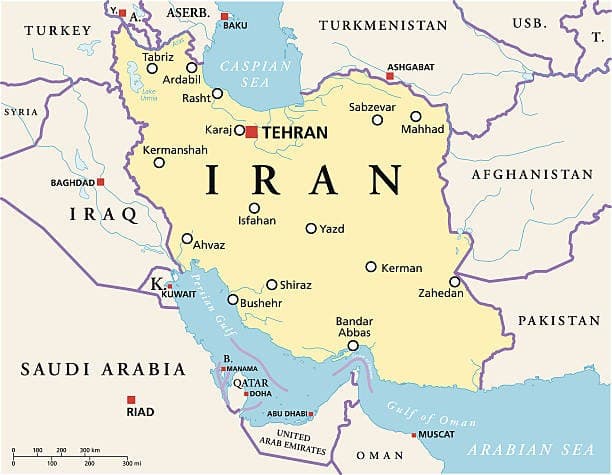
Illustration for Iran Geography and Strategic Location (Middle East Geography)

What & Where

Bandar Abbas Port – Iran’s largest maritime hub on the northern Strait of Hormuz coast

Hosts Shahid Rajaee, the country’s biggest container terminal, rail-road linked to inland markets

Strategic chokepoint; ~20 % of global oil trade transits adjacent Strait of Hormuz

Quick Facts for MCQs

Security Dimension

  • Blast type suspected chemical, raising industrial-safety scrutiny at Iranian ports
  • High casualty figures underline emergency-response gaps and hazardous-material oversight issues

Strategic Geography

  • Strait control lets Iran influence maritime energy corridors between Persian Gulf and Gulf of Oman
  • Port rail-road link integrates with regional trade routes into Central Asia and Caucasus

Physical Geography

  • Zagros and Elburz ranges frame plateau; Elburz hosts snow-clad Mt Damavand
  • Central plateau punctuated by hyper-arid Dasht-e Kavir and Dasht-e Lut deserts

Key Data Points

FeatureData-Point
Country capitalTehran
Fatalities, 2023 blast≥ 18 persons
Injured, 2023 blast> 700 persons
Largest Iranian portBandar Abbas
Major container terminalShahid Rajaee
Adjacent waterwayStrait of Hormuz
Highest Iranian peakMt Damavand – 5,671 m
Key desertsDasht-e Kavir, Dasht-e Lut
Navigable riverKarun → Persian Gulf

Related UPSC Prelims PYQs

GEO_GS 2022PYQ 1

Chabahar Port is located in which one of the following countries?

GS-3Environment

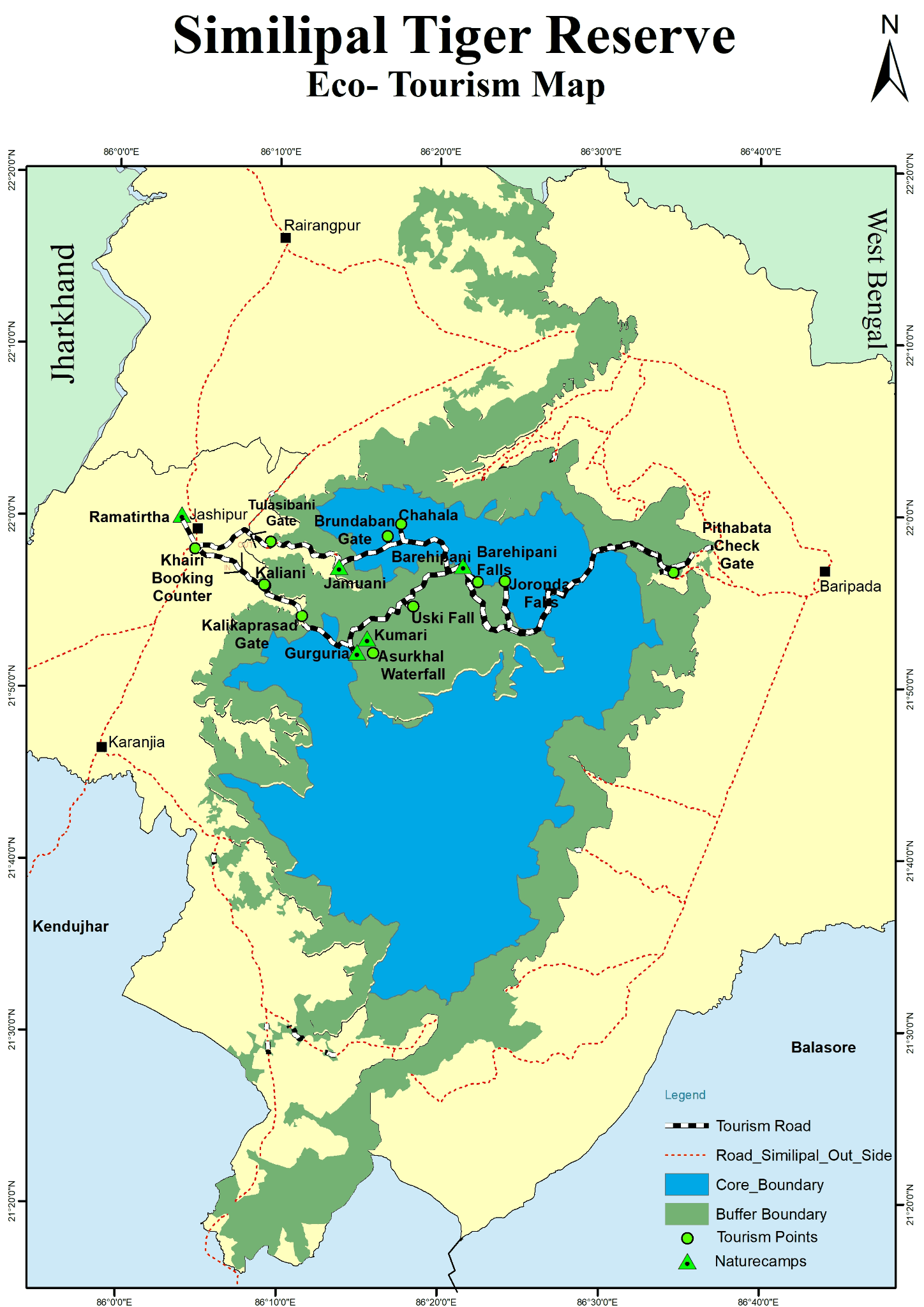
4.Similipal Declared Odisha's New National Park (Similipal NP)

New Indian Express
Illustration for Similipal Declared Odisha's New National Park (Similipal NP)

What & Where

Similipal National Park — newly carved core of Similipal Tiger Reserve, Odisha’s largest NP.

Location — Mayurbhanj district, southeastern Deccan Peninsula, Eastern Ghats–Sub-Himalayan corridor.

Extent — 845.70 sq km of tropical moist, semi-evergreen, dry deciduous forests and grasslands.

Quick Facts for MCQs

Biodiversity Richness

  • Fauna — 62 reptile, 21 amphibian species alongside flagship melanistic tigers.
  • Flora — 1,352 vascular plant species supporting multi-layered forest structure.
  • Habitat mosaic — forest–grassland blend offers high prey and predator diversity.

Legal & Policy

  • Notification — state government order converts reserve core into national-park category II.
  • Overlays — Tiger Reserve, Biosphere Reserve, Elephant Reserve statuses provide multi-tier protection.
  • Governance — managed under Wildlife (Protection) Act 1972 with NTCA guidelines.

Socio-Economic Angle

  • Tribes — Kolha, Santhala, Mankadia depend on non-timber forest produce, eco-tourism livelihoods.
  • Eco-tourism — melanistic-tiger branding expected to boost sustainable visitor inflow.
  • Welfare — park status channels CAMPA, CSR funds for community development.

Landscape & Hydrography

  • Rivers — six perennial streams drain to Budhabalanga and Baitarani basins.
  • Corridor — connects Eastern Ghats, Chota Nagpur, Sub-Himalayan biogeographic zones for gene flow.
  • Topography — undulating hills 500–1,168 m with scattered grass clearings.

Key Data Points

FeatureData-Point
National-park sequence107th in India
Odisha count2nd after Bhitarkanika
Notified fromSimilipal Tiger Reserve core
Area845.70 sq km
DistrictMayurbhanj
Tiger typeWorld’s only wild melanistic population
Mammal species55 +
Bird species361
Orchid species94 (some endemic)
UNESCO Biosphere tag2009
Tiger Reserve year1973 (Project Tiger)
Wildlife Sanctuary year1979
Elephant ReservePart of Mayurbhanj ER
Major riversBurhabalanga, Palpala, Bandan, Salandi, Kahairi, Deo

Related UPSC Prelims PYQs

GS1 2012PYQ 1

Consider the following protected areas:

GS1 2007PYQ 2

Which one of the following is also known as Top Slip?

GS-3S&T

5.3D Microscope in Minimally Invasive Surgery (3D Microscopy)

The Print

What & Where

3D digital microscope: scans multiple focal planes, reconstructs high-resolution spatial image for surgical use

First Indian deployment: Army Hospital (Research & Referral), New Delhi during minimally-invasive glaucoma surgery

Major microscopy types: optical, electron, digital, 3D; rely on refraction, diffraction or digital imaging

Quick Facts for MCQs

Technology & Equipment

  • Focal-layer scanning delivers real-time depth perception across tissue planes
  • Heads-up 4K monitor enhances surgeon ergonomics and team visual access
  • Polarisation glasses create stereoscopic vision without heavy ocular pieces

Health Outcomes

  • Precision imaging lowers complication and error rates in ocular microsurgeries
  • Diminished light exposure lessens retinal and corneal damage risk
  • Shorter operating time speeds postoperative recovery for glaucoma patients

Environmental Impact

  • Reduced power draw trims operating-theatre energy footprint
  • Minimal light intensity cuts thermal load, improving OT climate control
  • Digital workflow decreases reliance on disposable optical components

Key Data Points

FeatureData-Point
First use locationArmy Hospital (R & R), New Delhi
National statusFirst deployment in India
Display size55-inch 4K Ultra-HD
Viewing aidSpecial 3D polarisation glasses
Imaging methodMulti-focal layer scanning
Energy needLower power than conventional scopes
Patient benefitReduced photo-toxicity
Surgery showcasedMinimally invasive glaucoma
GS-3S&T

6.RNA Silencing Defends Crops Against CMV (RNA Silencing)

The Hindu

What & Where

Cucumber Mosaic Virus (CMV) – worldwide plant RNA-virus harming 1,200+ crops; major losses in cucurbits, banana.

RNA silencing – innate plant process converting viral dsRNA to siRNA that slices virus genome.

New German dsRNA spray shows ≈80 % viral-load drop, near-total CMV protection; scalable to Indian fields.

Quick Facts for MCQs

Pathogen Profile

  • Symptoms: mosaic leaf mottling, stunted growth, malformed fruits.
  • Infection speed: aphids transmit within seconds of probing.
  • Mutation concern: high genome plasticity drives quick strain emergence.

Technology & Mechanism

  • Dicer-like enzymes cleave dsRNA into 21-24 nt siRNA guiding RISC complex.
  • HIGS costlier, regulatory-heavy; SIGS cheaper, field-flexible, eco-friendly.
  • Designed dsRNA focuses on CMV “genetic weak points” for maximal siRNA yield.

India Impact

  • Pumpkins, melons, cucumbers face ≤70 % infection incidence.
  • Adoption of SIGS could protect smallholders without transgenic controversy.
  • Potential ripple benefits for medicinal plant sector prone to CMV.

Environmental Angle

  • Chemical-free RNA sprays reduce pesticide footprint.
  • dsRNA degrades rapidly, lowering off-target ecosystem risks.
  • Supports integrated pest management aligned with FAO sustainability goals.

Key Data Points

FeatureData-Point
Virus familyCucumovirus (RNA)
Host range>1,200 plant species
Key vectorSap-sucking aphids
Aphid species able to transmit~90
Yield loss in cucurbitsUp to 70 %
Banana loss India25–30 %
dsRNA approach typesHIGS & SIGS
HIGS traitGMO, lifelong expression
SIGS traitNon-GMO foliar spray
Lab viral-load cut≈80 %
Research instituteMartin Luther University, Germany
Target moleculeVirus-specific “effective dsRNA” rich in potent siRNA
Resistance riskMinimized via precision targeting

Related UPSC Prelims PYQs

GS1 2019PYQ 1

'RNA interference (RNAi) technology has gained popularity in the last few years. Why?

GS-3S&TQuick Bite

7.Legacy of Dr K. Kasturirangan (ISRO Leadership)

Indian Express
Illustration for Legacy of Dr K. Kasturirangan (ISRO Leadership)

What & Where

Dr. K. Kasturirangan — Indian astrophysicist; ISRO Chairman (1994-2003); born Ottapalam, worked mainly at Bengaluru HQ.

Steered India’s entry into deep-space exploration through Chandrayaan-1 and operationalised PSLV-GSLV launch capability.

Later shaped national education, environment and planning policies via high-level committees and Rajya Sabha tenure.

Quick Facts for MCQs

Tech & Schemes

  • Spearheaded IRS series enabling agriculture, water, forestry, health decision-support.
  • Operationalised PSLV for routine launches; initiated GSLV for heavier payloads.
  • Launched thematic satellites: EDUSAT (tele-education), OCEANSAT (oceanography), CARTOSAT (mapping).

Legal & Policy

  • NEP 2020 committee head; recommended 5+3+3+4 curricular structure and multidisciplinary HEIs.
  • Western Ghats review limited ESA to 37 %; balanced conservation with states’ development concerns.
  • Planning Commission member; integrated space applications into national development planning.

Institutional Roles

  • Rajya Sabha nominee provided science-policy interface in Parliament.
  • Chaired Space Commission; member, Prime Minister’s Science Advisory Council.
  • Advocated NNRMS adoption across ministries for evidence-based governance.

Recognition & Service

  • Received Padma trio, multiple international fellowships (IAF, TWAS, US National Academy).
  • Eponymous asteroid “(29803) Kasturirangan” honours his astronomical contributions.
  • Lifetime mentor for ISRO’s Young Scientist programmes.

Key Data Points

FeatureData-Point
ISRO Chairmanship1994 – 2003
Flagship mission ledChandrayaan-1, 2008
First project roleProject Director, Bhaskara-I & II EO satellites
Key application satellitesEDUSAT, OCEANSAT, CARTOSAT, INSAT/GSAT
Remote-sensing frameworkNational Natural Resource Management System (NNRMS)
Education policy chairedNational Education Policy 2020
Ecology panel advice37 % of Western Ghats as ESA
Parliamentary stintNominated Rajya Sabha Member
Planning roleMember, erstwhile Planning Commission
Civilian honoursPadma Shri, Padma Bhushan, Padma Vibhushan

Related UPSC Prelims PYQs

GS1, NDA_GAT 2001PYQ 1

Who amongst the following was the Chairman of ISRO when INSAT-3B was launched?

GS1, NDA_GAT 2022PYQ 2

Who among the following is appointed as the tenth Chairman of the Indian Space Research Organization (ISRO) recently?

GS-2Editorial

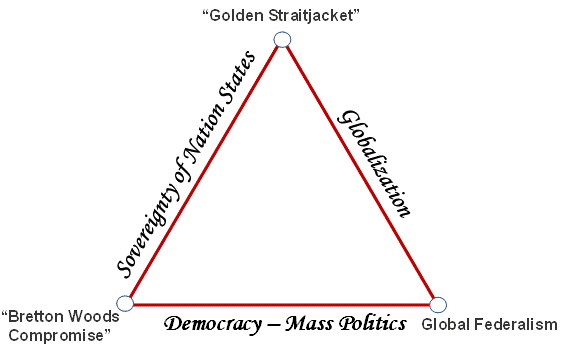
8.Rodrik Political Trilemma Challenges Western Democracies (Rodrik Trilemma)

The Hindu
Illustration for Rodrik Political Trilemma Challenges Western Democracies (Rodrik Trilemma)

What & Where

Political Trilemma: Dani Rodrik (2000) posits impossibility of jointly sustaining sovereignty, democracy, deep globalisation.

Operating Arena: Global economic governance; tensions sharp in EU, U.S., China, Brexit-type episodes.

Current Salience: Western polarisation, populism, de-industrialisation expose trade-offs predicted by the model.

Quick Facts for MCQs

International Examples

  • EU: Monetary union & single market override national fiscal, regulatory autonomy.
  • Brexit: UK reclaims sovereignty, jeopardises seamless EU market access.
  • IMF-Kenya: Fiscal reforms serve investors, sideline popular opposition.

Western Crisis Indicators

  • Populism: Trump, Orbán exploit anti-trade, anti-migration sentiments.
  • Trust Deficit: Falling voter turnout; France’s Yellow Vests target elites.
  • Withdrawal: US exited Paris Accord, WHO, signalling inward nationalism.

Policy Prescriptions

  • Inclusivity: Retraining, social safety nets share globalisation gains.
  • Transparency: Open, accountable institutions to rebuild democratic faith.
  • Balanced Multilateralism: Selective cooperation protects non-negotiable national interests.

Key Data Points

FeatureData-Point
OriginatorEconomist Dani Rodrik, 2000
Three PillarsNational Sovereignty; Popular Democracy; Deep Economic Integration
Core ClaimAny two pillars compatible; third becomes unstable
EU ModelChooses Democracy + Globalisation; cedes sovereignty to Brussels/ECB
Technocratic RegimeKeeps Sovereignty + Globalisation; trims democratic voice
Protectionist StatesFavour Sovereignty + (limited) Democracy; curb globalisation
Populist FlashpointsBrexit, Trump tariffs, Yellow Vest protests
Key StrainSovereignty vs multilateral rules in trade, climate, health
GS-2Editorial

9.World Trade Organization Reform Challenges (WTO Reforms)

The Hindu

What & Where

WTO; rules-based multilateral institution governing trade in goods, services, intellectual property

Formed 1995 by Marrakesh Agreement succeeding 1948 GATT

Headquartered Geneva Switzerland; 166 members covering 98 % of world trade

Quick Facts for MCQs

Institutional Challenges

  • Paralysis; Appellate Body blocked by US since 2019 encouraging appeals into void
  • Deadlock; Doha Development Round stalled on agriculture market access subsidies
  • Fragmentation; unchecked FTAs undermine MFN Article I integrity

Protectionism Trend

  • Unilateral; US-China tariffs invoked GATT Article XXI security exception
  • Rise; national security justification increasingly masks trade barriers
  • Mega-deals; CPTPP and RCEP craft parallel labour environment digital norms

India Angle

  • MSP; rice wheat support often breaches 10 % de-minimis subsidy ceiling
  • Resistance; India opposes labour environmental talks under multilateral mandate
  • Coalition; India backs middle-power group for systemic WTO reform

Reform Proposals

  • Restoration; clarify judicial reach and timelines to relaunch dispute appellate mechanism
  • Criteria; GDP and vulnerability indices proposed to replace self-declared SDT status
  • Green-trade; WTO framework sought to align CBAMs with differentiated timelines for LDCs

Key Data Points

FeatureData-Point
Foundation Year1995
Legal BasisMarrakesh Agreement 1994
HeadquartersGeneva, Switzerland
Current Members166
MFN ProvisionGATT Article I
Appellate Body StatusNon-functional since Dec 2019
Real Trade Growth 1995-20232.7 ×
Average Tariff Fall 1995-202310.5 % → 6.4 %
Extreme Poverty 1995 vs 202033 % → <10 %
Peak Dispute Consultations1995-2003

Related UPSC Prelims PYQs

ESE_GS, GS1 2010PYQ 1

In the context of the affairs of which of the following is the phrase “Special Safeguard Mechanisms” mentioned in the news frequently ?

ESE_GS, GS1 2020PYQ 2

Which of the following are the main functions of WTO?

GS-2Polity

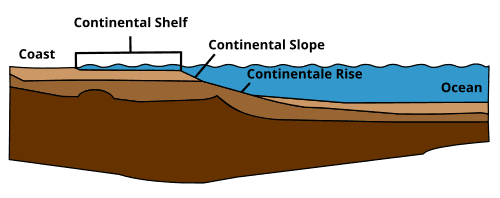
10.India Expands Arabian Sea Continental Shelf Claim (UNCLOS CLCS)

The Hindu
Illustration for India Expands Arabian Sea Continental Shelf Claim (UNCLOS CLCS)

What & Where

Continental Shelf: submerged land-mass extension; rights over seabed resources beyond 200-nm EEZ under UNCLOS Art 76

India: seeks extra ≈10,000 sq km in central Arabian Sea, supplementing 2009 claim to bypass Sir Creek dispute

CLCS: UN body in New York vetting scientific data for outer-shelf recognition

Quick Facts for MCQs

Legal & Policy

  • UNCLOS: Article 76 basis for shelf extension claims
  • CLCS: only recommends; coastal state deposits final limit charts with UN
  • Submission: partial framing keeps Sir Creek negotiations open

Economic Angle

  • Resources: hydrocarbons, gas hydrates, polymetallic nodules within extended shelf
  • Blue Economy: wider jurisdiction spurs revenue and offshore mining investment
  • Energy: added seabed control strengthens long-term security

Security Dimension

  • Depth: larger seabed rights widen naval operational buffer
  • Monitoring: jurisdiction boosts oversight of cables and seabed infrastructure
  • Deterrence: firmer claims counter extra-regional naval presence in Arabian Sea

Key Data Points

FeatureData-Point
New area claim≈10,000 sq km
Potential total shelf if cleared≈1.2 million sq km
India’s land area3.274 million sq km
Default EEZ limit200 nautical miles
Assessing bodyCommission on the Limits of the Continental Shelf
CLCS establishment year1997
CLCS headquartersUN HQ, New York
Avoided dispute zoneSir Creek (India–Pakistan)

Related UPSC Prelims PYQs

CDS_GK, GS1 2022PYQ 1

समुद्री कानून पर संयुक्त राष्ट्र अभिसमय (यूएनसीएलओएस) के संदर्भ में, निम्नलिखित कथनों पर विचार कीजिए :

CDS_GK, GS1 2021PYQ 2

India's territorial limit extends towards the sea up to

GS-3SecurityQuick Bite

11.MacGregor Memorial Medal for Military Adventure (Military Awards)

The Hindu

What & Where

MacGregor Memorial Medal – Indian armed‐forces award for military reconnaissance, exploration and adventure activities

Instituted 3 July 1888 to honour Maj Gen Sir Charles Metcalfe MacGregor, founder of United Service Institution of India

Conferred in New Delhi by Chief of Defence Staff under aegis of USI, a national security think tank

Quick Facts for MCQs

Historical Background

  • Institution 3 Jul 1888 perpetuated colonial era field-intelligence tradition
  • Scope widened after Independence to broader adventure domains
  • Medal maintains continuity between British Indian Army and modern forces

Eligibility & Scope

  • Open equally to regular, reserve, and paramilitary rifle formations
  • Recognises outstanding individual or team feats in preceding year
  • Five recipients feted for combined 2023-24 achievements

Institutional Angle

  • United Service Institution of India oldest defence think tank, promotes strategic studies
  • Medal selection, records, ceremonies coordinated by USI committees
  • CDS presentation signifies tri-service endorsement and national stature

Personality Highlight

  • Charles Metcalfe MacGregor: British officer-explorer, Quartermaster-General India
  • Conducted Bhutan frontier surveys during Anglo-Bhutan War 1864-65
  • Intelligence work enhanced British grasp of Himalayan terrain

Key Data Points

FeatureData-Point
First year1888
Named afterMaj Gen Sir Charles Metcalfe MacGregor
Presenting authorityChief of Defence Staff
Administering bodyUnited Service Institution of India
Latest award cycle2023 & 2024 (five personnel)
Original focusMilitary reconnaissance & exploration
Post-1947 scopeMountaineering, sailing, ultra-running, other adventure
EligibilityAll ranks of Army, Navy, Air Force, TA, Reserve, Rashtriya Rifles, Assam Rifles
USI founded1870
USI locationNew Delhi
GS-2Scheme

12.Electronics Component Manufacturing PLI Scheme (Electronics Manufacturing)

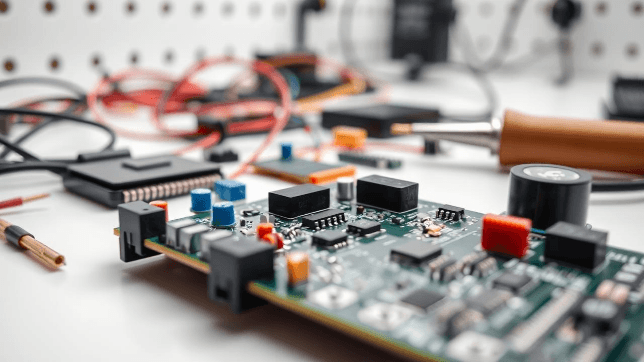
Economic Times
Illustration for Electronics Component Manufacturing PLI Scheme (Electronics Manufacturing)

What & Where

ECMS – India’s first PLI dedicated to electronics components; pan-India rollout by MeitY.

Tenure FY 2025-26 to FY 2031-32; ₹22,919 cr budget; 1-year gestation.

Sarvam AI, Bengaluru, picked to build the first indigenous AI foundational model under IndiaAI Mission.

Quick Facts for MCQs

Economic Angle

  • Domestic value addition boost; integration into global value chains emphasized
  • Large outlay aimed at crowding-in global and local investments
  • Supports $500 bn electronics production vision for 2030

Tech & Schemes

  • Triple incentive model covers revenue and capex flexibility
  • Six Sigma plus mandatory domestic design teams ensure high-quality ecosystem
  • Simple guidelines and portal streamline approvals

Employment

  • 91,600 direct posts projected; multiplier effect on ancillary jobs
  • Incentive disbursement conditional on verifiable job numbers
  • Focus on skilled roles in design, assembly and advanced manufacturing

Key Data Points

FeatureData-Point
MinistryElectronics & IT (MeitY)
Scheme Outlay₹22,919 crore
Operational Span6 years + 1 year gestation
Incentive TypesTurnover-linked, Capex-linked, Hybrid
Direct Jobs Target91,600+
Production Goal ContributionToward $500 bn electronics output by 2030
Target SegmentsSub-assemblies, Bare components, Capital equipment
Application BasisFirst-come, first-served online portal
Quality NormSix Sigma compliance
Employment LinkIncentives explicitly tied to job creation
GS-2Scheme

13.UDAN Regional Connectivity Scheme Overview (UDAN Connectivity)

PIB

What & Where

UDAN = “Ude Desh Ka Aam Naagrik”, Regional Connectivity Scheme under Ministry of Civil Aviation (launched 2016).

Aims: affordable air travel + revival of un-served (0 flights) & under-served (<1 flight/day) airports across India.

Core geography: pan-India focus with special push for North-East, islands (Lakshadweep), water aerodromes & small towns.

Quick Facts for MCQs

Scheme Design

  • Viability Gap Funding keeps regional airfares ≤ ₹2,500 per 1-hr flight.
  • Centre, states, airport operators offer GST cuts, route exclusivity, reduced parking/landing charges.
  • Targets revival of existing airstrips over greenfield building.

Phased Expansions

  • Sequential rounds (1.0-4.1) allocate routes via competitive bidding to airlines.
  • Every phase broadens modality: helipads (2.0), seaplanes (3.0), islands & Sagarmala tie-ups (4.x).
  • Continuous slot leverage at congested Tier-1 airports allowed for participating carriers.

North-East Focus

  • 6 new routes flagged off Oct 2021; total 100 NE routes awarded.
  • 16 NE airports in KRISHI UDAN enhance agri exports & cargo movement.
  • Improves strategic connectivity and economic integration of remote hill states.

Associated Schemes

  • KRISHI UDAN: boosts farmer income via faster perishables transport.
  • Sagarmala Seaplane Services: maritime tourism + last-mile island connectivity.
  • International UDAN: envisages sub-regional diplomacy & diaspora linkage through direct short-haul flights.

Key Data Points

FeatureData-Point
UDAN Day21 Oct (scheme document first released)
Scheme duration10 years (2016-26)
Operationalised (Oct 2021)387 routes, 60 airports
North-East share100 awarded routes
Financial toolViability Gap Funding + tax/fee concessions
UDAN 1.0 awardees5 airlines, 128 routes, 70 airports
UDAN 2.0 (2018)73 un/under-served airports; helipads first time
UDAN 3.0 addsTourism routes, seaplanes, more NE links
UDAN 4.0 (2020)78 new routes; Lakshadweep islands covered
UDAN 4.1Focus on small airports + heli & seaplane routes; links with Sagarmala
KRISHI UDAN launchAug 2020; 16 NE airports for agri-cargo
International UDAN aimDirect links between small Indian cities & nearby foreign destinations

Related UPSC Prelims PYQs

NDA_GAT 2022PYQ 1

उड़े देश का आम नागरिक (उड़ान) योजना के बारे में निम्नलिखित कथनों पर विचार कीजिए :

GS-2Scheme

14.National Zero Measles-Rubella Elimination Campaign (Measles-Rubella Campaign)

PIB

What & Where

National Zero Measles-Rubella Elimination Campaign 2025-26 under Universal Immunization Programme, pan-India rollout

Launched during World Immunization Week (24-30 April 2025); goal: eliminate M-R nationwide by 2026

Targets children; measles virus = Morbillivirus, rubella virus = Rubella virus, both vaccine-preventable

Quick Facts for MCQs

Policy & Strategy

  • Coverage push via school and community drives, micro-plans, digital tracking
  • Surveillance reinforced through lab networks and rapid outbreak response teams
  • Awareness campaigns address vaccine hesitancy in high-risk districts

Health Statistics

  • Coverage now above 90 percent yet below 95 percent elimination threshold
  • Measles cases fell 73 percent; rubella 17 percent during 2024 compared to 2023

Disease Basics

  • Measles Morbillivirus infection causes high fever, cough, red rash, severe complications
  • Rubella virus milder yet pregnancy risk causes Congenital Rubella Syndrome deafness, heart defects

International Recognition

  • India received 2024 M-R Champion Award from Measles-Rubella Partnership for significant elimination progress

Key Data Points

FeatureData-Point
Launch year2025
Campaign span2025-26
Implementing programmeUniversal Immunization Programme
Elimination target year2026
Two-dose M-R coverage 2024-25>90%
Coverage goal for elimination>95% (100% aspirational)
Measles case decline 2024 vs 202373%
Rubella case decline 2024 vs 202317%
Launch occasionWorld Immunization Week 24-30 Apr
2024 recognitionM-R Champion Award by Measles-Rubella Partnership

Related UPSC Prelims PYQs

CDS_GK 2021PYQ 1

Mission Indradhanush aims at

CDS_GK 2023PYQ 2

Which one of the following statements about Mission Indradhanush, launched by the Government of India in 2014, is correct?

GS-1Economy

15.World Bank Poverty and Equity Brief Highlights India (Poverty Reduction)

WB
Illustration for World Bank Poverty and Equity Brief Highlights India (Poverty Reduction)

What & Where

World Bank; biannual Poverty & Equity Brief tracking poverty, inequality in 100+ developing nations

India; extreme-poverty headcount down to 2.3 % (2022-23) from 16.2 % (2011-12)

Coverage; estimates use NSS 2011-12, PLFS 2017-23, NFHS 2005-06 & 2019-21 across all states

Quick Facts for MCQs

Economic Angle

  • Growth; GST & Ease-of-Doing-Business reforms expanded formal sector and job creation
  • Rural-urban gap; poverty difference narrowed 7.7 % → 1.7 % over decade
  • States; UP, Bihar, Maharashtra major contributors to national poverty fall

Tech & Schemes

  • Welfare; PMAY, MGNREGA, Ujjwala, PM-Kisan broadened safety net and consumption
  • Inclusion; Jan Dhan, Ayushman Bharat improved financial access and health security
  • Infrastructure; PMGSY roads and village electrification boosted rural market integration

Social Concerns

  • Gender; female labour-force participation still 31 % despite gains in self-employment
  • Youth; high educated unemployment signals skill-job mismatch
  • Concentration; five populous states house 54 % of remaining extreme poor

Key Data Points

FeatureData-Point
Study cycleSpring 2025 Poverty & Equity Brief
Extreme-poverty lineUSD 2.15 (2017 PPP) per day
Extreme-poverty fall16.2 % → 2.3 % (2011-12→2022-23)
People lifted (extreme)171 million
Lower-middle-income poverty61.8 % → 28.1 %; 378 million lifted
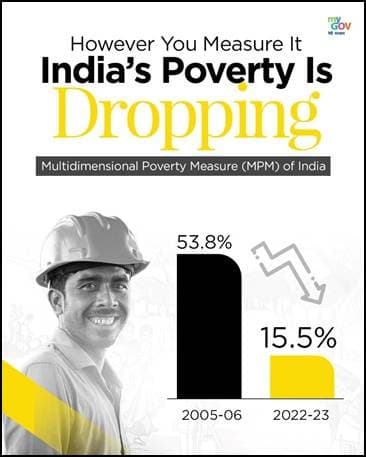
Multidimensional poverty53.8 % (2005-06) → 15.5 % (2022-23)
Gini index28.8 → 25.5
Urban unemployment rate6.6 % (2022-23); lowest since 2017-18
Youth unemployment13.3 %; 29 % among graduates
Formal share non-farm jobs23 %

Related UPSC Prelims PYQs

GEO_GS 2026PYQ 1

According to the World Bank Poverty and Equity Brief (October 2025), 46% of India’s poor lived in which of the following States?

GEO_GS 2021PYQ 2

Which one of the following statements with regard to poverty is correct?

Ready to practice?

Test your knowledge with our UPSC test series.

Start Free Trial