UPSC Current Affairs

17 topicsGS-1: 4GS-2: 5GS-3: 8
0/17 done
GS-2Editorial

1.Custodial Torture Police Reforms (Police Reforms)

Indian Express

What & Where

Report: “Status of Policing in India 2025”, Lokniti‐CSDS & Common Cause; inputs from 8,276 police across 17 States/UTs.

Focus: acceptance of custodial torture, adherence to arrest norms, reform appetite within the force.

Geography highlight: Kerala leads in legal-protocol compliance during arrests (94%).

Quick Facts for MCQs

Human Rights Concerns

  • Impunity: Article 21 safeguards & DK Basu guidelines routinely breached, zero convictions underline weak deterrence.
  • Oversight gaps: Magistrate apathy, untrained medical examiners, NHRC’s limited powers restrict accountability.

Capacity & Workload

  • Density: 155.78 police/100 k vs UN norm 222; vacancies peak West Bengal 39.4 %.
  • Stress: 16–18 h shifts, 83.8 % report high stress, impacts investigation quality.

Structural Reform Steps

  • Autonomy: Implement State Security Commission, fixed 2-year tenure (Prakash Singh, 2006).
  • Modernisation: Expand MPF for AI, body-cams, GPS vehicles, night-vision CCTVs per NHRC 2021.

Gender & Community

  • Representation: Women only 11.75 % of force; 33 % reservation, all-women stations proposed.
  • Trust: Scale Janamaithri & Mohalla Committees; embed social workers, psychologists for sensitive cases.

Accountability Mechanisms

  • Reporting: 39 % favour mandatory torture reporting; support rises to 75 % if legal protection ensured.
  • Evidence-based interrogation endorsed by 79 % personnel, indicating receptiveness to non-coercive methods.

Key Data Points

FeatureData-Point
Sample size8,276 police personnel
States/UTs covered17
Personnel justifying torture for rape/murder63 %
Third-degree support in theft cases30 %
Strong support for torture in terror probes42 %
Officers favouring mob justice (sexual assault/abduction)25 %
Extra-judicial killing support for “dangerous” accused22 %
Police saying arrest rules always followed41 % (Kerala 94 %)
Staff ready for human-rights training79 %
Custodial-death convictions 2018-220

Related UPSC Prelims PYQs

GS1 2023PYQ 1

Consider the following statements:

GS1 2021PYQ 2

भारत के संदर्भ में, निम्नलिखित कथनों पर विचार कीजिए :
GS-3Editorial

2.Key Debt Metrics Explained (Debt-to-GDP Ratio)

Indian Express

What & Where

Metric focus: Debt-to-GDP, public debt, internal vs external debt defining India’s repayment capacity

Geography: Data pertains to Union and State governments of India, plus national household and external liabilities

Process: Borrowings raised under Consolidated Fund; RBI manages via G-Secs, T-Bills, multilateral loans

Quick Facts for MCQs

Legal & Policy

  • Article 292 allows Union borrowing within Parliamentary limits; Article 293 conditions State loans needing Centre nod when indebted
  • RBI Act mandates RBI as agent for Central public debt issuance and servicing
  • FRBM Act targets deficit reduction, transparency, timely fiscal reporting

Composition & Ratios

  • Internal debt split: marketable securities vs non-marketable special bonds
  • External liabilities sourced from multilateral agencies, foreign governments, global investors; foreign-currency denominated
  • Consolidated Fund debt plus Public Account liabilities together constitute total public debt

Fiscal Drivers

  • Fiscal-deficit spike directly lifts borrowing requirement, inflating public debt stock
  • Revenue augmentation via higher taxes or disinvestment curbs new debt accretion
  • Interest-rate hikes escalate servicing costs, compounding future borrowing needs

Key Data Points

FeatureData-Point
Household debt-to-GDP36.6 % (Jun 2021) → 42.9 % (Jun 2024)
Central debt-to-GDP57.1 % (2024-25 est)
Target by 2030-3150 ± 1 % central debt-to-GDP
State share in public debt~⅓ of total; >50 % rise during 2014-20
Internal debt share93 % of Centre’s public debt
External debt-to-GDP19.4 % (Sep 2024)
Key articles292 (Union borrowing) ; 293 (State borrowing)
Debt managerRBI under RBI Act 1934
Fiscal rule lawFRBM Act 2003
Household trend triggerEasy credit, post-pandemic consumption boost

Related UPSC Prelims PYQs

CDS_GK, GS1 2018PYQ 1

Consider the following statements:

CDS_GK, GS1 2025PYQ 2

Which one of the following is a good statistic to evaluate where an economy stands in the financial cycle?

GS-3Economy

3.NaBFID Infrastructure Financing (Infrastructure Finance)

DH

What & Where

NaBFID: RBI-regulated DFI, funds long-term infrastructure projects pan-India under NaBFID Act 2021.

NDB: BRICS-promoted multilateral bank, finances infrastructure & sustainable development in emerging economies.

MoU: Platform to co-finance Indian clean energy & other infrastructure, plus joint research and capacity building.

Quick Facts for MCQs

Legal & Policy

  • Statutory backing ensures NaBFID bond issuance, guarantees, PPP promotion.
  • RBI supervision aligns NaBFID with other AIFIs like NABARD, Exim Bank.
  • MoU complements India’s National Infrastructure Pipeline targets.

Capital & Finance

  • Large equity base allows leverage for non-recourse infra loans.
  • Collaboration may crowd-in multilateral, sovereign and private capital.
  • Supports deepening of bond & derivatives markets for infra assets.

International Cooperation

  • NDB membership: Brazil, Russia, India, China, South Africa.
  • MoU enables joint workshops, staff exchanges, project due-diligence.
  • Aligns with India’s G20 push for reforming multilateral development banks.

Sectoral Focus

  • Priority pipelines: solar parks, metro rail, green hydrogen, sewage networks.
  • Emphasis on ESG standards and inclusive growth outcomes.
  • Aims to cut financing gaps hampering National Clean Energy goals.

Key Data Points

FeatureData-Point
NaBFID legal basisNaBFID Act, 2021
NaBFID regulator statusAll-India Financial Institution under RBI
NaBFID capital target₹1 trillion
Fund tenor focusMedium-long term, 1–5 + years
Core sectorsClean energy, transport, water
NDB authorised capitalUS $100 billion
India’s paid-in share to NDBUS $2 billion (2015-22, 7 tranches)
NDB idea first mooted2012 BRICS Summit, New Delhi
Establishing documentFortaleza Declaration, 15 July 2014
NDB Indian portfolio20 projects; US $4.867 billion (Dec 2024)
MoU purposeLong-term infra & clean-energy co-financing, knowledge exchange

Related UPSC Prelims PYQs

GS1, NDA_GAT 2025PYQ 1

निम्नलिखित में से किस एक ने 'एशिया और प्रशांत क्षेत्र के लिए प्रकृति समाधान (नेचर सॉल्यूशन्स) फंड' प्रारंभ किया?

GS1, NDA_GAT 2025PYQ 2

निम्नलिखित में से कौन-सी एजेंसी ‘SAFE आवास : वित्तीय विकास के लिए श्रमिक आवास सुविधाएँ’ पर रिपोर्ट जारी करती है?

GS-3Economy

4.Indian Startup Ecosystem (Startup Policy)

Indian Express

What & Where

Indian startup ecosystem = third-largest global hub of tech ventures across sectors, anchored in Bengaluru, NCR, Mumbai, Hyderabad.

Key segments: consumer-tech (food delivery, e-commerce, fintech) versus deep-tech (AI, quantum, space, semiconductors).

Enabled by nationwide digital stack—UPI, Aadhaar, BharatNet—plus policy pushes like Startup India, IndiaAI Mission.

Quick Facts for MCQs

Sectoral Profile

  • Dominance: consumer-tech unicorns in quick commerce, logistics, ed-tech, fintech.
  • Deep-tech share still minor yet gaining traction in AI, space-tech, semiconductors.
  • Global showcase: Indian-origin CEOs at Google, Microsoft highlight talent pool strength.

Investment Trends

  • VC behaviour: prefers fast exits; shies from 10-year gestation deep-tech bets unlike typical US models.
  • Deep-tech received only fractional funding versus US/China despite recent surge.
  • Sovereign-backed ₹10,000 cr fund targets patient capital for moonshots.

Policy Measures

  • Schemes: Startup India, Digital India, IndiaAI Mission, Semiconductor Mission nurture ecosystem.
  • Digital rails: UPI, Aadhaar, BharatNet cut transaction, KYC, connectivity costs.
  • Planned Centres of Excellence in AI, quantum, chips to bridge lab-to-market gaps.

Key Bottlenecks

  • R&D spend lag: sub-1 % GDP vs US 3 %, China 2.6 %.
  • Academia-industry linkage weak; low patent, innovation rankings.
  • Compliance load, exit barriers (e.g., erstwhile angel tax) dampen risk-taking.

Recommended Steps

  • Raise public R&D to 2 % GDP; adopt DARPA-style mission management.
  • Scale deep-tech fund; attract sovereign, long-horizon VC pools.
  • Revamp STEM curricula for early AI, robotics, chip-design exposure.

Key Data Points

FeatureData-Point
Global startup rank3rd after US, China
Total Indian unicorns100 +
Unicorns added 202320 +
Deep-tech funding 2024US $1.6 bn (↑78 % YoY)
Govt Deep-Tech Fund₹10,000 crore
R&D spend share of GDP< 1 %
Engineers produced yearly1.5 million
Population under 3565 %
UPI transactions 2023100 billion

Related UPSC Prelims PYQs

CAPF_GAI, CDS_GK 2022PYQ 1

What is ‘Unicorn Company’ often mentioned in Indian news?

CAPF_GAI, CDS_GK 2024PYQ 2

Biotechnological research is promoted through the development of "Biotechnology Parks". Which of the following is/are essential to bring technology to market?

GS-1History

5.Legacy of Jyotiba Phule (Social Reformers)

The Hindu
Illustration for Legacy of Jyotiba Phule (Social Reformers)

What & Where

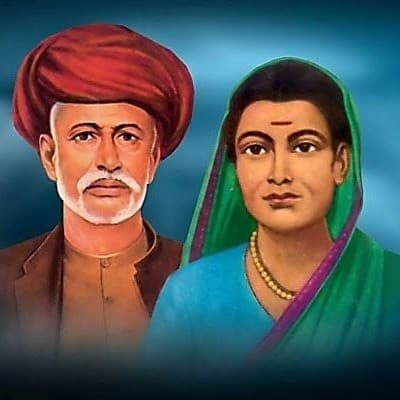
Identity: 19th-century Maharashtra reformer dubbed Father of Indian Social Revolution

Core geography: Born, worked, died in Pune within then Bombay Presidency

Flagship platform: Satyashodhak Samaj (1873) propagated anti-caste, gender-equal, rationalist agenda

Quick Facts for MCQs

Education Reform

  • Founded 1st indigenous girls’ school; opened night schools for labourers, farmers
  • Advocated universal, compulsory, practical curricula over colonial filtration theory
  • Promoted non-Brahmin teachers, female education as social equaliser

Social Justice

  • Coined term Dalit; campaigned against untouchability and Brahminical patriarchy
  • Enabled inter-caste marriage, widow remarriage, anti-infanticide and orphan shelters
  • Inspired Shahu Maharaj, later Dr B R Ambedkar

Agrarian Advocacy

  • Shetkaryacha Asud exposed peasant exploitation under British revenue system
  • Suggested dams, bunds, military labour to boost irrigation and rural employment

Political & Labour

  • Pune municipal member pressing for water supply, public health, workers’ rights
  • Co-founded Bombay Millhands Association with Narayan Meghaji Lokhande

Literary Works

  • Gulamgiri dedicated to African-American emancipators; critiques caste slavery
  • Sarvajanik Satya Dharma Pustak expounds universal religion of justice and rationalism

Key Data Points

FeatureData-Point
Birth date11 Apr 1827
BirthplacePune, Maharashtra
CommunityMali (gardener)
SpouseSavitribai Phule
First girls’ schoolPune, 1848
Key bookGulamgiri, 1873
Anti-caste organisationSatyashodhak Samaj, 1873
Commission memoHunter Commission, 1882
Agrarian tractShetkaryacha Asud, 1883
NewspaperDin Bandhu, 1877

Related UPSC Prelims PYQs

GS1, NDA_GAT 2022PYQ 1

The Satyashodhak Samaj (Truth-Seeking Society) was set up by

GS1, NDA_GAT 2020PYQ 2

Who among the following was associated with the publication of the first Marathi newspaper for the depressed classes, ‘Din Bandhu’?

GS-1EnvironmentQuick Bite

6.WMO Retires Hurricane Names 2024 (Hurricane Naming)

BL

What & Where

WMO maintains Atlantic & East-Pacific storm name lists, reused every six years unless retired for severe impact

2024 hurricanes Beryl, Helene, Milton, John retired after catastrophic Caribbean-US-Mexico damage

North Indian Ocean cyclones named once by IMD for 13 littoral nations; names never reused

Quick Facts for MCQs

Disaster Impact

  • Beryl earliest Category-5, devastated multiple Caribbean islands
  • Helene, Milton caused catastrophic US damage, high economic loss
  • John triggered deadly flooding across central Mexico valleys

Global Mechanisms

  • WMO Hurricane Committee annually reviews impacts, decides name retirement by consensus
  • Retired names struck permanently to respect regional trauma and ensure future communication clarity
  • Approved replacement names enter operational lists starting next six-year cycle

Indian Framework

  • IMD coordinates with 13 littoral nations to assign pre-agreed cyclone names sequentially
  • Cyclone retains given name even after crossing to another basin
  • Panel spans India, Bangladesh, Maldives, Myanmar, Pakistan, Sri Lanka, Oman, Thailand, Iran, Qatar, Saudi Arabia, UAE, Yemen

Key Data Points

FeatureData-Point
Retired names 2024Beryl, Helene, Milton, John
Earliest Category-5Beryl, 2024 season
Category-5 threshold≥157 mph (≈252 km/h)
Replacement Atlantic namesBrianna, Holly, Miguel
Replacement East Pacific nameJake
WMO reuse cycle6 years unless retired
India naming trigger≥34 knots sustained wind
Indian systemSingle-use, non-repeating
Littoral countries count13 nations under IMD panel
GS-1Mapping

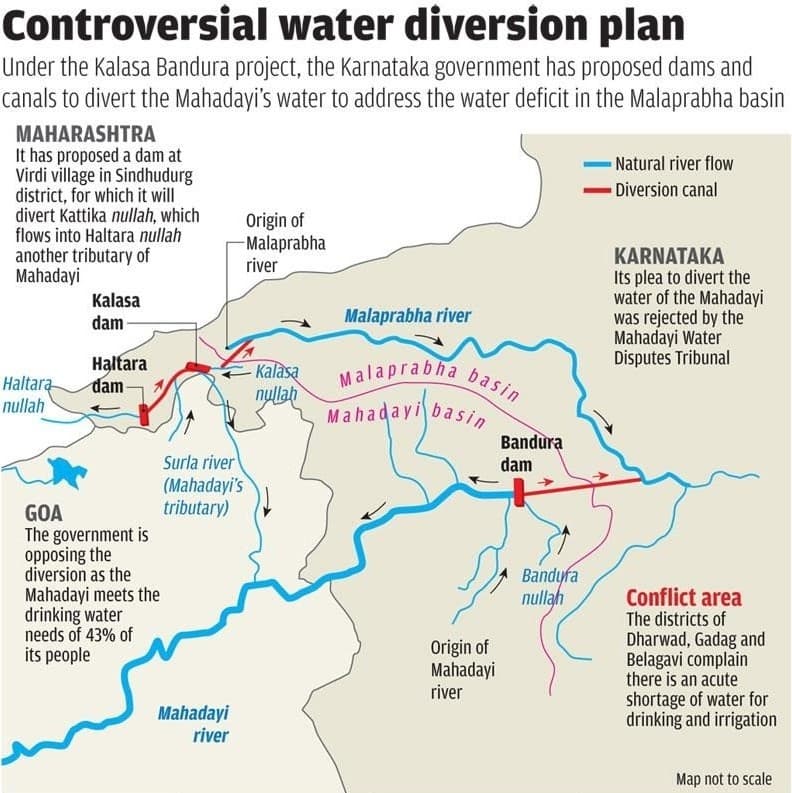
7.Mahadayi River Dispute (Interstate River)

Hindustan Times
Illustration for Mahadayi River Dispute (Interstate River)

What & Where

River Mahadayi; west-flowing, originates Bhimgad Wildlife Sanctuary, Belagavi, Western Ghats

Runs 81 km: Karnataka 35 km, Maharashtra 1 km, Goa 45 km; joins Zuari, reaches Arabian Sea

Called Mandovi in Goa, Gomati locally; lifeline for Goa’s drinking water, farming, biodiversity

Quick Facts for MCQs

Legal & Policy

  • Tribunal constituted under Inter-State River Water Disputes Act; final award 2018, partial approval to Karnataka
  • Union Jal Shakti ministry cleared Kalasa-Banduri DPR in 2023, sparking fresh Goa litigation
  • Supreme Court admitted Special Leave Petitions; no stay on tribunal allocation yet

Environmental Impact

  • Goa asserts diversion risks Western Ghats ecology, estuarine salinity, tiger habitat, Dudhsagar waterfalls flow
  • River supports 330+ bird species, mangroves, riparian agriculture; any reduction threatens livelihoods
  • Activists warn saline ingress may hit Panaji drinking supply and coastal aquifers

Tech & Schemes

  • Kalasa canal targets 3.9 TMC, Banduri canal 1.5 TMC, both lead to Malaprabha reservoir
  • Intended beneficiaries: Hubballi-Dharwad, Gadag, Bagalkot drought belts; irrigation & drinking water
  • Project entails diversion weirs, 2 canals ~77 km combined; pending environmental & wildlife clearances

Key Data Points

FeatureData-Point
Alternate namesMandovi, Gomati
Origin siteBhimgad Wildlife Sanctuary, Karnataka
TerminationArabian Sea after merging with Zuari
Total basin area2,032 sq km
Basin shareGoa 1,580 sq km; Karnataka 375 sq km; Maharashtra 77 sq km
Major tributariesNerul, St. Inez Creek, Mapusa, Valvanti, Dudhsagar, Udnai
Key diversion planKalasa-Banduri Nala Project
Tribunal award 2018Karnataka 13.42 TMC; Goa 24 TMC; Maharashtra 1.33 TMC
Dispute partiesKarnataka, Goa, Maharashtra
Supreme Court statusBoth main states filed challenges

Related UPSC Prelims PYQs

CDS_GK 2024PYQ 1

Which peninsular river has a tributary named ‘Kabini’?

GS-1Mapping

8.Thar Desert Geographical Features (Thar Desert Profile)

The Hindu

What & Where

Thar Desert; arid, aeolian-sand expanse ≈2 lakh km² across Rajasthan (India) and Punjab–Sindh (Pakistan).

Terrain: shifting Barchan dunes, sandy plains, abrupt rocky bhakars; sand accumulated ≈1.8 million years.

Borders Indus plain (W), Punjab plain (N/NE), Aravalli Range (SE), Rann of Kachchh (S); natural India–Pakistan divide.

Quick Facts for MCQs

Geomorphology

  • Aeolian deposition incessantly remodels dunes, generating rolling relief.
  • Predominant unidirectional winds sculpt classic crescentic Barchans.
  • Isolated bhakars offer firm ground amid shifting sands.

Climate Patterns

  • Persistent subsiding air masses ensure scant rainfall, intense aridity.
  • Summer heat extreme; wide diurnal temperature swings characteristic.
  • Southwest monsoon track lies east, sparing the desert significant rain.

Biodiversity

  • Xerophytes like neem, khejri stabilise dunes and supply fodder.
  • Fauna include blackbuck, Asiatic wildcat, Bengal desert fox, monitor lizards.
  • Adaptations: water conservation, nocturnal activity, burrowing behaviour.

Security Dimension

  • Pakistan Army drill ‘Jidar-ul-Hadeed’ rehearses warfare in harsh desert.
  • Concurrent naval exercise ‘Aman-2021’ hosts 45 nations in Arabian Sea.
  • Harsh Thar conditions shape India–Pakistan border deployment logistics.

Key Data Points

FeatureData-Point
Name origin‘Thul’ = sand ridges
Total area>2,00,000 km²
Indian shareMainly Rajasthan
Pakistani sharePunjab & Sindh
Dominant dune typeBarchan (crescent)
Local rocky hillsBhakars
Saline lake termDhands (playas)
ClimateSubtropical desert, high-pressure subsidence
Monsoon effectSW monsoon largely bypasses
Key floraKhejri, cactus, Acacia nilotica
Flagship faunaChinkara, Bengal desert fox

Related UPSC Prelims PYQs

CAPF_GAI, GS1 2023PYQ 1

Consider the following statements about Barchans :

CAPF_GAI, GS1 2011PYQ 2

A sandy and saline area is the natural habitat of an Indian animal species. The animal has no predators in that area but its existence is threatened due to the destruction of its habitat. Which one of the following could be that animal ?

GS-3Environment

9.Blue Category Industries (Industrial Categorisation)

Down to Earth

What & Where

Blue Category: CPCB label for low-pollution Essential Environmental Services across India

Industry set: STPs, composting units, biogas plants, MRFs, Waste-to-Energy incinerators

Applied in industrial zoning, granting longer Consent-to-Operate validity

Quick Facts for MCQs

Legal & Policy

  • Empowered by Environment Protection Act 1986 and CPCB-SPCB delegated powers
  • Blue Category added without separate Gazette notification, sparks procedural debate
  • Must align with 2016 Sustainable Waste Management Rules

Industrial Classification System

  • Colour coding guides zoning, surveillance and consent procedures
  • Pollution Index quantifies emissions, effluents and hazardous waste potential
  • Blue Category positioned between Green and White in perceived risk

Operational Benefits

  • Extended CTO reduces compliance frequency for essential service units
  • Lower inspection load envisioned for SPCBs on Blue industries
  • Encourages private investment in waste management infrastructure

Controversy & Concerns

  • Inclusion of WTE incinerators questioned due to historical high pollution record
  • Environmental groups fear dilution of monitoring stringency
  • Debate on actual emission profiles versus policy label persists

Key Data Points

FeatureData-Point
Parent bodyCentral Pollution Control Board
Legal basisEnvironment (Protection) Act 1986
Framework origin year2016 Re-categorization of Industries
Consent-to-Operate validityUp to 2 years
Hazardous waste criterionNil or minimal generation
Circular economy linkMandatory reuse-recycle-resource efficiency focus
Previous tag for WTERed Category (PI 60-100)
PI band White0–20
PI band Green21–40
PI band Orange41–59
PI band Red60–100

Related UPSC Prelims PYQs

GS1 2019PYQ 1

As per the Solid Waste Management Rules, 2016 in India, which one of the following statements is correct?

GS-3Species

10.Malabar Grey Hornbill Conservation (Western Ghats Species)

The Hindu

What & Where

Malabar Grey Hornbill: smallest Asian hornbill; endemic to Western Ghats, Nilgiris-Wayanad-Anamalai belt.

Prefers evergreen canopies and shaded plantations; sensitive to fragmentation; active dawn & dusk.

Current focus: Kerala team’s CLP Future Conservationist Award and Tamil Nadu’s Hornbill Conservation Initiative.

Quick Facts for MCQs

Species Biology

  • Size-small; casque-less; sexually dimorphic bills aid quick field ID.
  • High nest-site fidelity necessitates long-term cavity protection.
  • Loud vocalisations crucial for territory and mate communication.

Legal & Policy

  • IUCN Vulnerable + WPA Schedule IV confer mid-level legal shield.
  • Western Ghats habitat fragmentation recognised in State biodiversity strategies.
  • ‘Hornbill Protectors’ label brings private land under formal stewardship.

Conservation Schemes

  • CLP grant up to USD 15k supports Kerala community-based project.
  • Hornbill Conservation Initiative restores nesting habitats inside/outside PAs; plans Centre of Excellence.
  • Plantation engagement ensures canopy retention and artificial nest boxes where hollows absent.

Key Data Points

FeatureData-Point
Scientific nameOcyceros griseus
IUCN statusVulnerable
Wildlife Protection Act slotSchedule IV
Core rangeWestern Ghats, S-India hills
Habitat typesEvergreen forest, coffee/rubber/arecanut
Activity patternCrepuscular
Male bill shadeReddish
Female bill shadeYellow with black
Prominent casqueAbsent
Key call styleLoud cackling, screeching
Nesting traitSame cavity used decades
Award receivedCLP Future Conservationist
CLP partnersFauna & Flora, BirdLife, WCS
TN programmeHornbill Conservation Initiative
Other target speciesMalabar Pied, Indian Grey, Great Hornbill

Related UPSC Prelims PYQs

GS1 2016PYQ 1

In which of the following regions of India are you “most likely” to come across the ‘Great Indian Hornbill’ in its natural habitat?

GS-3Species

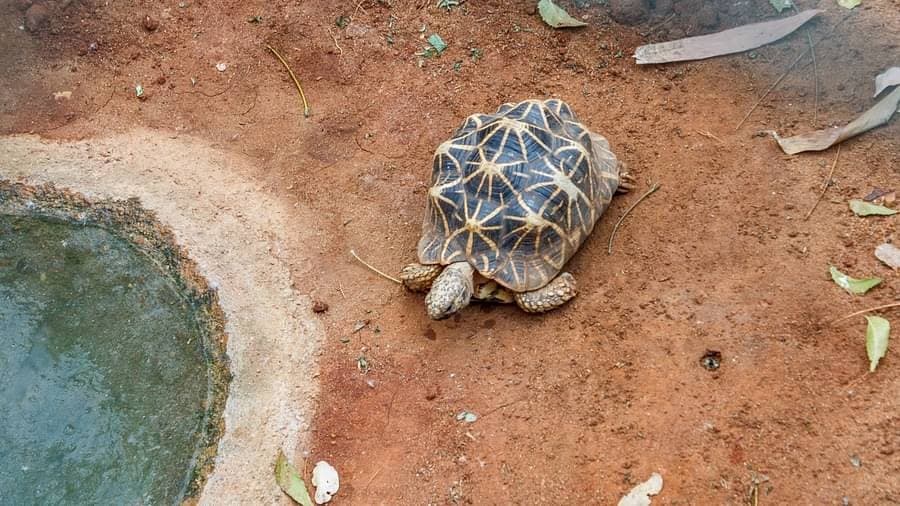
11.Indian Star Tortoise Rehabilitation (Reptile Conservation)

DH
Illustration for Indian Star Tortoise Rehabilitation (Reptile Conservation)

What & Where

Species: Indian Star Tortoise (Geochelone elegans) reintroduced via Turtle Rehabilitation Project

Location: 340 tortoises released in Jogapur Reserve Forest, Chandrapur district, Maharashtra

Range: Native to arid–semi-arid zones of Northwest India, South India, Sri Lanka

Quick Facts for MCQs

Legal & Policy

  • Protection: IUCN Vulnerable; CITES Appendix I; Wildlife (Protection) Act Schedule I
  • Intervention: TRP is Maharashtra state-level answer to illegal tortoise trade
  • Compliance: Post-release biometric tagging mandated by Forest Department

Ecology & Behaviour

  • Habitat: Thorn scrub, semi-deserts, grasslands, dry lowland forests
  • Activity: Crepuscular; active dawn and dusk, shelters midday
  • Diet: Herbivorous, browsing on grasses, leaves, flowers

Conservation Project

  • Timeline: Began late 2024; first mass release April 2025
  • Partners: Maharashtra Forest Department with RESQ Charitable Trust operate TRP
  • Outreach: School programmes and local engagement foster community vigilance

Key Data Points

FeatureData-Point
Scientific nameGeochelone elegans
IUCN statusVulnerable
CITES listingAppendix I
WPA, 1972Schedule I
Release siteJogapur Reserve Forest, Chandrapur
Individuals released340
Project titleTurtle Rehabilitation Project (TRP)
Lead agenciesMaharashtra FD; RESQ Charitable Trust
Project startLate 2024
Mass releaseApril 2025
Natural rangeNW & South India; Sri Lanka
Activity patternCrepuscular
Primary dietHerbivorous

Related UPSC Prelims PYQs

GS1 2013PYQ 1

Consider the following:

GS1 2017PYQ 2

In India, if a species of tortoise is declared protected under Schedule I of the Wild Life (Protection) Act, 1972, what does it imply?

GS-3EnvironmentQuick Bite

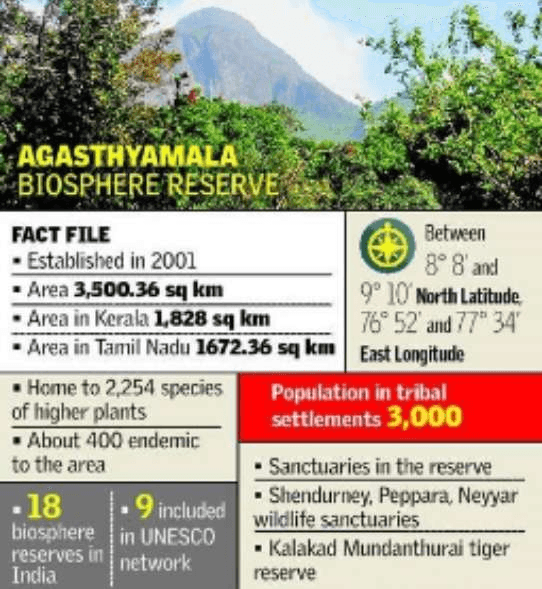
12.Agasthyamalai Biosphere Reserve Survey (Agasthyamalai Survey)

The Hindu
Illustration for Agasthyamalai Biosphere Reserve Survey (Agasthyamalai Survey)

What & Where

Agasthyamalai landscape: 3,500 sq km UNESCO-listed biosphere reserve in southernmost Western Ghats.

Straddles Tamil Nadu (Tirunelveli, Virudhunagar) & Kerala (Thiruvananthapuram, Idukki); envelops four tiger/wildlife reserves.

Supreme Court ordered CEC survey to locate non-forestry encroachments breaching Forest Conservation Act 1980 & Wildlife Act 1972.

Quick Facts for MCQs

Legal & Policy

  • Supreme Court uses Article 142 powers; seeks exhaustive ground-truthing of land-use violations.
  • CEC must furnish comparative forest-cover data to highlight degradation trends.
  • Findings likely trigger restoration orders, penal action against illegal structures.

Biodiversity Highlights

  • Habitat shelters Bengal Tiger, Nilgiri Tahr, Malabar Spiny Dormouse, Great Pied Hornbill.
  • Part of Western Ghats biodiversity hotspot and UNESCO World Network of Biosphere Reserves.
  • Encroachments threaten shola-grassland mosaics and endemic species resilience.

Tribal Presence

  • Kani tribe inhabits interior forests; possesses traditional ecological knowledge.
  • Survey outcomes may influence FRA 2006 community rights and benefit-sharing mechanisms.
  • Inclusive conservation models suggested to balance livelihood and habitat integrity.

Key Data Points

FeatureData-Point
Court order date11 Apr 2025
Implementing bodyCentral Empowered Committee
Acts examinedFCA 1980; WPA 1972
Protected areas coveredPeriyar TR; Srivilliputhur, Meghamalai, Tirunelveli WLS
Biosphere reserve area≈ 3,500 sq km
States involvedTamil Nadu & Kerala
Signature bloomNeelakurinji, 12-year cycle
Iconic mammalLion-Tailed Macaque

Related UPSC Prelims PYQs

GS1 2019PYQ 1

Which of the following are in Agasthyamalai Biosphere Reserve?

GS1 2005PYQ 2

Which one of the following is not a Biosphere Reserve?

GS-3S&T

13.Japan's 3D-Printed Railway Station (3D Printing)

NYT
Illustration for Japan's 3D-Printed Railway Station (3D Printing)

What & Where

Additive manufacturing: object built layer-by-layer from CAD/G-code, opposite of subtractive cutting/drilling.

Key variants: Material Jetting, Directed Energy Deposition, Sheet Lamination; smart-material upgrade enables shape-shifting 4-D printing.

World’s first 3-D-printed railway station: Hatsushima, Japan; entire superstructure printed off-site and assembled in 6 hours.

Quick Facts for MCQs

Tech & Process

  • Slicing: software divides model into thin layers, printer deposits matching material strata.
  • Post-processing: cleaning, curing, assembly, precision testing ensure functional tolerance.
  • 4-D prints use hydrogels/active polymers that autonomously morph without electronics.

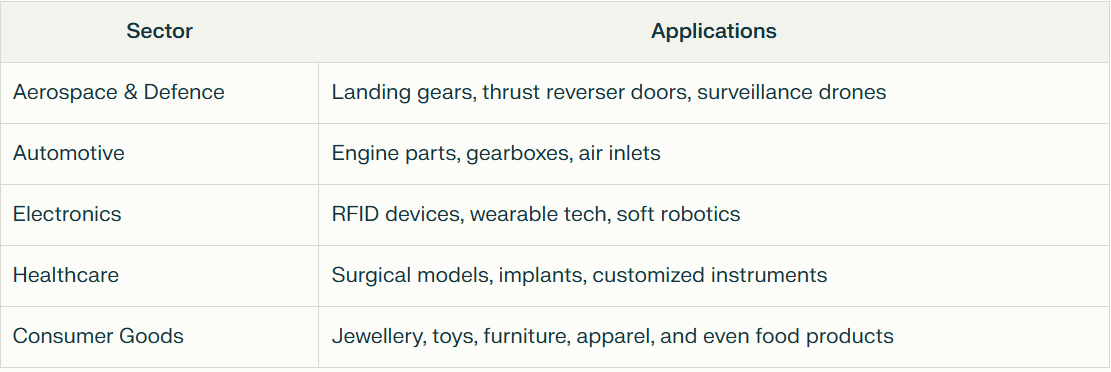
Applications

  • Medicine: dissolvable stents, adaptive implants, targeted drug-delivery scaffolds.
  • Defence & sportswear: uniforms/footwear adjusting ventilation, color, fit to conditions.
  • Aerospace/auto: smart fabrics for astronauts, impact-resistant airbags, self-cooling engine parts.

Economic Angle

  • Off-site printing plus trucking slashes construction duration and urban disruption costs.
  • Additive approach cuts material wastage versus subtractive machining, improving input-output ratio.
  • Lower labour dependence addresses ageing-workforce challenges in infrastructure sectors.

Key Data Points

FeatureData-Point
Station nameHatsushima Station
Country / yearJapan / 2025
On-site assembly time≈ 6 hours
TransportPrinted segments moved by separate trucks
Core materialSpecial mortar reinforced with concrete
Labour impactFewer workers needed at site
3-D design stepCAD model sliced to G-code
Main 3-D methodsMaterial Jetting; DED; Sheet Lamination
Typical 3-D feedstocksThermoplastics, metals, ceramics, biomaterials
4-D trigger stimuliHeat, light, moisture, pressure
GS-2Economy

14.US-China Tariff Escalation (US-China Tariffs)

The Hindu

What & Where

Conflict: US-China tariff war; tit-for-tat import duties since 2018

Geography: United States and China; ripple effects on global supply chains, especially Indo-Pacific and EU

Instruments: Tariffs up to 145 %, rare-earth export controls, rerouting via Vietnam and Malaysia

Quick Facts for MCQs

Drivers

  • Trade-deficit anxiety; US labels China’s USD 295 billion surplus unfair and risky
  • IP-theft allegation; forced technology transfer cited for protective tariffs
  • Geopolitics; rivalry over Taiwan, South China Sea, AI supremacy fuels escalation

Global Risks

  • Recession; WTO estimates trade war could cut global GDP by 7 %
  • Inflation; higher consumer prices from tariff-induced supply shocks
  • Supply-chain fracture; costly reshoring and near-shoring delays production

India Impact

  • Pharma; 70 % API import from China makes drug costs vulnerable
  • Manufacturing; electronics, auto parts delays inflate domestic prices
  • Opportunity; US market openings for Indian textiles and leather exports

Policy Responses

  • Incentives; PLI schemes target semiconductors, electronics, APIs, solar modules
  • Trade deals; fast-track India-EU, UK, GCC FTAs to diversify markets
  • Watchdog; proposed national body to flag tariff shifts and diversion tactics

Key Data Points

FeatureData-Point
Tariff rate on Chinese imports announced by US145 %
Chinese retaliatory tariff band84 %–125 %
US 2024 trade deficit with ChinaUSD 295 billion
Combined US-China share of global GDP (IMF 2024)43 %
Potential world GDP loss per WTOup to 7 %
Indian API dependence on China≈70 %
Indian GDP growth fall 2017-18→2019-208.3 %→4.2 %

Related UPSC Prelims PYQs

CDS_GK 2020PYQ 1

Since 2014-15, India has consistently run trade surplus with which one among the following countries?

GS-2Economy

15.India Ends Bangladesh Transshipment Facility (India-Bangladesh Trade)

Indian Express
Illustration for India Ends Bangladesh Transshipment Facility (India-Bangladesh Trade)

What & Where

Transshipment facility: 2020 Indian arrangement allowing Bangladeshi exports transit via Indian ports, airports, Land Customs Stations

Process: Cut freight time-costs for readymade garments moving to Bhutan, Nepal, Myanmar, other third markets

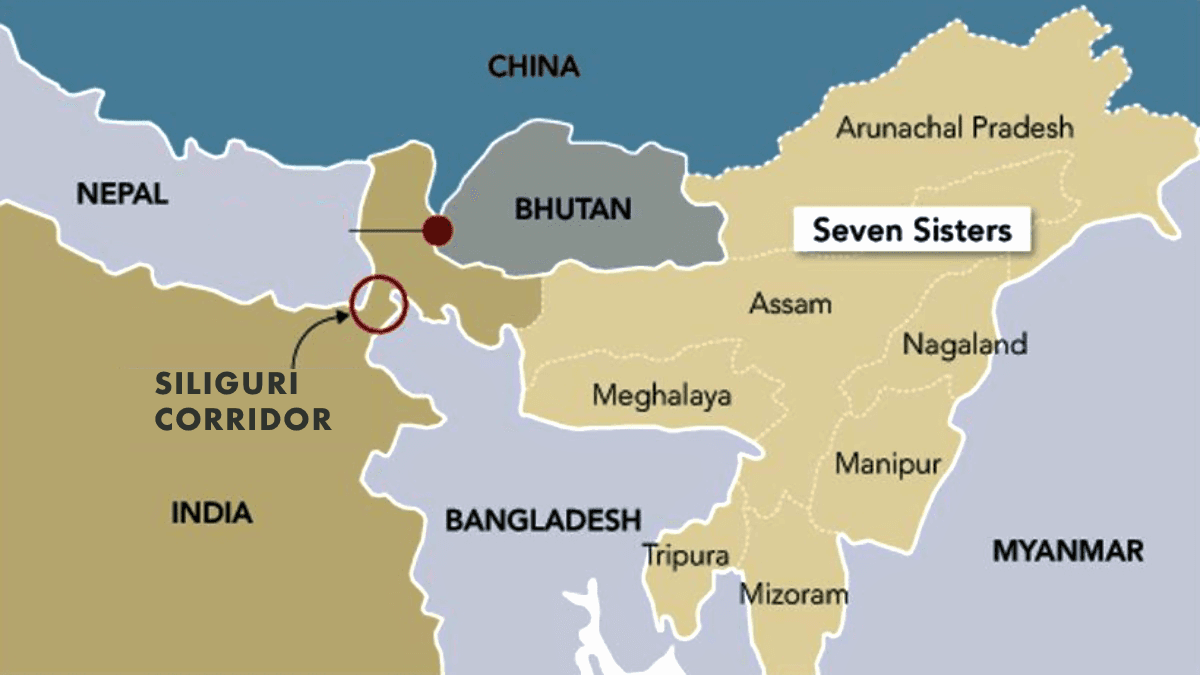
Geography: Routes skirt Siliguri Corridor linking Northeast India with Bangladesh, Bhutan, Nepal, Myanmar

Quick Facts for MCQs

Economic Angle

  • Competitiveness: Facility removal raises Bangladesh export costs, delays, hurting USD50 bn sector
  • Freight: Rising US Europe air rates pushed Indian exporters to free capacity
  • MarketShare: AEPC feared Bangladeshi edge over Indian textiles

Security Dimension

  • ChinaPresence: Lalmonirhat Airbase plans heighten Indian concern near Northeast border
  • Corridor: Siliguri narrow link makes region strategically vulnerable to external influence
  • GuardianRemark: Dhaka portraying itself as ocean custodian for landlocked Northeast irked Delhi

Legal & Policy

  • WTOObligation: Article V GATT and TFA 11 guarantee transit freedom for landlocked nations
  • Conflict: Withdrawal may invite disputes on discriminatory transit restrictions
  • BilateralStrain: Decision signals cooling India Bangladesh ties amid Dhaka Beijing proximity

Key Data Points

FeatureData-Point
Year facility started2020
Year facility endedApril 2025
Primary beneficiary sectorBangladeshi RMG exports
Indian garment export rank6th globally
Bangladesh garment export rank2nd globally
Sensitive Indian corridorSiliguri (Chicken Neck)
Proposed Chinese project siteLalmonirhat Airbase, Bangladesh
Relevant WTO clausesGATT Art V; TFA Art 11

Related UPSC Prelims PYQs

NDA_GAT 2024PYQ 1

In February 2024, Government of India has decided to scrap the Free Movement Regime (FMR) between India and:

NDA_GAT 2024PYQ 2

In January 2024, India has entered into a bilateral agreement through which it will provide grant assistance to a country to construct a 20 feet Bailey bridge. Identify the country.

GS-2MiscQuick Bite

16.Lisbon Honours Indian President (India-Portugal Ties)

PIB
Illustration for Lisbon Honours Indian President (India-Portugal Ties)

What & Where

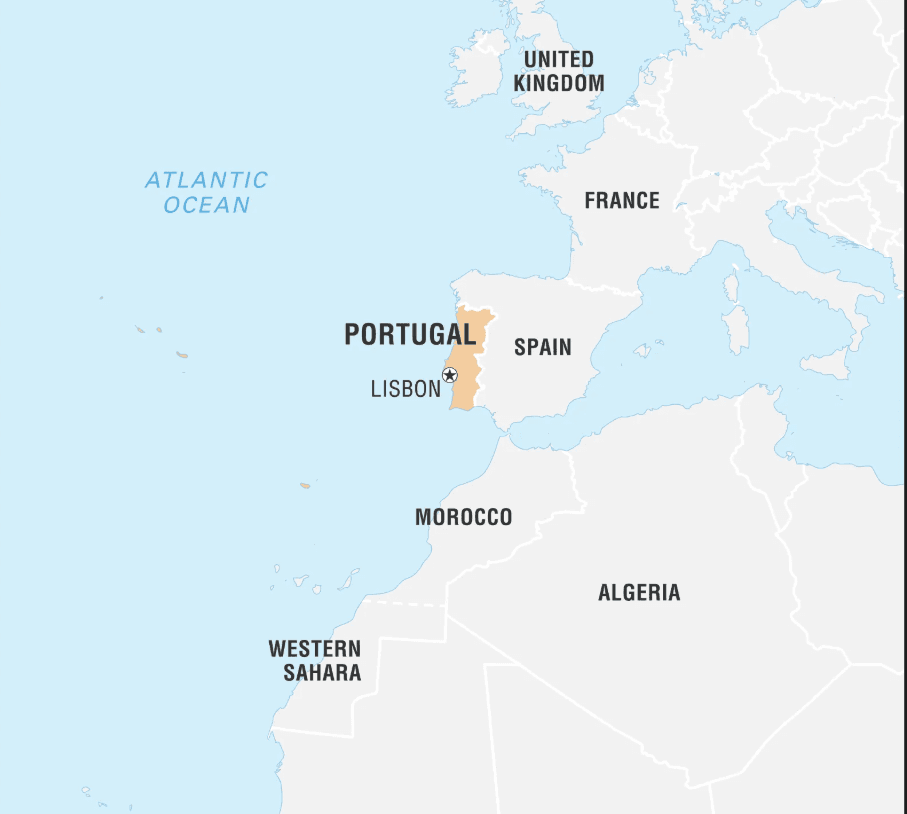
City Key of Honour (Lisbon): city’s highest civic award, handed by Mayor for outstanding societal or bilateral contribution.

Award received by President of India in Lisbon, Portugal, April 2025.

Event highlights 50 years of formal India-Portugal diplomatic ties since the 1975 Goa Treaty.

Quick Facts for MCQs

Diplomatic History

  • Contact: 1498 Vasco da Gama landfall at Calicut launched Indo-Portuguese interaction.
  • Revolution: 1974 Carnation Revolution enabled restoration of full diplomatic relations.
  • Treaty: 1975 Goa Treaty cemented post-colonial settlement and bilateral recognition.

Strategic Support

  • UNSC: Portugal openly endorses India’s permanent seat and NSG membership aspirations.
  • Summit: Lisbon spearheaded India-EU Summit process, hosting the first meet in 2000.

Economic Angle

  • Trade: Bilateral commerce valued at USD 1.5 bn in 2025, marking 50 % growth since 2020.
  • Trend: Diversifying trade in pharma, textiles, machinery boosts economic synergy.

Diaspora & Culture

  • Community: ~1.25 lakh Indians strengthen people-to-people linkages across Portugal.
  • Culture: ICCR Chair at University of Lisbon and joint 500-year commemorative stamps sustain soft-power ties.

Key Data Points

FeatureData-Point
Award nameCity Key of Honour
Conferred toPresident of India, Apr 2025
Awarding authorityMayor of Lisbon
Highest civic honour ofCity of Lisbon
Diplomatic normalisation1975 Goa Treaty
Trigger event1974 Carnation Revolution
50th anniversary year2025
Bilateral trade (2025)USD 1.5 billion
Growth since 2020+50 % (from USD 951 mn)
Indian diaspora≈1.25 lakh (35 k nationals; 90 k PIO)
Portugal’s multilateral backingUNSC seat & NSG entry for India
First India-EU Summit2000, Lisbon under PM Vajpayee
GS-2Scheme

17.MGNREGA Wage Revision (MGNREGA Wages)

Indian Express

What & Where

MGNREGA 2005: statutory right to 100 days unskilled wage work for every rural household across India

Wage‐setting: Centre fixes rate under Sec 6(1); otherwise state agricultural minimum wage under Sec 6(2)

Operational in all rural states/UTs; covers 25 crore registered workers, largest public employment scheme globally

Quick Facts for MCQs

Legal & Policy

  • Constitutional_mandate Article 23 bars forced labour; sub-minimum wages violate it
  • Court_precedent Sanjit Roy 1983 upheld payment of at least statutory minimum even in relief works
  • Funding_pattern Centre bears 100 % wage cost, enabling scope for uniform national rate

Economic Angle

  • Wage_multiplier Empirical studies show scheme lifted casual rural wages and bargaining power
  • Inflation_mismatch CPI-AL underestimates rural living costs; CPI-R offers wider consumption basket
  • Disparity_example FY 26 difference ₹140 between Nagaland and Haryana for same work

Implementation Gaps

  • Delay_issue ₹12,219 crore unpaid wages Feb 2025, causing worker dropouts and distress
  • Data_base-year 2009 price weights still used, eroding real wage value over time
  • Top-up_states Only few states bridge Centre-state wage gap; majority cannot, workers underpaid

Reform Proposals

  • Switch_index Adopt CPI-R with updated base year for realistic indexation
  • Floor_wage Implement national floor wage ₹375, periodically revised for inflation
  • Standing_Committee 2025 urged single uniform wage aligned with constitutional and minimum wage norms

Key Data Points

FeatureData-Point
Statutory work guarantee100 days per rural household
Current index usedCPI-AL, base year 2009
Highest NREGA wage FY 25-26Haryana ₹374
Lowest NREGA wage FY 25-26Nagaland ₹234
Gap in Sikkim FY 25-26₹241 below state minimum wage
Pending wage liabilities Feb 2025₹12,219 crore
Supreme Court case on wagesSanjit Roy vs Rajasthan 1983
Proposed national floor wage₹375 (Anoop Satpathy Committee)

Related UPSC Prelims PYQs

CDS_GK, GS1 2022PYQ 1

Which one of the following statements with regard to the National Rural Employment Guarantee Act, 2005 is correct?

CDS_GK, GS1 2006PYQ 2

Consider the following statements in respect of the National Rural Employment Guarantee Act, 2005 :

Ready to practice?

Test your knowledge with our UPSC test series.

Start Free Trial